



Abstract
The analysis framework of quality management, organizational innovation and organizational performance is constructed to study the relationship and interaction mechanism, and 156 manufacturing enterprises in the more developed manufacturing areas of our country are selected as samples for empirical research. The results show that quality management can directly affect technological innovation in organizational innovation, and directly affect management innovation through technological innovation. Organizational innovation is the intermediate variable of quality management on the organizational performance. In manufacturing enterprises, the impact of technological innovation on organizational performance is greater than that of management innovation on organizational performance.
Keywords
Introduction
In the economic globalization nowadays, with the development of China’s economy and the improvement of its international status, “Made in China” has a greater and greater impact on the world, and improving the quality of our enterprises has a more special significance. At present, China’s economic development has entered an important period of strategic adjustment and transformation, and the quality management of all kinds of enterprises in China is in line with the quality standards of advanced enterprises in the world. This is not only limited to the technical and operational level, but also should pay attention to systematically integrating the whole business management system of the enterprise with the growing customer expectations and the social requirements of sustainable development from the strategic level. This requires nurturing new competitive advantages, increasing the proportion of Chinese enterprises’ high value-added products in the global industrial chain, and promoting the upgrading of Chinese manufacturing. With manufacturing enterprises seeking diversified competition at a faster speed, the demand for innovation becomes more urgent, and innovation can bring new competitive advantages to enterprises. Competition forces business and theoretical circles to re-examine the real problems from a dynamic point of view, and duplicate products and duplicate activities are not competitive [1].
In order to maintain their competitive advantages, enterprises are forced to constantly adapt, update, reconfigure and innovate their existing resources and capabilities, so that they can adapt to the changes of environment. Quality management and organizational innovation are two important strategies for the success of organizations, and different enterprises have succeeded in adopting the two different strategies. But according to the research, Prajogo and Sohal put forward the question whether quality management can promote or hinder organizational innovation, believed that the continuous improvement of quality management, which emphasizes control and focuses on prevention and reduction of errors, may cause enterprises to be too conservative and lack of innovation motivation, and argued that the analytical and linear way of thinking in quality management is contrary to the non-linear way of thinking needed for innovation [2].
But as Abrunhosa et al. stated, the relationship between total quality management (TQM) and innovation is very complex, and even different studies in the same economic environment draw different conclusions, the measurement of the impact of TQM on innovation depends on the elements of both [3]. Domestic scholars’ research on quality management mostly focuses on the field of management system and practice methods, and mostly focuses on qualitative research, so there are few studies on the impact of quality management on organizational innovation and organizational performance, and the theoretical and empirical studies on the relationship between TQM and innovation have not been carried out in depth. Among them, Professor Xu Qingrui made a qualitative study on the relationship between TQM and innovation, and believed that a considerable number of enterprises in China have low level of systematically carrying out quality management and weak innovation ability [4]. Therefore, based on the current economic background in China, the study of the relationship between quality management practice, organizational innovation and organizational performance of our enterprises can undoubtedly help our enterprises coordinate the relationship between quality management and organizational innovation, so that they can win sustainable competitive advantages in the turbulent and fierce market competition.
This paper is divided into five part:section 1 is introduction,section 2 is literature review and theoretical hypothesis, section 3 is study design, section 4 is analysis and results, section 5 is conclusion
Related work
Before discussing the relationship between quality management and innovation, we first defined what is quality management and innovation. The concept of quality has changed from a non-price factor in market competition to an important resource for enterprises to reply on in strategic decision-making, and has changed from a dimension of constituting product attributes to the dynamic multi-dimensioncapabilities of managing enterprises [5, 6]. When quality management has gradually become a collection of various practices, it has evolved into total quality management (TQM), and become an indispensable management theory of product and process quality improvement [7]. With the deepening understanding of TQM, different scholars have different understanding of the key factors of TQM in academic research. Based on the summary of quality management principles of Deming, Juran, Crosby and Ishikawa Kaoru, Saraph first proposed the eight key factors of TQM [8]. Sila et al. collected and analyzed the English literature on TQM from 1989 to 2000 by searching for 15 keywords, and summarized six main contents: leadership, strategic planning, customer and market orientation, information analysis, human resource orientation and process management [9]. Samson and Terziovski believed that the classification and framework of TQM were always controversial, and it was necessary to measure TQM with a model that could be decomposed and analyzed [10]; therefore, Malcolm Baldrige National Quality Award (MBNQA) classification criteria were adopted. Other foreign scholars’ recognition of the key factors of TQM mostly adopts the dimension level involved in their national quality award [11, 12].
Schumpeter was the first scholar to put forward the concept of innovation, and he believed that the importance of new products lied in stimulating economic growth, and at the same time, he defined innovation as: a new production process or method adopted by enterprises that can change their production possibilities [13]. In this paper, we choose the definition of Damanpour [14]. He believed that the adoption of innovation includes the generation, development and implementation of new ideas or behaviouss, and innovation is a new product or service, a new production technology, a new organizational structure or management system, or a new plan or procedure. Innovation is a meaningful change for products, services and processes, which can bring new performance to the organization and create new value for stakeholders. Most scholars accept the dimension of organizational innovation divided by management innovation and technological innovation [14–16]. Management innovation is about the innovation of organizational structure and management compositions which is directly related to organizational management; technological innovation is about the innovation of products, services and production process technology, which is directly related to basic working activity technology [14].
The results of Zairi for some excellent enterprises showed that innovation practices such as “quality culture”, “learning organization” and “continuous improvement” are consistent with those contents advocated by TQM [17]. Ekvall and Ryhammar believed that organizational leadership can influence organizational innovation by creating an innovative atmosphere [18]. Rui Mingjie and Lu Yufang believed that leadership behavior has a positive impact on organizational innovation [19]. Although innovation is seen as part of the responsibilities of R&D, marketing, design and IT specialists, potential creativity and problem-solving ability are available to everyone. If the company mechanism can mobilize this ability to train employees, the innovation potential will be enormous. Although everyone can only make limited and gradual innovations, the total amount of such progress is far-reaching [20]. TQM focuses on the cultivation of employees’ responsibilities and obligations, which enables employees to have a stronger sense of responsibility and initiative in the process of innovation, so that they can assume a more important role in innovation [21]. Juran believed that customer orientation encourages enterprises to pursue the needs and expectations of customers, thus leading organizations to innovate, develop and introduce new products to continuously adapt to market needs [22]. This means that the supplier not only needs to meet the basic product requirements of consumers, but also needs to surpass these needs and expectations. Wycoff believed that customer orientation promotes and encourages organizations to constantly seek new needs and expectations of customers, manufacture and introduce new products, and adapt to constantly changing needs of market, and helps ensuring innovation to create value for customers [23]. The generation of innovation depends not only on a clear strategic direction and correct external positioning, but also on the effective management of a project operation from beginning to end. Effective management is indispensable at every stage, from the initial idea or only a possibility, till a successful and valuable commodity or service, or a new and feasible internal procedure. Continuous improvement is a basic function of innovative organizations, and the continuous improvement advocated by TQM will lead to incremental innovation. The research results of Mcadam in 15 Irish companies showed that continuous improvement and innovation have a significant and high correlation, and the culture of continuous improvement in organizations is considered to be innovative [24]. In addition, the focus oforganizations on information technology is also conducive to its innovation [25]. The above studies discuss the relationship between TQM and organizational innovation from different perspectives, and based on this, it proposes the following hypotheses in the paper:
H1: Quality management has a positive impact on management innovation.
H2: Quality management has a positive impact on technological innovation.
Most studies believe that the implementation of TQM is conducive to the improvement of organizational performance [26], but at the same time, they deliberately neglect the performance of other companies that do not adopt TQM in the same period. Some scholars have studied the relationship between quality management and organizational performance and believed that, although TQM has a significant impact on quality performance, it has no significant impact on organizational performance [27]. Du Peng et al. believed that due to enterprises pay too much attention to internal processes and neglect changers in external customers and environment, many quality improvements cannot achieve the desired results, so there is no significant correlation between the two. Based on the above discussion, the following hypothesis is proposed in this study [28]: H3: Quality management has a significant positive impact on organizational performance.
Management innovation and technological innovation always complement each other. On the one hand, technological change and innovation provide external environment and internal driving force for management change and innovation; on the other hand, technological innovation is the technological base and technological support for management innovation. Xie Hongming et al. [29] and Huang Peilun et al. [30] also believed that technological innovation has a positive and significant impact on management innovation. In addition, a large number of scholars’ study results also showed that there is a positive impact between organizational innovation and organizational performance. However, some scholars pointed out that technological innovation has a positive impact on long-term performance of organizational performance, but no positive impact on short-term performance; management innovation has no significant and direct positive impact on organizational performance, but only can it has a positive impact through organizing ability [30]. Based on the above analysis, the following theoretical hypotheses are put forward:
H4: Technological innovation has a significant positive impact on management innovation.
H5: Technological innovation has a significant positive impact on organizational performance.
H6: Management innovation has a significant positive impact on organizational performance.
Study design
Study structure
In this paper, it mainly discusses the relationship between quality management, organizational innovation and organization performance, and based on the above literature and theoretical hypotheses, it proposes a model of study structure in this paper, as shown in Fig. 1. Model of study structure.
In this study, samples were collected in the more developed areas of manufacturing industry, and enterprises in these areas were investigated by questionnaire. The respondents of the questionnaire were mainly those personnel engaged in the work related to quality management in enterprises. A total of 362 questionnaires were sent out and 224 valid questionnaires were recovered, with a recovery rate of 61.88%. The basic characteristics of questionnaire samples are described in Table 1.
Basic characteristics of questionnaire samples
Basic characteristics of questionnaire samples
The variables in this study include quality management, organizational innovation and organizational performance, and Likert 5-point method is adopted to measure the project. For quality management and organizational innovation, “1” represents strongly disagree, “2” represents disagree, “3” represents neutral, “4” represent agree, and “5” represents strongly agree. For organizational performance, “1” represents very poor, “2” represents poor, “3” represents the same, “4” represents good, and “5” represents very good (Fig. 2). Research model. Quality management. Since the scale of Samson and Terziovski is designed for manufacturing industry, the measurement variables of quality management in this paper are based on this scale and are modified according to the characteristics of this study. The scale contains six dimensions: leadership management (QM1), resource management (QM2), customer orientation (QM3), strategic plan management (QM4), process management (QM5), information and analysis (QM6). But the information and analysis comes fromPrajogo and sohal [31], and they believe that Samson and Terziovski only use benchmarks for this scale, while the standard set by MBNQA covers a wider range of contents, not just benchmarks. Organizational innovation. The scale of organizational innovation comes from the scale of Lin Yiping [32] and Xie Hongming [29]. Organizational innovation is divided into technological innovation (T) and management innovation (M), totaling 18 questions.Technological innovation is divided into two sub-dimensions of product innovation (T1) and process innovation (T2); management innovation is divided into two sub-dimensions of planning and control innovation (M2) and leadership and incentive innovation (M2). Organizational performance. Many scholars have different opinions on what is the organizational performance standard brought about by quality management, but there are mainly two main standards: one is the financial operation index, and the other is the satisfaction index or all relevant aspects. Therefore, the measurement questionnaire of organizational performance in this paper selects the questionnaire of Su et al. [33], and the organizational performance is divided into two dimensions: customer satisfaction (P1) and market performance (P2), totaling 9 questions.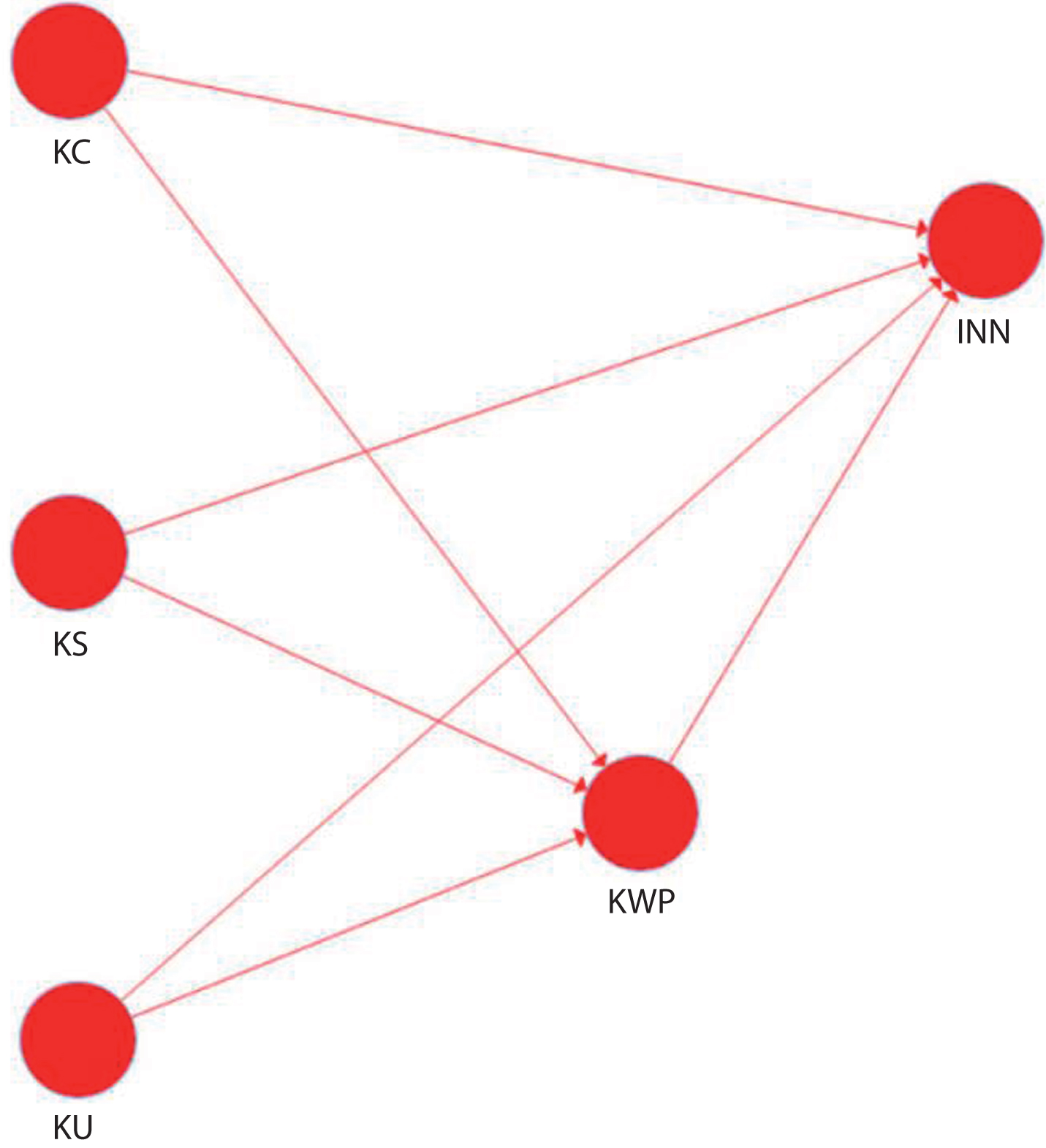
Reliability and validity analysis
Reliability analysis. In this paper, the reliability analysis function of spss17.0 is adopted to analyze the reliability of the total scale and the scales involved in each variable. As the statistical results shown in Table 2, the Cronbach’s α coefficients of combined reliability for individual observational variables and potential variables in quality management, technological innovation, management innovation and organizational performance all exceed 0.7. Kline [34] believed that the reliability coefficient value above 0.9 is the best, near 0.8 is very good, and near 0.7 is moderate. According to the classification of reliability coefficients, except the value of QM1 is mot close to 0.8, the rest of the questionnaire reach the best or very good range, so the questionnaire has good internal consistency. Factor loading and reliability test of the scale in this study
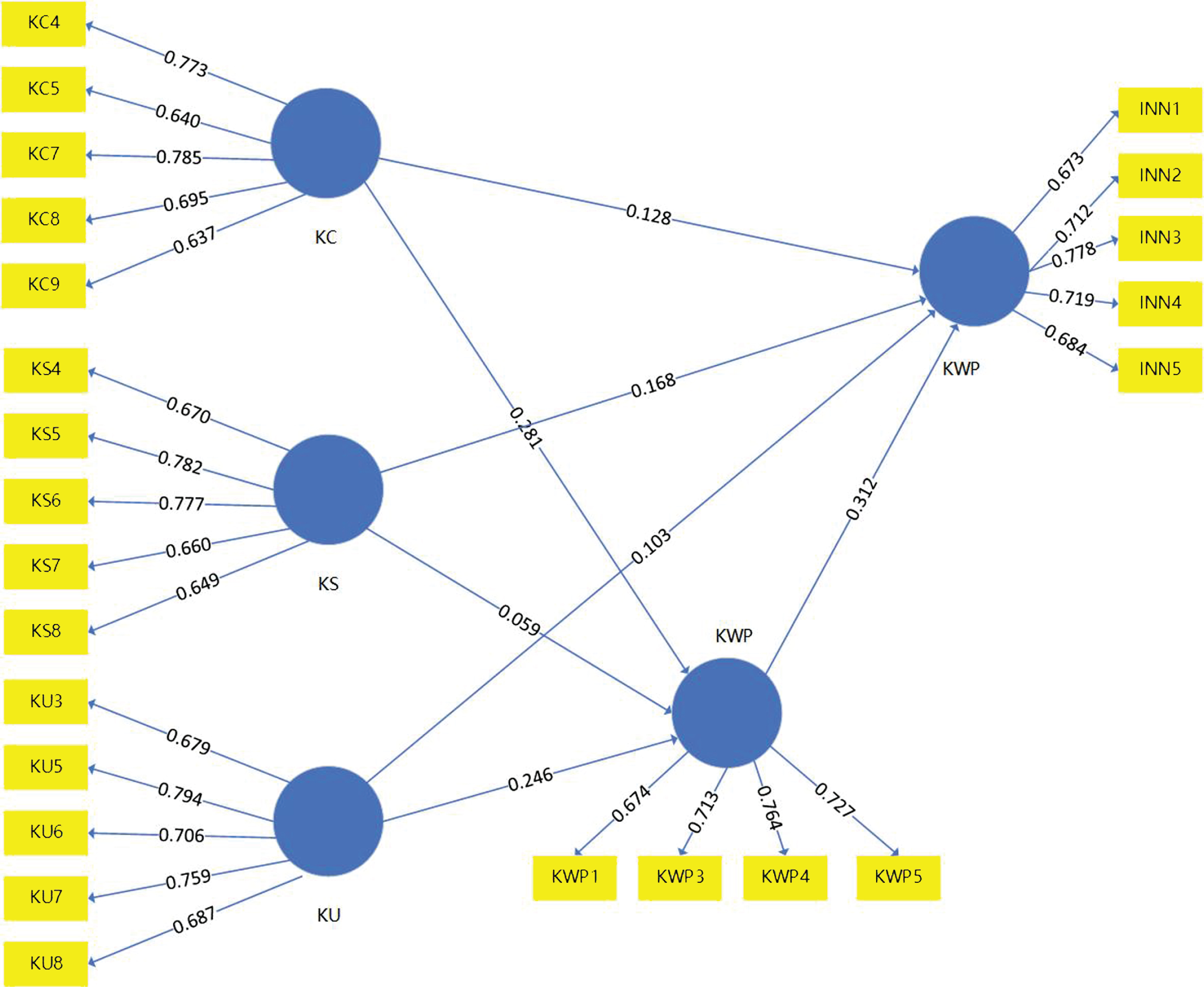
Validity analysis. Validity reflects the potential traits and the degree of actual measurement of index variables, which are usually evaluated by content validity and construct validity. The variables in this study are summarized on the basis of the existing studies of scholars at home and abroad, so they have good content validity. Then it is construct validity, which estimates the measurement model by the maximum likelihood method of confirmatory factor analysis. The confirmatory factor analysis shows that the range of factor loading is between 0.5 and 0.99, and the t value is greater than 1.96 (see Table 2). According to the judgment of fit degree index, the data of each index of the model reach the acceptable level (see Table 3), and the measurement model is considered to provide acceptable fit degree of the model, so the questionnaire in this study has good validity (Fig. 3).
Confirmatory factor analysis result of each factor
Research structural paths model.
In this paper, structural equation model (SEM) is used to analyze the overall interaction between quality management, organizational innovation and organizational performance, and AMOS18 is adopted as the statistical tool of model analysis.
Scholars Bogozzi and Yi [35] subdivided the overall fit evaluation of the model into three categories: Absolute Fit Indices, Incremental Fit Indices and Parsimonious Fit Indices. The fit index of the model studied in this paper is shown in Table 4. According to the comparison with the standard or critical values of adaption, the index values in this study fully meet the standard or critical values of adaption, so the overall degree of fitting for this model is good, which can be used to test the theoretical hypotheses proposed in this paper.
Evaluation indicators and evaluation standard table for the overall fit of the model
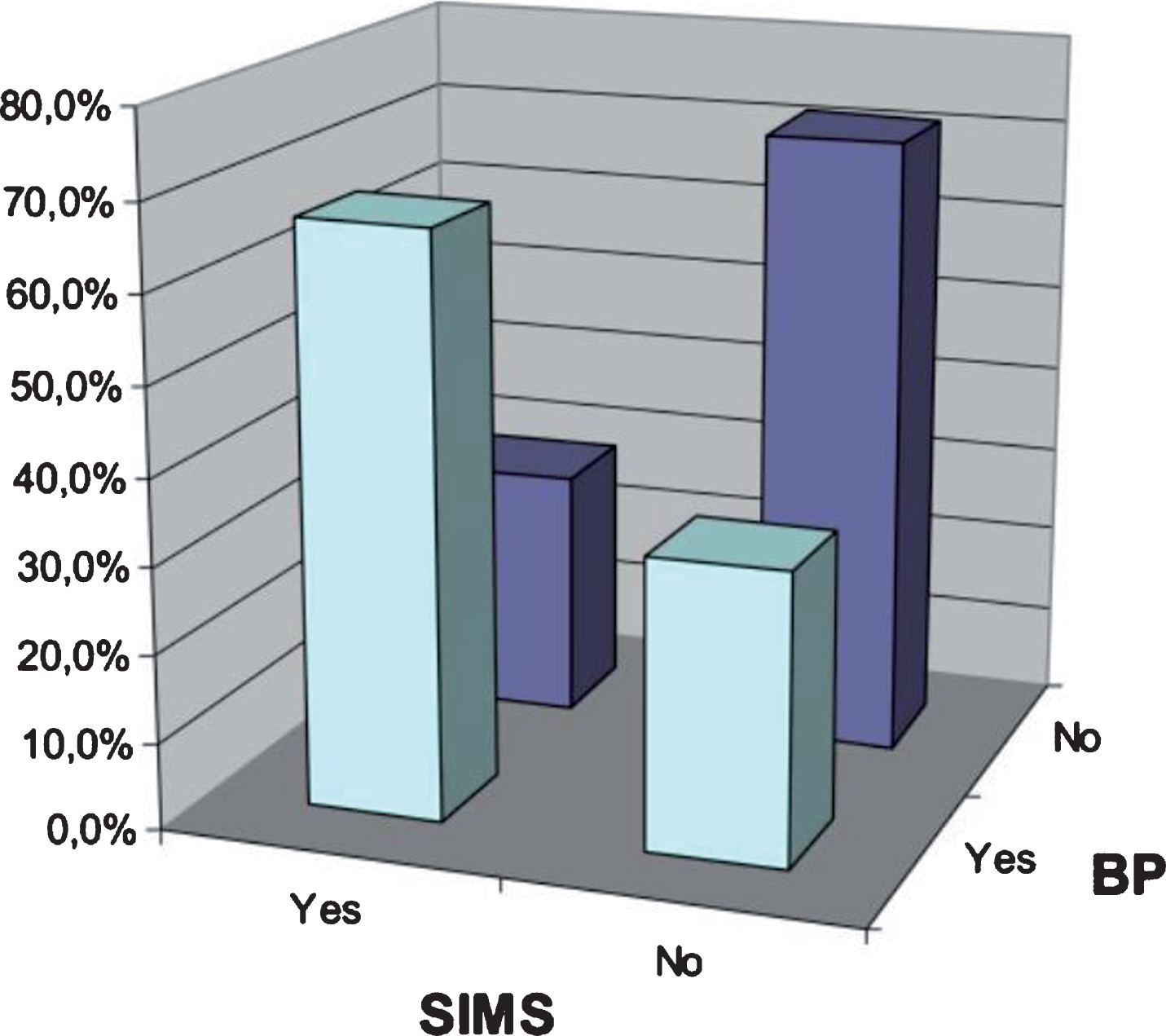
The path coefficient and hypothesis verification of the theoretical model are shown in Table 5. H1, H4, H5 and H6 are all validated; H2 and H3 are not validated. That is, quality management has a significant positive impact on technological innovation (path coefficient is 0.54, P <0.001), quality management has no significant and direct positive impact on management innovation (path coefficient is 0.15, P = 0.121), quality management has no significant and direct positive impact on organizational performance (path coefficient is 0.11, P = 0.221), technological innovation has a positive impact on management innovation (path coefficient is 0.52, P <0.001), technological innovation has a positive impact on organizational performance (path coefficient is 0.34, P = 0.007), and management innovation has a positive impact on organizational performance (path coefficient is 0.37, P <0.001). After deleting the insignificant variable relations. (Figs. 4, 5). Graph statistic for SIMS and IC.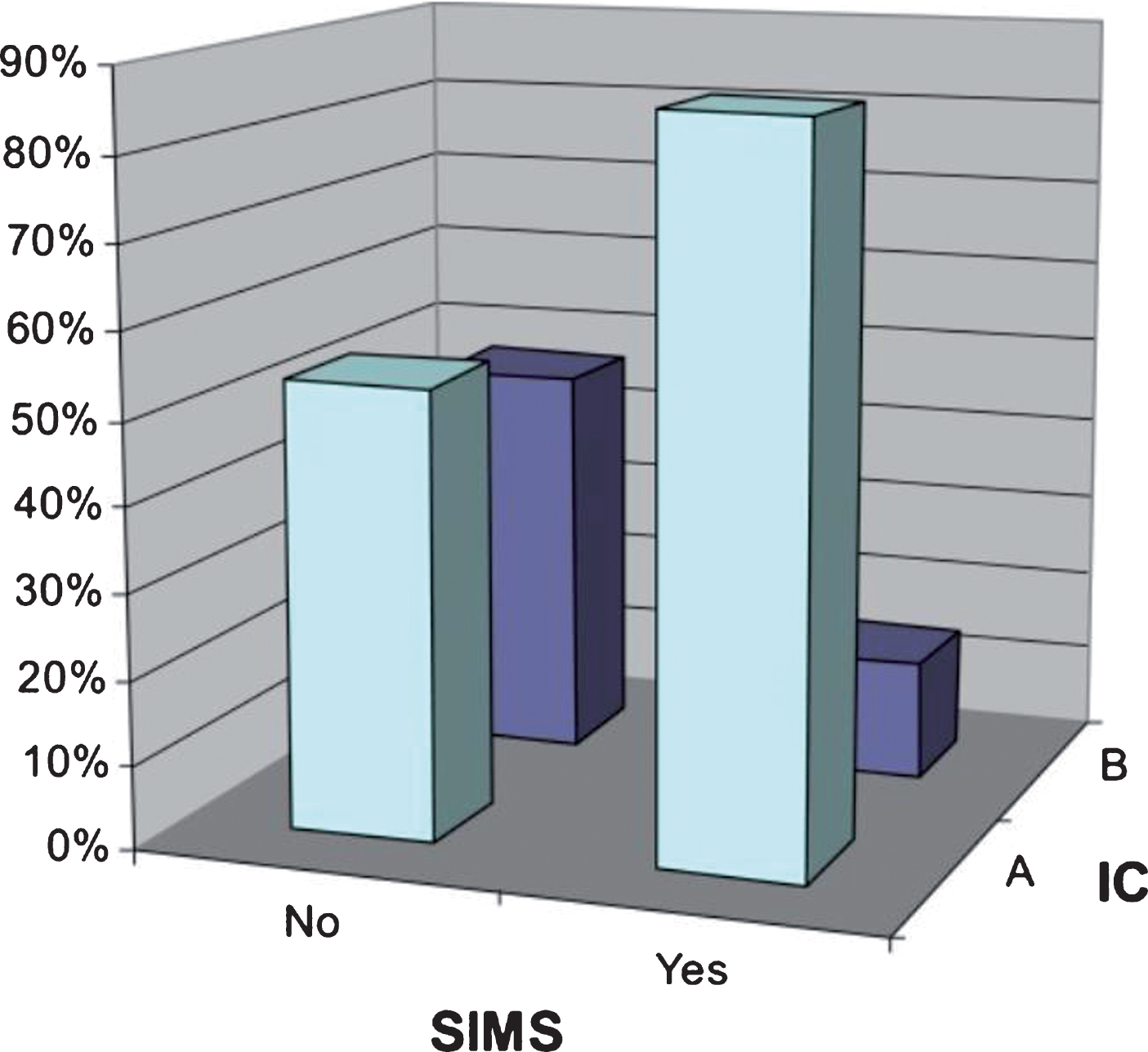
Path coefficients and hypothesis testing of theoretical model
Graph statistic for SIMS and BP.
In this paper, it makes an empirical study on the relationship between quality management,organizational innovation and organizational performance, and the results show that: (1) quality management has a significant positive impact on technological innovation; (2) quality management has no significant positive impact on management innovation; (3) quality management has no significant positive impact on organizational performance; (4) technological innovation has a significant positive impact on management innovation; (5) technological innovation has a significant positive impact on organizational performance; (6) management innovation has a significant positive impact on organizational performance.
The results of this study are of great value and significance to the theory and practice of quality management, organizational innovation and organizational performance.
(1) We confirm that quality management does not hinder organizational innovation; on the contrary, the improvement of organizational quality management level will promote organizational innovation. The concept of quality not only is the requirement of “conformity”, which is coinciding with internal specifications and standards, but also more emphasize on its “extensionality”, which is paying more attention to the feelings of consumers, developing, designing, manufacturing and selling services according to consumers’ requirements, so as to satisfy consumers. In the mature market environment, enterprises are faced with different, experienced and even completely different consumer groups. Consumers’ requirements and expectations for product quality are changing with time, which makes quality management to be dynamic. In order to satisfy this dynamic requirement, the contents related to quality management cannot stay at a level, but should continue developing and innovating, and exceed customers’ expectations on the basis of meeting the basic needs of customers, then such a process can be said to be the process of innovation. The opportunities of innovation exist in the needs and expectations of customers, and enterprises can seize the opportunities of innovation sensitively and accurately if they are proactive and fully open. And active innovation consciousness comes from the strong quality improvement consciousness such as providing products with better quality to customers.
Conflict of interest statement
We declare that we have no financial and personal relationships with other people or organizations that can inappropriately influence our work, there is no professional or other personal interest of any nature or kind in any product, service and/or company that could be construed as influencing the position presented in, or the review of, the manuscript entitled.