



Abstract
The rapid development of computers makes people’s production and life rich and colorful, and people communicate with each other in the world of the Internet. The daily downloads and uploads of network pictures are countless. The existing image recognition technology alone cannot meet the currently required functions, so technology is needed to meet the retrieval requirements. The purpose of this paper is to study the image recognition technology based on the computer platform. This paper takes vehicle image recognition as an example. By performing a deblurring operation on the vehicle image, the edge detection method is used to separate the target vehicle image from the background, and the image is binary. Processing. Based on different eigenvalue categories, intelligent recognition of vehicle models is achieved through Bayesian classifiers. Collect experimental data through simulation experiments. Experimental data shows that after a certain number of nodes, the recognition efficiency is higher than the image recognition technology running on a stand-alone platform. The experimental data show that the image recognition technology based on a cloud computing platform is conducive to the development of image recognition technology. It can quickly solve the problems of traditional image detection systems in terms of computing efficiency and data processing ability, and has guiding significance for the development of image recognition technology.
Introduction
Image recognition technology belongs to computer vision, which is part of artificial intelligence [1]. It gives machines the ability to “see” things, even features that humans cannot observe with the naked eye, and uses computers to process, analyze, and understand images. To realize this kind of function, it is necessary for the machine to “see” things and recognize the characteristics of things, to identify the targets of different modes. It is the application basis of stereo vision, motion analysis, data fusion and other technologies. When the eye recognizes the image, the line of sight is always focused on the main features of the image, that is, the place where the contour of the image has the largest curvature or the direction of the contour changes the most. These places are where the most information is obtained, and then the brain quickly searches I have seen this picture or a similar picture, and the observation route of the eye is also from one feature to another. Obtain key information, master its main features, and then feed it back to the brain to organize it into a complete image. Technology is based on this principle. Computers acquire data from vision, thermal sensors or ultrasonic sensors, and then extract the main features for analysis and then integrate to form a complete image.
With the development and application of modern science and technology, the research on the application and development of image recognition technology has been paid more and more attention [2–4]. The rapid development of computer technology, especially the rapid development of data storage technology and network technology, has made great progress in the research and application of image processing technology. In recent years, with the vigorous promotion of Internet vendors, cloud computing, as a distributed computing model, has become more and more closely related to image processing. The rapid development of computers has made people’s production and life rich and colorful, and people have communicated with each other in the world of the Internet. The daily downloads and uploads of network pictures are countless. The existing image recognition technology alone cannot meet the currently required functions, so technology is needed to meet the retrieval requirements.
Li Q found that with the rapid development of computer image processing technology, neural networks based on traditional gradient training algorithms can recognize it. However, feed-forward neural networks based on traditional gradient training algorithms have problems in image segmentation that require multiple iterations to converge and are easily trapped in local minima, which severely restricts its development. Li Q believes that the extreme learning machine (ELM) of a single hidden layer feedforward neural network (SLFN) has attracted people’s attention for its faster learning speed and better generalization performance [5]. Li Q proposed a ferrographic abrasive grain image recognition method based on ELM. Qin Z sees increasing amounts of image and multimedia data produced by individuals and businesses. Due to the advancement of cloud computing, people increasingly need to outsource this computationally intensive image feature detection task to the cloud, because it has economical computing resources and access rights everywhere. However, when outsourcing private images and multimedia data to cloud platforms, how to effectively protect private images and multimedia data has become a major obstacle preventing cloud computing technology from being further implemented on massive images and multimedia data. To solve this fundamental challenge, Qin Z and other scholars studied the most advanced image feature detection algorithms, focusing on the scalar invariant feature transform (SIFT) algorithm, which is one of the most important local feature detection algorithms. The design scheme proposed by Qin Z is not limited by the efficiency of existing homomorphic encryption schemes. Qin Z design decomposes and distributes the calculation process of the original SIFT algorithm to a set of independent collaborative cloud servers, and simplifies the outsourcing calculation process as much as possible to avoid the use of homomorphic encryption solutions with high computational cost. The proposed SecSIFT enables the implementation with practical computational and communication complexity. Qin Z found that the performance of SecSIFT in image benchmarking is comparable to the original SIFT, and at the same time it can effectively protect privacy [6].
The purpose of this paper is to study the image recognition technology based on the computer platform. This paper takes vehicle image recognition as an example. By performing a deblurring operation on the vehicle image, the edge detection method is used to separate the target vehicle image from the background, and the image is binary processing. Based on different eigenvalue categories, intelligent recognition of vehicle models is achieved through Bayesian classifiers. Collect experimental data through simulation experiments. Experimental data shows that after a certain number of nodes, the recognition efficiency is higher than the image recognition technology running on a stand-alone platform.
Recognition algorithm
Overview of image recognition
(1) Principles and key technologies of image recognition technology
The 21st century is a fast-developing society. Although human recognition capabilities are already strong, in many places, human visual recognition is difficult to meet human needs, so image recognition technology has been derived, that is, computers replace or expand humans to process a large number of the ability of physical information to solve certain human information that cannot be identified or has a low recognition rate [7–9]. The machine’s recognition principle for pictures is similar to that of humans. It uses sensors to obtain significant feature information of pictures of things, performs denoising, smoothing, and transformation to make the main features of pictures more prominent, and then converts light and sound information into machines. Recognizable electrical information is extracted and selected according to the characteristics of the obtained information, and then classified. This is the picture recognition process: information acquisition, preprocessing, feature extraction and selection, classification decision, and recognition, as shown in Fig. 1. With the rapid development of computer technology and information technology, picture recognition technology is also continuously progressing. According to data from Microsoft, in a test of image recognition, the recognition ability and accuracy of computer systems have surpassed humans. At present, the main methods in image recognition include neural network image recognition technology, Bayesian classification method, template matching method, kernel method, ensemble learning method and so on.
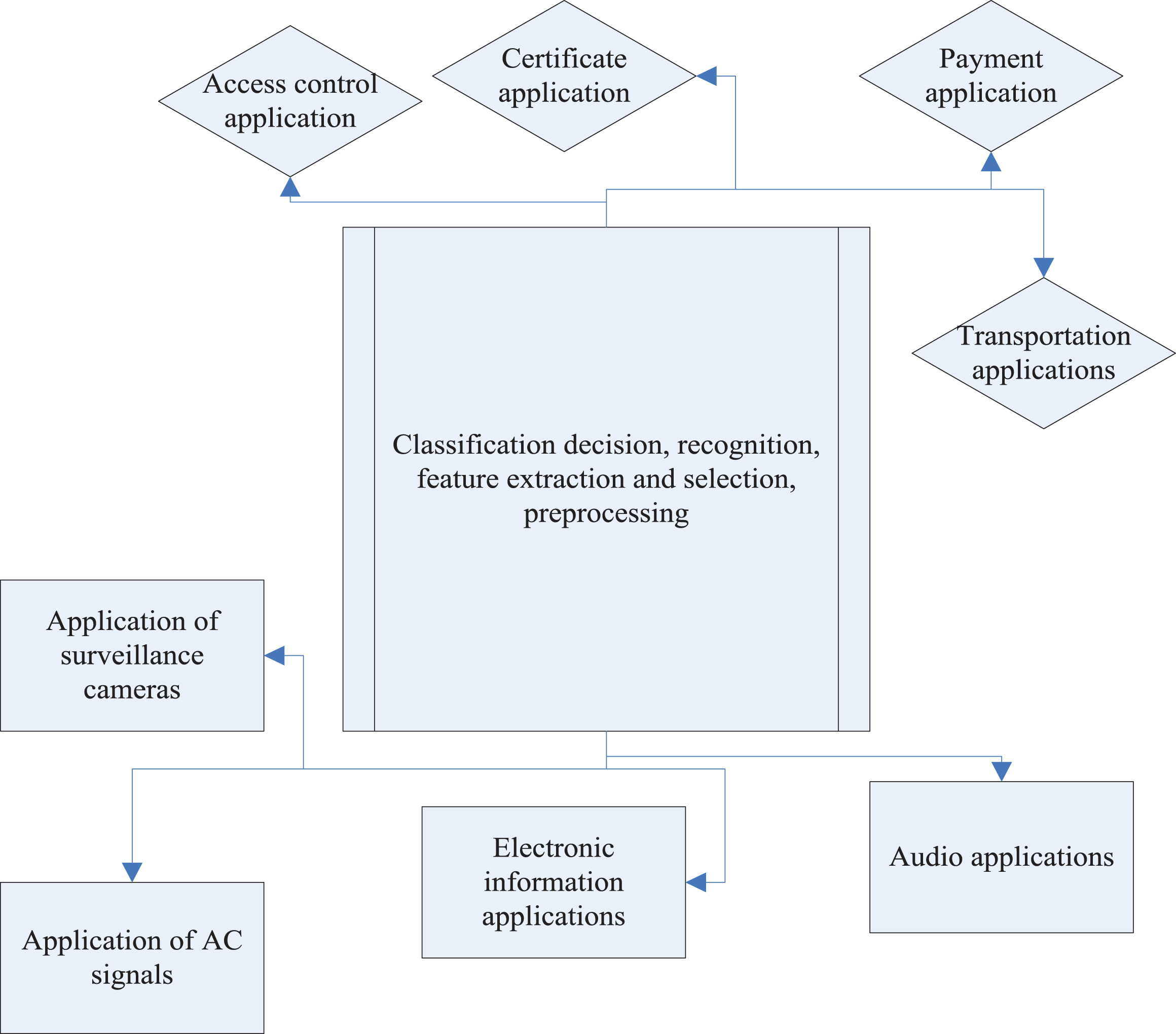
Image recognition process.
(2) Application of image recognition technology
In the film released, many shots show the application of image recognition technology in the security field, and even remote control of shooting opponents through drones with face recognition functions. It can be said that the application of image recognition technology has been increasingly used by people. widely accepted. Once, image recognition was a very strange term for us, but now one of the most rapidly developing and influential science and technology is image recognition technology, which is getting closer to our lives [10–12]. For example, the Baidu Cloud AI image search function launched by Baidu enables the search to find similar or identical pictures in the self-built library of Baidu with pictures, and to score similarity according to the type, color, layout, content, etc. of the picture to achieve real-time Search; when shopping on Taobao, if you want to buy a certain product without knowing its name, you can know the price and type of the product by taking a picture of the item through the Taobao APP; using facial recognition in the management of the company to confirm whether there is Is granted to attend a meeting, whether there is file storage or download access authorization, etc., as well as face recognition for smart door locks, item scanning during security checks, etc. Similarly, in ensuring public safety, image recognition technology has become an indispensable technology.
(3) Image recognition technology of the stand-alone platform
The image recognition framework of a stand-alone platform is shown in Fig. 2. Image pre-processing module: It is used to convert color images and store the converted gray-scale images in memory to prepare for subsequent calculations. Use the image data read from the memory by the relevant feature extraction module to perform operations to ensure the consistency of the acquired image features with the user’s needs; quantify the user’s needs. Classifier training classification module: Through the application of the backpropagation algorithm and SVM and other algorithms, this module can train the acquired training data samples. The classifiers obtained through training are stored in the local file system and used to determine the category of the image. Applying a traditional image classification system in image classification takes a long time to extract image characteristics. At the same time, it needs to read and write the system memory and hard disk when calculating the feature matrix with a large amount of data. Negative effects reduce system stability and reliability.
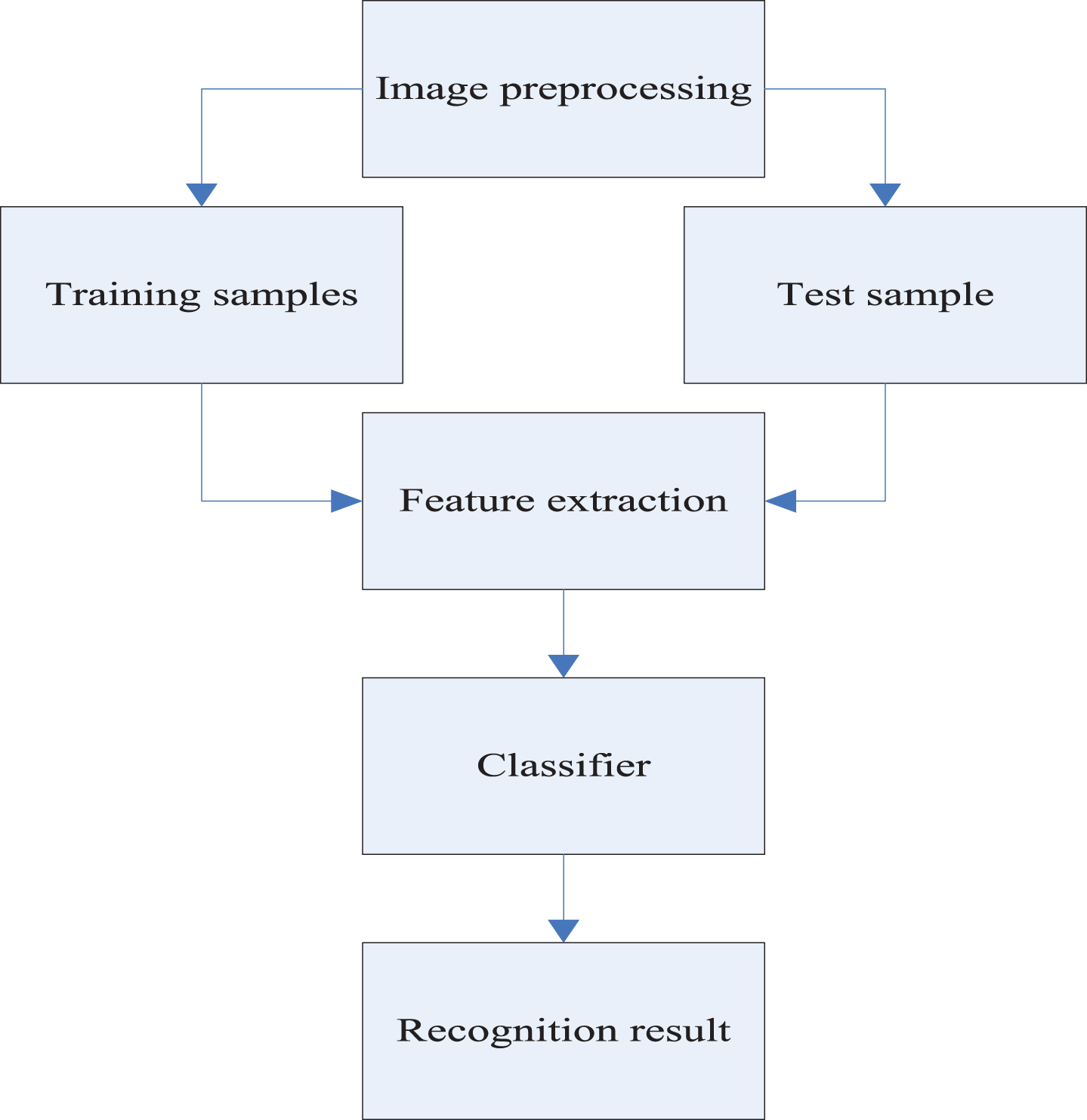
Image recognition framework for stand-alone platform.
(1) Image processing
Many factors interfere with the imaging of graphics, leading to a reduction in image quality. Therefore, it is necessary to restore them. The relative motion between the image of the moving object and the camera makes the image blurry. Taking a car as an example, assuming that the vehicle image is described by a representation, the vehicle moves in a uniform linear motion in the x-direction, the total displacement is represented by s, and the total movement is represented by T, the value of a point in the vehicle image after blurring can be described:
The above formula describes the fuzzy model of the vehicle image. The recovery formula of the vehicle image can be described as:
(2) Image segmentation
Image segmentation is mainly to separate the target image from the background image for identification. This paper uses the edge detection method to separate the target vehicle image from the background, which is mainly realized by edge enhancement and subtraction operations. Edge enhancement processes the two images separately by using the gradient method with high computing efficiency. The detailed process is as follows:
Hypothetical vehicle image g (x, y) the gradient of the function is a vector
That is, the direction of the gradient at the point (x, y) and its length is the maximum rate of change of the function, then,
For vehicle images, this paper uses the differential algorithm to perform approximate differentiation. Analysis of the gradient formula shows that the value of the image function is directly proportional to the grayscale difference of adjacent pixels. When the image grayscale change is not large, the regional gradient value is small. In the image contour, the grayscale value of the pixel fluctuates greatly. The gradient value is very large; in the equal gray area, the gradient value is zero. Image enhancement can be done based on the above gradient algorithm.
Subtract the vehicle edge image from the background edge image. Suppose g1 (x, y) versus g2 (x, y) Used to describe the subtracted image; 0 is the gray value of the dark point, so there are:
After the subtraction operation, not only the edge subtraction image can be obtained, the vehicle can be separated from the background, but also the interference caused by the camera’s slight shake and the light changes can be overcome.
(3) Image Binarization
To extract the vehicle edges from the subtraction edge image, the image needs to be binarized. In an edge-subtracted image, the edge is only a small part of the entire edge-subtracted image, which is reflected in the two peaks in the histogram. This article takes the corresponding gray level t as the threshold, assuming v (i, j) is the gray value of the binarized image at the scan point, then:
(4) Intelligent recognition of Bayesian classifier models
According to the results of the above image processing, intelligent recognition of vehicle models is achieved through the Bayesian classifier. Ai is used to describe the i-th attribute, C is used to describe the decision attribute; aik is used to describe the k-th value of the i-th attribute; cj is used to describe the j-th category; | cj | is used to describe the number of samples in the jth category.
It is a collection of samples from all known categories.
(5) The image recognition framework based on the cloud computing platform is shown in Fig. 3.

Image recognition framework of cloud computing platform.
The user submits an image classification request: it is obtained from Hadoop’s IobTracker by using the Tobclient image classification job ID. The engineering JAR package can be run in the image classification job, by applying the JobClient to copy the configuration files and image feature classification data that the program depends on. After completing the above process, JobClient can submit jobs in JobTracker. JobTracker first checks the relevant information of the job, enters the data division information, obtains the job from the distributed file system, and prepares the job for execution.
(1) Definition of cloud computing
Cloud computing is a new type of computing model that provides users with various computing resources, such as servers, storage resources, and applications, in the form of services. Users can use various clients (such as personal computers, mobile phones, etc.) to access the services provided by the cloud computing platform through the network. In this way, users do not need to install the required applications on the machine, but use tools such as browsers to access and use applications located in the cloud. Cloud computing can instantly respond to the computing resources required by users, that is, to supply or recycle corresponding resources according to user needs. Users can apply for only a part of the resources at the beginning, and when the demand increases, they can apply for more computing resources from the cloud service provider. When the application’s demand for resources decreases, the corresponding resources will be recycled. Users pay according to the computing resources and services they get. This model effectively saves the system computing resources and the costs that users need to pay. According to the types of services provided by cloud computing, they can be divided into three categories: software services, platform services, and infrastructure services.
(2) System architecture of cloud computing
The cloud computing system architecture M can be roughly divided into three layers, from top to bottom are the access layer, the application interface layer and the basic management layer. The system architecture model is shown in Fig. 1. Among them, the basic management layer mainly solves the problem of sharing all the resources of the computer resource pool, the application interface layer mainly solves how it provides services to the outside, and the access layer refers to some specific applications implemented using cloud computing.
(3) Data storage and management technology
To maintain high-performance and high-reliability storage performance, cloud computing uses distributed storage technology to store unnecessary use data in a large number of distributed storage devices to reduce the storage space required by customers in the device and reduce the need to run large applications. The level of equipment required. In some large programs, such as FIFA, League of Legends, etc., huge amounts of data are stored on the cloud platform, and players only need to download the software (login software) necessary to access the cloud platform to use it [13–15]. This approach greatly reduces the application’s need for computer equipment.
(4) Virtualization technology
Virtualization technology deploys abstracted low-level resources in a transparent manner, which is not affected by the physical configuration of time, place, or underlying facilities [16–18]. With the rise of cloud computing, the technology proposed and applied to the IBM virtual computer system in the 1960 s in the last century has once again attracted people’s attention, with server virtualization as the focus. The focus of server virtualization is to virtualize multiple sets of virtual machines that can run simultaneously without interference on a physical server. This is also the main content of IaaS in current cloud computing. To achieve this purpose, a virtual multi-technology mainly adds a Hypervisor layer between the hardware layer and the operating system layer.The upper layer applications and hardware are disassociated to divide the physical machine into many VMs. Machines run on top of the virtualization layer and multiple virtual machines can run on one physical machine. One virtual multiple can be applied to various business systems in the enterprise, such as management systems, OA, etc. in a wider range.
(5) Planning and deployment recommendations for virtual machine systems
The key to implementing a secure virtual machine system is careful planning before installation, configuration, and deployment. Many virtual machine system security and performance issues are due to a lack of planning and management control. In the initial planning phase of the system life cycle, security maximization and cost minimization should be considered, which helps the virtual machine system comply with the relevant security policies of the organization. It is much more difficult and expensive to consider security after deployment.
Edge detection method
(1) Definition of edge detection method
Edge detection is a very common problem in image processing. The purpose of edge detection is to find the points with obvious changes in brightness in the image, and consider these points to be the edges of an object in the image. Changes in the edge of an item in an image include discontinuities in-depth, discontinuities in surface direction, changes in material properties, and changes in scene lighting. Edge detection is a research area of image feature extraction. The edge of an image refers to the part where the brightness of a local area of the image changes significantly. The gray profile of this area can generally be regarded as a step, that is, a gray value that changes sharply in a small buffer area to another gray level Large gray value.
(2) The usefulness of edge detection
The edge detection of images greatly reduces the amount of data, while excluding irrelevant information, and retains important structural attributes expressed by the images [19–21]. There are many methods for edge detection, but they can be divided into two categories: one based on lookup and one based on zero-crossing. The detection-based method detects the boundary by finding the maximum and minimum values of the first derivative of the image, which usually locates the boundary in the direction with the largest gradient. The zero-crossing-based method finds the boundary by looking for the zero-crossing of the second derivative of the image. The edges may be related to the viewing angle, that is to say, the edges may change with the change of the viewing angle, which is typically reflected in the geometry of the object to block the other. It may also be independent of the viewing angle, such as reflecting the surface texture and surface shape of the object. In two-dimensional and even higher-dimensional spaces, the influence of perspective projection needs to be considered. A typical border maybe a border between a red and a blue block, and each side of an item’s border has an edge. Edges play a very important role in many image processing applications. The edges of nature images are not always ideal step edges. They are often affected by the following factors: focus blur due to limited scene depth, penumbra blur due to shadows from non-zero radius light sources, shadows from smooth edges of objects, local specular or diffuse reflections near the edges of objects [22–24].
Simulation experiment analysis
Experimental setup
(1) Experimental overview
In this paper, vehicle image recognition is taken as an example. The vehicle image is de-blurred, and the target vehicle image is separated from the background by edge detection. The image is binarized. Based on different eigenvalue categories, intelligent recognition of vehicle models is achieved through Bayesian classifiers. Collect experimental data through simulation experiments. Experimental data shows that after a certain number of nodes, the recognition efficiency is higher than the image recognition technology running on a stand-alone platform.
(2) Experimental steps Select a road with a large number of vehicles as the experimental intersection. Assume that a color photo camera records the vehicle flow for one month. The edge detection method is used to randomly select several blessing pictures for analysis and set up an experimental group and a traditional control group for comparative analysis. Compare and analyze the photos taken in different weather, different vehicle speeds, and different periods, and analyze the processing speed and result of image recognition technology under the cloud computing platform. Analyze the obtained experimental results with big data and compare them with the traditional case to get the experimental results.
(3) Simulation experiment analysis
To verify the effectiveness of the intelligent model recognition algorithm based on image processing technology proposed in this paper, relevant experimental analysis is needed. The experimental data comes from the camera acquisition. The camera is fixedly placed at a distance of 1.5 from the ground. The images are collected under different weather and light conditions within one month. The experimental environment is as follows: the hardware uses a 2.5 GHz processor and 5GB memory; the software uses Windows; the development platform is Matlab. Select the images, and use the algorithm in this paper and the traditional smart model recognition algorithm based on saliency to identify the vehicle models in the image. The table data is shown in Table 1 and Fig. 4 and Table 2 and Fig. 5.
Accuracy rate of traditional car inspection (unit:%)
Accuracy rate of traditional car inspection (unit:%)

Accuracy of traditional conditional image restoration.
Using cloud computing to detect car conditions
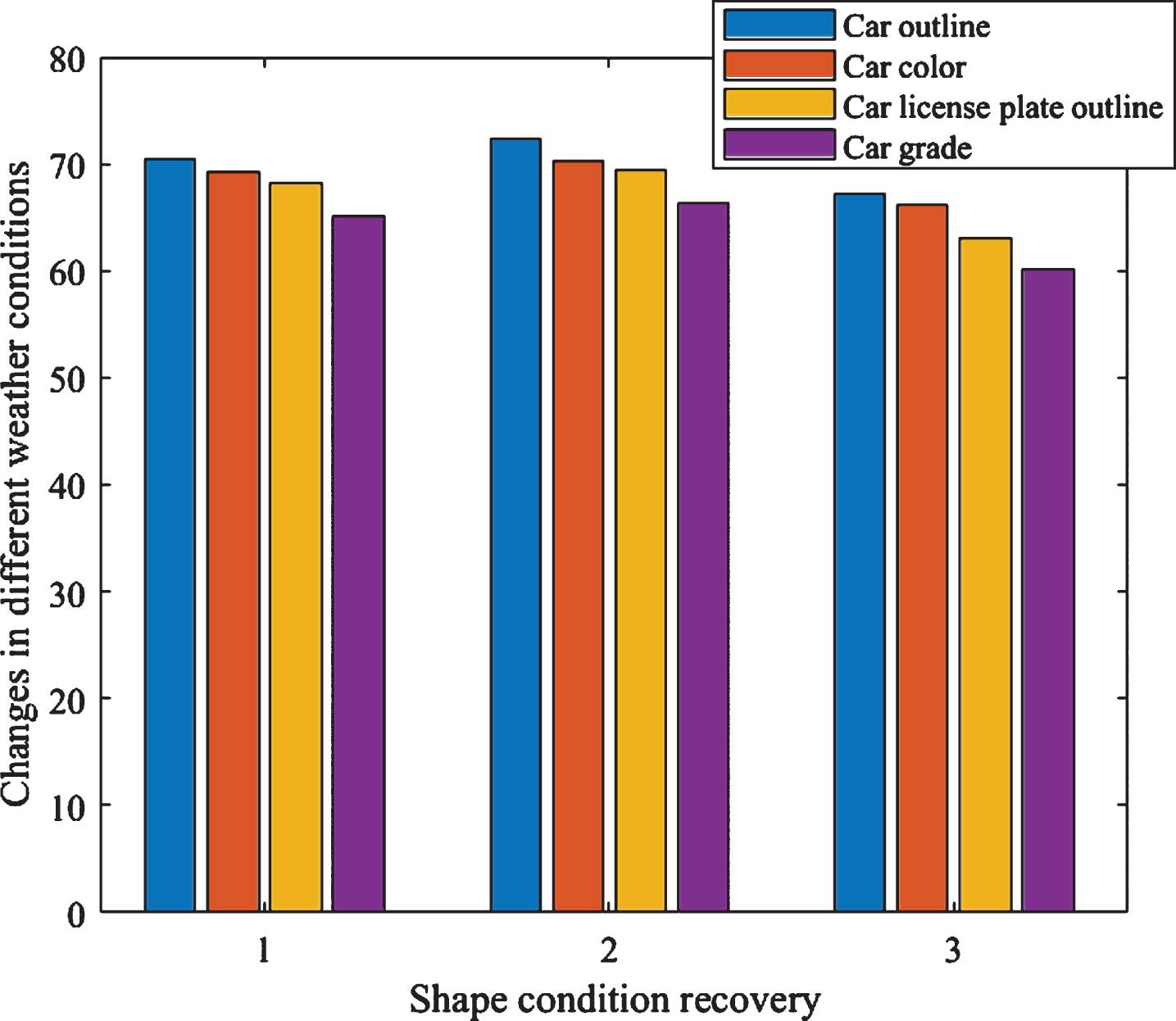
Accuracy of current image restoration.
(4) Experimental precautions The experiment should be familiar with the specific application of the binary method and edge detection method. Integrate the experimental results obtained. The Bayesian classifier should be implemented by a skilled person to avoid errors. Perform big data analysis on the obtained experimental data, and verify the results processed by the cloud computing platform. Avoid errors in the experiment by mathematical analysis. The experimental data must be true and valid.
Analysis of experimental data
(1) The image recognition technology of the cloud computing platform can maximize the image according to objective requirements when performing image processing. And both the cell image and the celestial body running image can be processed under the cloud computing platform image recognition technology. The use of linear and non-linear functions will ensure the complete effect of the obtained information [25, 26]. Different images can be combined in detail on the computer after the correct image coding is compiled to ensure a clearer image. In the experiment, the obtained car images were analyzed. Under the cloud computing platform, an attempt was made to perform fuzzy recovery processing on vehicles that run too fast under different weather conditions. It was found that the cloud computing platform can be based on the characteristics of the vehicle body. When performing recovery, the comparison between the recovery rate under different conditions and the recovery rate under traditional conditions shows that the image recognition based on the cloud computing platform is more accurate and efficient than the traditional conditions. The traditional comparison data is shown in Table 3 and Fig. 4. Based on cloud computing the comparison of data in the case of the platform is shown in Table 4 and Fig. 5.
Accuracy of traditional conditional image restoration
Accuracy of traditional conditional image restoration
Accuracy of current image restoration
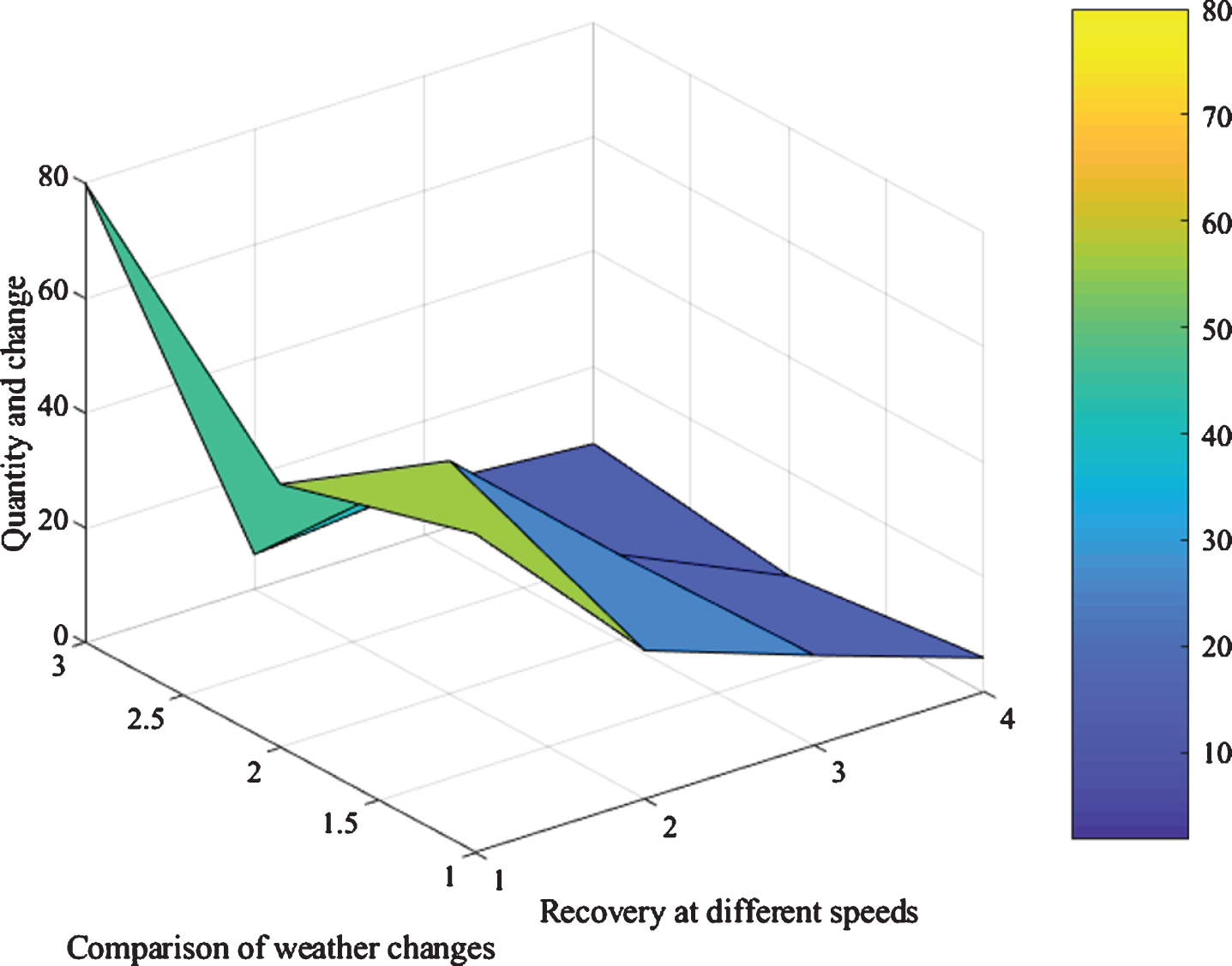
(2) In the process of learning and training, the vehicle detector collects the image waveform of the vehicle image after image processing, extracts the waveform features, and obtains the peak value, peak position, average, and number of peaks. K-means clustering is used to classify the eigenvalues. Based on these data, the vehicle recovery rate under different weather conditions at different vehicle speeds is analyzed. The specific data are shown in Table 5 and Fig. 6.
Recovery rates at different vehicle speeds (meters per second)

Recovery rates at different vehicle speeds (meters per second).
(1) The intelligent recognition of images by cloud computing has developed from two-dimensional to three-dimensional, and has achieved a common improvement of multi-dimensional angles. The processing effect of information data is more accurate. The application effect of the computer hardware level is improved, and the intelligent image recognition effect by the computer central processor is more obvious, and the function is more significant. Through the application of image recognition technology under different algorithms, the comparison of the image recovery rate is shown in Table 6 and Fig. 7.
Image recovery rates under different algorithms (unit:%)
Image recovery rates under different algorithms (unit:%)
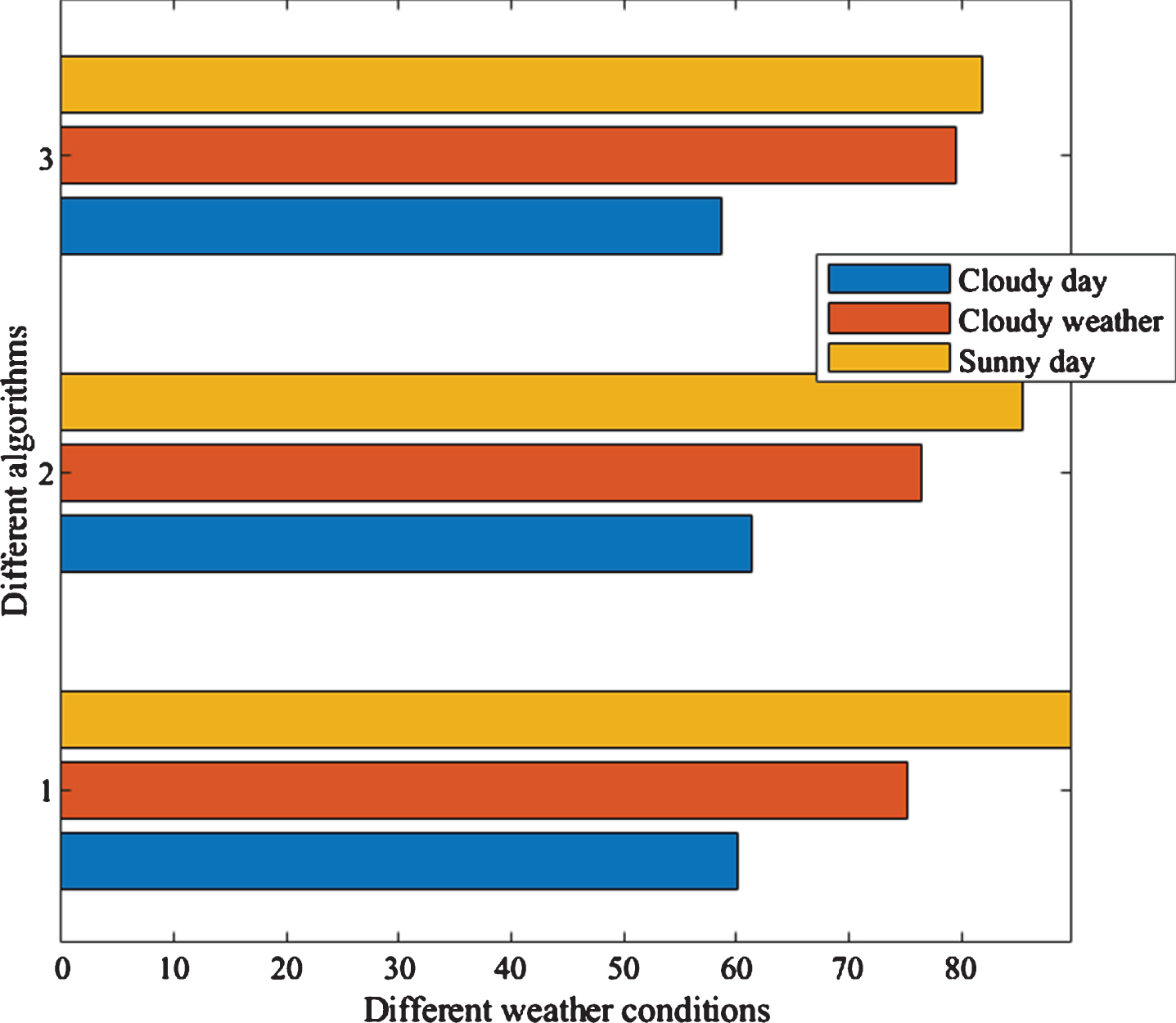
Image recovery rates under different algorithms (unit:%).
(2) The development and application of computers have had a profound impact on life and production work, especially in the process of cloud computing image recognition and processing to obtain detailed information data. On the premise of continuous improvement of science and technology, computer technology has improved its hardware settings. There are 100 photos in each weather. The research finds that the traditional image recognition technology and the image processing technology under the cloud computing platform require different time. It is found that the image recognition technology based on the cloud computing platform has efficient, fast and accurate results. The statistical results are shown in Fig. 8.
Recovery time in different situations.
This paper proposes an image recognition technology based on a cloud computing platform. It performs deblurring recovery operations on vehicle images, uses edge detection to separate the target vehicle image from the background, and binarizes the image. Simulation results show that the proposed algorithm has higher recognition accuracy. It is found that the research content and application areas of image recognition technology on cloud computing platforms are very wide. Image recognition technology has broad prospects and huge development potential in various fields of work, and human beings will enter a brand new era.
The emergence of image recognition technology has greatly changed our lifestyle and improved the productivity of enterprises. Cloud computing based on image recognition technology has greatly increased the flexibility and convenience of users, and effectively reduced the resources of enterprise IT systems waste. At the same time, the establishment of the cloud computing platform itself cannot achieve 100% utilization of physical resources. In the application of image recognition technology, there has been a general problem of the decline in the utilization of physical machines. The recognition efficiency has been improved. It is foreseeable that with the development of cloud computing platform image recognition technology, it will become one of the hot development directions, and it will develop in the direction of simplifying the construction process.
The development of computers affects people’s production and life, and image recognition technology has also changed people’s lives. This article aims to study computer-based image recognition technology. This article takes vehicle image recognition as an example and performs deblurring recovery operations on vehicle images. The edge detection method is used to separate the target vehicle image from the background, and the image is binarized. Based on different eigenvalue categories, intelligent recognition of vehicle models is achieved through Bayesian classifiers. Collect experimental data through simulation experiments. Experimental data shows that after a certain number of nodes, the recognition efficiency is higher than the image recognition technology running on a stand-alone platform. The experimental data shows that the image recognition technology based on cloud computing platform is conducive to the development of image recognition technology, and the problems existing in the traditional image detection system in terms of computational efficiency and data processing ability are quickly resolved, which has guiding significance for the development of image recognition technology.