



Abstract
Under the influence of COVID-19, the economic benefits of shale gas development are greatly affected. With the large-scale development and utilization of shale gas in China, it is increasingly important to assess the economic impact of shale gas development. Therefore, this paper proposes a method for predicting the production of shale gas reservoirs, and uses back propagation (BP) neural network to nonlinearly fit reservoir reconstruction data to obtain shale gas well production forecasting models. Experiments show that compared with the traditional BP neural network, the proposed method can effectively improve the accuracy and stability of the prediction. There is a nonlinear correlation between reservoir reconstruction data and gas well production, which does not apply to traditional linear prediction methods
Introduction
Based on the impact of COVID-19 epidemic prevention and control, the control of population flow has been strengthened in all regions [1, 2]. The world has been producing oil and gas for more than 150 years. With the exploitation of shallow, easily recoverable oil and gas, it has become increasingly difficult to extract conventional oil and gas [3]. After the shale gas extraction technology matures in the United States, shale gas has become an important alternative energy source for conventional natural gas [4]. When China’s energy companies develop projects abroad, shale gas has gradually become a hot spot [5–7]. The economic evaluation of shale gas fields is the key to project development, operation, and profitability [8]. According to the development process of shale gas field, this paper designs a reasonable development cycle, and evaluates the economics of shale gas projects through various evaluation indicators and sensitivity analysis. The Chinese government first positioned shale gas as an independent mineral species [9–12]. This means that exploration and development on the one hand has avoided the monopoly of franchise rights of SOEs and other state-owned enterprises. On the other hand, private capital can be involved in this huge potential energy industry, so that the shale gas industry can fully realize market competition [13]. If the state-owned oil companies do not investigate and exploit, they will otherwise transfer shale gas prospecting rights to other investment entities without affecting the exploration of oil and natural gas. Insufficient investment in exploration of oil and natural gas and blocks with uncertain prospects but possessing the potential of shale gas resources require mining rights holders to withdraw from the block and shale gas prospecting rights.
The Chinese government has successively issued a large number of related policies, mainly the Chinese government’s strong support for shale gas from the national level, while also encouraging and opening up foreign companies and funds. Relevant policies are being formulated and more open and encouraging policies will be introduced. While the development of China’s shale gas industry is catching up with the explosive development of China’s natural gas industry, China’s natural gas supply and demand gap is widening, and prospects for shale gas extraction are broad. In the past five years, China’s domestic natural consumption gap has further increased. China has a strong appeal for natural gas sources with economic utilization value [14–17]. China has abundant unconventional natural gas reserves and is expected to usher in explosive growth after breaking through the shackles of price systems and technological levels. The diversified gas supply pattern of China’s natural gas supply has gradually taken shape [18]. The 12% of the total domestic energy supply for shale gas production has risen by about 10% [19]. This shows that the Chinese government hopes to rely more on domestic natural gas production in China to meet demand, which is to increase the output of unconventional oil and gas resources dominated by shale gas. This data shows that the Chinese government has full confidence in the storage strength and mining technology of unconventional oil and gas resources. It also shows that the determination of the Chinese government in exploiting unconventional oil and gas resources is very large. The expanding supply gap, domestic energy-saving and emission-reduction requirements, and China’s deep shale gas resource reserves trigger the government and social capital to attach great importance to shale gas exploration and development. The downstream of the shale gas industry chain mainly involves the application direction. One is that the downstream of shale gas is basically the same as the downstream opportunity of natural gas industry.
Shale gas content distribution
Shale gas production
To analyse the economic benefits of shale gas development, we must first analyse the recoverable reserves of shale gas, and analyse whether shale gas recoverable reserves in China have a certain reserve to meet mining requirements. The permeability of shale gas reservoirs is extremely low, and it is generally only grade. Poor migration channels result in low output of shale gas only by differential pressure. Therefore, fracturing has become the most effective and most commonly used method for extracting shale gas. Shale physics and shale gas production determine the time characteristics of shale gas production [20]. The production decline method, which is commonly used to predict oil and gas production, is based on boundary-controlled flow regimes and requires production to reach steady state, which does not apply to shale gas production forecasts. Through statistics of production data of shale gas wells, it is pointed out that shale gas production meets the law of decreasing power law exponents. The expanding supply gap, domestic energy-saving and emission-reduction requirements, and China’s deep shale gas resource reserves trigger the government and social capital to attach great importance to shale gas exploration and development. Increased fiscal subsidies, market-based pricing, and encouragement of private capital participation will all become important means of promoting domestic Shale Gas development (SGD). The upper reaches of China’s shale gas are mainly exploration, development and gas recovery stages [21, 22]. Shale gas exploration and development is the most important thing at this stage.
The investment in the gas station generally accounts for about 20% of the total gas pipeline investment. The investment in the compressor group accounts for more than 50% of the investment in the compressor station. The market capacity of the compressor unit in the next 4 years is at least 52 billion [23]. Large-scale gas compressor units, electric drive compressor units, and large-diameter fully welded ball valves are the three key equipment for natural gas transmission pipelines.
Shale gas geographical distribution
Based on the background of production demonstration and block tendering, the total investment in shale gas exploration and development before 2015 is estimated to be approximately RMB 20 billion according to the cost per well and the number of wellheads. According to the development model, the capacity demonstration zone entering or basically entering the development stage will be worth 160–180 billion, and the tendering area for the exploration evaluation period will be 2–40 billion [24]. According to the classification of investment in the sub-sector industry, the exploration was 150 million the oil well pipe was 1.68 billion, the drill bit mud was 1.68 billion, the drilling rig was leased 2.24 billion, the well site was ready for 1 billion, and the cement was 720 million [25]. In 2011, the global oil and gas field equipment and service market experienced a trend change. The fracturing service market surpassed offshore drilling and offshore construction to become the leader in the sub-markets for oil and gas field equipment and services. Compared with the growth of stocks in other sub-markets of oilfield services, we are more optimistic about benefiting from the old domestic market for fracturing services that attenuate production of oil and gas fields and new low-permeability oil and gas fields to build wells and have higher elasticity. It is estimated that the global fracturing service market will be worth US$50 billion in 2012. Compared with the increase in the inventory of general equipment for exploration and development in the oil and gas industry, we are more optimistic about the popularity and growth of special equipment. The special equipment used in unconventional oil and gas exploration and development technologies has advanced in advance before the large-scale development of shale gas. It is expected that the cumulative domestic market will be around US$20 billion by 2015.
Analysis of economic benefits of shale gas exploitation
Sensitivity analysis
Natural gas prices are also one of the main factors that affect project revenue. The figure shows that when the natural gas price is 3 US dollars, the project is in deficit. If the natural gas price is expected to be low, the project development should be terminated. Through sensitivity analysis, it is concluded that production and price are the key factors that affect the economic efficiency of the project. Before the development of the project, the accurate estimation of the output and price is the key to the successful development of the project. To visualize the effects of output and prices on project returns, we calculated and plotted the relationship between natural production and price at different IRRs. From the chart, you can directly find the yield of the project at different yields and prices. When the intersection of production price and price is located on the right and bottom of the IRR = 0 curve, the project is in deficit. Judging from the perspective of economic evaluation, the project development should be terminated. In a reasonable shale gas production and price range, prices have a greater impact on the economics of shale gas projects. Therefore, a reasonable forecast of shale gas prices during project operation is critical to accurately assessing project economics.
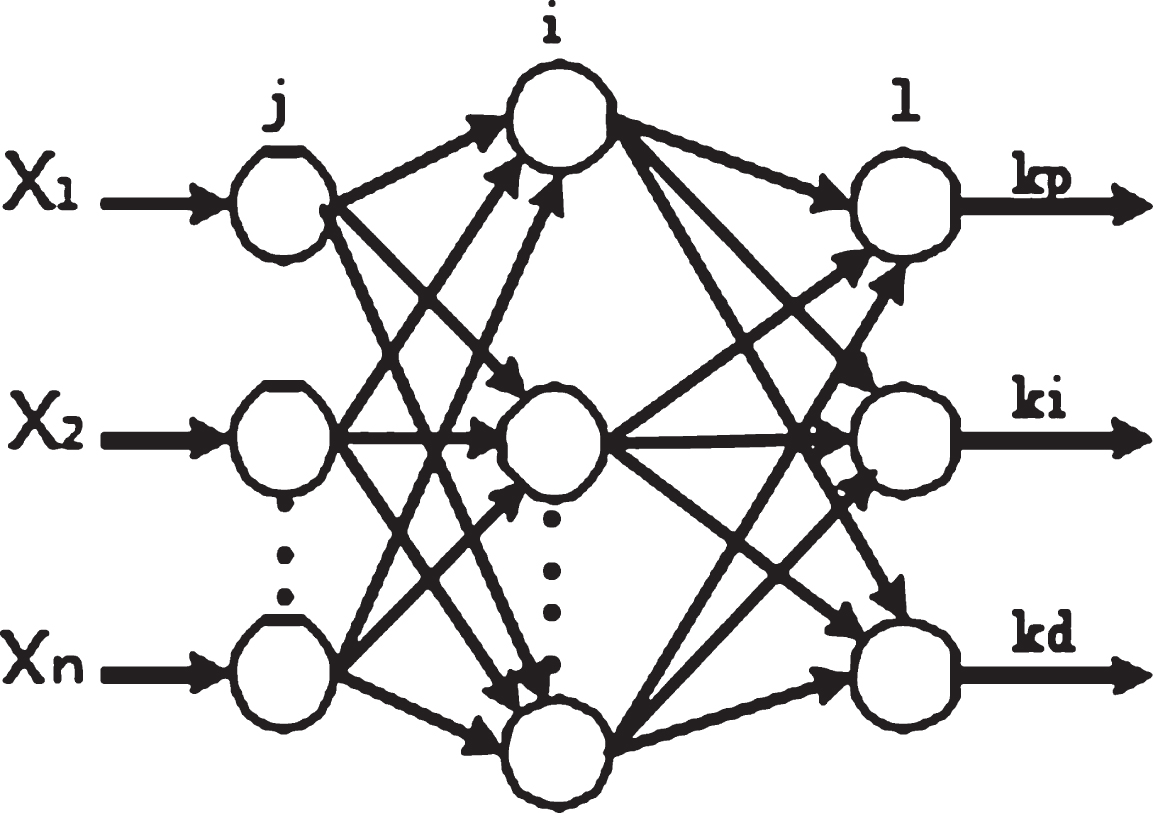
An error signal is defined for each of the output layer and the hidden layer so that the output layer:
The differential function of the hidden layer activation function is:
The quadratic error function for the input pattern pair for each sample p is:
According to the gradient method, the trimming formula for each neuron weight coefficient in the output layer is:
Therefore, the weighting coefficient trim formula for any neuron k in the output layer is:
To summarize the above results, there are:
1)
China’s policy on shale gas.
China’s natural gas supply and demand forecast.
The structure of multilayer feed forward network based on BP algorithm.
2)
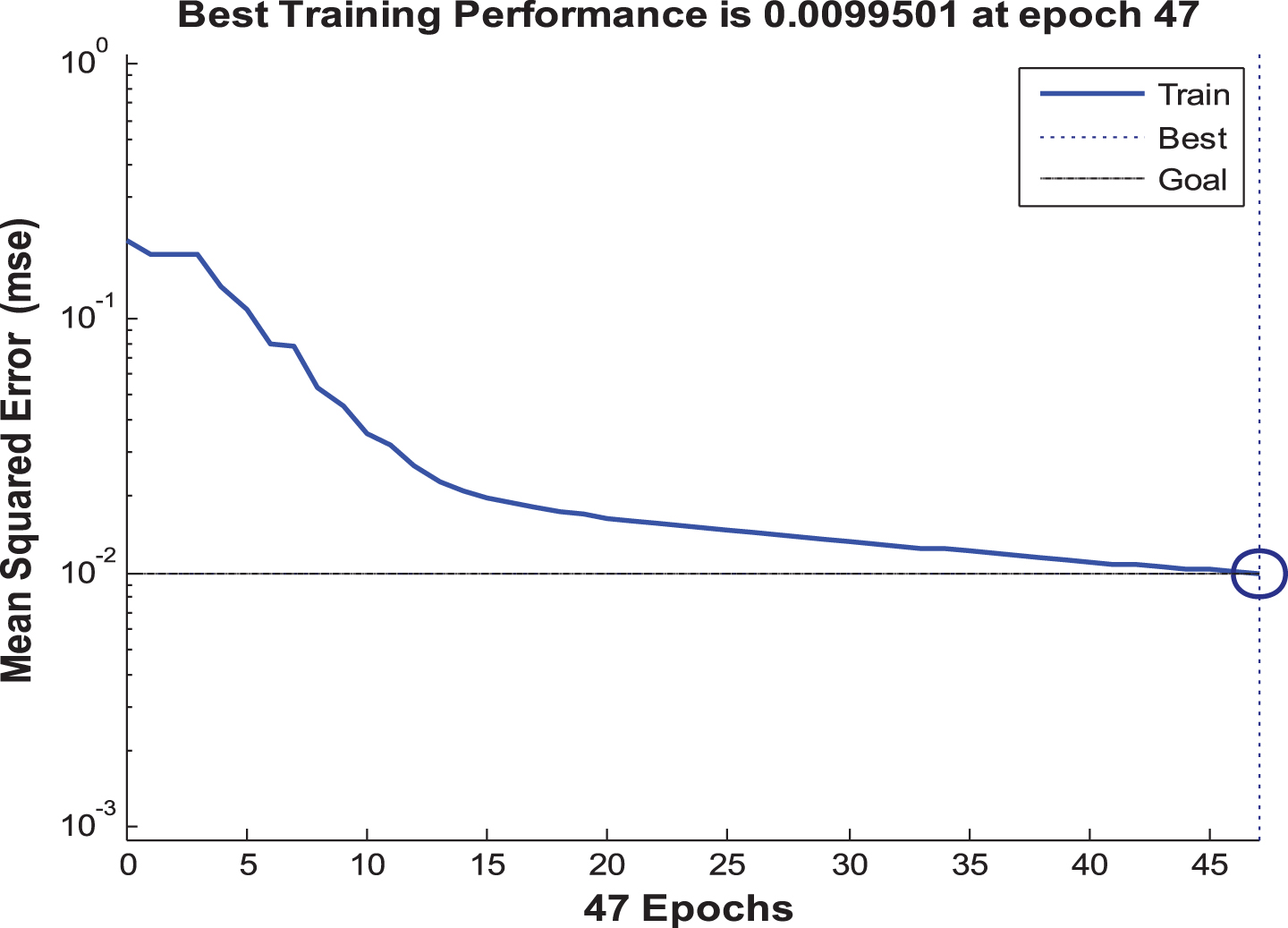
The economic benefits mainly refer to the relative ratios of various losses in economic activities and the achieved results. The ordinary calculating party is the “GDP-production cost". The economic efficiency is the most important indicator of whether an economic activity can be carried out. The economic benefits of energy extraction refer to investing energy into certain uses to obtain maximum benefit. If the output increases, the corresponding investment will increase. The economic benefits of SGD are studied using modern marginal opportunity cost theory. The so-called cost theory mainly shows all the costs that a company needs to pay for the production of a unit of product. It can clearly depict all the costs required for shale gas extraction and the economic benefits of shale gas exploitation. BP algorithm error performance curve simulation results is shown in Fig. 4.
Standard BP algorithm error performance curve simulation results.
According to the basic significance of the cost theory, the production investment needed mainly refers to the capital needed in production process. It mainly includes the personnel costs, the material costs, the funds required for simple reproduction, and other corresponding costs to be considered during the production process. For the shale gas extraction industry, shale gas, as a product, is an energy source rather than a direct interaction of the corresponding materials under a certain environment. In the process of SGD, the main required material is the corresponding auxiliary production. The required production input in the SGD process is mainly the depreciation expense corresponding to the labor cost and fixed equipment. The main procedure for SGD is to extract shale gas underground and extract it from the earth’s surface.
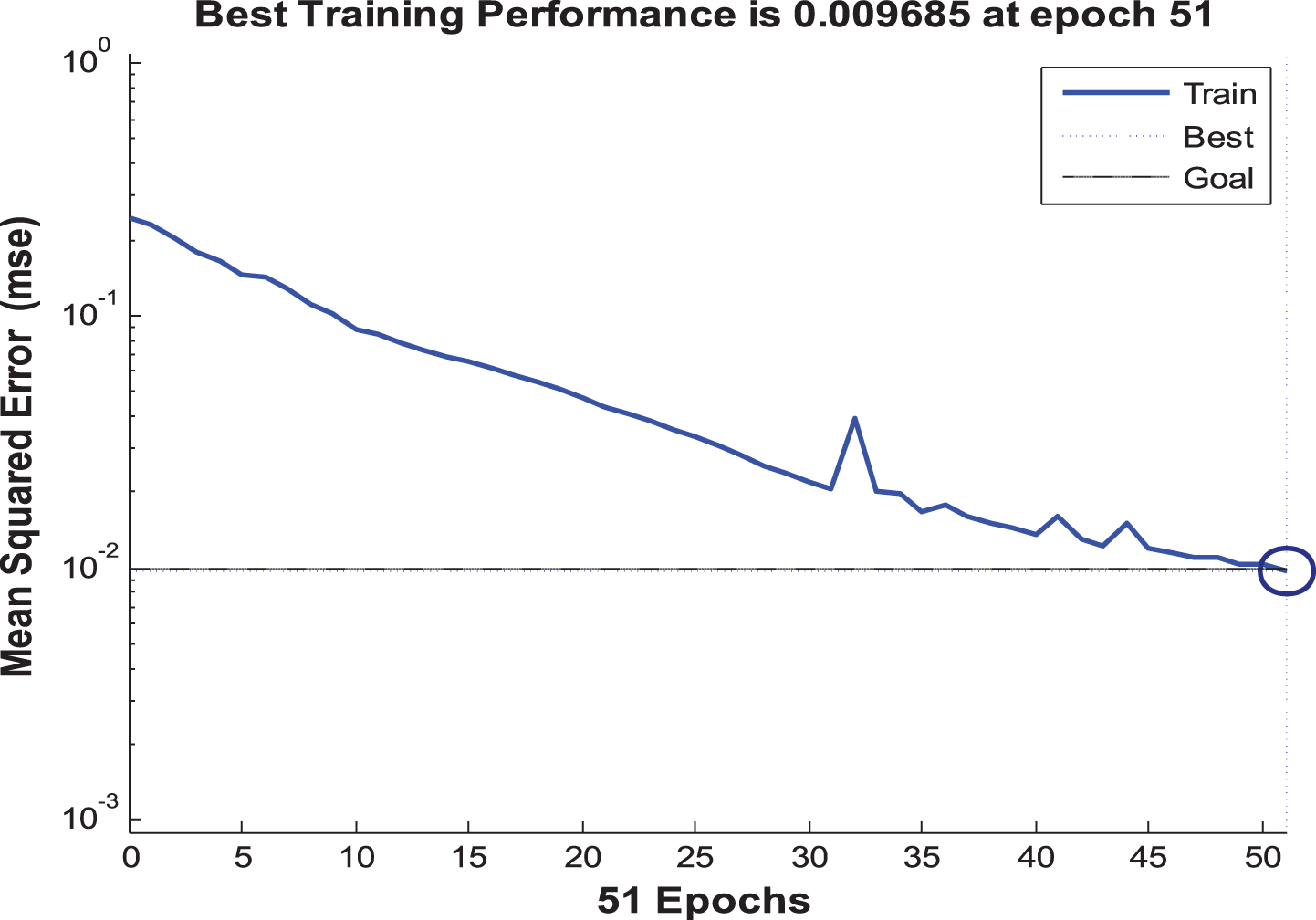
The major hazard to the environment caused by shale gas production is air pollution. The ozone layer near the surface is damaged. In the process of shale gas exploitation, the aquifer below the rock layer and the water near the surface are also damaged. Because shale gas is extracted by hydraulic fracturing, a large amount of water during the mining process may cause a large number of water shortages and other situations. Shale gas needs to maintain the surrounding environment during the exploitation process. Momentum BP algorithm error performance curve simulation results are shown in Fig. 5.
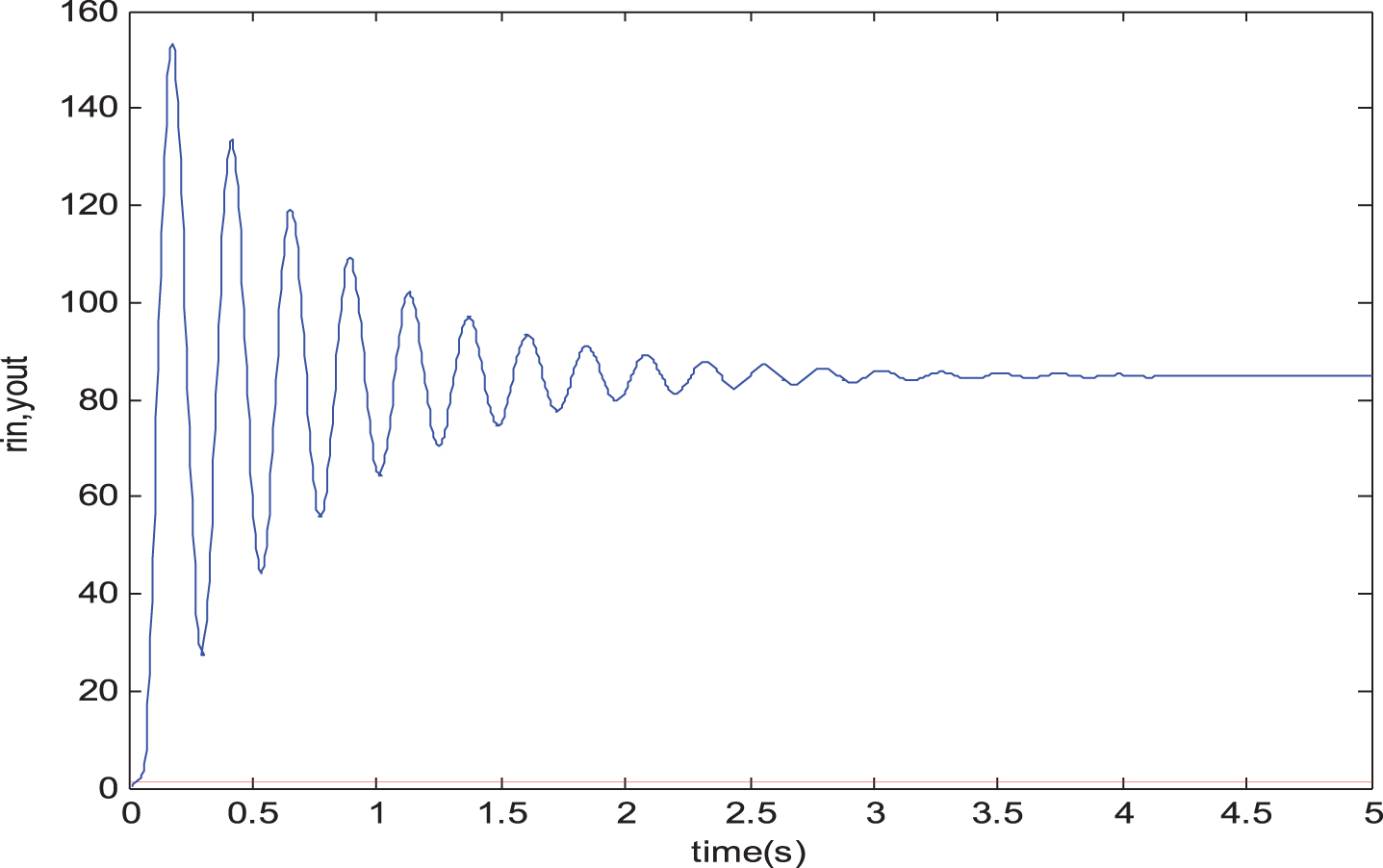
Momentum BP algorithm error performance curve simulation results.
Therefore, other inputs for SGD and so-called marginal external inputs mainly refer to the problems caused by the destruction of the ecological environment caused by the exploitation of shale gas. Other inputs for shale gas products include governance environmental inputs, safety inputs, and development prospects for SGD. The amount of other inputs is determined by many external uncertainties, such as the status of China’s economic development, the development of SGD technology, and the supply and demand of the shale gas market. Shale gas as a product, shale gas mining process, is not only the process of shale gas production, but also the process of pollution of the surrounding environment. These factors determine that the environmental pollution caused by shale gas extraction is more prominent than that of other industries. The cost and corresponding increase in the cost of protecting the surrounding environment and environmental governance are more than in other industries.
BP neural network method and its application
By learning the BP neural network, we recognize its shortcomings and use genetic algorithms to optimize it. At the same time, according to the factors affecting the decline of production, a GA-BP shale gas production decline model with time, cumulative production and formation pressure as the input layer, and daily production gas volume as the output layer was established. According to the established GA-BP neural network and decline model, it is found that the prediction accuracy of this neural network is significantly improved and the prediction results are closer to the actual data, providing an effective and feasible method for predicting shale gas production decline. BP neural network is a self-learning nonlinear fitting model method. BP neural network can adaptively determine the connection weight of each neuron based on the input training samples. After many trainings, the neural network stores the fitting information extracted from the sample data set in the weights of each layer. In the prediction, the neural network calculates the predicted value by computing the input data and the weights. Therefore, the determination of the weight makes the neural network have the ability to fit the regularity of the sample data. The back propagation algorithm is used to generate the BP neural network weights. China’s natural gas supply and demand forecast is shown in Table 1.
China’s natural gas supply and demand forecast
China’s natural gas supply and demand forecast
The BP neural network is a multi-layer forward feedback network composed of forward propagation signals and backward propagation errors. This method uses the input and output data to learn and train the network. For an unknown system, the neural network is used to determine the corresponding function expression. Finally, when the training requirement error is reached, the prediction output can be performed. In the process of error declining, the standard BP neural network oscillates inevitably, which affects the convergence speed of the entire network. For complex problems, it will lead to a longer training time, and convergence is difficult to grasp throughout the entire process. In the process of learning and training, when the standard BP neural network is iterating, due to the existence of local minimums, the stagnation of the error will tend to occur. These minimum errors can be satisfied within the local scope, but not for the global scope. As the pressure of the formation gradually decreases, the fractures in the shale are closed, resulting in a decrease in the permeability of the fracture, affecting the seepage of gas in the shale, and resulting in a decrease in the yield. At the same time, the pressure controls the gas content of free gas, adsorbed gas, and dissolved gas, as well as the mutual conversion between the three, thereby affecting shale gas production. Cumulative production can reflect the actual natural energy of the formation. With the increase of cumulative production, the natural energy of the formation declines, and the gas supply capacity of the shale gas reservoir decreases, resulting in a decrease in production.
China’s SGD impact on regional economic assessment
With the large-scale development and utilization of shale gas in China, the share of shale gas in natural gas is increasing, and it is increasingly important to evaluate the economic impact of its development. Through the analysis of the advantages and disadvantages and adaptability of the above assessment methods, combined with the current characteristics of China’s SGD. In this paper, taking the Chongqing SGD project as an example, the idea of the impact of SGD on regional economic development is proposed. At present, SGD in District of Chongqing has been successfully commercialized, and SGD has played a strong supporting role in the industrial, construction, and pipeline transportation industries in and even in Chongqing as a whole. Therefore, this paper takes Chongqing and SGD Demonstration Zone as a case, and puts forward the evaluation ideas of SGD on regional economic impact from two aspects, providing experiences and lessons for other SGD regions in China. The input-output model is more suitable for the evaluation and forecast of economic benefits, combined with the characteristics of the development of the shale gas project in Chongqing. This paper believes that input-output models consistent with the BP model can be used to evaluate and predict the economic benefits of SGD in the Chongqing area. The impact of environmental pollution was included in the model through the improvement of the economic-environment model to assess the environmental costs of SGD.
Conclusions
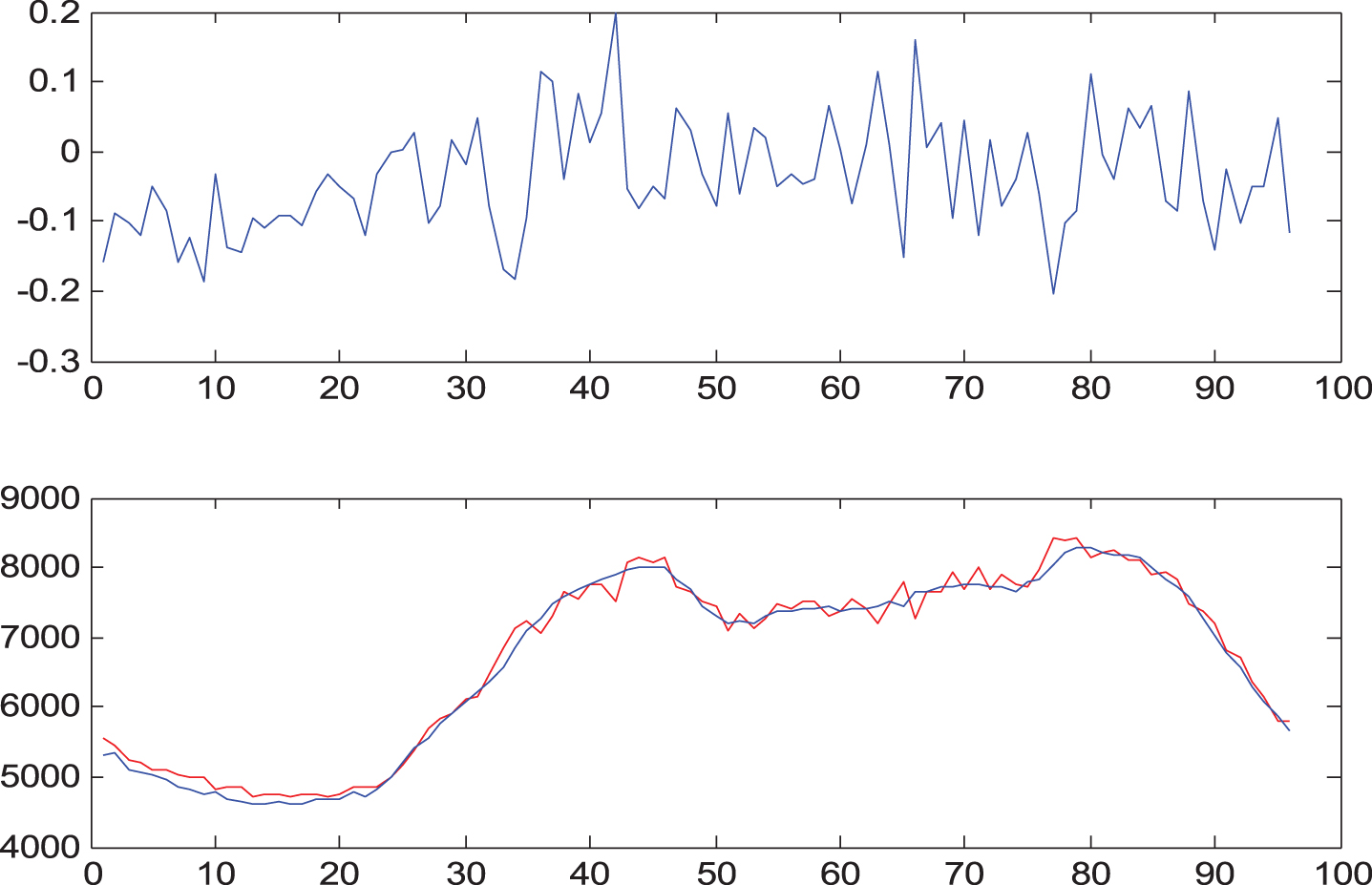
For the fully trained BP neural network, if the new input data is error data, there is often a large error between the output value and the expected value of the network because the error data does not conform to the nonlinear law that the network responds to. If this error is fed back and the weight of the neural network is adjusted accordingly, the weight of the neural network will deviate from the expectation and affect the fitting accuracy of the network. This paper presents an ATD-BP neural network model suitable for predicting the production of high-dimensional shale gas reservoirs. The use of ATD algorithm eliminates the impact of noise data on the modeling of small-scale data neural networks and reduces the number of fluctuations in the weight of neural networks. The actual geology and construction data were used to verify the proposed method. The precision and stability of the proposed method are higher than those of the traditional BP neural network within the scope of project prediction accuracy. However, there is still room for improvement in network convergence speed. The actual production data in 33 different cases, the first 29 data were used as training learning samples, and the last 4 data were not used as training samples. As a test sample, a GA-BP neural network was established. The maximum relative error of the neural network model prediction was 8.1%.
Footnotes
Acknowledgment
The authors are grateful to the editor and anonymous reviewers for their insightful comments. This work was financially supported by the Social Science Fund Project of Shaanxi Province (No. 2017S002).