



Abstract
Agricultural IoT technology realizes the technology of precise, intelligent, and scientific management of agricultural production. Accurate perception and efficient transmission of farmland data is the basis for precision and smart agriculture. Based on the consideration of WSN distributed monitoring sensor nodes, this paper designs a multi-core sensing agricultural Internet of Things monitoring system based on the low efficiency of existing single-core computing and the inability to adapt to massive sensing data node operations. Multi-core data fusion was simulated and analyzed. Firstly, a method for constructing key value subspaces based on logical landmarks is proposed. The node set maintained by the subspace adds local physical location features to coordinate node discovery and routing. Compared with the traditional key value space, the subspace has a higher system priority, which makes the route local priority, thus realizing traffic localization. The simulation results show that the distributed agricultural network data aggregation algorithm based on multi-core perception can significantly reduce the energy consumption of sensor nodes in WSN, prolong the service life of WSN, and greatly improve the computational efficiency and data accuracy.
Introduction
The Internet of Things (IoT) system is a dedicated computer system that is application-centric, based on computer technology, and can be customized by software and hardware. It is suitable for different applications and has strict requirements on function, reliability, cost, size, and power consumption. With the improvement of living standards and the demand for scientific and technological development, human beings have higher requirements for the perception of environmental information. In some special industrial production areas and indoor storage, the environmental requirements are particularly demanding [1, 2]. With the Internet of Things technology, Development provides further protection for environmental environmental testing. The environmental information collection system based on the Internet of Things includes three layers: the sensing layer, the transmission layer, and the application layer. The common layer of the Internet of Things is the temperature and humidity, smoke, carbon monoxide, pressure and other IoT sensor modules [3]. The transmission layer includes wired communication and wireless communication. In part, the application layer includes various terminals. Wireless sensor network is an important technical means to realize the sensing and transmission of agricultural Internet of Things data, which is an important basis for realizing the intelligent application of agricultural data. Agricultural Internet of Things technology refers to the use of network communication technology, radio frequency identification technology and sensing technology to perceive internal and external data in the agricultural production process to achieve accurate, intelligent, and scientific management of agricultural production [4, 5]. According to statistics, China’s Internet of Things industry creates at least 100 billion yuan of economic output per year, and the agricultural Internet of Things is an important part of the Internet of Things industry [6]. The rapid development of the agricultural Internet of Things will accelerate the integration of scientific, intelligent, informational and modern agriculture, and play a vital role in the construction of modern agriculture.
In wireless transmission applications, Lin Huiqiang designed the animal monitoring system with wireless transmission network to monitor the information transmission of animal physiological characteristics in real time [7, 8]. Yang Ting designed the drip irrigation system controlled by WSN transmission using CC2430. He Long et al [9] used WSN network Sensing technology, cultivated the beautiful purple grape, and experimented in Hangzhou. Li Daoliang et al. [10] based on RS-SVM and PSO-LSSVR technology for the research and application of the river crab aquaculture early warning model and water quality prediction. Zhang Kexin et al. [11] A BP neural network was used to simulate the prediction model of chlorophyll a in plants. In the application of sensory data, Zhang Xiaoguang et al. [12] used WSN technology, multi-spectral imagery and other technologies to monitor crop production information. Yan Liwei et al. [13] designed dairy cow identification system; using RF technology and software construction. Shi Haixia et al. [14] designed and implemented a quality and safety traceability system for pigs. Agricultural Internet of Things technology has developed and applied in China, but it is still in its infancy. Compared with foreign countries, there is a clear gap. However, at present, the Internet of Things technology is mostly a single-core CPU, and the speed and computing power cannot meet the processing requirements of more and more monitoring equipment [15]. In the case of balancing power consumption and executing program code in parallel, there is an urgent need to improve the power consumption of the CPU and obtain high aggregation performance without increasing the CPU operating frequency.
In recent years, with the continuous development of society and science and technology, in order to improve CPU performance and parallel processing capability of the system, computer-processing systems have also evolved from single core to dual core, and further developed to multi-core systems. From the development of single-core to multi-core systems, the processing of the system can be greatly improved, but as the size of integrated circuits becomes smaller, the density of processing units becomes higher and higher. These applications not only ensure the correctness of the calculation but also ensure the real-time response of the system [16]. Aiming at the problems existing in the application of the current general agricultural IoT system, a multi-core sensing function integration is proposed to improve the performance of distributed IoT monitoring equipment. The improved system realizes compensatory task scheduling for the current processing loss, thereby improving the stability and reliability of the system. The rest of this paper is organized as follows. Section 2 discusses related work, followed by the Agricultural Internet of Things Model Architecture and Multi-core technology. In addition, the Construction of Distributed IoT Monitoring Platform with Multi-core Awareness designed in Section 3. Section 4 concludes the paper with summary and future research directions.
Agricultural internet of things model architecture and key technologies
The Agricultural Internet of Things is an Internet of Things that is used in an agricultural production environment and is based on a general Internet of Things model. The model structure of the Internet of Things is divided into three layers, namely the perception layer, the network layer, and the application layer. The model architecture of the agricultural Internet of Things is similar to the Internet of Things model architecture. It is divided into four layers: the perception layer, the transport layer (network layer), and the processing. The key technologies of the agricultural Internet of Things are data-aware technology, data transmission technology, and data processing technology.
Internet of things model architecture
The Internet of Things is a network of things and things. It has two meanings: First, it is interconnected. A network extended by the network, the core of which is the Internet; secondly, it can not only connect items with items, but also realize information exchange and communication between items and people and people. Under the relevant standards and norms, the model architecture of the Internet of Things is divided from the bottom to the top: the perception layer, the network layer, and the application layer. As shown in Fig. 1. First, the perception layer - comprehensive perceptual, the main function is to identify the corresponding object, perceive the data information, and collect environmental data information (such as temperature and humidity). The sensing layer is at the bottom of the IoT model architecture. According to its sensing function, it collects information through sensor nodes, video tags, monitoring devices, etc., and transmits the collected data to the object by wired or wireless transmission technologies (such as Zig Bee technology). Second, the network layer - accurate transmission, the main function is to process the data information collected and recognized by the sensing layer, and passes them out accurately [17]. Figure 1 shows the model architecture of the Internet of Things. Third, the application layer - intelligent processing, the main function is to analyse and process the data transmitted from the network layer, and interact with people through various terminal devices to realize information sharing and intercommunication between industries and systems.
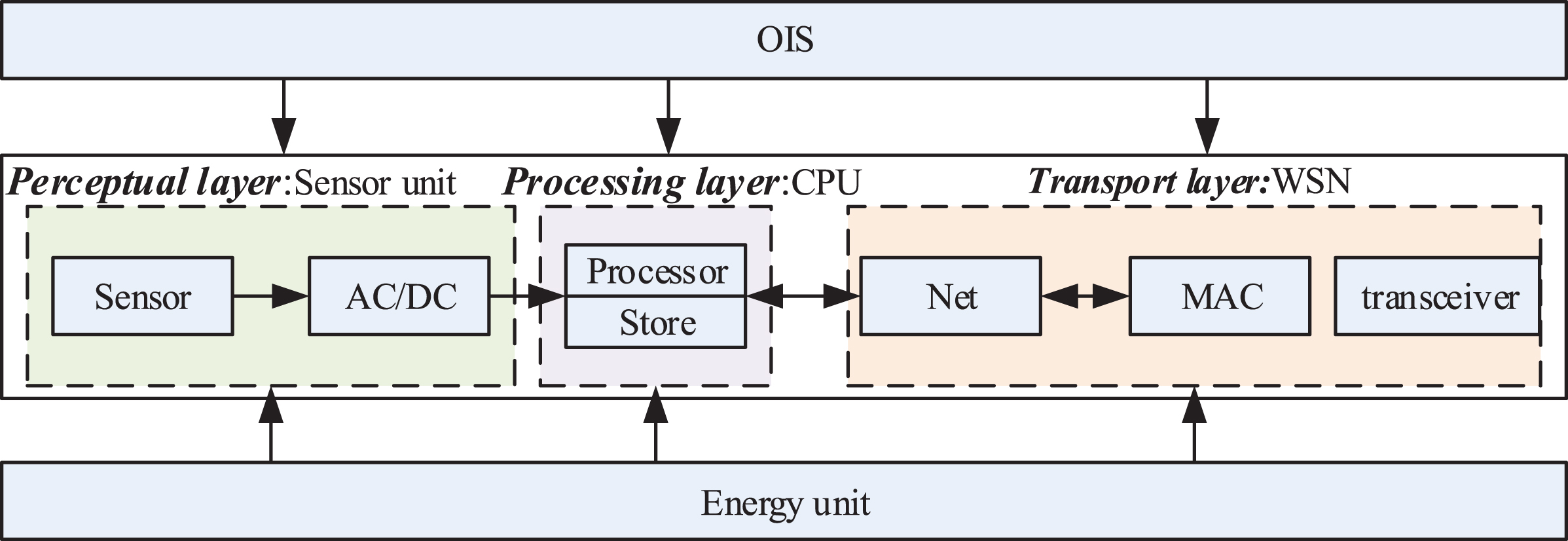
The model architecture of the Internet of Things.
The agricultural Internet of Things is a new type of information acquisition system consisting of wireless sensor nodes, aggregation nodes, data processing centers and data browsing centers. The agricultural IoT hierarchy inherits the traditional ISO OSI hierarchical model and is divided into physical layer, link layer, network layer, transport layer, and application layer. On this basis, vertical energy management and network management are added. The basic structure of the agricultural Internet of Things node includes a sensing unit, a data processing unit, a wireless communication unit, and an energy unit, and may further include an optional module such as a positioning subunit and a bearer network communication.
The agricultural IoT networking structure usually has two descriptions: planar topology and logical hierarchy in Fig. 2. The former is often used to describe the organization of network layout; the latter is commonly used in network routing algorithms. The key technologies of the agricultural Internet of Things are data-aware technology, data transmission technology, and data processing technology.
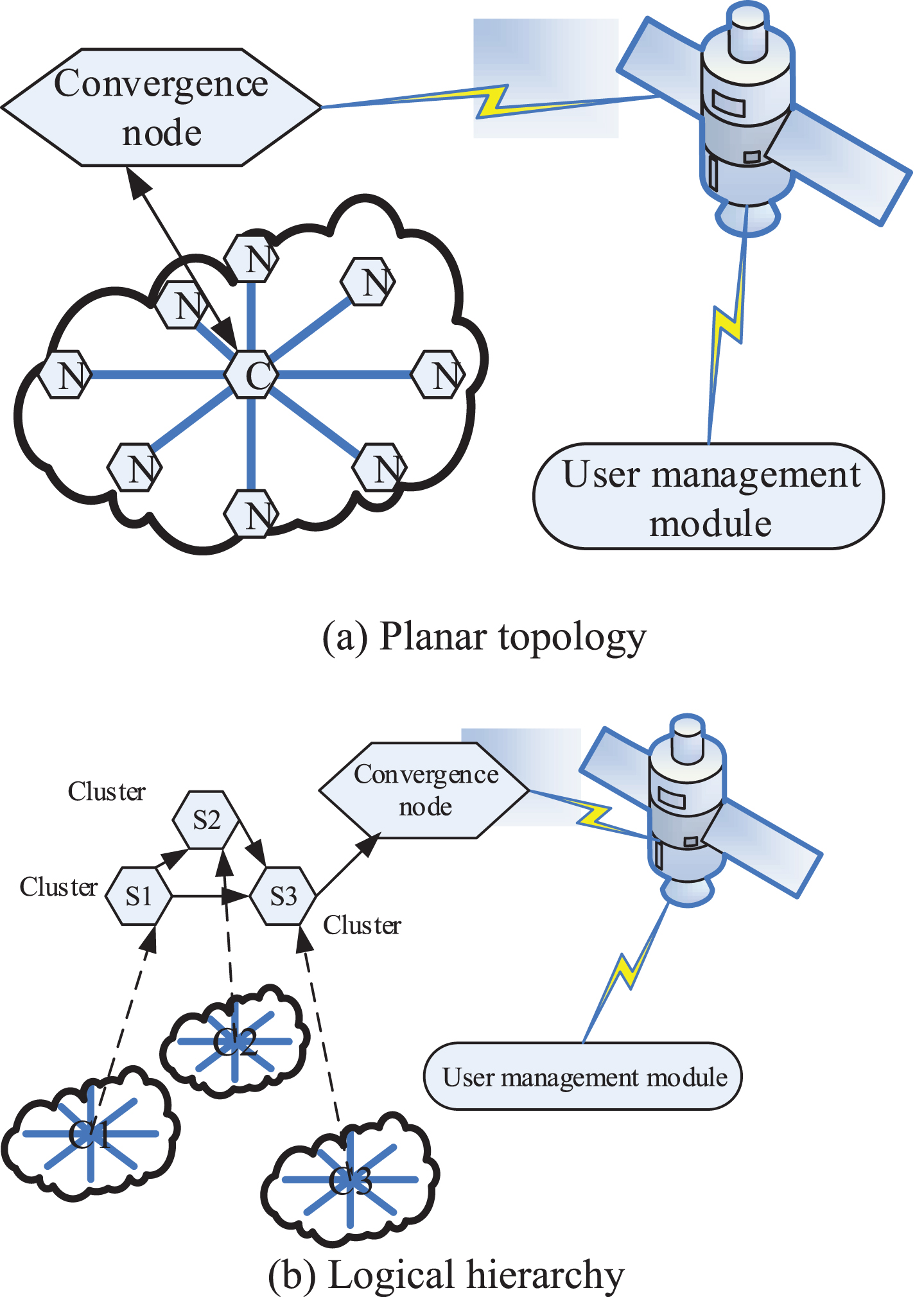
The agricultural IoT networking structure.
Agricultural data perception refers to the use of sensors, GPS (Global Positioning System), RFID (Radio Frequency Identification), RS (Radio system), barcode and other technologies to collect and acquire crops at any time and place. There are five types of agricultural information sensing technologies. (1) Agricultural sensor sensing technology, in agricultural production, temperature, humidity, CO2 concentration, light intensity, soil pH and various nutrients required for crops are the key factors affecting the growth of crops. If necessary, agricultural sensors can obtain this elemental information. (2) GPS technology, also known as global positioning system, refers to the technology of real-time positioning and navigation on the ground by satellite. It has the characteristics of all-weather, high precision and high efficiency, and plays a major role in positioning and navigation in the agricultural Internet of Things. (3) RFID technology, also known as radio frequency identification technology, commonly known as electronic tag, is a communication technology that uses radio signals to identify specific targets, read, and write out relevant data. (4) RS technology, that is, radio technology, commonly known as remote sensing technology, refers to the use of radio waves as the main transmission medium, using the role of frequency to achieve signal transmission and reception [18]. It is time-limited and space-independent and can be used for post-production crop yield measurement, environmental monitoring, and pest and disease prediction.
Agricultural data transmission technology refers to the technology of accessing data objects that are affected by agricultural objects through intelligent sensing devices (such as sensors, RFID, RS, etc.) into the corresponding transmission network. Agricultural data transmission technologies include wired transmission and wireless transmission. Wired transmission uses a transmission device to transmit data to a switching device, and then photoelectrical converts the converted data to the terminal device. Common wireless transmissions have classified into long-distance wireless transmission technology and short-range wireless transmission technology. Long-distance wireless transmission technologies mainly include CDMA (Code Division Multiple Access), PRS (General Packet Radio Service Technology), satellite communication, wireless bridge, short-wave communication technology, which are mainly used in more remote areas. Areas such as pollution or harsh environment; Zig Bee, infrared, RF, Bluetooth, are widely used in close-range wireless transmission technology. At present, due to its high cost performance, flexibility, and easy installation, short-range wireless transmission technology has been widely used in monitoring systems of various industries [19, 20]. Zigbee equipment is mainly used in environmental monitoring and real-time control, as the field bus to undertake information transmission tasks. In the IoT application system architecture, Zigbee devices are used as the awareness layer and access layer facilities. Zigbee-based application system development is organized according to the system deployment structure.
Agricultural data processing technology refers to the technology that processes and analyzes agricultural data and provides decision support for agricultural production (Fig. 3). The process of agricultural data processing has divided into three stages: data preparation, data processing, and data output. The main technologies include the following. (1) Agricultural intelligent control technology refers to the comprehensive application of various discipline theories and methods such as cybernetics, information theory, systems theory, artificial intelligence, and operations research under the constraints of agricultural production, and the control of the controlled system. (2) Agricultural intelligent decision-making technology refers to the comprehensive application of decision support system, agricultural knowledge management system, agricultural expert system, artificial intelligence and other technologies to achieve agricultural intelligent decision-making, and is the specific application of intelligent decision-making in the field of agriculture [21]. (3) Agricultural forecasting and alarming technology are including agricultural forecasting and agricultural alarming. Among them, agricultural forecasting can be based on agricultural materials such as environment, soil, agricultural production conditions, crop production, meteorological conditions, etc., using mathematical models or mechanisms to estimate and predict the future development possibilities of the research objects; When the agricultural forecast results are in an abnormal state, the farmers are reminded to take preventive measures for rectification. (4) Agricultural visual processing technology refers to the technology of visualizing the collected agricultural scene information (including color, smell, shape, texture, etc.) by using graphic image processing technology.

Time and temperature.
More than 40 years ago, Intel founder Gordon Moore summarized the very well-known Moore’s Law in the hard computer field according to the laws of computer processor development: “The number of transistors on a computer chip will be turned every 18 months. In the chip design and manufacturing process, the limit is almost reached, and the CPU’s computing power can no longer be increased by increasing the number of transistors. Under this circumstance, CPU manufacturers must use new methods to improve the computing power of computers. Therefore, IBM and Sun have designed multi-core CPUs using parallel computing of computer theory.
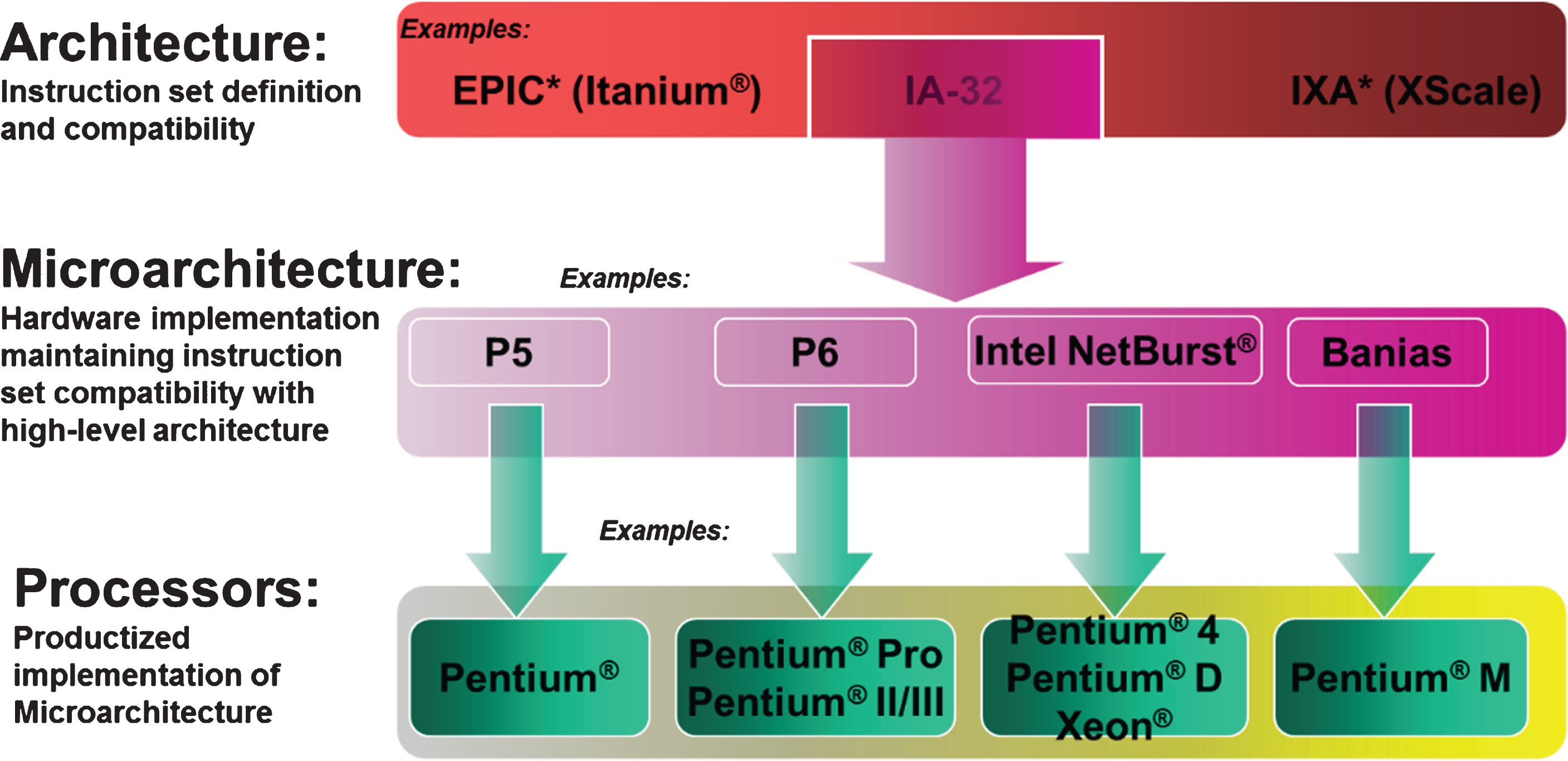
According to whether the multiple microprocessor cores integrated on the chip are the same, multi-core CPUs can be divided into two types: homogeneous and heterogeneous: homogeneous multi-core CPUs are mostly composed of general-purpose processors, cores are the same, cores are equal; heterogeneous multi-core The CPU uses different core components, which are divided into a main processor and a coprocessor. Figure 4 shows the development of multi-threading technology [22]. Most general-purpose multicore CPUs use a homogeneous structure, and multiple processors perform the same or similar tasks. The isomorphism is simple, structurally symmetrical, and easy to implement on hardware. The heterogeneous CPUs usually contain a main processor and multiple coprocessors. The main processor is mainly responsible for control and management, and the coprocessor is mainly used for calculation.

The development of multi-threading technology.
In order to improve the performance of the CPU, the CPU manufacturer usually increases the clock frequency of the CPU and increases the buffer capacity. However, the frequency of CPUs is getting faster and faster. If you improve the performance by increasing the CPU frequency and increasing the cache, it is limited by the manufacturing process and the cost. Although improving the clock frequency of the CPU and increasing the buffer capacity can actually improve performance, such CPU performance improvement is technically difficult. In fact, in many applications, the CPU’s execution units are not fully utilized. In addition, most of the current implementation of the thread is lack of ILP (Instruction-Level Parallelism simultaneous execution of multiple instructions) support. These have caused the current CPU performance to not fully utilize. Therefore, Intel adopts another idea to improve the performance of the CPU, allowing the CPU to execute multiple threads at the same time, which can make the CPU more efficient, so-called “hyper-threading (“HT”) technology. Hyper-Threading Technology uses special hardware instructions to simulate two logic cores into two physical chips, allowing a single processor to use thread-level parallel computing, which is compatible with multi-threaded operating systems and software, reducing CPU idle time.
Using Hyper-Threading is the ability to use different parts of the chip at the same time. Although a single-threaded chip can process thousands of instructions per second, it can only operate on one instruction at any one time. Hyper-Threading technology enables the chip to perform multi-threading at the same time, which improves the performance of the chip (Fig. 5). Hyper-Threading technology is to execute multiple programs at the same time in a CPU and share the resources in one CPU. In theory, two threads should be executed at the same time as two CPUs. The P4 processor needs to add one more Logical CPU Pointer. Therefore, the area of the new generation of P4 HT die is 5% larger than the previous P4 [23]. The rest, such as ALU (integral arithmetic unit), FPU (floating-point unit), and L2 Cache (second level cache) remain unchanged, and these parts are shared.
The logical processing unit of Multi-threading technology.
Although Hyper-Threading technology can perform two threads at the same time, it is not like two real CPUs, and each CPU has independent resources. When both threads need a resource at the same time, one of them will temporarily stop and let the resources go out until they are idle. Therefore, the performance of hyperthreading is not equal to the performance of two CPUs.
Intel P4 Hyper-Threading has two modes of operation, Single Task Mode and Multi Task Mode. When the program does not support Multi-Processing, the system will stop one of the logical CPUs. It is important to note that CPUs with Hyper-Threading Technology require chipset and software support to better leverage the benefits of this technology. Currently, the chipsets supporting Hyper-Threading Technology include: Intel i845GE, PE and SiS iSR658 RDRAM, SiS645DX, SiS651 can directly support Hyper-Threading; Intel i845E, i850E can be supported by upgrading BIOS; VIA P4X400, P4X400A can support, but not Obtained formal authorization. Operating systems such as Microsoft Windows XP, Microsoft Windows 2003, and Linux kernel 2.4.x and later also support Hyper-Threading Technology.
In order to improve agricultural output, the Agricultural Internet of Things requires many technical methods to improve the efficiency of information collection and processing. The application and improvement of wireless sensor networks is one of the most active areas of agricultural Internet of Things research. At the same time, the multi-core IoT platform has the characteristics of low cost, large capacity, high-speed response, low power, etc., which satisfies the technical requirements of the agricultural Internet of Things WSN, and has been widely used in it. Choose a suitable multi-core IoT platform for research and application.
Multi-core agricultural internet of things
The WSN wireless sensor network is a network formed by various types of sensor nodes in a wireless manner through an ad hoc network. Compared with wired networks, WSN has great advantages in accuracy, fault tolerance, flexibility, cost, autonomy, and robustness. It can be said to be one of the most important technologies in the 21st century. In the process of agricultural automation, WSN has been widely used, such as precision agriculture, automatic irrigation scheduling, plant growth optimization, farmland monitoring, greenhouse gas monitoring, agricultural production process management, etc., are typical scenarios of WSN applications. In the WSN, a large number of sensor nodes are deployed to the area to be tested in a manually deployed manner, and the network formed by the self-organizing network. The sensor node can sense the temperature, humidity, illuminance, soil moisture and other information in the environment, and transmit the perceived information along the other sensor nodes in a hop-by-hop manner. At the same time, the user can manage and configure the sensor network to release monitoring tasks and mobile phone monitoring data through terminals such as PCs, mobile phones, and computers.
Multi-core processor refers to the integration of two or more independently running cores on the same processor in Fig. 6. The operating system automatically takes advantage of the resources of all processors, using each execution core as a separate logical processor. By dividing the task into multi-core execution cores, the processor cores can work together to perform tasks efficiently. Typically, multi-core processors typically consist of one or more core thread processing units. Compared with single-core systems, multi-core systems have greatly improved system parallelism and processor processing power. At the same time, due to the high integration of multi-core systems, as the core area of the cell area increases, the distance between the cores also shrinks, making communication between the cores more efficient.

The Multi-core agricultural internet of things.
This design is based on the CC2530 temperature and humidity data acquisition system design. Therefore, the focus is on the realization of temperature and humidity data acquisition design, which can be divided into two major parts, one is the hardware module to realize wireless sensing; the other is to realize the software support of wireless sensing, which is the programming of Zigbee protocol framework in Fig. 7.

The Network design of Multi-core agricultural IoT.
The establishment of the wireless sensor network is based on the sensor plus the wireless transmission module, and the data collected by the sensor is simply processed and transmitted to the server or the application terminal through the wireless transmission module. The target, the observed node, the sensing node and the perceived field of view are the four basic entity objects included in the wireless sensor network. A large number of sensor nodes have deployed, and a single node enters the initial communication and protocol, and configures itself by self-organization to form a single-hop link for transmitting information or a network of a series of wireless network nodes to form a perceptual field of view for the target. The target signal detected by the sensing node processed by the sensor, and transmitted to the observation node through the proximity-sensing node. The observation node issues a query request and a control instruction to the network, and accepts the target information returned by the sensing node.
The Agricultural IoT Innovation Test System IOV-T-2530 uses a series of sensor modules and wireless node modules to form a wireless sensor network (Fig. 8), extending the IoT gateway to achieve wide-area access, enabling a variety of IoT architectures, and completing various IoT-related sensors. The tool provides wireless sensor network communication module, basic sensor and controller module, IoT gateway, computer server reference software and so on. Agricultural Internet of Things technology is the process of gradually using information, information technology and sensing technology in the process of new industrialization, so that it penetrates into relevant links in the agricultural field and greatly enhances the quality and ability of agricultural products. The hardware components for achieving humidity data collection mainly include basic structure of wireless sensing, wireless sensing implementation principle, test box and software support used in this design, common wireless sensing module, and node module for implementing temperature and humidity acquisition system. The software part of the temperature and humidity data acquisition mainly includes the overall framework of the Zigbee protocol stack, and the network layer of the Zigbee protocol stack.
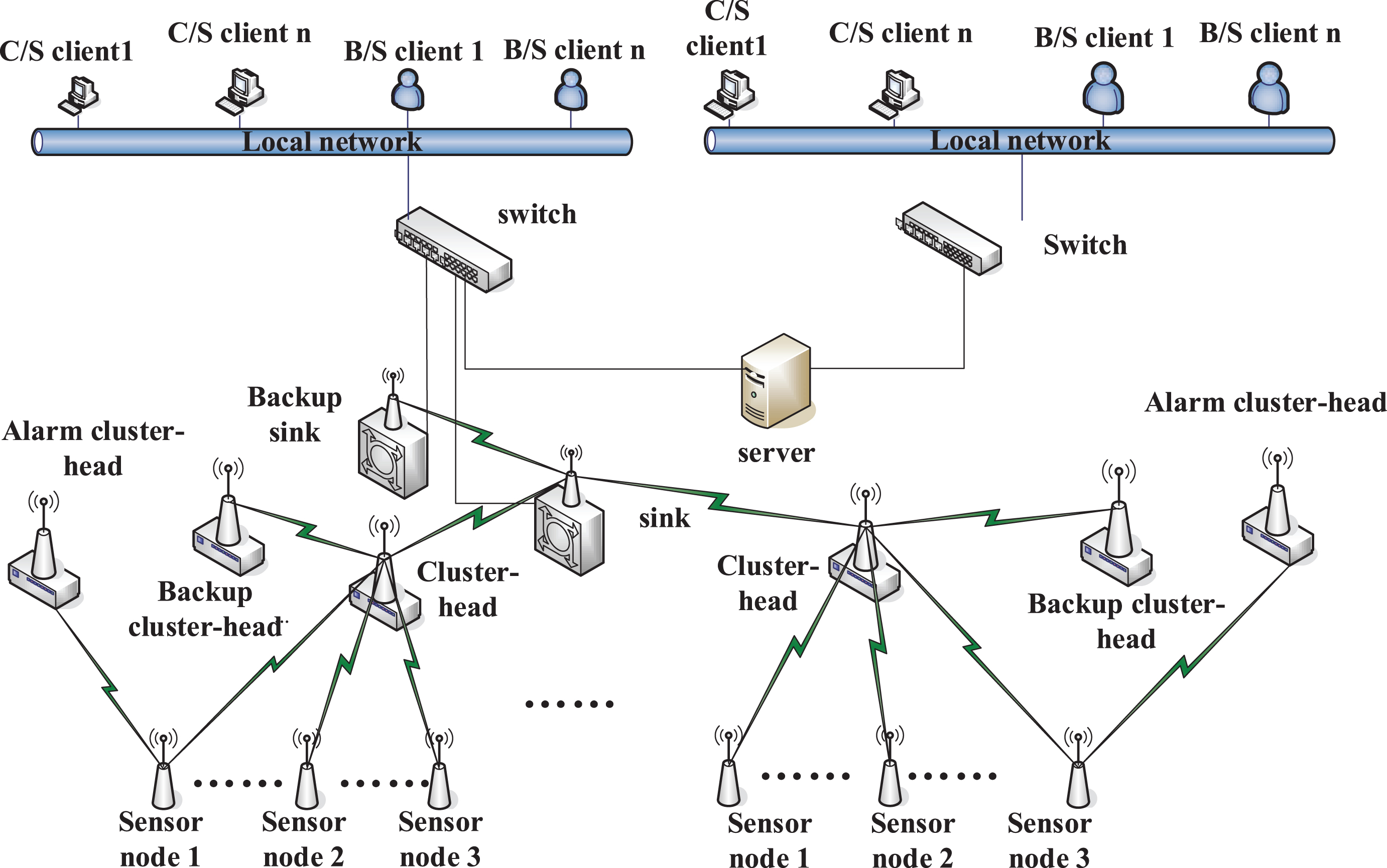
The Network design of Multi-core agricultural IoT.
According to the changes of service and network state characteristics under the access and scheduling methods under different service characteristics, the service shaping under heavy load can reduce the self-similarity of the service flow to a certain extent, but the similarity of the node status parameters such as delay Sexual change is not big. This paper proposes the coupling model of virtual IoT network behaviour, multi-core IoT network structure and single-core IoT structure to physical nodes, and studies the impact of network application layer on the overall characteristics of the Internet. This paper contains the results of 10 random task sets of 5000 tasks executed under 4 core processors in Fig. 9.
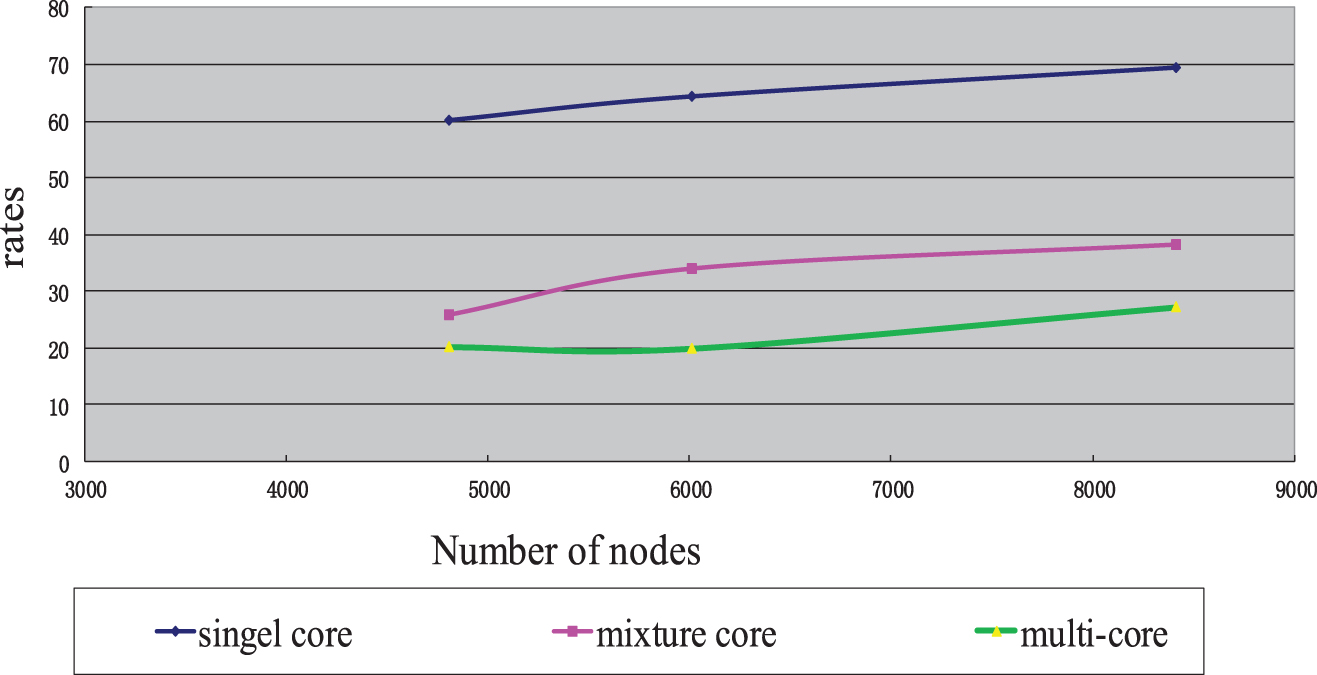
The number of multi-core agricultural IoT nodes for test.
After considering the application layer of network behaviour, the phase transition point shifts to the left, and the network behavior deteriorates. This is a representation of the overall emergence of user behaviour. The work has discovered the long-range correlation characteristics of the queue length of the node data packet, and re-examined this indicator based on the description of the application layer of network behaviour. On the right side of the phase transition point, consistent long-range correlation properties are exhibited.
Distributed data is collected from a large-scale agricultural IoT backbone network for data mining algorithms to use raw traffic information throughout the network. The above figure is the experimental result in the case of initial loss equalization of the system. Figure 10 shows the experimental results in the case where the initial loss of the system is unbalanced.
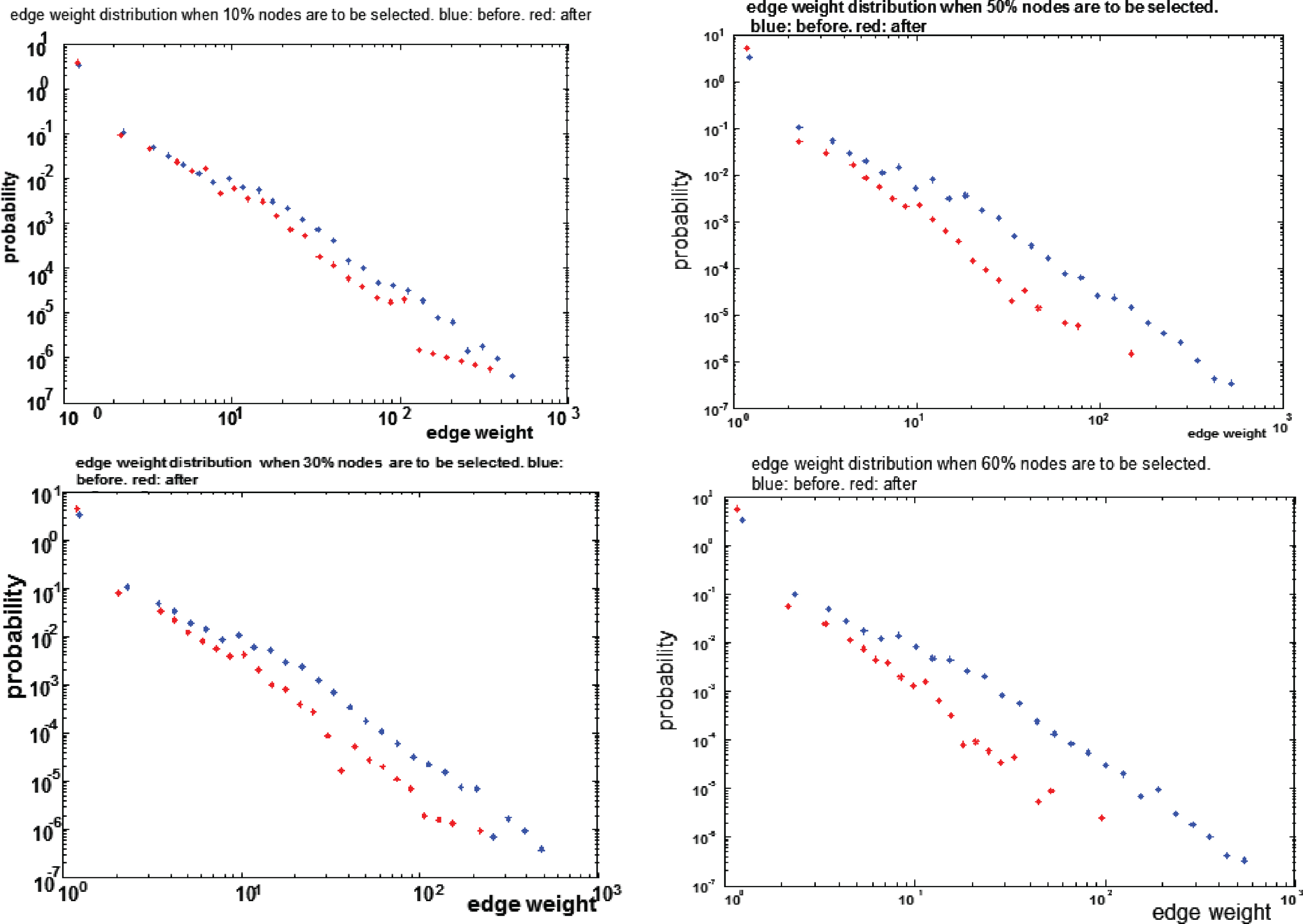
The experimental results of distributed multi-core agricultural IoT.
The above experimental results show that the performance of the proposed loss compensation algorithm is 27% and 97% higher than that of the multi-core scheduling method and the temperature-aware algorithm, respectively Fig. 11. The loss compensation of multi-core agricultural IoT is increased by 39% compared to the initial loss of the system.
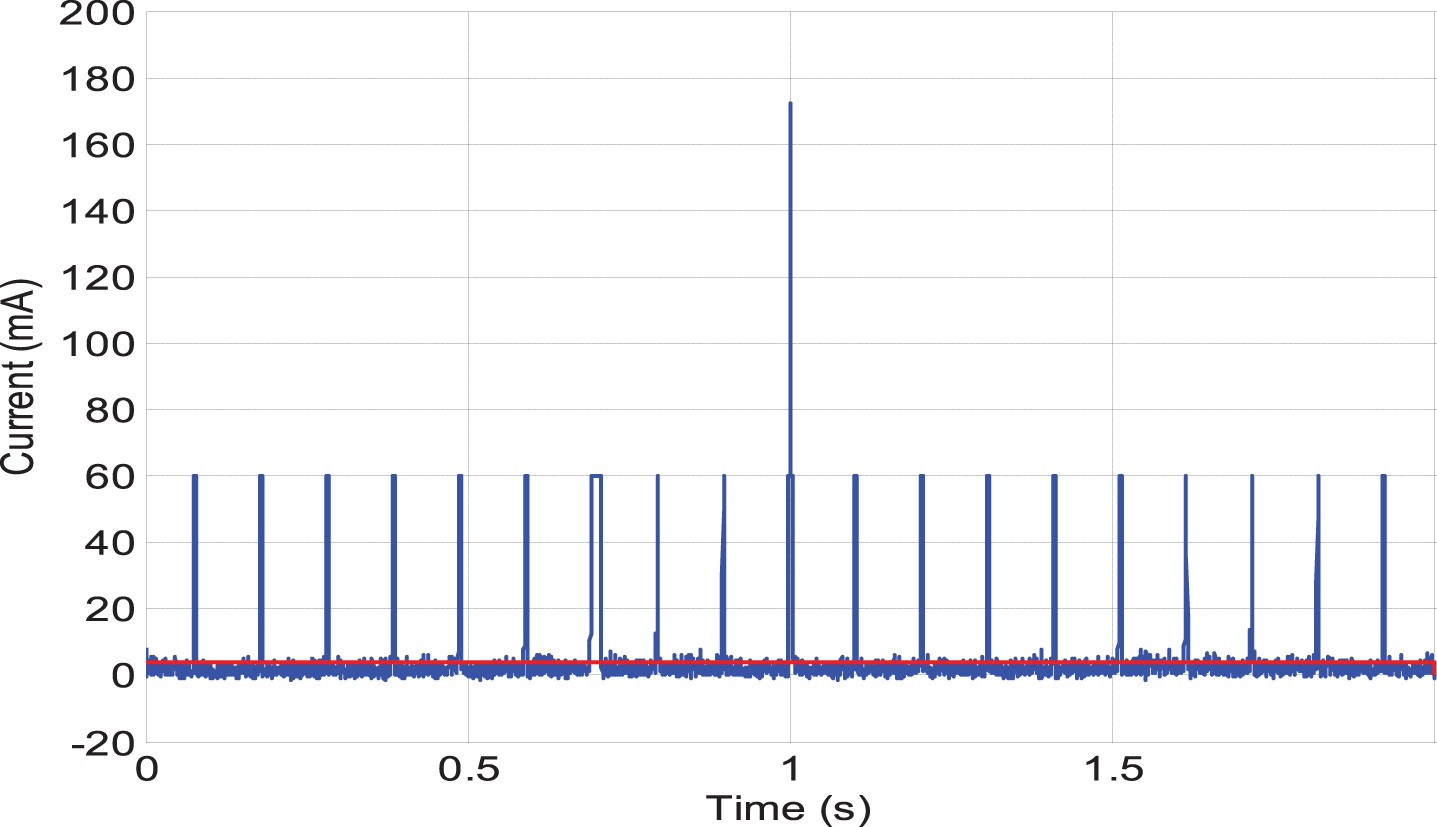
The loss compensation of multi-core agricultural IoT.
With the rapid development of the Internet of Things and cloud computing, data acquisition methods and the types of data have diversified. At present, the state and government are continuously promoting the research and application of agricultural Internet of Things technology. This paper designs a ZigBee-based multi-core sensing agricultural Internet of Things monitoring system to monitor the environmental parameters of farmland temperature, humidity, carbon dioxide, soil moisture. In order to reduce the energy consumption of sensor nodes in wireless sensor networks and improve Data accuracy, this paper applies the multi-core sensing data fusion algorithm in the transport layer, and compares the simulation test with the single-core agricultural IoT. The improved multi-core sensing method has obvious effects. The multi-core sensing agricultural internet of things monitoring system designed in this paper aims to obtain the information of crop growth environment in real time and accurately. Through analysis and comparison with historical data, the law of the influence of environmental parameter changes on crop growth status is obtained, which provides reference for scientific research and realizes agriculture. The accurate and reliable data obtained is the key to the whole system. The system extends the use of a wide range of sensor nodes. Most of the agricultural Internet of Things monitoring systems are not equipped with corresponding application development. Although the Agricultural Internet of Things collects a large amount of data, coupled with decision support systems and agricultural expert systems, farmers can obtain decision support that helps improve agricultural production and management levels.
Footnotes
Acknowledgments
The developmet of new machning method of soft-brittle materials based on cavitation effect, National Natural Science Youth Foundation of China (514054429).