



Abstract
Smart home products and equipment are relatively expensive while using specific physical objects to prove functional characteristics, the cost is high, and it is difficult to meet the personal needs of customers. Based on the above background, the purpose of this research is the application and design of a smart home R&D system based on virtual reality. This study proposes the concept of introducing virtual reality methods into the control scene given the shortcomings of the existing smart home control interface interaction methods. From the perspective of being more suitable for the user’s needs, the virtual reality method is used to optimize the smart home interaction methods. Through the analysis of the user’s lifestyle and needs, the functional module model of applying virtual reality to the smart home control scheme is established. Then, by collecting data, use Sketchup software to build and optimize the model of the simulation system to build a realistic family scene model. Finally, through the integrated use of the Unity 3D rendering engine and the virtual simulation system technology, the intelligent simulation of the interior functions of the house is realized. Experimental results show that using virtual reality to optimize the interaction of smart homes, the control method is relatively simple, and the cost can be reduced by about 20%.
Introduction
With the continuous innovation of high technology and the continuous improvement of people’s quality of life, various high-tech products are gradually integrated into our life [1], especially the improvement of Internet technology, the deep combination, and interaction of various products, making the products more and more tend to the direction of intelligent development [2]. In the vigorous development of all intelligent products, the smart home shows its important position with the improvement of people’s life quality. It is the goal of smart home now and a part of our life which tends to be highly automated to let the home move with our “idea”, to save complex manual operation and to make the home life. As a new type of industry, smart home products emerge in endlessly, but different from the traditional building residential function, it is based on the use habits of consumers, using information system and automatic control system to realize the information exchange between people and building equipment, to further improve the quality of people’s daily life [3, 4].
Because of the importance of smart home research, many research teams began to study smart home and achieved good results. Smart home technology provides potential benefits to help clinicians through automated health monitoring and health assessment [5, 6]. Dawadi tested the practical benefits of smart home analysis by monitoring the daily behavior of families and predicting the clinical scores of residents. To achieve this goal, they proposed a clinical evaluation method using activity behavior (caab) to simulate the daily behavior of smart home residents and predict the corresponding clinical scores. Caab uses statistical features that describe the performance characteristics of the daily activities of inpatients to train machine learning algorithms for predicting clinical scores [7]. They used smart home sensor data collected from smart home for more than two years to evaluate the performance of caab [8]. We obtained the statistically significant correlation between the caab prediction value and the cognitive score provided by the clinician, as well as the statistically significant correlation between the caab prediction value and the mobile score provided by the clinician [9]. In recent years, wireless sensor networks (WSNs) have become the backbone of many systems. The intelligent home based on WSN protocol is used to provide a living environment for human beings [10]. At present, the reported smart home system based on generalized WSN protocol has the disadvantages of high complexity, large data processing capacity, data transmission delay, and so on. Hemant reports on a new protocol, particularly the development of solutions for smart home assisted living. The whole purpose of a smart home is to provide a safe environment for the well-being of its residents. Therefore, the protocol is called a health sensor network [11]. Although the current research results are relatively rich, there are still deficiencies, mainly reflected in the lack of user interaction in a smart home.
In the research of artificial intelligence, virtual reality is a good method, which can solve many problems of mutual inductance, so it is widely used in the research of artificial intelligence. In the past decade, virtual reality and interactive video games have become a new method of stroke rehabilitation [12]. The main purpose of laver’s review is to determine the effectiveness of virtual reality for upper extremity function and activity after stroke. Also, the impact on secondary outcomes, including gait, cognitive function, and activities of daily living, was assessed. Methods: randomized and quasi-randomized controlled trials comparing virtual reality with alternative intervention or non-intervention were eligible for review. Laver has searched many electronic databases, including the Cochrane Group trial register, Cochrane control trial center register, MEDLINE, EMBASE, Amed, CINAHL, PsychINFO, clinical trial register, reference list, papers, and contacted the main researchers in this field. Based on 12 studies, it was found that virtual reality was superior to traditional therapy in improving upper extremity function (standardized mean difference (SMD) 0.28, 95% confidence interval (CI) 0.08 to 0.49), and superior to non-treatment nine studies in improving upper extremity function (SMD 0.44 (95% confidence interval 0.15 to 0.73)). Based on eight studies, compared with the traditional treatment (SMD 0.43 (95% CI 0.18–0.69)), the use of virtual reality also significantly improved the activities of daily life functions. Although there are a large number of studies to evaluate the effect of virtual reality, these studies are often very small, and many of them have the risk of bias [13]. Due to the effectiveness of the virtual reality method, can virtual reality method be applied to smart home to solve the problem of lack of user interaction?
In this study, virtual modeling technology and virtual reality technology are used to establish the control scene of the smart home. To achieve the purpose of simulation, or even to expand the simulation, different methods of scene transformation or introduction and the simulation that virtual reality can achieve are studied.
Virtual reality system and related technologies
Composition of the virtual reality system
The virtual reality system is mainly composed of users, sensor equipment, 3D scene generation, and display, and real scene simulator, as shown in Fig. 1.
(1) Effect generator

Virtual reality system composition.
The effect generator is a window for users to enter the virtual reality world, which is responsible for providing users with an interactive environment and completing the hardware interaction between people and the virtual world [14, 15]. The effect generator highly integrates input devices, output devices, and computing devices. According to the different application fields of virtual reality system, the types of input devices are also different; according to the different input contents, the real scene simulator will analyze and build, and then reorganize the contents and transmit them through the interface, so that the post-interaction scene can be presented in the output device [16].
(2) Real-time simulator
The virtual reality simulator is an important part of the virtual reality system and a virtual reality engine. It consists of a computer hardware system, software, and software supporting materials [17–19]. It is used to send or receive signals generated by the generator.
(3) Geometric construction system
The geometric construction system is mainly composed of a virtual environment object database corresponding to the virtual reality system [20]. Its main goal is to establish the mapping of input and output devices in the simulation stage [21, 22]. The three-dimensional virtual environment database mainly stores the physical information in the scene [23].
(4) Application system
When the user opens the virtual world control interface, the application system shall complete the scene viewing, switching, and other configuration functions, and modify the operation and adjustment according to the use requirements [24, 25]. Through this system, the connection between users and the virtual world is direct.
(1) Desktop virtual reality system
The main body of the desktop virtual reality system is the computer, and the operation of the system is mainly completed by computer interface [26, 27]. The virtual desktop reality system uses image processing and computer performance to present the 3D scene on the working surface. Add sound effects through hearing aids and other devices to improve the virtual reality experience [28]. Users should use a mouse, keyboard, or sensor device to control the virtual world [29].
(2) Augmented virtual reality system
As the only system that integrates the real scene into the virtual world in many categories, it has its authenticity in the real world, and it does not depend on the real three-dimensional virtual environment [30]. The difficulty of this system is how to combine a virtual environment with a real scene. If free as possible, computer technology and physical conditions must be used [31, 32]. Most methods are to overcome the virtual part of the real world through related technologies. This technology reduces the workload of performing a complete 3D scene and also helps to perform virtual reality functions [33].
(3) Immersive virtual reality system
The fascinating virtual reality system can be considered to be improved based on the desktop. Instead of presenting the scene through a computer interface, it uses a hearing aid. There are a lot of real-time monitoring sensors in the exciting virtual reality system. The existing computer has a high-speed processing ability, which makes the system have high real-time performance [34]. Attractive VR systems use devices such as screens on the head. The system will provide a relatively closed screen environment for users. According to different environments, users can ensure the authenticity of projection and monitoring, so that users can completely immerse themselves in the virtual environment [35]. The exciting virtual reality system has very powerful software and material support functions, which can handle multiple devices at the same time and make the whole system. However, because the exciting virtual reality system needs a large number of sensors, the cost of the system is relatively high [36].
Virtual reality control mode
The way to control virtual reality is to allow users to “enter” the virtual environment through interactive practice, experience physical and use virtual reality technology to simulate realistic effects of functions, and let users “sink” into the environment as real as possible. You can monitor things from different perspectives, and execute different functions at will. You can conduct the virtual human operation, design, and simulate the user’s thoughts [37, 38].
Virtual reality technology is the most advanced technology in the field of computers. In the virtual reality environment, people can have more innovative interactive experiences. Its basic characteristics are: immersion and interaction are the main reasons for the rapid development of virtual reality technology [37].
(1) Immersion. Immersion is to create an exciting feeling for users in virtual space by using virtual reality technology. The composition of this environment includes a series of sensory factors such as vision, hearing, smell, and touch. For example, 4D or 5D experiences are common in playrooms. It seems that the viewer can feel the three-dimensional visual impact and the approaching wind speed in the process of fast flight. The current virtual reality technology seems to be able to play its role accurately, but it still needs to be improved [40].
(2) Interaction. Interaction is the soul of the virtual reality control function. If virtual reality can only provide projection function, it cannot bring the most real experience and the most important is the interaction between the user and the scene [39]. The interaction of virtual reality allows users to identify the virtual environment by hand, communicate with the environment by language, control, and change environment content, etc. Baptism can create a real feeling for users. If there is no interactive experience, it will become a “visible, complete” thing, even if the scene becomes more real, which is unreasonable.
From the characteristics of virtual reality, it seems that virtual reality can be widely used to simulate the real environment and objects. With the progress of virtual reality technology and the reduction of the application scope, virtual reality control methods will play a greater role in serving human development.
Smart home system
The design purpose of the smart home system is to build a set of solutions for home living environment monitoring and intelligent connection network control [40]. By acquiring the environmental parameters and image information of each room, and using the intelligent network to transmit to the user end, the owner can master the home condition anytime and anywhere, and when the environmental parameters are abnormal, the system can make the corresponding response independently. Bring intelligence and convenience to home life. The system requirements in this paper are as follows:
(1) Room environment monitoring part: real-time monitoring of home environment includes temperature, humidity, comprehensive home environment data, and fire status information. Users can get the related family status information through SMS instructions.
(2) Room environment video monitoring part: users can monitor the status of the home environment remotely in real-time.
(3) Room environment security part: real-time monitoring of family fire status [41]. In case of fire, users shall be informed by SMS.
(4) The control part of the home actuator: in manual mode, the user can control the window node and air conditioning node through the monitoring interface. In the automatic mode, real-time detection of rain state, in the state of heavy rain automatically close the window. For the air conditioning control node, you can set the temperature through the control interface, and make corresponding actions based on the set temperature.
Experimental design of virtual reality smart home
Smart home questionnaire
This section uses the questionnaire method to analyze the user needs, and the survey time is June 2019. The purpose of the study is to provide help for simple users who purchase household materials. The purpose is to understand the popularity of smart home products and users’ smart home products. Comments and suggestions on operation methods. During the survey, 60 questionnaires were sent out and 58 were recovered, including 58 standardized questionnaires. Through the research and analysis of the data, the following conclusions are drawn:
(1) Basic information of participants
According to the statistics of the survey results, it can be concluded that 36 of the users surveyed are men, accounting for 62%, women 22, 38%, of which 40% are young people, 45% are middle-aged people, 15% are old people, 79% of the users know “heard” of smart home products. In the actual interview, most people said that they bought household products for “real estate demand” and used them to decorate new houses. Their understanding of smart home comes from the screen and TV screen when the store purchases products.
(2) Users’ opinions and suggestions on smart home products
In the survey, users place high expectations on smart home products, but they are still hesitant about their actual performance. It seems that although smart home products have been widely used, there are still many problems. The problems encountered in the interactive interface also account for a large proportion. Users hope that there is a way to make the operation easier, easier to learn and use, and more user-friendly interaction.
The functional design of experimental simulation system
There are three aspects in the establishment of a virtual simulation system of smart home
(1) The planning and construction of the whole scene environment;
(2) The realization of interior scene interaction;
(3) Interactive implementation of an outdoor scene. 3D scene model is realized by modeling software; 3D engine design realizes interactive roaming of indoor and outdoor scenes and demonstration of indoor and home functions.
The design of the whole simulation system follows the waterfall model, which is gradually refined from top to bottom [42]. First, the requirements of the whole simulation system are analyzed. Then, software selection, software design, software implementation, software testing, and software operation are carried out in six steps, from top to bottom, step by step.
The technical process of the experimental simulation system
The design and implementation of the virtual simulation system for the smart home are as follows:
(1) The overall design and planning of the scene, the construction of indoor and outdoor virtual environment model, determine the scale of the simulation system development scene, implementation route, and development tools.
(2) Plan the terrain area, divide the terrain area, road interval, the number of street lamps and the interval between lamps, and set the placement position of the home, etc.
(3) The construction of the whole scene, the setting of light effect, the simulation of the natural environment, the construction of an indoor object model, etc.
(4) Three-dimensional model optimization, group, import, export preprocessing, to achieve roaming interactive system.
(5) In the unity3d engine, special environmental effects such as sky effect, light source, tree, fountain, defoliation, and Sun Halo are added to the virtual scene, and roaming mode is set to realize the interactive control operation of indoor home facilities.
Establishment of experimental scene model
The accuracy of the scene determines the overall quality and visual effect of the control software, and it is also one of the important factors reflecting its authenticity [43]. Scene. It is reflected in two aspects, one is the improvement of model objects in the scene, and the other is the accuracy of scene simulation. 3dstudio Max is a software developed by discreet based on a computer system for 3D modeling, animation design, and performance. Software is usually used to produce product yield, indoor yield, animation game plan, and special effects.
Unity3d mainly supports the import model in the format of FBX. The feature of this model is that it maintains a collection of scenes, which conforms to the basic concept of many game engines, that is, it organizes a scene with the number of nodes in the scene [44]. Compared with 3DS, they all use the tree to manage data, but. 3DS abstracts different types of data into nodes; and. FBX is a pure node to express the scene. So after the model is saved as. FBX, if multiple objects in the scene are saved in a model file, it is OK, but the names are different, for example, lights and cameras can also be abstracted as nodes [45]. Second, the FBX format can support animation or bones. First, export the established model file from Ketchup. Select file ⟶ export ⟶ 3Dmodel in the toolbar to choose FBX format. Then select options and select triangle all faces changing all faces into triangular faces. To export the model faces with different materials on both sides of the plane, tick in front of the export two sides faces the option to export both sides of the model. Check the export texture maps before exporting the map surface, the select model unit as the unit, and click OK after completion to name it a smart home. fbx the model export of. Smart to be generated_home. fbx Select assets ⟶ import new asset in unity3d and select the smart just exported home. fbx File. After importing, select the model in the project window, change the scale factor under the model component in the inspector panel to 1, click the Apply button below, and finally drag the model into the scene design panel.
Analysis of virtual reality smart home system
Power consumption test of the smart home node
The data collection of the terminal data node of the intelligent home system designed in this survey adopts the battery-driven mode, so the service life of the terminal node depends on its power consumption. This section mainly tests the power consumption of the ZigBee network node, which can speculate the power battery life of the node. Sensor nodes are driven by two No.7 dry cells for data collection. The battery voltage must exceed 2.5 V [46]. Otherwise, the node cannot guarantee normal operation. In the power consumption test, the temperature and humidity data collection node, illumination information collection node, high sensitivity gas detection node, and infrared intrusion detection checkpoint are mainly selected for the test.
In the power consumption test, the temperature and humidity and lighting modules are set to collect data for 10 seconds. Data is collected once per cycle and sent to the coordinator. When the high sensitivity gas detection node detects that the concentration of combustible gas exceeds the set threshold value [47], when sending alarm information, the human infrared intrusion detection node only sends an alarm signal to the coordinator after detecting the danger alarm information. The power consumption test of the node is divided into two parts, not only in the working mode but also in the sleep mode. Through a comprehensive analysis, the actual power consumption of the node can be reflected. Through the battery power supply, the current estimation of each node in the working state and sleep state after the test is shown in Table 1 and Fig. 2.
The current size of the data collection node
The current size of the data collection node
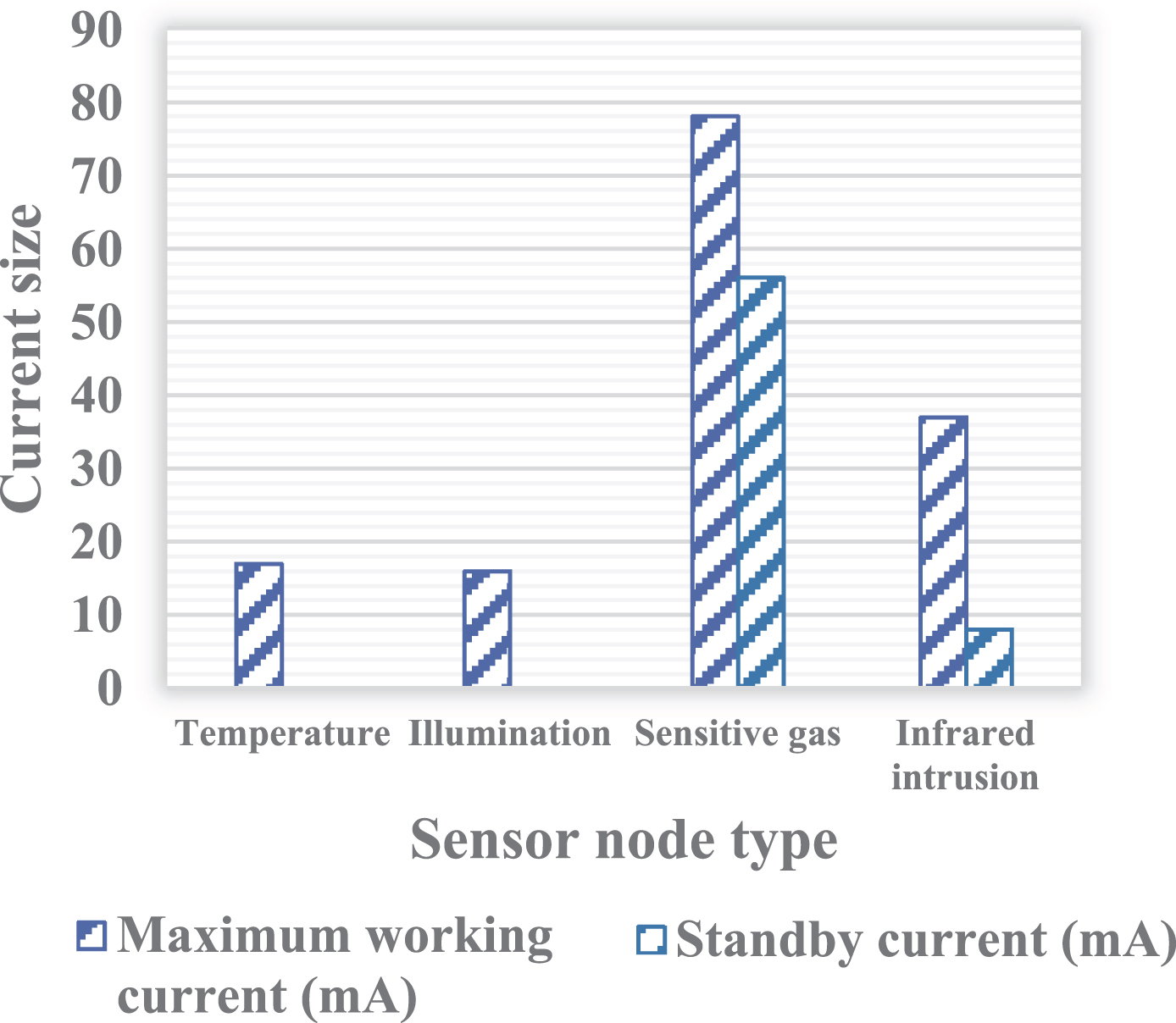
The current size of the data collection node.
The sensor node is working, and it takes 0.2 seconds to complete a single data collection and transmission task. When the temperature sensor node and the light collection node are set to collect and send data every 20 seconds, the working time of these two nodes will take this into account. 1/100 of the period, 99/100 of idle time. When the working time of the high-sensitivity gas detection node and the human infrared intrusion node is 20 minutes, the working time of these two nodes accounts for 1/6000 of the entire period, and the idle time accounts for 5999/6000.
Assuming that the current in the working mode of the node is I
i
, the working time is T
i
; the current in the sleep mode is I
j
, and the sleep time is T
j
, the calculation formula of the average working current is shown in formula (1).
According to formula (1), the average operating current (I
avg
) of all sensing nodes tested is shown in Table 2. In the second design, a 2000mAh battery is used. Considering that the general battery discharge depth is about 60%, the working time of the sensor node can be calculated using formula (2).
The average operating current of sensor nodes
Using test data, the working life of sensor nodes can be calculated by the formula (1) and (2). Use the test data to calculate the temperature and humidity data collection node and ZigBee light intensity data collection node of the ZigBee terminal. These batteries can work continuously for about 4 months under the condition of one battery power supply, fully meet the requirements of low power consumption, and can run in the actual system. In this process, the energy of nodes can be saved by reducing the frequency of data collection and transmission of data collection terminals. However, for combustible gas and infrared intrusion detection nodes, to ensure the safety of indoor and outdoor, it is necessary to always maintain the working state, the good working state is very high, the battery life is only a few days, so in practice, to supply power to these two function nodes, it is not recommended to use batteries. It is most appropriate to supply electricity directly from the power source.
The thermal comfort query table cannot directly reflect the indoor temperature, humidity and wind speed, and the impact on the thermal comfort of the home environment. Therefore, according to the established thermal comfort query table, after the data in the table is imported into Matlab simulation software, the following figures are obtained, which clearly and intuitively reflect the impact on PMV value when the variable factors of home environment change. As shown in Fig. 3.

The effect of temperature on the PMV value at a different relative humidity.
It can be seen from Fig. 3 that although the temperature in the home environment has a greater influence on the thermal comfort of the home environment than the relative humidity, the human body’s feeling of the environmental thermal comfort is also quite different under different relative humidity. At the same temperature, with the increase of indoor humidity, the value of PMV is also increasing, which means that humidity has a positive effect on the thermal comfort of the home environment. The higher the humidity, the stronger the thermal feeling of the human body. The reason for this phenomenon is that the temperature around the human body is very high in summer, and the human body is more heat dissipation through evaporation and perspiration. The higher the relative humidity in the environment, the worse the evaporation and perspiration ability of the human body, so the higher the relative humidity, the more heat will be felt.
In the summer when the power resources are tight if the set temperature of the air conditioner can be properly raised, and the humidity in the home environment can be properly reduced through the dehumidifier and other less power-consuming equipment, the goal of energy conservation can be achieved on the premise of ensuring the comfort of the home environment. In theory, every time the temperature of the air-conditioner is raised one degree in summer, it will save about 5–8% of the power consumption. When the indoor airflow rate is 0.25 m/s, the comfort of the home environment is between –0.5 and 0.5 when the ambient temperature is 27°C. When the ambient temperature is more than 28°C and less than 29°C, the comfort value can be controlled below 0.5 by adjusting the ambient humidity. When the indoor airflow rate is more than 29°C, the air conditioner is used to cool down first. When the air temperature is below 28°C, the air conditioner is used to cool down, and then the dehumidifier with low energy consumption can reduce the humidity in the home environment, to reduce the PMV value.
As shown in Fig. 4, PMV can also be reduced by increasing the flow rate of indoor air, because the faster the flow rate of indoor air is, the more conducive it is to the sweat and heat dissipation of the human body, to achieve the heat balance between the human body and the surrounding environment. Therefore, under the premise of ensuring the thermal comfort of the home environment, fans can be used instead of air conditioners to accelerate the airflow speed of the indoor environment, reduce the PMV value and achieve the goal of energy saving. When the indoor relative humidity is 50%, the comfort of the home environment is between - 0.5 and 0.5 when the ambient temperature is 27°C. When the temperature is more than 28°C and less than 29°C, the comfort value can be controlled below 0.5 by adjusting the indoor airflow rate. When the temperature is more than 29°C, it must be cooled by the air conditioner to reduce PMV value.
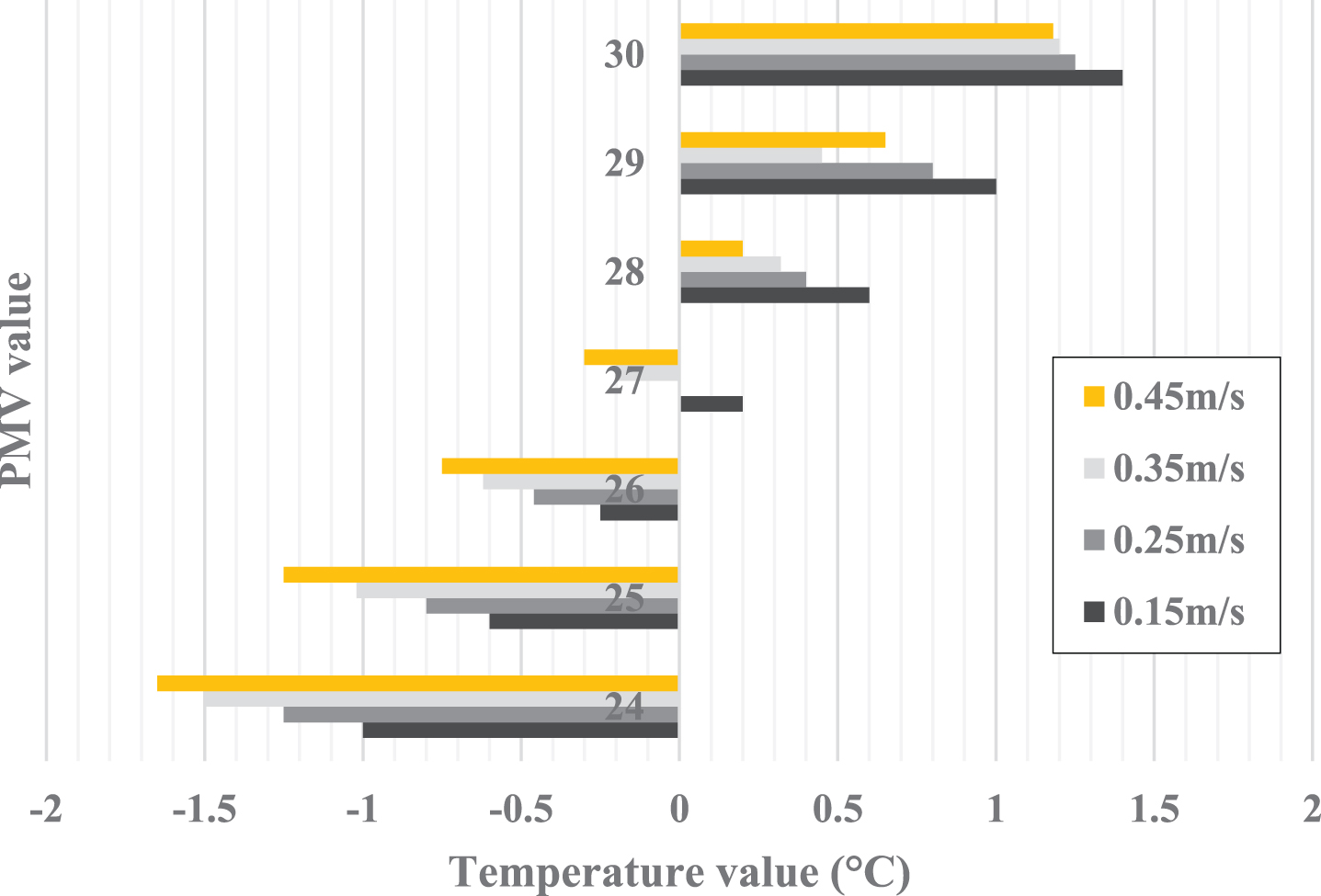
The effect of room temperature on PMV values at different air velocities.
To develop a smart home, it is necessary to display all-round and three-dimensional residential models such as wardrobe, cupboard, wine cabinet, etc., so 3D modeling is one of the important topics in the development of the smart home. 3dsmax, Maya, SketchUp, and AutoCAD are commonly used in 3D modeling. AutoCAD mainly designs and makes plans of building models, views, mechanical models, and other correct sizes. The housing industry does not have high requirements for size, so the frequency of use is not high. 3dsmax and Maya are commonly used for modeling family objects. 3dsmax mainly designs several rendering and object model diagrams (as shown in Fig. 5). These models are mainly static. Maya can also link all main actions, input user information, and generate embedded information with important role and importance by building a human bone gap model.
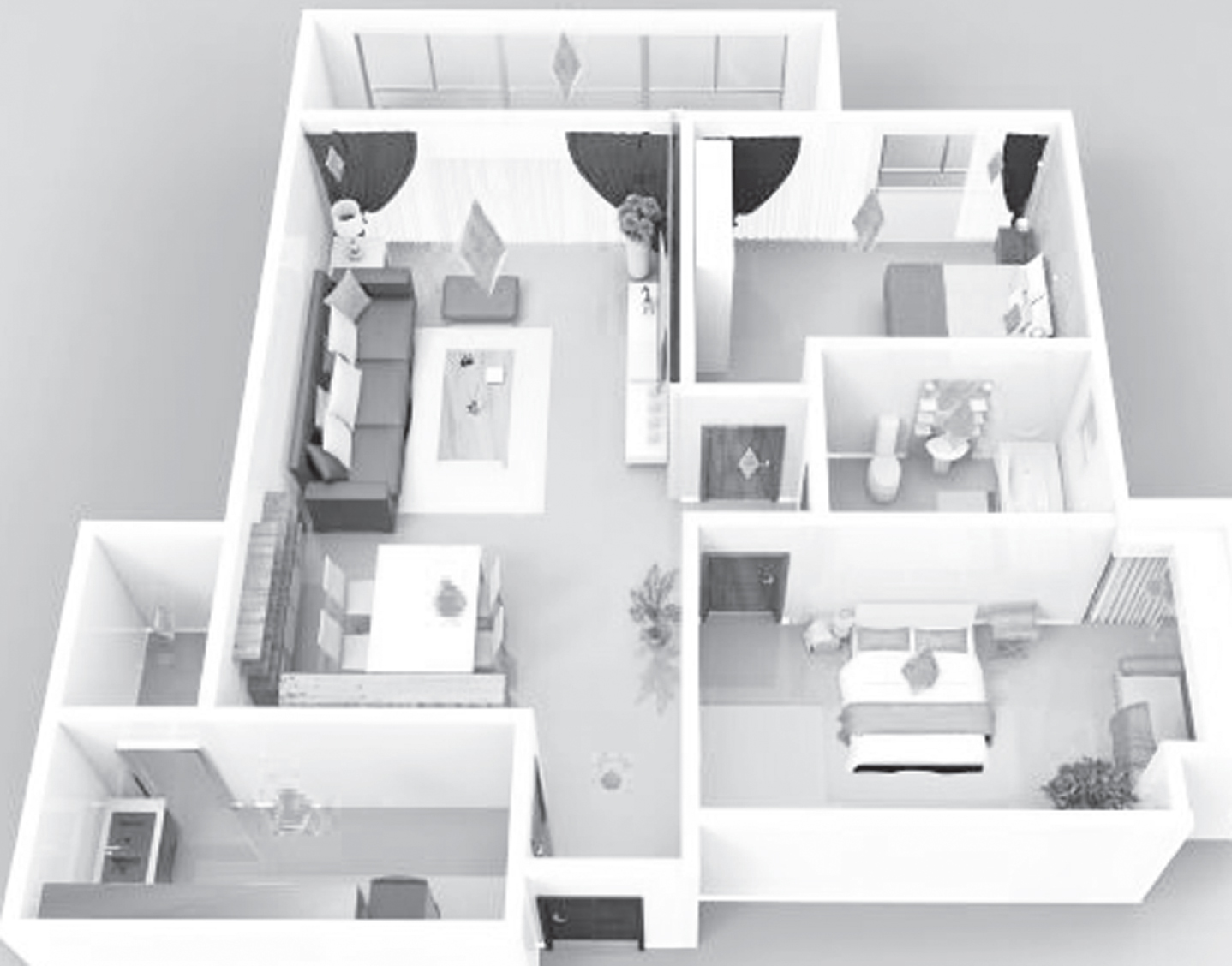
Virtual smart home simulation renderings.
The smart home simulation system is based on the residential scene, fully presents the user’s requirements, and establishes a three-dimensional simulation system with the function of a smart home demonstration system. The core of a smart home is to provide a convenient, comfortable, efficient, and energy-saving living environment for the residents. Virtual reality technology is used to fully display the core functions of a smart home. There are many personalized smart home control methods, which can be customized according to customer needs and actual conditions.
With the continuous development of the Internet of things technology, the smart home has gradually entered people’s lives. Virtual reality technology is to construct a simulated world by virtualizing real objects with computers. This research combines smart home with virtual reality technology. Interaction design is the final method to show intelligent products to users. Designers must pay more attention to it. Given the shortcomings of the existing smart home interaction mode, this study adopts virtual reality to improve the interface control of smart home products and provides the interface to users completely according to their habits for display.
From industrial design, this study studies the functional requirements, actions, and use methods of users’ life at home, summarizes various functional modules, and proposes innovative functional modules that can be realized by using virtual reality. At the same time, the control methods of household products are thoroughly studied. From the perspective of more suitable for users’ needs, the method of using virtual reality and intelligent home control interface to design users’ actual operation mode is studied. To adapt to the user’s habits to the greatest extent, this research has carried on the detailed investigation of the intelligent home interface design, proposed the intelligent home product virtual reality control interface design principle well. Based on the research of ergonomics elements and the discussion of the design concept of action direction, the interface design can be more suitable for the user’s use habits, emphasizing the practicability and timeliness of the virtual reality control interface.
This research brings innovative ideas to the demonstration of intelligent home interaction interface, but in fact, it needs more extensive and detailed research. Due to the wide range, the author has sorted out and investigated in detail, but there are still many shortcomings. In the future, social products must develop in the direction of humanization and intellectuality. Smart home products will be gradually popularized in our life. Therefore, the interaction design of a smart home is more and more recognized and evaluated by people. We hope that the content of this study can be a reference for the interaction design of a smart home in the future.
Footnotes
Acknowledgments
This work was supported by the National Key R&D Program of China (2017YFD0601104) and Project from the International Cooperation Laboratory of Nanjing Forestry University.