



Abstract
Traditional physical education in colleges and universities is difficult to arouse students’ interest in sports, resulting in low activity participation rate and inability to exercise the body. How to effectively improve the effectiveness of physical education in colleges and universities has become one of the hot topics of most concern from all walks of life. In physical education, innovative teaching concepts and methods, teaching methods and processes, and teaching evaluation methods are all conducive to improving the classroom atmosphere of physical education and successfully improve the effectiveness of physical education. This article focuses on analyzing the current status of physical education in colleges and universities. Based on the rapid development of artificial intelligence technology, how to improve the effectiveness of physical education is studied, and an experimental method is used to compare and analyze physical education in a college. The analysis results show that artificial intelligence-based physical education can obviously improve students’ strength quality, speed quality, endurance quality, and agility quality, which provides a more important reference and reference for improving the effectiveness of college physical education.
Introduction
At present, the student-teacher ratio is relatively large in college physical education classrooms. There is a strong teacher-student interaction, that is, the interaction of individual teachers with student groups. At the same time, the higher testing frequency of college physical education classrooms has led to the problem of physical education and physical education classrooms [1]. The difficulty of construction is high, which is not conducive to the development of physical education classrooms whose main purpose is to improve students’ physical quality, quality education and will education. The pursuit of teaching effectiveness is the essential feature of teaching, is also the core idea of the current new curriculum reform, and it is an inevitable requirement for the realization of the connotative development of education. However, in the current school teaching practice, there are still problems that teachers are working hard and students are not easy to learn, both of them are conscientious, and the quality of teaching is not high [2]. Therefore, improving the effectiveness of classroom teaching has become the current curriculum and one of the core topics of teaching reform, the research of effective classroom teaching strategies is the key factor to solve this problem. After continuous exploration and research, the author has learned that effective teaching theory has been widely applied to teaching in various disciplines and achieved good results [3]. An effective, efficient and effective teaching model has begun to take shape. In view of this, it is also imperative to promote effective teaching in physical education.
There are many problems in campus sports classrooms. At present, the strength of physical education teachers is relatively weak, and it is difficult to formulate more professional physical education curriculum training projects, and the school also lacks the attention to the application of this aspect of the curriculum [4]. At the same time, physical education teachers need to manage a large number of students at the same time, and cannot detect whether each student completes exercise tasks in accordance with quality and quantity. For example, a university sets Tai Chi as a learning course for a semester, and teachers lead students to exercise in the front [5]. Under normal circumstances, students cannot accurately memorize and make corresponding actions, and the subsequent lack of attention makes their own course projects not started [6]. When it is expected to be useful, the students will rush to learn at the end of the term, and in the actual test, the actions were not standardized, and even the next students reminded the action [7]. In addition, some college sports classrooms lack effective teaching methods to improve students’ physical fitness. Under normal circumstances, four-year majors usually set up two years of physical education. During this period, good exercise habits have not been formed, resulting in low physical fitness of the students and even failure to meet the physical test standards [8]. Traditional sports training programs are too boring to arouse students’ interest in sports. For example, in a physical education class of a university, teachers will first let students run laps, and then do warm-up preparations. If there is no special arrangement, they can usually move freely. At the same time, the assessment items of each semester will change [9]. Each student’s physique and interest are different, which seriously affects the student’s interest in participating in sports and cannot play its due role in the physical education classroom. The most direct result of the above-mentioned problems is that students’ exercise time has been greatly reduced, and more college students will choose to “home” indoors, which has caused serious physical health problems for our students [10].
Manuscripts based on the low effectiveness of physical education in colleges and universities, this article proposes the use of artificial intelligence technology to assist physical education. First, it analyzes the connotation and significance of the effectiveness of physical education. With regard to the current development of artificial intelligence technology, the construction of artificial intelligence classrooms, and artificial intelligence the operating mechanism of intelligence in physical education is analyzed and researched. Finally, an experimental method is used to compare and analyze physical education in a university. The analysis results show that artificial intelligence-based physical education can significantly improve students’ strength, speed, endurance, and sensitivity. Quality has promoted the improvement of the effectiveness of college physical education. The application of artificial intelligence in physical education in colleges and universities has realized a diversified and multi-purpose management method for physical education in colleges and universities, which is of great significance to the establishment of a new teaching method that is truly suitable for modern physical education and teaching.
Related theories and technologies
Effectiveness of physical education teaching
In the field of education research, the current research on effective teaching has not yet developed into a mature theory, and there are still many academic differences. Based on the analysis of the existing research results, the discussion on the connotation of effective teaching can be divided into two levels: one is to take the “three effects” in teaching as the connotation, which are teaching efficiency, teaching effect and teaching efficiency, The analysis of teaching effectiveness is the embodiment and display of the collective form in the whole process. It takes the objective law in teaching practice as the research opportunity, analyzes its internal quality from the perspective of timeliness, and organically constructs its social effect, educational goal and individual educational value expectation, so as to fully show the principle of effectiveness in the process. Specific operations include the following three aspects: first, the analysis of teaching effect and teaching expected goal is effective; the second is to introduce the concept of efficiency in the field of economic research into the teaching mode, and consider the proportion of input and output in teaching activities, that is, efficiency; finally, in the process of improving teaching effectiveness, it can not only improve teaching performance, but also produce corresponding society in operation To influence and realize the value of personal education idea is beneficial [11]. Another definition is to define effective teaching from the perspective of students’ learning. In the elaboration of the goal of effective teaching, it includes three aspects: first, in the process of effective teaching, it can fully promote the overall development of students’ body and mind, which is mainly reflected in the two aspects of innovative thinking and emotional quality [12]. Second, the effectiveness of teaching practice, improve students’ learning mode, enhance students’ interest in learning. Third, when exploring the effectiveness of teaching, teachers should constantly strengthen their own professional skills [13]. Design process chart of physical education teaching scheme is shown in Fig. 1.

Design process chart of physical education teaching scheme.
Effective teaching is specific to the subject of physical education, and has its specific standards and goals. In the process of effective physical education teaching, the theoretical guiding ideology of “adhering to health first” is constantly tried and practiced in the teaching link [14]. Cultivate students’ sports and fitness concepts, mobilize students’ enthusiasm for activities, promote the harmonious development of students’ physical and mental health, respect the role of the main body in the learning process of students, pay attention to the emotional changes of students during learning, consider the natural individual differences of students and the sexualized needs of physical education, and finally make all Junior high school students all gain in physical education [15]. Effective teaching of physical education needs to adapt to the actual situation and theoretical research results of curriculum transformation and new curriculum introduction. First, the sharing and use of teaching resources, and second, the experiential exploration of teaching effectiveness, then continue to deepen and influence from the perspective of awareness training [16].
Artificial intelligence is an emerging computer technology developed from multiple disciplines such as cross-computer technology, statistics and probability theory. Different from the traditional computer processing method of data, artificial intelligence technology can use some computer peripherals to obtain data, and use computer programming technology to perform data processing, and constantly update the knowledge base. Artificial intelligence technology can automatically perform data processing [17]. Process and judge the data obtained from the outside world. Artificial intelligence relies on computer systems, machine learning, psychology, etc. There is currently no strict definition to define artificial intelligence related technologies, but through the current traffic control field of traffic accident handling systems and navigation systems, the application of artificial intelligence system model can be summarized as the structure shown in Fig. 2.
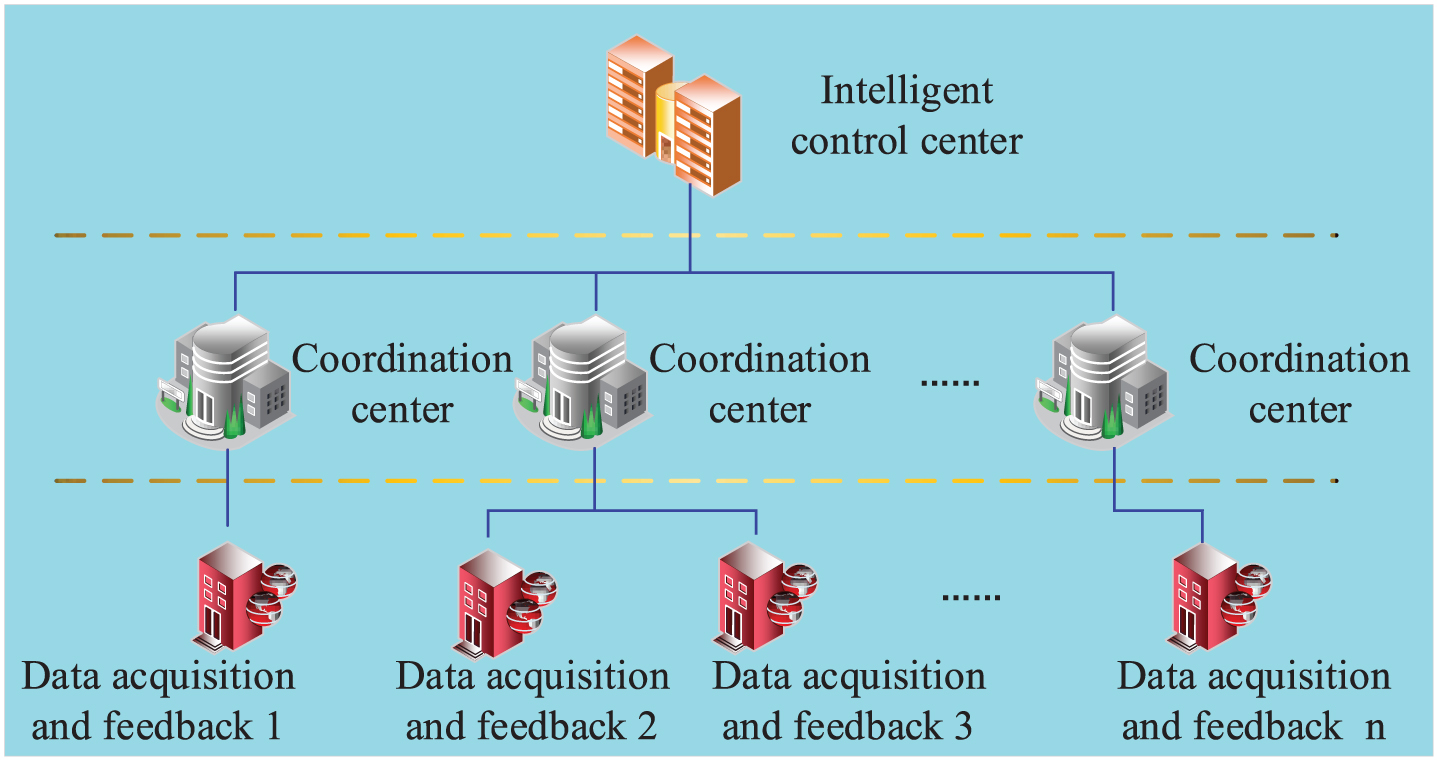
Application system model of artificial intelligence.
At present, there are many discussions on the introduction of some artificial intelligence-based applications into university sports classrooms, among which AlphaGo is one of many applications [18]. The construction and reform of these systems in university classrooms mainly focus on increasing students’ interest, and the reform of sports teaching content is relatively simple, the emergence of these teaching methods is basically aimed at students, which is not conducive to improving the teaching efficiency of teachers. Based on the above situation, this article improves the existing classroom on the basis of Fig. 2, and proposes a more reliable, efficient, and easy-to-operate computer-assisted teaching system, which can be used in sports venues such as track and field and long jump venues., It is composed of AI computer system, human-machine interface, management terminal display equipment, venue sensing equipment, venue prompting equipment, and wireless sensing and prompting equipment, as shown in Fig. 3.

The construction plan of university sports classroom based on artificial intelligence.
Artificial intelligence physical education has completely subverted the traditional teaching model, and it has mainly changed the structure of educational resources, the mechanism of teaching feedback and evaluation, and changed it into an intelligent teaching method [19]. Through the artificial intelligence platform, the instructor and the learner are accurately connected to form a multi-level, wide-area, and multi-element new artificial intelligence physical education teaching system. Most of the education resources and teaching are based on digitalization, and more emphasis is on the diversity and re-optimization of resources. What is worthy of our attention is that artificial intelligence sports teaching is built on many artificial intelligence equipment and big data processing centers. It cannot do without technical support and the construction of the environment, but the teaching services it provides are intelligent, novel, It is smart and advanced. In practical applications, it is divided into five distinct elements: educators, learners, teaching methods, educational resources, and teaching feedback and evaluation. The various elements coordinate with each other to build an artificial intelligence sports teaching ecosystem [20]. To promote smart education and application, we must first based on the current development trend of education, and then combine the remarkable achievements of contemporary science and technology [21]. This research injects the core literacy and advanced concepts of artificial intelligence technology into physical education, designs from top to bottom, and builds the overall operating mechanism model of artificial intelligence physical education, as shown in Fig. 4.

The general operation mechanism model of artificial intelligence physical education teaching.
Using the convolutional neural network model, the deep key frames in the training video are extracted, and then the competitive posture in the training is supervised and analyzed, and the technical actions are improved in a targeted manner, which improves the training efficiency and makes the training more scientific. Extracting deep key frames from convolution network model is shown in Fig. 5.
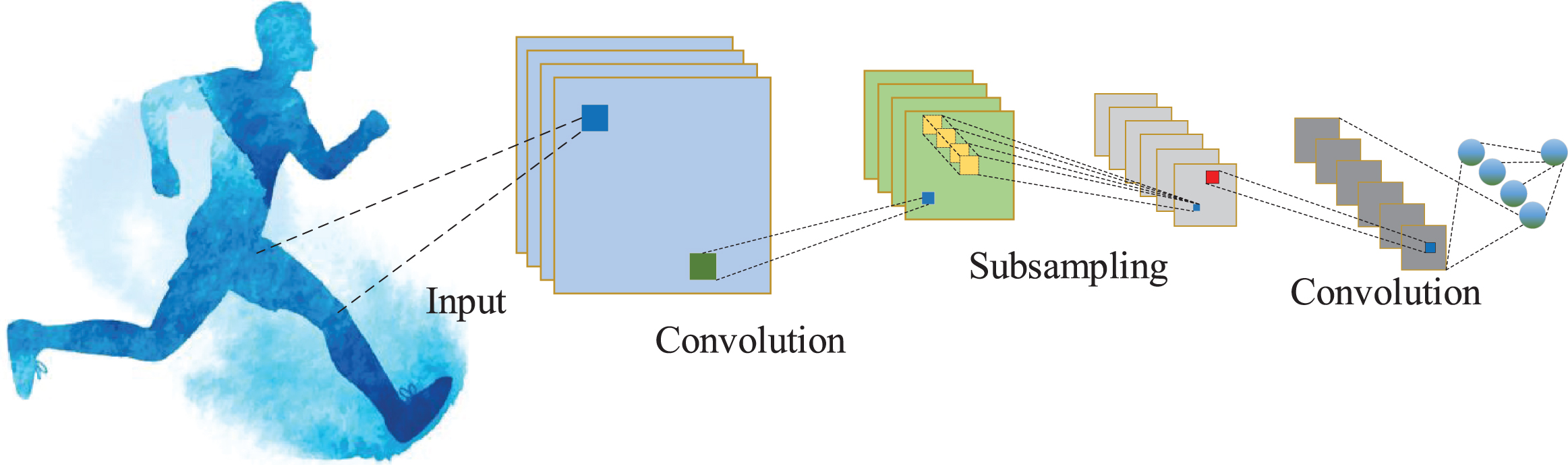
Extracting deep key frames from convolution network model.
The research on intelligent training feedback around physiological function indicators and technical action indicators is the current focus of research on artificial intelligence training feedback systems. In terms of physiological function index feedback research, visualized real-time feedback can be provided for groups with low requirements for sports training monitoring, but it can only show fuzzy exercise intensity and exercise volume, and cannot show detailed physiological and biochemical indicators and feedback in sports. Reasonable technical actions. With the development of science and technology, the design materials of smart wearable devices are more advanced, and the physiological and biochemical analysis functions are more comprehensive, sensitive and accurate. At the same time, it can also feedback the physical activity of sports in real time, which helps to standardize technical movements in sports. Strain sensor with micron thickness, extremely high sensitivity and ductility, low detection limit, retractable and adjustable range [22]. These characteristics make it possible to detect large-scale muscle motion sensor signals of the human body during walking, running and jumping, provide real-time feedback on the work of muscles during exercise, and track, analyze and evaluate the health of exercise. Real-time monitoring of lower limb movement by sensors is shown in Fig. 6.

Real-time monitoring of lower limb movement by sensors.
Pre-experiment testing
Before the experiment, it is necessary to understand the two classes in many aspects, including physical fitness, theoretical knowledge test and study interest and attitude investigation. Tests are carried out through national fitness testing equipment and questionnaires to ensure that the level is equivalent. The main test indicators are physical fitness indicators such as height and weight development, vital capacity, standing long jump, step test, grip strength, etc. The test standard is the evaluation standard score of the national student physical health standard. The test of non-physical factors determines the topics and indicators of the test through interviews and consultations with experts, and then compiles questionnaires to understand the situation of students, and formulates teaching plans according to the students’ academic conditions.
In this study, 60 students in the experimental group and the control group were given effective classroom exercises and regular classroom exercises for 10 weeks to test and analyze the improvement of students’ physical fitness by effective classroom exercises. The items that reflect the strength of students include standing long jump and 1-minute sit-ups. The items that reflect the speed quality include the 50-meter run; the items that reflect the endurance quality include the 50*8 round-trip run; the items that reflect the agility include the one-minute rope skipping.
Effect analysis of different methods to improve the strength quality of college students
Table 1 shows the results of standing long jump test scores before and after the experiment and the difference test results.
Results of standing long jump test before and after the experiment and test results of difference (n = 60)
Results of standing long jump test before and after the experiment and test results of difference (n = 60)
It can be seen from Table 1 that the standing long jump scores of the students in the experimental group increased by 0.18 meters before and after the experiment. The standing long jump of the experimental group was 2.01 meters before the experiment, and the performance after the experiment was 2.19 meters, p < 0.05. There was a significant difference in the standing long jump results of the experimental group before and after the experiment. Before and after the experiment, the students in the control group improved their standing long jump performance by 0.04 meters, but the improvement was not large. The standing long jump of the control group was 2.05 meters before the experiment, and the performance after the experiment was 2.09 meters, p > 0.05. There was no significant difference in the standing long jump performance of the control group before and after the experiment.
It can be seen from Table 2 that after the experiment, the standing long jump performance of the experimental group students was 0.1 meters higher than that of the control group. It shows that an effective physical education class structure is conducive to improving students’ standing long jump performance. The standing long jump of the experimental group was 2.19 meters after the experiment, the control group was 2.09 meters after the experiment, p < 0.05, the experimental group and the control group had a significant difference in standing long jump performance after the experiment.
Results of standing long jump test before and after the experiment and test results of difference (n = 60)
The experimental group adopted effective classroom structure teaching methods. In the preparation part of the 5 lessons, one-foot-switch jump, one-and-two feet alternate jump, frog jump, one-and-two feet alternately jump over obstacles continuously, and one-and-two feet continuous jump circle were added respectively such special exercises, combined with artificial intelligence technology, have greatly improved students’ standing long jump performance, which is conducive to the improvement of students’ strength quality. The use of conventional classroom teaching methods in the control group did not significantly improve the strength of students.
The results of the 50 m running before and after the experiment and the difference test results are shown in Table 3. It can be seen from Table 3 that the 50-meter running performance of the experimental group before and after the experiment increased by 0.72 seconds, and the performance improved significantly. The score of the experimental group in the 50-meter race before the experiment was 7.96 seconds, and the score after the experiment was 7.24 seconds, p < 0.05, and the results of the experimental group were significantly different before and after the experiment.
Results of 50 m running before and after the experiment and results of difference test (n = 60)
Results of 50 m running before and after the experiment and results of difference test (n = 60)
In Fig. 7, In the control group, the 50-meter running performance before and after the experiment increased by 0.21 second, but the performance improvement was not large. The score of the control group was 7.93 seconds before the experiment and the score after the experiment was 7.72 seconds, p > 0.05. There was no significant difference in the score of the control group before and after the experiment.

Comparison of detection values in different groups.
It can be seen from Table 4 that the 50-meter running performance of the experimental group after the experiment increased by 0.48 seconds compared with the 50-meter running performance of the control group. The 50-meter running performance of the experimental group was 7.24 seconds after the experiment, and the control group’s performance was 7.72 seconds after the experiment, p < 0.05. There was a significant difference between the experimental group and the control group in the 50-meter running performance after the experiment. Certain measures have been taken to improve students’ 50-meter running performance. In the preparation part of the course, the method combined with artificial intelligence technology was added to improve the students’ 50-meter score, which is conducive to the improvement of students’ speed quality. The students in the control group using conventional classroom teaching methods did not significantly improve the students’ 50-meter sports car performance, and had little effect on the students’ speed quality.
Results of 50 m running before and after the experiment and test results of difference (n = 60)
Table 5 is the statistical table of the results of 50 * 8 round-trip running before and after the experiment. It can be seen from Table 5 that the scores of the 50*8 round-trip running before and after the experiment increased by 0.18 points, and the scores improved significantly. The score of the experimental group in the 50*8 round-trip running before the experiment was 1.34 minutes, and the score after the experiment was 1.16 minutes, p < 0.05, there was a significant difference in the results of the experimental group before and after the experiment.
Results of 50m*8 running before and after the experiment and results of difference test (n = 60)
Results of 50m*8 running before and after the experiment and results of difference test (n = 60)
The 50*8 round-trip running performance of the control group before and after the experiment increased by 0.06 minutes, but the performance was not improved much. The score of the 50*8 round trip before the experiment of the control group was 1.44 minutes, and the score after the experiment was 1.38 minutes, p > 0.05. There was no significant difference in the results of the control group before and after the experiment (Fig. 8).
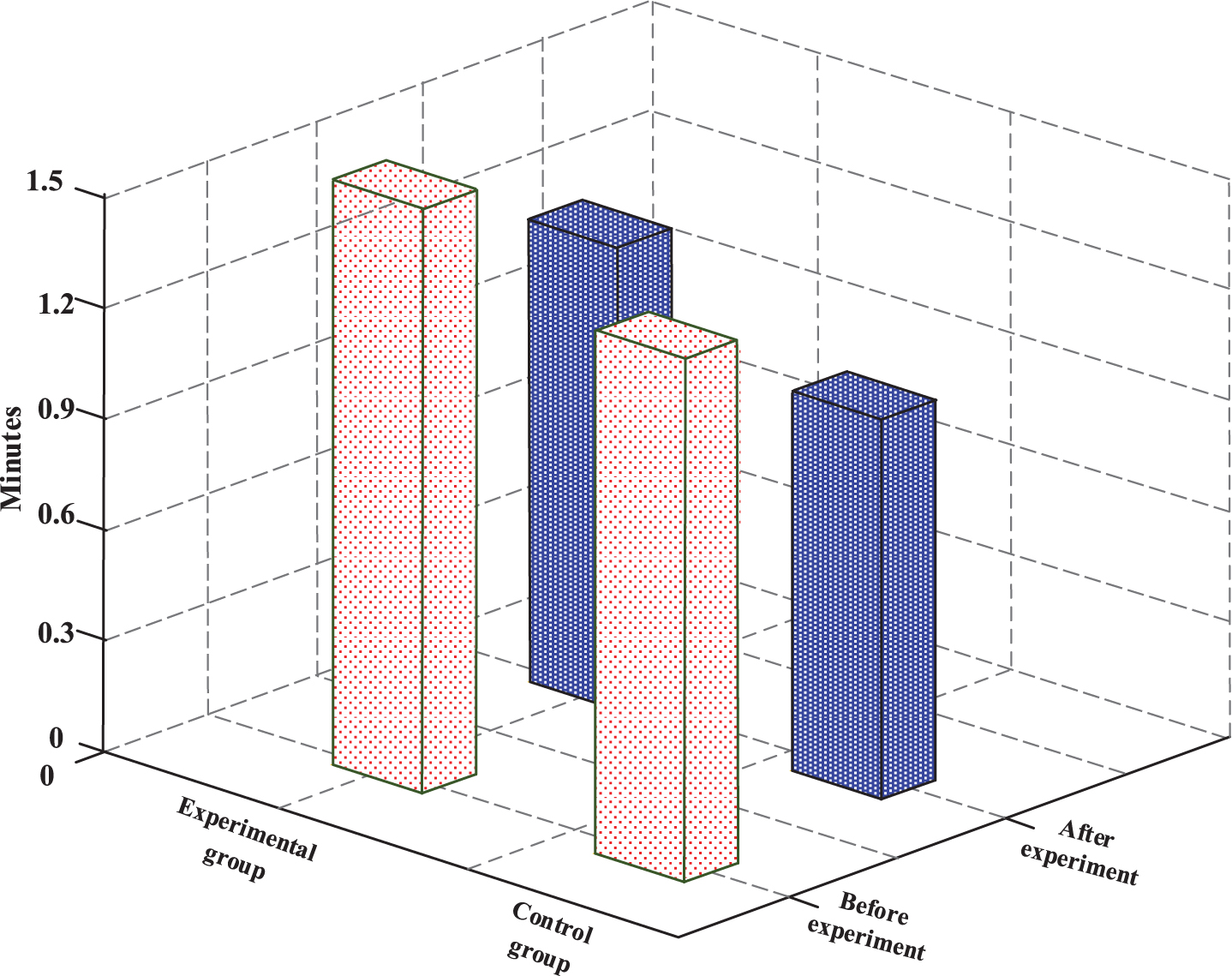
Comparison of 50 * 8 round trip running test values in different groups.
It can be seen from Table 6 that the 50*8 round-trip running performance of the experimental group after the experiment is 0.22 minutes higher than the 50*8 round-trip running performance of the control group after the experiment, which is a larger improvement. After the experiment, the 50*8 round trip performance of the experimental group was 1.16 minutes, and the post-experiment performance of the control group was 1.38 minutes, p < 0.05, and there was a significant difference between the experimental group and the control group.
A statistical table of the results of the 50*8 round-trip running results of the experimental group and the control group after the experiment(n = 60)
The experimental group adopted an effective classroom teaching structure and took certain measures to improve students’ 50*8 round-trip performance. In the preparation part of the 5 lessons, special exercises for obstacle running, dribbling running, skipping running, relay running, and alternate walking and running were added. The methods were combined with artificial intelligence technology. Improve the students’ 50*8 round-trip performance, which is conducive to the improvement of students’ endurance quality. The use of conventional classroom teaching methods in the control group did not significantly improve the students’ 50*8 round-trip performance, so the effect of improving students’ speed quality was not ideal.
Table 7 shows the results of one-minute rope skipping before and after the experiment and the difference test results. It can be seen from table 7 that the score of rope skipping in the experimental group one minute after the experiment is 14.82 times higher than that in the first minute before the experiment. The results of rope skipping in the experimental group were 141.30 before the experiment and 156.12 after the experiment, P < 0.05. There was significant difference in the results of rope skipping in the experimental group before and after the experiment.
Results of one-minute rope skipping before and after the experiment and the difference test results (n = 60)
Results of one-minute rope skipping before and after the experiment and the difference test results (n = 60)
The results of rope skipping one minute after the experiment in the control group were 0.6 times higher than that in the one minute before the experiment. The results of rope skipping in the control group were 131.52 before the experiment and 132.12 after the experiment, P > 0.05. There was no significant difference in the results of rope skipping in the experimental group before and after the experiment (Fig. 9).

Comparison of one-minute rope skipping test values in different groups.
It can be seen from Table 8 that the performance of skipping rope one-minute after the experiment in the experimental group increased by 14 points compared with the performance of skipping rope one-minute after the experiment in the control group. The results of the experimental group were 156.12 in one- minute after the experiment, and the results of the control group were 132.12 after the experiment, p < 0.05. There was a significant difference in the results of the experimental group in one-minute before and after the experiment.
Statistical table of results of rope skipping results of the experimental group and control group 1 minute after the experiment (n = 60)
The experimental group adopted an effective classroom teaching structure, and took certain measures to improve students’ one-minute rope skipping performance. In the preparation part of the 5 lessons, special exercises such as graphic running, synchronized rope skipping, alternate skipping with one foot and two feet, double backward skipping, and one forward and one reverse rope skipping have been added respectively. The method combines artificial intelligence technology to improve students’ 1-minute Rope skipping results are conducive to the improvement of students’ agility. The students in the control group using conventional classroom teaching methods have little effect on the students’ 1-minute rope skipping performance, so the effect on improving the agility of learning is not obvious.
In order to improve the effectiveness of college physical education, teachers should strive to improve their professional quality. At the same time, with the help of artificial intelligence technology in teaching methods, the actual development of physical education teaching effectiveness can be promoted. Therefore, teachers should change the original teaching concept, skillfully use the relevant modern technology, and improve the teaching efficiency as a whole. In this paper, the experimental method is used to make a comparative analysis of physical education teaching in a university. The analysis results show that the physical education teaching based on artificial intelligence can significantly improve the strength quality, speed quality, endurance quality and sensitive quality of students, so as to cultivate students’ interest in sports, and then guide students to actively participate in physical exercise to achieve the purpose of strong physique.