




Abstract
This article analyzes the reform of information services in university physical education based on artificial intelligence technology and conducts in-depth and innovative research on it. In-depth analysis of the relationship between big data and the development and application of information technology such as the Internet, Internet of Things, cloud computing, to clarify the difference and connection between big data, informatization and intelligence. Artificial intelligence will bring opportunities for changes in data collection, management decision-making, governance models, education and teaching, scientific research services, evaluation and evaluation of physical education in our university. At the same time, big data education management in colleges and universities faces many challenges such as the balance of privacy and freedom, data hegemony, data junk, data standards, and data security, and they have many negative effects. In accordance with the requirements of educational modernization, centering on the goal of intelligent and humanized education management, it aims existing issues in college physical education management.
Keywords
Introduction
The present development situation of extracurricular sports activities in universities at this stage is that the use of venues and facilities is inefficient; students lack the awareness of scientific exercise, and the management mode of extracurricular sport does not fit the actual needs. Traditional management methods are in line with students’ diversified exercise habits. The contradiction between them is becoming more and more prominent. The management of extracurricular sports activities in colleges and universities is relatively loose and lacking in science. Students have no better digested classroom sport knowledge through extracurricular sports activities, and even normal physical exercises [1]. Artificial intelligence improves the professional level and competitive ability of competitive sport: With the in-depth application of “data-driven sports training and sports decision-making” in developed countries, it has become a hot area for the development of modern competitive sport. Through the different applications of artificial intelligence technology with big data and intelligent algorithms in competitive sport, it can accurately monitor the physical condition of each athlete before. During and after the game, and help coaches adjust their skills and tactics in real time. Develop more personalized training modes and efficient competition strategies for athletes to achieve the purpose of improving athletes’ competitive level [2]. Through the power of intelligent technology, promote the “faster, higher, stronger” development of competitive sport. Artificial intelligence promotes the achievement of personalized teaching and adaptive learning in school sport: for sport, young people are the future and the backbone of accelerating the building of a sports power. The new physical education ecosystem is based on the new generation of information technology such as big data and artificial intelligence [3]. Its core is to help students to learn and train in physical education in a personalized way, to help teachers to provide scientific guidance on the technical tactics and special qualities of sports events, to assist managers in efficient and orderly school governance, and to realize the wisdom of the school, family and society. The main teaching object of school sport is college students, which are the future force of artificial intelligence development. Through the teaching of intelligent knowledge and the use of intelligent products in daily physical education, students’ information literacy has been subtly improved, and the artificial intelligence science education system has been improved [4]. The purpose of providing talented reserves for the development of artificial intelligence.
Levy F. Computers and populism studied the development process of US NBA data analysis, understanding of data resources and data analysis systems and their applications in “Research on American Professional Sports League based on Big Data Technology” [5]. The following conclusions are drawn: 1) Today, the NBA analysis of data based on system on big data technology has been established, and the ability to use data and the transformation of data results have changed the sports data management model; 2) Big data analysis technology has improved player mining and tactical play Law and training monitoring are of great significance. Maddox T M, Rumsfeld J S, Payne P R O analyzed the differences in the application of big data between domestic leagues and BNA in the “Impression of the Submission of Big Data Knowledge in Sports Events": 1) Domestic leagues At present, the mainstream analysis method is to count player information, and cooperate with video analysis to interpret the tactics of the two sides in the game, and more and more teams adopt the foreign decision tree method. 2) NBA uses the more advanced Sport VU platform and wearable smart devices to collect and process player data more accurately [6]. The conclusion is that it is limited by the level of competition in the league, different rules of the league and the different conditions of the players themselves. Majumdar D, Banerji P K, Chakrabarti S pointed out that the relationship between personal privacy and data ownership may become less and less in the future [7]. European people have extremely strong demands for the government to disclose information, and the people have the right to apply for information from the government [8].
Meng-yue C, Dan L, Jun W believe that each stakeholder is both a producer and a consumer of big data [9]. Pesapane F, Volonté C, Codari M, et al. started from the challenges of the time faced by business management in the context of big data, gave important research perspectives: social value creation, networked enterprise operations, and real-time market insights [10]. Qiang X studied the H application paths of constructing a network collaborative innovation platform under the background of big data [11]. Rowe E explained the potential economic management, public policy, healthcare, data journalism, social management and other values of big data [12]. Shortliffe E H pointed out use of data technology to realize government process remaindering, innovate the traditional divisional management model based on specialized division of labor, thereby improving management efficiency and quality [13]. The current application of smart technology in sport is still in the exploratory stage, various systems and technologies are not yet mature, and the purpose and scope of the application are not clear [14]. Therefore, find the combination of smart technology and the field of physical education, formulate and optimize sport intelligence the method of applying the system becomes particularly important [15].
This article focuses on the topic of the application of artificial intelligence in the field of physical education, using literature research, video analysis, comparative research and mathematical statistics and other research methods to implement artificial intelligence in sports big data, sports robots, and physical education training methods [16]. The discussion and analysis provide a theoretical basis for promoting the application of artificial intelligence to the field of physical education, as well as a theoretical reference for the wider application of artificial intelligence to the field of sport. The object of this paper is implementation of intelligence such as large data and sports robots in the arena of sport, as well as its implementation and feasibility. Specifically, it analyzes the influence of big data and the introduction of sport training robots on players, teams and sport game, and whether it can be effectively implemented in reality. Finally draw conclusions and give recommendations.
Design analysis of artificial intelligence technology in education information services
Analysis of artificial intelligence technology
Big data technology and artificial intelligence technology are the two wings of the era of human wisdom, and the two are mutual foundation and mutual promotion. Artificial Intelligence (Artificial Intelligence), the English abbreviation is AI. It is a new technological science that studies and develops theories, methods, technologies and application systems used to simulate, extend and expand human intelligence [17]. In any case, various occasions and various individuals have various understandings of this “mind boggling work” [18]. Artificial intelligence is making earth-shaking changes in our society. From creating smarter cities, to enhance road safety, to strengthen the protection of our online world, artificial intelligence is everywhere. Today, the typical machine learning process is labor and computationally intensive. We are using many customized solutions to promote artificial intelligence innovation, thereby helping to compress the innovation cycle. The flexible combination of technologies is allowing data scientists to build more advanced artificial intelligence solutions and stimulate the exploration of new ideas, as showed in Fig. 1.
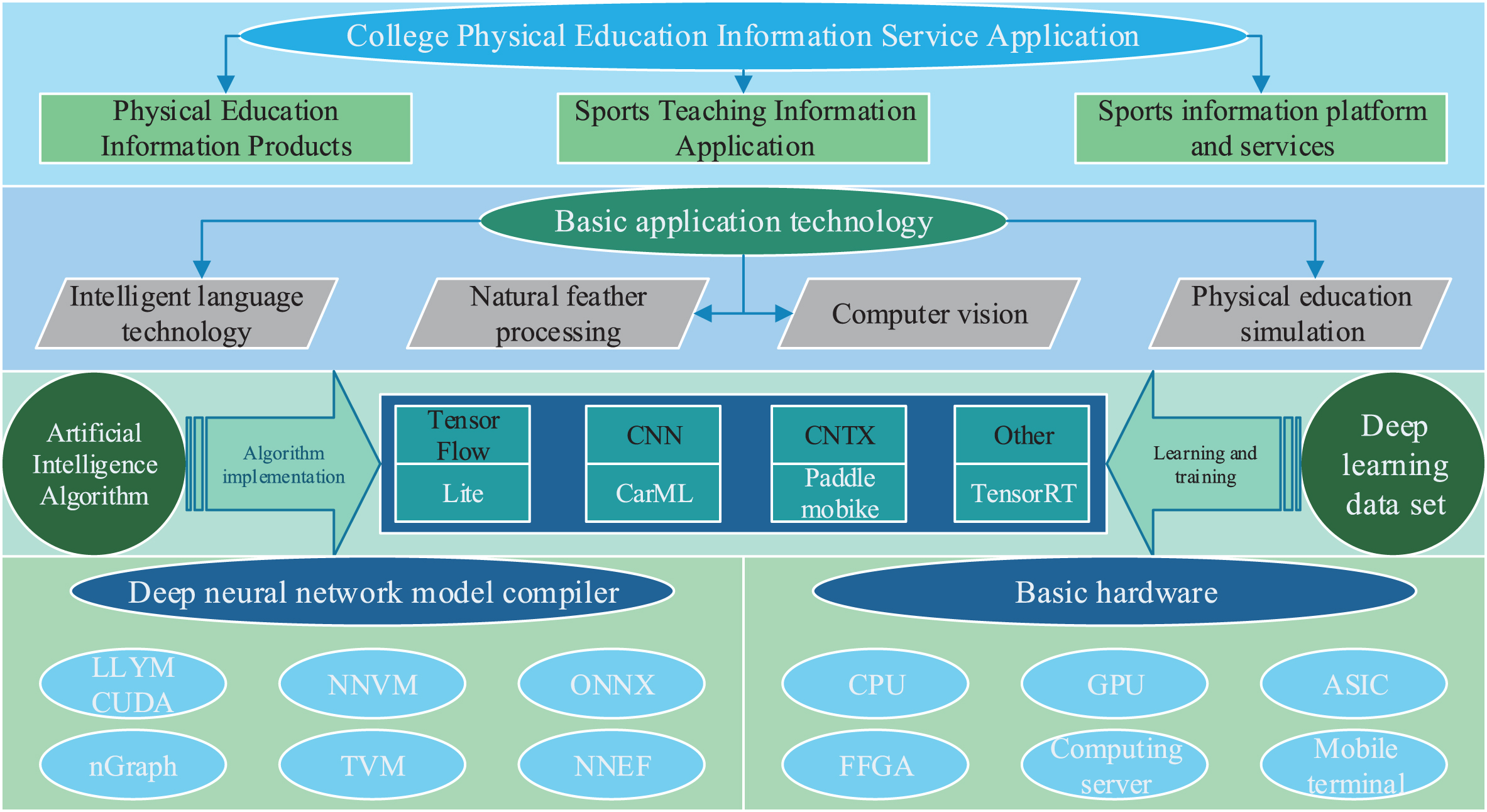
Artificial intelligence technology framework.
In-depth algorithms will be combined with big data to make new artificial intelligence algorithms better and better. In the future, the artificial intelligence virtual circle will complete the entire cycle. The era of big data has arrived, and its charm lies in the ability to dig out products and services of great value, and the perfect combination of artificial intelligence and big data will open a new round of development in the era of big data. The first to open the wonderful experience of artificial intelligence + big data is the online recruitment industry. Talent data and massive data information of employers provide big data support for the recruitment industry.
The biggest feature of the internet + sport artificial intelligence development model is interactivity. Data can get instant feedback. Just like data analysis during sports game, coaches can instantly understand the players’ status in the background and analyze the situation of the game in time. In traditional sport training that lacks artificial intelligence analysis, the exercise passes once [19]. With the data generated by the second training, the coaches can only judge the athlete’s training status and effect through their own training experience after training, and then launch the next training plan and methods. After all, the analysis process is the same as internet sport sports artificial intelligence data. However, compared with the powerful cloud computing function of the robot’s brain database, the robot has more than a coach’s database, a robot database. Can gather the training data of the world’s top coaches [20]. Then, we can find that data analysis in the traditional sense cannot be compared with Internet + artificial intelligence data analysis.
The system adopts a B/S structure and includes 3 major sections: information service section, learning resources section and volunteer recruitment section. Among them, the sports information service section includes after-school training time information for each project, fitness guidance information, game reservation information, sports goods buying and selling information, and venue vacancy information; the learning resource module includes videos of each project teaching or training; volunteer recruitment is a college student’s volunteer. The website is designed and improved in terms of overall design, development environment, core functional modules, and testing, formal operation, maintenance, improvement, and development tools [21]. The design started operation from four aspects: feasibility, effectiveness, website planning, and post-maintenance, and carried out post-test and debugging. The website design takes into account key issues such as operating costs, useful links, and application objects. The main designed columns include course learning resource columns, after-school training columns, private lessons, appointments, college student volunteer recruitment columns. The content structure is simple clear [22]. The college student volunteer recruitment column is designed for the employment and entrepreneurial practice of college students majoring in sport training in the later period. Private lessons and after-school training columns are more popular among students. After they pass the real-name certification on this platform, they can publish their self-requirements, use their spare time to exercise, try to teach, and work-study. Because of the real-name certification, most of the participants are teachers and students on campus, and a few are sports enthusiasts outside the school, which ensures the safety and interests of the participants, as showed in Fig. 2.

University physical education information service system architecture.
In the maintenance of the website, the information is collected and updated by college students majoring in sport training, and the university with a certain basic knowledge of the computer releases the content and upgrades the section. The main problems are the slow update of the column content and the continuous enrichment and improvement of the columns. The sport online education platform provides effective channels for colleges and universities to realize the sharing of sports teaching resources [23]. The sport online education platform provides a huge database of various information resources such as sports teaching and research papers, teaching videos, and sport education statistics for sports teaching and students. Students can find resources in the sport online education platform according to their actual needs. This is very important for realizing the sharing and optimization of teaching resources. Strengthening the construction of sport online education platform needs to start from both software and hardware. On the one hand, the development and application of software are the core and key to strengthening the construction of sport online education platforms. On the other hand, hardware construction is a vital situation for strengthening the building of sport online education platforms. Major colleges and universities should continue to upsurge their investment in the expansion of physical teaching resources and the building of network infrastructure, so as to create a good funding and policy setting for the application and promotion of online sport education platforms in college physical education. In addition to normal teaching time, allowing students to study independently through the sport online education platform during their spare time will help broaden students’ thinking and achieve continuous improvement in the effect of physical education [24–26].
Accurate analysis and utilization of information data can effectively support the decision-making of managers. According to the survey of extracurricular sports activities management of undergraduate colleges and universities, the collection of students’ extracurricular sports activities information data include sign-in, stamping, face swiping, fingerprint recognition, and campus card and other forms. Face-swiping, fingerprint recognition, campus card and other forms effectively aggregate student activity data, and set a data invalid recognize warning function, but the data analysis function has yet to be developed. Students can only query the activity results after the activity, but cannot record analyzing the relevant information during the activity process, few administrators compared the data of students’ extracurricular sports activities with the personal data of students and class activity data, and did not conduct in-depth mining of the activity data. Colleges and universities have a low utilization rate of data on extracurricular sports activities of students.
The publicity activities of extracurricular sports activities are a process of sport communication, and sport information is passed to the majority of students through the communication platform. The network promotion of extracurricular sports activities in colleges and universities is ranges from eventual release information to event news on the official website [27–30]. Various departments cooperate with each other, and it will take the next day to push for the official website as soon as possible. On weekends, it will be delayed for two days. At present, the form of dissemination of information resources for extracurricular activities in schools relies on the media. Most school sports departments have gradually launched WeChat official accounts, created Weibo accounts, continuously created publicity paths, increased the speed of event information dissemination, and made full use of the power of the media to expand the impact of the event Strengthen the publicity of extracurricular sports activities in schools, as shown in Fig. 3.
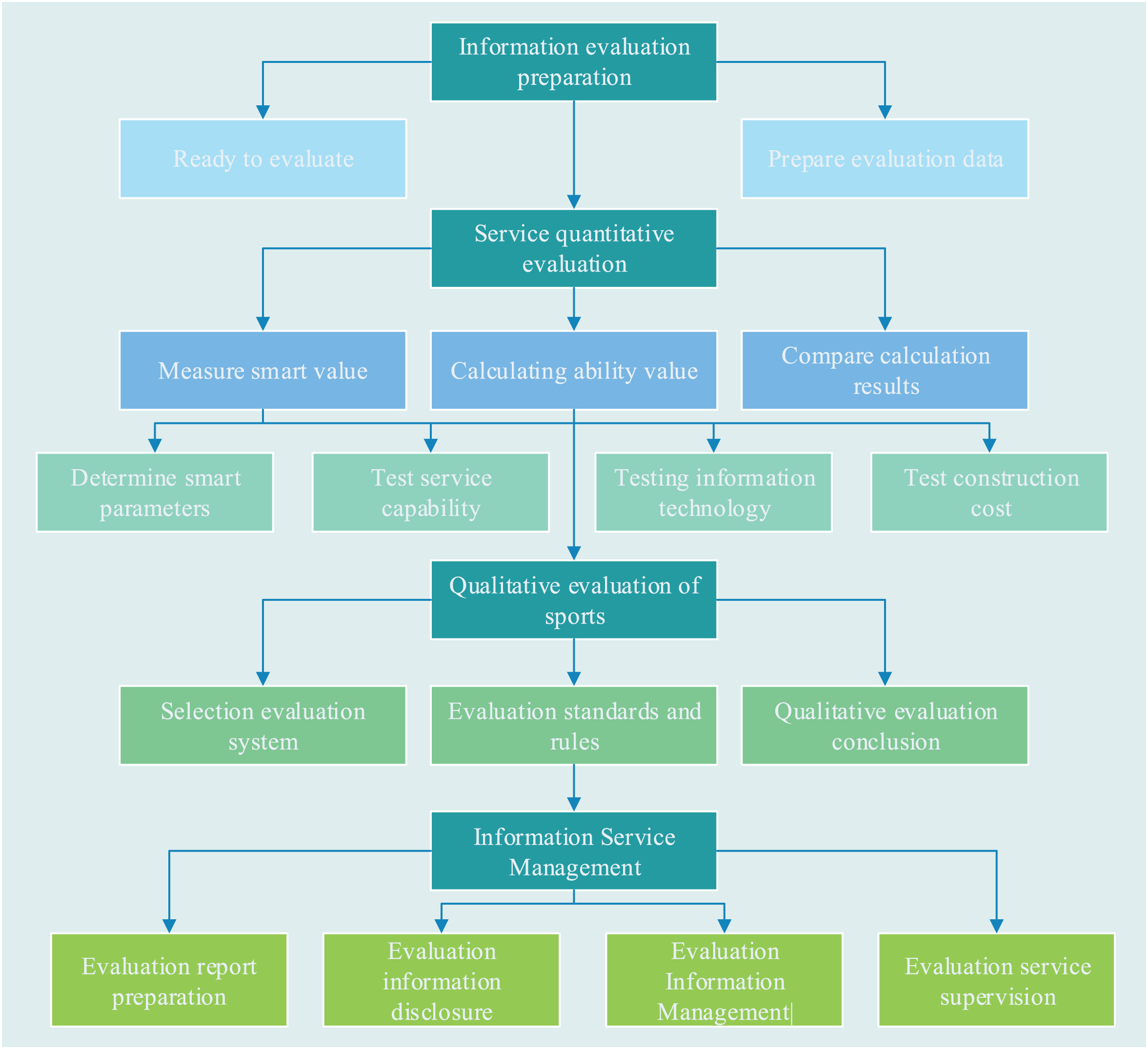
Evaluation of information service.
The sound and perfection of school-related policies can play a decisive role in the sustainable development of extracurricular sports activities. In other words, the restrictive role of policies has played a guiding, promoting, and standardizing role in the development of extracurricular sports activities. For example, in the sunshine long-distance running initiative, the school formulated a series of management measures to promote the development of activities. There is no time-saving supervision mechanism, which cannot ensure the authenticity and effectiveness of the activities; violations of discipline are endless, attendance statistics are distorted, student enthusiasm for exercise is frustrated, and student enthusiasm is low, the interest in sports is weak and cannot actively participate in it, which makes the activities become mere formality and slowly fade.
In essence, the demands of teachers and students are different, supervision is weak, and the development of activities cannot achieve the desired results, and the management of activities can only be a mere formality. During the interview process, most schools have formulated corresponding extracurricular sports activities regulations, and some universities have formulated corresponding management methods for the management of extracurricular sports activities. Mechanism, the effect of activities will not be obvious. How to monitor and grasp the process of students’ extracurricular sports activities? In actual practice, there are still situations where supervision and management are not in place. The supervision and management of students’ extracurricular sports activities is a formality, and the content of supervision and management is not clear, and the procedures are not standardized and scientific are the main factors that cause the supervision and management mechanism to become a mere formality. The development of science and technology, the progress of the time, and the current management model cannot meet the current development needs. “Internet + ” brings opportunities to the traditional management model. With the development of internet technology, the Internet not only represents technology and platform, but also represents the idea of thinking. Compared with the rapid transmission of the Internet, traditional sign-in and roll-call have the disadvantages of a large workload and delayed information dissemination. Mobile phones are used as mobile terminals, and student computers do not leave their hands.
Analysis of performance results of university physical education information service system
The collection of learning questions for learner projects is the first step in building a data set. The validity of the collected learning questions will have a direct impact on the validity of the data set and the validity of the question and answer system. In order to obtain more comprehensive and effective data about students’ questions about the courses they study, the author decided on the real needs of learning from the content of the learner’s project courses, and collected learning questions from the following two aspects: 34 students were organized in batches Carry out the learning of the selected online project course content, provide them with computers and supporting experimental equipment, let them record the learning problems encountered in the learning process on paper, and collect and organize their problems. After excluding 10 problems that are not related to the course content, such as video playback jam or noise, 238 valid question data were obtained. After organizing students to collect curriculum questions, in order to ensure comprehensive coverage of the selected project curriculum content by the collected questions, the author successively carried out statistical analysis of the problem duplication of the collected learning questions. Question repetition rate = Compared to the number of new questions/total number of existing questions in the previous classmates’ questions, the repetition of student learning problem data is obtained, as shown in Fig. 4.
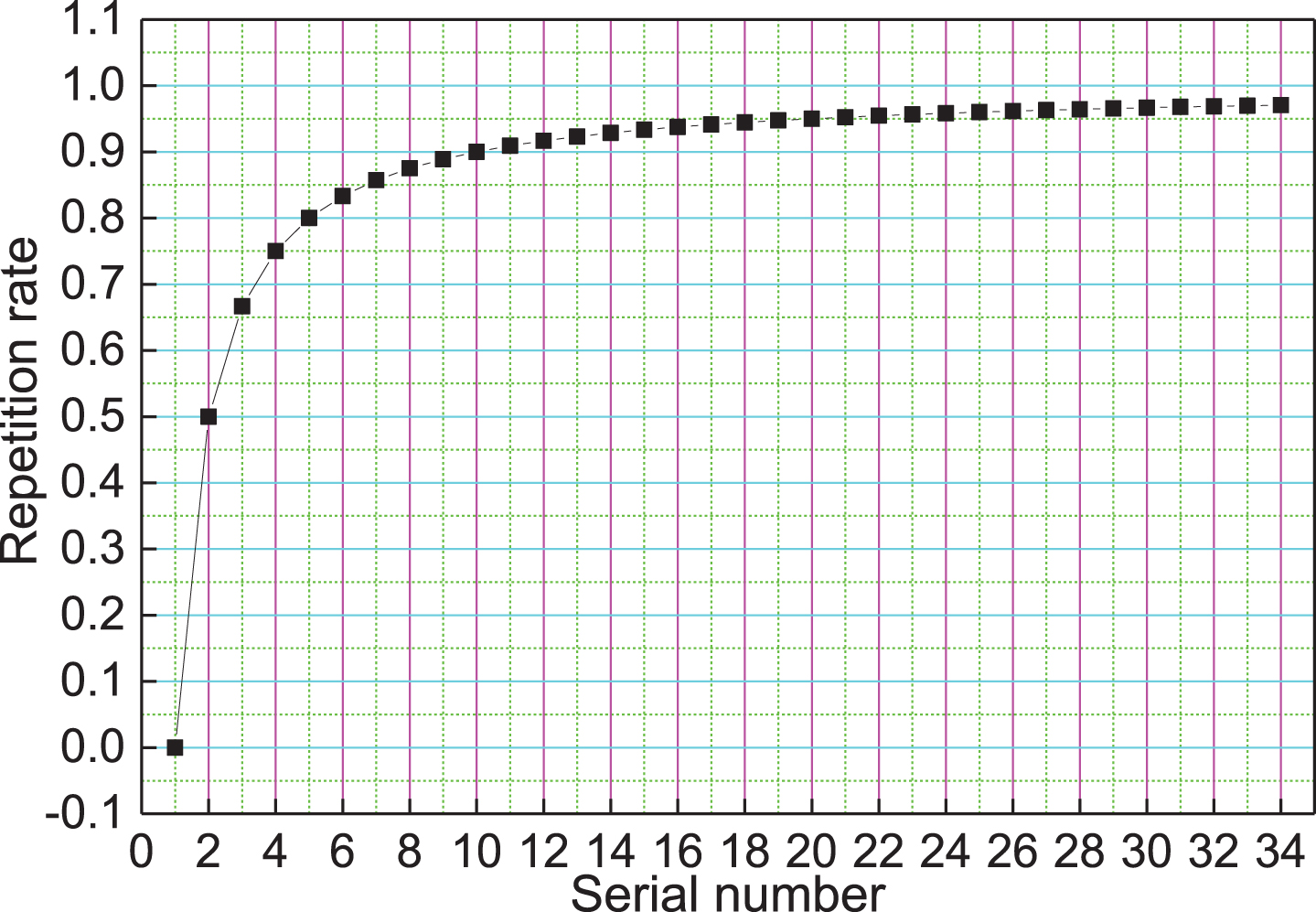
Change of problem repetition rate.
It can be seen from Fig. 4 that for the course selected in this study, after the analysis of the learning problems of the first five learners, the number of new problems gradually decreases and the repetition rate of the problems tends to stabilize. After the statistics of 11 student problems, through the compilation and supplement of the data of the next 23 learners, the increase in the number of new problems tends to 0, and the problem repetition rate tends to stabilize. Based on this, the author obtained a total of 374 valid student question data. Through preliminary examination of the comprehensiveness of the question data, relatively complete, true and effective learning problem data that can be used for follow-up research have been initially collected to support the construction of further data sets.
In experimental learning of this online project course, each student has carried out two projects of red and green traffic light and low-head alarm respectively, for a total of 20 projects. Five of the projects were completed directly after the students took the online course; 13 projects failed to be completed after the project failed, and they were completed after troubleshooting with the help of the question and answer program; two projects were completed by the students after passing the question and answer program. The number distribution is shown in Fig. 5.
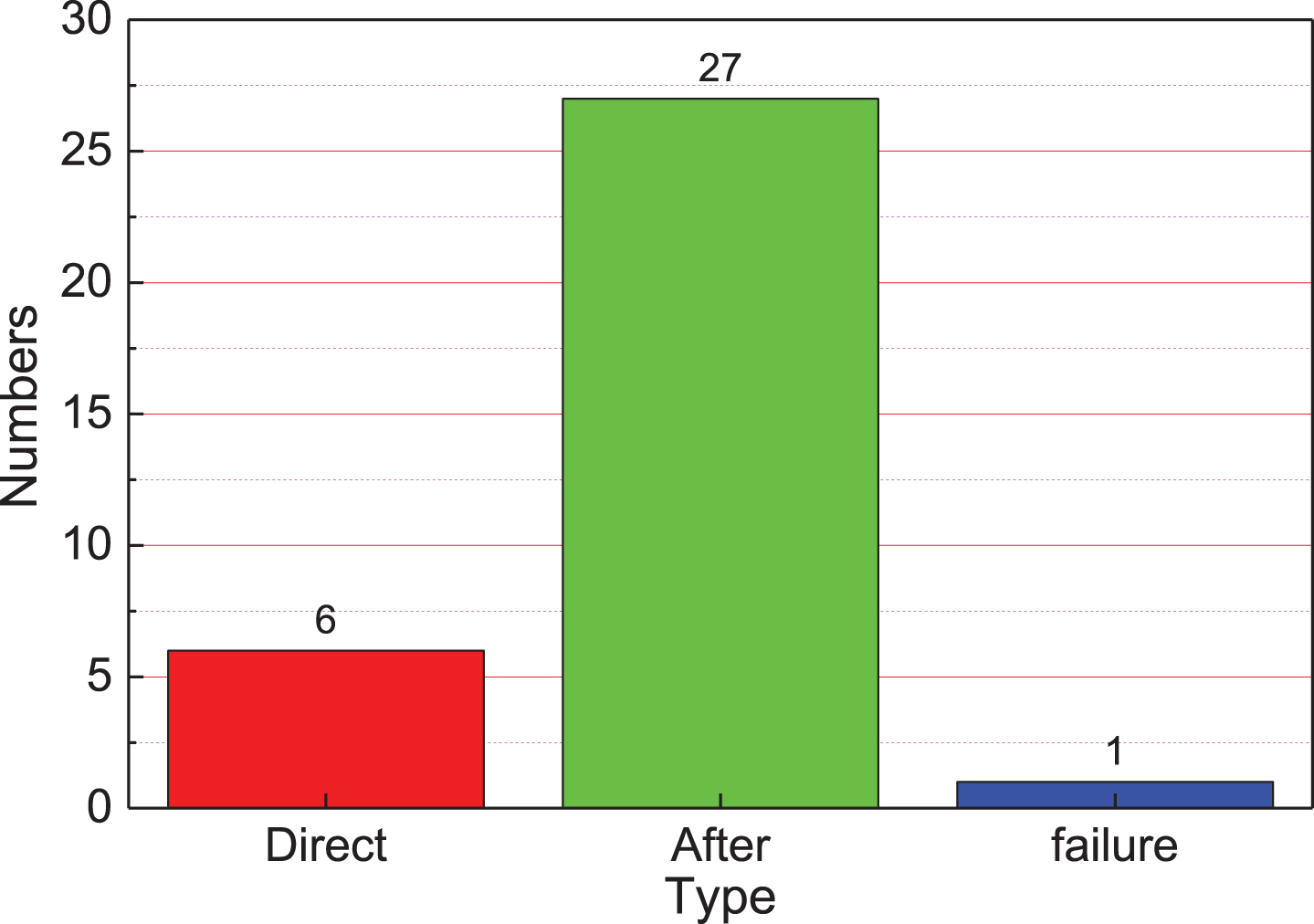
Number distribution diagram of system completion.
From the perspective of the impact of artificial intelligence on the educational goals in school education, by analyzing the relevant characteristics of the current educational goals and the new educational goals should have more emphasis on the individualized inner nature of students and a happy campus life, in talent training In terms of emphasis on the three characteristics of human traditional language and logic, self and social cognition, culture and sports, and moral and spiritual abilities, it is proposed that the national education policy, school training goals, curriculum goals and teaching goals Reshaping the educational goals in four dimensions. From the perspective of the impact of artificial intelligence on the educational content of school education, by analyzing the relevant characteristics of the current educational content. The customization of student learning content and the structure of the curriculum that the new educational content should have, the two characteristics are more integrated. The reconstruction of educational content is carried out from the three dimensions of national curriculum, local curriculum and school-based curriculum, as shown in Fig. 6.
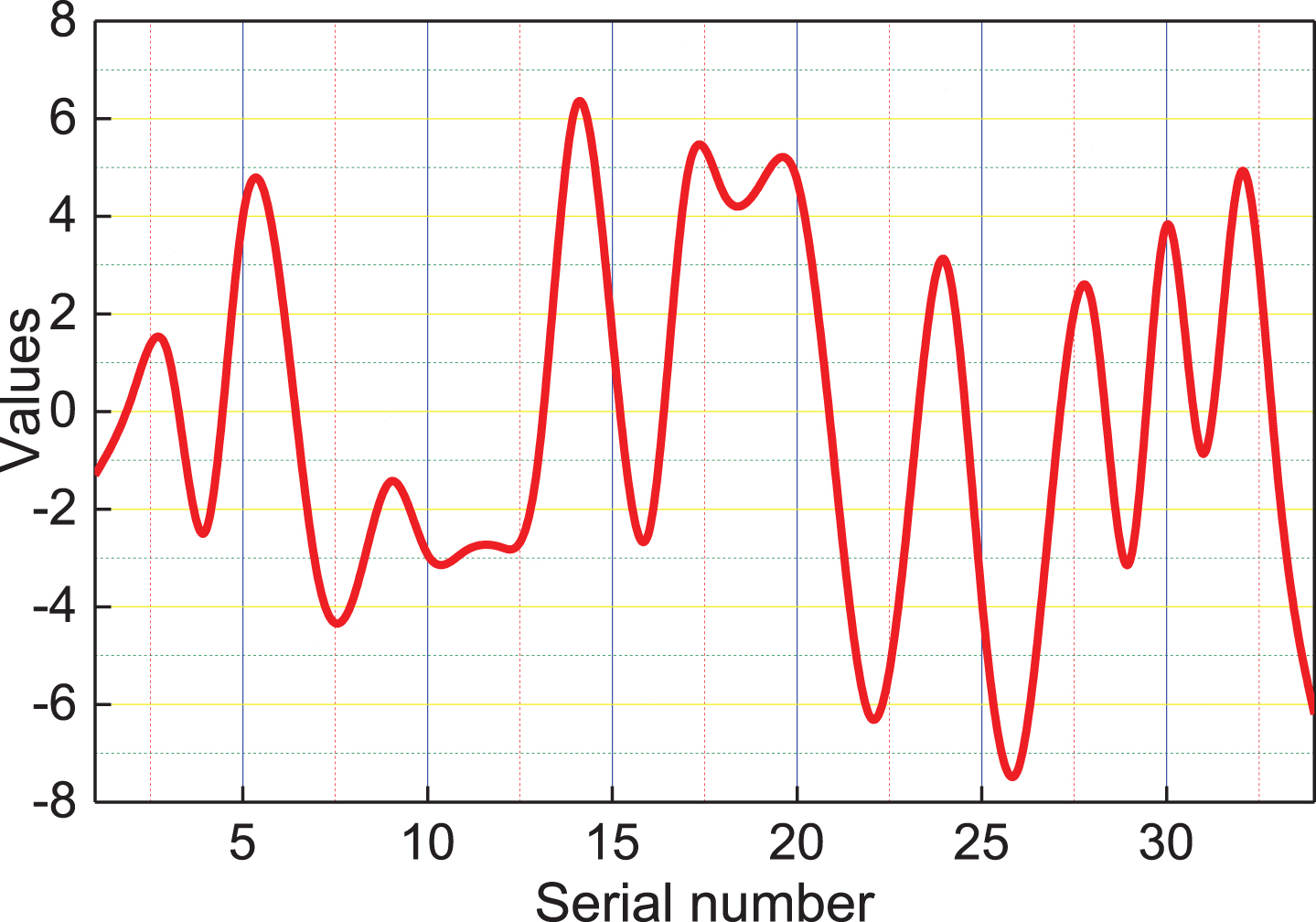
Update frequency of information service system.
IDEA running in the background shows the intuitive results, and then verify the accuracy of the recommended algorithm through simulation on MATLAB. Since 70% of the data is used as training in the testing phase of the recommendation algorithm, the result verification at this stage will use the remaining 30% of the data to complete the data verification. Top-N recommendation classification is usually measured by two index parameters, which are recall rate and accuracy rate. The recall rate refers to the proportion of the recommended items in the test set, and the denominator is the value set of the test set. First, the value of N needs to be determined, and different values of N are used to test the impact on the accuracy of the algorithm, so as to sort the entire data set for an initial range. As showed in Fig. 7, when N takes different values, the improved algorithm is a simulation diagram of the accuracy of the improved algorithm without passing the number of users.
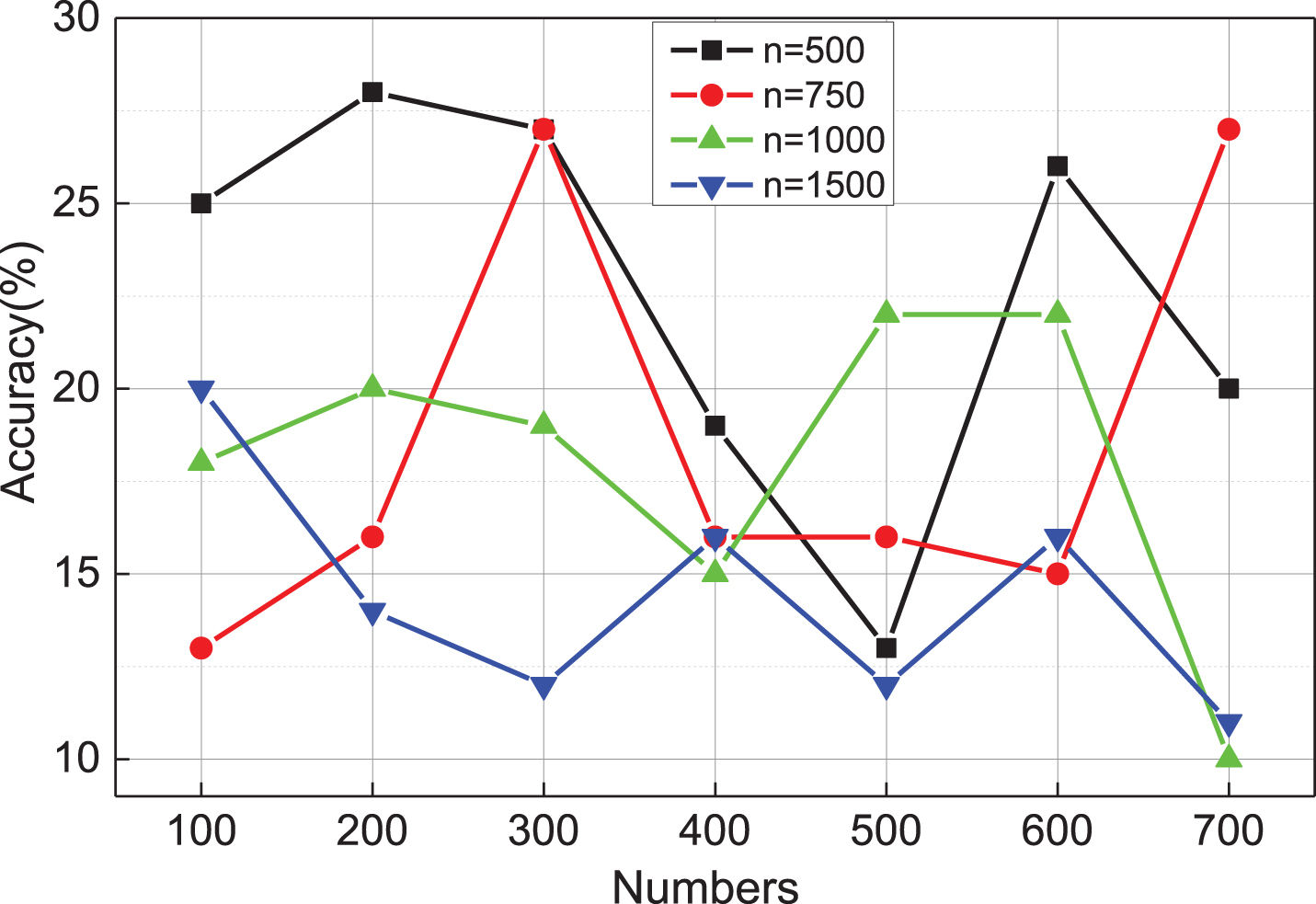
Simulation diagram of accuracy of different values of N.
From the results in Fig. 7, it is found that when N takes a relatively small value, as the number of user’s increases, the accuracy rate tends to increase; when the value of N gradually increases, the accuracy rate also increases. But volatility and randomness of accuracy will also become larger. Therefore, in comprehensive consideration, when the value of N is 1000, compared with other values, not only the accuracy rate is relatively high, but also as the number of user’s increases, it is relatively stable. Therefore, the value of N in this article is 1000. The recommendation results achieved by the improved algorithm after the introduction of interest as weights have significantly improved the accuracy and recall rates of the two reference indicators, in which the accuracy rate increased by about 5% and the recall rate increased by about 3%. The abscissa of the figure is the number of users, which increase as the number of users in the test increases, and gradually tends to a stable value. In order to verify the rationality of the two indicators, the above reference indicator is based on the Top-N recommendation strategy, that is, 1000 recommended values to compare with the test set. The scope of the two sets is very wide, and it is just an initial ranking stage.
Different sports have different technical and tactical analysis methods, but the basic steps are similar: first collect raw data, then extract valid information, and then conduct in-depth analysis of the data. In most official competitions, athletes are not allowed to wear additional equipment, so we want to obtain information about athletes in the competition. Six motion tracking cameras hanging above the court are the main components of the system. This kind of problem is difficult to come by relying only on assistant coaches or data analysts. The “Sport VU” system transforms a bunch of seemingly confusing and seemingly confusing game information into a data set that can be further explored and is easy to understand. Then use machine learning methods to help team data analysts and coaches better understand the internal operations of the team. This change, once considered a strategic gambling, has brought amazing effects to the team and surprised everyone, as showed in the Fig. 8.
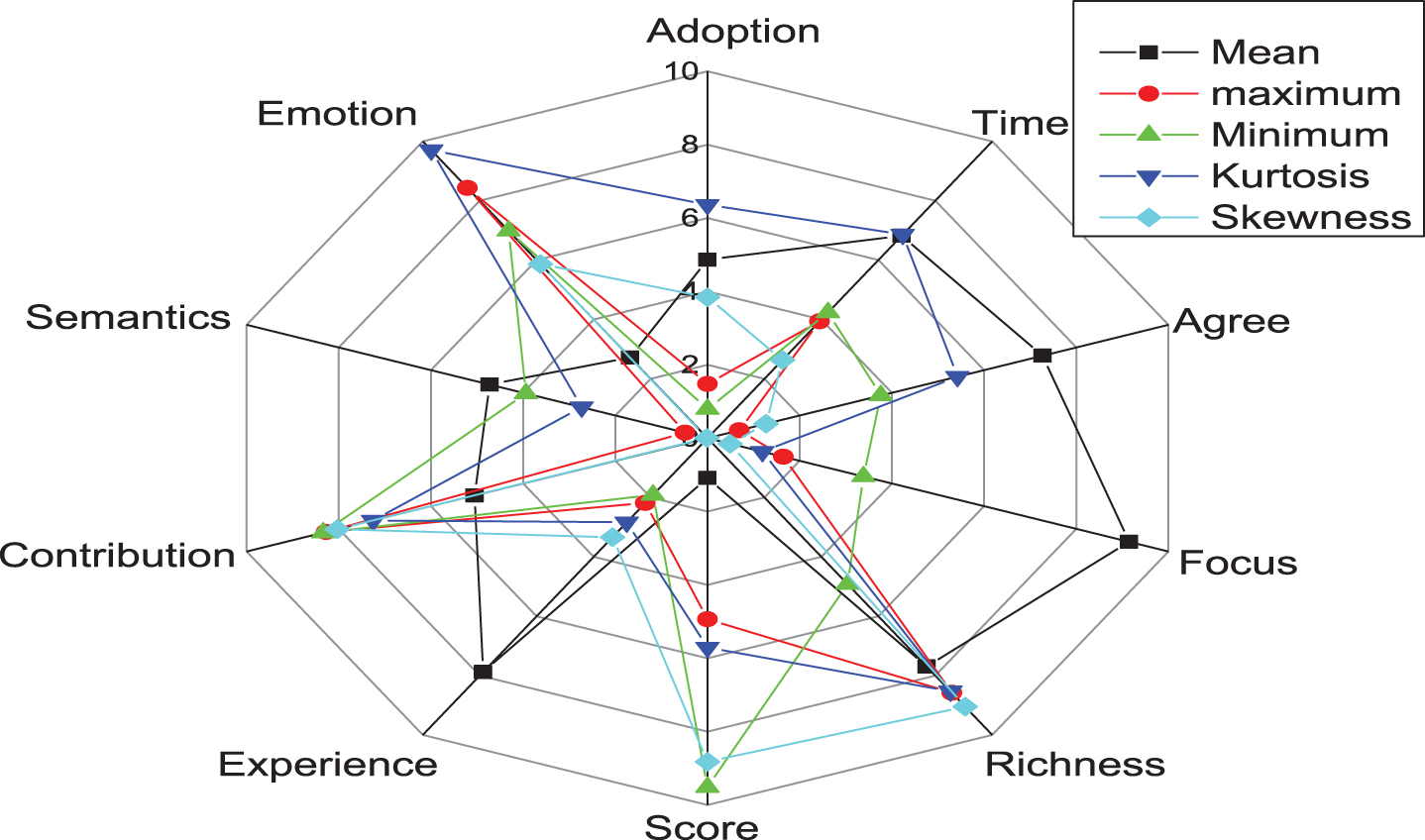
Variable descriptive statistics.
The descriptive statistical results of each variable are shown in Fig. 8. Among them, the average value of the adoption result variable is 0.15, indicating that only 15% of the 23102 user knowledge contributions have been adopted. It further illustrates the value sparseness of user knowledge contribution content in Xiaomi MIUI open innovation community. The average value of emotional polarity is –0.28, indicating that the overall emotional tendency of the user’s knowledge contribution content in the bug feedback module of the Xiaomi community is biased towards negative, which is highly consistent with the basic function of the community. Since the bug feedback module of the Xiaomi community is mainly used to collect the problems found by the users or the perfect opinions formed during the use of the users, the user will have a description of the bad experience of the product or service in the process of generating the relevant knowledge contribution, which will inevitably be brought. In addition, from the perspective of the credibility of information sources, the experience value and points of community users have reached a high level, while the degree of active contribution is relatively low, indicating that the leading users in the Xiaomi open innovation community are still It is an important scarce resource.
This study uses K-fold Cross Validation to determine the number of topics in the open innovation community. Finally, the line chart shown in Fig. 9 is obtained. It can be seen from the figure that when the number of topics is 100, the perplexity of the model reaches the lowest value. Combined with the actual situation of the bug feedback module in the Xiaomi MIUI community, this study determined that the user knowledge contribution content collected from the Xiaomi open innovation community contains a total of 100 topics.

Line chart of the number of topics and the distribution of perplexity.
In order to prevent the occurrence of multicollinearity and understand the degree of mutual influence between characteristic variables, it is necessary to carry out correlation analysis on each characteristic variable. This study uses the Pearson correlation coefficient to calculate and measure the correlation between the characteristic variables, and the correlation coefficient between the characteristic variables is formed as showed in Fig. 10. In order to further visualize the correlation of each feature variable, the pairs function in R language is used to draw a multi-panel scatter matrix diagram of feature variables, and the visualization results are shown in Fig. 10.
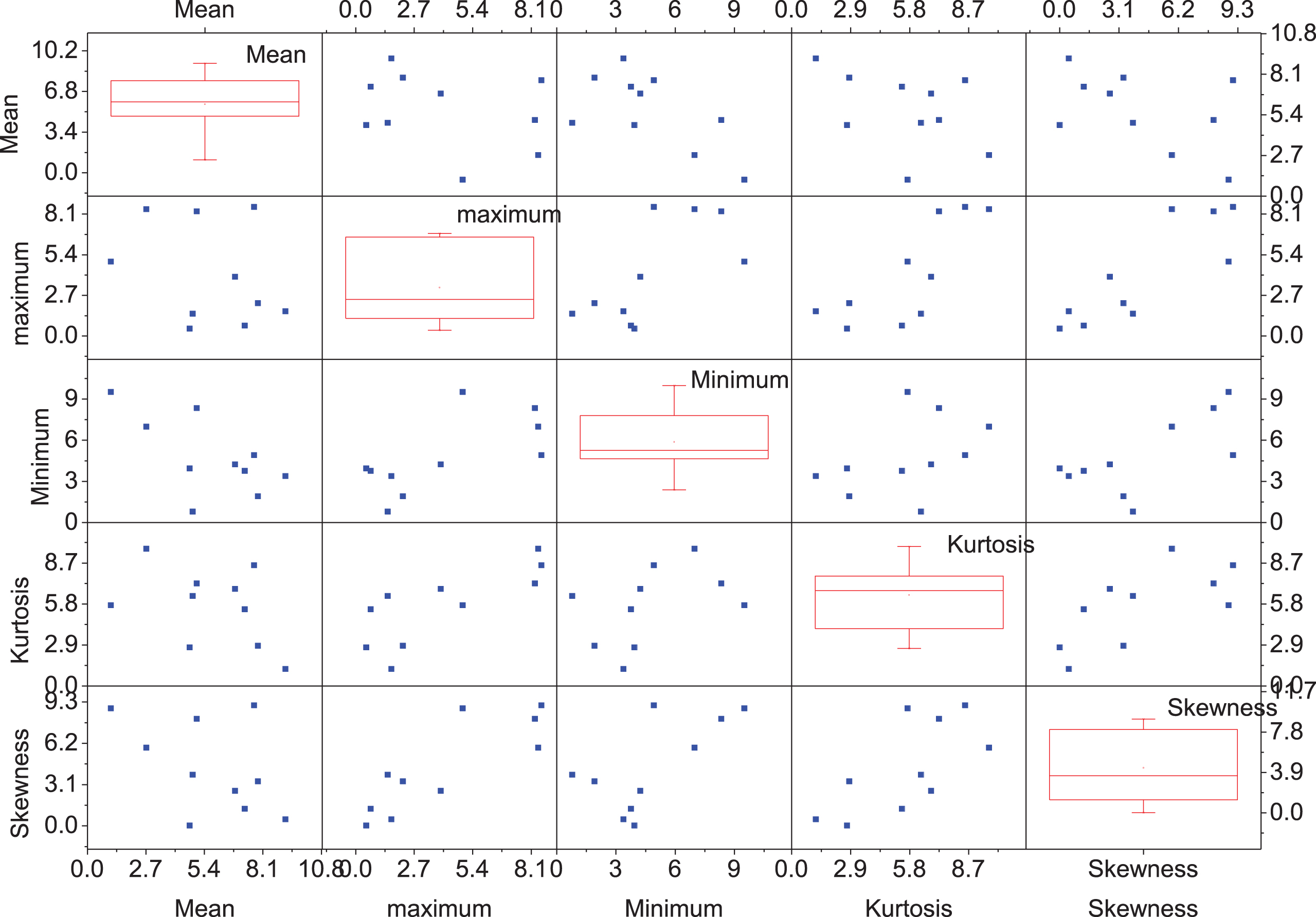
Scatter plot array of feature variables.
Figure 10 shows the name of each feature variable on the diagonal line, and shows the same correlation scatter plot above and below the diagonal line, except that the two symmetrical legend axes are reversed. Therefore, half of the scatter plot array shown in the figure is redundant. In order to show the correlation between the feature variables more clearly, this paper introduces the panelist function and the panel board function, and performs explicit quantification and normative processing based on the Pearson correlation coefficient value on the multiple groups of graphs, and obtains the expanded multiple groups of feature variables.
Figure 11 shows the correlation of feature variables in multiple sets of graphs. In addition to displaying the names of the variables on the diagonal, a statistical histogram of the variables is also drawn. Two feature variables are added to the scatter plot above the diagonal.

Correlation analysis results.
From the correlation analysis results of characteristic variables shown in Fig. 11, it can be seen that there is a certain significant correlation between most characteristic variables (p < 0.05), the correlation coefficient between the variables is small, and the combination of characteristic variables with a correlation coefficient less than 0.1 Occupy a larger proportion. Among feature variables with high correlation coefficients, the correlation coefficient between the user’s experience value (Experience) and user score (Score) is up to 0.99, and the user’s active contribution (Contribution) and user score (Score) also have a high correlation coefficient. It shows that users who have high experience value and actively participate in knowledge contribution in the open innovation community tend to get higher user points, which are highly consistent with the incentive system of the Xiaomi open innovation community. Correlation coefficients among other characteristic variables are all below 0.3, indicating that the multiple collinearity between the variables is not obvious.
Through in-depth analysis of university physical education information services, combined with artificial intelligence technology to study its reform and innovation. Students majoring in sports give full play to their professional expertise. Their experience and work on the website, and after-school exercise, have cultivated comprehensive application capabilities. In short, in the era of mobile Internet, talent training in colleges and universities requires transformation and upgrading in terms of model and organization, methods and methods, and only in this way can it meet the needs of the transformation and development of sports training. Based on the operation of artificial intelligence technicians and the participation of sport college students and extracurricular practice, it is a bold attempt to cultivate talents for sport training professionals. It is to implement innovative higher education mechanisms, reform talent training models, and improve college students’ practical and operational capabilities such as entrepreneurship and employment.