



Abstract
The process of international integration is accelerating continuously, which puts forward certain requirements for the current college students’ communicative ability and English ability. Therefore, it is necessary to further improve the students’ cross-cultural communicative ability in combination with English teaching. This paper combines machine learning and fuzzy mathematics methods to build an evaluation model of English cross-cultural communication ability. Moreover, based on the basic assumptions of college students’ oral communication ability evaluation, this paper builds a basic model for college students’ oral communication ability evaluation. In addition, through factor analysis and correlation analysis, this paper verifies the hypothesis of the student’s oral communication ability evaluation model and obtains an optimized university student’s oral communication ability evaluation model. After the model’s hypothesis testing and a series of statistical analysis, the evaluation system of college students’ oral communication ability is finally obtained. Finally, this article combines the investigation and analysis to test the performance of the model constructed in this article. The research results show that the capability evaluation model constructed in this paper has good performance.
Intercultural communication is a discipline that studies intercultural communication activities and has a complete system and rich content. The rise of intercultural communication studies is not long, but cross-cultural communication activities have a long history. Moreover, it can be traced back to the beginning of the origin of human civilization and is a manifestation of the interaction between human beings [1].
In the human society under the background of globalization, communication, communication and cooperation are becoming more and more frequent. Political and economic cooperation and the exchange of literature and art are essentially cultural exchanges. While people from all countries, nations and regions of the world are cooperating under the common goal, they are also facing obstacles to communication and difficulties in cooperation due to cultural differences. Therefore, the success of international cooperation depends largely on whether the two parties can achieve mutual understanding, mutual recognition, mutual respect and sincere communication in culture. At the same time, this means higher requirements for the quality of talents, especially cross-cultural communication skills. The 30 years of reform and opening up that China has experienced are in fact a process of continuous dialogue, collision and exchange between Chinese native culture and Western culture. With the continuous deepening of cooperation and exchanges between China and the world, all kinds of talents in various fields participating in the cooperation are faced with an environment that must consciously and continuously improve cross-cultural communication capabilities [2].
Colleges and universities must focus on cultivating college students’ ability to understand internationally, understand the cultures of different countries and nationalities, and enable them to proficiently use foreign languages to undertake the important tasks of international exchange. As the home base for the cultivation of higher talents, colleges and universities must play an important role in enhancing the cross-cultural communication ability of college students. The most important manifestation of cross-cultural communication ability is mainly to communicate through written and spoken language, that is, language communication. In higher education, colleges and universities can rely on English and other language teaching to try and study how to improve the cross-cultural communication ability of college students of various majors. In addition, students can understand and master the cultural characteristics of these countries through language teaching, and complete the improvement of cross-cultural awareness, knowledge and skills in the process of language ability training. Therefore, strengthening college English teaching and improving students’ English cultural literacy and cross-cultural communication skills have become an important teaching task in colleges and universities [3].
In the actual teaching process, the focus of college English teaching is on language teaching and learning, and the training of English language ability has always been a common concern of teachers and students. For non-English major students, passing the exam is the main motivation for learning English, and there are few opportunities to truly use English for cross-cultural communication in their learning and living environment, so they lack the enthusiasm and motivation to learn English culture. In addition, teachers generally lack awareness of cultural teaching in teaching. In fact, language education is not simply the cultivation and training of language ability, but the comprehensive training of language ability, humanistic quality, cross-cultural communication ability and other aspects. The focus of college English teaching curriculum reform is to combine language teaching and cultural teaching in teaching to enable students to complete their understanding of English culture through the study of English. Moreover, in this process, cross-cultural awareness and ability are formed, and students will be trained into international talents with high comprehensive quality, which will play a fundamental role in the cultivation of college talents and meet the new requirements of the state and society for talent cultivation.
Related work
The ranking of results is an important indicator to measure the mathematical retrieval system. In the process of searching database documents, correct ranking results can effectively reduce the number of wrong proof attempts and backtracking [3]. The literature [4] proposed a sorting algorithm for mathematical expressions based on the MathML format. The method defines five evaluation factors as system distance, data type level, matching depth, query coverage, and whether it is a formula. The literature [5] used a binary tree to represent a mathematical expression, normalized the operator by first traversing the binary tree to obtain a sequence of formula elements, and defined the similarity calculation formula to calculate the similarity between expressions according to the characteristics of the same part of the corresponding sequence of the mathematical expression and the number of elements. The mathematical expression retrieval system MathDex proposed in the literature [6] converts the expression into MathML format to establish an index, calculates the similarity according to the different weights assigned to each part in the expression matching process, and sorts the search results. The literature [7] designed an effective formula index and retrieval model ICST based on the NTCIR-Math-2 project and applied the layering technique to the generating subtree operation of the formula half operator tree. In order to make the retrieval more efficient, the system calculates the statistical information of each attribute and stores it in the inverted index for the calculation of the similarity between the query expression and the result expression. The calculation method of similarity between mathematical expressions is the basis of the mathematical expression sorting algorithm. The above methods provide methods and ideas for the design of a sorting algorithm that uses mathematical expressions as retrieval results. However, the retrieval results of some retrieval systems are documents containing a large number of mathematical expressions, and some algorithms for sorting the results of documents have also been proposed one after another. The literature [8] expressed mathematical expressions in LaTeX format, converted all symbols in mathematical expressions into ordered linear sequences according to the rules, and implemented mathematical retrieval in the mathematical retrieval system DLMF Search. Moreover, starting from the basic TF-IDF algorithm, it replaced the standard word frequency and inverted document frequency with the new weighting method designed to sort the search result documents. The literature [9] is a mathematical retrieval method that can realize the combined query of expression and text by describing mathematical expressions through MathML and OpenMath. The developer has conducted a research on the ranking of the ranking results, and believes that the document score based on the query expression is related to the cosine distance and dot product between the query vector in the document and retrieval information vector space model, so as to achieve the relevant ranking of the documents. The literature [10] is a mathematical expression retrieval system based on Wikipedia, which converts the expression into a tree structure and normalizes it to add the inverted index file of the document. The level of the search expression keywords in the matching expression tree structure, frequency and other features are used to calculate the correlation degree between the expressions, thereby defining the ranking function of the resulting expression. On the basis of this method, the literature [11] calculated the proportion of all keywords in the query expression that match the expression in the document, defined the correlation function between the new expression and the document, and implemented a sorting algorithm design for the resulting document. The experimental results show that the improved sorting method has better sorting effect. In order to improve the effect of WikiMirs’ ranking module, the literature [12] applied a ranking learning model to the retrieval system. During the training process, the training module containing the query expression features and related document sequences is used to train the sorting module. At the same time, the sorting module of WikiMirs also sorts the related expressions. The retrieval system EgoMath designed in the literature [13] expresses expressions in multiple different forms to support synonymous queries of expressions. Two expressions in different documents may match different forms of the search expression, and the documents are ranked according to the different matching forms. Based on Apache Lucene, the literature [14] designed a mathematical retrieval system MIaS and studied the query of mixed formulas and text keywords, improved Lucene’s scoring function in the sorting stage, and introduced the weight w to measure the importance of the expression in the document. The literature [15] created a mathematical retrieval system with both formula search and keyword search. The system first processes the data to extract useful information and formulates it appropriately, then uses Elastic Search as a ranking tool to index the documents. The concept of fuzzy sets proposed in the literature [16] laid a theoretical foundation for the subsequent concepts such as n-type fuzzy sets, intuitionistic fuzzy sets, hesitant fuzzy sets, and interval-valued fuzzy sets. The motivation for introducing hesitant fuzzy sets in the [17] is to solve the problem of multiple distribution values when defining the membership of a set of elements. This literature pointed out that hesitant fuzzy sets are different from general fuzzy sets. The membership of each element in the set to the set is a set containing several values. The literature [18] introduced its application in decision-making problems. Based on Hamming distance, Euclidean distance, Hausdorff distance and their generalized forms, the literature [19] defined the distance and similarity of hesitant fuzzy sets. On this basis, literature [20] also established subtraction and division operations based on hesitant fuzzy sets. The paper also defined the properties and operations of the distance and similarity of hesitant fuzzy sets. In addition, the paper also applied the distance and similarity calculation of hesitant fuzzy sets to the application examples of social energy policy decision-making. Based on Tversky parameterization, in order to solve the problem that the common hesitant fuzzy set similarity measure cannot solve information in a comprehensive manner, the literature [21] proposed a new method for similarity measurement of hesitant fuzzy sets to improve the accuracy of similarity measurement. The literature [22] proposed the concepts and corresponding axiomatic definitions of entropy, cross-entropy and similarity measure of hesitant fuzzy information and proved that they can be transformed into each other. The literature [23] derived the correlation coefficient formula of the hesitant fuzzy set including attribute weights and applied it to the clustering problem in the hesitant fuzzy environment. First, the correlation coefficient of the hesitant fuzzy set was calculated according to the formula to establish the correlation matrix. The literature [25] addresses the various problems in the field of vehicle communication with the suggestion of a mutual unified and dispersed spectrum sensing model. The application of the mutual cognitive paradigm minimizes conflict and multiple unknown problems. The literature [26] discusses the problem of vast volumes of big data and introduces the SmartBuddy idea of an adaptive and smart world incorporating human activity and human dynamics. The literature [27] talks about the development in parallel reconfigurable computing systems of a directed acyclic graph for video coding algorithms for motion estimation. Partitioning algorithm also plays a major role in speeding up the production of images. The article [28] deals with leveraging IoT and BigData Analytics in real-time applications using the Hadoop platform. The above-mentioned processes enable the deployment of an IoT-based Smart City. The article [29] centers on IoT and its major part in sophisticating the human practices and endeavors [30]. This paper moreover managed with the collection of different information from different assets that are associated to the web [31].
Overview of fuzzy comprehensive evaluation theory
In real life, a thing is often affected by many factors, so when evaluating things, it should take a comprehensive consideration of various related factors, and then make a reasonable decision. This is commonly called the problem of comprehensive judgment. In the evaluation of soil environmental risk, the specificity and contradiction of various potential risk factors often cause ambiguity and uncertainty in the evaluation results. This ambiguity makes it difficult to reasonably choose clear boundaries to judge the risks of various factors in the evaluation process. Because a small change in the concentration of the factor at the defined boundary will cause a step change in the evaluation level, it cannot reflect the gradual change of pollution. This kind of ambiguity in soil environmental risk assessment has prompted environmental scholars to develop an evaluation method based on fuzzy set theory. Fuzzy comprehensive evaluation as one of them has been paid more and more attention. The fuzzy comprehensive evaluation method is an evaluation method adopted for the ambiguity of the evaluation item and the comprehensive contribution to the risk. It describes the gradualness and ambiguity of each potential risk factor through the degree of membership and is corrected by the weight of each factor. Finally, the fuzzy algorithm is used to make logical judgments. Compared with other index evaluation methods, the results are more reasonable and persuasive.
The basic theory of fuzzy comprehensive evaluation is: on the basis of determining the evaluation factors, evaluation criteria and weights of factors, the fuzzy linear transformation principle is used to describe the fuzzy boundaries of each factor and factor with membership, and a fuzzy evaluation matrix is constructed. Through multiple layers of complex operations, the level of the evaluation object is finally determined.
The fuzzy comprehensive evaluation procedure is shown in Fig. 1, which can be divided into the following six steps [24]:

Fuzzy comprehensive evaluation procedure.
(1) Evaluation factor set is established
We assume that there are m factors related to the evaluated thing, which is written as:
It is called a factor set. Moreover, we assume that there are n possible comments, which are written as:
It is called a comment set.
The basic idea of establishing the evaluation factor set is: the factor set should fully and truly reflect the risk of the object. The principles for establishing evaluation factor sets are: ① Consistency. The evaluation factors are consistent with the evaluation objectives; ② Measurability. Evaluation factors can be directly measured to obtain a clear conclusion; ③ Comparability. The evaluation factors must reflect the common attributes of the evaluation objects, and at the same time can be compared; ④ Independence. The evaluation factors cannot overlap and contain each other, there can be no causality, and one cannot be derived from another factor; ⑤ Feasibility. The number of design evaluation factors and the level of evaluation standards should be moderate, and there is sufficient information, manpower, material resources and practical quantitative methods available.
(2) Membership function is established (single factor evaluation)
First, the single factor u
i
(i = 1, 2, ⋯ , m) in the factor set U is evaluated as a single factor. Through factor u
i
, the degree of membership r
ij
of the thing to the review v
j
(j = 1, 2, ⋯ , n) is determined, so that the i-th factor u
i
(i = 1, 2, ⋯ , m) single factor evaluation set is obtained:
It is a fuzzy subset on the comment set V.
Membership function is the most basic concept for describing fuzzy sets, and the most basic tool for fuzzy set theory and its application research. How to construct membership functions reasonably is the key to solving various practical problems with fuzzy mathematical methods. Since fuzzy sets are the subjective reflection of the human brain on objective things and the psychological process of humans is the basic process of the formation of membership, the expression of membership functions of fuzzy sets is not unique. Common membership functions have the following types:
1. Partially small fuzzy distribution
This type of fuzzy set is suitable for engraving “small”, “cold”, and “light” colors in favor of the smaller ones. The common forms of membership functions are:
(1) The curve of the semi-rectangular distribution is shown in Fig. 2, and the function form is:
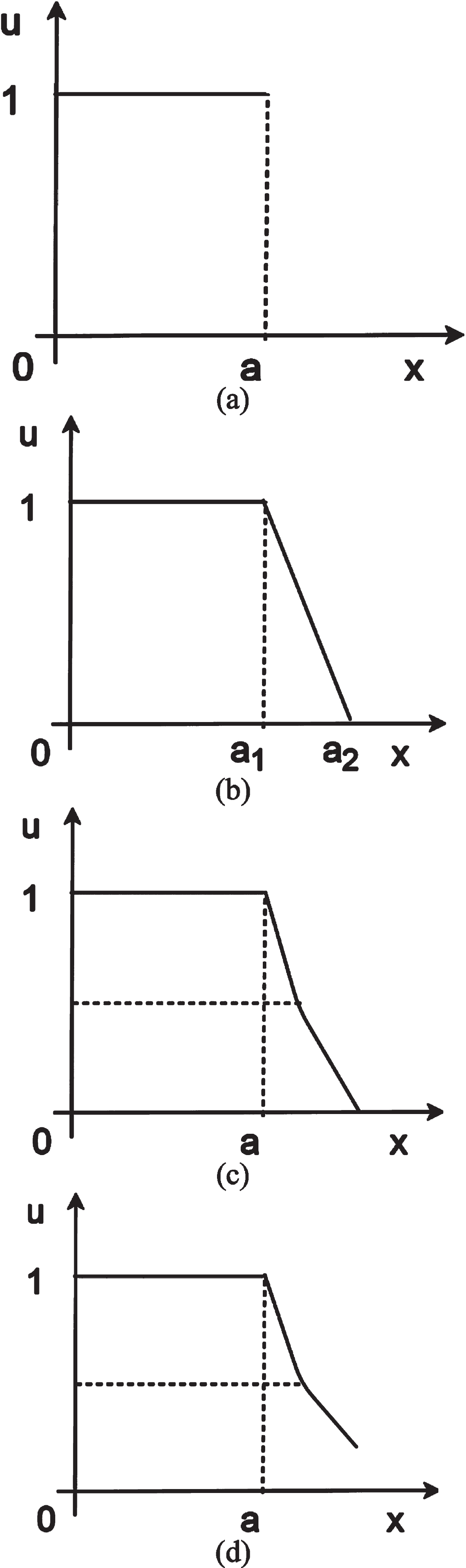
Several common partial small fuzzy distributions.
(2) The curve of the halved trapezoidal distribution is shown in Fig. 2, and the function form is:
(3) The curve of the distribution of descending ridges is shown in Fig. 2, and the function form is:
(4) The curve of the half-normal distribution is shown in Fig. 3, and the function form is:
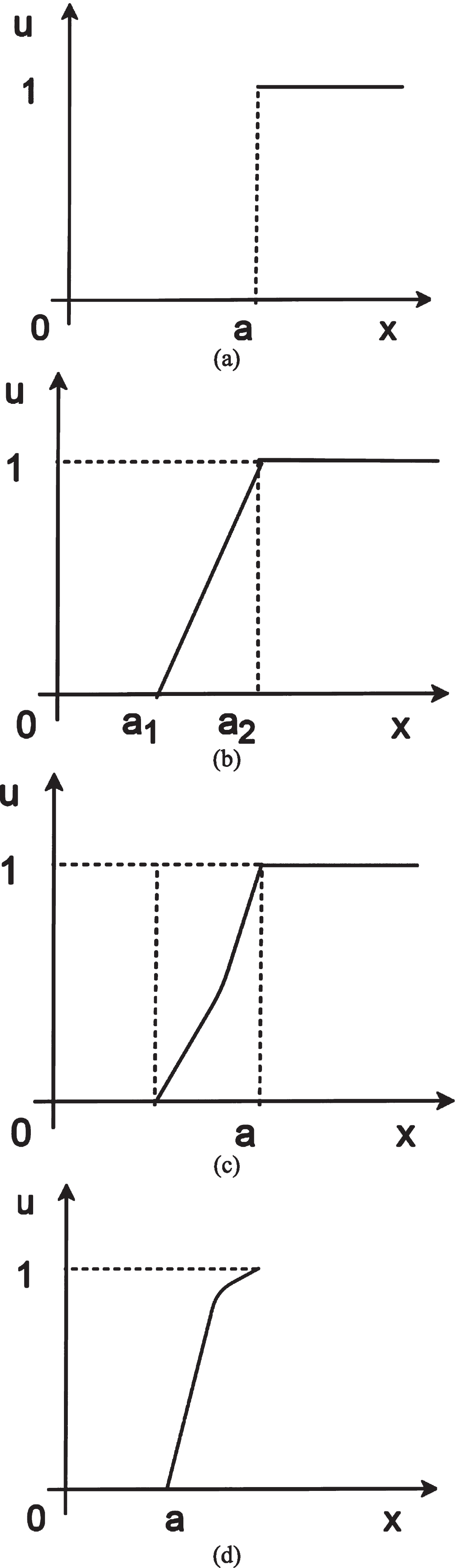
Common partial large fuzzy distribution.
3. Intermediate fuzzy distribution
This kind of fuzzy set is suitable for the fuzzy phenomenon of engraving portraits of “moderate", “moderate” and age “middle-age". Its membership function can be expressed by partial large fuzzy distribution and partial small fuzzy distribution, as shown in Fig. 4. The common forms of membership functions are:

Several common intermediate fuzzy distributions.
(1) The functional form of the rectangular distribution is:
(2) The function form of the trapezoidal distribution is:
(3) The function form of triangle distribution is:
(4) The functional form of the ridge distribution is:
(3) The comprehensive evaluation matrix is constructed
If these m single-factor evaluation sets are used as rows, a total evaluation matrix R is obtained, which is called a comprehensive evaluation matrix.
(4) Factor weight fuzzy set is determined
The degree of influence of various factors on things is not the same, some factors may have a greater influence in the overall evaluation, and some may be smaller. Therefore, in the comprehensive evaluation, the importance of each factor in the overall evaluation must be given, that is, a fuzzy subset is given on the factor universe U:
Among them, a i is a measure of the degree of influence in the overall evaluation of factor u i (i = 1, 2, ⋯ , m), and to a certain extent, it also represents the ability to grade based on single factor u i . At the same time, A is called the fuzzy subset of factor importance on U, and a i is the factor coefficient of factor u i .
At present, the calculation method used to determine the weight factor of pollutants in the soil generally adopts the weighting method of pollutant concentration exceeding the standard, that is:
In the formula, x ij is the measured concentration of the i-th factor, and S ij is the evaluation standard.
(5) The comprehensive evaluation model is determined, and the fuzzy comprehensive evaluation set is obtained
When the fuzzy sets A and comprehensive evaluation matrix (fuzzy relationship) R of the importance of the factors are known, we can make a fuzzy linear transformation through R to change A into a fuzzy subset on the review set V:
Among them, * represents the generalized fuzzy synthesis operation, that is:
B is called the fuzzy comprehensive evaluation set on the comment set V, and b
j
(j = 1, 2, ⋯ , n) is the rank (comment). V
j
belongs to the degree of membership of the fuzzy evaluation set obtained by the comprehensive evaluation. The above formula is called the comprehensive evaluation model, which is denoted as model
There are several types of comprehensive evaluation models:
1. Prominent factor
(1) Model M (∧ , ∨)
We set
The characteristic of this model is that the degree of membership r
ij
of the evaluation of the single factor u
i
to the comment v
j
is first adjusted to:
In the formula, a
i
can be regarded as the adjustment coefficient of r
ij
. Then, the largest of all the degree of membership
(2) Model M (* , ∨)
We set
The characteristic of this model is to adjust r
ij
to:
This is a strategy to shrink r ij by a i times, and a i is also an adjustment factor.
2. Weighted average M (· , +)
We set
The characteristics of this model are:
(1) When determining the membership degree b j of comment v j to the fuzzy comprehensive evaluation set, the influence of all factors u i (i = 1, 2, ⋯ , m) was considered.
(2) Since the influence of all factors is considered at the same time, the size of each a
i
has the meaning of the weight coefficient describing the importance of each factor u
i
. Therefore, a
i
should satisfy the following formula:
3. Fully constrained M (power, ∧)
We set
The characteristic of this model is to first adjust the factor r
ij
in the single factor evaluation to:
Then, the minimum value of
Combined with the basic assumptions of college students’ oral communication ability evaluation, this paper builds a basic model for college students’ oral communication ability evaluation. The basic model of oral communication ability assessment as show in Fig. 5.

The basic model of oral communication ability assessment.
Through factor analysis and correlation analysis, the hypothesis of the previous assessment model of oral communication ability of students can be verified, and an optimized assessment model of oral communication ability of college students can be obtained, as shown in Fig. 6.

The optimized evaluation model of students’ oral communication ability.
After the model’s hypothesis testing and a series of statistical analysis, the evaluation system of college students’ oral communication ability is finally obtained, as shown in Fig. 7.

Evaluation system of oral communication ability.
The first part of the student questionnaire used in this research institute is the student’s personal information, including gender, arts and sciences, whether they have passed the four-level exam, whether they have taken cross-cultural related courses, whether they have plans and plans to go abroad, and whether they have cross-cultural experience such as Frequent contact with English speakers, traveling abroad, participating in international summer camps, etc. The purpose is to facilitate the discovery of factors that may affect college students’ cross-cultural communication ability during the research process.
This article summarizes the above factors into four dimensions, namely knowledge, skills, attitudes, and awareness, and the descriptive statistical results of the four dimensions are shown in Table 1 and Fig. 8.
Descriptive statistics table of four dimensions
Descriptive statistics table of four dimensions
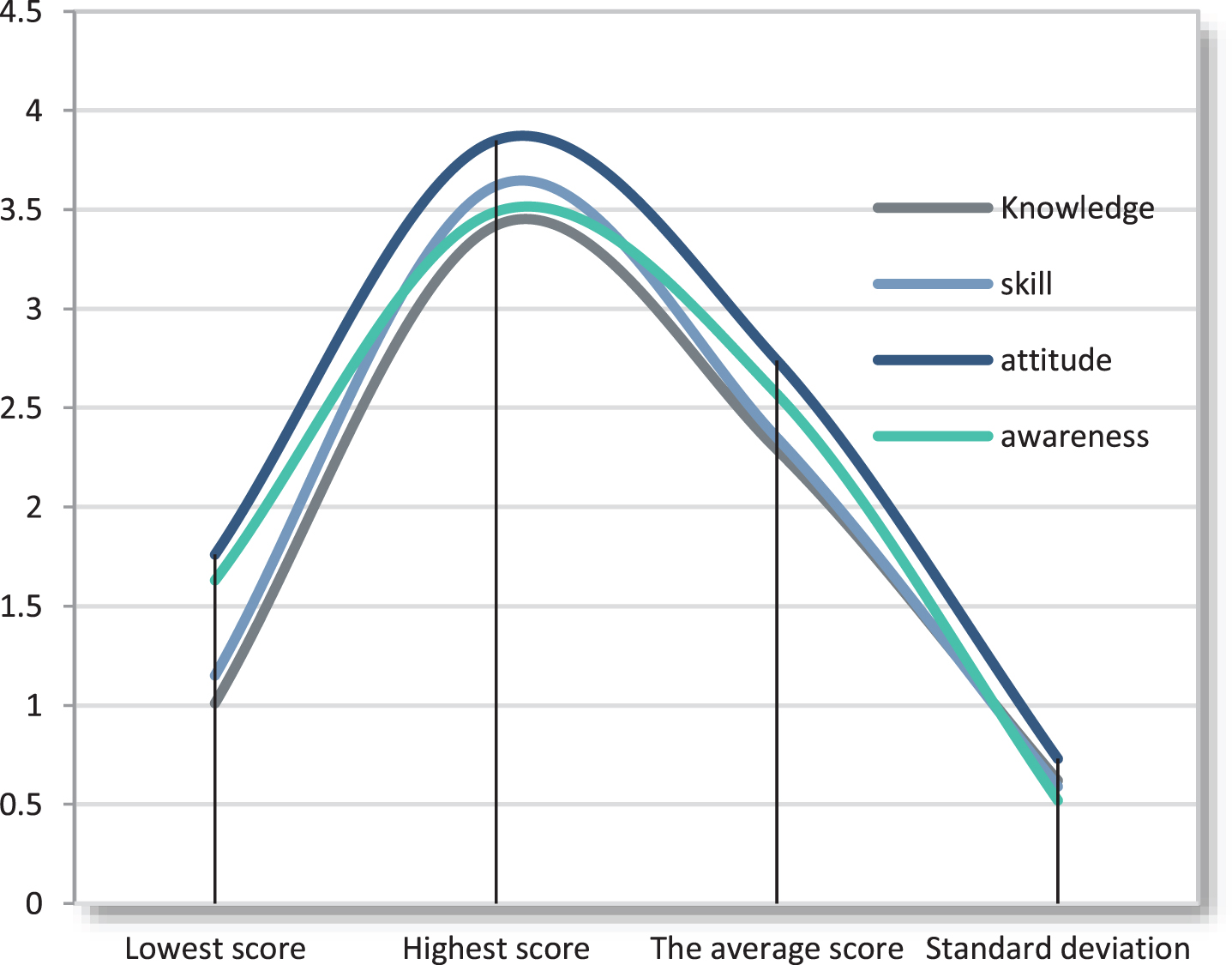
Descriptive statistics in four dimensions.
It can be seen from Table 1 that the lowest scores and the lowest average scores of college students participating in the survey are distributed in the cross-cultural knowledge dimension, which is 1.01 points and 2.29 points. Meanwhile, the highest score and the highest average score are in the attitude dimension, which is 1.76 and 2.74. This shows that among the four dimensions, college students are the weakest in cross-cultural knowledge and perform best in cross-cultural attitudes. However, the overall performance was not satisfactory. Next, this article will analyze the data of each dimension one by one.
Figure 9 presents the average score of the ten topics in the knowledge dimension. It can be seen from the figure that the overall scores of students are low, which means that college students perform poorly on the cross-cultural knowledge side. Among them, the lowest score is the 8th question, and the score is only 2.02 points. The result shows that among these ten questions about cross-cultural knowledge, college students have the least knowledge about religious etiquette in English-speaking countries. Second, the lower scores are questions 7 and 10, indicating that students are not clear about the privacy issues of English-speaking people and the meaning of cross-cultural communication. Questions 1 and 3 have relatively high scores of 2.65 and 2.41, respectively, indicating that college students know more about their country’s historical geography and social etiquette. The reason is that students have lived in the culture of mother tongue for a long time, and at the same time they have learned more about their country’s historical, geographical and cultural knowledge from an early age, they must know more about their own cultural knowledge than foreign cultures. However, students are unaware of the concept of cross-cultural communication, indicating that college students lack understanding and understanding of the definition and meaning of culture and cross-cultural communication, which is directly related to the lack of cross-cultural experience and practice of college students.
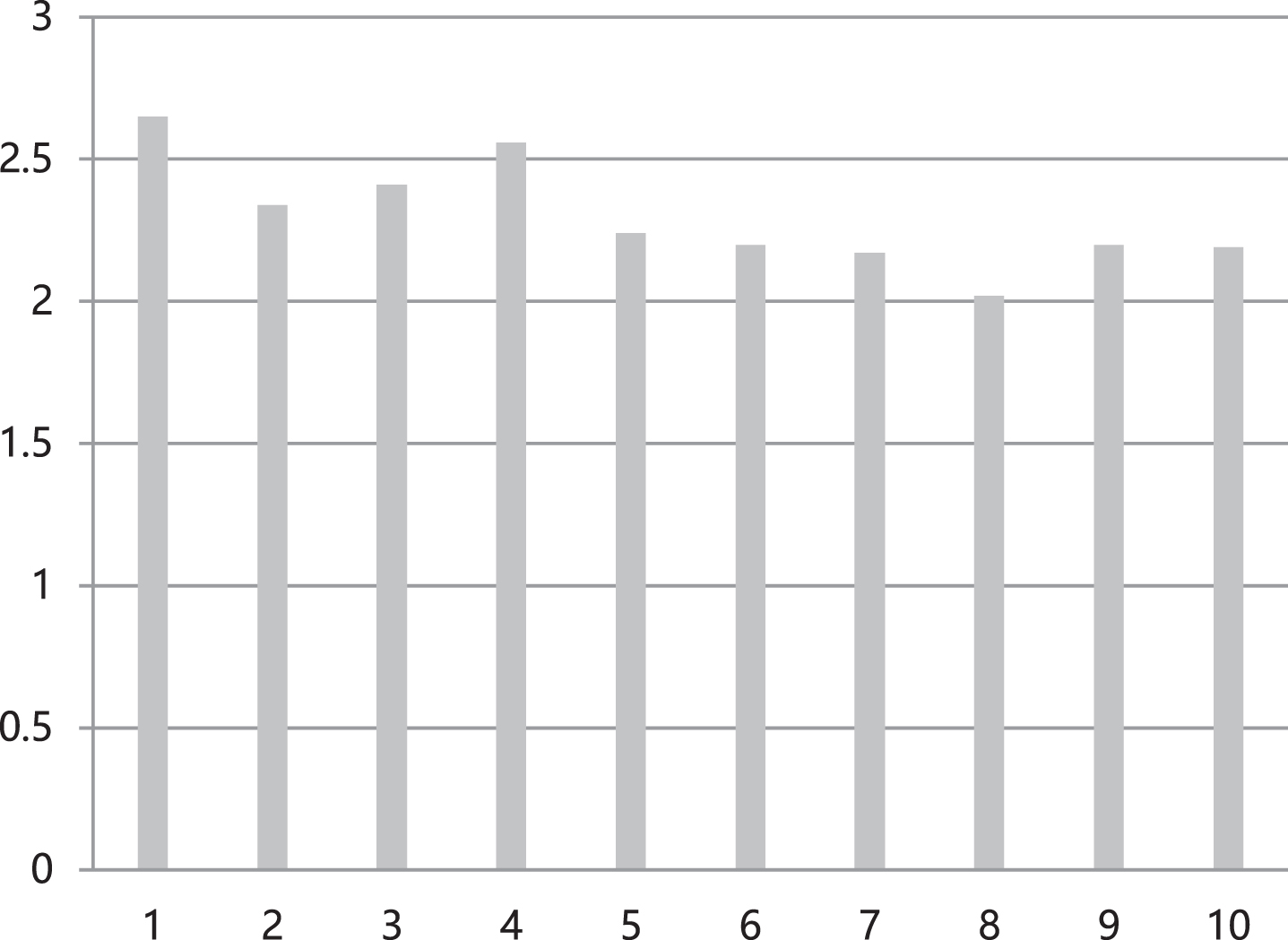
The average score of each question under the knowledge dimension.
Figure 10 shows the average score of the ten questions in the skill dimension. Most of the scores are below 2.5 points, and the highest scores are questions 18 and 13, which are 2.73 and 2.58 points, respectively. That is to say, college students have relatively strong politeness and ability to use body language such as gestures. As a non-verbal language, body language is also necessary and important in communicative activities. The lowest scores in the skill dimension are questions 20 and 12, which are 2.08 and 2.13 respectively. That is, college students lack the ability to successfully conduct cross-cultural communication and deal with misunderstandings between the two sides. The reason is that college students lack the environment and opportunities for cross-cultural communication activities. It leads to the weak practical ability of college students in real intercultural communication activities. When communicative misunderstandings or conflicts occur, college students do not know how to effectively resolve conflicts and misunderstandings. This also shows that college students lack the necessary understanding of the cultural differences of different countries and regions and the way of thinking, mental state, values, customs and habits of foreigners. The average score of each question under the attitude dimension as show in Fig. 11. The average score of each question in the dimension of consciousness as show in Fig. 11.
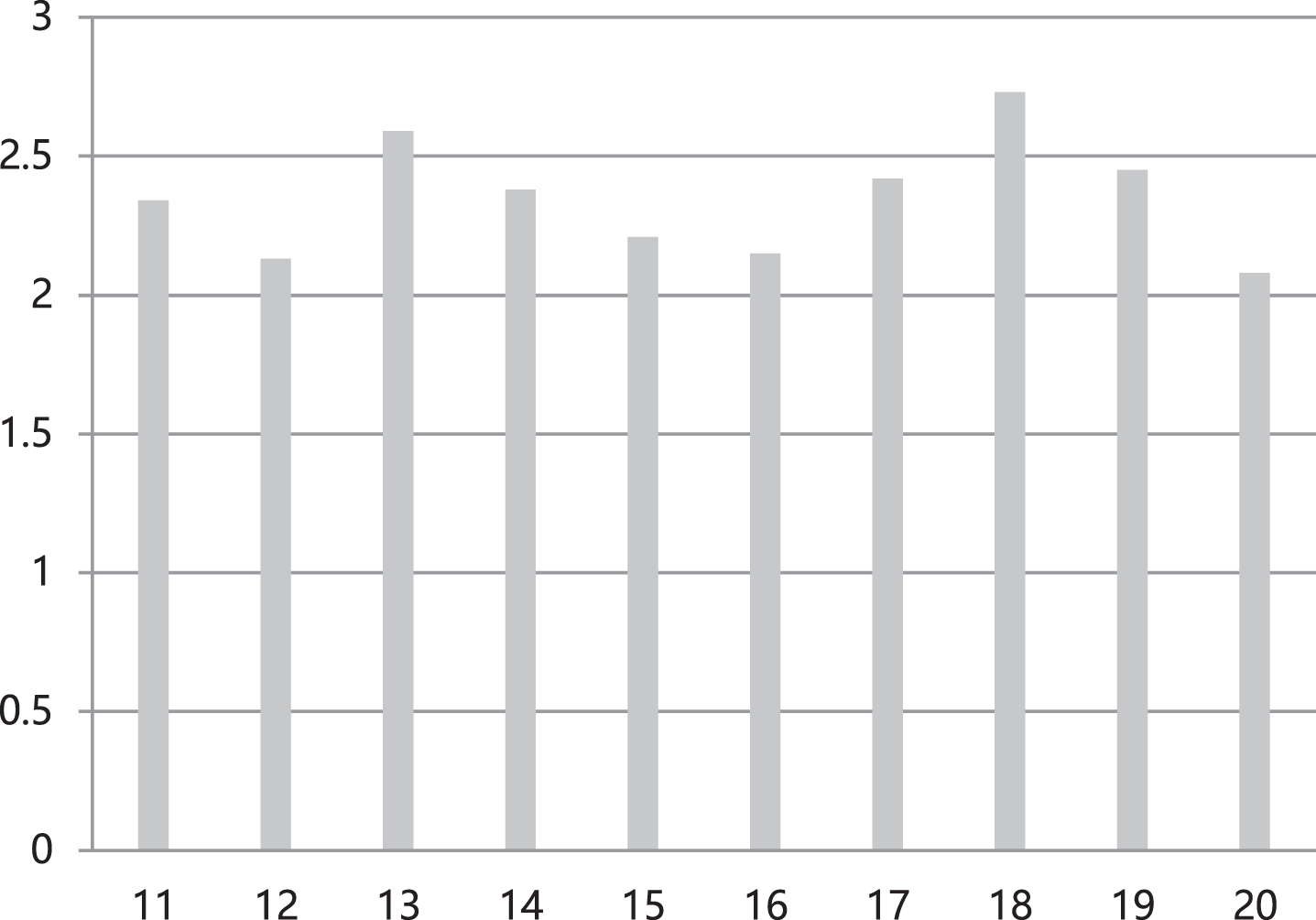
The average score of each question under the skill dimension.

The average score of each question under the attitude dimension.
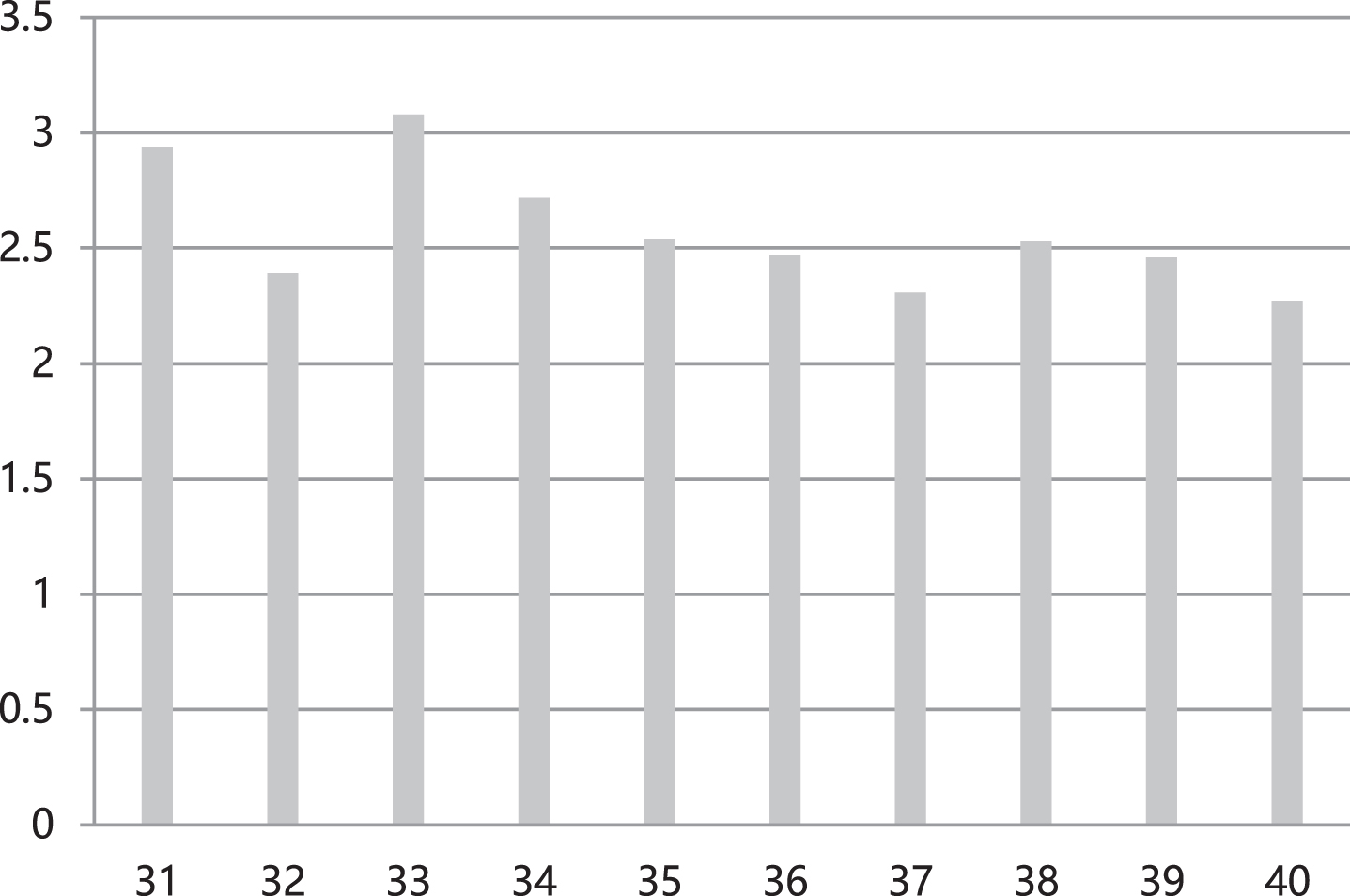
The average score of each question in the dimension of consciousness.
Figure 3 presents the average score of the ten questions in the attitude dimension. Compared with the knowledge and skill dimensions, the scores of each subject in the attitude dimension are relatively high. Among them, questions 22 and 23 have the highest scores, respectively 3.14 and 2.97 points. This shows that college students are relatively strong in learning English, understanding English culture, and learning from people from different cultures. The reason is that college students have learned English for many years, understand the importance of English learning, and also have a strong desire for knowledge and know how to learn from others. However, questions 24 and 27 had the lowest scores, with 2.29 and 2.32 points, respectively. This shows that students and students are likely to withdraw and give up communication when they encounter setbacks in communicative activities and are not used to taking advantage of opportunities to communicate with foreigners in English. This is also the sad thing about Chinese students learning English over the years, that is, the phenomenon of “dumb English” is still widespread. Most of the current college students in our country have started to learn English from elementary school, and some even have been exposed to English since kindergarten. After learning English for more than ten years, they still dare not speak and are not good at communicating with people in English. The reason is that traditionally, English language learning in China has always focused on the cultivation of language skills such as pronunciation, vocabulary, and grammar. Moreover, in exam-oriented education, what the school needs to take is what the school will teach accordingly and what the students will learn. Because all kinds of exams do not have the item of oral English, the usual English teaching also does not exercise the students’ ability of oral expression. Moreover, the habits formed over the years have made college students have no consciousness and courage to communicate when facing foreigners, and students do not know how to deal with them when they encounter setbacks, which leads to students giving up on communication and forming a vicious circle. Language is a tool for communication. The ultimate goal of learning any language is to communicate successfully and effectively, but the ability of college students to communicate in English is obviously not enough. It is also a big lack in English education in my country.
Figure 4 shows the average score of ten questions in the dimension of consciousness. Among them, questions 33 and 31 have the highest scores, that is 3.08 and 2.94 points. This shows that college students can basically objectively realize that each culture has advantages and disadvantages and can be aware of each other’s cultural differences when communicating with people from different cultures. Moreover, it shows that college students have the basic common sense that there is a difference between Chinese and foreign cultures. In addition, questions 40 and 37 have the lowest scores, that is 2.27 and 2.31. This shows that college students cannot clearly realize the influence of language environment on human language and behavior in cross-cultural communication. The reason is that college students have relatively little contact and communication with the outside world, and they cannot personally feel the influence of context on communication. In addition, the attitude of college students towards their mother tongue culture is sometimes not objective enough. The reason is that because of national self-esteem and pride, people often have some kind of unconscious subjective pride and superiority in their own culture, and college students are no exception.
The cultivation of college students’ cross-cultural communicative competence requires the cooperation and efforts of social education and school education. In view of the advantages of school education, the characteristics of students and the close relationship between language and culture, the main position for the cultivation of college students’ cross-cultural communication ability is still school education, especially college English teaching.
The goal of this study is to point to the communicative effects achieved through language in human social communication activities, especially the ability training in dialogue and communication in the context of differentiated culture. According to this goal, the use of the concept of language in this paper is regarded as a symbol system that carries cultural information and can be effectively communicated. It will be regarded as an important communication method for research and training. In the process of college English cross-cultural teaching, teachers are not only language lecturers, but also cultural communicators. In classroom teaching and related activities, teachers need to enable students to understand the differences between different cultures through cultural education and cultural comparison, establish a correct understanding of culture, improve students’ skills in using English for intercultural communication, and lay a solid foundation for acquiring the ability to communicate with people of different cultural backgrounds.
Through the actual research in this paper, we can see that the cultivation of college students’ cross-cultural communication ability requires the cooperation and efforts of social education and school education. In view of the advantages of school education, the characteristics of students and the close relationship between language and culture, the main position for the cultivation of college students’ cross-cultural communication ability is still school education, especially college English teaching.