



Abstract
This paper try to fully reveal the key factors affecting the the level of AMT application in micro- and small enterprises (MSEs) from its organizational factors by ordinal logistic regression. The results show that MSEs have a relatively high level of AMT application as a whole due to the maturity and cost reduction of basic technologies such as artificial intelligence, digital manufacturing and industrial robots. In this paper we propose manufacturing world analysis at Application using Logistic Regression and best AMT selection using Fuzzy-TOPSIS Integration approach.Considering the influence mechanism of each factor, the important factors that affect the application level of AMT are the enterprise’s market pricing power, the main production types, technical, market and management capabilities, organization development incentives and the interaction with external stakeholders. Based on the results above, the following policy implications are proposed: further expanding the customized production in MSEs to gradually improve the market pricing power, expanding the core competence of enterprises, enhancing the employee autonomy, and strengthening the interaction with industry organizations.
Introduction
Advanced manufacturing technology (AMT), as an important support for the global manufacturing industry to achieve technological upgrade, can not only improve production flexibility and production efficiency to achieve “scale economy”, but also enhance organizational flexibility to meet the needs of “multi-variety, small-batch” production and manufacturing in today’s market, so as to achieve “scope economy”[1]. It is the general term of all practical technologies that absord the achievements of machinery, electronics, information (computer and communication, cybernetics, artificial intelligence, etc.), energy and modern system management to the whole life cycle of product design, processing and manufacturing, product sales and customer service, in order to attain high excellence, high efficiency, low consumption, cleaness and flexible production, improving the adaptability and competitiveness to the dynamic and changeable market [2], specifically including Computer Aided Manufacturing (CAM), Computer Aided Design (CAD), Computer Aided Processing Planning (CAPP), Computer Aided Engineering (CAE),Computer Numerical Controller (CNC) Flexible Manufacturing System (FMS),Industrial Robot (PR) and Equipment, Material Requirement Planning (MRP), [3].
With the maturity and cost reduction of basic technologies such as artificial intelligence(AI), automated manufacturing, and manufacturing robots, the global industrial development model has shifted from mass production to a personalized manufacturing paradigm. This change is based on the development of intelligent, digital and information technology, and the transformation of large-scale production line and flexible manufacturing system, so that it can make a rapid response to the diversified and changeable market demand. It will fundamentally solve the conflicts among the major industrial competitive factors such as new product development cycle, capacity utilization rate, production cost and product function under the traditional manufacturing system, to achieve comprehensive optimization of manufacturing and significant improvement in operating efficiency [4].
As an important measure to optimize the economic structure, transform the growth mode and enhance the innovation ability of the manufacturing industry, the Chinese management ascribes great prominence to the introduction and application of AMT, and has successively issued a series of policy documents such as the National Summary of the Medium and Long-standing Science and Technology Development Plan (2006–2020), the Intelligent Manufacturing Development Plan (2016–2020), and the Made in China 2025, which clearly state that the application of AMT will be an important way to improve the manufacturing capacity of Chinese enterprises, and has important strategic significance for realizing a strong manufacturing country. However, in practice, many enterprises have not achieved the expected effect or even failed to apply AMT. In a sense, the application level of AMT restricts the transformation and improvement of industrial industry. Therefore, it is essential to clarify the key factors affecting the application level of AMT in manufacturing enterprises and put forward corresponding countermeasures.
Literature review and modeling
In view of the influence of organizational strategy, organizational structure, organizational culture and human resource practice on the application level of AMT, scholars have carried out relevant research on the large-scale manufacturing enterprises implementing AMT, as well as the internal application departments of IR and FMS, mainly through the construction of multiple regression model for quantitative analysis and structural equation model for empirical analysis. Schlie and Goldha used the regression analysis to construct the relationship between AMT and organizational strategy from the perspective of competitiveness [5]. Gupta and Chen et al. tested the influence of organizational structure and AMT matching on corporate performance by conducting a questionnaire survey on 101 manufacturing managers, and found that the decentralized organizational structure has a significant positive correlation with AMT application and can achieve high performance, however, the bureaucratic organizational structure has a negative correlation with AMT and cannot achieve expected performance [6]. Zammuto and O’Connor analyzed the association among administrative ethos and AMT execution effect, found that the more emphasis on control orientation, the more likely AMT application will fail; the more emphasis on flexibility orientation, the more successful AMT application will be, and that control oriented organizations can successfully implement AMT by enhancing the flexibility of ethos and organizational construction [7]. In relations of the impact of human resources on the application of AMT, Samson and other scholars believed that structural and social resources issues for instance accountability, recognition of change, position and skills should be carefully considered in order to achieve the successful implementation of AMT [8]. Knock also believed that the application of AMT needs the support of human resource management practice, and he also found through a survey conducted in the manufacturing industry in the South Africa that the education and training of workers are the most important factors affecting the application level of AMT [9].
To sum up, although researchers have conceded out study on the application level of AMT in manufacturing industry, previous studies mostly focused on large mature organizations, seldom on empirical research on MSEs. However, there are many differences between MSEs and large-scale organizations in terms of quality of labor force, management system and constraints of external environment, which leads to their uniqueness in AMT adoption and application. In addition, previous literatures mainly studied the implementation effect of AMT from organizational internal factors such as organizational strategy formulation and organizational structure, while neglecting the comprehensive function of internal and external factors. Therefore, in this paper, firstly the econometric model is built by using research data from the perspective of MSEs, and micro- and small sized equipment manufacturing enterprises in Tianjin are taken as an example to analyze the organizational factors that affect their application level of AMT, in order to further enrich relevant theories and provide basis for enterprises to improve the application level of AMT.
According to the theory of social technical system (STS) [10], the factors affecting the application level of AMT are classified according to the core competence, incentive theory and organizational environment theory, including internal factors such as enterprise characteristics, enterprise capabilities, organizational incentives, and external factors such as industrial clusters, training institutions, raw materials & equipment suppliers and other external stakeholders [11].
Research method design
In this paper we propose manufacturing world analysis from two different aspects. In first aspect we demonstrate variable relationship for AMT application level and in second aspect we proposed as shown in Fig. 1.

Analysis of Manufacturing World.
Figure 2 demonstrate the theoretical model of level of AMT application in MSEs constructed from four dimensions of enterprise characteristics, enterprise capabilities, organizational incentives and external stakeholders.
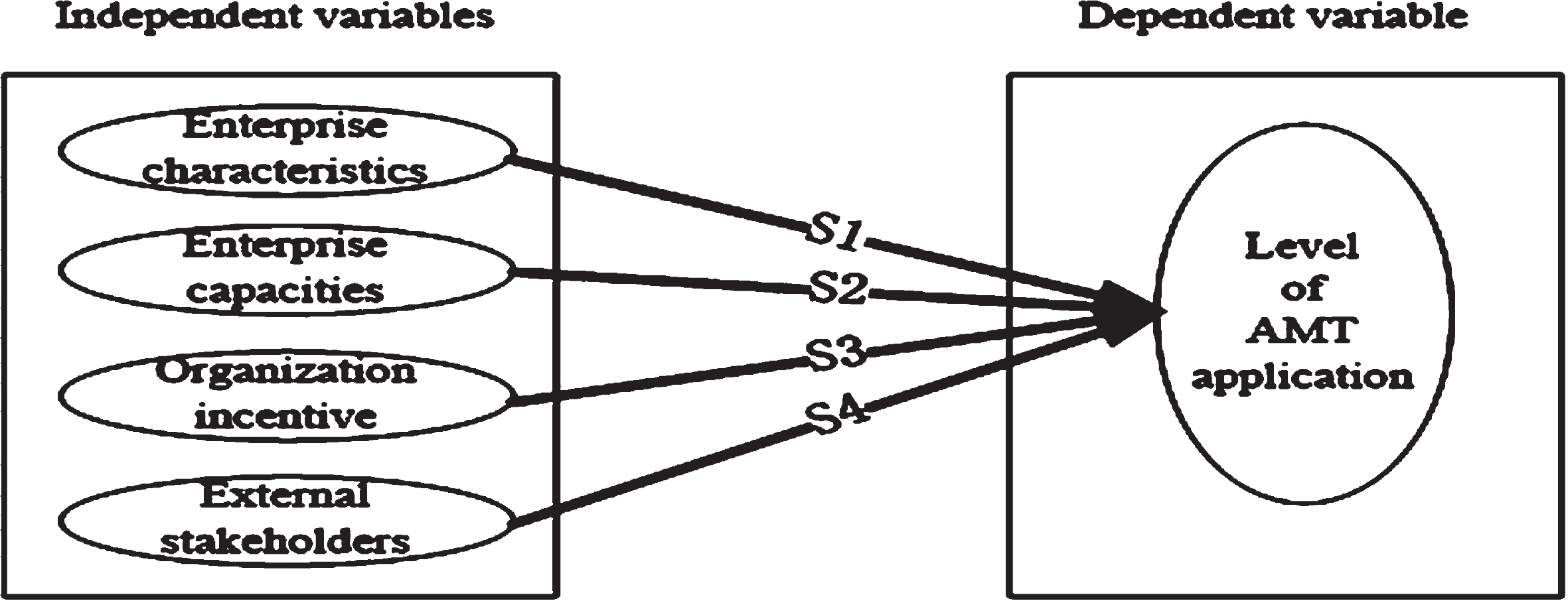
Theoretical model of variable relationship.
As the dependent variable is an ordinal variable, the ordinal multinomial logistic regression model is adopted for analysis, and the model is as follows:
Where Xi = the i-th indicator;y = the degree of AMT application of MSEs (barely applied, mildly applied, medium application, and largely applied). The cumulative logistic model is established:
Where Pj = P (y = j); j = 1, 2, 3, 4; X = the influencing factor of AMT application level; aj = a constant term;
β is a set of regression coefficients corresponding to X. The probability of a particular situation (e.g. y = j) can be obtained by the following equation:
22 Group committee with da
i
, i ={ 1, 2, 3 … . m } decision alternativeand the decision criteria dc
i
, i ={ 1, 2, 3 … . n }. Fuzzy based Decision Making Matrix is represented [FD] m×n is defined:
In this Step, fuzzy aggregation rate
Where,
Where,
In this step decision matrix is normalized for benefit and non –benefit criteria using following equation:
For Benefit criteria:
Where,
For Non-Benefit Criteria
Where,
Determination of Positive Best fuzzy values
Weighted distance computation for Positive Best and Negative Best Solution
In this step we compute weighted distance from positive best and negative best solution of each alternative with
Where, w j = (wA1 j , wA2 j , wA3 j ) represent weight aggregation for j th criteria represent triangular fuzzy number (TFN)
In this step we compute Alternative Proximity Index
In this step we measure objective factor (mof
i
) based on cost of installation (CI
i
) using following equation:
Assessment Index (AI
i
) for each alternative is calculated using following equation:
Where, β represent cognition coefficient
In this step, alternative ranking order is determine based on assessment index (AI i ) value.
Data sources
Questionnaire survey was used in this study to collect the open data of MSEs, because they are hard to get. According to the sample of Tianjin micro- and small sized equipment manufacturing enterprises as a whole, and based on the industrial classification and definition of Industrial Classification for National Economic Activities (GB/T4754-2017), the questionnaire covered equipment manufacturing enterprises in seven industries: metal products, universal equipment, special tools, conveyance, electrical equipment and tools, electronic and communication equipment, instruments and cultural office supplies. Only one questionnaire was collected for each enterprise. Respondents are managers or personnel responsible for technology implementation in enterprises, who have first-hand information on relevant factors for the implementation of AMT. Since the application of AMT is a process of coordinating technology and related elements of organization, manufacturing enterprises need a period of time to implement it. Therefore, the research enterprises selected in this paper have been established for more than 3 years. Finally, questionnaires were issued to 319 Tianjin equipment manufacturers selected, and 239 were recovered, with a recovery rate of 74.92%. After 46 invalid questionnaires were eliminated, 193 valid questionnaires were obtained, with an effective recovery rate of 60%.
Measurement of variables
Self-compiled questionaires
The questionnaire was designed according to the research purpose, including the type of ownership, the development stage of the enterprise, the main sales area of the product, the market pricing power and the production type of the enterprise.
AMT application level scale
A total of 14 items in Heijltes’ AMT application level scale was used in this paper to evaluate the application level of AMT in MSEs [12], on a scale of 1(apply barely) to 5(apply to all). The greater the score, the grade of AMT application is greater. According to the total score, the application degree of AMT can be divided into four grades: barely applied (14–28 points), mildly applied (29–42 points), moderately applied (43–56 points) and largely applied (57–70 points). The AMT application level scale has high reliability and validity, and the Cronbach α coefficient of this scale was 0.87.
Enterprise capability scale
A total of 13 items, including 6 items were used to measure the technical capacity by referring to the research of Zhou and Wu [13], 4 items were used to measure the market capacity by referring to the research of Mu [14], and 3 items were used to measure the management capacity by referring to the research of Li Jing [15]. A Likert-type gauge with 5-point oscillating from 1 (intensely differ) to 5 (intensely approve) was adopted. The greater the score, the higher the ability level of the enterprise. In this study, the Cronbach α coefficient of the total scale was 0.90, and the three dimensional Cronbach α coefficients were 0.87, 0.84 and 0.81, respectively.
Organization incentive scale
A total of 12 items in the gauge industrialized by Jia, et al. Including 3 items representing organizational material incentive and 9 items representing organizational development incentive [16]. A Likert-type gauge with 5-point oscillating from 1 (very insignificant) to 5 (very significant) was adopted. The two dimensions were scored independently, and the higher the score, the more effective the organizational material incentive or development incentive is in organizational management. The Cronbach α coefficients of the two dimensions in this study were 0.76 and 0.76, respectively.
External stakeholders scale
A total of 6 items were used to measure the degree of interactive learning with external organizations mainly referring to Lorenz et al. [17]. In order to ensure that the questions in the scale conform to the Chinese context and the basic characteristics of sample enterprises, the pre-test scale was generated by consulting the heads of MSEs implementing AMT. Furthermore, some small samples were selected and investigated. Based on the test results, some unreasonable individual questions were deleted, and the items were modified and improved. Finally, the measurement scale in this study was formed, which are measured using a Likert-type gauge with 5-point oscillating from 1 (certainly not) to 5 (continuously). The higher the score, the more frequent the interaction with external stakeholders. In this study, the Cronbach α coefficient of the scale was 0.75.
Statistical approach
Statistical analysis was conducted using SPSS 23.0 software tools. The dimension data were in accord with the standard dissemination, communicated by (x±s), and descriptive analysis was made by the number of cases (percentage). The application level of AMT with different tissue characteristics was compared by variance. Pearson correlation was used to analyze the relationship among the level of AMT application, enterprise capability, organizational motivation and external stakeholder. The factors influencing the application level of AMT were analyzed by ordinal logistic regression.
Results
Basic situation of AMT application level in MSEs
Table 1 presents the average score of level of AMT application in MSEs is (41.8±8.9). The proportion of “barely applied” is 4.6%, that of “mildly applied” is 31.1%, that of “moderately applied” is 54.4%, and that of “largely applied” is 9.8%, that is, 64.2% of MSEs have a high level of AMT application, which indicates that the investigated MSEs have a high level of AMT application. According to the current development trend, artificial intelligence technologies such as high-end CNC machine tools and industrial robots are expected to penetrate into all links of the manufacturing industry by 2025 and become the main supporting technology for the development of the manufacturing industry.
Distribution of AMT application level scores of MSEs (N = 193)
Distribution of AMT application level scores of MSEs (N = 193)
The results of variance analysis reported in Table 2 show that the difference of AMT application level in different market pricing power and main production types of enterprises is statistically significant, and other differences are not statistically significant. The outcomes of further single aspect regression examination illustrate that the AMT application level of enterprises with pricing power (general, large) is higher (P < 0.05), while that of enterprises without pricing power (small) is not statistically significant. The application level of AMT in enterprises mainly engaged in customized production is higher than that in enterprises mainly engaged in standardized production (P < 0.05), while the application level of AMT in enterprises mainly engaged in standardized production is not statistically significant.
Variance test of AMT application level of different organizational characteristic factors
Variance test of AMT application level of different organizational characteristic factors
Simple correlation analysis of variables is needed before validating the hypotheses mentioned above.
The results show that AMT application level is positively correlated with the enterprise capability scale, the organizational incentive scale and the external stakeholders scale. Descriptive statistics and correlation analysis between variables are shown in Table 3.
Correlation analysis of AMT application level, enterprise capability, organizational incentives and external stakeholders
Correlation analysis of AMT application level, enterprise capability, organizational incentives and external stakeholders
*P < 0. 05, **P < 0. 01, ***P < 0. 001.
Four grades of AMT application level are used in this study as the dependent variables, almost no AMT (14–28) applied is used as the reference item, and the organizational characteristic factors of P < 0.1 in single factor analysis, as well as the enterprise capability, organizational incentive and external stakeholders are used as the independent variables for ordinal logistic regression analysis. In the actual regression analysis, in order to avoid multicollinearity, three independent variables are introduced into the model respectively, because their correlation coefficient is larger than 0.6. Ordinal logistic regression can be used for analysis since the P > 0.05 in the score test for the proportional odds assumption, shown in Table 4.
Results of an ordinal logistic regression model for factors affecting the level of AMT application
Results of an ordinal logistic regression model for factors affecting the level of AMT application
In order to select best AMT from six alternatives, we use five decision criteria including (1) Excellence(C1) 2) Efficiency(C2) 3) Flexibility(C3) 4) Consumer Contentment (C4) 5) Environment Friendly (C5). We consider TFN for weight importance and alternative values of each Criteria are represented in linguistic form as shown in Table 5 and Table 6 and weight importance of decision makers based on fuzzy decision making is shown in Table 7.
Weight importance of each Criteria
Alternative Values of Each Criteria
Weight Importance of Decision Makers Based on Fuzzy Decision Making
The proximity index values of all AMT alternatives are shown in Fig. 4. The capital and operating costs (in millions of $) of the six alternatives are shown in Table 8. The measurement of objective factor from the installation cost of each alternatives are considered and illustrated in Fig. 5. To compute the Assessment Index (AI), the cognition co-efficient β is considered as 0.67 (by consent of Decision Makers). Conferring to the Assessment Index to ideal solution as presented in Fig. 6, the order of ranking of AMTs is AMT-3 > AMT-6 > AMT-2 > AMT-1 > AMT-4 > AMT-5.
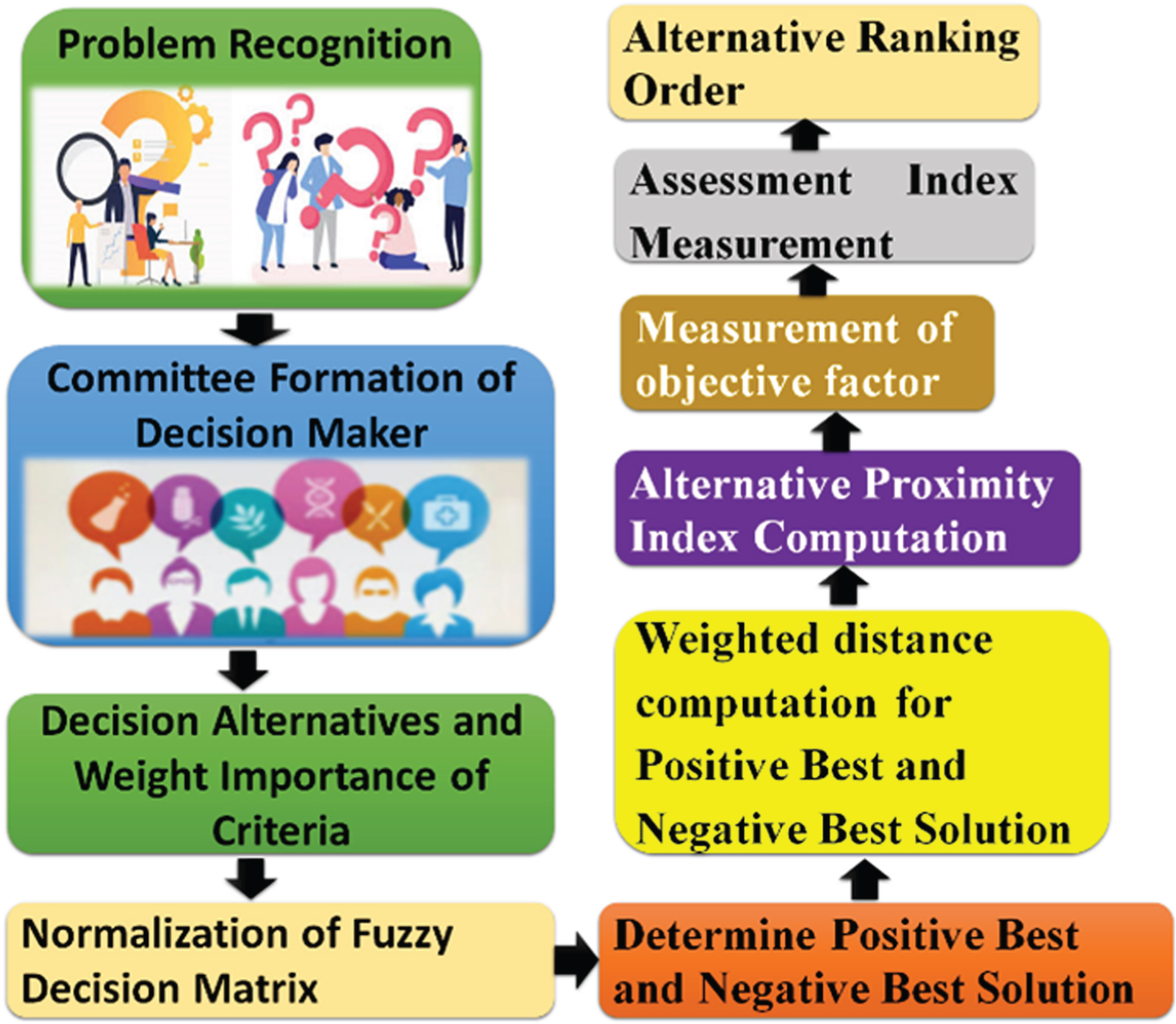
2Selection of Best AMT using Fuzzy-TOPSIS Integration Approach3.

Proximity index values of all AMT alternatives.
Weight Importance of Decision Makers Based on Fuzzy Decision Making
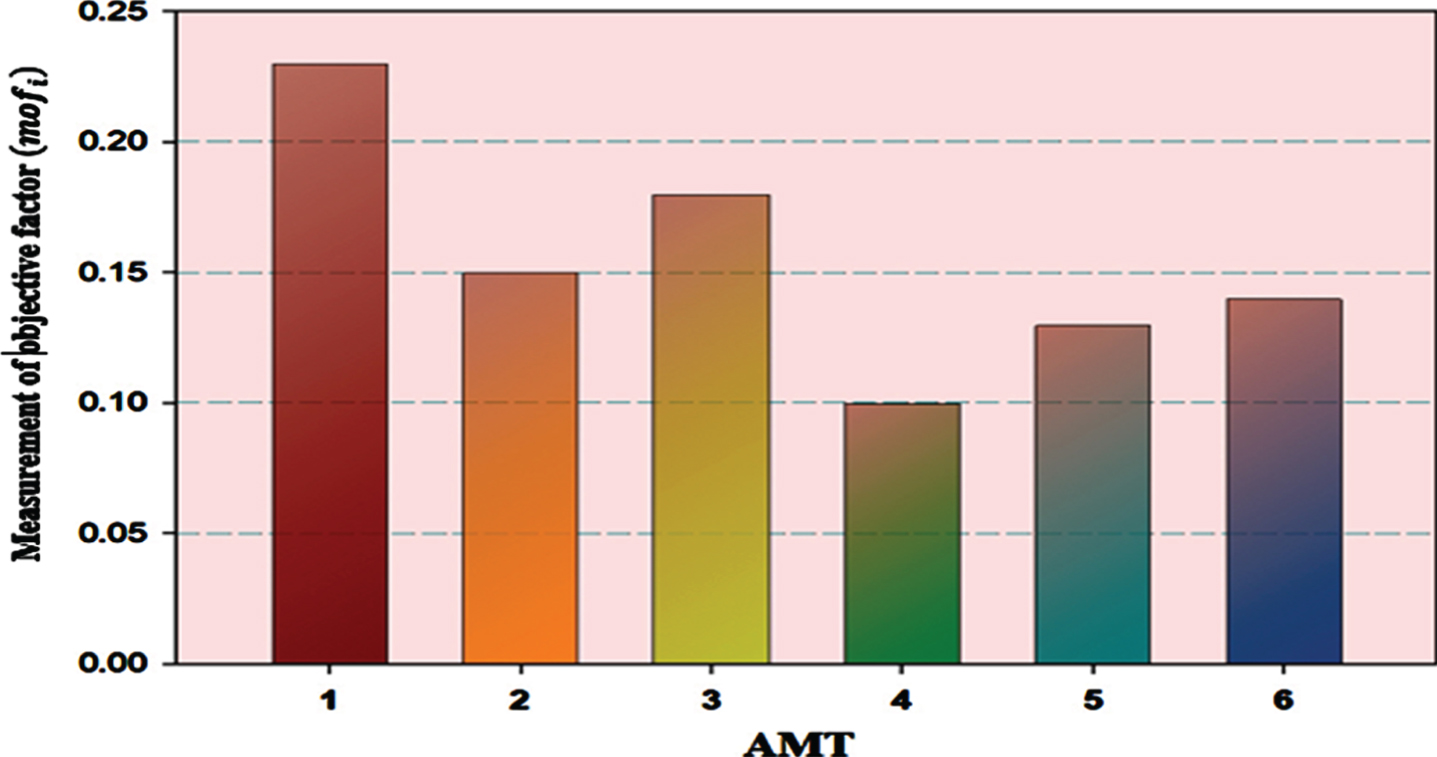
Measurement of objective factor all AMT alternatives.

Assessment Index to ideal solution.
Based on this comparative analysis AMT-3 is selected. Here, ‘> ’ = greater to. Sensitivity analysis for different values of cognition co-efficient β is represented in Fig. 7 The outcome of sensitivity analysis demonstrates that AMT-1 or AMT-3 or AMT-6 can be the optimal decision for varying cognition co-efficient β values.

Sensitivity Analysis of all AMT alternatives.
Research shows that high technology and multi-technology have become the prominent characteristics of AMT-applied enterprises [18]. Among the organizational incentive variables, the organizational development incentive passes the 1% significance test, and the impact on the application of AMT is positive, which verifies the relevant hypothesis. Workers at the production first line, as the main body of production and manufacturing in MSEs, will no longer regard economic goals as their only incentive or constraint conditions when they have a higher level of work, and their desire to participate in management and enterprise decision-making will be stronger because of the improvement of cultural quality, work experience and skill level [21]. Many studies have pointed out that encouraging employees to participate, work design, career management, and emphasis on technical training can help to motivate employees to master new technologies, which has a significant effect on AMT implementation [19]. The impact of material incentive on AMT application level is not significant and has no statistical significance, mainly because of the single means of material incentive, the insufficient strength of material incentive and the imbalance of material incentive. Therefore, the way of material incentive can not significantly improve the income of employees before the establishment of effective incentive mechanism and improvement of salary incentive mechanism, organizational material incentive will not significantly affect the work efficiency and quality of employees, and thus will not affect the improvement of AMT application.
External stakeholder has a significant impact on AMT application level, which passes the 1% significance test. Besides, industry institute interaction can greatly help improve the utilization value of AMT. Among them, incubators and industrial clusters will affect the application level of AMT, which may be due to the significant positive spillover effect of industrial clusters in both information and technology directions, and the facts that positional advantage improves the efficiency of MSEs in using information and technology, solves the practical problems they encounter in the application process of new technology, thus improving the application level of AMT. In addition, the level of AMT application is also affected by external training institutions [17]. Finally, due to product flexibility improving AMT application level [20].
Conclusion
From the perspective of MSEs, field research data in this study were used to build a measurement model to empirically analyze the interior and exterior issues of the organization to improve the application level of AMT, and reveal the impact mechanism of enterprise characteristics, enterprise capabilities, organizational incentives and external stakeholders on the application level of AMT [22]. The conclusions are drawn as follows: the market pricing power and the main production types of the enterprise are the organizational characteristics that significantly positively affect the application of AMT [23]; technical, market and management capacities are significant positive factors affecting the application level of AMT; organizational development incentive is a significant positive impact on AMT application level of organizational incentive factors, and the interaction with external stakeholders is a significant positive impact on AMT application level of external environmental factorsIn this paper we propose manufacturing world analysis at Application using Logistic Regression and best AMT selection using Fuzzy-TOPSIS Integration approach.
Based on the above research conclusions, in order to increase the application level of AMT and improve the competitiveness of micro- and small sized manufacturing enterprises, the following policy recomendations are put forward: efforts should be made, first [24], to meet the needs of diversified customers, expand customized production, gradually improve the market pricing power of MSEs, which promotes the development of enterprise scope economy and intensive economy; second, to the cultivation and development of the technical, market and management capacities of enterprises; third, to improve the incentive mechanism of organizational development, confer a high degree of autonomy, enhance the skills and talents of employees [25], and strengthen the organic integration of spiritual incentive and material incentive; fourth, to promote the strengthening of coordination among external industry institutions (including incubators, industrial clusters, training organizations, raw materials or equipment suppliers, etc.).
Footnotes
Acknowledgments
This research was supported by the Science & Technology Development Fund of Tianjin Education Commission for Higher Education (Grant: 2019SK113).