



Abstract
Under partial shading conditions (PSC), most traditional maximum power point tracking (MPPT) techniques may not adopt GP (global peak). These strategies also often take a considerable amount of time to reach a full power point (MPP). Such obstacles can be eliminated by the use of metaheuristic strategies. This paper shows, in partial shading conditions, the MPPT technique for the photovoltaic system using the Bat Algorithm (BA). Simulations have been performed in the MATLAB®/Simulink setting to verify the efficacy of the proposed method. In MPPT applications, the results of the simulations emphasize the precision of the proposed technique. The algorithm is also simple and efficient, on a low-cost microcontroller, it could be implemented. Hardware in Loop (HIL) validation is performed, with a Typhoon HIL 402 setup.
Introduction
Photovoltaic (PV) systems have gained a great deal of prominence over the last decade, among other emerging renewable energy sources [1]. PV systems are one of the most exciting and efficient sources of electricity. PV outlets deliver a range of benefits of being safe, renewable, and simple to manage. Although it is attributable to its nonlinear electrical behavior and varying physical conditions, PV system’s lower efficiency is still a significant obstacle [2]. The PV device will have to be operated at its Maximum Power Point (MPP), for optimum performance.
Atmospheric conditions are a significant obstacle to PV system’s higher performance that yield lower power due to these barriers [3]. Mainly, where solar irradiance is not uniformly spread over the face of the PV array, the situation is claimed to be a partial shading phenomenon. The performance of PV systems is weaker. Partial Shading alters the characteristics of PV systems (power-voltage) by developing multiple local power maxima operating points [4]. Ensuring the PV systems operate at a global maximum power point (GMPP) instead of a local one remains a global challenge for optimization. In the last decade, different techniques for maximal power point monitoring (MPPT) have been introduced in combination with control electronic tools to gain full power from the PV collection [5]. These techniques vary greatly in complexity, reliability, costing and pace. Of such algorithms, the most widely used are Hill Climbing (HC) and Perturbing and Observing (P&O) algorithms [6], since they are quickly applied and have a basic control mechanism. The major drawback of most current algorithms is that they cannot find the global peak (GP) under partial shading conditions (PSCs).
It is necessary to use an effective power point tracking algorithm to prevent MPPT algorithms from trapping local maxima for PV array power extraction. Many researchers have addressed the PV system with a number of maxims. Due to their operational, complexity and probably longer processing time, only structures with a limited panel/string quantity are suitable for obtaining a global MPPT point. When working with [7], the built-in microcontroller can also use a DMPPT-based DC/DC Converter, level Control Algorithm. Figure 1 represents the P-V (Power-Voltage) and I-V (Current-Voltage) characteristics of single panel used in this study. In order to continuously assess the maximum power point of the global PV system, a modified BAT algorithm focused on the suggested use and tracking state of the search agent will also be proposed in this paper. As the number of PV modules grows, the monitoring time increases and the performance of the DMPPT decreases. Partial shading results are given for 4 series/parallel are studied in this paper, PV and PI characteristics of the array used in this paper are shown in Fig. 2.
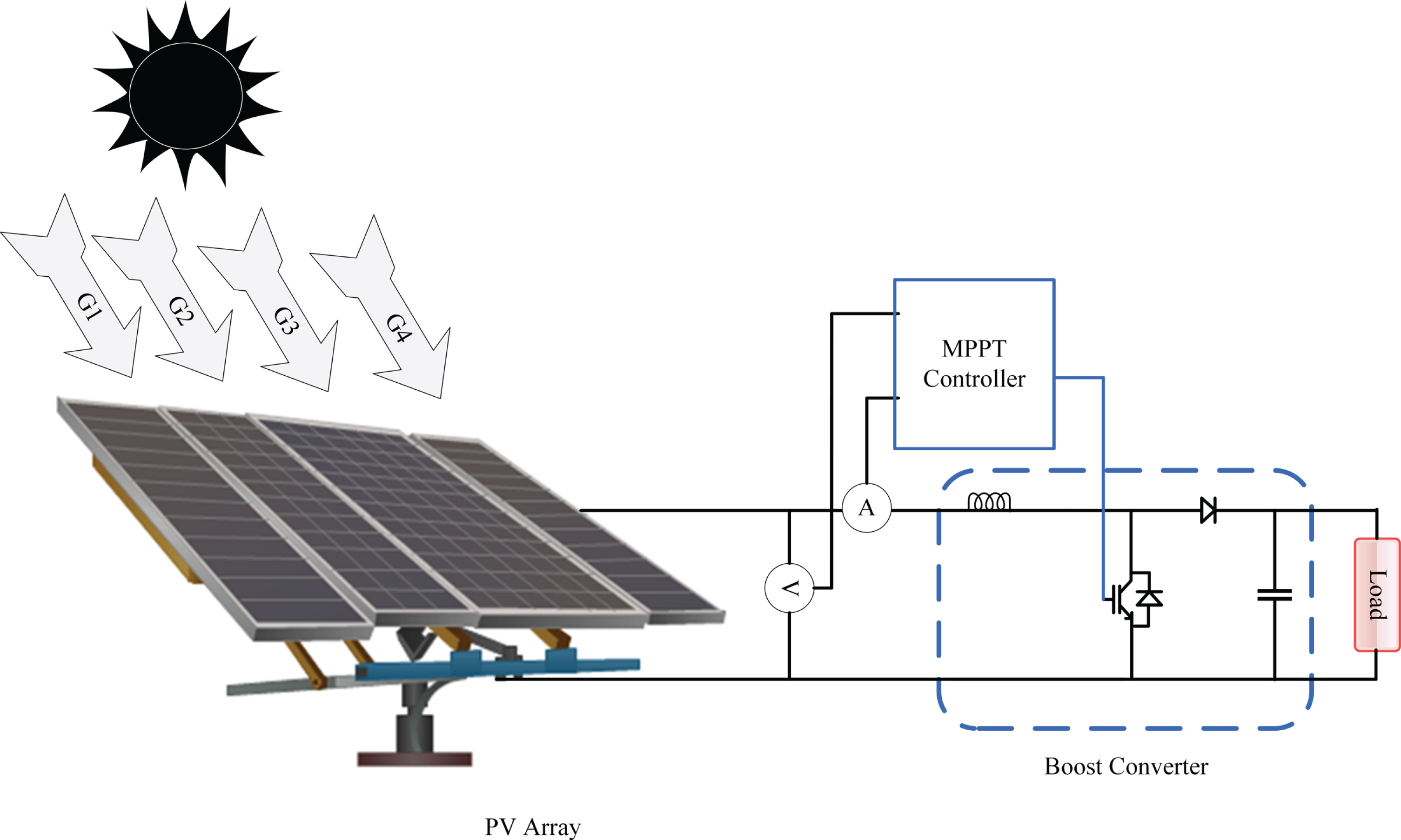
Standalone PV system.
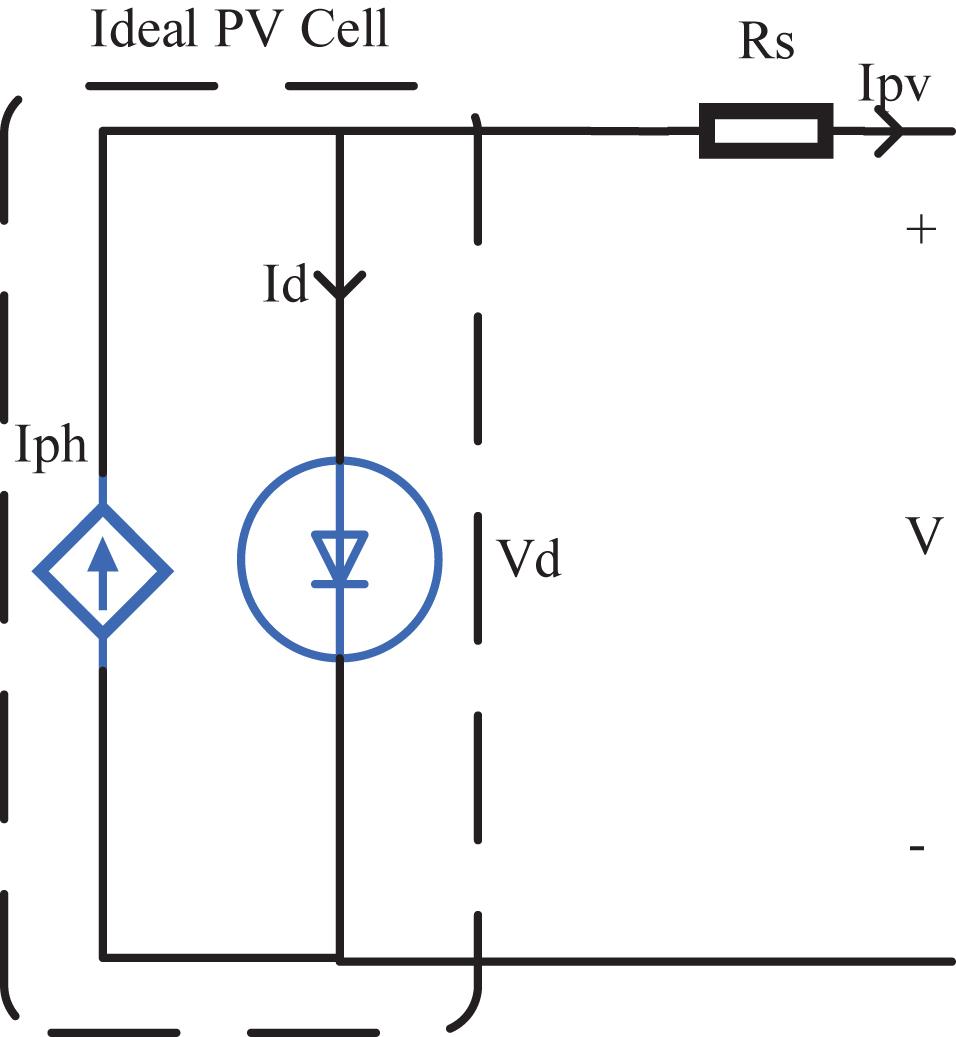
Ideal PV cell model.
Having recognized the difficulties of the current MPPT algorithms mentioned above, this paper advocate, this paper suggests an updated MPPT approach based on the BAT algorithm to resolve the disadvantages of optimization-based MPPT’s and also discarding drawbacks of traditional MPPT’s. The critical aspect of the current protocol is that the MPP includes constant state oscillation is addressed by the use of MPPT based on the Bat algorithm. This can also track the MPP under intense varying environmental factors such as strong sunshine and partial shade variations. Monitoring speed is higher than most standard implementations of MPPT algorithms. The algorithm is simple to calculate and can be used very quickly with low-cost microcontroller.
The rest of the paper is drafted as follows: in section 2, the Modelling of PV panels is performed, section 3 discusses the Bat algorithm and its application in MPPT for solar PV. Section 4 shows simulation results and finally the paper is concluded in section 5.
Solar cells characteristics (V-I), are nonlinear and depends on physical conditions (temperature and radiation). The point of operation of the solar cells also depends on their load. The solar cell’s power and current are limited so that the solar cells are connected together in series and parallel to achieve the correct voltage and current. The nonlinear V–I characteristics of the solar can be modeled by (1) (parallel A-cells with the B-series cells), the circuit diagram can be found in Fig. 2.
Variables are defined as follows:
I-V and PV characteristics of array used in this study under uniform solar radiation single panel is shown in Fig. 3. Bypass diode parallel to any PV system that defends the modules against a hotspot. This problem usually arises when many PV modules has a lesser solar irradiance. It is considered to be a partial shading in literature. The second diode at the end of each PV string is the reverse bias diode. Prevents the scope from the current imbalance of the string. Figure 4 demonstrate the phenomena of many local minima, in partial shading, under different radiations, for the array used in this study.
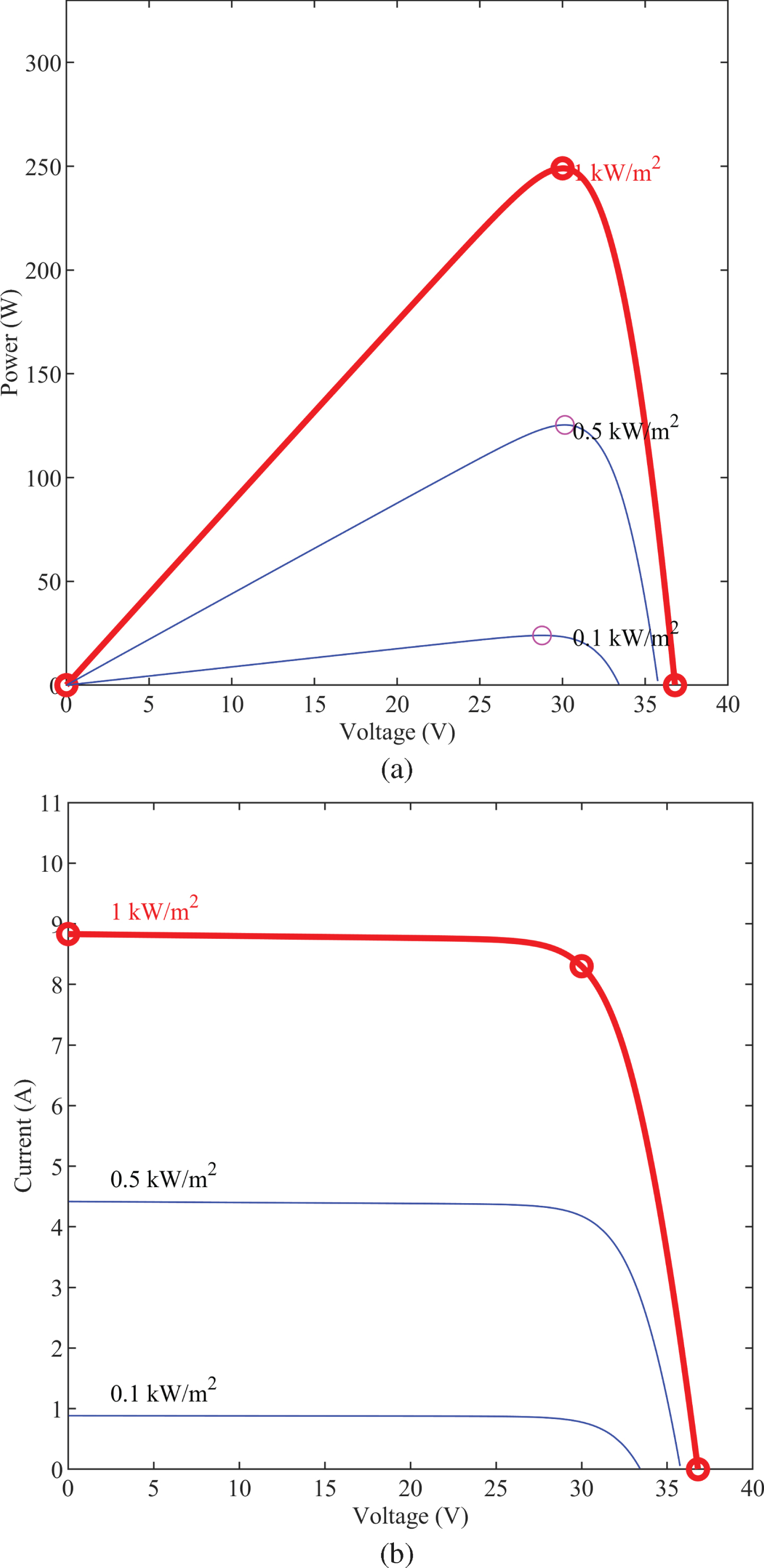
PV Characteristics of array under uniform conditions, (a) P-V characteristics, (b) I-V characteristics.
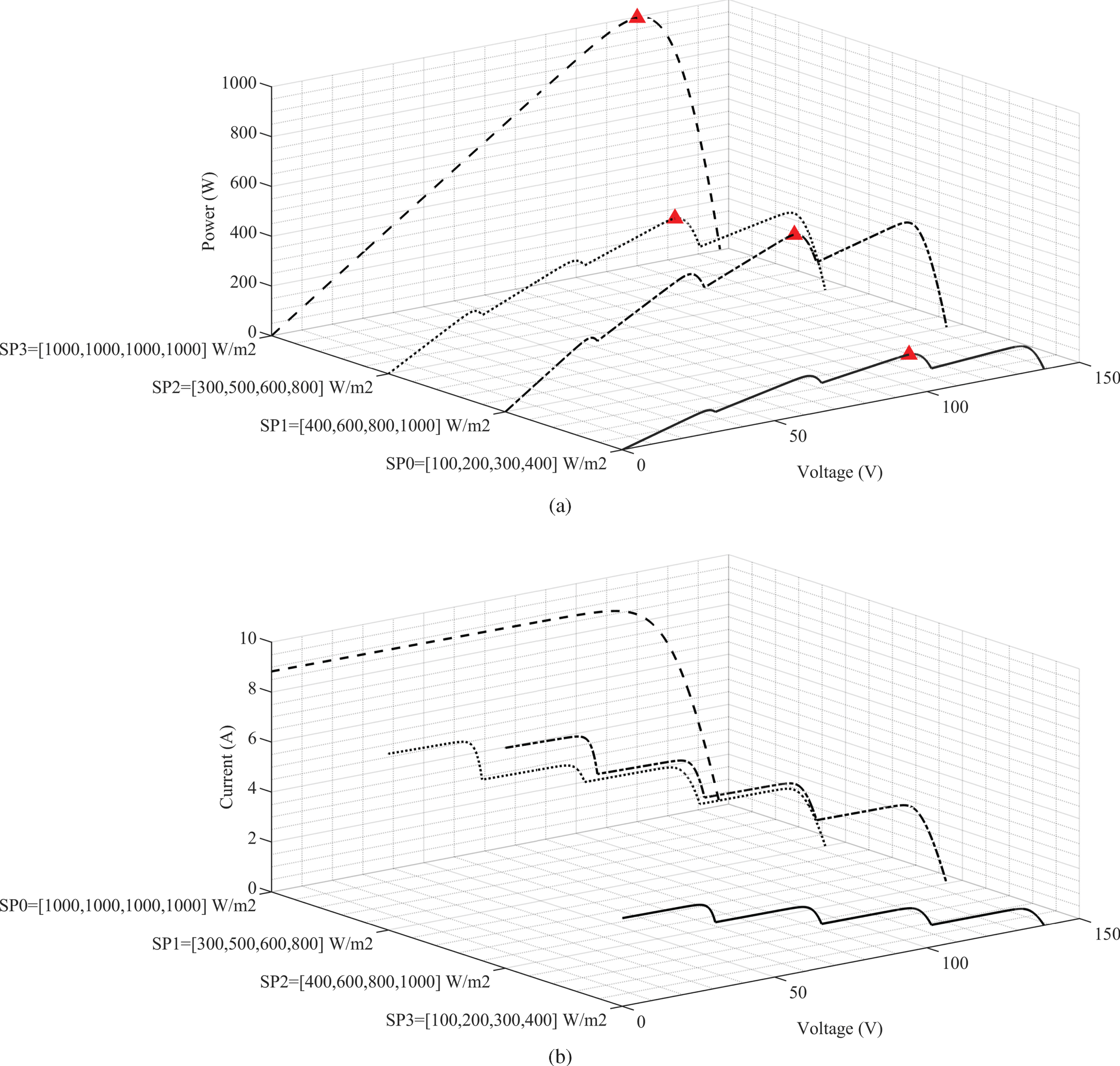
PV Characteristics of array under Partial shading conditions, (a) P-V characteristics, (b) I-V characteristics.
If the PV series operates under uniform insolation, one MPP contains the corresponding P-V curve. These additional diodes transform the partially shaded P-V curve into a more complex shape –distinguished by several local MPP and one GP. It can be represented by a three-string SP configuration, each with four PV sets, as seen in the SP configuration.
Xin-Sheang’s 2010 basic bat algorithm was based on microbat echolocation or biosonar properties [8]. The details of the Bat algorithm are analyzed below:
Echolocation of the microbats
There are about 1,000 different types of bat species. Their size varies greatly from small bumblebee Bat with about 2 meters to giant Bats having about 1kg in weight. Most bats use echolocated to a certain level; microbats are a common species of bats. Microbats typically use echolocation sonar to track predators, avoid obstacles, and place their grills in the dark. Their pulse varies in properties and may depend on the species or their hunting strategies. Bats will generally emit between 10 and 20 sounds per second with pulses of up to 200 pulses per second.
Bat algorithm
Although microbats use time-lapse in sensitive three-dimensional environments between their ears and loudness variations, we are particularly interested in some of the characteristics of echolocation to link this to the objective optimization function, which allows us to understand the problem mysteriously. Random frequency of Bats (for wavelength β) Loudness A0, randomly at the position with a velocity to search for prey. Automatically change the wavelength (or frequency) of the transmitted pulse and adjust the pulse emission to the target [0,1]; The loudness may vary from one wide A0 to the least constant Amin.
The author skips to use ray tracing in this algorithm for simplicity, but it can be a significant feature for the extension of this algorithm. Ray tracking can be a convenient tool for computational geometry and other applications.
Motion to the Bat
Each Bat is associated with the speed and place during the iteration in an ad-dimensional search space. For all bats, the current best solution is available
Variation in sound
In order to provide an appropriately control exploration and exploitation the loudness and pulse emissions of the Bats in iterations must be varied.
Application of Bat algorithm in MPPT
Initializations
In the initial iteration, Bats derive their initial values from Equation (1):
Where,
The remaining value of BAT algorithm’s initials are listed below:
The bats’ value is applied in the PV system and corresponding value of Power output of PV is noted for each Bat.
Monitoring
From the following equations, the speed for each Bat at iteration number I v1i: n and the new position di1: n can be obtained:
Where f min and f max values are 0 and 100, respectively. α is a random number, between 0 and 1, ω works as inertia constant, which is used to reduce the velocity of bats and has a value [0,0.5].
The updated position of bats on each iteration can be determined as:
Where,
The new duty ratio values di,n are being fed into the PV system one by one to obtain the corresponding power. Such values are used to update each Bat’s best value.
Restrictions in search domain
The flowchart of the Bat algorithm used in this work is given in Fig. 5. In this work, researchers took only three bats to start with, as the search domain was relatively small, many times the value found by the Bat algorithm was converging rapidly and could override the GMPPT. As a result, some modifications are applied to the Bat algorithm:
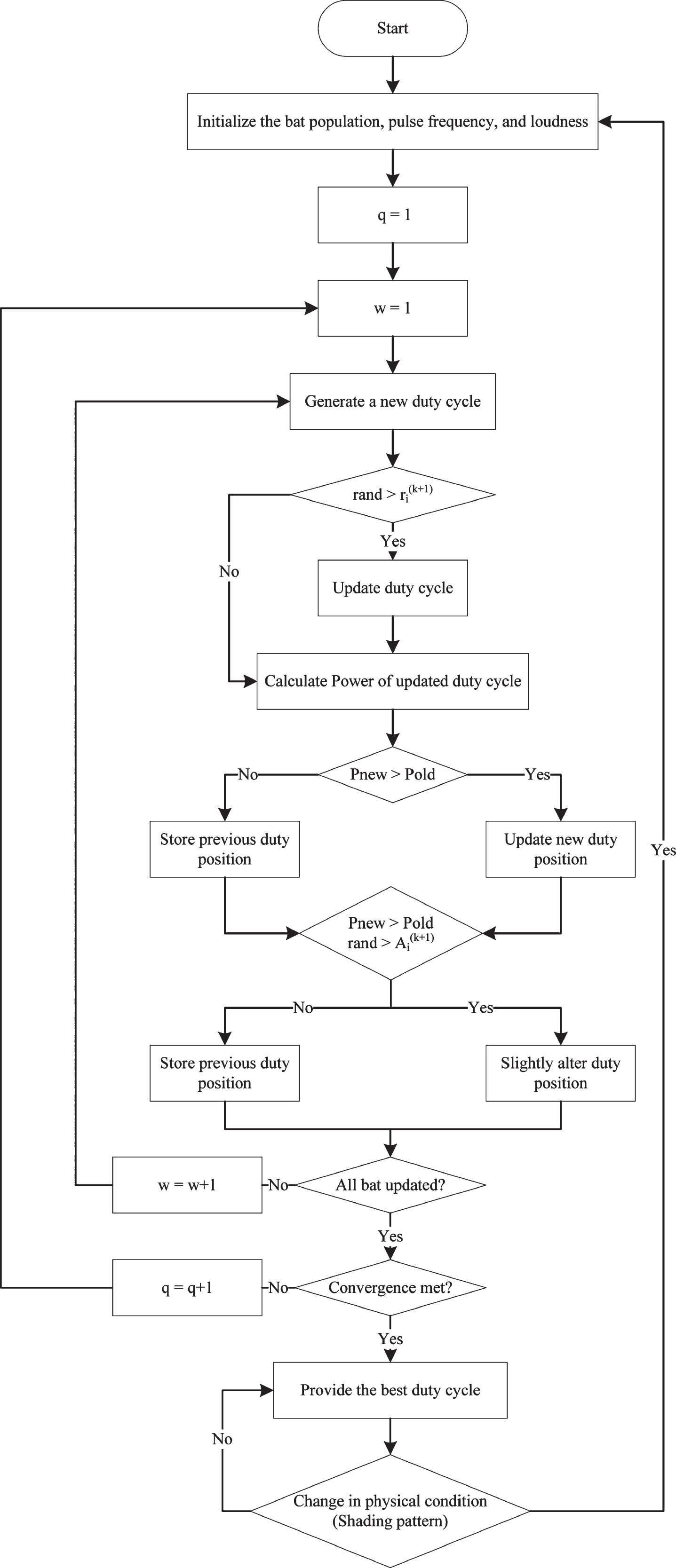
Flowchart of Bat algorithm based MPPT.
Significant importance has been given to the best solution found in any iteration. If any of the Bat deviates, only 0.2 of the duty ratios can deviate from the best solution.
Several modeling experiments have been carried out to demonstrate the importance of the improvements provided by the Bat algorithm to MPPT applications. The PV module for this simulation (Tata Power Solar Systems TP250MBZ), and its parameters are listed in Table 1. The higher the number of particles or bats, the longer the Convergence time; in this study 3 Bat-based Bat algorithm is applied. The simulation was performed in MATLAB®/Simulink environment, and simulation parameters are listed in Table 2.
Parameters of Panel (Tata Power Solar Systems TP250MBZ) used
Parameters of Panel (Tata Power Solar Systems TP250MBZ) used
Simulation Parameters of Boost converter
The sampling time for the MPPT controller is 0.05s. The switching frequency of the converter is 10kHz. In this study, the PV system consists of 4 PV modules, each of which has one diode bypass connected across the module. Partial Shading condition includes four modules 1 receiving 600W/m2, the second module receiving 800W/m2, third and froth receiving 1000W/m2 of solar radiation. The P-V curve for this condition is shown in Fig. 8. Figure 6 indicates that the GMPP is monitored by approximately t=0.4s using the proposed MPPT technique. Under this scenario, most traditional methods would be unable to detect the GMPP.
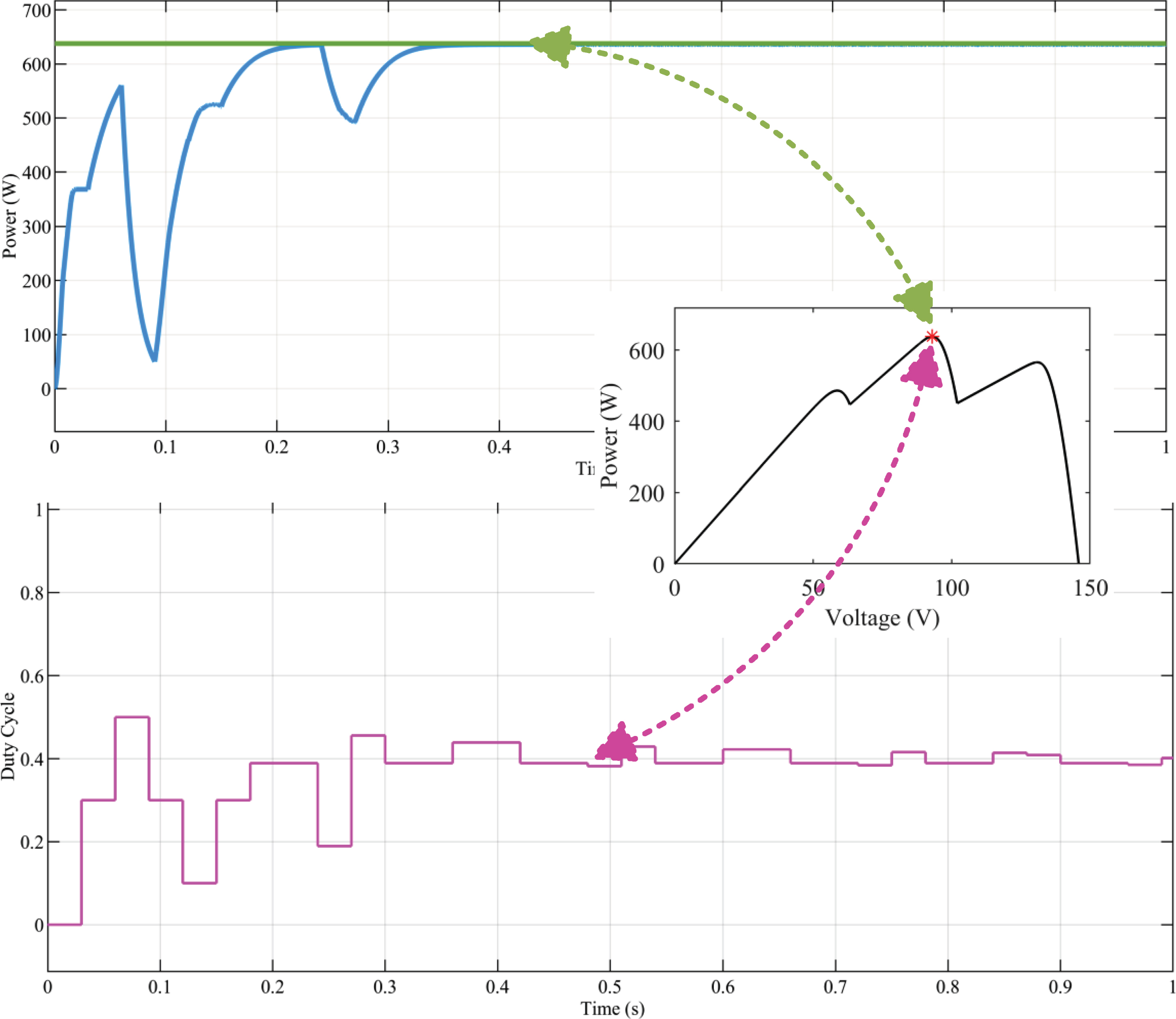
Performance of PV system with Bat based MPPT.
Figures 7 and 8, represents the output voltage and current of array. The proposed algorithm performed very well under partial shading condition. with proposed algorithm can track the GMPP with almost 100% (99.8%) accuracy in a short duration of time. Therefore, the proposed system performs better when monitoring GMPP under partial shading conditions, varying load and dynamical temperature. Conventional algorithms such as Incremental conductance of P&O have a more significant advantage in method simplicity, but efficiency and accuracy are not as efficient as the proposed BA.
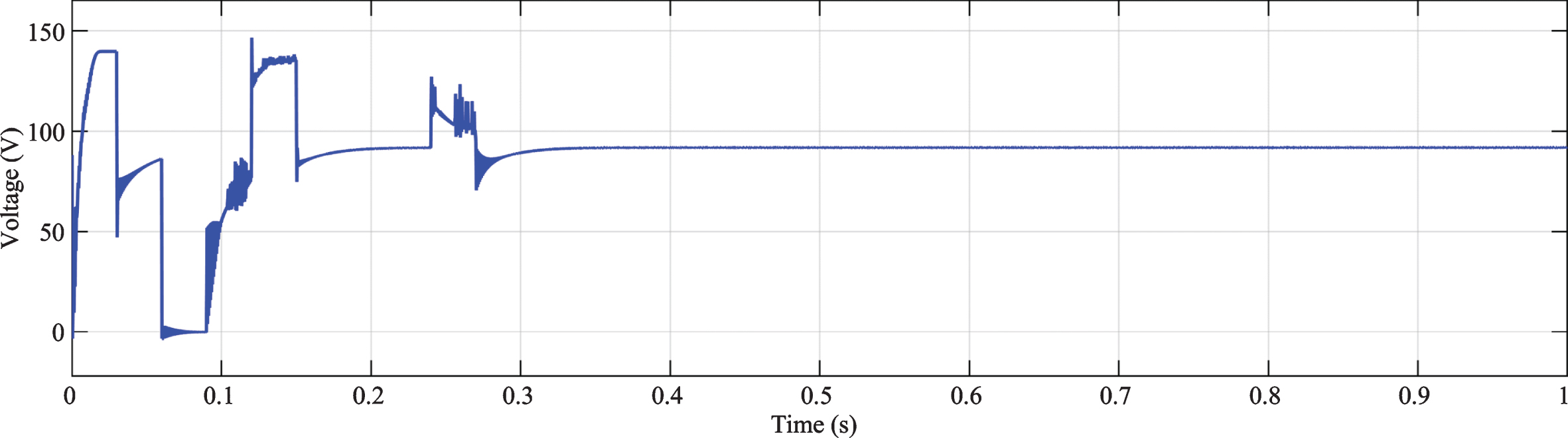
Output voltage of PV Array.

Output current of PV Array.
PSO and P&O have also been used in this paper, for comparative study against the proposed modified BAT algorithm. In Fig. 9, a simulation of a MATLAB model with a constant temperature of 25°C was carried out, where the insolation given to the panel was 1000W/m2, 600W/m2, 300W/m2 is shown. The GMPP via BWO is tracked in 0.025sec while PSO and P&O take 0.1sec and 0.1–0.2sec. The maximum power obtained is approximately 319.40W. The PSO matches the GP of 319.20W. The P&O algorithm converges to the LP of 200.2W. Steady-state oscillations are not distinguished, as observed in P&O i.e. the operating point oscillates around the MPP resulting in power loss.

Power tracking of Panels under partial shading condition.
To confirm the finding of Simulink, tests are also carried out on Typhoon HIL, 402 setup, Fig. 10 shows the GMPP tracking capabilities of BA algorithm. In Fig. 11 insolation have been varied in step change from 500 to 1000W/m2 in both the HIL results it can be seen that BA was able to track GMPP, efficiently.
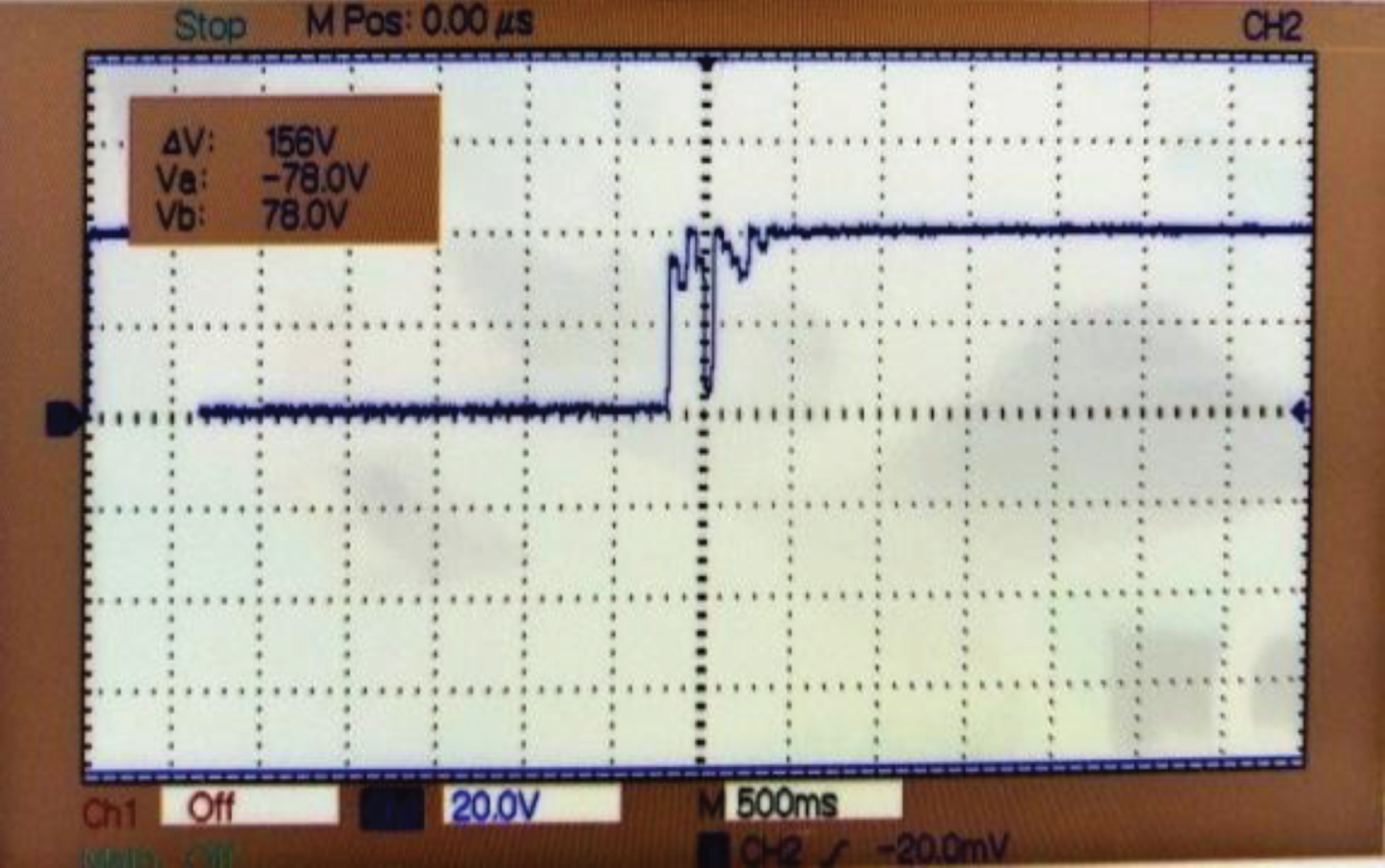
Power tracking at constant irradiation.
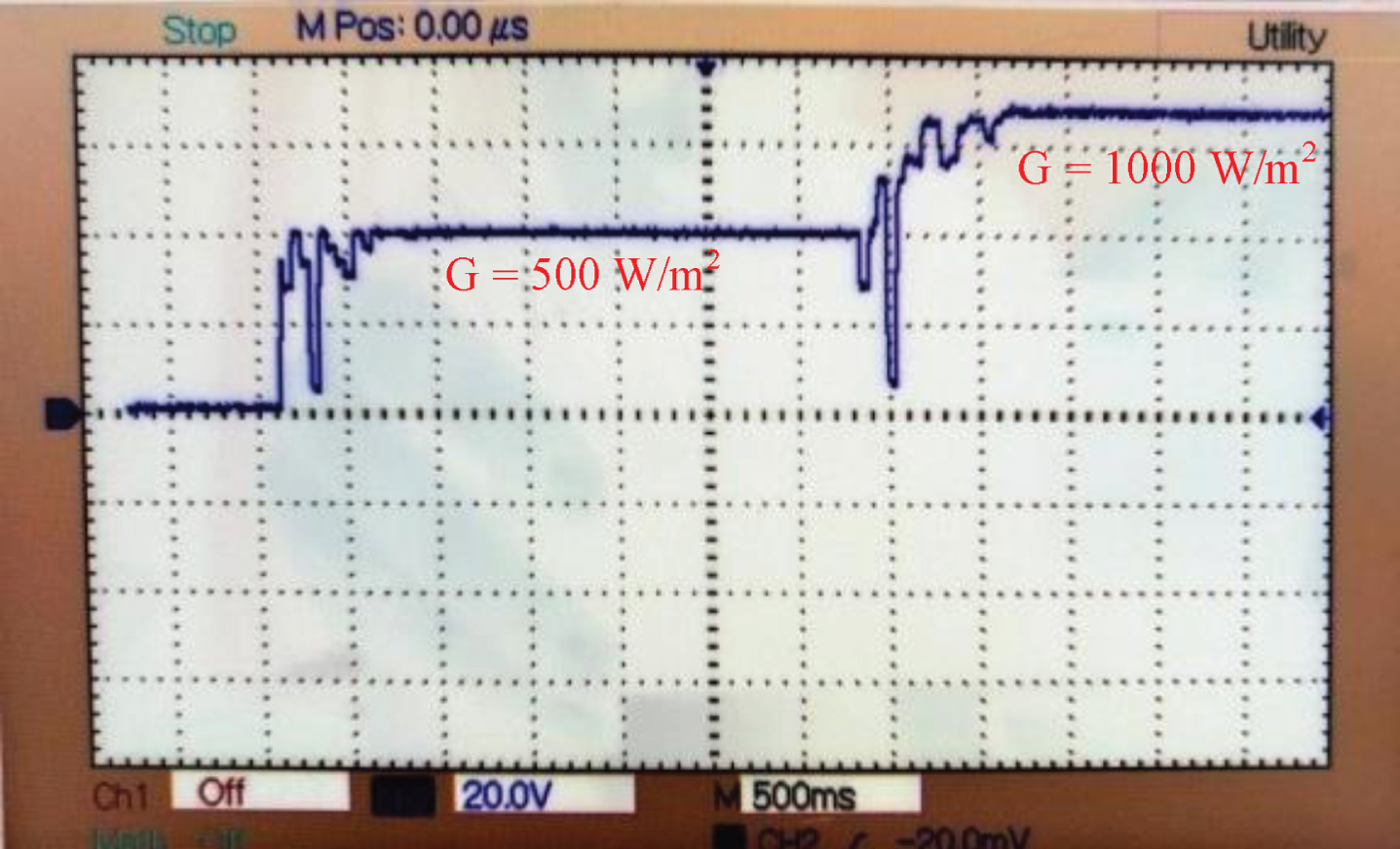
Power tracking with a step change in irradiation from 500 W/m2 to 1000 W/m2.
The implemented Bat algorithm for MPPT, gradually converges to GMPP for the PV array under partial shading conditions. The proposed approach for MPPT of PV systems is simpler, more effective, more resilient and more reliable compared to conventional MPPT and other approaches based on soft computing. The findings indicate that, in contrast to other traditional methods, the new BA method measures GMPP faster and more precisely for the partially shaded PV array. The efficiency of the Bat algorithm is higher, time required for computation is less and the algorithm can be implemented in a low-cost microcontroller. There are several other advantages of using BA in the MPPT of a PV system. Bat algorithm decreases computational complexity and avoids MPPT from returning to its local limit during PS in a more effective and consistent way relative to other MPPT algorithms.
Footnotes
Acknowledgments
The authors would like to acknowledge Integral University for providing the MCN number IU/R&D/2021-MCN0001097. The authors would like to acknowledge the financial support from Taif University Researchers Supporting Project Number (TURSP-2020/278), Taif University, Taif, Saudi Arabia. The authors also acknowledge the support provided by the Hardware-In-the-Loop (HIL) Lab, Department of Electrical Engineering, Aligarh Muslim University, India.