



Abstract
In this paper, we have used a novel initialization strategy to improve Whale optimization algorithm (WOA), which is named as The Improved Whale Optimization Algorithm (IWOA). To evaluate the capability of the algorithm in terms of efficiency and performance, we have implemented it to solve thermal economic multi-objective optimization problems of Plate Fin Heat Exchanger (PFHE). We have investigated the design problem with a single-objective as well as multi-objectives. In single-objective we have minimized the total cost and maximized the effectiveness of PFHE. In multi-objective, we have combined the total cost and effectiveness, with the help of design weights and a penalty parameter. The sensitivity of IWOA is checked towards the change in population sizes and the target prey numbers. The algorithm was stable in calculating the best values but was variative in number of functions evaluations. The performance of IWOA is compared with Genetic Algorithm (GA), Elitist-Jaya Algorithm (EJA), and modified-TLBO (Teaching Learning Based Optimization). Which show that IWOA has significantly improved the results. The suggested algorithm has less parameters to be set by designers. It converges to the required results quickly and is easy to implement. Similarly, all the experiments suggested that IWOA is applicable to design problems with complex objectives and highly non-linear constraints.
Keywords
Introduction
Heat exchangers are devices which are commonly used to maintain the heat between multiple layers of fluids at different temperature. The engineered structure of heat exchangers consider different geometric shapes and operating variables Figs. 2, 3 and 4. These designs are subject to given constraints which fulfills the requirement of thermal energy. These devices are widely used in different processes of industries, air-conditioning, refrigeration, and many other fields. In particular, PFHEs are important devices, and are occupying less space which are often called compact heat exchangers. Their applications are widely found in chemical, power generation, and petro chemical industries. Some extra surfaces are added to the devices to increase the heat transfer rate. Variables like height, pitch, offset length of fin, different stream flow links are important variables in these devices. These variables depend on the pressure, thermal stress, temperature, and different dynamic characteristics of fluids.
Problems of designing PFHEs are complex and hard to solve. Even an experienced designer can not consider all aspects of parameters involved. To design an efficient device, a suitable design optimization technique with an objective of best performance, low cost of the design and durability are important steps to be considered. Several problems have been solved with objective function of total cost and the energy transfer area. Below we present a review of various techniques which are implemented for minimum value of design cost, energy transfer area. An other objective is to minimize the effectiveness of the device subject to the bound constraints.
It is interesting to note that several advanced metaheuristics are applied to solve design problems of PFHEs. Initially, the problem was formulated as a Linear programming with continuous and discrete variables [1]. Classical optimization techniques were used to extract the optimal parameters for design of PFHE, by using a complex mathematical model [2, 3]. Iterative schemes, like, Simulated annealing (SA) [4], artificial neural networks [5] and different evolutionary optimization techniques [6–9] had been implemented to find better solutions for the optimal design of PFHEs. From literature review, it is evident that several efficient metaheuristics or population based optimization techniques, like, SA [4], genetic algorithm [10], non dominated sorting algorithm [11–13], particle swarm optimization [14–17], harmony search algorithm [18], teaching learning based optimization algorithm [19], differential evolution [7, 6], jaya algorithm [20], are used for the design of PFHEs.
All the reviewed methods have many algorithm specific parameters which are required to be fine tuned before solving any optimization problem. For instance, in GA different operators, like, mutation, selection, and crossover operators need proper setting; PSO involves weight, social and cognitive settings. Other algorithms, namely, DE and jaya algorithm also involve algorithm specific parameters.
The performance of an algorithm is significantly affected by algorithm specific parameters along with common parameters of stopping criteria and population size. The tuning of these parameters is very important. By improper settings, the corresponding algorithm may show slow convergence and trapping in local optima.In order to overcome this difficulty, Teaching learning based optimization (TLBO) algorithm [19] was proposed which is parameter less. Similarly, jaya algorithm [20, 21] was another successor of the parameter less class of algorithms.
This study proposes the improved version of Whale optimization algorithm (IWOA), which mainly overcomes the errors in parameter settings by learning from previous moves and initialize the algorithm with a population of best solutions obtained by IWOA. The proposed strategy appeared to be successful in solving complex design optimization problem of PFHEs with better accuracy.
The rest of this paper is organized such that in Section 2 the basic whale optimization algorithm (WOA) is presented in detail. Section 3 presents the improvements we have suggested in WOA. Section 4 presents a formulation of mathematical model of design of PFHEs. In Section 5, a multi objective model with cost function and efficiency of the design is presented. Section 6 demonstrate the different constraints on the design variables of PFHEs. A special case study is studied in Section 7. Results and discussions are given in Section 8. Finally, Section 9 concludes this paper. In future, IWOA can be implemented to solve the design problems of multiple objectives with complex landscapes.
Improved whale optimization algorithm (IWOA)
WOA was inspired by the intelligent emotions, social behaviours, and special hunting strategies of whales. This technique simulates the idea of whales producing a bubble-net while they feed themselves. This bubble-net takes a spiral shape and its mathematical form is presented in [22].
Mathematical formulation of whale optimizer
In the following section we will review the mathematical modeling of different maneuver performed by whales. Then at the end the complete WOA technique and the novel IWOA is presented.
Encircling of prey
The species of whales (called the Humpback whales), can predict the location of their target and can confine them. Here in the WOA the best initial solution is taken as targeted prey. After the target prey is defined the other whales will try to find alternate prey positions. This situations is represented as in Eqs 1, 2, 3, 4.

Graphical illustration of procedure adopted in IWOA to solve optimization problems.
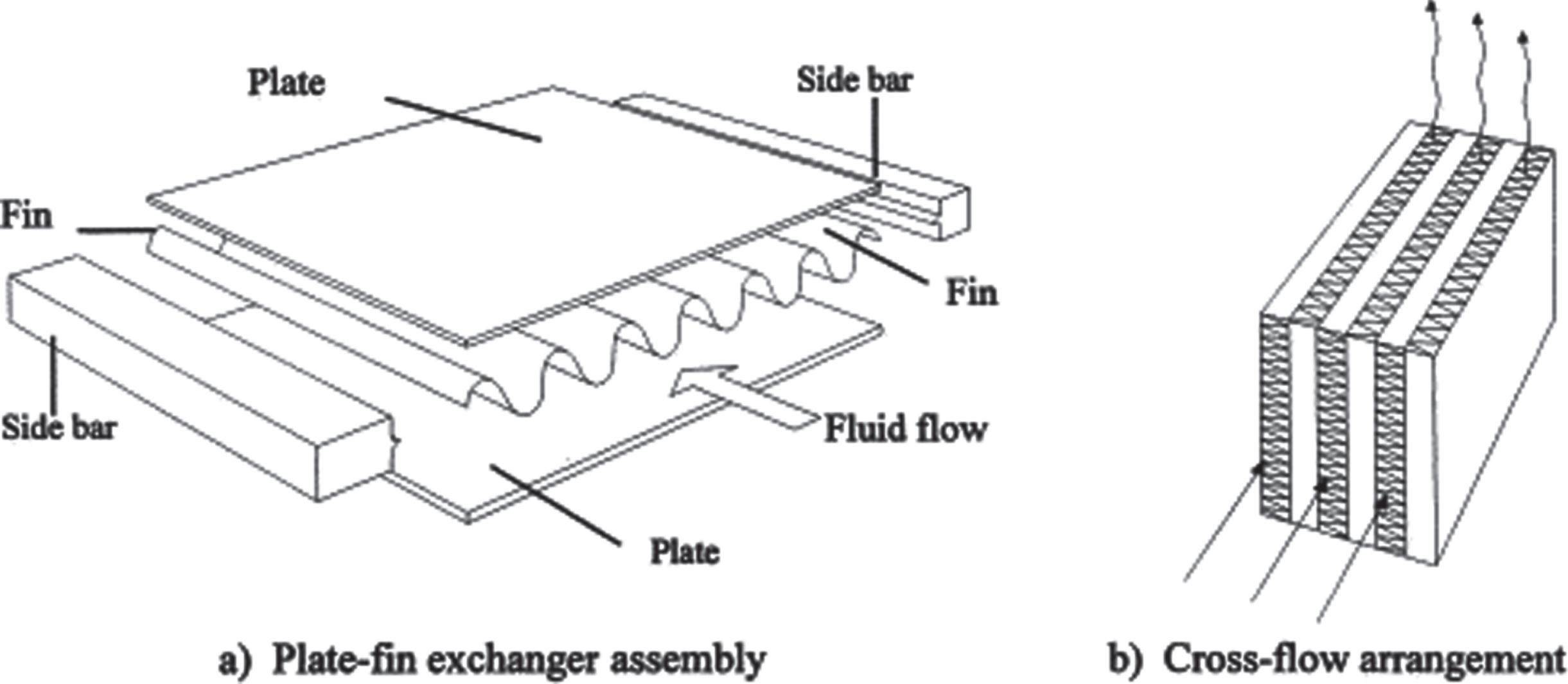
Model-1 of PFHEs, [22].

Model-II of PFHEs, [22].

Model-III of PFHEs, [22].
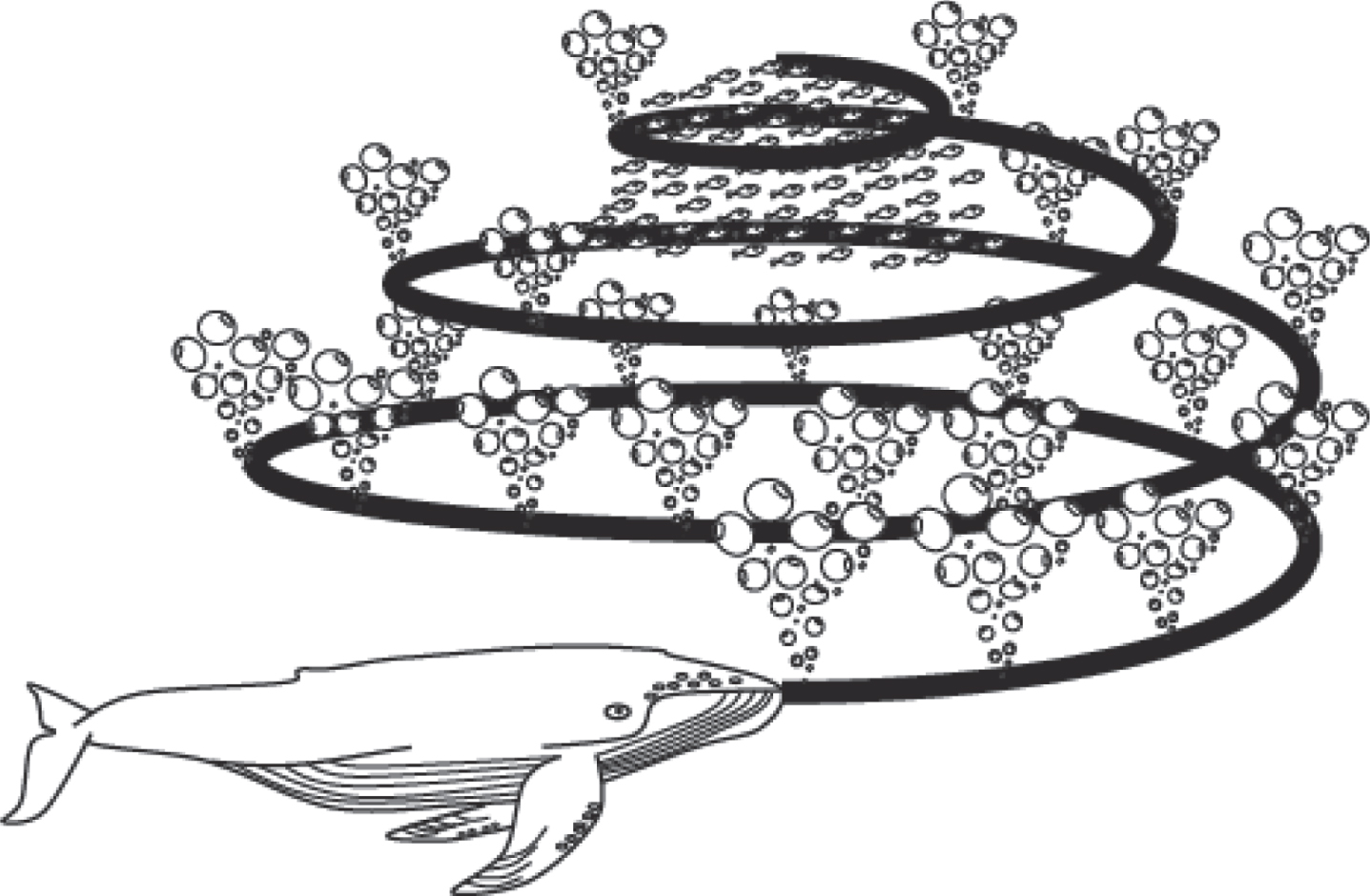
Bubble-net feeding behavior of humpback whales [22].

Position vectors in 2Dim and 3Dim and their possible updated locations. [22].
It is worth mentioning here that the above equations can be generalized for n-dimensions, which will idealize the fact that the preys will move in hyper surfaces in the neighbourhood of best solutions.
The mathematical model of bubble-net behavior of whales is described in following two subsections. By shrinking the encircles which is achieved by the decreasing value of V in Eq 3. In this way the range of V is decreased sequentially by decreasing values of b. See Fig. 5, 8 for further illustrations. In this figure, it can be seen that
Spiral updating position
Updating current position in spirals shape is illustrated in Fig 7. This procedure is used to calculate the distance between current position of whales (X, Y) and the position of target prey at (X*, Y*). The equation of spiral is given in Eq 5, this is a helix-shaped moment of the whales as follows:

Bubble-net search pattern used in WOA
Note that this spiral path which is followed by whales, shrinks to an end in the same direction of their movement. This behaviour is mathematically represented in Eq 6 with a probability of 50% in shrinking in spiral mode.
Whales search randomly by locating other mates around. For this purpose V is taking random values between 1 and -1. Here, current position is updated by a randomly selected search agent instead of placing it around the best solution so far. The mathematical model is given as follow:
The quality of population is an important factor which can directly or indirectly effect the strength of an algorithm in searching the given domain for an optimal solution. Also having an initialization process with random generation of candidate solutions is not an effective idea in every case, especially when the search spaces are large. Hence, in this paper we have updated the WOA by dividing the efforts of the algorithm in two parts.
In first part, the algorithm initializes with a fixed random population for certain number of function evaluations, using Eq. 9,
In the second part, the algorithm is focused on best so far search agents found during the earlier evaluations. This strategy is shown to be very efficient in getting the best results with less number of function evaluations and time taken to solve our problem. The pseudocode of IWOA algorithm is given in Fig. 9.

Bubble-net formed during feeding maneuver of whales [22].

The pseudocode of IWOA algorithm.
The analytical modeling of PFHE is given in the following section. Afterwards, a special case of PFHE and a multi-objective problem is discussed in detail.
PFHE design formulation
Effectiveness of cross-flow of an unmixed type of PFHE is given in [23],
The heat transferred through the surface area per unit volume is noted with β and is given:
Volume of hot fluid and cold fluid between the plates for PFHE is given as:

Detailed organization of PFHE [24].

Model of rectangular offset fin core [24].
The coefficient of convective heat transfer (h) is given as:
The problem of finding an agreed solution among several objectives is known as multi-objective/ criteria problem. These problems often come up with several constraints. In this paper, two different objective functions are examined. One objective is to increase or maximize the effectiveness of PFHE. Other is to reduce or minimize the total cost. We have implemented the Improved Whale Optimization Algorithm (IWOA), in order to get the optimal solution for the design of PFHE. The cost objective function can be described mathematically as:
Bounded by the constraints:
The objective function of maximizing the effectiveness of the heat exchanger is given as a second objective in Equation 35,
The bound constraint on the variables are same as given in Eq 34. The unconstrained objective function is calculated as:
The problem under consideration is based on the following variables with bounds given below.
(i) L h (m) denote the length of hot stream flow, 0.1 ≤ L h ≤ 1,
(ii) L c (m) denote the length of cold stream flow, 0.1 ≤ L c ≤ 1,
(iii) Thickness of fin t f (mm) is bounded as 0.1 ≤ t f ≤ 0.2,
(iv) Height of fin b (mm), 2 ≤ b ≤ 10,
(v) Fin frequency n, 100 ≤ n ≤ 1000,
(vi) Length x (mm), 1 ≤ x ≤ 10,
(vii) Layers number (N P ) , 1 ≤ Np ≤ 200,
(viii) Pitch fin c, 0.1 ≤ c ≤ 0.2.
Among these parameters the layer (N P ) is a discrete variable and the rest are continues [20]. Total nine constraints are imposed on the design of heat exchangers which restrict mathematical model as follow:
The hot and cold stream of fluid depending on Re is bounded as 120 ≤ Re h ≤ 104 and 120 ≤ Re c ≤ 104. Whenever, Re falls within the bounds, then the values for Fanning factor and Colborn factor are calculated. The geometry of PFHE is defined by the following bounded variables.
We have taken a case study described in [24] for the design of PFHE whose specifications are given in Table 1. As discussed earlier, the problem consist of six continuous design variables with objective to minimize the total cost along with increasing the effectiveness. These are three inequality constraints. A mathematical model of cost function is given as:
Coefficients of cost for PFHE [29]
To test the efficiency of our technique, namely, the Improved Whale Optimization Algorithm (IWOA), we have compared it with Multiobjective Evolutionary Algorithm Based on Decomposition (MOEAD) [30], Nondominated sorting genetic algorithm II (NSGA II) [31]. Each technique was ran with same stopping criteria which was the number of generations, and the approximated Pareto front is compared with other reference points by using two types of performance measuring functions to reveal two qualities of the technique: (i) accuracy of the results, by determining its closeness to the best available results and (ii) the balance in distribution of solutions in the given solution space. According to literature review in [32], we have chosen 5 frequently used metrics in this study. These performance metrics include, hyper-volume (HV), coverage (C), generational distance (GD), inverted generational distance (IGD) and spacing (S). Results are presented in Table 2 and a detailed discussion is given in section 7. Further, we have added a graphical abstract which is helpful in understanding the whole procedure followed in this paper to solve the optimization problem, see Fig. 1
Performance metrics in terms of HV, GD, IGD, Coverage, and Spacing values for IWOA compared to MOEAD and NSGA-II
Performance metrics in terms of HV, GD, IGD, Coverage, and Spacing values for IWOA compared to MOEAD and NSGA-II
In this section, the simulation environment for the suggested IWOA is presented and discussed in detail. The Pareto optimal solutions obtained by IWOA are compared with solutions obtained by Genetic Algorithm [15], Elitist-Jaya Algorithm (EJA) [28], modified-TLBO [19], Multiobjective Evolutionary Algorithm Based on Decomposition (MOEAD) [30], Nondominated sorting genetic algorithm II (NSGA II) [31]. These results are shown in Table 2-6. In Table 2, we have compared our results with MOEAD and NSGA-II in terms of performance metrics, namely, hyper-volume (HV), coverage(C), generational distance (GD), inverted generational distance (IGD) and spacing (S). Remarkably, IWOA has outperformed both algorithms in terms of GD, IGD, and Spacing. While it remained same by getting similar values of HV and C.
It is evident from our results that they are either better or similar those obtained by other algorithms.
Design points for cost and effectiveness of PFHEs
Design points for cost and effectiveness of PFHEs
Optimal design parameters for A - E and Pareto-optimal solutions (PFHE)
Comparative results obtained for overall cost of PFHE by changing population sizes from (10-100) and target prey from (1-7).
Comparative results obtained for overall effectiveness of PFHE by changing population sizes from (10-100) and target prey from (1-7).
All sets of variables which are causing a reduction in overall cost of the design of PFHE lead to a steep depreciation in the effectiveness of the device. This led to the optimization problem. Fig 12 and Table 3 elaborates it further that the minimum cost got by IWOA is at design point E (491.7029$, 0.7240) where the minimum cost is 491.7029. Furthermore, the efficiency of the device is maximum at solution A, and the cost value is also better.
Based on Table 4 we have plotted Fig 13 for annual cost depending on the five design points. Because of the improvement in the rate of heat transfer IWOA produced better design in term of effectiveness as compare to GA, modified TLBO and Elistic-jaya algorithm.

Pareto-optimal set given by different algorithms for design of PFHE [24].

Pareto-optimal set for annual cost and effectiveness obtained by different algorithms for design of PFHE [24].
Moveover, IWOA has produced minimum costs reduced as 456, 30, 51, 72, on solutions A, C, D and E. On the solution B, the value of cost given by IWOA is worst as compare to the cost suggested by GA algorithm. This is due to the reduction in total heat transfer surface. However, the total cost suggested by GA on design point A is higher than the other algorithms. Furthermore, in Table 5, 6 we have investigated the sensitivity of IWOA towards the increase or decrease in population size and target prey size. The efficiency of IWOA is evaluated in term of large number of function evaluations, as the population size increases. The algorithm seems to be stable in terms of best, worst, median and standard deviation values of the total cost.
It is worth noting that for population number fixed as 10 and target prey as 1 the data for total cost has a standard deviation 3.8560. Similarly, number of function evaluations are increased as size of population increases or number of target prey is increased.
Moreover, from Table 6 the effectiveness of PFHE is given, the best values are similar for maximum effectiveness, whether the size of population is increased or the target prey number is varied. On the other hand, an increase in number of function evaluations is observed when we have increased the population size along with the target prey size. The stability of IWOA is due to its less parameters as compared to GA, EJA and modified TLBO algorithm.
In this paper, we have explored the application of a novel approach IWOA to solve design optimization problems of PFHE. Seven design variables were governing the problem. We have investigated the design problem as a single-objective as well as multi-objective. In single-objective we have minimized the total cost and maximized the effectiveness of PFHE. In multi-objective we have combined the total cost and effectiveness, with the help of design weights and a penalty term.
The sensitivity of IWOA is checked towards the change in population sizes and the target prey numbers. The algorithm was stable in calculating the best values. The performance of IWOA is compared with GA, EJA, and modified-TLBO, which show that IWOA has significantly improved the results. The suggested algorithm has less parameters to be set by designers. It converges to the required results quickly and is easy to implement. Similarly, all the experiments indicate that IWOA is applicable to design problem with complex objectives and highly non-linear constraints.