



Abstract
Epilepsy is a nervous disorder that causes arbitrary recurrent seizures within the cerebral cortex region of the encephalon. The early diagnosis of a seizure is important in clinical therapy. An automatic epileptic seizure detection method for electroencephalogram (EEG) signals can significantly enhance the patient’s life in clinical aspect. The proposed paper is principally based on a completely unique approach of epileptic seizure detection using Q-Tuned Wavelet Transform (QTWT) and Approximate entropy (ApEn). This work focuses by utilizing and testing the common sense of Extreme Learning Adaptive Neuro-Fuzzy Inference System Model (EXL-ANFIS) which foresees the elements of the mind states as a trajectory that results in the seizure event. QTWT is used for decomposing EEG signals into sub-band frequency signals. Approximate entropy is carried out to those sub-band signals as a discriminatory function because of its indefinite disordered feature. The solutions obtained by directing towards EXL- ANFIS shows an incredible advancement in the perpetual performance outlay for the classification of an epileptic seizure. The proposed classification method is implemented on publicly available Bonn dataset. The outcome confirms that by combining extreme learning and ANFIS model improves the classification accuracy and decrease the feature dimension with reduced computational complexity. This method achieves 99.72% of classification accuracy over existing models.
Keywords
Introduction
The human brain is a compound system manifesting space-time dynamics. Nearly 0.08 billion people worldwide suffer from a brain disorder, namely epilepsy [1]. Epilepsy disease is typically referred to as an Epileptic seizure, it is determined with the aid of an abrupt irregular firing of the nerve cell inside in cerebral cortex area [2]. The epileptic affected people have no apparent abnormal symptoms but may suddenly show attacks or seizures that damage their everyday capabilities partially or absolutely [3]. Despite the fact that the discovery of a great deal non-invasive method is decided to analysis human mind activities, electroencephalogram is indisputable in representing the electric motion of the brain in millisecond resolution. In the biomedical signal processing, EEG has broadly used the signal for detecting the seizure at specific brain parts that assist in the right analysis of epilepsy. The signs and indication of seizures range by type. Additionally, medical aid is vital to examine EEG recording. An automated classification system has been materialized in latest years for suitable remedy and development of epilepsy detection. Many works have been done to compare normal brain signals, and epilepsy affected portion signal, Andrzejak et al. [4] utilized the above two signals and come into the conclusion that signals from an epileptogenic brain vicinity are nonlinear-based, kind of random and stationary. In this research work, a transformation is advanced for discrete signals in which Q factor can effortlessly be tuned. The transformation, which we refer to as the Q-Tuned Wavelet transform (QTWT), is frame worked with the aid of its Q factor and redundancy. The QTWT is developed by means of the perfect over-sampled reconstruction of filter banks with authentic scaling factors. Automatic medical image and signal processing is one of the key choices used clinically to diagnose the disease. Few statistical parameters provides successful impact on the disease detection and classification algorithms [25]. Statistical parameters, for instance, all three types of moments are often used as discriminatory features. Few nonlinear characteristics like the fractal dimension [11], entropy, higher Lyapunov exponent, and correlation dimension (CD) also used for the classification of QTWT signals as discriminating features. In this present paper, the Entropy is employed as the discriminatory features of sub-bands that are acquired by QTWT decomposition. The QTWT is identical as Rational-Dilation Wavelet transforms (RADWT) [5] and it is discrete with notable reconstruction. QTWT is refined with two-channel iterated filter banks and it is absolutely conceptual. The advantage of QTWT is redundant and Q-factor is specified directly and it is implemented efficiently using radix method. The QTWT primarily based filters are targeted inside the frequency domain and it incorporates out no rational features as like the fractional spine wavelet [6].
The connection between the Spatio-temporal features of EEG signals is studied in recent days to provide an automated classification technique like Linear discriminate analysis, hidden Markov modeling, neural networks [7] and Fuzzy related classification [8], Support Vector Machine, K-means clustering, NaïveBayes Classifier [23], ensemble classifier [22] and association rules. Moreover, the emerging of several representation methods like Empirical Mode Decomposition, histogram-based features, Hilbert-Huang transform have shown good distinguish of Epileptic signal classification. The orthogonal Empirical Mode Decomposition are used to decompose the EEG signal into sub-band signal, then common spatial pattern, and FIR filter are adapted to extract the features from sub-band signals [32]. The singular value decomposition method was computed to determine predominant variances of brain EEG signal and its nuclear features [27]. In bio medical signal processing, few works are based on the unscented Kalman filter, circular Hough transform and elasticity-model based state-space method to determine the motion trajectory [28, 30]. In recent days, deep learning neural network architecture along with convolutional neural network has been developed for automated application [21, 31] Kanwal Yousaf et al. [24] provided a extensive study to analyse, appraise, and synthesize the existing technologies of m Health applications in clinical aspects.
Currently, the call for the ANN is increased because of its excessive correctness rate, received through suitable training for input and output through its weights and biases. A hybrid based learning algorithm called Adaptive Neuro-Fuzzy Inference systems so-known as ANFIS matches neural networks’ adaptive capabilities with the knowledge strength of Fuzzy inference system. ANFIS need back propagation to the fuzzy inference system premise parameters. Its dependence at the gradient-based approach results in greater prolonged training time and accordingly it is high-priced. Huang’s [12] extreme learning machine remain the sophisticated version of Feed forward single Layer Neural network which utilizes a more rapid method of network learning. It learns with the aid of projecting the variables (input) randomly and finds the corresponding minimum standard and minimal error solution for hidden connections weights to the output layer popularly using the Moore Penrose (MP) pseudo-reverse. In this research paper, a learning algorithm is introduced named as Extreme Learning Adaptive Neuro-Fuzzy Inference system model (EXL-ANFIS) which conquer the ANFIS and EML drawbacks.
In this paper, a novel combination of extreme learning and ANFIS so called EXL-ANFIS is proposed. The QTWT is implemented for sub-band decomposition, approximate entropy is estimated for the sub-bands and these features are fed into the classifier. This paper utilizes the concept of the ELM where the least squares are obtained using R square weights. The position shaping and hypothesis parameters are randomly chosen with few limits along with its corresponding parameters. The shape of member state function is selected as bell form function since it could be able to smoothen the changes of member state in accordance with core member state function. This paper is compared with the performance of different types of state of art classification methods. This work is designed as a seizure classification method based on QTWT and the multiclass EXL-ANFIS for detecting the seizure from seizure-free and normal EEG signals.
The proposed framework is organized as follows. Section 2, provides the process flow of classification system, inclusive of dataset description, decomposition based on QTWT. Section 3, provides feature extraction based on estimation of entropy. Section 4, describes the algorithm of EXL-ANFIS for the classification of the EEG signals. Section 5, contributes the experimental results and its discussion of the proposed automated seizure detection system. At last, Section 6 concludes the overall effectiveness of this research and its future work.
Materials and methods
Dataset
In this contemporary work, publicly accessible EEG dataset [13] of various subjects is considered. This dataset inevitably contains the EEG signal recordings of normal as well as seizure affected patients. These recorded signals are partitioned into five specific subsets with some parameters. The five subsets so-called, F, S, Z, O, and N merely contain hundreds of single-channel EEG signals for each subset with a sampling time of 23,600 ms. Therefore for every EEG signal will maintain a sample rate of 0.17361 KHz. Among the above mention subsets, subset ‘Z’ is recorded from five normal subjects with opened eyes, similarly subset ‘O’ contains healthy person EEG recordings with a closed eye. Subset ‘Z’ and ‘O’ are obtained as scalp continuous EEG signals efficiently utilizing the standard ‘10–20’ electrode placement method [17]. While the generated EEG signals of other subsets are typically captured at intra-cranial by means of selective depth electrode. The subsets ‘F’ and ‘N’ are carefully considered for its seizure-free intervals recordings. Subset ‘F’ purportedly contains the dataset of EEG signal records of epileptic affected zone. Subset ‘N’ includes the successful recording of hippocampus genesis of the complex brain. Last subset ‘S’ typically comprises of ictal seizure activity EEG signal.
Decomposition of EEG signals using QTWT
The Q-factor of a wavelet transform has to be cautiously picked to some degree as indicated by using the oscillatory part of the EEG signal. The transformation, which we proclaim because the Q-Tuned Wavelet Transform (QTWT) is uniquely characterized by means of its Q-factor. But, the transformation may be decent to finite length signals so that implementation is about straight forward. To refer to frequency domain scaling, low –pass scaling is utilized for retaining the low-frequency content.
The scaling parameter ′α′ is represented for low -pass scaling which is portrayed in denoted in Fig. 2, the rate at which the output signal samples is given as αfs where fs is the input signal sample rate. The changes in the sampling rate of depending upon the scaling parameters. For preserving the frequency content which are high, frequency domain scaling is utilized as shown in Fig. 4 and it is denoted as β. The change in the rate of sampling at the output signal is represented as βfs where fs is the sampling rate of input signal.
With the intention to adapt the tuneable Q-Tuned Wavelet transform (QTWT) to finite-length signals, the design of low-pass scaling is designate with the length as N1:N2, where N1 and N2 is ratio of input signal (EEG) length to output signal (Decomposed) length and high-pass scaling is designate with the length as N1:N3, wherein N1 and N3 is the ratio of input signal (EEG) length to output signal (Decomposed) length.
Low-pass scaling: finite-length EEG signals
Let x(n) denotes the N1 point signal defined for 0 ≤ n ≤ N1 - 1. If N2 < N1 and both N1, N2 are even then scaling of a low pass is N1 : N2 as
In the Scaling of low pass if N1 ≥ N2 then low pass scaling N2 : N1 is reversed. With this effect low pass scaling is inversed with N1 : N2. Scaling using low pass is defined to preserve X (N1/2) so that the inverse property remains.
The Scaling of Signal through High pass preserves around Nyquist frequency. For the finite length sequence, the DFT corresponds to the input signal is is k = N1/2. Let the N point signal be x(n) and it is defined as 0 ≤ n ≤ N–1. If N3 < N1 and N3, N are even then scaling of high pass is defined N1 : N3 as
Similarly if N3 > N1 and N3, Nare even then scaling of high pass is defined N1 : N3 as
The Q-Tuned Wavelet Transform (QTWT) with finite length is implemented by applying the filter banks (LPF, HPF) repeatedly. The specifications N1, N2, and N3 must be defined at every level. To label the specifications of level dependent
The EEG signals delineated in Fig. 1 are decomposed at different subbands using QTWT. The outcomes obtained from wavelet decomposition using QTWT of EEG signals are portrayed in Fig. 5–7, sub-band of the decomposed signals are represented by SB with a subscripts (1–10) with lowest frequency range of the EEG signals. The QTWT algorithmic performance depends on three adjustable parameters namely Quality factor (Q), redundancy (x) and number of important sub-bands (J). The parameter ‘x’ influences the temporal localization of the QTWT without modifying its shape. It should be noticed that unnecessary excessive wavelet rings should be prevented while performing QTWT by suitable choosing the range of ‘x’ greater than or equal to 3. It has been decided from trial-and-error, the suitable value of ‘X’ and ‘J’ in this proposed work is can be 3 and 9 respectively. The parameter ‘Q’ can be chosen to be lower in order to extract appropriate characteristic nature of the EEG signals. The criterion values of Q = 3, J = 9, and x = 3 are observed in this proposed work. Similarly detailed sub-band are represented SB1-SB9 and the approximate sub-band is represented as SB10. Fig. 5 figures out the sub-bands of normal EEG signals. Similarly Fig. 6 and Fig. 7 illustrates the sub-bands of seizure -free and seizure EEG signals respectively.
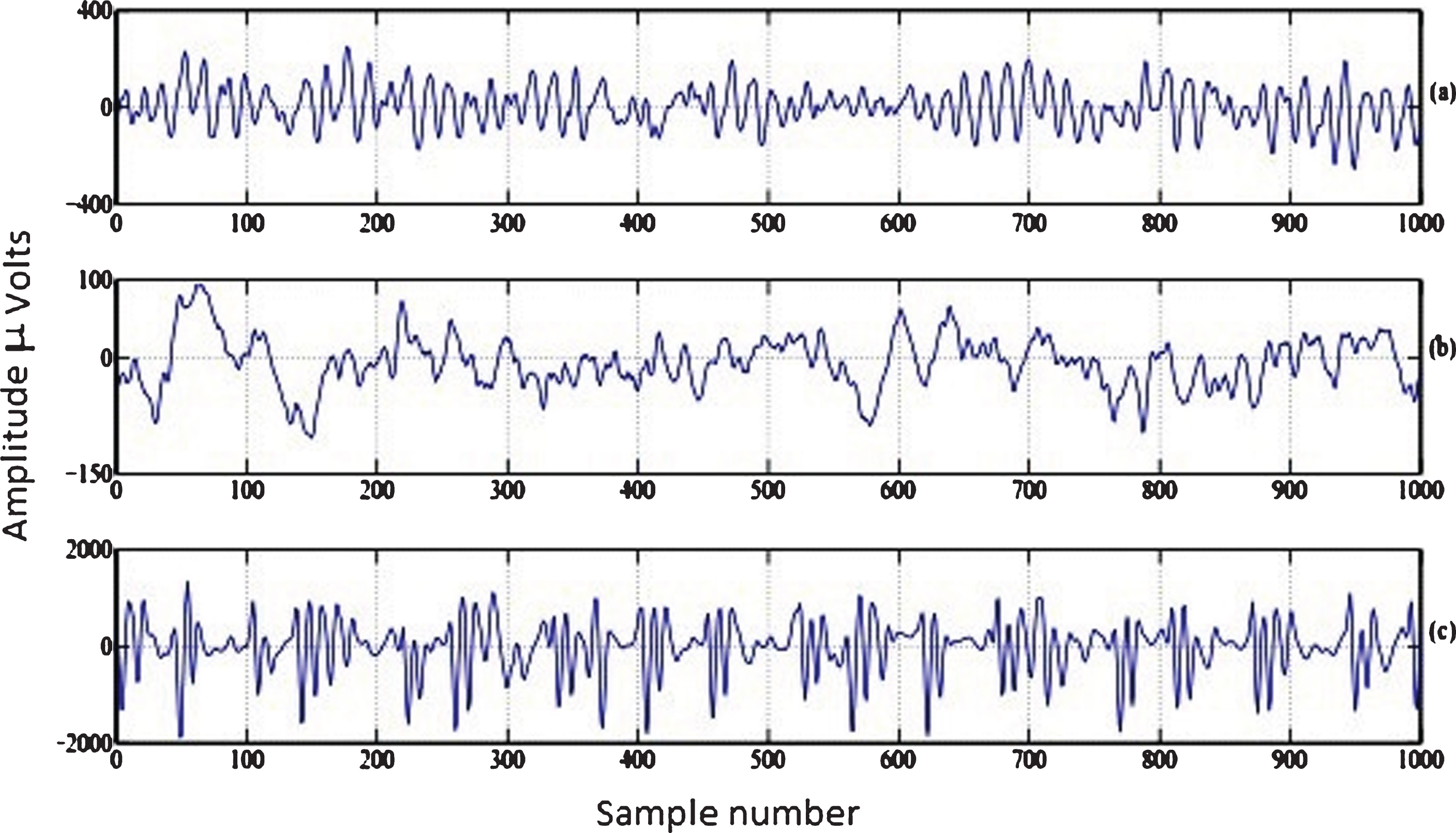
Sample of EEG signals: (a) Normal, (b) Seizure-free and (c) Seizure groups.
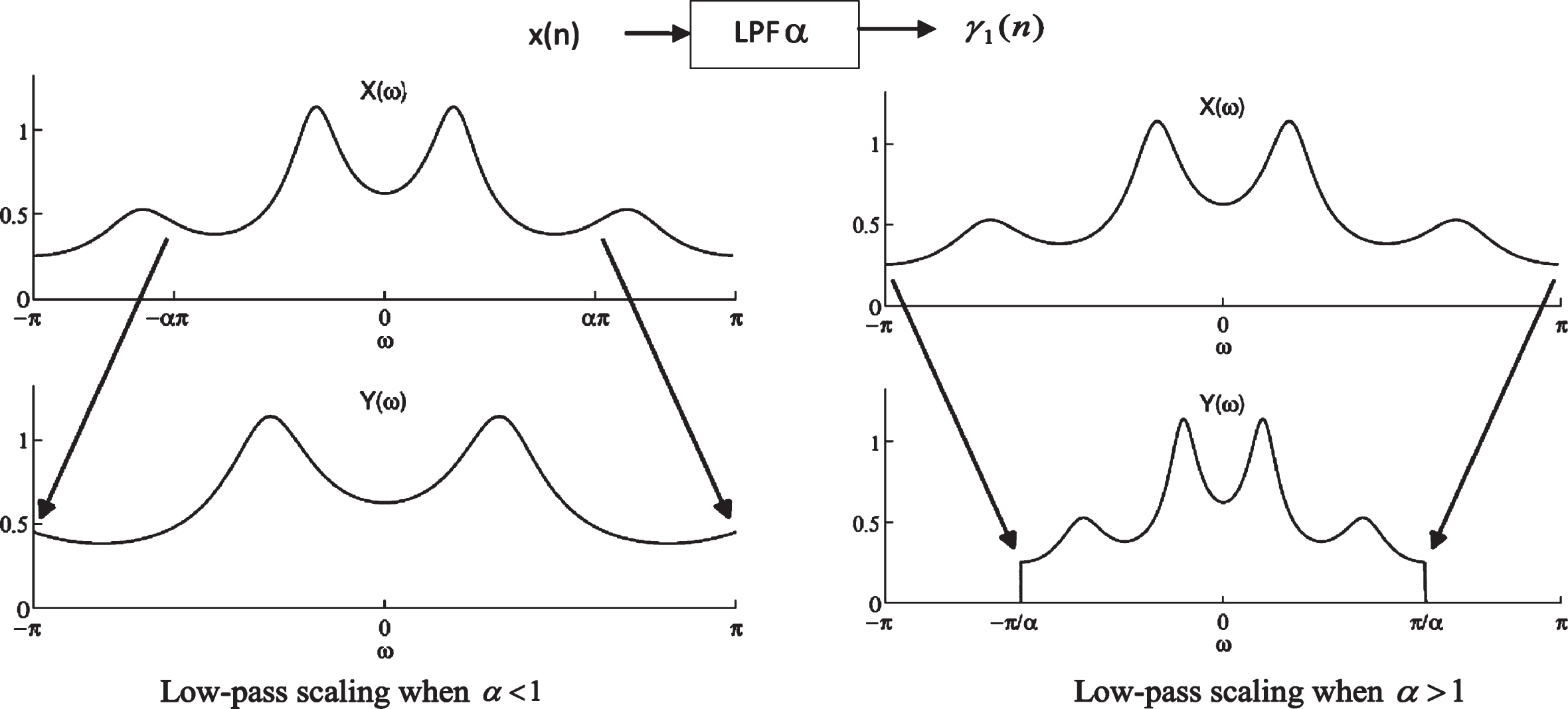
Low-pass scaling when using the α parameter.
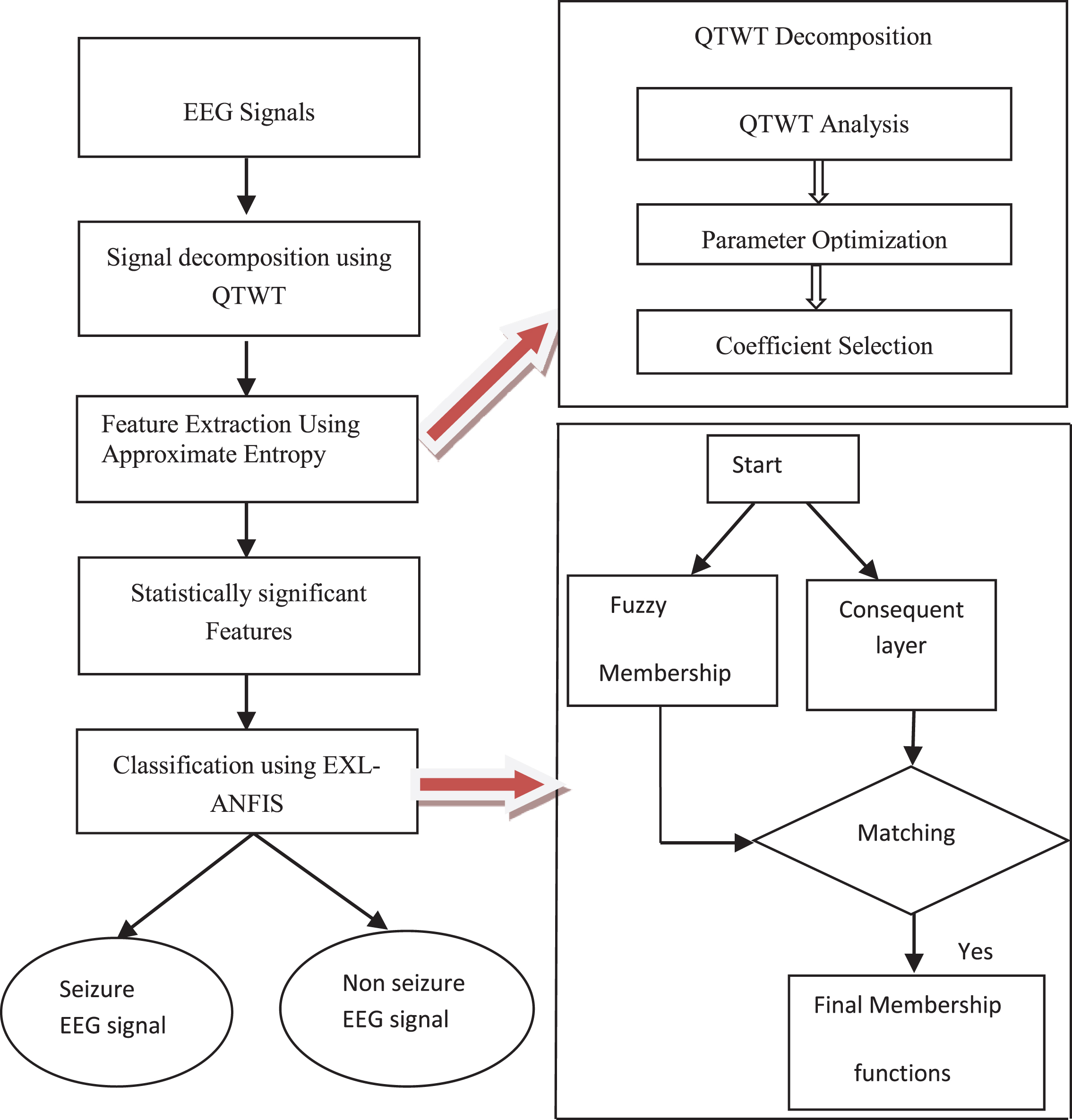
Flow diagram of the proposed work for EEG signals Classification.
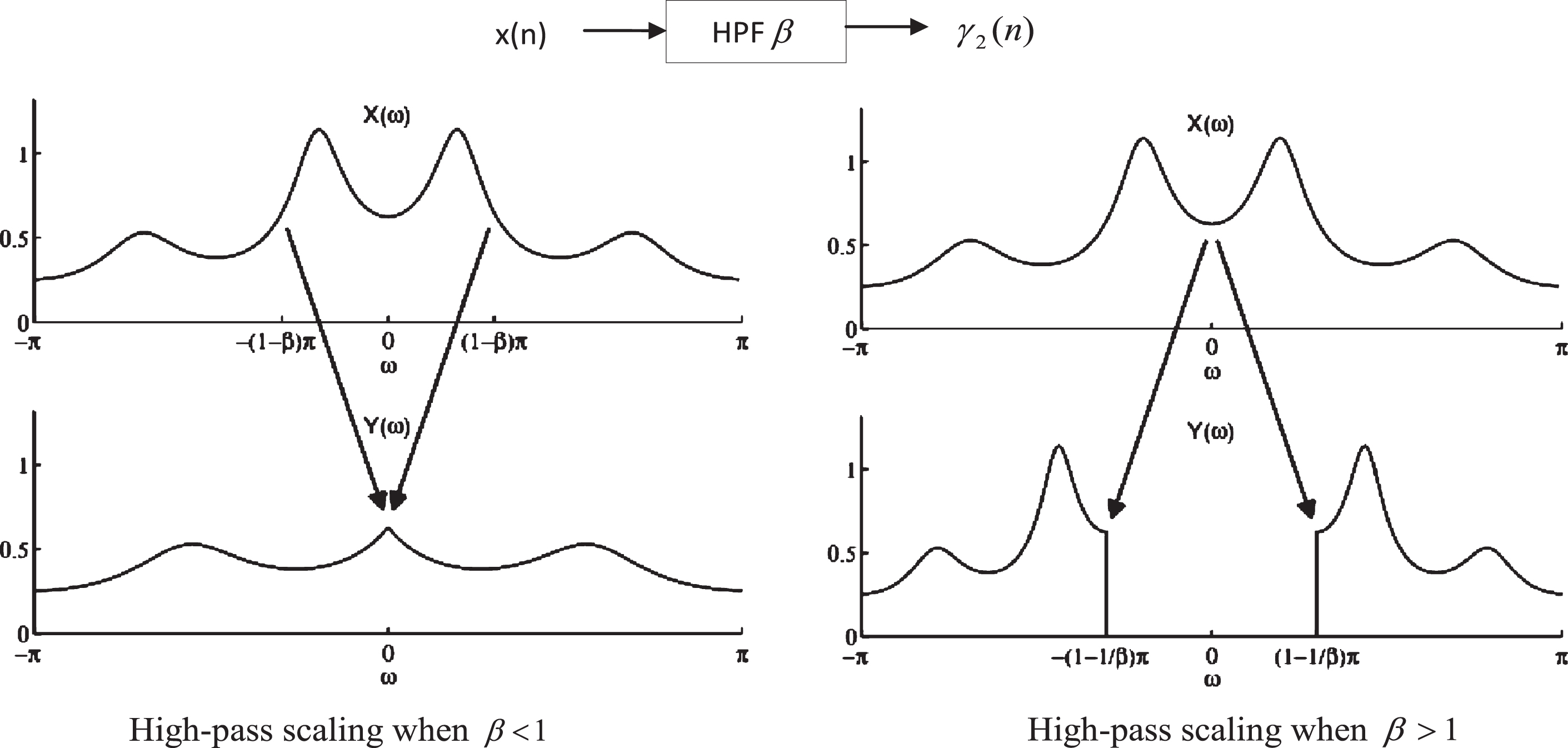
High-pass scaling when using β parameter.
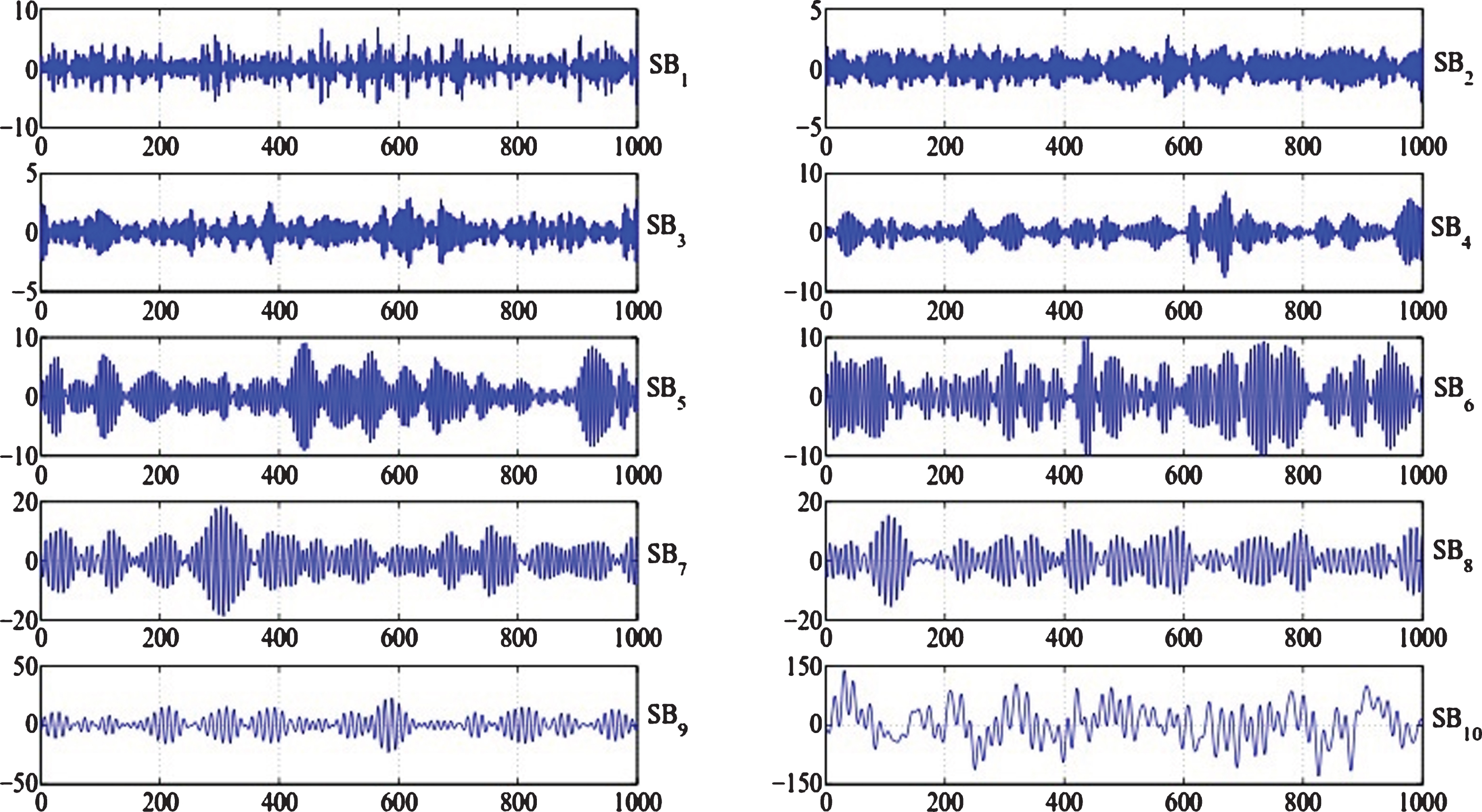
A plot of EEG signal sub-bands for normal group.
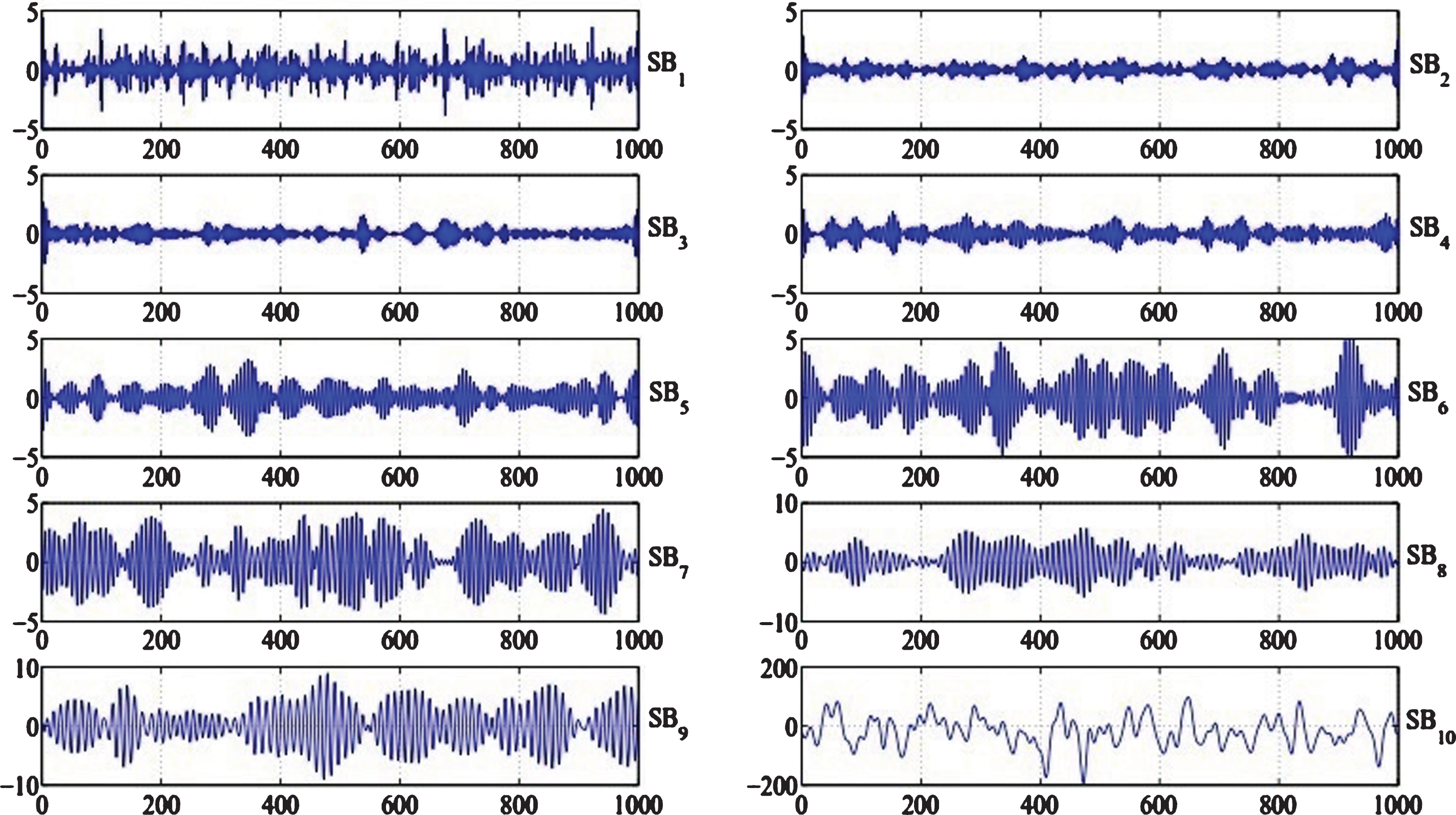
A plot of EEG signal sub-bands for the seizure-free group.
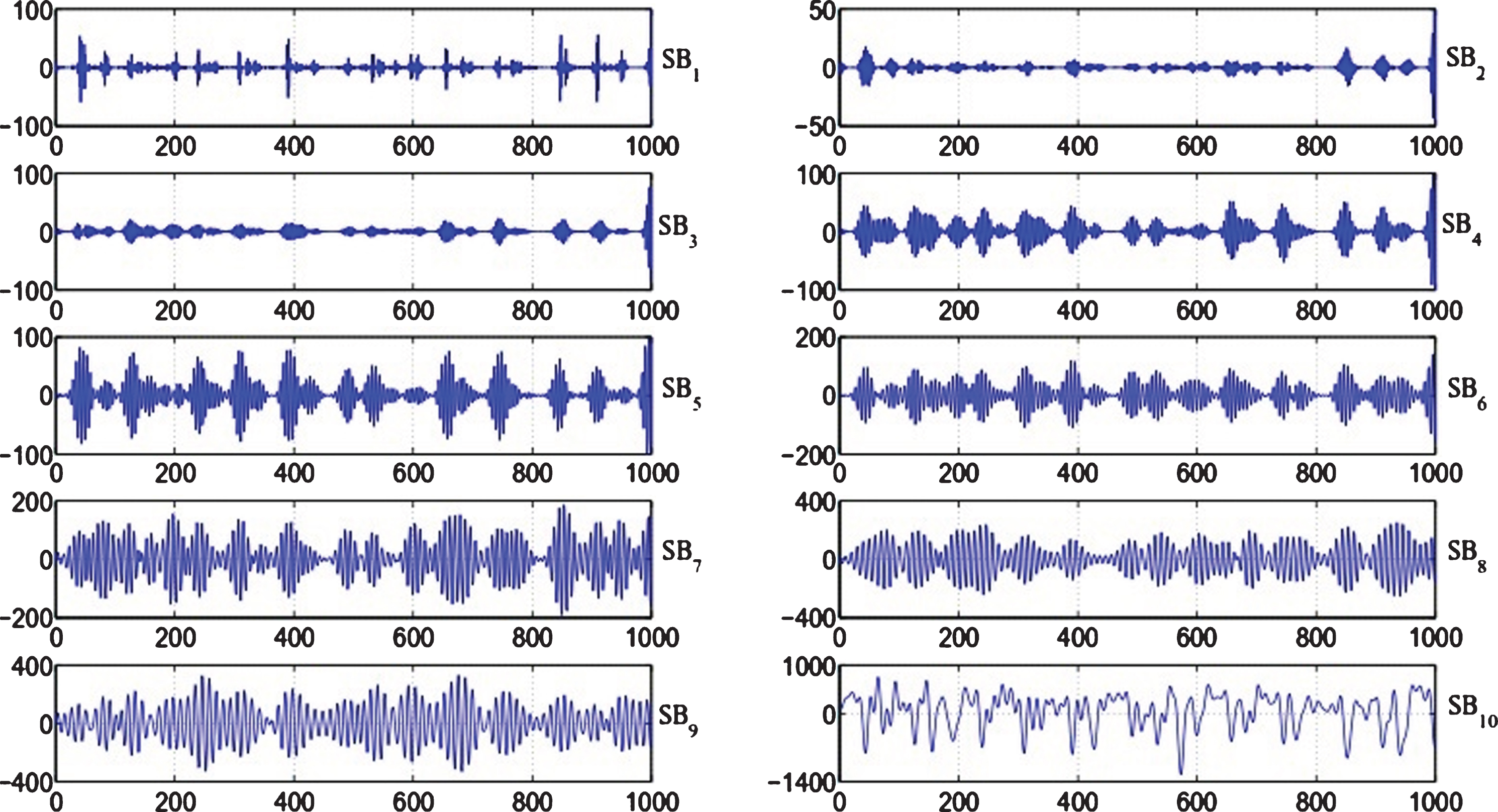
A plot of EEG signal sub-bands for seizure group.
Entropy estimation is a disorder measure and consequently, a few essential data is acquired approximately the complexity of the approaches. The entropy value is high if the information incorporates more complexity [14]. Entropy estimation of EEG signals has been used out to clarify how EEG signals alter after some time both inside the time and within the phase. Modifications within the entropy information inside the signal may match a real-time transmission of data within the cortex. The measurement of the entropy relies upon at the institutionalized adaptation of the Shannon entropy formula for estimating the power spectral density (PSD). Approximate entropy (ApEn) is described by means of its logarithmic likelihood that the information design inclines almost each other will stay close for the subsequent sample. ApEn is in this way a normality proportion of information. A higher likelihood of high regularity prompts lower ApEn values and lower regularity results in higher ApEn values. It is an index indicating the complexity of the time-dependent series. ApEn, postulated by Pinus [20], is an invariant scale and an independent model [15]. It detects episodic behavior changes that do not occur in peak events or amplitudes. Time series of signal are αu (1) , αu (2) , αu (3) . . . . αu (N) and X is a discrete random variable with variables 1, 2... M
Where X(i) the sequence of the vector and ‘m’ is represents a number of samples. Let ‘r’ be the tolerance or scale parameter to accept comparable patterns between two segments that have to be zero for the infinite amount of data. To avoid a notable presence of noise in the EEG signals we must carefully select ‘r’ value slightly higher than actual noise. For finite data in this paper, it’s been validated that the ideal ‘r’ is 0.2 times the standard deviation data.
Further is characterized as:
For each i, 1 ≤ i ≤ N - m + 1 and Pressure position centre angle ϕ
m
(r) as
and Approximate Entropy is given as
This is basically the logarithmic probability that is occurring inside the ‘r’ with length patterns of ‘m’ remain close to the next incremental comparison. If a variable based on time is significantly non - linear, the value of ApEn for the substitute data is greater than the real time series. In this way, nonlinearity can be evaluated with the aid of finding the dissimilarity among the ApEn values of the real-time series in conjunction with the substitute data. Schreiber and Schmitz [19] proposed the method for manipulating replacement records. The technique of replacement information generation is designed to break these correlations and generate data that represents a linear stochastic process in Gaussian. Evaluating the linear statistical traits of replacement data with the authentic data values of mean, variance, power spectrum, and amplitude are observed similar.
Extreme learning machines (ELM) are simple learning feed-forward networks (SLFN) that randomly have hidden node parameters [17]. Consider a N Sample Training Data Set (xi, yi) where
Where wi = [wi1, wi2, wi3, . . . . . w
in
]
T
among the input nodes and jth function hidden node, βi = [βi1, βi2, βi3, . . . . . βin] is the linear output node weight vector and b
i
is the ith-hidden node threshold. This way of network connection could be rounded off with zero error N samples. The parameters for βi, wi and bi for yi is
Where ‘y’ is the target output. The above equation for N samples is written as
Where
Extreme learning machine procedure is given below, which includes giving training set, the number of nodes (hidden) activation functions.
Step 1: The weights among input nodes and hidden nodes are assigned
Step 2: The hidden nodes threshold are randomly computed.
Step 3: The matrix H for hidden layer output is measured.
Step 4: Linear layer output weight is assigned using
The Extreme learning (EXL-ANFIS) structure may be very much just like the traditional ANFIS. The EXL-ANFIS architecture makes use of Sugeno type rules is proven in Fig. 8. two rules are represented for the illustration of understanding. The EXL-ANFIS network has two rules:
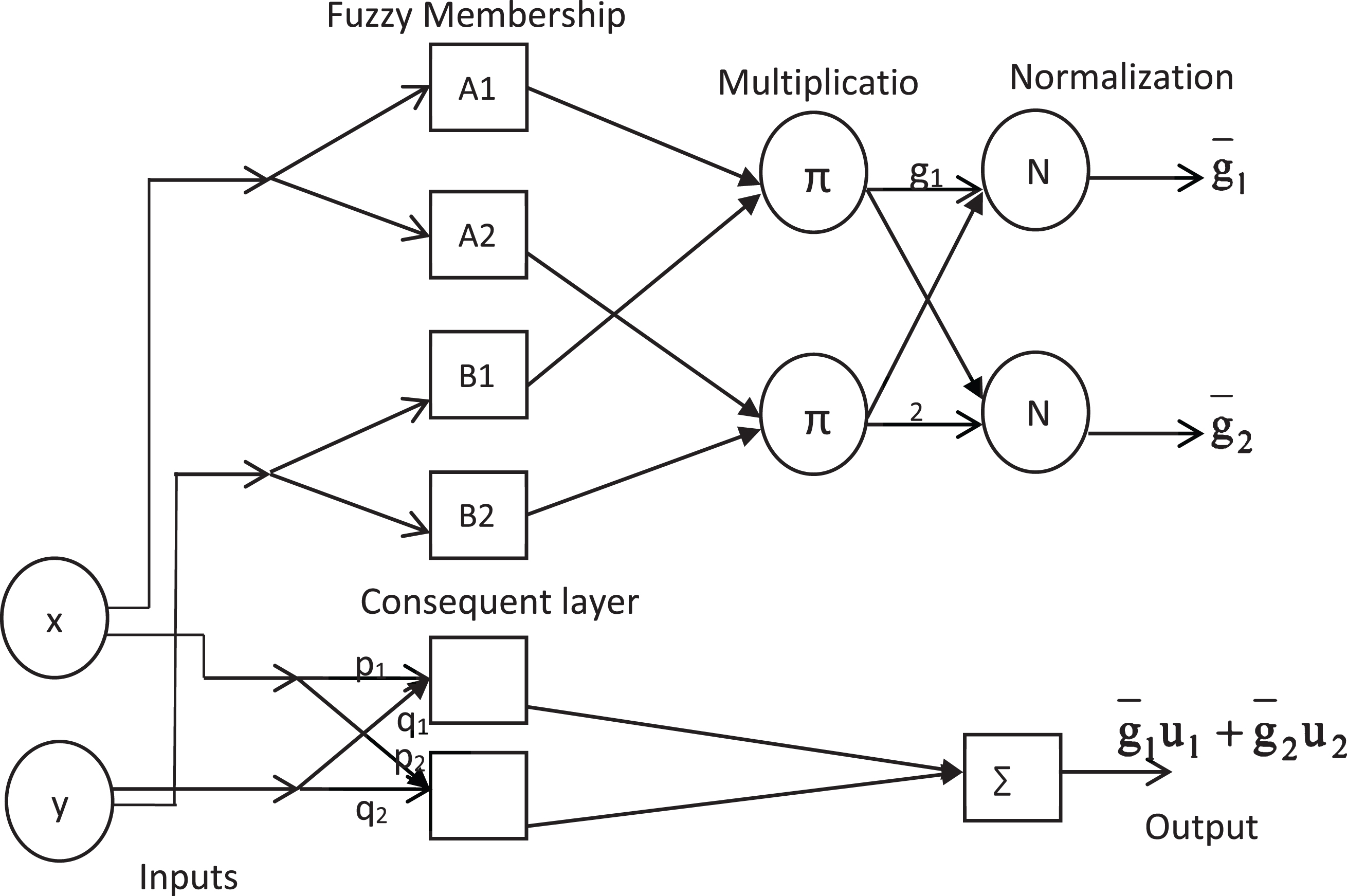
Architecture of EXL-ANFIS.
The First section of Fig. 8 contains three layers which represent the postulate part of the fuzzy rules and the second part is the consequent part which has two layers. Let ‘t’ is target which represents the total output. The nodes in the first part of first layer symbolize the functions of fuzzy membership. The output at each node is:
The fuzzy rules with firing strengths gi are calculated by
In the concluding layer is normalized by firing strength
The initial layer in the consequent part of Fig. 8 indicates a linear adaptive neural network with pi, qi and ri represents weight parameters. These parameters are linearly adaptive which uses least square estimation technique for learning. Fuzzy rules for normalization i.e. normalized firing strength are assumed and the output is calculated as
The second layer of the lower part calculates the complete output (target output) as:
The choice of a member state function is bell shape which might be utilized in the hypothesis part. The bell form function is desired to smoothen the change in the member state and adapts in core member state function. The bell form member state mathematical function is given as
EXL- then the targets t1,t2 ... .tN can be calculated using Equation 28. Expression of N linear adaptive equations as matrix form is given by
ANFIS structure with two rule shown in Fig. 8 is defined by the matrix equation given above. In general N training data and linear equations are defined as matrix form as
The hypothesis parameters are decided within the conventional ANFIS using a couple of regression including residual variance and R-square. Linear adaptive network training techniques consisting of estimating least mean square is used for learning consequent weight parameters [16]. In the hybrid extreme learning machine’s algorithm, the input sequence pattern is hired in the forward passing function, assuming fixed hypothesis parameters and the adjacent parameters are optimized and it is calculated the usage of an iterative square procedure with a minimum mean. Within the subsequent pass referred to as backward pass the input, sequence pattern are once more propagated and this back propagation changes the hypothesis parameters to scale down the training error while the consequent weight parameters reside fixed. This process is sustained until the training error is decreased. In EXL-ANFIS, the hybrid extreme learning machines approach is employed to tune the hypothesis parameters with fuzzy rules [9]. The hypothesis parameters and position shaping parameters are selected randomly with certain limits within the variety of these parameters.
In contrast with ELM, randomness in EXL-ANFIS are selected because of the accurate knowledge in the morphological variables in the hypothesis of the rules. As soon as the hypothesis parameters are selected for all inputs, then H matrix in Equation 28 can be determined. The linear adaptive network parameters are determined by
For n inputs let us consider the training data as [X1X2 . . . Xn ; T]
For the range of input the membership function is defined as
The
The width of the membership function is decided by a
i
. The parameter b
i
is extracted from a
i
which gives the slope as
Where dcc is between two successive centers.
In this present observation, QTWT is computed for decomposing the EEG signals into the sub-bands which may additionally vary in bandwidths. In this work, the parameter values of QTWT are Q = 3, x = 3, and J = 9. The higher quality factor affords EEG signal time-frequency analysis, particularly in this work better quality factor gives fine analysis in the EEG signal frequency domain.
The Average ApEn for wavelet coefficients of sub-bands (Sub-band1 to Sub-band9) and approximate sub-band10 of Bonn dataset are tabulated in Table 1. From the above result it could be concluded that seizure EEG subset is less complex than the normal and seizure free subsets. It is important to notice that the complexness of seizure free EEG subsets is comparable to the normal EEG subsets. However, the seizure free EEG subset shows slightly a higher complexity than the seizure EEG subset’s complexity, which are obtained at ictal period of epileptic patient. From Table 1, authors have brought about a significant variation among the QTWT based ApEn values of ten different sub-bands of different subsets. These differences can be incorporated to form a feature vector of entire frequency band of EEG signals. These values of ApEn are considered as features for the EXL-ANFIS classifier. These features are utilized to classify the EEG signals as normal, seizure free and seizure EEG signals.
Overall statistical measure of features extracted from three data sets as (Mean ± Standard Deviation) X102
Overall statistical measure of features extracted from three data sets as (Mean ± Standard Deviation) X102
However higher mean values are obtained from sub-band 5 to sub-band 10 of Seizure EEG signal. Fig. 9, Refers Box plot of the mean ApEn values of the surrogate data for the three data sets are 16, 17 and 19.5. Therefore these obtained features are feed into EXL-ANFIS for classification. EXL-ANFIS training phase is shown in Table 2. EXL-ANFIS learning speed is very fast. In our simulations, EXL-ANFIS Testing phase can be finished in seconds or less than seconds which is shown in Table 3.
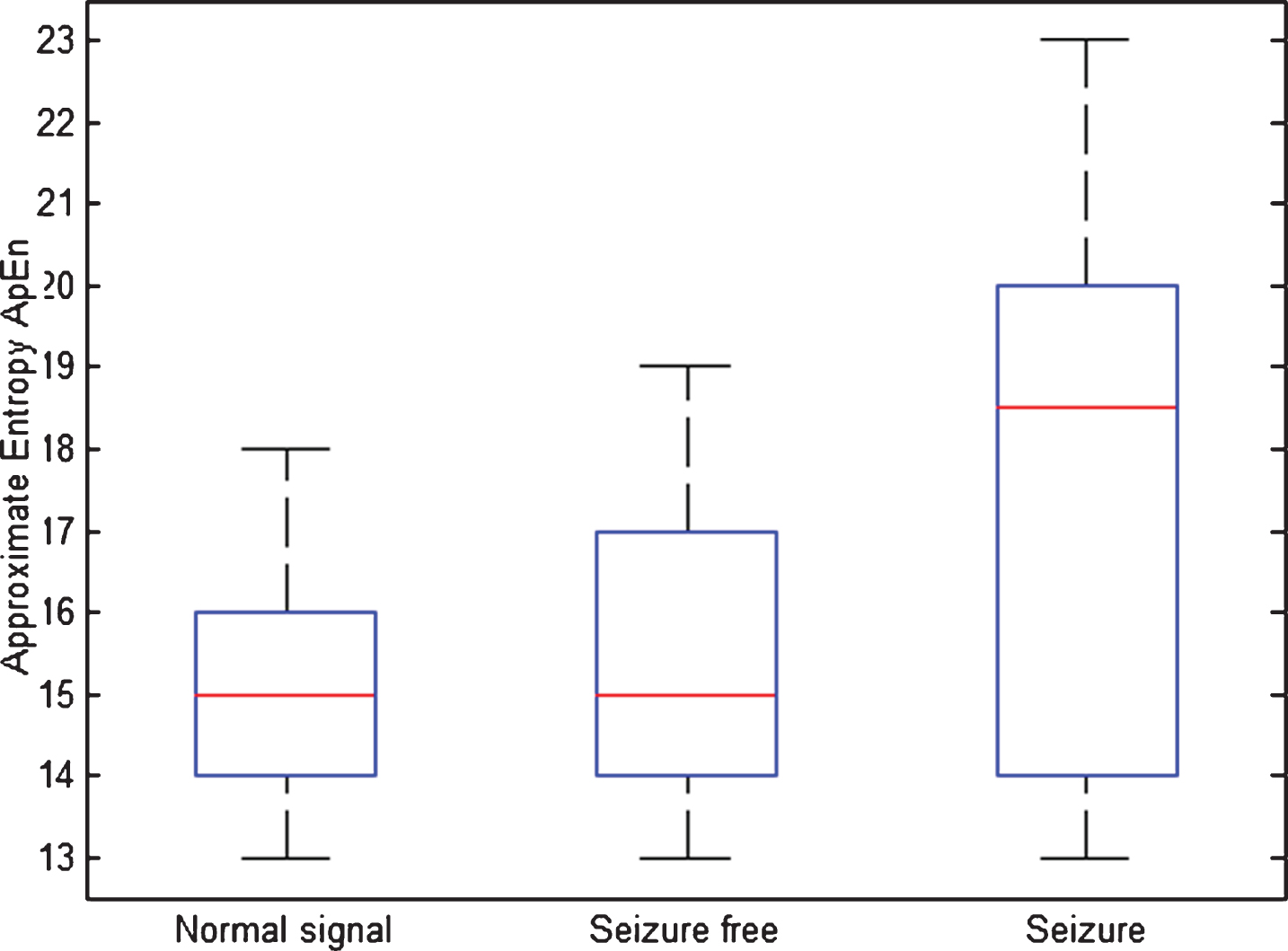
Box plot of the ApEn values in the epileptogenic zone.
Performance analysis of EXL-ANFIS with separate ANFIS and ELM algorithms in training and testing phase
Performance comparison of the proposed EXL-ANFIS with other machine learning algorithms
Training and testing time of ANFIS, ELM and EXL-ANFIS are provided in Table 2. It is noticeably observed that the accuracy increases with the increase in the number of membership functions (MF). Despite that in the case of Adaptive neuro-fuzzy inference system (ANFIS) method, training time increase with increase in number of MF. Similarly, extreme learning machine (ELM) shows comparable results with ANFIS. Finally the proposed EXL-ANFIS algorithm is witness to be enhanced with comparable training and improved testing performance. It is understood from the Table 2 that the proposed work, the error percentage has been reduced when compared with traditional methods. The root mean square errors (RSME) and learning time enumerated in the table are observed by performing 15 trials as an average.
Our Proposed EXL-ANFIS incorporates 4 rules with 2 membership functions, 8 rules with 3 membership functions and 16 rules with four membership functions being assigned to each input variable.
The final membership functions after learning are shown in Fig. 10. In most cases, the proposed EXL-ANFIS has better performance in generalization than gradient based learning.
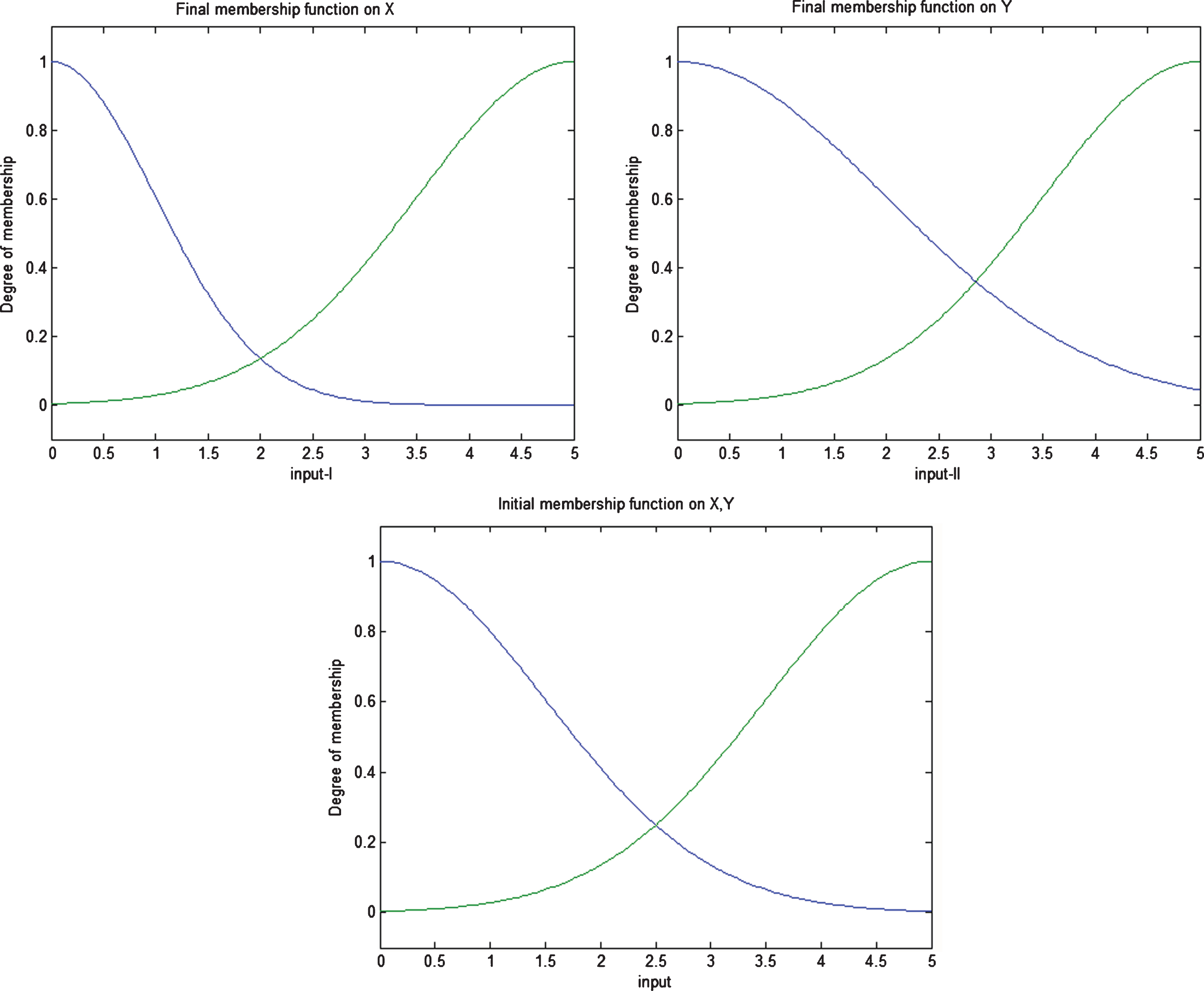
Final membership functions after learning with proposed algorithm.
The performance of EXL-ANFIS with ApEn based feature is provided in Table 3. As can be noticed, when the parameter combination of ApEn is set to MF = 2,3,7 N = 4097 samples, EXL-ANFIS is able to detect seizure, normal, and seizure free EEG segment with highest average accuracy of 99.72% when compared with other machine learning algorithms.
Traditional classical learning algorithms [18] which are based on gradients can address several issues such as local minima, over fitting, unsuitable learning rates, etc. some techniques such as weight decline, the bell shape function, and early prevention methods may also need to be used regularly in these classical learning algorithms in an effort to avoid these issues. The bell shape function is preferred to smoothen the change in a member state is given in Fig. 11. The EXL-ANFIS attain the solutions directly without such trivial problems. The EXL-ANFIS algorithm is a good deal simpler for neural feed-forward networks compared to most learning algorithms. It ought to be worth pointing out that feasibility of the use of the EXL-ANFIS for classification of EEG signals as seizure with epilepsy and seizure with unfastened patterns produce accurate results when compared to the present methodology given in Table 4.
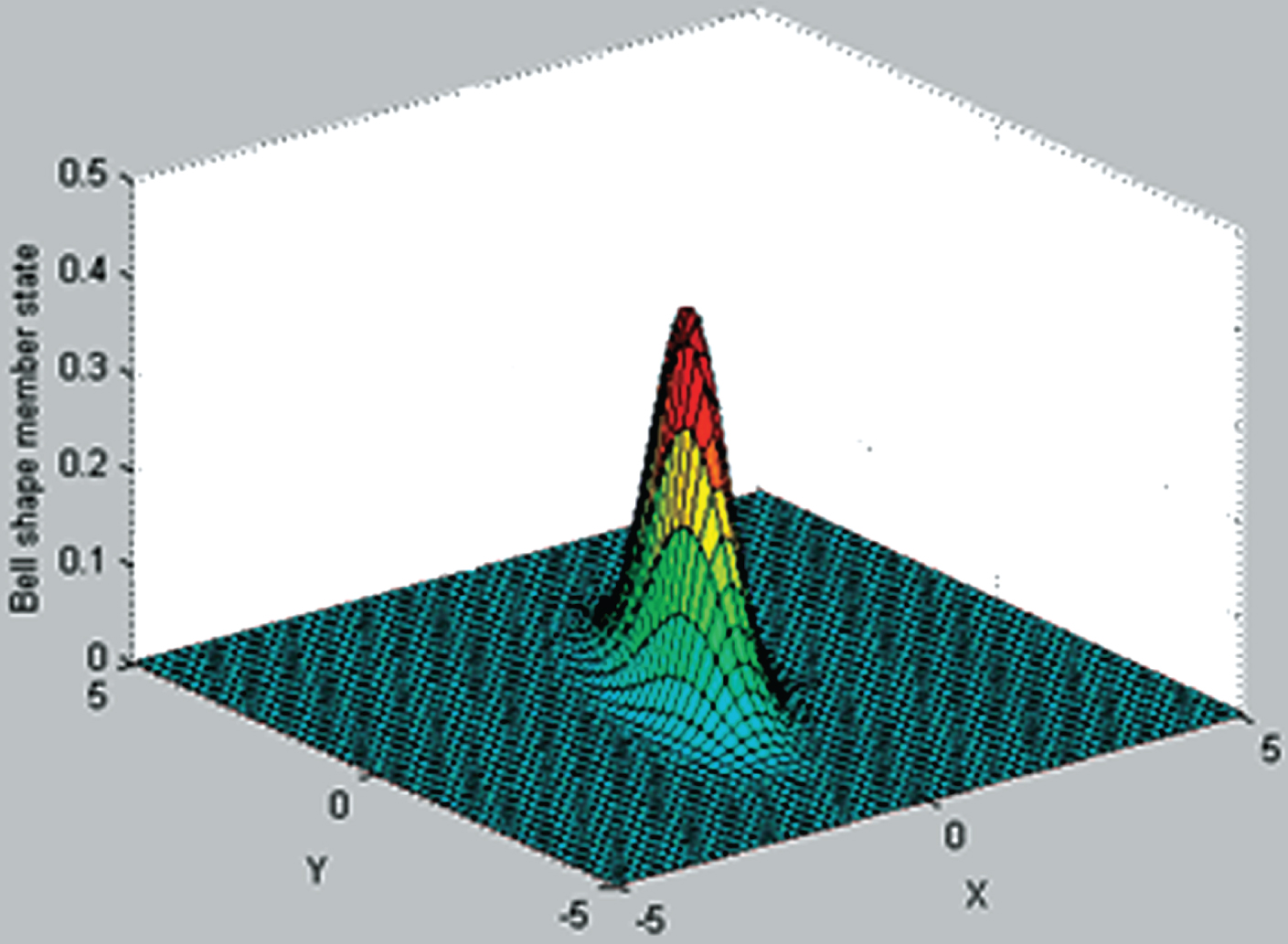
Bell shape function to smoothen the change in member state.
Summary of Automated Classification of EEG signals using the identical database with a different methodology
ELM has been introduced for an hidden layer feed-forward neural network to overcome few drawbacks of traditional ANFIS algorithm such as improper learning rate, low learning speed. Despite of these, ELM are affected by over-fitting and instability particularly on huge datasets. In this paper, a hybrid combination of extreme learning machine along with ANFIS based on approximate entropy is proposed to overcome the drawbacks of traditional methods by increases the performance accuracy. The novelty of this proposed work constitutes the analysis, detection, and classification of seizure activity from normal and seizure -free EEG signals with the aid of EXL-ANFIS. Results provide that EXL-ANFIS achieves less training and testing time when compared with ELM and ANFIS algorithms.
Few observations are noticed that the performance accuracy could be improved significantly by smoothing the output of the classifiers. The selection of Q, J and X values of QTWT are found to be optimal and it provides a good robustness for the computation of entropy in the low-and high -frequency signals. The QTWT filter banks are capable of adapting to the changes of input parameters, and the ApEn changes its value accordingly due to its multi-level filtering method.
The proposed methodology can be used for automated diagnosis of irregularity of EEG signals.
This observation investigated the need for approximate entropy to extract the features after the usage of QTWT to decompose EEG signals into sub-bands. EXL-ANFIS turned into used to attain the satisfactory overall performance rate within the EEG classified signals. The EXL-ANFIS classifier takes much less quantity of time for computations when in comparison with different neural network techniques. The outcomes are analyzed using the overall performance (Accuracy) for distinctive methodologies including ANFIS, ELM, SVM classifier and our proposed technique (extreme learning ANFIS) in Table 4. The proposed algorithm is examined for one thousand samples and the accuracy we executed is 99.72% that is higher than a few of the present techniques. The introduced benefit of this method is the usage of a wavelet transformation that might reduce the unknown data inside the sub band, and there might be no need for preceding expertise for the situation that may be a patient-independent algorithm.
In the future, our proposed methodology may be further studied to identify the abnormality of the brain activities, this base work can be extended to other areas like emotion detection, detecting the sleep disorder and also to detect a few psychotic diseases. Further, this work can be extended for detecting epilepsy aura by using dynamic datasets, so that to predict the seizures and to give a warning alarm for the epileptic seizure patients.
Funding
Not applicable
Compliance with Ethical Standard
Disclosure of potential conflicts of interest No Funding Research involving human participants and/or animals
Footnotes
Acknowledgments
We wish to thank everyone who has supported us along the way. We are grateful to our family members and friends who have provided us through moral and emotional support in our life.