



Abstract
Supercritical carbon dioxide (s-CO2) Brayton power cycle has increasingly attracted attention due to having greater efficiency than conventional power cycles. Thus, s-CO2 systems have begun being tested all around the world, first at the laboratory scale, then as actual medium-capacity systems for ships’ main engines, and finally as large terrestrial power systems. In order to understand system performance during these tests, one must know the causes and effects of the operating regime of the system and its failures. In this context, the study analyzes 15 fundamental problems of power system-related components using the fuzzy Decision-Making Trial and Evaluation Laboratory (DEMATEL) method. The DEMATEL method allows for identifying and analyzing important errors and/or problems in the s-CO2 Brayton cycle according to the cause-and-effect relationship scheme. Similarly, fuzzy sets are freed from uncertainty in decision-making and from the verbal comments of experts in DEMATEL. When examining the results, fire protection and/or firefighting problems, generator problems, gearbox problems, and radiator problems appear to have high importance in terms of causes. In addition, turbine problems, electrical problems, catalytic combustion-chamber problems, instrumentation, and control-system problems are also important in terms of effects. The study’s obtained results will strongly contribute to the operational safety and prevention of serious high-speed, high-temperature, and high-pressure machinery effects for laboratory-scale, medium-capacity, and actual-terrestrial s-CO2 power systems.
Introduction
A supercritical fluid can be defined as any substance at or above the critical temperature and pressure point where distinct liquid and gas phases do not exist. The critical temperature is the maximum temperature at which a substance cannot liquefy regardless of how much pressure is applied. The pressure at this temperature is also known as critical pressure. These fluids have liquid-like densities in the supercritical phase and act as a liquid solvent. They have a high capacity for heat with low viscosity and mass transfer. For example, the critical temperature for CO2 is 304.3 K and its critical pressure is 7.38 MPa.
Gases in the supercritical region just above the critical point have very variable properties. When approaching the critical point, the gases act as incompressible liquids and their density increases. In this region, these fluids have low surface-tension coefficients and viscosities. Therefore, their pumping energies are also low. When considering all this, carbon dioxide in its supercritical phase has been stated to have the ability to be used as a working fluid in Brayton cycles and can achieve quite higher efficiencies than conventional steam Rankine cycles [1]. Angelino [2] carried out a study with the different cycle models operating with CO2 and compared the efficiency values. He stated that the cycle efficiency is high due to the actual gas effects around the critical region. Dostal [3] has carried out a detailed study of cycle optimization, component design, economic analysis, cycle control methods and system layout studies for nuclear power plant applications. Bashan and Gumus [4] investigated system performance analysis of recuperated s-CO2 power cycle. The literature contains many tests that have been conducted on models of the s-CO2 thermodynamic cycle and s-CO2 cycles for commercial or research purposes [5, 6] and studies that have been carried out on potential applications such as nuclear power [7, 8], solar energy [9, 10], waste heat recovery [11, 12].
These studies basically can be divided into two groups: theoretical and experimental. Theoretical feasibility studies are known to be conducted before performing an experimental study. Experiments on micro-scale laboratory conditions are of great importance for both forming know-how and understanding the problems that may be encountered prior to experimental system studies, which require large budgets. In experimental systems consisting of many complex elements, determining the causes of an unexpected result and also finding the sources of problems can often take a long time. In such cases, the experience of relevant experts has great importance, with great benefit being had in applying fuzzy logic methods at such times.
One of the most useful and beneficial of these methods is the fuzzy DEMATEL method. The DEMATEL method gives one the chance to identify and analyze important errors and/or problems in the test setup for s-CO2 power systems according to the cause-and-effect relationship scheme. Similarly, fuzzy sets are freed from decision-making uncertainties and from the verbal comments of experts in DEMATEL. As it is known, the DEMATEL method was developed with the hope of developing appropriate scientific research methods to improve the understanding of specific problematics and to contribute to the identification of intermittent sets of problems and solutions that can be applied in a hierarchical structure. The graph-based DEMATEL method provides the opportunity to plan and solve the problems as a draft by dividing the relevant factors to the cause and effect for better understanding the causal relationship. DEMATEL method aims to produce meaningful results by visualizing complex cause and effect relationships. However, it is difficult, almost impossible, to determine the degree of interaction between factors in such relationships. The main reason for this is that it is very difficult to quantify the interaction between the factors. Therefore, DEMATEL method was carried to fuzzy environment.
The fuzzy DEMATEL method has been applied successfully in many different fields in the literature. Wu and Lee [13] stated separating the uncertainty of human decisions to be necessary for segmenting the competencies required for better supporting the development of global managers’ competences. Therefore, they presented an effective method that consists of combining fuzzy logic with DEMATEL. Büyüközkan and Çifçi [14] conducted a case study proposing a fuzzy, multi-criteria, decision-making model that combines mixed methods (DEMATEL, Analytical Network Process (ANP), and Technique for Order Performance by Similarity to Ideal Solution (TOPSIS) in a fuzzy context that can help in evaluating green suppliers. Likewise, Chang et al. [15] used the fuzzy DEMATEL method to illustrate a cause-and-effect diagram for selecting supply-chain management (SCM) by considering influential components. Similarly, Lin [16] performed a fuzzy DEMATEL study for assessing green SCM by considering eight criteria. We state that these methods have been applied successfully in many different fields, some of which are: revealing the cause-and-effect relationships of emergency management’s 20 influencing factors [17], considering 17 criteria for appropriate truck selection [18], analyzing in order to determine the cause-and-effect relationships of 15 strategic objectives for Saipa Yadak Traiding Company’s strategy map [19], modeling and understanding the key factors of customer-choice behaviors [20], selecting city-logistics concepts [21], managing human resources [22], managing municipal solid waste [23], and determining wind-farm location [24].
Some studies in experimental engineering applications have been found that are insufficient for the broader literature. Chang and Cheng [25] carried out a study for assessing the risk-of-failure mode for thin-film transistor liquid crystal displays (TFT-LCD) using fuzzy ordered weighted averaging (OWA) and the DEMATEL method. Liu et al. [26] analyzed selection of the transport service provider by using single valued neutrosphic DEMATEL multicriteria model. Petrović and Kankaraš [27] carried out a study for examining selection of an aircraft protection aircraft with DEMATEL-AHP methods. Mentes et al. [28] performed a fuzzy DEMATEL study to determine the most common and involuntary damages on cargo ships on the coasts and in the open seas of Turkey by considering formal safety assessment (FSA). Pamucar et al. [29] studied assessment of logistics provider with the help of MCDM approach based on interval rough numbers. Luthra et al. [30] conducted a study that contained fuzzy DEMATEL-based methodology for evaluating and classifying key suppliers of prominent solar-energy development in India. Salarpour et al. [31] examined strategic management of housing market problem by using DEMATEL and dynamic hesitant fuzzy sets.
From mechanical engineering point of view, Başhan and Demirel [32] carried out a study on marine diesel-generator (DG) engines faults. They assessed 33 of the most common and crucial faults of marine DGs using the DEMATEL method. Likewise, Başhan and Demirel [33] revealed the cause-and-effect relationships of the 15 most common operational problems of marine boilers using the fuzzy DEMATEL method. Roy et al. [34] analyzed key factors of hospital service quality with a rough strength relational DEMATEL technique. Ozsoysal [35] performed a systematic reason analysis of engine damage and then conducted research on malfunctions in the exhaust systems of high-speed marine diesel engines in Turkish ambulance ships. Balin et al. [36] studied the faults in ships’ auxiliary systems using the fuzzy DEMATEL method for better understanding the cause-and-effect relations of the systems. Karaşan and Kahraman [37] used fuzzy DEMATEL, ANP and TOPSIS integrated techniques for freight village location selection. Chen et al. [38] analyzed ships’ diesel generators and concluded them to pollute the air considerably; the authors then evaluated the use of alternative marine power (AMP) technology in China and analyzed interaction mechanisms using the fuzzy DEMATEL method on the twelve constraints encountered while trying to use the AMP. Chen et al. [39] proposed a hybrid model to evaluate the need for sustainable value by combining fuzzy set, rough set, DEMATEL and Analytical Network Process (ANP). Fu et al. [40] investigated influencing factors on the international cooperative exploitation for deep-sea bioresources by using ternary fuzzy DEMATEL method. Wang et al. [41] evaluated distributed-energy systems under uncertainties. In their study, the criteria weights were determined using the interval DEMATEL method. Yazdi et al. [42] studied on phaytagorean fuzzy DEMATEL method for probabilistic safety analysis in process systems. Also their method is validated by three different mathematical methods. Feili et al. [43] considered the five main parts of geothermal power plants in order to make a sound risk analysis using failure modes and effects analysis (FMEA). The authors also recommended some corrective approaches that are needed for eliminating or decreasing risks.
When examining the detailed literature research given in the introduction, the fuzzy DEMATEL method is understood to have been successfully applied in many different research fields. However, almost no studies on problems in the working regimes of power systems are found that have analyzed faults in experimental systems for ships or terrestrial power systems. In this context and distinct from prior studies, this study will remedy the gap in the literature by applying the fuzzy DEMATEL method over the most general, important, and critical operational faults in s-CO2 Brayton power plants with catalytic combustion chambers.
Research methods
In this study, important problems that occur in the power plants where the supercritical carbon dioxide Brayton power cycle is used both in small scale laboratory test systems, as a ship propulsion system and as a terrestrial power plant have been identified. Since these systems operate at very high pressures and temperatures, a malfunction can potentially cause serious damage. Therefore, it is necessary to know the operation and working principle of the system as well as the cause-effect relationship of the faults that occur. Thus, the next section discusses fuzzy sets and DEMATEL methodologies for revealing cause-effect relation of this important issue.
Fuzzy sets
Fuzzy logic, a method for evaluating uncertainty, ambiguity and decision making in human decisions, was developed in 1965 by Lotfi A. Zadeh. When the decision-making problems in real life are examined, it is seen that many decisions originate from the unknown and unclear events [44]. It is thought that it is more advantageous to translate linguistic terms into fuzzy numbers rather than to combine opinions, ideas or decisions arising from the expertise of individuals or groups, and that healthier results can be achieved. Therefore, group decision-making problems have created fuzzy numbers that are necessary to put into effect. A triangular fuzzy number can be defined as a triplet
In this context, Fig. 1 shows a triangular fuzzy number. The corresponding relationship between the linguistic terms and triangular fuzzy numbers is defined in the light of the Table 1. Therefore, fuzzy ratings and their membership function is illustrated in Fig. 2.
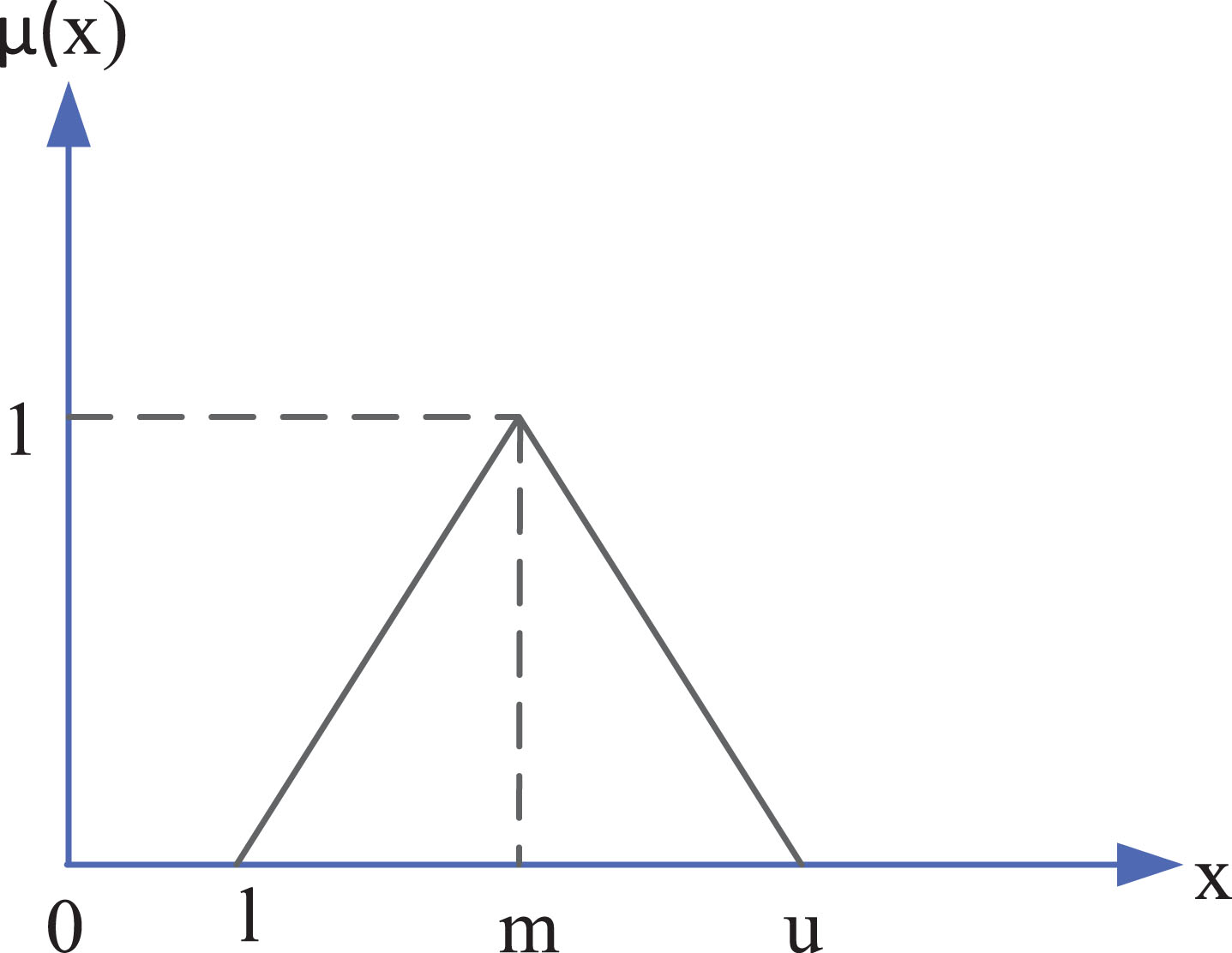
Triangular fuzzy number.
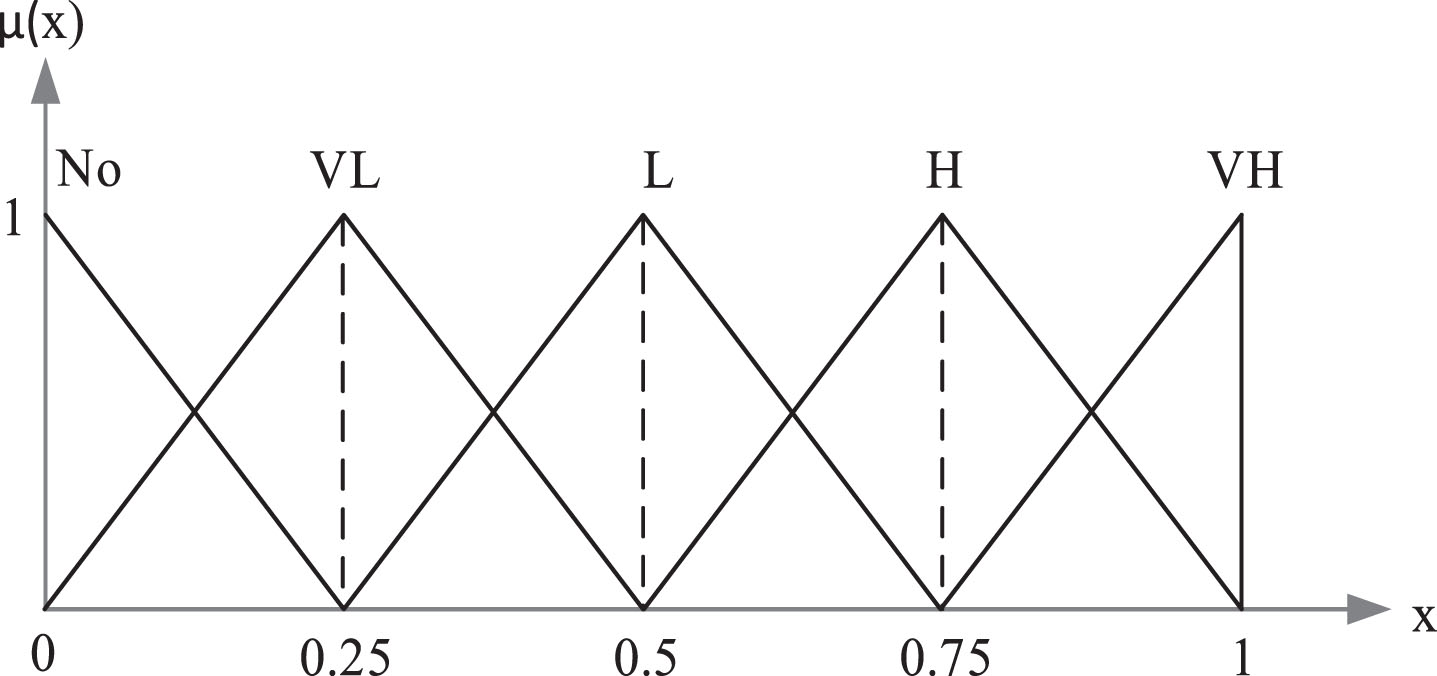
Fuzzy ratings and their membership function.
Corresponding relationship between linguistic terms and fuzzy numbers
For any two triangular fuzzy numbers
Triangular fuzzy numbers among the nested transaction;
The process of removing triangles between fuzzy numbers;
Multiplication between triangular fuzzy numbers;
Arithmetic operation for triangular fuzzy numbers;
The normalized direct relationship matrix can be acquired by equation 7. It should be known that all diagonal members (values) are equal to zero. Furthermore, the total relationship matrix T is calculated with the help of equation 8. Lastly, ri and cj are determined by the Equations 9 and 10, respectively.
In this section, fuzzy sets and DEMATEL methods are combined to make precise evaluation. A flowchart of the fuzzy DEMATEL approach is shown in Fig. 3. The fundamental steps of the method are described below [13, 45].
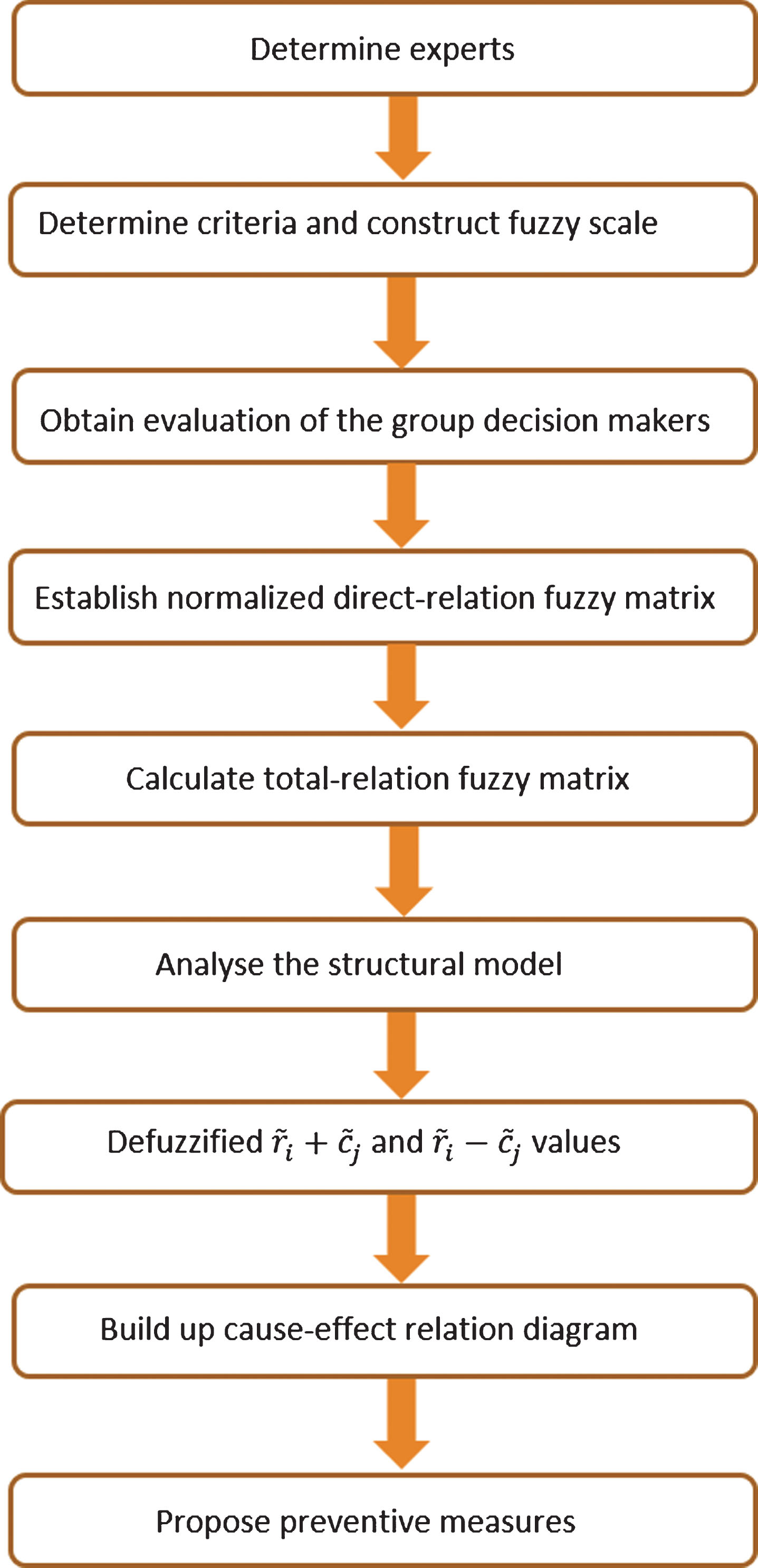
Step 1 – Determine experts: In this step, experts with deep knowledge and experience of the problem are consulted to obtain consistent evaluations.
Step 2 – Determine factors and construct fuzzy scale: In this section, important factors have been determined to be analyzed and appropriately evaluated. Then, five scales (no influence, very low influence, low influence, high influence, and very high influence) are used due to linguistic variables and linguistic terms and fuzzy numbers. After that, the corresponding triangular fuzzy members are shared.
Step 3 – Obtain assessment of the group decision makers: The comparison is acquired in terms of verbal variables. Moreover, the fuzzy evaluations are converted into defuzzified and aggregated as a crisp value. As a result, initial direct-relation fuzzy matrix (
Step 4 – Demonstrate normalized direct-relation fuzzy matrix: In the presence of the initial direct-relation matrix, normalized direct-relation fuzzy matrix is formed. To achieve this, firstly, it is considered
Furthermore, the linear scale transformation is implemented to convert the factors into corresponding scales. The normalized direct-relation fuzzy matrix (
Where
Step 5 – Calculate total-relation fuzzy matrix: After having established normalized direct-relation fuzzy matrix, a total-relation fuzzy matrix is calculated by making sure that
Where
Step 6 – Analyse the structural model: After calculating matrix
Step 7 – Defuzzify
The BNP value of a fuzzy number
Step 8 – Build up cause-effect relation diagram: Consequently, the cause and effect relation diagram is created by representing the dataset of r i + c j and r i - c j . The calculation can be made with the step 6 approach.
In this section, the laboratory scale experimental system of the s-CO2 power cycle with catalytic combustion chamber is investigated (Figs. 4 and 5). In addition, the main propulsion system used for ships is discussed. The heat requirement in both systems was obtained from catalytic combustion chambers and methane or any other hydrocarbons containing fuel is considered to be used as fuel. In addition, comprehensive fault analysis has been carried out by considering laboratory scale experimental system of the s-CO2, the main propulsion system used for ships and terrestrial s-CO2 Brayton power plant systems.

3D schematic diagram of experimentally testing of catalytic combustion chamber and heat exchanger in s-CO2 conditions.

2D illustration of s-CO2 working conditions of the experimental test assembly.
If the operating principle of the test device -which is shown in Figs. 4 and 5 is explained briefly, the s-CO2 gas circulating pump is pressurized by the total system pressure drop to reach the flow accumulator. Accumulator is used to minimize the sudden changes in time on the circuit and to make the system more stable. It is worth mentioning that a circuit pipe with a diameter larger than the normal circuit diameter is used as an accumulator. The flow of CO2 flow is measured before the catalytic reactor. The gas passing through the flowmeter enters the catalytic reactor, whereby methane is catalytically burned to provide the temperature appropriate to the inlet boundary condition for the heat exchanger. The gas which reaches the heat exchanger transfers the heat to the water and reaches the inlet of the pump again and completes the closed loop cycle. It is intended to control the circuit flow rate with the bypass line placed at the pump inlet. Similarly, the closed-loop cycle in the water portion of the heat exchanger begins with the water pressurization of the pump. The flow rate of the water flowing through the flowmeter is measured and the water enters the heat exchanger. The heat extractor water is cooled by entering the radiator component at the heat exchanger outlet and completes the closed loop by returning to the pump inlet again. The pump inlet temperature is changed by adjusting the speed of the radiator fan. Safety valves have been added as safety measures. Thus, the pressure on the CO2 side is prevented from exceeding the maximum value. In addition, a self-opening valve is placed in the heater outlet. Thus, pressing the emergency stop button prevents the hot CO2 gas from the system to prevent damage to the components on the circuit. In addition, the CO2 sensor is present in the environment where the test will be carried out and the possible leakage of the gas is ensured. In Fig. 5, when the point 3 is seen, a pressure of 79.60 bar and a temperature of 453°C is observed. These values indicate that the system is in the supercritical phase, but they are very high values and can potentially cause serious damage in case of a possible failure.
As it is broadly known, two-stroke and low-speed internal combustion engines are generally used as a propulsion system due to the high power requirement of the ships. However, since the s-CO2 Brayton power cycle has higher efficiency, it has the potential to be an alternative to internal combustion engines. This power system is assumed to be proposed as a power system for ships in the near future by eliminating the problems of the next generation of high efficiency closed s-CO2 power cycle and the sub-components of the system due to advancing technology. Themodified version of the laboratory scale system shown in Figs. 4 and 5. It should also be noted that this system can also be considered in submarine systems as air-independent propulsion systems while system can work with oxy-fuel catalytic combustion which does not require air. The s-CO2 system can be used as a power system in which both the waste heat recovery system (WHRS) is evaluated and the energy demand is ensured. The s-CO2 power system can operate at a higher efficiency than conventional terrestrial power plants. While all these systems are being tested at the laboratory scale or the actual power system installed is running, there are many important problems that occur. Table 2 shows the most common of these problems.
Operational problems of s-CO2 recuperative power plant with catalytic combustion chamber
Operational problems of s-CO2 recuperative power plant with catalytic combustion chamber
It is often difficult to find experts in complex engineering systems who understand the entire system. This is also the case with the example of a power plant working with s-CO2 in our study. Because mechanical, electrical, electronic, energy, control engineering fields are often managed by different departments. When a problem occurs that affects each other, these groups consult each other for possible reasons. Since the plant general managers have been in all these meetings for many years, they are experientially experiencing the cause and the effects of the problems. Thus, one of the experts is a mechanical & electronics engineer (double major) who also has Ph.D. degree in mechanical engineering. At the same time, he has 32 years of work experience and is the general manager of 1540 MW combined power plant in Turkey. Our second expert is a 25-year experienced aircraft engineer in a private company in USA who has MSc degree and also performs laboratory scale tests on supercritical carbon dioxide power systems. Our third expert is academician and professor of thermodynamics in naval architecture and marine engineering in Turkey. He has 20 years’ experience. He has more than 40 scientific articles on the comprehensive analysis of power plants. The experts were asked to evaluate the relationship between errors in s-CO2 power systems according to the verbal scale. They have made a wide evaluation considering the scale of the laboratory, ship propulsion power system and terrestrial energy power system. The results were found to be in good agreement and the experts agreed on the results.
Application of proposed method
Critical operational problems related to s-CO2 power systems operation are given in Table 2 and experts were asked to understand and analyze the relationship between these 15 fundamental component problems.
Then, experts assess the relationship between the faults through the use of fuzzy verbal scale. Appropriately, Table 3 illustrates the initial direct-fuzzy matrix. After determining established initial direct-fuzzy matrix, normalized direct-relation fuzzy matrix is obtained with the help of Equations 13–15, respectively. Table 4 shows the normalized initial direct-relation fuzzy matrix. Furthermore, total relation fuzzy matrix can be acquired with Equations 16–20. In addition, Table 5 shows the total-relation fuzzy matrix. Finally, Table 6 shows defuzzified threshold values of T-matrix, Table 7 demonstrates fuzzy values of
The initial direct-relation fuzzy matrix
The initial direct-relation fuzzy matrix
Normalized initial direct-relation fuzzy matrix
Total—relation fuzzy matrix
Defuzzified threshold values of T-matrix
Fuzzy values of
Crisp values of
With the help of the above calculation results, Fig. 6 shows a diagram of the cause and effect relationship divided into two different groups: The cause and The effect group. Criteria with a negative value for the Ri-Cj value are affected more than other criteria. These criteria are considered to have relatively lower priority. Ri+Cj refers to the relationship of a criterion with others and should be interpreted as having a relatively higher importance than the other criterion.
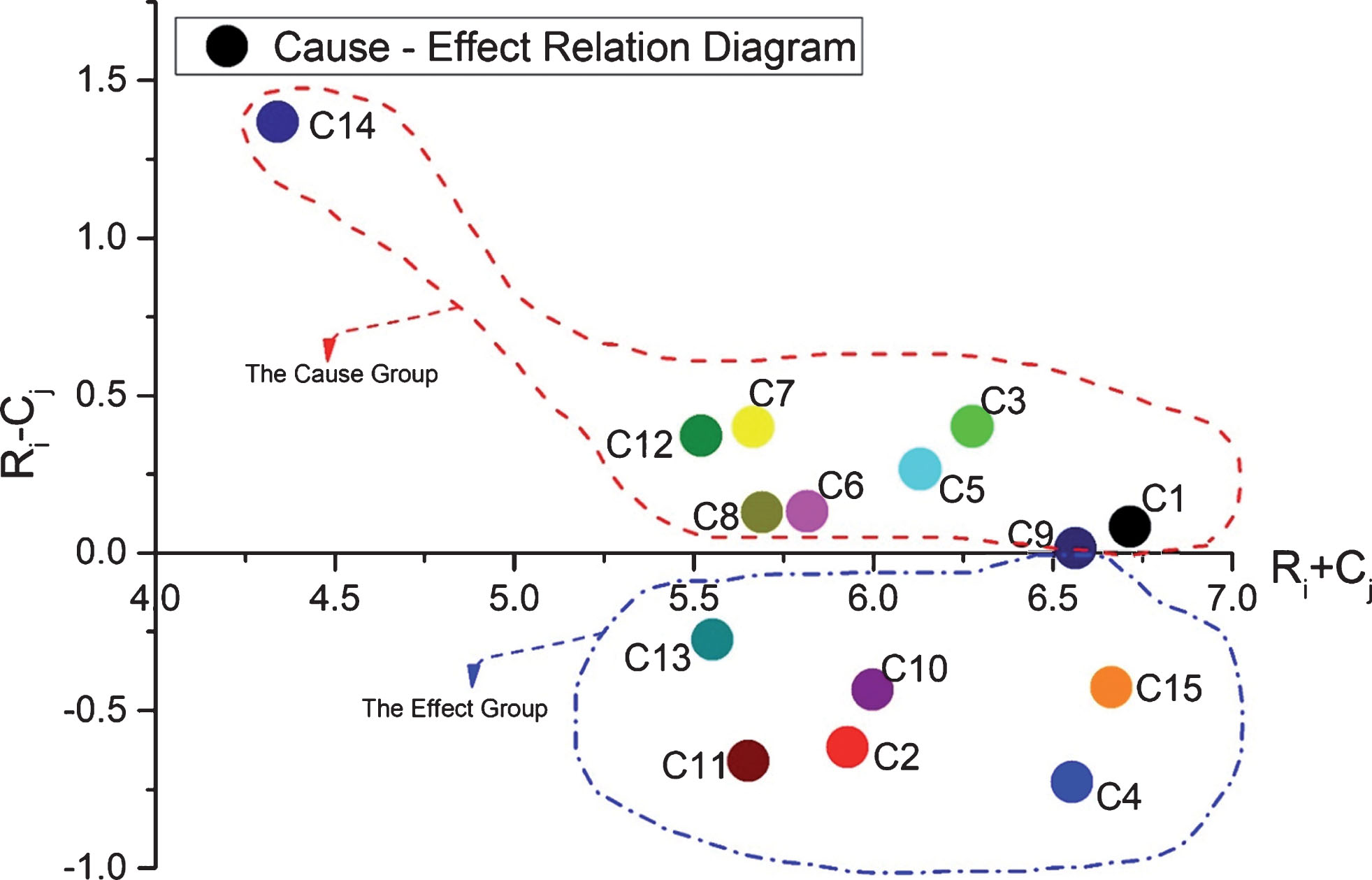
Cause-effect relation diagram.
To address systemically the most common critical s-CO2 Brayton power system operational failures, it is important to focus on the cause factors that require great attention to understand the relationship between the 15 fundamental problems in the study. While investigating Fig. 6; it seems that C14 (Fire protection and/or firefighting problem) has the highest Ri-Cj value (1.36) between the all factors in cause group. This tells that C14 has relatively more impact on the entire process. In the event of a fire in the system or in the case of a fire extinguishing system failure, the experts stated that all systems would be affected. Thus, this result is strongly meaningful. Thereafter, C3 (Generator problems) and C7 (Gearbox failures) is the second most important causal factor since it is at second place between whole system with the second highest Ri-Cj value (0.40) between all factors. The third most critical factor between all factors is C12 (Radiator mechanical problems) since its Ri-Cj value is (0.37). This sequence continues with C5 (Carbon dioxide leakage) Ri-Cj value (0.26) and C6 (Recuperator faults) and C8 (Condenser problems). And it seems from hereafter other cause factors have relatively moderate impact on the whole s-CO2 Brayton power system.
Effect factors
Influential effect factors can gradually be affected by problems from other factors in the whole system. Analyzing the effect factors that may lead to dangerous outcomes in operating s-CO2 Brayton power systems may still be necessary. According to the diagram on the cause-and-effect relations in Fig. 6, C1 (Turbine problems) clearly has the highest value (Ri+Cj = 6.71) yet remains within the cause group due to having a positive value. However, because it has the greatest Ri+Cj value, the experts have concluded this situation (turbine problems) to have crucially significant effects on the whole system. Next is C15 (Electricity problems) with the second highest value (Ri+Cj =6.66). When examining C9 (Catalytic combustion chamber problems), it is seen to be located on the Ri+Cj axis and to be in both the cause and effect groups due to its value (Ri+Cj=6.56). Thanks to the heat supplied from the catalytic combustion chamber, turbine expansion is achieved and electricity is produced. Because the combustion chamber is very closely related to electricity (energy) generation, quite logically a problem in the combustion chamber will both cause and affect other problems. Furthermore, C4 (Instrumentation and control system problems) also has an important effect on the entire system (Ri+Cj =6.55). In s-CO2 power systems, many sensors (speed, bearing temperature, pressure/temperature/level/flow transmitters, etc.) are used to measure system performance. In addition, system elements can be maintained or modified according to sensor data. When generally examining the results, the expert opinions are seen to be in perfect harmony with the theoretical background.
Problems and recommendations for prevent/correct failures
More problems can be listed under the fundamental problems listed in Table 2. The sub-headings for turbine problems, one of the most important ones, can be listed as: mechanism damage from excessive rotor vibration related to friction and impact damage; fatigue damage; and loosening of wedges, shims, nuts, and bolts. The major causes of rotor vibration mostly depend on bearing misalignments, weight imbalances, resonance, and sometimes the unbalanced electromagnetic forces that occur after electricity is produced in the generator. Likewise, the reasons for bearing problems can be indicated as: improper lubrication, excessive loads, and prolonged operation at high vibrational levels. In order to prevent damage to metal bearings due to temperatures caused by the turbine generator speed, bearings’ loads, inlet oil pressures, inlet/outlet temperatures, and surface conditions should be within acceptable ranges. Blade vibration and blade fatigue are also very important problems. The major causes of blade vibration are nozzle impulse effects, stall flutters, aerodynamic buffeting (flow-induced vibrations from moving blades that can occur during the last stages of the low-pressure turbine), and high rotor vibrations. As is known, fatigue failure in a turbine blade is closely related to corrosion and erosion [49, p. 234]. These failures can cause large-scale damage to the turbine as well as directly to the whole power system. Vardar and Ekerim’s [50] case study on the analysis of the 40-MW gas-turbine blade in a thermal power plant was able to find failure to have occurred due to high temperature exposure. Likewise, Das et al. [51] also presented on turbine-blade failure in a 220-MW thermal power plant. Some other turbine-blade failures can be found in the literature [52–54]. In addition, as can be understood from the results in our study, instrumentations and control systems are practically related with all power-system components. Thanks to the data received from the system, one can have ideas about a system’s performance evaluation and work regime.
Systems have a multitude of sensors, some of the many types of which can be listed as: acoustic, sound, vibration, chemical, humidity, electric current, electric potential, magnetic, flow, pressure, force, density, level, position, angle, displacement, distance, speed, acceleration, optical, light, imaging, thermal, heat, temperature, pressure, and proximity. Receiving accurate data from these sensors is vital, which is why making sure they work correctly is necessary and crucial. Volkanovski and Peinador-Veira [55] carried out a study for analyzing operational event failures and deficiencies in essential power-supply systems. Their observations for causes of failure are in good agreement with our study. In addition, if a problem exists in the catalytic combustion chamber, the heat required for the turbine to produce work becomes unachievable, and the system becomes unable to produce power. For this reason, catalytic combustion chambers are also very important. If catalyst activity is reduced, catalytic reactors should be replaced. A suitable volume of catalytic burners should be determined and used in accordance with the fuel-feed flow rate. The instruction manuals specified by the manufacturers for each component of the system must be observed. Along with all these, alarm systems have great importance, and problems in detecting the causes for all alarms must be solved in a timely manner. Table 9 presents preventive/corrective approaches and recommendations regarding the fundamental problems that have been included in our study.
Preventive/corrective approaches for important s-CO2 power plant problems
Preventive/corrective approaches for important s-CO2 power plant problems
Knowing the causes and effects of problems in experimental systems or in energy systems that include many components and intensive engineering knowledge is always important. One fault can cause other malfunctions and negatively affect the smooth operation of the entire system. A long time is often required for determining the cause of an unexpected result in experimental systems consisting of many complex elements as well as for finding the source of the problem. In such cases, the experience of experts has great importance. As such, this study has analyzed 15 fundamental problems of related system components using the Fuzzy DEMATEL method. The DEMATEL method allows one to identify and analyze important errors and/or problems in the s-CO2 Brayton power system according to the cause-and-effect relationship scheme. Similarly, fuzzy sets are freed from uncertainty in decision-making and from the verbal comments of experts in DEMATEL. Many subcomponents are found to affect the components of a power plant’s system. Therefore when a malfunction occurs, many elements must be considered in order to find the possible causes of the fault. When evaluating the study, its results are seen to provide an order of importance for solving problems in power plants using a cause group and effect group.
In the future research it is possible and applicable to propose similar models to another numerous energy systems. Besides, some another multi criteria decision making methods can be used and comparison of these methods can be utilized.
As a result, the contribution from this research’s findings are acceptable to plant engineers and, indirectly, to the owners. In addition, the study’s results provide an important way to thoroughly enrich the safety of s-CO2 power-plant operations.
Footnotes
Acknowledgments
This work was supported by Research Fund of the Yildiz Technical University. Project Number: FBA-2018-3295 and also it is compiled from the first author’s PhD dissertation.