



Abstract
One of the most crucial components in risk management in an organization is detection of risk modes in a system, prioritization of them and making plans in order to enact corrective actions. And one of the common methods for prioritization of risks is the conventional Failure Mode Effects Analysis (FMEA). Although this approach is widely used in different industries, it suffers from some shortcomings, which can lead to failures in reaching reality-based results. This research study, therefore, proposed an approach in three phases for the compensation of the shortcomings of the FMEA method. In the first phase, the FMEA method was used to detect different risk modes and then assign values to the Risk Priority Number (RPN) determinant factors. In the second phase, the weights of the triple factors were calculated by means of Fuzzy Best-Worst Method (FBWM) and experts’ opinions. And finally, with respect to the outputs of previous phases, the risks were ranked by means of the proposed Z-WASPAS method. In addition to the assignment of different weights to the triple factors and considering the feature of uncertainty in these factors, the proposed approach paid attention to reliability in the risk modes via the Z-Numbers theory. The proposed approach was applied in the operation processes of Mes-e Sarcheshmeh molybdenum factory in Iran and the results indicated a full ranking of risks compared to other conventional methods such as FMEA and fuzzy WASPAS.
Introduction
All organizations, companies and industries are obligated to observe regulations for a safe and healthy workplace. This can be achieved by implementing the concept of HSE. The ultimate goal of the implementation of HSE is that services, products and processes are presented with the integration of the concepts of health, safety, and environment [47]. The employment of HSE will definitely lead to workforce satisfaction, continuation of production and service, and prevention of extra costs, elimination of waste, and finally sustainable development [6, 35]. These all will guarantee the benefits of the producers and decision makers. Thus, in the competitive world today, the management of HSE is an indispensable part of any organization and so managers need to focus on the HSE management principles more than other parts [7]. The principles of HSE are on the basis of a series of instructions that have been formulated to prevent incidents and work-related ailments and they can greatly affect the quality of production and services [12]. The HSE system management is an approach for presenting an optimal work standard along with methods of detection, assessment, control or elimination of threats in the workplace. In other words, the core of any professional health and safety system is the detection and assessment of risks. The risk assessment refers to a systematic process for measuring qualitative and quantitative risks related to hazardous materials, processes, actions etc. In addition, it includes incidents occurring to people, materials, equipment and environment [46].
In this regard, FMEA (Failure Mode Effect Analysis) is one of the most common methods for ensuring that no incidents and work-related ailments will occur in the workplace. FMEA is a systematic tool based on team work and principle of prevention before an incident [28, 31]. This tool can be used in detecting risks, finding the reasons for their occurrence, effects of potential risks and controlling and preventive actions [5, 15]. In implementing FMEA, unlike other responsive methods, some actions are defined or taken to reduce or eliminate the number of incidents by predicting potential risks and calculating their number. This preventive approach is an action against what may occur in future[11, 36]. In fact, the implementation of corrective actions in the initial stage of the work leads to saving cost and time compared to the actions done after the risks occur [47]. Therefore, this method can help to locate the risks and stop their emergence so that human activities can be performed with high quality and safety. As mentioned, these risks will happen in future, but their detection, occurrence and effects are probable processes, because they are based on a series of predictions [30]. Thus, in the quantitative analysis, the three factors of severity (S), occurrence (O), and probability of risk Detection (D) should be taken into consideration. When multiplied, these three quantities are converted into Risk Priority Number (RPN), which is useful in the later analyses and are used for decision making efforts [33].
Despite various applications of the conventional FMEA method, the prioritization of risks in this method is done on the basis of criteria of the conventional RPN which are obtained from the result of multiplication of S., O., and D [52]. The shortcomings of this index have already been investigated in different studies [42]. In line with this, researchers have made use of Multi Criteria Decision Making methods (MCDM) to compensate for some of the shortcomings of RPN [22, 25]. The MCDM methods reflect natural behavior and thinking of humans and can be used when the decision-making function is accompanied by quantitative and qualitative criteria [17]. Among the first applications of substitute approaches combined with FMEA, there is the analytic hierarchy process (AHP) considered by Sarkhil and Rahbari [39] for accessing economic considerations, sustainable development, society, and environment. The implementation of HSE management involving a reduction in resulting HSE risks such as personnel’s physical damage, medical expenses, inabilities of human resources and low quality production can help to increase the organization’s income. The significance of this topic has led to much research on safety, health and environment. These studies have been conducted qualitatively and quantitatively in different fields. One of these subjects includes HSE management [2, 13]. HSE assessment [4] is an investigation of effective conditions and factors on work health and safety [16, 18] as well as HSE preventive management [29, 39].
The analytic method of ANP network process was studied by Zammori and Gabbrielli [50] in order to investigate the relationship among the risk criteria in the decision-making process. Based on resemblance to the ideal solution of TOPSIS, the prioritization method was used by Liao and Rau [32] for the prioritization of risks at the stage of packaging in a computer firm. Seyed-Hosseini and Safaei [41] employed the decision-making trial and evaluation laboratory (DEMATEL) for the re-assessment of the failure modes in FMEA. Similarly, the study conducted by Liu and Liu [24] was a case study on selecting the best failure modes and it involved unconsciousness risk. Here a fuzzy FMEA method was proposed on the basis of the fuzzy set theory and the VIKOR method for the prioritization of failure modes.
In Maheswaran and Loganathan [27] study, they combined the methods PROMETHEE and AHP for the prioritization of failure modes. In another study, Das Adhikary and Kumar Bose [8] employed the COPRAS method to analyze failure modes in a thermal coal power plant. It should be mentioned that despite the development of definite decision-making methods based on FMEA, the views of the team members of FMEA can be indefinite with respect to the kind of experience and mental background. Therefore, the common approaches such as the fuzzy theories were used to solve problems that lacked certainty so that they could compensate for the shortcomings of the conventional RPN [45].
In most of the studies where the FMEA method was employed, the identification and prioritization of risks had been based on the conventional RPN. In RPN score, the improvement efforts are focused on risk modes where it is possible to have higher RPN and a lower level of severity compared to other risks that have lower RPN [34]. In addition to this, due to the teamwork nature of the FMEA method, the number of factors determining RPN cannot often be made specific. Thus, to obtain more stable results, it is required that prioritization of risks be done with respect to the lack of certainty as seen in these criteria. Additionally, as with reliability, the prioritization of risks can be obtained from the concept of certainty along with indefiniteness of the criteria that determine RPN. Moreover, lack of total ranking (i.e. distinction of various risk priorities) and the assumption that the factors that determine RPN are equally significant are among the shortcomings of this conventional scoring [23]. Therefore, given the shortcomings of this conventional index, there rises a need for develop a new score for the prioritization of risks.
This research study aims to provide new scoring to compensate for the weaknesses of the conventional scorings of RPN. This scoring is presented on the basis of the extended FMEA approach based on the fuzzy best- worst method (FBWM) and Z-Weighted Aggregated Sum-Product Assessment (Z-WASPAS). Hence, the risks are detected by FMEA in the first phase. The FBWM is used to specify the weights for the triple factors (SOD) in the second phase. Then, the prioritization of the risks is defined by the proposed approach. Two characteristics of this method are firstly reduction of the number of pair comparisons and calculations related to AHP, and secondly, considering the lack of certainty in decision-making compared to the conventional BWM [19, 37]. In the third phase, the extended multi-criterion decision-making method of Z-WASPAS was employed to take into account the lack of certainty in the factors determining RPN and then Z-numbers theory was utilized to address the lack of reliability in these values [20]. In this method, the detected risks were considered as decision-making alternatives and the weighted factors of SOD given by FBWM were regarded as criteria for risk assessment. On the other hand, the MCDM is used as a basis of FMEA, but the experts in MCDM may be dishonest [10, 26]. In this regard, the advantage of Z-numbers theory compared to other conventional fuzzy methods is that it pays attention and gives credit to the experts’ views for the estimation of fuzzy parameters [49]. It should also be added that the F-WASPAS method has such advantages as solving decision-making problems with indefinite or unknown data [3] that in this research, the F-WASPAS method was developed by means of the Z-numbers theory. It should be noted that the prioritization of risks based on the score obtained from the proposed approach is in such a way that the risks which are higher are dealt with earlier. To investigate the capability of the proposed approach, the prioritization of risks available in one of the operation processes in molybdenum factory was studied by a score derived from the extended FMEA based on Z-WASPAS and FBWM and the respective results were presented in comparison to other conventional methods.
The rest of this study is organized as follows: In Section Two, complementary explanations were given about the theory of fuzzy sets and the theory of Z-numbers, and about methods like FBWM and Z-WASPAS. In Section Three, the proposed approach of this study is presented. Section Four introduced a case study on one of the operation processes of molybdenum factory. Section Five presented analysis of the obtained results and Section Six the conclusions and development suggestions of this study are presented.
Methodology
Theory of fuzzy sets
Zadeh [32] introduced the concept of fuzzy sets. A fuzzy set is defined as a membership function that represents the elements with a membership degree in a fixed range usually shown by [0, 1]. The following presents the basic definitions as used for the set of fuzzy numbers in this research.
In Equation (1)
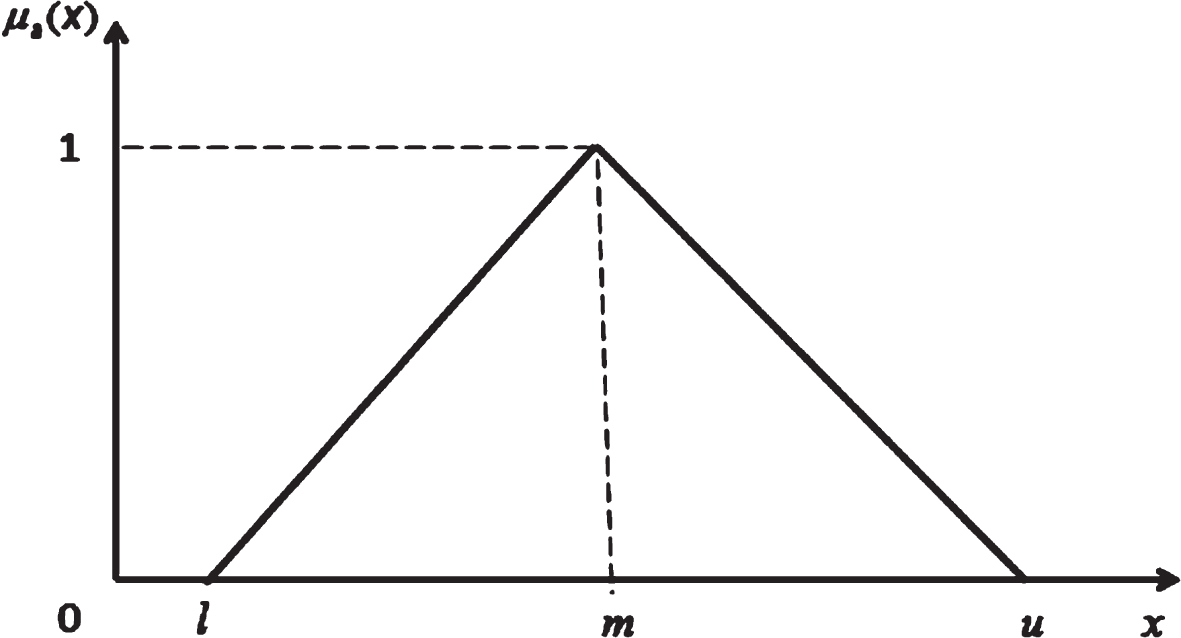
Triangular fuzzy number [48].
It was Zadeh [25] who initially introduced the concept of Z-numbers and proposed it as a general version of the theory of uncertainty for the calculation of numbers that are not reliable. Z-numbers are a pair of fuzzy numbers Z = (A, B), where component A is a fuzzy subset from the range of X and component B is a fuzzy subset from a unique range and represents the reliability of component A. For example, if it is supposed that the detection of risk is a Z-number, its first component can be of type “Low” and its second component can be of type “I’m not certain”. The triple component (X, B, C) is known as Z-VALUATION and is defined as a general restriction on X as given in Equation (10).
This general restriction is known as a probable restriction and represents probable distribution function R (x). It can be specifically presented as Equation (11):
In the above equation, μ
A
is a membership function from A and “u” is a general value from “X”. μ
A
can be considered as a restriction related to R (x). This means that μ
A
(u) includes a certain level of satisfaction of “u”. Therefore, “X” is a random variable with probable distribution of R (x) that functions as a probable restriction on “X”. Probable restriction and density functions of probability of X are given in Equations (12) and (13):
In Equation (13), du shows partial derivative “u”.
The best-worst fuzzy BWM method was first developed by Guo and Zhao [33] for decision-making issues. This method involves the following steps:
Linguistic variables and Consistency Index (CI) for FBWM [36]
Where
Where
Where the parameters of the above model are all triangular fuzzy numbers as given below:
Given the above model will yield the final model of Equation (17):
The solution of model (17) will yield optimal fuzzy answers
The Z-WASPAS method was first introduced by Zavadskas et al. [51]. This method is a combination of two models, Weighted Sum Method (WSM) and Weighted Product Method (WPM). This method can be efficiently used for various complicated types of decision-making in any environment. The fuzzy method WASPAS was presented by Zavadskas et al. [44] in order to take into account uncertainty in the decision-making matrix. Although this method improved the conventional WASPAS, it has no capacity to consider reliability in decision-making. As a result, to enhance the degree of reliability in decision-making by the experts, the current research study presented the matrix entries by means of Z-Numbers. Taking the component of reliability into account in the decision-making matrix can positively affect the final ranking of the alternatives.
This section deals with Z-WASPAS, which is the extended version of fuzzy WASPAS based on the theory of Z-Numbers. The executive steps are as follows:
Suppose a Z-Number is Z = (A, B) and suppose
In the above equations, α represents reliability weight,
In the following, with the combination of Tables 2 and 3, it will be possible to derive the conversion roles of verbal variables of decision makers for the Z-WASPAS method.
Linguistic variables for rating the failure modes [43]
Transformation rules of reliabilities’ linguistic variables [1]
Suppose, for example, Z = (A, B) is a Z-Number whose first component is
Transformation rules for Z-number linguistic variables to TFNs in this study
Weight sum state:
Weight product state
Where
Given the calculated value K i , it is now possible to rank the alternatives from large to small values of this value and the optimal weight of the triple factors are determined.
In Phase 3, based on the outputs of Phase 1 (detection of risk modes) and Phase 2 (weighting of the triple factors), the ranking of the risk modes is determined by Z-WASPAS. Unlike the conventional WASPAS, this method not only takes the fuzzy values into consideration, but it also pays attention to reliability for the criterion of each of the triple factors for each alternative.
This section presents a new approach which has employed such methods as FMEA, FBWM and Z-WASPAS for the assessment of risk modes. Considering the complementary explanations of FBWM and the extended method of Z-WASPAS presented in the previous section, the proposed approach is presented in three phases: In Phase 1, after the risk states are detected by a team of experts of FMEA in the domain of risk assessment, the values of the triple factors are initialized by means of Table 5. In addition, in this phase, the reliability of each of the risk modes are detected by the respective team.
Traditional ratings for the SOD factors [5]
Traditional ratings for the SOD factors [5]
In Phase 2, considering different levels of importance for each of the three criteria, the method FBWM is employed. Here after the best and the worst criteria are detected by the team of experts, pair comparisons are made on the basis of the verbal variables. Then the verbal variables, presented by the experts according to Table 1, are converted into fuzzy numbers. Later, the mathematical model FBWM of Equation (17) is implemented on the basis case study.
To verify the reliability of the proposed approach in this research, it was attempted to apply the method in Mes-e Sarcheshmeh factory, Iran, in order to prioritize risks in the molybdenum operation processes. As an alloy metal, molybdenum can be found with copper in minerals and can be retrieved. Presently, molybdenum is produced in two factories in Iran, Mes-e Sarcheshmeh in Kerman Province and Mes-e Songon in Azerbaijan Province. One of the strategic goals of this factory is to reduce the amount work-related damage. This damage can greatly impact the factory’s purpose which is to decrease the amount of health-related expenses. Therefore, based on the evaluation of the status of the factory in terms of risks available, it was observed that a large part of work-related damage was in the operation department. The elimination of these deep-rooted risk factors can significantly lower the amount of human loss in the factory and hence decrease medical expenses.
One of the most crucial risks in this department is that personnel’s body parts that are caught in the machines such as pulley strap or chain wheel or when some objects like ceiling fans fall down. These risks can be attributed to such factors as lack of adequate training, lack of protection frames under the fans and finally human errors. Accordingly, the present research attempts to detect and prioritize risks which are related to molybdenum operation by introducing a new approach. In collaboration with a team of experts including the factory’s HSE executive, production manager, and research and development manager, the risks of the factory were detected following the executive steps of FMEA method. By means of FMEA (Table 5), a list of 23 risks related to molybdenum section and operation were detected as given in Table 6 which shows the three criteria of severity, probability of occurrence, and detection.
Molybdenum operation process risks
This section presents and discusses the obtained results from the implementation of the proposed approach for the assessment of risks in the operation process of molybdenum in the subject factory. According to Phase 1 of this approach, first a team of experts detected risk modes and then determined the values of the triple factors for each risk (See Table 7).
Identified failure modes in Molybdenum operation process
Identified failure modes in Molybdenum operation process

The FMEA team consists of three experts with proven track record in the domain of risk and safety management in the studied factory. The first member of this team (TM1) is Risk and Environmental Assessment Manager, the second member of team (TM2) is Workers’ Representative and the third member (TM3) is Production Manager.
Then given uncertainty in these factors, the Z-Numbers theory was employed. In this theory, the lack of certainty in these factors as fuzzy numbers was taken into consideration, and their reliability was also considered. The values of Z-Numbers of the triple factors for each risk state is given in Table 8 following the views of the FMEA team.
Then in Phase 2 of the proposed approach, the weight of the triple factors was determined by means of FBWM. To do so, first the FMEA team specified the best and the worst factors and their importance compared to other factors (pair comparison) in the format of verbal variables as presented in Table 9.
Values of SOD factors for each risk state in terms of Z-Numbers
*S = Severity **O = Occurrence ***D = Detection ****TM = Team-Member.
The best and the worst triple factors and the best, other and worst vectors detected by the experts
*S = Severity **O = Occurrence ***D = Detection.
As Table 1 shows, the presented verbal variables given in Table 5 are converted into triangular fuzzy numbers. Then the mathematical model of FBWM is implemented on the basis of these triangular fuzzy numbers. For example, the calculation of the mentioned model is given below following the DM1.
The vector of other criteria compared to the worst criteria (OW) and the vector of the best criteria compared to other criteria (BO) are obtained as follows:
Here is the mathematical planning model (29) to obtain the weight of the triple factors:
The above model was solved by means of software Lingo and the final optimal weights are given below:
The consistency index is obtained by 0 . 236/6 . 69 = 0 . 035 < 0 . 1 that shows a high rate of consistency. Likewise, the final optimal weight of the triple factors for all experts are given in Table 10.
Final fuzzy weights of the triple factors
As Table 10 shows the final weights of the triple factors in triangular fuzzy numbers are expressed below:
The final values of the weights of the triple factors are given below considering definition number four in Section 1.2.
In Phase 3 of the proposed approach, based on the results from Phases 1 and 2, the prioritization of risks modes is conducted by means of the extended Z-WASPAS method. At first, the decision-making matrix of the Z-WASPAS is formed in the format of Z-Number entries (considering uncertainty and reliability). In this matrix, the rows represent the alternatives to be assessed (or risk modes) and the columns show assessment criteria or the triple factors. The above decision-making matrix is converted into a decision-making matrix in the format of triangular fuzzy numbers (See Table 11) by means of the conversions given in Table 4.
Collective fuzzy matrix for risk modes
*S = Severity **O = Occurrence ***D = Detection.
After the normalization of the matrix which was presented in Table 11, the normalized matrix of the weight sum in Table 12 and the weight product in Table 13 were obtained given the weights of the triple factors.
As mentioned in the section on the proposed method, this part presents Z-WASPAS based on Tables 12 and 13 and gives the results considering uncertainty in the triple factors and reliability in risk modes. The results of the approach are given in Table 14.
Normalized matrix for the weight sum
Normalized matrix for the weight product
Ranking of risks based on the Z-WASPAS Method
According to Table 14, based on the Z-WASPAS Method, such risks as R1, R2, and R3 have the highest scores K i = 0.6970, 0.6086 and 0.5702, respectively and are placed in priorities 1–3. In other words, these risks are considered critical and require executive planning and preventive/corrective actions. According to this approach, it is seen that Risk 22 with K i = 0.2485 is the last in the priority list and now needs no corrective actions considering the resources of the organization. In general, with the examination of the prioritization directed by the proposed method, the decision makers can take into account the whole prioritization of risks and limitations of resources, and the team of experts focuses on the organization’s corrective/preventive actions against the risks. This will remove the downsides of the risk and lead to more improvement in the system. The following compares the final prioritization of risks on the basis of the proposed Z-WASPAS with other conventional methods such as Fuzzy WASPAS and FMEA (See Table 15).
Comparison between rankings derived from the proposed approach and other conventional methods
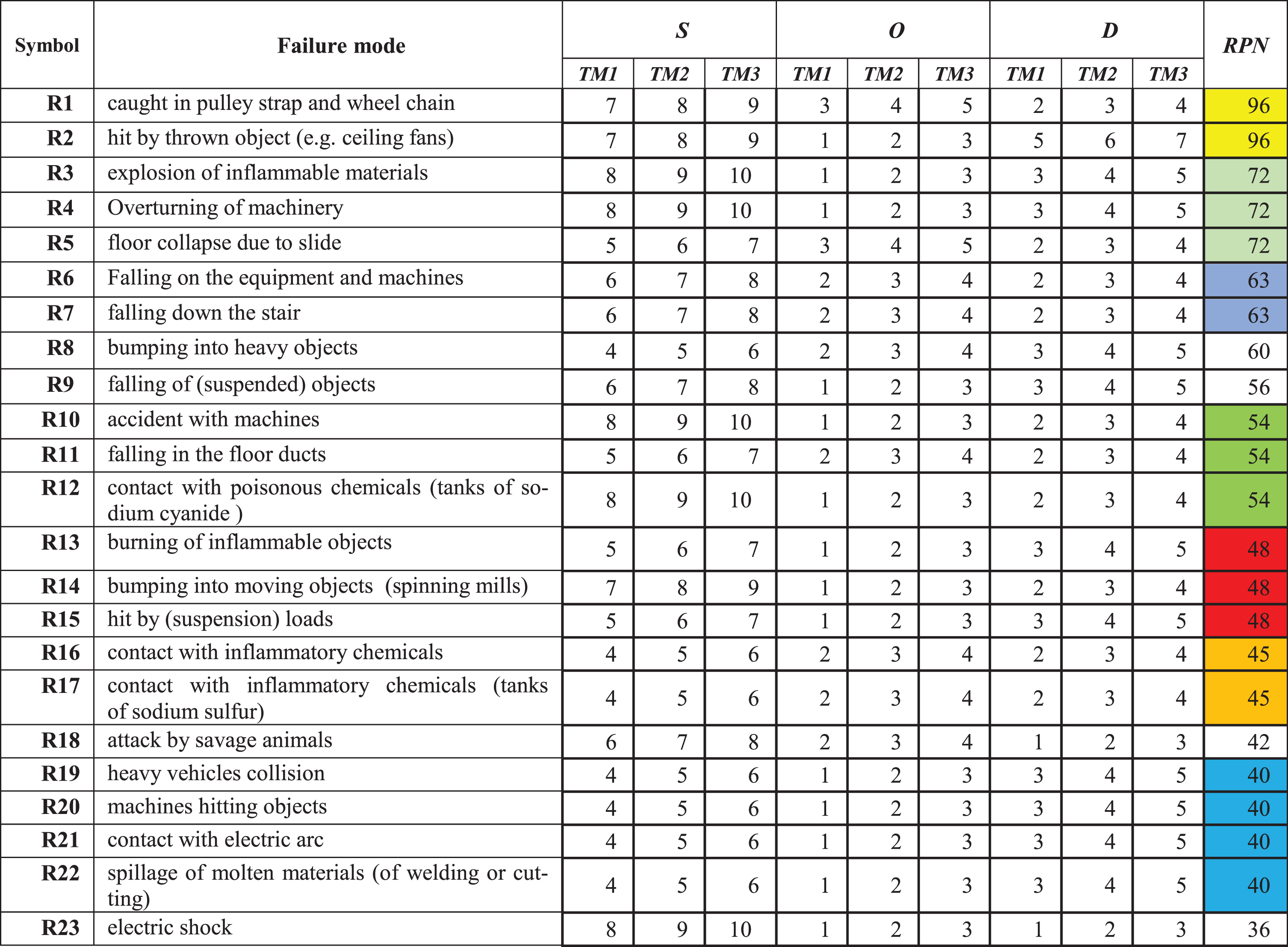
As Table 15 shows, according to the conventional RPN, R1 and R2 with RPN = 96 jointly are first in the list of priority of risks to be taken care of. In addition, with a general examination of the prioritization on the basis of the conventional RPN, it can be concluded that the prioritization of the risks has been done in such a way that the risks are in 11 categories. This means that prioritization based on this conventional criterion was not fully conducted and leaves the decision makers confused with performing risk management and taking corrective/preventive actions. According to the comparisons made in Table 15, it can be said that partial prioritization of risk can be due to lack of allocation of different weights (based on the views of the experts and status of the organization) to SOD factors as well as inattention to uncertainty in the values of these factors.
Table 15 also indicates that at the time of application of the fuzzy WASPAS method, the problem of partial risk prioritization had partly been solved as the risks had been categorized into 19 groups. Based on prioritization and according to the scores of fuzzy WASPAS, the risks that are in the first and second stances are R1 and R2. Priority three includes R3 and R4. Standing on the ninth level are R5 and R16 and rank 11 is occupied by R10 and R12 and finally rank sixteenth is for R13 and R15.
In this method, uncertainty of SOD factors and weighting of these factors were determined by fuzzy theory and FBWM so that some of the shortcomings of the conventional RPN could be compensated. Although compared to the FMEA method, this method increased the difference in risk prioritization, it still faced the problem of partial risk prioritization. For this reason, the current research study presented an extended approach to address the issue and solve the problem. Therefore, regarding the prioritization conducted on the basis of the extended FMEA method following Z-WASPAS, it can be seen that all the detected risks (by means of FMEA) are in distinct priorities. In other words, combining the concepts of uncertainty and reliability of risk modes and by means of the Z-Numbers theory, this research proposed an approach to remove some main defects of the conventional RPN. It also included reliability in the process of decision-making by means of Z-WASPAS and finally the research managed to provide the decision-makers with a reality-based output. Following this proposed approach, risk modes were entirely categorized into 23 groups (See Fig. 2). This shows that in Z-WASPAS, in addition to distinction in prioritization, the risks with the highest values in terms of the most important RPN determining factors (Here S. O. and D. in order of importance) were placed in higher priority levels.
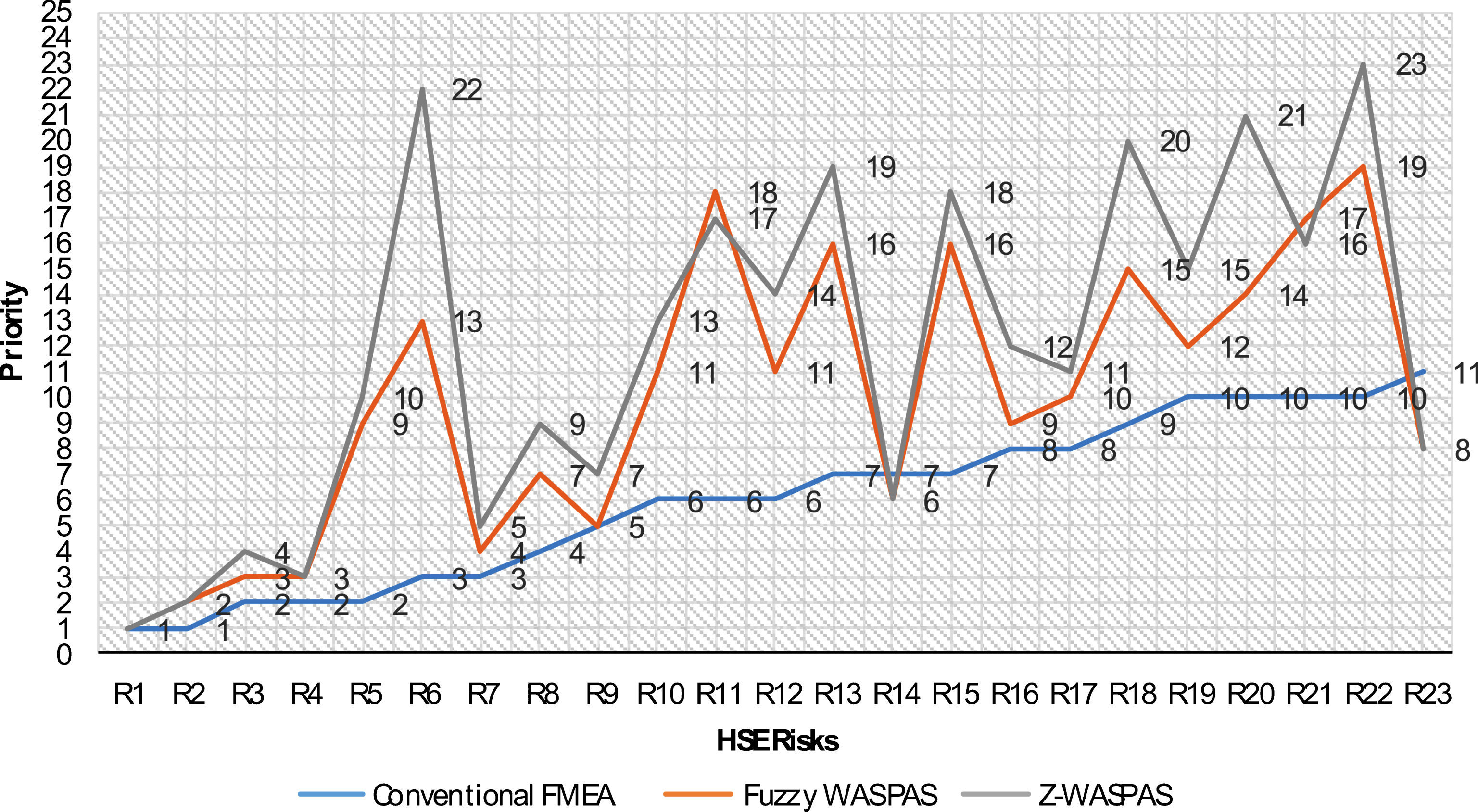
Comparison of the HSE Risk prioritization based on Z-WASPAS, fuzzy WASPAS, and conventional FMEA.
Access to total safety in different industrial activities requires implementation and development of HSE management. One of the crucial requirements for HSE management is the employment of new methods for the assessment and prioritization of work risks and so are risk management and promotion of reliability of processes being increasingly prevalent in the field of production and operation management. The FMEA method is one of the approaches that is used in this field. It enjoys high and suitable application and analyzability and these features popularize it FMEA as the most common technique for risk analysis and safety reinforcement in different organizations. Despite the wide application of this method in differed fields, its weaknesses and limitations caused some experts to improve this conventional method. Therefore, in this research, an extended version of the FMEA method was introduced by means of FBWM and Z-MOORA. The use of each of these two methods in this proposed approach could help to eliminate some of the shortcomings of the conventional RPN index (i.e. conventional FMEA). It involved detection of potential modes of risks on the basis of the FMEA method and then use of FBWM for weighting of the determining factors of RPN as assignment of different weights to these factors was one of the drawbacks of the conventional RPN index. In addition, the integration of the component of reliability in the proposed approach led to the complete prioritization of risks. This can help decision makers to discriminatively detect critical risks and decide on corrective/preventive measures given limitations in resources.
With the application of the proposed approach for the investigation of the risks of molybdenum operation processes in Mes-e Sarchemeh factory and the comparison of the obtained results by means of the conventional FMEA and fuzzy MOORA, it was observed that prioritization with the help of the proposed method was closer to reality because it took reliability into consideration. This method provides the decision-makers with complete prioritization. As a result, the decision-makers can present a series of corrective/preventive measures for critical risks and execute them via the respective departments and finally conduct re-assessment for checking the new status of the system and evaluate the effectiveness of these measures. Of the limitations of this research is inattention to the cause-effect relation among the factors. This can be resolved in future studies by means of the cognitive map based on the Z-Number theory. This proposed approach can also be used for obtaining qualitative assessment data in a complex decision-making environment on the basis of Type 2 fuzzy sets [21], D- Number [9], R- Number [40] and G- Number [14].