



Abstract
To cope with the smooth implementation of apron control transfer at Chinese airports, two new departments were established, namely apron tower and airport operation command center. Therefore, based on interview texts of controllers and commanders of these two departments, this paper uses text mining and Decision-making Trial and Evaluation Laboratory-Interpretative Structural Modeling Method methods to determine key influence factors and factor hierarchy that affect communication and collaboration in their daily work. The results show that for controllers, key influence factors are mainly personnel development and professional abilities. These factors are located at the bottom of the factor hierarchy and are the basis for ensuring smooth communication and collaboration. For commanders, key influence factors are mainly personnel professional abilities and flight status. These factors are at the top of the factor hierarchy and are focus points that affect communication and collaboration. Hence, the case analysis results show the application potential of these three methods in the field of civil aviation. The combined use of these three methods can enable airport managers to clearly understand the degree of influence between factors.
Keywords
Introduction
With the increasing scale of air transportation, large ground traffic flow and high density have become normalization. Contradictions and problems of airport control tower acting on behalf of aircraft apron operation management are constantly emerging, which can not meet the needs of transportation airport operation safety and efficiency. Therefore, the Civil Aviation Administration of China (CAAC) puts forward the plan of aircraft apron control transfer operation. Meanwhile, to ensure the smooth progress of the plan, two new departments were established, namely the apron tower (AT) and the airport operation command center (AOC). AT belongs to a sub-department of the air traffic control tower (ATC), and AOC belongs to a department established by the airport. Therefore, in daily work of communication and collaboration, air traffic controllers (Hereinafter referred to as controllers) and airport operation commanders (Hereinafter referred to as commanders) in AT and AOC pay attention to different focuses. Based on this, we interviewed controllers and commanders from three airports in South China, Central China, and North China that have annual passenger flow exceeding 10 million. The purpose is to find out the factors that affect communication and collaboration between the controllers and commanders by analyzing the interview content, to provide managers with a reference for improving personnel management, to continuously improve the effect of apron control operation.
This paper is divided into five sections. In Section 1, problem statement of this study. In Section 2, review associated literature and introduction to methods of this study. In Section 3, case study analysis. In Section 4, discusses the results obtained. In Section 5, concludes this study and recommendations for future research.
Materials and methods
The literature [1] studied the controller’s work status after the Southeast Asian air traffic control system changed from paper flight strips to a stripless flight management system. The results of the questionnaire were analyzed by Lexical analysis to extract 10 high-frequency words with most times are mentioned by these controllers of their daily work. Then these high-frequency words as hierarchy evaluation indices, and calculate index weights and sort through the AHP. Sorting results showed that the most important issue for controllers is training. The literature [2] conducted an empirical analysis of work pressure and workload of controllers of the Mactan Civil Aviation Authority of the Philippines. Through the comprehensive use of DEMATEL-ANP and PROMETHEE II methods. The results showed that the controller’s operational responsibilities have the greatest impact on workload, and partitioning can effectively reduce workload. The literature [3] comprehensively used text mining and fuzzy comprehensive evaluation methods to evaluate the current situation of controllers and commanders of A airport in domestic. The evaluation results show that the factors of personnel and management are the main reasons affecting their work efficiency. The literature [4] interviewed psychologists and project managers of military oil and gas projects to determine the factors that affect face-to-face communication in different situations. The results showed that the degree of influence of these effective factors in face-to-face communication will change with the situation, and there is a mutual influence between the factors. To make accurate decisions on personnel selection under uncertain circumstances, literature [5] used the DEMATEL and the ELECTRE methods in an intuitionistic fuzzy situation to conduct an empirical analysis on the selection of personnel for an air filter manufacturing company. The literature [6] proposed a fault analysis method for CNC equipment based on the DEMATEL-ISM and ANP to accurately describe the CNC equipment failure. The results showed that the method can quantify the failure factors of CNC equipment, and learning the relationship between these factors and the weak links of equipment reliability. The literature [7] used human dynamics and complex system methods to conduct an empirical analysis on the activities of controllers to detect the interaction between air traffic activities and the controller’s communication activities. The results indicated that the basic mechanism of the controller’s activity is different from the general mechanism proposed by Barabasi’s, and the Lévy process with positive drift may be able to explain the controller’s adaptive behavior. The literature [8] used “ conversation analysis” technology to study the voice recordings of aircraft approaching at Bangkok International Airport, and explored the potential impact of “ non-English” on information transmission between pilots and controllers. The results showed that in the case of complex information and involving digital information, the probability of communication errors caused by pilots not understanding the event is greater. The literature [9] proposed a research plan based on laboratory and field evaluation to study the impact of datalink and freeflight on communication and collaboration between pilots, controllers, and other personnel. The literature [10] based on ergonomics, and focused on analyzing the communication between controllers teams. The analysis results showed how operators can use the natural redundancy and diversity of human communication spontaneously to enable team members to better understand each other, and it is also the key to cooperation between members.
From the above literature review, the research content mainly focuses on workload, personnel development, and the ability of controllers or commanders. The methods used in these researches mainly include Analytic Hierarchy Process (AHP), fuzzy analytic hierarchy process (FAHP), text mining, and DEMATEL-Based ANP (D-ANP), etc. These methods are only a macroscopic assessment of the current situation and cannot further explore the interaction and hierarchical structure of factors within the micro-level system. Therefore, this study uses the decision making trial and evaluation laboratory (DEMATEL) to analyze the importance of the key factors that affect the communication between controllers and commanders and then uses the interpretive structural modeling (ISM) method to determine the factor hierarchical structure. The purpose is to deeply analyze the hierarchical relationship between the factors that affect the communication and collaboration between controllers and commanders so that managers can clearly understand the degree of influence of each factor. Moreover, it is found that there is not much literature comprehensively use text mining and DEMATEL-ISM methods for research. So this study uses the text mining method to extract high-frequency words or phrases of interview texts as influence factors and based on the result of word frequency comparison, a direct influence matrix is established. Compared with the traditional method of determining the direct influence matrix through expert scoring, it not only reduces the subjectivity of the results but also saves the time and labor cost of consulting experts.
Innovation of this paper to further study are listed as follows:
There is much literature based on text mining and DEMATEL methods respectively, but there are few studies that combine the two methods to analyze the factors that affect communication and collaboration between controllers and commanders. This paper uses text mining methods to extract high-frequency words or phrases from interview texts of controllers and commanders. Compare the frequency of high-frequency words or phrases in pairs, instead of the expert scoring to construct a direct influence matrix between factors. This can make the results closer to the actual situation, and reduce the impact of subjective factors while saving time and labor costs.
Based on the DEMATEL-ISM method, key influence factors and factor hierarchy that affect communication and collaboration between controllers and commanders are respectively determined. The case analysis results not only provide managers concerning improving personnel management but also verifies that the method can be widely and deeply applied in the civil aviation field.
Text mining
Text mining is to convert a large amount of text data into previously unknown and usable knowledge, and use the knowledge to reintegrate information more systematically and comprehensively for more in-deep data analysis [11]. It can find the most critical criteria based on the entire text data and then quantify the criteria based on the analysis results of most existing reports and literature [12]. In the process of text data processing, unstructured text data needs to be filtered and summarized in the early stage. After collecting the source text data that needs to be analyzed, you can select a suitable text mining tool to do an in-deep analysis of source text data [13]. The criteria extracted by this method have a high reference value and objectivity. Through the two literature [3] and [1], this study determines that the interview content of controllers and commanders is shown in Table 1.
Interview content
Interview content
To avoid losing important interview content, we have recorded each interview with the consent of the interviewees. After the interview, the recording is processed uniformly, and the voice content is converted into texts. These texts are the interview texts that need to be processed by text mining. The text mining process is shown in Fig. 1.

The text mining process.
In Fig. 1, high-frequency words or phrases with a frequency of more than 11 are extracted from interview texts as influence factors that affect communication and collaboration between controllers and commanders [1, 14]. These influence factors and frequency are shown in Table 2.
High-frequency words or phrases and frequency
In Table 2, some of the influence factors are the same. This is because controllers and commanders have the same work content to a certain extent. For example, coordinating runway allocation and gate position for flights are a part of their same work content. This study constructs the direct influence matrix
The DEMATEL method
The decision making trial and evaluation laboratory (DEMATEL) is a method procedure that originated from the Geneva Research Centre of the Battelle Memorial Institute [16, 17]. This method is based on graph theory and matrix, through qualitative judgments on the mutual influence relationship between factors in complex systems, and then constructs a direct influence matrix. The DEMATEL method can reveal the internal cause-effect relationship of factors in the system and identify key influence factors by calculating the influence degree, centrality degree, and cause degree of each factor [18].
The specific steps of the DEMATEL method are as follows: Determine influence factors: a1,a2,..., a
n
. Determine the influence relationship between different factors and establish a direct influence matrix In matrix Normalizing direct influence matrix
Therefore, the relationship between the matrix Using formula (3) to calculate the total-influential matrix The matrix Calculating sum of rows and sum of columns within the total-influential matrix Where f
i
and e
i
denote sum of a row and sum of a column, respectively. Calculating the degree of centrality and cause of each influence factor to use formula (5) [20].
m
I
represents the importance of factors, and when n
i
> 0, it indicates the factor belongs to the cause result; otherwise, the factor belongs to the effect result.
Interpretive structural modeling (ISM) was first proposed by Warfield in 1973 [21, 22]. The ISM method was originally used to analyze complex socioeconomic systems. Now, this method has been widely used in various fields, such as supply chains, product design, and risk analysis. The ISM method can transform vague thoughts and concepts into a structural relationship model to intuitively understand the relationship between variables [23].
The various steps of the ISM method are as follows:
Due to the total-influential matrix
Step 1: Calculating the matrix H based on total-influential matrix
The matrix
Step 2: Determining the reachability matrix
If the system includes many factors, the threshold λ can be set according to the actual situation of study problems. The purpose of setting λ is to eliminate influence relationships with small influence degree to simplify the system structure [25].
Step 3: According to formula (8), the reachability set
Step 4: Determining influence factors of each hierarchy by formula (9) and gradually delete rows and columns corresponding to k
ij
in reachability matrix
Formula (9) represents that in a factor hierarchy structure, the influence factor a
i
can reach outside itself, but cannot reach the set of other factors. Such as, if a
i
satisfies the condition, it means that a
i
is the bottom factor, and the row and column corresponding to a
i
in the matrix
Step 5: Repeating steps 3 and 4 until all k ij have been deleted.
Step 6: Establishing a factor hierarchy in the order in which factors are deleted.
Interview texts of this study come from three large international airports with a passenger flow of tens millions in China and these three airports are
DEMATEL-ISM analysis
DEMATEL analysis
According to the comparison of the frequency in Table 2 and the calculation steps of the DEMATEL method in Section 2, influence factors of communication and collaboration are gradually determined. Due to space limitations, only the direct influence matrix
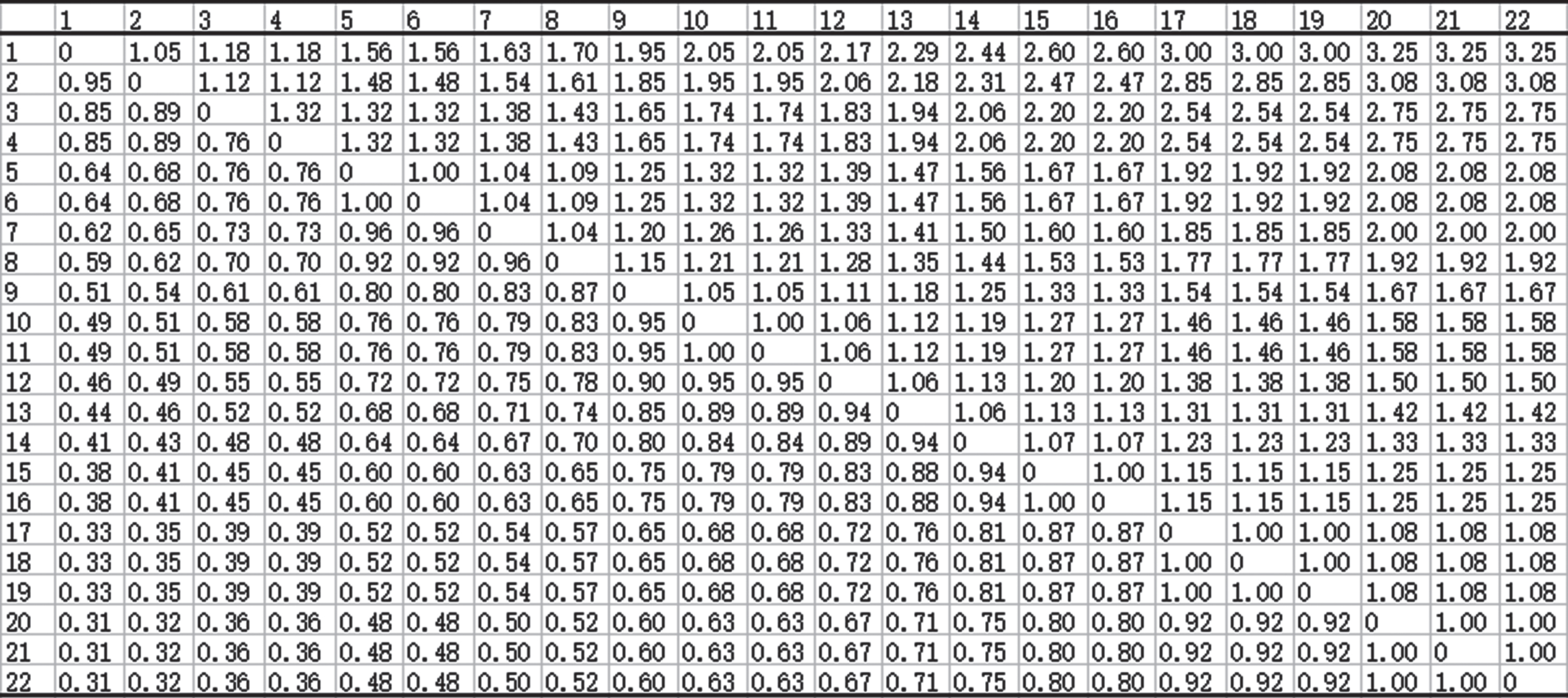
The direct influence matrix A Controllers .
To show conciseness, use serial numbers in Table 2 to indicate influence factors. According to formulas (2)–(5), the m i and n i are calculated, as shown in Table 3.
The m i and n i of controllers and commanders
The greater the m i , the more important the influence factor, so it can be considered a key influence factor. Therefore, in Table 3, for controllers, the m i of influence factors Career development, Command skills, Length of learning, and Department coordination are 2.070417259, 2.002854486, 1.882172703, and 1.873314096, respectively. These four factors can be considered as key influence factors that have an important impact on the controller’s communication and collaboration. Meanwhile, for commanders, the m i of influence factors Command skills, ATC, Flight flow, Apron operation Management, ACC, Training, and Flight delay are 2.847797861, 2.403563922, 2.318156215, 2.046288609, 2.020490868, 2.00448192, 2.104016521, respectively. These seven factors can be considered as the key influence factors.
If the n i is positive, it means that influence factors are cause factors, otherwise, the factors are outcome factors. In Table 3 that cause factors affecting the communication and collaboration of controllers are as follows: Career development, Command skills, Length of learning, Department coordination, Pilot, Regulations, Work time, Flight flow, Personnel ability, Work pressure, and Team communication. Similarly, cause factors of commanders are as follows: Command skills, ATC, Flight flow, Apron operation management, ACC, Department coordination, Work time, Service guarantee, Information transfer, Pronunciation clear, and Gate position.
Calculating factor hierarchy distribution according to steps of the ISM method in Section 2. Due to many influence factors in Table 2, this study compares and verifies threshold λ multiple times. The purpose is to eliminate factors with weak influence and simplify the hierarchy. The value of λ can directly affect the matrix
Comparison of the threshold λ
Comparison of the threshold λ
In Table 4, different threshold λ corresponds to different factor hierarchy structures. The less the factor hierarchy, the more influence factors included in each hierarchy, which makes it impossible to clearly express the relationship between factors. Therefore, according to the comparison results, the λ as 0.03 is selected. After the same calculation process, the commander’s threshold λ is also 0.03. Based on formulas (6) and (7), the matrix
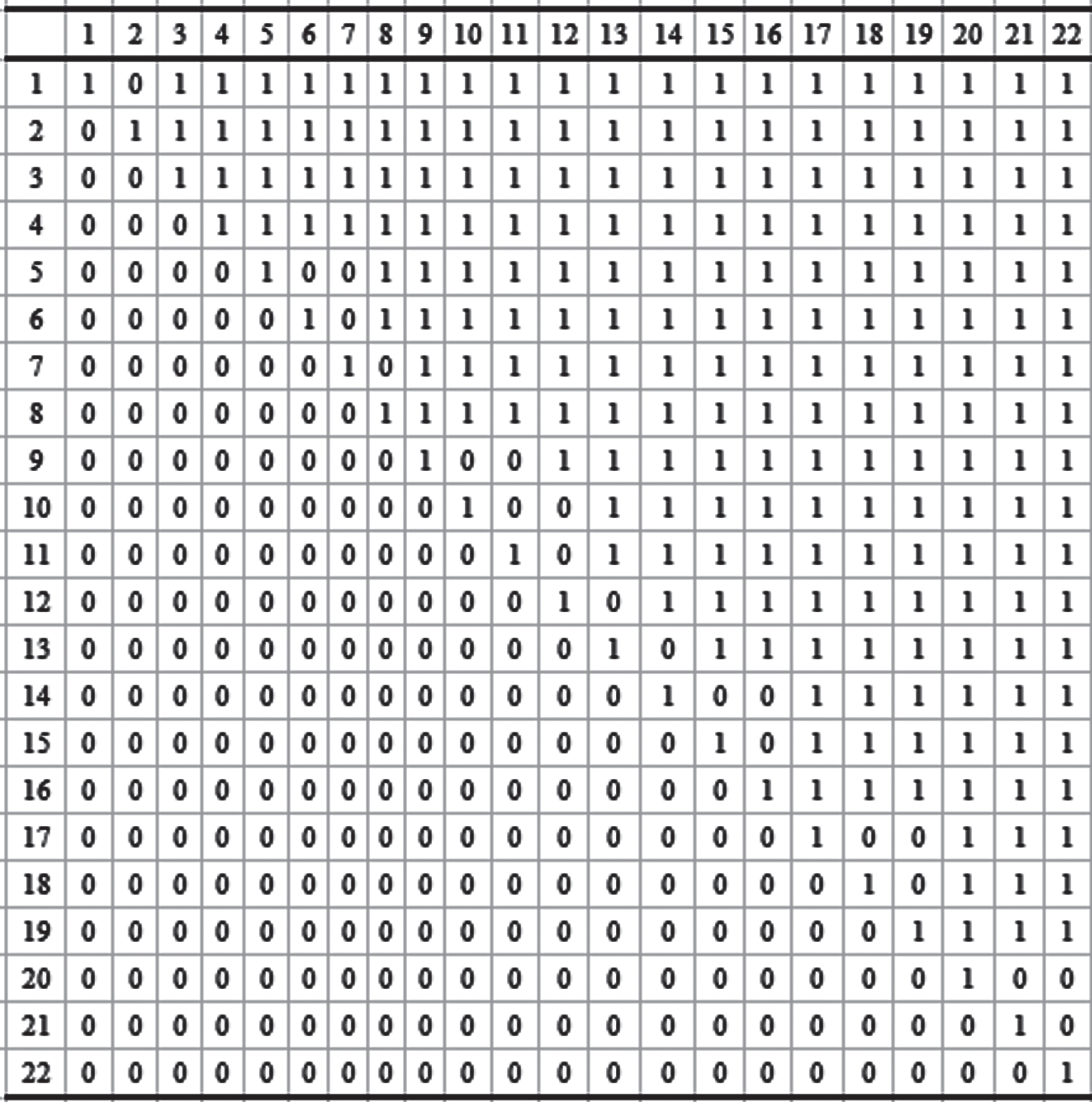
The reachability matrix K controllers .
According to formulas (8) and (9), the factor hierarchy of controllers and commanders is determined, as shown in Table 5.
Factor hierarchy
In Table 5, some of the same influence factors are at the different hierarchy, respectively. This is because commanders are facing a new working environment and partners. However, for controllers, their working environment has remained unchanged, so factor hierarchical distribution is different from commanders.
According to the factor hierarchy in Table 5, it can be roughly divided into three layers: the top hierarchy H1, the middle hierarchy, and the bottom hierarchy. In the top hierarchy H1, for controllers, the greatest influence factor of communication and collaboration are Job responsibilities, Conflict, and Case analysis. And the greatest influence factors of commanders are Aircraft handover, Order issuance, Training, and Flight delay. For controllers, clear job responsibilities and case analysis can avoid conflicts when communicating with commanders, pilots, and other department personnel. While, because commanders are responsible for all aircraft activities on the apron. Therefore, personnel skills training and clear and accurate order issuance are factors that have the greatest impact on communication and collaboration, especially when aircraft are handed over and flights are delayed. In the middle hierarchy, the factor hierarchies of controllers and commanders include H2, H3, H4, H5, H6, H7 and H2, H3, H4, H5, H6, respectively. For controllers, it can be roughly divided into two aspects: personal needs and daily work. Personal needs include influence factors, such as wages and benefits, personnel ability training, work time, and work pressure,.etc.. If these needs are not met, it will affect their daily work effectiveness and efficiency such as aircraft runway allocation, case discussions, and communication within groups. For commanders, the middle hierarchy is mainly based on personal skills, such as emergency response ability, information transmission ability, pronunciation clear, runway, and gate allocation, etc.. These influence factors have a more direct impact on communication and collaboration. In the bottom hierarchy, factor hierarchies of controllers and commanders are H8, H9, H10, and H7, H8, respectively. The indirect influence factors of controllers are mainly personal development, such as length of study, career development, and command skills. The direct influencing factor of commanders is command skills. Table 6 lists key influence factors and corresponding hierarchy.
Key influence factors and hierarchy
Key influence factors and hierarchy
In Table 6, it can be found that key influence factors of communication and collaboration for controllers are mainly at the bottom hierarchy. These are mainly personnel development and professional abilities. The top hierarchy influence factors are Job responsibilities, Conflicts, and Case analysis with centrality degree closer to key influence factors. This may be because although controllers are working in a new working environment, their work content is the same as before, so these factors have become the basis for ensuring smooth progress of communication and collaboration. However, for commanders, they are not only in a new working environment but also facing new working content, and key influence factors can have an important impact on communication and collaboration. Moreover, by referring to the literature [3], these factors of commanders can be summarized into two categories: personnel professional ability and flight status.
This study uses text mining and DEMATEL-ISM methods to determine the key factors that affect communication and collaboration of controllers and commanders in their daily work and divide the factor hierarchy. For controllers, key influence factors are mainly personal development and professional ability, and these factors are at the bottom hierarchy. Therefore, these factors are the basis for ensuring smooth communication and collaboration between controllers and others. For commanders, key influence factors are mainly personal professional ability and flight status, and these factors are distributed at the top and bottom of the factor hierarchy. Therefore, these factors are both the focus and the basis for guarantee efficient communication and collaboration between commanders and others.
The limitation of this study is that it may not be comprehensive and accurate to determine the key factors affecting the communication and collaboration between controllers and commanders based on the high-frequency words or phrases in the interview texts. Therefore, in future research, on the one hand, scholars can comprehensively analyze the voice call records and interview texts of controllers and commanders in their daily work, to more accurately dig out the key factors that affect their communication and collaboration. On the other hand, text mining and expert scoring can be further compared and appropriate fuzzy rules can be set, so that the direct influence matrix obtained is more scientific.
Footnotes
Acknowledgments
There is no conflict of interest in this study. This research is supported by the Research on Values Basis and Incentive Restriction Mechanism of Safety Risk Control for Civil Aviation Key Post Personnel (Grants No. ASSA2018/17)