



Abstract
Waste recycling companies, as a climate-friendly institution, have broadly influenced the sustainability of the economic, ecological, and social spheres, while some waste products covering personal privacy actually make their suppliers hesitant to sell them to recycling companies. To inspire suppliers in this pro-environmental behavior and recycling companies’ proactive privacy protection behaviors, this study establishes a dynamic evolutionary game model underpinned by the Prospect Theory targeting the relationship between the government and waste mobile phone recycling companies. By developing a revenue perception matrix, this study analyzes recycling companies’ privacy protection behaviors under different government decisions, particularly to reveal an interaction mechanism that interprets bilateral behavior choice. This study presents the following findings. (1) The degree of government supervision on recycling companies’ behavior choice and the actual cost and benefits these companies’ recycling strategies influence evolutionary game results. (2) Recycling companies’ privacy protection capability improves the effectiveness of government supervision strategies, while an increase in government’s perception and supervision costs could restrict companies’ privacy protection behaviors and government’s follow-up supervision strategies. (3) Moderate government sanctions (e.g. the fines) help normalize recycling companies’ privacy protection behaviors, but enhancing companies’ sensitivity to privacy value negatively influences privacy protection. (4) Lastly, an increase in loss aversion coefficient has a negative impact on recycling companies’ privacy protection while improves the outcomes of government supervision. Overall, this study contributes to develop a two-party evolutionary strategy under different policy decisions and recycling companies’ behavior choice. Therefore, we suggest that waste mobile phone recycling companies and the government synergistically focus on suppliers’ privacy protection.
Introduction
Given the increasing maturity of 5 G technology, 4 G mobile phones are likely to be eliminated in the near future. Data from the White Paper on Waste Electrical and Electronic Equipment Recycling Industry in China (2018) issued by the China Household Electric Appliance Research Institute forecasts that the scale of waste mobile phones rank first in all waste electronic products. In 2018, waste mobile phones reached 232 million units with an annual increase of 27.25. In recent years, dealing with waste mobile phones through recycling has been suggested to reduce the direct elimination of waste electronic products that relatively caused substantial damage to the ecological environment, and this circular economy mode also rose to the industrial strategy level [1, 2]. To inspire green recycling mode and energy conservation, an extended producer responsibility (EPR) system was established by the Organization for Economic Cooperation and Development (OECD); China also launched an EPR partnership program. The recent literature has concluded that EPR system helps improve the economic, ecological, and social spheres, and key stakeholders involved in this system requires the coordination targeting profit-sharing under the guidance of waste recycling strategies [3].
To date, there are more than 1 billion waste mobile phone stocks in China, while the recovery rate is only below 2% based on recently disclosed data. Islam et al. conducted a survey in Bangladesh and concluded that only 9% of the country’s population understand the channels and knowledge relevant to electronic product recycling [4]. Silveira and Chang explored if Brazil could use a similar recycling strategy derived from the US, thereby revealing the feasibility of trans-region imitation or cooperation in electronic product recycling [5]. While the existing challenge is that the varied recycling strategies only have a limited positive impact on enhancing the recycling rate of mobile phones. Therefore, recent research has tried to consider how to incorporate multi-stakeholders (e.g. government, suppliers, and industrial sector) into a unified decision-making framework to enhance the recycling efficiency of waste mobile phones.
A substantial body of literature is concerned on how manufacturers and recycling companies could effectively recycle waste electronic products based on government regulations, including fiscal subsidies and penalty measures [6, 7]. The findings of recent studies have shown that the comprehensive performance of recycling companies significantly improved after the implementation of policy regulations (particularly the policy mix scheme). While following the prior literature, minimal discussion has been conducted on the impact of policy measures on recycling companies’ views on the privacy protection of waste products suppliers, particularly in emerging markets. It may trigger a conflict among government, recycling companies, and waste products suppliers [8]. That is, if recycling companies’ privacy protection strategies are contrary to policy regulations or policies seldom or never involve the privacy protection of waste products suppliers, then recycling companies may neglect suppliers’ privacy (e.g. individual information) because protecting such a privacy will increase company operations cost. Therefore, suppliers may make a trade-off between the possible privacy disclosure and monetary gains, and the uncertainty of suppliers’ choice will reduce their own pro-environmental behaviors. However, Helbing et al. discussed models and data on wars, diseases, and disasters, and explained that prior methods cannot considerably simulate the reality of systems owing to lack of feedback loops and instability, while complexity science could help us substantially understand social systems and collective behavior [9]. Perc et al. believed on the importance of focusing on the collective behavior generated by the interaction among individuals, groups, and even society [10]. Given that even the simplest interaction involves numerous possible states, the complexity of the solution may be beyond what is often observed. Evolutionary game theory provides a competitive theoretical framework for solving cooperative behavior under certain social dilemmas [11]. To address this actual dilemma, this study is underpinned by the Prospect Theory, which helps reveal the irrational psychological factors that influence the choice behavior from the perspective of psychological and behavioral features, and integrates government’s supervision on waste mobile phone recycling companies’ privacy protection behaviors into both parties’ revenue matrix (i.e., constructing a coupled behavior strategy between the government and recycling companies), to protect suppliers’ privacy. In particular, we will answer following three questions: What type of restrictive relationship exists between the government and waste mobile phone recycling companies in the process of protecting suppliers’ privacy? Based on the different stages of the evolutionary game, should the government regulate the privacy protection of recycling companies? What factors may affect the protection of privacy by recycling companies? What is the impact?
To expand the knowledge area in firms’ sustainable operations, this study will contribute to the following aspects. First, prospect theory, as a key research paradigm in the field of behavioral decision-making, could fully explain human decision-making patterns in the economic and social spheres. This study introduces prospect theory into the decision-making problem of recycling companies’ privacy protection, which helps to considerably understand the features of bounded rationality in the process of recycling companies from perception to decision-making, and reveals the internal mechanism of recycling companies’ privacy protection under government regulations. Second, by constructing the evolutionary game model of privacy protection between the government and recycling companies, the stable strategy for the evolution of both parties is determined, and the relevant factors affecting privacy protection behavior are revealed. Third, the numerical analysis of the simulation model provides constructive suggestions for the government to develop privacy protection regulations, and also presents a reference for the privacy protection decision-making of companies.
The remainder of this paper is structured as follows. Section 2 constructs a theoretical underpinning and reviews the relevant literature. Section 3 proposes a basic assumption of the evolutionary game model, and analyzes the construction and application of the game model in governments and waste mobile phone recycling companies. Section 4 organizes an equilibrium analysis of evolutionary game and clarifies the impact of key factors on stable strategies. Section 5 organizes the numerical simulation analysis to verify the accuracy of the evolutionary game model and quantify the exact effect of the key influencing factors. Section 6 concludes this study and proposes research limitations and future research.
Literature review
Prospect theory as relevant to suppliers’ privacy protection
The Prospect Theory, which was first defined by Kahneman and Tversky [12], embeds psychological research into economics. Irrational psychological states often exist in people’s decision-making process, in which this uncertain case presents a challenge on how to evaluate risks and respond immediately thereafter [13]. Such as, in the application of quality function deployment, Zhu et al. [14] uses prospect theory to describe the psychological behavior of members and formulate key measures for evaluating emergency plans. In the context of our study, the Prospect Theory refers to a type of psychological feeling of government and recycling companies in the gains and losses of their prestige when they supervise and make decisions on suppliers’ privacy. By considering decision makers’ psychological risk perceptions to the choice of emergency decision-making methods, the decisions made will be considerably effective [15]. By constructing an evolutionary game model, government and recycling companies’ decision-makings are analyzed in this study. The objective is to identify the factors influencing the recycling strategies of waste mobile phones, thereby providing a theoretical underpinning for recycling companies in protecting suppliers’ privacy and government’s supervision over recycling companies.
Given that evolutionary game theory minimally focuses on the impact of individual psychological factors on both parties involved in the game, it does not fully conform to the bounded rationality hypothesis. Therefore, the game results may deviate from the actual results. To address this problem, this study attempts to link the Prospect Theory with evolutionary game theory to improve the credibility and practical effectiveness of traditional evolutionary game. The Prospect Theory is consistently applied to describe the cognitive behavior features of bounded rational individuals. The expected value function in the Prospect Theory is applied to replace the income function in the income matrix of evolutionary game. Accordingly, an organic integration of these two theories could be achieved. Therefore, improved game tools could substantially reflect the bounded rationality of individuals in the entire process, from perception to decision-making, thereby reasonably interpreting game phenomena and forecasting the game results thereafter. Liao et al. modeled individuals’ privacy-related decisions using Prospect Theory and found the theory more accurately modeled individuals’ behavior under uncertainty than the traditional expected utility theory [16].
The Prospect Theory has been broadly used to interpret the behavior features of decision makers when faced with risks and uncertainties. Scholars have defined two types of risks within the scope of Prospect Theory. The first type of risk is consequence-oriented, in which the more serious the expected negative consequences, the higher level such a risk will have. The second type of risk is labeled as the uncertainty of consequence. Barberis et al. summarized four features of the Prospect Theory: reference dependency, loss aversion, diminishing sensitivity, and probability weighting [17]. Moreover, people constantly make decisions based on the possible value of gains and losses rather than the theoretical outcome. On the basis of overcoming the limitations of expected value function, we further consider the demerit of waste mobile phone recycling companies’ behavior decision-makings and the difference of decision time-point in varied recycling companies. Thus, we propose an internal operations mechanism model for these companies in the case of government supervision.
This study uses the preceding analysis in relation to the basic viewpoints and contextual application of the Prospect Theory to explore behaviors of privacy protection under government supervision [18]. The majority of the previous recycling strategies of companies are based on the assumption of their complete rationality, and minimal consideration is given to the bounded rationality of recycling companies. Recycling companies are based on the constraints of consumer environment, recycling costs, and entrepreneurs’ cognitive abilities, and their privacy protection behavior is not entirely rational [19]. Owing to the psychological feature of privacy protection, this study selects the Prospect Theory as theoretical basis for research because it can considerably overcome the paradox in traditional economics (i.e., Allais paradox) and can markedly reflect the behavioral decision-making change caused by psychological factors of recycling companies. In the process of privacy protection of recycling companies, information asymmetry will promote bounded rational companies to form behavioral motivation through subjective perception, which is a dynamic process consistent with the application basis of the Prospect Theory.
Waste mobile phone recycling and suppliers’ privacy protection
An increasing number of studies have focused on waste mobile phone recycling. From the perspective of mobile phone suppliers, their perceptions toward such a recycling and their specialized knowledge have strongly influenced the actual recycling scale. Welfens et al. found that young people are more interested in new mobile phones rather than the old ones, and rarely focus on schemes relevant to mobile phone recycling [20]. Accordingly, this prior study suggested popularizing such a recycling awareness on a broad scale. It was necessary to carry out environmental awareness raising campaigns concerning WMPs recycling in Australia [21]. Borthakur and Govind found that residents’ behavior intention toward e-waste disposal in emerging markets are often related to their income, education background, age, and actual behavior presentation [22]. By contrast, residents’ awareness of recycling is markedly positive in developed countries, and designing Waste platform could stimulate people’s recycling enthusiasm. On the basis of prior extensive surveys, the majority of the surveyed suppliers have been observed to express intention to be involved in waste products recycling, although such a strong intention has not efficiently translated into actual recycling behaviors, particularly to electronic waste products [23]. Dhir et al. proposed an extended VT model, which pointed out that consumer values affect the decision of e-waste recycling [24].
Existing evidence has suggested that privacy protection is a relatively critical factor in enhancing mobile phone recycling scale. Zhang et al. investigated the recycling of College Students’ used mobile phones in Jiangsu Province, China, and revealed that the concern about information privacy has become the main reason for hindering the recycling of old electronic products [25]. In addition, cash incentives and the convenience of recycling are key driving forces. In reality, numerous private files/documents (e.g. photos, passwords, address lists, and mobile payment records) are constantly stored in mobile phones. In general, mobile phones are substituting for laptops in an increasing number of fields owing to the portability of these phones and their increasing storage capacity. Even if numerous suppliers have deleted information records before sending their mobile phones to re-cycling companies, suppliers continue to have significant concerns about privacy leaks owing to technical recoverability. A survey on second-hand electronic products has revealed that some product holders do not have a habit of clearing personal in-formation, which triggers second-hand stores to be flooded with varied data from former users [26].
Therefore, privacy leakage from waste mobile phones has been an obstacle to recycling [27]. The consumer is the final decision-maker who decides the fate of scrapped electronic products, in the recycling process of electronic products. Tanskanen and Butler emphasized that the government should formulate a recycling rule to lead waste products suppliers to be involved in second-hand recycling systems [28]. The perceived effectiveness of privacy legislation, the perceived effectiveness of privacy policies, and the perceived benefits of information disclosure directly influenced consumer perceived privacy risk [29]. The US government has enacted a new federal privacy law, which states that recyclers of electronic product hardware should destroy the used hardware to protect suppliers’ privacy. In 2016, China’s government incorporated mobile phones into the Catalogue of Disposal of Waste Electrical and Electronic Products through the issuance of relevant management regulations, which serve as guide toward waste mobile phone recycling. However, no policy targets at regulating recycling companies’ privacy protection behaviors. Moreover, some emerging markets lack fiscal subsidy standards for recycling companies in different types of waste products [30]. In recent years, some countries have attempted to improve the protection of suppliers’ privacy. In 2018, China established an alliance for waste electronic products’ information security protection and innovation strategies that creates a standard specification for the recycling process of waste mobile phones with the aid of a third-party certification platform. Furthermore, an information security testing based on smart data scrubber was also developed [31]. After used mobile phones re-enters circulation, prior data are ensured to be completely cleared, thereby helping effectively address the last “one-kilometer” trust problem.
Government role in recycling waste mobile phones
Prior studies have indicated that government involvement has a leading effect on the construction of waste mobile phones recycling model. Wang et al. found that government’s reward or penalty measures reduce the price paid to waste mobile phone suppliers by recycling companies and also enhance recycling scale in a two-cycle closed loop supply-chain [32]. The perceived effectiveness of privacy legislation, the perceived effectiveness of privacy policies directly influenced consumer perceived privacy risk. Consequently, the government should set a reasonable recycling interval to constantly improve the ecological environment, and optimize reward and penalty measures thereafter to inspire suppliers and recyclers’ involvements. In addition, early studies have compared the impact of administrative and legal tools on recycling companies’ revenues, and determined that the former often brings higher return on revenue to recycling companies. A game model was also constructed to clarify the government’s role in recycling and dismantling waste products. Companies will benefit in implementing an EPR system under an advanced government regulation [33, 34]. Numerous scholars have studied an effective method to recycle waste electronic products. Giovanni et al. studied manufacturers, retailers, or third-party recycling, and analyzed the impact of recycling [35]. Nnorom and Osibanjo explained that to improve the recycling level of e-waste in developing countries, a government led and producer-sponsored recycling system should be established [36].
In summary, the majority of the preceding studies have used questionnaires, numerical analysis, or case study. The research content has likewise focused considerably on the external activities of the recycling system. However, research on the internal mechanism of recycling behavior is an effective method to solve the recovery rate. With the development of game theory, evolutionary games are considered a method to solve behavioral decisions. Evolutionary game theory is based on the assumption of bounded rationality and studies the process of observing and imitating each other in the decision-making process. Liu et al. used evolutionary game theory to analyze the impact of government subsidies on channel competition in a dual-channel closed-loop supply chain [37]. Zhang et al. proposed the impact of informal recyclers on WEEE recycling, and used the dual-channel supply chain as basis to establish a Stackelberg game model to analyze the recycling models of regular and informal recyclers [38]. Zhao et al. used evolutionary game analysis to analyze the effectiveness of the EPR system in implementing a reward and punishment mechanism, and constructed a producer-led reverse closed-loop supply chain model under effective conditions [39]. Tu et al. built a tripartite game model for departments, producers, and the public of the Environmental Protection Agency, and conducted a simulation analysis with the system dynamics method to study the influence of different factors on the EPR system [40]. Wang et al. proposed a tripartite evolutionary game model of government, recycler, and consumers, and focused on a variety of evolutionary stability strategies for different stages of industrial development [41]. Song et al. [42] used the evolutionary game method to establish the food safety information disclosure model. Then, the model evolution path is intelligently simulated by MATLAB, and different key parameters are adjusted to make the model evolution reach the ideal state. Based on this, the following models are established.
Model and assumptions
Model design
This study uses evolutionary game theory to verify the relationship among privacy protection stakeholders, and discusses the supervision of government regulation on the privacy protection of recycling companies. The privacy protection behavior of mobile phone recycling companies is a game process between recycling companies and the government. The decision-making behavior of companies has limitations owing to the difference in rational analysis and reasoning ability. In the gaming process between recycling companies and the government, the former will not find an optimal strategy from scratch but will constantly adjust their strategies in the gaming process with the government to seek the optimal benefits. The decision-making process of companies is dynamic, and the equilibrium strategies of both sides of the game are constantly improved and adjusted. Therefore, using evolutionary game theory is feasible to analyze corporate privacy protection behavior. Government’s role is to act on recycling companies through regulatory means to encourage companies to actively participate in privacy protection activities. This model assumes that the impact of external environment and other stakeholders is not considered, and the government supervision mechanism is constructed to guide recycling companies to protect suppliers’ privacy. Through the government punishes the companies not to protect suppliers’ privacy behavior strategy, guides both sides to take the win-win strategy.
Notations and assumptions
Under the joint effect of recycling companies and government supervision, the assumption of privacy protection benefits is as follows.
Assumption 1: Waste mobile phone recycling companies and government participants have bounded rationality and cannot predict opponents’ decisions. They only make choices based on their benefits and determine their own decisions through multiple games. Recycling companies have two strategies in recycling mobile phones to protect suppliers’ privacy (i.e., protecting suppliers’ privacy, not protecting suppliers’ privacy), and the government also has two options (i.e., supervision, non-supervision).
Assumption 2: Given that the gains and losses of protecting suppliers’ privacy for recycling companies involve such factors as suppliers’ trust, it is markedly consistent with the facts. This study comprehensively considers the changes of psychological factors to the game process and improves the game model by introducing the Prospect Theory:
Assumption 3: In a certain period, the total revenue of recycling companies is w (including the general benefits and costs of recycling companies). When recycling companies select “protecting suppliers’ privacy,” the degree of companies’ privacy protection effort is h. According to principal–agent theory, the effort cost function and law of diminishing returns assume that the actual cost of suppliers’ privacy protection is
Perceived payoff matrix between government and companies
When recycling companies select “not protecting suppliers’ privacy,” the reputation loss resulting from a privacy breach is c k , and the probability of a privacy breach is p. When the government selects “supervision,” it will punish companies for “not protecting suppliers’ privacy.” The penalty is k and fine k is set by the government regulation, which is open and transparent.
Assumption 4: When the government selects “supervision,” the actual cost of government supervision is that recycling companies choosing “protecting suppliers’ privacy” will enhance government credibility, and companies choosing “not protecting suppliers’ privacy” will generate fines for the government. When the government selects “supervision,” the actual cost of government supervision is c g , and recycling companies’ choice of “protecting suppliers’ privacy” will increase the government’s credibility r g . When companies select “not protecting suppliers’ privacy,” it will generate fine revenue k for the government. When the government selects “non-supervision,” companies select “protecting suppliers’ privacy” to enhance government credibility, and the privacy leak caused by recycling companies choosing “not protecting suppliers’ privacy” will lose the government’s credibility c d .
The assumption is that when recycling companies protect suppliers’ privacy, no privacy leak will occur. When companies select “protecting suppliers’ privacy,” the probability of protecting their privacy is 1, and the perceived cost of “protecting suppliers’ privacy” is as follows:
Assumption 5: The probability of companies “protecting suppliers’ privacy” is x, and the probability of “not protecting suppliers’ privacy” is 1 –x. The probability of the government choosing “supervision” is y and the probability of selecting “non-supervision” is 1 –y.
On the bases of the five assumptions, the perceived payoff matrix between the government and recycling companies under privacy protection is established, as shown in Table 1. Moreover, Table 1 shows the respective benefits of the government and business under different strategies.
The model parameters involved are shown in Table 2, which mainly represent the main influence parameters of companies and government in the game process.
Explanation of the related parameters of income matrix
The replicated dynamic equation shows the frequency of specific strategy changing with time based on the principle of evolutionary game.
Perceived benefit and dynamic analysis of each game player
According to Table 1, the perceived benefit of the companies for “protecting suppliers’ privacy” is as follows:
Let F (x) = 0,
When
When
Similarly, we could obtain the stability analysis of the government’s unilateral strategy;
When
When
When
When
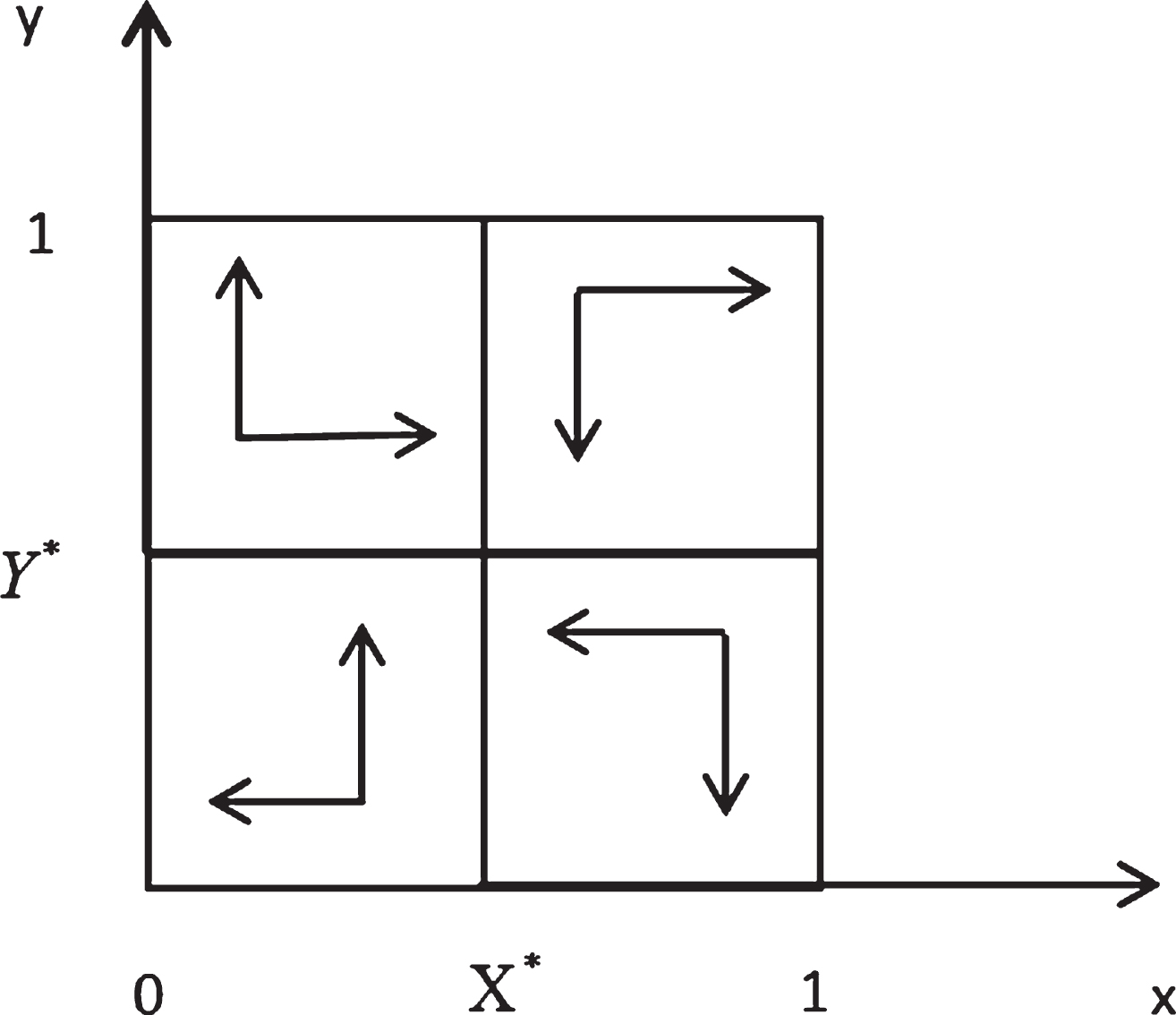
Phase diagram of the evolutionary game.
Figure 1 shows that there may be no evolutionary stability strategy in this game, and companies and the government play the game repeatedly.
Formula of the determinant for each equilibrium point
First type of stability analysis of the equilibrium points
The replication dynamic equations of recycling companies and the government is as follows:
Let
In this study, a Jacobian matrix is established according to the method proposed by Friedman to judge the stability of each equilibrium point. The point has local stability if and only if Determinant J (Det J)>0 and Trace J (Tr J)<0. Equations (14) and (18) constitute the system of equations, the Jacobian matrix of which is as follows:
Det J and Tr J calculation formulas for each equilibrium point are shown in Table 3.
When Z h - C h + C k > 0 is satisfied, the evolutionary stable strategy (ESS) of the system is (1,0). Regardless of the governments’ strategy, the perceived benefit of companies of the protecting strategy is greater than the perceived benefit of the not-protecting strategy. No matter what the strategy of the companies is, the perceived benefit of the government choosing to non-supervision is greater than the perceived benefit of supervision, as shown in Table 4.
Second type of stability analysis of the equilibrium points
Table 5 shows that when Z h - C h + C k + k < 0, k - C g + C d > 0 and Z h - C h + C k + C g - C d < 0 are satisfied, that is, whatever the strategy of the government is, the perceived benefit of recycling companies of the not-protecting strategy is greater than the perceived benefit of the protecting strategy. No matter what the strategy of the companies, the perceived benefit of the government choosing to supervision is greater than the perceived benefit of non-supervision. Thus, ESS of the system is (0,1).
When Z h - C h + C k < 0 and k - C g + C d < 0, if companies protect suppliers’ privacy, then the benefits companies obtained is less than the companies’ cost for the protection of suppliers’ privacy. In addition, if the government fail to supervise, then the benefit the government obtained is less than the government cost for the supervision. In this situation, the equilibrium point (0,0) is the ESS.
Equilibrium point verification
To intuitively explore the impact of the initial strategy and different factors on the choice of privacy protection behavior, we use MATLAB to conduct the simulation analysis of the evolutionary game to observe changes in the evolutionary state of strategic choices for the government and the companies, along with changes in the initial strategy and factor values.
This study refers to the research results of Tversky and Kahneman, and assigns parameters λ = 2.25, α = β = 0.88, and γ = 0.88 in the foreground theoretical model. To simulate the game results between companies and governments in different situations and analyze the influence of various parameters on the game process, this study makes the value assignment based on reference combined with the characteristics of the Prospect Theory [43]. The initial values of the parameter values were taken as follows: p = 0.7, η = 1, δ = 1, c g = 2, c k = 3, c d = 2, k = 2, C k = 3.98, C d = 2.78, and C g = 4.14.
Scenario 1: When h = 2 is fixed, Z h = 2.5, C h = 4.14 could be obtained, which meets the conditions of Z h - C h + C k > 0 and k - C g + C d > 0. Figure 2 verifies that under this condition, (1,0) is the evolutionary stability point.

Scenario 1 evolutionary stability point.
Scenario 2: From Fig. 2, the value of k is reduced to meet the conditions of Z h - C h + C k > 0 and k - C g + C d < 0 of Table 3. Figure 3 verifies that (1,0) is the evolutionary stability point under this condition.
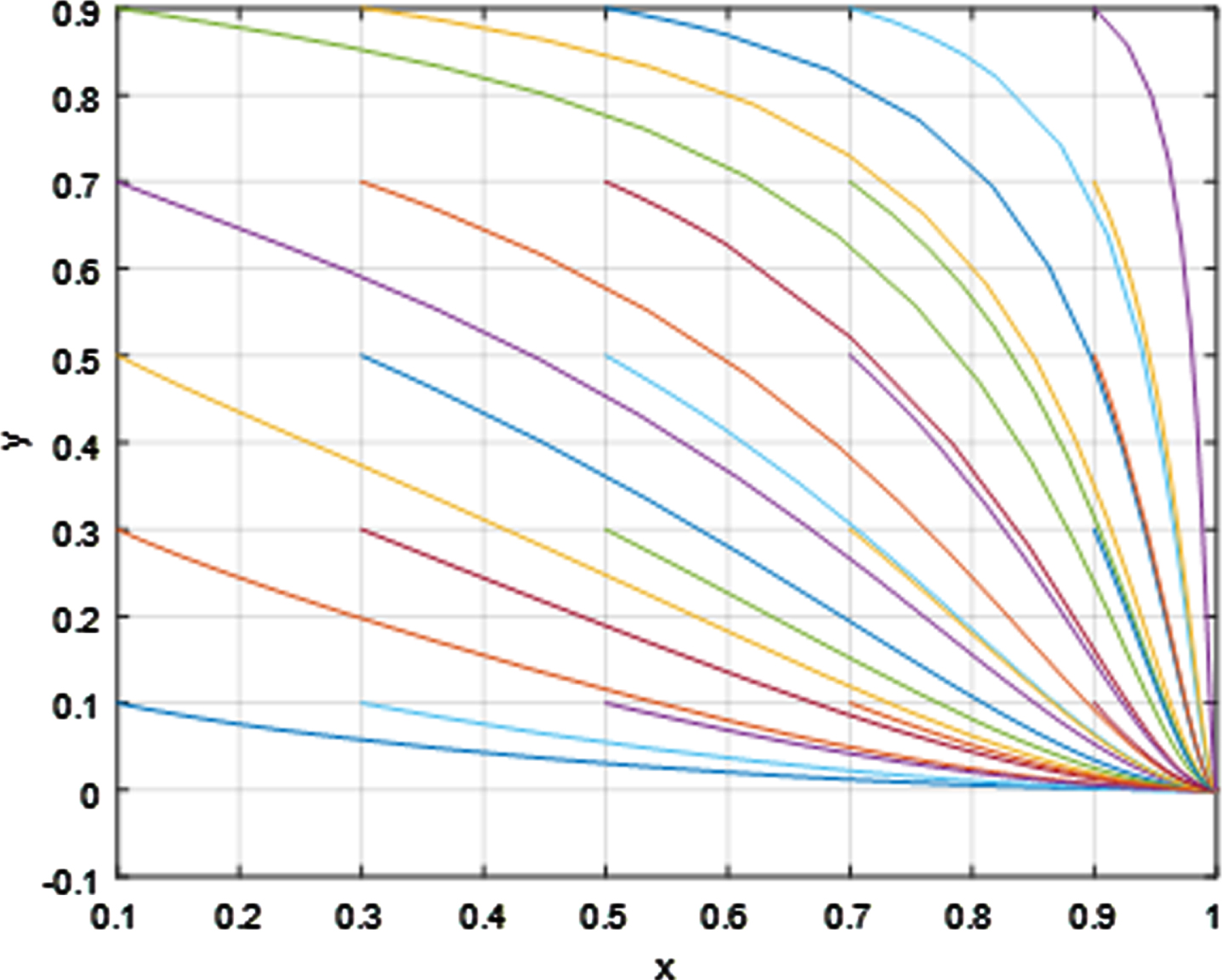
Scenario 2 evolutionary stability point.
Scenario 3: When h = 3 is fixed, Z h = 2.98, C h = 8.45 could be obtained, which meets the conditions of Z h - C h + C k < 0 and k - C g + C d > 0, as shown in Fig. 4. The system is biased but not fully converged to the (0,1) point.
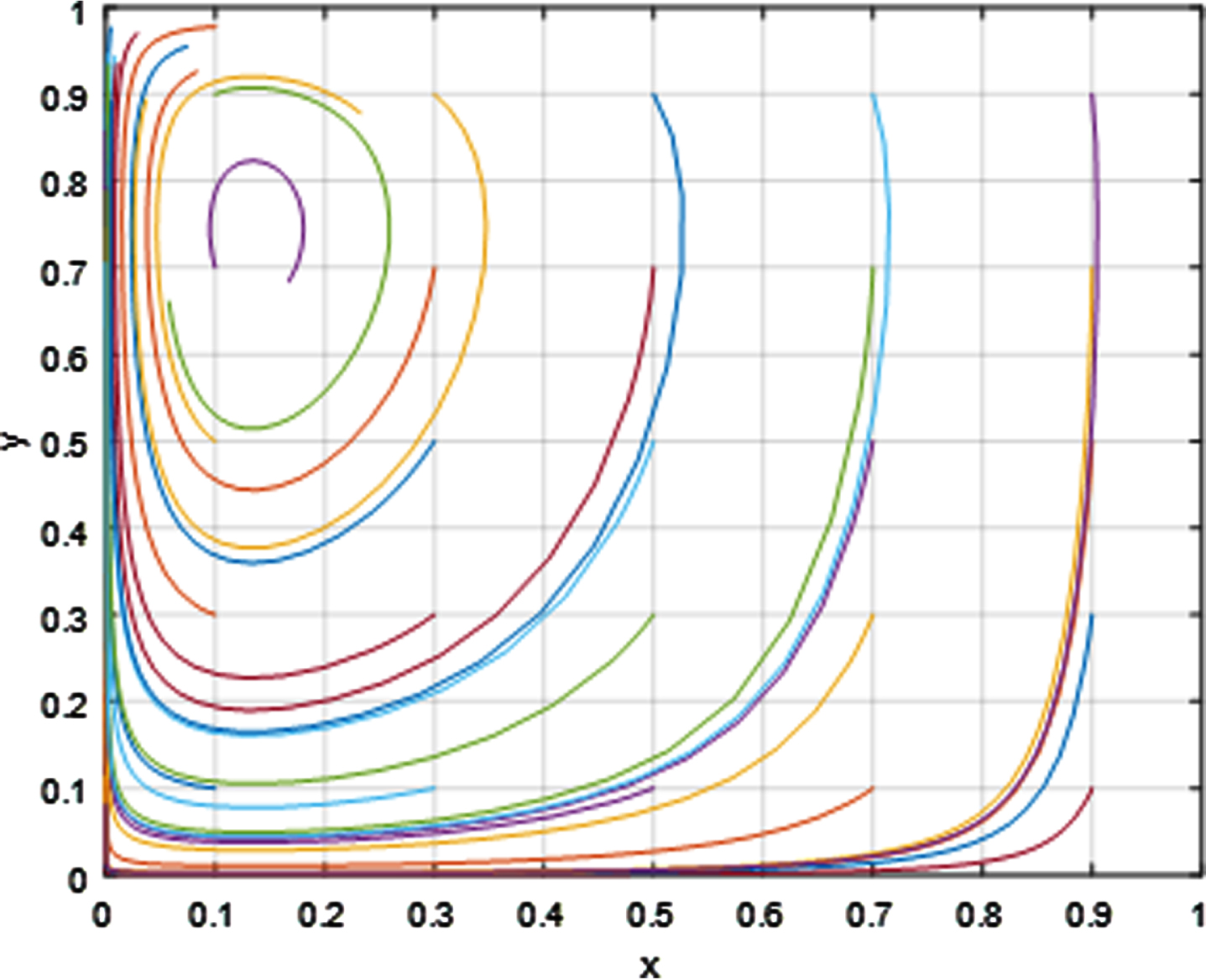
Scenario 3 evolutionary stability point.
Scenario 4: On the basis of Fig. 4, the value of k is reduced to meet the conditions of Z h - C h + C k < 0 and k - C g + C d < 0 of Table 4. Figure 5 verifies that (0,0) is the evolutionary stability point under this condition.
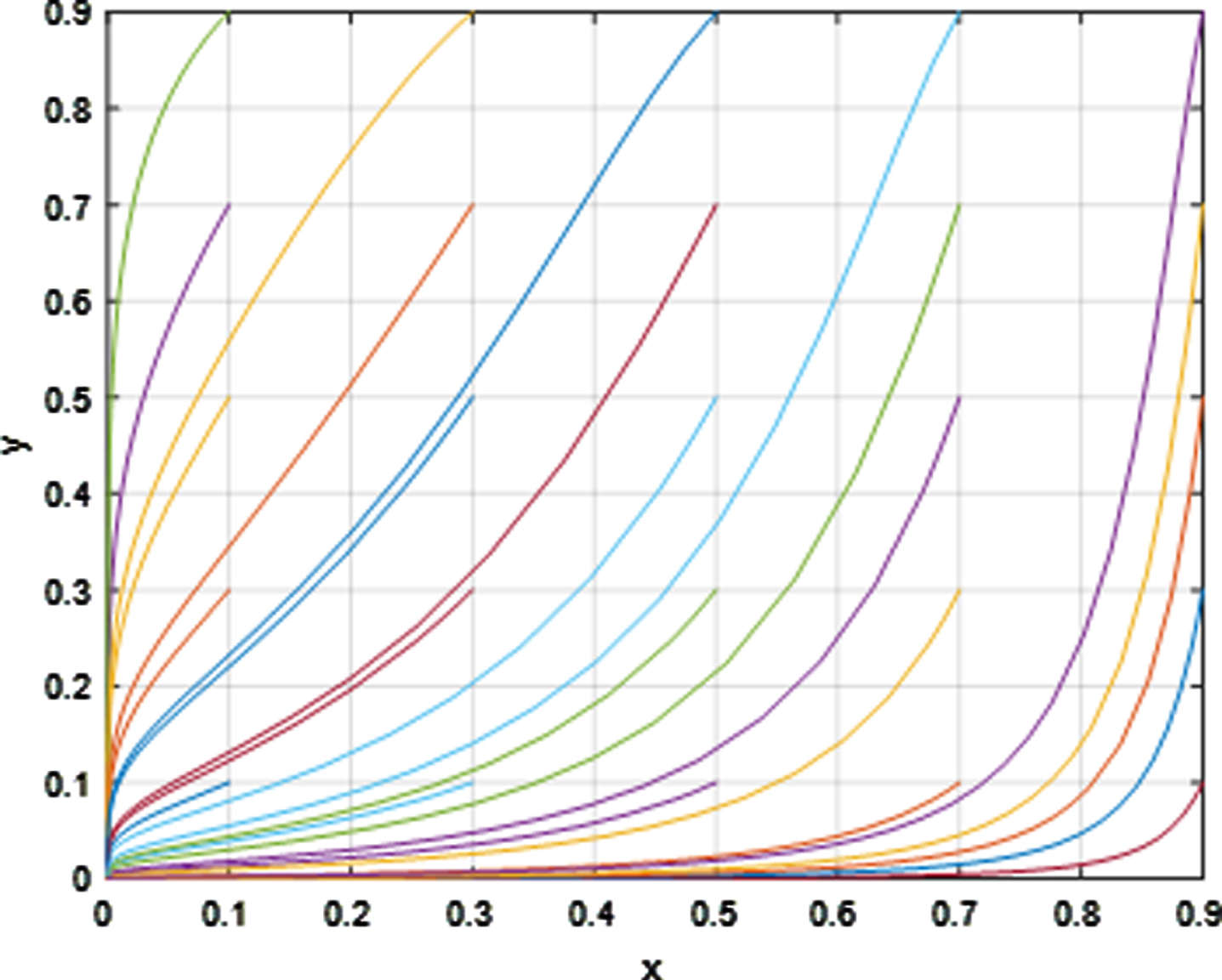
Scenario 4 evolutionary stability point.
(1) According to the evolutionary game model, the factors that have a greater impact on the outcome of the evolutionary game are Z h , C h , C k , C g , C d , k. The changes in the results of Z h and C h are partially determined by companies’ effort to protect suppliers’ privacy h. Therefore, this study first analyzes the evolution of the game system by observing the changes in h.
By setting h = 1, 2, 3 and 4, Z h = 1.84, 2.5, 2.98, 3.39 and C h = 1.22, 4.14, 8.45, 14 are maintained constant, and C k = 3.98, C d = 2.78, C g = 4.14, k = 2, and other factors are maintained constant as well. The initial value x0 = 0.5, y0 = 0.5 is set. The evolution result of the recycling companies is shown in Fig. 6, and the government evolution result is shown in Fig. 7.
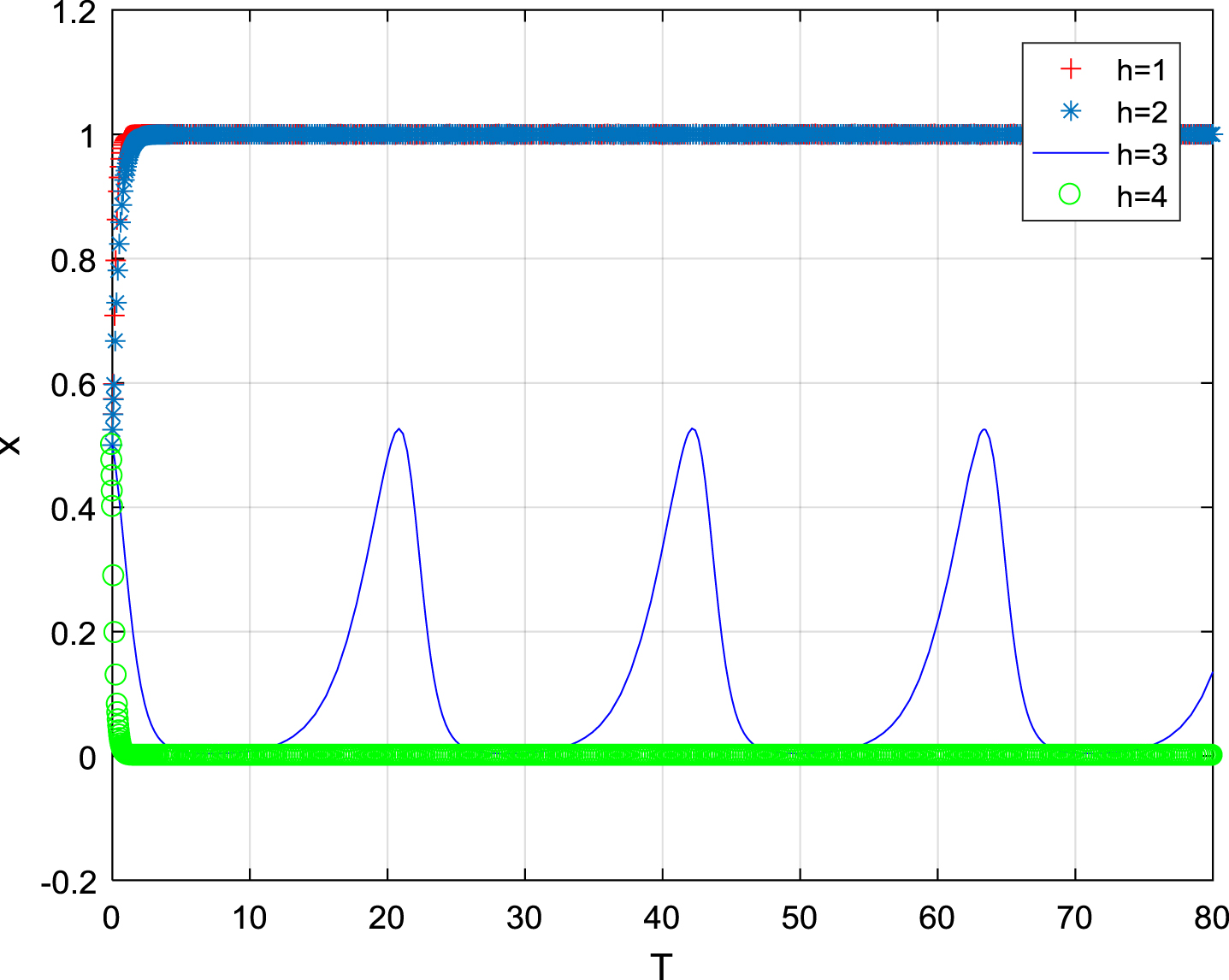
Dynamic evolution of recycling companies with h = 1, 2, 3, 4.
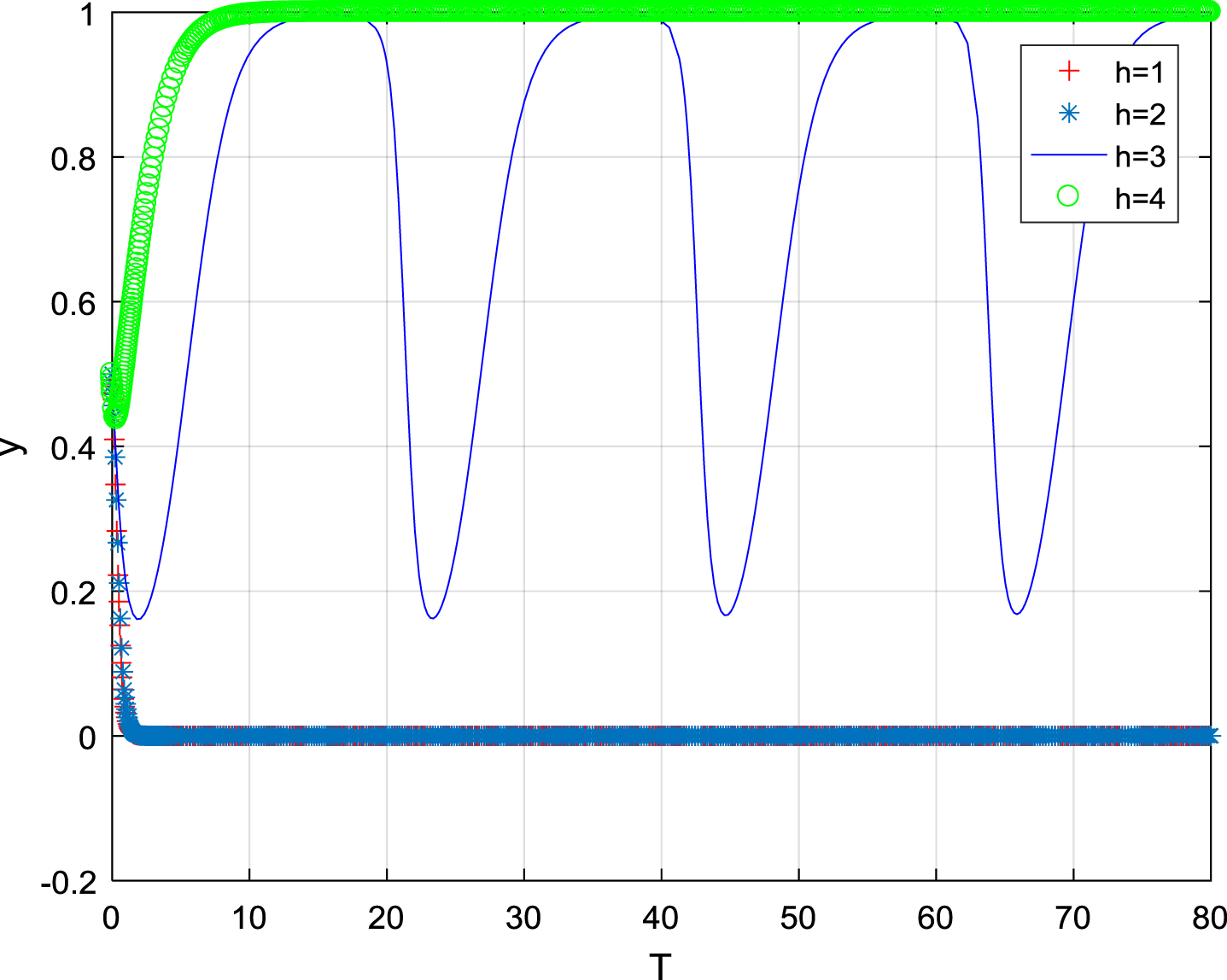
Dynamic evolution of government with h = 1, 2, 3, 4.
When h = 1, Fig. 6 indicates that the perceived benefits of protecting suppliers’ privacy are greater than the perceived costs of protecting suppliers’ privacy. Companies’ perception of the overall benefits of protecting suppliers’ privacy is positive, and the former will consciously protect suppliers’ privacy. The government recognizes the behavior of suppliers to protect suppliers’ privacy, and believes that even without supervision, it will increase government authority. The result (i.e., protecting suppliers’ privacy, non-supervision) is shown in Fig. 7.
When h = 2, Fig. 6 shows that the perceived benefits of protecting suppliers’ privacy are less than the perceived costs of protecting suppliers’ privacy. However, the sum of the perceived benefits of protecting suppliers’ privacy, and the loss of perceived prestige that does not protect suppliers’ privacy is greater than the perceived cost of protecting suppliers’ privacy. Therefore, recycling companies tend to protect suppliers’ privacy, and the government also tends to not supervise. The result is protecting suppliers’ privacy and non-supervision.
When h = 3, Fig. 6 illustrates that the perceived cost of protecting suppliers’ privacy is greater than the sum of the perceived benefits of protecting suppliers’ privacy and the loss of perceived reputation of suppliers which do not protect suppliers’ privacy, but less than the sum of fines and k. Given that recycling companies often have the chance to escape punishment, their willingness to protect suppliers’ privacy fluctuates between 0 and 0.5. Moreover, the government is willing to believe that companies protect suppliers’ privacy because of restrictions on fines. However, by observing the willingness of companies, companies tend to not protect suppliers’ privacy. Thus, government’s willingness fluctuates between 0.2 and 1.
When h = 4, Fig. 6 indicates that companies’ effort to protect suppliers’ privacy are high, leading to a substantial increase in the cost of protecting suppliers’ privacy, resulting in a negative perception of recycling companies’ decision-making system, and recycling companies are considerably inclined to not protect suppliers’ privacy. When the government observes that recycling companies do not protect suppliers’ privacy, it eventually selects to implement supervision to maintain government credibility. The result is not protecting suppliers’ privacy and supervision. Figure 7 shows that the effort of recycling companies to protect suppliers’ privacy must be maintained at a certain level, and the perceived cost of protecting suppliers’ privacy is controlled under perceived gains and perceived reputational losses that do not protect suppliers’ privacy.
(2) Changes in the results of C k and C d are partially caused by the probability of privacy leakage. Therefore, this study analyzes the evolutionary results of evolutionary games by changing the probability of privacy leakage. By setting p = 0.2, 0.4, 0.6, 0.8, π (p) = 0.226, 0.407, 0.582, 0.765 through model calculation, and h = 3 and other parameter values are maintained constant. Moreover, companies and government’s perceived reputation loss C k = 1.337, 2.408, 3.443, 4.526, C d = 0.936, 1.685, 2.41, 3.168 are obtained. The evolution results of recycling companies and the government are shown in Figs. 8 and 9, respectively.
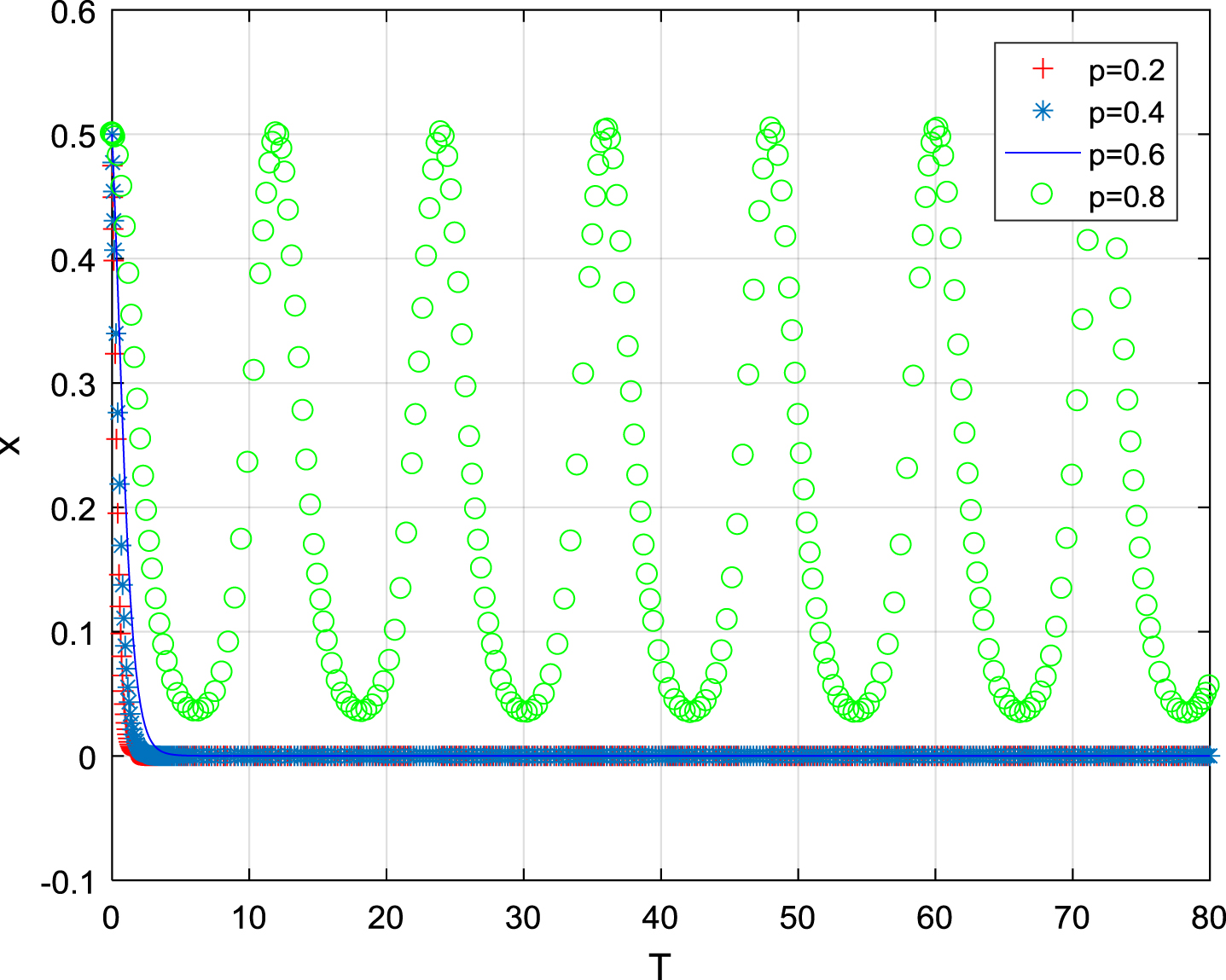
Dynamic evolution of recycling companies with p = 0.2, 0.4, 0.6, 0.8.
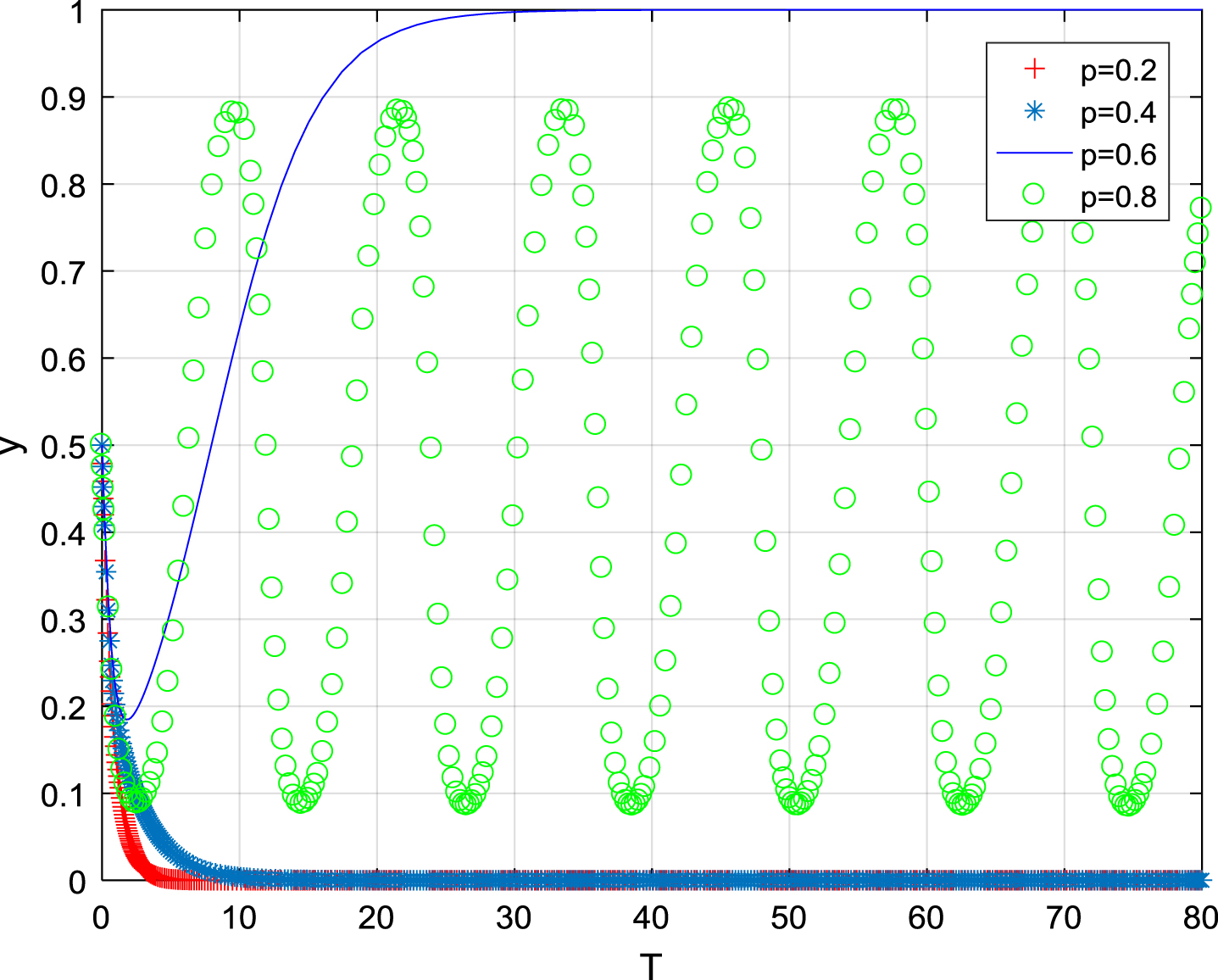
The dynamic evolution of the government with p = 0.2, 0.4, 0.6, 0.8.
When p = 0.2 is fixed, the probability of privacy leakage is extremely low, and the probability that recycling companies and government could perceive privacy leakage is π (p) = 0.226. The result is low expectations of companies and government for the loss of perceived prestige caused by the non-protection of suppliers’ privacy. The willingness of privacy and government supervision has fallen rapidly, thereby leading to the final evolution result (i.e., not protecting suppliers’ privacy, non-supervision).
When p = 0.4 is fixed, the probability of perception is approximately the same as the true probability, and recycling companies are markedly concerned with the perceived cost of protecting suppliers’ privacy. Similarly, the government believes that the cost of implementing supervision is higher than the loss of reputation when unsupervised. The decision is not protecting suppliers’ privacy and non-supervision.
When p = 0.6 is fixed, recycling companies’ estimate of the loss of suppliers’ privacy and prestige is slightly low and the reputation gains of suppliers’ privacy are estimated to be conservative. Recycling companies ultimately select not to protect suppliers’ privacy strategy. Initially, government tends to not supervise owing to the perceived large cost of implementing supervision. However, observing companies indicated that recycling companies immediately increase the probability of supervision when it selects not to protect suppliers’ privacy policies. The set of policies is not protecting suppliers’ privacy and supervision.
When p = 0.8 is fixed, perceived probability is significantly smaller than the actual probability. However, the expectation of loss of prestige caused by privacy leakage is high owing to the immense risk of privacy leakage, and the probability of recycling companies protecting suppliers’ privacy fluctuates approximately from 0 to 0.5. The government is unable to determine the accurate dynamics of companies, and the probability of government supervision fluctuates significantly between 0.1 and 0.9. Increasing the probability of privacy leakage helps companies select to protect suppliers’ privacy. However, substantially low or high probability of privacy leakage is not conducive to government supervision.
(3) The supervision cost of government influences the game result of the game system by influencing government decision. When c g = 1, 2, 3, 4 is fixed, we could obtain a perceived cost of government supervision C g = 2.25, 4.14, 5.92, 7.62. When the cost of government supervision is small (supervision cost = 1), the willingness of government supervision increases, thereby encouraging companies to protect suppliers’ privacy. The willingness of recycling companies to protect suppliers’ privacy fluctuates from 0.4 to 0.7, while the willingness of government supervision fluctuates from 0.5 to 0.9. When the cost of government supervision is moderate (supervision cost = 2), the willingness of recycling companies to protect suppliers’ privacy fluctuates from 0 to 0.5. In the face of the uncertainty of recycling companies’ strategy selection, the willingness of government supervision fluctuates from 0.2 to 1. When the cost of government supervision is high (supervision cost = 3), the perceived cost of government supervision is high. Therefore, the government selects the non-supervision strategy, and recycling companies select not to protect suppliers’ privacy. When the cost of government supervision is very high (supervision cost = 4), both sides select the same strategy (i.e., not protecting suppliers’ privacy, non-supervision). The increase of government perceived supervision cost is not conducive to the protection of suppliers’ privacy and government supervision, as shown in Figs. 10 and 11.
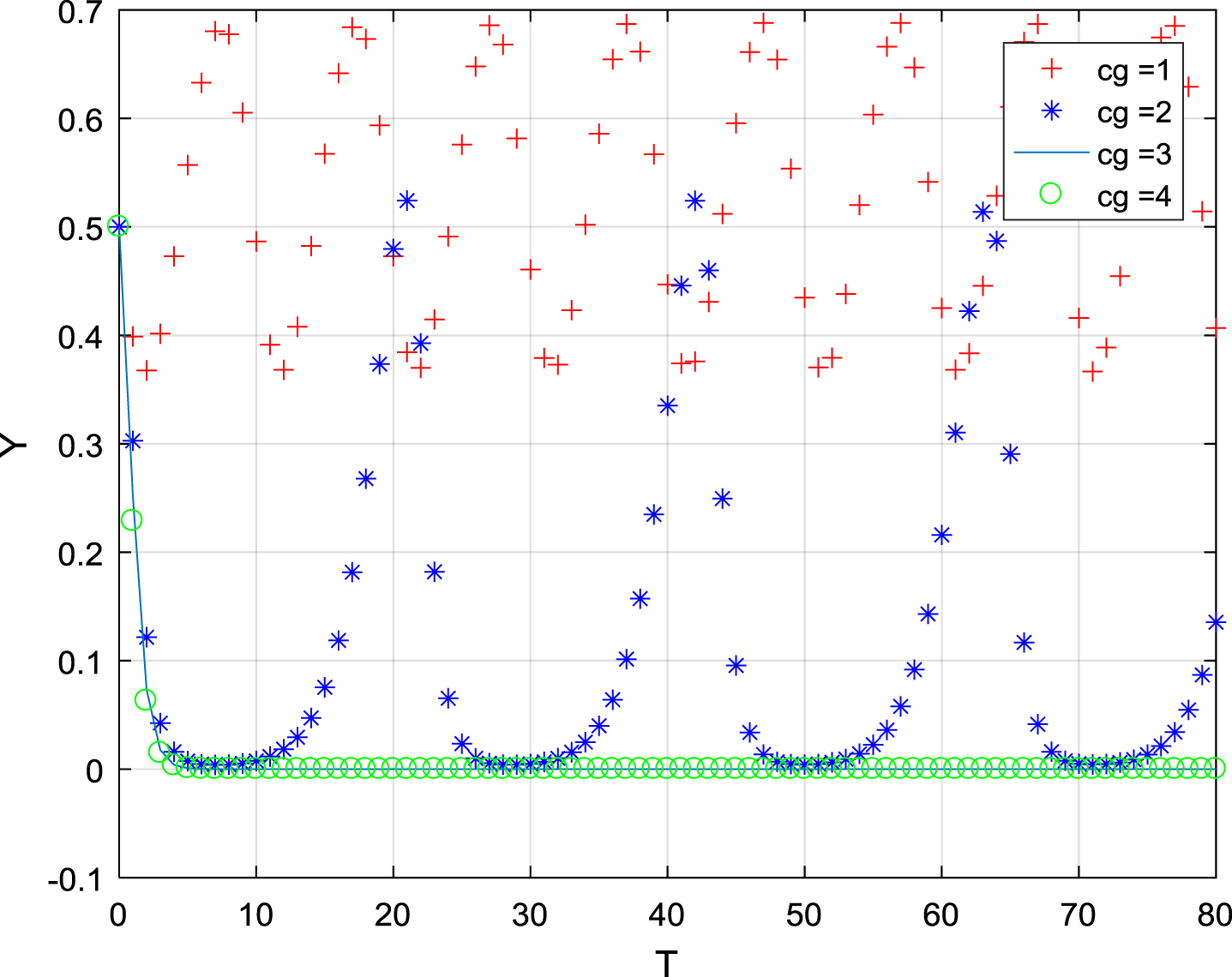
Dynamic evolution of recycling companies with C g = 1, 2, 3, 4.
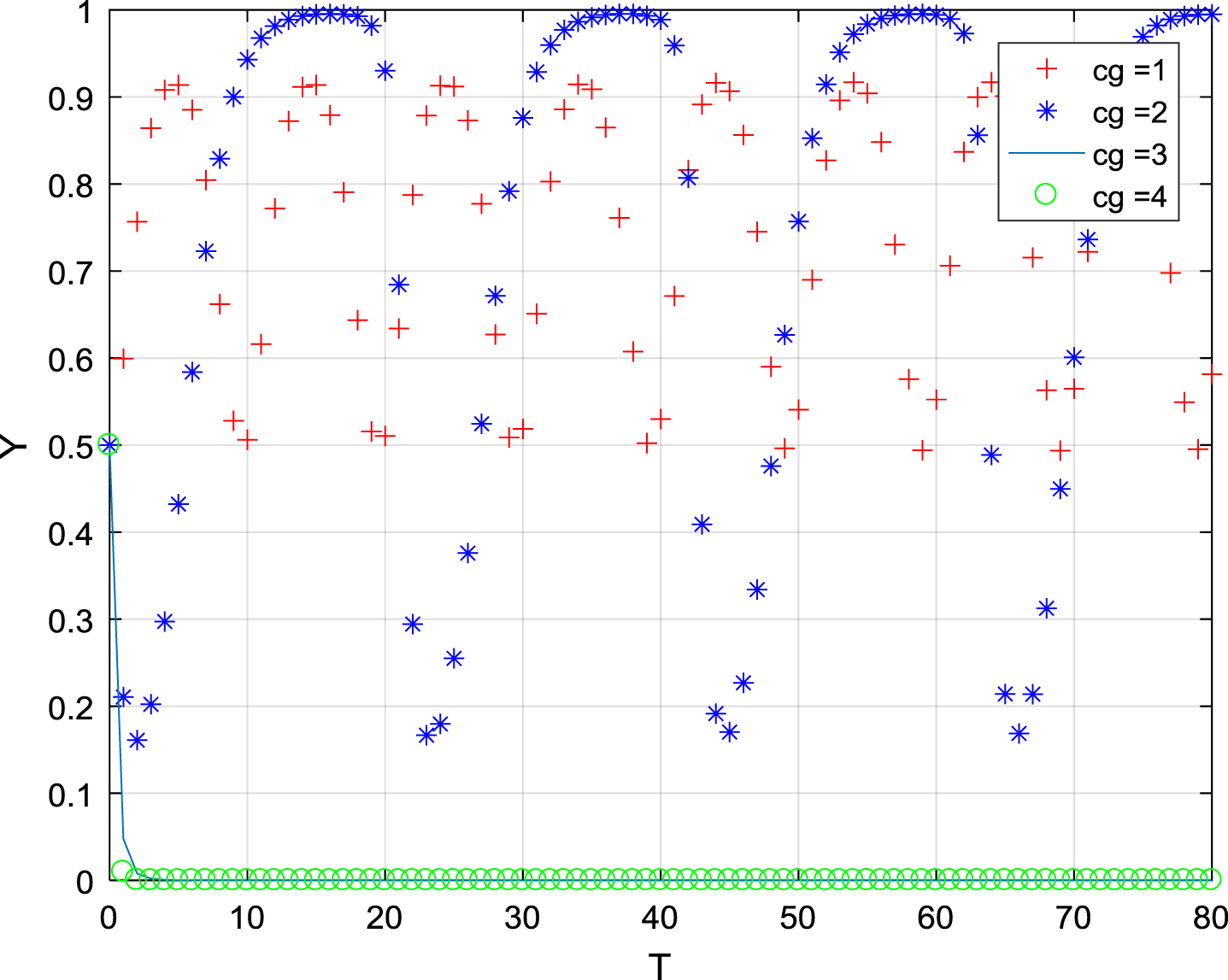
Dynamic evolution of government with C g = 1, 2, 3, 4.
(4) Penalty is the government’s main punitive measure for recycling companies. By changing the amount of penalty k, the evolution results of both sides are analyzed. As shown in Figs. 12 and 13, when the number of fines is considerably low (k = 1), the fines lack a binding force on the behavior of recycling companies and fail to motivate the government to supervise the behavior of recycling companies that do not protect suppliers’ privacy. With the increase of the number of fines, the average level of recycling companies’ willingness to protect suppliers’ privacy is gradually increasing. Moreover, the amplitude of the vibration decreases and the frequency of the vibration increases. The average level of governments’ willingness to supervise is substantially improved when k = 2 and gradually decreases thereafter, and the amplitude and frequency of oscillation are the same as that of recycling companies. In summary, fines could enhance recycling companies’ willingness to protect suppliers’ privacy, and an appropriate number of fines is conducive to government supervision.
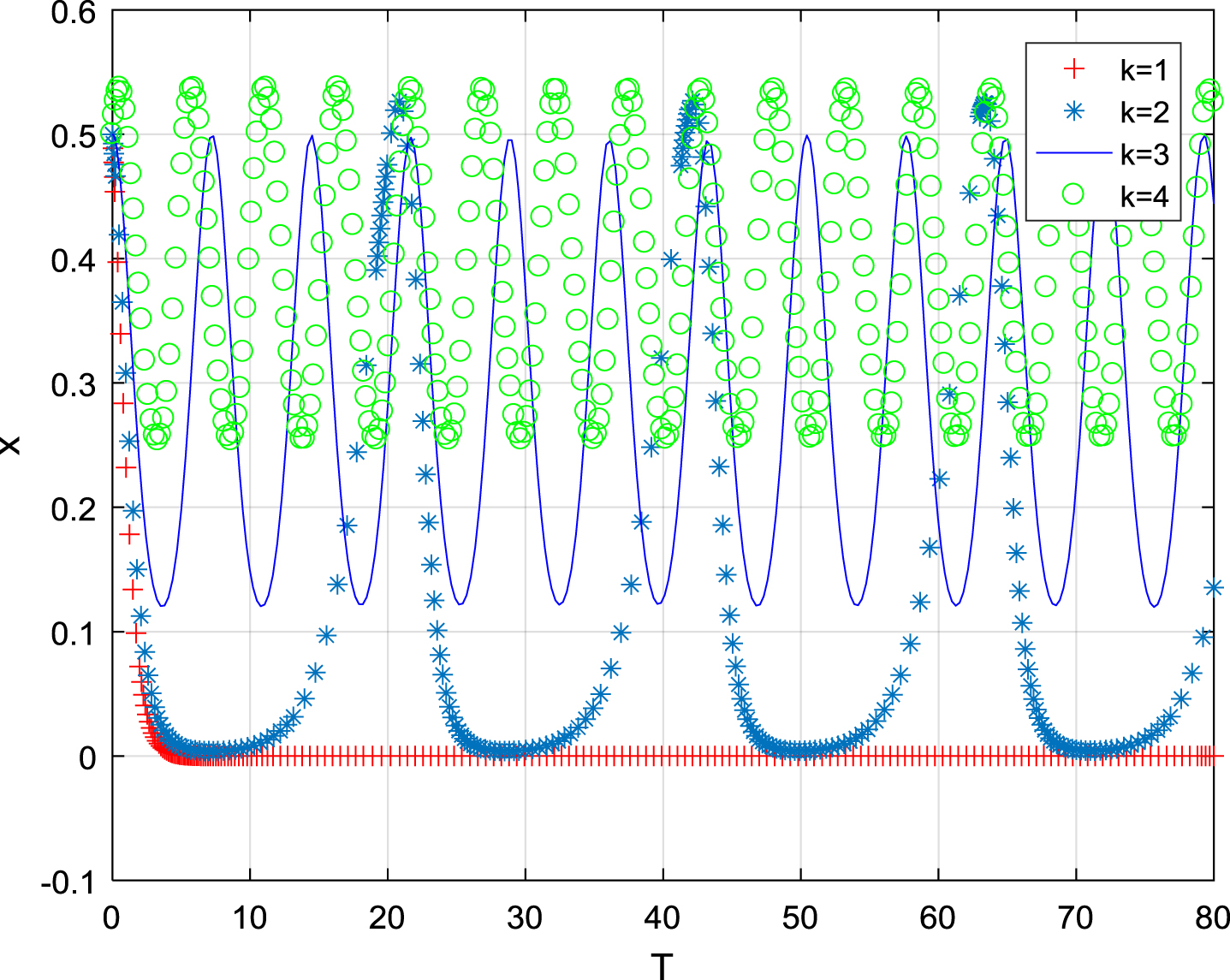
Dynamic evolution of recycling companies with k = 1, 2, 3, 4.
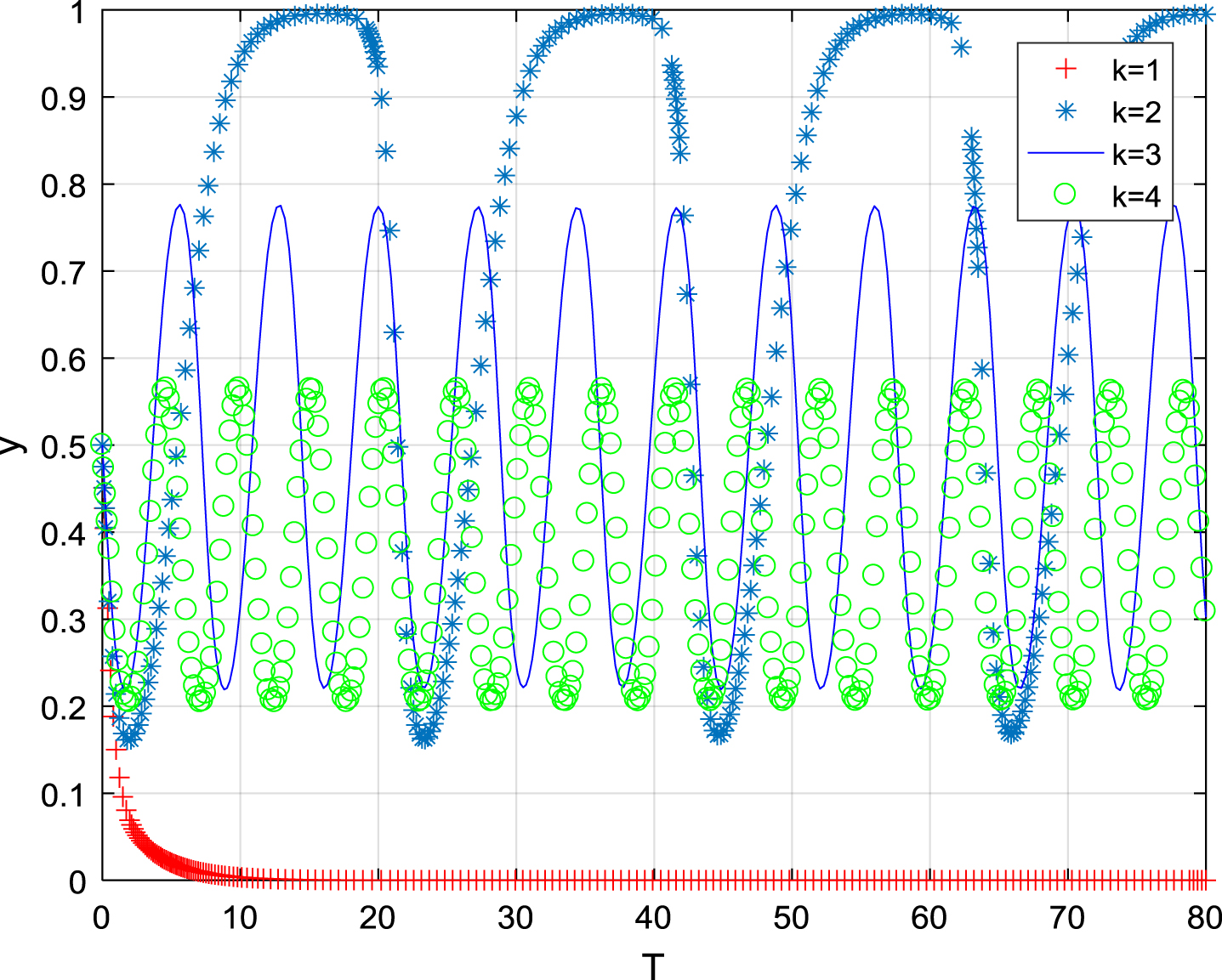
Dynamic evolution of government with k = 1, 2, 3, 4.
(5) Different perceptive value sensitivity coefficient β represents the sensitivity of different individuals to the perceptive value, reflecting the different value perception levels of individuals to the event results when the same event occurs, such as conservative type and radical type. When b = 0.5, 0.88, 1.5, 2, we could observe the evolution results. Figure 14 shows that with the increase of the sensitivity coefficient of perceived value, the willingness of recycling companies to protect suppliers’ privacy gradually declines to 0. The willingness of governments to supervise shows a trend of increasing initially and decreasing thereafter, as shown in Fig. 15. The individual has the feature of conservative estimation of gains and radical estimation of losses. Consequently, the sensitivity coefficient of the perceived value β increases and the loss of cost significantly outpaces revenue growth, which is not conducive to the protection of suppliers’ privacy and government supervision.
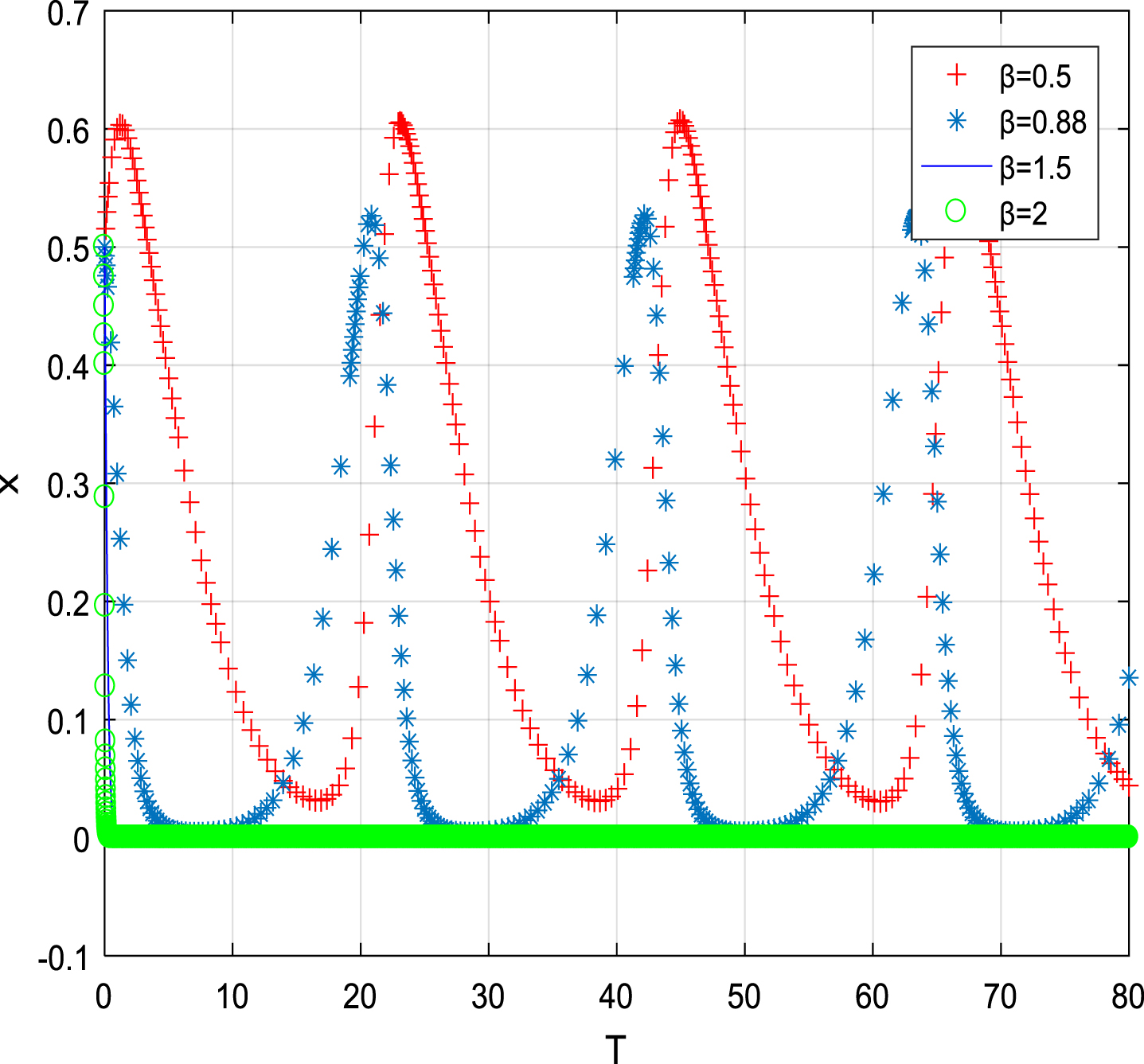
Dynamic evolution of recycling companies with β = 0.5, 0.88, 1.5, 2.
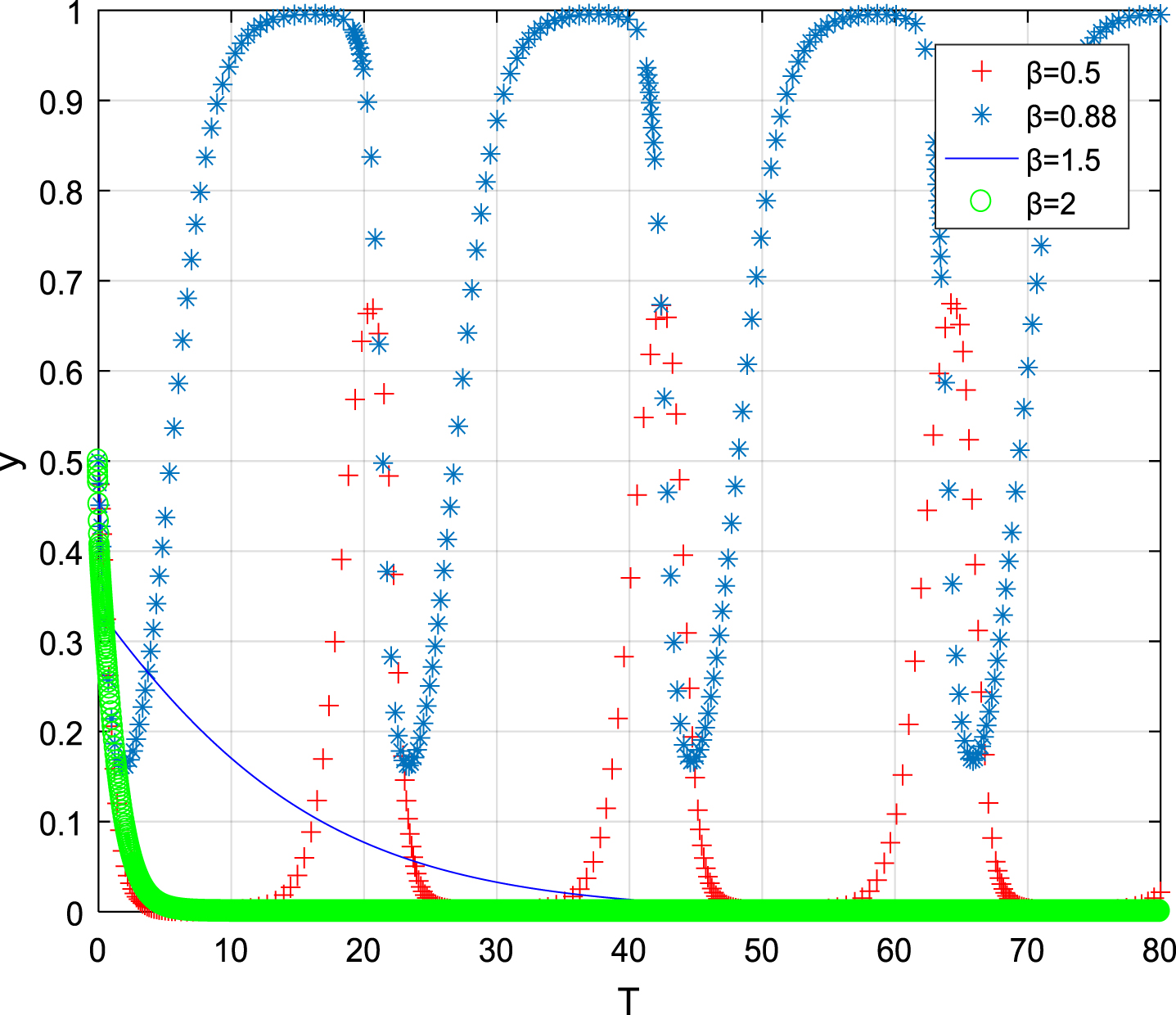
Dynamic evolution of government with β = 0.5, 0.88, 1.5, 2.
(6) A larger value of λ indicates that individuals’ loss estimate is larger. As shown in Fig. 16, the increase of λ changes the corporate decision from protecting suppliers’ privacy to not protecting suppliers’ privacy. When the curve oscillates, its oscillating amplitude changes minimally but the oscillating frequency decreases. As shown in Fig. 17, an increase in λ promotes government’s willingness to supervise, and the evolution of the entire system has changed from (protecting suppliers’ privacy, non-supervision) to (not protecting suppliers’ privacy, supervision). Owing to an increase in the loss aversion coefficient, recycling companies make incorrect estimates of costs and other losses. The perceived benefits of protecting suppliers’ privacy are far from compensating for perceived costs, which is not conducive to protect suppliers’ privacy. The government selects to supervise the behavior of recycling companies that do not protect suppliers’ privacy.
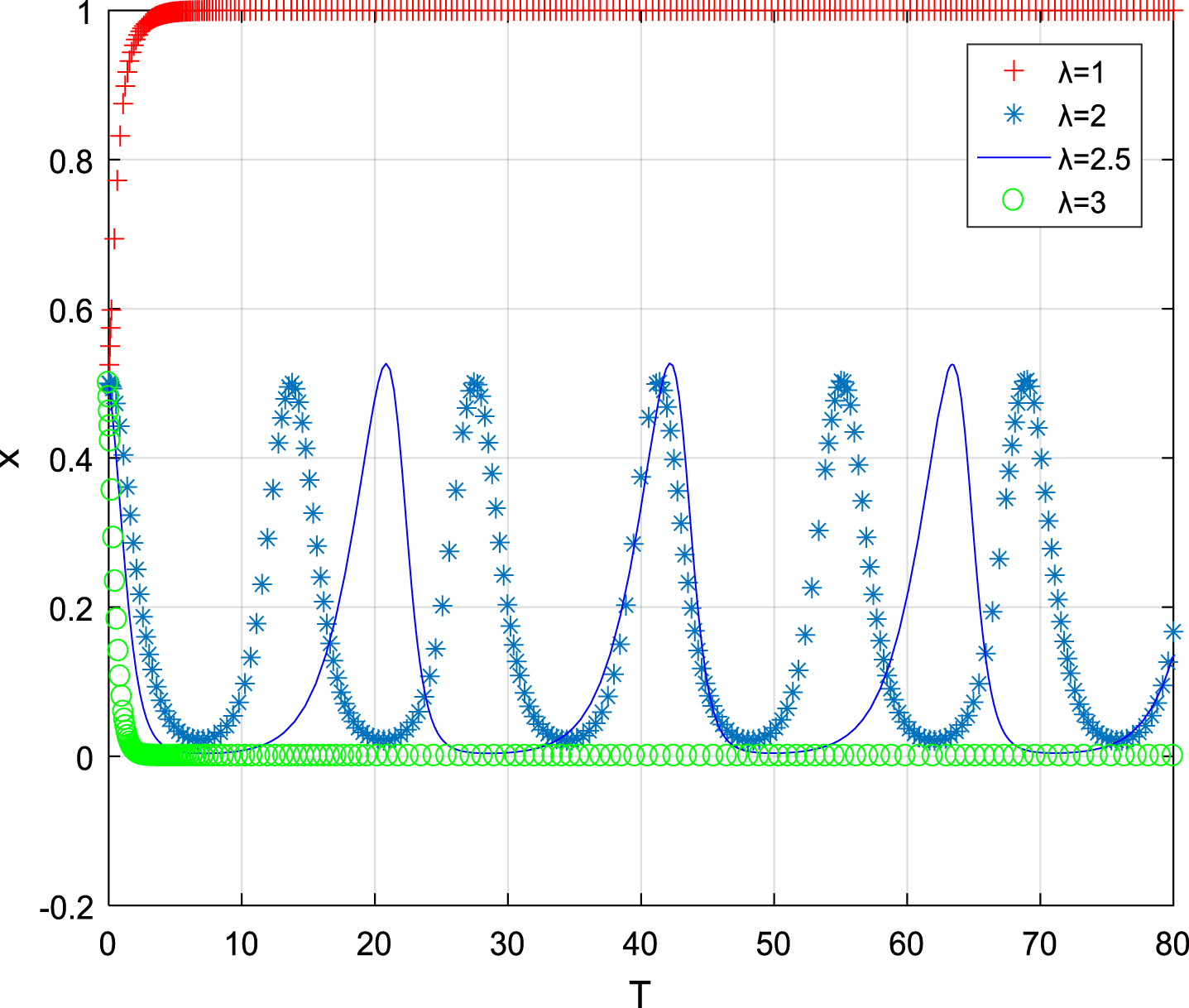
Dynamic evolution of recycling companies with λ = 1, 2, 2.5, 3.
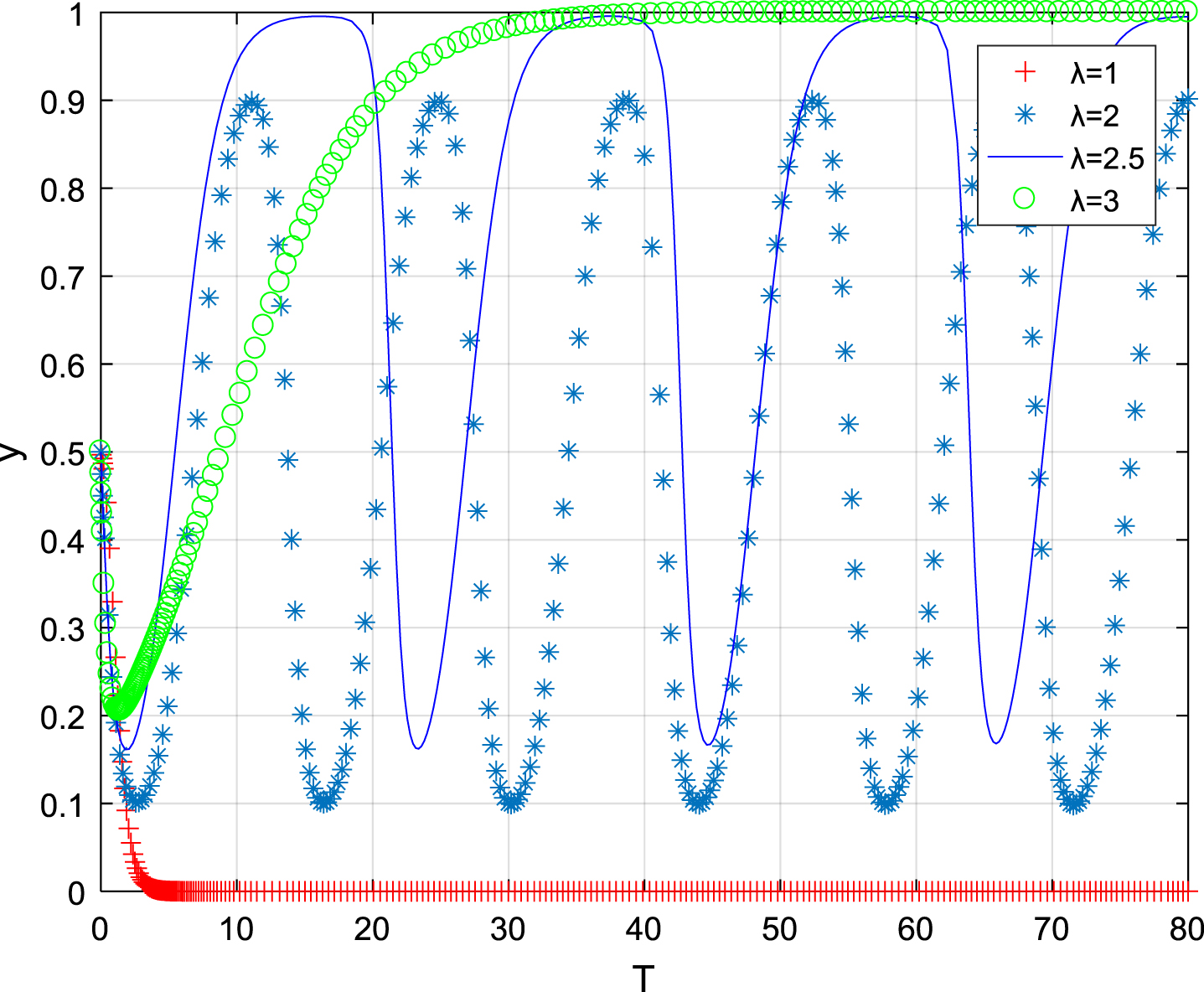
Dynamic evolution of government with λ = 1, 2, 2.5, 3.
Conclusions
This study examines the impact of recycling companies’ willingness to participate in protecting suppliers’ privacy based on different government decisions. Government and recycling companies are participants in a dynamic game model to clarify the impact of government oversight measures, including fines and policy implementation. On the basis of the Prospect Theory, traditional payment matrix was replaced by the perceptive payment matrix to make the model considerably consistent with the finite rational hypothesis. The conclusions are as follows. By changing the value of parameters, the evolutionary game is placed in four different situations and different evolutionary stability points are obtained. The following conclusions could be drawn. Under different circumstances, recycling companies and the government have different decisions on privacy protection and supervision, and the (protection, supervision) strategy cannot form a stable point. Increasing the expected income and punishment level of privacy protection could promote the consciousness of privacy protection of companies. As shown in Figs. 6 and 7, companies’ willingness to protect the privacy of suppliers decreases with the increase of h value, while government’s willingness to supervise increases. The results show that recycling companies should maintain effort to protect suppliers’ privacy at a certain level. Recycling companies should focus on the balance between the perceived benefits of protecting suppliers’ privacy and perceived costs, and the perceived reputation loss of not protecting suppliers’ privacy. An increase in the value of P increases the expected reputation loss of companies increases their willingness to protect consumer privacy, and also increases the willingness of government supervision. However, an increase in the willingness of companies to protect consumer privacy will reduce the willingness of government supervision. Therefore, an increase in the possibility of privacy disclosure helps recycling companies protect the privacy of suppliers, but only the appropriate possibility will enhance government’s willingness to monitor. The increasing value of Cg will reduce the willingness of companies to protect consumer privacy and government supervision. Therefore, an increase in government perceived supervision cost is not conducive to the protection of suppliers’ privacy and government supervision. As shown in Figs. 12 and 13, increased penalties, such as fines, will help recycling companies protect suppliers’ privacy and government to take supervisory decisions. By increasing the value of β, the willingness of companies to protect the privacy of suppliers decreases, and the willingness of government supervision decreases. By increasing the value of λ, the willingness of companies to protect supplier privacy decreases, and the willingness of government supervision increases. An increase in recycling companies’ sensitivity to perceived value has a negative impact on companies’ behavior of protecting suppliers’ privacy, and the moderate increase of perceived value sensitivity will increase government’s willingness to supervise. An increase in loss aversion coefficient has a negative impact on the protection of suppliers’ privacy and a positive impact on government supervision.
Research implications
Our analysis clarifies how government supervises the privacy protection behavior of companies. In a completely free-market economy, the rational choice of companies is to minimize internal costs. Therefore, without government’s economic and legal constraints and guidance, companies experience difficulty in taking the initiative to assume the responsibility of “privacy protection”. (1) The government should intensify supervision, formulate relevant laws and regulations as soon as possible, and use powerful means to regulate the behavior of recycling companies to protect suppliers’ privacy. For example, government establishes a privacy protection mechanism, issues privacy protection laws and regulations, and clarifies companies’ processes to recycle mobile phones. Moreover, the government could cooperate with industry associations to promote the importance of “privacy protection” to recycling companies, and urge industry associations to assist recycling companies to assume the responsibility of “privacy protection”. (2) Government uses publicity, education, and other incentive methods to enhance recycling companies’ awareness of the importance of protecting suppliers’ privacy, appropriately enhance companies’ perceived value sensitivity and reduce loss aversion coefficient, and reduce government’s perceived value sensitivity and loss aversion coefficient, to enhance government’s willingness to supervise. Government could guide companies from the aspect of corporate social responsibility, urge companies to move from passive participation in privacy protection to active participation in privacy protection, and enhance their willingness to protect suppliers’ privacy. (3) Government reduces the cost of government perception and supervision through the application of innovative supervision methods. The cost of government supervision is high because the government cannot obtain complete information on corporate privacy protection. Therefore, recycling companies could work with industry associations and suppliers to establish a privacy protection evaluation system and broaden the feedback channels for corporate “privacy protection” information through spot checks and suppliers’ feedback. In addition, when government selects the objects of supervision, it should focus on supervising companies that do not protect suppliers’ privacy and those recycling companies that have implemented suppliers’ privacy protection but have not benefited from it. Supervision could be appropriately relaxed for companies that have benefited from suppliers’ privacy protection.
From the perspective of recycling companies, “privacy protection” should be combined with companies’ core business, and relevant agencies should be connected to innovate information processing technology. Consequently, recycling companies’ costs to protect suppliers’ privacy are controlled, and companies’ core competitiveness is enhanced, thereby inspiring recycling companies to consciously perform “privacy protection” enthusiasm. For example, for the removal technology of suppliers’ privacy protection, online mobile phone recycling websites, such as Love Recycling, first provided solutions. Through in-depth collaboration with Blancco, the permanent elimination of all types of stored data in used mobile phones in China. Therefore, recycling companies should try in-depth cooperation with online platforms, maximize the “Internet+” mobile phone recycling model, and achieve an online and offline integrated recycling model. Simultaneously, recycling companies should actively respond to government supervision, raise the level of awareness of “privacy protection” by senior corporate managers, and establish a good corporate image, thereby realizing the positive effect of corporate “privacy protection” benefits.
Limitations and future research
Despite the promising outcomes of privacy protection presented by this study, there are still limitations that could be addressed in future research. In the process of privacy protection, suppliers are also participants in the recycling process. Therefore, future research scope could consider taking suppliers into the game’s relevant stakeholders to study privacy protection behavior between companies and suppliers, or the process of a tripartite game between companies and suppliers under the background of government regulation. Apart from punishment, the government’s measures for companies could be considered in the future to incorporate subsidies and supervision into government regulatory measures, to study the government’s multiple intervention mechanisms, and to study the recovery of stakeholders’ participation in privacy protection. Furthermore, additional empirical experiments are needed to verify and support this research.
Footnotes
Acknowledgment
We sincerely thank the funding supports from the Key Projects of the National Natural Science Foundation of China (No. 71503061), National Social Science Foundation of China (No. 16CGL010), Philosophy and Social Science Research Planning Project of Heilongjiang Province (No. 19GLB083; No. 19JLC117), Humanities and Social Science Project of the Ministry of Education of China (No. 20YJC790082), Fundamental Research Funds for the Central Universities (No. 3072021CFW0912; No. 3072021CFW0910), Major Project of Party’s Political Construction Research Center of Ministry of Industry and of Information Technology of the People’s Republic of China (No. GXZY2107), and Key Project of Philosophy and Social Science Research Planning Project of Heilongjiang Province (No. 21GLA438).