



Abstract
The high power generation growth by photovoltaic systems needs to forecast the power generation profile during a day. It is also required to evolve the high-efficient and optimal on-grid/off-grid photovoltaic power generation units. Furthermore, some advantages can be achieved by integrating photovoltaic systems with storage devices such as battery energy storage systems. Thus, optimizing the hybrid systems comprising photovoltaic and battery energy storage systems is needed to evaluate the best capacity. In the present work, a novel control and sizing scheme is proposed for the battery energy storage system in a photovoltaic power generation plant in one-hour ahead and one-day ahead during the dispatching phase. Then, the proposed prediction strategy is recommended for solar irradiation and power utilization. The control approach comprises a predictive control method concerning a Radial Basis Function network optimized by Levenberg-Marquardt back-propagation learning algorithm. Using the RBF network for simulation leads to a WAPE% =1.68 %.
Keywords
Introduction and problem statement
The steady growth of the energy consumption and utilization of fossil fuels for supplying energy demands led to some environmental problems and turned attention toward renewable and green energy sources [1]. Among green energy technologies, solar systems are desiring alternatives for conventional energy resources. In this regard, solar photovoltaic systems are broadly applied for power generation aims, especially for the remote areas which are inaccessible or unjustifiably high-priced for connecting to the grid. Besides, photovoltaic systems are widely employed in on-grid applications as an alternative to traditional fossil-fuel-fed power plants [2]. On the other hand, because of the intermittent nature of solar systems (affected by atmospheric and natural phenomena), rising in the utilization rate of solar systems confront some challenges [3]. Because of the uncertain nature of the solar power generation units, it seems that solar power generation systems are not appropriate, controllable, and dispatchable for on-grid applications [4]. The growth rate in the number of solar photovoltaics is considerably high, and the power generation increased from 141MW to 256GW between 2007 and 2015. By controlling solar photovoltaics, they can be dispatchable similar to the traditional power generation systems [5]. A significant benefit of simulating the dispatchable power generators is that the battery-aided solar photovoltaic power systems can be coupled with the mature market, which has been set up for generators with dispatching capabilities [6]. Developing the intelligent grid systems assists a commodious and quick interaction amongst all participants in the market and supplies technical aid or the utilization of Demand-Response in the market [7].
Review of previous studies
Electrical energy storage systems improvement in the last few years has provided the possibility of using batteries to tackle the intermittency of renewable energy sources. Hence, photovoltaic and wind power generation units may be dispatched on hourly plans. Although, for an independent system operator, it is unfeasible to control and dispatch a large islanded storage system straightly, which is due to the high dimension and the requirement for data privacy. Thus, the aggregator’s concept has been proposed to deal with the islanded sources [8–10].
The aggregator is a port between distributed system operators and the demand side. The aggregator is an agent that provides continuous grid balancing and accumulative electricity access from the energy storage system uninterruptedly at any time [11]. Energy storage systems are vital for achieving a proper and optimal performance for aggregators. Hence, energy storage strategies can be appropriate methods for eliminating the intermittency of the power generation plants since the energy storage system can provide a smooth output by setting a constant capacity for renewable energy sources. An integrated system is proposed in [12] containing diesel generators, a photovoltaic farm, and a BESS system. They used a novel method to manage the power flow in the islanded condition. Another combined management algorithm is suggested in [13], where an integrated BESS-based photovoltaic system is studied. They tried to smooth the load curve of the traditional fuel-based systems as much as possible.
Notwithstanding, energy storage systems require a precise control method. So, various methods have been proposed in this regard by many researchers in the last few years [14–17]. In addition, a horizon optimization is proposed in [18] to obtain the lowest possible adverse impacts resulting from imprecise photovoltaic generation prediction. Regarding obtained results in [19, 20], utilization of BEES systems can reduce the resulted impacts from errors of the photovoltaic generation prediction. Similarly, it has been depicted in [21] that battery utilization could minimize the mismatches on yearly SCR because of the prediction error. However, many researchers have addressed short-term predictions for photovoltaic systems. Still, it is essential to raise the forecasting time to reach optimal dispatching and to empower the energy resources to supply subsidiary systems that are needed in the network. Since conventional power plants employ 24-hour-ahead dispatching planning, it is essential to assess the possibility of enhancing the prediction time to one-day-ahead for the total integrated system. Nottrott et al. [22] proposed the optimum dispatching plan while they tried to establish an optimum dispatching provision for saved energy in the battery to reach a certain value of load peak leveling. Worthmann et al. [23], as well as Ratnam et al. [24], investigated the employment of photovoltaic systems in low-voltage islanded networks. Ru et al. [25] studied the battery capacity for an on-grid photovoltaic system to get the energy arbitrage and peak shaving. Bensmail et al. [26] presented a modeling method for an integrated system based on the photovoltaic (PV), Proton Exchange Membrane Fuel Cell (PEMFC) system, and Power Conditioning Units (PCUs). The power conditioning unit is used to coordinate between the PV and PEMFC systems. In the case of excess power generation through the PV unit, the PEM electrolyzer uses excess power to generate hydrogen. The produced hydrogen is stored and then sent to a fuel cell for supplying DC bus power. Khiareddine et al. [27] presented a multi-source stand-alone system for an agricultural station and optimized the sizing of the proposed hybrid system. The proposed system integrates a wind unit, a photovoltaic unit, a fuel cell, a battery, an electrolyzer, and a hydrogen storage subsystem. Optimal sizing is carried out from the techno-economic viewpoint. Simeon et al. [28] presented an energy storage system based on an auxiliary battery for the time of lower irradiation or no-irradiation. They employed voltage sensors to control the voltage level in the main and auxiliary batteries. They resulted that using an auxiliary battery in their introduced system can decrease stresses on batteries and also enhance the lifetime of the batteries and improve the sustainability of the power generation unit. Amrouche et al. [29] presented state of the art for a different types of energy storage systems, including chemical, electrochemical, mechanical, electric, and thermal.
Main novelties and contributions
This paper aims to obtain an optimal capacity for battery energy storage systems to enhance the dispatching abilities from the one-hour ahead schedule to the one-day ahead. In this process, it’s important to obtain a satisfactory error bound and assist the aggregators in choosing the appropriate capacity for the battery based on the assumed risk. Finding a precise predicting scheme for the output power of the photovoltaic system has high importance in providing plans for dispatching. In the present work, firstly, a predicting approach is developed according to the feed-forward neural network to predict irradiation and power utilization. Battery energy storage system-based control methods are considerably affected by the following dispatching period. Besides, the dispatching factor relies on the renewable power source nature. A variety of neural network types have been evaluated by varying neurons and hidden layers’ numbers and also by changing the training schemes and activation functions. Ehsan et al. [30] applied a two-layer ANN-based forecasting model for an on-grid photovoltaic system.
Contrary to the work studied by Ehsan et al., in the present work, a three-layer feed-forward neural network is employed. The employed method is a Radial Basis Function Neural Network (RBFNN). In this work, for battery energy storage systems, the lithium-ion battery is adopted as the atoning device; however, the proposed method can be applied to other storage systems. The simulation aims to illustrate the efficiency of the suggested controller. At last, the optimal capacity for the energy storage system is presented.
Problem statement
The effectiveness of the Battery Energy Storage System (BESS) relies on the configuration of the PV/BESS hybrid system. Particularly, the efficiency rises with any decrement in the distances between elements and gets to the optimum value in the case that each component of the hybrid system is installed in the same position. As it is shown in Fig. 1a, the BESS system can be installed on the AC side or can be connected to the DC side directly. Nevertheless, installation at the same point is mostly used for low-voltage grids, in which it is essential to find the maximum value for each consumer’s self-consumption. Thus, the purpose of different motive programs is to reach grid parity at the plant installation.
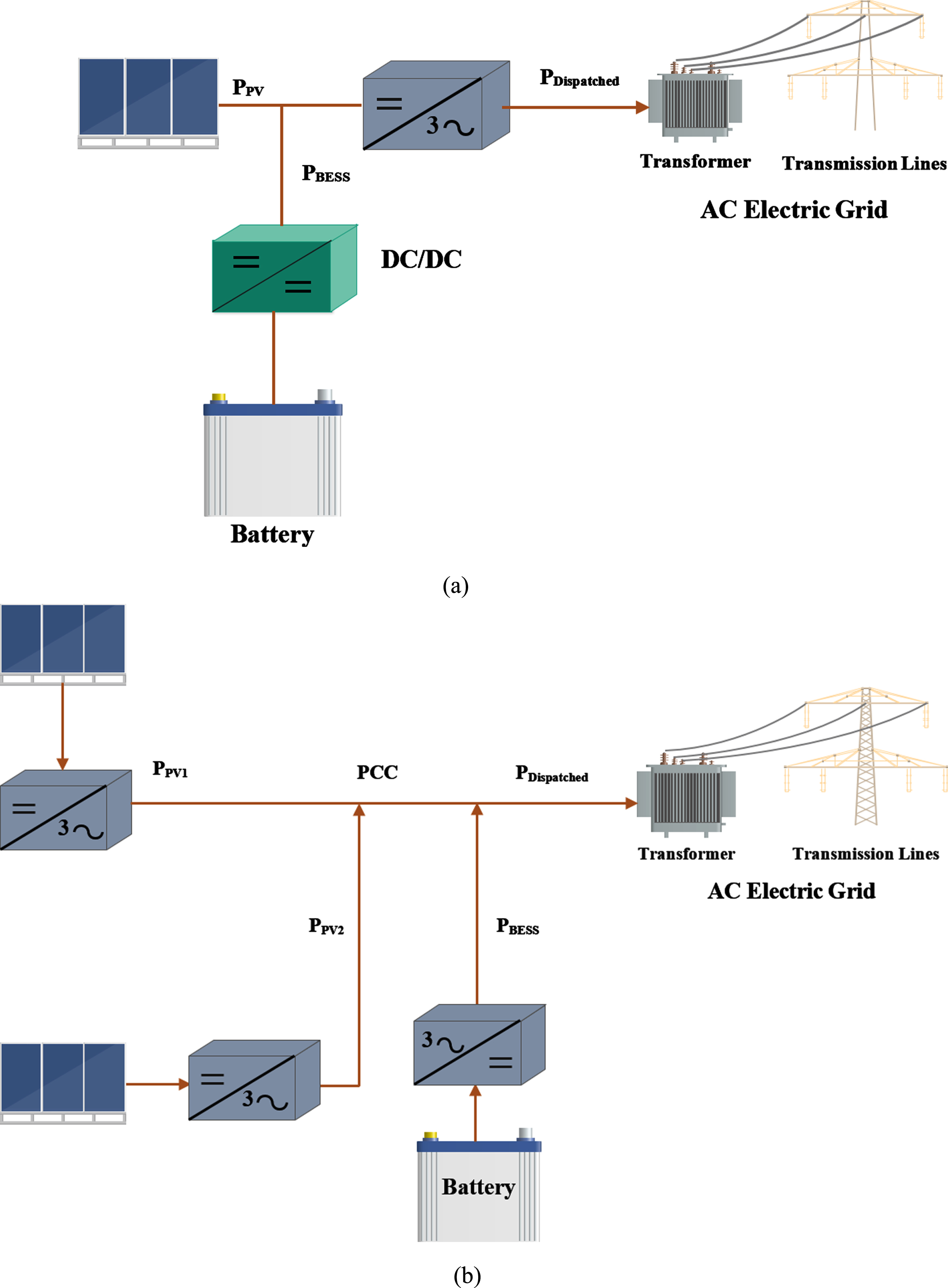
a) Connected configuration of the PV modules and Battery Energy Storage System b) Segregated installation of the PV modules and Battery Energy Storage System.
Photovoltaic systems linked to the medium-voltage grids are principally applied to sell power, and hence, obtaining the maximum self-consumption value is not in concern. However, the increment of these large installations can only be allowable using Distribution System Operators (DSOs). However, if integrated generators can contribute to frequency and voltage regulation, this ability is not assigned to the individual generator. However, it can be carried out using a new operator, namely; aggregators, which integrate a generator collection and provide whole accessory services needed by distribution system operators [9, 32].
As a novel item in the power market, the demand-response aggregator works as an agent between demand-response source possessors and independent system operators. From the clients’ viewpoint, demand-response aggregators are customers assisting them in reducing the demand and supplying different agreements in which buyers can agree to participate voluntarily [3]. From the independent system operator’s viewpoint, demand-response aggregators keep the demand-responses, which are aggregated, and submit demand-response offers in 24hour-ahead markets just like electricity generation suppliers [33].
As illustrated in Fig. 1b, the installation position of the battery energy storage system is not identical, and the influence of the BESS on the dispatching energy can be seen upstream of PCC (Point of Common Coupling).
Control methods for battery energy storage systems are widely affected by the following dispatching periods, and the dispatching period also relies on the renewable energy source. For instance, considering photovoltaic systems as the power source, the dispatching period is supposed to be on-hour-ahead [33–35]. This is due to the mostly-used forecasting schemes do not exhibit enough precision in longer periods.
In the case of solar irradiation prediction, various methods have been performed based on the prediction horizon [37]. In latest years, Artificial Neural Networks (ANNs) are broadly regarded as a better prediction method compared to conventional techniques. In these methods, the nonlinear, complex, and implicit nature of the system is considered in relations [38]. Pelland et al. [39] reported various methods based on the artificial neural network. In their work, forecasting approaches according to the feed-forward strategies are implemented to predict irradiation and electricity use. A variety of neural networks for different aims have been evaluated. Particularly, each network error has been measured for different numbers of layers and neurons. Also, various activation functions are evaluated in their work. All neural networks are based on the feed-forward network, and the training process is done by applying the back-propagation Levenberg-Marquardt technique. For better evaluations, different datasets were employed to train neural networks.
The datasets used for training the network must cover sufficient cases to empower the neural networks to predict properly. Hence, for training purposes, the dataset obtained in one year was applied for training the neural networks. The selected datasets comprise all the feasible climate circumstances in winter and summer [39].
In this work, the dataset utilized for predicting solar irradiation comprises some important variables such as ambient temperature, wind velocity, date and time (sampling timestamp), and solar radiation. The dataset is obtained in a one-year period [39, 40].
The rest of the paper can be defined as follows:
In section 2, the forecasting method is presented comprehensively. Section 3 defines the proposed control method for the battery energy storage system. In section 4, results for the 1-hour ahead and 24-hour ahead predictions are presented. Section 5 is allocated for concluding remarks.
In comparison to different neural networks, likewise, the Radial Basis function network holds some advantages such as better approximation, faster training process, and simple configuration. These features make it a favorable method for time series forecast [41, 42]. The RBF Neural Network is a feed-forward neural network that is made with a nonlinear activation function in the hidden layer [44]. The RBFNN algorithm involves three layers, including an input layer, a hidden layer that follows the nonlinear Gaussian activation function, and a linear output layer [45].
With regarding the input numbers as n, and the number of learning samples N, the training matrix can be given as X = [X1, X2, …, X
N
], and the output vector is defined by Y = [y1, y2, …, y
N
]. Thus, the output of j
th
node in the hidden layer is given by:
Herein, the Gaussian activation function is presented by G
j
(. , . , .), and the center and width of the Gaussian activation function are presented by C
j
= (cj1, cj2, …, c
jn
) and σ
j
, respectively [45]. The output of the network based on the input X
i
is defined as:
In which the training error (e
i
) is given by:
Besides, the minimum total training error is defined by:
The number of hidden neurons is considered as individuals in the optimization algorithm. In this case, the objective of the optimization model is to minimize the total training error E for all learning samples. Also, the validation error in each training will be evaluated based on the experimental samples of the validation set, which is the objective function of the optimization algorithm.
The total datasets for the training, validation, and testing of the RBF are segmented into 8760 time steps. The whole dataset is divided into three categories, including 70% of the dataset for the training of the RBF, 15% of the dataset for the validation of RBF outputs, and 15% of the dataset for the testing aims.
The obtained and experimental data are compared using Weighted Average Percentage Error, which is presented as the following relation.
Herein, Irr predicted and Irr experimental are the predicted and experimental irradiation values, respectively.
Various configurations for the network were evaluated to obtain the most appropriate structure for better prediction aims.
A desiring agreement between the computing cost and mean error was obtained by applying the neural network with three layers, including input, hidden, and output layers. The structure of the RBF neural network for predicting the solar irradiation values is illustrated in Fig. 2. The RBF structure consists of three layers with 6 neurons in the input layer, 6 neurons in the hidden layer, and one neuron in the output layer. The input dataset in the input layer comprises the hour of the day (0 - 23), the month of the year (0 - 12), previous 24-hour solar irradiation, the predicted temperature of ambient, the day (1 - 365), and the average solar irradiation in 24-hours before.

RBF structure for solar load power consumption and solar irradiation prediction.
Assessment of the prediction method efficiency by various error metrics is essential for depicting the precision of the forecasting methods [46].
In the first step, a prediction horizon should be considered that is considered one hour. So, the generated power of the solar system is predicted for the following hour. This predicted value is achieved using an RBFNN, which is comprehensively presented in prior sections. While the prediction prospect is considered to be one hour (instead of the next 24 hours).
A lithium-based battery is implemented in the present work in the compensating system. This type of battery is chosen due to its diffusion. While the suggested method is simply applicable to other storage systems.
The applied control approach for the growth of the dispatching forecasting precision is briefly described in the following.
After verifying the max charging/discharging power (which must be ensured by the compensation system), the SOC (denoting the state-of-charge) limitation is the only BESS limitation. The SOC can be defined as the accessible expressed power, which is a share of the rated capacity. Avoiding fully discharging (or overcharging) is necessary to grow the battery lifetime [47]. So, this factor must be preserved in a determined range and also should be predicted precisely in each period. The considered constraint of the SOC is presented as follows:
This constraint helps to prevent overcharging and full discharging.
After determining the SOC allowable interval, the given/received real power of the battery should be equal to the desired value as:
In which:
It’s not possible to satisfy Equation (6) at all times due to its dependency on the battery’s actual SOC. Thus, these constraints are rewritten as:
By furthering the actual power of the battery to the actually produced power of the solar system, the pattern of the total dispatched actual power can be computed by:
As stated earlier, the present work aims to manage the power, which can be simply developed in various storage plants. Achieving higher flexibility and simple application, this paper regarded just the entire capacity and the max charging/discharging power. Once a customized model is required based on a certain storage system, other limitations like current/voltage constraints can be furthered. For instance, for a plant that is based on the flywheel storage system, the rules can be generated for Ω (angular speed) instead of the state-of-charge [48] and [49].
Accuracy of proposed RBF model
Figure 3a compares the experimental data and predicted data by a network with a greater neuron number in the hidden layer. As can be seen, there is a good comprise between the predicted and experimental data. On the other hand, the RBF network has some weak prediction abilities when the variation in solar irradiation has a sudden trend. Figure 3b shows the poor prediction trend of the RBF network in the sudden changes in the solar irradiation values.
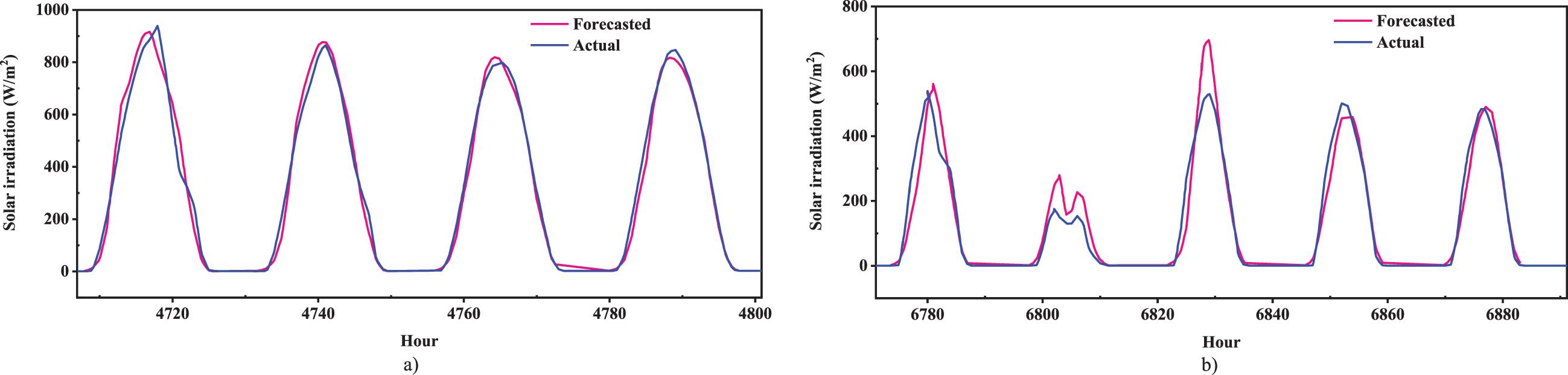
A comparison between the experimental data and predicted data of solar irradiation a) fine forecast b) poor forecast.
The RBF neural network can predict power consumption. In this case, the dataset used for simulation consists of a historical hourly loads table, five years’ temperature. Based on the input data, several datasets were made for network training. For predicting the load power usage one-day ahead, the objective vector is postponed for one-day concerning the input vectors. The input set comprises the subsequent vectors, the hour of the day (0 - 23), the day of the week (1 - 7), previous 24-hour power usage, the last one-week power usage, predicted temperature, and average power usage in 24-hour before. The simulation of the load power consumption was carried out by adopting a three-layer RBF, as shown in Fig. 2. In this case, the RBF configuration includes three layers with 6 neurons in the input layer, 6 neurons in the hidden layer, and one neuron in the output layer. Using the RBF network for simulation leads to a WAPE% =1.68 %. Once R-value is near 1, it denotes that a linear relationship exists between the outputs and targets. Obtained results are depicted in Fig. 4.
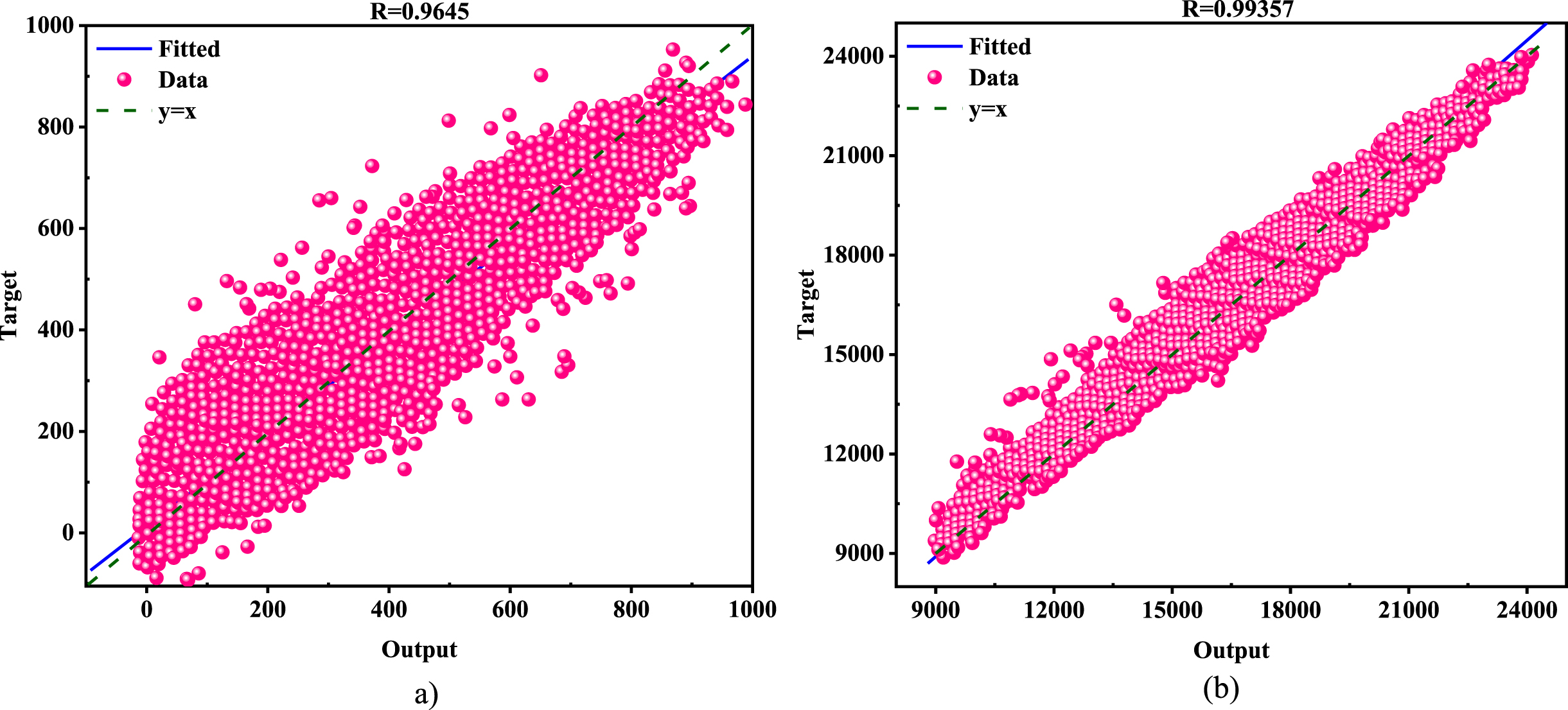
The regression plot for the forecasting of a) solar irradiation and b) load power consumption.
The modeling was performed to assess the optimum BESS capacity needed to create a dispatchable photovoltaic system for the most extended periods, likewise one-day ahead. The one-hour ahead prediction is achieved using the Radial Basis Function neural network, which is presented in the previous section. The dataset employed in this study is based on the actual PV plant settled in Northern Italy, which is a medium-voltage grid.
To validate the precision of the proposed model, the Weighted Average Percentage Error was employed to assess the precision of the prediction. The influence of the BESS system is evident in decreasing the prediction error. The method was employed for one-hour ahead prediction in various capacities of the BESS units. The modeling is also carried out without the atoning system to assess the BESS atoning system contribution. Furthermore, the simulation also regarded the case that the deviation of the dispatching power is ±5% for the photovoltaic rated power.
At last, the dispatching period was extended to the 24-hour ahead planning to obtain the optimum BESS capacity, which matches the efficiency of the one-hour ahead planning.
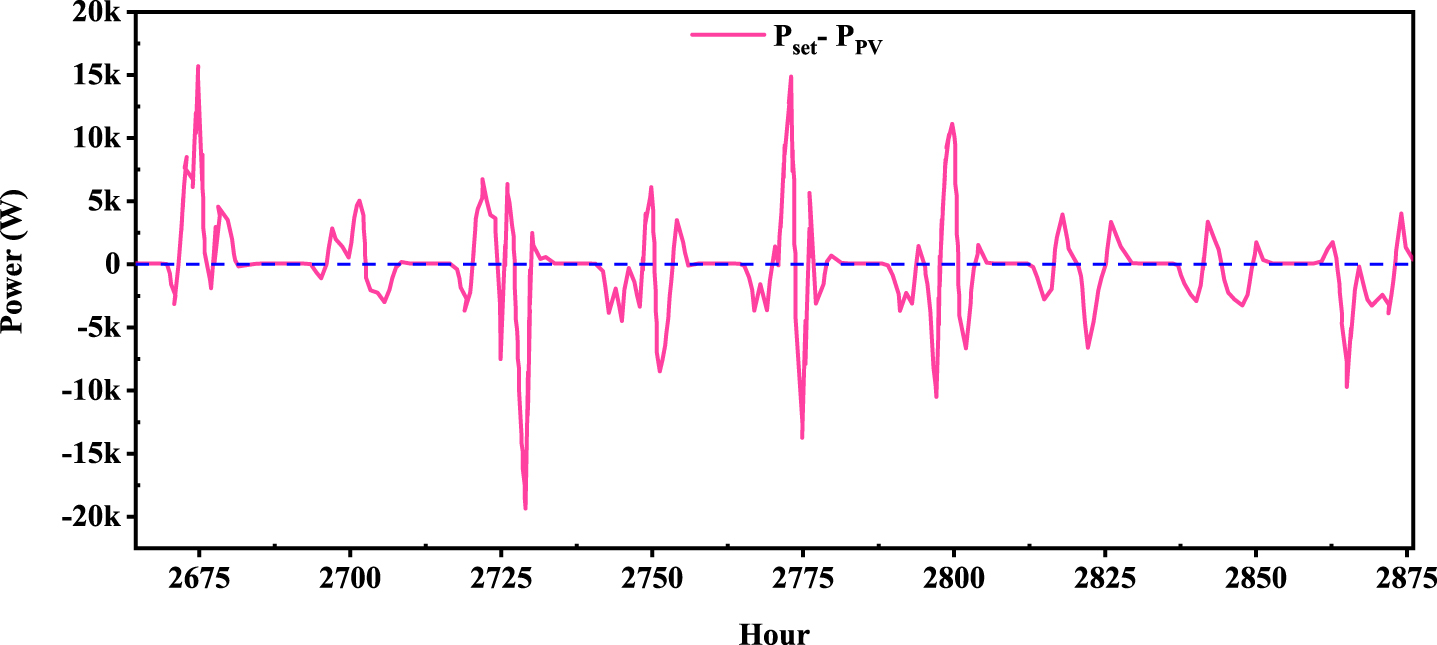
By decreasing the prediction horizon to one hour, the forecasting error is decreased to 12.46% from 23.85%. The duty of the BESS control method is the compensation of P set and P PV difference, in which P set denotes the predicted value of the next hour and P PV stands with the real generated power of the solar system. This difference is depicted in Fig. 5.

The illustrative difference between P set and P PV .
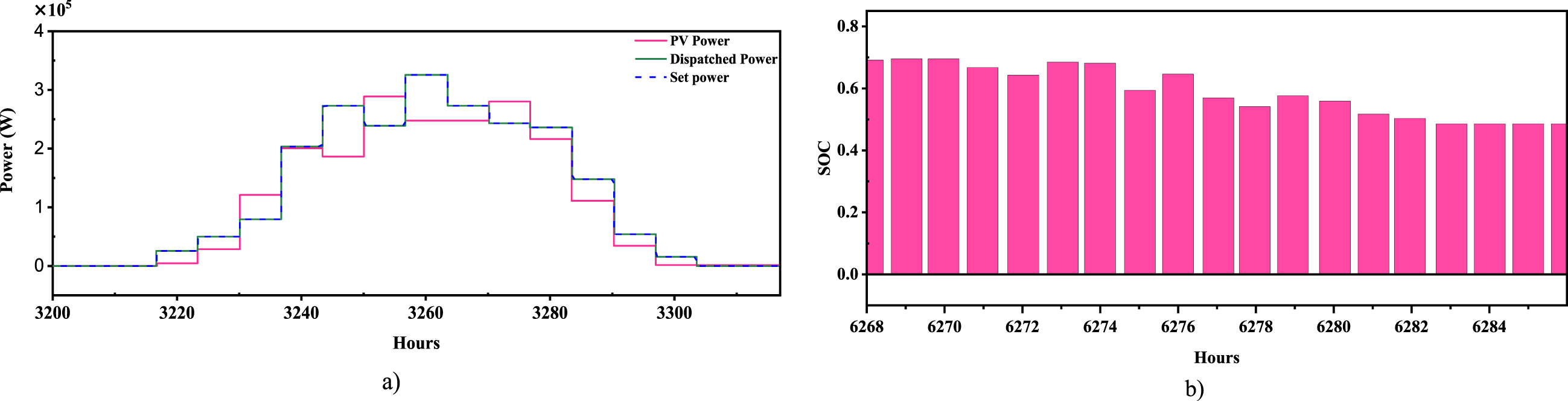
The first simulation case studies a battery energy storage system with 1MWh capacity and with the WAPE value of WAPE1h-1MWh = 2.59%. The influence of the BESS in the compensating leads to a steady decrease in the prediction error. Based on the illustration of Fig. 6, for a defined period, the dispatching power (P dispatched ) follows the set power (P set ) trend with good agreement.
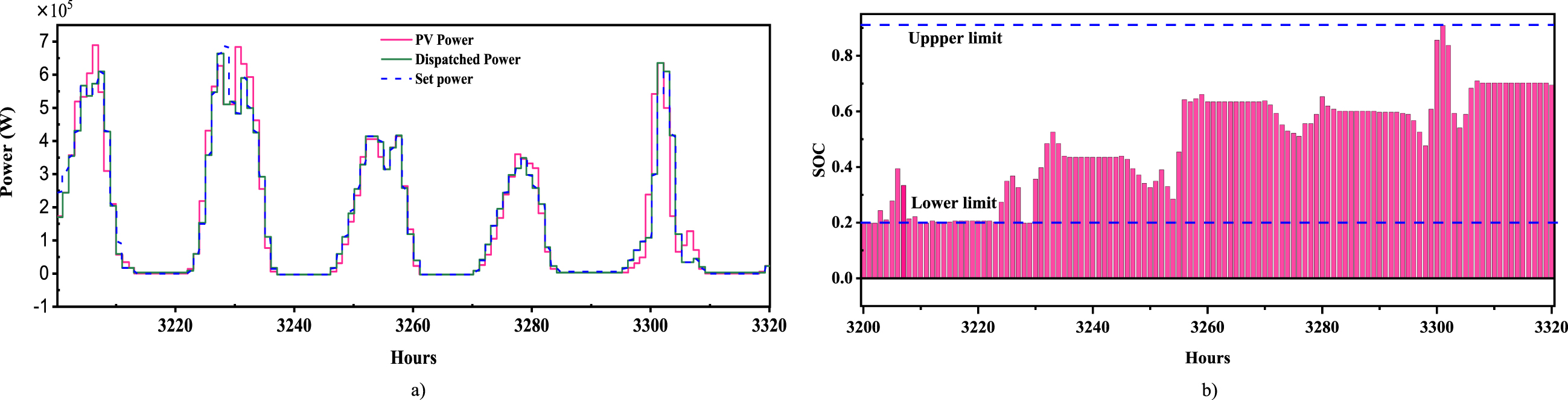
A comparative illustration of P dispatched , P PV , P set for one-hour ahead prediction.
However, sometimes the dispatched power does not track the set power perfectly and follows the real power trend. The reason behind this fact is that the SOC constraints are reached.
Figure 7 presents the magnified illustration of Fig. 6 and another plot with the corresponding state of charge (SOC).
SOC for the BESS compared to the allowable bounds for one-hour ahead prediction.
In the present study, no limitations are regarded for the BESS power for achieving the sizing electricity of the atoning unit. This case study simulation results in maximum absorbed power of 244kW, whereas the BESS unit results in a power rate of 250kW. Since poor planning influences the bad match between dispatching power and set power, it is essential to assess the effect of the planning error.
Figure 8 illustrates the profiles of the power in the case of the perfect comprise. As can be seen, compensating the error for the dispatch provision is about the ideal since the state of charge mostly stays through its constraints. As shown in Fig. 9, if the SOC reaches the higher threshold constraint, the prediction will be inaccurate; thus, an unsteady BESS’s operation will appear.
State of Charge for the BESS for accurate dispatching of for one-hour ahead prediction.
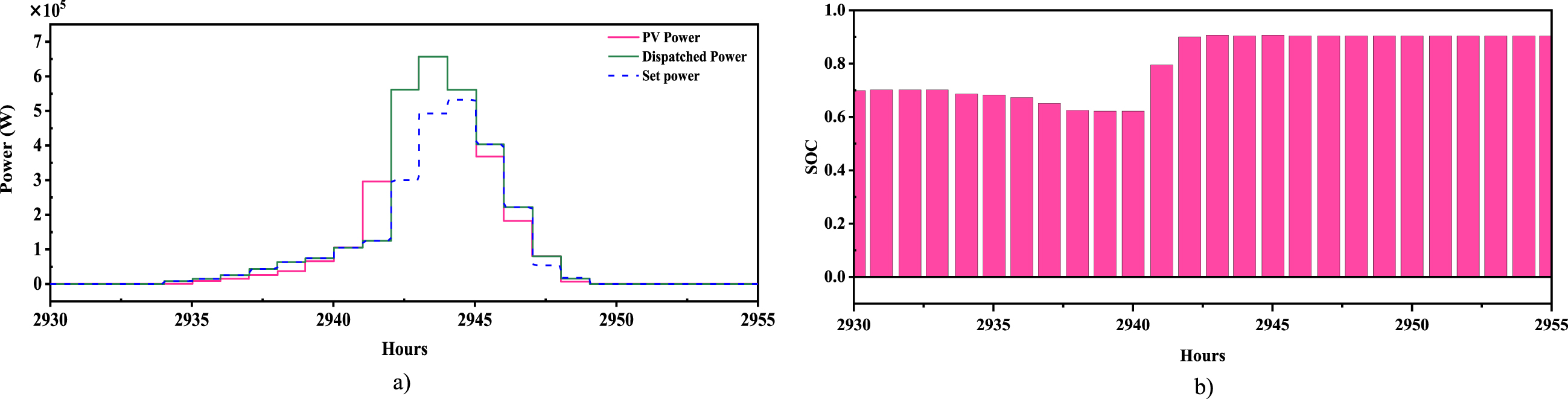
SOC for the BESS for imperfect dispatching of for one-hour ahead prediction.
The influence of a precise BESS introduction is plotted in Fig. 10. Differences between the dispatched power and set power in the presence and absence of the BESS are depicted in this figure. The WAPE value is presented as follows regarding a satisfactory prediction error of ±5% concerning the rated power of the photovoltaic:
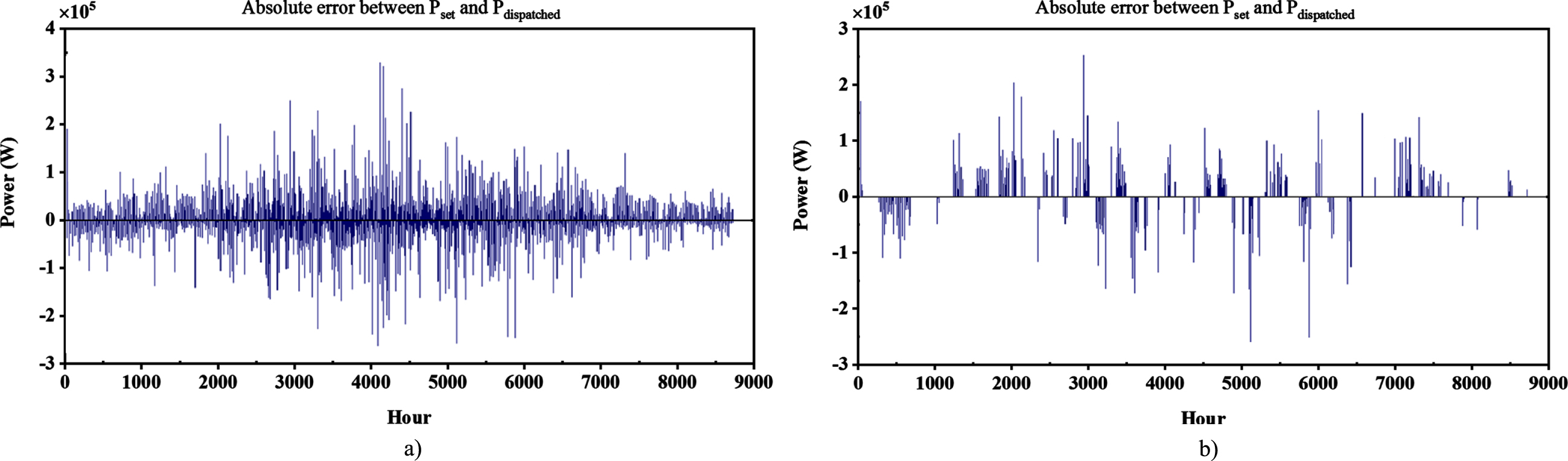
Absolute error between set power and dispatched power a) without BESS unit b) with BESS unit for one-hour ahead prediction.
The mismatching between the forecasted set power and dispatched power is shown in Fig. 11. Some sort of similar modeling was carried out by raising the compensation unit size to assess the advantages presented by the battery energy storage system in comparison with WAPE % 1h-0 basic mode. The modeling outcomes and the reduction in the relative error are presented in Table 1 for both WAPE % 1h-0 and WAPE % 1h-1MWh±5%.
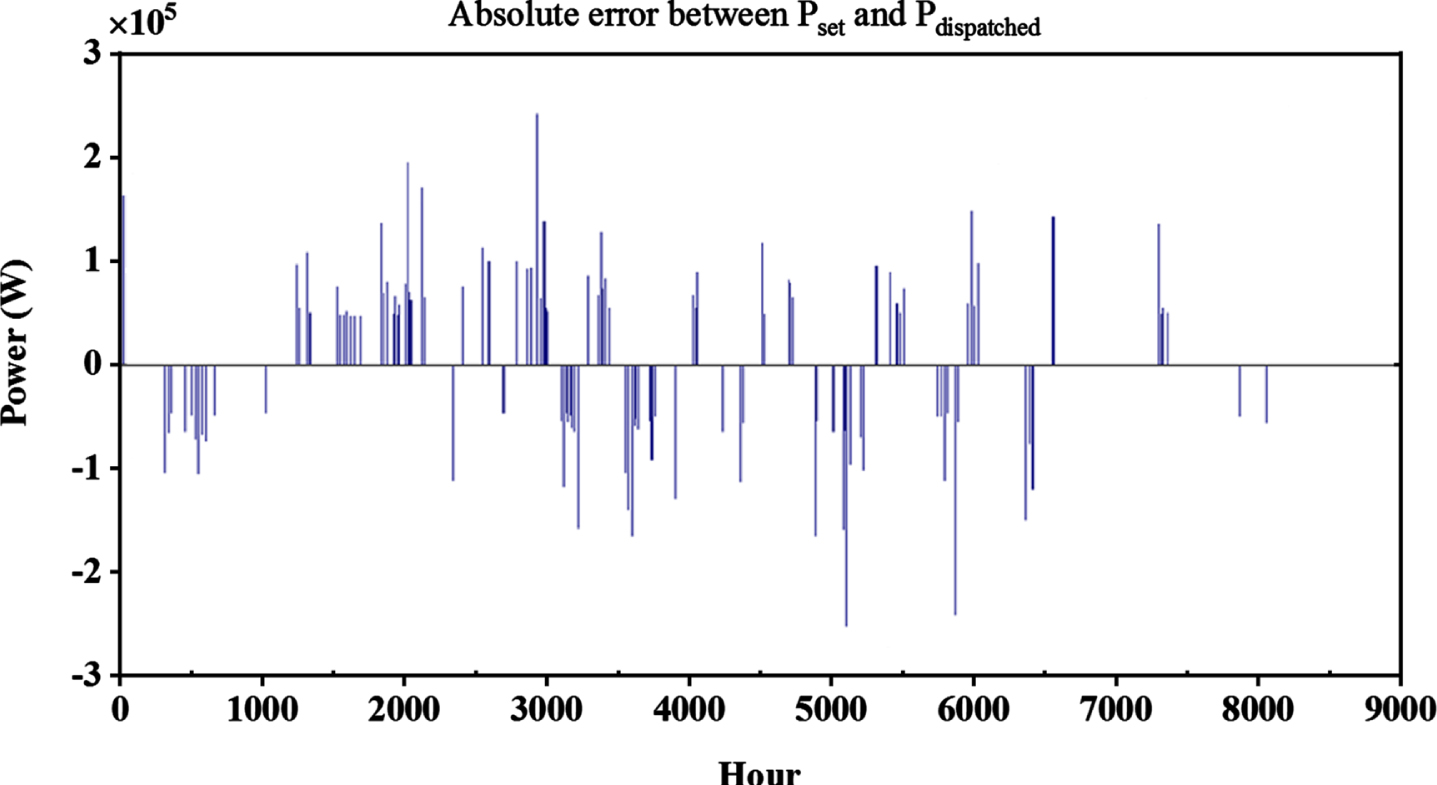
Absolute error between set power and dispatched power with the application of BESS unit for one-hour ahead prediction and 5% tolerance.
Weighted Average Percentage Error in a case of various BESS capacities for one-hour ahead prediction
Some facts can be seen in Table 1. For instance, a BESS with a capacity of 100kWh, which supplies the peak power of PV (1MW p ) for 0.1 of one hour can decrease the WAPE% by -29.05.
Figure 12 is plotted by connecting the BESS capacity and the reduction of error. Based on Fig. 12, the curve slope is high at lower values of BESS capacities, then the slope of the curve decrease as the BESS capacity increases. Based on this figure, the optimum efficiency, which is achieved for the compensation system, can collect a power equal to the photovoltaic peak power for a quarter of the prediction period. Most desiring efficiency can be achieved until 3/4 of the prediction period, and then raising the BESS capacity is not reasonable for the prediction period larger than 3/4.

Error decrement as a function of BESS capacity for one-hour ahead prediction.
Since the conventional power generation systems utilize a 24-hour ahead arrangement, it is essential to extend the prediction horizon from one-hour ahead to one-day ahead regarding an energy storage system and a green power generation system. Hence, the simulation of the one-day-ahead prediction is also performed. In this mode of simulation, the arrangement error results in a WAPE% by 21.03% for the base case. The base indicates the system without an energy storage system.
And for the system with a BESS capacity of 1MWh, the error is calculated as:
As it is obvious, the value for the error in the case of WAPE % 24h-1MWh is higher than the error in the case of WAPE % 1h-1MWh. As it is illustrated in Fig. 13, dispatching power does not trace the set power for far-reaching times in contrast to the one-hour ahead provision (Fig. 7).
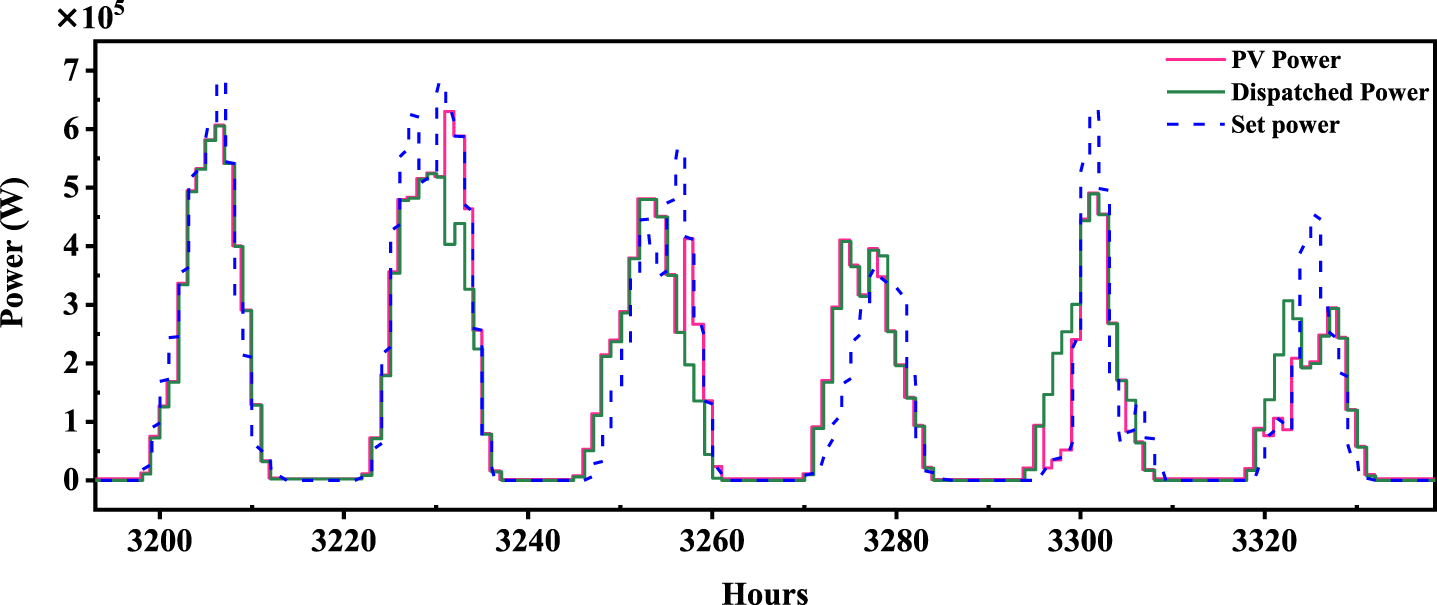
A comparative illustration of P dispatched , P PV , P set for one-day ahead prediction.
Modeling results and the reduction in the relative error are given in Table 2 for different capacities of the BESS unit concerning the base case and with 5% tolerance.
Weighted Average Percentage Error in a case of various BESS capacities for one-day ahead prediction
The values of the error are much more than the errors calculated for the one-hour ahead provision. In order to achieve error values the same as the one-hour ahead provision, a BESS unit with 6.5MWh capacity should be applied, which implies a tremendous amount of expenses.
Figure 14 illustrates that to achieve the optimum thechnoeconomic efficiency in the case of a one-day ahead arrangement, the energy storage system should be able to store a minimum power equal to the photovoltaic peak point power for approximately 2 hours that is 1/12 of the prediction period.
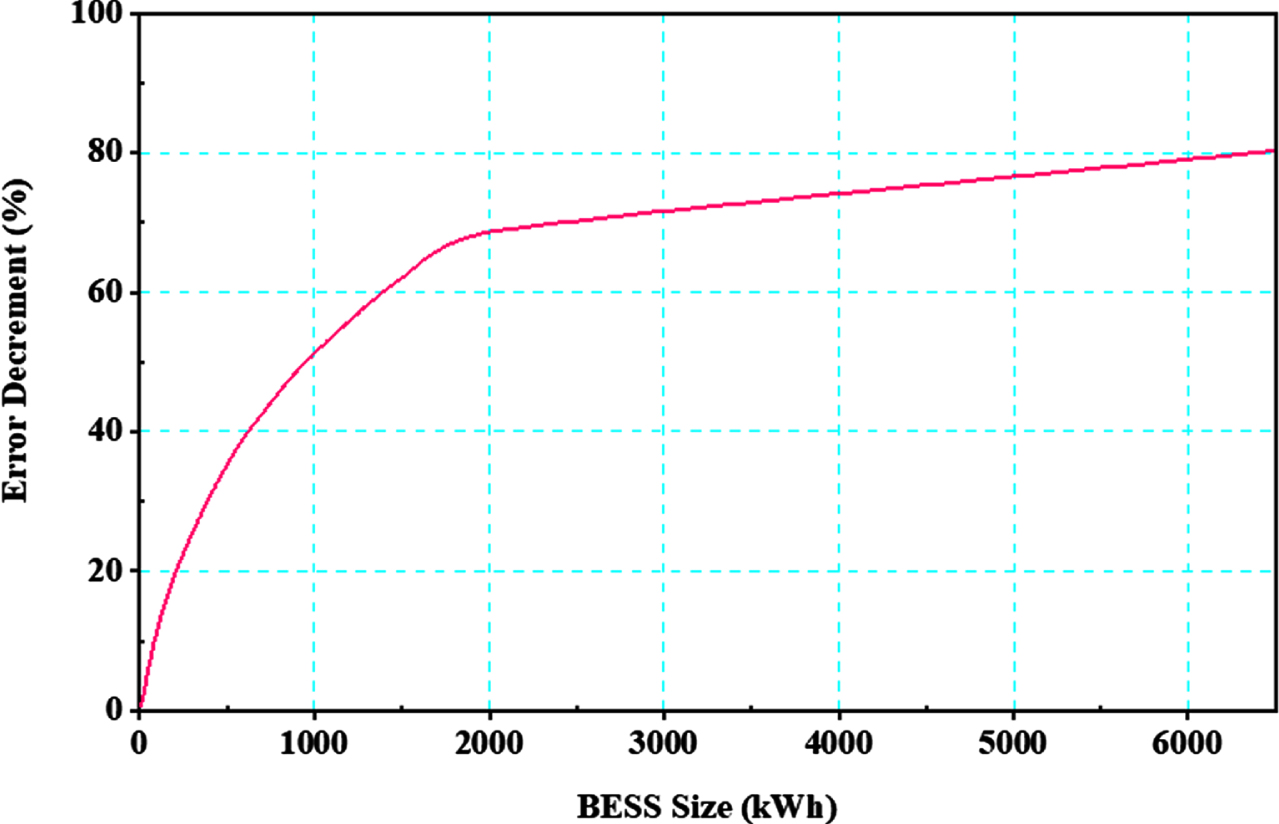
Error decrement as a function of BESS capacity for one-day ahead prediction.
Another criterion that can be considered in the selection of the BESS capacity is the life cycle assessment in order to avoid the degradation of the performance. It is admitted that the power-to-capacity ratio cannot be so high to evade accidental discharge, which can discredit the system’s life. The outcomes of the application of the suggested method agree with this law. Certainly, the best BESS capacity, which decreases the error to a satisfactory value when the power to capacity ratio (P/C) is always lower than 1.
The economic analysis is carried out to identify the effect of the battery energy storage system on the overall cost of the photovoltaic plant. It is worthwhile to evaluate the cost increase due to the utilization of the BESS unit. The average cost of the large photovoltaic has been acquired from [50]. The mean cost of a 1MWh power plant is equivalent to 1100$, the cost of this system must reduce to 970$ till 2020. Figure 15 is plotted to illustrate the capital cost of the BESS unit. The economic survey calculates the increment in the cost of the photovoltaic system with a BESS unit installation for various capacities of the BESS unit in the year 2020. Table 3 presents the results of the economic analysis.
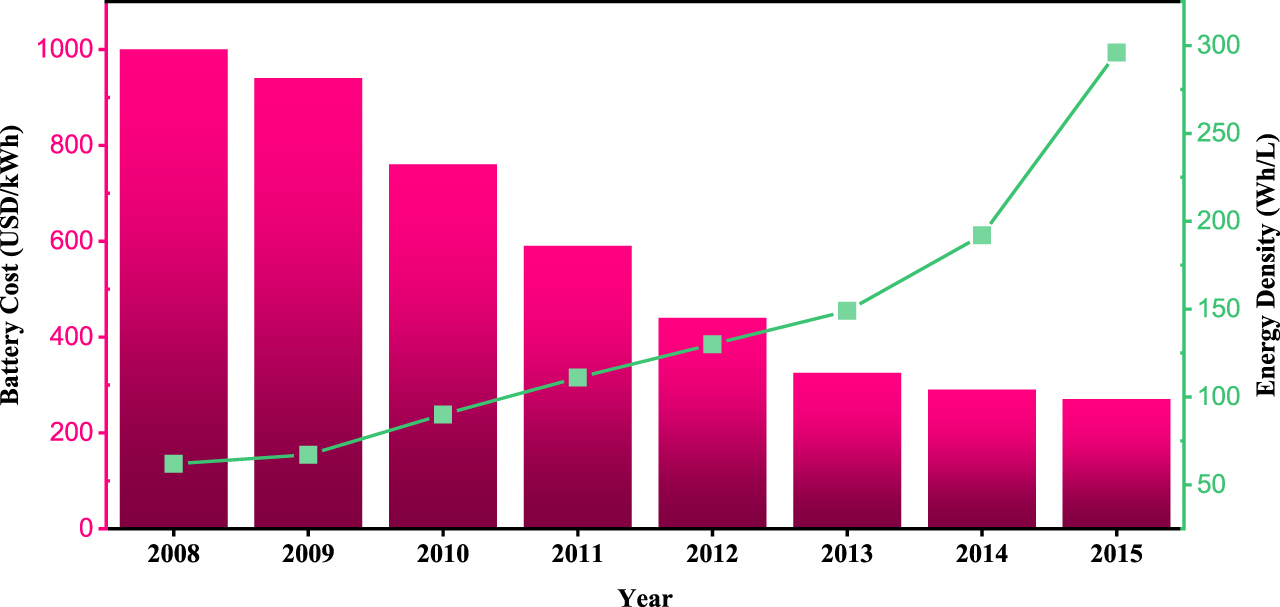
BESS capital cost.
Enhance in the cost of 1MW photovoltaic plant for various BESS capacities
In the present work, the problem of dispatching for a photovoltaic plant, which is attached to a Medium Voltage (MV) network, is presented. Controlling and sizing photovoltaic power generation plants in one-hour ahead and one-day ahead during the dispatching phase has brought attention toward itself. Coupling energy storage systems likewise batteries proposes some advantages to address the fluctuating nature of renewable energy systems such as photovoltaics through smoothing the output power and setting up the system capacity. Utilization of the battery energy storage system control method enables the PV power generation unit to be dispatchable in one-hour ahead horizon, similar to traditional power plants. Engaging in a well-comprehended market permits the purchaser of a BESS-aided photovoltaic arrangement to evade the uncertainties existing in the non-dispatching power generators.
In this work, a new scheme is employed in order to create a correlation between the dispatching risk and the BESS capacity in the case of 1-hour and 24-hour dispatching plans. An efficient arrangement of the RBF neural network has been applied for a precise forecast of the generated electricity in the PV power plant. The RBFNN is a feed-forward neural network with a nonlinear activation function in the hidden layer. Using a proper neural network arrangement along with the application of an appropriate input dataset proposes the advantages of limiting the prediction errors. The proposed RBF neural network is applied to predict the load power utilization in a company with solar irradiation. The real dataset of a photovoltaic system is used for the modeling aims.
Some of the main results of this work can be summarized as follows:
The obtained results indicate a great performance of the controlling method. The proposed control method for the system approximately traces the desired dispatching set points while the SOC maintains the favorite constraints. The results illustrate the effectiveness of the intended control method. Also, the obtained data from the modeling indicate that the photovoltaic generated power is able to dispatch with lower risks with the application of the proper technologies in a one-hour provision. Developing the proposed control method for a one-day ahead horizon increases the dispatching risks. Besides, the results showed that increasing the BESS capacity enhances the investment cost. The optimum efficiency is achieved for the compensation system that can collect a power equal to the photovoltaic peak power for a quarter of the prediction period in One-hour ahead prediction. The mean cost of a 1MWh power plant is equivalent to 1100$; the cost of this system must reduce to 970$ by 2020.
Future works
Energy storage systems are going to be pervasive in the coming years, since conventional energy sources are depleting rapidly. There have been introduced different types of energy storage systems, in which the battery storage method is widespread in solar systems. The behavior of the battery in the solar energy storage system is studied in the present work. However, more and more work can be done in order to enhance the quality of energy storage. For instance, for future works, different methods for the storage system can be introduced and compared together from various aspects.
Also, in this work the RBF neural network is used for forecasting in different manners; other neural networks and control methods can be used to enhance the dispatchability of the storage system such as hybrid fuzzy and neural networks. Moreover, in order to improve the ability of the neural network in the prediction of the system, optimization methods can be employed to optimize the parameters of the neural network methods.
Declarations
The authors declare that they have no known competing financial interests or personal relationships that could have appeared to influence the work reported in this paper.