



Abstract
With the rapid development of O2O, offline experience and online purchase have become a method of purchase for more and more customers. Through offline experience, consumers can feel the quality of products directly. Such channel switching behavior of consumers will produce a “showroom” effect and affect the return rate of online channels. This study adopts the multinomial logit model to maximize profits by considering the difference in quality between online and offline products, quality defects, and offline service. Then, a pricing decision model is developed to analyze the influence of returning goods due to quality problems on the retailers’ optimal pricing and profit. The result shows that retailers can obtain the optimal profit when the offline service is maintained at a certain level. As the return rate increases, the optimal pricing increases, but the maximum profit decreases. The optimal pricing decreases with the increase in online product quality, but the maximum profit increases accordingly. In the omni-channel environment, customers can freely switch between channels according to utility and preference when purchasing products. Based on customer returns, retailers can dynamically adjust their service, control product quality, and set optimal product pricing, thus achieving maximum profits. This study can provide a theoretical basis and decision support for omni-channel retailers in platform operation and revenue management.
Keywords
Introduction
With the emphasis on the full integration of big data, the Internet, the real economy and artificial intelligence, e-commerce has become the focus of people’s attention, and the online shopping market is gradually expanding. Some studies take deep learning as the entry point and from the perspective of e-commerce platform, propose methods that can make the data analysis conclusions more accurate, so as to inject the necessary impetus for the advance of e-commerce[1, 2]. Some scholars, based on methods such as machine learning and deep learning, analyze factors such as e-commerce reviews and inventory control to help relevant platforms and stores improve products and services more effectively [3, 4].
More than 2.14 billion people worldwide purchased goods and services online in 2021, with global online sales accounting for 22% of total retail sales, according to a report. It is estimated that the global retail e-commerce market will be worth $6.54 trillion by 2023. Faced with a large number of Internet users, brand owners represented by Uniqlo, Walmart, Suning and Amazon have opened online markets one after another in order to expand the market and accelerate the transformation from online and offline integration to omni-channel. In omni-channel retail, online and offline commodity, transaction, marketing and other data are integrated and interworking, retailers can provide a seamless experience for consumers’ purchase and return behavior [5–7], such as: Buy-Online-and-Pick-up-in-Store (BOPS) [8], showrooms, offline experience and online purchase (channel switching behavior) and Buy-Online-and-Return-in-Store (BORS). Economists have paid much attention to the channel switching behavior of consumers [9, 10]. Many scholars have also discussed this issue, arguing that consumers’ price expectations [11], product characteristics [12] and perceived risks [13] affect their purchase channel switching.
In most cases, consumers can’t buy the desired products directly when shopping offline. The first reason is to adhere to the “comparison shopping” principle. Strategic consumers do not buy directly at the beginning of shopping but make comprehensive comparisons to select the relatively optimal products. However, they may miss the most suitable products. Second, some consumers have other activities after shopping and cannot buy directly. Third, retailers do not have the right size, and it takes a while to get the desired products. Given these reasons, consumers cannot directly buy their favorite products when shopping offline. Since they have directly contacted products offline, they know the information about the products and can buy them in the corresponding online stores. However, because the quality of products purchased online is unknown, the quality of products online may be different from that of offline products. After comparing the received product with the offline product, the consumer finds the quality difference between the online product and the offline product, which will result in the return behavior. Most current studies mainly focus on defect-free returns[14–16], while a report released by Guangzhou Consumer Council shows that product quality has accounted for 18.87% of the total returns. Product quality has become an important factor affecting the return of customers.
According to existing studies, the factors that affect the return of consumers include: impulse purchase of non-essential products due to promotion activities, purchase of goods that do not meet the expectations, poor product quality, inappropriate size, etc. Today, omni-channel retail has become the fast track of e-commerce development, consumers will return products because of the quality difference between online and offline products. Therefore, in this paper, based on online shopping practice, a multinomial logit model (MNL) model is used to simulate consumers’ choice behavior from the perspective of consumer purchase behavior conversion. The focus is on the influence of quality differences between online and offline products, product quality, offline service and return rates on the optimal pricing and profit of retailers. The main contributions of this paper are as follows: In the omni-channel retailing of offline experience and online purchase, consumer return behavior is considered in the optimization model. The analytical solutions for the optimal pricing, market share and maximum profit are obtained for products and services of different types of consumers. We theoretically analyze the influence of homogenous/heterogeneous consumers’ sensitivity to price, service and product quality on the optimal product pricing, market share and maximum profit in the case of return. Through numerical experiments, the influences of product quality, service, consumer sensitivity and product return rate on the optimal product pricing, market share and maximum profit are discussed.
The rest of this paper is organized as follows. In Section 2, we review the literature on return policies, omni-channel retailing, and consumer choice models. In Section 3, we develop a product pricing model that considers different types of consumers and adopts a switching behavior approach to purchase in the case of return. Section 4 gives the relevant theoretical analysis, and Section 5 shows the numerical experiment. Section 6 summarizes this paper and presents ideas for the future.
Review of relevant research
Topics closely related to this paper include return policy, omni-channel retailing, and customer choice model.
Return policy
For the return problem, scholars mainly adopt models such as game theory and utility theory to analyze the return guarantee strategy and return method, thus achieving the optimal profit for retailers [17, 18].
Based on the return policy, Chen and Chen [19] added the return guarantee option to the pricing model and analyzed the strategies of both the return guarantee option and return policy and the only return option. The results showed that it was better for sellers to provide both a return policy and a return guarantee option. To study the influence of different return methods, the opening of return service, customer channel preference, product quality and customer types on product pricing and inventory, Liu et al. [20–22] comprehensively analyzed the pricing decisions of omni-channel retailers in the face of different return situations from different focuses.
In e-commerce platforms, retailers are always faced with consumer returns, which can be divided into those without quality defects and those with quality defects. At present, there are relatively mature studies on the issue of return without quality defects. Peng et al. [23] used the optimal control optimal theory to build the profit model of retailers, and analyzed the influence of retail price and sales service investment on customer demand and defect-free returns under the dynamic environment. Ferguson, Guide and Souza [24] studied that through certain advertising and consultation services, retailers can help customers better understand product functions, reduce blind buying and match their own needs, so that customers can not only buy satisfactory products, but also reduce the level of return without quality defects.
For online customers, the matching degree between the product information they see and the object is often different to some extent. Therefore, the return considering quality factors is an important research field of online product pricing. Li et al. [25] established an online retail model composed of monopolistic manufacturers and heterogeneous preference customers and obtained the best return strategy. They added strategic compensation to make customers accept the goods and cancel the return, which is usually the behavior of online retailers with low quality. Xiong et al. [26] proposed that the combination of price and no-reason return policy could convey information about product quality to customers and that the no-reason return policy was more beneficial to high-quality retailers. With the risk and return of the residual value to customers known, McWilliams [27] came to a different conclusion from Shieh. He established a duopoly competition model composed of high-quality and low-quality retailers. Believes that there is no reason to return to low-quality retailers for higher profits whatever customers need or not. Ma et al. [28] studied the impact of BBP on the profits of competitive enterprises based on a two-period dynamic pricing model and the differentiated products sold by considering customer conversion efficiency and relative product efficiency. They also analyzed the optimal pricing strategies of both parties. To further study the influence of quality factors on pricing, Huang et al. [29] took product quality as an endogenous variable to study the joint decision-making problem of price and quality in a dual-channel supply chain.
Omni-channel retail
In order to adapt to the changes of consumers’ shopping methods, from the perspective of retail channels, more and more enterprises have developed from the traditional physical channel stage to the dual-channel stage, and then to the present all-channel stage. The development of electronic commerce and the transformation of consumers in different channels make free riding popular.
There are three modes of free riding behavior: Most of the early studies focused on one-way free riding, that is, the free riding of online retail channels on physical retail channels. For example, after consumers try products in physical retail stores and obtain product information, they turn to online stores to buy products, thus giving birth to free-riding behavior through online channels, and thus “showrooming” [30]. In the dual-channel supply chain, traditional retail channels are not completely free from the free ride of online channels. For example, manufacturers release advertisements on the network and display detailed product information, and consumers purchase goods in physical retail stores after obtaining such information, which results in the free ride behavior of retail channels [31]. It is called “webrooming”. In the increasingly competitive retail market, in the face of increasing subjectivity of consumers, two-way free-riding behavior is becoming more and more common [32, 33].
Ge and Zhu [34] integrated ROPS and BORP to establish a feedback control model of omnichannel retailer status to explore the influence of consumer channel preferences, cross-channel return and return parameter uncertainty on supply chain system inventory, production/ordering and profit. Chen and Qu [35] investigated the BOPS retail strategy by combining consumer strategic behavior. Market models of a single retailer and consumers under different sales channels were constructed. The impacts of pre-sale and return service on consumers’ expected utility, inventory order quantity and expected sales profit were analyzed. Based on the business operation mode of offline experience and online purchase, Liu and Xu [36] compared and analyzed the influence of the showroom on pricing, market demand, profit and return rate under the situations of fixed selling price and optimized pricing. Liu and Gu [37] constructed a Hotelling game model. Through quantitative analysis of game theory and simulation, the effects of different pricing strategies of online and offline mixed channel product lines on consumer channel conversion, retailers’ profits and market share. Goedhart et al. [38] integrated the rationing and ordering decisions of an omni-channel retailer into a Markov decision process that maximizes the retailer’s profit. They also explicitly modeled multi-period sales-dependent returns, which is more realistic and leads to higher profit and better service. For the growing number of product returns, Xu and Jackson [39] examined the influential factors on customer return channel loyalty through empirical analysis. The structural equation modeling results showed that perceived risk, purchase-return channel consistency, monetary cost, and hassle cost influence customer return channel loyalty. Moreover, Xu and Jackson [40] also investigated the influential factors of customers’ channel choice intention in an omni-channel retail setting. They found that channel transparency, convenience and uniformity positively influence the perceived behavioral control of customers. In addition, they also found that channel transparency and uniformity can help reduce customers’ perceived risk, while channel convenience has no significant impact.
Customer choice model
Consumer choice behavior is usually simulated by the consumer choice model [41]. Two models commonly used in existing research are deterministic choice models and probabilistic choice models. The probabilistic choice model simulates consumers’ choice behavior more realistically and is more applicable [42]. Customer choice behavior is an important factor affecting product pricing for both purchases and returns. The customer choice model studies the decision maker’s choice from the perspective of maximizing the utility of the decision maker.
Based on the MNL model, Du et al. [43] and Mou et al. [44] studied product pricing to maximize retailers’ profit from the perspectives of network effects and product alternatives. Qi et al. [45] used the MNL, marginal distribution model and marginal moment model to simulate customer choice behavior and studied the mechanism between optimal decision and influencing factors to provide decision support for product pricing.
However, most of the studies in the literature do not involve the issue of returning goods after consumers experience online purchases offline. In particular, the following issues need to be addressed. (1) There are few studies on the transfer purchase behavior of offline experience and online purchase, and the influence of offline service level on consumers’ transfer purchase behavior is not considered. (2) The difference in the quality of the same product online and offline has not been considered in any research. (3) In addition to the difference in the quality of the same product, the quality of the product itself will also affect consumers’ behavior of returning goods.
In the current consumption environment, the return of goods is not only affected by individual subjective factors, but also affected by channel switching behavior and product quality. In order to solve the above problems, this study considers the return problem after consumers’ purchase behavior is transferred, and analyzes the influence of online and offline product quality difference, product quality, offline service level, sensitivity of different types of consumers and other factors on the product pricing of omnichannel retailers. This paper discusses its influence on actual management and its enlightenment to management optimization strategy.
Problem description and model construction
Problem description and research hypothesis
This paper proposed a double-channel retail scenario with a retailer and several customers. Customers can learn about products such as fashion, shoes, furniture, and electrical appliances through physical contact or on-site experience. Products are sold in a single cycle, and retailers have two channels for customers to switch purchase behavior. Thus, the pricing strategies of similar products in different channels were studied.
After the product is sold, customers can return it if they find quality problems. Retailers will provide a full refund for the returned product according to the corresponding return policy. On this basis, assumptions are made as follows: Both retailers and customers are bounded rational and risk-neutral; Retailers comprehensively understand the quality of their products; Retailers do not consider the residual value of products returned by customers; Retailers provide product returns for no reason and freight insurance.
Parameter description
In the channel switching environment, the omnichannel retailer sells products to the market, and customers buy up to one unit of the product. The relevant parameters of the model are shown in Table 1:
Parameter description
Parameter description
Considering the influence of return behavior due to quality issues on product pricing. According to homogeneous customer preference and heterogeneous customer preference, an online product pricing model is established based on the MNL model. Further, the influence of customer behavior and product quality on pricing strategy is analyzed.
(1) Homogeneous customer preference situation
Homogeneous customer preference indicates that customers have the same preference for products and a moderate perception of product quality differences between online and offline channels. It can be equivalently considered that there is only one customer in the market (m = 1). Then this kind of problem can be summarized as a pricing problem of homogeneous products and homogeneous customers. Here, homogeneous products refer to a class of products rather than one product, and homogeneous customers refer to a market segment rather than one customer. Let the subscript o denotes parameters with homogeneous preferences and no denotes n customers with homogeneous preferences.
When customers experience offline and purchase online, they have no other reasons for return except quality problems. If the products have quality defects, retailers promise to provide unconditional returns within a certain period and full refunds after receiving the goods. However, customers have to pay certain trouble costs. Therefore, in the case of returns, the expected utility of homogeneous customers to buy products is as follows:
Where α r represents the quality of the offline product. Since consumers have been exposed to the product offline, the quality of the offline product is regarded as consumers’ perceived utility of the product: α no represents the quality of the online product; (1 + α r - α no ) λ represents the return rate of the model. When α r = α no , i.e., if the quality of online and offline products is the same, the return rate is λ; when α r ≠ α no , the return rate is determined by the difference between online and offline products.
If U no ⩾ 0, the customer will buy the product.
Although the customer is not satisfied with the quality of the product, the return will produce troubles, and the customer will choose not to return the product. When the trouble cost of returning goods h is small enough, the utility customers get from returning is not less than that they get from buying, i.e., when 0 < h < p no - α no , the customer will choose to return goods.
Based on the MNL model, the customer’s selection probability is:
U no = α r - p no + s - (1 + α r - α no ) λh ⩾ 0, the customer will buy this product with probability q no .
Thus, the profit function of the retailer is:
Then the pricing optimization problem is discussed as follows:
Hanson and Martin [46] have pointed out that the profit function is non-concave with respect to the price variable. Thus, the profit function is transformed into a function with respect to the independent variable q no . According to the MNL model, the price is expressed as:
The profit function is transformed into:
Additionally, the question becomes:
The first and second derivatives of the retailer’s profit function π no with respect to q no are:
The product pricing problem is solved according to the characteristics of the MNL model. The optimal solution can be expressed as an analytical expression by the Lambertian W function, where W (x) is the solution of W and satisfies: x = We W
Based on Equations (5), (8) and (9), the optimal pricing can be obtained as follows:
According to Equation (9), the profit function is concave, so it has a maximum point, which is obtained at the point where Equation (8) is equal to 0 and can be can be calculated as follows:
Then, Equation (11) is substituted into Equation (5) to obtain the final result
The optimal profit can be obtained from Equations (11):
(2) Heterogeneous customer preference
If customer preferences are heterogeneous (ne is N heterogeneous customers), they are divided into the category k according to customers’ sensitivity to online product quality differences, service quality and product quality defects. The sensitivity coefficient of type i customers to online product quality difference, service quality and product quality defects are respectively b i , d i , g i (i = 1, 2, 3, . . . , k), and b i , d i , g i ∈ (0, 1), in this case, the expected utility of heterogeneous customers to buy products is:
Based on the MNL model, the customer’s selection probability is:
The customer will buy this product with probability q i .
The profit function of the retailer is:
Then the pricing optimization problem can be described as follows:
According to the MNL model, the price is expressed as:
The profit function is transformed into
In addition, the question becomes:
The first and second derivatives of the retailer’s profit function π ne with respect to q nei are:
For the Hessian matrix of π ne , the diagonal entries are negative and all other entries are zero. Therefore, the Hesse matrix of π ne is semi-negative definite, then π ne is concave with respect to q nei , and π ne has a maximum value.
Based on Equations (17), (20) and (21), the optimal pricing can be obtained as follows:
According to (21), the profit function is concave, so it has a maximum point, which can be obtained at the point where equation (20) is equal to 0 and can be calculated:
Then Equation (23) is substituted into Equation (17) to obtain
The optimal profit can be obtained from Equations (23):
As customers’ purchase decisions are influenced by services, and returns are affected by factors such as online and offline product quality differences, product quality defects, and return trouble costs. Customer groups with different characteristics will have different decision-making behaviors in the return process, which will bring challenges to the product pricing mechanism. Some customers are sensitive to quality and can quickly perceive the difference in quality. Some customers pay attention to the trouble cost of returns. If the trouble cost of returns exceeds their expectations, they will not return goods. Some customers are less tolerant of defects and will return the good once they find them. To better study the influence of offline services, quality differences, product quality defects and return trouble cost on the optimal pricing, the influence mechanism of customer heterogeneity and product quality on the optimal pricing of online products is further studied in this section.
Since
Proposition 1 shows that when the online and offline prices are the same, service costs will be large if the offline channels provide a high service level. To ensure benefits, it is necessary to increase the product pricing, i.e., add a service price to the product pricing. In addition, high-quality service can promote customers to buy again and increase the market share. Therefore, it is acceptable for customers to raise the price appropriately.
Since
Since
Propositions 2 and 3 show that when the return cost is high, customers’ purchase intention will be influenced, and they may ask retailers for compensation to avoid the trouble of return. To guarantee profits, retailers need to lower prices to attract customers and gain more market share. Because some express stations are remote, receiving and returning goods are relatively troublesome. Therefore, customers in remote areas choose products carefully when purchasing, which affects product sales to a certain extent. When these customers are not satisfied with the received products, they may ask for compensation to reduce their losses due to high return costs (such as transportation costs). Based on the above two factors, when the trouble cost of returns is large, retailers choose to reduce the product price appropriately to attract more customers. However, due to the additional compensation, profits will be reduced.
Thus, when
When
So when
When α
no
⩾ α
r
,
Propositions 4 and 5 show that when the quality of online products is better than that of offline products, customers will trust the online shop and give positive evaluations after knowing the quality offline. This can not only retain the original customers, but also attract new customers, and the brand effect will be better. With a low price, the market share and profits will increase. On the platform of the real economy, some retailers choose to put high-quality products offline for customers to buy directly. However, customers have switched to online purchases, and some buy the products online after experiencing offline. If customers receive a product of different quality from the offline one, they will lose faith in the shop and no longer buy its products.
When
When
Therefore, when
Taking the partial derivative with respect to λ derives:
Since
According to propositions 6 and 7, when there is no quality difference between online and offline products, but the product itself has some defects, such as poor materials. The more defects, the less acceptable to customers, the higher the return rate, and the less profit for retailers. To ensure profit, retailers will choose to raise prices appropriately. When there is no difference in quality between online and offline products, customers will pay more attention to whether the product itself is defective. If there is a quality problem, customers will return the product. When the return rate increases, the retailer’s profit will decrease.
Numerical experiment
In real life, omni-channel retailers are very common. For example, Uniqlo opens online and offline sales channels, and consumers switch from online to offline purchase channels. When consumers experience products in physical stores and then buy online, if they find that the quality of the products is different, they will be more willing to return the products than if they do not experience them offline. Through the investigation and analysis of platform merchants and consumers, we can assume that: α r = 0.5, c = 0.5, l = 0.15, s = 0.1, h = 0.2.
Homogeneous customers
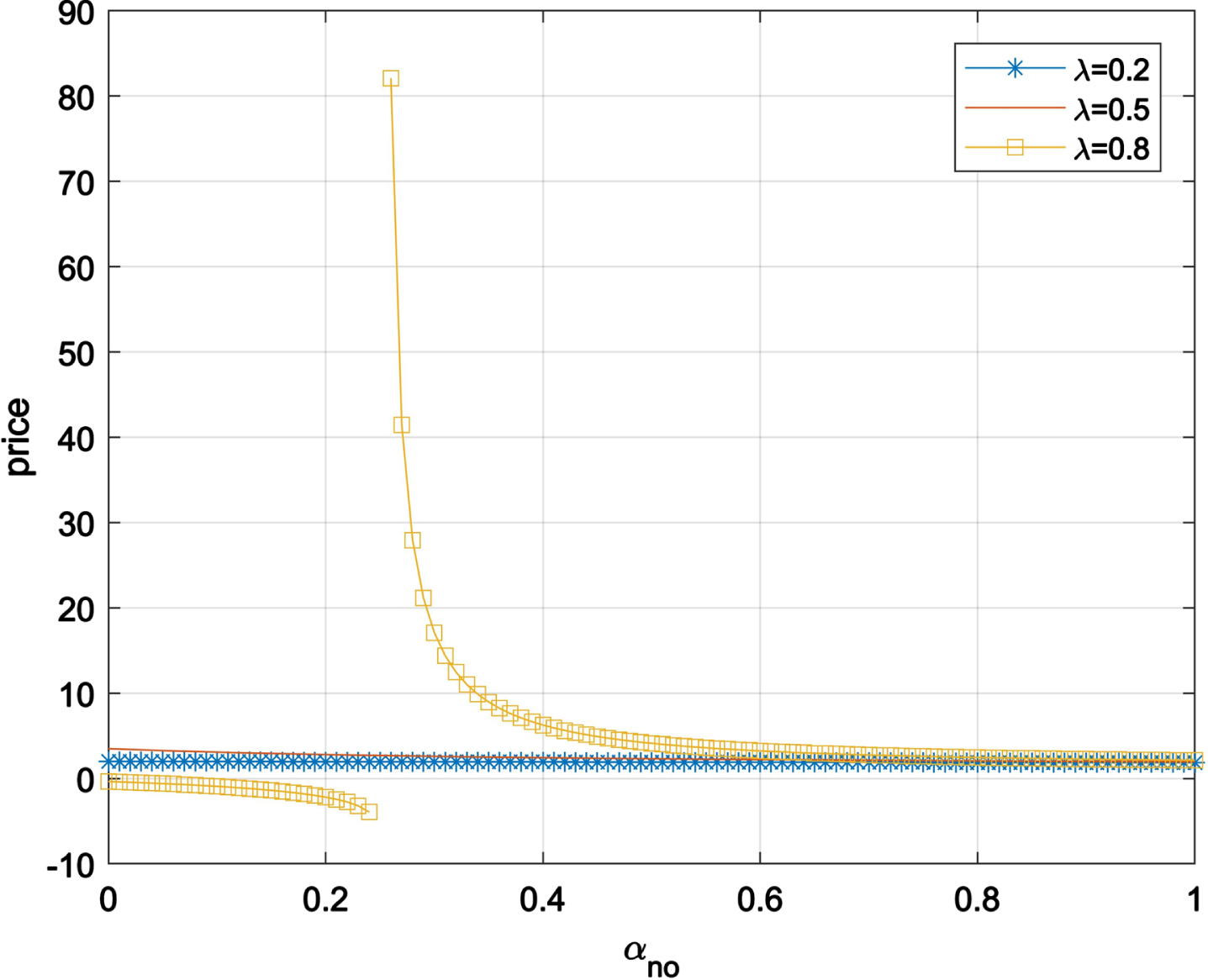
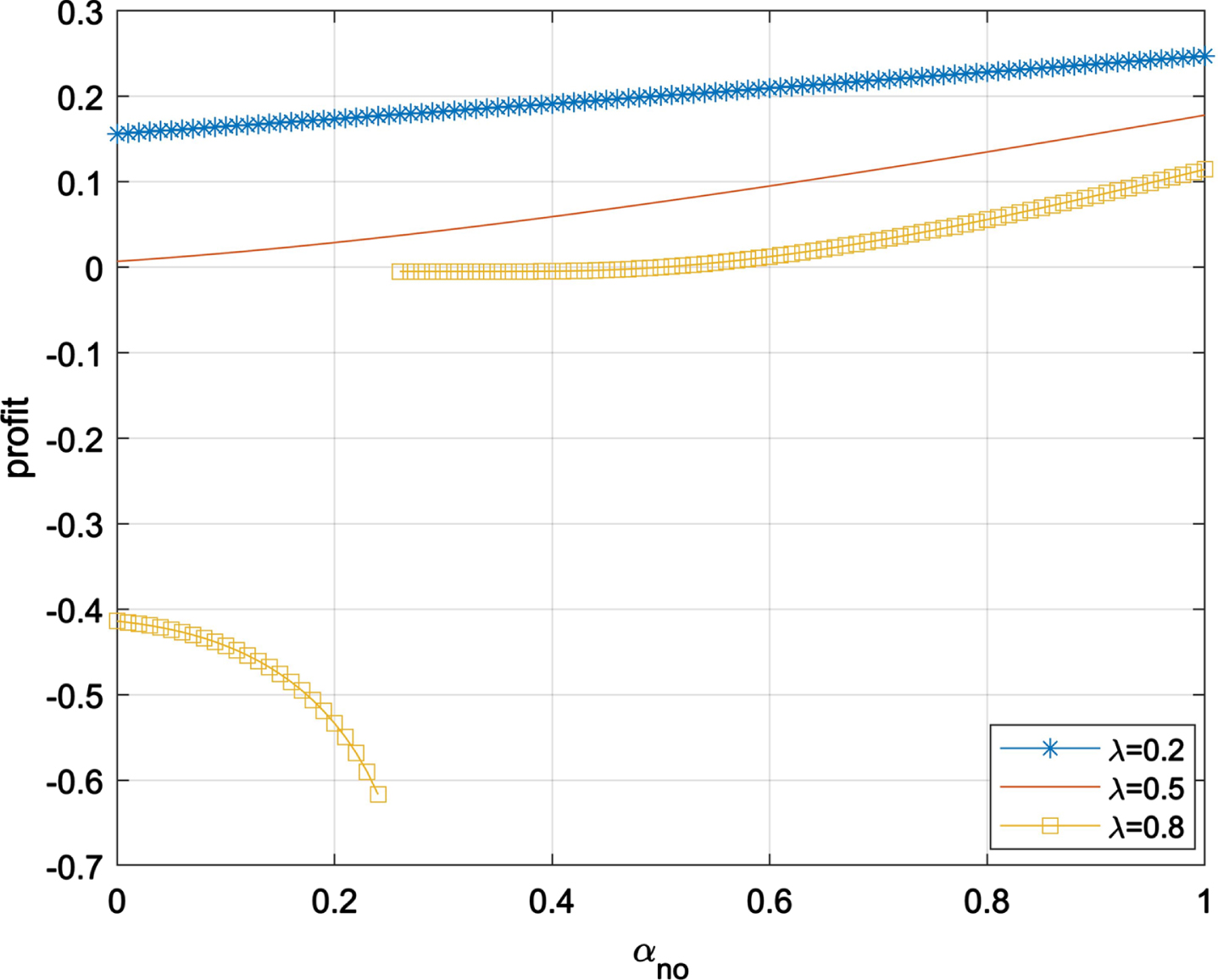
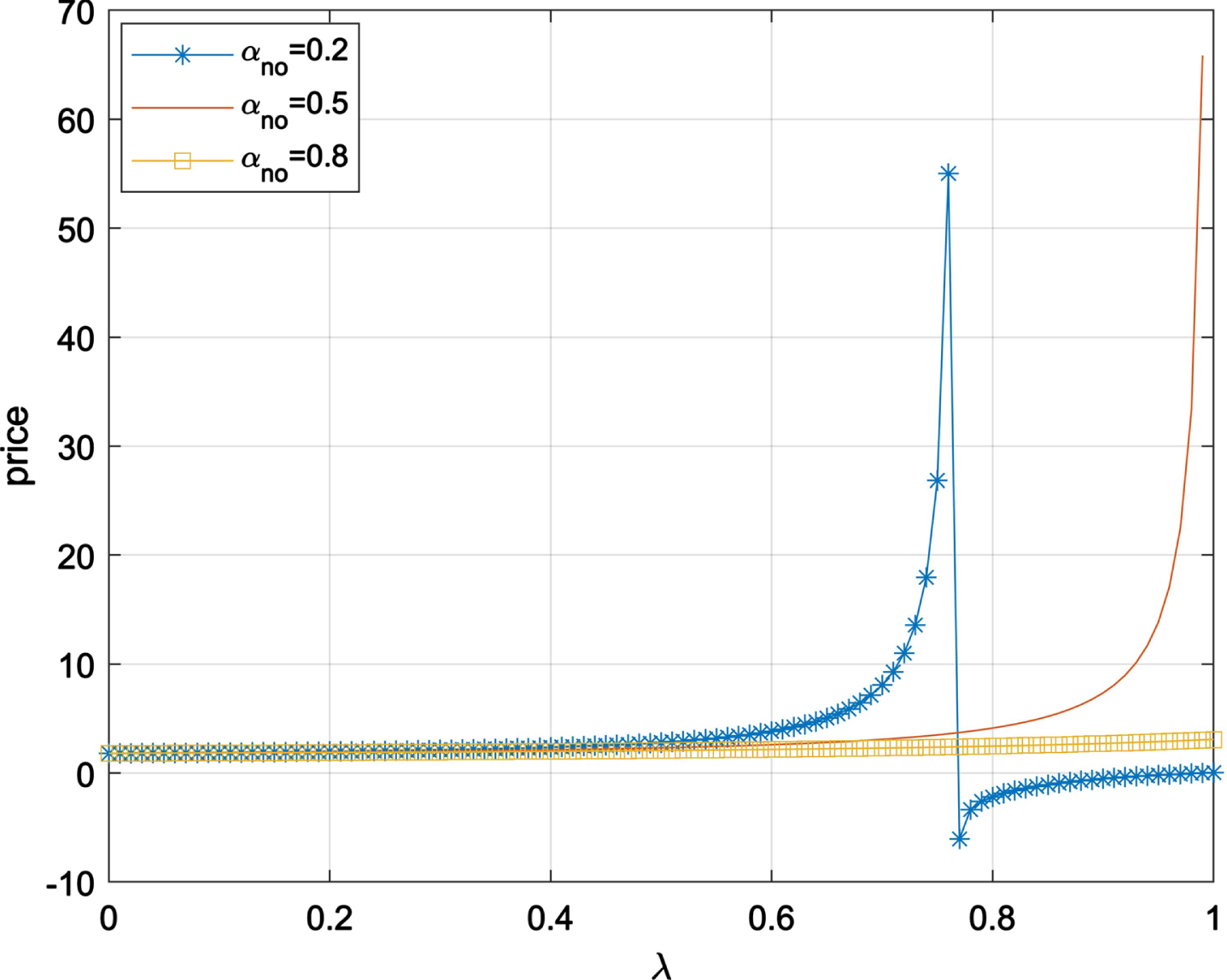
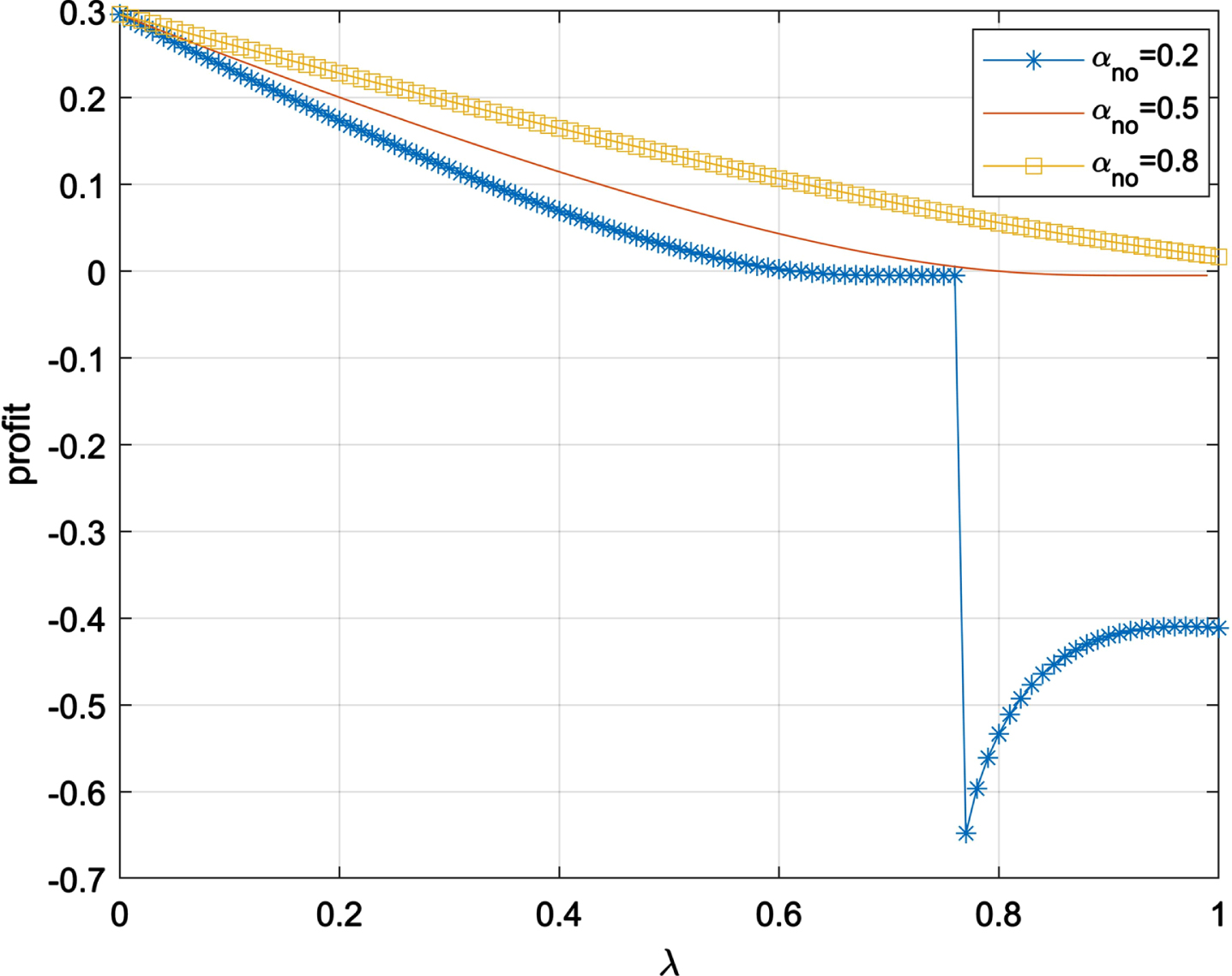
For the purchase method of switching behavior, taking λ = 0.2, λ = 0.5 and λ = 0.8, the influences of online product quality changes on pricing and profit are analyzed. The numerical simulation results are shown in Figs. 1 2. Taking α no = 0.2, α no = 0.5 and α no = 0.8, the impacts of the change in return rate on pricing and profit are analyzed. The numerical simulation results are shown in Figs. 3 4.
Influence of changes in αno on
Influence of changes in αno on
Influence of changes in λ on
Influence of changes in λ on
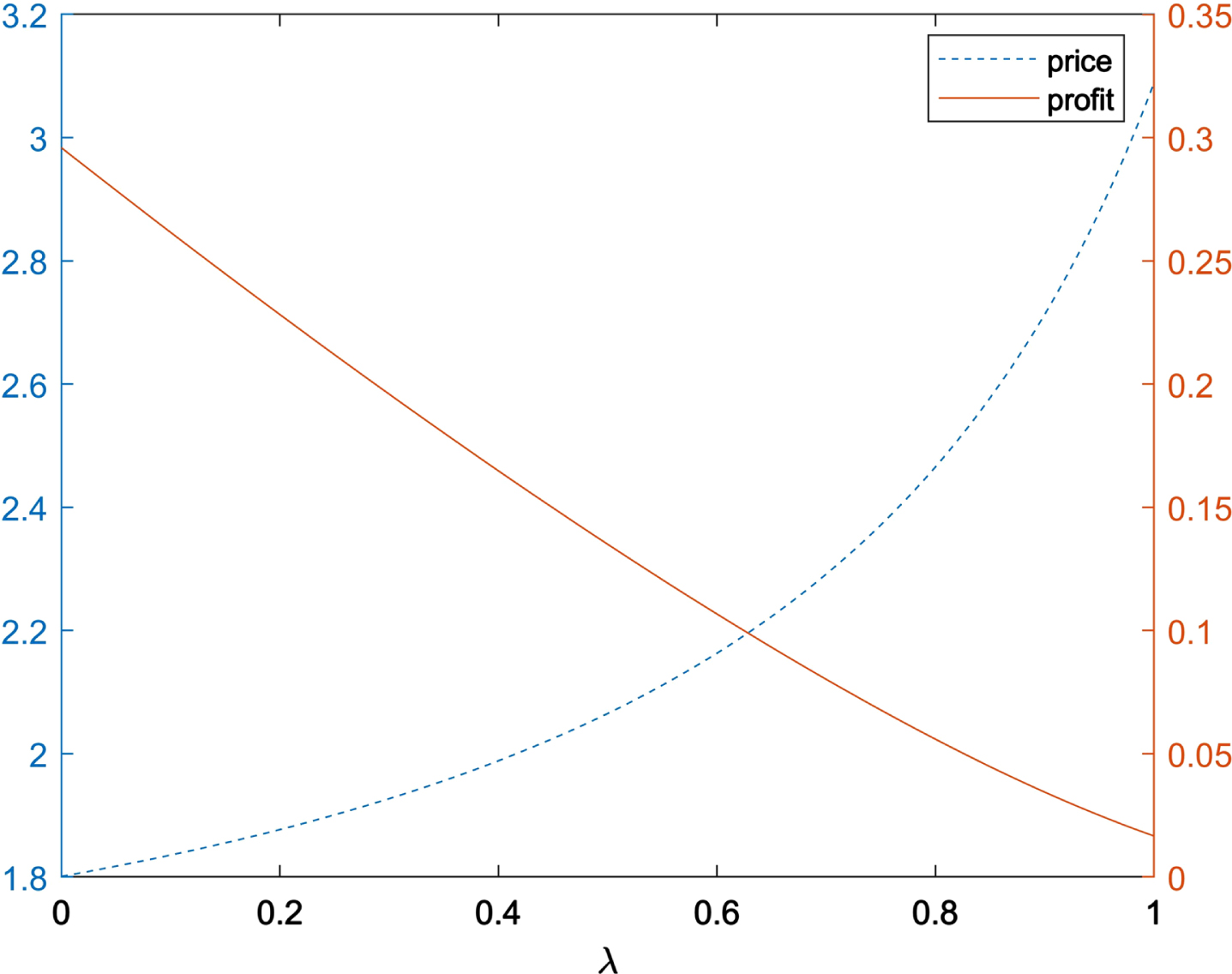
As shown in Figs. 1 2, when the product has few defects and a low return rate, with the increasing online product quality, the sales volume will increase, the optimal pricing will decrease, and the optimal profit will increase accordingly. Figures 3 4 show that when the quality of the online product is better (higher than that of the offline product), with the increase in the return rate, the sales volume decreases, the optimal pricing increases, and the optimal profit decreases accordingly. According to Figs. 1–4, when the return rate is high, the quality of online products should be higher than that of offline products for retailers to profit. When the quality of online products is high enough, defects and their severity have little impact on product pricing. When the products have few defects, retailers can obtain more profits and higher sales. When the return rate is high, the price of products with the same quality as offline products will be higher. But when the quality of online products is much higher than that of offline products, the price of products does not change much with the increase in return rate. When the quality of online products is better, retailers can obtain more profits and higher sales. In real life, some retailers have both online and offline stores, such as Uniqlo, Anta and Midea. If customers find the quality of products online is poorer, they will produce a bad impression of the retailers and no longer trust them. Public opinion can even affect other customers’ trust in the retailer. In the long run, the retailer will lose more customers, thus shrinking market share.
To further study the impact of the change in return rate on pricing and profit, α no = 0.8 is taken, and the numerical simulation results are shown in Fig. 5. Taking λ = 0.1 to study the influence of online product quality changes on pricing and profit. The numerical simulation results are shown in Fig. 6.
Influence of changes in λ on

Influence of changes in α
no
on
In Fig. 5, the dotted line and solid line indicate that the retailer’s optimal pricing and optimal profit, which show different changing trends with the increase of λ. There is a threshold
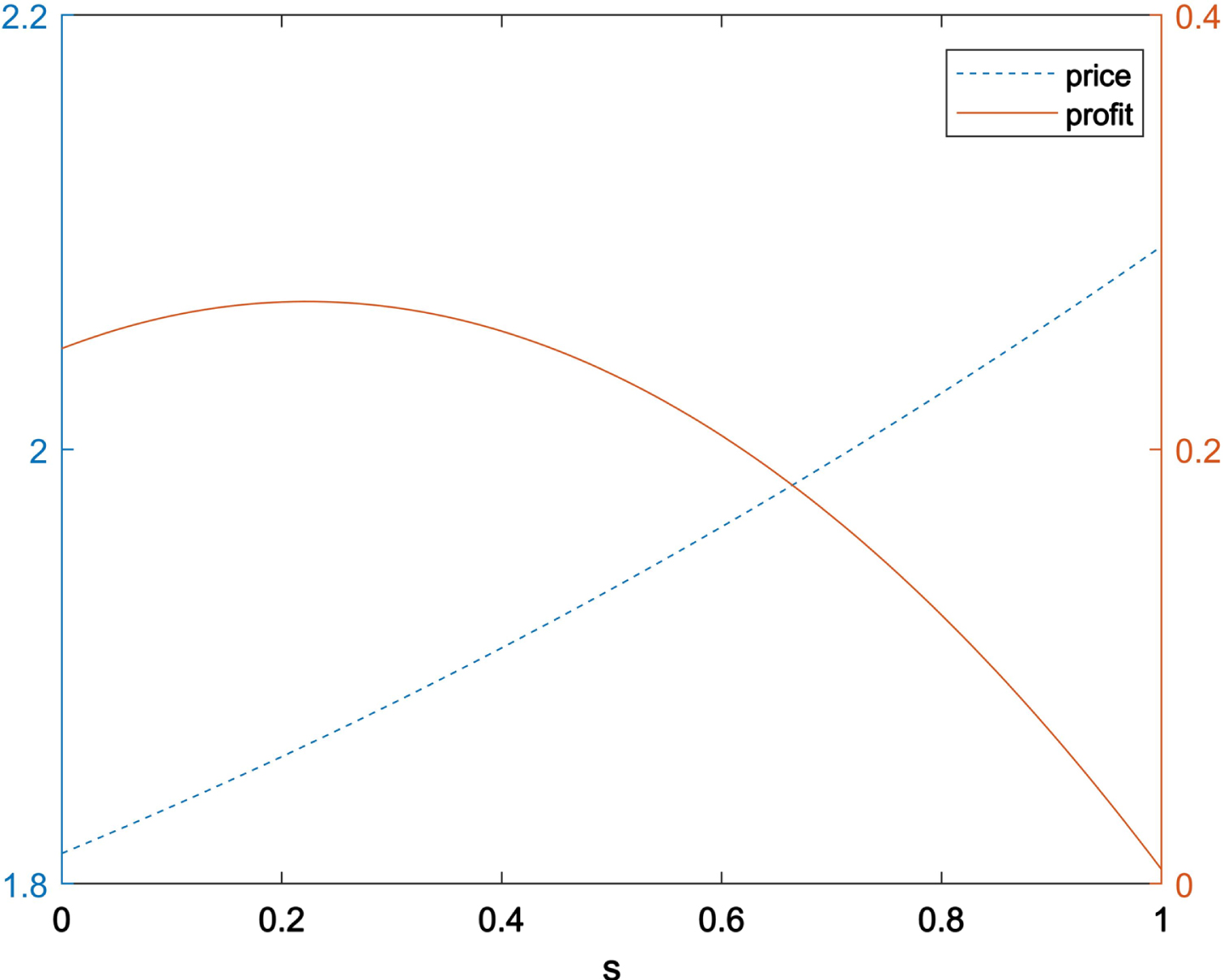
To analyze the impact of service on product pricing and profit, α no = 0.8, λ = 0.1 are taken, and the numerical simulation results are shown in Fig. 7.
Influence of changes in s on
As shown in Fig. 7, the optimal pricing increases with the increase in service level s. However, the higher the service level, the higher the required service cost, thus leading to an increase and then a decrease in the optimal profit. Retailers should maintain a certain service level when providing services.
Product pricing is not only affected by one factor but is usually a comprehensive effect of multiple factors. To obtain more profits, retailers need to control the service at a reasonable level, which will neither make customers uncomfortable nor make their own service cost too high. Moreover, they should strictly control product quality and cooperate with better manufacturers to provide high-quality products. Finally, retailers should check multiple times before delivery to avoid sending defective products to customers and reduce unnecessary returns.
The sensitivity of customers to online and offline quality differences, service and product defects is classified as low, medium, high and complete sensitivity.
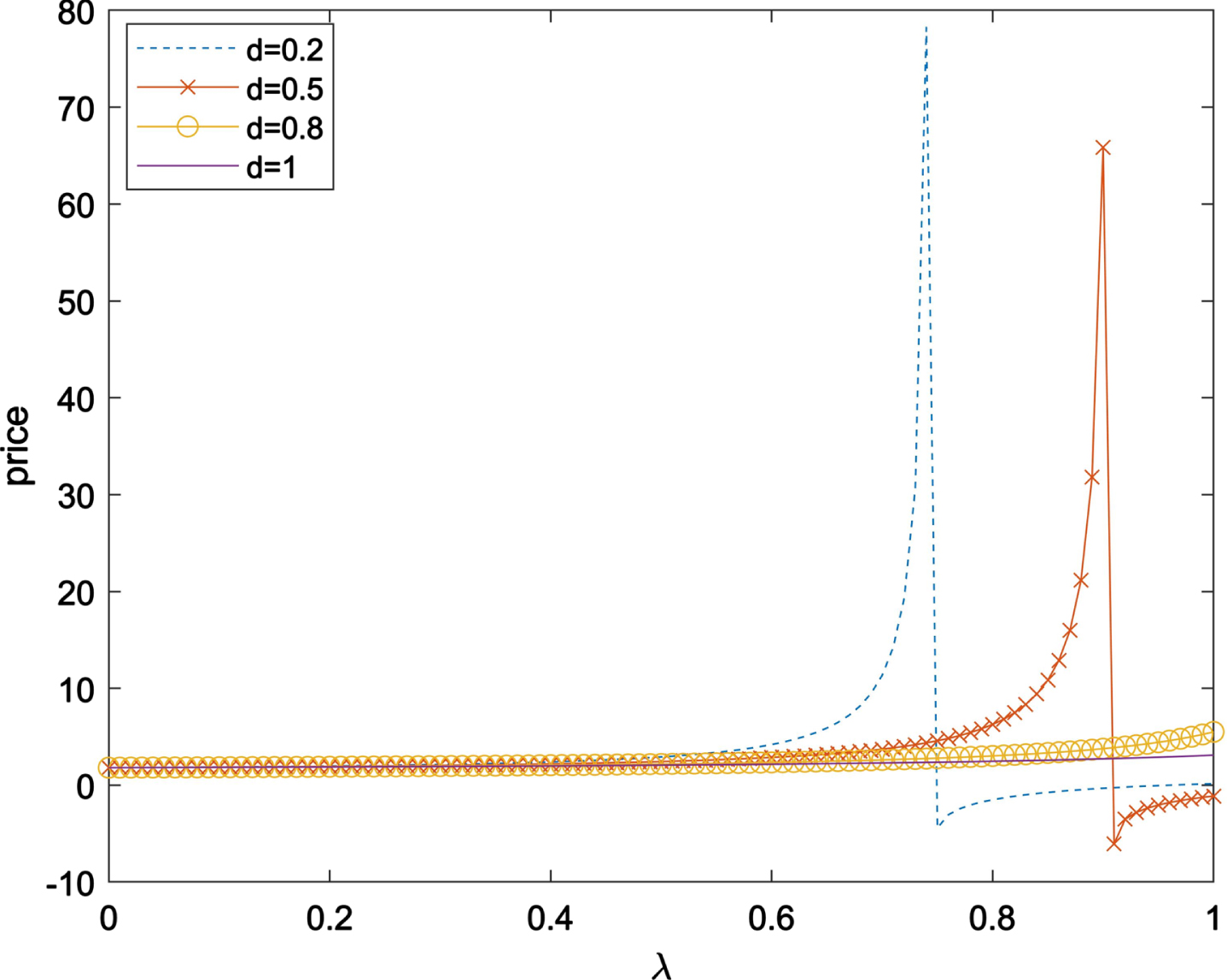
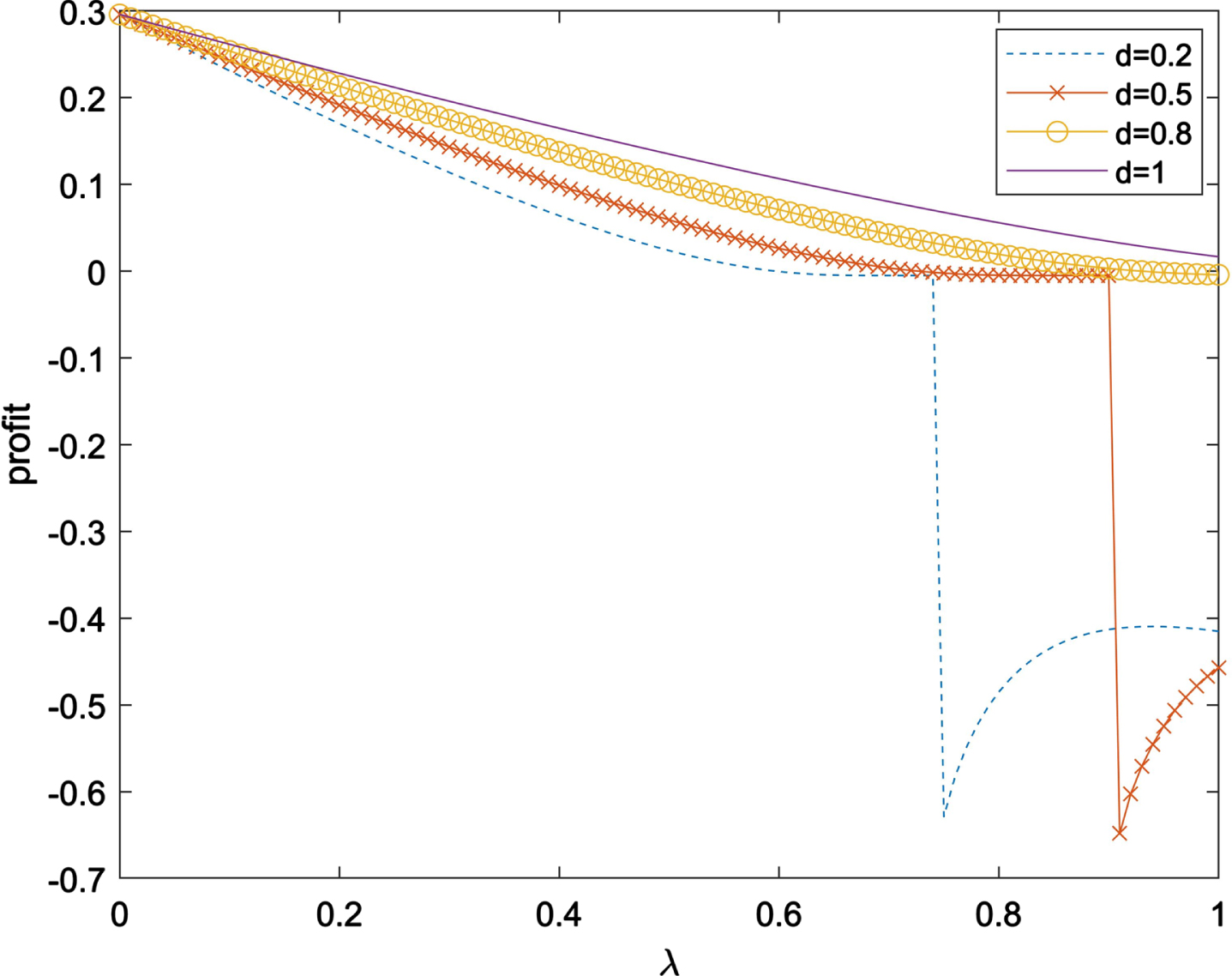
(1) It is assumed that customers are completely sensitive to the quality difference and service of online and offline products (i.e., g = 1, b = 1). Based on the analysis of homogeneous customers, α ne = 0.8 are taken, and the sensitivity coefficients of customers to quality defects of online products are respectively d = 0.2, d = 0.5, d = 0.8. The relationship between return rate, pricing and profit is simulated numerically, and the simulation results are shown in Figs. 8 9.
Influence of changes in λ on
Influence of changes in λ on
When customers’ perception of product quality defects is low or medium sensitivity, with the increase of product defects, the price and profit will fluctuate greatly, and the profit will even be negative. This result indicates that for customers with low or medium sensitivity, their ability to distinguish product defects is limited, and they may find problems after the return commitment period. At this time, retailers will not provide free return and exchange policies, and customers will have a bad impression of the store, resulting in lower profits for retailers. However, customers with high or complete sensitivity have a clear understanding of quality defects, the number of defects is within their expectations, and they can find and solve problems in time. Therefore, the increase in defects has little impact on them compared with customers with low or medium sensitivity. When selling products online, retailers must screen products strictly to avoid sending defective products to customers as much as possible. For customers with different sensitivities, retailers need to provide different remedies.
(2) It is assumed that customers are completely sensitive to quality differences and defects of online and offline products (i.e., b = 1, d = 1). Based on the analysis of homogeneous customers, α ne = 0.8, λ = 0.1 are taken, and the sensitivity coefficients of customers to service level are respectively g = 0.2, g = 0.5, g = 0.8, g = 1. The relationship between service, product pricing and profit is numerically simulated, and the simulation results are shown in Figs. 10 11.
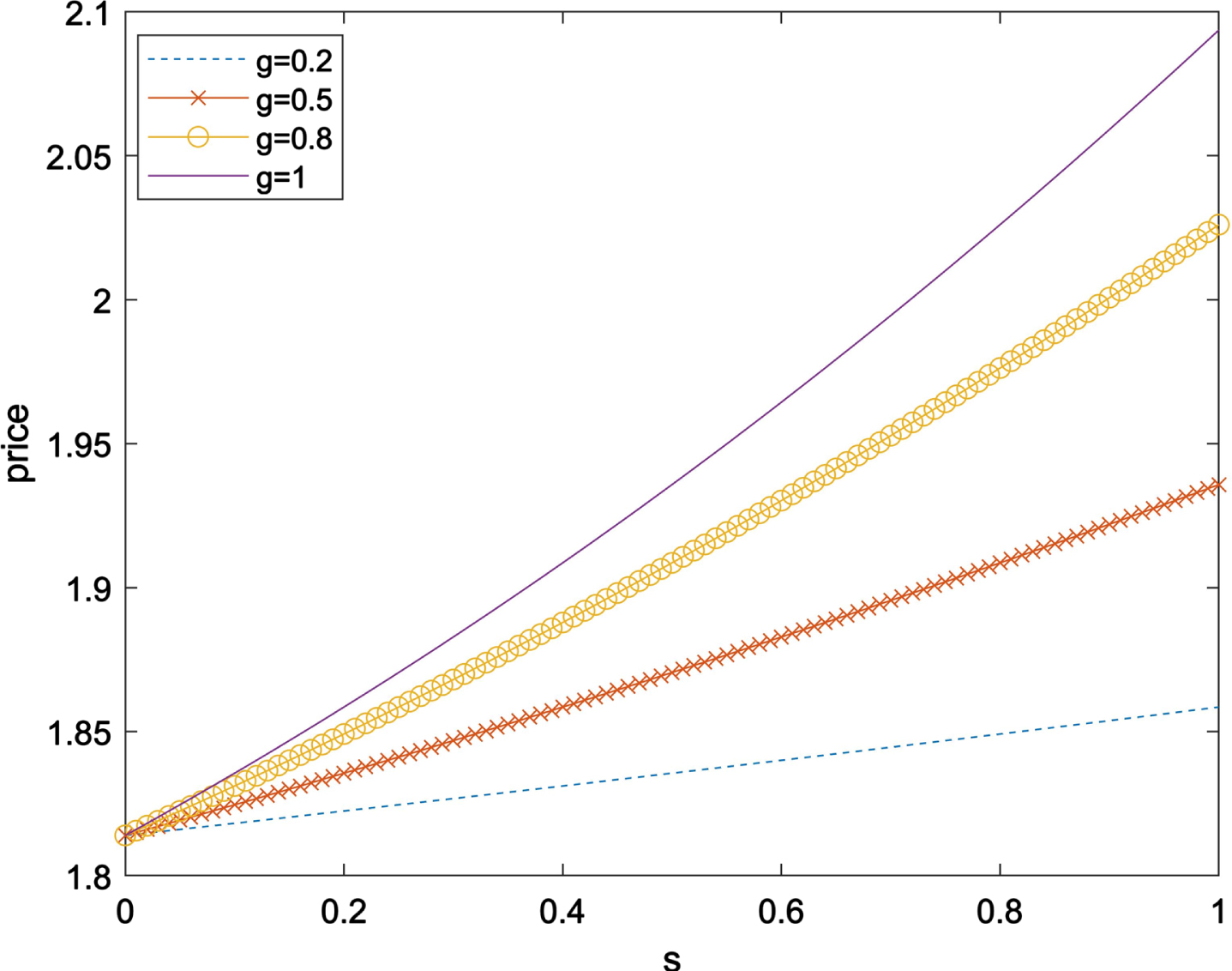
Influence of changes in s on
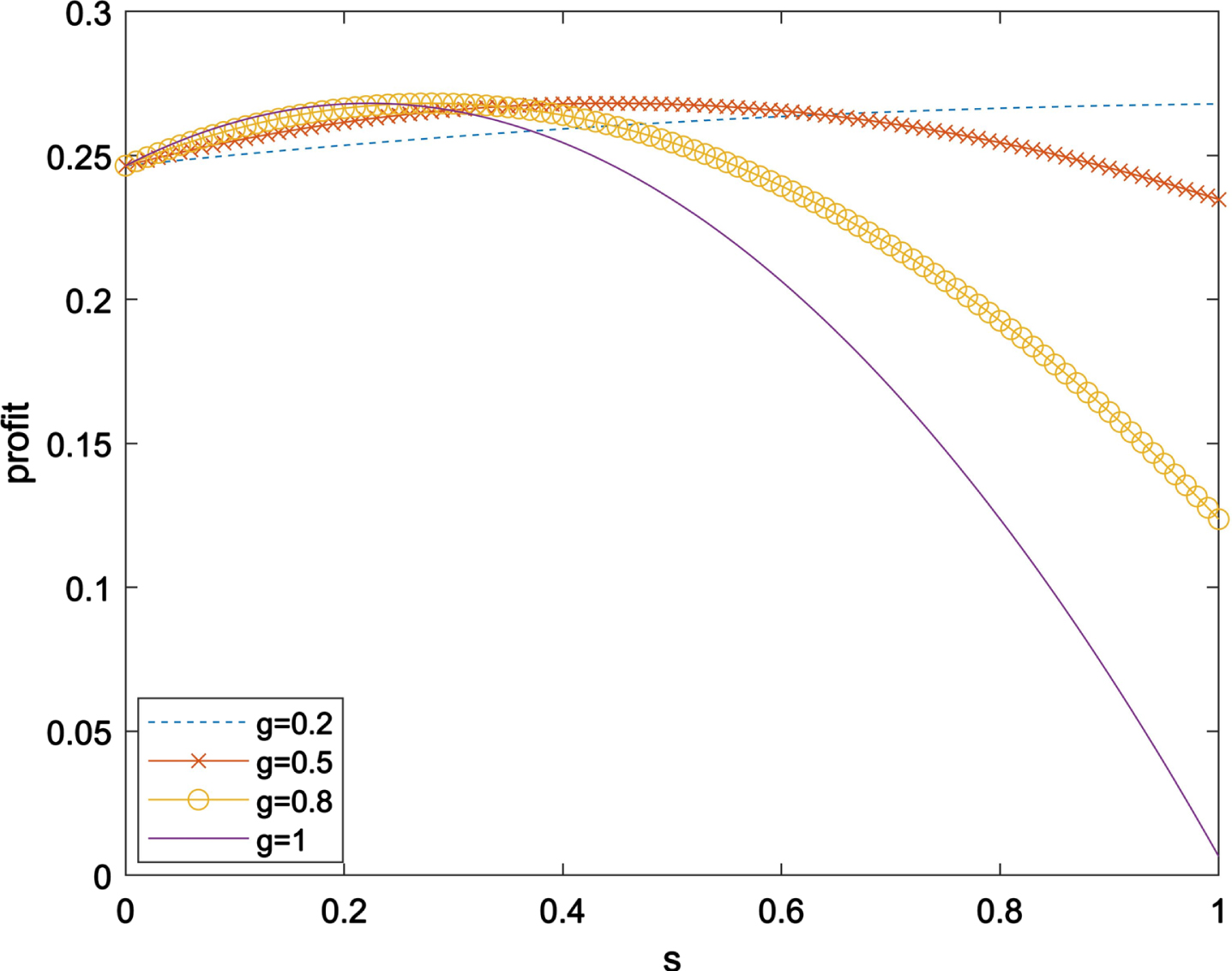
Influence of changes in s on
When the service level is fixed, the higher the customer’s sensitivity to the service level, the higher the retailer’s optimal pricing, and the greater the impact of service level change on pricing. When the customer has low sensitivity to the service level, the profit increases with the increase in the service level. When the customer’s sensitivity to the service level becomes higher, the retailer’s profit increases first and then decreases. The increase in the service level will lead to an increase in the service cost. Moreover, the higher the service level, the higher the sensitivity, and customers may choose to buy directly offline instead of switching channels. Therefore, the profit decreases greatly with the increase in the service level and sensitivity. When customers are completely sensitive, the effect of service level on optimal pricing and optimal profit is the same as that for homogeneous customers. To better develop both online and offline channels, retailers need to control the service at a certain level. This can not only avoid excessive service costs, but also reduce the impact of online channels where customers choose to buy more offline.
Simulation results show that the quality difference of online products, service levels and the quality of customer perception heterogeneity will influence the optimal pricing strategy of online products in the platform of economic operation. According to the characteristics of the product and customer behavior, platform enterprises need to adjust the service level at each stage timely and dynamically, improve product quality, and adjust the product strategy in different channels to improve enterprise efficiency.
Based on the MNL model, this paper studies the effects of quality differences between online and offline products and return policies on pricing strategies from the perspective of omni-channel retailers. The homogeneous and heterogeneous preference customers on the optimal pricing strategy and influence mechanism are theoretically analyzed. Through numerical analysis of return rate, quality difference, service level and sensitivity to pricing strategy and optimal benefit. We quantitatively study the influence of customer heterogeneity and product quality difference on pricing strategy. The main conclusions and implications are as follows: In the case of homogeneous and heterogeneous preferences, the profit function is a concave function of the market share when considering the difference in product quality. The analytical solutions of the optimal price, market share and profit are given. For both homogeneous and heterogeneous preference customers, the optimal pricing decreases with the increase of trouble cost. With the increase of offline service level. Retailers should provide goods of no lesser quality than offline ones and improve product quality according to customer feedback. In addition, the service should be controlled at a certain level and adjusted dynamically according to the behavior characteristics of customers to obtain more profits. For industrial enterprises, the quality of the same product sold in different channels should be ensured at the same level as far as possible. In the production management, strictly control its quality; In terms of marketing mode, it should highlight the advantages of products, disclose the real information of products, increase consumers’ cognition of products, reduce the behavior of returning products, improve the quality of products and dynamically adjust the selling price according to consumers’ behavior characteristics and product feedback, so as to obtain greater profits.
Due to the inherent theoretical defects of MNL model, such as the assumption that utility must be independent, MNL model cannot be applied to the pricing of enterprises that affect each other in a competitive environment. For such complicated problems, more refined models are needed to be used for construction. However, MNL model is the basis of the whole discrete selection model system and is most commonly used in practice. Due to its characteristics of low technical threshold, low sample requirements, mature technology and easy implementation, MNL model can also be well applied in product line and service, and can also show good applicability in future industrial research. This paper does not consider the price compensation of returns for customers. Further analysis should focus on the impact of price compensation on customer return behavior to enrich and expand the online product pricing system.
Footnotes
Acknowledgments
This study was supported by the National Natural Science Foundation of China (72001071), National Social Science Foundation of China (22FGLB083), Philosophy and Social Sciences Planning Project of Henan Province in China (2022BJJ031), Humanities and Social Science Planning Fund Project of Ministry of Education (21YJA630061), Henan Province University Science and Technology Innovation Talent Support Program (2021-CX-004).