



Abstract
In order to further enhance energy conservation and emission reduction, the header lifting structure of a harvester is studied. First, a double electric pushrod structure is used to replace the oil cylinder and air cylinder lifting structure of a traditional header to reduce fuel consumption and harmful gas emission. Furthermore, a mathematical model and a simulation model of the electric pushrod are established. To enhance the control effect of the header lifting structure, an improved version of the traditional gray wolf optimization (GWO) algorithm is designed. The nonlinear convergence factor, Kent chaotic mapping and convergence surrounding and spiral updating operations are introduced to increase the convergence speed and optimization accuracy of this algorithm. The improved GWO (IGWO) algorithm is applied to optimize the proportional-integral-derivative (PID) controller of the double pushrod coordinated control system. Then, a new IGWO-PID control algorithm is also designed. The cross-coupling control strategy of header’s double pushrods is then studied. Results of the simulation and bench test show that the IGWO-PID control algorithm and the cross-coupling control strategy can effectively enhance controlling effect of the harvester header. The left and right pushrods can achieve good synchronous and coordinated movements.
Introduction
With the world’s increasing attention to carbon peaking and neutrality, emission and pollution from traditional agricultural machines have received widespread attention in recent years, so the development of energy-saving and emission-reducing technologies for agricultural machines has become an important research field. At present, many scholars have studied the structure and control of traditional agricultural machines and proposed some methods to improve energy efficiency of these machines.
To improve the energy-saving performance of agricultural machines through structural innovation, Wang developed a new device that generated ultrasonic vibrations; this device reduced the resistance of soil joint parts [1]. Sandakov designed the best parameters for a new plough model to realize the rational use of energy [2]. Johnson optimized cutting speed and blade angle to save energy significantly and improve the efficiency of an awn grass harvesting machinery [3].
Some researchers have also conducted numerous studies on the control of traffic systems. To reduce the average fuel consumption of wheat planting, Chen applied a controlled transportation system to a small agricultural machinery in the Loess Plateau of China [4]. Wang developed a controlled traffic tillage wheat seeder without or less tillage and used it to save fuel consumption [5].
In the field of energy conservation by using biomimetic technology, Tan applied biological characteristics in the design and manufacturing process of an agricultural machinery by imitating the structure, theory, behavior and function of biological systems, realizing the energy conservation and emission reduction of an agricultural machinery and extending its service life [6]. Guo designed the bionic crossing edge of a rotary blade by simulating the arrangement of mole toes, improving the performance of the rotary blade and conserving energy [7]. Breidi saved energy by using efficient digital pumps/motors to improve the overall efficiency of agricultural equipment [8]. Zhang conducted bionic research on mole cricket and redesigned the parts that have contact with soil to address the issues of operating speed, energy conservation and emission reduction in farming machines [9].
Meanwhile, some scholars have also conducted research on energy conservation and emission reduction in agriculture from other perspectives with some positive results being achieved. Ren proposed a two-stage idle speed control system based on a hydraulic accumulator to ensure that the inlet pressure of the actuator’s working chamber increased rapidly when idle speed was canceled and the actuator was started, improving the energy utilization rate [10]. To solve the low energy utilizing problem of pure electric tractors, Li adopted dynamic programming to optimize the energy control strategy of the power supply system of pure electric tractors [11]. Guo proposed a collaborative scheduling and energy-saving optimal allocation method for processing tasks that consider random events by systematically analyzing the multi-energy consumption characteristics of agricultural machinery operation [12]. Chen developed a power-matching control system to solve the problem that the engine of a rice transplanter frequently worked in high fuel consumption mode [13]. Mousavi used nonparametric data envelopment analysis to study the technology and scale efficiency of producers and reduced the total energy input of rape production [14]. Ren improved the efficiency of a transplanter and reduced its power consumption by optimizing the number of blades of the machine [15].
Basd on what has been mentioned, some studies have been conducted on energy-conservation and emission-reduction technologies of agricultural machines.However, research on the header lifting structure is minimaland insufficient. To improve the design of the hydraulic pushrod and cylinder mechanism of the traditional header lifting structure, a new header electric pushrod lifting structure is studied. The PID controller is widely applied in many machines and has great controlling performance. Some scholars have employed new optimizing algorithms to design suitable parameters for PID controllers. For example, Levy flight algorithm has been modified and employed to tune parameters for PID controllers so that they have greater controlling performance [16, 17]. Inspired by these work, the study on controlling system of harvester lifting structures in this paper is carried out. The gray wolf optimization (GWO) is a new mathematical algorithm that shows strong search ability and high accuracy [18–22]. To enhance the controllability of a header’s electric pushrod, an improved GWO algorithm is designed. The nonlinear convergence factor, Kent chaotic mapping, and convergence surrounding and spiral updating operations are introduced in normal GWO. Compared with normal GWO, IGWO algorithm has greater global searching ability and ability of jumping out of local optimum. Meanwhile, IGWO algorithm has higher convergence speed and optimization accuracy. The IGWO algorithm is applied to optimize the PID controller parameters of the electric pushrod, while the IGWO-PID algorithm is used to control the electric pushrod and improve its working performance. Therefore, the contribution of this paper is as follows: (1) design new double electric pushrods to replace traditional oil cylinder and air cylinder lifting structure in a harvester header so that energy conservation and emission reduction can be realized; (2) develop IGWO and IGWO-PID algorithm so that the controlling performance of electric push-rod can be enhanced; (3) design the cross-coupling control strategy to reduce left and right pushrod displacement deviation. This paper is organized as follows. In the forthcoming section, models of the harvester lifting structure is built. Next, IGWO algorithm is studied and on this basis, single pushrod control algorithm in the header with a double pushrod system is studied. Subsequently, the cross-coupling control strategy for the header’s double pushrods is designed. In the final sections, bench tests are conducted. Conclusions are drawn in the last section.
Improvement and system modeling of the harvester lifting structure
Improvement of the harvester lifting structure
Figure 1 shows the diagram of three driving modes of the electric pushrod, the oil cylinder and air cylinder lifting structure. The reel height of the traditional harvester header is adjusted through the oil cylinder and air cylinder. Even when the reel does not require adjustment, its engine still has to drive the hydraulic or pneumatic pump to continue working and maintain the supply of a high-pressure transmission medium at any time, resulting in considerable loss of energy and parts. After the improvement, the reel-lifting structure adopts an electromechanical control regulation system, and the oil cylinder and air cylinder are changed into electric pushrods. When the reel does not require adjustment, its electromechanical control regulation system is in shutdown state and does not consume energy. Simultaneously, it exhibits better controllability, lower complexity and smaller space.

Diagram of the three driving modes.
The electric pushrod is driven by a brushless direct current (DC) motor, which converts electrical energy into mechanical energy. The rotor, affected by the stator’s magnetic field, is subjected to a pair of opposite forces, causing the main shaft of the motor to generate electromagnetic torque. The voltage balance equation of the brushless DC motor is [23]
The Laplace transform of Formula (1) can be obtained as follows:
Therefore, the transfer function of voltage and current is
The mechanical motion equation of the motor is [24]
The equivalent load current I
d
L is
From Formulas (5) and (6), there is:
Laplace transform can be obtained as follows:
By substituting the electromotive force and speed ratio, the relationship between electromotive force and speed can be obtained as follows:
Laplace transform can be obtained as follows:
The electric pushrod converts the rotation of the motor into linear motion through the internal reducer and screw structure. The formula for the rotation distance of the electric pushrod is
Laplace transform can be obtained as follows:
The dynamic structure of the electric pushrod is depicted in Fig. 2.
Diagram of the dynamic structure.
The premise to achieve the collocated control of double electric pushrods is to realize the precise control of a single electric pushrod. To ensure the accuracy of the collocated control system, a single electric pushrod should be able to move quickly and reach the target position when receiving the control command. Therefore, the current study adopts a double closed-loop control for the electric pushrod. To achieve accurate position control of the electric pushrod, the speed loop is selected as the inner loop, while the position loop is selected as the outer loop. The simulation model of the electric pushrod control system is presented in Fig. 3.
Simulation model of the single electric pushrod control system.
Motor parameters of the electric pushrod are as follows: working voltage is 48 V; rated power, 200 W; rated current, 6.5 A; rotational inertia, 0.48 kg×cm2; rated speed, 3000 rpm, and rated torque is 0.65 N·m.
IGWO algorithm
The GWO algorithm was proposed by Mirjalili et al., being simple and easy to implement and suitable for engineering practice. However, the traditional GWO has some disadvantages, like poor optimization accuracy, tendency to fall into local optimum and slow convergence speed. It can be optimized further, so this paper makes the following improvements for the GWO algorithm.
(1) Nonlinear convergence factor operation
In traditional GWO algorithm, convergence factor a decreases linearly with iterations number increasing. In the beginning, the value of a is large, and the algorithm exhibits strong global solving ability. This value decreases linearly with algorithm iteration and its local solution ability increases. The value cannot guarantee a long time search near the higher value because of the linear decreasing strategy, and it will easily miss the global optimal solution. The value of a decreases rapidly with iterations number increasing, so that it is easy to fall into local optimal solution. Hence, this paper introduces the convergence factor of nonlinear change:
(2) Kent chaotic mapping operation
The coefficient r in the formula for a gray wolf surrounding its prey in the traditional GWO is a random number. This traditional method experiences difficulty in traversing the population, and it cannot reflect diversity of the population. Therefore, this paper uses Kent mapping to generate r values that are uniformly distributed in the (0, 1) interval. It improves the algorithm ability to jump out of local optimum in calculating introduction of the surrounding formula at the later stage of iteration.
(3) Convergence surrounding and spiral updating operation
The whale optimization algorithm (WOA) is a new colony intelligence optimizing algorithm with evident advantages, such as simple structure, few parameters, strong search ability and easy implementation. In WOA, two attack strategies are designed to achieve local development, resulting in a good optimization effect. The first is the shrinking and surrounding mechanism, in which the group presents a shrinking and surrounding state under the guidance of a globally optimal individual. The second is updating the position of the spiral, establishing the spiral equation to simulate spiral motion of a whale in accordance with the distance between a whale and its prey. In the process of the individual updating of the GWO algorithm studied in the current work, the convergence surrounding and spiral updating operations of WOA are used as references for improving disadvantages of the single location updating method of the traditional GWO algorithm and enhancing its convergence speed. The new individual updating strategy is as follows [25]:
The flowchart of IGWO algorithm is indicated in Fig. 4.
Flowchar of IGWO.
In order to verify the reliability of IGWO algorithm, 8 standard test functions (shown in Table 1) are used to check and analyze it. Among them, F1-F4 are unimodal functions, while F5-F8 are multimodal functions. The convergence of the improved algorithm and its ability of global optimum solution among multiple local optimums are tested. Then, the results are compared with those of traditional GWO, sparrow search algorithm (SSA), particle swarm optimization (PSO) algorithm.
Test functions
Test functions
In accordance with the optimizing process of different test functions in Fig. 5, the convergence speed of IGWO is higher than those of GWO, SSA and PSO algorithms for different test functions. Moreover, the optimization accuracy of IGWO is higher than that of GWO, SSA and PSO algorithms.
Comparison of algorithm optimization process F1–F8.
As indicated in Table 2, compared with GWO, SSA and PSO algorithms, IGWO algorithm has been improved in terms of average value, standard deviation and maximum difference to different degrees, achieving higher accuracy and stability. Figure 4 shows that the IGWO algorithm is more accurate than GWO, SSA and PSO algorithms after 2/3 iterations, verifying development trend of the previous design. In summary, compared with the GWO, SSA and PSO algorithms, the IGWO algorithm solves the problems of low optimization accuracy, falling into local optimum and premature convergence to a certain extent, which certifies the effectiveness of the improved algorithm.
Comparison of algorithm performance
In control process of the electric pushrod, the overshoot of pushrod response curve and adjustment time are major factors that influence the control effect. In this study, adjusting time and curve overshoot are combined as the evaluating function of the algorithm and used as the evaluation standard of the optimization results of the algorithm.
In this work, adjusting time t
s
is set as the minimum time required to keep the step response within the 5% error band, and delta is the percentage of the set value of the peak overshoot. Given that the change in adjusting time is at the level of 101, while the change in overshoot is at the level of 100, adjusting time is reduced by 10 times in the process of weighting the two, and the weighting coefficients of the two factors are both 0.5. The specific evaluation function is as follows:
The smaller the value of evaluation function is, the better the adaptive degree will be. The location parameters of each GWO algorithm iteration are transferred to the Simulink simulation model. Simultaneously, a program is written to identify the parameter indicators selected in this study, and then they are transferred to the evaluation function for calculation. The best parameters can be identified through multiple iterative analyses.
(1) Displacement control simulation test
To certify the control effect of the IGWO algorithm on displacement of the electric pushrod, this study uses the IGWO algorithm to optimize PID controller. Then, it designs the IGWO-PID control algorithm and performs a simulation test. The simulation results are compared with those of four electric pushrod displacement control algorithms: GWO-PID, SSA-PID, PSO-PID and traditional PID controlling algorithms. Figure 6 shows the simulation results.
Figure 6 depicts the simulation comparison curve of electric pushrod displacement rising to 120 mm. This figure shows that IGWO-PID control algorithm is superior to the other four control algorithms in terms of adjusting time of displacement control. Although the traditional PID control basically meets control accuracy requirements, the displacement adjusting time of the GWO-PID, SSA-PID, PSO-PID control algorithms are reduced by about 3.6 s, 3.2 s, 2.8 s, respectively compared with that of traditional PID control. Moreover, the adjusting time of the IGWO-PID control algorithm is further reduced by 0.9 s compared with that of GWO-PID control algorithm. In terms of overshoot, the number for the PSO-PID, SSA-PID, GWO-PID and IGWO-PID control algorithms decreases by 1.3 mm compared with that of traditional PID control. However, the displacement error of IGWO-PID control algorithm increases by 0.034 mm, 0.031 mm, 0.029 mm compared with those of GWO-PID, SSA-PID, PSO-PID control algorithms. In general, IGWO-PID control algorithm balances overshoot and adjusting time, achieving good control effect.

Comparison of displacement controls.
(2) Speed simulation analysis
The speed step response under a rated load is simulated and analyzed to verify the system anti-interference ability of IGWO-PID control algorithm when it experiences a sudden load change. In this study, when t = 1.2 s, the equivalent load current 5 A is added, so that the motor speed in the electric pushrod fluctuates around the rated speed 3000 rpm. The response curves of the three control algorithms are analyzed and compared with results being presented in Fig. 7.

Comparison curve of speed control.
Figure 7 illustrates that in terms of speed fluctuation control, the speed errors of IGWO-PID, GWO-PID, SSA-PID and PSO-PID control algorithms are reduced by 10 rpm, 8 rpm, 6 rpm, 6 rpm compared with that of traditional PID control; the fluctuation of IGWO-PID control algorithm is the smallest. The adjusting time of GWO-PID, SSA-PID and PSO-PID control algorithm is reduced by 3%, 3%, 4% compared with that of traditional PID control. Meanwhile, adjusting time of IGWO-PID algorithm control is the smallest, decreasing by 1% compared with that of GWO-PID. When the sudden increase of rated load speed is stable, the speed errors of the GWO-PID, SSA-PID and PSO-PID control algorithms are reduced by 21 rpm, 20 rpm, 17 rpm compared with that of traditional PID control, the speed error of IGWO-PID control algorithm is the smallest and the speed error of traditional PID control is reduced by 34 rpm. In summary, IGWO-PID control algorithm achieves better control effect compared with the other two types of control in terms of speed control.
Cross-coupling control
On the basis of the existing single pusher control, this work studies the collocated control of the double pusher and introduces IGWO-PID control algorithm into double pusher control. Affected by the manufacturing process, load and other conditions among different pushrods, speed and displacement of the two pushrods are not completely consistent. If they are not controlled, they will inevitably interfere in the working process and affect the working performance of the harvester. Therefore, the current study chooses the cross-coupling control strategy with a compensation controller to coordinate the control of the header’s double pushrods and improve the position consistency of the left and right pushrods during the control process.
Control system structure of the double pushrods is composed of two single pushrod control systems and a cross-coupling controller. Coupling occurs between the two electric pushrods with no distinction between the primary and secondary pushrods. During operation, displacement transformation is fed back to each other to realize the compensation for displacement deviation.
Simulation test
To test the working performance of the cross-coupling control system with two pushrods based on IGWO-PID control algorithm designed in this study (Fig. 8), a PID-based cross-coupling control system is constructed in MATLAB/Simulink in accordance with the cross-coupling control system built in the previous research and the displacement error of PID control compensation double pushrods during operation. A stimulation test is subsequently performed. The test results are compared with those of GWO-PID control algorithm, which are presented in Fig. 9 and Fig. 10.
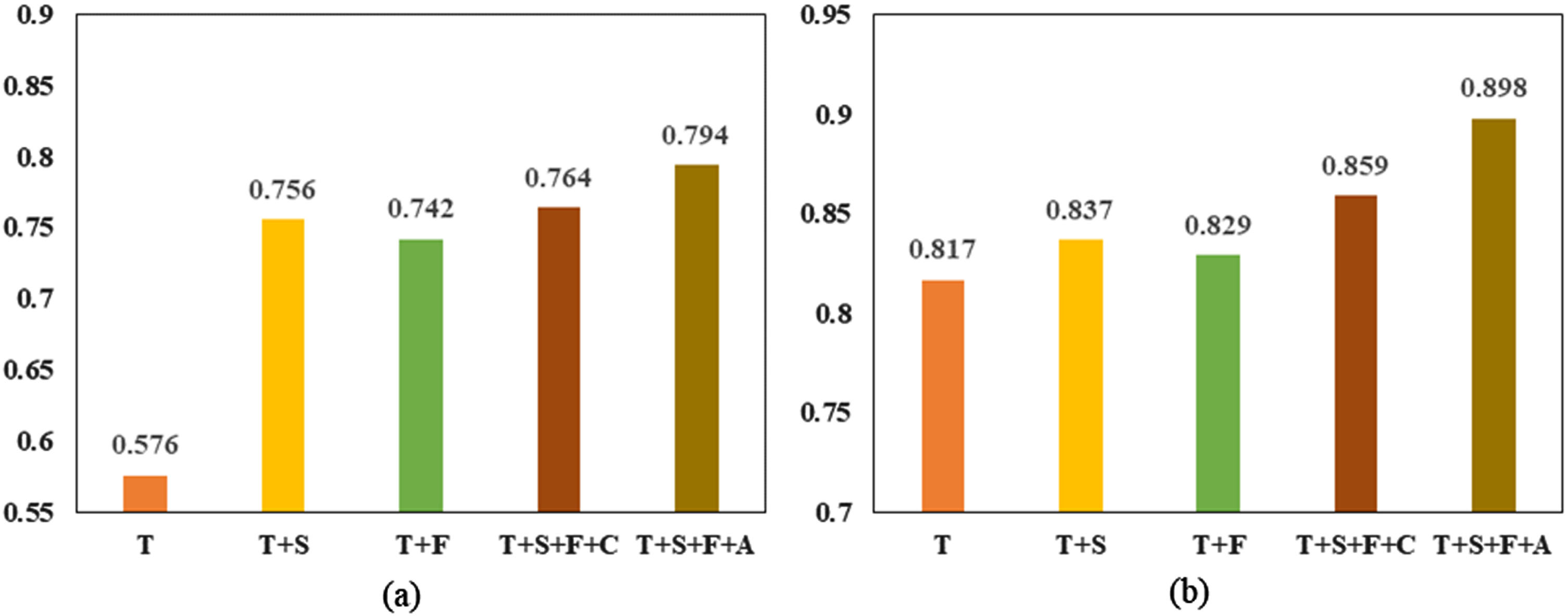
Cross-coupling control system of the double pushrods.
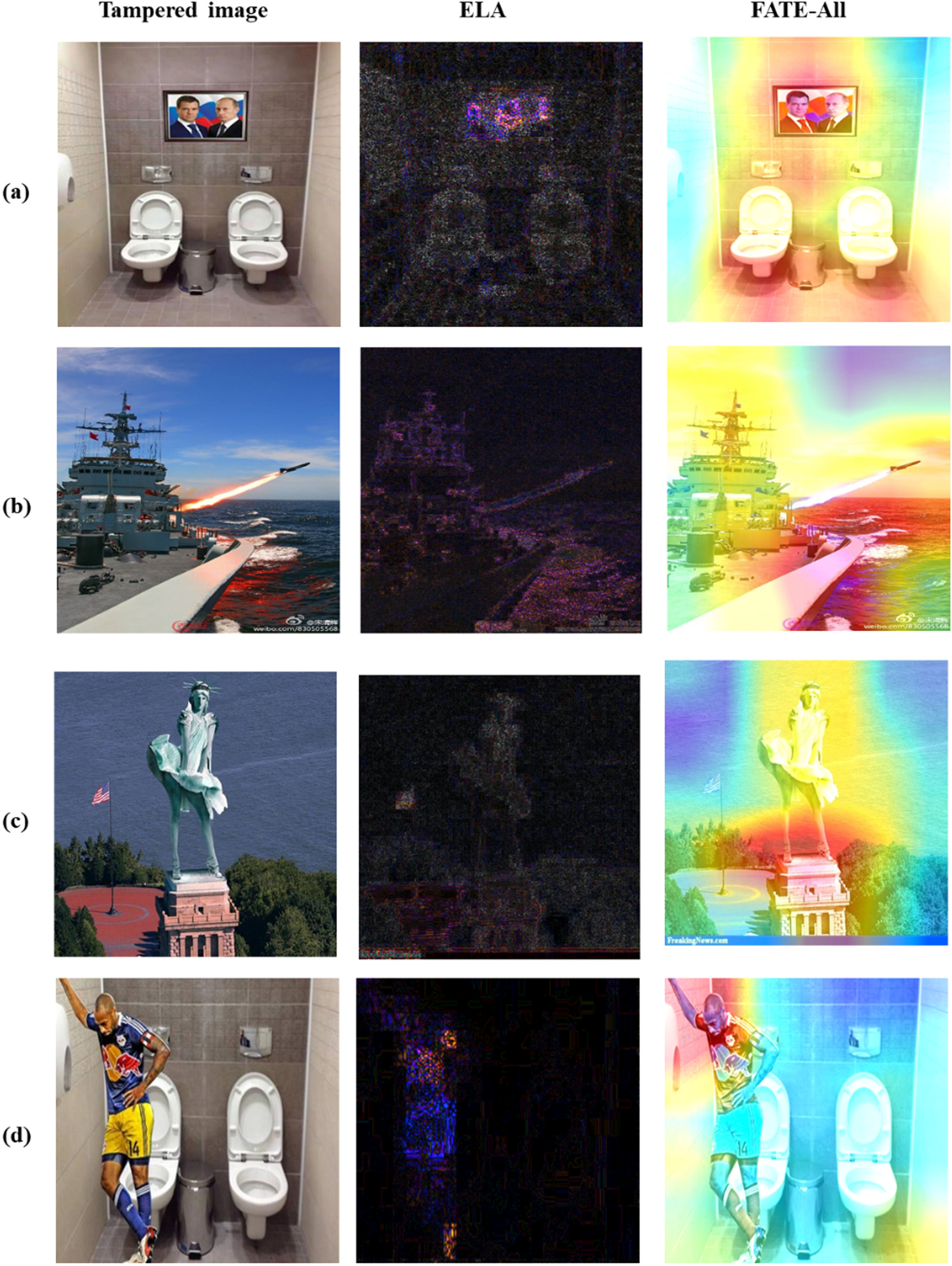
Simulation results of the cross-coupling control system based on the GWO-PID control algorithm.
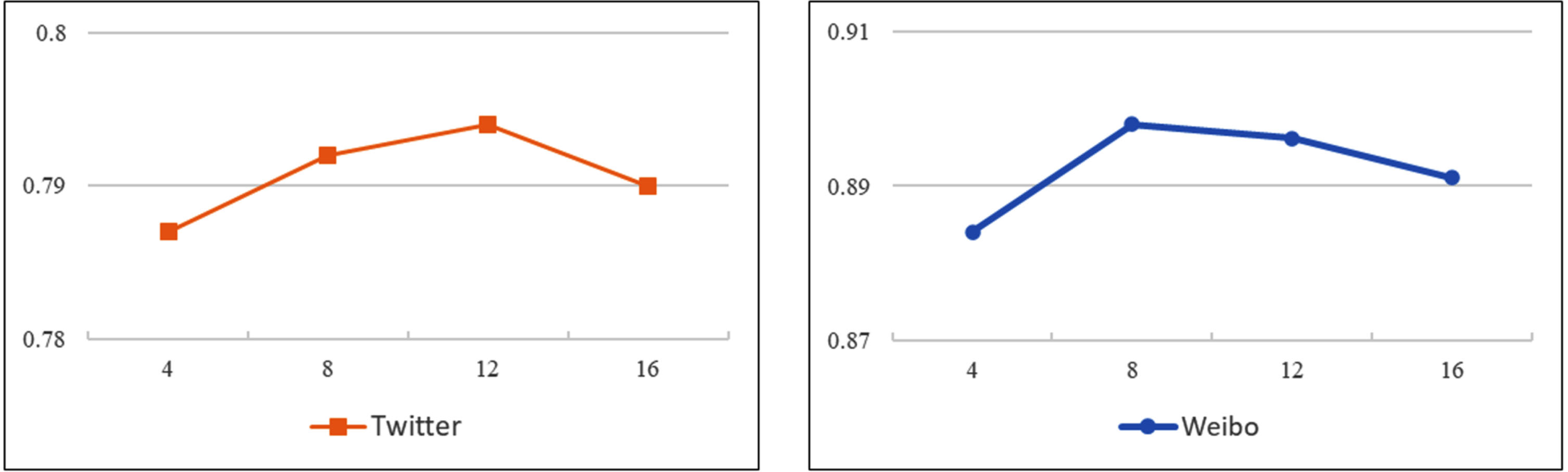
Simulation results of the cross-coupling control system of the IGWO-PID control algorithm.
The control results of the GWO-PID control algorithm are shown in Figs. 9 (a) and (b). A step signal of 120 mm is selected as the position input signal of the electric pushrod at 0.1 s, and the rated equivalent load current of Motor 1 is given at t = 1.2 s.
As is shown in Fig. 9, the overall displacement trends of the two pushrods in the displacement curve are the same, and the curve is nearly coincident. After adding the sudden load, the speed of pushrod 1 slows down, and then speed increases with the action of the PID controller, and the displacements of the last two pushrods tend to be equal. The deviation curve shows that the displacement deviation of the two pushrods reaches the minimum at 3.09 s after the sudden load is applied at 1.2 s, while the maximum can reach –1.44 mm. Thereafter, the deviation gradually decreases and then increases, reaching a peak of 1.185 mm at 5.92 s. Finally, deviation decreases and displacements of the two pushrods tend to be equal and finally remain at 1.65×10⁻³ mm.
The control results of IGWO-PID control algorithm are presented in Figs. 10(a) and 10(b). A step signal of 120 mm is selected as the position input signal of the electric pushrod at 0.1 s, and the rated equivalent load current of Motor 1 is given at t = 1.2 s.
Figure 10 indicates that the displacement curves of the two pushrods in IGWO-PID control algorithm are more coincident than the curves controlled by traditional GWO-PID algorithm, proving that the position consistency of the two pushrods is higher with IGWO-PID control. When load is suddenly applied at 1.2 s, the minimum deviation of the two pushrods is 0.82 mm at 2.177 s. The displacement deviation at 4.857 s reaches a peak value of 0.45 mm. The adjusting time of IGWO-PID controller is reduced by 22% compared with that of traditional GWO-PID controller, and then the position deviation of the two pushrods gradually decreases, and finally remains at about 5.37×10⁻⁶ mm. Compared with that of GWO-PID controller, the control performance of IGWO-PID controller is significantly improved.
Bench test platform
To further confirm the working performance of the double pushrod collocated control system developed in this work, a test bench platform of the collocated control system is built. It consists of two electric pushrods with a stroke of 304 mm and a maximum dynamic load of 2250 N, two tilt sensors, a synchronous controller and a 48-V DC power pack. The angular sensor is a SINET angle sensor produced by Shenzhen Weite Intelligent Technology Co., Ltd. STM 32F103C8T6 is empolyed to make the header’s collocated controller CPU. An insulated gate bipolar transistor and PS21A7A are employed to make the three-phase full-bridge circuit power tube and the drive chip, respectively. The test bench is shown in Fig. 11.

Bench test platform.
The initial position of the pushrod is set at 0 mm and running distance is 300 mm. The controller is started to record the data of the angular sensor. In this study, the test data are sorted out to draw the deviation curve of the angle difference between the two pushrods during the the electric pushrod operation of, as shown in Fig. 12.
Figure 12 depicts that the maximum deviation at both ends of the lifting arm in the cross-coupling control system based on IGWO-PID control is about 0.6°, and the displacement deviation converted into the electric pushrod is about 5.5 mm. Simultaneously, in the collocated control of the cross-coupling control system based on GWO-PID, SSA-PID, PSO-PID, PID control algorithms, the maximum deviation at both ends of the lifting arm is about 0.9°, 1.1°, 1.1°, 1.3° and the displacements deviation converted into the electric pushrod are about 8.2 mm, 10.1 mm, 10.1 mm, 11.9 mm. In the collocated control, the maximum deviation of the cross-coupling control system based on GWO-PID, SSA-PID, PSO-PID, PID control algorithms are increased by 0.3°, 0.5°, 0.6°, 0.8° and the displacement deviation of the electric pushrod are increased by 2.7 mm, 4.6 mm, 5.5 mm and 7.3 mm compared with the two ends of the lifting arm controlled by IGWO-PID control algorithm, verifying that the cross-coupling control system based on IGWO-PID control exhibits better control performance.
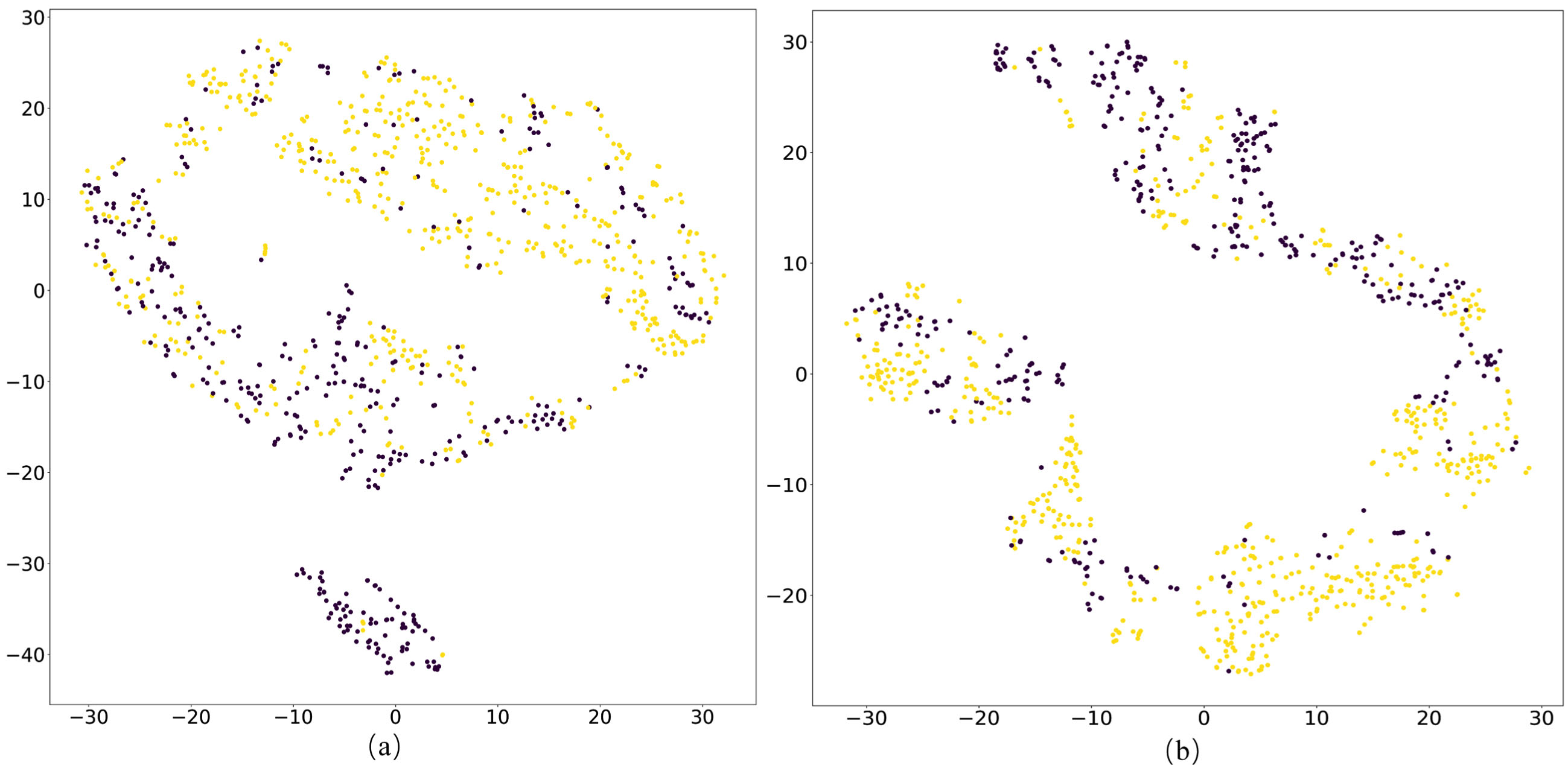
Angle deviation of the pushrod.
A header lifting structure with double electric pushrods is designed in this paper to realize the energy saving and emission reduction of a harvester. On the basis of IGWO algorithm, the IGWO-PID control algorithm is studied, and the cross-coupling control strategy is designed for the dual-motor lifting structure. Compared with traditional header lifting device, it can save engine oil consumption, reduce emission and demonstrate good controllability. On this basis, a set of harvester header double-motor lifting mechanism test system is designed. The simulation results suggest that the cross-coupling control strategy based on IGWO-PID control algorithm can reduce the position deviation of left and right pushrods, improving position consistency, and reducing system adjustment time as well. Simultaneously, the bench test shows that with control of the new algorithm, the electric pushrod exhibits higher response speed and higher control accuracy, improving work efficiency and reliability. In future, the actual experiments of studied harvester with double-electric-pushrods header lifting structure will be carried out in fields. And our future work is to popularize lifting structures with electric pushrods to replace those harvesters driven by engines consuming oil in agricultural machines.
Footnotes
Acknowledgments
This work is supported by Key Research and Development Projects of Anhui Province, Grant/Award Number: 2022a05020007, 202104f06020003, 202004a06020055 and 2022a05020029.
Disclosures
The authors declare no conflict of interest.