



Abstract
Supplier selection is a very crucial process within a business or commercial enterprise because it depends upon different components like reliability, customer need, services, cost and reputation. A suitable supplier is familiar with developing a relationship between customer needs and business. To serve this purpose, the multiple attribute group decision-making (MAGDM) technique is a well-known and efficient aggregation model used to evaluate flexible optimal options by considering some appropriate criteria or attributes. Experts face some sophisticated challenges during the decision-making process due to uncertain and ambiguous information about human opinions. To address such conditions, we explore the notion of spherical fuzzy sets (SFS) and their reliable operations. Some flexible operational laws of Dombi t-norms are also developed in light of spherical fuzzy (SF) information. Combining the theory of Hamy mean (HM) models and Dombi aggregation tools, some robust strategies are also studied in this research work. The main objectives of this article are to propose some dominant strategies in the presence of SF information including spherical fuzzy Dombi Hamy mean (SFDHM), spherical fuzzy Dombi weighted Hamy mean (SFDWHM), spherical fuzzy Dombi Dual Hamy mean (SFDDHM) and spherical fuzzy Dombi weighted Dual Hamy mean (SFDWDHM) operators. The MAGDM techniques are utilized to evaluate the flexibility of our derived methodologies under considering SF information. An experimental case study is utilized to evaluate a notable supplier enterprise under consideration of our developed methodologies. Finally, a comprehensive overview of our research work is also presented.
Keywords
Introduction
Enterprises must work with upstream and downstream companies to improve their growth as the global economy grows. However, how to pick a suitable partner to accomplish a win-win is a significant and cautious challenge. We need to study the partners from a wide range of positions, including their operational ability, the quality of the product and benefits potential for growth. This is an example of a supply chain management (SCM) difficulty with supplier selection. With market competitiveness rising in recent years, SCM and supplier selection, which involve the distribution of upstream distributors and the supply of downstream raw materials, have become increasingly crucial. Many businesses are now concentrating on SCM, enhancing supplier cooperation, and forming strategic alliances to provide win-win outcomes. Particularly in the present age of green improvement, we are confronted with the challenge of maximizing efficiency and profit while using the fewest resources possible, minimizing resource consumption and protecting the environment.
Therefore, selecting the appropriate supplier is essential for future demand and the growth of the enterprises. The performance of SCM is directly impacted by supplier selection, which is a MAGDM issue. According to the attribute values of various supplier alternatives, it may provide ranking results for the finite alternatives. For instance, when a company selects a product seller, the firm is required to utilize several indicators to assess and screen the performances of sellers and then pick the best seller by combining their advantages and disadvantages, development state, reputation, and other factors. Many studies have addressed supplier selection issues in recent years. For instance, Khoshaim et al. [1] proposed an advanced strategy for the PFSs and presented some appropriate approaches to select suitable supplier selection. The theory of Schweizer-Sklar triangular norms was utilized to select green supplier enterprises and an algorithm for the MAGDM problem was given by Liu and Wang [2]. The selection process of green supplier enterprises in the light of linguistic terms is based on PF information presented by Naeem et al. [3]. Riaz et al. [4] explored an algorithm of the MADM problem to evaluate a notable supplier system. Muneeza and Abdullah [5] introduced some specific approaches based on intuitionistic fuzzy information and studied green supplier systems. Batool et al. [6] introduced some well-known strategies of pythagorean fuzzy (PyF) information for decision-making problems. Khan et al. [7] explored the characteristics of PyF information based on Dombi aggregation tools. A class of mathematical strategies with flexible operations of Aczel Alsina t-norm based on complex SF environments was presented by Hussain et al. [8]. Ashraf et al. [9] anticipated some reliable methodologies for decision-making technique by using theory of trigonometric function and PyF domains. Khan et al. [10] modified theoretical concepts of FSs by using characteristics of soft sets for handling vague type information of the human opinions. Salimian et al. [11] evaluated some sustainable healthcare devices by using a modified decision-making process. Wang et al. [12] integrated some appropriate green supplier enterprises under the system of hesitant fuzzy information.
Additionally, Zadeh [13] established fuzzy sets (FSs) with positive index (PI)
Although IFSs fail in particular instances. For this, Cuong [17] illustrated the theory of picture FS (PFS), which utilizes four membership functions, namely PI, abstinence index (AI), NI, and refusal index (RI), which may be a preferable solution. Look at the following real-life example to enhance your comprehension. A voter’s action in electoral voting can be classified into four categories: vote in favor, vote against, abstain, or refuse. Abstaining is voting in favor and against at the same time, i.e., leaving the registration paper blank or stamping in favor and against both but casting the vote in any way. The refusal degree is determined by the number of voters who did not vote at all. The preceding example showed the superiority of PFS over IFS. Because of the various characteristics of PFS, some quality results in this direction have been obtained, such as in [18], where the authors established the concept of PFSs, which proved to be a generalized version of IFSs. Cuong [19] described multiple fuzzy logic operators for PFSs. As previously discussed, Cuong’s idea of PFS is significant because of its flexible character, which existing conceptions lack, but it has a limitation in that the sum of grades for all four functions in a PFS must be less than one. This is a clear problem in the PFS structure since assigning values to membership functions is impossible. Realizing this problem, Mahmood et al. [20] established the spherical fuzzy set (SFS) concept. The concept of SFS is a generalization of IFS and PFS that allows membership function grades to be chosen from anywhere in the structure. The characteristic functions are represented by the letters
Covered the limits of fuzzy set and their extensions
Covered the limits of fuzzy set and their extensions
The developed conventional decision techniques are limited in their ability to rank the alternatives following certain choice principles, such as the MAGDM issue, which might provide ranking outcomes based on comparative proximity. Individual decision-maker assessment data may be combined with other decision-makers, and all attribute values can be combined to generate a single, complete value through the aggregation operations. Since the aggregation operators-based approaches can offer information on both the comprehensive values of the alternatives and the ranking outcomes, as opposed to extended conventional choice methods, which can only do so, they are unquestionably superior to extended traditional decision methods. To process the various fuzzy information, many aggregation operations are expanded. The concept of MAGDM approaches is the advanced version of the DM process, which numerous scholars in different fields of life including construction development, green supplier systems, renewable energy resources, networking and different evaluation processes utilize. The AOs are the major components of the DM process. Recently, the theory of FSs has been applied to numerous applications and found their solution based on different mathematical AOs. First of all, Xu [21] developed new approaches under some specific degree of weights by generalizing the ideas of the arithmetic mean. Xu and Yager [22] also presented some AOs under consideration of IF information. Garg [23] defined properties of neutrality operations and gave some robust approaches of PyFSs to evaluate fuzziness and imprecision information in the DM process. Riaz et al. [24] utilized the theory of q-ROF information to evaluate suitable energy resources under consideration of different criteria in the DM process. Seikh and Mandal [25] applied some prominent properties of Dombi aggregation tools to achieve a series of robust approaches under IF information. Recently, Aczel Alsina aggregation tools attained a lot of attention from numerous research scholars. They applied the theory of Aczel Alsina aggregation tools in different fuzzy environments and tried to solve complex real-life problems. Mahmood et al. [26] proposed some new approaches for bipolar complex fuzzy theory with Aczel Alsina operations. Data evaluation for the supply chain by using some new approaches of Aczel Alsina aggregation tools and generalization of SFSs was presented by Riaz et al. [27]. An Attractive application of renewable energy resources was solved based on the unknown degree of weight in DM problems by Krishankumar et al. [28]. Hussain et al. [29] illustrated an experimental case study about construction development and derived some new approaches to interval-valued PyF information. Ashraf et al. [30] utilized the theory of Choquet integral operators for handling awkward and vague information under the system of SF situations. Ashraf and Abdullah [31] generalized concepts of algebraic t-norm and t-conorm for developing some robust mathematical approaches. Some reliable symmetric operational and hybrid mathematical approaches based on SF information were developed by Ashraf et al. [32]. Barukab et al. [33] discussed advanced entropy measures for handling unpredictable and uncertain information about any object. Hussain et al. [34] proposed some reliable mathematical approaches for choosing suitable solar panel under the system of decision making process. Analysis of global partner agencies under some suitable criteria and extension of q-ROFSs was presented by Senapati et al. [35]. Liu et al. [36] proposed a series of Dombi Bonferroni mean aggregation models to overcome complexities in evaluation process. Hayat et al. [37] anticipated some simultaneous expressions for different characteristics and alternatives under consideration of interval-valued q-ROF soft system. Rafiq et al. [38] elaborated an appropriate characteristics of cosine similarity measures by incorporating SF information and decision-making techniques. Yang and Chang [39] developed a robust algorithm for the assessment of disposal garbage plants by using the properties of Muirhead mean aggregation tools. Ali and Mahmood [40] illustrated the properties of Dombi aggregation models to evaluate an application of real-life problems under the system of complex q-ROFSs. Zhang [41] studied the concepts of interval-valued IFS (IVIFS) with some prominent properties of Frank aggregation tools and saw the practicality of derived approaches by applying them to different fields. Generalized the SFS theory of SFSs with some prominent properties of Choquet Frank aggregation tools and evaluated uncertain information under certain criteria of attributes by the Punetha [42]. Mahmood and Ali [43] illustrated the specific properties of prioritized Muirhead mean aggregation tools and experimental case study of real life problems under consideration of MADM techniques. Ullah [44] utilized the theory of maclaurin symmetric mean models to evaluate real life problems under the system of PF information. Ashraf et al. [45] mixed two different theories such as SF information and distance measures for choosing suitable optimal option under considering decision making technique. Farhadinia et al. [46] provided some well-known aggregation approaches by generalizing the idea of similarity measures and evaluated classroom teaching quality based on multi criteria decision making (MCDM) problem. Ashraf et al. [47] conducted applicability and effeteness of aggregation approaches and presented a series of new approaches by using the properties of Dombi aggregation tools. Qiyas et al. [48] developed certain AOs of linguistic picture fuzzy information and also established a decision making process. Classified some appropriate mathematical approaches by incorporating decision making process in [49]. Some strong aggregation models by using certain operations of fairly mathematical expressions were developed by Riaz and Farid [50]. Donyatalab et al. [51] achieved some aggregation approaches by generalizing the features of similarity measures under the system of q-ROF information. We also studied some dominant prevailing approaches that exist in literature review seen in references [52–55].
Hara et al. [56] anticipated the theoretical concepts of HM tools to express correlation among different input arguments by utilizing a theoretical overview of the combination between different objects. Recently, Liu and Wang [57] generalized the concepts of traditional tools in the form of interactional operational laws and developed a series of new mathematical models by utilizing prominent features of HM aggregation models. Xing et al. [58] also illustrated the theory of interaction operations to overcome the effect of insufficient information by using HM aggregation expression in the DM process. Quality and development of the tourism industry based on complex IF information were presented by Hussain et al. [59]. Different research scholars created many well-known aggregation models of HM tools. Li et al. [60] extended the theoretical concepts of IFSs with some specific properties of Dombi aggregation models, and Liang [61] developed a series of new methodologies by utilizing the properties of HM aggregation expressions. Wu et al. [62] presented the concepts of Heronian mean (HrM) aggregation models based on Dombi operations and established an application of Forest Ecological tourism enterprise under consideration of interval-valued IF circumstances. Robust concepts of linguistic IF information and assessment of green supplier management systems were modified by Liu and Liu [63]. A modified version of HM aggregation tools and evaluation of vendor management enterprises were illustrated by Hussain et al. [64]. Robust concepts of Hesitant pythagorean fuzzy information introduced some new approaches to overcoming complexity and unpredictable information by Wei et al. [65]. Some prevailing mathematical approaches also utilized to resolve an application of supply chain management with theory of optimization and decision making process [66–68].
Although we studied numerous existing approaches, sometimes these existing approaches are unable to deal with uncertain and imprecision information due to insufficient information. The discussed existing approaches do not deliver flexible and efficient approximation. Numerous research assistants characterized many strategies to evaluate green supplier selection based on different fuzzy domains. However, the HM tool is a more effective aggregation tool and has extensive capability to define interrelationships among input arguments. There is no work using the theory of the well-known aggregation operator of the HM operators. By inspiring the qualities of HM models and operations of Dombi aggregation tools, robust strategies are presented in this research work. The key components of the proposed research work are maintained as follows: To express correlation among input data, expose theoretical concepts of HM Models in the presence of spherical fuzzy information. Based on SF information, basic operations of the Dombi aggregation tool are also explored to handle vague types and redundant information of human opinion. We derived some appropriate strategies in light of SF information by incorporating operations of Dombi aggregation tools, including SFDHM and SFDWHM operators. We also developed some innovative mathematical approaches, namely SFDDHM and SFDWDHM operators by utilizing the theoretic concepts of DHM operators. To check the reliability of our invented approaches, we discussed some appropriate characteristics of our derived approaches. A study of the MAGDM technique is used to resolve complicated real life challenges and evaluate a suitable optimal option by considering our derived methodologies. To show the applicability of derived approaches, an experimental case study is also explored to choose a suitable supplier under the system of green supplier enterprises. We demonstrated the effectiveness of derived approaches by contrasting the results of prevailing approaches with developed mathematical strategies.
The acquiring information and new inventions are supplied as follows: In section 2, the authors go through all existing concepts utilized in this proposed research work. Some appropriate notions of Dombi aggregation tools and their necessary operations are discussed in section 3. The authors demarcated some new mathematical approaches of the SFDHM and SFDWHM operators with some prominent characteristics in section 4. In section 5, we illustrated a series of new approaches including SFDDHM and SFDWDHM operators based on hypothetical concepts of DHM models. In section 6, we examined the flexibility and adaptability of our derived methodologies by utilizing the concepts of the MAGDM technique and also discussed an experimental case study to evaluate a desirable optimal solution. Section 7 expressed the effectiveness and intensity of our derived methodologies by comparing the results of existing hypothetical theories with our currently discussed approaches. Finally, section 8 presents an overview of this article.
We recall the notions of triangular norms, PFSs and SFSs with some dominant characteristics. Fundamental operations of t-norms and SFSs play an efficient role in developing proposed research work. Suppose that be the universal set
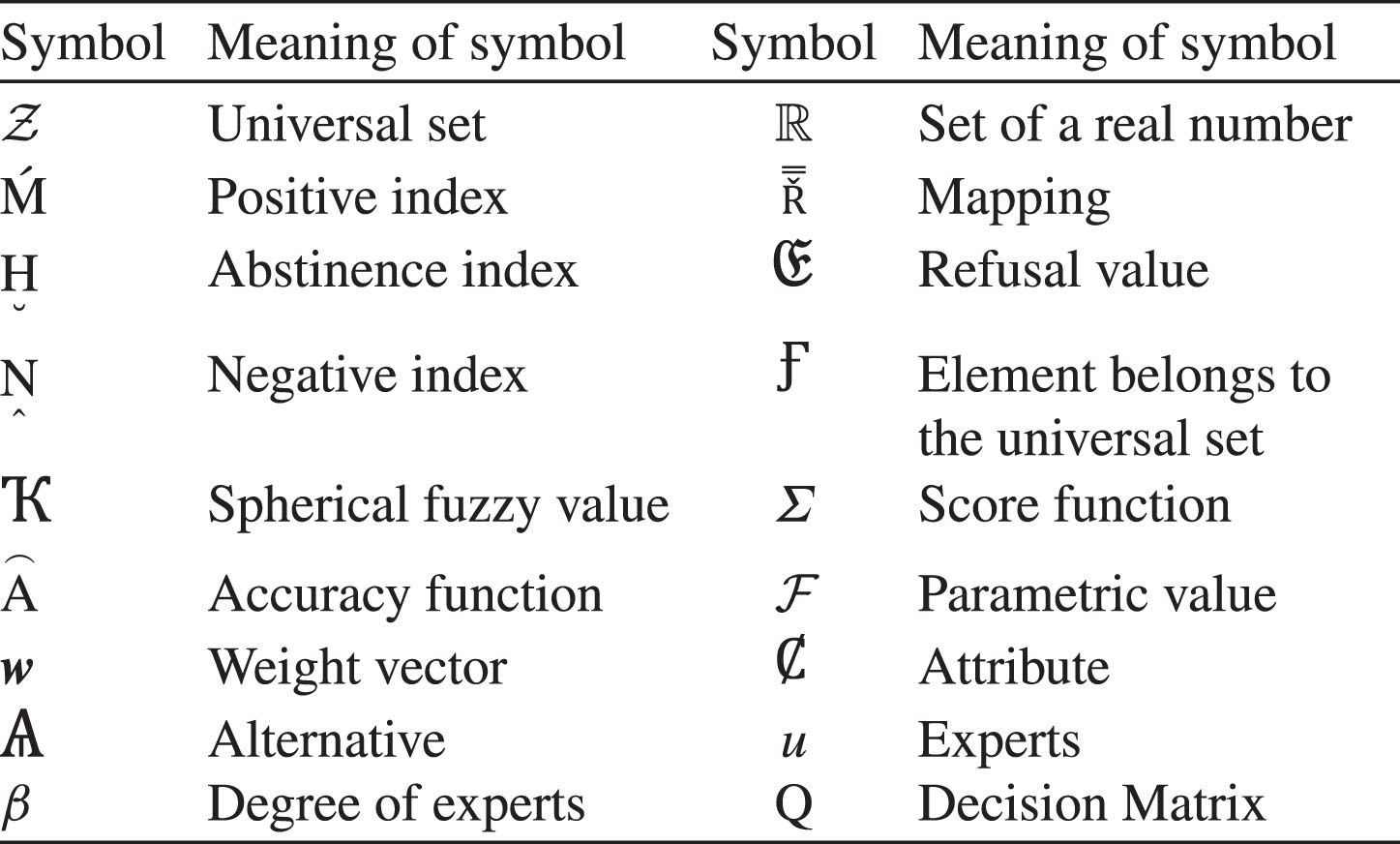
Covers symbols with their meanings
Covers symbols with their meanings
 : [0, 1] × [0, 1] → [0, 1] is known as a t-norm if:
 ;
; ;
; ;
; .
.
Where 
 : [0, 1] × [0, 1] → [0, 1] is known as a t-conorm if:
 ;
; ;
; ;
;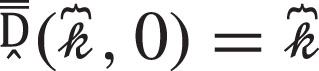 .
.
 on
on  is particularized as:

Where

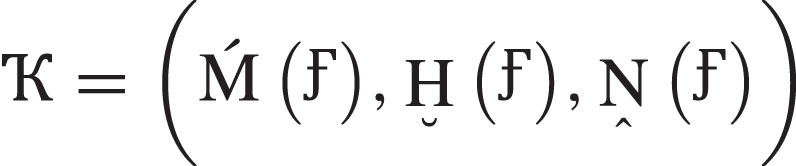
A refusal index of SFS is represented by the  , and for all
  . Furthermore, SF value (SFV) is denoted by
  .
.
 and
and  in
in
 ;
; ;
; ;
; ;
;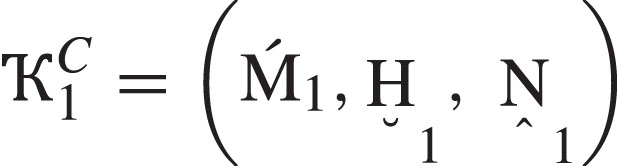 .
.
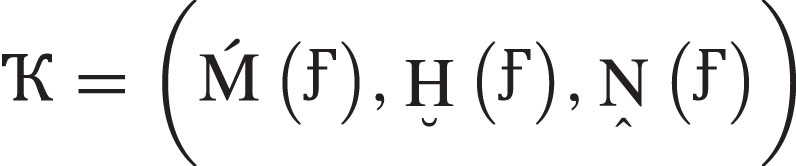 in
in

and

 and
and  . If
. If  then
then  and If
  then
then  . If
. If  . Then we have: If
  then
then  and If
  then
then  .
.
 and
and  . Then we have:




In this section, we explored the theoretic concepts of Dombi aggregation tools and presented some basic operations for further development of this manuscript. The weight vector (WV) of an object throughout this article is represented by the w
i
(i = 1, 2, 3, … , l ) are with w
i
> 0 and
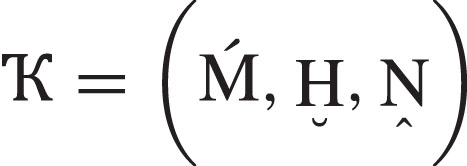 ,
, 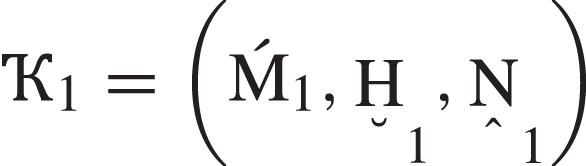 , and
, and  are three SFVs, with



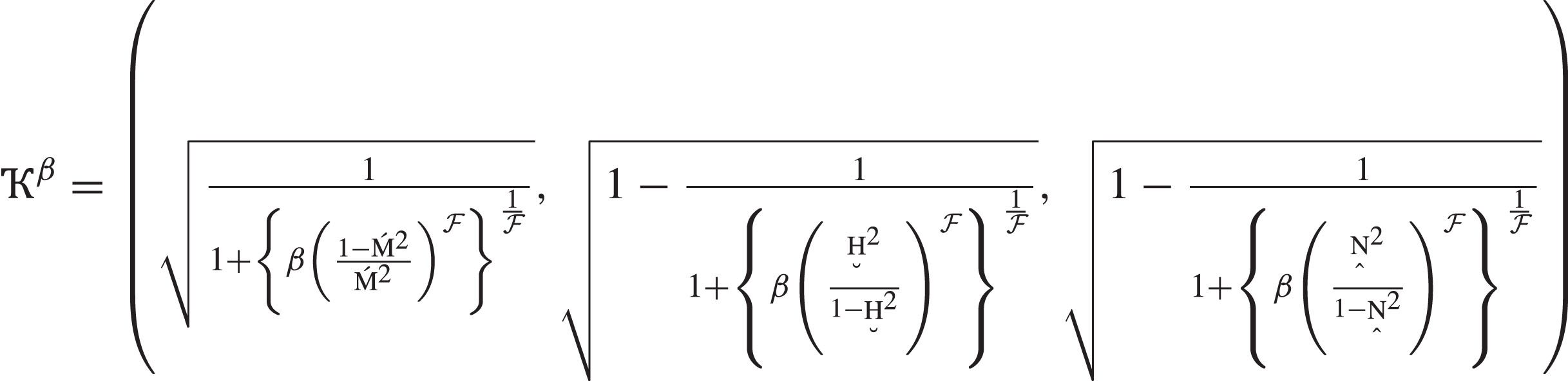
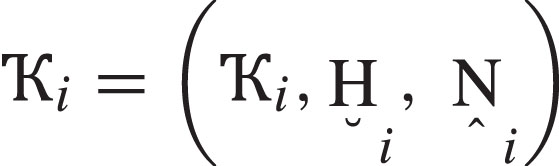 in
in

 in
in 
Spherical fuzzy dombi hamy mean aggregation operators
We utilized the theoretical concepts of HM tools and derived some appropriate aggregation methodologies considering SF information with some prominent characteristics.

Where  is a parameter,
  = 1, 2, . . . , l, are
  integer values picked from the set of l integer values (1, 2, . . . , l) and
  n signifies the binomial coefficient and
  .
.
in

 in
in
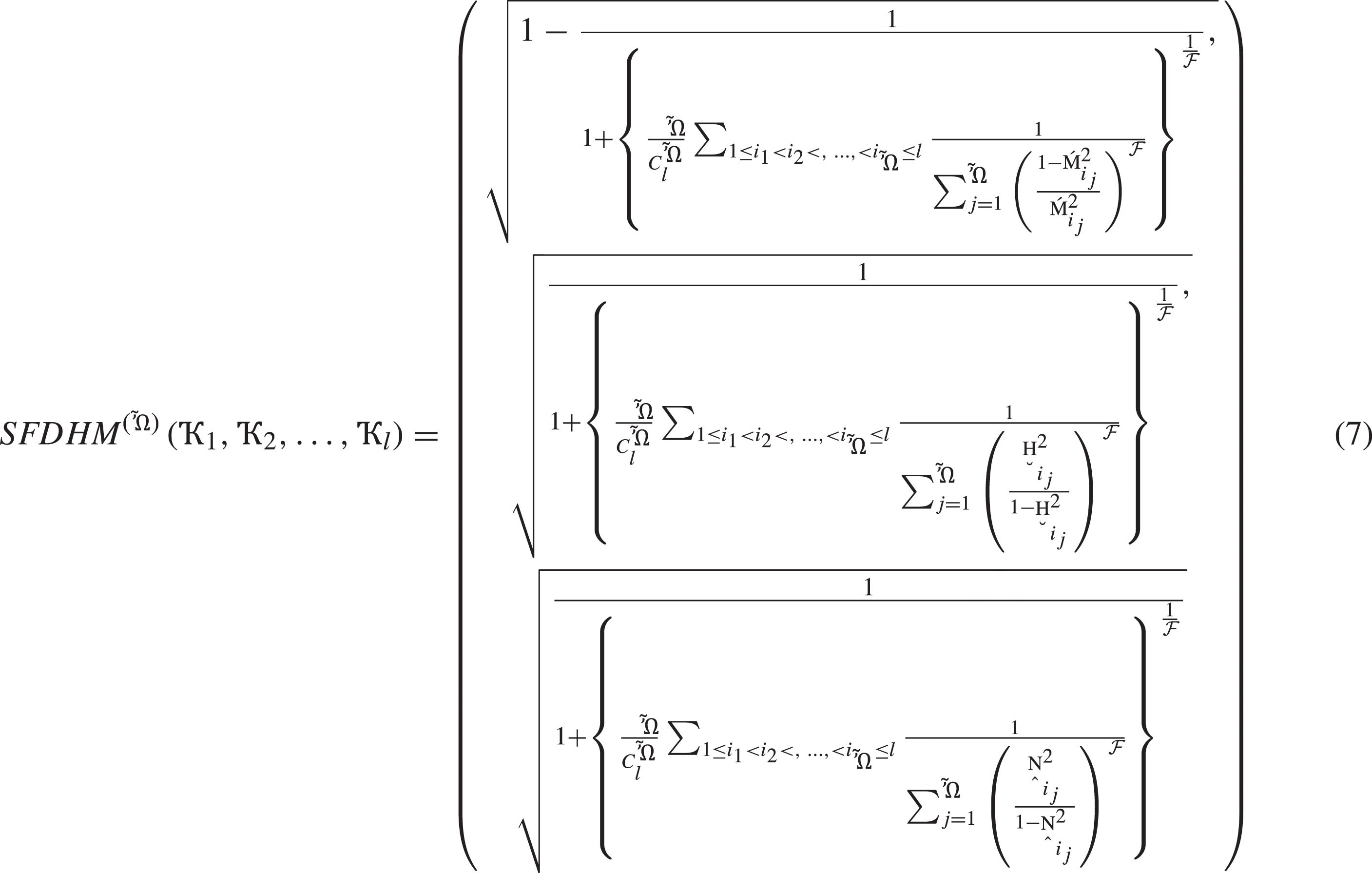
 be any set of SFVs in
  then we have:

Prove of this theorem is listed in Appendix B.
 and Θ
ϱ
= (Ξ
ϱ
, ζ
ϱ
, ξ
ϱ
) , (ϱ = 1, 2, 3, … , l) are two sets of SFVs. If
and Θ
ϱ
= (Ξ
ϱ
, ζ
ϱ
, ξ
ϱ
) , (ϱ = 1, 2, 3, … , l) are two sets of SFVs. If  . Then we have:

 be a SFVs, Let
  be a set of IFNs, and
  , then

 be a SFV, we can write:


Then we have

 be a set of SFVs. Then, the aggregated value of SFVs is still a SFV given by:

 be a set of SFVs. Then, the aggregated value of the SFDWHM operator is still a SFV given by:
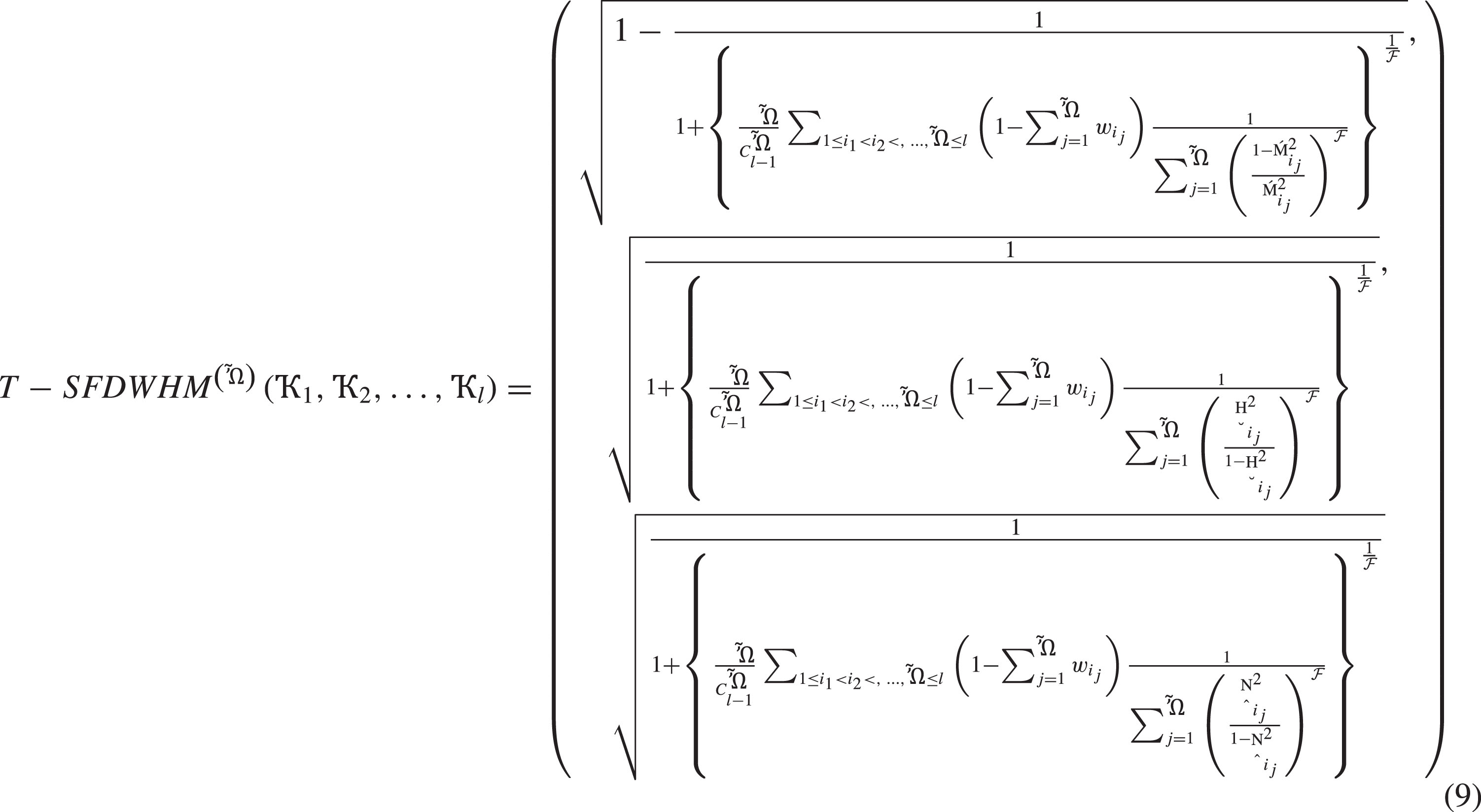

 be any set of SFVs in
  then we have:

 and Θ
ϱ
= (Ξϱ
j
, ζ
ϱ
j
, ξ
ϱ
j
) , (ϱ = 1, 2, 3, … , l) are two sets of SFVs. If
and Θ
ϱ
= (Ξϱ
j
, ζ
ϱ
j
, ξ
ϱ
j
) , (ϱ = 1, 2, 3, … , l) are two sets of SFVs. If  . Then we have:

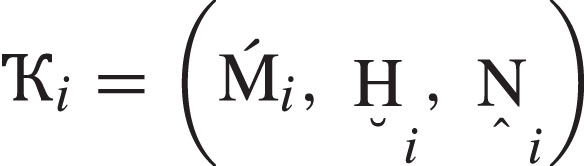 be the SFVs and Let
  be a set of IFNs, and
  , then

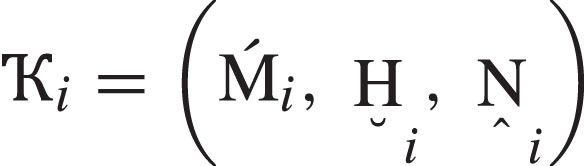 be the SFVs, we can write:

Then we have

Spherical fuzzy Dombi Dual Hamy mean aggregation operators
Using the speculative theory of the DHM operators, we illustrated a list of new approaches, including SFDDHM and SFDWDHM operators with some basic characteristics.

Where  is a parameter
  = 1, 2, . . . , l are integer values picked from the set of l integer values (1, 2, … l) and
  n signifies the binomial coefficient and
 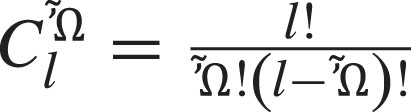 .
.
 in
in

 be a set of the SFVs, then the aggregate result is still SFVs, and have
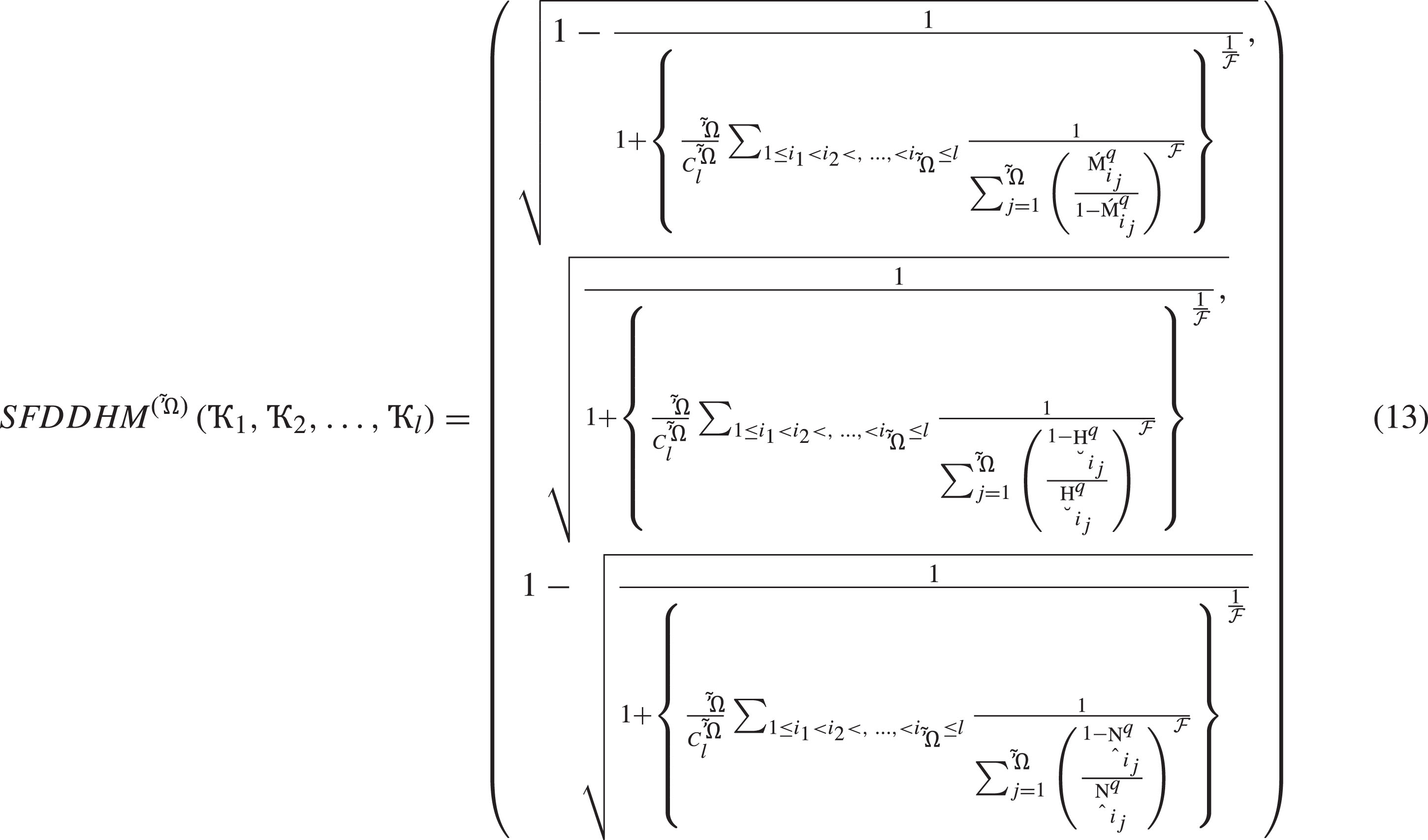
 be any set of SFVs in
  then we have:

 and Θ
ϱ
= (Ξϱ
j
, ζ
ϱ
j
, ξ
ϱ
j
) , (ϱ = 1, 2, 3, … , l) are two sets of SFVs. If
and Θ
ϱ
= (Ξϱ
j
, ζ
ϱ
j
, ξ
ϱ
j
) , (ϱ = 1, 2, 3, … , l) are two sets of SFVs. If  . Then we have:

 , Let
, Let  be a set of SFVs, and
  , then we have:

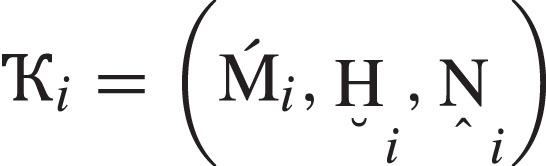 be a group of SFVs. Then, the aggregated value of the SFDWDHM operator is as follows:

 in
in
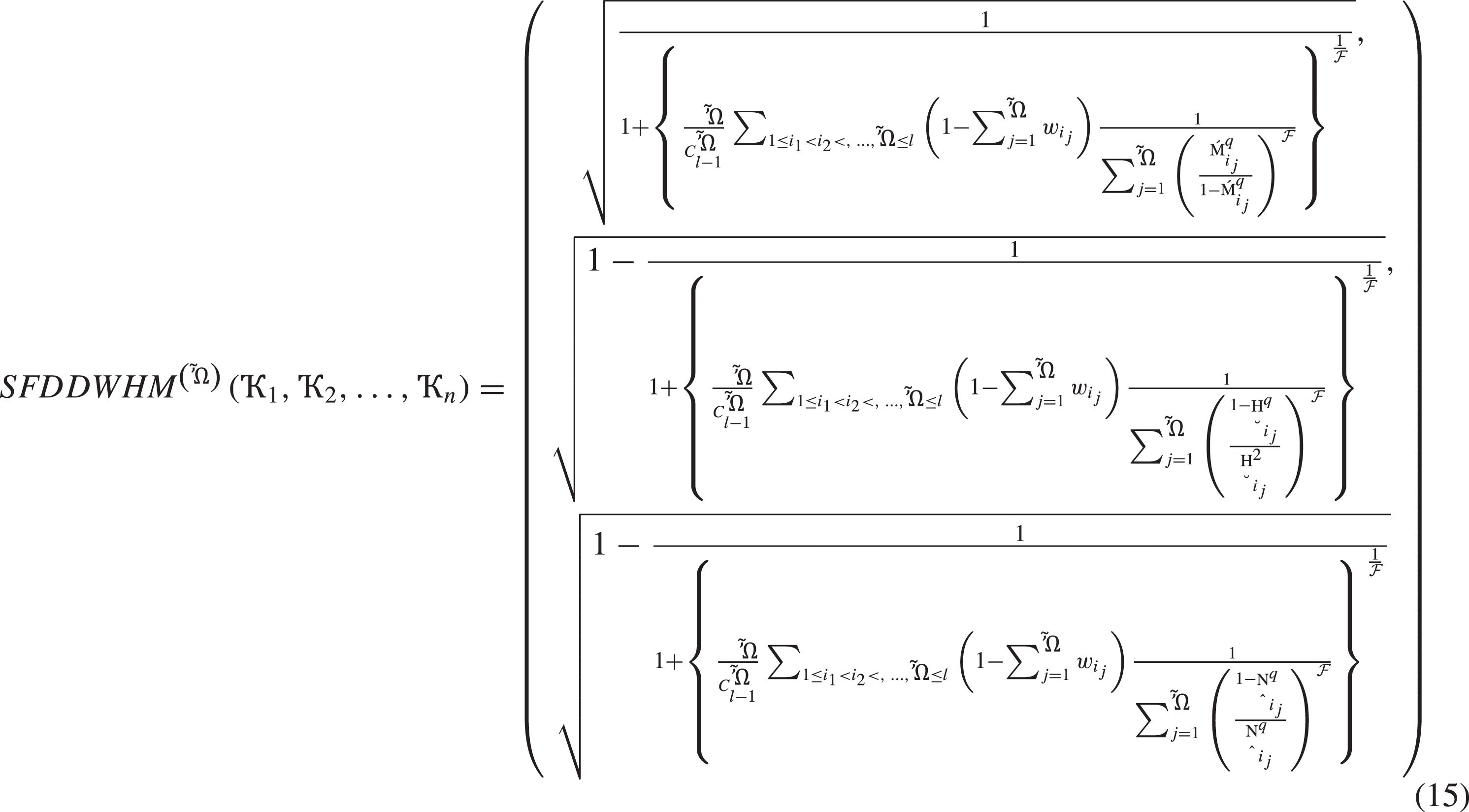
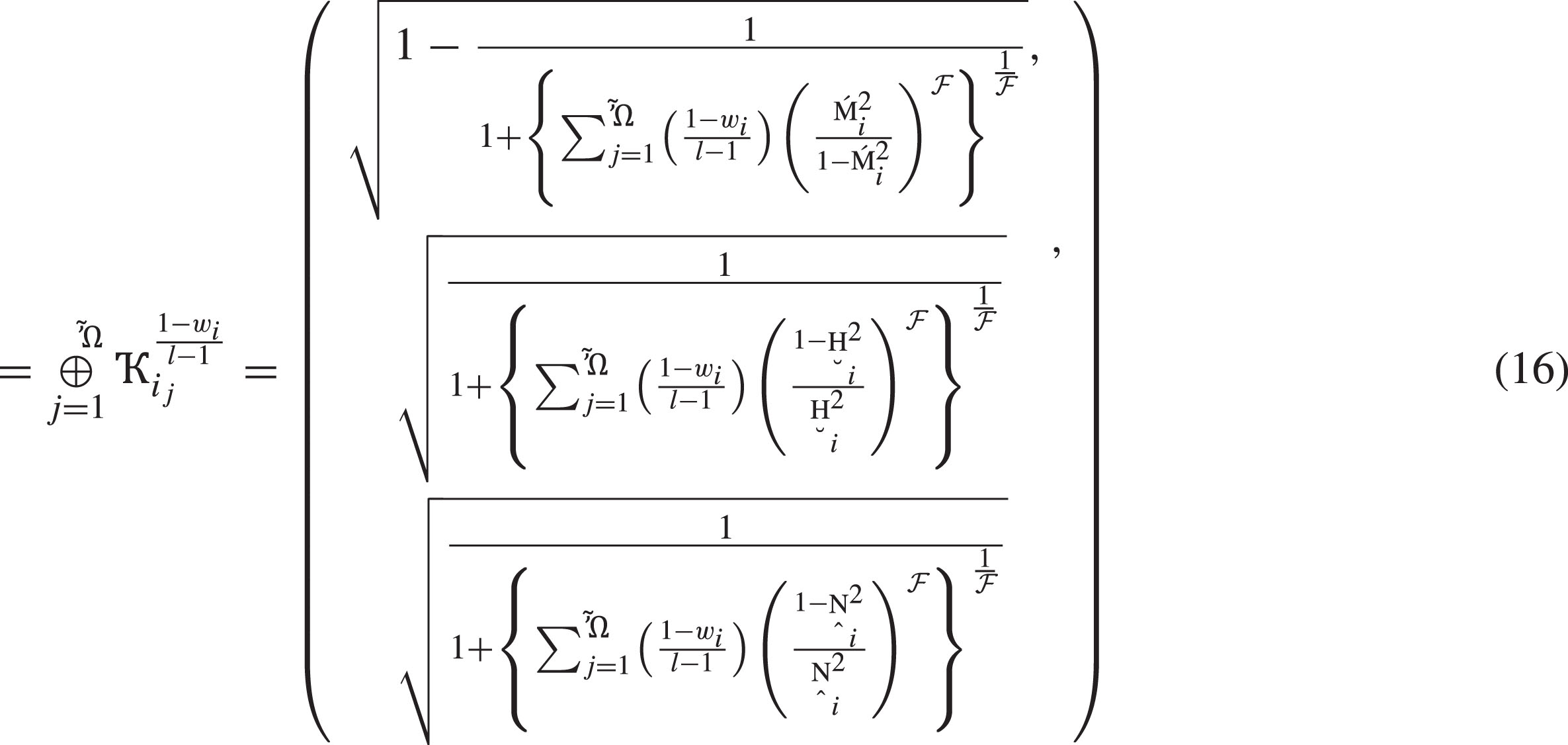
 be and set of SFVs in
  . Then

 and Θ
ϱ
= (Ξϱ
j
, ζ
ϱ
j
, ξ
ϱ
j
) , (ϱ = 1, 2, 3, … , l) are two sets of SFVs. If
and Θ
ϱ
= (Ξϱ
j
, ζ
ϱ
j
, ξ
ϱ
j
) , (ϱ = 1, 2, 3, … , l) are two sets of SFVs. If  . Then we have:

 , Let
, Let  be a set of SFVs, and
  , then we have:

Assessment of a MAGDM problem under consideration of SF information
In this section, we analyze the credibility and effectiveness of the green supplier enterprises by utilizing our invented approaches of the SFDWHM and SFDWDHM operators under consideration of SF information. Let  be a set of lth characteristics with the corresponding degree of the weights w = { w1, w2, … , w
l
} , w
j
∈ [0, 1] , (j = 1, 2, 3, . . . , l ) such that
be a set of lth characteristics with the corresponding degree of the weights w = { w1, w2, … , w
l
} , w
j
∈ [0, 1] , (j = 1, 2, 3, . . . , l ) such that  be a set of alternatives. There is a set μ ={ u1, u2, … , u
p
} of invited experts, those hired to evaluate the given SF information. The set of assigning degrees to each expert such as β = { β1, β2, … , β
p
}
T
with β
g
∈ [0, 1] , (g = 1, 2, 3, . . . , p ) and
be a set of alternatives. There is a set μ ={ u1, u2, … , u
p
} of invited experts, those hired to evaluate the given SF information. The set of assigning degrees to each expert such as β = { β1, β2, … , β
p
}
T
with β
g
∈ [0, 1] , (g = 1, 2, 3, . . . , p ) and  corresponding to each alternative
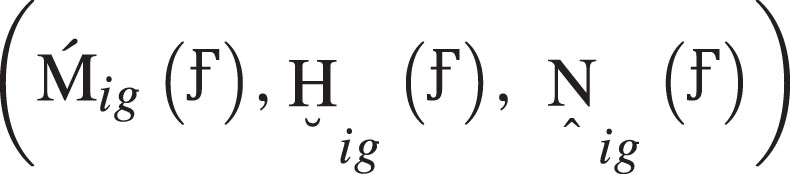
  . Each attribute contains SF information in the form of
  . The experts construct decision matrices
  and g = 1, 2, … , p. The experts provide information about any object in the form of SF circumstances. To evaluate given information, we expressed an algorithm of the MAGDM problem in the following form.
Algorithm


and


and

Application
Green supply chain practices also reduce waste and protect non-renewable resources. By switching to recycled paper products from plastic ones, for example, businesses could reduce their dependency on petroleum-based products while keeping garbage out of dumps and fragile ecosystems. They use less petroleum when they load trucks more efficiently and enforce more stringent standards for driving speed and idling. Additionally, they safeguard resources for future generations by following sustainable farming and forestry practices. In conclusion, implementing GSCM principles is essential for more than only the environment’s welfare. The long-term viability of local economies and communities depends on it.
Today, a growing number of businesses are stepping up their efforts to provide cleaner, more environmentally friendly goods and processes. Stricter regulations and stakeholder pressure on businesses to go green are two of the main justifications for these initiatives, as it is widely believed that corporate environmental behavior determines the viability of the global environment Dangelico [73]. Furthermore, the notion that being green pays off has gained traction as more data on various strategies for gaining a competitive edge from environmental abilities have come to light Hart [74]. Norheim-Hansen [75] improving the company’s appeal as an exchange partner and increasing inventive capacities, Sharma and Vredenburg [76] cutting costs by more effectively using raw resources and reducing waste are just a few examples. Several Public and private organizations have recently concentrated their efforts on advancing the use of environmentally friendly resources. Due to growing environmental concerns, many businesses have started making green products or choosing green suppliers that maximize corporate performance while reducing greenhouse gases, emissions, toxic waste, and energy usage. Figure 1 also shows the graphical representation of the supplier chain management.
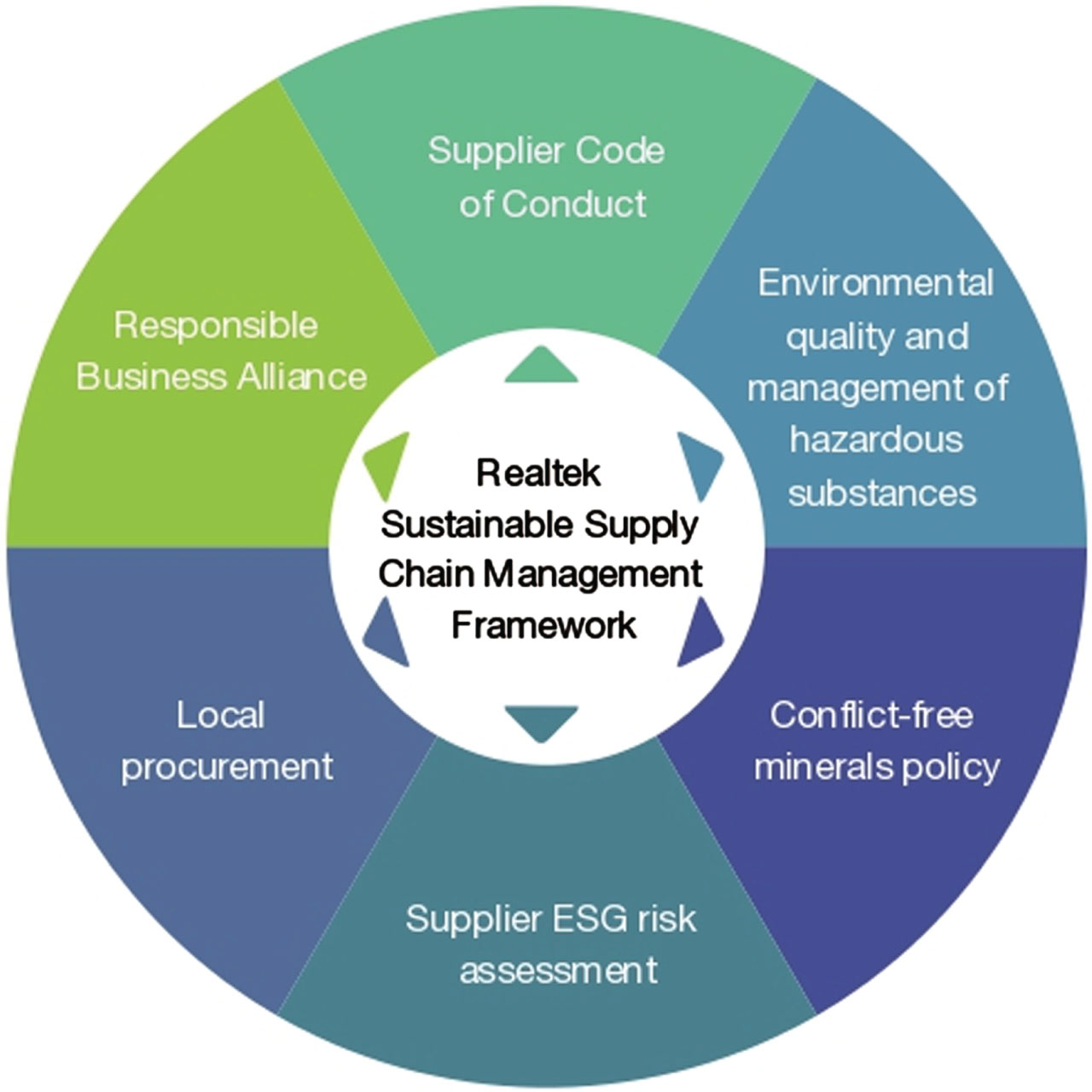
Green supply chain management.
To assess reliability and feasibility of our proposed approaches, an experimental case is also established under the system of green supplier enterprises. A production enterprise has the challenge of choosing the best supplier from a list of five options  . There are three experts D1, D2, D3 and D4 have been assembled by a top executive of this organization to manage the challenge of choosing the best green supplier based on a specific degree (0.35, 0.25, 0.40). These alternatives are assessed using the four selected criteria:
  polluting substances and availability expenditure,
  ecologically conscious design,
  the organizational structure for management,
  the commitment of managers to GSCM and employing environmentally friendly technologies.
All above-discussed attributes or criteria have some particular degree of weights (0.15, 0.20, 0.35, 0.30), which are utilized to evaluate appropriate alternatives under consideration of our derived methodologies. The experts assembled all information related to the green supplier system and stated in the decision matrices of Tables 3–5.
Covered SF information in the decision matrix D1
Covered SF information in the decision matrix D1

Covered SF information in the decision matrix D2

Covered SF information in the decision matrix D3

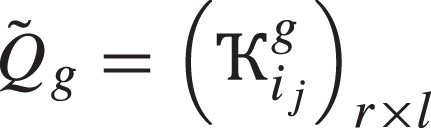 of Tables 3–5.
Covered the results obtained by the SFDWHM operator

Covered the results obtained by the SFDWHM operator

Consequences of the SFDWHM and SFDWDHM operators
Results of the score values of the SFDWHM and SFDWDHM operators


Covers the results of score values.
In this section, the authors illustrate the impact on the results of the SFDWHM and SFDWDHM operators by utilizing different parametric values of  . If we change the value of
  in
in  , pairing of elements by the combination also changed. If we increase the value of in the SFDWHM operators, obtaining results of the score values by the SFDWHM operator gradually decreases and raking results of score values remain constant. Table 10 carries the results of score values computed by the SFDWHM operator and Fig. 3 exposes the geometrical behavior of score values listed in Table 10.
Shows the results of score values by the SFDWHM opeator for different value of 
Shows the results of score values by the SFDWHM opeator for different value of

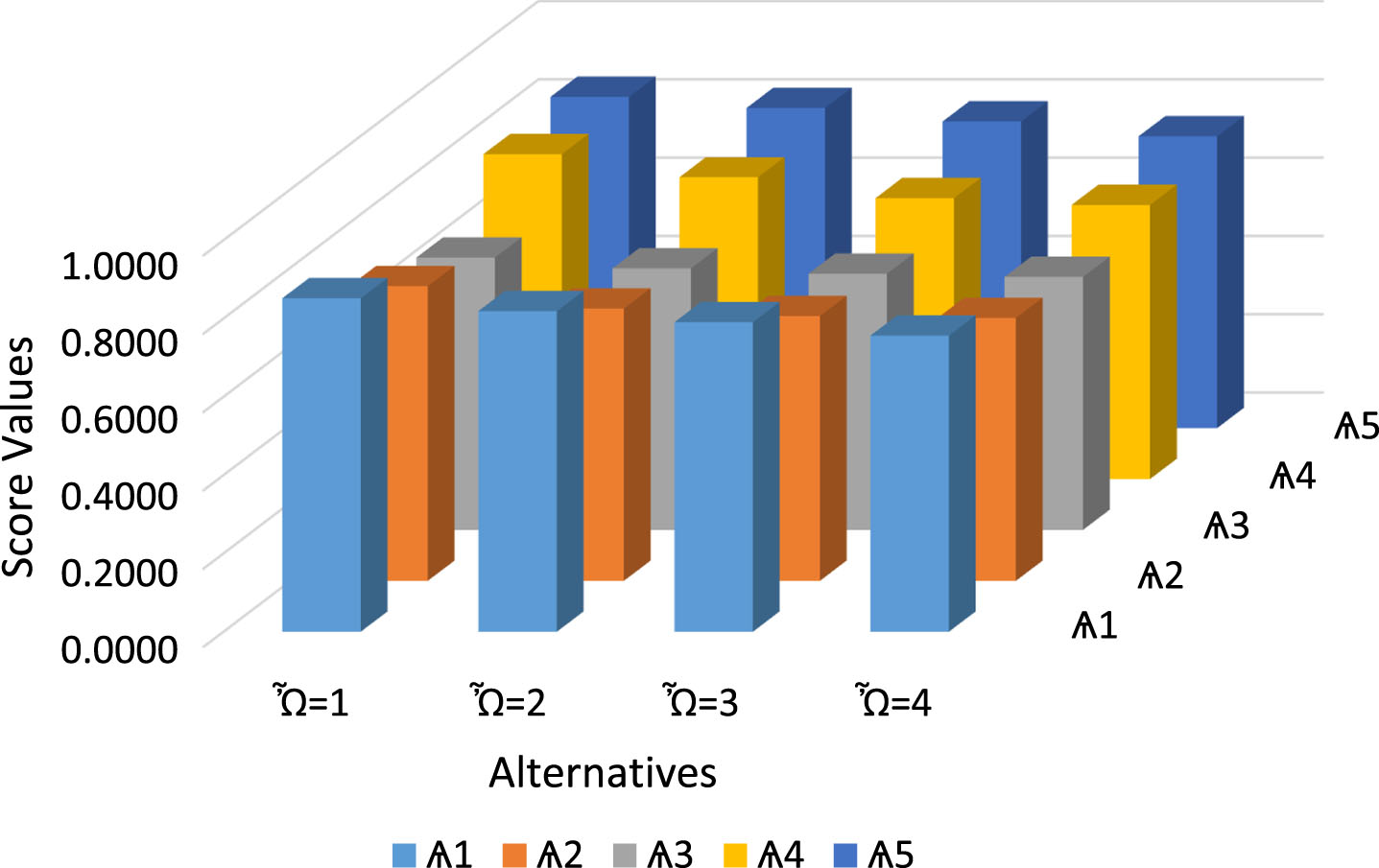
Shows the results of Table 10.
From Table 11, when the parametric value of  changes in
  , paring of elements also change. When we increase the value of
  in the SFDWDHM operator, outcomes begin to increase. All computed results by the SFDWDHM operator are listed in Table 11. After observing the results of score values, we can conclude that the ranking results of score values remain the same. Figure 4 displays the results of score values by the SFDWDHM operator and shows the graphical structure of the outcomes.
Shows the results of score values by the SFDWDHM opeator for different value of
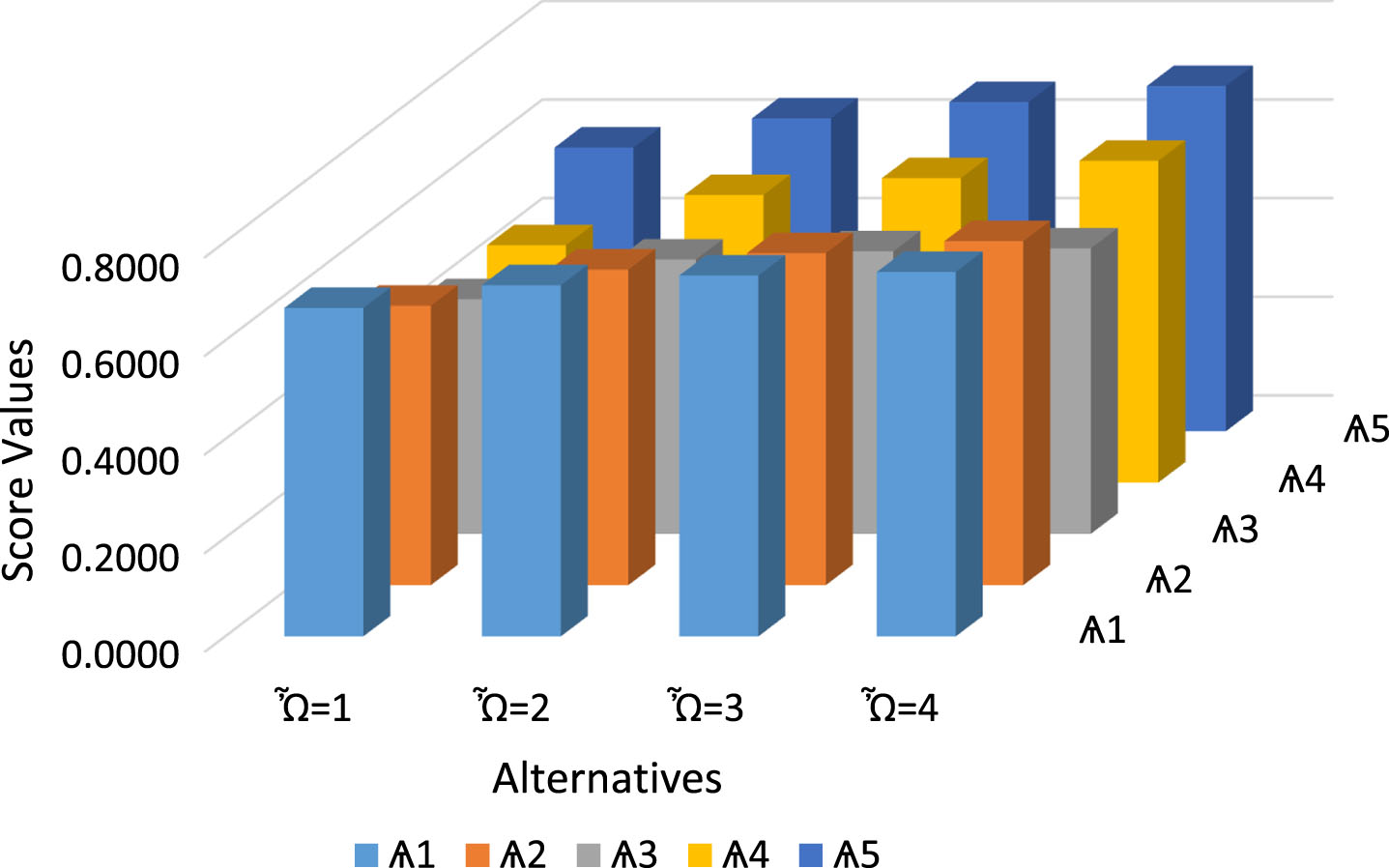
shows the results of Table 11.
In this section, we check the reliability and effectiveness of our derived methodologies. We evaluate the discussed experimental case study by using existing approaches developed by different scientists seen in references [31, 77–80]. Authors employed existing approaches, including SF Dombi aggregation models exposed by Ashraf et al. [47], Güner and Aygün [77] developed a class of robust mathematical approaches by incorporating the theory of SF information and Einstein t-norm. By using basic operations of Aczel Alsina aggregation tools and SF information, Naeem and Ali [78] developed robust aggregation approaches. Ashraf and Abdullah [31] generalized the basic concepts of the arithmetic and geometric mean to present new AOs, Akram et al. [79] anticipated the theoretical concepts of SF information and presented a list of new methodologies. Some developed mathematical strategies are unable to handle given information of an experimental case study seen in Akram et al. [79] and Ali et al. [80]. Table 12 shows the results of all existing approaches. By ranking and ordering of score values, we can conclude the compatibility of our derived approaches. We also studied the graphical behavior of score values shown in Fig. 5.
Shows the results of the comparative study
Shows the results of the comparative study

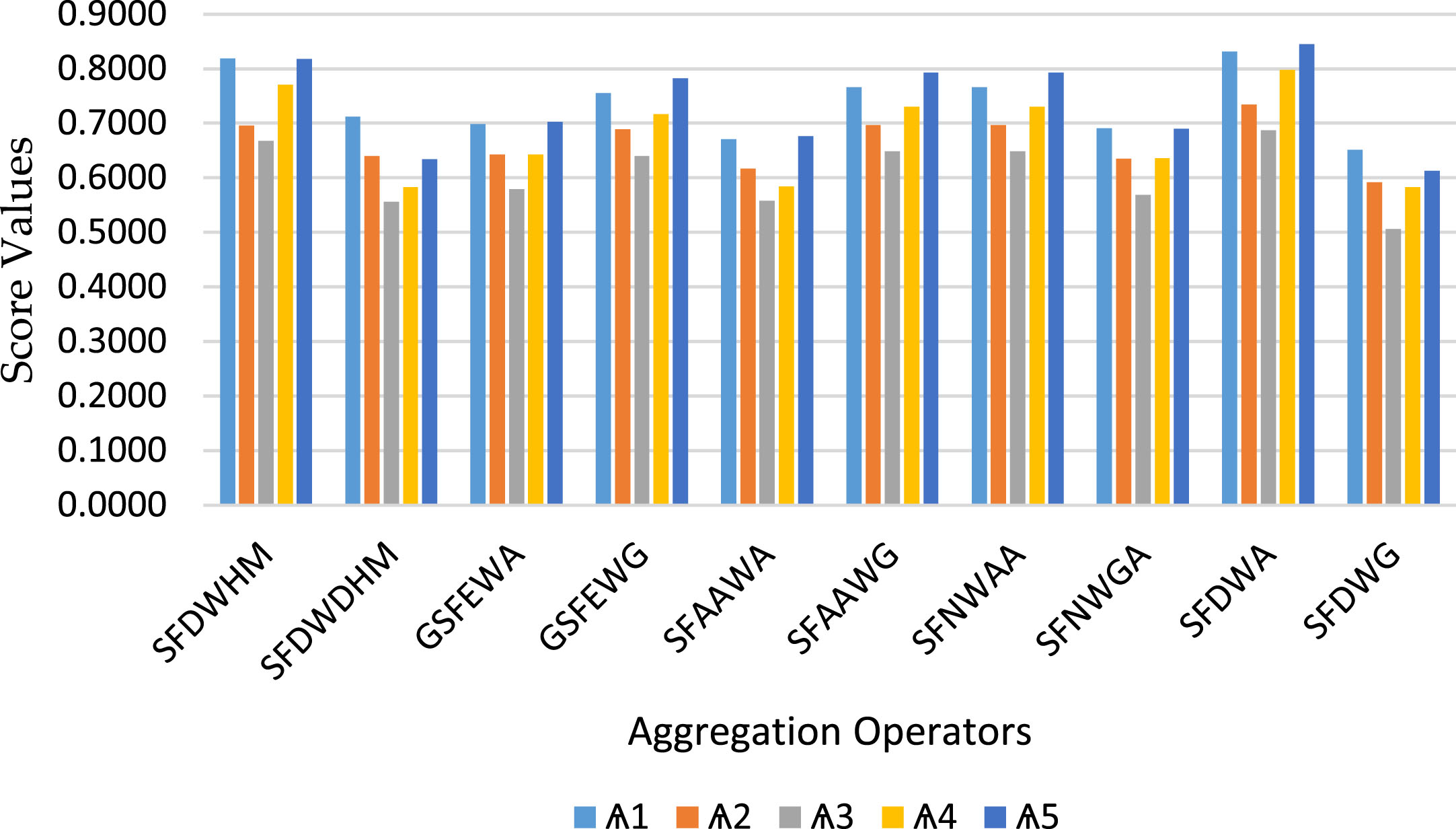
Covers the results of the comparative study.
From Table 12, we examined the results of score values computed by different existing approaches and conclude that our derived approaches are more effective and prominent because our invented approaches have extra quality and capability of combination process. Additionally, decision maker may also use to acquired reliable results according to their own preferences by changing parametric values of Dombi aggregation tools.
The key components of this proposed research work are maintained as follows: The SFS is a modified version of intuitionistic fuzzy sets and picture fuzzy sets used to handle the impact of redundant and vague type information of human opinions. The decision-making process also offers reliable results in the presence of SF information. We studied the dominant operational laws of Dombi aggregation tools under a system of SF environments. By considering the significance of HM models and their characteristics, some prominent strategies are to express correlation among input arguments. In light of Dombi aggregation tools and SF information, we developed a class of robust mathematical approaches, including SFDHM, SFDWHM, SFDDHM, and SFDWDHM operators. In order to show the flexibility of derived approaches, some notable and efficient characteristics are also presented here. To check the flexibility and adaptability of our derived approaches, utilized the theoretical concepts of the MAGDM problem to evaluate real-life problems in the presence of SF information. An experimental case study was also discussed to select a suitable supplier enterprise by using our invented approaches. To see transparency and fairness of discussed methodologies, the authors discussed the results of existing approaches with the results of current approaches.
Currently, proposed strategies may be used to handle the complicated challenges of real life. In the coming future, we will enhance the credibility of our derived approaches by implementing on different real-life situations, including medical diagnosis, game theory, networking and modeling and the selection process of different objects. We will enlarge the proposed research work in different fuzzy circumstances such as bipolar complex FSs [81], picture fuzzy soft sets [82] and fuzzy planar graphs [83]. Moreover, we also generalized our proposed work in the hesitant fuzzy environment [84].
Supplementary material
The Appendix part is available in the electronic version of this article: https://dx.doi.org/10.3233/JIFS-234514.
Footnotes
Acknowledgment
The authors are also thankful to the Office of Research, Innovation, and Commercialization (ORIC) of Riphah International University Lahore for supporting this research under the project R-ORIC-23/FEAS/CIP-793.