



Abstract
Health information technology is a subcategory of health technology that covers medical and healthcare information technology. It allows for the secure exchange of health information among consumers, providers, payers, and quality monitors, as well as the management of health information across computerized systems. In recent scenario, Internet of Medical Things (IoMT) collects the medical healthcare data via sensors, are further transmitted to remote servers, to be evaluated by the doctors for earlier disease detection. Conversely, there is always a threat on using wireless communication and the user’s private data can be targeted by the attackers. In this paper, Bayesian optimization-based bloat prevention for secure IoT healthcare, for identifying Attacks in secure healthcare system (BO-BLOAT). The gathered input datasets are pre-processed using the Natural Language Processing (NLP) techniques namely Sentence segmentation, Tokenization, Word Stemming and Removing stop words for removing irrelevant data. After preprocessing the features are extracted using RNN-BiLSTM and feature selection technique is done by Bayesian Optimization. The deep learning (DL) based Mobilenet network is utilized for attack detection. Finally, the classification and identifying the types of attack is performed by using DL based Ghost net. For performance analysis, the two dataset is utilized namely UNBDS-NB-15, KDD99. The classification results show that the proposed BO-BLOAT model attains higher rate of accuracy in attack detection than existing models. The proposed BO-BLOAT method has been simulated using MATLAB. The Proposed BO-BLOAT method improves the overall accuracy of the proposed BO-BLOAT, HFL, LRO-S, and GOL is 99.04%, 93.47%, 92.82% and 90.64% respectively.
Keywords
Introduction
The Internet of Things (IoT is a rapidly expanding network of networked objects that have integrated sensors that allow them to collect and share data in real time [1]. IoT may be connected to thermostats, cars, lights, refrigerators, and other equipment [2]. Internet-connected medical applications and equipment are referred to as IoMTs (Internet of Medical Things) [3]. It is commonly referred to as the IoT in healthcare since it is a subset of the IoT [4]. IoT attacks are hostile attempts to take advantage of security holes in devices linked to the internet, Intelligent houses, industrial control systems, medical gadgets, and so forth. Attackers can utilise devices to hijack them, steal sensitive information from them, or use them as part of botnets for other malicious reasons [5].
Notations and description
Notations and description
IoT devices are designed to satisfy an organization’s general needs. As a result, strong safety standards are deficient [6, 7]. An IoT attack is a cyberattack in which a user’s sensitive data is accessed through any of her IoT devices. Malware is often installed on devices, devices are damaged, and other personal corporate data is accessed [8, 9]. For example, using vulnerabilities in IoT devices, attackers might get access to an organization’s temperature management system [10, 11].
IoMT devices communicate with a cloud infrastructure, which stores and analyses acquired data [12]. Healthcare Internet of Things (IoT) is another name for IoMT [13]. Telemedicine is the practise of remotely monitoring patients at home utilising IoMT equipment. To prevent and address major risks that might endanger people’s health across nations and borders, health security is a crucial endeavour [14]. A health security risk assessment entails identifying possible threats and vulnerabilities to the confidentiality, integrity, and availability of sensitive data and systems [15]. The major contribution of the work has been followed by: In this paper, Bayesian optimization-based bloat prevention for secure IoT healthcare is used to identify attacks in a secure healthcare system (BO-BLOAT). The gathered input datasets are pre-processed using the NLP techniques namely Sentence segmentation, Tokenization, Word Stemming, and Removing stop words to remove irrelevant data. After preprocessing the features are extracted using RNN-BiLSTM and the feature selection technique is done by Bayesian Optimization. The DL based Mobilenet network is used for attack detection. Finally, the classification and identification of attack types is performed using DL based Ghostnet.
The remaining section of the work has been followed by: Section 2 deliberates various models involved in preserving data security in recent computing process. The proposed BO-BLOAT framework with relevant functional elements is represented in Section 3. The results are provided in Section 4 with comparisons. Finally, the work is concluded in Section 5 with some hints for future scope.
IoT devices may automatically gather health metrics such as heart rate, blood pressure, temperature, and other data from patients who are not physically present in a healthcare institution, reducing the need for patients to travel to clinicians or collect it themselves. The use of IoT devices and technology to improve patient outcomes and healthcare delivery while protecting the security and privacy of sensitive health data is known as “secure IoT healthcare.”
Literature review
Devices containing sensors, processing power, software, and other technologies are referred to as IoT devices when they connect to and share data with other devices and systems through the Internet and other communication networks.
In 2023 Patel [16] suggested a lightweight RARESR architecture. It presents the first runtime memory modification attack categorization and detection technique based on user-defined hardware control registers. The efficiency of the suggested method is demonstrated by the prototype implementation on an Artix7 Field Programmable Gate Array (FPGA), which consumes relatively little resources 2.3%.
In 2023 Munnangi et al. [17] suggested a Moran’s autocorrelation and regression, the Elman Recurrent Neural Network (MARENNN). According to the results, the suggested strategy increased accuracy by 95% and decreased execution time by 18%. When it comes to spotting health activities, MAR-ERNN works well. Overall, this IoT enabled smart healthcare system makes use of these advantages to increase accuracy and save time and administrative load.
In 2023 Kumar et al. [18] suggested a unique scalable blockchain architecture using the Zero Knowledge Proof (ZKP) method to guarantee data integrity and safe data transmission. An additional DL architecture for identifying attackers on the HS network is designed using the verified data.
In 2023 Ye and Chen [19] suggested an intelligent health system Nano-sensors that record and send real-time health status to a doctor’s server. Discrete Wavelet Transform (DWT) is used to construct a medical picture first. Utilising his SVD computation, all subbands are dispersed. SHCS is successful in safeguarding privacy, according to experimental results and considerations.
In 2023 Chinnasamy et al. [20] present a trusted access control system that uses smart contracts to improve security while allowing patients and doctors to share electronic medical information. The framework’s assessment and protection methodology recognise the reality of lean access control structures, modest network assumptions, and considerable levels of security and data secrecy when assessing existing data exchange models.
In 2023 Da Costa et al. [21] suggested a Sec-Health, blockchain-based system that safeguards health information while adhering to all major security and auxiliary requirements outlined in existing legislation. Demonstrated that it can cut access time to medical records by 26% to 90% and client-side storage overhead by up to 50% when compared to similar work.
In 2022 Hooshmand and Hosahalli [22] suggests a model based on onedimensional CNN architecture. In the first step, the authors’ technique splits network traffic data into transmission control protocol (TCP), user datagram protocol (UDP), and OTHER protocol categories, and then treats each category individually. The weighted average fscores for TCP, UDP, OTHER, and ALL are 0.85, 0.97, 0.86, and 0.78, respectively, according to the authors’ technique. The model is validated using the UNSWNB15 dataset.
In 2024 Singh et al. [23] presented a DNA-based cryptographic method and access control model (DNACDS) to address IoE large data security and access challenges. The experimental findings showed that DNACDS outperforms other DNA-based security systems. The DNACDS theoretical security study reveals improved resistance capabilities.
In 2022 Khasim and Basha [24] offered a method for protecting patients’ private, sensitive medical information from enemies and the Authorization Service. Theoretical analysis was done to assess the programs’ efficacy, and the findings revealed that the programs featured a range of security characteristics and were resistant to a number of assaults.
In 2023 Kumar et al. [25] suggests a unique Generative Adversarial Network (GAN) model that makes use of a hash-table, 2D chaotic map, and DL to improve the security of medical photos. Two stages of confusion and dispersion are carried out in the suggested encryption process by Mersenne Twister (MT) and the Hénon map. The suggested model performs better than the other relevant approaches.
Proposed BO-BLOAT methodology
In this paper, Bayesian optimization-based bloat prevention for secure IoT healthcare, for identifying Attacks in secure healthcare system (BO-BLOAT) has been proposed, for identifying Attacks in secure healthcare system. The gathered input datasets are pre-processed the pre-processed techniques namely Sentence segmentation, Tokenization, Word Stemming and Removing stop words. The feature extraction technique namely RNN-BiLSTM and feature selection technique namely Bayesian Optimization. Afterward, the DL based Mobilenet network is used for attack detection. Then the classified DL based Ghostnet identifying the types of attacks.
The gathered input datasets are pre-processed using the NLP techniques namely Sentence segmentation, Tokenization, Word Stemming and Removing stop words for removing irrelevant data. After preprocessing the features are extracted using RNN-bilstm and feature selection technique is done by Bayesian Optimization. The DL based Mobilenet network is used for attack detection. Finally, the classification and identifying the types of attack is performed by using DL based Ghostnet. Proposed BO-BLOAT shows in Fig. 1.
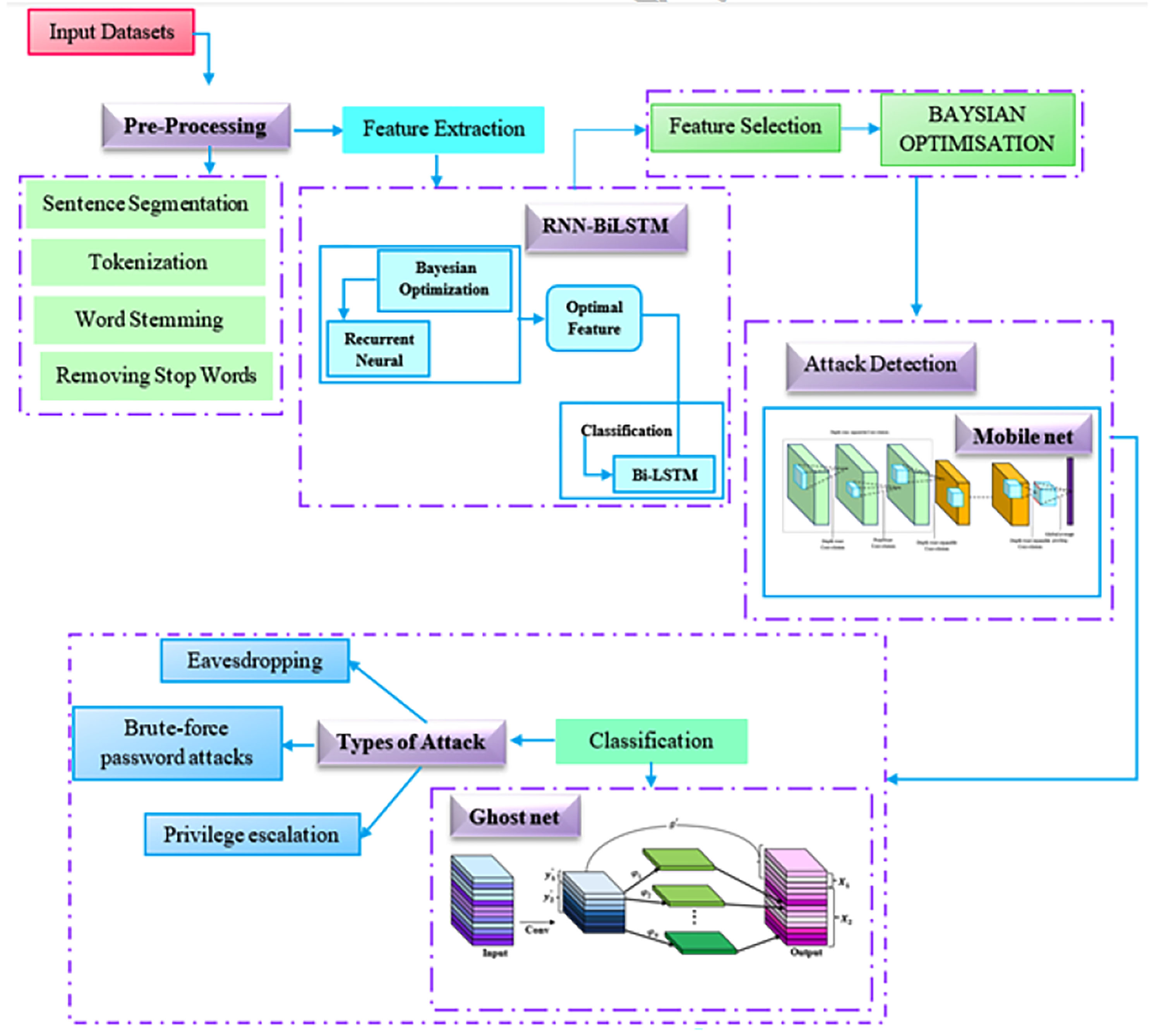
Proposed BO-BLOAT.
In this paper, pre-processing involves four main activities: Sentence Segmentation, Removing Stop Words, Tokenization, and Word Stemming.
Tokenization
Tokenization is separating the input document into individual words.
3.2.1 Removing stop words. Removing stop words entails getting rid of words that regularly exist in a work but aren’t crucial to understanding its main points. “a”, “an”, “the,” etc.
3.2.2 Word stemming. Word Stemming removes prefixes and suffixes from each word.
RNN-BiLSTM
Recurrent Neural Networks (RNNs) and Bidirectional Long Short-Term Memory networks (BiLSTMs) are popular architectures in the field of DL, particularly for tasks involving sequential data. Combining them into an RNN-BiLSTM model can offer advantages in capturing both past and future context in the input sequence. BO is used to normalise network parameters and increase accuracy in RNNs. RNN is used to extract the features in this case.
Figure 2 depicts the optimised RNN proposed BO-BLOAT using the BiLSTM approach.

RNN optimized with the BiLSTM technique.
The data was used to generate a set of outputs for the following stage. Units (blocks) are shortened expressions used to compute intermediate outcomes.
As a result, we can utilize the relationships defined by Equations (1) and (2) to create the blocks of the most basic sort of recurrent network.
The activation functions are represented by e1, e2. ZZ00, Z0m, Z pm , a0 and a p , are the weight matrices.
This section uses the DL based Bi-LSTM to detect whether or not the device is being attacked. The data is decrypted using the inverse FHEC and sent to the authorized users if the IP address is legitimate.
Otherwise, the specific device is prohibited and forwarded for additional verification so that Bi-LSTM may be used to classify the different sorts of assaults. One building element for large-scale neural networks is the LSTM model. Unlike RNN, LSTM effectively uses memory to avoid gradient difficulties. However, a bi-directional LSTM differs from a consistent LSTM in that it may receive input in both directions—forward and backward. Since information propagates forward, LSTM models can only be found using previously processed inputs. In the meanwhile, because Bi-LSTM takes into account both historical and prospective data, it can handle contextual data well. The Bi-LSTM’s architecture is seen in Fig. 3. The memory cell stores the supplied data either permanently or temporarily. The Input Gate regulates input volume, Forget Gate records information in the LSTM cell, however. The output activation for the gate may be evaluated and prepared by managing the data in the LSTM layer cell. Equations can be used to determine the connections between input, hidden states, and various gates.
The fundamental goal of the global max pooling layer is to extract as many features from temporal data as possible. A Flatten layer is typically used to transform the final feature maps into a one-dimensional array. The one-dimensional array is used as input for full-connected layers. In a feed-forward neural network, the FC layer links all neurons between layers. The output layer evaluates the likelihood of detecting and classifying several attacks by multiplying the bias vectors, weight metrics, and result by the inputs.
BO directs the search for the objective function’s minimum and greatest values. This approach is best suited for assessing objective functions that are difficult, noisy, and expensive. BO is a handy strategy for determining the extrema of difficult-to-evaluate objective functions. [...] This is particularly beneficial when these evaluations are too expensive, derivations are unavailable, or the issue is not convex.
The conditional probabilities that we compute are generally referred to as posterior probabilities. Inverse conditional probabilities are frequently referred to as probabilities, while marginal probabilities are referred to as prior probabilities. It offers a methodology for assessing beliefs about unknown objective functions by utilising domain samples and objective function evaluations. The samples and their outcomes are gathered independently and utilised to define the data. A probability function is defined as the likelihood of seeing data given a function P(D|f). The probability function evolves as more observations are acquired.
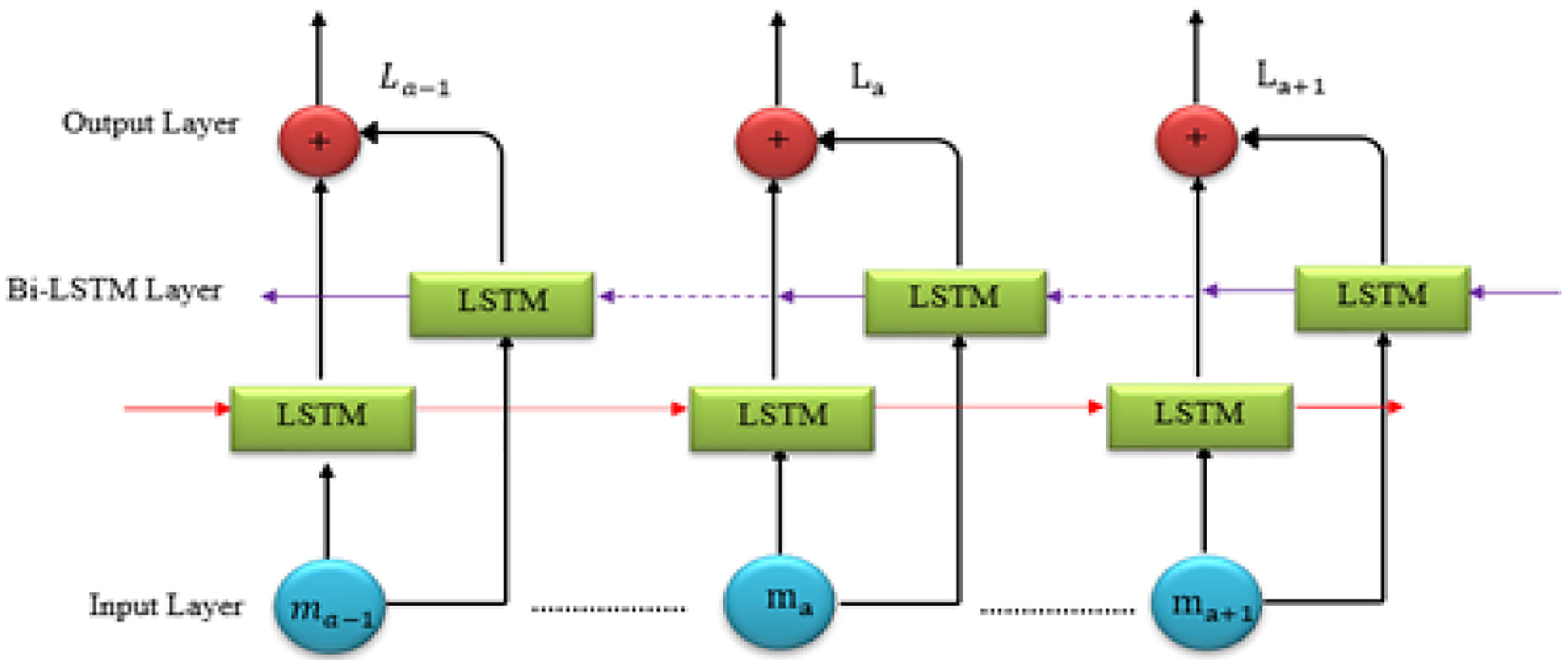
Architecture of Bi LSTM model.
The posterior function is a perfect representation of the objective function. It may be utilized to calculate the cost of several candidate samples that will be examined since it approximates the objective function.
In this section introduces depth-separable filters, which constitute the foundation of MobileNet. Let us now consider MobileNet before moving on to the resolution and width multipliers, the two hyperparameters that minimise the model.
MobileNet refers to a family of efficient convolutional neural network (CNN) architectures designed for mobile and embedded vision applications. These networks are specifically crafted to be lightweight, allowing them to run on devices with limited computational resources, such as mobile phones, IoT devices, and other edge devices.
The original MobileNet architecture, known as MobileNetV1, was introduced by Google researchers in the paper titled “MobileNets: Efficient Convolutional Neural Networks for Mobile Vision Applications” in 2017. This reduces the computational cost significantly while maintaining good accuracy.
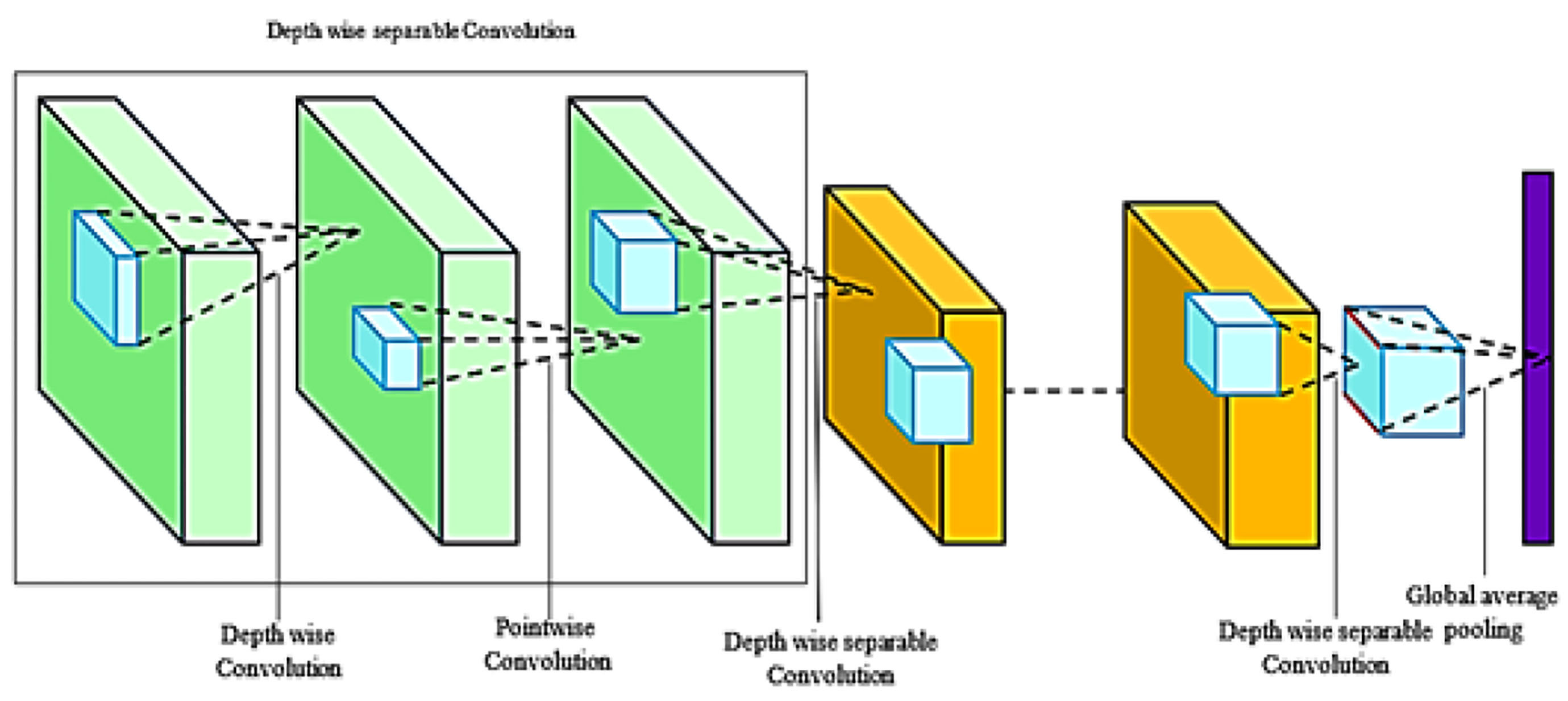
Architecture of Mobilenet.
The DL based Ghost network is used for classifying the cases. The discriminative capability of the optical convolutional neural network utilised for cervical cell classification was increased by using a hybrid loss function with label smoothing. The core Ghost engine reduces the initial convolutional layers in half and employs fewer filters to give more built-in function mappings. The successful generation of ghost feature maps can thus be accomplished using a small number of accessible transformation techniques. Figure 5 illustrate the Architecture of GhostNetwork.
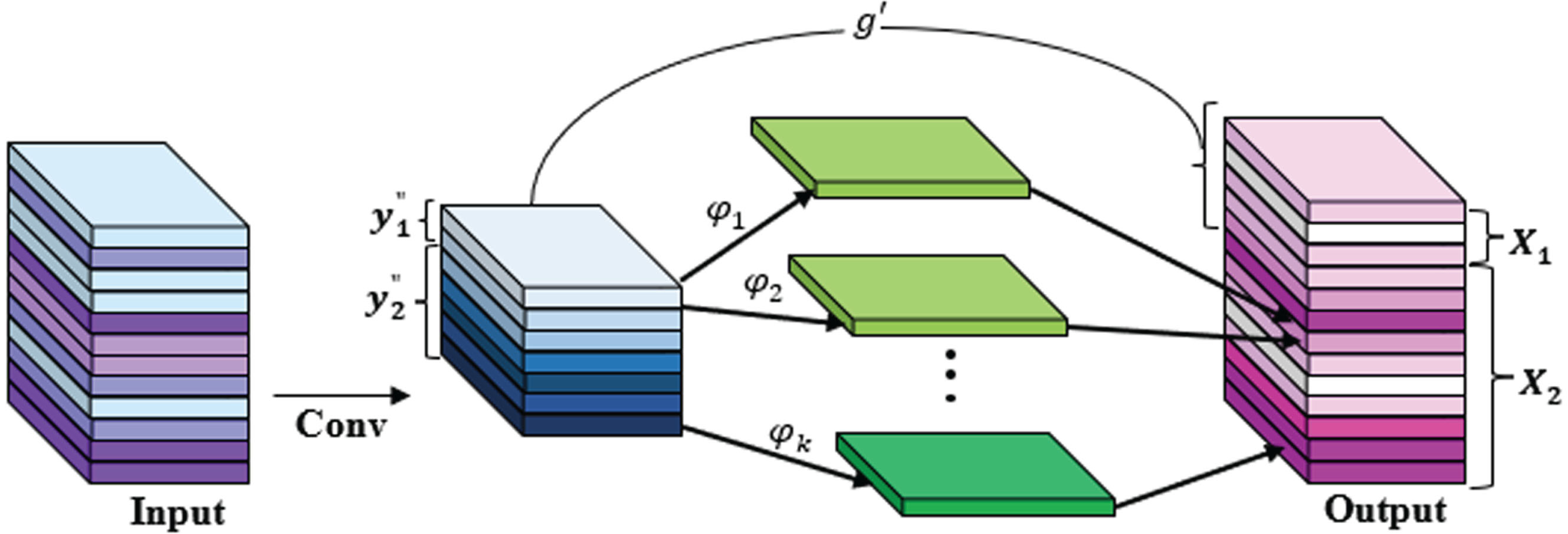
Architecture of ghost network.
Assume
In the context of computer security and information technology, an “attack” refers to a deliberate, malicious attempt to compromise the confidentiality, integrity, or availability of a computer system, network, or data. These attacks are typically carried out by individuals or entities with harmful intent, such as hackers, cybercriminals, or other malicious actors. The goal of these attacks can vary widely and may include unauthorized access to sensitive information, disruption of services, or damage to the targetedsystem.
3.8.1 Eavesdropping. Attackers can take advantage of insecure communications between servers and IoT devices. It has the ability to intercept network traffic and access sensitive data. Eavesdropping attacks also allow criminals to listen in on chats by using data from her IoT device’s microphone and camera.
3.8.2 Brute-force password attacks. Cybercriminals can attempt various combinations of popular terms to hack into networks and crack passwords. Because IoT devices are not designed with security in mind, breaking passwords is the most convenient method.
3.8.3 Privilege escalation. Attackers can get access to IoT devices by exploiting vulnerabilities such as OS monitoring, unpatched vulnerabilities, and device issues. They can hack into systems to acquire administrator access and then exploit flaws to obtain important data.
Performance analysis
In this section, the Proposed BO-BLOAT approach is used for identifying types of attacks. It is calculated with various measures namely accuracy, precision, specificity, and recall.
Dataset description
To validate the performance of our approach, we utilise the UNBS-NB-15 benchmark dataset, which is one of the most recent and extensively used datasets. As a result, both ordinary network traffic and diverse network assaults by botnets may be adequately represented. This dataset was developed with the IXIA Perfect Storm tool. The programme was constructed by mixing authorised client and attacker communication and categorising it as follows: fuzzer, backdoor, DoS, DoS, exploit, shellcode, worm, generic, reconnaissance, and analysis. In addition, the KDD99 dataset is chosen as an additional testing source. We developed a use case for an Internet of Things-based intensive care unit (ICU) with two beds; each bed has nine patient monitoring devices (sensors) and one control unit, known as the Bedx-Control-Unit. These gadgets were all made with the IoT-Flock tool.
The sensor and attack are shown in Fig. 6. This device uses a wireless access point (WAP) to send use data to the Fitbit server, which enables the user to track their health via a fitness profile that is available on the server. Through the use of stock Kali Linux, the developers conducted an MITM attack on the device. The device was given a valid IP address by installing and configuring a Dynamic host configuration protocol (DHCP) server with the aid of the dns-masq utility. IP tables and a virtual machine (VM) were then set up to route IP traffic via the wlan0 port.
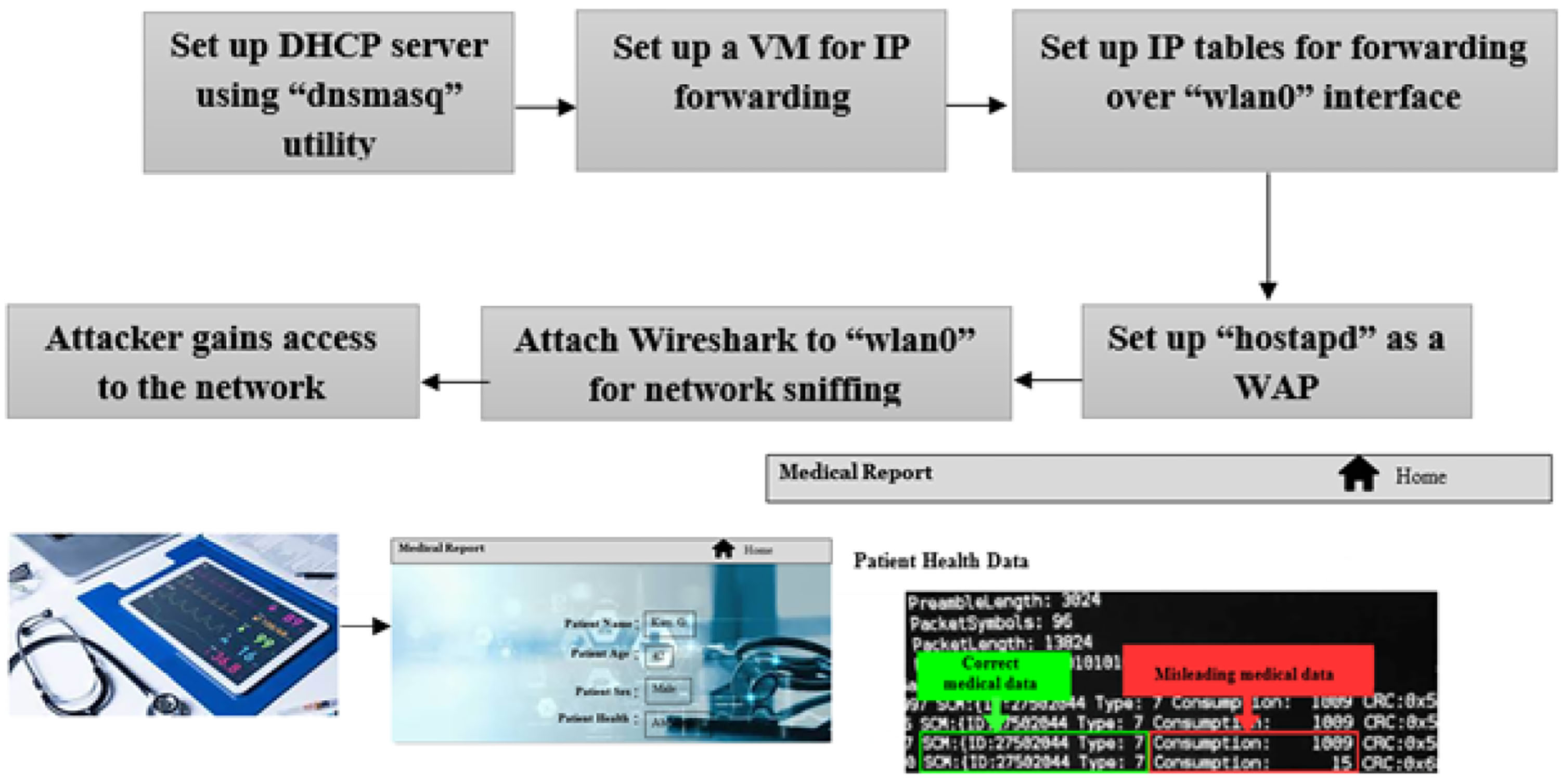
Sensor and attack.
According to Fig. 7, when more measurements are, both the True Positive Rate and accuracy rise. Assuming a successful attack implementation from the attacker’s point of view, the approach is extraordinarily effective with a 99% True Positive Rate and 98% accuracy once half of the measurements have been assaulted.
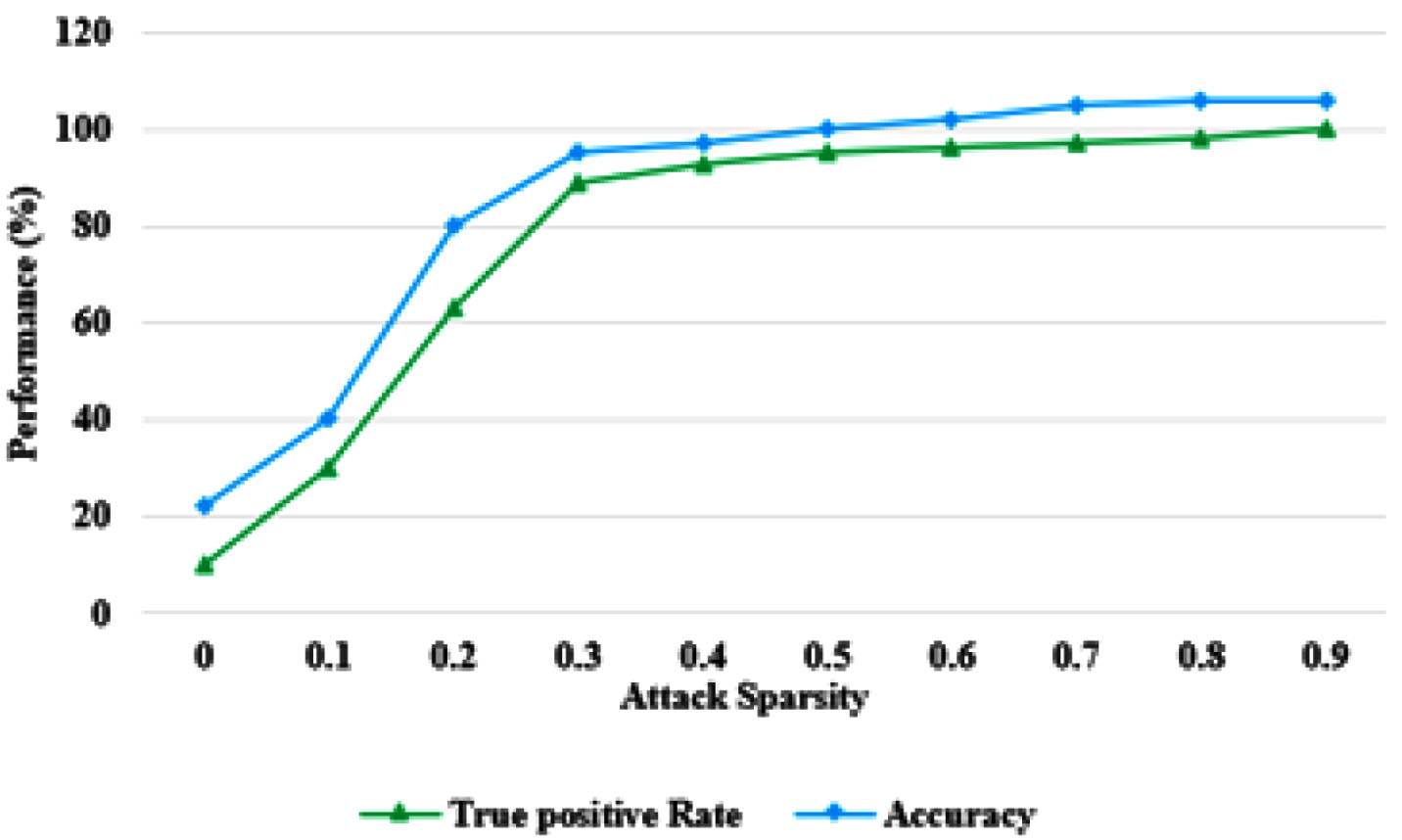
Performance via attack.
The ROC curves for various IDs are shown in Fig. 8. IDS can also be ranked based on their temporal performance. The overall time required for an IDS to detect an intrusion is referred to as time performance. This time includes processing and propagation time. The time it takes an IDS to process information in order to identify an attack is referred to as processing time. IDS must be as quick as feasible. Otherwise, dealing with intruders in real time becomes impossible. The time it takes for information to reach a security analyst or security operations centre (SOC) is referred to as propagation time. Processing and propagation durations should be as short as feasible in both circumstances to allow security analysts adequate time to respond to the attack inreal time.
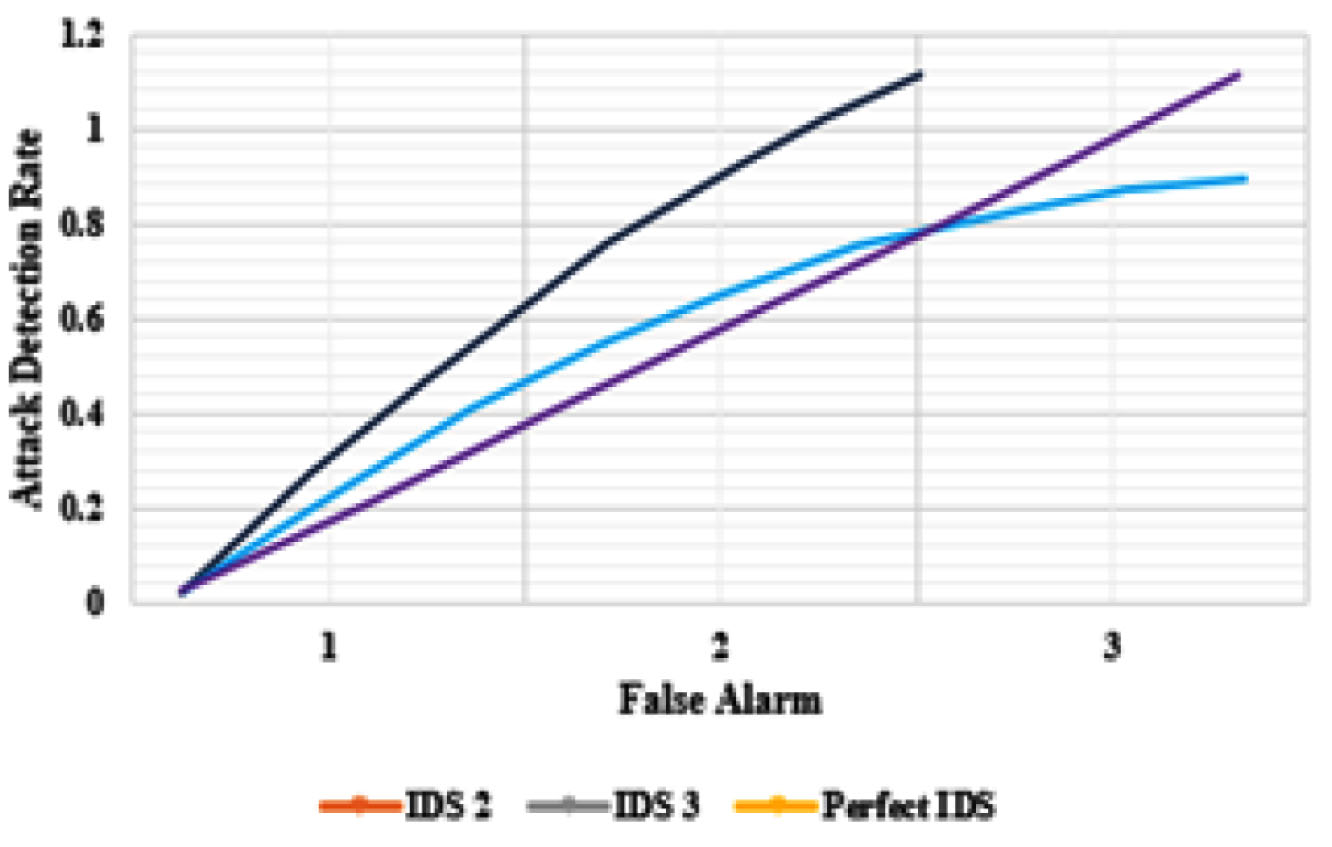
ROC Curves for different ID.
The detection rate of proposed BO-BLOAT and current assault detection approaches is shown in Fig. 9. The study analyses the rate of detection of attacks for two categories of information: attack data and non-attack data.
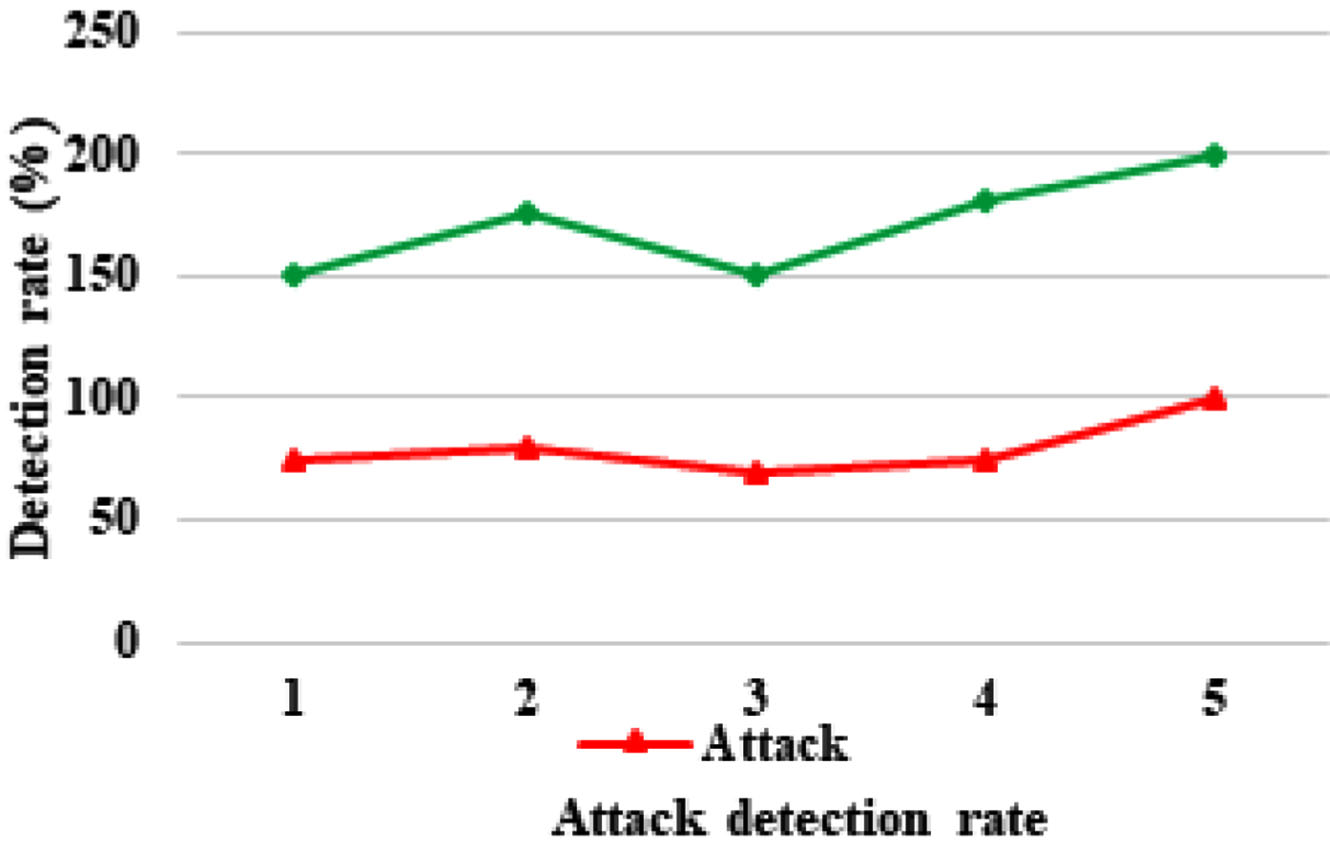
The attack detection rate of the proposed BO-BLOAT and existing methods.
Figure 10 depicts the performance indicators for UNBDS-NB-15 on KDD99. The accuracy of UNBDS-NB-15 (a feature set chosen using canonical correlation) reduced the complexity of the scale design process while utilising KDD99.
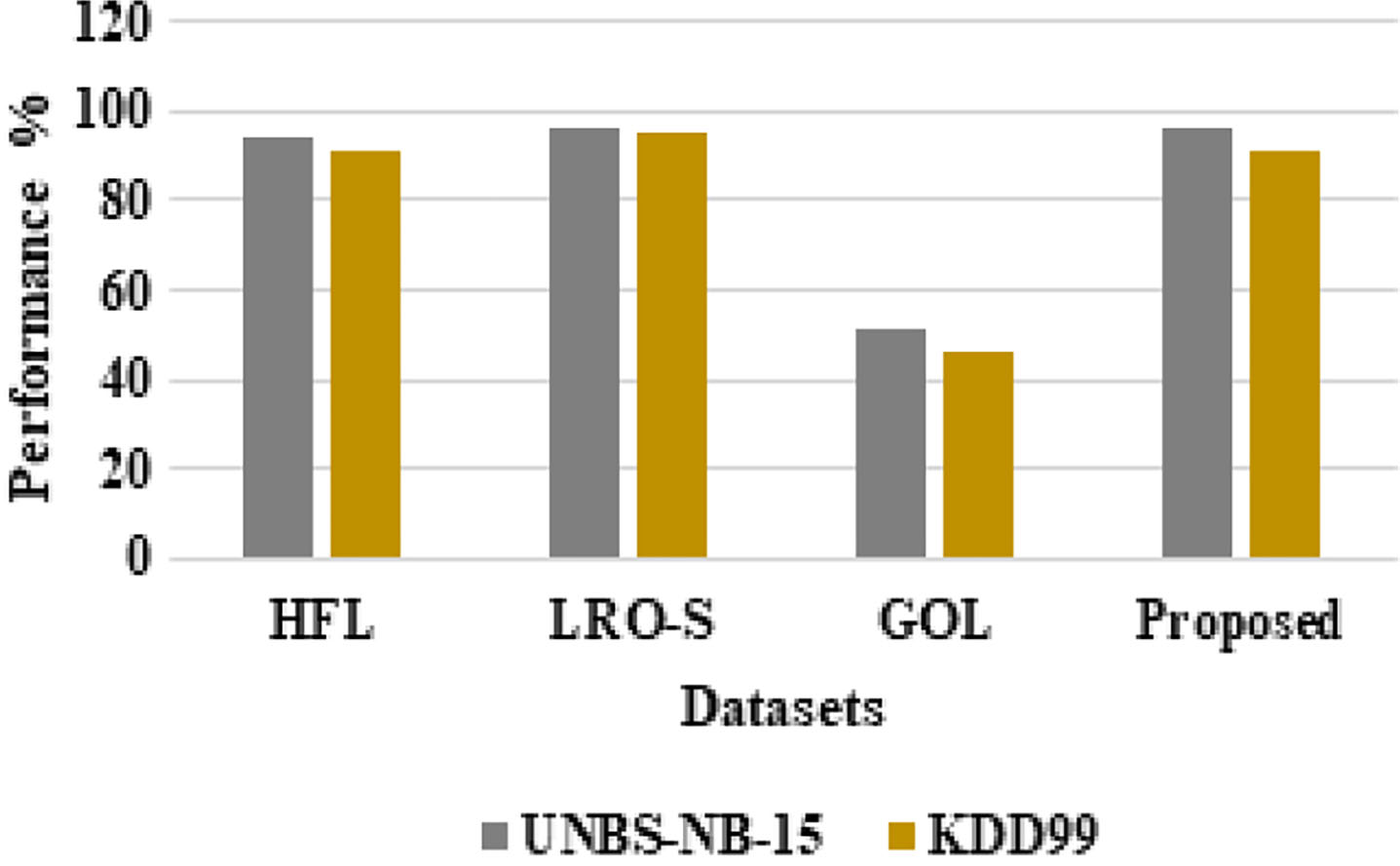
Performance metrics.
The suggested framework is intended to manage requests from several IoT devices at the same time. Each request should be sent to the appropriate application executing on a given VM. Figure 11 depicts the request distribution, processing, and response transmission durations for various node counts.

The execution time with respect to the number of IoT Nodes.
In this paper the performance analysis was evaluated based on specificity, accuracy, recall, precision and F1 score.
Figure 12 shows the performance metrics via existing the Proposed approach enhance the overall accuracy of the proposed BO-BLOAT, HFL, LRO-S, and GOL is 99.04%, 93.47%, 92.82% and 90.64 respectively. The Proposed approach improves the overall specificity of the HFL, LRO-S, and GOL is 98.07%, 96.46%, 94.62%, and 90.53% respectively. The Proposed approach improves the overall precision of the HFL, LRO-S, and GOL is 93.21%, 90.47%, 86.34%, and 88.89% respectively. The Proposed approach improves the overall Recall of the HFL, LRO-S, and GOL is 95.67%, 93.64%, 97.47%, and 92.87% respectively. The Proposed TRI-FH approach improves the overall F1 score of the HFL, LRO-S, and GOL is 97.82%,96.24%, 94.45%, and 90.64% respectively.

Performance metrics via existing.
As seen in Fig. 13, the accuracy of this strategy improves with the number of epochs. Accuracy curves depict accuracy and epochs along opposing axes. Figure 14 depicts the epoch loss curve, which demonstrates how the model’s loss lowers as the number of epochs grows. As a result, the suggested technique has a prediction accuracy of 98.07%.

Training and testing accuracy curve of proposed model.
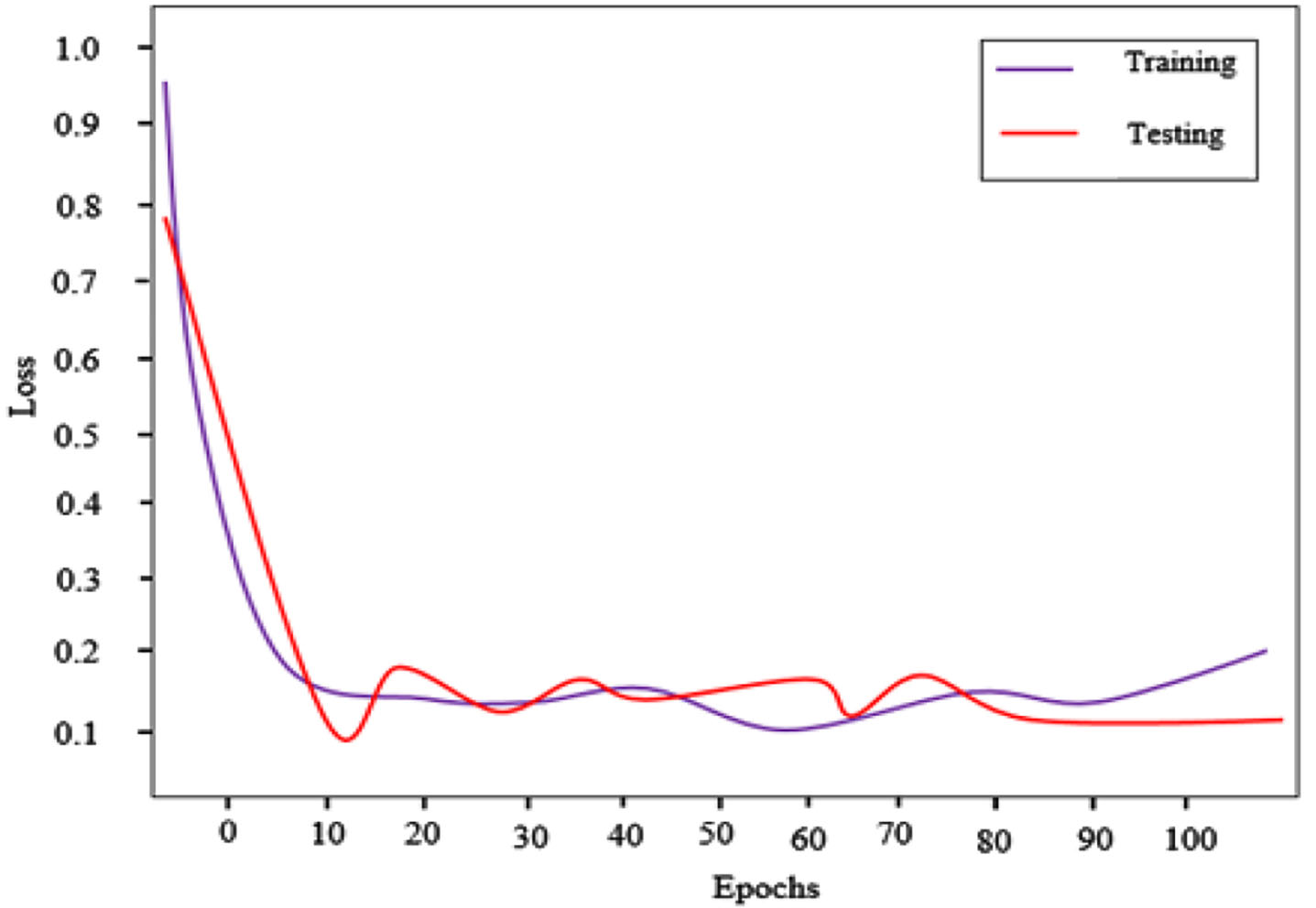
Training and testing loss curve of proposed model.
In this paper, Bayesian optimization-based bloat prevention for secure IoT healthcare, for identifying Attacks in secure healthcare system (BO-BLOAT). The gathered input datasets are pre-processed using the NLP techniques namely Sentence segmentation, Tokenization, Word Stemming and Removing stop words for removing irrelevant data. After preprocessing the features are extracted using RNN-bilstm and feature selection technique is done by Bayesian Optimization. The DL based Mobilenet network is used for attack detection. Finally, the classification and identifying the types of attack is performed by using DL based Ghostnet. For performance analysis, the two dataset is utilised namely UNBDS-NB-15, KDD99. The classification results show that the proposed model attains higher rate of accuracy in attack detection than existing models. The Proposed approach improves the overall accuracy of the proposed BO-BLOAT, HFL, LRO-S, and GOL is 99.04%, 93.47%, 92.82% and 90.64 respectively. In the future, we want to give a thorough study of mitigations for attacks published in the literature, including the security attacks discussed here. Furthermore, we intend to incorporate mobility management into RPL as well as numerous RPL extensions.
Footnotes
Acknowledgments
The author would like to express his heartfelt gratitude to the supervisor for his guidance and unwavering support during this research for his guidance and support.