



Abstract
Emotion is a crucial factor which influences evacuation effects. However, the studies and quantitative analysis of evacuation emotions, including the emotion generated by external factors and internal personality or cognition levels, emotional contagion evolution, and the regulation mechanism of pedestrians to negative emotion, are still rare. In this paper, an evacuation model based on emotional cognition and contagion (EMECC) is presented. Firstly, individual’s emotion is generated and quantified based on Lazarus’s cognitive theory. Secondly, the emotional contagion between individuals is simulated by SIS (Susceptible Infected Susceptible) infectious disease model. Combining with cellular automata model, an emotion-driven moving rule is proposed to guide pedestrians move towards the directions with more positive individuals so that positive emotions can be spread effectively. Various experiments on model parameters, obstacles, and emotional contagion process are implemented to verify the effectiveness of the EMECC model. The simulation and experimental results show that emotional regulation mechanism can improve pedestrian’s decision-making ability and contagion of positive emotion can accelerate evacuation process. The EMECC model can simulate emotional changes dynamically and guide pedestrians efficiently and reasonably in emergency evacuation.
Introduction
Emergency evacuation in public places has always been a widely concerned issue in society. In recent years, various disasters have occurred frequently in public places, causing irreversible harm to the people. Therefore, research on emergency evacuation has significant importance [1, 2]. Conducting evacuation drills is an effective way to improve people’s ability to respond to disasters. However, disaster drills can cause a lot of resource waste. The development of computer simulation technology provides a feasible method for emergency evacuation management. Based on video data or reports of dangerous situations, simulation and modeling of evacuation environments and personnel behavior can be conducted to identify factors that affect the efficiency of population evacuation [3]. At the same time, evacuation strategies can be studied for different situations to improve evacuation efficiency.
The stimulation of emergency events can lead to changes in the emotions of a crowd, which can in turn affect individual behaviors. Many scholars have studied the emotional evolution during the process of crowd evacuation. In order to depict the emotions of individuals more realistically during evacuation, researchers have studied the mechanisms of emotional generation. The crowd emotion models based on the OCC (Ortony, Clore and Collins) emotional cognitive theory were proposed to calculate the generation of emotions [4, 5]. In addition, considering the relationship between cognition and emotion in psychology, the emotions during the evacuation process were quantified [6, 7]. For example, Ito et al. [8] studied the phenomenon called majority syncing bias caused by psychological properties of humans and proposed an evacuation framework to control the emotional level of a crowd by using guide robots.
In emotional contagion research, in order to better simulate the emotional contagion process between individuals, researchers have introduced intrinsic attributes of individuals and groups, relationships between individuals, and other factors into the emotional contagion model. Mao et al. [9] introduced the concept of intimacy to simulate companion decision-making behavior during emergency evacuation, making emotional contagion between individuals more realistic. Zhang et al. [10] proposed an IoT-based positive emotional contagion method to deploy safety officers and maximize positive emotional contagion. The crowd chaos was quantified based on the macroscopic and microscopic entropies. And an entropy-based anisotropic emotional contagion model was presented to simulate the nonuniform positive emotional contagion.
Aiming the emotion contagion in groups, Mao et al. [11] presented an emotion contagion framework for emergency evacuations considering intra-group contagion, inter-group contagion and emotion contagion based on third-party authority. Furthermore, a general framework of peer relationships based on asymmetric intimacy was established by Mao et al. [12] to study the dynamics of peer groups. The impact of positive emotion transmission on peer interaction behaviors was analyzed. Their research showed that the positive emotions contagion of the peer behaviors could reflect macro group behaviors.
Combining with cellular automata model, an evacuation model based on emotional cognition and contagion is presented in this paper. The individual’s negative emotion is quantified according external stimuli, while positive emotion is generated by regulation mechanism which is related to personality traits and cognition levels. Furthermore, the emotional contagion based on SIS (Susceptible Infected Susceptible) infectious disease model is proposed. Individual emotions varying with environmental changes and spreading among surrounding individuals during the evacuation process are simulated.
The rest of this paper is organized as follows. Section 2 reviews the existing research on crowd evacuation simulation and emotion modelling. Section 3 establishes a crowd evacuation model based on emotional cognition and contagion. Section 4 analyzes and discusses the experimental results. And Section 5 draws conclusions and discusses further research.
Related work
Evacuation models
Crowd evacuation models include continuous models and discontinuous models. Continuous models are mainly based on modeling research of social forces [13, 14], which is characterized by describing the velocity of an individual based on the forces of the individual at each moment. Social force models have been widely used in simulating and analyzing pedestrian behaviors during evacuation. For example, Wu et al. [15] presented social force model based on behavioral heterogeneity to study the heterogeneity characteristics. Qi et al. [16] developed a simulation-calibration framework based on social force model for preschool children. The evacuation behavior parameters were calibrated by minimizing trajectory distance. The model was helpful to improve the design of facilities layouts.
The most used discontinuous models are cellular automata models [17, 18]. Both the time and space in cellular automata model are discrete. And the environment is divided into lattices or cells, and the continuous time is divided into discrete time steps. Cellular automata models can simulate complex behaviors of natural systems, such as nonlinear phenomena, self-organization, etc. Therefore, they are widely used in computer science, complex systems, physics, biology, social science, and other fields, etc. As a dynamic complex system, evacuation process which involves many agents with group behaviors can be simulated by cellular automata model. Wang et al. [19] proposed a meta-automata model for crowd evacuation. The narrowness, noise and visibility of the passage, the psychological and physiological conditions of the passengers, and exit size were considered and analyzed. Ji et al. [20] established a real-time building evacuation model based on improved cellular automata. potential energy field was introduced to provide safe paths and avoid stampedes. Their model could reduce evacuation time and guide evacuees in real-time conditions.
Evacuation emotion modelling and contagion
Researchers have been studying emotional contagion in crowd evacuation and emotion-driven methods [21, 22] in recent years. Most research focuses on panic emotion in evacuation. For instance, Mao et al. [23] modeled the group structure with emotions and simulated the intra-group structure and inter-group relationships of crowds under the influence of emotions. The factors which influenced emotion changing were studied in their framework. Xu et al. [24] proposed a system dynamics model of panic spread for chemical industry park to simulate evacuation under different disaster severity, visibility, and groups. Aiming at the changes in individual emotions caused by external stimuli, Xu et al. [25] presented a crowd simulation model for the generation and contagion of panic emotion under multi-hazard circumstances. In their model, perilous field was proposed and transformed to panic emotion. An emotional reciprocal velocity obstacles model was introduced to simulate the crowd behaviors. Li et al. [26] proposed an evacuation time correction model considering passenger panic and congestion to analyze the effects of panic and age composition on the evacuation efficiency of passenger ships. The passengers’ panic emotions were quantified by the generalized entropy function. However, most evacuation models based on emotion only consider the panic emotions caused by different levels of danger, and the panic emotions do not vary according to the changing environment. Besides danger, panic emotions may result from different factors and change with evacuation status. Furthermore, individual’s emotions during evacuation will interact on each other over the whole process and in turn affect evacuation effects.
Recently, research on emotion contagion in crowd evacuation has been paid attention. Emotional models based on infectious disease mechanism, including SI (Susceptible-Infected) model [27], SIR (Susceptible-Infected-Recovered) model [28], SIS (Susceptible-Infected-Susceptible) model [29], and SIRS (Susceptible-Infected-Recovered- Susceptible) model [30], have also been used widely in crowd evacuation emotion modelling. Zou et al. [31] presented a crowd evacuation model for toxic gas incident. The panic emotion was quantified and social force model was improved to simulate evacuation process integrating gas dispersion, information diffusion and emotion contagion. Li et al. [32] proposed a cellular automata-based simulation model combining emotion spread model, leader-follower model, and exit choice strategies. They found that panic emotion and group behavior are detrimental to pedestrian evacuation efficiency. Sun et al. [33] constructed an extended cellular automata model based on theories of OCEAN (openness, conscientiousness, extroversion, agreeableness, neuroticism) model and SIS (susceptible, infected, susceptible) model to study the panic emotion dynamics in the crowd and pedestrians’ dynamics influenced by emotion. Their model provided a novel approach to analyze crowd evacuation with panic. Shang et al. [34] presented a crowd evacuation model with emotion contagion based on game theory. Individual emotion was infected between the emotion states, including infected, sensitive, and unchangeable. Game theory was utilized to model a pedestrian’s decision-making. These models can simulate emotional contagion especially panic emotion caused by external risk. But there is limited research on the emotional generation mechanism influenced by internal and external factors.
Some research has studied evacuation emotional contagion modelling considering personality, cognition, and experience, etc. For example, Zhou et al. [35] proposed a simulation method for group interactions in evacuation. Group emotion is modeled based on OCEAN (Openness, Conscientiousness, Extroversion, Agreeableness, Neuroticism) personality trait and the improved CA-SIRS (Cellular Automaton-Susceptible Infected Recovered Susceptible) model. Personalities and emotional contagion were simulated in their model. Xiao et al. [36] established an evacuation model of emotional contagion crowd based on cellular automata model and SIS infectious diseases model. In the model, the emotion and state were updated by using static floor field and dynamic floor field. Liu et al. [37] proposed a multi-agent emotional contagion model is proposed to analyze the evacuation behavior of the crowd under emotion. In the model, three conditions for the generation of emotional contagion and three rules for emotional contagion were established. An emotional contagion algorithm considering individual personality and inter-individual distance factors was proposed. Tian et al. [38] proposed a crowd evacuation method driven by both knowledge and emotion. Knowledge and emotion were quantified by using Siminov’s psychology model. Emotional contagion was modeled combining the susceptible infected (SI) model. Quantitative individual knowledge and emotion are combined with the reciprocal velocity obstacles (RVO) to build the knowledge and emotion dual-driven crowd evacuation model.
Based on the analysis of previous research above, it is found that the generation and quantification of emotion mainly utilizes some psychological models, and emotion contagion usually relies on infectious disease models. However, there is still a lack of research on the changes of individual’s emotion from both internal factors and external stimuli together. In addition, most of the evacuation emotion contagion models only simulate the contagion of negative emotions, ignoring the contagion of positive emotion. Therefore, modeling the generation and contagion of evacuation emotion considering internal factors such as personality and experience and external stimuli such as dangerous events and environment is a challenge for current research. Aiming at the problems in modeling individual emotions during evacuation, an evacuation model based on emotional cognition and contagion is presented in this paper. Both negative and positive emotions are quantified and generated based on Lazarus’ cognitive theory in the initial stage of evacuation. And then the emotion contagion is modeled based on SIS infectious disease model. The individual’s emotion is affected by the varying environment and contagion around during the evacuation process. Combining the emotion model with a cellular automaton model, an emotion-driven evacuation method is proposed to guide individual’s decision-making. Simulation results show that EMECC model conforms to real evacuation scenario. It is found that positive emotions are helpful for evacuation process and the emotional regulation mechanism is necessary.
Evacuation model based on emotional cognition and contagion
An evacuation model based on emotional cognition and contagion is presented in this paper. An individual’s emotion is affected by both internal and external factors, as shown in Fig. 1. The internal factors include personality traits, cognition levels and experience levels. And the external factors refer to emotional contagion from other individuals and congestion around. An evacuation model based on emotional cognition and contagion (EMECC) is presented in this paper. Based on Lazarus’ cognitive theory [39], an individual’s emotions generated by individual, including emotions generated by external stimuli and emotions generation by self-regulation, are quantified. The emotional contagion among individuals is simulated by SIS model. An emotion-driven moving rule based on cellular automata is proposed to consider the effects of positive emotions on evacuation.
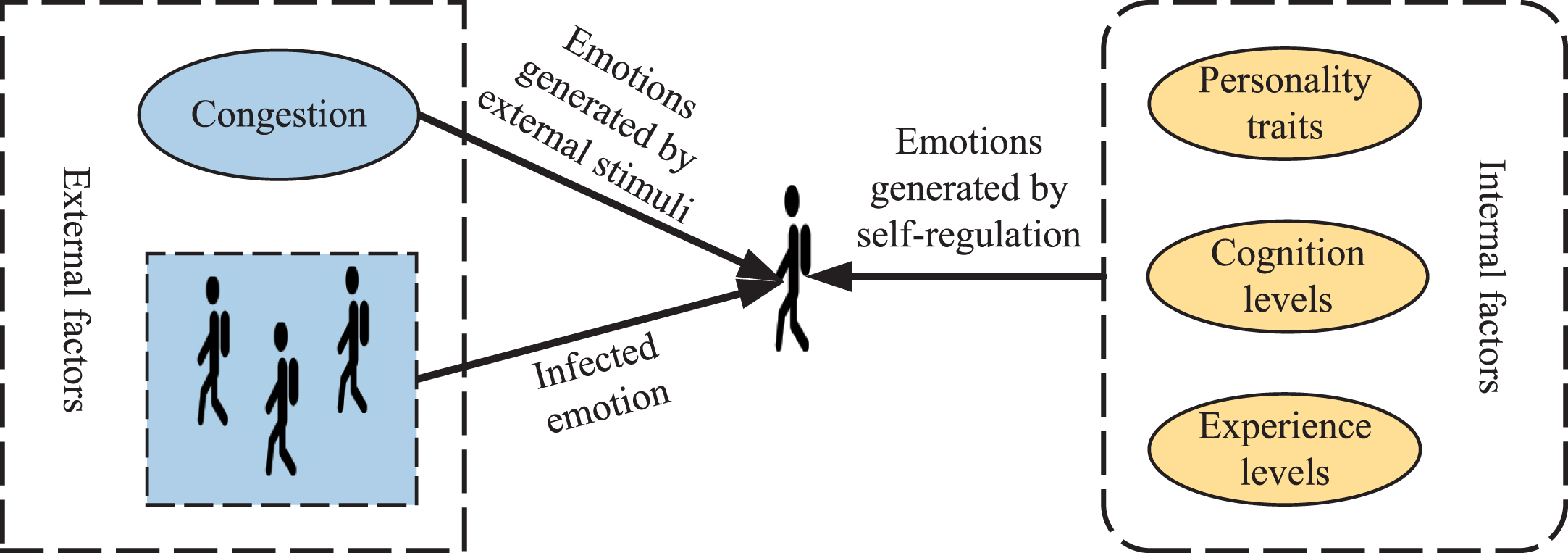
Factors affect emotions.
The cellular automata model is used to model the evacuation environment. The cellular automata model can simulate the spatial-temporal evolution process of complex systems. It contains four parts: cellular space, states, neighborhood, and state transition rule. The system evolves dynamically by the interactions between cells. Cellular automata model is suitable for crowd evacuation due to its ability of simulating the dynamic process of system. The Moore neighborhood shown in Fig. 2 is applied in this paper.
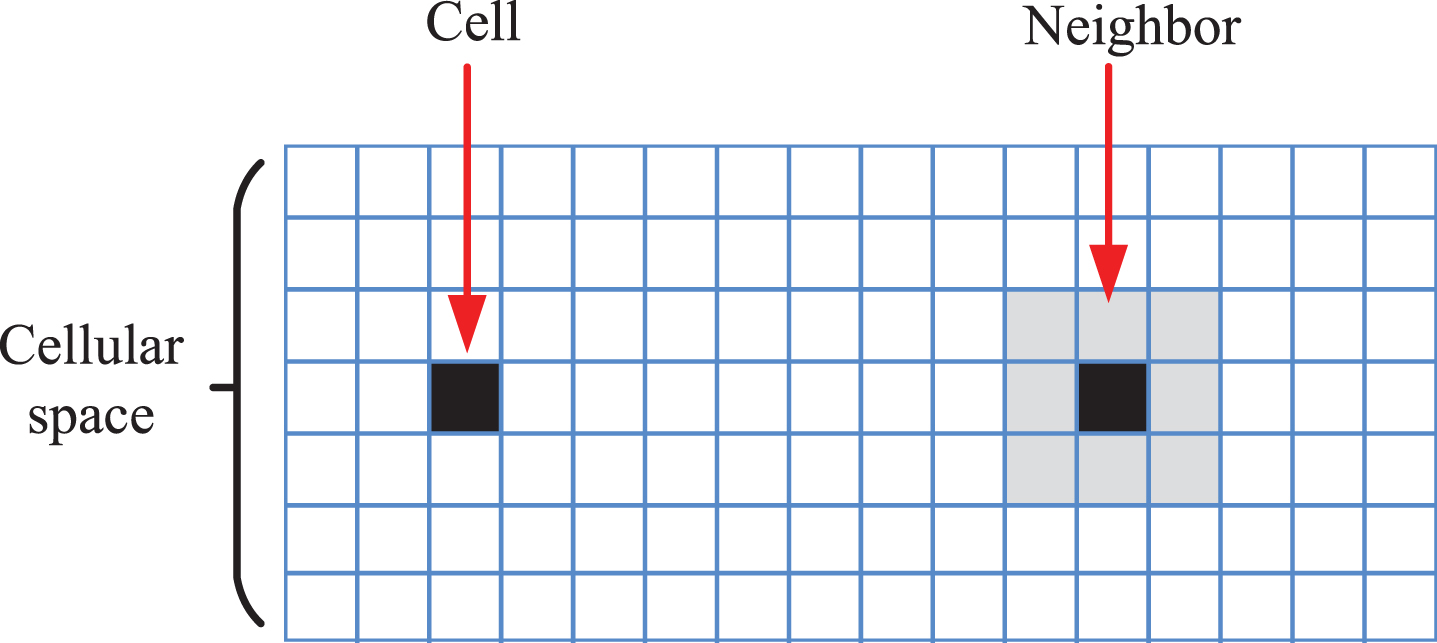
Cellular space and neighborhood.
The cognitive theory of Lazarus suggests that emotions are the response of individuals to evaluate whether external stimuli are harmful or beneficial by using their own perception. Usually, people need to evaluate the relationship between stimulus events and themselves. It involves three levels of evaluation. The first level is the evaluation of whether external stimuli is harmful or beneficial. The second level is the individual’s regulation and control of their own reactions. And the third level is a feedback evaluation of the first two evaluations. Individual emotions arise in the first two evaluations. It means people not only accept the results of stimulus events but also adjust their response to the stimuli.
According to Lazarus’ cognitive theory, the initial evaluation of individual facing external stimuli during evacuation should be harmful, which results in negative emotion. The regulation of external stimuli by individual will generate certain positive emotion, and the regulation degree of stimuli varies due to individual differences. Therefore, the quantification of emotions in this paper includes two aspects: the negative emotion generated by the first level evaluation and the positive emotion regulated by the second level evaluation.
Define
Where
The emergency events can stimulate individuals to generate negative emotions. The two factors that cause negative emotions are considered in this paper. The one is the severity of the emergency event which leads to fear emotions. The other is the degree of crowding during the evacuation process, which results in anxious emotions.
Denote
Where b is parameter that measures the importance of panic and anxiety emotions. Fear
i
(t) represents the panic degree of individual i at time t, and it is calculated by Eq. (3).
Where λ is the risk factor. dist i (t) is the distance between individual i and hazard position at time t.
Anxiety
i
(t) in Eq. (2) represents the anxiety degree of individual i at time t, and it is calculated by Eq. (4).
Where Num i (t) is the number of individuals within the field radius of individual i at time t. Num R (t) is the number of individuals that can be accommodated within the visual radius R.
The individual’s ability to control dangerous stimuli in emergency can drive positive emotions. This positive emotion is influenced by the individual’s personality and experience. Denote
Where Per i (Per i ∈ [0, 1]) is the personality index of individual i. The larger value of Per i indicates that the individual i is more optimistic and more likely to have positive emotion. Here, it is specified that the individual i is optimistic when Per i ≥ 0.5 and the individual i is pessimistic when Per i < 0.5. Exp i (Exp i ∈ [0, 1]) is the evacuation experience index of individual i. The higher the experience, the more likely the individual is to have positive emotion. a is the parameter that measures the importance of personality and experience.
The different behaviors of individuals in emergency evacuation, such as queuing, group, and detour etc., can have a significant impact on the results. The reasons for these behaviors are complex, but emotion is one of the important reasons. Individual emotions are not only influenced by themselves and the environment, but also infected by other individuals around them. The process of emotional contagion is similar to that of infectious diseases. Therefore, the SIS infectious disease model is used in this paper to simulate the dynamic process of emotional contagion in the crowd. The SIS model divides the crowd into infected individuals and susceptible individuals. The infected individuals transmit infectious diseases to susceptible individuals with a certain probability, while susceptible individual will become a new contagion source after being infected.
Define
Where I ij represents the intensity of emotional contagion between individuals i and j, and it is calculated by the distance of the two individuals. R is the visual field radius. Eq. (6) indicates that the amount of emotional contagion is related to the intensity of contagion between two individuals. The closer the distance, the greater the amount of emotion an individual is infected with. Emotion j (t) in Eq. (6) is the total emotion amount of individual j. It is affected by the emotion generated from one individual himself/herself and infected emotions from other individuals within the visual radius.
Denote Emotion
i
(t) as the total emotional value of individual i at time t. It can be calculated by Eq. (7).
In emergency situations, the neighbor cell that an individual chooses at the next moment generally depends on the distance between the neighbor cell and the exits. The closer the neighbor cell is to the exit, the greater the probability of the neighbor cell being selected. At the same time, driven by emotions, individuals tend to move towards the neighbor cells with higher emotional values in neighborhood cells. Therefore, the probability of an individual selecting a neighbor cell at next moment is shown in Eq. (8).
Where k1 and k2 are the impact factors of exit distance and emotion, respectively. Neighbor
i
is the set of neighbor cells of cell i. η
j
is the state of cell j, if cell j is occupied, then η
j
= 1, otherwise, η
j
= 0. Dis
j
is the shortest distance from the position (x
j
, y
j
) of cell j to n exits. It is calculated by Eq. (9).
SE
j
is the sum of emotions of individuals within the neighborhood of cell j. It is calculated by Eq. (10).
The cell with the highest transfer probability among the eight neighbor cells is chosen as the next position for the current individual.
The evacuation process is shown in Algorithm 1.
Experiments
In order to verify the effectiveness of the model, simulation experiments are carried out. The experimental scene is shown in Fig. 3. Figure 3(a) is a classroom scenario, which can accommodate 200 pedestrians. Figure 3(b) shows the first-floor plan of a teaching building in a university, and the capacity is 1168. The gray cells in Fig. 3 represent obstacles or walls, the white are idle cells. Each scenario has two exits which are shown in green rectangular boxes. The size of each cell is 0.5m × 0.5m. The individual speed is set to 1 m/s. The experimental parameters are set as follows: the total number of evacuees is 200, a = 0.5, λ = 0.4, visual radius R = 3. The proportions of optimistic and experienced individuals are 50%, respectively.

The experimental scenes.
The parameter b which measures for the proportion of panic and anxiety in Eq. (2), has a significant impact on negative emotion. Therefore, experiments are conducted in the scenario shown in Fig. 3(a) to analyze the optimal value of parameter b. Each value of b is tested 5 times and the average values of evacuation time and total evacuation path length are listed, as shown in Table 1. With the increase of b, the evacuation time and total evacuation path length decrease. This is because the individuals near the hazard position have a higher level of panic when b is larger, while other individuals far away from the hazard position have lower negative emotions. In the later stage of evacuation process, most individuals are getting farther from the hazard position. In contrast, the proportion of individuals with positive emotions increases, which results in faster evacuation. However, as b increases, although the total path length decreases, the evacuation time does not continue to decrease. It indicates that congestion which leads to stagnation or detour occurs during the evacuation process. Therefore, considering the composition of negative emotions, the value of b should be moderate, and a value of 0.6 is more appropriate based on a comprehensive analysis.
Analysis of parameter
Analysis of parameter
Figure 4 shows the evacuation efficiency curves for different numbers of individuals with different values of visual radius. When the number of evacuees is small (less than 60 pedestrians), there is little difference in evacuation efficiency between different values of visual radius. This is mainly because congestion may not occur when the number of people is small. And the emotion infected by other individuals within the visual radius is also lower. As the number of people increases, the larger visual radius can lead to more negative emotions and aggravate emotional contagion. Thus, the evacuation time under different visual radius R fluctuates. With a small value of visual radius (R = 1, 2), the amount of negative emotion is relatively large. Moreover, positive emotions are difficult to spread because emotions are infected only within a small range. Therefore, the evacuation efficiency is low under small values of visual radius. With larger values of visual radius (R = 7, 8), an individual’s emotions are influenced by the individuals in a large range. The transition probability is more influenced by emotion as an individual choose next position. As a result, individuals are more inclined to move towards the direction of individuals with positive emotions. However, the individuals with positive emotions around may be far away from the exits, which leads to detour. It can be concluded from Fig. 4 that the evacuation time is the shortest when R = 3.
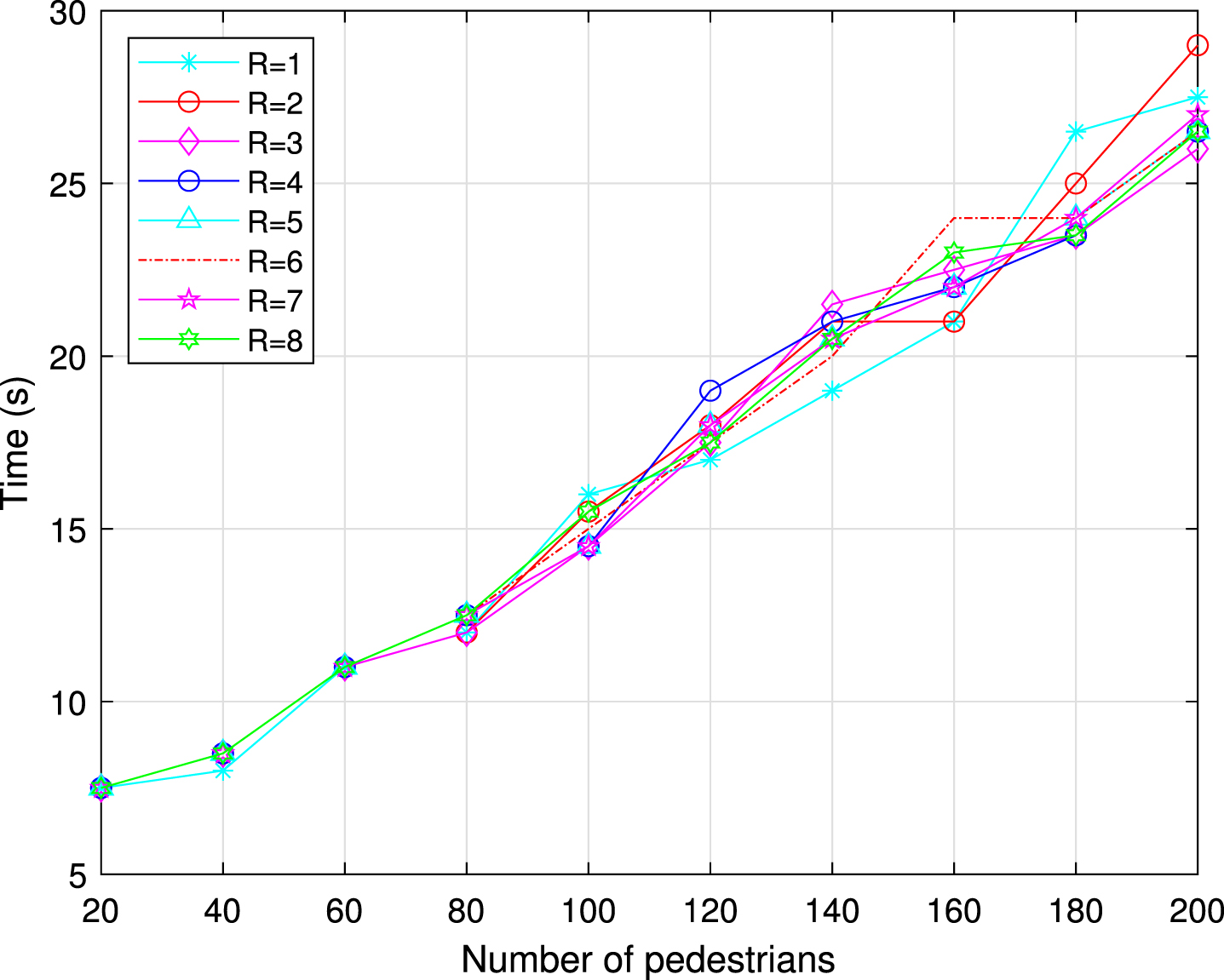
Evacuation time for different numbers of individuals with different visual radius R.
Figures 5 and 6 show the curves of evacuation time with different numbers of pedestrians under different proportions of optimistic and experienced individuals. It is shown that as the proportions of optimistic and experienced individuals increase, evacuation time decreases accordingly. It indicates that the spread of positive emotions can accelerate evacuation process.
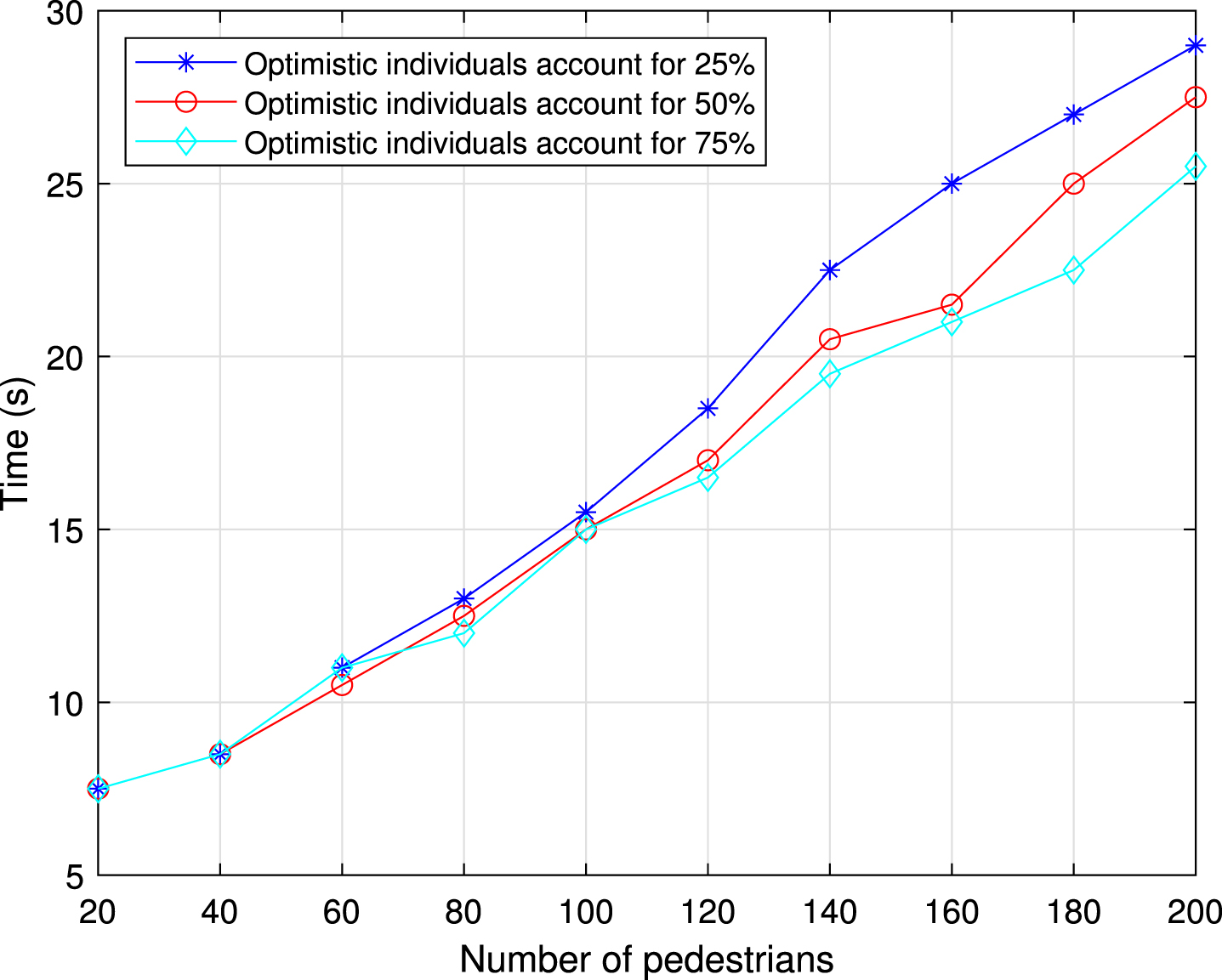
Evacuation time for different proportions of optimistic individuals.

Evacuation time for different proportions of experienced individuals.
In order to analyze the impact of individual emotions on evacuation effects, individual generated emotions unchanged and changed strategies are adopted, respectively. The initial values of individual emotions with two strategies are the same. The emotional values of individuals are sorted from high to low. And then classify the individuals into four categories (extremely positive, positive, negative, and extremely negative) corresponding to the top 25%, 50%, 75%, and 100% of emotional values, respectively.
The experimental results are shown in Fig. 7. The distribution of individual emotions only affected by infected emotions at different times is shown in Fig. 7(a) while the distribution with the strategy of changed generated emotion is shown in Fig. 7(b). As shown in Fig. 7(a), most individuals’ emotional states are extremely negative or extremely positive at t=10 s and t=20 s because an individual’s emotion is only influenced by the emotional contagion of surrounding individuals and accumulates over time. Without emotional regulation mechanism, it is difficult for individuals to change their positive or negative emotions. However, in Fig. 7(b), there are fewer individuals with extremely positive or negative emotions but rather more individuals with intermediate emotions at t=10 s. Since the congestion alleviates and most of individuals are farther away from the hazard position, positive emotions will be produced. At t=20 s, there are fewer individuals in Fig. 7(b) than those in Fig. 7(a), which indicates that the individual’s own emotional regulation mechanism can improve decision-making ability and thus increase evacuation efficiency.
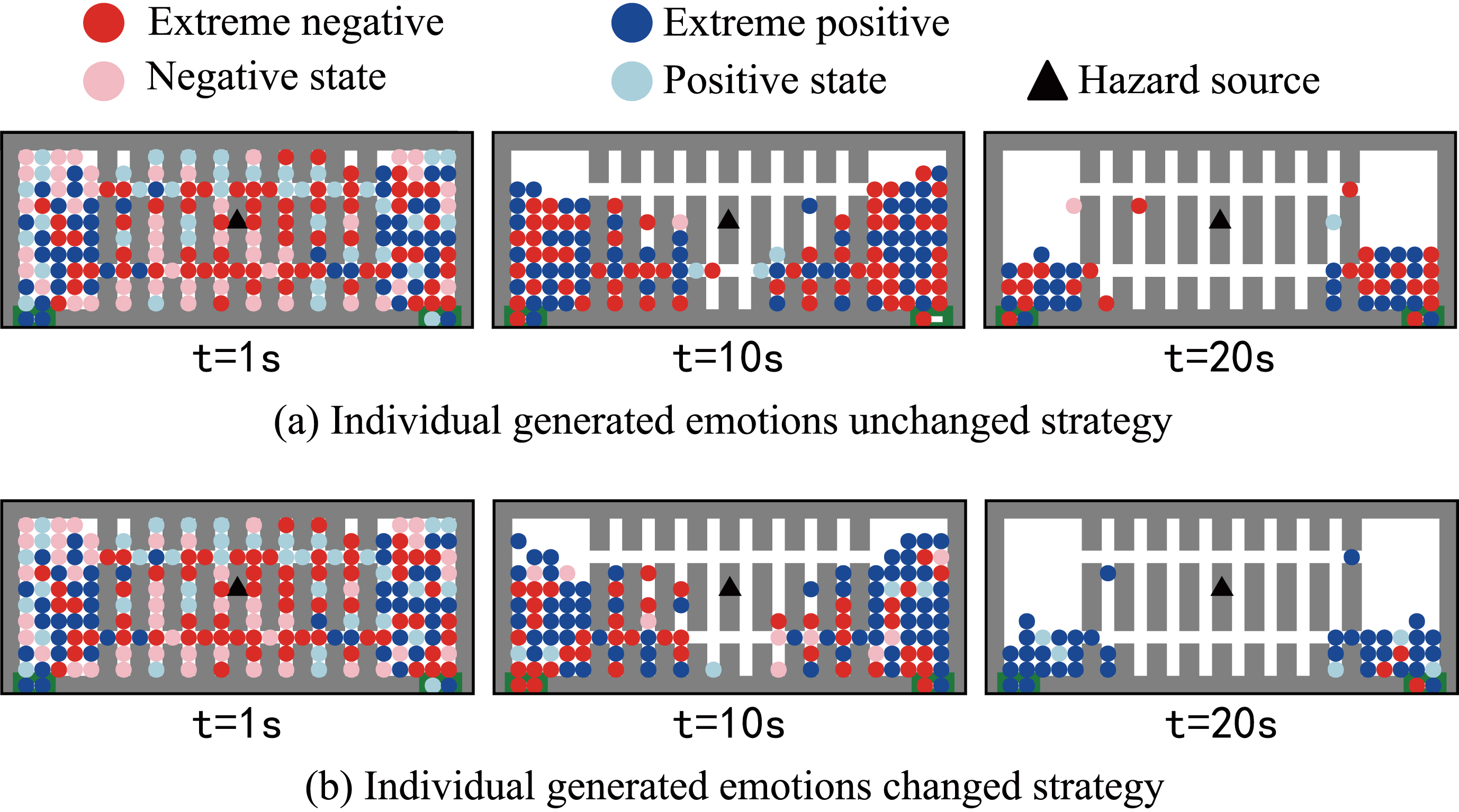
Distributions of individual emotional states.
Figure 8 shows the bar charts of the number of individuals in different emotional states at different times in the scene with and without obstacles. At t=1 s, t=5 s, and t=10 s, there are more individuals with positive emotions in the scene without obstacles compared to the scene with obstacles. The main reason is that the presence of obstacles at the beginning of evacuation may aggravate congestion and cause individuals to generate more negative emotions. At t=15 s and t=25 s, as most individuals gather near the exits, the impact of obstacles becomes weak. Therefore, appropriately increasing the distance between obstacles such as desks and chairs in the classroom can alleviate individuals’ negative emotions.
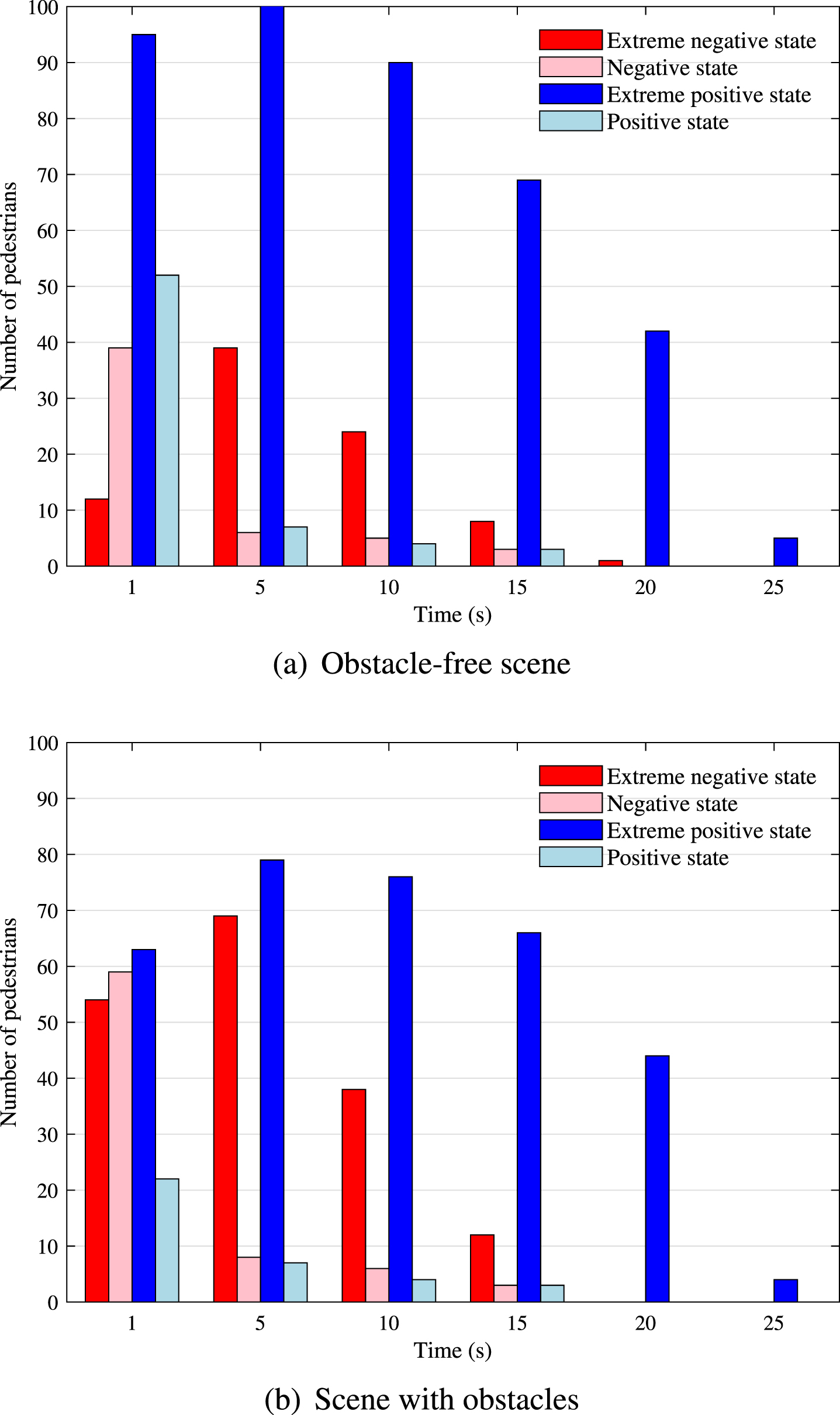
Bar charts of individual emotional states.
Figure 9 shows the evacuation time in both obstacle-free and obstacle scenarios for 20 to 200 pedestrians. It is shown that when the number of individuals is small, the evacuation time is relatively short due to the less congestion in obstacle-free scenario. When there are more individuals (more than 160 pedestrians), obstacles have little impact on evacuation time comparing with the same number of individuals in scenario with obstacles. It demonstrates that obstacles can avoid the occurrence of secondary disasters such as crowding and stampede to some extent when the number of individuals is close to the maximum capacity of scene.
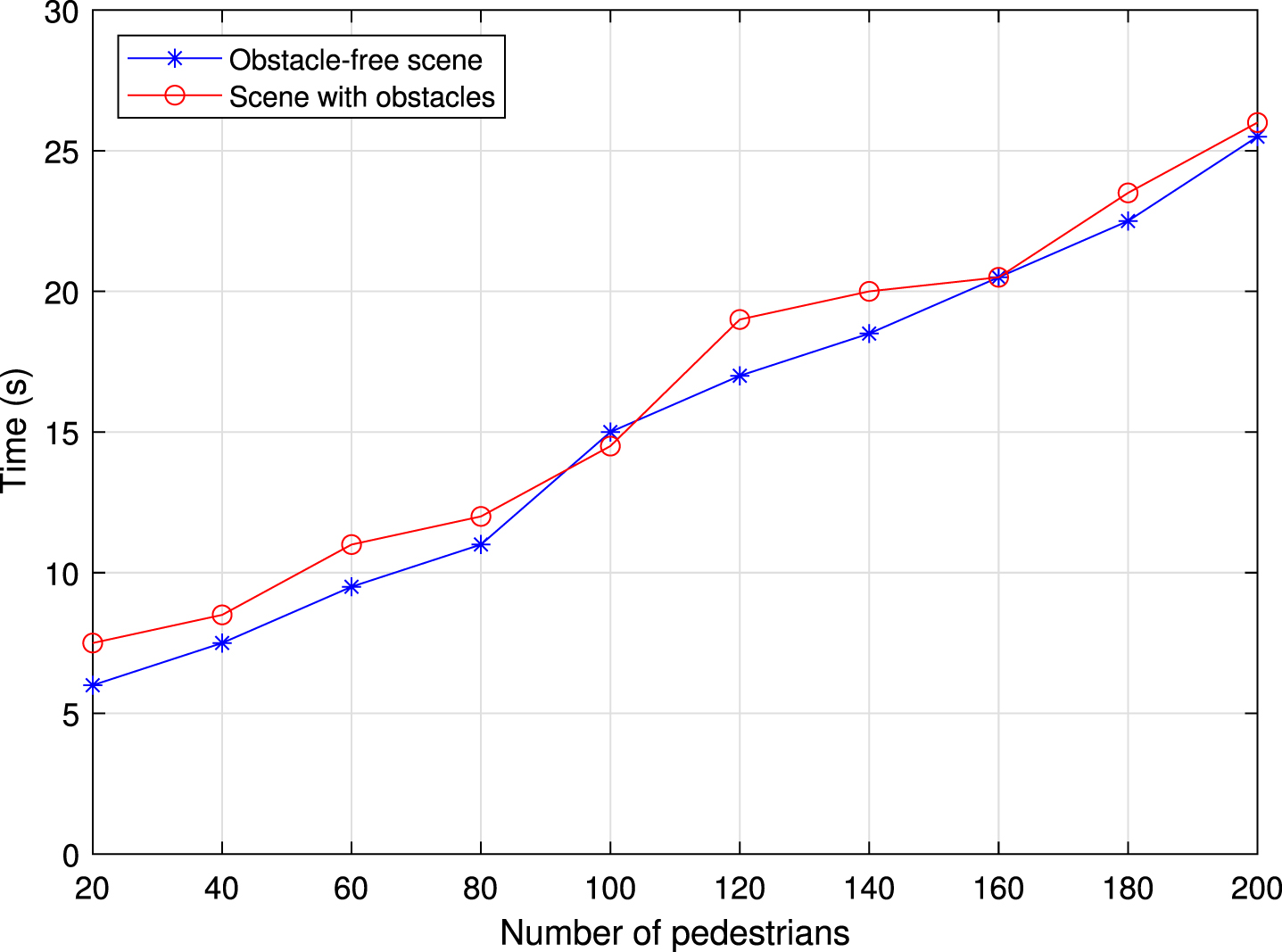
Evacuation time in obstacle-free and obstacle scenarios.
In order to further verify the effectiveness of the proposed model, evacuation scenario shown in Fig. 3(b) is used. Experiments are carried out to compare with the ECEM (Emotion Contagion Based Evacuation) model [37] and KE-RVO (Knowledge and Emotion Reciprocal Velocity Obstacles) model [38]. In each experiment, the number of individuals for evacuation is set to 1168.
The papameters of ECEM are set as follows: individual’s emotional reception ability ɛ i and the proportions of different personalities are set the same as the literature. The sending ability δ j = 1. Emotional contagion radius d max = 3. The parameters of KE-RVO are set as follows: assimilation ability φ i = 0.5, expression ability ζ j = 0.4, hazard source knowledge kn,h = 0.5, scenario knowledge kn,s = 0.5.
The evacuation simulation processes of three models are shown in Fig. 10. There are three hazard positions, two in the classrooms near the exits and one in the classroom located in the lower left corner. The locations of the hazard sources are represented by small black triangles. The grey cells represent obstacles and the white ones are empty positions which can be accessed by individuals. Figure 10(a) shows the simulation process of the ECEM model. Since only the impact of hazards on individuals and the spread of negative emotions are considered, individuals are quickly infected with negative emotions at t=1 s in the room where the hazards are located. But individuals in other rooms do not generate negative emotions. At t=20 s, individuals evacuated outside the classrooms will transmit negative emotions to other individuals. However, the individual distribution is uneven and the path utilization is insufficient because individuals with negative emotions follow the individual closest to the exit in the visual field. Figure 10(b) shows the simulation process of the KE-RVO model which includes the propagation of knowledge and negative emotions. But the individual’s knowledge (danger knowledge and scene knowledge) is unchanged, the dynamic changes of distance between the individual and the hazard source and emotional changes caused by congestion are not considered either. It can be seen from that there are more negative emotional individuals inside the classroom with hazard source at t=1 s because those individuals close to hazard source generate more panic emotions. At t=20 s, congestion at classroom exit occurs as evacuees gathered near the exit. As a result, there are more negative emotional individuals near the exit, while people outside the classroom are positive because the farther distance from hazard source and less crowded situation. Figure 10(c) shows that the EMECC model conforms to the emotional changes under real evacuation.
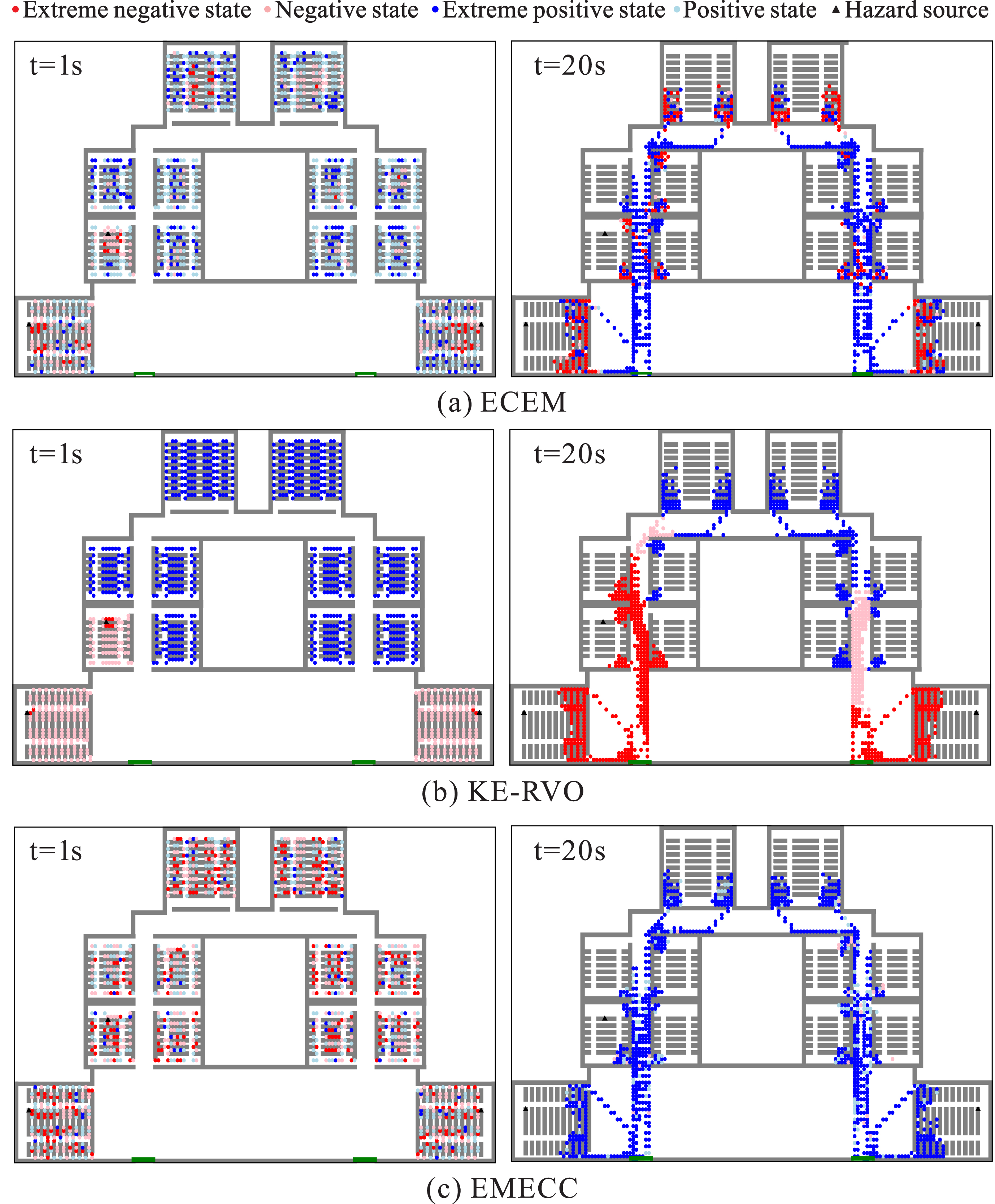
Evacuation processes of three models.
The percentages of positive individuals in non-evacuated people in the three models are shown in Fig. 11. In ECEM model, the percentage of positive individuals continues to decrease due to the contagion of negative emotions. The proportion of positive individuals in the KE-RVO model increased significantly before t=20 s. Although it remains at a high level in the later stage, it is lower than EMECC model and shows a downward trend. The EMECC model has consistently maintained a high proportion of individuals with positive emotions. The percentage even reaches 100% in the later stage, indicating that positive emotions have been effectively spread and contribute to the improvement of evacuation efficiency.

Curves of the proportions of positive individuals in the remaining evacuees over time.
Figure 12 shows the numbers of individuals with time for three models. It demonstrates that the evacuation efficiency of EMECC model is superior to the other two models. Because of the dynamic emotion regulation and contagion mechanism in the EMECC model, the number of positive emotional individuals in the later stage of evacuation is more than those of other two models. In addition, evacuees with more positive emotions can make reasonable decisions. Therefore, the EMECC model proposed in this paper is more efficient. Fig. 10(c)
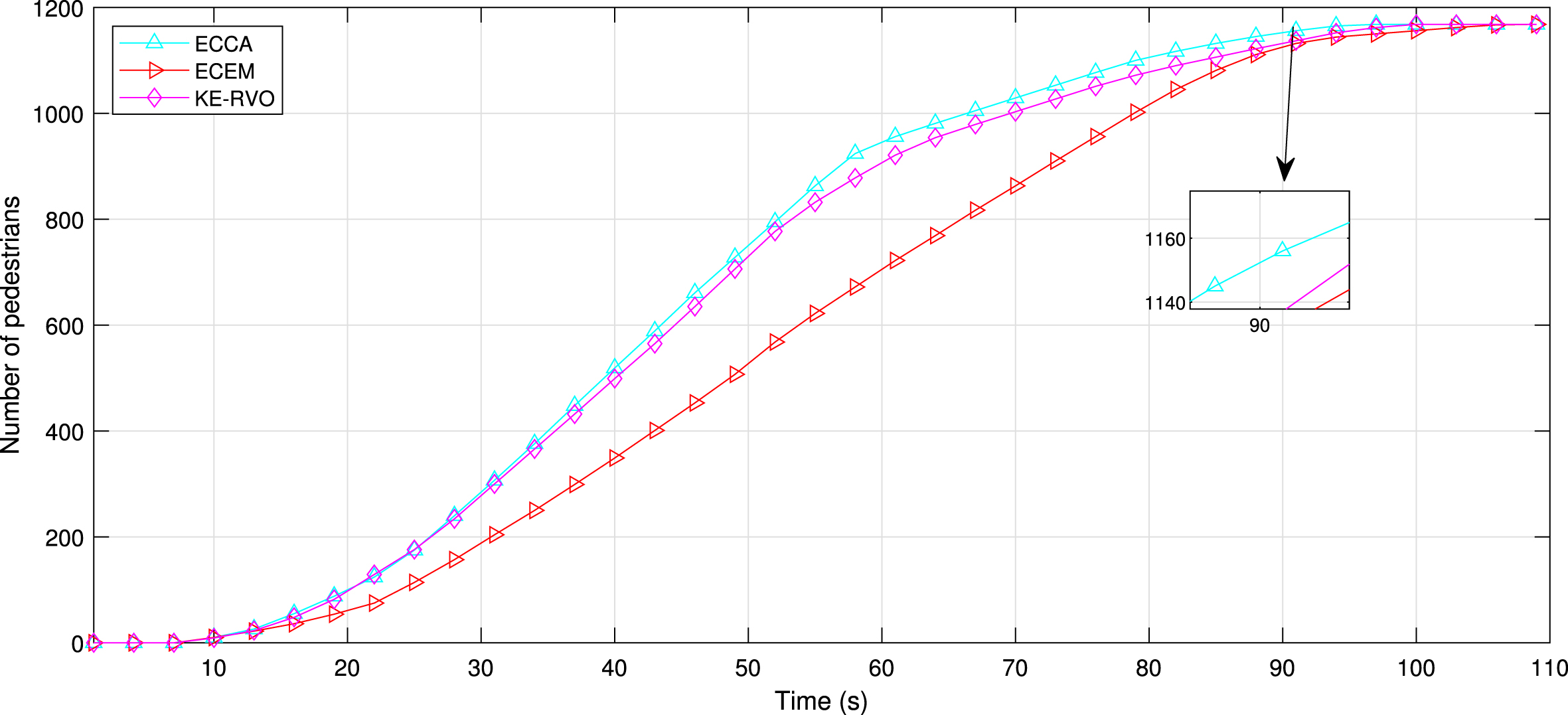
The numbers of pedestrians with time.
An evacuation model based on emotional cognition and contagion is proposed in this paper. The emotions generated by individuals are modeled by Lazarus’ cognitive theory. The negative emotion is quantified considering external factors, such as danger and congestion. Positive emotion is generated according to one’s cognition and personality to reflect an individual’s regulation ability to negative emotion. A moving rule driven by emotion is proposed to achieve the spread of positive emotions. The dynamic emotion changes are simulated by emotional contagion based on SIS model and varying environment. The parameters of the model, obstacles, and distribution of emotional states during evacuation process are analyzed by different experiments. The results demonstrate that the emotional regulation mechanism can help pedestrians to generate positive emotions and the evacuation process is more efficient with the emotional generation and contagion strategy of the model. The simulation results show the effectiveness of the proposed model. The research in this paper can provide guidance and basis for both pedestrians and emergency response managers. Pedestrians should be trained to stay calm during evacuation and avoid panic emotion. Evacuation decision makers should strengthen the guidance and contagion of positive emotions. Therefore, with the efforts of individuals and managers together, the secondary disasters caused by emergency may be reduced.
Although some external and internal factors are considered in the model, there are many other factors which affect emotion need to be taken into account, such as education level, intimacy between individuals, emotional stimulation triggered by casualties, etc. Therefore, further research needs to introduce those factors to the current emotion model to make the model more realistic and precise. In addition, different behaviors influence emotion, including competitive and cooperative behaviors, should be considered in future study.
Footnotes
Acknowledgments
This research was funded by the National Natural Science Foundation of China (Grant No. 62376089, 62202147), the Key R & D plan of Hubei Province (2020BHB004, 2020BAB012), the Natural Science Foundation of Hubei Province (2020CFB798).