



Abstract
The progress in sample environment at the China Spallation Neutron Source (CSNS) is presented. During the past two years, the Sample Environment group (SE Group) has made substantial efforts towards the procurement, design, development and maintenance of a series of sample environments for the three commissioning instruments. The equipment includes cryostats, an 3He insert, magnets, furnaces, continuously-loaded pressure cells, clamp cells, a gas handling panel, automatic sample changers, etc. The SE Group also constructs and maintains three user laboratories for sample preparation, characterization and complimentary analysis. Future developments are also briefly described.
Introduction
CSNS is the first accelerator-based multidisciplinary user facility to produce pulsed neutrons for neutron scattering instruments in China [2]. As one of the largest sciences and technology infrastructure projects in China, CSNS operates as a powerful research platform for fundamental research and technology development in many fields such as materials science and technology, physics, biology, life sciences, chemistry, environment, renewable energy, etc. Its full operation will greatly boost cutting-edge scientific research and key technologies development in China.
Sample environment is of great importance for neutron scattering instruments. For most neutron scattering experiments, extreme experimental conditions are usually required, such as high and low temperatures, high mechanical and gas pressures, magnetic/electric fields, stress and strain loading, as well as multi-field coupling [1]. At CSNS, a dedicated sample environment group (SE Group) has been formed and is in full operation. In addition to the conventional development and maintenance of sample environments, the SE Group also operates three user laboratories and provides pre- and after-experiment support to users. It is also planned that the SE Group manages a broader spectrum of devices and techniques like neutron beam polarisation, levitation devices, load frames and in-situ and in-operando equipment.
Current status of CSNS
CSNS is located at Dalang county of Dongguan city in Guangdong Province, China. The site is located at about 125 km from Hong Kong. CSNS includes an 80 MeV H− linac, a 1.6 GeV rapid circling synchrotron and a target station. The accelerator system is designed to produce 100 kW beam power with the characteristics shown in Table 1, with the potential to be upgraded to 500 kW in the future [10]. CSNS has started its commissioning since the launch of its trial run in March 2018, and passed the national acceptance on August 23, 2018. Currently CSNS is running with roughly 25 kW beam power along with three instruments: the General-Purpose Powder Diffractometer (GPPD) [3,4], the Small-Angle Neutron Scattering instrument (SANS) [7], and the Multipurpose Reflectometer (MR) [16]. The aerial view of CSNS is shown in Fig. 1.
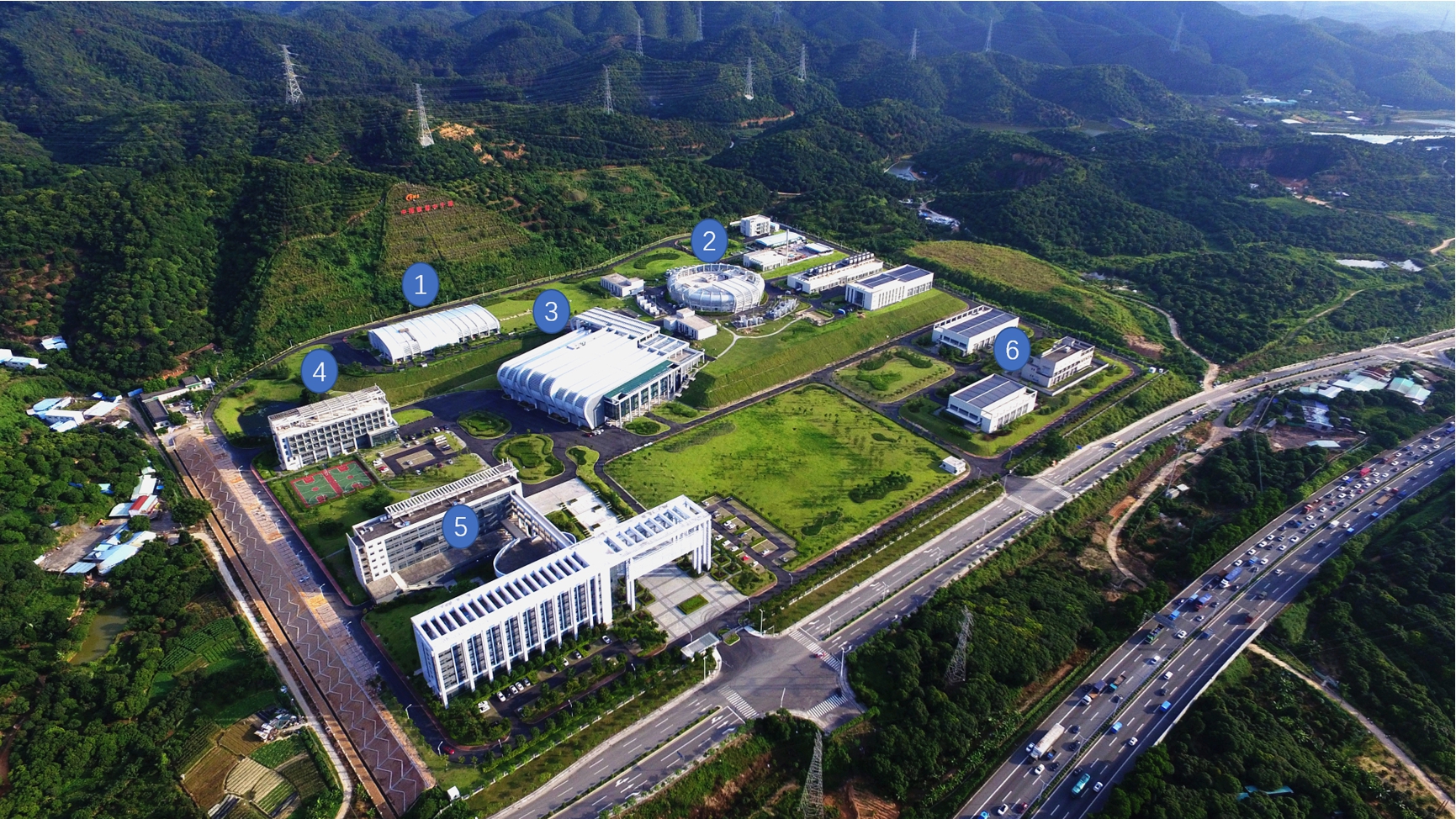
Aerial photo of CSNS taken in August 2017. Numbering indicates the following: (1) linear accelerator (the actual accelerator is underground); (2) rapid cycling synchrotron; (3) the first target building and experimental hall; (4) service building; (5) offices and laboratories; (6) main substation.
During the past couple of years, the SE Group has procured and developed a number of different sample environments. Table 2 gives a complete list of all sample environments currently available at CSNS.
Available sample environment equipment
Available sample environment equipment
Low temperature devices are the most used sample environments at any neutron facility. Our current equipment list includes four cryostats with different temperature ranges and cooling speeds. CCR-01, -02, -03 are top-loading cryostats. Both CCR-02 and CCR-03 have been successfully implemented for several user experiments. CCR-04 is a bottom-loading cryostat designed and fabricated in-house to combine low-temperature with 20 MPa gas hydrate measurements. The base temperature is around 50 K when combined with the pressure system. The temperature fluctuation is less than 0.05 K while applying gas pressure, as indicated in Fig. 2.
For lower temperatures, we have acquired a 3He ultra-low temperature insert from Cryogenic Ltd (UK), which can reach temperatures below 300 mK with a holding time exceeding 24 hours. Using only the cooling power of the VTI and two internal temperature-controlled sorption pumps, the sample holder of the 3He Insert can be maintained at any temperature from below 300 mK to above 300 K. This 3He insert works within the 9 T magnet system MAG-01 described below.
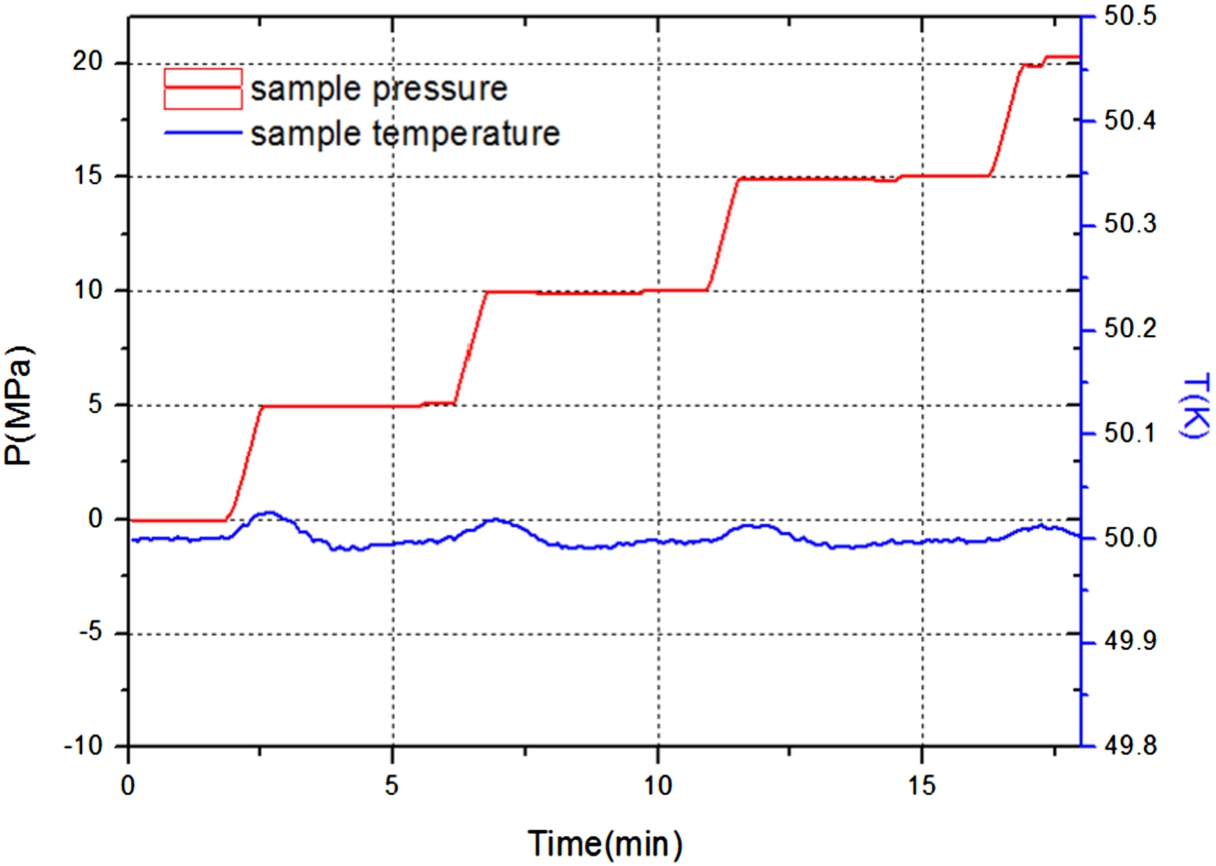
The sample temperature remains quite stable when increasing pressure in the cryostat CCR-04.

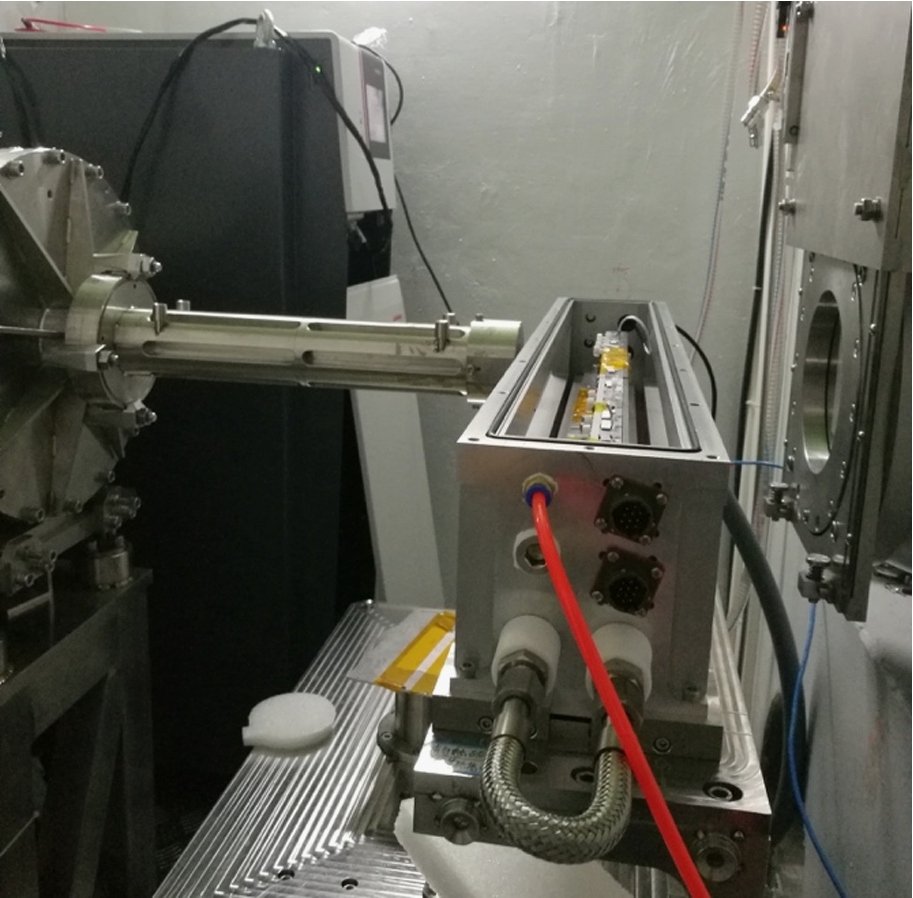
Photo of the high-temperature furnace HOT-01.
High temperature environments are very important for measurements of various single crystals and metallic materials. Two furnaces are available at CSNS with maximum temperature of
High pressure cells
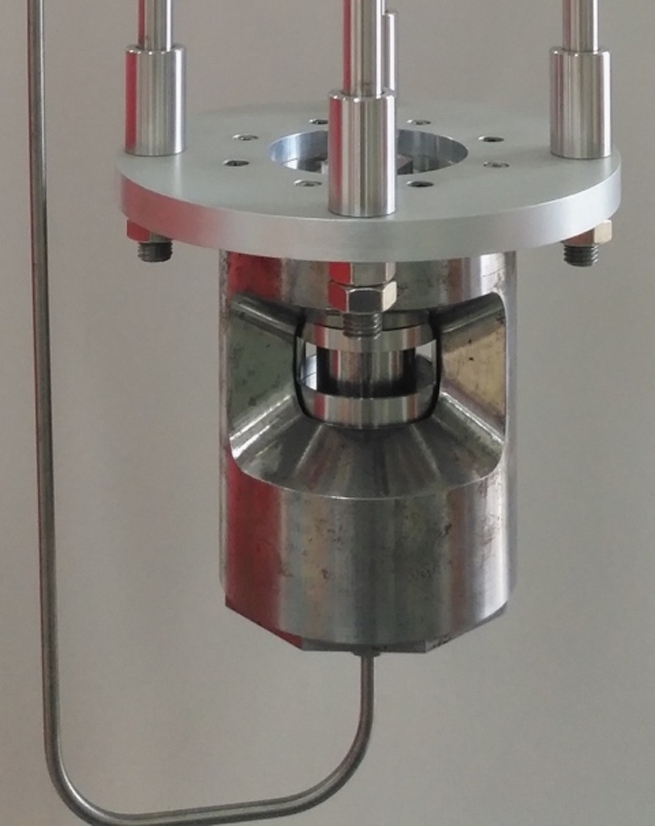
Photo of the portable press developed at CSNS.
High pressure is a very powerful technique to introduce both structural and magnetic phase transitions, and the number of applications with high-pressure devices in neutron scattering have increased dramatically over the years [11,15]. We have a portable CSNS press and a Paris-Edinburgh (PE) cell for the powder diffractometer: the portable CSNS press can apply loads up to 60 tons and the VX-4 PE cell can hold up to 200 tons. The portable CSNS press shown in Fig. 4 weighs about 10 kg, provides a sample volume of about 30 mm3 and was designed and manufactured in house. The VX-4 PE cell was acquired from the MG63 Company [8]. The pressure calibration of the CSNS press has been completed and the highest achievable pressure on the sample is 5 GPa [9,14]. The VX-4 PE cell can be used with a furnace achieving temperature up to 1000 K.
For supplying larger sample volumes in high-pressure cells, we have also developed clamp cells and gas cells. The hybrid CuBe/NiCrAl clamp cell can produce pressures up to 2.5 GPa and can be used in cryostats. The CuBe-based piston cylinder cell can apply a maximum pressure of 1.5 GPa. The diameters of the cell and sample space are 20.5 mm and 5 mm respectively. The fully hardened CuBe and NiCrAl alloys have high yield strengths, are non-magnetic and compatible with low temperatures. The gas cell can be used inside the bottom-loading cryostat and has been successfully tested up to 200 bar at 50 K.
A 1 T electromagnet with a 50 mm gap between the pole pieces is dedicated to the multi-purpose reflectometer. This system is equipped with a cryofurnace which provides a temperature range from 5 to 800 K. The sample can be rotated from
A 9 T vertical-field cryogen-free superconducting magnet for neutron scattering experiments is also available at CSNS (Fig. 5). This system, built by Cryogenic Ltd (UK), can regulate the sample temperature from 1.5 K to 325 K, and apply a magnetic field up to 9 T. The cooling of the whole system is achieved with a 4 K Gifford-McMahon cryocooler. The magnetic field is maintained by Nb3 Sn split-pair coils at a temperature close to 4 K. The inner diameter of the variable temperature insert (sample bore) is 50 mm. Neutron scattering is permitted through a total access of
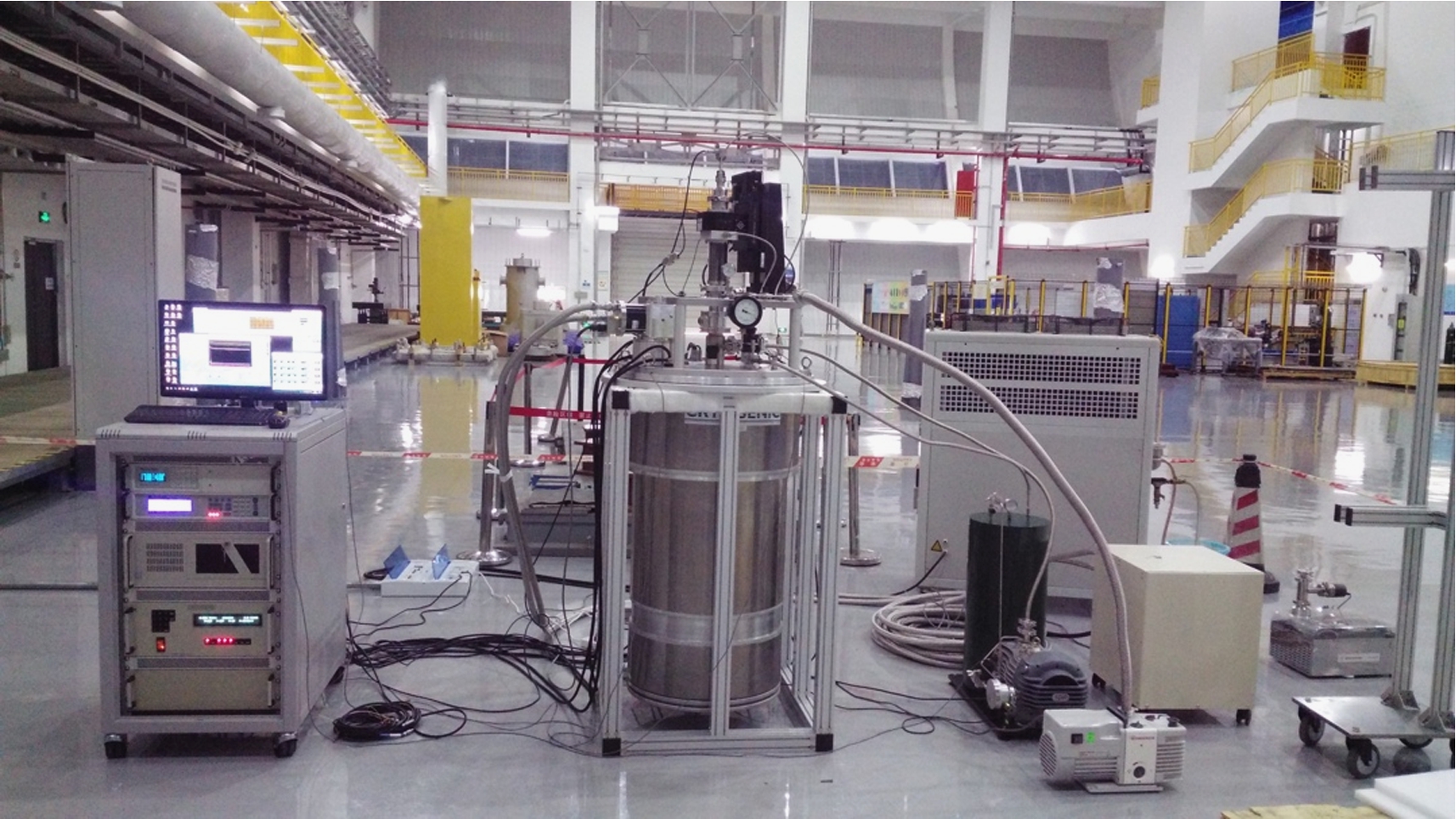
Photo of the 9 Tesla superconducting magnet at CSNS during acceptance tests.
A sample changer regulated with a thermostatic bath has been designed for the SANS instrument. Such a versatile environment is widely used in any SANS instrument. Our sample holder can pre-load 36 samples for automated measurements. We circulate silicone oil for heating or cooling the samples on a wide temperature range, typically from
Sample changer with oil bath for SANS.
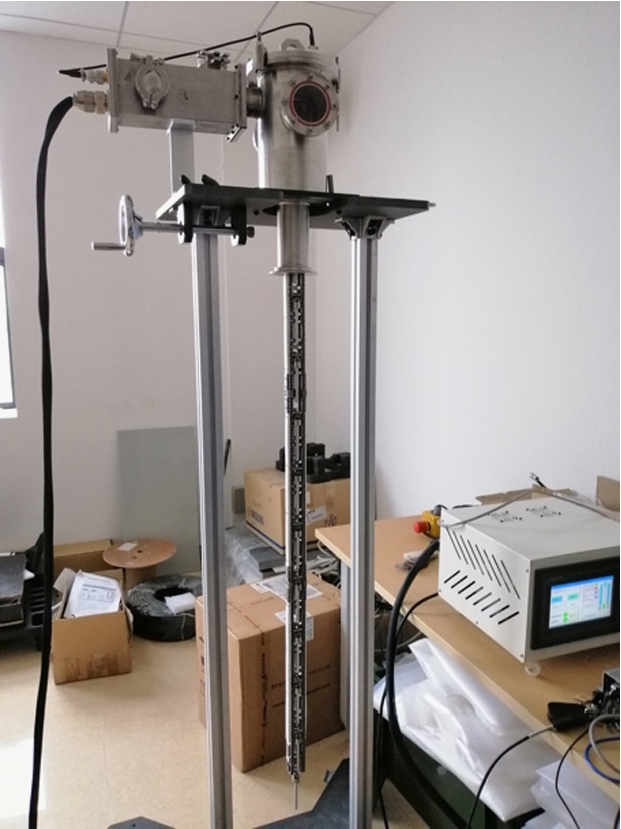
Photo of the low-temperature sample changer for powder diffractometers.
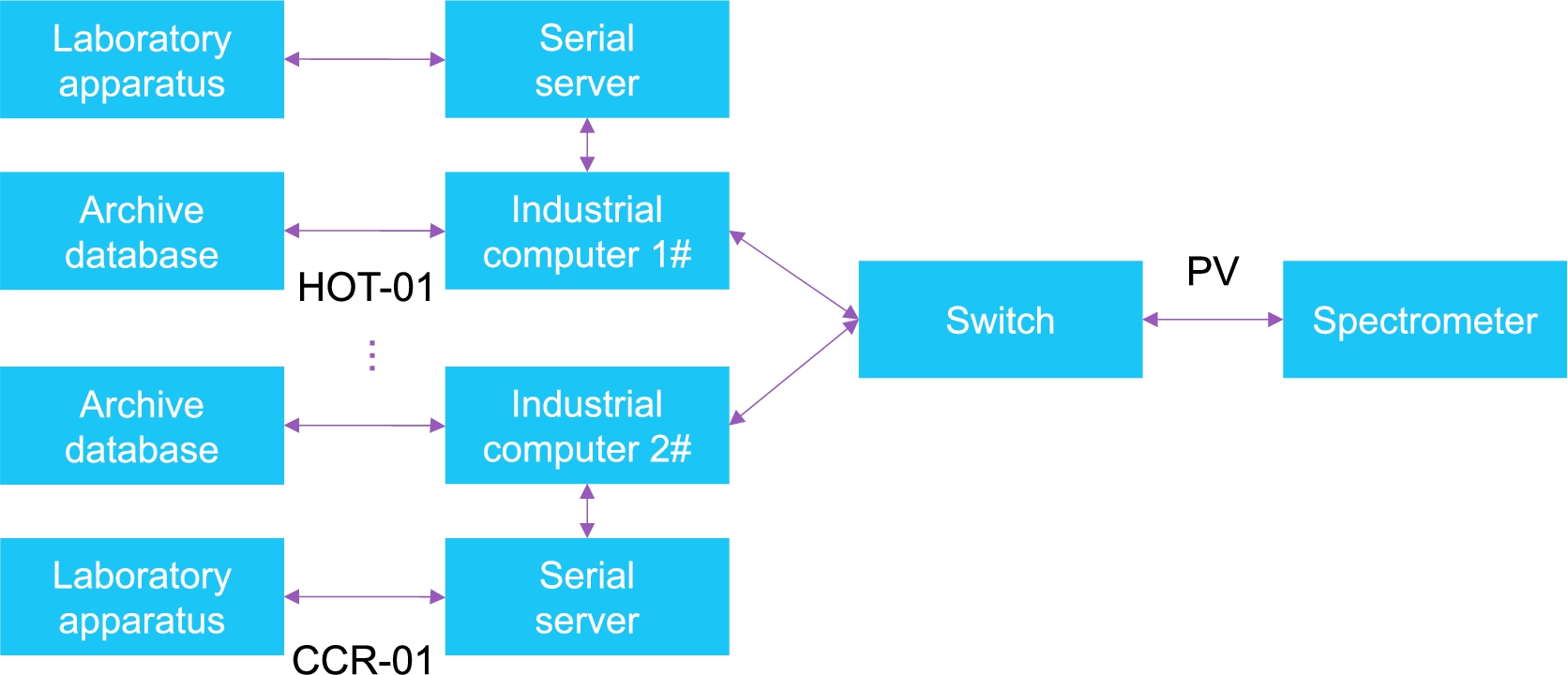
Control framework based on EPICS.
For instruments like powder diffractometers, experiments can be designed such that minimum change of configurations are required, and full automation can be realized if samples can be exchanged automatically. We have therefore designed a 24-slot low-temperature automatic sample changer compatible with our CCRs and specifically designed for the powder diffractometer. It can be used with the top loading cryostats down to the lowest temperature below 4 K. Sample exchanges are mainly controlled by the upper motor drive which rotates the chain hosting sample holders. A photo of the low-T sample changer is shown in Fig. 7. The sample cans of this changer are cylindrical and host powder samples. The commissioning at cryogenic temperatures has started.
Our data acquisition and docking with the instruments are based on the Experimental Physics and Industrial Control System (EPICS) software framework (
The experimental equipment is the core control device of the sample environment, and generally has multiple controllers. The communication between the controller and the interlock between the controllers are implemented by the IOC program in the industrial computer. The SNL (State Notation Language) technology is currently used in interlocking logic. All control logic is completed at the device layer of the IOC end, which makes the instrument end interface more uniform. Thus, the experimental process is more concise and clearer.
User laboratories
The SE Group maintains three user laboratories: a quantum material laboratory, a chemistry & biology laboratory, and a characterization laboratory. These laboratories serve the purpose of providing sample preparation and alignment, characterization and complimentary analysis to all neutron experiments that are performed at CSNS, covering a wide range of scientific and industrial fields including condensed matter, metallurgy, chemistry, biology, and other material science. All user laboratories are equipped with fume cupboards, lab benches, ultra-pure water, in-house gas supplies (nitrogen, argon, helium, compressed air, etc.), and other standard tools like crucibles (various sizes and shapes), magnetic stirrer bars, mortar and pestles, retort stands, etc.
The chemistry laboratory provides instruments for synthesis, purification and characterization of wet chemical and powdered samples, analytical balances, heating and freezing microscope stage, densitometer, hot plate stirrers, ultrasonic bath, dishwasher and drying oven, deionized water purification system, refrigerator, desiccators, and various sizes glassware or plasticware.
The biology laboratory disposes of a wide range of instruments available for purification and characterization including: AKTA pure protein purification system, refrigerated centrifuge, freeze dryer, glove box with argon atmosphere and refrigerator, pH meter and buffer solutions, fan forced oven and vacuum oven.
The quantum material laboratory provides a duplex glove box with an argon atmosphere, high temperature furnace, high temperature vacuum tube furnace, drying cabinets and heat sealer (with plastic bags). This laboratory can deal with sample cutting, grinding, cleaning, crushing and packaging, etc.
The characterization laboratory has instruments including a Rigaku SmartLab X-ray diffractometer, Bruker VERTEX 70 FT-IR spectrometers, LS static and dynamic light scattering instruments, a UV-visible spectrophotometer, TA instruments Q600 for the measurement of weight change (TGA) and true differential heat flow (DSC), and an AMETEK PARSTAT MC Multichannel Potentiostat.
The future of CSNS sample environment
Currently the SE Group only serves three commissioning instruments. With 7 additional instruments under construction and 10 more instruments under planning, it is expected that the SE Group not only expands the number of current devices, but also expands to other types of equipment. We have already initiated more sophisticated developments: a high-field cryomagnet (13 T), an electrostatic levitator furnace, a load frame, etc. Another prolific field we have included into the SE Group are activities related with the neutron beam polarisation. The neutron polarisation team will work within the SE Group. In addition to commercially-available devices like polarising supermirrors, Heusler monochromators/analysers, the neutron polarisation team is actively developing a polarised 3He lab with various systems, and will adopt the Spin-Exchange Optical Pumping method and follow the directions that one of the authors have led at the Spallation Neutron Source at the Oak Ridge National Laboratory [5,6].
In 5 years, it is expected that about 10 instruments will be operational, including an inelastic spectrometer, several powder diffractometers, two SANS instruments, one reflectometer and one irradiation station. The SE group will support most if not all experiments to be conducted at CSNS, ranging from ambient to extreme environments. The SE group will divide its workforce into different categories including low temperature, high temperature, magnetic field, pressure systems, SANS environments, special environments and polarization, with team leads for each category and personnel playing dual roles. Considering the complexity of sample environments the SE group aims to provide, it will need at least a dozen of SE specialists to realize its full potential.