



Abstract
Introduction
Nationally, in the United States (U.S.), over a half-million students ages 14 to 21 served under the Individuals with Disabilities Education Improvement Act (IDEA) exit special education each year (OSEP, 2014). Unfortunately, the majority of these students face barriers that impede their adulthood success as evidenced by dismal post-school outcomes. In fact, when observing any of the various transition measures, such as postsecondary education, independent living, and employment, transition-age individuals with disabilities (i.e., age 16 to 21, IDEA, 2004) continue to lag behind their peers without disabilities. For instance, Newman et al. (2011) found significant differences in enrollment in postsecondary education (34% vs. 51%) along with lower completion rates (41% vs. 52%) when comparing the transition-age population with disabilities with their general population peers. Similarly, when comparing independent living data for these groups, Newman et al. (2011) found individuals with disabilities were also behind their peers (45% vs 59%).
Arguably the most alarming gaps exist in employment rates, where collectively, working-age people (i.e., 16 to 65 years) with disabilities were more than two times less likely to be employed when compared to their peers without disabilities (United States Department of Labor, Bureau of Labor Statistics, 2015). These employment gaps are observed from the start of work and appear to progress with age (e.g., Mann & Wittenburg, 2015). For example, less than 25% of individuals with disabilities, ages 16 to 19, were employed compared to nearly 35% of the same age group without disabilities (United States Department of Labor, Bureau of Labor Statistics, 2015). The largest gaps in employment rates are observed among individuals ages 45 to 54 (see Fig. 1).
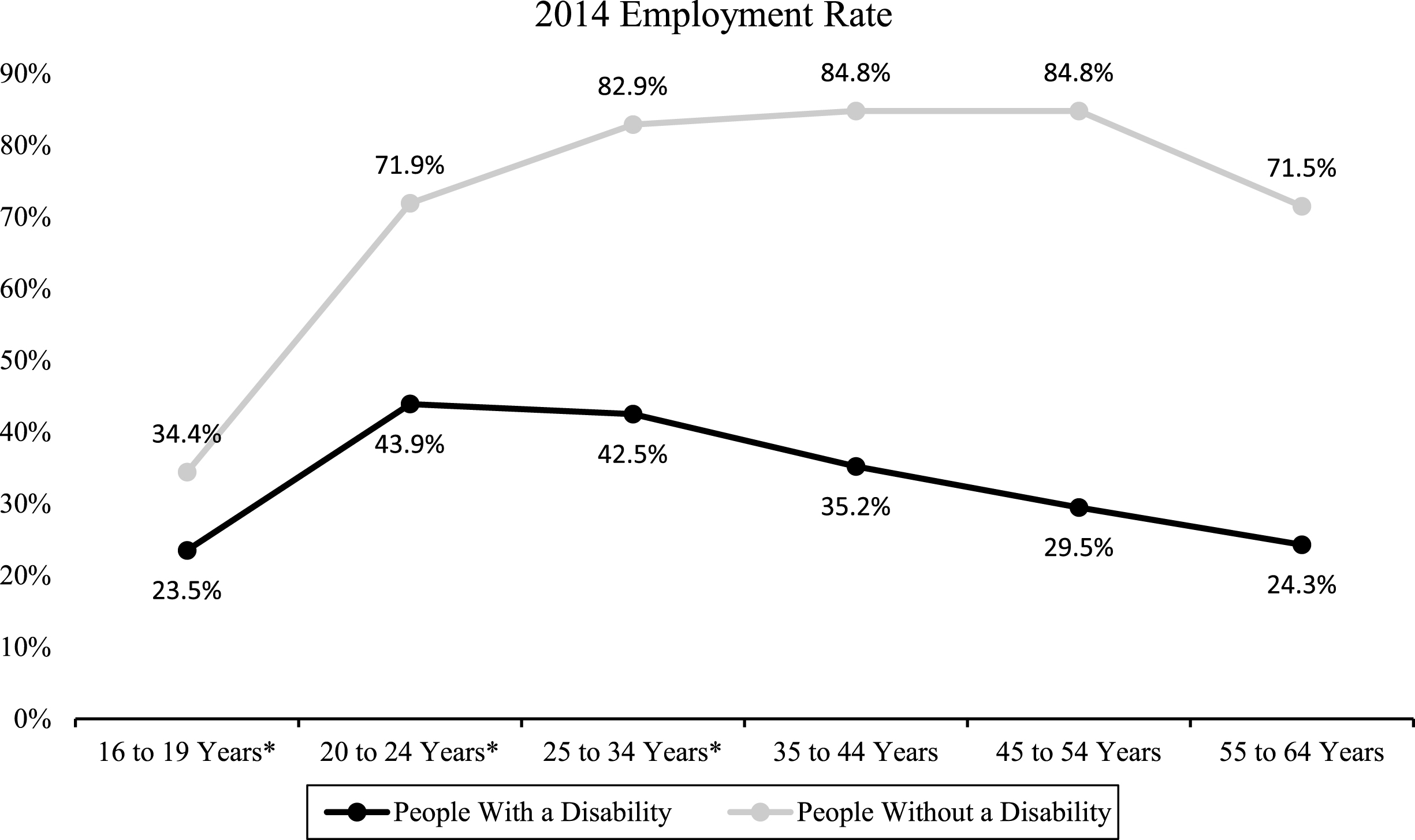
Employment Rate Comparison Snapshot Source: United States Department of Labor, Bureau of Labor Statistics. (2015), *Note. Transition-age youth/emerging adults (i.e., usually defined as ages 16 through 22 when referencing transition (IDEA, 2004); Arnett, & Schwab (2012) extend this distinctive developmental period to age 29).
Under the recent changes in the Workforce Innovation and Opportunity Act (WIOA, 2014), vocational rehabilitation (VR) counselors are charged with collaborating with secondary educators to “provide, or arrange for the provision of, pre-employment transition services” for secondary students with disabilities (Provision of Pre-Employment Transition Services, Section 113, a). This early VR involvement (i.e., before students leave high school) is intended to improve postsecondary outcomes especially that of employment (WIOA, 2014). To facilitate growth in employment outcomes, VR professionals must first presume that the transition-age population with disabilities are employable, and then focus on career development rather than job placement (Luecking, 2009). To support effective service delivery, the purpose of this article is to present a synthesis focused on the intersection of the career development and secondary transition literature to provide guidance for the evaluation and development of policy, and to underscore the application of research-based practices in VR transition services.
The overarching question used to guide the literature search and synthesis was, how can rehabilitation professionals use what is known about career development to assist with secondary transition preparation and planning through the services and resources they provide? To answer this broad-based question, the literature search conducted was not limited to or targeted toward a specific type of disability, gender, or race/ethnicity, etc. The literature synthesis was initiated, and then expanded upon, using the previous publications of the authors, i.e., Kalchik & Oertle, May 2010; September 2010; January 2011; and Oertle & Seader, 2015. Next, a search of databases (i.e., Education Full-Text, ERIC, and PsycINFO), and the World Wide Web was conducted. The keywords combined to delimit the searches were (a) career development, (b) career planning, (c) disability(ies), (d) transition, (e) rehabilitation, (f) employment, and (g) outcomes. These searches were further limited to articles published between 2000 and May 2015. The literature search resulted in the identification of an additional 20 articles specific to the intersection of career development, secondary transition preparation and planning, and improving postsecondary outcomes. These articles are denoted with an asterisk in thereferences.
The overall context was structured on the intersection of career development and secondary transition from a U.S. national stance. The intention was to respond to the timely need for VR secondary transition knowledge generation to meet the mandated VR transition responsibilities of the recent reauthorized Rehabilitation Act contained in WIOA (2014) which is the primary source of funding for the U.S. VR system. To set this context, additional papers were included from (a) federal publications of the U.S. Department of Education, Office of Special Education and Rehabilitative Services, Office of Special Education Programs (OSEP), Office of Disability Employment Policy (ODEP), and U. S. Government Accountability Office (GAO); (b) federally-funded research project publications from the Institute on Educational Leadership (IEL), National Longitudinal Transition Study 2, National Secondary Transition Technical Assistance Center (NSTTAC) refunded as the National Technical Assistance Center on Transition (NTACT), National Research Center for Vocational Education refunded as the National Research Center for Career and Technical Education, Office of Community College Research and Leadership (OCCRL), and The Study Group; and (c) professional associations publications of the American Educational Research Association (AERA), APSE: Advancing Employment Connecting People, Division of Career Development and Transition (DCDT), and States’ Career Clusters Initiative. The inclusion of these documents provides for an applied perspective of transition and rehabilitation outcomes as they relate to general career developmentprinciples.
To change postsecondary outcomes, early employment opportunities are especially important because of their predictive relationship with postsecondary employment (Cobb & Alwell, 2009; Cobb et al., 2013; Luecking & Fabian, 2000; Rutkowski, Daston, Van Kuiken, & Riehle, 2006). Specifically, students with disabilities who work while in high school are more likely to obtain postsecondary employment (Fabian, 2007; Test et al., 2009). Participation in career and technical education (CTE) in high school, which typically includes employment opportunities, is also predictive of postsecondary employment (Rabren, Carpenter, Dunn, & Carney, 2014; Test et al., 2009). These early opportunities for employment are critical for launching the transition-age population with disabilities on a life trajectory that includes working. The presumption of employability (i.e., individuals with disabilities can learn the necessary skills to be successfully employed with the appropriate services and support, if and when necessary) is reinforced by the amended Rehabilitation Act within WIOA (2014). Employment is especially significant because the presumption of employability and the centrality of work are far reaching; the power of employment is not only financial, but also impacts one’s social, emotional, and physical well-being (Strauser, 2014). For the transition-age population, these early employment opportunities are particularly influential on their career development, community inclusion, self-determination and advocacy, and life-long learning. Put another way, career development within the process of transition preparation relates to all life roles (Szymanski, 1994).
Despite the importance, secondary educational preparation of students with disabilities often lacks the same rigor and career development opportunities than it does for their peers without disabilities. For instance, Kochhar-Bryant, Bassett, and Webb (2009) found that the majority of secondary students with disabilities had limited academic instruction in reading, study skills, and problem solving, leaving them with underdeveloped skills in these essential areas. Another example, Hawley, Cardoso, and McMahon, (2013) found systemic barriers limiting the opportunities for minority students with disabilities to pursue long-term goals in science, technology, engineering, mathematics, as well as the educational, psychological and social experiences necessary for them to achieve. Some students with disabilities are even steered towards receiving Social Security benefits instead of job training (Government Accountability Office [GAO], 2012) which can lead to the dilemma of a lifetime in poverty without work or forgoing benefits and launching a career (Harkin, 2013).
Secondary educators need strategies for integrating instruction because they report often feeling forced to choose between spending time on preparing students academically or for careers (Bassett & Kochhar-Bryant, 2006). Moreover, secondary special educators are not prepared to teach career development because this content is limited within their personnel preparation programs even when preparation is specialized in secondary transition (Morgan, Callow-Heusser, Horrocks, Hoffmann, & Kupferman, 2014; Morningstar & Clark, 2003; Morningstar, Kim, & Clark, 2008). Underscoring this point, substantial proportions of students receiving special education do not participate in career development activities before leaving high school (Carter, Trainor, Cakiroglu, Swedeen, & Owens, 2010; Wagner, Newman, Cameto, Levine, & Marder, 2003).
The data displayed in Table 1 document the lack of career exploration and development for secondary special education students (Wagner et al., 2003). Unfortunately, the shortage of career preparation along with limited academic instruction leaves many students, especially those with more challenging disabilities (e.g., intellectual), unprepared for their postsecondary lives (Carter et al., 2010; Cimera, Burgess, & Bedesem, 2014). By incorporating career development activities into secondary special education programs, educators and VR professionals can join forces to correct these problems, teaching students the critical tools needed for success in the working world once their formal secondary education has ended (Herbert, Trusty, & Lorenz, 2010; Roessler, & Brown, 2000).
Lack of career development opportunities for students in special education
Lack of career development opportunities for students in special education
Note. Source of data Wagner, Newman, Cameto, Levine, & Marder (2003).
Associated factors
Complementing the focus on career development and secondary transition preparation and planning in the Carl D. Perkins Vocational and Technical Education Act [Perkins Act] (2006), WIOA (2014), and the Rehabilitation Act and its amendment, the Employment First Initiative emphasized the use of research-based employment practices that facilitate the inclusion of people with disabilities in their communities (e.g. Jorgensen Smith, Clark, & DiLeo, 2011; Niemiec, Lavin, & Owens, 2009). The priority of this national initiative is competitive, community-based employment of people with disabilities. For the transition-age population, inclusion translates into halting certain special education providers, community service agencies, or others from promoting segregated services and practices (e.g., day training programs, facility-based employment, and enclaves) (DiLeo, 2007) and from paying subminimum wages (WIOA, 2014). Rather than removing students from the general population, inclusive transition practices mean that the appropriate intensity of transition services are provided (Baer, Flexer, & Dennis, 2007) in light of the students’ transition needs, goals, and environment.
Transition preparation that underscores academic inclusion along with career development opportunities is predictive of postsecondary employment outcomes (Benz, Lindstrom, & Yovanoff, 2000; Lee & Carter, 2012; Mazzotti et al., 2015; Rowe et al., 2014; Test & Cease-Cook, 2012; Test et al., 2009; Wehman, 2012; Wehman et al., 2015). For instance, students with disabilities whose secondary education included (a) involvement in general education, (b) participation in integrated settings, and (c) attainment of a high school diploma integrated with career development activities such as (a) involvement in school-to-work programs, (b) completion of CTE, and (c) engagement in paid work experiences were most likely to have postsecondary employment (Mazzotti et al., 2015; Rowe et al., 2014; Test, Fowler, & Kohler, 2013; Test et al., 2009; Wehman et al., 2015). Juxtaposed to these factors are three key features: (a) providing youth-centered, individualized employment services, (b) collaborating among professionals (e.g., secondary educators and VR counselors), and (c) connecting transitioning youth with caring professionals (e.g., VR counselors) (Doren, Yan, & Tu, 2013). The levels of research evidence for these predictors range from potential to moderate (Mazzotti et al., 2015). Although generated from a special education lens and causation has not been established, these predictive factors are potentially additive to VR transition research in shaping policies and practices. This is particularly because, as discussed previously, the majority of students with disabilities have historically been excluded from opportunities to engage in career development and CTE despite evidence of the benefits (Carter et al., 2010; Shahnasarian, 2001; Wagner et al., 2003).
Career planning
The hallmarks of the concept of career development, which features initiatives that help individuals to develop awareness and preparedness for future career options, are that it is both ongoing and holistic (Williams, Bragg, & Makela, 2008). The idea of career development has been rooted in career theory since the 1950s, particularly in Super’s (1957) notion that career development continues throughout one’s lifespan. In addition to the ongoing nature of career development, Sears (1982) has since specified that career development also involves the intersections of many personal elements, including an individual’s “economic, sociological, psychological, educational, physical, and chance factors ... ” (p. 139). The significance of this idea is that each individual experiences career development differently based on a unique combination of factors over time. Consequently, individuals should ideally have access to a range of career development initiatives at various points in life in order to find their own best-fit opportunities. According to Williams et al., 2008, such initiatives can include: Career courses Career counseling or high school guidance counseling Job shadowing and other learning experiences in the workplace Internship opportunities Online or computer-based career information exploration Career and Technical Education coursework
Effective career development is closely linked to education at various levels and involves implementation of career exploration opportunities. The educational aspect of career development helps students learn to make informed career-related decisions throughout their time in school and beyond, as well as to understand relationships between academic material and career choices (“Career and Technical Education’s Role,” Dec. 2008; Kalchik & Oertle, May 2010; Williams et al., 2008). For example, the Programs of Study (POS) of the Perkins Act (2006) are based on the U.S. national model of Career Clusters and Career Pathways and serve to assist students in making transitions among various levels of education and career options with a concentration on preparation for occupations that are high skill, high wage or high demand but not necessarily all three. The Perkins Act (2006) includes particular attention to students facing barriers to their success as defined in the law as special populations which includes students with disabilities.
In terms of career development, Perkins’ POS allow for the integration of traditional core academics with CTE, which can show students how their current educational decisions might impact their preparedness for future career options (“Career and Technical Education’s Role,” Dec. 2008; Jankowski, Kirby, Bragg, Taylor, & Oertle, 2009; Kalchik & Oertle, May 2010; State’s Career Clusters Initiative, 2010; Taylor et al., 2009). Furthermore, CTE as an element of POS “adds value to the career development process by providing students with opportunities for career exploration and preparation as they develop their career identity” (Kalchik & Oertle, May 2010, p. 3; see also Lewis, Kosine, & Overman, 2008). Thus, since career development takes place throughout the lifespan, the career-specific training of CTE combined with academic skill-building and exploration prepares students to make myriad transitions within the world of work and education (Kalchik & Oertle, May 2010; LeConte, 2006).
As indicated previously, since career development is based on combinations of factors that change throughout ones’ lifespan, it is reasonable for career development initiatives to take different shapes in order to effectively reach different individuals. Ranging from formal career courses to job shadowing opportunities through CTE, such initiatives are ideally flexible enough to provide options for students of various ages, stages, and educational backgrounds (Kalchik & Oertle, May 2010; National Collaborative on Workforce and Disability/Youth [NCWDY], 2005; Roessler & Brown, 2000; Williams et al., 2008). When integrated in a school setting, career development practices must present connections between education and workforce skills, as well as intertwine with traditional academic activities to effectively demonstrate those connections (Kalchik & Oertle, May 2010; Webb, Repetto, Seabrooks-Blackmore, Patteron, & Alderfer, 2014). When implemented in such a flexible, academically-rooted way, career development through CTE can ultimately lead to increased rates of employment over those who do not participate in these initiatives. This impact has held true for students with and without disabilities (Rabren et al., 2014).
In order to engage in career development through an academic perspective, Solberg (2014) recommends that individuals follow an Individualized Career and Academic Plan, or ICAP, which is a phrase that has been used interchangeably with Individualized Learning Plan (ILP) (Solberg, 2014; Solberg, Phelps, Haakenson, Durham, & Timmons, 2012). While an earlier concept of an Individual Career Plan (ICP) allows individuals to document and follow ideas for both education and careers (Gysbers, 1983), Solberg’s updated and nationally-recognized ICAP includes a stronger emphasis on the influence that education and career information have on each other over time. ICAPs are available to all students and are designed to evolve as students progress. As of 2013, 38 states were using individualized learning plans and 21 of those states have made these plans a requirement, have implemented school-wide initiatives, and developed materials (Office of Disability Employment Policy [ODEP], 2013). Solberg (2014) notes that an ICAP is not “[a] means of tracking students toward a single career,” but is instead “a process & product that recognizes the variety of routes to and through education and training appropriately individualized for each student” (slide 15). In other words, the ICAP is a multifaceted planning tool that can lead to different possible outcomes depending on individual students’ needs and goals.
Students can use ICAPs to engage with their families about career development and as a concrete guide for meetings with school and career counselors. As a working document that is meant to be shared in these ways, ICAPs give students a true sense of ownership and responsibility in their career and academic planning, which leads to development of self-determination skills – skills that benefit all individuals preparing to enter the workforce, regardless of disability (Gysbers 2008; Kalchik & Oertle, January 2011; Izzo & Lamb, 2003; Martinis, 2015; NCWDY, 2005; Solberg 2014; The 2020 Federal Youth Transition Plan 2015). For transition preparation and planning, the ICAP process could link to the other planning processes that students with disabilities may use, such as the federally mandated Individual Educational Plans (IEPs) (IDEA, 2004) and Individual Plans for Employment (IPEs) (Rehabilitation Act). VR counselors who assist in coordinating these planning processes could provide particular help by highlighting the relevance of career development activities within academics to improve students’ secondary transition preparation (Herbert et al., 2010; Plotner, Oertle, & Kumpiene, 2015).
Based on the American School Counselor Association (ASCA) national framework, school counselors are instructing, advising, and appraising students to support their development across academic, career, and person-social domains (McGinley & Trolley, 2016; Quigney & Studer, 2016). Working together, VR counselors and school counselors could combine their efforts to benefit students with disabilities. In particular, VR counselor involvement and collaboration with secondary school counselors may minimize possible confusion resulting from use of multiple plans at one time.
Looking to vocational rehabilitation for assistance
In 2012, the Government Accounting Office (GAO) published a report describing largely unsuccessful transition to adulthood for young adults with disabilities and called for better federal coordination and leadership. The report notes that many young adults leave special education unemployed and without future educational opportunities, stating:
Students with disabilities face difficulty navigating multiple programs that are not always coordinated; delays in service; limited access to transition services, a lack of adequate information or awareness on the part of parents, students, and service providers of available programs that may provide transition services after high school; and a lack of preparedness for postsecondary education or employment (p. 9).
In response to the GAO (2012) findings, the Federal Partners in Transition (FPT) Strategic Planning Committee was formed in 2013. The FPT issued The 2020 Federal Youth Transition Plan: A Federal Interagency Strategy (2020 Plan) in 2015, which identified “compatible outcome goals and policy priorities” (p. 7) for improving transition outcomes. The state VR service system was among the agencies named in the GAO (2012) report and in the 2020 Plan (Federal Partners in Transition [FPT], 2015).
A major national push (Harkin, 2013) resulted in mandates for VR to participate in the delivery ofpre-employment transition services in collaboration with secondary educators (WIOA, 2014). Emphasizing the need for VR services, WIOA (2014) required states to use a minimum of 15% of their VR budgets on transition services, and allowed for states to prioritize service for transitioning students. This emphasis on the increased involvement of VR professionals in preparing students early for their postsecondary lives has been found to assist in improving postsecondary outcomes (e.g., Agran, Cain, & Cavin, 2002; Brewer et al., 2011; Condon & Callahan, 2008; Lindstrom, Kahn, & Lindsey, 2013; Martinis, 2015; Ni, 2008; Noyes & Sax, 2004; Oertle & Trach, 2007).
As a growing VR population, students transitioning from secondary education currently represent nearly 33% of VR consumers (Honeycutt, Thompkins, Bardos, & Stern, 2015), up from 13.5% of all individuals served by VR agencies in 2000 (Hayward & Schmidt-Davis). Organizationally, the majority of VR agencies possess dedicated state transition leadership (88%) and designated VR counselors with transition caseloads (76%). Some VR state agencies have established formal transition programs (26%) to meet the demand for services by their transition-age consumers (The Study Group, 2007). Typically, students apply for employment assistance services, including requests for assistance with postsecondary education and training (Honeycutt et al., 2015) along with assistance in forming vocational goals, accessing community resources, and securing funding for services (Oertle, Trach, & Plotner, 2013).
Transition characteristics and vocational rehabilitation
For the first time, in 2012, a VR secondary transition model was constructed from VR counselors’ perspectives (Plotner, Trach, & Strauser, 2012). Within this VR transition model are seven formalized transition competency domains. These domains are: (1) Planning and Counseling for Careers, (2) Preparing for Careers Through Experiences, (3) Promoting Access and Opportunity for Student Success, (4) Conducting Program Improvement Activities, (5) Facilitating Non-Professional Support and Relationships, (6) Facilitating Allocation of Resources, and (7) Developing and Maintaining Collaborative Partnerships (Plotner, Trach, & Shogren, 2012; Plotner, Trach, & Strauser, 2012). Initiatives that bridge school-based services with postsecondary opportunities and involve transitioning individuals with disabilities and their families are constant through all seven domains (see Fig. 1 in Plotner, Trach, & Strauser, 2012, p. 142). Subsequent research most notably added that an emphasis for VR transition was on providing career planning and counseling including identifying specific vocational goals, providing career preparation experiences, and facilitating the allocation of resources along with funding particular transition services (e.g., job coaching, postsecondary education) (Oertle et al., 2013; Plotner et al., 2015). The emphasis on these domains for serving VR transition-age consumers was found to be different from serving the majority of adult VR consumers (Plotner, Trach, Oertle, & Fleming, 2014).
Although counseling, planning, and training for employment are among the core VR services provided by counselors to all VR consumers, in most transition planning situations when working with the transition-age population, services are delivered under the permission and guidance of parents (IDEA, 2004). Furthermore, the typical activities such as conducting a comprehensive vocational assessment process, matching consumer preferences and experiences with employment requirements (i.e., case conceptualization), developing vocational goals, identifying service provisions, crafting individual plans (e.g., IPEs, ICAP), and monitoring progression must be done in collaboration with secondary education personnel (e.g., special educators, general educators, career and technical educators, school counselors) (Noyes & Sax, 2004; Oertle & Seader, 2015; Oertle & Trach, 2007). Also new to VR counseling is facilitating career preparation experiences for the transition-age population that consists of providing employment services, coordinating work-study programs and paid work experiences, and identifying natural supports before students exit secondary education. Unlike most adults, the transition-age population as a whole has limited to no work experience, may have limited to no idea of their career interests, and have limited to no idea what actions are necessary to prepare for their postsecondary life (Solberg, Gresham, Phelps, & Budge, 2010). Therefore, VR counselors may need to help students in transition to answer questions such as: Where do you want to work? Where do you want to learn your craft/job? Where do you want to live?
Answers to these questions, once operationalized, can be used to form the transition goals and help to direct VR service delivery. VR counselors can, in collaboration with secondary educators, “establish a clear and logical connection” (Steere & DiPipi-Hoy, 2013, p. 10) among all of the planning tools (i.e., ILP, ICAP, IEP, IPE, SOP [Summary of Performance], others) that may be in use (Condon & Callahan, 2008; Kochhar-Bryant & Izzo, 2006; Steere & DiPipi-Hoy, 2013). Then, VR counselors can use their familiarity with competitive employment strategies, such as supported and customized employment, to facilitate career exploration in a variety of community-based settings that match students’ goals and allows them to be paid for their work while developing their career interests, work skills, and independence (Condon & Callahan, 2008; Martinis, 2015; Plotner et al., 2015).
Implications for vocational rehabilitation pre-employment transition services delivery
As part of WIOA (2014), VR counselors now have specific mandates under the Rehabilitation Act that require them to serve students with disabilities, while still in high school, by making available these pre-employment transition services: job exploration counseling, work-based learning experiences, postsecondary education counseling, social skills and independent living related to workplace readiness, and self-advocacy instruction.
Aligning the new WIOA (2014) mandated VR pre-employment transition services with existing employment outcomes research can assist in the application of research findings to VR transition policies and practices (see Table 2). For instance, opportunities for the transition-age population with disabilities to explore and prepare for the world of work by taking career and technical courses, receiving career counseling, and participating in job shadowing and other work-based learning experiences can be applied from what is known to be effective in general career development initiatives (Cease-Cook, Fowler, & Test, 2015; Kalchik & Oertle, May 2010; Rabren et al., 2014; Williams et al., 2008). Within the VR process, counselors can coordinate the use of the other planning tools (e.g., ICAPs, IEPs) in the development of IPEs to, among other things, specifically discuss and plan for how critical disability-related areas such as disclosure, determination, accommodations, and services will be addressed (Oertle & Bragg, 2014; Plotner et al., 2015; Sneed, 2006). VR counselors’ collaboration with secondary special educators in the delivery of transition services results in a distinctive link to postsecondary life (Herbert et al., 2010; Noyes & Sax, 2004; Oertle & Trach, 2007; Oertle et al., 2013; Oertle & Seader, 2015). More research-based examples for VR counselor applications are presented in Table 2. These examples were generated from translating the findings of the literature reviewed and synthesized for this article for application in VR. Thus, a predominant conclusion is that rehabilitation policies that support the implementation of pre-employment VR transition services, within a career development context, are based on an intersection of research findings. When serving the transition-age population the use of these research-based practices make students’ inclusive career trajectories more likely (Baer et al., 2007).
Recommended secondary transition practices applied to vocational rehabilitation (VR) mandated services
Recommended secondary transition practices applied to vocational rehabilitation (VR) mandated services
In response to the reauthorized Rehabilitation Act and its amendments, VR must participate in the delivery of pre-employment transition services that are intended to assist youth with disabilities to prepare for and have access to competitive integrated employment as defined in the law (WIOA, 2014). Based on this research synthesis, the primary recommendations for meeting this obligation are to build upon existing VR transition policies and develop new ones in support of procedures that operate under the presumptions of employability (Luecking, 2009) and work centrality (Strauser, 2012), are culturally and linguistically responsive as well as youth- and family-centered (e.g., Anderson & Smart, 2010; Halley & Trujillo, 2013; Plotner, Trach, Stauser, 2012; Oertle & Seader, 2015), are implemented within a multi-tiered, systematic approach designed to match services with needs (i.e., core, targeted, intensive and individualized) (e.g., Halpern, 1985; Morningstar, 2015; Will, 1984), allow counselors to advocate for and to facilitate career development activities integrated with inclusive and rigorous academics that includes CTE (e.g., Kalchik & Oertle January, 2011; Mazzotti et al., 2015; Rowe et al., 2014; Test et al., 2009), and utilize strategically planned collaboration with VR counselors, secondary professionals (e.g., educators, counselors), and community members (e.g., employers, Centers for Independent Living (CILs), Community Rehabilitation Providers (CRPs), postsecondary educators/staff) (e.g., Noyes & Sax, 2004; Oertle & Seader, 2015; Oertle & Trach, 2007).
Organizationally, the VR transition model (Plotner, Trach, & Stauser, 2012) could be a useful framework for developing and identifying measures to use in evaluating VR transition policies and practices. Currently VR counselor performance measures lack specificity to pre-employment transition services (e.g., recognizing time and effort involved in career development vs. job placement). Therefore, the VR transition competencies domains can be used to target attention to identifying meaningful measures. Furthermore, the VR transition model could be used to organize the existing career development and workforce development initiatives for coordination within a multi-tiered transition service approach (e.g., Halpern, 1985; Morningstar, 2015; Will, 1984), and to identify any gaps in services to anticipate needs. Although these primary recommendations are comprehensive, specific recommendations for education, research, and policy/practice are offered next.
Pre-service education and in-service training
A national challenge being faced in rehabilitation is the overall lack of training available in serving the transition-age population despite the growth in this VR consumer base (Kierpiec, 2012: Oertle et al., 2013; Plotner & Fleming, 2014). Unlike VR counselors, special educators have the opportunity to participate in the Office of Special Education Programs (OSEP) funded master’s and advanced certificate training in secondary transition services. Secondary transition training can also be accessed through the Division of Career Development and Transition (DCDT), a subgroup of the Council on Exceptional Children (CEC). Despite these opportunities, special educators continue to focus primarily on academics separately from career development or CTE (Bassett & Kochhar-Bryant, 2006; Carter et al., 2010; Wagner et al., 2003). One particular way that VR counselors can be influential is to become more involved in educational settings (i.e., secondary and postsecondary) by offering to provide training to educators on current career development initiatives, and sharing examples of how career development fits into general curricula and career preparation (e.g., POS, Career Clusters). Likewise VR counselors can request training from secondary educators (e.g., career and technical educators, special educators, school counselors) on working with youth and their families, and training from postsecondary educators (e.g., faculty, disability services professionals, career services counselors, academic advisors) on access and persistence in higher education. These trainings could be useful in building collaborative relationships among VR counselors and educators while sharing the educational requirements of employment pathways including the postsecondary requirements and strategies for success.
Rehabilitation counseling program leaders can collaborate with special education program leaders to offer education in secondary transition services. In particular, transition content can be offered in cross listed courses at universities (i.e., special education and rehabilitation counseling). Within these transition courses, focus can be on the collaborative delivery of research-based, individualized transition services that are culturally and linguistically responsive to the student as well as their families (Anderson & Smart, 2010; Halley & Trujillo, 2013).
Along with increased training for VR counselors, teachers, school counselors, and other academic personnel, participating employers would also benefit from additional training on career development in the rehabilitation context. This would ensure consistency for students through their transitions between school and work. For employers, this training would ideally include guidelines for reporting follow-up information after students have been employed for a designated period following their transition from formal education. Examples of such longitudinal information could include how long students remain employed in their first post-education job and whether students later transition to another position or back to school. By sharing such information with educators, employers would contribute to continuous improvement in VR because educators can adjust their own training according to recorded student outcomes over time.
Potential challenges to employer training revolve around accountability. For example, it may be unclear to whom employers would be accountable in their training and assessment. Legal mandates that require parent involvement and permissions (i.e., IDEA, 2004) regarding the sharing of student information outside of their school context may also create difficulties in aligning training and expectations between school and workplace (Plotner et al., 2015).
Research
While improved training and assessment guidelines for educators, VR counselors, and employers can lead to enhanced practice and collaboration locally, researchers in this area can use their work as a baseline for disseminating further information throughout the field as a whole. For instance, LeConte (2006) promotes holistic transition assessment that includes data on experiential learning, such as time spent at work or on job try-outs and employer evaluations of student job performance. As LeConte (2006) states, “These methods mesh nicely with domains deemed essential for effective transition: school preparation, youth development, career preparation (with an emphasis on experiences), connecting activities, and family involvement” (p. 118; see also National Alliance for Secondary Education and Transition, 2005; National Collaborative on Workforce and Disability for Youth, 2005). With work experience as the focus of VR research, information gleaned from such research can provide counselors, teachers, and employers with a comprehensive, national base of knowledge to consult in order to effectively guide students’ career development.
An additional suggestion regarding research is to make further use of ICAPs and other planning tools. Researchers can partner with VR, schools, and employers to tailor these career-planning documents to reflect particular research and assessment goals. They can then use real and specific student information that has been gathered over time to fuel further research on career development progress and employment outcomes for transitioning students. Research must also be conducted to understand the implications of VR transition policies and practices on outcomes to target actions to those practices that are most effective. Simply put, from planning to outcomes, more VR transition research is needed because this growing area of scholarship has many unanswered questions remaining regarding best practices (Oertle & Seader, 2015; Plotner, Shogren, & Strauser, 2011).
Policy and practice
The Transition Collaboration Model (TCM) and operational definition described in Oertle & Seader (2015) which were further expanded as the SPED-VR Secondary Transition Collaboration Model (SPED-VR STCM) (Oertle, Sax, & Chesley, 2016) could prove useful in meeting the mandate for VR to collaborate with secondary educators (WIOA, 2014). For example, the SPED-VR STCM could be used to frame policies that address leadership, interests, and trust across the VR and secondary systems in delivering the WIOA VR pre-employment transition services using effective transition practices (Oertle, Sax, & Chesley, 2016). The components of the operational definition could also be used to reinforce, craft, and evaluate procedures and practices for service collaboration within a career development context (see Oertle & Seader, 2015, pp. 7-8).
The general guidelines for ICAPs discussed previously can apply to the more specific context of VR as well. This application requires an increase in communication and collaboration among various school personnel, employers, and VR counselors, as well as recognition from all involved parties that these working documents incorporate multiple perspectives but require consistency for the sake of students’ understanding. Suggestions for effective use of student planning documents in collaborative practice include identifying and involving stakeholders, clearly delineating and communicating each professional’s roles in the implementation of career development and planning, and evaluating effectiveness of the documents over time (Kalchik & Oertle, Jan. 2011; Kochhar-Bryant & Izzo, 2006; Herbert et al., 2010; Noyes & Sax, 2004; Oertle & Trach, 2007; Oertle & Seader, 2015; Wilkerson, 2010).
Additional recommendations for policy and practice should also ensure that any information presented to students in a VR context reflects consistent understanding among school counselors, teachers, and employers (Naugle, Campbell, & Gray, 2010; Milsom, 2007; Scarborough & Gilbride, 2006). For example, school personnel can use POS and Career Clusters as a framework for implementation of career development and planning into students’ existing academic setting. Stakeholders should also emphasize collaboration and communication between elementary, secondary, and participating postsecondary institutions so that career planning initiatives remain consistent for students throughout their education (Gysbers, Pers. Comm. Dec. 2010; Jankowski et al., 2009; Kalchik & Oertle, Jan. 2011; Kalchik & Oertle, May 2010; State’s Career Clusters Initiative (2010); Taylor et al., 2009). As suggested previously, it would be highly beneficial to brief employers on this communication process as well, in order to give them a stronger understanding of students’ work and educational transitions. VR counselors can use their knowledge of the world of work, and their relationships with employers, to communicate the importance of and advocate for including students with disabilities in rigorous academic preparation that includes CTE integrated with career development activities. Further, career services professionals in both community and school settings could serve as excellent liaisons between schools and employers who work with students in VR. Finally, VR counselors already coordinate with CRPs and CILs, both of which play a vital role in the VR service delivery for adults (Holloway, Evenson, Haag, & Garber, 2008). Yet more limited collaboration with CRPs and CILs has occurred in secondary transition service delivery (Oertle et al., 2013). Therefore, existing coordination with CRPs and CILs integrated with transition can expand the VR employment assistance beyond that of VR counselors alone to maximize the VR support and resources available.
Conclusions
Based on the transition outcome measures (i.e., postsecondary employment, education, and independent living), persistent disparities exist due to disability (Newman et al., 2011). These disparities are connected to the lack of opportunities and under-preparedness of secondary students with disabilities when leaving high school (Bassett & Kochhar-Bryant, 2006: Kochhar-Bryant et al., 2009; Hawley et al., 2013; Wagner et al., 2003). Once transitioned from secondary education into their postsecondary communities, the majority of individuals with disabilities appear to be unable to change their paths due to limited self-determination and self-advocacy skills (e.g., Fleming, Oertle, Plotner, & Hakun 2017; Izzo & Lamb, 2003) and to a lack of access to resources due to poor transition collaboration (e.g., Noyes & Sax, 2004; Oertle & Trach, 2007; Oertle & Seader, 2015).
As presented throughout this article, participation in employment opportunities along with CTE imbedded into secondary academics has shown repeatedly to be associated with better transition outcomes (e.g., Benz et al., 2000; Cobb & Alwell, 2009; Cobb et al., 2013; DCDT, 2012; Luecking & Fabian, 2000; Rabren et al., 2014; Rutkowski et al., 2006), including increased employment (Williams et al., 2008) and promotion of work as an expected part of one’s adult life (Luecking, 2009; Strauser, 2014). Despite years of research evidence, the majority of secondary students with disabilities are reportedly not participating in these types of experiences in preparation for their postsecondary lives while they are still in high school (Bassett & Kochhar-Bryant, 2006; Herbert et al., 2010; Kochhar-Bryant et al., 2009; Wagner et al., 2003).
VR transition policies that promote career development operate with the basic presumptions of employability (Luecking, 2009) and work centrality (Strauser, 2014), furthering the purposes of the Rehabilitation Act (WIOA, 2014). The strengthened WIOA (2014) transition service mandates for VR counselors are noteworthy, given that the purpose of rehabilitation is to reduce and/or eliminate barriers to competitive, integrated employment and community participation due to disability (The Rehabilitation Act of 1973 and its amendments). In fact, WIOA (2014) includes assurances that those who receive services under IDEA (2004) and/or section 504 of the Rehabilitation Act “have opportunities for postsecondary success” (Rehabilitation Act, Section 402, Purpose, B5). Therefore, high school students with disabilities that affect their ability to plan and prepare for work should have the opportunity to learn about vocational rehabilitation services because of the potential benefits to their future careers.
VR counselors are uniquely positioned to contribute to the career development of the transition-age population because their foundational training is focused on employment, disability studies and law, and counseling. Specifically, unlike the majority of secondary personnel, VR counselors have historically received concentrated training in addressing the barriers to employment experienced by people with disabilities and have demonstrated their professional competency by maintaining certification. VR counselors must possess specialized knowledge and skills that are specific to serving the transition-age population because of their novel needs and expectations (i.e., working with transitioning/emerging individuals with disabilities, secondary educators, parents) (Oertle & Seader, 2015; Plotner et al., 2014). Few opportunities currently exist for rehabilitation professionals to receive training specific to secondary transition (Oertle, Sax, & Chesley, 2017; Oertle & Seader, 2015; Plotner & Fleming, 2014). Because of Rehabilitation Act Amendments within WIOA (2014), VR counselors will contribute strategies and resources to assist the transition-age population in pursuing employment. As a result, VR leaders face the challenge of developing effective transition policies while building upon existing ones. Using this literature synthesis and recommendations presented in this article, transition leaders can support and strengthen VR counselors’ abilities to use the recommended transition practices (see Table 2) in serving transitioning secondary students with disabilities and their families.
Conflict of interest
The authors have no conflict of interest to report.
Footnotes
Acknowledgments
We appreciate the assistance of Tirsa Sparr, a rehabilitation counseling master’s student at the Utah State University, who helped with identifying the literature reviewed for this paper.