



Abstract
BACKGROUND:
Many adults with Autism Spectrum Disorders (ASD) are unemployed or underemployed.
OBJECTIVE:
The study was designed to evaluate vocational status of adults with ASD, determine barriers to employment, evaluate current government vocational services, and determine possible methods to improve employment of adults with ASD.
METHODS:
An original online vocational survey was completed by 172 participants across Arizona.
RESULTS:
Some participants were employed without supports (28%) or with supports (9%), in center-based (4%) or group-based (5%) employment, and 16% were in school. A high percentage were unemployed (40%), with some looking for work (27%) and some not (13%). The major barriers to employment were being unable to get past interviews (59%), not knowing what jobs to apply for (39%), not knowing what they wanted to do (22%), having difficulty keeping a job (22%), and transportation (28%). Vocational Rehabilitation services received reasonable ratings of client satisfaction, but only 20% of VR clients reported that VR services helped (9%) or somewhat helped (11%) of them find a job.
CONCLUSIONS:
Underemployment and unemployment are major problems for adults with ASD, and multiple barriers to their employment are identified. Based on the survey, recommendations are provided on how to help adults with ASD find and maintain employment.
Introduction
Autism Spectrum Disorder (ASD) is a major developmental disorder characterized by deficits in communication and language abilities, limited social understanding, and behavioral problems including repetitive and stereotyped patterns of behavior. The US Center for Disease Control and Prevention reported a 78% increase in ASD diagnosis in children from 2002 to 2008 (Developmental Disabilities Monitoring Network Surveillance 2010). As these children become adults, the support systems in place will become increasingly used and the success of these programs will become increasingly vital. One major area of concern is employment.
Several studies have examined employment rates of adults with ASD and what they have found is cause for concern. Many have shown that adults with ASD have significantly higher rates of unemployment or underemployment than the general population (Hurlbutt & Chalmers, 2004; Jennes-Coussens, Magil-Evans, & Koning, 2006; Cimera & Cowan, 2009; Butterworth et al., 2013; Baldwin, Costley & Warren, 2014). One study found adults with ASD had a low rate of employment overall, with only 20% working over 10 hours a week, 28% working less than 10 hours per week, and the rest were in day treatment centers (30%), in post-secondary education (14%), or unemployed (8%) (Taylor & Seltzer, 2010). The National Autism Indicators Report 2015 looked at longitudinal survey data of adults with disabilities and found that ASD had the lowest rate of employment compared to the other disability groups. In the first five years after high school only 58% of the ASD participants had found employment, whereas the second lowest disability group had a 74% employment rate (with an undetermined number in post-secondary education). Amongst the ASD population they also found that in their early twenties, 42% had never worked for pay, while 80% of those who had found employment only worked part-time (Roux et al., 2015).
Not only have studies found an employment problem amongst adults with ASD, but some have highlighted the effect this has on the individuals. One study found that adults on the spectrum in supported employment had an increase in cognition over time, compared to the unemployed group who showed no change in cognition (Garcia & Hughes, 2007). Another study showed that jobs of differing qualities yielded differing qualities of life, with ASD respondents in supported employment reporting a higher quality of life, on average, than those in shelter-based employment (Garcia-Villamisar, Wehman, & Diaz Nararroa, 2002). The relation of job quality and quality of life has also been found in the general population (Butterworth et al., 2011).
In response to these issues some researchers have investigated the support systems currently in place for adults with ASD. In the United States, employment support largely comes from state-specific services for adults with developmental disabilities (for the more challenged individuals) and the US Vocational Rehabilitation System (VR) for higher-functioning individuals capable of competitive employment, possibly with supports.
While VR services may help many people with disabilities, their current ability to help those with ASD is limited. Lawer et al. (2008) found that of the 382,221 adults served by the VR in 2005, only 1,707 were adults with ASD. These adults with ASD were found to be the most likely to be denied services, and of those provided service, the most expensive for the VR to serve (Lawer et al., 2008). Two years later, Taylor et al. found that, of those using the VR, only 18% of adults on the spectrum who did not have an intellectual disability obtained employment or services from the VR (Taylor & Seltzer, 2010). In interviews of 18 adults with ASD, Müller et al. repeatedly found that VR counselors and services were not set-up nor prepared to best help individuals with ASD (Müller, Schuler, Burton, & Yates, 2003). More recently, in 2014 Burgess and Cimera found that the number of transition-aged adults with ASD using VR services has substantially increased in the past 10 years, but the low rate of employment had not changed. They found that in that 10 year period there was a consistent employment rate of only 1/3 of those receiving services (Burgess & Cimera, 2014). These all illustrates a major failing of VR in helping adults with ASD obtain employment.
In 2014 and 2015 a special interest group at the International Meeting for Autism Research attempted to identify research priorities that would best help growing vocational problems of adults with ASD. An interesting point made during these conversations was that the past decade has seen an increase in funding of relevant research and support, yet there is still many questions to be answered and gaps in practice and policy to be filled. Many called for a need for more evidence-based support that could better guide policy and support services (Nicholas et al., 2016). This is an important point, as many studies on novel evidence-based practices have been conducted in the past decade, yet are rarely, if ever, implemented into current support practices. These practices include, but are certainly not limited to, The Social Cognition and Interaction Training-Autism curriculum, the use of technology to support employment, and the Individual Placement and Support Model of supported employment (Loukas et al., 2015; Allen et al., 2010; Burke et al., 2010; Drake, Bond, & Becker, 2012). While this group led a much needed discussion that highlighted many problems, there still remains many unanswered questions (Nicholas et al., 2016).
Overall, there is substantial data demonstrating unemployment and underemployment of adults with ASD, but there is little understanding of the primary barriers to employment and how to overcome them. The purpose of this paper is to evaluate the vocational status of adults with ASD, determine barriers to employment, evaluate current government vocational services, and determine possible methods to improve employment of adults with ASD.
Methods
Survey content and development
The survey was created with the intent of answering four questions: what is the vocational status of adults with ASD in Arizona, what are their barriers to employment, how effective are the current government vocational services, and what are some possible methods to improve employment of adults with ASD. In order to address these questions the survey consisted of multiple sections. The first section explained the purpose of the survey and invited participation as part of the informed consent process.
The next section asked who was filling out the survey (i.e.: adults with ASD, parent/guardian of an adult on the spectrum) and background information on the person on the spectrum (the “participant”) such as age, gender, and educational status. The next section asked about current vocational status, barriers to employment, and recommendations on how to overcome those barriers. For vocational status, participants were given the following options to select from: working in centered-based employment (sheltered workshop), working in group-based employment, working with support in regular employment, working without supports in regular employment, self-employed, unemployed looking for work, and unemployed not looking for work. If they indicated that they currently had a job, they were prompted to explain their job duties, their job satisfaction, their hourly wage, their typical hours/week, and how many hours they want to work/week.
The final section asked about satisfaction with government vocational services, and recommendations on how to improve those services. Government services were divided into two sections: 1) Division of Developmental Disabilities (DDD), which in Arizona is funded primarily by Medicaid and allocates services to more challenged individuals, and 2) Vocational Rehabilitation (VR), which allocates services to individuals capable of competitive employment, possibly with supports. Both of these federally-funded agencies allocate funding to many different provider agencies which provide the actual services. In the state of Arizona, DDD services include: Center-Based Employment which is vocational training and work opportunities done in a facility with constant supervision, Group-Based Employment which is integrated employment with on-site supervision for small groups of people, Transition to Employment which provides instruction, training, and job shadowing that is needed to help develop skills, Employment Support Aide which gives ongoing 1:1 support aide who is always present in the workplace, and Individual Supported Employment which provides on-the-job training to help the adult with autism learn how to do their job requirements (Division of Developmental Disabilites, 2014).
Although the present results are only for one state, they are likely to be representative of other states since all states in the US are eligible to use Medicaid funds for vocational services for adults with developmental disabilities including ASD, and VR is a federal program which provides services for adults with disabilities including ASD.
Pilot testing/feedback
A draft version of the survey was shared with the Adult Services Subcommittee of the Arizona Autism Task Force established by the Governor of Arizona, and they reviewed it and provided suggestions. The survey was also shared with several families of adults with ASD for assessing content validity and clarity. Pilot feedback showed that the survey was easy to use and to understand, and also led to some improvements in wording and questions.
Survey distribution
The final version of the survey was approved by the Institutional Review Board of Arizona State University. After approval, the study was distributed by email and Facebook to families of people with ASD in greater Phoenix with the help of several organizations, including the Autism/Asperger’s Research Program, the Zoowalk for Autism Research, the Autism Society of Greater Phoenix, the Southwest Autism Research & Resource Center (SARRC), and Raising Special Kids. It is estimated that the survey was distributed to approximately 3000–5000 families of people with ASD, including probably 600–1000 families with an adult with ASD. The study ad specifically mentioned that the survey was about vocational experiences (those who were employed or looking for work), so individuals who received only day program (non-vocational) services did not respond. It is estimated that approximately 2/3 of the more challenged individuals (those receiving services from DDD) only receive day-program services.
Over the three months of data collection, 189 survey responses were submitted. Of those 189 responses, 17 were omitted from analysis; 12 because the responder indicated that the person with ASD was under 18 years of age and five because no questions were answered on the survey. The remaining 172 responses were included in the analysis.
Data analysis
Survey responses were collected using SurveyGizmo’s software and exported into Excel. Quantitative data was summarized and averaged, while qualitative data (open-ended responses to questions) was analyzed by study staff and organized into different categories and summarized.
Results
As shown in Table 1, 73% of respondents were parents of adults with ASD, 25% were adults on the spectrum and 2% were adults on the spectrum filling it out with their parent/guardian. In the rest of this paper we will refer to the characteristics of the adults with ASD, regardless of whether the respondent was a parent and/or the adult themselves. The responses were largely based on young adults with ASD, with 56% of responses under the age of 24, 31% between 25 and 44, and 13% over the age of 44. It should be noted that this highly skewed age distribution is consistent with the rapid increase in adults with ASD. The responses represented a variety of educational backgrounds with many participants having had at least completed some post-secondary education (29%) or were still in school or a training program (28%).
Demographics of participants
Demographics of participants
As shown in Table 2, 16% of participants were in an educational/vocational program, including 9% in high school, 3% in vocational programs, and 4% in college. For those who were working, the most common job situations in order were “working without supports in regular employment” (28%), “regular employments with support” (9%), group-based employment (5%), and center-based employment (4%). Also, 27% were “unemployed, looking for work” and 13% were “unemployed, not looking for work”. Participants with jobs tended to have entry-level positions (81%) and worked an average of 25 hours a week which is somewhat less than their preferred level of 33 hours/week. As shown by Fig. 1, all groups working below 40 hours/week would like to work more hours, especially for those working the fewest hours. Conversely, people working over 40 hours/week generally desired to work less.
Job statistics of participants
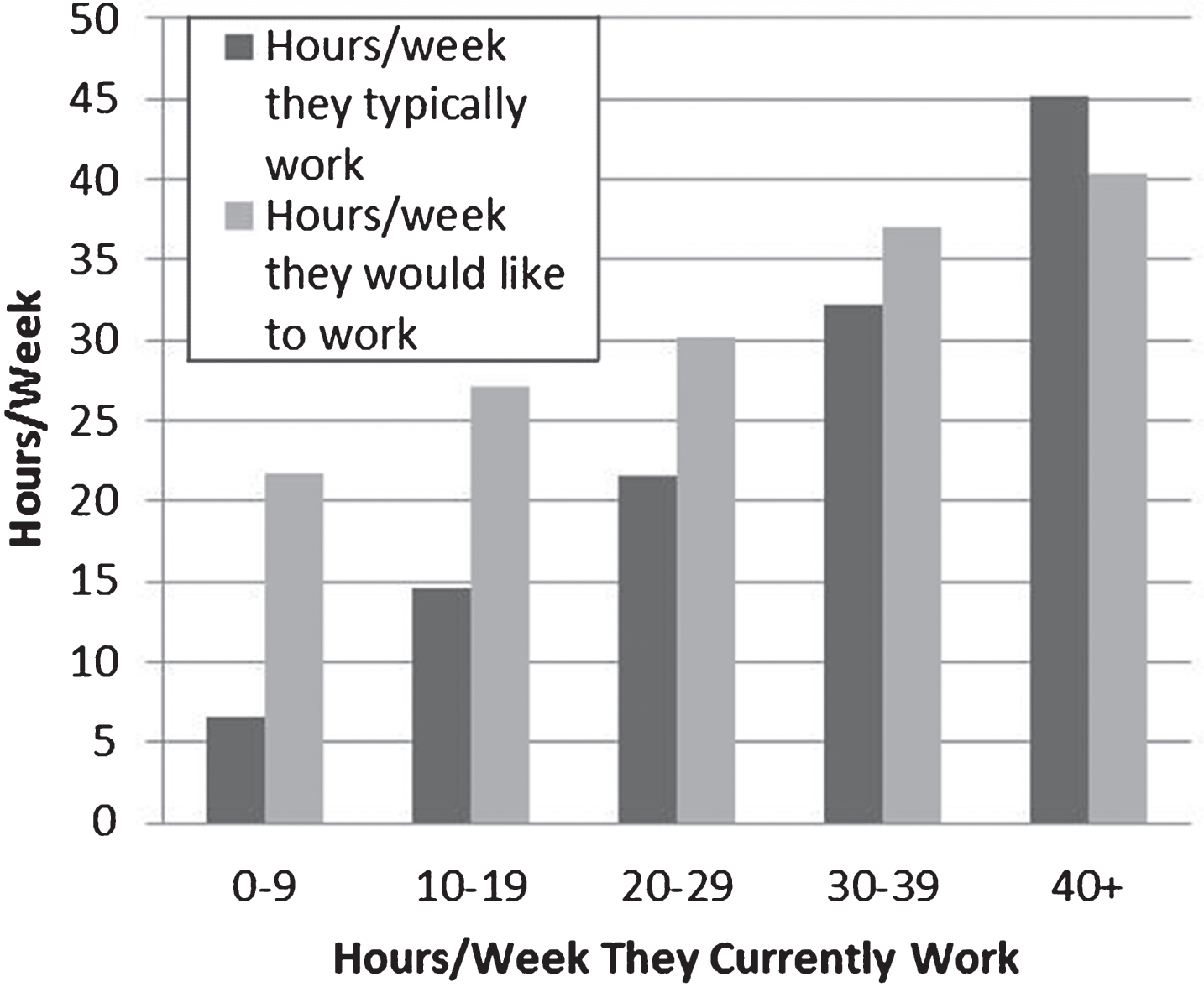
Hours/Week Participants Currently Worked and Desired to Work.
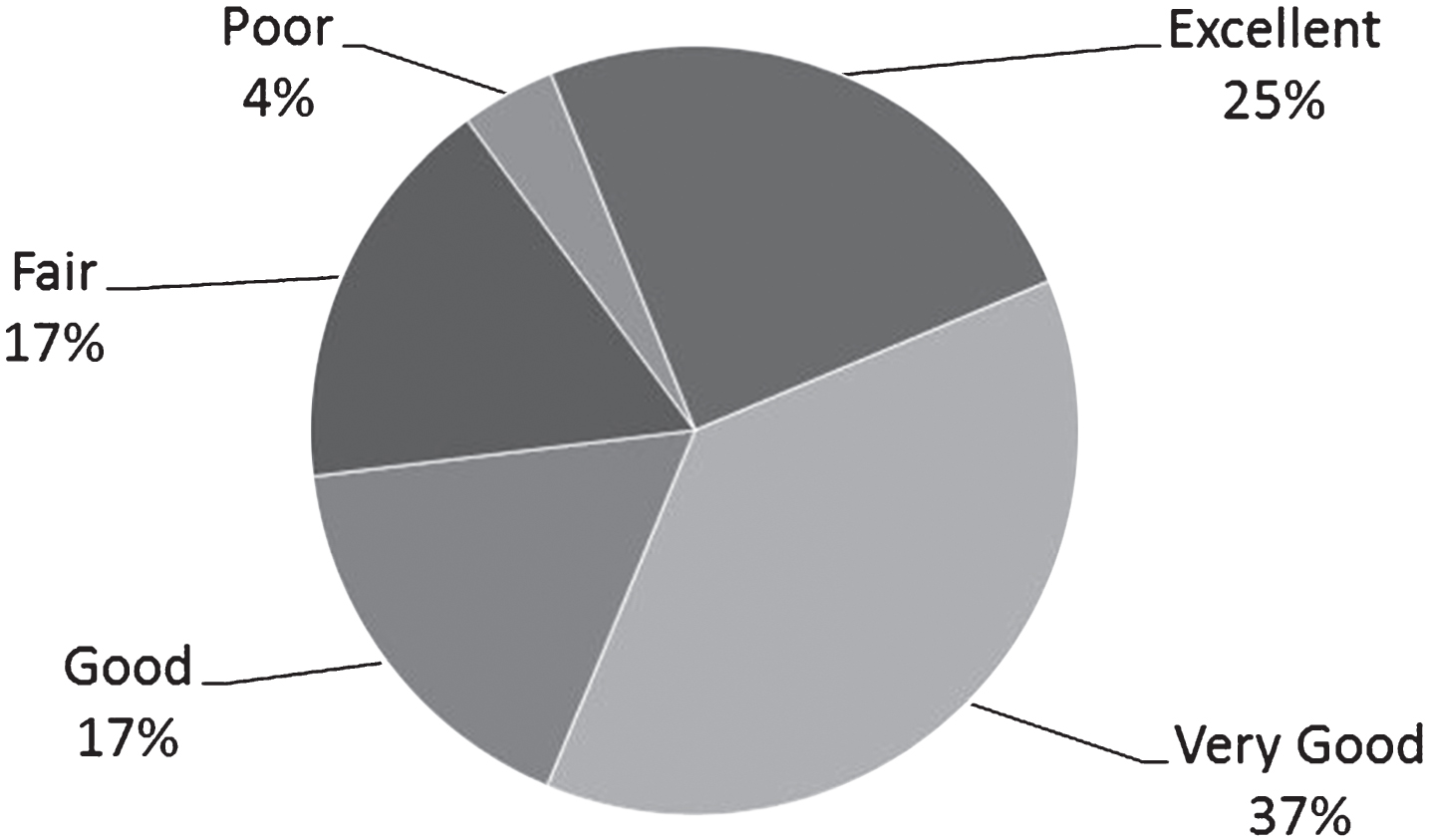
Job Satisfaction.
Of the participants that were employed, there was a high job satisfaction rate with 79% reporting good or better satisfaction (Fig. 2). Participant’s wages ranged from $0/hour to $44/hour with a median of $9/hour and an average of $12.50/hour. Wages varied depending on type of employment. Those in center-based (sheltered workshop) or group-based employment earned an average of $3/hour, while those who worked in regular employment with supports averaged $9/hour and those working without supports averaged $16/hour.
The survey found that 41% of participants received financial support from government sources (social security, food stamps, or other government sources), with an average of $704/month. Similarly, 54% of respondents reported receiving support from family/friends, with an average of $916/month (free housing was valued at $500/month) (Table 2).
Respondents, who answered that the participant was unemployed and looking for work, were asked about the barriers they had found towards finding employment. The most common barriers (in order) were can’t get past interviews (60%), can’t find a job to apply for (40%), lack of transportation (29%), don’t know what kind of work they want to do (22%), and can’t keep a job (22%) (see Fig. 3).
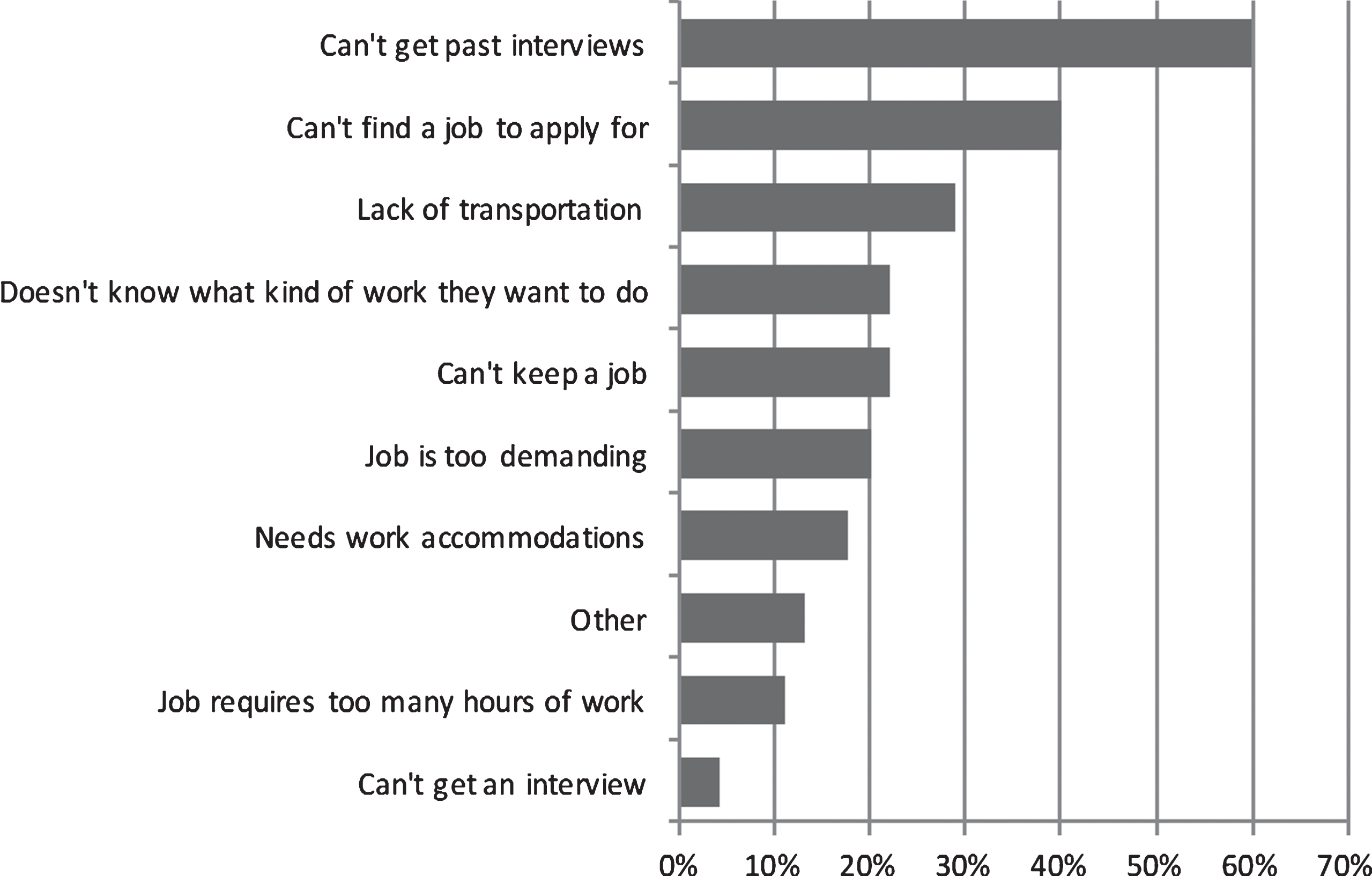
Barriers to Finding Employment. Respondents were able to select more than one option and percentages are out of number of respondents who answered the question.
Unemployed responders were then asked two open-ended questions to further explain the challenges they found in finding or keeping a job and what could help them find or keep a job. Tables 3 and 4 show the response rate based on types of answers given. The most common challenge to finding/keeping a job was that the participant’s autism symptoms inhibited job acquisition (30%). Examples of ways in which their autism symptoms inhibited getting a job included anxiety about working, communication difficulties, and limited social skills. Additionally, 24% said they needed better and/or additional job coaching/job training. The suggestions they had for ways to help them find or keep a job were similar to the challenges explained prior, with the top two suggestions being increased and improved job coaching and/or training (43%) and having someone with an understanding of ASD work with employers (24%).
Challenges to finding/keeping a job
What help is most needed to find/keep a job
Figure 4 shows that only 33% of respondents had used one or more DDD services. In Arizona, the services provided by DDD include: Transition to Employment which provides instruction, training and job shadowing; Employment Support Aide which is a 1:1 aide who is always present in the workplace; and Individual Supported Employment which provides a job coach who helps with finding and keeping a job but is only present occasionally; and center-based and group-based employment. The most commonly used programs were Individual Supported Employment (18% of all respondents) and Transition to Employment (13%) – see Fig. 4. Respondents had generally positive satisfaction ratings with Group-Based Employment and Employment Support Aides receiving a 4.1 and 3.9, respectively, on a scale of 1 (poor) to 5 (excellent). Center-Based Employment, and Individual Supported Employment, and Transition to Employment had a lower satisfaction rating with scores of 2.8, 2.7, and 2.4, respectively (see Fig. 5).
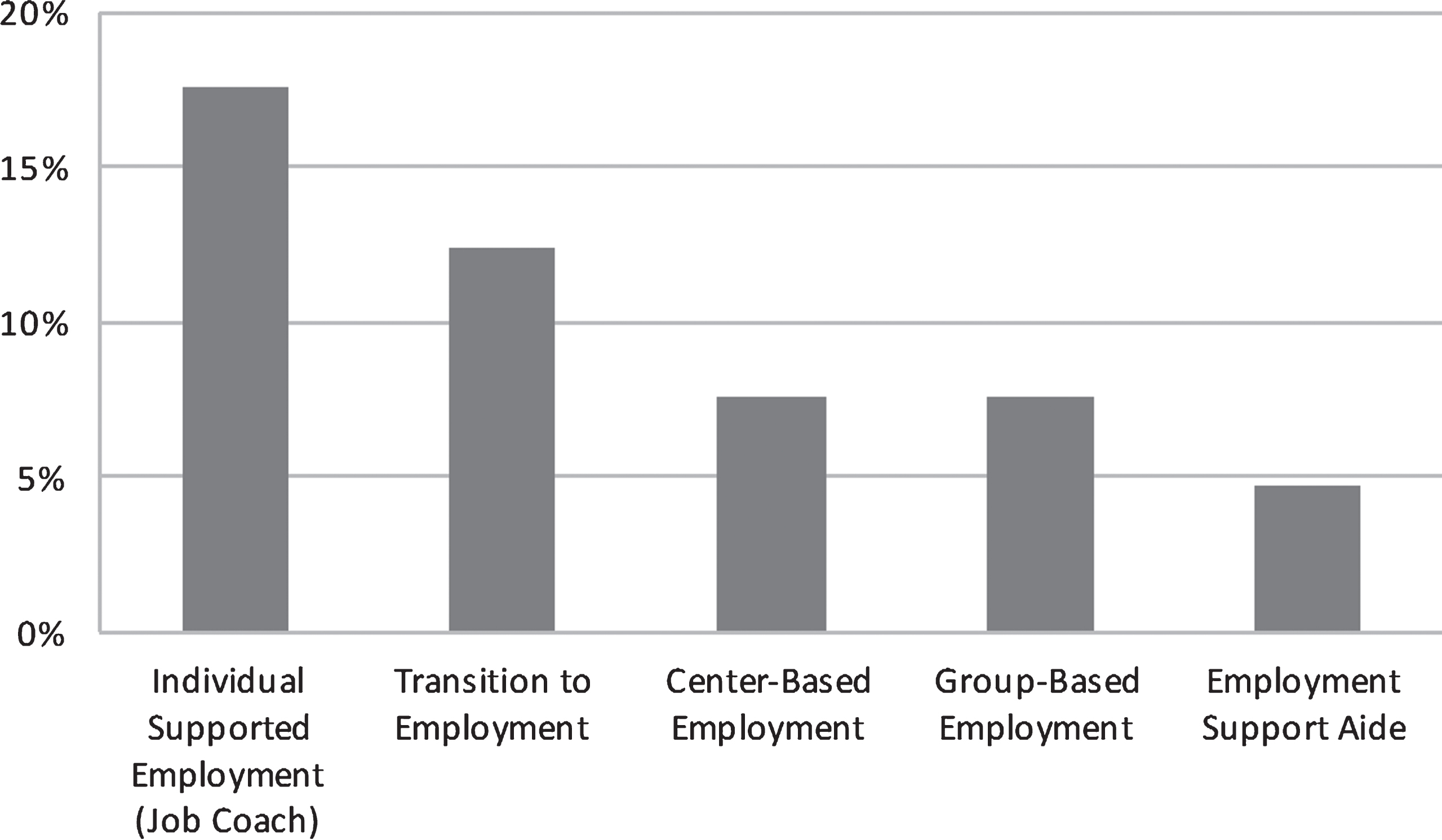
Percent of Respondents that Used DDD Services. 67% of respondents did not use any DDD services.

Satisfaction with DDD services, on a scale of 1 (poor) to 5 (excellent). Data points represent averages and standard deviation.
Of the 54 open-ended recommendations for DDD services, 33% of the responses discussed a need for more training of DDD providers about how to work with and best serve people with ASD. Another 30% discussed a need for improvement of job coaching/training services, ranging from not getting enough individual-specific training to removing supports too quickly. More general recommendations included having a person with an understanding of ASD work with employers to help explain and adjust for autism symptoms, or to help utilize the participant’s skills and abilities (15%). In regards to Center-Based and Group-Based Employment, 11% wanted Center-Based and Group-Based Employment to teach a larger variety of skills that could be transitioned into a more normal employment. Additionally, another 9% of the responses expressed dissatisfaction with the work options and wanted more real-work (not practice work) which would also pay a higher salary (see Table 5).
Open-ended responses on recommendations of DDD services
As seen in Fig. 6, 53% of participants had used VR services (Work Adjustment Training involves individuals working at a training site in order to develop positive work habits and Supportive Education provides assistance in post-secondary education and training). The most commonly used services were Vocational Evaluations (26%), Psychological Evaluations (22%), Work Exploration (18%), Functional Capacity Evaluations (11%), and Work Adjustment Training (10%). Additionally, 47% of respondents said they had never used any VR services and 6% said they had applied for VR services but had been denied. Only 9% (n = 15) of those who used VR services said that the service(s) they received helped them find a job and 11% said that VR services helped somewhat in finding a job, whereas 80% of those receiving VR services stated that VR services did not help them find employment (Fig. 7). The participants who did find a job with VR’s help were satisfied overall with the job they found, with 74% saying they were either “Satisfied” or “Very Satisfied”.
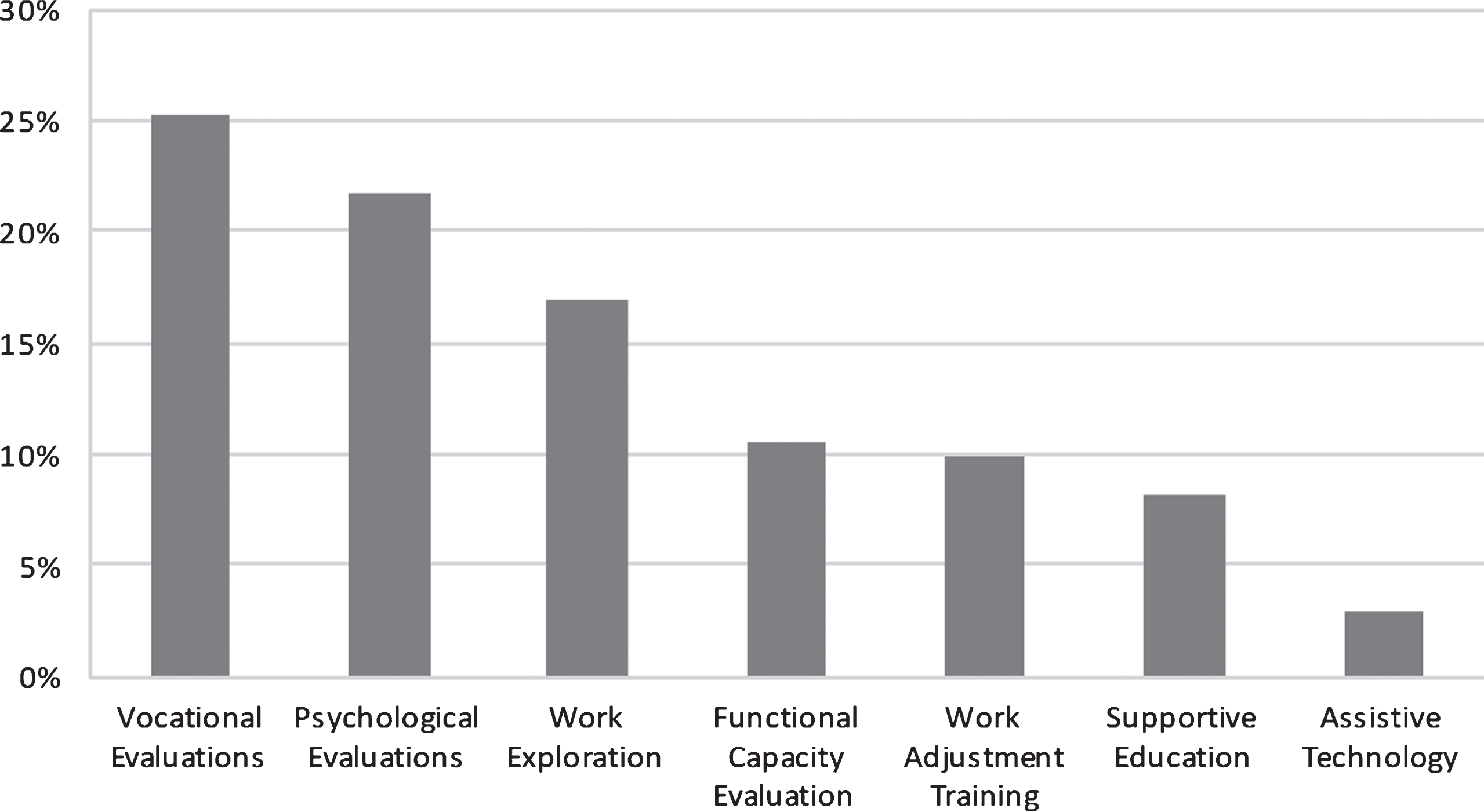
Percent of Respondents that Used Different VR Services. 47% of respondents did not use any VR services.

VR’s Help in Finding a Job.
As seen in Fig. 8, Assistive Technology received the highest rating (4.2), whereas other services were rated significantly lower, with the lowest scores for Vocational Evaluations (2.4).

Satisfaction with VR services, on a scale of 1 (poor) to 5 (excellent). Data points represent averages and standard deviation.
Open-ended survey questions for VR services brought up similar concerns and suggestions as for DDD services (see Table 6). The largest percentage of the 74 open-ended responses called for a need to increase and/or improve VR services (24%). Many responses were unsatisfied with the support they got from different VR services and felt that the VR services were either not helpful or not consistent. Others asked for increased support from VR, be it through more individualized assistance or even just more resources for caregivers. The next most common recommendation was the need for ASD trained staff that are able understand the needs specific to people with ASD (20%). Many participants discussed Psychological and Vocational Evaluations, with 19% of suggestions asking for improved evaluations, better evaluators, or quicker and more effective results. Additionally, 11% expressed a need for better job placement and a higher diversity of job opportunities and 8% talked about being underemployed and/or being placed in jobs below their ability level. Those participants that used VR’s Supportive Education asked for further education assistance such as academic support to be successful in school, and post-education transitioning to work (5%).
Open-ended responses on recommendations of VR services
Our survey found that unemployment was 40%. It is important to note though, that our survey responses were limited to those with jobs or looking for work, and was not intended for those in day programs (non-vocational); we estimate that including participants in day programs would probably raise unemployment rates to roughly 60–70%. This would be similar to the results from another vocational study in 2012 that found a 70% unemployment rate when they included those in day programs and sheltered settings (Taylor & Seltzer, 2012). Future surveys can include individuals in day programs, but the focus of this survey was on barriers to employment and employment services.
The low number of work hours reported in our survey is somewhat higher but still consistent with previous studies (Roux et al., 2015; Taylor & Seltzer, 2010; Cimera & Cowan, 2009; Cimera, Wehman, West, & Burgess, 2012). Our survey indicates that higher work hours are primarily desired by those working the fewest hours, but those working 40 or more hours/week want to work slightly less. So, the low number of work hours is partially due to lack of availability, but also partly due to a desire to work somewhat less than 40 hours/week.
The major barrier to employment that we found was being unable to get past interviews (59%), followed by not knowing what jobs to apply for (39%) or what they wanted to do (22%), having difficulty keeping a job (22%), and not having proper transportation (28%). The problem with interviews is expected to be due to the core deficits of communication and social understanding in adults with ASD. The lack of knowing what jobs to apply for and what type of employment they wanted may be due in part to a lack of social networking, since many jobs are found through friends/colleagues, and adults with ASD usually have a very limited social network – this is a problem area that needs further research. The problem with transportation is probably due to a combination of either lacking the skills to use public or personal transportation, or limited finances which require the use of public transportation which may be much slower – this area also needs further exploration. Another common barrier cited by respondents was lack of work experience, a problem also found by Roux and colleagues who found that 42% of young adults with ASD never work between high school and their early 20 s (Roux et al., 2015).
Regarding DDD services, some services (Group-Supported Employment and Employment Support Aide) were well-rated by clients, but other services had significantly lower ratings. It appears that DDD clients were generally able to find placement in Center-Based and Group-Supported Employment, as no concerns were mentioned regarding lack of positions.
Regarding VR services, Assistive Technologies was well-rated by clients, but other services had significantly lower ratings. Despite reasonable ratings of most VR services, those services rarely resulted in placement in a job. Of the participants that used VR services, 43% mentioned a need for more VR services in their open-ended response. Their comments especially highlighted a need for increased job coaching and made it appear that improved services are needed to increase job placement and job maintenance. This is consistent with other studies of VR services not being very effective for helping individuals with ASD to find employment (Lawer et al., 2008; Cimera, Wehman, West, & Burgess, 2012).
It is interesting to compare our results to the National Autism Indicators Report: Vocational Rehabilitation (NAIR-VR) by Roux et el. in 2016 which reported that 60% of VR service users with ASD left VR services with a job. It is important to note that they only included data from those VR service users who had their cases closed between October 2013 and September 2014. But, for example, in Arizona the report said there were 142 VR service users with ASD whose cases closed in 2014, but through contact with VR ourselves, we know that in 2016 there were 1,206 people with ASD served in Arizona. If there were in fact only 142 with closed cases, and the NAIR-VR reported that 51% in Arizona left with employment, then out of the 1,206 people served only 6% of them left VR services with jobs that year (Roux, Rast, Anderson, & Shattuck, 2016). The data from the 2016 NAIR-VR combined with our data suggests that VR services require many years of service before about half of individuals eventually find employment, and our data suggests those jobs are mostly found without the direct help of VR. The median wages that NAIR-VR found in Arizona ($8.25/hour in unsupported-employment and $7.97/hour in supported employment) are somewhat lower than our numbers ($16/hour in unsupported-employment and $9/hour in supported employment) but these are people just starting in entry level positions, and it shows that people leaving VR are receiving low salary entry level positions (Roux, Rast, Anderson, & Shattuck, 2016).
After a thorough analysis of our survey results and participant comments and suggestions, our research team developed the following list of recommendations.
Pre-Interviewing: The largest barrier to employment cited in our survey was difficulty with interviewing. We recommend that job coaches do a pre-interview with employers, to explain their client’s strengths and weaknesses. This has also been recommended by Müller et al. in 2003 and Nicholas et al. in 2016 (Müller et al., 2003; Nicholas et al., 2016). Additionally, we recommend that job coaches coordinate role-playing mock interviews for their clients in order to familiarize them with the process and to give them feedback for real interviews. Job Shadowing: One of the major barriers to employment for adults with ASD was finding jobs to apply to. We recommend job coaches provide job shadowing at different job sites so that the adult with ASD can gain a better understanding of job opportunities and better determine if a job is a good match for their interests and abilities, prior to applying for work. The job shadowing can also be a time for some informal pre-interviewing. Worksite Peer Mentors to Partially Replace Job Coaches: Several comments were made about the need for longer job coaching and on-the-job support. In an interview of 18 adults with ASD, Müller et al. also found a need for more on-the-job support from job coaches or mentors, as did Hurlbutt and Chalmers in an interview of 6 adults with ASD (Müller, Schuler, Burton, & Yates, 2003; Hurlbutt & Chalmers, 2004). More recently, a special interest group at the International Meeting for Autism called for longer-term support to increase employment sustainability (Nicholas et al., 2016). We recommend asking each employer to assign a peer mentor at the worksite to spend 5–10% of their time to assist the ASD client with both work and social skills. This will likely be more intense at first, and reduced over time. However, since social communication is a core deficit of ASD, this needs to continue long-term in most cases to help with social and communication interactions and problems as they arise. Worksite peer mentors can provide regular feedback to the ASD client about problems so that they can improve and stay employed. The worksite peer mentor has several advantages over a traditional job coach:
Always present at the job, so immediately available whenever a problem arises. Knowledgeable about work requirements and social interactions/environment. No time wasted driving from one client to another. Occupational Therapy Workplace Evaluations: Since several comments were made about sensory challenges in the workplace as a barrier to employment, we recommend allocating an occupational therapist to do an evaluation of workplace conditions and suggest modifications for ASD clients with sensory sensitivities (light, noise, etc.). Two other studies found high sensitivity to sensory input as a common vocational problem for adults with ASD and suggested approaching employment opportunities based on the work setting and working with each person’s individual sensory needs (Mayhood & Howlin, 1999; Lorenz, Frischling, Cuadros, & Heinitz, 2016). Raise Work Expectations: Our survey found that adults with ASD had low salaries, worked fewer hours than desired, and were often working at jobs below their ability level. Vocational staff and employers need training to understand that some individuals with ASD have average or above average intellectual capabilities, to know how to find and utilize each person’s specific areas of vocational strengths. Other studies made a similar recommendation for job placement and support of people with disabilities, emphasizing a need for more “person-centered, customized placements” of people with disabilities and increasing awareness of the abilities of those with ASD (Murphy, Easterbrook, Bendetson, & Lieberman, 2014; Richards, 2012; Nicholas et al., 2016). Increase Work Experience: One of the barriers to employment was lack of work experience. We recommend that adults with ASD gain part-time work experience while in school, as that will make it easier to find work after they graduate. The National Autism Indicators Report found that adults with ASD who worked during high school had a 90% employment rate – over twice that of those who did not (Roux et al., 2015). This recommendation was also made by Hendricks and Wehman who discussed the need for vocational training to begin in high school including career exploration and gaining work experience before graduating (Hendricks & Wehman, 2009). Train ASD-Knowledgeable Staff: Lack of knowledge about ASD among vocational staff was frequently mentioned. We recommend training vocational staff about ASD, focusing on the barriers to employment and how to overcome them. Also, since adults with ASD are only a small part of the total clients served by VR (7% of the 16,000 clients served by VR in Arizona), we recommend dedicating some staff to specialize in ASD, since that is more efficient than training all staff, and that will help them also gain greater experience in working with clients with ASD. This recommendation has been made in other studies including Hurlbutt and Chalmers in 2004, Müller et al. in 2003 and Murza 2016 (Hurlbutt & Chalmers, 2004; Müller, Schuler, Burton, & Yates, 2003; Murza, 2016). Incentivize Higher Salaries: Due to the low salaries of individuals in center-based employment and group supported employment, provider agencies should be incentivized to increase salaries, and to consider allocating funds for a dedicated staff person to outreach to the business community to find higher-paying work for clients. Rotate Jobs: For clients in center-based and group-based employment, 30% expressed dissatisfaction with the work options and wanted more diverse work opportunities that taught a broader variety of skills. So, we recommend rotating clients between different jobs to increase their skills. Transportation: Lack of transportation was reported as a major barrier to employment. We recommend that government agencies and employers consider several options, including training in use of public transportation, encouraging car pools, providing van transportation, and considering alternative transportation such as bicycles if safe routes exist.
Overall, although unemployment and underemployment are currently major problems for adults with ASD, we believe that implementation of our recommendations will significantly help reduce their barriers to employment and significantly improve their vocational status and hence their quality of life.
Conflict of interest
None to report.
Footnotes
Acknowledgments
We thank the families of adults with ASD who participated in the survey, and we thank the Autism Research Institute and Zoowalk for Autism Research for providing partial funding for this project. We also thank the members of the Adult Subcommittee of the Arizona Governor’s Task Force on Autism for reviewing the draft of the vocational survey. We thank the Autism Society of Greater Phoenix, the Southwest Autism Research & Resource Center, Raising Special Kids, and AZ ASSIST for helping to advertise the survey.