



Abstract
BACKGROUND:
Vocational rehabilitation (VR) programs have previously been evaluated using classical measures (such as the percentage of successful disabled consumers who are served by an agency). However, recent evaluations of VR programs have emphasized the need to examine levels of consumer satisfaction with such programs, as it is important to indicate what factors affect the satisfaction of people with disabilities (PWDs).
OBJECTIVE:
The purpose of this study is to present a systematic review of existing studies on factors impacting PWD satisfaction with VR programs.
METHODS:
We conducted a search of the electronic databases PsycINFO, Web of Science, ProQuest, and EBSCOhost (period: 1972–2016) supplemented by a search for additional relevant articles by means of cross-referencing. In total, 50 studies were selected, coded, and analyzed by three coders into three overarching themes.
RESULTS:
The analysis of extant studies shows that PWD satisfaction level with VR programs is affected by three main variables: counselor characteristics, VR services, and center features.
CONCLUSION:
Satisfaction is a key way of practically evaluating VR services; it contributes to improving the effectiveness and quality of such programs and enhances the effectiveness of work methods used by VR centers, particularly in relation to PWDs. The implications for VR practice and suggestions for future research are provided.
Introduction
Evaluating any program, including vocational rehabilitation (VR) programs, is a valuable tool to measure an organization’s performance, as it can help to address weaknesses and demonstrate success or progress (Thibodeau, 1991). For this reason, evaluation is immensely important in highlighting the impact and effectiveness of services provided as a means to promote staff development, modify policies, and develop programs (Posavac, 2015). VR programs are designed to assist people with disabilities (PWDs) to prepare for and engage in gainful employment (Pi, 2006; Morgan, 2013; Maiden, 2014). They help PWDs to integrate into society (Rubin & Roessler, 2008), and conversely contribute to changing the views and attitudes of society toward PWDs (Fabian, Ethridge, & Beveridge, 2009; Reaume, 2014; Al-Oweidi, 2015) by providing appropriate VR services that offer decent work to PWDs.
Essentially, VR services include vocational assessment, vocational guidance, vocational training, job placement, and follow up (Counsel of Europe, 1995; ILO, 2004; Wilhelm & McCormick, 2013; Gutierrez, 2014).
A number of studies have demonstrated the need to replace traditional methods of evaluating VR programs, which use quantitative measures such as the percentage of successful disabled consumers who are served by an agency, in order to gain an accurate understanding of the performance of VR programs (Abrams & Tucker, 1989; Bolton, 1987; Emener & Placido, 1982; Janikowski, Bordieri, & Musgrave, 1991; Patterson & Leach, 1987; Wright, Leahy, & Shapson, 1987). Instead, evaluation of VR programs should also include consumer feedback and views on the services received (Capella, 2002; Russell, 1990). For example, Tucker, Abrams, Chennault, Stanger, and Herman (1997) have emphasized the importance of consumer ratings in the appraisal process. Service providers and evaluators must ensure that their views are unbiased and/or that they do not ignore consumer satisfaction (Torres, 1990), because a high level of consumer satisfaction is one of the key features of a high-quality rehabilitation system (Kosciulek, 1999).
The roots of consumer satisfaction research have been established in the business and healthcare fields (Capella, 2002; Capella & Turner, 2004). Since the enactment of the American Rehabilitation Act of 1973, consumer satisfaction has also received a great deal of attention in the VR field (Capella & Turner, 2004; Emener, 1991; Kosciulek, 2003). The Rehabilitation Act mandated VR program evaluations in US agencies related to VR and also considers consumer satisfaction an important criterion in such evaluation (Capella & Turner, 2004; Emener, 1991; Kosciulek, 2003; Patterson & Leach, 1987). According to Schalock (2001), this is because consumer satisfaction plays a key role in program improvement and quality of service, as well as impacting on evaluations of program effectiveness in VR centers (Kosciulek, 2003; Capella & Turner, 2004).
Consumer satisfaction provides the unique perspective of recipients of VR program services (Capella, 2002), and several studies have therefore utilized consumer satisfaction as a key point in evaluating the effectiveness of VR programs. Tucker et al. (1997), for example, examined the level of consumer satisfaction with VR services and their counselors. The study outcomes showed that overall consumers in the study were satisfied with their counselors and the VR services provided. In their study in a VR agency in Texas, Schwab, Smith, and DiNitto (1993) examined consumer satisfaction as one aspect of the overall quality of services and found that PWD consumers were satisfied with the agency. The findings in this study also indicated that the factors which impact on PWD satisfaction may be under the VR counselor’s control. Hein, Lustig, and Uruk (2005) investigated the perspectives of disabled consumers about ways in which the VR services they had received could be improved. They found that vocational training was an important factor in relation to positive customer outcomes.
Despite the limited amount of research on PWD satisfaction with VR programs (Schwab et al., 1993; Tucker et al., 1997), past research has shown that the confidence and awareness of consumers with disabilities in terms of professional development have improved (Farley, Bolton, & Parkerson, 1992; Farley, Bolton, & Taylor, 1993; Tucker et al., 1997). Thus, it is reasonable to assume that client satisfaction enhances the efficiency of VR programs and, in particular, PWD satisfaction with VR programs is likely to be important in sustaining the effective provision of services.
In this context, sustainability means that service providers can work in the long term to protect the interests of PWDs by considering improvements in the level of services provided. We consider PWD satisfaction to be at a high level when service providers or evaluators take the views of PWDs into account, and when they use tools with a high degree of reliability and validity to measure that satisfaction, such as the instrument of consumer satisfaction that was developed by Capella and Turner (2004). Customer satisfaction is also related to the quality of service provided to PWDs.
The present study builds on the previous findings of related studies, such as Capella (2002); Capella and Turner (2004); Kosciulek Vessell, Rosenthal, Accardo, and Merz (1997); and Patterson and Leach (1987), and contributes to the related literature in three ways:
We present studies that have been conducted since 1972. Compared to the theoretical approach of related studies, we focus specifically on studies that have empirically identified factors related to PWD satisfaction with VR programs We focus in particular on the concept of PWD satisfaction as a major contributing factor to the improvement of VR services at VR centers.
The findings of the current study will be discussed in light of the studies reviewed, with the aim of providing a coherent picture of the research outcomes related to PWD satisfaction with VR programs and to identify future research directions. Studies concerning PWD satisfaction in the context of VR programs are rather limited, with the overwhelming majority of relevant studies investigating the efficiency and evaluation of VR programs without considering the feedback of consumers with disabilities.
To date, however, there remains insufficient data regarding what factors impact PWD satisfaction with VR programs. Therefore, this comprehensive review covers a broad range of issues related to PWD satisfaction with VR programs and the principal question addressed is as follows: What are the factors affecting the satisfaction of persons with disabilities in relation to vocational rehabilitation programs? Thus, this review clearly focuses on factors related to satisfaction, thereby pinpointing a pivotal concept that has been addressed in previous studies. Before proceeding, however, we will conceptualize the term “satisfaction.”
Theoretical background of the concept of “Satisfaction”
As far as we know, the concept of “satisfaction” has never been specifically defined in relation to the satisfaction of people with disabilities with VR programs. In the United States, the International Labor Organization (ILO) Recommendation on the Vocational Rehabilitation and Employment of Persons with Disabilities (1983) (No. 168) states that PWDs should be consulted and involved in the development and evaluation of VR programs. The US Rehabilitation Act Amendments of 1992 recognize that PWDs should be assisted to make choices and decisions during the VR process (Rehabilitation Act Amendments, 1992, 1998). However, both the ILO recommendation and Rehabilitation Act Amendments of 1992 largely focus on stipulating the legislative or organizational rights of people with disabilities; that is, they involve them in the evaluation process and protect their rights, but do not present a clear description of what satisfaction actually means in the context of VR programs.
The US Rehabilitation Act of 1973 is more concrete. It states that inclusion indicates client satisfaction as one program evaluation standard (Capella & Turner, 2004; Emener, 1991; Patterson & Leach, 1987). Thus, this law stipulates that all State agencies should undertake VR program evaluations that include evaluation of customer satisfaction (Capella & Turner, 2004). Similarly, there have been various other rights, conventions, and acts (e.g., Rehabilitation Amendments of 1992 and 1998), but none provide an accurate definition of the term “satisfaction” in relation to PWDs in VR programs. While some of the articles discussed in the current review refer to the Rehabilitation Act Amendments of 1992 as the standard definition of satisfaction (Jo, Chen, & Kosciulek, 2010; Kosciulek, 1999), in many others, no explicit definition of satisfaction in relation to people with disabilities in VR programs is offered. Indeed, many investigators have used an operational rather than a theoretical definition to characterize satisfaction, stating that consumer satisfaction is likely assessed according to the number and quality of VR services and their evaluation by PWDs.
Schalock (2001), for example, defines consumer satisfaction by evaluating the quality of service (e.g., using consumer rating and assessment in program improvement) and relationship quality. Furthermore, he mentions that satisfaction should be based on appraisal methods and emphasizes the importance of consumer input or feedback. Richard (2000) recommend using a multi-dimensional approach to estimating consumer satisfaction that focused on tangible aspects such as facilities and personnel appearance, service reliability and responsiveness, and counselor credibility and competence. Packer, Race, and Hotch (1994) supported the use of focus groups to determine consumer concerns. From their perspective, the quality of facilities and services that were solicited by consumers with disabilities affected the identification of aspects of interest in the program, with the quality of service representing the highest level of satisfaction. Larsen, Attkisson, Hargreaves, and Nguyen (1979) conceptualized satisfaction in terms of consumer perspectives and stated that if these are not taken into consideration, program ratings and appraisal will be biased towards the views of service providers.
The method adopted in in this study of defining satisfaction in terms of PWD perspectives is grounded in disconfirmation paradigm theory (Bahia, Paulin, & Perrien, 2000; Capella, 2002; Capella & Turner, 2004; Churchill & Suprenant, 1982). This theory demonstrates the connection between consumer expectations and actual quality of service in terms of satisfaction. The Theory of Disconfirmation Paradigm suggests that an individual’s satisfaction is predicted by the size and direction of the disconfirmation experience; that is, when a product performs better than expected, satisfaction will result; when it performs worse than expected, dissatisfaction will result. In keeping with this theory, we propose that satisfaction can be understood to occur when the professionals meet the needs and/or expectations of PWDs, as well as when their goals in relation to the provision of VR services are achieved. This can be measured through an evaluative response on the inclusive dimensions of all elements of a VR program. According to some research studies (Jo et al., 2010; Kosciulek, 1999; Kosciulek, 2003), evaluative responses to satisfaction tools should include quantitative measures (such as rating of successful services received) in addition to feedback and perspectives from PWDs (such as their opinions about services provided) in order to achieve a high level of consumer satisfaction.
Mostly, however, consumer satisfaction can be measured using a multidimensional approach (Capella & Turner, 2004; Guy, 2009; Kosciulek, 2003; Schwab, DiNitto, Aureala, Simmons, & Smith, 1999; Richard, 2000). For example, consumers may be asked to rate their perceptions of a vocational training service, vocational counseling, employment services, the counselor’s role as a case manager, informed choice opportunities, and so on. Additionally, in an aggregate or whole sense, consumers may be asked about overall aspects of the VR service delivery process, the VR services received, and their outcomes. Hence, Kosciulek (2003) demonstrates that at least two dimensions are involved when assessing the construct of consumer satisfaction using this scale. The first dimension refers to satisfaction with case management versus satisfaction with employment, while the second dimension refers to satisfaction with consumer choice versus satisfaction with customer service. Put simply, according to these definitions, “care cannot be of high quality unless the client is satisfied” (Vuori, 1987, p.107). This confirms that direct responses from the consumer are of high importance in assessing satisfaction through various instruments (Capella, 2002). The effective measurement of consumer satisfaction is extremely necessary for empowering PWDs and engaging them in the VR program. By increasing the involvement of PWDs in VR programs, the VR centers would enhance consumer satisfaction with services. This is essential, because a high level of consumer satisfaction is a key feature of a quality VR program.
Method
Data sources and searches
To answer our research question concerning the factors that influence PWD satisfaction with the services provided by VR centers, we searched the electronic databases PsycINFO, Web of Science, ProQuest, and EBSCOhost for the period 1972 to 2016, using the keywords “satisfaction,” “satisfaction with vocational rehabilitation program,” “evaluation of PWD to VR services,” “customer satisfaction,” “customer’s expectation,” “assessment of VR,” and “inclusive evaluation for VR centers” in combination with the terms “disabled/disability.”
Eligibility criteria for the review
From the articles gathered, we only selected those studies that were related to the topic “satisfaction of people with disabilities and outcomes of VR program.” We then searched the references of these studies to identify additional relevant articles. The studies identified through this search were ultimately included in this review if they met the following criteria: (1) published in the English language, (2) published in a peer-reviewed journal and/or ProQuest Dissertations, (3) utilized either qualitative or quantitative empirical research, (4) addressed the outcomes of vocational rehabilitation evaluation, and (5) focused on the factors impacting PWD satisfaction with VR programs.
Data extraction and quality assessment
In fact, after the articles had been selected and data extracted in relation to researchers, study location, sample characteristics and size, methodology and procedures, and findings, we reviewed the 50 selected articles in terms of the outline data. Each was then separately categorized by three coders into comprehensive themes related to factors influencing PWD satisfaction with VR programs. Thus, the main significance of the current review is to identify the factors that influence PWD satisfaction with VR programs. However, it was difficult to compare and evaluate the quality of the articles, as various methods and designs were used, and numerous variables were measured. The classification results were compared and combined, and any disagreements between coders were resolved through discussion. Themes identified from analysis of the existing articles were sorted into the following three overarching categories: the role and characteristics of counselors, vocational rehabilitation services, and features of the center. A summary of the articles is presented alphabetically and can be seen in Table 1.
Overview of extant studies in the analysis
Overview of extant studies in the analysis
Description of reviewed studies
Our search yielded 5,000 publications: 1,683 from PsycINFO, 1,040 from EBSCOhost, 238 from Web of Science, and 2,039 from ProQuest (see flowchart; Fig. 1). After eliminating duplicates (230 studies), we screened 4,770 studies based on the inclusion criteria, title, and abstract to narrow the output of the search. We then excluded 4,685 studies that were deemed irrelevant from their title and abstracts. If the abstract met the inclusion criteria, we reviewed the full article. Therefore, we reviewed 85 full studies. The reference lists of these 85 studies led us to review 20 additional relevant studies.
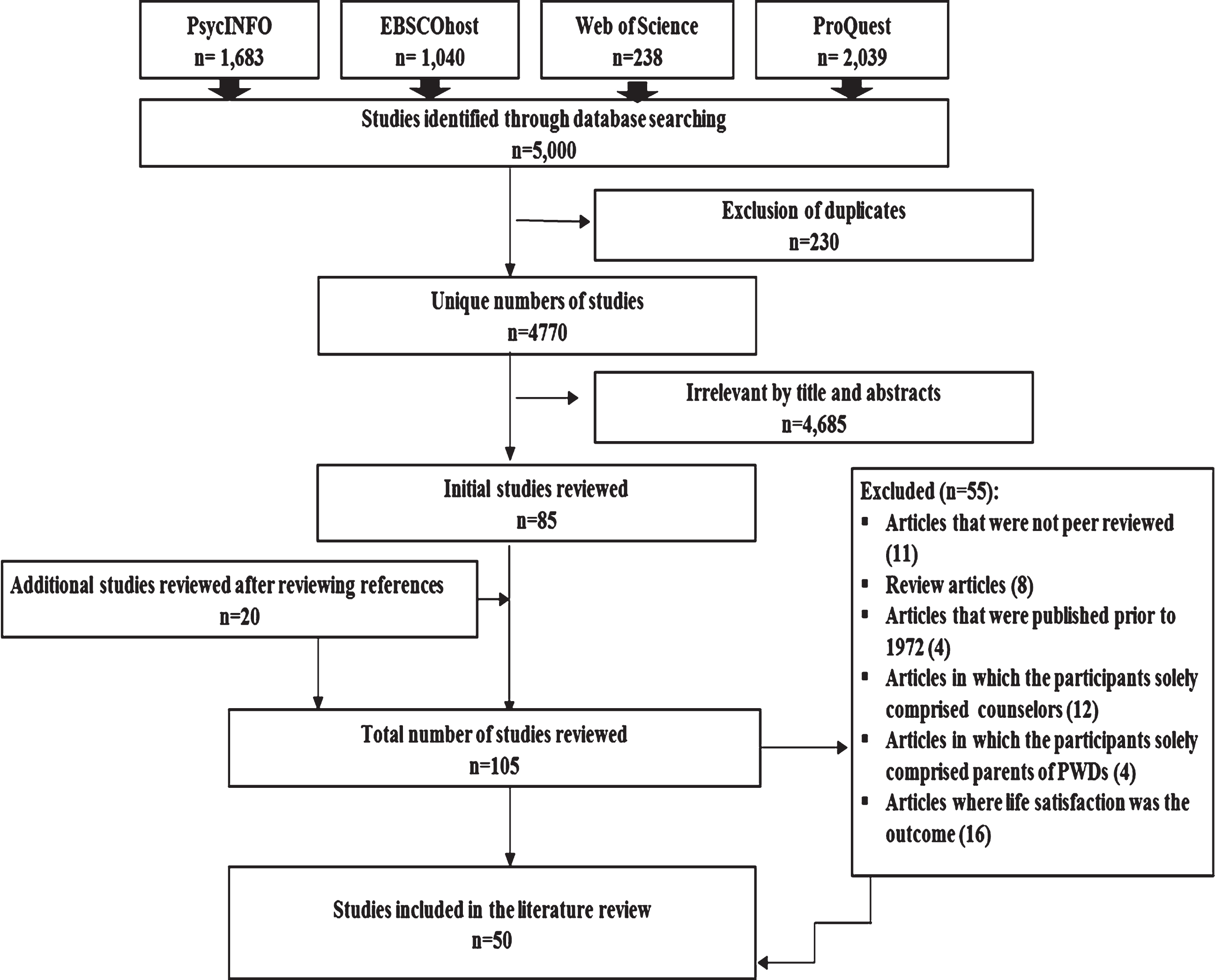
Flowchart of the literature research and the selection of the studies.
From these 105 studies, we excluded 12 articles in which the participants solely comprised counselors and four articles in which the participants were solely comprised of parents of people with disabilities. We also excluded 16 studies where life satisfaction was the outcome, four articles that were published prior to 1972, eight review articles, and 11 articles that were not peer-reviewed.
Based on the criteria mentioned in the Method section above, we selected 50 studies. The majority of these were conducted in North America (42 studies [84% ] in the United States and three studies [6% ] in Canada), while three studies (6%) were carried out in Europe, and two studies were carried out (4%) in Asia. The study samples varied and included consumers with disabilities, previous consumers with disabilities, and a few both of VR counselors and PWDs. In reviewing the studies related to the applied methods, the majority used a survey method (19 studies), of which 11 used mail surveys, five used telephone surveys, two used paper-and-pencil surveys, and one was conducted using a “computer-assisted personal interviewing program.” A total of 16 studies utilized interviews (seven structured, seven semi-structured, and two focus groups). Four studies collected data using more than one method (one study used mail questionnaires, telephone interviews, personal interviews, or electronic means; another used mail surveys and telephone interviews; another used survey by mail, phone, or through a secure internet connection; and another used semi-structured, face-to-face, and phone interviews). Eleven of the studies used analysis archival study, which is a method of identifying databases and paper-based records from VR centers.
The number of participants varied from six to 382,221. Thirty-eight studies (76%) included 6–1500 participants. Forty-five studies (90%) included PWDs themselves as respondents while five (10%) were comprised of either counselors or staff together with PWDs.
Three main themes appeared from our analysis of the studies. First, many studies discussed counselor performance and counselors’ interpersonal attributes with regard to how they dealt with consumers with disabilities. Regarding the second theme, some articles investigated the VR services that PWDs received from service providers in VR centers. The final theme related to center policies and VR staff’s organization and provision of VR services. The findings of this review are organized and reported around these three categories to structure the display of our results. Each theme is stated, followed by a description of the findings related to factors affecting PWDs in VR programs from the articles that have been analyzed.
Theme 1: Counselors
This theme relates to the findings of studies that considered the effects of factors related to the counselor’s role in PWD satisfaction with VR programs. These factors include: counselors’ skills, counselors’ job satisfaction, relationship between consumer and counselor, working alliance, and level of education.
Capella and Turner’s (2004) study demonstrated that satisfaction with a VR program is influenced by counselors’ listening skills, while Thibodeau (1991) found that 90% of PWDs were satisfied with their counselor’s willingness to listen to them. Schwab et al. (1993) found that a client’s need to be listened to was a factor in explaining the variance in client satisfaction. The ability of counselors to listen to consumers was expressed by participants in the different studies in various ways, including having counselors listen to participants’ goals (Dps & Peltier, 2006) and ideas (O’Day, Wilson, Killeen, & Ficke, 2004), as well as listening to the needs of consumers and what consumers are saying in general (Hein et al., 2005).
Some studies indicated that not only are good listening skills essential in counselors, but that factors related to counselor empathy, the desire to help and encourage consumers to fulfill their goals, and answering phone calls also led to greater satisfaction with VR programs. Moreover, Ipsen and Goe (2016) found a correlation between consumer satisfaction with the counselor and overall VR satisfaction and outcomes in the program. They demonstrated that the most satisfied consumers described their counselors as responsive, caring, and helpful. Indeed, satisfaction was related to counselor empathy and consideration of consumer views and ideas throughout the VR process (Wagner, Wessel, & Harder, 2011; Ipsen & Goe, 2016).
Counselors who gave their consumers time, emotional support, and extensive services impacted upon their satisfaction level (Bruce, 1995). Capella and Turner’s (2004) study demonstrated that satisfaction with VR programs was influenced by counselor encouragement, helpful information, returned phone calls, and supportiveness. In a study by Koch (2001), the strong preference by participants was for counselor support and encouragement. Furthermore, the delivery of services in a timely manner and the expedient return of phone calls indicate that these considerations have a potential impact on client involvement and satisfaction with services. When counselors returned phone calls within one to two days of receiving them, consumers with disabilities responded that they were supportive and helpful (Nalven, Oursler, Green, & Cordeiro, 2005). Dps and Peltier (2006) found that four variables greatly affected consumer satisfaction with the VR process: easy scheduling of appointments with counselors, quick determination of eligibility for VR services, and speed of response to both first contact and to client phone calls.
Three studies indicated that counselors who involved consumers in decision-making in relation to their rehabilitation goals and services and who provided appropriate services led to higher levels of consumer satisfaction (Kosciulek, 2003; Kosciulek et al., 1997; Schwab et al., 1993). This involvement was also found to lead to successful consumer outcomes in terms of VR (Guy, 2009). In contrast, Kosciulek (2007) revealed that there was no significant relationship between informed consumer choice and consumer satisfaction, but that this was due to the nature of the sample and instrumentation used in his study.
Consumers were also found to be more satisfied if the VR counselor (1) helped them to understand their problems and needs (Donnell, Lustig, & Strauser, 2004; Dps & Peltier, 2006), and (2) helped them to understand their disability and how it might affect their future work (Guy, 2009; Kosciulek et al., 1997). In their study, Hein et al. (2005) found that participants recommended that counselors should be more understanding of their clients’ backgrounds and the difficulties associated with supporting a family.
Level of counselor job satisfaction was also found to be significantly related to customer satisfaction with VR programs (Capella & Andrew, 2004). A study by Capella and Turner (2004) considered that counselors’ job satisfaction improved if VR centers (1) provided a favorable working environment that met counselors’ needs, and (2) provided them with the necessary resources to provide a high-quality service to their clients. In this case, a high job satisfaction level of counselors positively influenced consumer satisfaction.
Although there is no clear conclusion regarding the effects of counselor education level on PWD satisfaction with VR programs, six studies have found that a master’s degree in rehabilitation counseling positively impacts on VR outcomes, including consumer success (Cook & Bolton, 1992; Szymanski, 1991; Szymanski & Danek, 1992; Pi, 2006; Wheaton & Berven, 1994). For example, Pi (2006) indicated that there was a significant relationship between VR counselors’ level of education and clients’ successful employment or VR outcomes. As indicated by Rodriguez (2015), the availability of qualified counselors with experience with disabilities and the VR process is important to coordinate, provide, and manage a wide array of highly individualized consumer services.
A good rapport and relationship between consumers and counselors may result in greater consumer satisfaction with VR programs (Bruce, 1995; Nalven et al., 2005; Thomas & Whitney-Thomas, 1996). A recent study by Ipsen and Goe (2016) considered that the continued and intensified communication between counselor and consumer is necessary to increase consumers’ satisfaction with and engagement in services. They also reported that there is no difference in the mode of interaction between the counselor and consumer in terms of impact on satisfaction with the VR process; both telephone and e-mail communication or even face-to-face meetings have the same effect. The data from this paper demonstrated that phone and email interactions had the same effects on satisfaction with the VR process as face-to-face meetings.
Finally, the working alliance between counselors and their customers is an important aspect of VR services that can lead to positive rehabilitation outcomes, specifically employment, satisfaction with current job, and a positive perspective on the consumer’s job future (Lustig, Strauser, Rice, & Rucker, 2002; Donnell et al., 2004).
In summary, many studies have pointed to the importance of the VR counselor role in the rehabilitation of consumers and in consumer satisfaction with VR programs. Many factors related to counselors were found to influence PWDs’ satisfaction with VR programs. The first factor relates to counselor skills comprising (1) good listening skills in relation to consumers’ needs, goals, ideas, and general items (Capella & Turner, 2004; Dps & Peltier, 2006; Hein et al., 2005; O’Day et al., 2004; Schwab et al., 1993; Thibodeau, 1991); (2) factors related to counselor empathy, the desire to help and encourage consumers to fulfill their goals, and answering phone calls (Bruce, 1995; Capella & Turner, 2001; Dps & Peltier, 2006; Koch, 2001; Nalven et al., 2005; Wagner et al., 2011; Ipsen & Goe, 2016); (3) helping consumers to understand their problems, needs, and disabilities (Donnell et al., 2004; Dps & Peltier, 2006; Guy, 2009; Kosciulek et al., 1997). The second factor is related to involving consumers in decision-making about their VR process and services (Guy, 2009; Kosciulek, 2003; Kosciulek et al., 1997). The third factor is comprised of counselors’ level of job satisfaction (Capella & Andrew, 2004). The fourth factor is a master’s degree in rehabilitation counseling (Cook & Bolton, 1992; Szymanski, 1991; Szymanski & Danek, 1992; Pi, 2006; Wheaton & Berven, 1994). The fifth factor is a good rapport and relationship between consumers and counselors (Bruce, 1995; Nalven et al., 2005). The sixth factor is the working alliance between counselors and consumers (Lustig et al., 2002; Donnell et al., 2004).
Theme 2: Vocational rehabilitation services
The aforementioned factors addressed the counselor’s role in influencing PWD satisfaction with VR programs. This theme describes the factors relating to VR services, the provision and pre-provision of these services, and the impact of these services on PWD satisfaction. The analysis of studies under this theme reveals that many VR services provided to consumers with disabilities by VR centers meet the needs of PWDs in terms of quality, including vocational training, evaluation, job placement, and types of service related to VR outcomes and PWD satisfaction.
Many studies demonstrated a correlation between positive employment outcomes and high degrees of client satisfaction (Capella & Andrew, 2004; Jo et al., 2010; Kosciulek, 2007; Kosciulek et al., 1997; Koch & Merz, 1995; Schwab et al., 1993). Kosciulek et al. (1997) confirmed that VR services contribute to empowering PWDs to obtain and maintain useful work and economic self-sufficiency. More specifically, 76% of respondents in their study agreed that VR services played a role in helping them to gain employment. On the other hand, the consumer satisfaction survey data presented in Thibodeau’s (1991) study indicate a low rate (46%) of consumer satisfaction with job placement, as they are unhappy with their jobs.
Test, Carver, Ewers, Haddad, and Person (2000) and Parent et al. (1996) indicated that their participants were satisfied with the supported employment and services obtained by their job coach. Supported employment leads to suitable employment outcomes and those in receipt of these services indicated high satisfaction. Similarly, Nalven et al. (2005) found that PWDs who were in receipt of supported employment or job coaching services were pleased with those services. Beveridge and Fabian’s (2007) study, however, revealed contradictory results. They found that obtaining an employment outcome congruent to the VR goal did not increase participants’ vocational or job satisfaction. In addition, Nebeker, Bown, and Todhunter (2016) found that getting a job did not necessarily create satisfaction with the VR process.
Other studies indicated that vocational training was an important factor in relation to positive customer outcomes (Hein et al., 2005; Homa, 2004; Koch, 2001; Moore, 2001; Patterson & Leach, 1987; Pi, 2006; Roessler & Bolton, 1985). The majority of participants in Nalven et al.’s (2005) research indicated that education and training programs were very useful, and they attributed this result to the significant role of training in improving PWD employment. In a study by Koch (2001), the most frequent preference of participants was for training and placement. Finally, Roessler and Bolton (1985) revealed that vocational training services positively impacted consumer outcomes.
A study by Janikowski et al. (1991) found a relationship between five dimensions of vocational evaluation services (thoroughness of services, appropriateness of services to individual needs and goals, increased understanding of self after receiving the service, service providers’ response and competence) and the satisfaction of PWDs.
Huang, Wang, and Chan (2013) and Marini, Lee, Chan, Romero, and Chapin (2008) found a correlation between assistive technology services and positive employment outcomes. They demonstrated that PWD success rates were highest when they received assistive technology. Dps and Peltier (2006) considered the availability of adapted media/technology as a main dimension significantly impacting overall satisfaction. Meade, Armstrong, Barrett, Ellenbogen, and Jackson (2006) recommended that consumers who are satisfied with their current situation may be more suitably served by the provision of assistive technology.
Not only were VR services found to increase PWD satisfaction but also the provision of such services in a timely manner (Ipsen & Goe, 2016; Koch, 2001; Kosciulek et al., 1997; Guy, 2009; Noble, 2010; Schwab et al., 1999). Schwab et al. (1999) revealed the timeliness of services or “the length of time it took to provide services” to be a significant predictor of satisfaction. In addition, participants’ preference for the delivery of services in a timely manner must be considered in terms of their potential impact on consumer involvement and satisfaction with services (Koch, 2001). The provision of VR services for consumers with disabilities in a timely manner relates to the efficiency and relevance of services and enhances consumer satisfaction with those services (Kosciulek et al., 1997).
Ipsen and Goe (2016) demonstrated that service speed is a significant element of both satisfaction with services and outcomes. They also found that “71% of consumers leaving the program for a ‘dissatisfied with services’ reason, provided a ‘too slow’ rating” (p.94). Guy (2009) found that the longer a consumer waited to determine her or his eligibility to receive VR services, the more likely it was that that consumer would not be successful in completing their rehabilitation plans. On the other hand, clients who spent more time in their meeting with the disability program tended to have higher total client satisfaction scores (Noble, 2010).
Finally, not only the services themselves but also the transition services can improve the satisfaction of PWDs. The transition from school to work was the fourth highest category in terms of consumer satisfaction (O’Day et al., 2004). Furthermore, Poppen (2014) showed that PWDs achieved positive and successful VR outcomes when they actually received support and transition services in accessing VR programs.
Thus, the factors concerning VR services that meet the needs and expectations of PWDs and can improve PWD satisfaction with VR programs include the following: (1) positive employment outcomes (Capella & Andrew, 2004; Jo et al., 2010; Kosciulek, 2007; Kosciulek et al., 1997; Koch & Merz, 1995; Schwab et al., 1993); (2) useful vocational training services (Koch, 2001; Nalven et al., 2005; Roessler & Bolton, 1985); (3) effective vocational evaluation services (Janikowski et al., 1991); (4) provision of VR services in a timely manner (Ipsen & Goe, 2016; Koch, 2001; Kosciulek et al., 1997; Guy, 2009; Noble, 2010; Schwab et al., 1999); (5)transition from school to work (O’Day et al., 2004; Poppen, 2014).
Theme 3: Agency
VR agencies play a significant role in the VR outcomes of individuals with disabilities (Steinman et al., 2013), particularly in terms of satisfaction (Capella & Turner, 2004). They represent the organizational side of services and serve as a control to direct the course of those services. Steinman et al. (2013) report many features of centers or agencies that provide several services to rehabilitate people with disabilities. These features include decision-making control, policies, and procedures. Decision-making is “the process of identifying and selecting from among possible solutions to a problem according to the demands of the situation” (Al-Tarawneh, 2012, p.1). Policies comprise, for example, the principles of action adopted by an association or person, while procedures comprise the method of providing VR services for the PWD.
Capella and Turner (2004) hypothesized agency as one of four dimensions in the interaction between consumers with agency characteristics or policies and staff. In general, centers with the facilities and services to realize policies and procedures are more likely to have a greater effect on providing a successful VR service for PWDs than disorganized center management (Steinman et al., 2013). For example, Kosciulek (2007) found a relationship between organizational performance and consumer satisfaction.
However, other articles indicate that many centers are inefficient and ineffective in their service delivery for PWDs (Al-Oweidi, 2015; Dukmak, 2009). In fact, due to the lack of clear process systems for the implementation of action (Schwab et al., 1993), they do not involve consumers with disabilities in decision making. In contrast, Strand (2015) considers that centers often provide job interviews for PWDs that are incompatible with the job description in order to promote the job opportunities they offer.
Schwab et al. (1993) demonstrate that there are three elements to PWD satisfaction with agencies, which are as follows: good quality services, the center helps the PWD to obtain a decent job, qualified staff, and the involvement of consumers in decisions. This involvement is likely to meet the needs of PWDs to be treated with respect, to have appointments scheduled, and for staff or management to listen to their ideas and suggestions.
Satisfaction with overall program results is impacted by staff respect and courtesy (Capella & Turner, 2004; Donnell et al., 2004; O’Day et al., 2004). Donnell et al. (2004) suggest that staff respect and courtesy may be an important aspect of VR services that can lead to positive rehabilitation outcomes. The majority of participants in the study by O’Day et al. (2004) reported that staff were helpful, respectful, and listened to their ideas, while 77% stated that staff members listened to their ideas and suggestions and 60% stated that they were “very satisfied” with the staff’s efforts to help them reach their goal.
In their study, Schwab et al. (1999) recommended that VR staff should realize that satisfaction with services relies more on the way in which consumers are treated than on any other variable, including whether or not they procure work. In addition, agencies that pursue the goal of helping consumers to obtain and maintain employment will likely receive positive feedback from their clients (Schwab et al., 1999). Agencies can help consumers to find jobs by making contracts, conventions, and collaboration with other sectors. Hein et al. (2005) indicated that consumers considered the agency role to be a very important factor, while improvements are needed in such areas as the unfair application of centers’ rules, service funding, and limited follow up. Kosciulek et al. (1997) report many features that agencies could implement to enhance PWD satisfaction, including increased overall opportunities to procure a job and the continuous improvement of the services provided by the organization and the procedures used.
Three studies found that it was important to plan VR programs. Larsson and Gard (2003) stressed the importance of early planning for VR programs, Koch (2001) reported that assistance with planning for employment was highly valued among VR consumers, and Kosciulek (2007) suggested that leadership and strategic planning by organizations has a direct effect on satisfaction.
Most participants were very satisfied with the equipment purchased by agencies, such as wheelchairs (Nalven et al., 2005). Capella (2002) concluded that VR agencies should stress the importance of serving consumers, with an emphasis on providing all the resources they may need.
Finally, consumer expectations are a very important aspect of providing VR services since, as shown in Rigles, Ipsen, Arnold, and Seekin’s (2011) study, participants were dissatisfied with their VR experience because those experiences did not match their expectations. In addition, Rigles et al. (2011) found that the most important reason for premature exit from a VR program was a discrepancy between services desired and services received.
Thus, to improve satisfaction with VR programs, agencies must (1) adopt clear policies and make correct decisions in relation to PWDs (Steinman et al., 2013), (2) take into account clients’ expectations of VR services, (3) have qualified staff and good quality services (Schwab et al., 1993), (4) ensure that staff show courtesy toward consumers (Capella & Turner, 2004; Donnell et al., 2004; O’Day et al., 2004), (5) help consumers to obtain and maintain employment (Schwab et al., 1999), (6) apply fair rules and follow up with consumers (Hein et al., 2005), (7) improve the services provided and procedures used (Kosciulek et al., 1997), (8) implement good planning for the VR program (Larsson & Gard, 2003; Koch, 2001; Kosciulek, 2007), (9) purchase a good and sufficient supply of equipment (Nalven et al., 2005), and (10) provide all the resources needed by consumers (Capella, 2002).
Discussion
The purpose of the systematic literature review conducted above was to present a coherent review of the existing studies on factors impacting PWD satisfaction with VR programs. In recent years, PWD satisfaction with VR programs has emerged as the gold standard of evaluation of such programs. Therefore, research in this area is a recent discipline and only a limited number of studies have been published in relation to measuring consumer satisfaction in VR centers. Furthermore, while the research methodology used to evaluate VR programs is progressing in relation to the provision of services and the description of vocational outcomes, further work is required.
The analysis of the previous literature consists of several problematics, including the diversity of methods, design, variables, and concepts used, as well as repetition studies to validate the results. To our knowledge, there are no studies that comprehensively address the factors affecting PWD satisfaction with VR programs. The studies that have been conducted to date provide a mere snap-shot of the factors influencing PWD satisfaction with VR programs and not the complete picture. This dearth of practical studies prevents us from providing a definitive conclusion as to whether the factors that have been considered in the current study affect PWD satisfaction with VR programs.
Therefore, we can state that the outcomes of related studies only provide an overview of PWD satisfaction and the efficiency of the service provided by VR centers. The findings of this study have shown that VR counselors have a pivotal role in providing VR services to PWDs, and they also represent a factor that can increase the satisfaction of PWDs.
Thus, based on our results, it is clear that the counselor’s role positively affects PWD satisfaction (e.g., Capella & Turner, 2004; Dps & Peltier, 2006; Hein et al., 2005; O’Day et al., 2004; Schwab et al., 1993; Thibodeau, 1991). A possible explanation for this might be that the central role of the VR counselor in the rehabilitation process, in addition to the skill and knowledge of VR counselors, is directly related to increased job opportunities (Kosciulek et al., 1997; Szymanski, 1991; Szymanski & Danek, 1992). Another possible explanation is that the availability of counselors with master’s degrees (Cook & Bolton, 1992; Szymanski, 1991; Szymanski & Danek, 1992; Pi, 2006; Wheaton & Berven, 1994) and counselors who are qualified in disability and VR process (Szymanski, 1991; Rodriguez, 2015) would lead to positive VR outcomes for PWDs. As found by Capella and Andrew (2004), a high level of job satisfaction amongst counselors increases the satisfaction level of consumers with disabilities. This is because the availability of satisfied counselors may help an agency to serve its consumers well. Further to this, Wilkinson and Wagner (1993) found that higher productivity was related to higher VR counselor job satisfaction.
On the other hand, we also found several factors in relation to satisfaction among this group of PWDs. For instance, aspects of VR services that meet the needs, expectations, and employment of PWDs can improve their satisfaction with VR programs.
Although Beveridge and Fabian (2007) found that obtaining an employment outcome congruent to the VR goal did not increase their study participants’ satisfaction, the most frequently reported factor in terms of high satisfaction of participants was positive employment (Capella & Andrew, 2004; Jo et al., 2010; Kosciulek, 2007; Kosciulek et al., 1997; Koch & Merz, 1995; Schwab et al., 1993).
Several reasons are offered in this study that might account for this relationship between employment and PWD satisfaction. It may be related to the contribution that employment makes to empowering PWDs to maintain useful work and economic self-sufficiency (Kosciulek et al., 1997). Furthermore, Koch (2001) reported that assistance with planning for employment was highly valued among VR consumers, while obtaining and maintaining employment is the most important outcome of VR programs.
It seems possible that these results are due to the effective regulation of VR services, particularly through the inclusion of professional objectives in the VR plan and achieving these goals by applying specific actions within a planned process. This would positively affect the outcomes of the VR program, specifically in terms of satisfying PWDs. Nevertheless, the findings of the studies indicate the need to conduct further research to illustrate the connection between these factors and PWD satisfaction. The relationship between PWDs’ personal factors and their satisfaction levels is clearer. In particular, several of the studies reviewed indicate that employment services are the most important factor affecting consumers’ success.
Regarding our findings in relation to the agency as a factor influencing satisfaction, center management, which implements clear policies and provides VR services through systematic action, is particularly important in helping PWDs to obtain and maintain employment. Furthermore, the agency ensures PWD participation in planning for the VR program. In addition, the policies and procedures that are implemented by qualified personnel, in showing courtesy for consumers and addressing the needs and expectations of PWDs, have a positive effect in increasing the level of consumer satisfaction to the highest level.
This result may be explained by the fact that the center plays a role in identifying the weak points of VR programs to solve any prospective problems PWDs may face (Steinman et al., 2013). This finding agrees with Schwab et al. (1993), which demonstrated that agencies that understand how to deal with their customers and help them to obtain suitable work are likely to obtain positive feedback from their customers.
Finally, the findings of the articles reviewed here show that there are many factors that influence PWD satisfaction with VR programs. It is logical to assume that the counselor role, VR services, and agency facilities impact PWD satisfaction with VR programs.
Limitations
The present study has a number of limitations of which the reader should be aware when utilizing the research findings. So far, there has been little discussion of the term “satisfaction” in the field of vocational rehabilitation for people with disabilities, and the definition of satisfaction was also unclear in the extant literature. In any event, these limitations have prevented us from selecting some articles based on search terms. Consequently, we only reviewed studies and/or found samples consistent with the purpose of this review, and used an explorative and integrative approach through cross-referencing. Another limitation of this study pertains to the language in which the studies were written. We only reviewed articles published in English, and may thus have overlooked studies in languages other than English that might have been appropriate and relevant to the objective of the present research. However, in this study, we were unable to estimate the impact of personal PWD factors (such as gender, type of disability, and age) on satisfaction in relation to VR programs, which may have adversely affected the results. Future research should be conducted to investigate the personal PWD factors in relation to satisfaction with VR programs.
Conclusion
PWD satisfaction with VR programs is not an indicator of the failure of VR centers to deliver relevant services; it is, rather, a key means to practically apply evaluation of the quality of VR services, which would contribute to improving the effectiveness of VR programs and enhancing the effectiveness of work methods for VR centers, particularly for people with disabilities.
It is important to provide comprehensive VR services that meet PWD needs, effectively and in a timely manner, particularly the opportunity for training and preparation for employment. In addition, the need for VR centers to continue to engage PWDs in the decision-making process, aided by qualified counselors who have high levels of career satisfaction, affects the outcomes of VR programs, including PWD satisfaction; indeed, it exerts a positive effect upon the outcomes of VR programs such that the outcome also includes PWD satisfaction. Thus, it remains for all VR centers, service providers, and researchers in this field to work collaboratively to expand the understanding of the influence of PWD satisfaction with VR programs.
The outcomes provided in this paper would be useful to consumers with disabilities, VR agencies, and VR counselors in terms of evaluating satisfaction and VR programs, leading to the continued development of VR services. The results of this study lead to several suggestions for VR agencies, staff, and counselors in terms of assessing PWD satisfaction with VR programs as follows: (1) Assessing satisfaction using reliable and valid instruments (Koch & Merz, 1995; Kosciulek et al., 1997). (2) Measuring satisfaction at the onset of services as well as at various points during service delivery. This would result in an enhanced ability to more accurately measure consumer opinion (Fawcett, 1991; Patterson & Marks, 1992; Russell, 1990; Richard, 2000). This measurement can help agencies to identify consumers who are dissatisfied or who do not engage early with VR services, and this information would also enable VR agencies to understand what data and relationships are important to enhance customers’ satisfaction. (3) It would be better for VR agencies to take into account consumer expectations when providing VR services and to match discrepancies between the services desired and services received (Rigles et al., 2011). (4) Increasing and supporting communication and interaction between the counselor and consumer to increase satisfaction with and engagement in VR services. (5) Enhancing the quality of services to obtain successful employment outcomes and increase satisfaction (Jo et al., 2010). This information would enable these service providers to understand what data and relationships are important to customers.
Conflict of interest
None to report.
Footnotes
Acknowledgments
The authors would like to thank all members of the Neuro-e-Motion Research team, for their assistance and their many useful contributions.