




Abstract
BACKGROUND:
Project Career was a five-year, multi-site development project using cognitive support technology (CST), in the form of iPads and applications (apps), and vocational rehabilitation strategies, to improve academic and employment outcomes for veteran and civilian students with traumatic brain injury (TBI) in 2- and 4-year colleges/universities.
OBJECTIVE:
This article presents a mixed-methodological examination of the participating students’ experiences, activities, and outcomes in Project Career.
METHODS:
Demographics and key information obtained during intakes were analyzed, and qualitative and quantitative analyses of case notes from students’ meetings with the project’s Technology and Employment Coordinators (TECs) were conducted. The purpose of the analyses was to identify topics discussed by students, including challenges, services sought, actions taken, experience with using CSTs, and outcomes.
RESULTS:
The majority of meetings with TECs focused on academic counseling/support, app use, employment, and accessibility services and supports. Most quotations were related to positive outcomes, which in turn were primarily related to school and test performance, impact of apps, overall functioning, and the use of technology overall.
CONCLUSIONS:
Results highlight that the Project Career model, which combines best practices from CST and the vocational rehabilitation field, can be effective in successfully supporting students with TBI in undergraduate settings.
Keywords
Introduction
In the United States, as many as 2.8 million individuals sustain traumatic brain injuries (TBIs) annually (Taylor, Bell, Breiding & Xu, 2013), with TBI being the leading cause of death and lifelong disability among Americans under the age of 45 (Centers for Disease Control and Prevention, 2016). TBI can lead to a complex combination of physical, cognitive, and psychological impairments that is different for each individual (Stocchetti & Zanier, 2016) – and that requires an individualized approach to rehabilitation and recovery. Although individuals with TBI tend to experience significant improvements in physical outcomes over time, cognitive impairments often become chronic (Stocchetti & Zanier, 2016). Cognitive impairments include problems with memory, attention, planning, and organizing (Matchett, 2013), all of which can greatly impact an individual’s ability to return to school or employment and lead a successful and productive life. In fact, individuals with TBI continue to experience disparities in optimizing independent living and self-determination, obtaining and maintaining employment, achieving full community integration, and maximizing quality of life (Grauwmeijer et al., 2017).
For instance, only about 40.7 percent of individuals with TBI return to work at one-year post-injury (Velzen et al., 2009). Of those who return to work, approximately three quarters lose their jobs within 90 days if they do not have adequate job retention supports such as assistive technology and other reasonable accommodations (National Association of State Head Injury Administrators, 2006). For postsecondary students with TBI, research has shown lower grades in college and higher dropout rates compared to students without disabilities (Todis, Glang, Bullis, Ettel, & Hood, 2011). Although most students with TBI report academic problems, only about 20 percent report being aware of services and supports available to them (Kennedy, Krause, & Turksta, 2008). Facilitating successful higher education outcomes for individuals with TBI is especially important, considering that having an advanced degree is one of the potential foundations for bridging disparities in employment and economic self-sufficiency.
Best practices exist to address these disparities by supporting individuals with TBI in pursuing activities that promote their education, employment, health, community integration, and quality of life. For instance, cognitive support technologies (CSTs) provide great potential to help individuals with TBI compensate for cognitive impairments in memory, attention, planning, and other executive functions (Leopold, Lourie, Petras, & Elias, 2015). CSTs are a type of assistive technology designed to “increase, maintain, or improve functional capabilities for individuals whose cognitive changes limit their performance of daily activities” (Scherer, 2012, p. 159). They can range from basic products, such as daily planners, calendars, and wristwatches, to specialized devices that use computer software and networking capabilities, such as apps and handheld electronic devices (Scherer, Hart, et al., 2005). In addition, CSTs can be specially designed or universal devices designed for the mainstream population that can provide extrinsic support for individuals with compromised cognitive abilities. Today, universal CSTs such as computer tablets and apps are not only widely available, but also have increasingly better features for improved functionality and usability for individuals with disabilities, including those with cognitive impairments. As a result, rehabilitation professionals and counselors are increasingly exploring the use of these devices to support individuals with TBI (Erickson, 2015). In addition, undergraduate students with TBI have shown preference for managing daily tasks using technology supports due to their portability, accessibility, and ability to provide automatic reminders (Brown, Hux, Hey, & Murphy, 2017).
Another best practice to improve the long-term outcomes of individuals with TBI is vocational rehabilitation. Vocational rehabilitation is designed to address each individual’s barriers for obtaining and maintaining employment (Rubin, Roessler, & Rumrill, 2016). This can be achieved through the use of case management and individualized services and supports, such as assessment and job analysis, career counseling and guidance, vocational or post-secondary education training, job search and coaching, referral, and service coordination (Lindstrom, Kahn & Lindsey, 2013). However, vocational rehabilitation services may not be available to all individuals with TBI, and, if they are, individuals with TBI tend to underutilize these services (Rumrill et al., 2016; Sykes-Horn, Wrigley, Wallace, & Yoels, 1997).
These best practices – CSTs and vocational rehabilitation – especially when combined, present a promising model to address the unique cognitive and academic challenges of students with TBI to help support positive outcomes in their academic pursuits and, ultimately, successful transitions to meaningful long-term employment. To test this model, the authors of this article developed and implemented Project Career, a five-year (2013–2018) multi-site development project funded by the National Institute on Disability, Independent Living, and Rehabilitation Research (NIDILRR). The goal of Project Career was to improve the academic and employment outcomes of students with TBI attending 2- and 4-year undergraduate college and university programs through the use of CSTs and vocational rehabilitation services and supports. This article highlights the qualitative experiences of participating students and the impact of services on their academic performance, career outcomes, and well-being.
Methods
A total of 146 students with TBIs took part in Project Career across the five-year work plan. Because the demographic characteristics of Project Career students are included as part of the outcome analysis in this study, the student-participant sample is described in the Results section. Participating students were recruited through the three main project sites: Kent State University, Boston University, and West Virginia University, as well as 2 and 4-year colleges and universities in proximity to each of these sites. Services and supports were provided to students with TBI by one of the three sites’ Technology and Employment Coordinators (TECs). Together with the TEC, each student first completed a comprehensive intake, a baseline assessment, and Matching Person and Technology (MPT) assessment (Scherer, Hart, et al., 2005). The MPT assessment measures attitudes and feelings toward technology; current supports; and self-ratings of abilities in areas of reading skills, comprehension, hearing, seeing, scheduling, and time management. The MPT starts the conversation on the technology needs of students and where they are experiencing the most challenges (Scherer, 2005). As a self-reporting system, it provides the TECs with a glimpse into the thought process of the student and his or her attitude toward technology.
Students then received an iPad and specific iPad apps based on their needs and preferences identified in the MPT assessments. The iPad and apps were selected as the CST for this project to help students compensate for identified cognitive, emotional, and physical challenges related to their TBIs. In addition, students received individualized case management and vocational support services from the TECs, including help with identifying and obtaining internships and a career-based mentor. Students worked closely with the TEC at their sites through regular in-person or virtual (e.g., FaceTime, Skype, Zoom, Adobe Connect) meetings to discuss challenges and progress, receive training in the use of the iPad and apps, identify action steps, identify services, and receive supports based on the student’s needs. For additional details on Project Career, see Hendricks et al. (2015).
Data collection
For this project, an individual case management template was used by all TECs to track key information about the students, their challenges, and progress. The template enabled the TECs to record information about the students’ experiences and familiarity using iPads and apps, the apps they selected, and if and when they stopped using the selected apps. The template also enabled the TECs to record detailed case notes for each meeting (in-person or virtual), phone conversations, and email exchanges, summarizing topics discussed, challenges reported, services and supports identified and provided, outcomes, and general observations. As part of the impact evaluation for this project, students completed the intake assessment as well as a baseline assessment and follow-up assessment at 6- and 12-months. The intake assessment was used to obtain demographic information and details about the students’ TBI. The baseline and follow-up assessments consisted of the same questions and were conducted to assess functional, academic, and employment outcomes. The MPT assessment was also conducted at baseline, 6-, and 12-months to assess changes in attitudes and feelings toward technology. Repeated measures results from these assessments are reported in Rumrill et al. (in press).
Data analysis
Demographic data were analyzed using frequencies and other descriptive statistics. Data on familiarity and training for the iPad and apps, as well as app use, including the name of the app and how many days the apps were used, were extracted from the case management file created for each student and entered into an Excel database. Apps were assigned categories based on their function. Case notes from all case management files were exported to Atlas.ti qualitative data analysis software.
Formulas were created in the Excel database to identify means, ranges, and frequencies for the iPad and apps familiarity and training and app use variables. Case notes were coded using Atlas.ti. An inductive approach was chosen to analyze the content of the case notes. Two analysts first read the case notes to obtain a sense of the larger content and common themes. Based on the themes and the overall goals of the project, the analysts then identified initial codes. Codes were grouped into categories based on similarities and differences. Two analysts 1 then independently coded the content using the code list. Additional codes were added as needed during the initial coding only. To identify patterns in the data, the number of quotations assigned to each code was extracted, grouped, and analyzed by themes and subthemes.
Results
Participants
As of April 30, 2018, 146 students had joined Project Career and completed the initial intake and baseline assessments. Participating students were enrolled at a total of 33 different universities and colleges. Demographic information on students can be found in Table 1. Of the 146 students, 18% (N = 21) had dropped out of the program. Nineteen of those 21 students also dropped out of school. At the time of this writing, 28 percent (N = 41) of Project Career students had graduated from their degree programs. Forty out of those 41 graduates (98%) are either employed for pay, continuing their education, or both. Four students (3%) did not graduate but continued to receive services through their TECs and obtained full- or part-time employment. At the time of this study, 75 students were enrolled in college/university degree programs and were actively participating in Project Career.
Students reported problems commonly caused by TBI in cognitive, emotional, and physical domains, including poor memory; difficulty concentrating; impaired organization and time management; difficulty with processing, comprehension, and speech; depression; anxiety; agitation; disinhibition; fatigue; vision problems; hearing loss; sleep problems; headaches/migraines; pain’; and difficulty walking. Even before joining Project Career, students identified techniques to accommodate for these challenges in order to function as effectively as possible. For instance, students reported taking frequent breaks, using notes/flashcards, sending reminders to themselves, using audiobooks, enlarging print, using headphones, incorporating breathing exercises, obtaining support from others, and exercising or doing yoga. At intake, the majority of students (55%) indicated that the problems due to their TBI made it difficult to perform job tasks. When asked to rate their functioning when first joining Project Career, using a 10-point Likert-type scale with 1 being extremely low and 10 being extremely high, students on average scored their interpersonal/emotional proficiency as 6.3, cognitive proficiency as 4.9, proficiency in day-to-day task as 5.9, and overall functioning as 5.8.
Demographic Information of Project Career Students
Demographic Information of Project Career Students
2Percentages do not add to 100 since some students were unsure about the severity of their TBI or did not know.
The majority of students (79%) were registered with disability services at their college/university, but only one third (32%) of students reported being registered with a state vocational rehabilitation program. In addition, most students (85%) indicated that they had never used career development services at their college/university. However, almost all students (90%) noted that they needed support for job development, including finding an internship or job. Most students (80%) also noted that they needed academic support.
Most students reported being familiar with iPads (71%) and apps (75%). On average, students received 33 minutes of training on the use of the iPad and basic native features. In total, students used 779 apps (counting each app used, including the same app used by multiple participants). Of those, 246 were unique apps (counting each app only once regardless of whether they were used by multiple students). On average, students used 5.8 apps and used apps for 125 days (range = 1–743). Students most frequently chose apps to help with planning and organizing (25%), educational/academic topics (21%), and notetaking (17%).
Case management meetings and topics
The majority of meetings between students and TECs took place in-person (51%, (see Fig. 1).

Meeting format between students and TECs.
Students discussed a range of topics and asked for a variety of services as part of the TECs’ case management (see Fig. 2). Whereas some of the topics and service requests were anticipated during the design of the program (e.g., support for employment, help with finding internships, obtaining accessibility services), others were not anticipated. For instance, students also required support for obtaining housing, health insurance, legal advice, and reviewing Social Security Disability Insurance benefits and the impact of employment on those benefits. The majority of case management meetings focused on academic counseling/support, app use, employment, and accessibility services and supports.
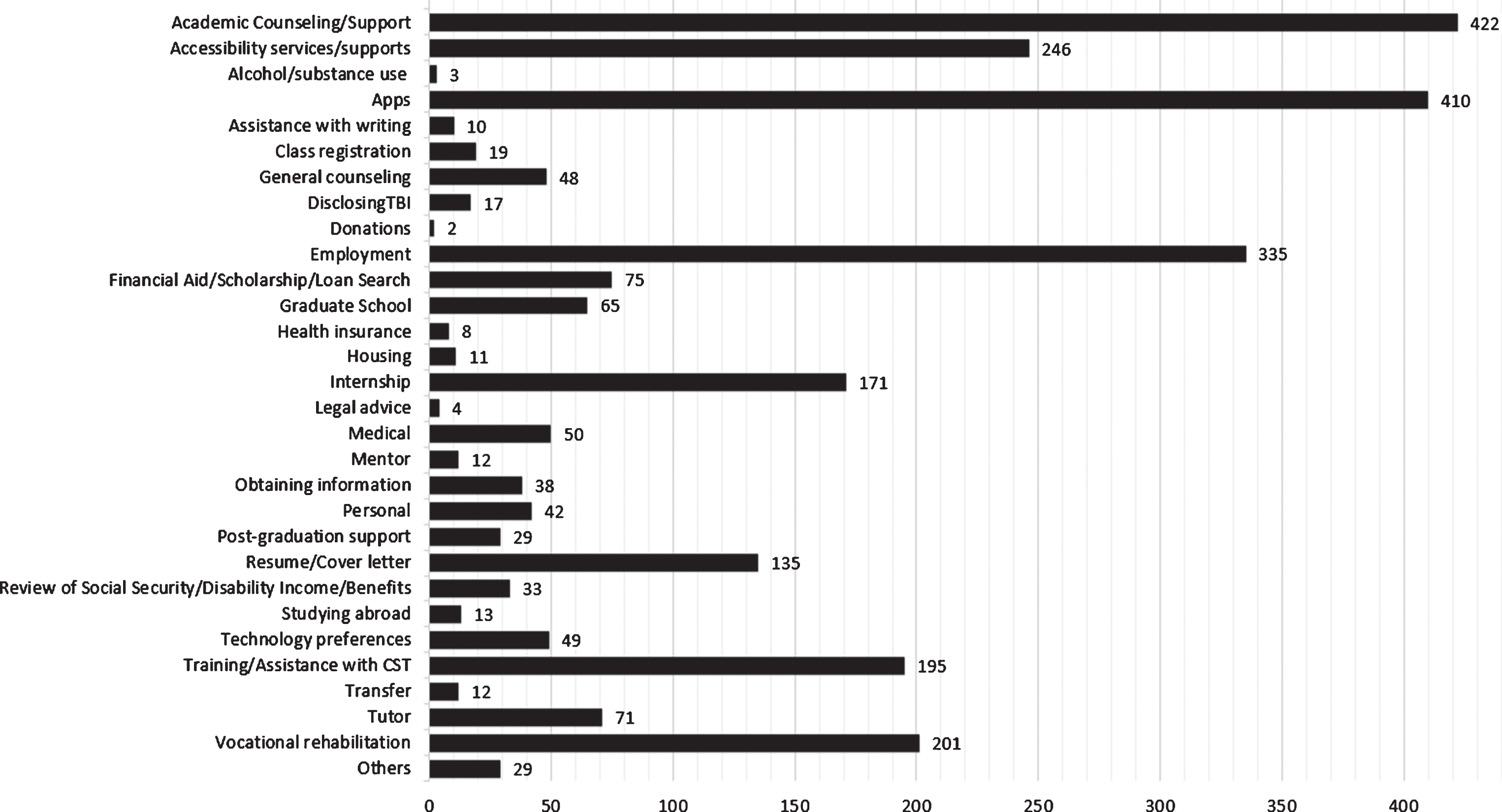
Number of quotations related to topics and services requested by students during case management meetings with TECs.
During case management meetings, students frequently reported challenges in numerous domains. Of the challenges discussed, cognitive challenges were noted most frequently, followed by psychological challenges (see Fig. 3). Within cognitive challenges, problems with memory were noted most often (N = 112). For instance, as per a TEC’s case notes, one student stated that she “cannot read or listen to the material just one time and remember it. Although she may remember that there was a conversation, she easily forgets the details.” Another student noted that when he “goes back home and visits with his friends he has to write things down to remember what he needs to do, and his friends do not have to do this.” Other problems reported include difficulty with attention/concentration (N = 68), and difficulty with planning and organizing (N = 54). The main psychological challenges reported by students included anxiety/stress (N = 86), frustration (N = 60), and irritability/agitation (N = 26).
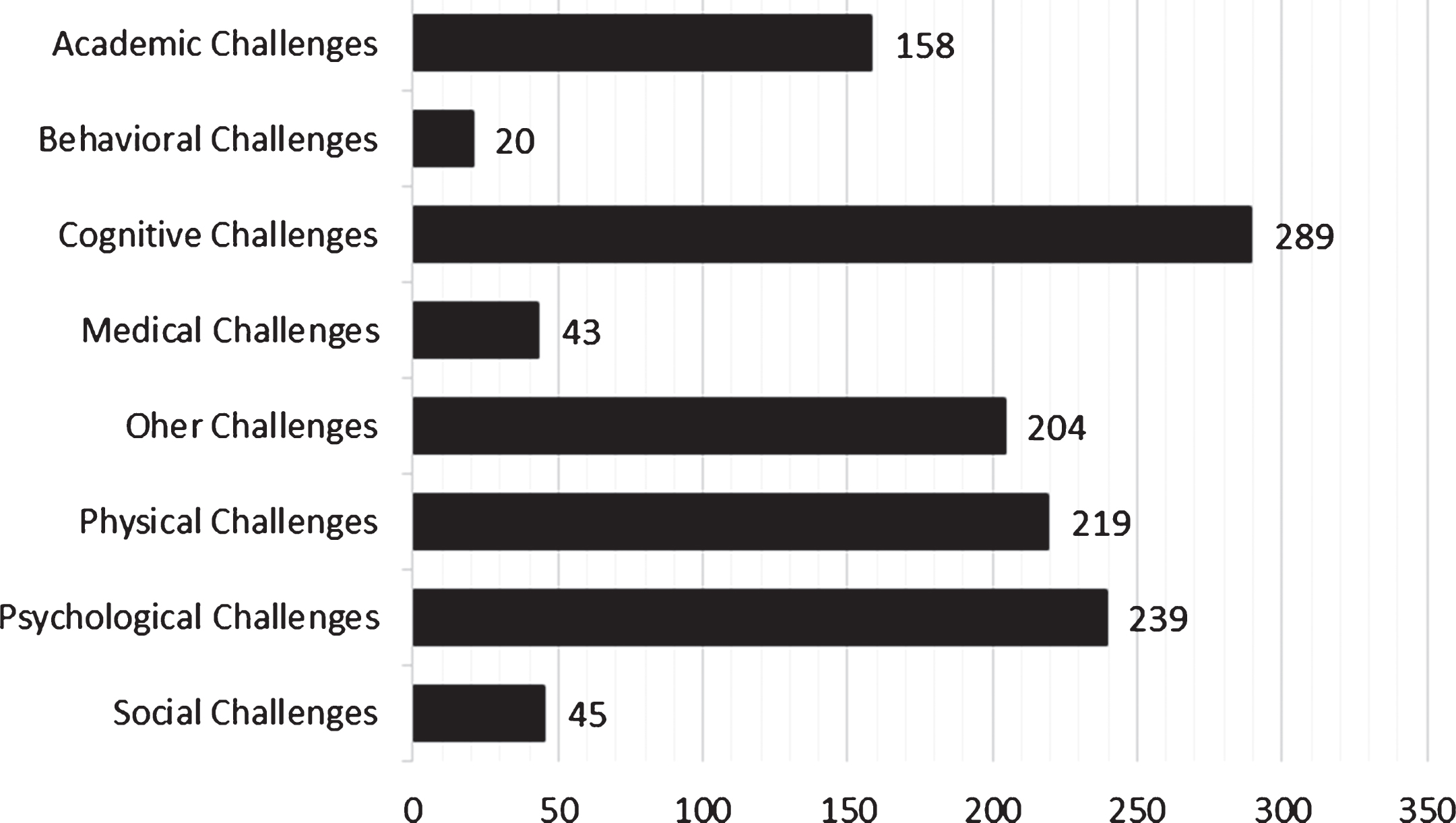
Challenges identified during case management meetings.
Examples of social challenges included feeling isolated (N = 14), not getting along with others (N = 11) and feeling different from those around them (N = 10). For example, another TEC recorded that one student “indicated that he believes his position is not being extended because he was not friendly enough and outgoing, like the other interns. Since his injury, he just isn’t ‘like that’ anymore. Post injury, he prefers to just sit and get work done without extra communication with other people; he prefers to just isolate himself.” Other challenges identified include financial challenges (N = 65), issues with family/significant others (N = 33), too many responsibilities (N = 25), and current living situations (N = 24). For example, one student noted that “she and her husband live with her mom and stepfather in the basement but was told by her mother that she would need to move out.”
As part of the case management meetings, the TECs also noted barriers they observed. Students expressed barriers related to finding a mentor (N = 17), obtaining services and supports (N = 22), using CST/accommodations (N = 50), and obtaining an internship or employment (N = 89). Barriers for finding a mentor included students not being interested in having a mentor at that time or being unclear about their career choice. The main barrier for obtaining services and supports were related to students being resistant or not feeling understood. One TEC talked with a “participant about on-the-job accommodations and what might be available to accommodate his double vision. The participant said that he prefers to ‘suck it up’ and believes that he will be fine.” In another instance, the TEC noted that “with student accessibility services the participant could get his book electronically and have it read out loud through voice dream. The participant did not want to connect with student accessibility services.” The most common reason for students not using available CST/accommodations included students having issues with student accessibility services or being more interested in other services. Students also noted they did not use accommodations because they did not know how or did not have the time. For instance, one participant felt that he “is not using it as much as he should, but he does not know what would make him use it more. He does use the iPad to get online to get copies of notes from class. He stated that he does not know how to use the apps that are provided through Project Career but fails to bring his iPad with him to meetings so that the TEC can provide one-on-one training.” Barriers for obtaining an internship or employment were most often related to students having difficulty being social or getting along with authority figures and generally exhibiting a lack of awareness. In one instance, the “TEC had discussed with the student many times that any reputable institution will not hire her to work as a counselor/therapist without certification/licensure and she cannot obtain those without a degree. The student stated ‘I will find work as a counselor, even without a degree’.”
Actions taken by participants
Working with the TECs, students often noted having taken actions on their own to make changes or address challenges (N = 353). Actions ranged from changing their class scheduled to disclosing their TBI and seeking disability supports. Figure 4 shows a list of actions taken by students and the number of quotations related to each action.
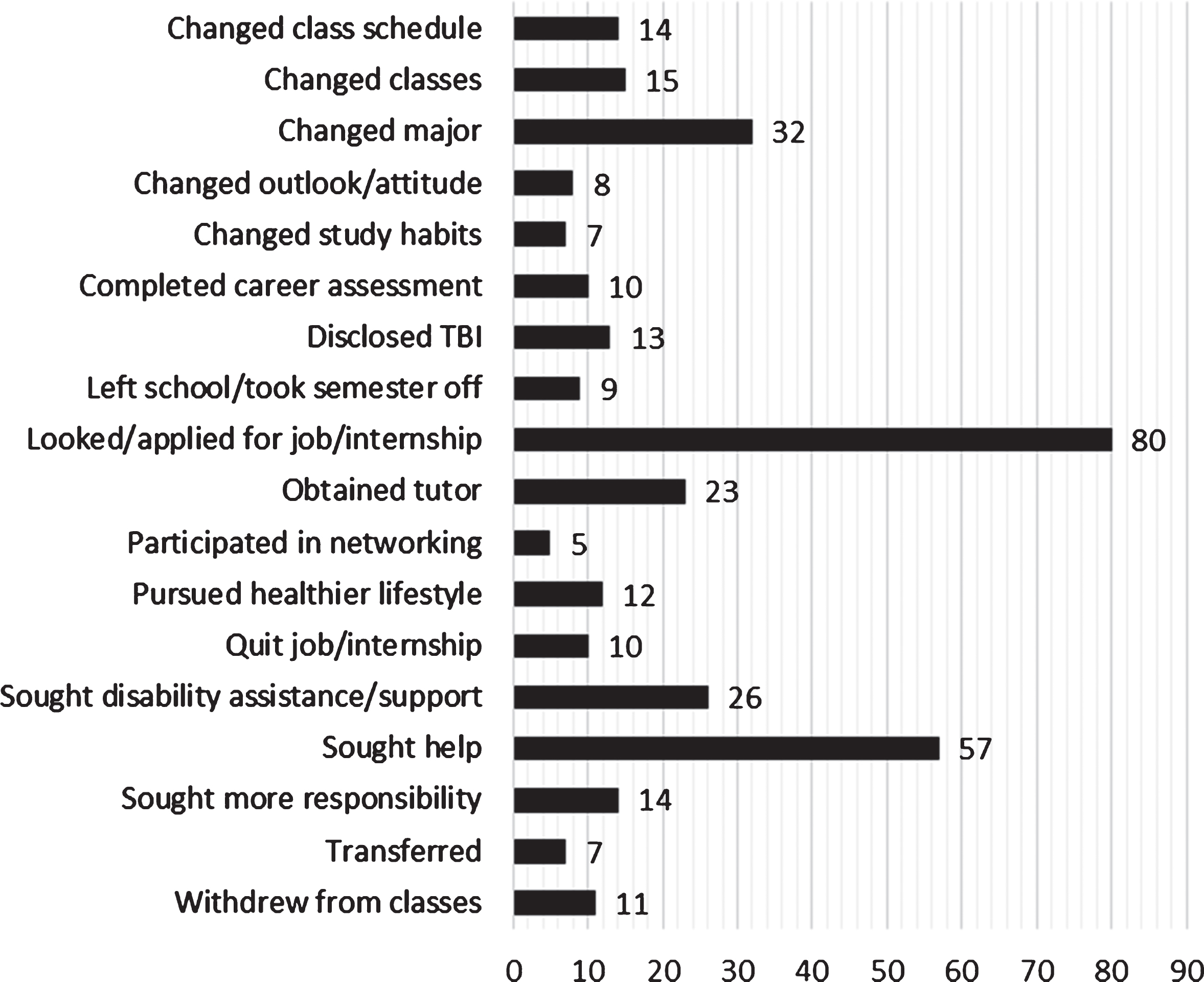
Actions taken by students on their own and the number of quotations related to each action.
The majority of quotations were related to positive outcomes (N = 768). Improvements or good outcomes in school and test performance was mentioned most frequently (N = 171), followed by comments related to the positive impact of apps (N = 95), positive outcomes overall (N = 83), and the use of technology overall (N = 68). Additional positive outcomes mentioned frequently were related to employment (N = 57) and social participation (N = 40). Sample quotations of positive outcomes can be seen in Table 2.
Sample quotations related to key positive outcomes
Sample quotations related to key positive outcomes
The present results highlight that a model which combines the best practices from the CST and vocational rehabilitation fields can be effective in successfully supporting civilian and veteran students with TBI in undergraduate settings. Specifically, the individualized supports and use of universal technology, in the form of iPads and apps, seem to be effective tools for helping students improve academically and transition to meaningful employment. Although the project was originally conceptualized as a model for improving academic and employment outcomes specifically, insights from the students demonstrate that the model is also helping improve students’ overall satisfaction and functioning.
TBI impacts the lives of millions nationwide. The challenges that result from TBI can be especially detrimental for young people who have many productive years ahead of them. For students in undergraduate settings, long-term challenges related to their TBI can contribute to lower grades and lower likelihood of graduating, which in turn will decrease their chances of succeeding in the competitive job market. Given that education is a major pathway to employment, it is essential that individuals with TBI receive effective supports to help them succeed, obtain meaningful employment, and become productive members of society. This development project shows that there are existing strategies that can be implemented to help improve academic and employment outcomes for adults with TBI. Testing the model using a research-based approach, with randomly constituted control groups and standardized implementation, will be key to verify the causal relationships among the model, its components, and positive academic and employment outcomes.
Conflict of interest
None to report.
Footnotes
Acknowledgments
The contents of this article were developed under a grant from the National Institute on Disability, Independent Living, and Rehabilitation Research (NIDILRR, grant number 90DP0062-01-00). NIDILRR is a Center within the Administration for Community Living (ACL), U.S. Department of Health and Human Services (HHS). The contents of this article do not necessarily represent the policy of NIDILRR, ACL, or HHS and readers should not assume endorsement by the Federal Government.
[1]
One of the analysts was also one of the analysts who developed the initial codes. The second analysts was a different person.