



Abstract
BACKGROUND:
Employment and independent living are both critical factors for increasing the quality of life for individuals with intellectual disabilities (ID). Recently there has been an increasing number of post-secondary education (PSE) programs opening on college campuses focused on improving these outcomes. Unfortunately, there are a lack of studies measuring the efficacy of PSE programs, especially based on the type of programming provided (i.e., inclusive, mixed/hybrid, separate).
OBJECTIVE:
This study sought to determine the effectiveness a mixed/hybrid PSE program had on employment and independent living outcomes for individuals with ID.
METHODS:
A 33 item survey was mailed to the parents of all program graduates who exited between 2010 and 2016.
RESULTS:
Findings indicated 96% of students had at least one paid employment position after graduation, while the remaining 4% had enrolled in additional PSE training. However, at the time of the survey only 84% were currently employed, while 44% of graduates were living independently. On average, graduates worked 22 hours per week, earning $8.93 per hour.
CONCLUSIONS:
In comparison to the national average for individuals with ID, graduates from a hybrid/mixed PSE program demonstrated significantly higher rates of employment (84% v. 34%) and independent living (44% v. 16%).
Introduction
Employment and independent living are important factors for increasing the quality of life for individuals with intellectual disabilities (ID; Nota, Ginevra, & Carrieri, 2010; Wehmeyer & Bolding, 2001). Unfortunately, Individuals with ID often experience a combination of both intellectual and adaptive functioning deficits that impact conceptual, social, and practical domains (American Association on Intellectual and Developmental Disabilities, 2013). These deficits can negatively impact an individual’s ability to achieve independence and sustained employment due to limited cognitive abilities, which inhibits their working memory and conceptual understanding (Davies, Stock, & Wehmeyer, 2002).
Poor employment outcomes
Employment has been a central focal point for the Developmental Disabilities Assistance and Bill of Rights Act (2000), which emphasizes attainment of meaningful employment for this population. This goal has also been supported by the Individuals with Disabilities Education Act (IDEA, 2004) through transition planning for individuals with ID. As directed by IDEA, transition planning should include education and training focused on the primary goal of employment. This is critical given employment rates for individuals with ID are among the lowest of any disability, ranging between 14.7% to 34% (Butterworth et al., 2013; American Community Survey [ACS], 2012; FINDS National Survey, 2010; HSRI, 2012; Human Services Research Institute, 2012; Siperstein, Parker, & Drascher, 2013).
Even more disheartening is that very few individuals with ID are employed full time, receive competitive wages, or work related benefits (Anderson, Larson, & Wuorio, 2010; Human Services Research Institute, 2012; Siperstein et al., 2013; Siperstein, Heyman, & Stokes, 2014). The average salary for adults with ID was $7.82 per hour, with only a quarter (24%) of those employed receiving job benefits (National Core Indicator, 2014).
Poor independent living outcomes
One of the core principals in the Americans with Disabilities Act of 1990 (ADA, P.L. 110–325) is the right to live independently in one’s community of birth or choice. Unfortunately, according to the 2009–2010 National Core Indicator Survey only about 16% of adults with ID live “on their own” which includes independent home/apartments, or apartment programs. The survey also found that approximately 26% of individuals with ID live in group homes, while 27% live in a parent or relative’s home, and 20% remain in specialized institutional facilities. Young adult data analyzed by the National Longitudinal Transition Survey 2 (NLTS2) reported similar findings. NLTS2 found that within six years of high school graduation only 21% of individuals with ID were living independently (living alone, with spouse, partner, or roommate). This is less than half the rate of their same-age peers without disabilities (44%; Sanford, et al., 2011).
Post-secondary education programs for individuals with ID
Effective transition services entail a coordinated set of activities for students with disabilities. The Office of Special Education and Rehabilitative Services (OSERS, 2017) recommends these activities include (a) transition planning opportunities and programs, (b) transition services and requirements, (c) education and employment options after leaving secondary school, and (d) supporting decisions made by individuals with disabilities. An increasingly popular approach for improving the long term outcomes for individuals with ID is to attend postsecondary education (PSE) programs at traditional colleges to receive additional training (Grigal, Hart & Weir, 2012). In 2008, the Higher Education Opportunity ACT (HEOA) (P.L. 110–315) was passed to help increase participation of individuals with ID in PSE programs, with a specific emphasis on employment (Grigal, Hart, & Weir, 2013). HEOA also made federal financial aid available to eligible students attending a college transition program. Additionally, typical college enrollment requirements were waived, and requirements for inclusive participation were added. HEOA also funded several model PSE programs, and opened a national technical assistance center. As a result, over the last decade there has been a dramatic expansion in the number of PSE programs across the nation. Currently, there are 266 PSE programs advertised on thinkcollege.net, including 101 Community College programs, 139 4-Year College or University Programs, 9 Technical or Vocational/Trade School, and 17 “Other” PSE programs.
Post-secondary program models
While PSE programs vary tremendously in regard to the types of courses and services offered, they are typically categorized into three distinct types: inclusive, substantially separate, and mixed/hybrid models. In inclusive PSE programs students receive individualized services while enrolled in traditional college courses, certificate programs, and/or degree programs (either for audit or credit). Individual services may include an educational coach, tutor, technology, or natural supports. Programming is focused on the student’s career goals and individual visions, which drives a student’s course of study and employment experiences. In contrast, substantially separate models focus on students with disabilities taking classes (e.g., life skills, transition classes) with other students with disabilities. There may be employment opportunities offered (both on and off campus), but are often on a rotation basis through pre-established employment times. Lastly, the mixed/hybrid model combines both an inclusionary setting (e.g., academic classes, social activities) with typical college students, along with classes taken with other students with disabilities to teach specific skills (e.g., independent living, employment, personal banking). This model also typically includes employment either on or off campus.
Efficacy of PSE programs
To date there have been a limited number of studies investigating the efficacy of PSE programs based on graduate outcomes, especially in the areas of employment and independent living. Think College reports that individuals with ID who attend PSE programs have higher employment rates (48% v. 32%) and weekly wages ($326 v. $195) than those who don’t (Migliore, Butterworth & Hart, 2009). The highest rates of employment (58%) and weekly wages ($338) reported were among individuals with ID who graduated from PSE programs. One of the most recent literature reviews found that students who participated in PSE programs were twice as likely to secure competitive employment compared to individuals who did not attend PSE programs (Southward & Kyzar, 2017). Unfortunately, data on PSE programs is limited given only half (54%) of all PSE programs collect follow-up data on their graduates (Grigal et al., 2015). Additionally, employment measurement by Think College surveys are only completed at one point in time (90 days after graduation), which doesn’t measure long term outcomes. The purpose of this study is to determine the effectiveness or outcomes of a mixed/hybrid PSE program for individuals with ID. To date no studies could be identified that report outcomes on independent living or employment of graduates based on the type of PSE program attended (i.e., inclusive, mixed/hybrid, separate). Our particular concerns are with the impact of a hybrid PSE program on graduates’: (1) employment rate and wages, and (2) ability to live independently.
Methods
Program characteristics
This study investigated graduates outcomes of a mixed/hybrid PSE program for individuals with ID between the ages of 18 – 26. The program is located on a medium sized public university in the Southeastern United States. The program provides an integrated course of study with a primary focus on employment preparation and independent living. The program is comprised of a 2 year Basic, and an extended 2 year Advanced Program. During the Basic Program, students live on-campus in 4 bedroom apartments under the direct supervision of an independent living assistant. Upon completion of the Basic Program students who demonstrate the necessary safety skills to live independently are invited back to participate in the Advanced Program (AP). These students move into apartments off campus without an independent living assistant, but are monitored closely by a transition specialist as they practice independent living skills (e.g., cooking, cleaning, shopping, paying bills).
The PSE program has enrolled 87 students since starting in 2009. Thirty-seven of these students are currently enrolled in either the basic or advanced program. Of the 50 students who are no longer enrolled, 31 (62%) successfully graduated from the program. Twenty-five completed the basic two year credential, while six graduates earned the more recently added four year AP credential. There were 19 (38%) students who enrolled, but did not graduate from the basic program. Seventeen of these students left voluntarily due to a variety of reasons ranging from (a) disinterest in attending either classes or employment (n = 12), (b) financial hardship (n = 3), or (c) transferred to another PSE program out of state closer to their home (n = 2). Two students were dismissed from the program for repeatedly demonstrating unsafe behaviors (e.g., physical aggression).
Academics
During the basic program of study, students participate in 17 hours of academic instruction each week which focuses primarily on functional living skills. Subjects include mathematics (e.g., budgeting, banking), literacy (e.g., reading maps, bus schedules, cooking directions, menus), life skills (e.g., cooking, cleaning, personal hygiene, relationships, shopping), and employment (e.g., appropriate dress, time management). Students also select from a variety of traditional university courses with an emphasis placed on promoting an active lifestyle (e.g., bowling, dance, yoga). Students enrolled in the advanced program participate in fewer classroom hours of instruction (12 hours per week) due to increased work requirements.
Employment training
During the first year of study, students rotate through a series of month long unpaid internships across four different employment settings (i.e., retail, food services, distribution center, hospitality industry) to assess individual employment skills and interests. During the second year of the program, students participate in paid employment both on and off campus. All students receive ongoing support and supervision from a job coach to provide additional training as needed. First year students receive 60 minutes of weekly instruction in an employment class, with an additional 360 minutes of on-site employment training from a job coach. Job coaches work carefully to ensure that students are matched by interest, skill set, and schedule availability. The level of job coach support is reduced to 60 minutes during their sophomore year. During this time students also work on developing their navigation and time management skills to foster punctuality and independence. Students accepted into the advance program are expected to work a minimum of 20–25 hours per week to enhance job stamina and ready them for full time employment upon graduation.
Self-determination
Self-determination is vital to improved life outcomes for individuals with ID (Wehmeyer, 2007). Self-determination is taught, practiced and reinforced through a variety of methods including weekly counseling sessions, and the use of Person Centered Planning (PCP). The person centered process focuses on the individual’s strengths and abilities, rather than limitations. PCP helps shift the power of the decision making process from caregivers and professionals to the individual themselves. Students also take a self-advocacy course, where they learn about their disability and ways to advocate for themselves on the job site and within the community. Self-advocacy skills include how to call and talk to their boss, make doctor’s appointments, etc. Students also choose their own traditional classes they register for, as well as what clubs they want to be involved in (e.g., equine, swimming team, adaptive sports, community involvement, Greek life, athletic internships).
Social life
Throughout the PSE program, every student is paired with a traditional student who volunteers as a peer mentor. Mentors meet with students for at least an hour each week throughout the entire program. Students also attend social events with their mentors during the academic school year (e.g., bowling, dinner). Mentors and students work closely together to create achievable social and or behavioral goals throughout the course of the semester. In addition to time spent with their mentor, all students participate in a variety of social activities (e.g., club activities, church affiliated events, lunch buddies, athletic events). Currently over a third (38%) of the PSE students are involved in Greek life, as well as other club opportunities on campus.
Physical and mental wellness
Exercise and nutrition strategies are embedded within the program to help foster lifelong healthy living. Students participate in five workouts sessions each week that include a combination of both group activities (e.g., Zumba), as well as individual physical workout sessions (e.g., lifting, swimming). Students also participate in 90 minutes of nutrition classes each week that encourages healthy eating. In addition, a mental health counselor provides weekly group and individual training sessions addressing relationship issues, and communication skills to help students become successful decision makers as well as self-advocates. The counselor provides conflict resolution training to the students, and works with the Independent Living Assistants to help mediate conflict that arises between roommates.
Survey methodology
Instrument and data collection
The survey shown in Table 1 was mailed to the parents of all 27 PSE graduates who exited the program between the years of 2010 to 2016, along with a self-addressed stamped envelope to return the form upon completion. The survey consisted of 33 items grouped in seven sections, including: demographic information, employment experiences, transportation, professional development, health and fitness, social/community activities, and program feedback. The format of responses to questions included yes and no responses, multiple choices, open-ended responses, and Likert-type responses. If no response was received within two weeks, a follow up e-mail was sent out with an electronic copy of the survey attached. A third and final attempt to contact families was made through a phone call, in which a doctoral student read aloud the survey and recorded all responses. All survey results were coded and entered into an excel spreadsheet by the second and fourth author, and reliability was checked by another doctoral student. Interrater reliability was 95%. Discrepancies were discussed, until 100% agreement was reached.
Survey for Post-Secondary Education Program Graduates
Survey for Post-Secondary Education Program Graduates
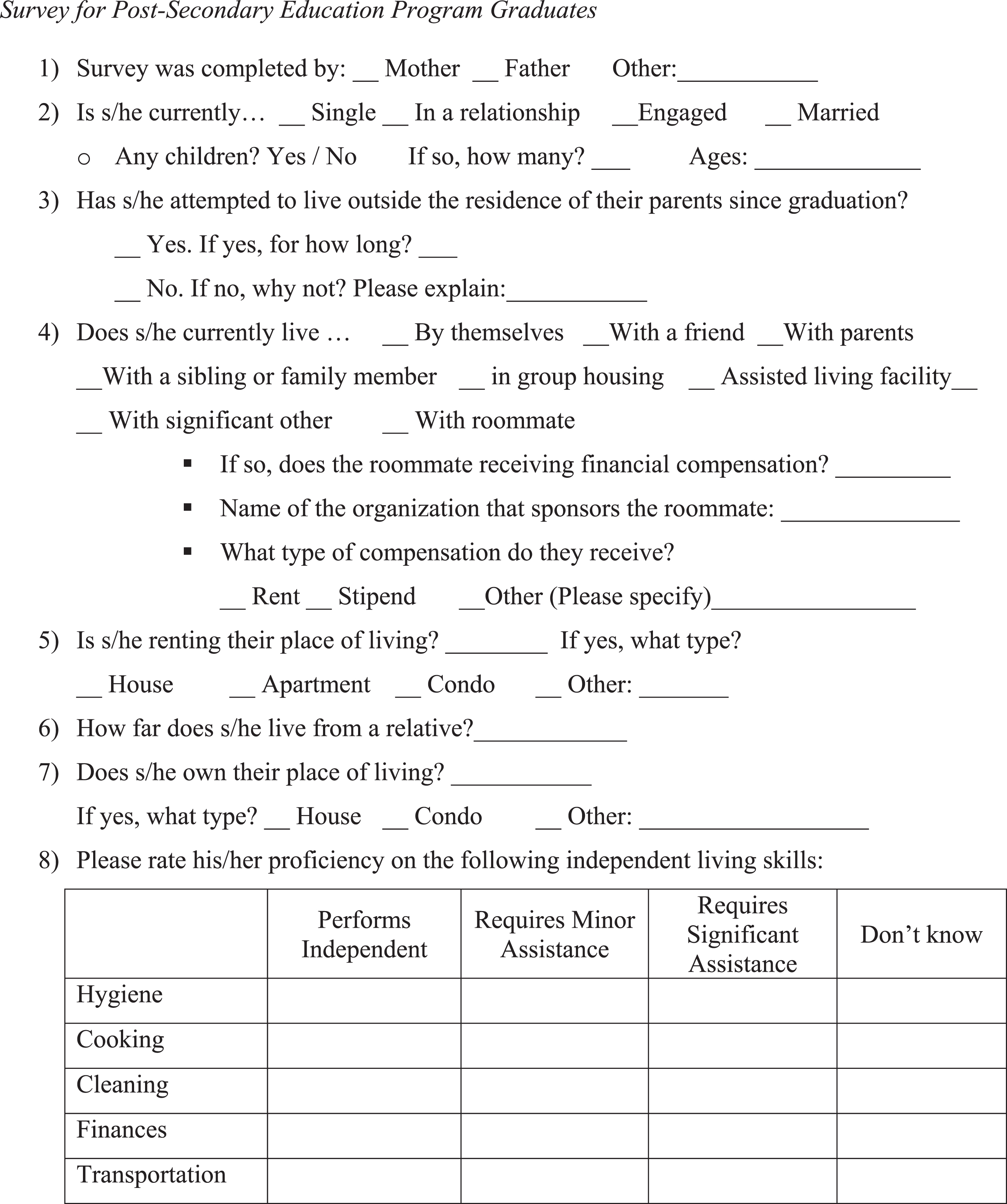
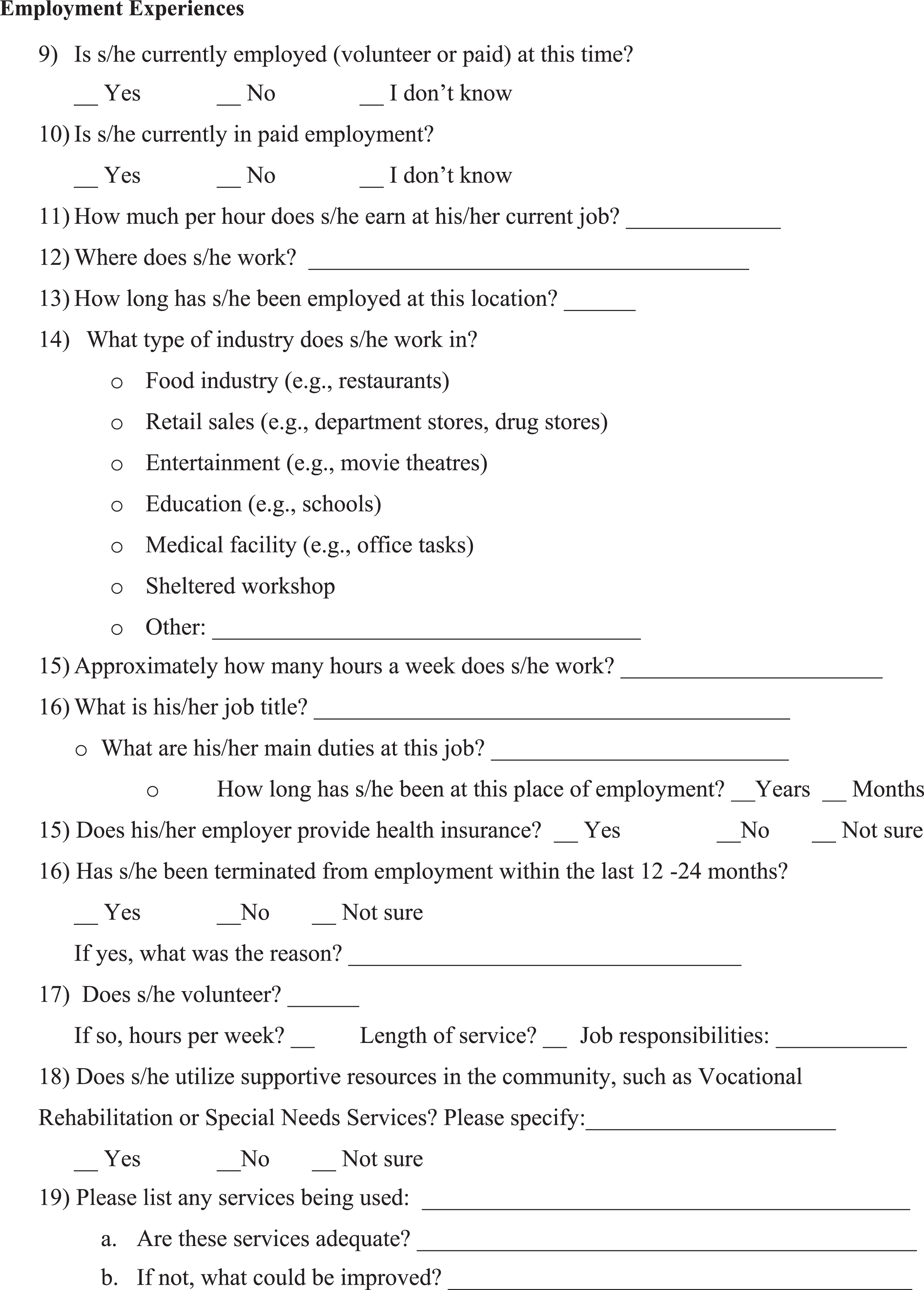
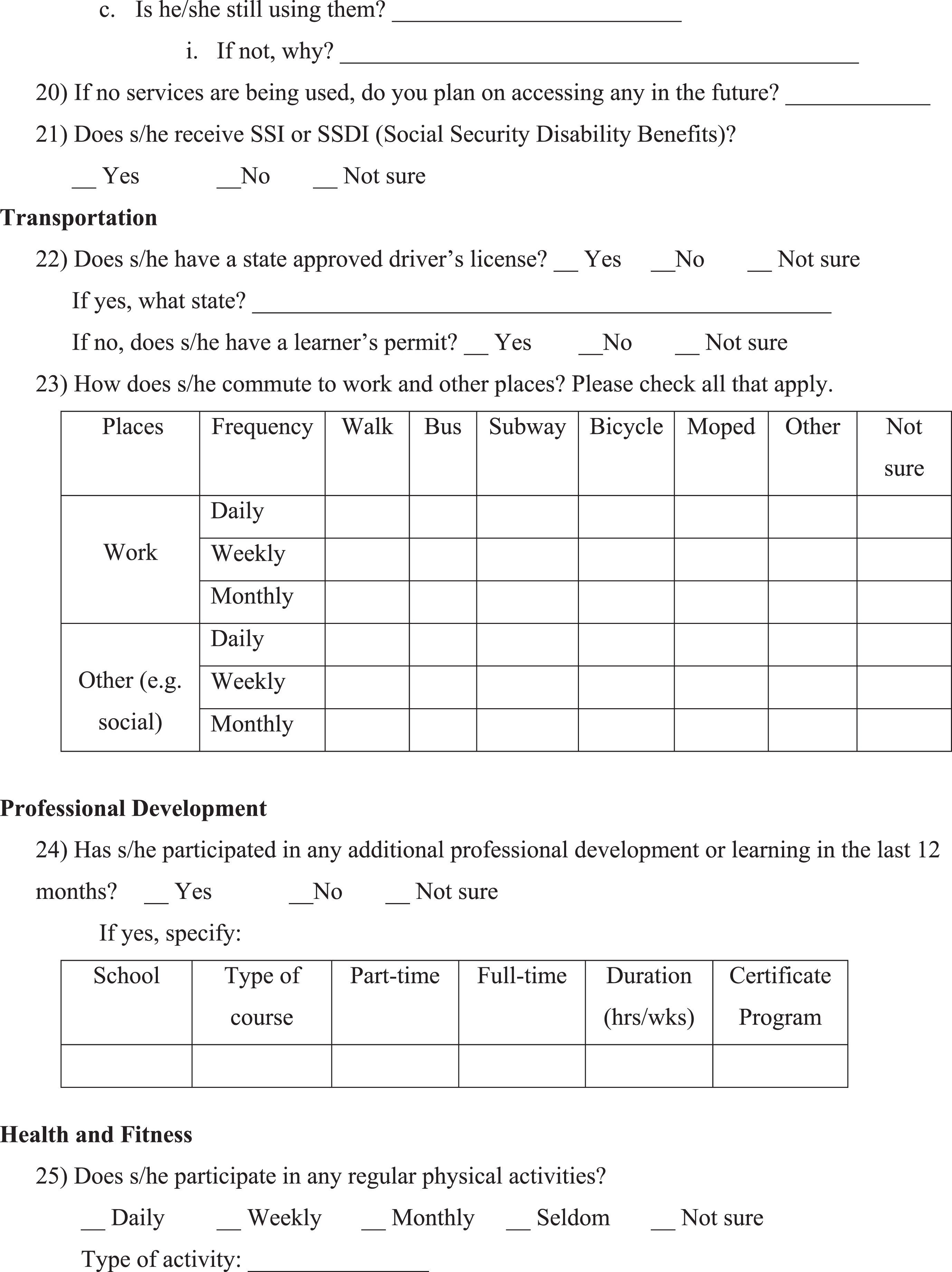
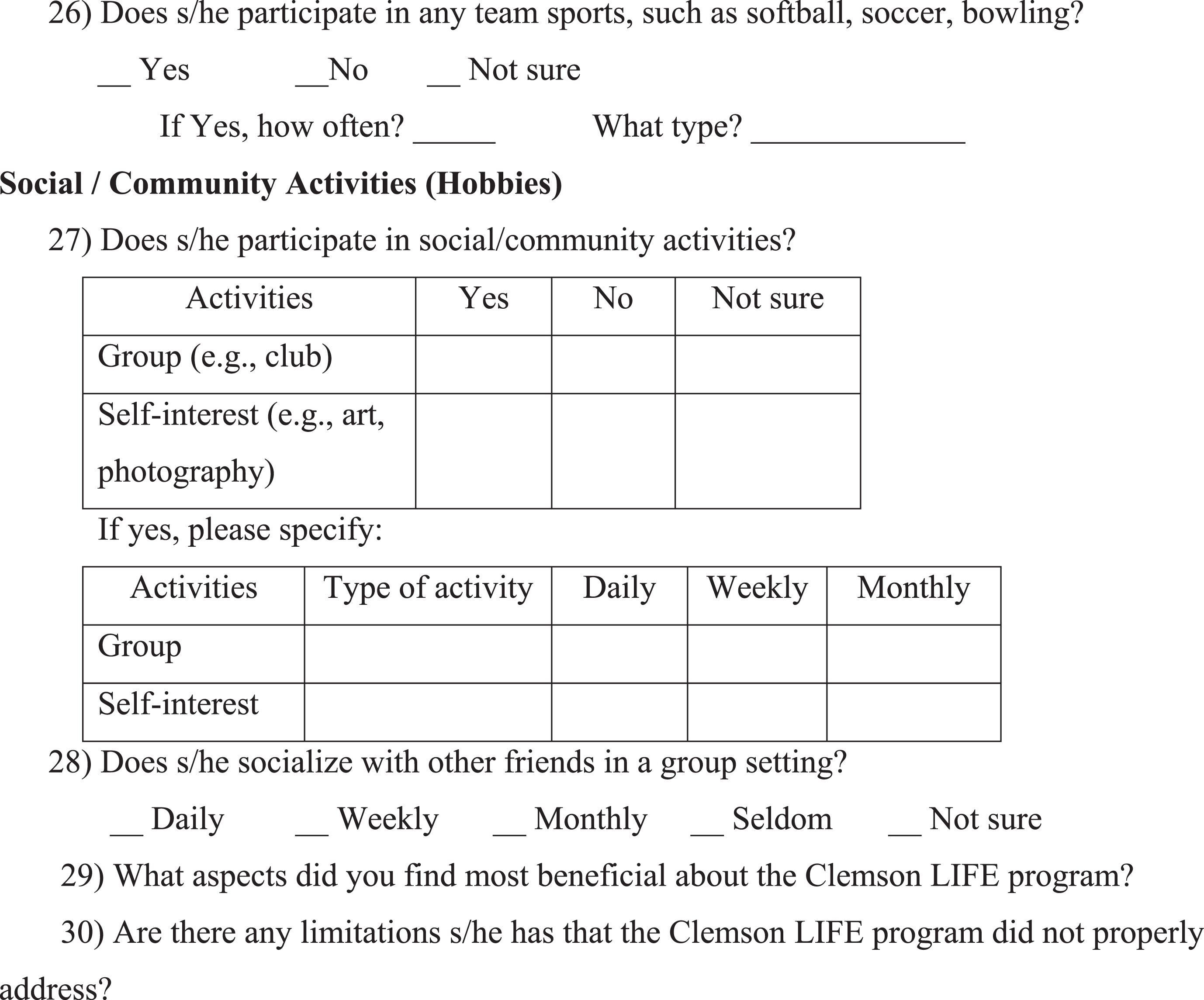
In all, 25 of the 27 graduate surveys were returned, resulting in a 93% response rate. Ten surveys were sent back completed following the first mailing. Two additional families responded electronically through email, and 13 families completed the survey over the phone. Graduates were residing in nine states (FL, GA, IL, MA, NC, PA, SC, TN, and VA). Of the 25 graduates that surveys were completed for, 72% (n = 18) were identified as having mild ID (51–69 IQ), 24% (n = 6) were identified with moderate ID (35–50 IQ), and 4% (n = 1) were categorized as severe ID (20–34 IQ).
Employment outcomes
Employment industry and wages
Of the 25 respondents 96% (n = 24) had at least one paid employment position following graduation, while 4% (n = 1) had enrolled in additional post-secondary education training. However, at the
time of the survey, only 84% (n = 21) were currently employed, or continuing their studies in higher education. Figure 1 shows a breakdown of graduates employed by industry, which included retail, food services, grocery services, education services, and recreation services. On average, graduates were earning $8.93 per hour. Although the disability category (e.g., mild ID, severe ID) did not affect wages, the type of employment did. Figure 2 provides a comparison of graduate wages by industry. Individuals working in retail earned the highest hourly wage at $10.87 per hour, which was $3.20 more than those employed within the food industry, which had the lowest wages.
The survey also elaborated on why 16% (n = 4) of graduates were not employed at the time the survey was administered. One graduate had recently moved across state, and was currently seeking employment. The second individual was fired for being late due to transportation problems (e.g., consistently missing the bus). A third individual lost his paid position due to downsizing at the place of employment. However, the graduate’s parents stated they believed it was really because he was not able to keep up with the fast pace that was necessary for the position. The fourth student was never employed, but had enrolled in another college program.

Industries Graduates are Employed.

Hourly Wages of Graduates by Industry.
Results showed graduates worked between 10 to 40 hours per week, with an average of 22 hours across a variety of employment settings. However, only 12% (n = 3) of graduates were working 40 hours per week. The survey showed 32% (n = 8) of graduates worked between 20–39 hours per week, while 35% (n = 7) worked between 10–19 hours per week. Given the limited number of individuals working full time, it was not surprising to find that only 8% (n = 2) were provided the option of receiving medical benefits by their employers. Another 4% (n = 1) were only offered vision and dental benefits.
Independent living
A total of 44% (n = 11) of graduates reported living independently. Of those respondents, three quarters indicated that they were living with a roommate who also had a disability. Almost all of these individuals knew their roommate prior to sharing housing with them. Two-thirds of those living independently were renting their living spaces, while the remaining third resided in housing purchased by a caregiver (e.g., parent).
Activities post-graduation
Community involvement
Graduates reported remaining active within their local communities, with 48% (n = 12) of individuals volunteering for an average of 11.4 hours per week. Places that graduates volunteered included churches (n = 4), educational settings (n = 3) recreational facilities (n = 3), medical facilities (n = 1), and a community food bank (n = 1). In regard to social activities, 24% (n = 6) of respondents stated that they participated in social and community events. However, relatively few graduates sought out community support services. While 16% (n = 4) of respondents stated they had at one time used community support services, only 4% (n = 1) reported using vocational rehabilitation services. However, 20% (n = 5) of graduates did attend additional professional development or educational programming.
Maintaining a healthy lifestyle
Practically all (91%) graduates who responded to the cooking section reported preparing their meals independently at least several times per week. Additionally, 48% (n = 12) of respondents reported participating in physical fitness activities on either a daily or weekly basis, while 24% (n = 6) were involved in some type of team physical fitness activity (e.g. Special Olympics, community recreation center teams).
Programmatic feedback
Program strengths
Respondents were asked to state what they believed were the most beneficial aspects of the PSE program. Comments were grouped within six themes, including independent living skills, job coaching/skills, financial skills, transportation/navigation skills, self-advocacy skills, and social integration. Nearly two-thirds (60%) ranked independent living skills (e.g., hygiene, laundry, cooking, paying bills) as being the most valuable skills learned, while job coaching/skills (e.g., understanding responsibilities, time management) were considered the most important aspect of the program by 32% (n = 8) of respondents. Social integration and self-advocacy were both named by 24% (n = 6) of graduates. Other areas mentioned included financial skills (e.g., paying bills) by 16% (n = 4), and community mobility (e.g. using bus transportation effectively) by 16% (n = 4).
Areas for programmatic improvement
Parent responses for improving the PSE program focused on several areas, including: community mobility, employment, nutrition and transition services provided after graduation. The most common feedback addressed the need for additional services to be provided after graduation. For instance, 16% (n = 4) of graduates suggested improving transition services from the college environment to home which was often located in a different state. A similar number of parents 16% (n = 4) stated the need for assistance with job placement once the graduate moved back home. Related to this were comments requesting additional assistance with post-graduation living arrangements, which was mentioned by 8% (n = 2) of respondents. The next most commonly cited areas for improvement dealt with community mobility and employment, with 12% (n = 3) identifying both of these areas as concerns. These parents requested additional practice on independent transportation/navigation skills, as well as providing additional job choices for students. Independent living problems (e.g., difficulties with roommates) were named by 8% (n = 2). In addition, 4% (n = 1) of parents expressed concerns with either (a) the behavior management level system used during the Basic program, (b) insufficient nutritional services, and (c) the program not being challenging enough.
Discussion
Results from 25 graduates of a mixed/hybrid PSE program indicated that nearly all (96%) graduates had at least one paid employment position after graduation, while the remaining students had enrolled in additional post-secondary education. However, at the time of the survey, only 84% (n = 21) were currently employed or continuing their studies. These employment outcomes are more than double the national employment rate for individuals with ID which ranges from 14.7% – 34% (Butterworth et al., 2013; ACS, 2012; FINDS National Survey, 2010; HSRI, 2012; Siperstein et al., 2013), as well as that of TPSID funded programs (41%; Grigal et al., 2015). On average graduates earned $8.93 per hour, which was also significantly higher than the national average of $7.82 for adults with ID (National Core Indicator, 2014). Just as importantly, 44% (n = 11) of all graduates were living independently, which is nearly three times the national average (16%) for adults with ID (National Core Indicator, 2014).
Differences in employment outcomes
Interestingly, employment was not predicted by the graduates’ IQ. In contrast, results showed 88% graduates with severe or moderate ID were employed, compared to 78% of graduates who fell within the mild ID range. Additionally, graduates in the severe and moderate ranges worked on average 17.7 hours per week, which is approximately the same number of hours as their peers with mild ID, who averaged 21.4 hours per week. The same was also true for wages earned. Graduates with severe and moderate ID earned on average $9.21 per hour, while their peers with mild ID averaged only $8.62 per hour. This data is encouraging in that disability category is not necessarily determining of either wage or hours worked.
Of the former graduates, a large percentage, 84% (n = 21) attended the PSE program for less than 4 years. Only 19% (n = 4) attended the PSE program for a full four years, given this was a recent addition to the program. On average, students who attended the program for less than 4 years were working an average of 22.38 hours per week, and earned an average wage of $8.90 per hour. Students who attended 4 years worked more hours (27.5/wk), but earned slightly less ($8.05/hr). The lower wages is likely due to these individuals all being recent graduates, and not being in the work force for as long.
Employment industries
Students are employed in a variety of jobs, with the majority placed within food, grocery, and retail industries. An interesting finding was the large wage differential between industries. Graduates employed in a retail setting made on average $2.75 more per hour than graduates employed within other industries. This is important for future job planning purposes as well as helping graduates live independently. PSE programs may find it beneficial to provide more internships and jobs in retail settings. It is worth noting however, that graduates in this industry tended to have stronger math skills, and demonstrated the ability to work with money.
Limitations
Study results should be interpreted with an understanding of their limitations. First, because of the small sample size, and the variation of ability levels within individuals with ID, results should not be assumed to generalize to all individuals with ID. This study only investigated the outcomes of graduates from a single mixed/hybrid PSE program. In addition, as with all surveys the information provided were self-reported and thus vulnerable to misinterpretation and inaccuracies.
Recommendations and future research
There is a need to further evaluate the efficacy of PSE programs on their ability to increase employment and independent living outcomes for individuals with ID. Perhaps the best method to achieve this is through collecting outcome data of all graduates, but only a little over half (54%) of PSE programs collect data on students who graduate (Grigal et al., 2015). Given the diversity in the types of PSE programs (inclusive, segregated, mixed/hybrid) available as well as their focus (e.g., employment, independent living, academic course access), it is critical that the economic value of PSE programs be evaluated. This is critical for many families given the costs of attending a PSE program can be prohibitive, averaging $11,637 for in-state students at four year colleges, to $27,815 for out-of-state students (Grigal, et al., 2015). Given these costs, parents must evaluate the opportunity costs of allocating savings towards additional education to increase a child’s potential future earnings and independence, versus contributing towards a special needs trust to provide for their long term needs. One important factor in determining the value of PSE program is the potential benefits a program has upon the employment and independent living outcomes of its graduates.
Another area worthy of further exploration is PSE program completion rates. The current PSE program’s 62% graduation rate is comparable with the 59% 6-year graduation rate found among all 4 year degree public institutions (Institute of Educational Sciences, 2017). While some college attrition models focus on the economic perspective of program dropouts, other models for evaluating student attrition focus on student experiences while enrolled in college (Tinto, 1993). The student perspective model suggests that students who are well-integrated into the academic and social realms of the college are more likely to graduate than those students who are not (Stuart, Rios-Aguilar, & Deil-Amen, 2014; Tinto, 1993). In contrast, students who are poorly integrated either academically or socially have an increased likelihood of dropping out of college. Future studies should consider investigating student sense of belonging or inclusion in the college campus.
Conclusion
Overall, this study found graduates of a mixed/hybrid PSE program which combines both an inclusionary setting (e.g., academic classes) with typical college students, along with classes taken with other students with disabilities to teach specific skills (e.g., independent living) attained significantly higher rates of employment and independent living than their peers. Findings from this study stress the importance a PSE program can have in the lives of individuals with ID. While employment outcomes exceeded the national average, findings were consistent with prior studies, showing that individuals with ID were rarely employed full time, and did not typically receive work related benefits (Siperstein et al., 2013; Human Services Research Institute, 2012; Siperstein et al., 2014). Currently, there are 266 PSE programs available to individuals with ID, however, the training provided by each varies significantly. While the continued expansion of PSE programs is important, it is also imperative that the efficacy of these programs be assessed as are traditional college programs.
Conflict of interest
None to report.