



Abstract
BACKGROUND:
The passage of the Workforce Innovation and Opportunity Act has placed renewed emphasis on employer engagement for vocational rehabilitation (VR) agencies, but many rehabilitation counselors are not comfortable with this activity.
OBJECTIVE:
The purpose of this study was to evaluate the effectiveness of a business development training created specifically for rehabilitation counselors for the blind.
METHOD:
We utilized a switching-replications design that included providing the 19-hour training to counselors within four VR agencies at two different time points, and we collected outcome data over an 18-month time span. Outcome measures were self-efficacy for business development, adherence to the dual customer approach, business development knowledge, and self-perceived business development knowledge, skills, and comfort.
RESULTS:
Results indicated that the training was associated with an improvement in all outcomes, although its effectiveness for some outcomes differed by agency. The effectiveness of the training over time differed by agency. One agency, in particular, exhibited significant increases on all outcome measures that were retained over the course of the study.
CONCLUSIONS:
Agency context was relevant when implementing this training, and incorporating agency-wide changes to support counselors in conducting business development activities may be necessary for such a training to be effective over time.
Keywords
Introduction
Labor market data has consistently indicated a large negative gap in employment rates for individuals who are blind or visually impaired compared to the general population (McDonnall & Sui, 2019). The most recent data from the American Community Survey confirms that this is still true today (U.S. Census Bureau, 2019), with employment rates of 44.9% for people with visual impairments compared to 77.8% for people without disabilities in 2018. One potential method to ameliorate the low employment rates of this population is through vocational rehabilitation (VR) agency engagement with employers. Employer engagement creates a bridge between employers and VR consumers that can potentially help consumers obtain employment.
In previous decades, VR agencies relied primarily on a supply-side method of employer engagement, where VR counselors emphasized the employment needs of the consumer with a disability (Chan et al., 2010; Luecking, 2008). More recently, particularly within the last 15 years, VR agencies have shifted to the dual customer approach, also referred to as the business relations model. With this approach, VR counselors simultaneously address the needs of two customers; the consumer, in need of employment, and businesses, who seek competent labor to contribute to the organization’s continued operations. To improve employment outcomes among individuals with disabilities, VR counselors are expected to engage with local businesses to link consumers in need of employment with businesses who need individuals to competently fill labor needs.
This shift to the dual customer approach has occurred concurrently with increased attention in the literature (Buys & Rennie, 2001; McDonnall, 2016; McDonnall et al., 2013), and in general workforce initiatives (Marano & Tarr, 2004; Wills & Luecking, 2003). Recent amendments to the Rehabilitation Act in the Workforce Innovation and Opportunity Act (WIOA; U.S. Department of Labor, 2016) have served to support the importance of the dual customer approach, mandating increased attention to demand-side workforce needs and requiring increased employer engagement. WIOA requires collaboration and coordination between VR agencies and employers, allows for an expanded list of services VR agencies can provide to employers, and necessitates VR professional competency in effective engagement with consumers with disabilities and with employers. Despite the increasing attention granted to and formal mandates requiring compliance, very little research has been conducted on employer engagement, with a few notable exceptions (Haines et al., 2018; McDonnall, 2016).
Given the increasing emphasis on employer engagement, most agencies expect counselors to be active in business development (Haines et al., 2018; McDonnall, 2017). As such, it is important that VR counselors are well trained, comfortable, and confident in their interactions with businesses. Yet, several studies have identified numerous obstacles limiting VR counselors’ ability to engage with businesses. Counselors lack (a) time, resulting from heavy caseloads; (b) business development knowledge and skills; and (c) experience interacting with employers (Fleming et al., 2014; McDonnall, 2017; Schultz, 2008). Perhaps in part due to the curricula of rehabilitation counseling master’s programs, which offer limited business development or employer engagement training (McDonnall, 2017), counselors are underprepared and in need of additional training to effectively develop employer relationships (Chan et al., 2003; Froehlich & Linkowski, 2002; Lewis & Boland Patterson, 1998).
Given this documented lack of preparation and training, and also likely partially the result of longstanding supply-side approaches (Luecking, 2008), it is not surprising that employers have often been critical of VR agencies for failing to provide appropriate support (Hernandez et al., 2008), for inefficiency and lack of efficacy (Fraser et al., 2011; Gilbride et al., 2000; Henry et al., 2014), and for not reliably addressing business needs or concerns (Kregel & Unger, 1993). Further, employers have consistently regarded VR counselors as inexperienced and lacking knowledge about business practices (Locklin, 1997; Luecking, 2008). These findings further support the importance of specific training for counselors on business development.
Improving employer engagement is especially critical for VR counselors working with blind or visually impaired consumers. In addition to lacking awareness that qualified individuals with disabilities are available to fill labor needs (Domzal et al., 2008), employers also hold a variety of negative attitudes which further limit employment options for individuals who are blind or visually impaired (Coffey et al., 2014; Crudden & McBroom, 1999; Crudden et al.,, 2002; Kirchner et al., 1997; McDonnall et al., 2013). Further, studies indicate employers perceive more difficulties with hiring blind or visually impaired workers compared to individuals with other disabilities (Fuqua et al., 1984; Gilbride et al., 2000; Inglis, 2006). Employers, who desire competent employees who can positively contribute to an organization’s overall operations, do not understand how individuals with blindness or visual impairments can complete basic job requirements (McDonnall & Crudden, 2018; McDonnall et al., 2014) and have limited knowledge of available job accommodations (Chen et al., 2016; McDonnall et al., 2014). Given employers’ lack of awareness of an available blind and visually impaired labor force and lack of knowledge of their ability to perform daily job functions, VR counselors and other staff serving this population must be well trained and comfortable in employer engagement to increase employment options for this population.
Based on this demonstrated need and the requirements of WIOA, we created a business development training tailored specifically for VR counselors who work with consumers who are blind or visually impaired. The training was meant to improve counselors’ ability to effectively engage with employers by increasing their skills and confidence in this area. We expect that counselors who are more skilled, more confident, and more comfortable with employer engagement will produce more advantageous employment outcomes for blind or visually impaired consumers. Because we believe that agency context, including the support available for business development activities by the agency, is important in terms of counselors’ success with business engagement, we provided technical assistance to agency administrators as an adjunct to the training.
The purpose of this study was to assess whether the business development training was effective at improving three measured and three self-perceived outcomes for a sample of VR counselors and whether any positive impacts were retained over time. Additionally, as we hypothesized agency context was potentially relevant to the effectiveness of the training, we sought to determine whether there were significant differences in outcomes by agency, including initial effects of the training and changes over time. The following research questions were used to guide analyses: Did participation in the training result in an increase in self-efficacy for business development, adherence to dual customer approach techniques, and business development knowledge? Did participation in the training result in an increase in self-perceived business development knowledge, skills, and comfort? Did these outcomes change over time after the training? Did these outcomes change differentially by agency?
Method
Research design
We utilized a quasi-experimental switching-replications design, which is a two-group repeated measures design that generally involves three waves of measurement and two time periods of treatment, in which the treatment is repeated or replicated (Shadish et al., 2002; Trochim & Donnelly, 2006). Advantages of the switching-replications design are that it is strong with respect to internal and external validity and allows all participants to receive the treatment (Trochim & Donnelly, 2006). This design was selected to allow all agencies to receive the training, while collecting data across time to evaluate changes in the outcomes over time, before and after the training. Participants received the same treatment (the training) at different time periods; Group A received the training during the first time period while Group B did not receive any treatment, serving as a control group. At the second time period, Group B received the training and Group A did not receive any treatment. Participants were assigned to the groups by VR agency. The agencies were paired based on number of counselors, and members of each pair were randomly assigned to groups. The following table illustrates the research design, with R representing random assignment, O’s representing data collection points, and X’s representing the training. Because our study spanned 18 months, we added an immediate post-test following the training (O1A and O2B) to the design.
Participants
Study participants were from four separate agencies for the blind located in four regions of the United States (West, Midwest, Northeast, and South). Because we are interested in results by agency as well as individual results, both agency-level and individual-level characteristics are presented. The agencies varied in the number of counselors employed and eligible to participate in the study, and they experienced widely differing levels of counselor attrition during the 18-month study period. The perceived level of agency support and encouragement for conducting business development activities and perceived agency-level barriers (i.e., related to policies and procedures) to conducting business development also differed by agency. All of these agency-level characteristics are provided in Table 1.
Agency Characteristics
Agency Characteristics
aRepresents percentage of employees participating in the study who left the agency during the 18-month study period. bRepresents the percentage of all training participants (not limited to study sample) who reported barriers in agency policies or procedures that make it difficult to work with businesses and that lack of time was a barrier. Data collected during the training.
Eligibility criteria for the study were being employed by the agency in a counseling position, and either working directly with consumers (carrying a caseload) or being directly involved in business development activities. The two participants who did not carry a consumer caseload served in newly-created business relations positions and held the official title of VR counselor. They previously were regular caseload-carrying counselors for the agency. Ninety counselors completed at least one of the four surveys that were collected during the 18-month study period. Fourteen counselors were removed from the sample because they left their agencies before receiving training, or for some other reason, did not participate in the training or attended less than two-thirds of the training. In addition, three participants were removed due to the validity of their data being in question (e.g., took a very short time to complete the surveys, provided the same answer for all items) and two were removed because their agency reported that they were not responsible for business development activities. The usable sample size for this study was 71 people, with 262 observations (range of 2 to 4 observations per person). Some counselors were hired after the first data collection point, were on leave during a data collection point, or left the agency and therefore do not have full data. The characteristics of the individual study participants are provided in Table 2. The average length of time participants worked as a rehabilitation counselor was 8.13 (SD = 8.95) years, with a range of 0 to 42. The average length of time participants worked with individuals who are blind or visually impaired was 8.59 (SD = 8.49) years, also with a range of 0 to 42.
Participant Characteristics
Mississippi State University’s Institutional Review Board (IRB) concluded that this study was not human subjects research and excluded it from IRB review. State-federal VR agencies were informed of the study and its purpose via an announcement at an administrators’ meeting and personal contacts and were invited to participate in 2015 and 2016. The first four agencies that agreed to participate in the training and encourage their counselors to complete all data collection activities were selected. The four agencies were randomly assigned to receive the training at different time points: Group A (Agencies 1 and 2) received the training after the initial data collection (i.e., pre-test) and Group B (Agencies 3 and 4) received the training approximately nine months later. Within two weeks after the training with each agency, agency administrators were provided with a technical assistance report. This report included a list of recommendations for the agency to improve its business development efforts based on feedback from counselors and trainer observations. Administrators were invited to participate in a follow-up call to discuss the recommendations in the technical assistance report. The provision of technical assistance at the agency level was an attempt to move beyond simply sharing information to helping the agency move towards change in business development practices (Rudstam et al., 2013).
Counselors from each agency who met study eligibility criteria were invited to participate via an online survey, with the option of completing the survey over the phone. The initial pre-test for all participants occurred in May and June of 2016. Group A participants completed an immediate post-test after the training, approximately one month after the initial pre-test. Data collection occurred for all participants again nine months after the initial pre-test, after which Group B participants completed the training. Group B participants completed an immediate post-test after receiving the training, and all participants completed a final post-test approximately 18 months after the initial data collection. In addition to these primary data collection points, we collected quarterly data from participants about their actual business development activities.
Business development training curriculum
The curriculum was based on two primary sources: (a) the training program that the former Texas Department of Assistive and Rehabilitative Services (DARS), Division of Blind Services (now the Texas Workforce Commission Vocational Rehabilitation Services) used to prepare its staff on interacting with businesses and (b) results from a 5-year research project conducted by the first author that investigated how VR agencies interact with businesses and the outcomes of those interactions. The Texas DARS program was based on the principles of the dual customer approach, which is an often-recommended approach that is considered existing best practice on how to work with businesses (Anderson et al., 2006; Fry, 1997; Luecking, 2008; Wehman, 2017; West-Evans & Butler, 2016). Texas DARS developed their training curriculum based on this existing knowledge and personal experiences of administrators and key staff, and provided this training to all of their new staff.
The basic principles of our business development training curriculum were based on Texas DARS’ existing curriculum. These foundational elements include essential knowledge that counselors need to work with employers. Our research project supported the importance of these foundational elements and identified additional information considered important to counselors when preparing to interact with businesses. Results from the research project were incorporated into the curriculum, including data regarding employer knowledge and attitudes towards hiring people who are blind or visually impaired, what employers want from VR professionals when hiring someone who is blind or visually impaired, and identifying best practices from professionals within agencies successful at business development.
Rather than utilize the typical sales approach of existing job development curricula (e.g., DTG-EMP working knowledge, which uses the Allen Anderson model), the basis of our training approach is that working with businesses is all about relationships, not about selling. The primary goal of the training is to help counselors realize they have the skills they need to engage with businesses, and to increase their comfort level and confidence with this activity. Additional goals of the training are to (a) help participants identify barriers they are experiencing to engaging with businesses, (b) provide tools and knowledge to help them engage with businesses, (c) encourage use of counseling skills to facilitate relationship-building with employers, (d) help them play to their strengths when engaging with businesses, and (e) encourage them to engage with businesses.
The training provides a clear model to follow when conducting business development activities, including specific suggestions about how to handle each step of the business development process. The primary training approach was providing information via lecture and discussion, but the training also incorporated many hands-on activities to help the participants process and learn the material, as well as to keep participants engaged. A role play activity, in which each participant acted as the counselor, the employer, and an observer, served as a culminating activity that allowed participants to practice the strategies discussed in the training. The training required 19 hours and was implemented over a 3- or 4-day period, based on agency preference. A list of topics covered in the training curriculum is provided in Table 3.
Training Curriculum Topics
Training Curriculum Topics
Note. AT = Assistive Technology. B/VI = blind or visually impaired.
Detailed PowerPoint slides with specific notes were developed to present the training curriculum, and four trainers provided the training. After initial development of the curriculum, the entire 19-hour training was pilot tested with a group of practicing rehabilitation counselors. The pilot-test participants provided feedback and suggestions about the curriculum, which were incorporated into the training prior to implementation with the four agencies. Intervention fidelity was ensured by the detailed PowerPoint slides and the primary use of internal trainers: three trainers were employees of the agency conducting the training, and one was an employee of Texas DARS.
Participants completed online surveys that included the six outcome measures and other questions related to personal information, perceptions about agency support and encouragement for business development, and perceived importance of business development activities. These surveys, as well as additional surveys completed quarterly, also contained questions about the frequency of business development activities. Detailed information about each measure used for this study is provided in the following sections. All of the measures were modeled as time-variant variables (i.e., the value of the variables could change over time), with the exception of agency.
Job development efficacy scale
Self-efficacy for business development was measured with the Job Development Efficacy Scale (JDES; Fabian & Waugh, 2001). This 20-item scale represents three competency areas, including managing employer concerns, addressing employment barriers, and marketing services and has appropriate internal consistency reliability (Cronbach’s α= 0.81) based on several studies (Fabian et al., 2012; Fabian & Waugh, 2001; Schultz, 2008). Example items include, “I am confident that I can place my clients in competitive jobs regardless of their disabilities” and “I am comfortable meeting and talking with prospective employers.” Responses ranged from 1 to 5 to indicate Strongly Agree to Strongly Disagree. Responses from all 20 items were summed, with a possible scoring range of 20 to 100, with higher scores indicating greater self-efficacy for business development. Actual participant scores ranged from 45 to 96, with an overall mean of 68.50 (SD = 9.05).
Business relations scale
Adherence to the dual customer approach, also referred to as the business relations model, was measured with the Business Relations Scale (BRS-13; McDonnall, 2016). A formal instrument development process was used to create the BRS-13. Twenty items were developed based on existing empirical research and best practices literature. These items were rated by a panel of five business development experts from VR agencies to establish content validity, as recommended by Lawshe (1975). Fifteen items were retained based on this expert review. These items were administered to a sample of VR counselors; the two items that did not correlate with the other items were removed from the final scale. Psychometric analyses supported the scale’s reliability (α= 0.84) and construct validity (for details, see McDonnall, 2016). Scores on the scale can range from 0 to 52, with higher scores indicating greater adherence to and reported use of the dual customer approach. Actual participant scores ranged from 11 to 52, and the mean score over the course of the study was 37.70 (SD = 6.13).
Business development knowledge scale
Due to lack of an existing measure of business development knowledge, we created the Business Development Knowledge Scale (BDKS), a 23-item multiple-choice instrument based on existing sources, including business textbooks, research articles pertaining to employer preferences associated with VR services, and principles of the dual customer approach. The BDKS was further modified after review by multiple business experts and VR professionals with extensive knowledge of business development and after pilot testing with a convenience sample of 31 practicing counselors and VR professionals. Of the final 23 multiple-choice items, 10 assessed basic business knowledge and 13 measured business development knowledge. Scores were calculated as the percentage of questions the respondent answered correctly, with a possible range of 0% to 100%. The actual percentage correct for our sample ranged from 4.3% to 82.6%, with an overall mean of 50.3% (SD = 0.14).
Self-perceived business development knowledge, skills, and comfort
In addition to formal measures, we assessed how participants perceived their knowledge, skills, and comfort related to business development, as these outcomes relate closely to the goals of the training. To assess these outcomes, we utilized three single items measured on 5-point scales with a range of 0 to 4, with higher scores indicating greater levels of each outcome. Knowledge and skills were measured by participant responses to the following questions: “I have the knowledge needed to conduct business development activities.” and “I have the skills needed to conduct business development activities.” Response options were Strongly Disagree to Strongly Agree. The overall average knowledge score was 2.79 (SD = 0.88), and the average skills score was 2.81 (SD = 0.86). Comfort was measured by participant response to the following statement: “Rate your comfort level with conducting business development activities.” Response options were Very Uncomfortable to Completely Comfortable. The overall average comfort score was 2.38 (SD = 0.95).
Covariates
Four variables were utilized as potential covariates in our models: self-perceived comfort, self-perceived skills, the counselor’s self-rated importance of business development, and the number of employer contacts the counselor reported in the preceding quarter(s). Importance of business development was based on participants’ response to this question: “Rate the importance of your business development activities to your consumers’ success in obtaining employment.” Response options were on a 5-point scale, ranging from Not Important to Very Important. The scale ranged from 0 to 4, and the overall average was 3.10 (SD = 0.91). The number of employer contacts was based on self-report of actual number of new employer contacts and follow-up contacts with employers, obtained in the primary and quarterly data collections. The average number of contacts reported per quarter, in the most recent preceding quarter (for the first time point for all and the immediate post-test for Group A) or three quarters (for the second and third time point for all and the immediate post-test for Group B), was utilized as the covariate. Actual values ranged from 0 to 25, with an overall mean of 4.54 (SD = 5.81) employer contacts per quarter.
These covariates were entered into models based on theoretical belief that they may be important to the primary outcomes of interest. For example, job development self-efficacy was believed to potentially be influenced by all four covariates, so all four were entered into the JDES model. Alternatively, only actual employer contacts were thought to potentially influence the self-perceived outcomes, and therefore this was the only covariate entered into the self-perceived knowledge, comfort, and skills models.
Time
Time was measured in months since pre-test, with pre-test month coded as zero. Participants from both groups had data at pre-test and at 9 and 18 months after the pre-test, while Group A participants also had data at one month and Group B participants had data at 10 months.
Training
Training had a value of 0 prior to the receipt of the training, and a value of 1 after the receipt of the training. Training was 0 for all participants at pre-test (month 0) and 1 for Group A participants at all following time points. Training had a value of 0 for Group B participants at month 9, then a value of 1 at the following two time points.
Data Analyses
We utilized multilevel modeling to analyze our longitudinal data and answer our research questions. Advantages to this approach are that it allows the number and timing of observations to vary across participants (enabling the inclusion of different immediate post-tests for our two groups) and it allows all observations to be utilized, even if participants do not have full data (Singer & Willett, 2003). The statistical models have two levels: (a) the level 1 model, which represents change in the outcome measure experienced by each participant over time, and (b) the level 2 model, which represents differences in changes in the outcome measure across participants. SAS version 9.4 and specifically the PROC MIXED procedure with full maximum-likelihood estimation was used for the analyses.
We followed Singer and Willett’s (2003) guidelines and model building strategy. In brief, we initially investigated the unconditional means model and the unconditional growth model for each outcome. In most cases, our time variable, months since pre-test, was very small and not significantly different from zero in the unconditional growth model; in instances when it was significant in the unconditional growth model, it quickly became nonsignificant when other variables were added to the models. For this reason, we eliminated month as a random effect. We next created a full model with all variables of interest, interaction terms, and covariates, then removed nonsignificant variables (p < 0.10) unless removal of a variable adversely affected model fit (based on change in deviance statistic). We also included training as a random effect in each model and retained it when it was significant or its inclusion improved model fit. We expected training to result in an increase in the outcome measures immediately following the training, and we assessed the long-term impact of training by the interaction between training and month. We initially modeled agency as a level 3 factor; however, because it is generally not recommended to include clusters with fewer than 30 observations in multilevel models (Bell, Ferron, & Kromrey, 2008) and because the random coefficient for agency was not significantly different from zero in any model, we instead included agency as a level 2 variable in the models. We assessed the differential impact of the training on agencies by including agency and interactions between (a) agency and training and (b) agency, training, and month.
Results
Formal measures
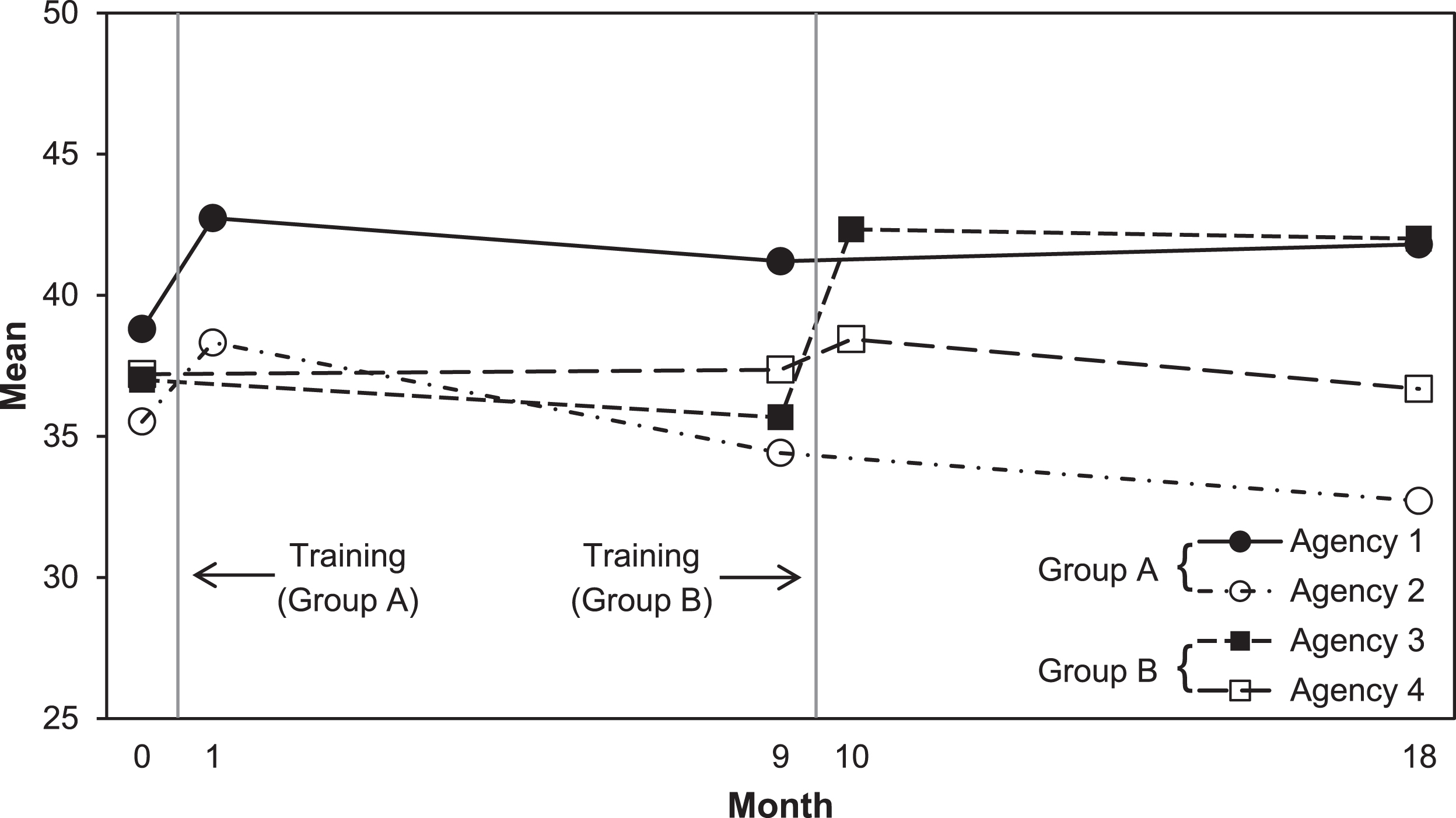
The unadjusted means by agency over time for business development self-efficacy, adherence to the dual customer approach, and business development knowledge are portrayed in Figs. 1, 2, and 3, respectively. The final business development self-efficacy model included eight fixed effects: training, month, training x month, agency, training x month x agency, importance of business development, self-perceived skills, and employer contacts. The final model for adherence to the dual customer approach included three fixed effects: training, training x month x agency, and importance of business development, and the final business development knowledge model included five: training, month, training x month, training x agency, and training x month x agency. The random effect of training was retained in the final model for business development self-efficacy, but not for adherence to the dual customer approach or business development knowledge. Results for the final models for these three outcomes are depicted in Table 4, which provides the Type 3 test results for the fixed effects (which account for all the other effects in the model) and estimates for the variance components.

Mean Job Development Efficacy Scale scores over time by agency. Each group has four data points. Group A has data at 0, 1, 9, and 18 months. Group B has data at 0, 9, 10, and 18 months.
Mean Business Relations Scale scores over time by agency. Each group has four data points. Group A has data at 0, 1, 9, and 18 months. Group B has data at 0, 9, 10, and 18 months.
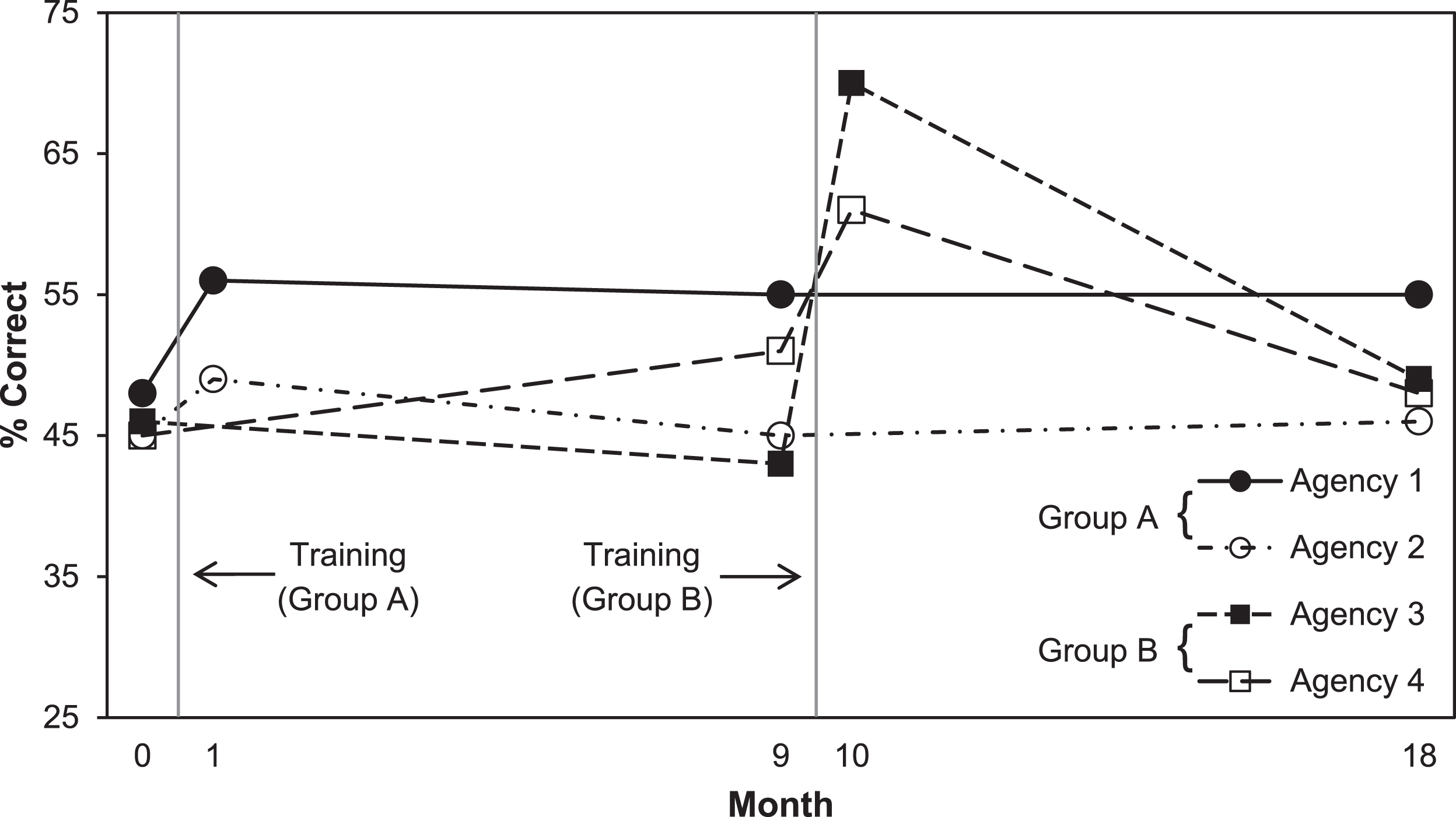
Mean Business Development Knowledge Scale scores over time by agency. Each group has four data points. Group A has data at 0, 1, 9, and 18 months. Group B has data at 0, 9, 10, and 18 months.
Fixed Effects and Variance Components for Final JDES, BRS-13, and BDKS Models
Note. JDES = Job Development Efficacy Scale; BRS-13 = Business Relations Scale; BDKS = Business Development Knowledge Scale. Analyses were conducted in SAS PROC MIXED with an unstructured covariance structure. aBased on Type 3 tests.
The main effect of training was statistically significant for all three formal measures, indicating that participation in the training resulted in increased scores for business development self-efficacy, adherence to the dual customer approach, and business development knowledge. After the training, self-efficacy scores increased by an average of 2.28 (SE = 0.95) and scores for adherence to the dual customer approach increased, on average, by 3.05 (SE = 0.75). The statistically significant interaction between training and agency for business development knowledge indicates that the effect of training differed by agency. Although knowledge scores increased after the training for Agency 1 (γ= 0.09, SE = 0.03, p = 0.002), Agency 3 (γ= 0.54, SE = 0.11, p < 0.001), and Agency 4 (γ = 0.33, SE = 0.05, p < 0.001), they did not significantly change for Agency 2 (γ = 0.04, SE = 0.02, p = 0.116).
The interaction between training and month was statistically significant for business development self-efficacy and knowledge, which indicates that the overall effect of the training on these two outcomes varied over time. The interaction between training, month, and agency was statistically significant for business development self-efficacy, adherence to the dual customer approach, and business development knowledge, signifying that the effect of the training on these outcomes differed over time by agency. Specifically, self-efficacy scores did not significantly change over time after the training for Agency 1 (γ = –0.10, SE = 0.15, p = 0.532), Agency 3 (γ = –0.34, SE = 0.18, p = 0.067), or Agency 4 (γ = –0.21, SE = 0.13, p = 0.101); however, they decreased significantly over time for Agency 2 (γ = –0.43, SE = 0.14, p = 0.003). Scores for adherence to the dual customer approach did not significantly change over time after the training for Agency 1 (γ = 0.03, SE = 0.07, p = 0.623) or Agency 3 (γ = 0.21, SE = 0.12, p = 0.089), but they decreased significantly over time for Agency 2 (γ = –0.28, SE = 0.06, p < 0.001) and Agency 4 (γ = –0.15, SE = 0.07, p = 0.033). Finally, knowledge scores did not significantly change over time after the training for Agency 1 (γ = –0.01, SE = 0.00, p = 0.096), but they decreased significantly for Agency 2 (γ = –0.01, SE = 0.00, p = 0.019), Agency 3 (γ = –0.03, SE = 0.01, p < 0.001), and Agency 4 (γ = –0.02, SE = 0.00, p < 0.001).
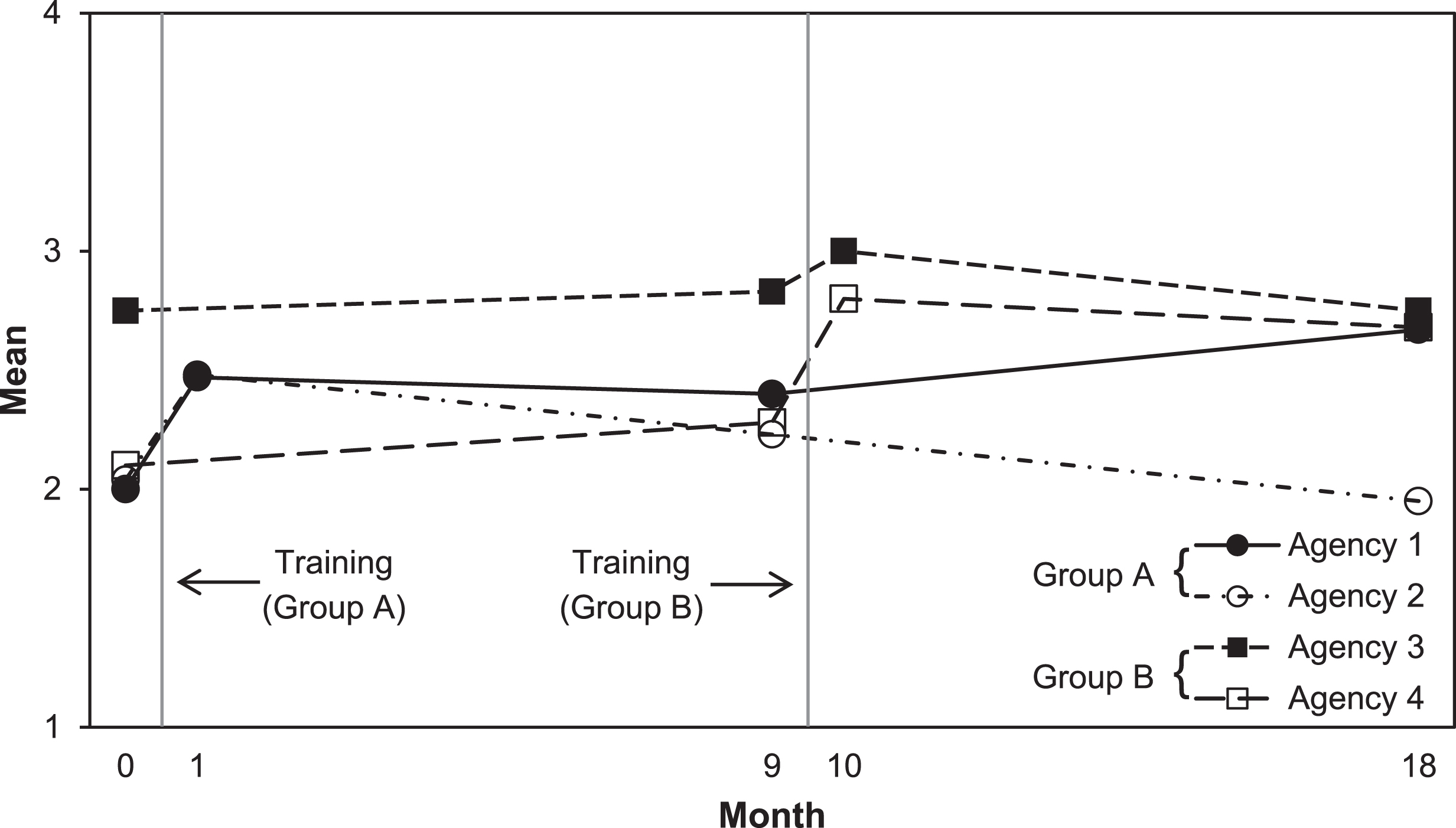
The unadjusted means by agency over time for self-perceived business development knowledge, skills, and comfort are portrayed in Figs. 4, 5, and 6, respectively. The final models for these three outcomes included fixed effects of training, agency, and employer contacts. In addition, the final model for self-perceived knowledge included the fixed effect of training x agency, and the final models for self-perceived skills and comfort included the fixed effect of training x month x agency. The random effect of training was retained in the final models for self-perceived knowledge and skills, but not for comfort. Table 5 provides the results for the final models for these three outcomes.
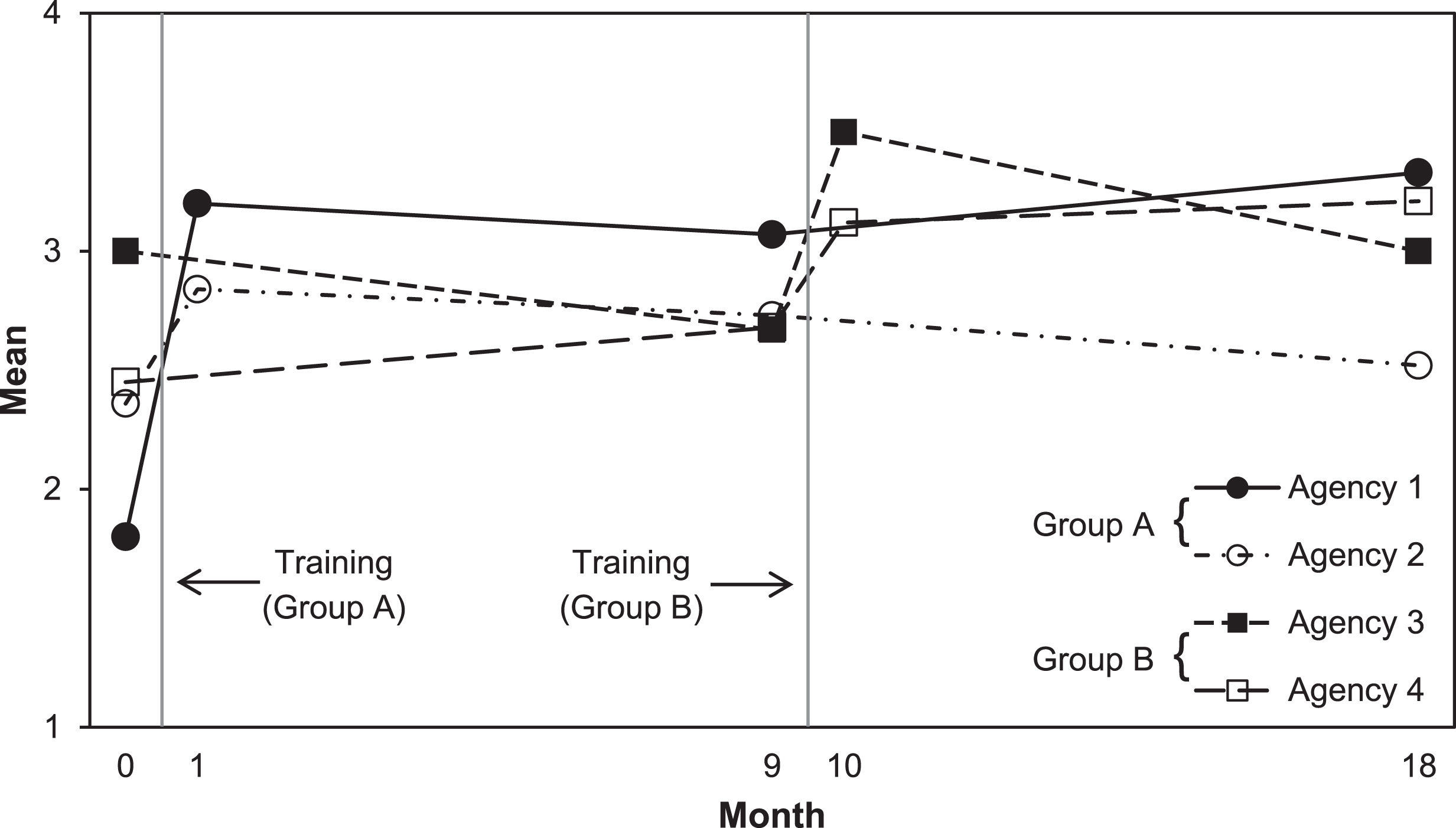
Mean self-perceived business development knowledge scores over time by agency. Each group has four data points. Group A has data at 0, 1, 9, and 18 months. Group B has data at 0, 9, 10, and 18 months.

Mean self-perceived business development skills scores over time by agency. Each group has four data points. Group A has data at 0, 1, 9, and 18 months. Group B has data at 0, 9, 10, and 18 months.
Mean self-perceived business development comfort scores over time by agency. Each group has four data points. Group A has data at 0, 1, 9, and 18 months. Group B has data at 0, 9, 10, and 18 months.
Fixed Effects and Variance Components for Final Self-Perceived Business Development Knowledge, Skills, and Comfort Models
Note. Analyses were conducted in SAS PROC MIXED with an unstructured covariance structure. aBased on Type 3 tests.
The main effect of training was statistically significant for all three self-perceived outcomes, which indicates that participation in the training resulted in increased self-perceived knowledge, skills, and comfort. After the training, the average increases in self-perceived skills and self-perceived comfort were 0.54 (SE = 0.13) and 0.48 (SE = 0.14), respectively. The interaction between training and agency was significant for self-perceived knowledge, which signifies that the effect of training on self-perceived knowledge differed by agency. Namely, self-perceived knowledge scores significantly increased after the training for Agency 1 (γ = 1.37, SE = 0.20, p < 0.001), Agency 2 (γ = 0.36, SE = 0.15, p = 0.023), and Agency 4 (γ = 0.59, SE = 0.15, p < 0.001), but not for Agency 3 (γ = 0.50, SE = 0.30, p = 0.107).
The overall effect of the training on self-perceived knowledge, skills, and comfort did not change over time. In general, scores on these three measures increased after the training and remained relatively stable throughout the duration of the study. Similarly, the effect of the training on these outcomes did not differ significantly over time by agency. Self-perceived comfort scores only decreased significantly for Agency 2, although the interaction between training, month, and agency for this outcome did not reach statistical significance.
In this study, we evaluated the long-term effects of a business development training for rehabilitation counselors for the blind on six outcomes. This training was effective at improving business development self-efficacy, knowledge, and adherence to the dual customer approach, as well as self-perceived business development knowledge, skills, and comfort. The effect of training varied randomly across participants for three of the six outcomes, indicating that its effect differed across participants. One component of this variation was the fact that those who had higher initial scores had smaller increases in the outcomes as a result of the training. This effect is one that we would expect: those with more to learn or gain from the training will experience larger growth as a result of it.
Initial change following the training is positive, yet the most important test of a training is its ability to effect change in participants over time. Follow-up data were collected from participants for up to 18 months after the training to evaluate long-term outcomes. The nonsignificant time variable in our models indicated that participants who did not receive the training at the start of the study did not experience significant change in the outcome measures prior to the training, providing additional support for the impact of the training as the cause of the observed changes. Results indicate that participants tended to experience decreases in the formally measured outcomes after the training; however, the changes following training were significantly different by agency. The initial effect of training also differed significantly by agency for one of these three outcomes (i.e., measured knowledge). Participants did not experience significant decreases in gains following training for the self-perceived outcomes, although the initial effect of training also differed significantly by agency for one outcome (i.e., self-perceived knowledge).
These differences observed by agency in initial effect of the training and rate of change after the training document the importance of agency context to the overall effectiveness of the training. One agency, in particular, had a unique pattern after the training: Agency 1 participants retained the gains they achieved across all of the outcome measures. Alternatively, Agency 2 retained few of the gains they achieved, and had a nonsignificant increase in measured knowledge immediately after the training. Clearly, agency context was important to the effectiveness of the training, with these agencies representing two extremes. Determining reasons for these agency-level differences is important for identifying potential facilitators of and barriers to long-term success of the training. Agency characteristics, presented in Table 1, may shed some light on these differences. Agency 1 had no counselor attrition during the 18-month period of the study, its counselors reported the highest levels of agency support and encouragement for business development activities, and only one person (6.7% of Agency 1 participants) perceived agency barriers in terms of policies or procedures that would make business development difficult. Agency 2 also had low counselor attrition (13.3%; perhaps associated with employees being unionized), its counselors reported the lowest levels of agency support and encouragement for business development activities, and almost two-thirds perceived agency barriers to conducting business development, in terms of agency policies or procedures.
Though not reported in this study, follow-up interviews with agency administrators and some participants were conducted between 6 and 8 months following the training (McDonnall, 2018). One important finding from these interviews was that Agency 1 had implemented an agency-wide change following the training: counselors added a discussion of business development activities to their monthly conference calls. This change was initiated by the counselors, not mandated by the administration. This was the only concrete, ongoing change as a result of the training that was noted in the interviews. In addition, Agency 1 was the only agency that requested a follow-up call to discuss the technical assistance report that was provided to each agency after the training. Although these factors may not completely explain the differences in outcomes across the agencies, they do lend support to the idea that Agency 1 had an existing structure to support business development activities, and had an interest (both at the counselor level and administrator level) in making changes based on the training.
Although the covariates were not of primary interest to this study, it is relevant to note that perceived importance of business development activities or actual number of employer contacts, or both, were significantly associated with most outcomes. The perceived importance relationship indicates that the more value the participants placed on working with businesses, the more likely they would be to benefit from the training, also perhaps directly indicating the value the participants placed on the training. Certainly, attitude towards the importance or value of a training can be expected to influence its ability to produce change in the participant. Greater number of employer contacts, both before and after the training, were associated with higher levels of self-efficacy and self-perceived outcomes, indicating that having the opportunity to interact with employers, and presumably use some of what was learned in the training, positively impacted outcomes over time.
Limitations
The primary limitations of this study relate to the agency context. First, this study included counselors from only four agencies, all of which are separate agencies. Accordingly, our results may not generalize to counselors from other agencies, particularly combined or general agencies. Second, two of the four participating agencies had high counselor attrition during the time period of our study, which directly resulted in participant attrition in our sample. Another consequence of high attrition was larger workloads for the remaining counselors, which could have accentuated the perceived barriers to business development activities in those agencies as the study progressed. Based on the follow-up interviews with counselors in Agency 3, counselor attrition had an extreme effect on the ability of remaining counselors, who had to take over consumer caseloads, to conduct business development activities (McDonnall, 2018).
Implications for practice and policy
The training presented in this study was developed based on the perceived need for a business development training for VR counselors, given (a) the WIOA mandate for VR agencies to provide services to businesses, (b) knowledge that many VR counselors are not comfortable with business development, and (c) knowledge that negative employer attitudes can be a major barrier to employment for people who are blind or visually impaired. The effectiveness of this formal business development training was documented with this study, indicating the value of implementing it within other VR agencies. However, it is important for agencies to realize that the agency environment can impact the effectiveness of the training. Our results suggest that the agency’s level of support and encouragement for and the perceived agency-level barriers to conducting business development activities may influence the results of the training, particularly over time. The training is much more likely to be beneficial to the participants if the agency truly believes in the training’s value and is willing to make agency-wide changes that would make conducting business development activities more accessible to the counselors. Allowing counselors ample time to engage in business development activities is important, given that lack of time appears to be a widespread barrier to these activities. If training is provided but no changes are made agency-wide and counselors do not have the time to engage with businesses, significant gains may not be maintained. The significant relationship between number of employer contacts and four of our outcome measures illustrates this point. Administrators should also remember to emphasize the importance and value of business development activities, as counselor attitudes about these activities were associated with some outcomes. In addition, counselor openness to the training and actual interest in the training is important to achieving gains. Agencies can place value on the importance of business development activities in a number of ways, including making it a regular topic of discussion at meetings, sharing success stories agency-wide, creating a mechanism to share business information agency-wide, and making business contacts a performance measure for counselors.
VR agencies typically sponsor annual or more frequent trainings for their personnel, and for agencies interested in increasing their business development efforts, the training presented in this study would be advantageous. Although many trainings are conducted with VR agency personnel, which incur costs in both time and money, these trainings are not usually formally evaluated. We did not identify any other studies conducted regarding the effectiveness of professional development training for VR personnel. Given the cost of these trainings, it is important that more formal, and long-term, evaluations be conducted to assess training effectiveness. Ideally, trainings that are found to be effective will be made available to other agencies, although, as noted in this study, the agency context may impact the effectiveness of the training.
Conclusion
Although participation in a formal business development training was associated with a significant increase in all outcome measures across participants, changes differed by agency –either initial change, rate of change after the training, or both –for four of the six outcomes. These significant differences by agency indicate that the agency context is important in terms of the success of the training. It appears that high counselor turnover and perceived agency-level barriers may hinder the training’s success. The positive findings for Agency 1 across all six outcomes over time illustrate several factors that may promote long-term success of the training: agency support and encouragement for business development, having a structure in place to support business development, and willingness to implement change after the training.
Conflict of interest
None to report.
Footnotes
Acknowledgments
The contents of this manuscript were developed under a grant from the U.S. Department of Health and Human Services, NIDILRR grant 90RT5040-01-00. However, these contents do not necessarily represent the policy of the Department of Health and Human Services and should not indicate endorsement by the Federal Government.