



Abstract
BACKGROUND:
Results from past research on the association between work outcomes and self-esteem were inconsistent.
OBJECTIVE:
This study aimed to review and quantify the correlation between employment variables and self-esteem in people with severe mental illness.
METHOD:
The first electronic database search was performed between November 5 and November 12, 2021. A second search update was completed in September 2023. Studies that reported a correlation between at least one employment-related variable and self-esteem were subsequently verified. Pooled effect sizes were calculated with random-effects models by aggregating Fisher’s Z-to-Pearson r transformed correlations.
RESULTS:
The database search generated 3,547 reports. Thirteen and seven reports were included in the qualitative review and the meta-analyses, respectively. Meta-analyses results based on data from 1,065 participants suggested a positive albeit small correlation between employment variables and self-esteem in people with severe mental illness (r = 0.26, p = .002 for global self-esteem; r = 0.21, p < 0.001 for total self-esteem). It was found through systematic review that greater confidence in personal capacity, more opportunities on novel activities, and positive affirmation from coworkers were some potential mechanisms underlying self-esteem improvement following work.
CONCLUSION:
Future research on employment in severe mental illness would benefit from including adapted self-esteem measures and can build on this work by examining the relationships between specific employment variables (e.g., job acquisition, job tenure) and self-esteem.
Introduction
Severe mental illness (SMI) refers to a mental, behavioral, or emotional disorder characterized by its persistency, endurance, and deteriorating effects on individual functioning in one or more life domains (National Institute of Mental Health [NIH], 2022). The prevalence of SMI is higher among females (7.0%) than males (4.2%), and among younger adults aged 18–25 (9.7%) than adults aged 26–49 (6.9%) or older (3.4%) (NIH, 2022). In this review, schizophrenia and related psychoses (i.e., schizoaffective and schizophreniform disorders) as well as severe mood disorders, such as severe depression or anxiety disorders, were categorized as SMI.
Because of the severe functional disabilities related to SMI, affected individuals face difficulty obtaining and maintaining jobs. The unemployment rate among people with SMI is as high as 80–90%, and their job tenure tends to be between 3 and 6 months (Corbière et al., 2009; Owen et al., 2016). Nevertheless, research suggests that many individuals with SMI express a strong desire to work and most often value their job when they are employed (Goodwin & Kennedy, 2005). There are plenty benefits of employment in people with SMI among which financial autonomy, increased social contact and inclusion, as well as symptom reduction and recovery promotion symptom reduction and recovery promotion (Goodwin & Kennedy, 2005; McGurk & Mueser, 2004; Mueser et al., 1997; Waddell & Burton, 2006; Wallstroem et al., 2021). Theories and previous research also suggest that employment could contribute to self-esteem enhancement in people with SMI.
First, the sociometer theory suggests that unemployment can lead to social exclusion which has the potential of reducing self-esteem (Leary & Baumeister, 2000). From this, it can be posited that being employed may promote social inclusion, thereby improving one’s self-esteem. Second, an adaption of the planned behavior theory suggests a direct impact of positive and negative self-esteem on career efficacy which is indirectly related to job acquisition (Corbière et al., 2011). Finally, self-enhancement theory was first proposed by Hall (1971) which suggests a pathway from setting and attaining a challenging goal at work to feelings of psychological success and increased self-esteem. This enhanced self-esteem could, in turn, facilitate work engagement and occupational goals; suggesting a possible reciprocal relationship between self-esteem and work (Hall, 1971; Jackson & Hogg, 2010).
Although a bidirectional relationship between self-esteem and work in the general population is suggested by reviews and meta-analysis, the evidence for the association between different employment variables and self-esteem in people with SMI is inconsistent (Krauss & Orth, 2021). On the one hand, some studies report an absence of, or a weak, association between work and self-esteem (Eklund et al., 2001; Torrey et al., 2000). On the other hand, other studies indicate a positive correlation between work and self-esteem. Higher self-esteem was found in workers with SMI compared to non-workers, and a positive correlation was found between self-esteem and the change in vocational status in longitudinal studies (Arns & Linney, 1993; van Dongen, 1998).
Given the benefits associated with employment in people with SMI, it is important to estimate the subjective and objective relationships between work and self-esteem in people with SMI. This can not only help understand the conflicting results from independent studies but also inform vocational rehabilitation programs on whether it is meaningful to involve self-esteem as one of the training modules. Based on prior research, it was hypothesized that employment and self-esteem in people with SMI would be positively correlated.
Methods and materials
Literature search
A research protocol was developed and registered on the Open Science Framework (OSF, https://osf.io/nx5zg/?pid=cpkef). PRISMA guidelines for conducting and reporting systematic reviews and meta-analyses were followed (Page et al., 2021). A database search was performed in Embase (Ovid), MEDLINE (Ovid), APA PsycINFO (Ovid), and Social Work Abstracts (Ovid) with the following keywords: employ* AND (psychos* OR psychot* OR schiz* OR “severe mental illness’) AND “self*esteem”. Although there was no restriction based on the year of publication and language, articles that were not in English, French, or Mandarin were subsequently excluded. The first search was performed in November 2021. The titles and abstracts of the records obtained from database searches were initially screened for eligibility. Records that were not anticipated to report a relationship between at least one employment variable and self-esteem in people with SMI were excluded; otherwise, full-text reports of the records were retrieved. The full texts of five unretrievable records were obtained by contacting the corresponding authors. Thereafter, the inclusion of qualitative or quantitative association data on self-esteem and at least one employment variable was verified, and reference lists of included reports were screened. A search update was completed in September 2023, using the same keywords, databases, and screening procedures.
A study was considered eligible for inclusion only if it met all the following criteria: 1) the study sample was composed of individuals with diagnoses categorized as SMI by the authors, 2) the article reported results of a potential qualitative association and/or quantitative correlation between self-esteem and at least one employment variable in people with SMI, 3) the article was peer-reviewed. For homogeneity purposes, only continuous measures of global and positive self-esteem were considered. No exclusion was made based on the study date, country, design, recruitment method, participants’ sociodemographic information, and intervention received.
Data extraction
Data were extracted and coded from the included studies by a single reviewer in a preformatted and piloted Excel form developed by the corresponding author. The extracted data were further verified by two independent reviewers. The data extracted included: first author, publication year, title, sample size, study country, study design, participants’ characteristics (diagnosis, age, sex, gender, and mean working hours/days/weeks), employment variables measured, self-esteem scales, and the reported correlation between employment variables and self-esteem. The Rosenberg Self-Esteem Scale (RSES; Rosenberg, 1965), the Self-Esteem Rating Scale Short-Form (SERS-SF; Lecomte et al., 2006), and the Lancashire Quality of Life Profile (Oliver et al., 1997) were the self-esteem measures used in the included studies. A quality appraisal of each included study was made subsequently following Mixed Methods Appraisal Tool (MMAT) (Hong et al., 2018).
Data analysis
Two separate meta-analyses were completed using the metaphor (Viechtbauer, 2010) package in R (R Core Team, 2020). The first meta-analysis synthesized Pearson r correlations between employment variables and global self-esteem in people with SMI, while the second meta-analysis combined correlations between employment variables and total self-esteem, which includes global, positive, and negative self-esteem in people with SMI. Global self-esteem refers to the global feeling of self-acceptance, self-respect and self-worth that is relatively consistent over the lifetime (Blascovich & Tomaka, 1991; Brown & Marshall, 2006; Rosenberg, 1995). Negative and positive self-esteem were proposed as two dimensions of global self-esteem (Owen, 1993). Negative self-esteem is also named self-deprecation and was found to be correlated more significantly with diminished psychological and social well-being (Owen, 1993). In contrast, positive self-esteem is tantamount to self-confidence which was associated with self-development and prosocial behaviors (Owen, 1993).
Prior to the calculations, effect sizes of each individual study were transformed from Pearson r to Fisher’s z (Harrer et al., 2021). According to Cohen (1992), a small correlation is when r varies between 0.10 and 0.29, a medium effect size is when r varies between 0.30 and 0.49, and a large correlation is when r is more than 0.50 and above.
The Cochran’s Q statistic and I2 were used to estimate between-study effect size heterogeneity. Random-effects models were used to account for the expected heterogeneity and variation across studies. Moreover, random-effects models were found to be more representative and able to produce more generalizable results (Field, 2001). Forest plots, which are designed to reflect individual and general patterns with confidence intervals and weights on the pooled effect size, were calculated for each meta-analysis. Publication bias was assessed via visual analyses of funnel plots, the Egger’s test for funnel plot asymmetry and the Fail-safe N of Rosenthal. Finally, sensitivity analyses were performed to examine whether differences in self-esteem scales (i.e., adapted versus not adapted to the SMI population) influenced the results.
Results
Description of studies
The flowchart of record screening and selection is illustrated in Fig. 1. In the first search, 3,294 records were obtained from the database search in Ovid. A total of 2,847 records were excluded after title and abstract screening. Among the 447 reports that were sought for full-text retrieval, 6 reports were not accessible. Thus, 441 reports went through full-text screening to assess for eligibility. After checking for eligibility, 422 reports were excluded due to not being a peer-reviewed article, being a review, sample not consisting of people with SMI, no self-esteem or job measures, or no data on the association between self-esteem and job. One additional study was obtained through manual searches of the reference lists. In the updated search, 253 records were generated. After deduplication, 239 records were screened for title and abstract. Among the 13 reports sought for full-text retrieval, one report was excluded for not being in English, French, or Mandarin; two reports were excluded for not being peer-reviewed; nine reports were excluded due to no relevant data. Therefore, one new report that met the inclusion criteria of this study was found through search update. Ultimately, 13 reports were included in the systematic review, while 7 reports (from 6 independent samples) were included in the meta-analyses. The included reports are described in Tables 1 and 2. Most included studies showed low risk of bias according to the MMAT criteria, except for one (van Dongen, 1996).
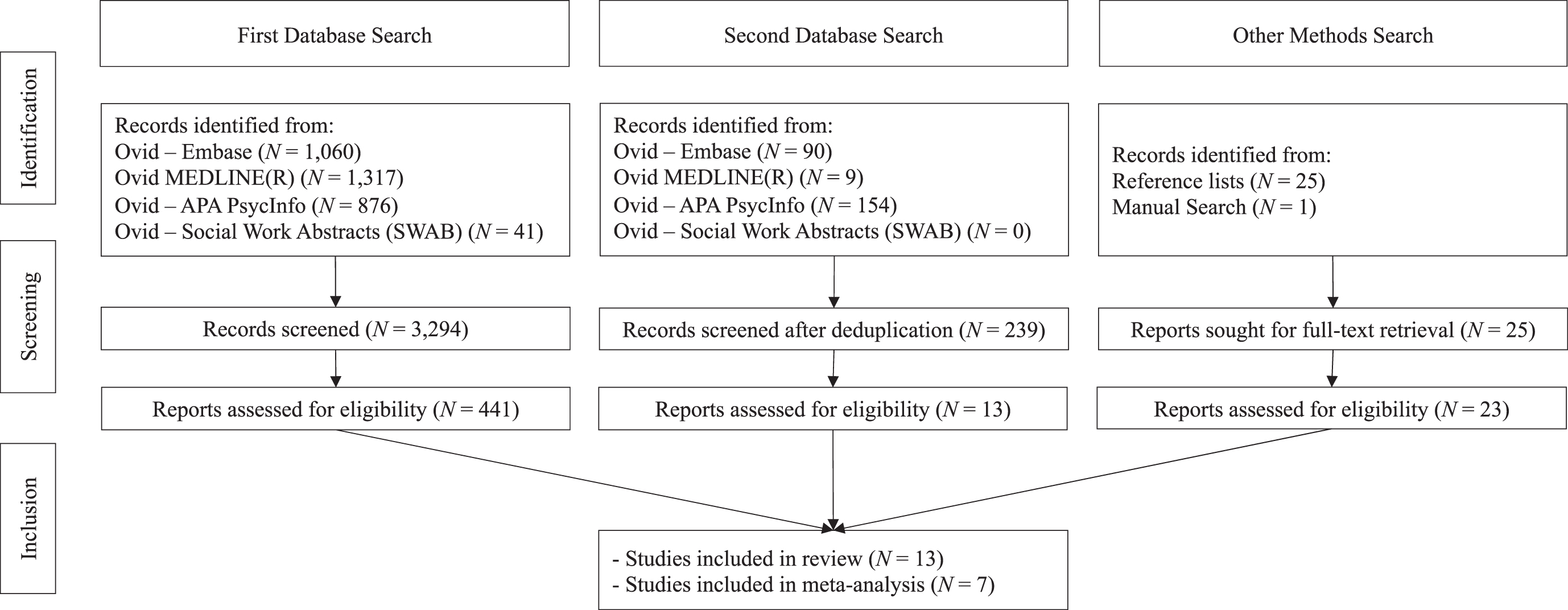
PRISMA flow diagram of study selection, inclusion, and exclusion (N = number of studies).
Description of reports included in the systematic review
Note. n = number of participants. NR: Not Reported.
Description of reports included in the meta-analysis
Note. n = number of participants. NR: Not Reported. *: Reports that were based on the same sample. SERS-SF: Self-Esteem Rating Scale Short-Form. LQOLP: The Lancashire Quality of Life. RSE: The Rosenberg Self-esteem Scale. RSEWS: Rosenberg Self-esteem as a Worker. The numbers in superscript correspond to the numbers in Appendix A that explains how each variable was measured.
Results of meta-analyses for self-esteem and job variables in people with SMI
Note. Q = Cochran’s Q Statistic. **<.01. ***<.001; n.s. = non-significant. N = number of studies; n = number of study results.
Among the thirteen studies that reported qualitative associations between employment variables and self-esteem, three studies discussed limited labor market participation and lower self-esteem. Vukadin et al. (2021) suggested that low self-esteem stemming from a lack of societal participation and distance from the labor market was a barrier to obtaining employment. In addition, people who were working in disability employment viewed it to be of low value and deprecated their self-esteem (Ottewell, 2021). Interviews with employment experts and people with schizophrenia also demonstrated the participants’ low self-esteem regarding their capaciy to work (Taskila et al., 2014).
Seven studies focused on self-esteem improvement and work participation. Self-esteem improvement through work was perceived by all participants in van Dongen (1996). This effect was evident to be independent of the types of work tasks (Gahnström-Strandqvist et al., 2003). In the studies by Khare et al. (2021, 2020), 95% of employed participants with SMI endorsed improved self-esteem as a benefit of work. In the same studies, self-esteem improvement was also the most frequently reported benefit amongst others, namely, more structured time, improved social status, and better mental illness management. In addition, one interviewed participant from van Niekerk (2009) study reported that their self-esteem needs were met by work involvement. In another study voluntary work was specifically linked to self-esteem improvement (Marwaha & Johnson, 2005). Adding to this finding, Koletsi et al. (2009) found an agreement between participants across different countries on how working impacts self-esteem positively.
Moreover, three other studies indicated potential mechanisms underlying self-esteem improvement through labor market participation. Both Krupa (2004) and Saavedra et al. (2016) reported increased confidence in personal capacity with workforce participation as one of the factors that bolster self-esteem. Saavedra et al. (2016) further reported learning and attempts on novel occupational activities as reasons for the increase in self-esteem. Lastly, the positive relationship with coworkers and the unique affirmation received at work could both enhance self-esteem, as suggested by Dunn et al. (2008).
Meta-analyses
Both Cochran’s Q statistic and I2 reflected heterogeneity between studies for both meta-analyses, which required random-effects models to be used (Q
G
(9) = 78.77, p
G
< 0.001;

Forest plot of employment variables and global self-esteem in people with SMI. Note. RSE G: The Rosenberg Self-esteem Scale Global. RSEWS I: Rosenberg Self-esteem as a Worker Individual. RSEWS S: Rosenberg Self-esteem as a Worker Social. LQOLP: The Lancashire Quality of Life.
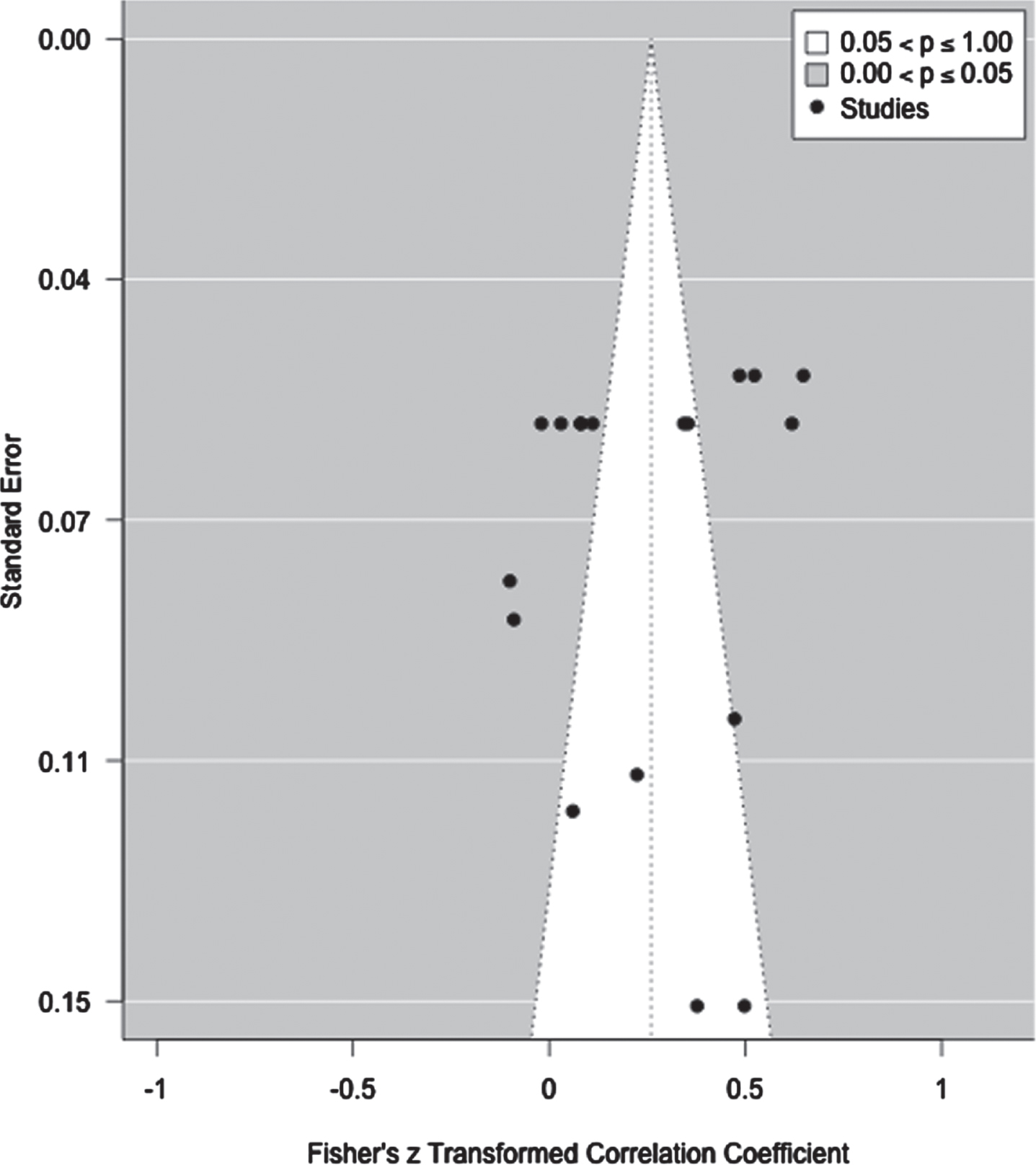
Funnel plot of employment variables and global self-esteem in people with SMI.
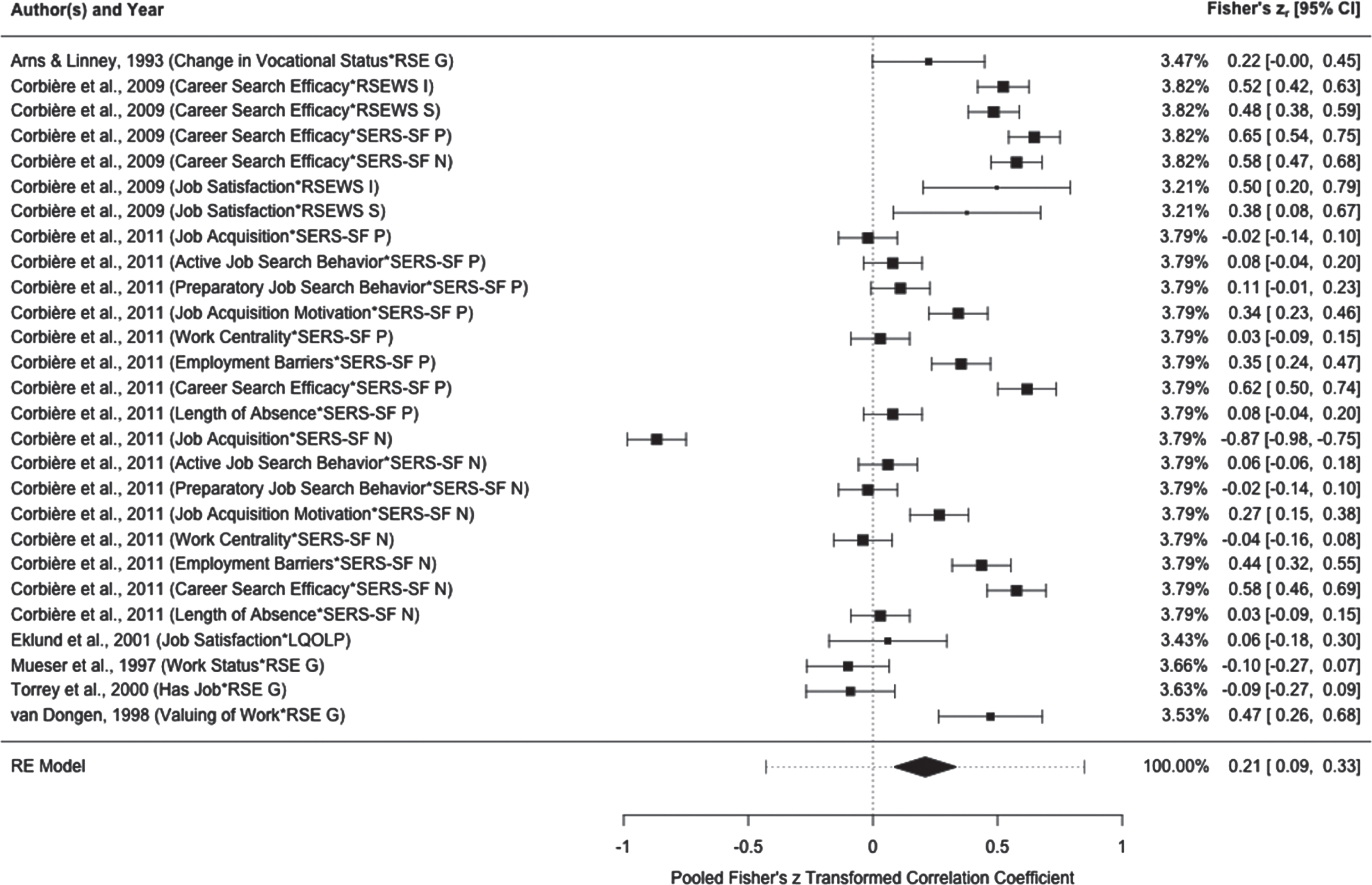
Forest plot of employment variables and global, positive, and negative self-esteem in people with SMI. Note. RSE G: The Rosenberg Self-esteem Scale Global. RSEWS I: Rosenberg Self-esteem as a Worker Individual. RSEWS S: Rosenberg Self-esteem as a Worker Social. SERS-SF P: Self-Esteem Rating Scale Short-Form Positive. SERS-SF N: Self-Esteem Rating Scale Short-Form Negative. LQOLP: The Lancashire Quality of Life.
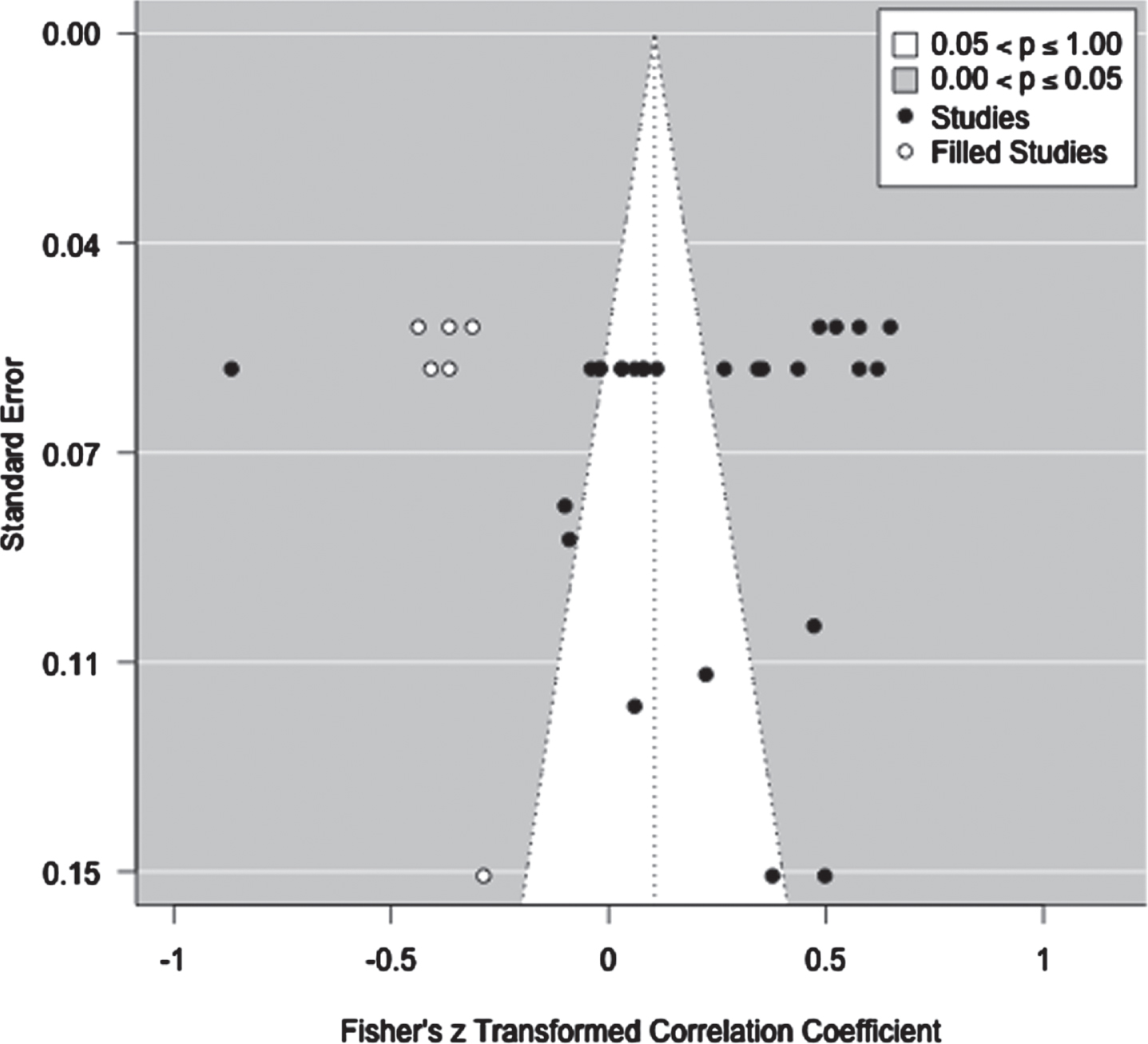
Funnel plot of employment variables and global, positive, and negative self-esteem in people with SMI.
The objective of this study was to perform a systematic review and meta-analysis to examine the possible correlation between self-esteem and work in people with SMI. Based on existing theories and previous research, it was hypothesized that there would be a positive correlation between self-esteem and employment variables in people with SMI. The systematic review portion included 13 reports from 13 independent samples, involving data from 983 participants aged between 18 and 62 years old. The meta-analyses were based on 7 reports from 6 independent samples and included data from 1,065 participants aged between 18 and 74.3 years old. Both meta-analyses suggested statistically significant positive albeit small correlations between self-esteem and employment variables in people with SMI. Results from the sensitivity analyses showed similar results for SMI-adapted scales, but not for non-adapted ones.
The significant positive correlation between self-esteem and employment variables suggests that as self-esteem increases at the individual level, a corresponding positive change in employment variables is expected. Therefore, it could be argued that incorporating self-esteem enhancement into vocational interventions for people with SMI may help them find and maintain jobs. Existing vocational programs have frequently focused on placing individuals in workplaces or cognitive and social skill trainings without directly addressing self-esteem issues (Sauvé et al., 2021; Twamley et al., 2003). Although the CBT-SE program developed by Lecomte et al. (2014) contained self-esteem as one of its modules, self-esteem outcomes were not directly measured in the study. Our meta-analyses results encourage self-esteem to be assessed when evaluating the efficacy of vocational programs.
Since the correlation from each study contributed to the pooled effect size equally, it suggested that the statistically significant results were not driven by one particular study. Though the sensitivity analyses indicated that results pertaining to non-adapted scales were no longer significant, results with SMI-adapted scales remained significant. This discrepancy might be explained by the few number of studies that used non-adapted scales. However, it is also possible that adapted scales more accurately measured self-esteem in people with SMI. This highlights the need for more studies to use SMI-adapted self-esteem measurement scale.
The correlational nature of our meta-analysis results does not inform directionality. Although most studies in the qualitative reviews suggested that employment enhances self-esteem, it is possible that people with higher self-esteem were more likely to seek out employment opportunities and be employed. Before integrating the findings into services, it is important to investigate the causal relationship between employment variables and self-esteem in people with SMI in studies using longitudinal or experimental designs. This would help determine whether vocational programs or self-esteem interventions should be prioritized for occupational goals. In addition, factors associated with both self-esteem and vocational outcomes in people with SMI, such as internalized social stigma, quality of life, perceived social supports, and symptom severity could be further studied to better understand possible moderation and mediation effects.
Strengths and limitations
Our study is not without limitations. First, the small number of included studies and the combination of different employment variables may lead to less precise meta-analytic results. The small number of included studies also demonstrates the scarcity of research investigating self-esteem in the context of vocational functioning in people with SMI. Future meta-analyses with a higher number of independent studies and focusing on specific employment variables should be conducted to examine the robustness of our results. Secondly, the Rosenberg Self-esteem Scale (RSES), which was not designed for people with SMI, was used in most studies. Future research could use scales that are adapted to the work context and that have been validated with sample of people with SMI.
Nevertheless, this review contributes to the literature by synthesizing data from multiple reports with independent samples. The absence of restriction on the year of publications, demographic background of participants (e.g., age, gender, educational level, etc.) and study country (i.e., Canada, Sweden, the United States), as well as our efforts in contacting authors for unretrievable articles all contribute to the comprehensiveness of our study. Another strength of this review is the stringent inclusion criteria regarding the studied population, which allows for more specific results.
Conclusion
The present systematic review and meta-analyses synthesized current reports and offered a greater understanding towards the relationships between different employment variables and self-esteem in people with SMI. Results from qualitative reports suggested an association between low self-esteem and low labor market participation as well as a relationship between self-esteem improvement and work participation. Greater confidence in personal capacity, opportunities for attempts on novel activities, and positive affirmation from coworkers were reported as mechanisms underlying self-esteem improvement following occupational participation. Meta-analyses results indicated positive albeit small correlations between employment variables and global self-esteem as well as global, positive, and negative self-esteem combined (referred to as total self-esteem). More research should examine the relationships between self-esteem and occupational factors, as well as the underlying mechanisms, in people with SMI to refine self-esteem and vocational interventions.
Footnotes
Acknowledgments
The authors would like to thank all authors who shared their manuscripts when they were not accessible. They would furthermore like to express their appreciation towards Y. Doug Dong and Joshua Unrau for their assistance on R code.
Conflicts of interest
None of the authors have any conflicts of interest to declare.
Ethics statement
As this study included published data, we anticipated no need for ethics approval.
Funding
There was no funding source for this project. Funding and salary awards include the Canada Graduate Scholarship (CGS) –Master’s (Social Sciences and Humanities Research Council) for author L.S.
Informed consent
As this study included published data, we anticipated no need for informed consent.
