



Abstract
An emerging serious game (ESG) is a game that unfolds autonomously without explicit laws, adapting to the player, where the player learns while playing. An ESG engine must enable the emergence in the game, in order to allow its adaptation to the specific environment where it is being used. In previous articles, different components of an ESG engine have been proposed. This paper proposes a strategy adaptive system (SAS) for ESG, which allows the emergence of strategies in a videogame. Particularly, SAS manages the emergence of new procedures or methods (tactics), as well as actions (logistics), among other things, in the ESG, to adapt it to the environment. This component is based on a Fuzzy Classifier System that generates new rules, tactics, etc. in the game to follow the desired behavior. In this article, SAS is applied in a smart classroom (SaCI, for its acronym in Spanish), in such a way that allows the adaptation of an ESG to the students in SaCI. Especially, it is used during their teaching-learning processes. Additionally, this paper analyzes the performance of SAS in SaCI, with very encouraging results, since the quality of the strategies proposed by SAS (defined by rules that define the logic and tactics of the game) is improved in all case studies. This improvement is confirmed because the average use of the rules generated by our adaptive system is greater than 3.6, when the initial rules are used on average less than once.
Keywords
Introduction
The design, development and operation of an ESG are supported by two theories: The serious game theory (SG) with the specific purpose of learning [1]; and the emergent game theory (EG) where the game is carried out spontaneously and without explicit laws, according to the interaction of its elements: player, character, etc. [2, 3, 4, 5]. Thus, an ESG operates out of various goals (education, training, rehabilitation, etc.), and its dynamic occurs depending on the context in which the ESG is performed [6].
On the other hand, an ESG Engine (ESGE) is a set of programs aimed at the creation, representation, execution and adaptation of an ESG [6, 7]. In [6] an ESGE is described, structured in layers, which allows the emergence of behaviors in the game, according to the requirements in the context.
One of the main components of an ESGE is the videogame adaptive sub-system (VAS) [7]. The objective of VAS is to adapt the ESG to the context, based on an emergent behavior. The VAS consists of three components to allow three kinds of emergent behavior [4, 6]: strategies, sequences and parameters. In previous works have been developed the components for the emergence of sequences [8] and parameters [9].
In this work is proposed the SAS for the emergence of strategies (procedures or methods (tactics), as well as actions (logistics)), which is defined as a generic model of rules that define the strategies, implemented using a fuzzy classification system (FCS) that manages and adapts them to the context [10, 11].
One interesting work for our proposal is [12] that faces the problem in which players have different abilities to play a game. The authors define a mechanism to adapt the SG to the players using machine-learning techniques to avoid players getting frustrated if the game is too difficult, or getting bored if it is too easy. Also, in [13] Shafi and Abbass present an analysis of the utilization of artificial intelligence (AI) in videogames. Some of the AI-techniques reported in [13] are the learning classification systems (LSC), neural networks, and genetic algorithms, among others.
With respect to the utilization of fuzzy logic in games, Saeed et al. [14] present a game based on game theory and fuzzy logic. This game simulates Mountain Roads, where there is slippages of land, problems of congestion, high accident rate, etc., and the purpose is to minimize traffic congestion and the waiting time of vehicles. It is a vehicular simulator, which must get rid of obstacles of landslides rocks or mud, due to different reasons: deforestation, earthquakes, volcanic eruptions, heavy rains, among others. In [15], a simulator of a quadcopter is proposed, using a Type Takagi-Sugeno-Kang as a controller based on fuzzy logic (TSK-FLC). In [16], the ReHabGame videogame is described for patients with neuromuscular disorders. The videogame uses an interface based on fuzzy logic, to allow the player to control an avatar through an Xbox Kinect, the Myo bracelet and the rudder pedal. Specifically, the system uses fuzzy rules of Mamdani’s type that define the strategies of rehabilitation, which will adapt according to the performance of the players in therapy and their level of physical ability. Pan et al. [17] describe a game with stochastic behaviors, which uses a fuzzy transition system (FTS) to emerge strategies. The goal of a player is to maximize their value to achieve tasks while the opponent points to the opposite.
This article is organized as follows, in Section 2 the theoretical aspects of this work are described, such as the emergence of strategies in ESG, the general architecture of an ESGE and FCS. Section 3 presents the SAS design for the ESGE. Next, the case study in SaCI is presented, and the ESGE is compared with other similar works, to finally present the conclusions.
Theoretical frameworks
Emergency of strategy
An ESG is defined as an SG whose objective is learning, where the dynamics of the game (logic, tactics, plot, etc.) emerge as products of the interactions between the SG and the player. In this way, the ESG can adapt to the context (player profile, objectives to be achieved with the SG, among other aspects). To do this, an ESG requires incorporating adaptive mechanisms into its game engine that allow adapting the game, which come from the area of emerging systems. The classic types of emergencies that can occur in an ESG are [4, 6]:
Strategies: new rules, laws, and/or tactics are generated, to adapt the videogame to the context. These rules and/or tactics have not been designed, created, or predefined by the game designer. Sequence: new plots (the chronological order of various events presented to a player) are created in the games. Property: changes the characteristics of objects, which may lead to new scenarios, characters, etc. Final: determines when the videogame should end. For example, when a goal is reached. Business model: it is the emergence of service models around a game. Utility: it determines how the ESG will be used, depending on the context where it is being used.
In particular, the emergence of strategies allows arising procedures or methods (tactics), as well as actions (logistics) and rules, directed towards a particular purpose, following the rules and laws in the game. The game designer does not predefine procedures, methods or actions. For example, the emergence of hit strategies, tactics of attack combos, etc., in combat videogames like Street Fighter, Mortal Kombat, etc., are examples of the above.
An ESGE must enable this type of emergence, for which it requires a system that allows the management of the different strategies, which in our case is SAS, based on a fuzzy classifier system (FCS).
Architecture of the ESGE.
An architecture of an ESGE has been proposed in [7], which was developed to support ESGs in a SaCI (see [18], for more details of SaCI). The ESGE is based on hierarchical layers (see Fig. 1).
Videogame Engine Nucleus: it has six basic sub-engines for any videogame, which are: graphics sub-engine, physical sub-engine, sound sub-engine, interaction sub-engine, video sub-engine and rendering sub-engine. More details of these sub-engines are in [6, 7]. Subsystems: these are the layers of the ESGE architecture that allow emergence in an ESG. They are divided into two types: Videogame Emergence (VES) and Videogame Adaptation (VAS) Subsystem’s, which use the following sub-engines:
AI Sub-engine (AIS): is responsible for introducing intelligent behaviors in the different components of the ESG. The different AI- techniques used are deployed in this component to allow the emergence in an ESG. Here is the FCS that manages the emergence of strategies.
Emerging plot sub-engine. Emerging Plot Sub-engine (EPS): is responsible for making the sequences of the context-adapted plots emerge in the ESG (see Fig. 2).
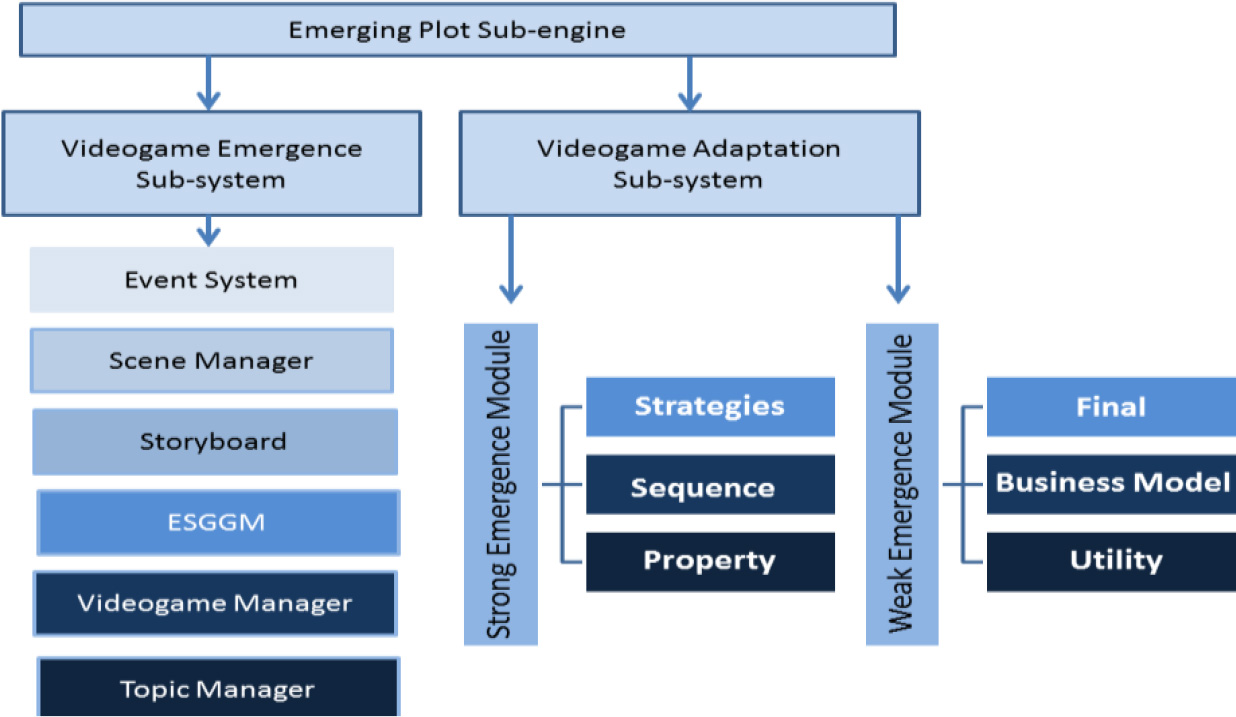
VES: in the case of EPS, it allows the first version of the ESG to be executed to emerge, according to the objectives that the ESG must meet. The EPS, when invoked by the VES, is composed of the following components (see Fig. 2, and [6, 7] for more details):
Topic Manager: determines the topic that is being addressed in the context to, and from there, sets the objective that the ESG should cover.
Videogame Manager: Searches in videogame repositories (for example, educate me, advergame, etc.), subplots or videogames for a given theme. These subplots/videogames are defined as Learning Resources.
ESG Generation Module: is responsible for assembling a new ESG using the sub-plots provided by the videogame manager [7]. The ESG Generation Module overlaps the functions of the following three components of the VES, to initially generate an ESG.
Storyboard: is responsible for generating the narrative scripts or subplots of the ESG.
Scene Manager: generates the environment required by the ESG plots.
Event Systems: is responsible for generating specialized events required by the storyboard, to generate the desired behaviors in the ESG.
VAS: in the case of EPS, it allows adapting to the ESG during its development. The VAS layer allows in one ESG, emergent behavior during the game, acting on its basic characteristics. In particular, it allows the six emergencies defined in [7] divided into two groups:
Strong emergency module: This module is composed of three sub-layers, which allow the following emergencies: Strategies, Sequence, and Property.
Weak Emergency Module: this module is composed of three sub-layers, which allow the following emergencies: Final, Business Model and Utility.
Figure 2 generally describes the EPS, which, as mentioned above, is invoked by both the VES and the VAS, to allow the emergence in an ESG. In the case of the VES, it performs the emergence of the first version of the ESG adapted to the context where it will be used. In the case of VAS, the ESG is adapted during its use, under different emergence mechanisms: strategies, sequences, etc. All this happens, without modifying its Videogame Engine Nucleus core. This article only specifies the strategy emergence.
A classification system (CS) is a type of rule-based learning machine [10, 11]. Particularly, an FCS is based on a set of rules or classifiers, which are of the form If <condition> Then <action>, such that the conditions and actions are defined by fuzzy variables. In this way, the activation of a rule is achieved when the instances of the <condition> of that rule are met. The weight of each rule is based on the degree of activation of the same. Specifically, the importance of a rule is defined by Eq. (1):
Where
If the operator of the condition is “OR”.
If the operator of the condition is “AND”.
Where
General FCS model.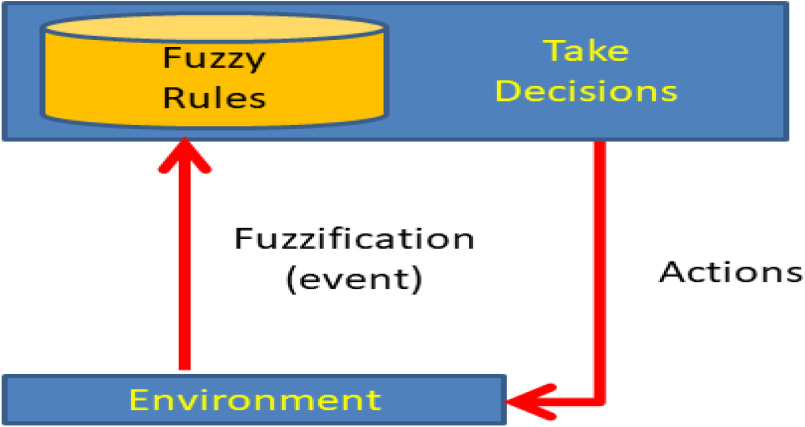
The definition of Eqs (2) and (3) allows allocating more credit to the fuzzy sets that have a greater influence on the trigger level of a rule [10, 11]. The macro-algorithm (see Fig. 3) of an FCS to adjust the rules is:
Initialize FCS
Repeat While(there are events)
Fuzzificación of inputs ( event)
Activation of rules (FCS, event)
Actualization of rules (FCS)
SAS allows the emergence of strategies in an ESG. To perform this task, it relies on the AIS and EPS. The emergence of strategies generates new tactics and logistics in the game. In SAS, these new strategies (tactics and logistics) are modeled by rules, in which in the antecedent are established what must happen (events that must occur), and in the consequent the actions that must occur in the game given those events. In addition, it is essential to define how the rules will be adapted, which in our case will be using an FCS. Particularly, at a technological level, the components involved in the SAS are the following:
A FCS that allows the adaptation of ESG strategies. This system is the heart of the SAS. The ESG engine where the SAS will be executed. The ESG that is being adapted using the SAS.
On the other hand, the FCS of the SAS is composed of:
A set of rules that define ESG strategies A subsystem that allows evaluating the quality of the rules A subsystem that allows the rules to be adapted using an evolved algorithm.
FCS architecture.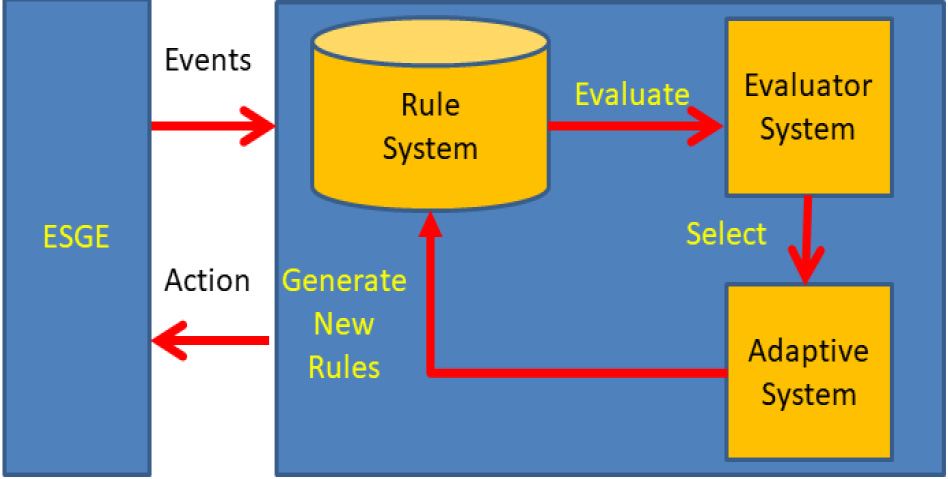
Figure 4 shows the architecture of our FCS.
Figure 4 shows the next components:
ESGE: generates events. Rules System: this module contains the rules of the system, and also, receives and fuzzifies the events that occur in the game. That is, it is the fuzzy reasoner of the FCS. Evaluator System: according to the events received, the respective rules are activated. This system evaluates the activation level of each rule, such that the ones that are activated the most are selected to produce new rules. Those rules are more effective (more used because allow achieving the objective of the game), and last longer in time. Adaptive System: the FCS generates new rules as a combination of the rules with the highest level of activation selected in the previous phase. The rules more effective are used to generate new rules. Next, all the different components of the FCS for the emergence of strategies are defined.
Both the events and the actions in the ESG will be defined by the following fuzzy variables:
ESG context (EC): represents the Physical Event (PE): represents the Acoustic Event (AE): represents types of auditory events, such as: singing, shouting, the sound of lightning, the noise of breaking a glass, etc. (AEx for Camera Event (CE): events that order the movement, both in position and in rotation, of the camera that shows the game to the player (CEx for Video Event (VE): is when an animation, special effect, or video is used in the videogame. For example, when a special long-term effect, a video clip, etc. appears. (VEx, for Movement Action (MA): is responsible for asking the ESGE to apply a movement on the avatar (MAx for Dexterity Action (DA): these are special keys of the game that vary according to the type of ability to allow: jump, duck, open, close, kick, grab, release, etc. or any other activity in the ESG (DAx for Advanced Action (AA): defines an action that is triggered by an AI algorithm after it obtains a solution (AAx for
Membership functions of the fuzzy variables PE, AE and VE.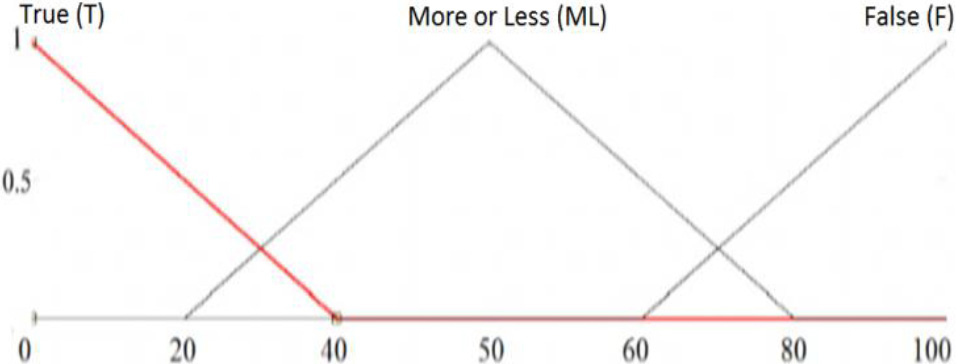
Next, the membership functions of each of the fuzzy sets associated with each fuzzy variable are defined. In general, the use of trapezoidal functions is proposed. The fuzzy variables PE, AE and VE, are characterized by the membership functions shown in Fig. 5. Each of these fuzzy variables has a speech universe of [0%, 100%], and is composed of fuzzy sets T, ML and F. Each fuzzy set has a triangular membership function, varying between 0–40%, 20–80% and 60–100%, respectively.
Membership functions of the fuzzy variables EC, DA, CE, MA, DA and AA.
The fuzzy variables EC, DA, CE, MA, DA and AA are characterized by the membership functions shown in Fig. 6, and are composed of fuzzy sets N, L, M and H. Each fuzzy set has a triangular membership function, varying between 0–20%, 10–50%, 40–80% and 70–100%, respectively.
In this section are presented examples of rules associated with fuzzy variables, which are divided according to the type of game strategy:
ESG of agility: they are games of jumps and powers, like Mario Bros and Donkey Kong. An example of possible rules are:
If <PE
If <PE ESG of conjecture: they are games of calculation, as for example: addition, subtraction, multiplication, memory, etc.
If <EC
If <PE
If <PE ESG of speed: They are vehicle driving games, for example: a car, motorcycle, airplane, boat, bicycle, etc. An example of possible rules are:
If <PE
<AA
If <PE
<MA
There are other groups of strategy rules, linked to ESG of fights, puzzles, among others.
The following are examples of instances of the previous generic control rules that could be defined as strategies in a given ESG:
If (PE
Then (MA
This rule indicates that if a physical event is a hole and another is an enemy, then jump-and-shoot actions are performed at the same time.
If (PE
Then (AA
This rule states that if a physical event of a crash occurs and more or less an auditory event of a scream, then an AI technique is invoked to establish the strategy of protection.
Case study
Context: SaCI
A SaCI is a smart classroom where all its components are modeled using the Multiagent Systems (SMA) [18, 19], which characterizes its hardware devices (smart board, laptop, tablet, Smartphone, etc.) and software (Virtual Learning Environment, Academic System, etc.) as agents. SaCI uses an autonomous reflective middleware for providing a smart learning environment in the cloud, called AmICL, proposed in [18, 19, 20].
Conceptual model of an ESGA in a SaCI [21].
In particular, one of those agents is the serious emerging game agent (ESGA), which autonomously manages the ESGs in SaCI [21]. The ESGA, once the information about the SaCI environment (student profile, objectives of the current learning process, etc.) has been collected, adapts the ESGs to the context, calling the Topic Manager of ESGE. To this end, the ESGA interacts with the next agents of SaCI [21]: the manager of the Learning Object Repository (LOR), Academic System (AS), Recommender System of Educational Resources (RS), and the Virtual Learning Environment (VLE) (see Fig. 7).
The ESGA uses the VES of the ESGE to bring up the appropriate ESG for the current context in the SaCI. Then, the ESGA adapts it in real-time using the VAS. For this latter, it uses mechanisms such as the one presented in this work, which allows the emergence of strategies in an ESG.
The videogame “Super Mario Bros”.
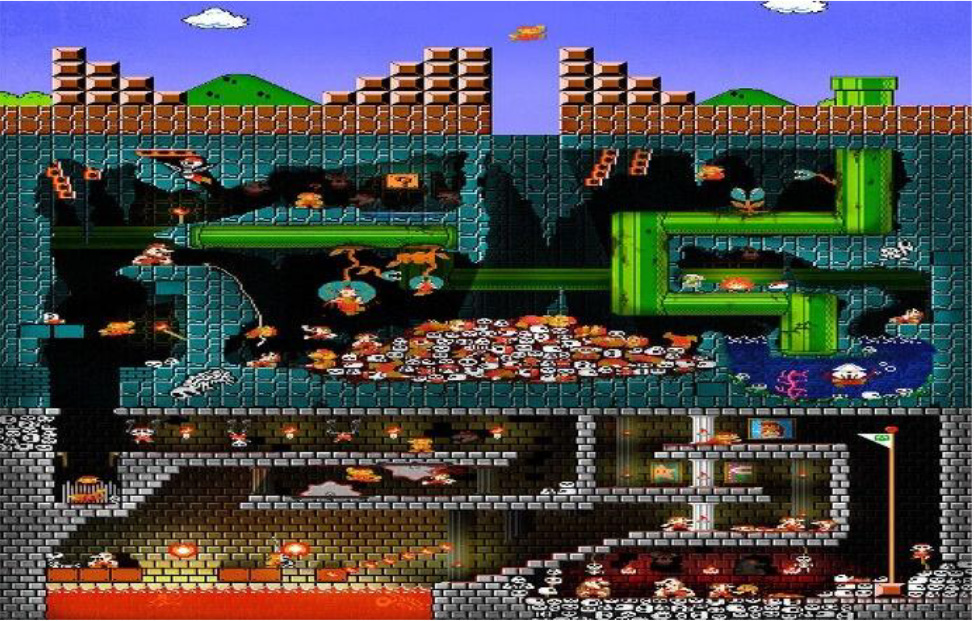
The current context in SaCI is for the game programming career. Specifically, it is the Software Testing course, aiming to develop skills reflected in the movements of keys or joystick, in which is intended to give an introduction to test of classic games. In this case, we assume that the initial ESG has been generated for the current context in the SaCI, following the procedure in the ESGE defined in [7]. Initially, the SEV proposes the videogame “Super Mario Bros” (Fig. 8), with a high score because as well as being entertaining, can generate exercises to develop movements in a joystick in a simple and clear way: jump, run and shoot.
The player takes the roles of Mario and Luigi pressing “select”. The objective is to travel to the Mushroom Kingdom to defeat the forces of King Koopa (Dragon) and save Princess Peach. If they receive an enemy contact, a life is lost, for this reason, the Mario/Luigi brothers have a first attack that consists simply in jumping on the enemy -pressing “A”-; being the mushrooms known as Goombas the first to appear. It is also possible to jump on the Koopa Troopas (Turtles), and by jumping a second time on them, it is possible to launch their shell. By kicking this shell, it is possible also defeat the enemies in front, with the disadvantage that if there is an obstacle, the shell returns and can hurt Mario or Luigi. If either of them picks up a mushroom, then they increase in size and can be injured up to twice before losing a life (this transformation is known as Super Mario/Luigi). By picking up a flower, they gain the ability to launch fireballs with a maximum of two at a time -by pressing “B”. Some enemies cannot be defeated by jumping on them; these can only be eliminated with a shell or fireballs, or by being touched by Mario/Luigi stars [23].
This section describes the strategy emergence process managed by the AESG. The VAS invokes the FCS to adapt the rules that define the ESG strategies, from the data of the SaCI context provided by the other agents, with the ESG initially generated by the VES.
Events and actions in the ESG
Events and actions in the ESG
Events and Actions: the FCS establishes the different types of events and actions that can occur in the game with their respective values (see Table 1). In our case study, VAS divides the events as follows:
Enemies.
Enemies: they can be mushrooms, turtles, plants, kings (dragons), etc. (see Fig. 9). They are measured as follows according to their level of aggressiveness:
Type 1 (1.0–3.3): it is static and/or triggers. For example, a piranha plant.
Type 2 (3.4–6.6): it is dynamic and does not shoot. For example: mushroom or turtle.
Guy3 (6.7–9.9): it is dynamic and shoots. For example: Kings Koopa shooting.
None (0.0–0.9): no enemies in the scene, so no need to shoot.
Hollows. Hollow: this event can be of different sizes, such as (see Fig. 10):
Short (1.0–3.3): very small in size where Mario/Luigi can fit, and it is not necessary to run to jump.
Medium (3.4–6.6): medium-size where two or three Mario/Luigi’s fit and it is not necessary to run to jump.
Long (6.7–9.9): very large where fits four or more Mario/Luigi’s. It is quite wide, and it is necessary to run very fast to jump it.
None (0.0–0.9): no hollow in the scene, so it is not necessary to jump.
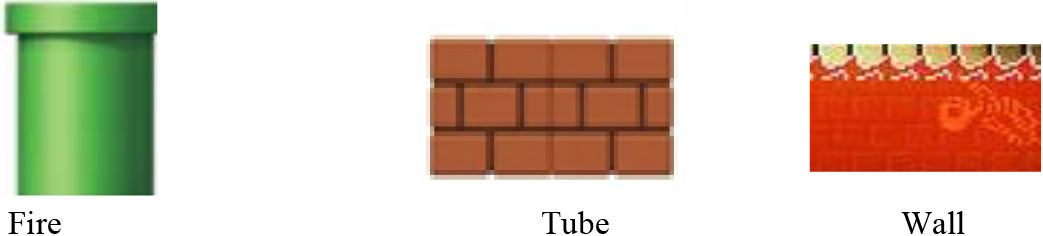
Obstacles. Obstacle: this type of event is divided as follows (see Fig. 11):
Tube (1.0–3.3): is a green tube that can be jumped or it is possible to enter into it.
Wall (3.4–6.6): it is stone blocks that can be stood on top of them and jumped.
Lava (6.7–9.9): it is the fire that appears in the scene. If Mario/Luigi touches it then dies.
None (0.0–0.9): There are no obstacles in the scene, so there is no need to jump.
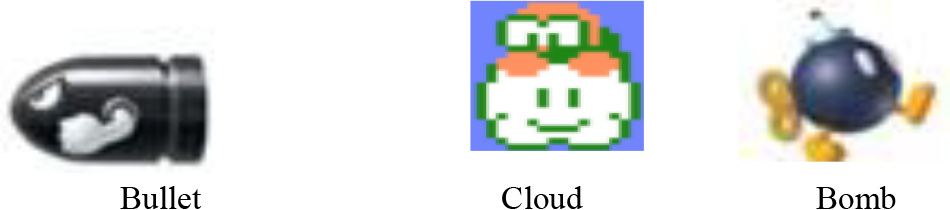
Weapons. Weapons: it is the fourth event to be used, which is divided as follows (see Fig. 12):
Bullet (1.0–3.3): it is launched by different objects such as: cannons, tubes or sometimes they come out of nowhere.
Cloud (3.4–6.6): it is found static in the sky of the video game. it is found static in the sky of the video game. If Mario/Luigi turns his back, then it starts to chase them until it manages to touch them (subtracting their energies).
Bomb (6.7–9.9): it is walking in strategic places of the land of the video game. If Mario/Luigi is very close, then it activates and explodes.
None (0.0–0.9): There are no weapons in the scene, no need to dodge. Example of generic rules

Strategies: the types of rules are established for the context of the ESG. Generic rules should be established around scenes for cases when should jump, shoot, or run. Table 2 shows some examples. Rule 1 states that if there is an enemy type 2 (Turtle or Mushroom), then must take a shoot action. Rules 2, 3 and 4 state that if there is a hollow or tube, then the Jump action must occur. Finally, rule 5 indicates that for the event Bullet and then the Run action must occur.
Mario shoots.
Execution of the ESG: In the following example, it is observed that Mario captured a fire flower and can throw fire. Rule 1 is activated because Enemy
Mario must decide.
In a different scene, Mario has become small and there are several events that interest (see Fig. 14). For example, rule 2 can be activated with Hollow
During the game, Mario will have to make such decisions, in some cases, they will be successful, and in others, they will not. Those decisions based on the rules that define the strategies will be evaluated, to try to improve the strategies. In this context, the SAS is invoked to improve strategies.
Adaptation of the ESG: During the game, the FCS is invoked to adapt the strategy rules already defined. For that, they are evaluated in order to select more actives, and using the adaptive system are generated new rules, as expressed in Fig. 4. The next section explains the utilization of the FCS by the SAS in this scene.
This section describes the application of the FCS in the previous case study. The FCS uses genetic algorithms as the evaluator and adaptive systems, which is based on [22]. This code has been customized according to our design of the FCS. Particularly, it selects the best rules that are the rules more active (fitness function). The rest of the code can be reused by changing the fuzzy variables and membership functions according to our generic control rules. Finally, the generation procedure of new rules is the same as proposed in [22]. Figure 16 shows the interface of our FCS. In the following, we describe the different elements of the interface:
Rules.data.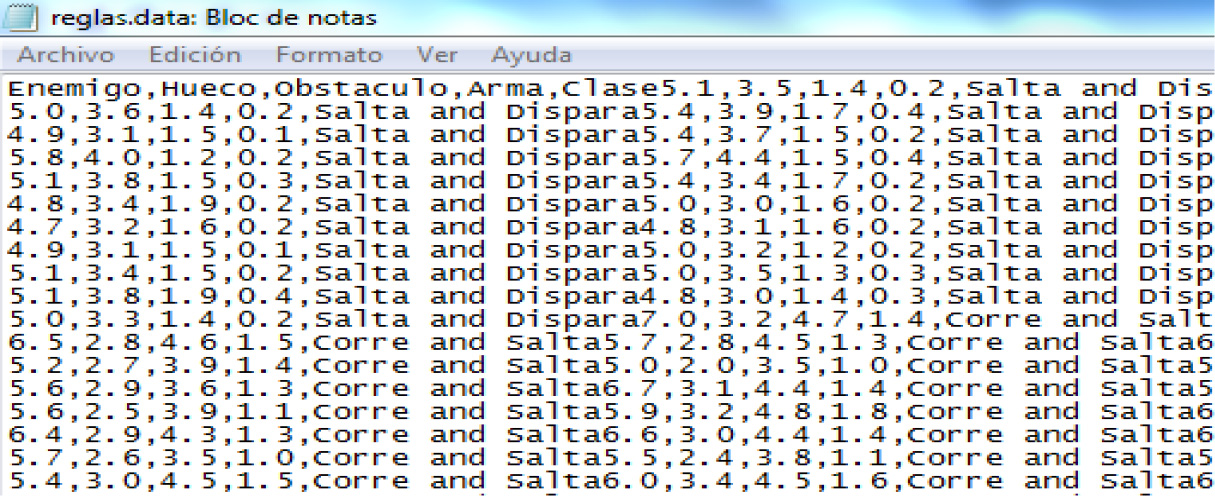
Interface of our FCS.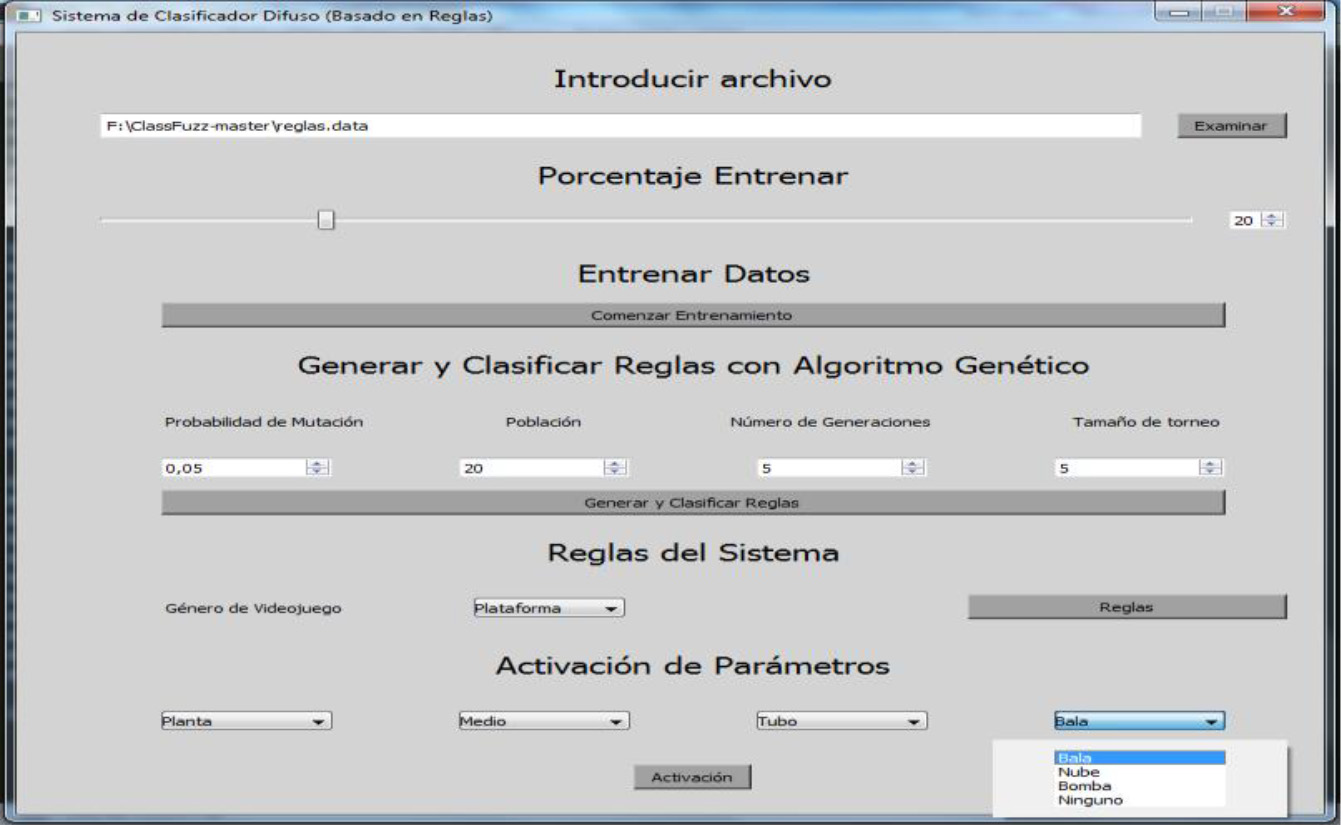
Introduce the rules.data file: this file is introduced, with the information of the rules with different variants in the events (Enemy, Hollow, Obstacle, and Weapons) and actions (Jump, Shoot and Run) (see Fig. 15). The values of the event variables go from 0.1 to 9.9, measuring the intensity with which an event occurs. This will determine when a parameter is active or not, allowing measure how important an event is event respect to another. Training Percentage: This parameter defines the percentage of the population (rules) selected to generate new rules. Normally, a good number is 30% [4].
Last generation. Generate new Rules: In this case are defined the parameters of the genetic algorithms for the generation process. In particular, the Mutation Probability, Population Size, Number of Generations and Tournament Size are defined (see Fig. 16). Then, the evolutionary process starts using our fitness function to guide it. Figure 17 shows an example of the last generation for the current scene in our case study. It proposes 9 rules, at the right, there are two data in parentheses in the following format (action, P), where action can be
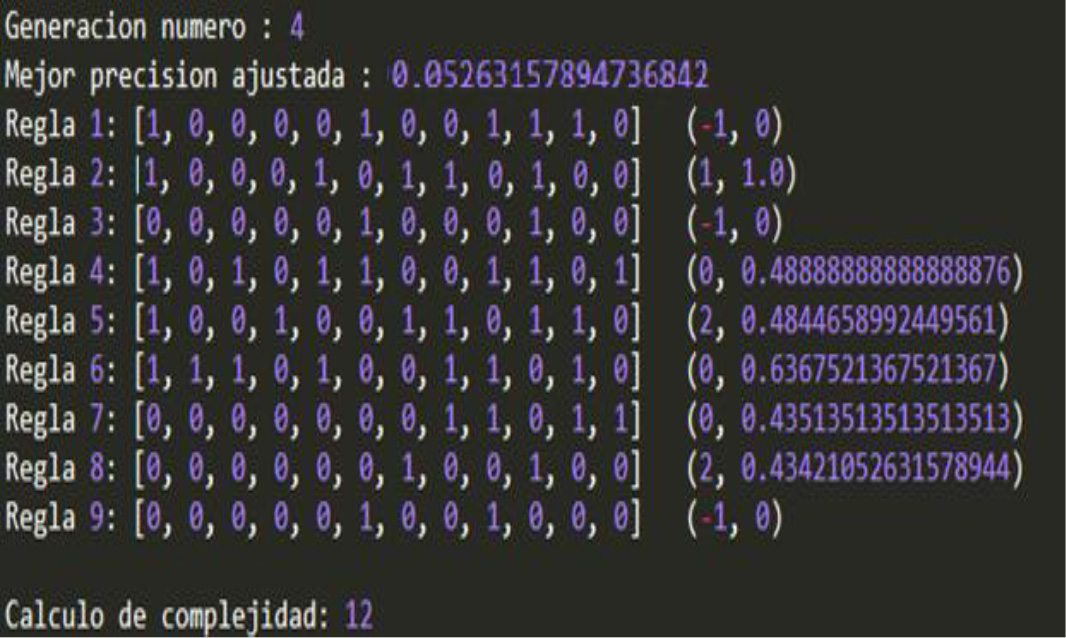
Literal rules of the last generation.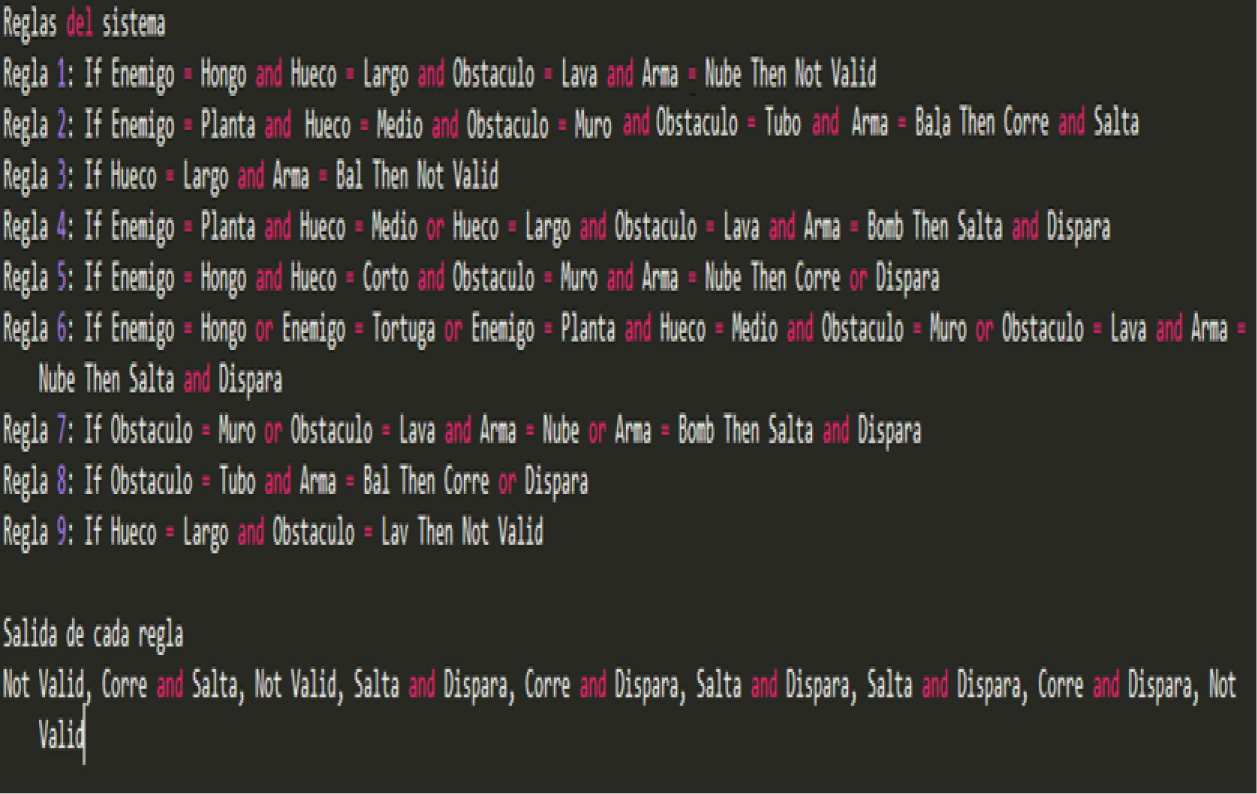
Figure 18 describes the 9 rules proposed by the FCS for the current scene. They have been written literally to be understood. According to these results, rule 2, despite having the wall obstacle, is the one that most closely resembles our scene, and also, has a correct way of acting, with the action of running and jumping.
With this rule, the rule system of the FCS is updated, also deleting the worst rule. If the ESGE is left running for a time in SaCI for a course and group of users, it will stabilize the set of rules of strategies suitable for that context.
In this section, the efficiency of our proposal is studied by analyzing the quality of the rules proposed by the FCS. For this, a virtual environment was generated where the previous SaCI context was assumed, and in each test, one of the following games was played:
Donkey Kong: it is a videogame where the player chooses a character of an ape, which rides in carts and barrels, uses a gun to shoot, and flies a plane to transport it from one spot to another. It is possible to walk, jump and run on the platform, by swinging and clearing the way through the levels of the game. Super Tux: is a Side-Scrolling, Adventure Platform video game that features a little penguin Tux as the main character of the game. The game has twenty-six levels in which the player can run and jump on platforms and kill the enemies by jumping on their heads. Kirby’s Adventure: Wii is a Side-Scrolling and Platform Puzzle video game that presents Kirby’s adventures. The game allows rolling and jumping Kirby from one platform to another. It is possible to copy the abilities of the enemies and use them against them. Crash Bandicoot: it is a Single-player, Side-scroll and Platform video game where the story follows a plot to shrink the planet Earth by the evil named Doctor Neo Cortex, using a gigantic weapon called Planetary Minimizer. The player acts as the main protagonist of the series named Crash Bandicoot, and his/her task is to collect crystals throughout the levels to restore the Earth to its original size.
The average fitness function of the initial population (after the first innovation to FCS) and after 10 invocations to the FCS is compared to determine if the FCS improved the rule system (see Table 3). Remember that the fitness function is defined by the number of times a rule is used, which is an indicator of survival (it is evaporated if a rule is not invoked and reinforced when it is used), but also, it is determined by its utilization due to the quality of the strategy expressed by the rule.
Table 3 shows that the quality of the rule system is improved in all cases, where in all cases their average fitness function is more than 3.6 (average use measure of the rules before each call to the FCS).
The comparison proposed is based on whether they allow emergencies of strategies in the ESG, if they use fuzzy logic, what fuzzy technique they use, and how they use them in the game (see Table 4).
Performance evaluation of the FCSs
Performance evaluation of the FCSs
Comparison with other recent works
Only the works [12, 16, 17] and our approach confer adaptive capabilities to the videogame. On the other hand [16, 17], and our proposal allow the emergence of strategies, but our approach is the only one for EGSE. Our approach is for EGSE, and there is only one more work for a videogame engine [12]. Only the work of [12] uses a technique that is not from the fuzzy logic domain. Finally, different fuzzy techniques are used in the works, but our proposal is the only one based on FCSs, which gives it a great capacity to adapt because the rules evolve.
In comparison with the previous works, this paper proposes a system for the management of the emergence of strategies using an FCS, for ESG. It is the only work that proposes to incorporate the emergence of strategies in ESGE, as an adaptive mechanism of ESGs. The emergencies allowed in other works are linked to decision-making during the development of the game, which does not affect the dynamics of the system itself (in our case, the ESG).
In summary, the main advantages of our proposal with respect to previous works are that i) it presents an adaptive mechanism for serious games, in such a way as to adapt to the characteristics of the students, ii) the adaptive mechanism allows adapting the strategies used in the game, and particularly its tactics and logic, to the context, iii) the technique that uses the adaptive mechanism (fuzzy classifier systems) allows the management of the uncertainty of the context.
On the other hand, the most relevant disadvantage of our proposal is its implementation in real contexts, since it involves installing the classifier system in such a way as to capture the information required by the adaptation process. This requires a process of adaptation of the learning environments.
In this article, we present the SAS component of an ESGE, which allows the strong emergence of strategies, in such a way to adapt the tactics and logic of an ESG to the current context in an ESG. In particular, the SAS was tested in a SaCI, in order to allow the ESG to adapt to the teaching-learning process that is taking place at a given time in it. The SAS allows the emergence of strategies, in the form of rules, which impact the behavior in the ESG. For this, an FCS was used, which manages the strategies according to their uses during the game, in order to create new rules, and make those that are not useful disappear.
The main limitations of our work are linked to the installation process in real contexts of the system for adapting strategies in serious emerging games, which requires preparing the learning environment so that the information required by our fuzzy classifier system can be captured (e.g., the strategies of the SG defined as rules). Another relevant limitation is how to establish pedagogical indicators that evaluate the impact of the adaptive strategy mechanism on the student’s learning process, making it the least intrusive. Finally, another aspect that has not been considered in this study is the ethical aspects that may appear in contexts like these, which must be analyzed in depth to be sure that the use of applications of this type guarantees the integrity and well-being of the students.
In future works, the SAS will be applied in a real educational context, in different teaching-learning processes. Then, it will be evaluated using pedagogical indicators that allow showing its effectiveness in said processes. Also, the SAS will be integrated into an ESGE with the rest of the emergent systems (parameters and plots), in order to test the combined emergence capacity that they allow together, and their impact. Other future work will be to develop a system that allows determining in real time which is the appropriate emerging mechanism (by strategy, parameters or plots) to use at a given moment in a serious game, which seeks to minimize adaptation time and maximize its adaptation power.
Institutional review board statement
The study was conducted in accordance with relevant guidelines and regulations, and approved by the Universidad de Los Andes ethics committee.
Informed consent statement
All those students participating in this study have previously given their informed consent to participate in this work.
Funding
Nothing to report.
Data availability
All the material will be available on demand, subject to confidentiality agreements.
Author contributions
All authors participated in all parts of the article.
Footnotes
Conflict of interest
The authors declare that they have no known competing financial interests or personal relationships that could have appeared to influence the work reported in this paper.