The highest level of interface design for online games is to achieve invisibility, which means that the interface is very natural and easy to use. Players are proficient in using it and fully immerse themselves in the world of online games. It seems that the interface is transparent and they no longer feel its existence. Excellent online game interface design is the requirement of users that runs through the entire design process. But this is not to say that the usability of online game software can surpass other factors. All great designs seek a balance and harmony between artistic beauty, reliability, security, usability, cost, and performance. The quality evaluation of online games interface design is a multiple-attribute group decision-making (MAGDM) problem. Recently, the Evaluation Based on Distance from Average Solution (EDAS) technique, cosine similarity measure (CSM), Dice similarity measure (DSM), Jaccard similarity measure (JSM) and entropy technique has been separately employed to cope with MAGDM issues. The probabilistic linguistic term sets (PLTSs) are employed as a tool for conveying uncertain information during the quality evaluation of online games interface design. In this paper, the EDAS technique is expanded to the PLTSs and the probabilistic linguistic EDAS (PL-EDAS) technique based on cosine similarity measure (CSM), Dice similarity measure (DSM) and Jaccard similarity measure (JSM) is constructed to manage MAGDM issue. The information entropy technique is employed to implement the weight values based on CSM technique, DSM technique and JSM technique under PLTSs. Finally, the quality evaluation of online games interface design is employed to demonstrate the PL-EDAS technique and some comparative analysis is employed to demonstrate the PL-EDAS technique. Thus, the main research contribution of this work is constructed: (1) the information entropy technique is constructed to implement the attribute weight values based on CSM technique, DSM technique and JSM technique; (2) the PL-EDAS technique is constructed under PLTSs based on CSM technique, DSM technique and JSM technique; (3) an example for quality evaluation of online games interface design is employed to verify PL-EDAS technique and several decision comparative analysis is employed to verify the PL-EDAS technique.
The comprehensive coverage of the Internet and the rapid development of mobile terminal devices have also led to the rapid development and growth of online games, becoming one of the mainstream leisure and entertainment methods in contemporary times [1]. Especially in recent years, more and more people have become members of online game users, and various esports game leagues have also gained higher attention [2, 3]. This development trend has brought huge profits to game developers. The diverse games in the market are prone to similar game styles, but each game should have a unique game interface [4, 5]. At present, the main game development companies in China are Tencent and NetEase. Most of the games produced by these two companies have excellent graphics, novel and interesting content gameplay, and meet the needs of most market users. Just like in real life, the first impression of people comes from external observation, online games also apply this principle. Users’ first impression of online games comes from the most intuitive game interface. There are many game products in the market, so the design of the game interface directly affects users’ click through volume [6, 7]. The online game development market in China has become increasingly mature, but there is still a lot of room for improvement in interface design. A beautiful and elegant game interface can add impression points to the game. There are many factors that influence the success of a game, with first impressions occupying an important position. Therefore, game interface designers should be good at observing the interface design of various online games, summarizing and categorizing the complex game interface design styles, and discovering the game styles that users like, laying a solid foundation for future game interface design [8, 9]. Although the purpose of players playing online games is for leisure and entertainment, and to obtain fun from the game, a comfortable game interface can provide players with a better visual experience, so it has high practical value [10]. Firstly, there are a wide variety of online games of all sizes, and the styles between different games are also ever-changing [11]. The design and production of basic online games are not very difficult in terms of technical difficulty, but once the popularity of a certain online game style gradually increases, a large number of online games of the same type and design style will also begin to emerge. Currently, the interface design of online games in China mostly draws inspiration from the Japanese and Korean game interface design styles, which mostly use cartoon and cute elements. Although this style is favored by female players, uniformity inevitably leads to aesthetic fatigue. At present, the online game styles of shooting and sports are mostly based on the interface design of European and American games, and through some realistic art styles, players have a stronger sense of immersion [12, 13]. Although this design style is more appealing to male players, it still lacks innovation. Secondly, the design of online game interfaces directly affects the sales of this game in many cases. The internal operations of the game are important, but first of all, players need to generate interest through the game interface to appreciate whether the game’s operations are excellent. This requires the game interface’s painting style and design elements to be aesthetically pleasing. And there are usually differences between the promotional interface and the internal operation interface of online games, because in order to ensure the smooth operation of the game process, the graphics often cannot be described in detail and displayed delicately [14, 15]. However, in the initial promotional interface of the game, each online game strives for excellence. Therefore, the complex graphics and magnificent colors are the common characteristics of current online games. Moreover, due to the unique nature of online games, there are significant differences in the interface style of the same game across different clients. Finally, as the online gaming industry continues to mature, more and more new styles have emerged in the interface design of online games [16]. It has also won many awards in international online game interface design. At present, various online games are popular worldwide, and online games of all sizes have developed very mature in terms of game operation content, overall visual quality, content, and gameplay, allowing players to fully immerse themselves in interesting games [17]. In the future, online game interface designers should continuously improve their creative thinking and abilities, seek a balance and harmony between the artistic beauty, ease of operation, and cost-effectiveness of game interfaces, pay more attention to the psychological needs of players, extract more localized design elements, and design more local and popular online game interfaces [18].
When decision information is uncertain or insufficient, uncertain variables and fuzzy variables are commonly used to express the decision-maker’s judgment. Among them, linguistic variables are often considered an effective way to describe decision-makers’ judgments [19, 20, 21]. Due to the complexity of unexpected events, decision-makers may need multiple linguistic variables to express their judgments in a richer way. To address this issue, Rodriguez, Martinez and Herrera [22] constructed the concept of Hesitant Fuzzy Linguistic Term Sets (HFLTS). Subsequently, decision-making research based on HFLTS gradually increased. Liang, Tu, Ju and Shen [23] extended the TODIM technique to a multi-granularity proportional hesitation fuzzy linguistic environment and developed a multi granularity proportional hesitation language TODIM technique for mine emergency decision-making. In addition, Wu, Xu, Jiang and Zhong [24] constructed a MAGDM based on HFLTS, combined with VIKOR and TOPSIS techniques. In reality, decision-makers not only use multiple linguistic variables to express their judgments, but also exhibit hesitation and varying degrees of preference. For this reason, Pang, Wang and Xu [25] constructed a new linguistic variable called Probabilistic Linguistic Term Sets (PLTSs), which can reflect both decision-makers’ hesitation and their preference for language terms. Given that PLTSs can comprehensively express decision-makers’ judgments, they have been widely adopted in decision analysis [26, 27, 28, 29, 30, 31, 32]. In addition, many scholars have conducted research on the information processing techniques of PLTSs [33, 34]. Among them, the techniques for determining the similarity between two PLTSs mainly include distance measurement, correlation measurement, and entropy measurement [35]. Pang, Wang and Xu [25] constructed for the first time a deviation measurement technique between PLTSs similar to the hesitant fuzzy Euclidean distance. Lin et al. [36] constructed a correlation coefficient measurement technique between two PLTSs. Liu et al. [37] introduced the fuzzy entropy, hesitant entropy, and total entropy measurement techniques of PLTSs, and then constructed a multi standard decision model based on these measurement techniques. The quality evaluation of online games interface design is a MAGDM problem. Recently, the EDAS technique [38, 39, 40, 41, 42], cosine similarity measure (CSM) [43, 44, 45], Dice similarity measure (DSM) [46, 47], Jaccard similarity measure (JSM) [48, 49] and entropy technique [50] has been separately employed to cope with MAGDM issues. The probabilistic linguistic term sets (PLTSs) [51] are employed as a tool for conveying uncertain information during the quality evaluation of online games interface design. Thus, it has significant significance to put up with the quality evaluation of online games interface design. Unfortunately, few valuable works were unable to manage the decision-making issues through employing the EDAS technique [38, 39] based on CSM technique, DSM technique and JSM technique under PLTSs [51] during existing research literatures. Therefore, it is valuable to go deeply into EDAS technique with PLTSs based on CSM technique, DSM technique and JSM technique. In this paper, the EDAS technique is expanded to the PLTSs and the probabilistic linguistic EDAS (PL-EDAS) technique based on cosine similarity measure (CSM), Dice similarity measure (DSM) and Jaccard similarity measure (JSM) is constructed to manage MAGDM issue. The information entropy technique is employed to implement the weight values based on CSM technique, DSM technique and JSM technique under PLTSs. Finally, the quality evaluation of online games interface design is employed to demonstrate the PL-EDAS technique and some comparative analysis is employed to demonstrate the PL-EDAS technique. Thus, the main research goal and motivation of this work is constructed: (1) the information entropy technique is constructed to implement the attribute weight values based on CSM technique, DSM technique and JSM technique; (2) the PL-EDAS technique is constructed under PLTSs based on CSM technique, DSM technique and JSM technique; (3) an example for quality evaluation of online games interface design is employed to verify PL-EDAS technique and several decision comparative analysis is employed to verify the PL-EDAS technique.
The framework structure of this paper is conveyed below. In Section 2, the PLTSs is conveyed. In Section 3, PL-EDAS technique is constructed under PLTSs based on CSM technique, DSM technique and JSM technique with entropy. Section 4 gives the numerical example for quality evaluation of online games interface design and some comparative analysis. Some remarks are conveyed in Section 5.
be two PLTSs, probabilistic linguistic Dice similarity measure (PLDSM) between and is constructed:
Definition 9. Let be LTSs,
and
be two PLTSs, probabilistic linguistic Jaccard similarity measure (PLJSM) between and is constructed:
PL-EDAS technique for MAGDM based on CSM, DSM and JSM
In this section, PL-EDAS technique is constructed for MAGDM. Let be alternatives and be attributes with weight information , where , . Suppose that the under are assessed with PLTSs through integrating different experts’ information.
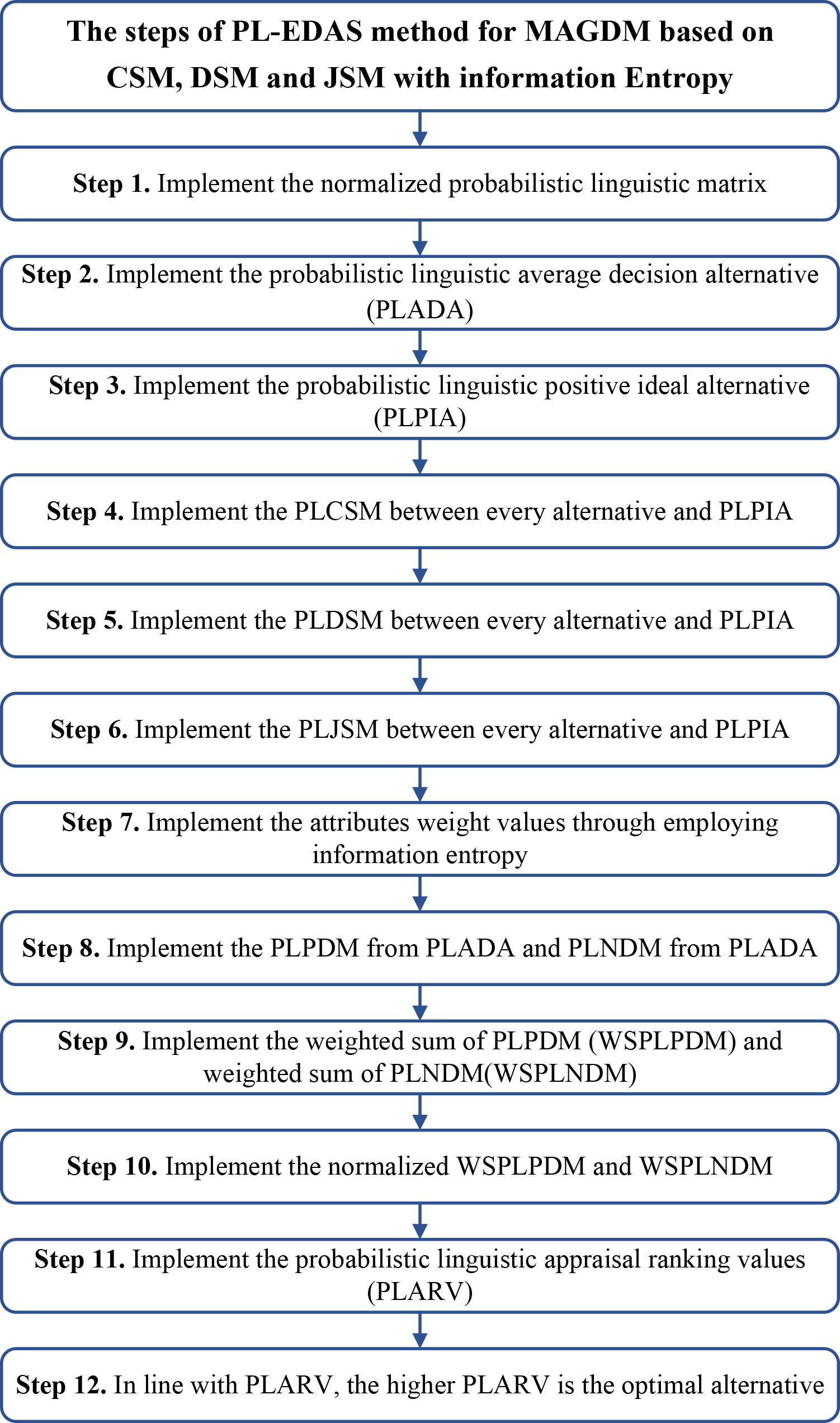
Then, PL-EDAS technique is employed to solve the PL-MAGDM. The calculating steps are depicted:
The steps of PL-EDAS method for MAGDM based on CSM, DSM and JSM with information entropy.
Step 1. Implement the normalized probabilistic linguistic matrix ,
through integrating different experts’ information. Thus, probabilistic linguistic information for is depicted as:
.
Step 2. Implement the probabilistic linguistic average decision alternative (PLADA).
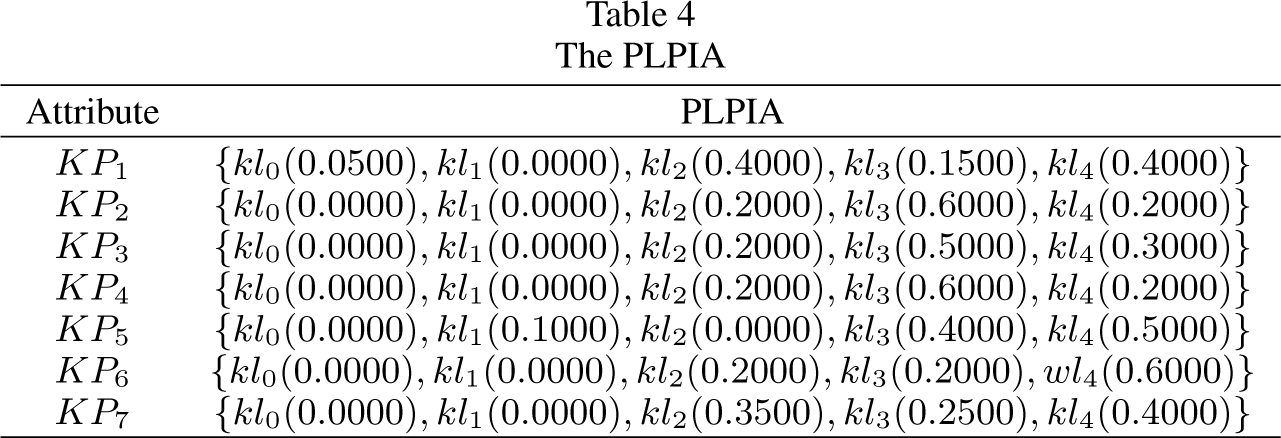
Step 3. Implement the probabilistic linguistic positive ideal alternative (PLPIA):
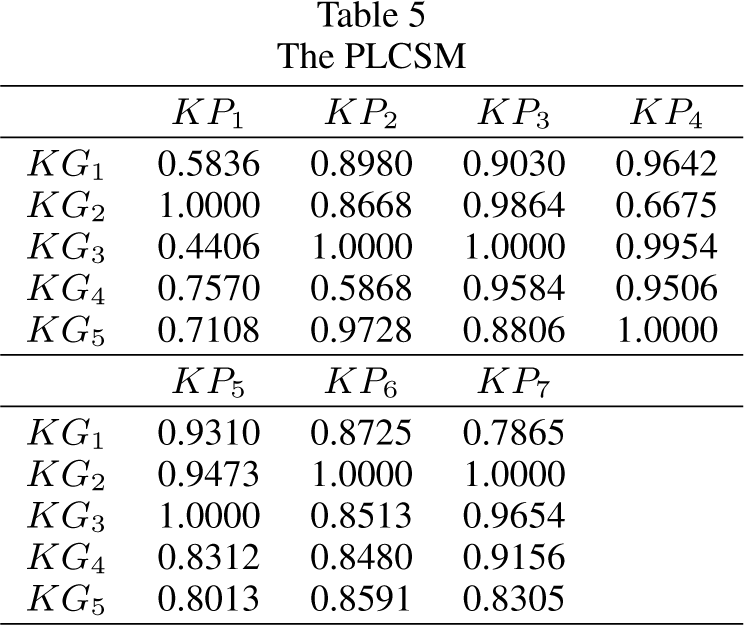
Step 4. Implement the PLCSM between
and
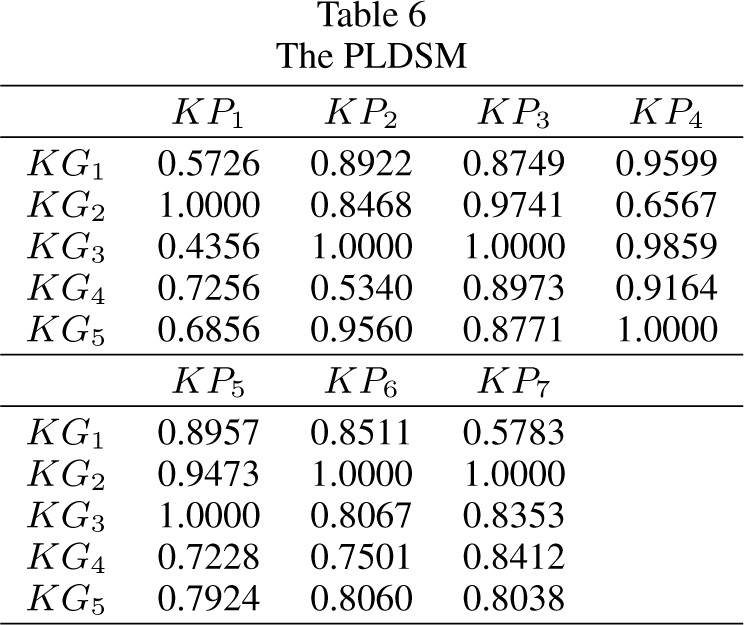
Step 5. Implement the PLDSM between
and
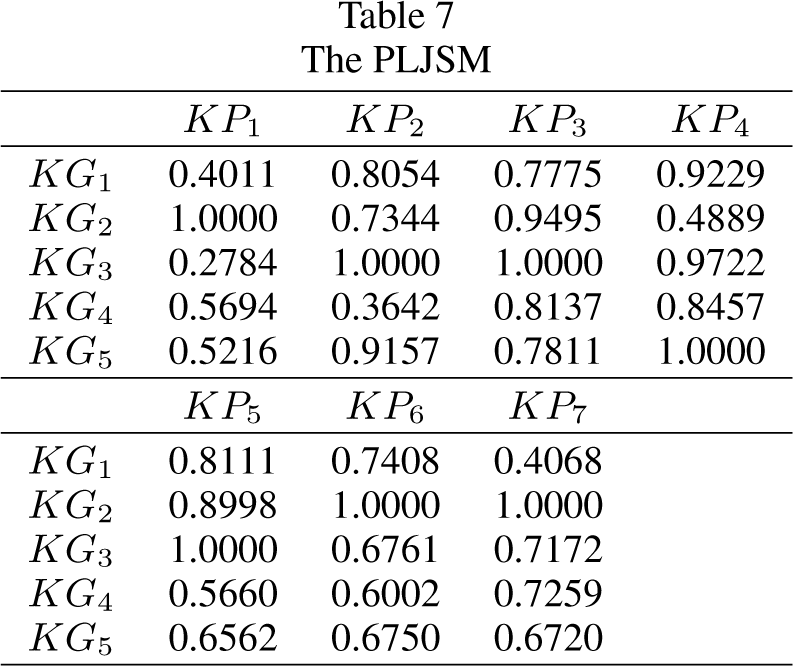
Step 6. Implement the PLDSM between
and
Step 7. Implement the attributes weight values through employing information entropy.
Entropy [50] is an efficient technique to obtain weight values. Firstly, the normalized probabilistic linguistic matrix is managed:
Then, the probabilistic linguistic Shannon entropy values (PLSEV) is managed by Eq. (26):
and if .
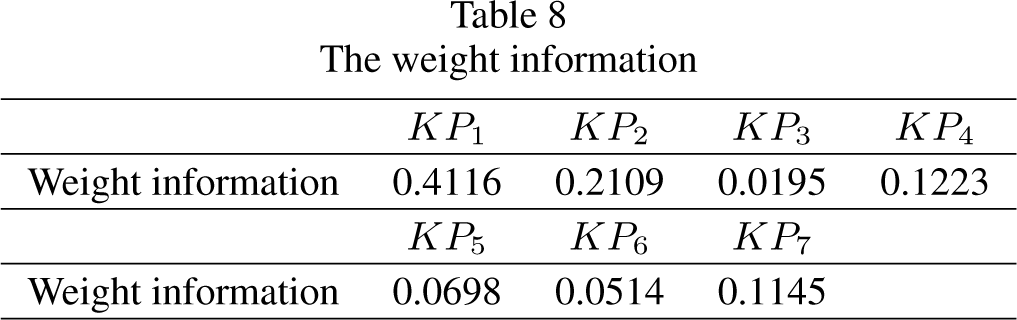
Then, the weight information is constructed:
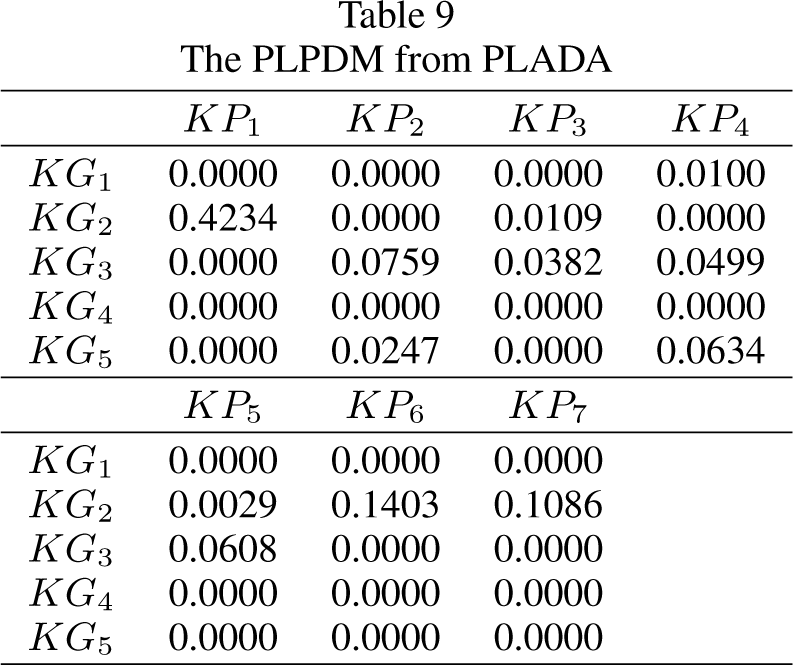
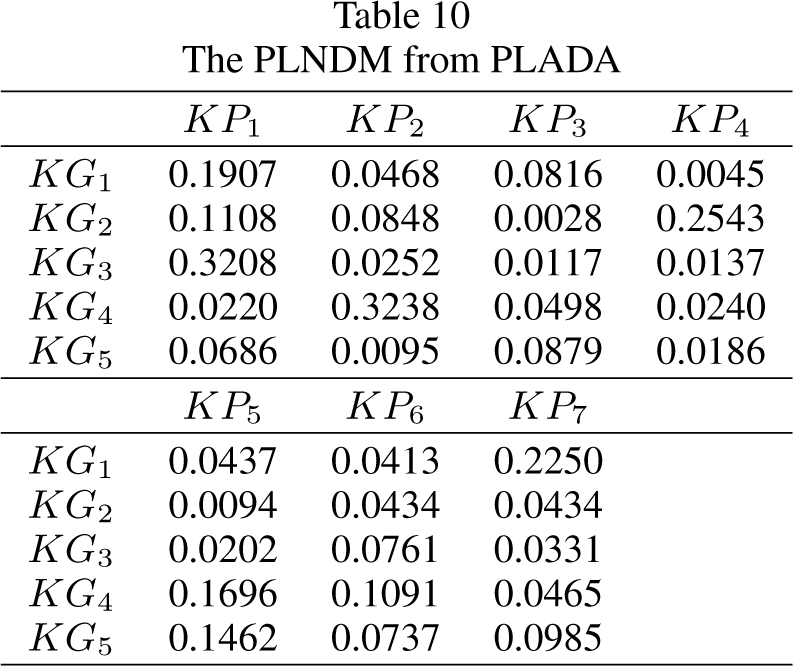
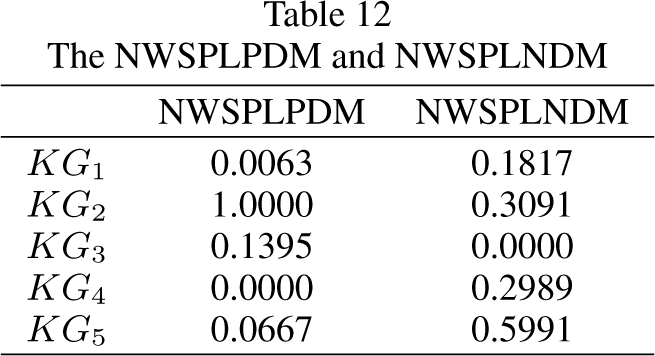
Step 8. Implement the probabilistic linguistic positive distance measures (PLPDM) from PLADA and probabilistic linguistic negative distance measures (PLNDM) from PLADA:
For the positive attributes:
For the negative attributes:
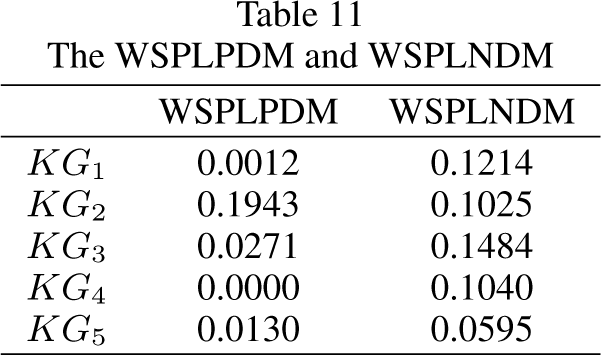
Step 9. Implement the weighted sum of PLPDM (WSPLPDM) and weighted sum of PLNDM (WSPLNDM)
Step 10. Implement the normalized and :
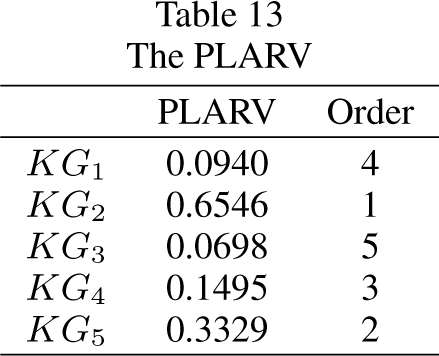
Step 11. Implement the probabilistic linguistic appraisal ranking values (PLARV).
Step 12. In line with PLARV, the higher PLARV is the optimal alternative.
Numerical example and comparative analysis
Numerical example
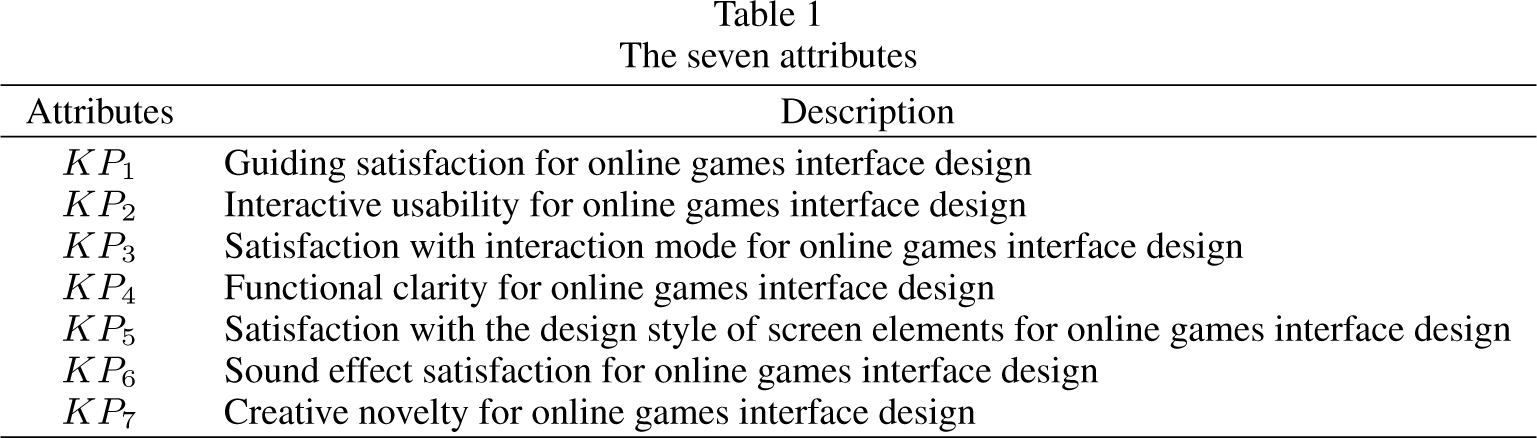
With the gradual increase in the influence of games, more and more people are using games as their main form of entertainment [57, 58]. According to the 2022 global gaming market report released by market research company Newzoo, in 2022, global gaming players reached nearly 3.2 billion, with a total gaming consumption of $196.8 billion. Each player has many gaming and payment options, and games are becoming truly accessible to everyone. The report mentioned that RPG games are currently the most popular form of games [59]. The first three RPG games that are most popular on PC platforms are Genshin Impact, World of Warcraft and Final Fantasy 14. Male players are the main gaming group, with players aged 10–20 accounting for up to 30% of the total. With the establishment of more comprehensive internet infrastructure and more affordable networking costs, the number of players will continue to grow [60, 61]. At present, the mainstream works in the game market have exquisite graphics, novel and interesting gameplay, and captivating storylines, which can meet users’ needs for various aspects of the game [2]. However, many games still need to be optimized in terms of game system interface design. Excellent game system interfaces can provide users with a smooth interactive experience, increase their immersion while playing, enhance their focus, and help a game gain recognition from players. The content of the game itself is the focus of the user experience, and the game system can ensure that users can smoothly experience the game content and achieve interaction between the game and people. The development of information technology has made online games popular worldwide, and the design of online game interfaces also greatly affects whether this game is loved by players [62, 63]. It can be said that online game interface design is a high-tech mass entertainment art that integrates various technologies such as computer graphics, game programming, electronic animation, music, art, etc. Software interface design mainly focuses on users’ convenient and accessible choices, while online game interfaces are more focused on fun interactions [64]. The interface design requirements for online games are stricter, and interface elements should be arranged based on various factors such as player identity, age, gender, etc. The design of game pages should fully consider the aesthetic perspective and players’ appreciation level. In summary, in the current game industry where various online games are flourishing, how to deeply explore players’ preferences and needs from multiple perspectives, and design novel and interesting online game interfaces is an urgent problem that every online game designer needs to solve [11]. The quality evaluation of online games interface design is the MAGDM issue. Therefore, the quality evaluation of online games interface design is presented to demonstrate the PL-EDAS technique developed in this paper. There is a panel with five online games to choose. The experts select seven attributes (see Table 1 [65]) to assess the interface design quality of five online games.
The seven attributes
Attributes
Description
Guiding satisfaction for online games interface design
Interactive usability for online games interface design
Satisfaction with interaction mode for online games interface design
Functional clarity for online games interface design
Satisfaction with the design style of screen elements for online games interface design
Sound effect satisfaction for online games interface design
Creative novelty for online games interface design
All attributes are beneficial one. The five potential online games are to be assessed through utilizing the linguistic term set:
through online review of some game enthusiasts and gamers. After that, the PL-EDAS technique is implemented to manage the quality evaluation of online games interface design.
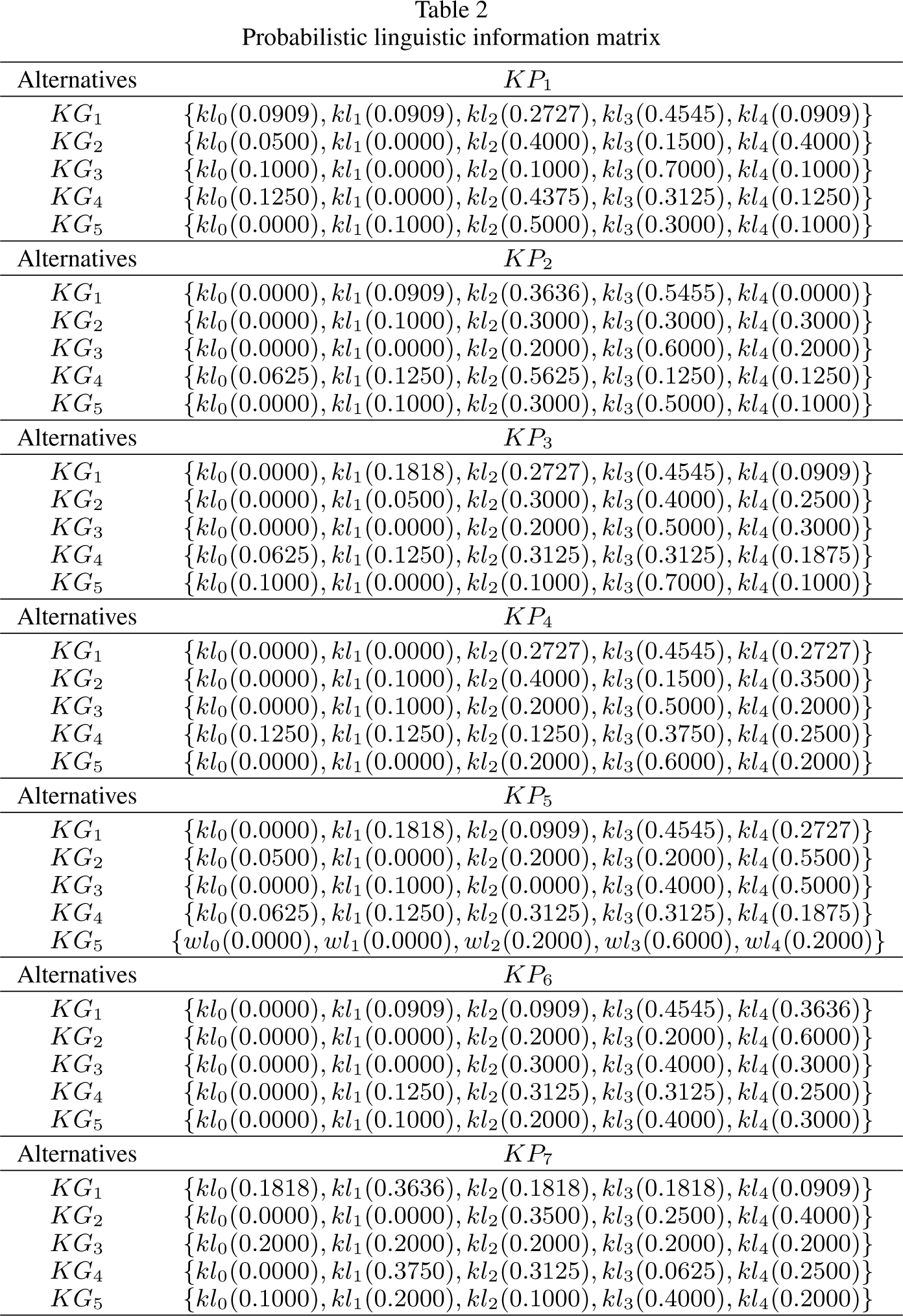
Step 1. Implement the online review of some game enthusiasts and gamers and these integrated data are managed in Table 2.
Step 12. In line with the PLARV, the order is: and is the best online game.
Comparative analysis
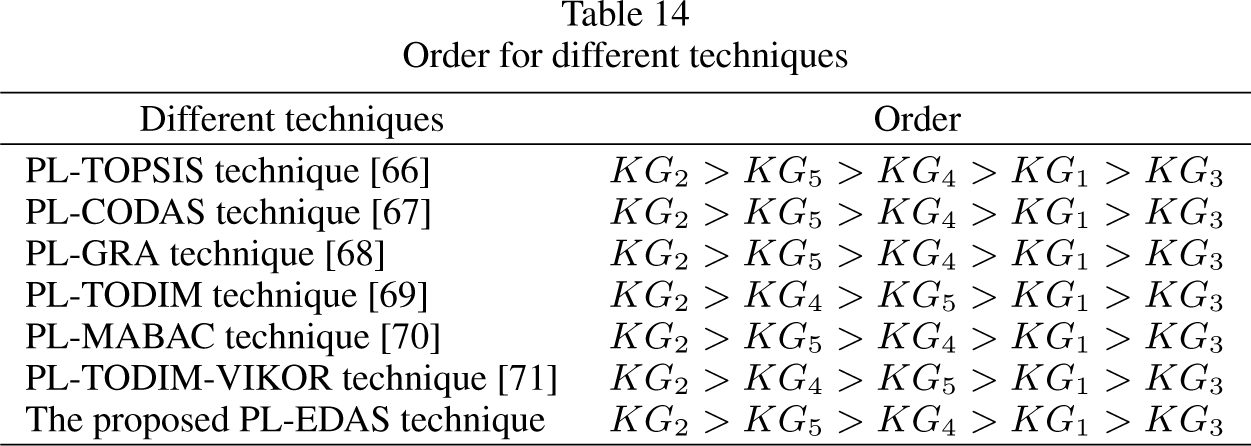
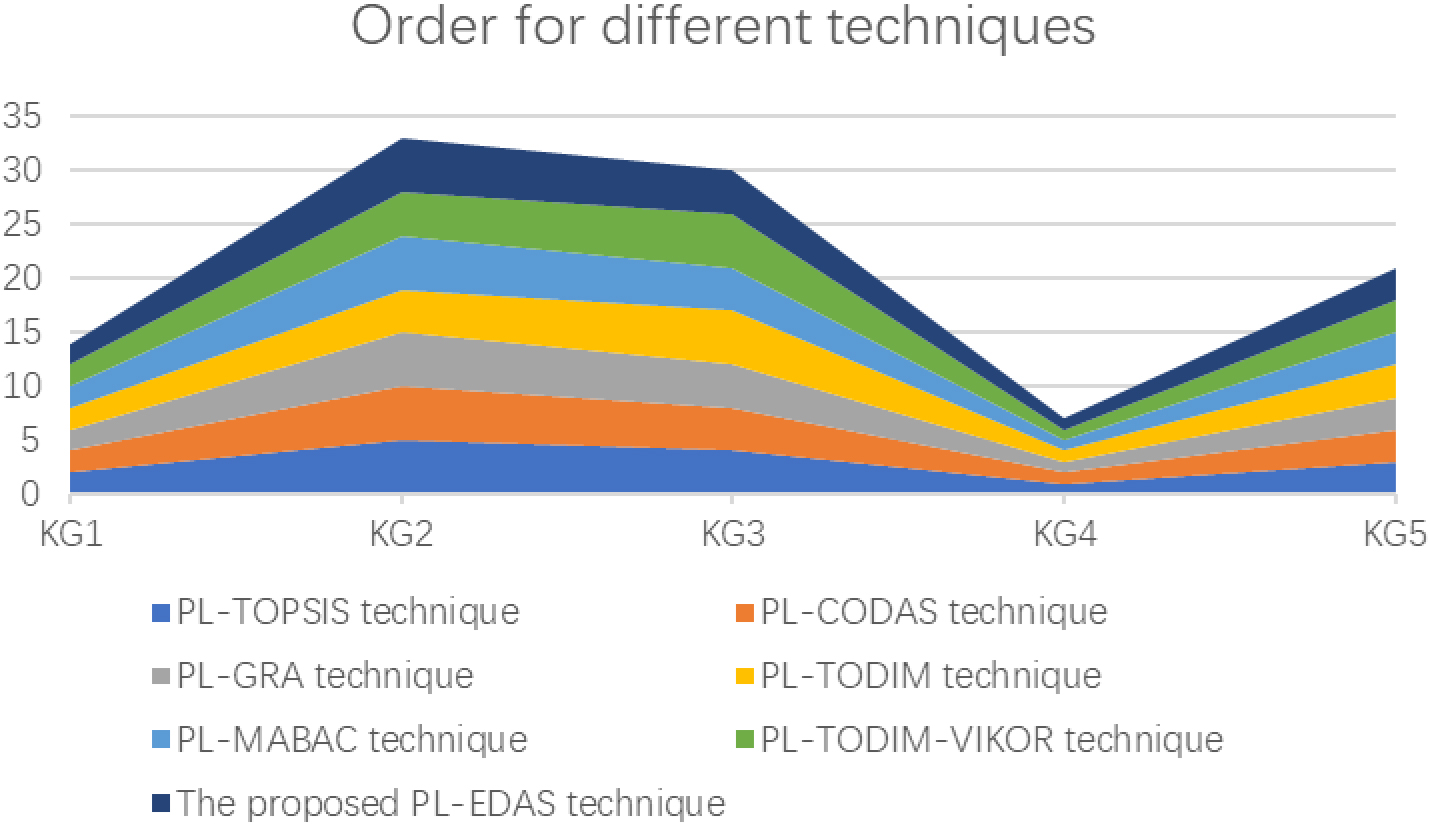
Then, the PL-EDAS technique is compared with PL-TOPSIS technique [66], PL-CODAS technique [67], PL-GRA technique [68], probabilistic linguistic TODIM (PL-TODIM) technique [69], probabilistic linguistic MABAC (PL-MABAC) technique [70], probabilistic linguistic TODIM-VIKOR (PL-TODIM-VIKOR) technique [71]. The comparative results are dealt with Table 14 and Fig. 2.
From the above analysis, it could be known that the order of these techniques is same to the order of the PL-TOPSIS technique [66], PL-CODAS technique [67], PL-GRA technique [68] and PL-MABAC technique [70]; the order of these techniques is slightly different from the order of PL-TODIM technique [69] and PL-TODIM-VIKOR technique [71]. However, these techniques have the same optimal online game and worst online game. This verifies the proposed PL-EDAS technique is reasonable and effective. Furthermore, the reason for the slight difference is that PL-TODIM technique [69] emphasized the psychological behavior of decision-makers, while PL-TODIM-VIKOR technique [71] emphasized both psychological behavior of decision-makers and group maximum utility & individual regret value. The differences of proposed PL-EDAS technique from existing PL-EDAS technique [72] are outlined: (1) the weight of proposed PL-EDAS technique is constructed by entropy technique based on the based on CSM technique, DSM technique and JSM technique; while the weight of existing PL-EDAS technique [72] is constructed by entropy technique based on the expected values; (2) The key steps of PLPDM and PLNDM of proposed PL-EDAS technique is constructed based on the based on CSM technique, DSM technique and JSM technique; while The key steps of PLPDM and PLNDM of existing PL-EDAS technique [72] is constructed by based on expected values and Hamming distance.
Conclusion
The development of information technology has made online games popular worldwide, and the design of online game interfaces also greatly affects whether this game is loved by players. It can be said that online game interface design is a high-tech mass entertainment art that integrates various technologies such as computer graphics, game programming, electronic animation, music, art, etc. Especially in recent years, various online game competitions have become increasingly frequent and specialized, and designers have subverted the design principles of traditional single player games by designing online game interfaces. They are constantly developing in the process of exploring new interactive and humanized approaches. The quality evaluation of online games interface design is MAGDM problem. Recently, the EDAS technique, CSM technique, DSM technique, JSM technique and entropy technique has been separately employed to cope with MAGDM issues. The PLTSs are employed as a tool for conveying uncertain information during the quality evaluation of online games interface design. In this paper, the EDAS technique is expanded to the PLTSs and the PL-EDAS technique based on CSM technique, DSM technique and JSM technique is constructed to manage MAGDM issue. The information entropy technique is employed to implement the weight values based on CSM technique, DSM technique and JSM technique under PLTSs. Finally, the quality evaluation of online games interface design is employed to demonstrate the PL-EDAS technique and some comparative analysis is employed to demonstrate the PL-EDAS technique. Thus, the main research contribution of this work is constructed: (1) the information entropy technique is constructed to implement the attribute weight values based on CSM technique, DSM technique and JSM technique; (2) the PL-EDAS technique is constructed under PLTSs based on CSM technique, DSM technique and JSM technique; (3) an example for quality evaluation of online games interface design is employed to verify PL-EDAS technique and several decision comparative analysis is employed to verify the PL-EDAS technique.
There may be some possible limitations for quality evaluation of online games interface design, which could be further studied in our future research for quality evaluation of online games interface design: (1) It is a worthwhile research work to manage consensus issues [73, 74, 75, 76] for quality evaluation of online games interface design under PLTSs and manage regret theory [77, 78, 79, 80] under PLTSs; (2) At present, there is a contradiction in the interface design of online games, which is that for the development of online games, designers hope to present all the content in the game to players, so that players can quickly grasp the attraction points and strengthen their attractiveness to players. However, at the same time, players are unable to make choices when facing complex information, and the surface of the game screen is also occupied by a large number of menus and charts, resulting in a reduced operating space for players and a sense of fatigue. In response to the above issues, the interface design process should follow the principle of simplification, and designers should fully consider the player’s feelings, scientifically analyze people’s memory patterns, as well as attention and other issues. (3) With the continuous development of science and technology, online games have gradually become an emerging industry that can earn more profits for businesses. As a popular entertainment project, it has gradually occupied people’s daily lives. Online games have gradually become a new economic growth point in the new era, and the competitive pressure in the field is also increasing. interface design is the first impression that players have of games, which plays an important role in the development of games. Therefore, relevant research should be strengthened.
References
1.
LinL. Discussion on issues related to ui interface design in online games. Information and Computer (Theoretical Edition).2020; 32(07): 89-91.
2.
BalducciFGranaCCucchiaraR. Affective level design for a role-playing videogame evaluated by a brain-computer interface and machine learning methods. Visual Computer.2017; 33(4): 413-427.
3.
BugmannGWolfJCRobinsonP. The impact of spoken interfaces on the design of service robots. Industrial Robot-the International Journal of Robotics Research and Application.2005; 32(6): 499-504.
4.
PaivaAAnderssonGHöökKMouraoDCostaMMartinhoC. Sentoy in fantasya: Designing an affective sympathetic interface to a computer game. Personal and Ubiquitous Computing.2002; 6(5-6): 378-389.
5.
SepichNTalyatMDidicEDorneichMCGilbertSB. Video game interface design patterns to facilitate human-agent teaming. International Journal of Human-Computer Interaction. 2023; 16.
6.
LyuFXiRLiuYJ. Color design in application interfaces for children. Color Research and Application.2022; 47(2): 507-517.
7.
WangXMHuYZhangWD. Usability design of human-machine interaction interface of child companion robot in wireless network. Scientific Programming.2022; 2022: 10.
8.
GauthierAPorayska-PomstaKDumontheilIMayerSMareschalD. Manipulating interface design features affects children’s stop-and-think behaviours in a counterintuitive-problem game. Acm Transactions on Computer-Human Interaction.2022; 29(2): 21.
9.
KwanTHChanDPCLeeSS. User experience and usability of neumorphism and gamification user interface designs in an hiv self-test referral program for men who have sex with men: Prospective open-label parallel-group randomized controlled trial. Jmir Serious Games.2022; 10(2): 12.
10.
RobinsonNChouhanTMiheljEKratkaPDebraineFWenderothN, et al. Design considerations for long term non-invasive brain computer interface training with tetraplegic cybathlon pilot. Frontiers in Human Neuroscience.2021; 15: 16.
11.
MeiZ. Analysis of interface design principles and methods for online games. New Meiyu.2022; (06): 122-124.
12.
GrobaBNieto-RiveiroLCanosaNConcheiro-MoscosoPMiranda-DuroMDPereiraJ. Stakeholder perspectives to support graphical user interface design for children with autism spectrum disorder: A qualitative study. International Journal of Environmental Research and Public Health.2021; 18(9): 21.
13.
LiuNYinJMTanSSLNgiamKYTeoHH. Mobile health applications for older adults: A systematic review of interface and persuasive feature design. Journal of the American Medical Informatics Association.2021; 28(11): 2483-2501.
14.
WangCMTsengSMHuangCS. Design of an interactive nostalgic amusement device with user-friendly tangible interfaces for improving the health of older adults. Healthcare.2020; 8(2): 28.
15.
WangY. Analysis of the interactive design of the ui interface of the single game “underground antland”. Basic & Clinical Pharmacology & Toxicology.2020; 127: 22-22.
16.
SimonV. Guided by delight: Music apps and the politics of user interface design in the ios platform. Television & New Media.2020; 21(1): 60-74.
17.
SunA. Research on ui interface design for online games. Taxation.2019; 13(11): 294-295.
18.
ToupsZOLaloneNAlharthiSASharmaHNWebbAM. Making maps available for play: Analyzing the design of game cartography interfaces. Acm Transactions on Computer-Human Interaction.2019; 26(5): 43.
19.
HerreraFMartinezL. A 2-tuple fuzzy linguistic representation model for computing with words. Ieee Transactions on Fuzzy Systems.2000; 8(6): 746-752.
20.
HerreraFMartinezL. An approach for combining linguistic and numerical information based on the 2-tuple fuzzy linguistic representation model in decision-making. International Journal of Uncertainty Fuzziness and Knowledge-Based Systems.2000; 8(5): 539-562.
21.
HerreraFMartinezL. A model based on linguistic 2-tuples for dealing with multigranular hierarchical linguistic contexts in multi-expert decision-making. Ieee Transactions on Systems Man and Cybernetics Part B-Cybernetics.2001; 31(2): 227-234.
22.
RodriguezRMMartinezLHerreraF. Hesitant fuzzy linguistic term sets for decision making. Ieee Transactions on Fuzzy Systems.2012; 20(1): 109-119.
23.
LiangYYTuYJuYBShenWJ. A multi-granularity proportional hesitant fuzzy linguistic todim method and its application to emergency decision making. International Journal of Disaster Risk Reduction.2019; 36: 11.
24.
WuZBXuJPJiangXLZhongL. Two magdm models based on hesitant fuzzy linguistic term sets with possibility distributions: Vikor and topsis. Information Sciences.2019; 473: 101-120.
25.
PangQWangHXuZS. Probabilistic linguistic term sets in multi-attribute group decision making. Information Sciences.2016; 369: 128-143.
26.
WuXLLiaoHCXuZSHafezalkotobAHerreraF. Probabilistic linguistic multimoora: A multicriteria decision making method based on the probabilistic linguistic expectation function and the improved borda rule. Ieee Transactions on Fuzzy Systems.2018; 26(6): 3688-3702.
27.
GuJZhengYTianXLXuZS. A decision-making framework based on prospect theory with probabilistic linguistic term sets. Journal of the Operational Research Society.2021; 72(4): 879-888.
28.
LiangDCDaiZYWangMW. Assessing customer satisfaction of o2o takeaway based on online reviews by integrating fuzzy comprehensive evaluation with ahp and probabilistic linguistic term sets. Applied Soft Computing.2021; 98: 14.
29.
WanSPChengWBHDongJY. Interactive multi-criteria group decision-making with probabilistic linguistic information for emergency assistance of covid-19. Applied Soft Computing.2021; 107: 107383.
30.
KrishankumarRSivagamiRSahaARaniPArunKRavichandranKS. Cloud vendor selection for the healthcare industry using a big data-driven decision model with probabilistic linguistic information. Applied Intelligence.2022; 52(12): 13497-13519.
31.
SuYZhaoMWeiGWeiCChenX. An extended mabac method based on prospect theory for multiple attribute group decision making under probabilistic uncertain linguistic environment. Iranian Journal of Fuzzy Systems.2022; 19(5): 79-94.
32.
SuYZhaoMWWeiCChenXD. Pt-todim method for probabilistic linguistic magdm and application to industrial control system security supplier selection. International Journal of Fuzzy Systems.2022; 24(1): 202-215.
33.
LinMWChenZYXuZSGouXJHerreraF. Score function based on concentration degree for probabilistic linguistic term sets: An application to topsis and vikor. Information Sciences.2021; 551: 270-290.
34.
PengHGWangJQZhangHY. Multi-criteria outranking method based on probability distribution with probabilistic linguistic information. Computers & Industrial Engineering.2020; 141: 15.
35.
TangMLongYLLiaoHCXuZS. Inclusion measures of probabilistic linguistic term sets and their application in classifying cities in the economic zone of chengdu plain. Applied Soft Computing.2019; 82: 16.
36.
LinMWWangHBXuZSYaoZQHuangJL. Clustering algorithms based on correlation coefficients for probabilistic linguistic term sets. International Journal of Intelligent Systems.2018; 33(12): 2402-2424.
37.
LiuHBJiangLXuZS. Entropy measures of probabilistic linguistic term sets. International Journal of Computational Intelligence Systems.2018; 11(1): 45-57.
38.
KarunanithiKHanCLeeCJShiWCDuanLQianY. Identification of a hemodynamic parameter for assessing treatment outcome of edas in moyamoya disease. Journal of Biomechanics.2015; 48(2): 304-309.
39.
Keshavarz GhorabaeeMZavadskasEKOlfatLTurskisZ. Multi-criteria inventory classification using a new method of evaluation based on distance from average solution (edas). Informatica.2015; 26(3): 435-451.
40.
NingBLinRWeiGChenX. Edas method for multiple attribute group decision making with probabilistic dual hesitant fuzzy information and its application to suppliers selection. Technological and Economic Development of Economy.2023; 29(2): 326-352.
41.
ZengSChenWGuJZhangE. An integrated edas model for fermatean fuzzy multi-attribute group decision making and its application in green-supplier selection. Systems.2023; 11(3).
42.
ZhangYCaiQWeiGWangHWeiC. A modified edas method based on cumulative prospect theory for magdm with 2-tuple linguistic pythagorean fuzzy information. International Journal of Fuzzy Systems.2023; 25(5): 2109-2122.
43.
EggheLMichelC. Construction of weak and strong similarity measures for ordered sets of documents using fuzzy set techniques. Information Processing & Management.2003; 39(5): 771-807.
44.
ZenebeANorcioAF. Representation, similarity measures and aggregation methods using fuzzy sets for content-based recommender systems. Fuzzy Sets and Systems.2009; 160(1): 76-94.
45.
YeJ. Cosine similarity measures for intuitionistic fuzzy sets and their applications. Mathematical and Computer Modelling.2011; 53(1-2): 91-97.
46.
DiceLR. Measures of the amount of ecologic association between species. Ecology.1945; 26: 297-302.
47.
YeJ. Multicriteria decision-making method using the dice similarity measure based on the reduct intuitionistic fuzzy sets of interval-valued intuitionistic fuzzy sets. Applied Mathematical Modelling.2012; 36(9): 4466-4472.
48.
JaccardP. Distribution de la flore alpine dans le bassin des drouces et dans quelques regions voisines. Bulletin de la Socit Vaudoise des Sciences Naturelles.1901; 37(140): 241-272.
49.
JimenezSGonzalezFAGelbukhA. Mathematical properties of soft cardinality: Enhancing jaccard, dice and cosine similarity measures with element-wise distance. Information Sciences.2016; 367: 373-389.
50.
ShannonCE. A mathematical theory of communication. Bell System Technical Journal.1948; 27(4): 379-423.
51.
LinMWXuZSZhaiYLYaoZQ. Multi-attribute group decision-making under probabilistic uncertain linguistic environment. Journal of the Operational Research Society.2018; 69(2): 157-170.
52.
PangQWangHXuZS. Probabilistic linguistic linguistic term sets in multi-attribute group decision making. Information Sciences.2016; 369: 128-143.
53.
YuS. Multi-criteria decision making approaches based on probability linguistic information: Intellectual Property Publishing House. 2022.
54.
LM.W.,XZ.S.,Probabilistic linguistic distance measures and their applications in multi-criteria group decision making,In: Collan M, Kacprzyk J (eds) Soft Computing Applications for Group Decision-making and Consensus Modeling Studies in Fuzziness and Soft Computing Springer, Cham. 2018. p. 357.
55.
LuoSZZhangHYWangJQLiL. Group decision-making approach for evaluating the sustainability of constructed wetlands with probabilistic linguistic preference relations. Journal of the Operational Research Society.2019; 70(12): 2039-2055.
56.
WeiGWWeiCWuJGuoYF. Probabilistic linguistic multiple attribute group decision making for location planning of electric vehicle charging stations based on the generalized dice similarity measures. Artificial Intelligence Review.2021; 54(6): 4137-4167.
57.
JiZHuangWHZhangXC. Design and implementation of a game interface interaction on smartphone. Journal of Intelligent & Fuzzy Systems.2018; 34(2): 923-931.
58.
GuoFJiangJYTianXHChenJH. Applying event-related potentials to measure perceptual experience toward the navigation interface of a mobile game for improving the design. Symmetry-Basel.2019; 11(5): 16.
59.
PanCZhouFHuangY. Research on user experience based game system interface design. Meihe Times (Part 1).2023; (05): 115-117.
60.
AntleANChesickLMcLarenES. Opening up the design space of neurofeedback brain-computer interfaces for children. Acm Transactions on Computer-Human Interaction.2018; 24(6): 33.
61.
HsuFC. User satisfaction and system environment convenience for interface design of mobile games. Ekoloji.2018; 27(106): 1211-1215.
62.
DorronzoroEGómezIMedinaAVGómezJA. Design and implementation of a prototype with a standardized interface for transducers in ambient assisted living. Sensors.2015; 15(2): 2999-3022.
63.
ZondervanDKSecoliRDarlingAMFarrisJFurumasuJReinkensmeyerDJ. Design and evaluation of the kinect-wheelchair interface controlled (kwic) smart wheelchair for pediatric powered mobility training. Assistive Technology.2015; 27(3): 183-192.
64.
FisherERBadamSKElmqvistN. Designing peer-to-peer distributed user interfaces: Case studies on building distributed applications. International Journal of Human-Computer Studies.2014; 72(1): 100-110.
65.
LinHZhangY. Quality evaluation of mobile game main interface design based on information entropy. Design.2017; (07): 57-59.
66.
ShenFYangZYCaiDL. Integrating an extended outranking-topsis method with probabilistic linguistic term sets for multiattribute group decision-making. Complexity.2021; 2021: 19.
67.
ChenLXGouXL. The application of probabilistic linguistic codas method based on new score function in multi-criteria decision-making. Computational & Applied Mathematics.2022; 41(1): 25.
68.
LeiFWeiGWLuJPWuJWeiC. Gra method for probabilistic linguistic multiple attribute group decision making with incomplete weight information and its application to waste incineration plants location problem. International Journal of Computational Intelligence Systems.2019; 12(2): 1547-1556.
69.
LiuPDTengF. Probabilistic linguistic todim method for selecting products through online product reviews. Information Sciences.2019; 485: 441-455.
70.
WeiGWWeiCWuJWangHJ. Supplier selection of medical consumption products with a probabilistic linguistic mabac method. International Journal of Environmental Research and Public Health.2019; 16(24): 15.
71.
MaoBFengTSuHMaX. A novel approach to employment quality evaluation of college graduates with probabilistic linguistic magdm. Journal of Intelligent & Fuzzy Systems.2023; 45(3): 3875-3886.
72.
WeiGWWeiCGuoYF. Edas method for probabilistic linguistic multiple attribute group decision making and their application to green supplier selection. Soft Computing.2021; 25: 9045-9053.
73.
WuPLiFGZhaoJZhouLGMartfnezL. Consensus reaching process with multiobjective optimization for large-scale group decision making with cooperative game. Ieee Transactions on Fuzzy Systems.2023; 31(1): 293-306.
74.
XuXXGongZWHerrera-ViedmaEKouGCabrerizoFJ. Consensus reaching in group decision making with linear uncertain preferences and asymmetric costs. Ieee Transactions on Systems Man Cybernetics-Systems.2023; 53(5): 2887-2899.
75.
ZhangHMDaiYY. Consensus improvement model in group decision making with hesitant fuzzy linguistic term sets or hesitant fuzzy linguistic preference relations. Computers & Industrial Engineering.2023; 178: 14.
76.
NakaseHEsakiMHiraiFKobayashiTMatsuokaKMatsuuraM, et al. Treatment escalation and de-escalation decisions in crohn’s disease: Delphi consensus recommendations from japan, 2021. Journal of Gastroenterology.2023; 58(4): 313-345.
77.
TianXLXuZSGuJHerreraF. A consensus process based on regret theory with probabilistic linguistic term sets and its application in venture capital. Information Sciences.2021; 562: 347-369.
78.
RenHPGaoYXYangTH. A novel regret theory-based decision-making method combined with the intuitionistic fuzzy canberra distance. Discrete Dynamics in Nature and Society.2020; 2020: 9.
79.
JiaXWangXFZhuYFZhouLZhouH. A two-sided matching decision-making approach based on regret theory under intuitionistic fuzzy environment. Journal of Intelligent & Fuzzy Systems.2021; 40(6): 11491-11508.
80.
LinYWangYMChenSQ. Hesitant fuzzy multiattribute matching decision making based on regret theory with uncertain weights. International Journal of Fuzzy Systems.2017; 19(4): 955-966.