



Abstract
Modern approaches to simulation, involving Monte Carlo methods and randomized procedures of decision-making, are usually dated back to the mid-20-th century and the arrival of the computer era. Deeper history goes back to the 19-th and even 18-th centuries and involves such devices as Galton’s board and Buffon’s needle. However, one can argue that long before the invention of computers, older devices such as dice and their predecessors have been effectively used for games and divination. The idea of this paper is to review the use of ancient randomizing devices to trace the history of simulation and random rules of decision-making. Special attention will be paid to some contemporary cultures, which have preserved some unique elements of their ancient history: native cultures of the Americas, the Celtic civilizations of Ireland and Scotland, and the indigenous peoples of Northern and Central Asia (Altai and Siberia).
Modern computer simulation
Day and night, all over the world, thousands (maybe millions) of computers are constantly at work. They use a mind-boggling amount of resources: hours and hours of time and terawatts of power. Computers perform many functions; they collect and store massive datasets, numerically solving systems of equations while monitoring the environment, controlling spaceships, and maintaining security systems. Many of them are involved in a very peculiar activity: they are running simulations, sometimes supervised by researchers but often not. Some simulations take such a long time, and the processes are so algorithmic, that they do not require human participation or interference until the results are available and open for interpretation.
Computer simulation, or stochastic modelling, belongs, depending on point of view, either to the field of mathematics or the field of statistics, both relatively well respected as areas of human activity. Monte Carlo methods are the most popular computational algorithms widely used for obtaining numerical answers to many serious questions, see, e.g., Hammersley and Handscomb (1964). People trust the results of computer simulations since they promise to provide valuable information, which we often cannot obtain otherwise. Simulation is used to test engineered devices such as cars and planes, and even such complex structures as power grids, ecological systems and human communities.
What is a computer simulation? Let us use the popular example of a financial institution (say, a major bank) running one of the multiple stress tests required by regulators. In a nutshell, we, as the bank risk management team, are presenting to the regulators our new strategy built on the solid foundation of venerable mathematical loss models, which is going to assure our bank’s solvency. If we follow our strategy, there still exists a minuscule probability of a disaster bringing about abnormally high losses and thus the ruin of our bank. The models we are using are so complex that direct analytical determination of this probability is nearly impossible even if all our assumptions are firmly in place and the models are supposed to work.
Here comes the simulation. What we need to do is to generate multiple scenarios of the future, including all extremely favorable and unfavorable events which we can possibly foresee. These scenarios represent possible trajectories of the future loss and account for all market movements we can imagine (for market risks) and counterparty behavior (for credit risks), also addressing possible complicated interdependencies between the factors we analyze. We believe that the real future is hiding somewhere among these multiple scenarios, and all the other trajectories represent theoretical possibilities, which will never actually take place. We just do not know what the real future is and which of these parallel worlds will happen to become ours. Believing that these future scenarios are all equally likely, we estimate the unknown ruin probability as the proportion of the generated scenarios which lead to the ruin.
Say we are required to guarantee solvency of the bank’s strategy with the probability of 99.7%. That means that we allow it to crash in 3 out of 1000 future scenarios. We use computers to generate 1000 scenarios of the future. If we crash three times, we are still OK. If we crash four times, we are in trouble with the regulators, who will recommend instituting some changes to the strategy. It is deemed unreliable since it failed to provide for the designated proportion of safe future scenarios. The same scheme can be applied, and is applied, to fields different from finance: models of physical devices such as cars or power grids can be tested, not in real time and physical location, but virtually, using multiple computer-generated scenarios of the environment. The features of physical environment might be harder to quantify than the basic market variables, but such quantification is also possible. Keeping in mind the high cost and many dangers which accompany crash tests in the real-life setting, one can expect more and more physical devices every year to be tested virtually.
The relatively low cost of virtual testing via computer simulation allows for higher sample sizes. In order to physically replicate a 99.7% reliability test with cars, you need to use a sample of 1000 cars in an experiment that even in the case of success will crash up to three cars, and possibly damage most of the other 997. However, if you use a smaller sample size, say ten cars, you will not be able to replicate 99.7% reliability, and even no crashes out of 10 will present no more than anecdotal evidence. Indeed, if the true probability of not crashing was 99.6% (bad) instead of 99.7% (good), you would hardly notice it in a ten-car physical test, since most likely no crashes would be recorded either way. It is worse with our bank example, because even if you assume that 1000 cars may be available and disposable for the sole purpose of a crash test, it is much harder to believe that we will ever afford to have 1000 banks physically tested for failure.
Therefore, computer simulation is an attractive tool of virtual testing which may come to completely replace the physical tests. However, there are two problems casting some doubt at the immediate practicality of this approach. One problem is evident, and it is always the first to come to mind when we criticize virtual testing by simulation. The problem is the adequacy of the underlying mathematical model. In case of physical testing, you may need no model at all to test a cars reliability. To allow for virtual testing, one needs to meticulously develop a model, which will digitize all important aspects of car performance to be entered in a computer to allow for a simulation to run.
I can provide an example of model adequacy from my practice. As many of the readers may know, the Black-Scholes formula of option valuation is a brilliant Nobel prize-winning mathematical result, which was widely used in practical finance in the 20-th century, until it lost popularity and became next to obsolete. The present value of a European option can be determined by the expected future prices of underlying stock. The Black-Scholes formula yields a closed-form expression of the option price assuming log-normality of stock price processes. This assumption nowadays is considered questionable since it underestimates the risks of extreme price drops and is often replaced by so-called skewed fat-tailed distribution models, representing extreme drops more adequately.
At the turn of the century, I was visiting the office of a friend, a high-reputed professional in the field of finance. He was successful as an investment manager due to his vast experience and intuition. He did not have an advanced mathematical background but was always sensitive to new developments in quantitative finance. When I stepped into his office on that day, I immediately noticed that he was excited by something on his computer screen. Look, he said, I have got a new toy! What was happening on the screen was a computer simulation, where multiple scenarios of the future stock prices were playing out, bringing about an estimate of the fair option value. Now, he said, I do not need Black-Scholes anymore! I can price options based on a simulation, using generated random samples, no formulas at all! Just enter the inputs, let the computer run, and here it is: the needed number, which is a fair option price.
The software tool on the screen really looked nice and professional: here was the box for entering the input parameters, there was the box where you could see the final solution; the simulation was running quickly and smoothly. However, I had some doubts reinforced by the “no formulas at all” statement. Listen, I said, but how are the random scenarios generated? What do you mean? – he responded: They are random! For most professions, that would be the end of the story, but not for statisticians and mathematical modelers. The word random is where our analysis starts, not ends, and it calls for qualifiers: random variables are subject to distribution laws, and these laws explain their behavior. What we easily found out upon investigation was that the default random number generator in my friend’s new software generated standard normal random variables, using essentially the same assumption of log-normality of stock prices as the Black-Scholes formula. Therefore, the simulation utilized the same model as Black and Scholes, and its results just approximated their option price, and gave no apparent advantage against the Nobel prize-winning result.
There was a way to use this software in a different fashion: one could use a more adequate model. For that, one needed to modify the default random number generator so that the underlying stock price distribution allowed for skewness and fat tails. However, this approach required more background knowledge and more sophisticated input from the end user, and clearly did not support the enthusiastic “no formulas at all” claim.
The problem of model inadequacy can always be resolved by building a better model. The other problem with simulation models, though, cannot be addressed so easily, and is still present even for the best of the models. The very structure of a random simulation suggests that if you run the bank stress test for a second time, it will provide you with a new sample of 1000 scenarios of the future. It is highly possible that the result of the first simulation will be three crashes out of a thousand (satisfactory), and for the second one it will be four (not satisfactory). In other words, the results of a simulation are not reproducible. There is no exact answer to the question, how many of 1000 random scenarios will lead to a crash. This number (three or four, or any other) stays inherently random.
This randomness is not inherently good or bad. It is a given, and we are left to live with it. The results of simulations are random, and we need to make a deterministic decision based on random results. Think of the bank strategy stress test and the regulators’ verdict: your strategy passes or fails depending on the random outcome of the simulation. You pass with three crashes out of a 1000, you fail with four, and both outcomes are possible for the same model. Hence there is always a role of chance represented by uncertainty in the results of computer simulation. This role will still be there even if simulation sample size increases from 1000 to 100,000 or even millions of scenarios. After all, we use random results of a chance experiment to make the final deterministic decision on the quality of the strategy. We use a random rule.
Now let us think of the times or situations when and where computers and other highly developed random number generators are not likely to be easily available to facilitate the decision-making, hence we are forced to opt for simpler devices. The point I will try to make is that random rules have been applied prior to the arrival of computer simulation, and the role of chance was significant well before the invention of Monte Carlo methods. To get necessary evidence, we must travel back in time or move geographically far away from the centers of the modern civilization. For some examples, see Ramaley (1969) or Shemyakin and Kniazev (2017). To learn more about random rules, we need to leave the realm of computer coding and mathematical formulas, and venture into a very field of anthropology. When we travel back in time, we will borrow from the research of archaeologists, and if we travel across the world to get access to contemporary cultural practices, we need a hand from ethnographers. The work of modern anthropologists such as Viveiros de Castro (2014) provides important insights on development and meaning of games and divination rituals.
Fair coins (symmetric binary outcomes)
If we ask quantitatively naïve friends (everybody has some) about their odds to have a chance encounter with a dinosaur in the street on any given day, they might respond: “Well, isn’t it a 50/50 chance?” Why so? There are two distinct possibilities: either such an encounter occurs or it does not. In the absence of prior information, these two possibilities should be deemed equally likely and have a probability of 0.5 (50%). Funny enough: mathematically speaking, our naïve friends are not that incorrect. They built a likelihood model based on the symmetry of two feasible outcomes. All that hints at the lack of such symmetry belongs to the realm of prior information, and if the friends decide to assume none of the prior knowledge regarding dinosaurs (they are in their own rights to do so), this conclusion is feasible.
Suppose you are going to make a binary decision when both alternatives are equally plausible. Or, both alternatives are symmetric in the sense that they promise equal potential gains or losses. For example, you plan to go to lunch and must choose between two equally nice restaurants: Mexican and Italian, which both are located conveniently close to your office, are equally reasonably priced, and promise equally fast and reliable service. Suppose you are making this choice day after day, and every working day you will end up eating lunch at one of these places. In the case that you have no strong preference for either restaurant, and you do not mind frequenting both, you might want to design a rule which will guarantee equal long-term chances of visiting these two places.
A simple rule is to create a deterministic schedule. For instance, odd days of the month you choose Mexican, even days you opt for Italian. Weekends, holidays, and out-of-office days may disrupt your schedule, and it will have to be amended to reflect these subtle changes. This schedule needs to be stored somewhere (your head, computer, phone, wall calendar) in order not to get confused on any given day, and it also must be modified every time a change is forced by a circumstance such as a sick day or inclement weather.
An even simpler rule is random: every time you decide where to go for lunch, flip a coin. Heads leads you to the Mexican place, tails lead to the Italian. This way you do not have to construct and adjust any schedule, and the result is guaranteed to be the same 50/50 probability (long-term chances) of visiting either. If the coin is tossed directly before going out for lunch, there is almost no time lag for a new circumstance to disrupt your plan.
However, many modern people share a firm dislike for random rules. They might not like the idea of a coin determining their decision. This can be characterized as “adversity to external advice”, especially if this advice comes not from a wise and informed person, but rather from such a mindless device as a flipped coin. I myself remember tossing a coin and then making the decision adverse to the coin’s advice. It is easy enough to persuade yourself that in the meantime you have obtained some new information and developed a better judgement which made you reconsider. After all, today’s weather suggests Mexican, not Italian. Why not?
Putting aside for now the purely mathematical reasoning within the realm of Game Theory, which argues that in many situations random decisions can be proven to be theoretically optimal, I would suggest looking back in the history of humankind and finding the times when random rules were considered to be superior to deterministic rules. This superiority can be attributed to God (or spirits, or Nature) speaking with us indirectly through randomizing devices (Fontenrose, 1978). Deterministic rules leave no room for God’s will and therefore they are flawed. Random rules designate a distinct role to chance or to God’s will, and in many cultures, there is no clear distinction between these two. Divination is defined as “the art of translating information from the gods into the realm of the human” (Struck, 2016). Using random rules, we allow for this additional information. A chance is a chance for God to speak.
Skewed coins (asymmetric binary outcomes)
All right, we have developed a simple random rule for 50/50 decisions and have suggested an adequate device for making such decisions: a fair coin flipped once. But what if our decision should not be 50/50? In our restaurant example, what if you somewhat prefer Mexican food, but also like Italian, though not exactly as much? Or even that you heavily prefer Italian, but do not mind going for Mexican from time to time? Let us say that, statistically speaking, you would like to eat at the Mexican place 60% of your days at work, and patronize Italian 40% of the days? Or, as in the second scenario, you would eat Mexican 10% of the times, and Italian 90%. We need to develop a random rule, which provides for such asymmetric long-term distributions of lunch decisions.
Theoretically, it is easy. Indicate any probability
An elegant mathematical solution to this problem can be provided by multiple tosses of one fair coin (or, equivalently, one toss of many fair coins). If a “success” is defined as a certain number of heads in multiple tosses, and the results of tosses can be considered mutually independent, we can play with the powers of two to approximate numbers from 0 to 1. For instance, if “success” is defined as “two heads in two tosses”, its probability is
Asymmetric decisions have a long history. Even if the calculus of probabilities had not been introduced prior to the 16-th century works of Cardano, as David (1962) and many other modern authors seem to be convinced, a rudimentary idea of ordering probabilities (“more likely”, “equally likely”, “less likely”) has been always present in human societies. Ample evidence of that is provided in many divination rituals of modern shamanism, which have an ancient origin.
A typical example of the asymmetric random rule in shamanist rituals is tossing up an empty wooden cup or bowl while asking a question directed to spirits, and watching it fall. If the cup lands on its bottom (called open or face up), it is typically a good sign. If it falls bottom up (called face down), it is typically a bad omen. This divination ritual is still widely used by peoples of Southern Siberia as evidenced by Znamenski (2003), and also the studies of Buryat shamanism (Tsydenov, 2011) and traditional Altai culture (Yadanova, 2014). One can argue that there is no symmetry in the outcomes, and the cup lands bottom down more often than bottom up. There exists a record of ritual use of other convex/concave devices allowing for asymmetric binary outcomes (e.g., scapulimantia: divination with burning lamb shoulder blades in Mongolian shamanism, Badmaev, 2015). Bad omens are undesirable, so the spirits have a chance to warn against possible danger, but this chance is much less than 50/50. Indeed, the chance can be skewed even more if, in case of one unsuccessful trial (bottom up), the ritual is repeated for two or three times, until the favorable outcome is achieved. For examples of Native American games using asymmetric devices, see Culin (1907).
A more deliberate scheme of a ritual involving a random rule is described by Kononova (2013) as a tradition of Chuvans, a small indigenous tribe living in Eastern Siberia. Elders approve of a marriage if the groom succeeds in raising a wooden log and throwing it over the top of the bride’s house, which is a modest sized hut of a conic shape. Aside of the strength and skill of the groom, there is also a role played by the bride, who chooses a log out of the designated stack, likely offering a heavier log to a less desirable partner. Uncertainty is still involved, so the spirits have a chance to speak, but humans participate in the setting of the rules.
Asymmetric decisions are important in other contexts. In many cultures and eras, people have undergone criminal and civil trials so that their guilt or innocence could be established by workings of random devices. These trial procedures are relatively well documented in the past, and even if they are not widely used any more in Europe or the U.S., there are still countries and cultures, where they are operational.
Evans-Pritchard, in his book “Witchcraft, Oracles, and Magic among the Azande” (1937), writes about several years of his experience in the 20-th century Azande communities in South Sudan, where “poison oracle” was still an important and trusted instrument used in divination rituals and civil trials. How exactly did it work?
When an important question must be decided by divination, several adult Azande men (women and children not allowed) go through certain cleansing procedures (no eating fish or elephant’s meat and no sexual intercourse for a few days) and prepare themselves for a session with the poison oracle. A special toxic substance is processed from a forest creeper and administered by a designated operator as a drink to the chicken provided by the session participants. Questions are addressed to the oracle in process of poison administration, and the answers are provided by a chicken dying or staying alive. Questions are usually of a high social significance. They may involve sorcery and adultery accusations of a specific person, family or clan, as well as decisions about the future, regarding long journeys, large-scale hunting, or choosing a new homestead site. There are two outcomes of each experiment: either the chicken dies or not, thus the questions are always formulated in the yes-or-no format. One session consists of multiple trials corresponding to multiple questions. Each question involves a new chicken, while the portion of the poison drink is coming from the same supply.
Administering poison oracle is different from tossing a fair coin, since the probability of a chicken dying or staying alive depends on many different factors. The poison prepared by the designated person could be more or less potent, and its strength depends on the time of day and the weather conditions. Chickens are not all the same; some are older or younger, and their individual sensitivity to the poison widely varies. There are also acceptable variations in the way the procedure is arranged: chickens may be forced to take from one to three (rarely, four) doses of the poison. These circumstances open plenty of room for variation in results and possible manipulation by the operator.
However, from Evans-Pritchard’s observations, such a manipulation is not likely to occur. The main reason it does not happen is that the cheating itself is pointless. People asking questions expect a fair judgement from the oracle, not a pre-determined conclusion. The interested party supplies the fowl to conform to the standards of the divination. The operator is usually impartial and values his reputation highly enough to guarantee the ingenuity of the procedure. The process is transparent, and several witnesses are present at every stage. Any obvious deviation from the protocol would be immediately noticed. According to Evans-Pritchard, other divination techniques of Azande, such as rubbing boards or termite oracles, frequently applied to make the less substantial decisions, are much more likely to be manipulated or skewed to obtain the desired answers. It explains their much lower social status and the level of trust. Poison oracle is at the top of the hierarchy in terms of trustworthiness, and when this form of divination is used, Azande really want to hear the opinion of higher spiritual powers not tainted by the operators’ biases.
There is one common modification of the poison oracle procedure, which is especially interesting from the quantitative point of view. It confirms the idea that Azande strive to make the oracle judgement impartial and symmetric, making its “skewed coin” as fair as possible. As mentioned above, one of the multiple factors influencing the symmetry of the procedure is the strength of the poison. In case of multiple questions asked in one session, assuming all chickens are of nearly uniform age and size, it soon becomes clear whether the results of the trial should be invalidated since the poison is too weak or “tired” (all chickens survive) or, on the contrary, too strong or “foolish” (all chicken die). However, examples provided by Evans-Pritchard suggest that probability of a chicken’s death in a given valid trial depends on the strength of the poison and does not necessarily equal to 0.5.
That is why to guarantee approximate symmetry of yes/no decisions, each question is repeated two times. In one instance, affirmative answer is supported by chicken’s death: “If
This leaves out one important question: what happens if both chickens die or both stay alive? In this case, one obtains a contradictory verdict from the oracle: neither guilty, nor innocent. Azande consider the test undecided and explain such instances by one out of many possible causes: the oracle messed up by a taboo violation of the participants, third-party witchcraft, or even the oracle getting angry and intentionally throwing in a confusing result. This grey zone between the innocence and the guilt is something we must accept as the third option if we want to be able to assign equal chances to the first two.
Probability of this third option or “no decision” is
The main difference between the poison oracle and other rituals mentioned above consists in its participants’ desire not to introduce the asymmetry, which can skew decisions in a favorable or expected way, but rather to make an additional effort to maintain the symmetry, delegating decisions to the gods or spirits.
Dice (multiple outcomes)
The modern playing die, used for gambling and in many board games to introduce an element of chance, is a symmetric six-sided cube with distinct symbols inscribed onto each side. The most popular symbols are numbers from one to six or corresponding numbers of dots, defining the sample space for a chance experiment as {1, 2, 3, 4, 5, 6}. In different times and places, people have used different materials for making dice, the sturdiest being wood, ceramics, bones and rocks. It is likely that cubic dice have existed for thousands of years. The use of dice is well documented in gaming. It is less clear how exactly dice were used for divination, though there exist sources supporting the hypothesis that they were (see, e.g., Pennick, 1989). An advantage of a die or a set of dice as simulation devices is that they allow for multiple (up to six) outcomes, which makes it possible to simulate random experiments with non-binary structure and model different sorts of outcome asymmetry.
Cubic dice.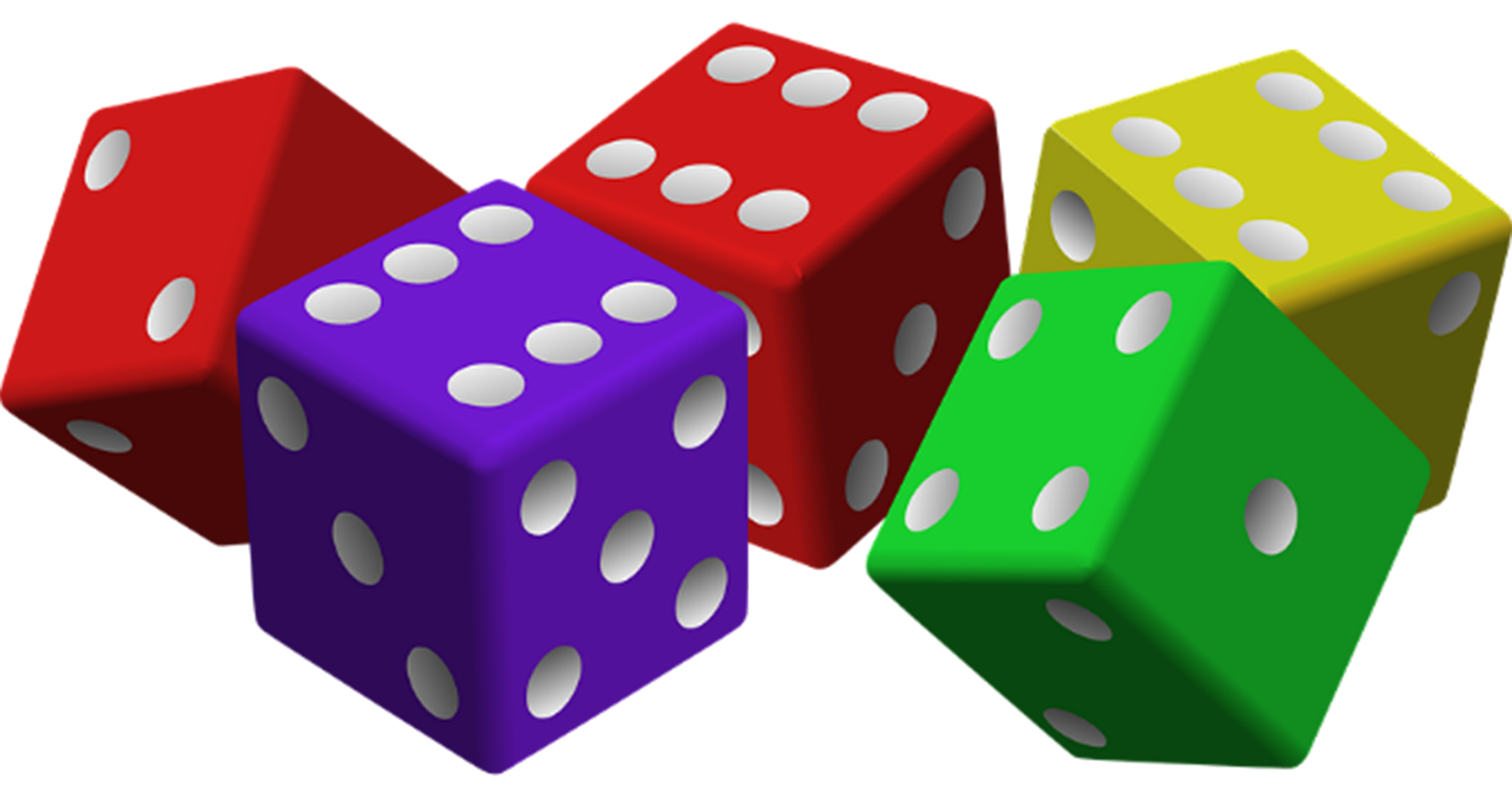
One can encounter other shapes of multisided devices used for similar purposes. The British Museum in London exhibits a set of tetrahedral dice from Mesopotamia, roughly carved from stone with four distinct faces containing different symbols. It also shows ancient clay balls from Cyprus having roughly spherical shape, which could be hypothetically used as dice for gambling purposes. The Incan culture of South America had games described by Depaulis (1998), which, among others, used five-sided dice pichqa shaped as truncated pyramids. Similar dice are known as kechu in Mapuche (Araucanian) culture. These dice were carved from stone or bones. Five-sided dice, to the best of our knowledge, have not been encountered anywhere in Eurasia, which may be explained by the specifics of South American cosmology (Karsten, 1926). There is a hypothesis tying five-sided dice to the South American yupana counting system (also known as Incan abacus) with a special meaning assigned to the number sequence {1, 2, 3, 5} (Lorenzi, 2004).
Incan pichqa.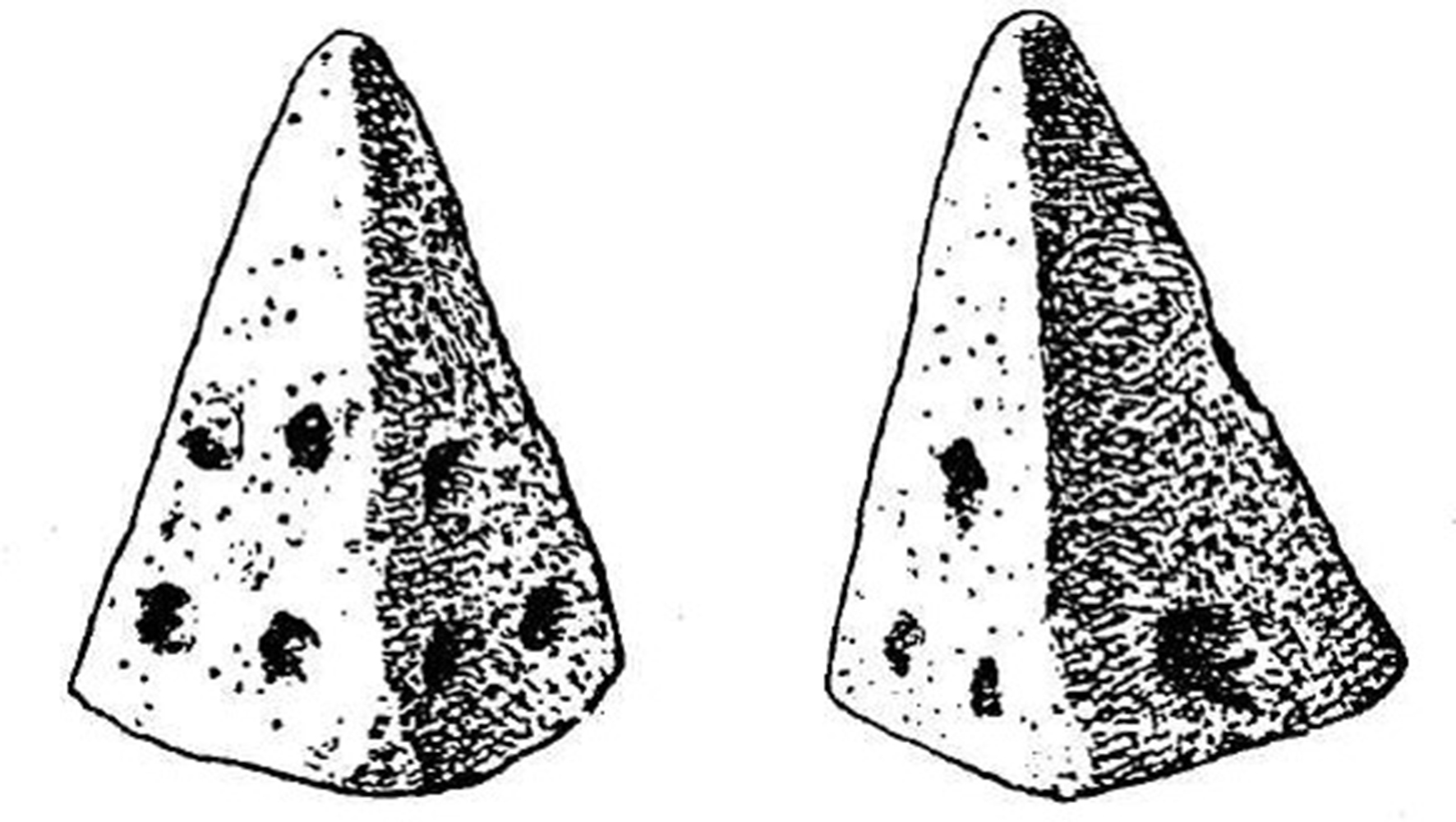
While settled agricultural societies of China, India, Mesopotamia and the Incan empire used rock or ceramic dice for games and divination, nomadic peoples of Eurasia tended to utilize animal bone fragments, more accessible in their cultures. The most popular bone used for these purposes is probably the anklebone talus or astragal (also known as shagai in Mongolia, oralchik with Turkish peoples of Siberia and Central Asia).
Astragals are found at archaeological sites either in their rough form, or polished. They have four asymmetric sides: dorsal, medial, plantar, and lateral, commonly associated with animals: goat, horse, sheep, and camel (Sarangerel, 2000). Tsimidanov (2015) discusses their functions as gaming devices, divination tools, or mediators, facilitating the link with the world of spirits in Buryat-Mongol tradition. Geographical spread of astragals goes as far as Greece and the Roman Empire. Use of astragals for games and divination in North and South America (possibly pre-Columbian) and in 19
It is an open question, where exactly the origins of six-sided dice or four-sided astragals belong in time. A famous Russian archaeologist Klejn (1987) suggested that six-sided dice had a longer history, and the use of four-sided bones could be secondary since the four sides of many astragals found in the excavations of catacomb culture in South-Eastern Europe had inscribed numbers: {1, 2, 3, 6} or {1, 2, 4, 6} emulating numerically the outcome “six”. Similar comments are made by Lovett et al. (1901), who noticed the use of numbers {1, 3, 4, 6} for the four sides of an astragal in Greek and Roman tradition. However, one can also think of four-sided dice as the more ancient and find a different explanation for the number “six” to correspond to one of the four sides of an astragal: for instance, certain benefits of such numerical designation related to the use of duodecimal or Babylonian (base 60) enumeration.
The main advantage of multifaceted devices is their ability to introduce multiple outcomes, thus addressing complicated non-binary questions. This sample space expansion is even more dramatic if we utilize sets of several such devices. In Mongolian shagai tradition, four astragals are typically used as a set, and some of the possible outcomes are summarized in the following table, which (without the last column) represents a sample from Shi (2016). Similar tables can be bought from street vendors in Mongolia, selling sets of shagai to tourists.
Interpretation of Shagai
Astragals.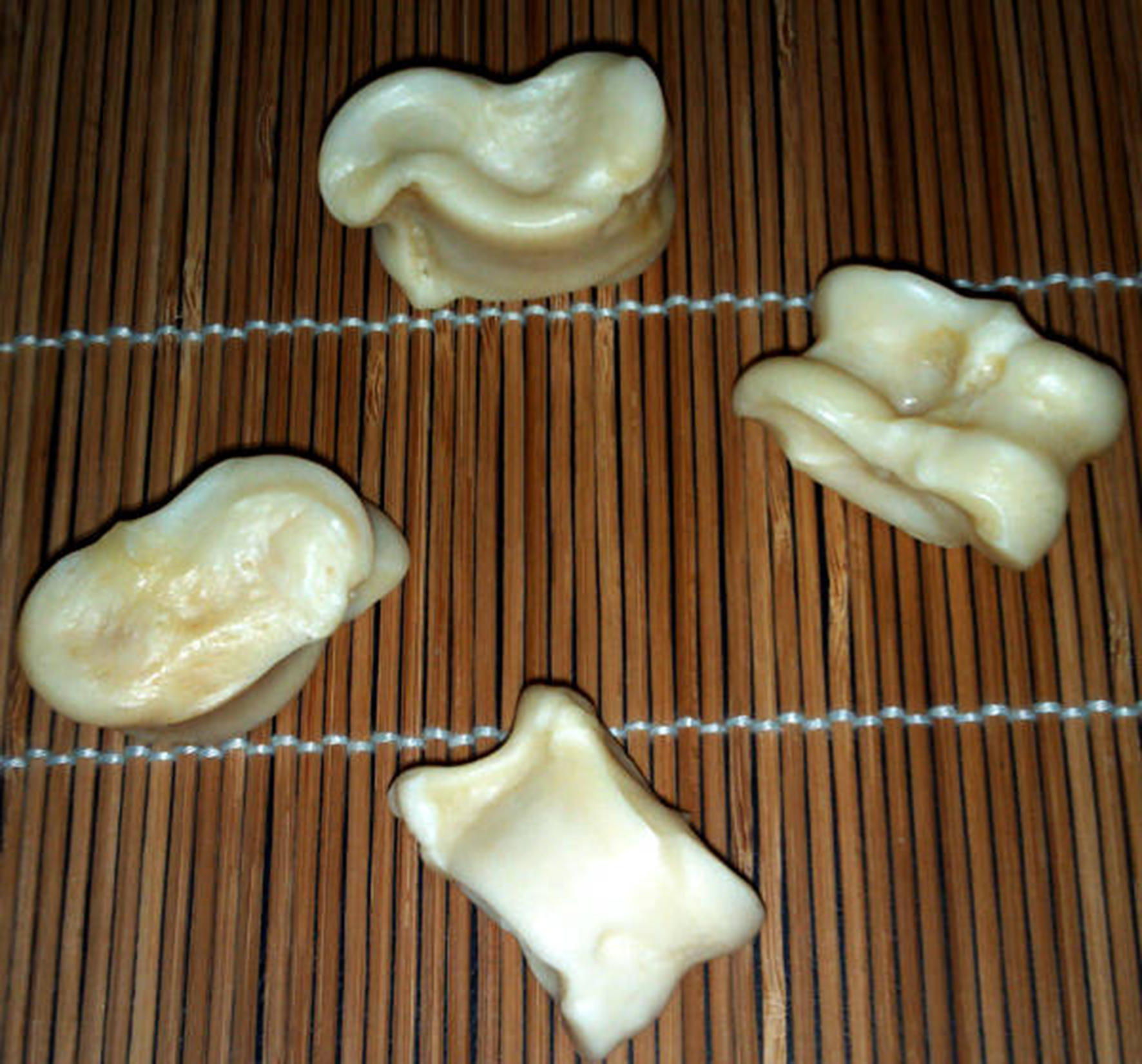
Probability distribution of similar outcomes for the case of symmetric six-sided dice may be easily derived based on the symmetry of the outcomes from one to six. However, one can argue that in case of unpolished astragals, the distribution of individual outcomes is not symmetric. As demonstrated by Maystrov (1961) (see also Klejn, 1987), probabilities of four sides of an astragal can be empirically estimated as 0.12, 0.39, 0.12, and 0.37 for horse, sheep, camel, and goat respectively. One might argue that probabilities of the outcomes in the last column of Table 1 calculated based on Maystrov’s empirical results reflect some frequencies expected in the oracle’s predictions and should be addressed in divination practices.
There are many places in the world where dice are frequently found at the archaeological sites. Some modern cultures still use dice in games and divination. However, there exist entire civilizations which seem to lack this tradition. Visiting museums and looking at the catalogues containing archaeological artifacts gathered in the equatorial regions of South America dated back to 200 B.C. up to the 17
Ancient spindle whorls. Museum of the University of Antioquia, Medellin, Colombia.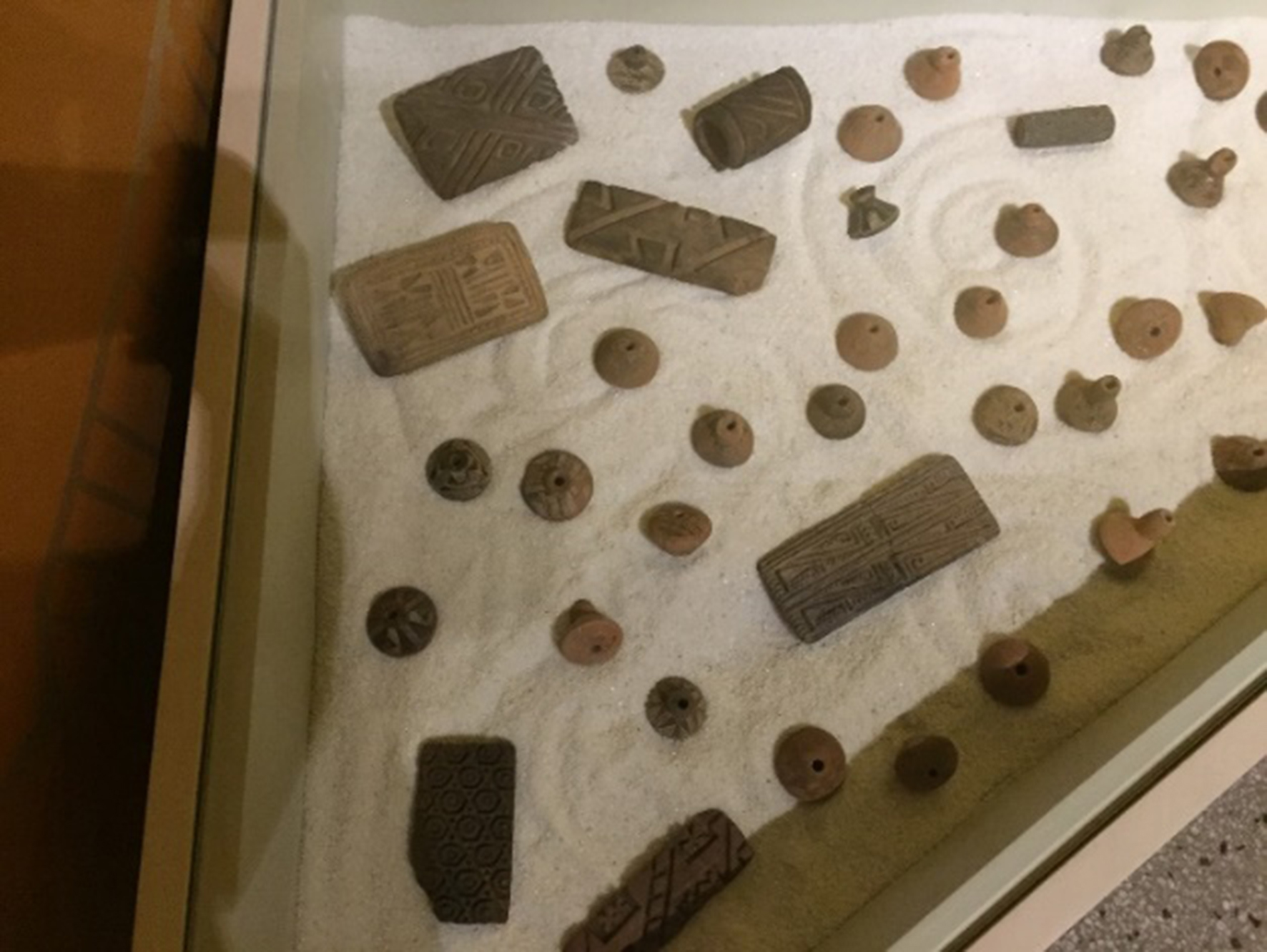
Spindle whorls are widely encountered in all cultures that adopted weaving. Per Wikipedia: “A spindle whorl is a disc or spherical object fitted onto the spindle to increase and maintain the speed of the spin. For ages the whorls have been made of many different materials: amber, antler, bone, coral, glass, metal (iron, lead, lead alloy), and wood (oak). Some types of local materials have been also used, such as chalk, limestone, mudstone, sandstone, slate, and soapstone”.
Irish spindles with spindle whorls.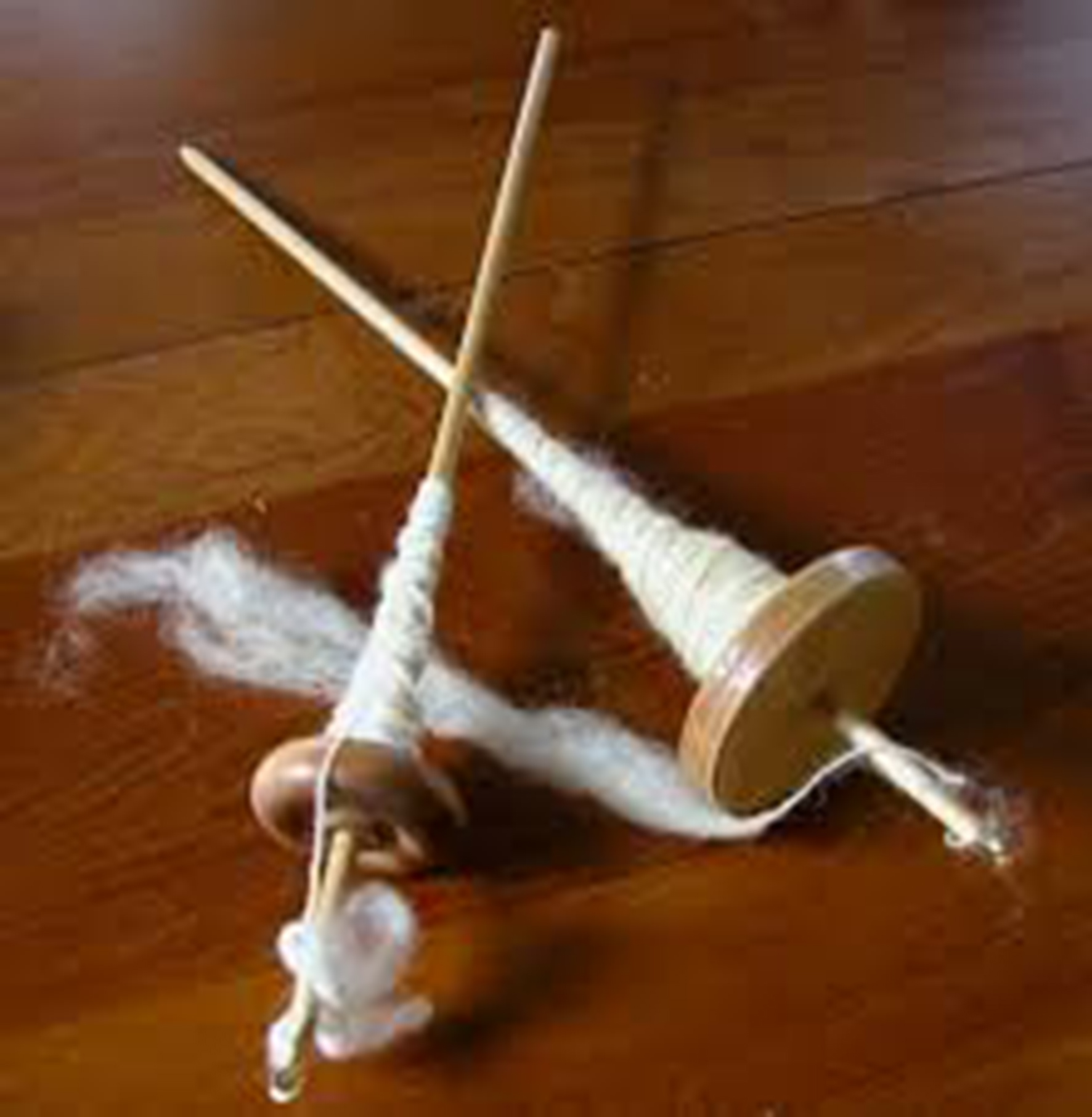
The spindle whorl, unlike a die, is an object of material culture with a very transparent function. Weaving, manufacturing thread. and creating textiles, was one of the important and vital activities in many societies. However, one may also think of a spindle whorl as a sacral object with a role extending beyond its material use. This hypothesis is supported by ample evidence of spindle whorls being considered valuable, traded and exchanged, inherited, donated as expensive gifts, and buried with the dead. This sacral character of spindle whorls may be related to the magical meaning of spinning (well established in various religious traditions, for instance, for Tibetan mantra wheels), and to the creative and transformational role of the weaving activity.
Yakar and Taffet (2007) discuss the possible ritual uses of spindles found in the archaeological sites in Near Asia. Weaving and spinning were considered exclusive feminine activities and symbolized wisdom, endurance, and loyalty. As evidenced by Hittite and Sumerian texts, spindles were believed to serve as powerful attributes of womanhood in magic rituals aimed to impair or restore male sexual potency and battle prowess. Silver spindles with whorls and bronze mirrors were included in funerary deposits of cultic significance with typical “feminine attire” and were often found folded and crushed or intentionally bent, probably to reduce their magical power.
On a different continent, multiple crushed spindle whorls were excavated at El Pilar, Belize, an important ceremonial center of Mayan culture. Kamp et al. (2006) analyze possible uses of these objects and come to an experimentally supported conclusion that the whorls were purposely destroyed as part of a ritual event. It is unclear what kind of ritual required the whorls’ destruction, but the authors suggest that it might correspond to a “strategy to enhance the status of spinners by honoring deities associated with spinning”.
There is another modern culture with no dice and no weaving in their direct ancestry. This is the Sakha people, also known as Yakuts. They form the main modern population of extremely cold areas in Northeastern Siberia, settling on the rivers Lena, Aldan, Viliuy, Yana, and Indigirka. The origin of modern Sakha is not clear and probably goes back to the Turkish cultures of the Great Steppe (Krivoshapkin, 2005). Possible Turkish ancestors of modern Sakha, Qurykans, populated the Lake Baikal area in the period between 500 and 1000 A.D., and were involved with cattle breeding, and used wool, and therefore were not foreign to weaving. Two spindle whorls found by Russian archaeologist Petri in the Olkhon region in 1916, were carved from pieces of coal and covered with symbols.
Two whorls from Olkhon. Museum of Archaeology and Ethnography, M. K. Ammosov North-Eastern Federal University, Yakutsk.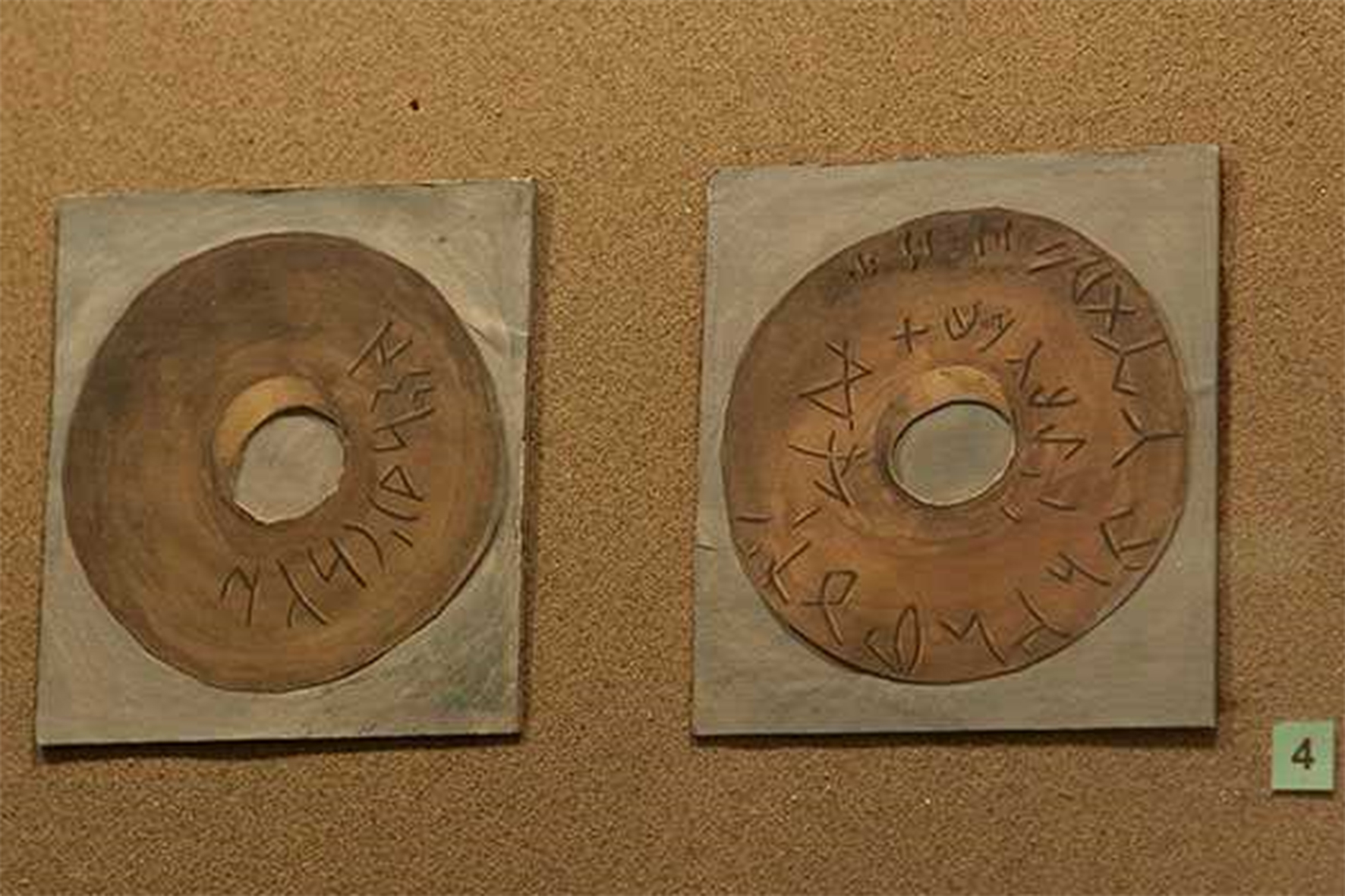
Reading the symbols on the Olkhon whorls. Museum of Archaeology and Ethnography, M. K. Ammosov North-Eastern Federal University, Yakutsk.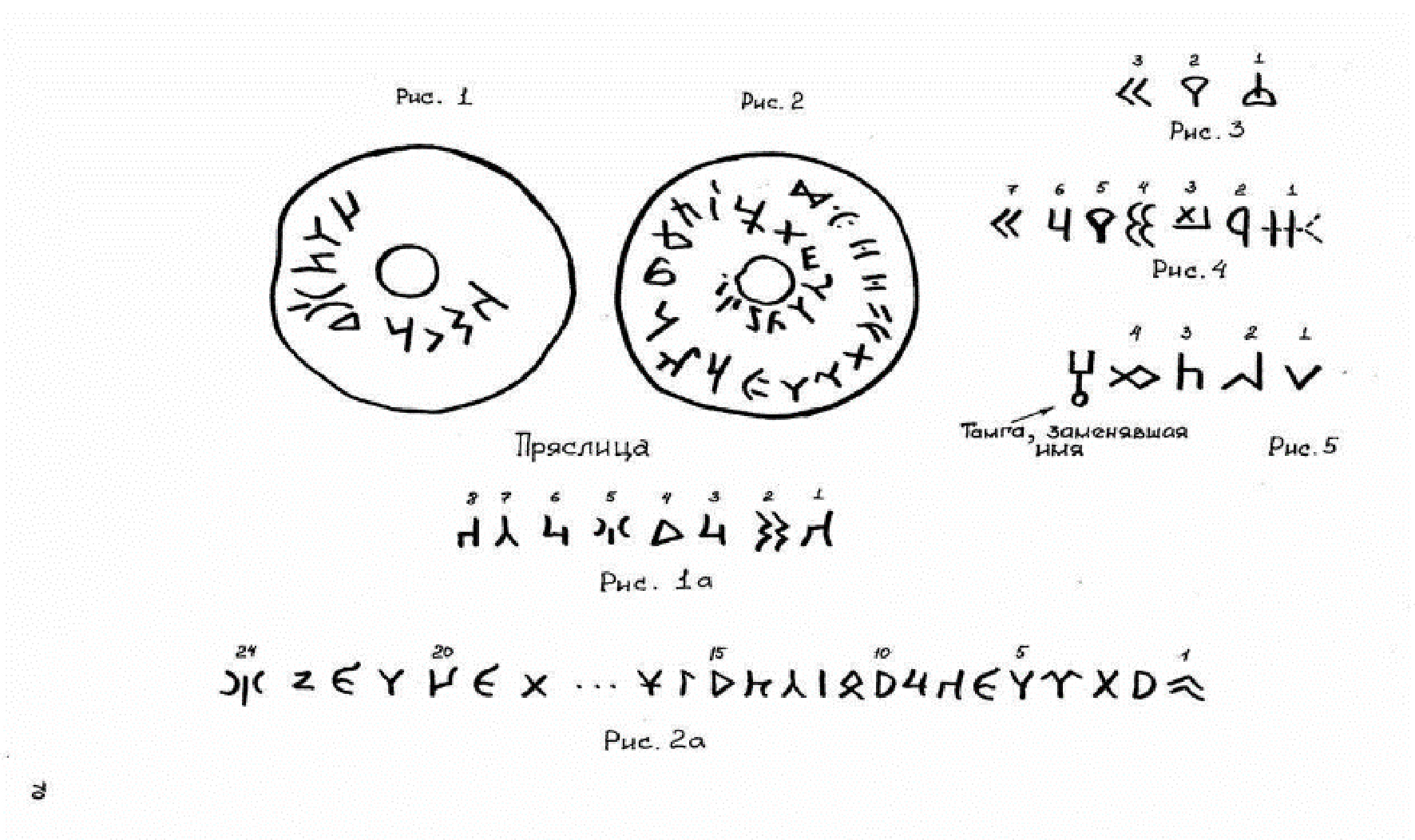
Several efforts were entertained to decipher the writings on the whorls. Finnish researchers Donner and Resanen in 1931 published the first version based on their interpretation of the inscription as a text in a paleo-turkic alphabet. Yakutian anthropologist Gavril Ksenofontov in 1932 offered his own version, and Krivoshapkin (2008) suggested a new reading based on syllabic interpretation of the carved symbols. In his version, the runic text on the whorl is a prayer to accompany a whorl-spinning ritual guarding against evil spirits. There is some anecdotal evidence that even in the not so distant past (19
The British Isles is yet another region of the world where modern civilization is a near neighbor of more traditional cultures. In Scotland and Ireland, one can trace games and divination culture going back to the Iron Age. Clarke (1970) describes sets of oblong parallelepiped-shaped bone dice. They may be considered a transition between astragals and cubic dice, since they formally have six sides, but two of them (ends) represent virtually impossible outcomes, thus they may be considered four-sided as astragals. Clarke noticed that there are possible similarities in games where Scottish bone dice were used to the games of North American Indians described by Culin (1907). These latter games were often played with sets of sticks, which represented two-sided dice or equivalents of coins, bringing us back to multiple binary decisions and powers of two. However, talking about Iron Age Scotland and Ireland, we might be more interested in whorls. The cattle-breeding cultures there made a heavy use of wool, weaving, and spindles, which are found in big numbers at the archaeological sites.
Ancient spindle whorl, Orkney islands. National Museum of Scotland, Edinburgh.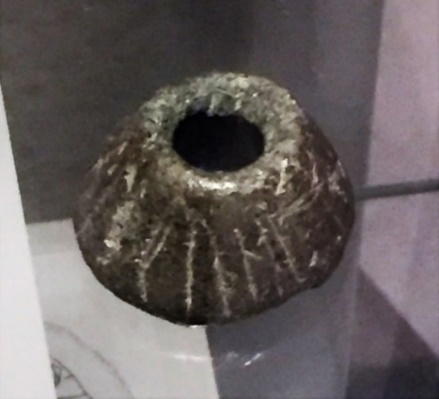
The spindle whorl in Fig. 8 is exhibited in the National Museum of Scotland. As the whorls from Olkhon, it has a runic inscription going around in a circle. There exists a possible reading of this inscription pointing at the manufacturer of the object and its place of origin.
Why are we interested in spindle whorls in the context of random rules and the history of simulation?
Modern roulette wheel.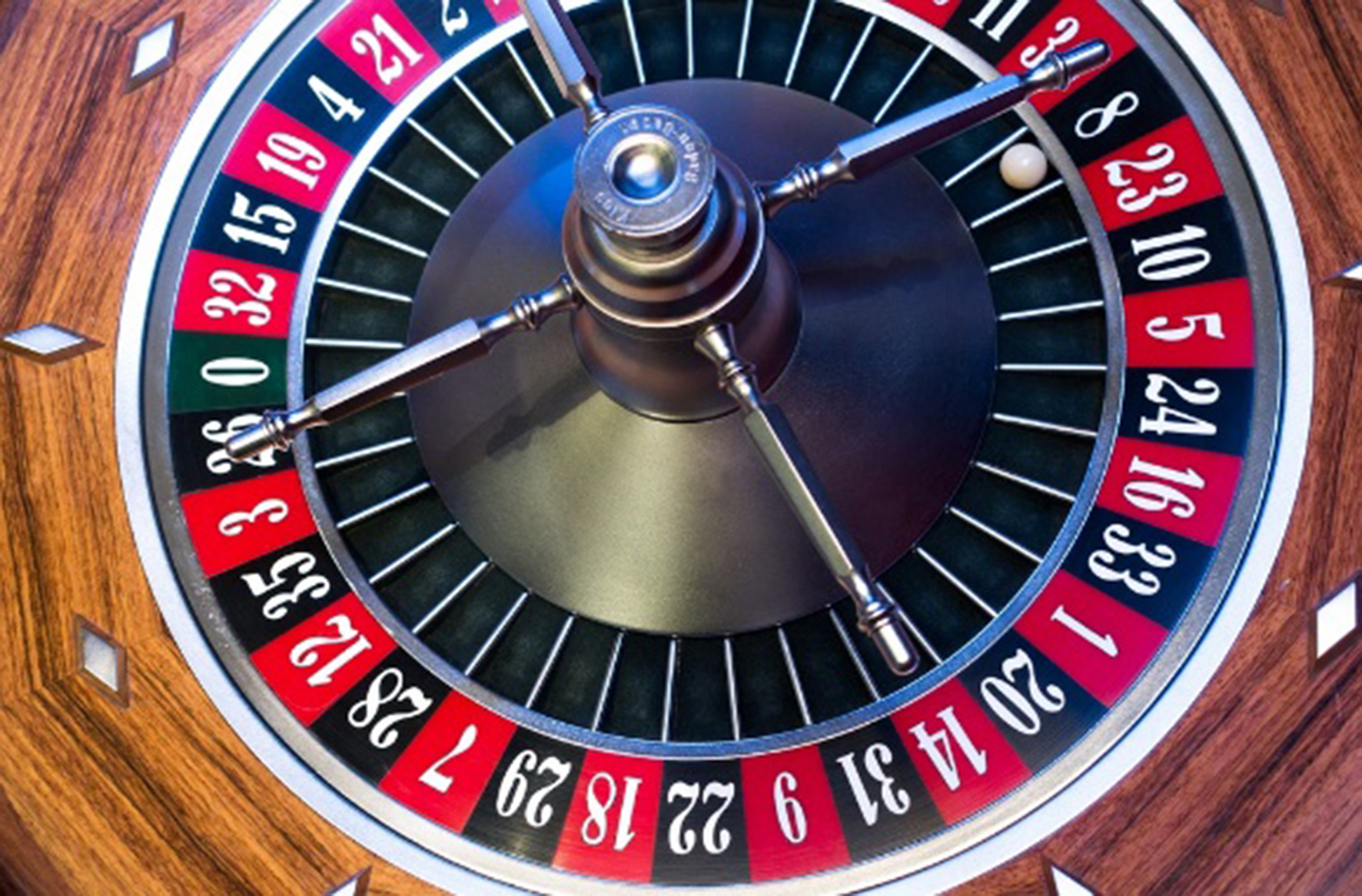
Modern casino-style roulette is a spinning wheel, with multiple slots corresponding to the wheel’s sectors indicated by numbers and colors. A ball rolls around the spinning wheel until it ends up in one of the slots. The slot where the ball stopped is the outcome of a random trial. Such roulette wheels are used for gambling in modern casinos, as well as in an increasing number of board games and TV shows, introducing an element of randomness to otherwise deterministic processes.
The same way as the modern roulette, ancient spindle whorls could spin, and it is possible to consider different end-points of the spin as different outcomes, especially if the perimeter of the circle is marked by different symbols. From a mathematical standpoint, a big convenience is the circular shape of the whorl. A circle may be subdivided in any number of equal parts (moreover, they do not have to be equal), hence it may be used for random trials with any finite number of outcomes, effectively replacing any kind of dice including those with four, five or six sides.
Most of the spindle whorls found at the ancient archaeological sites expose four or six-sided symmetry. Objects with five-sided or even seven-sided symmetry also occur but are much less common. The five-sided whorl in Fig. 10 comes from Quimbaya culture and is exhibited at the Museum of the University of Antioquia in Medellin, Colombia. Several five and seven-sided whorls are listed in the catalogue of archaeological artifacts of the British Isles.
Five-sided spindle whorl. Museum of the University of Antioquia, Medellin, Colombia.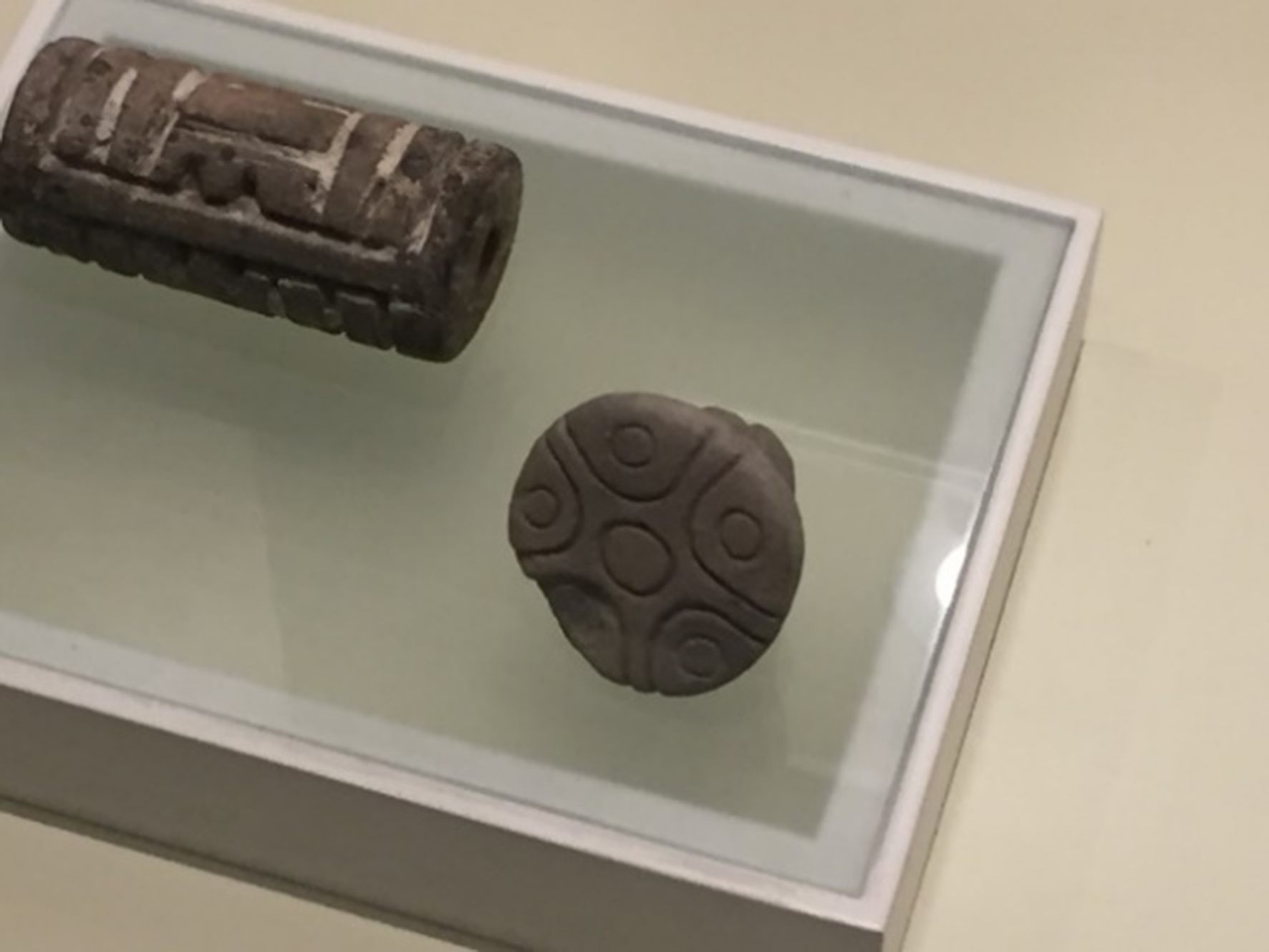
We know nothing definitive so far either about the history of games or specific setting of the divination rituals, involving spindle whorls. Nevertheless, there is still hope since whorls are frequently encountered as objects of material culture, and one might be able to recover some information regarding their other uses.
At this point, one can only hypothesize what were specific gaming and ritual uses of such devices as dice or such objects of material culture as spindle whorls. However, there is still hope that further archaeological and ethnographic research may shed some light on this issue. There is ample archaeological material and numerous ancient texts and modern practices of indigenous cultures of Africa, Eurasia, and Americas yet to be analyzed. It is possible that not much is known because the right questions have never been asked.
Even though it seems that the modern calculus of probabilities did not exist prior to the 16
This paper presents a work in progress. This is more about the questions we can ask than about the answers we currently have. However, one can believe that combining pieces of archaeological, ethnographic, linguistic, and historical evidence will provide a coherent mosaic picture of the pre-computer use of simulation being one of the origins of modern Monte-Carlo methods.
The author would like to acknowledge the support of the University of St. Thomas, especially during Sabbatical travels of 2018. Special thanks to colleagues worldwide for providing help, references and valuable insights: Leo Klejn and Alexander Kosintsev in St. Petersburg (Russia); Sergey Alkin in Novosibirsk (Russia); Nikolay Kiryanov, Andrey Krivoshapkin, and Ekaterina Romanova in Yakutsk (Russia); Mark Hall in Perth (Scotland) and Ian Ralston in Edinburgh (Scotland); Sandra Maria Turbay Ceballos in Medellin (Colombia). I am also grateful to Derrin Pinto and Donny Vigil in St. Paul, Minnesota, and Alexandra Savinkina in Boston for language support. Some photos were made by the author. Credit for free images is due to Pixabay at