



Abstract
Five high-nitrogen ion salts were first synthesized with the nitrogen-rich ligand 4,5-bis(1H-tetrazol-5-yl)-1H-imidazole (H3BTI) and Guanidine Carbonate (G2CO3), Ethylenediamine (EDA), 1,2-Propanediamine (PN), Hydroxylamine Hydrochloride (HN), and were characterized by elemental analysis and Fourier transform infrared (FT-IR) spectroscopy. Their crystal structures were determined by applying X-ray single crystal diffraction. The results showed a large amount of π-π stacking action in their ligand anions. The thermal decomposition curves of five compounds were obtained by differential scanning calorimetry (DSC). The non-isothermal kinetic parameters of the exothermic process were calculated by Kissinger’s and Ozawa’s methods. Five compounds have relatively high exothermic peak temperatures and thermal explosion temperatures (Tb), which indicates excellent thermal stability and safety.
Keywords
Introduction
High-nitrogen compounds, featuring in the release of environment-friendly N2 and good thermal stability, have attracted increasing attention in the area of high energy density materials (HDEMs) [1–6]. As one class of them, high-nitrogen ion salts not only inherit the novel physical and chemical properties of ionic liquids and salts, but also have a large number of N–N and C–N bonds and therefore possess large positive heats of formation [7, 8].
Five-membered heterocyclic compounds are traditional sources of energetic compounds [9–11], and considerable attention is currently focused on azoles as high-nitrogen ion salts. Azoles compounds are an attractive, stable, high-nitrogen candidate suitable for practical applications as heat-resistant energetic materials. Table 1 lists five high-nitrogen energetic ion salts that have been reported [12–16]. They all have relatively high-nitrogen content and good energy characteristics. Among them, the structures of 4-amino-1,2,4-triazole-2,4,6-Trinitro-1,3,5-trihydroxybenzene [(ATZ)(TNPZ)] [12] and the chloride salt of 1,1’-(triaz-1-ene-1,3-diyl)bis(1H-tetrazol-5-amine-5-aminotetrazole) (Cl•TEBA •2ATA) [13] (shown in Fig. 1) are similar to those reported in this paper. They are all connected by ionic bond through high-nitrogen ligands and non-metal cations. However, they all have a relatively low thermal decomposition temperature under 300°C, which could not meet the needs of specific conditions. Therefore, seeking new high-nitrogen ion salts that have better thermal stability is the current research hotspot.
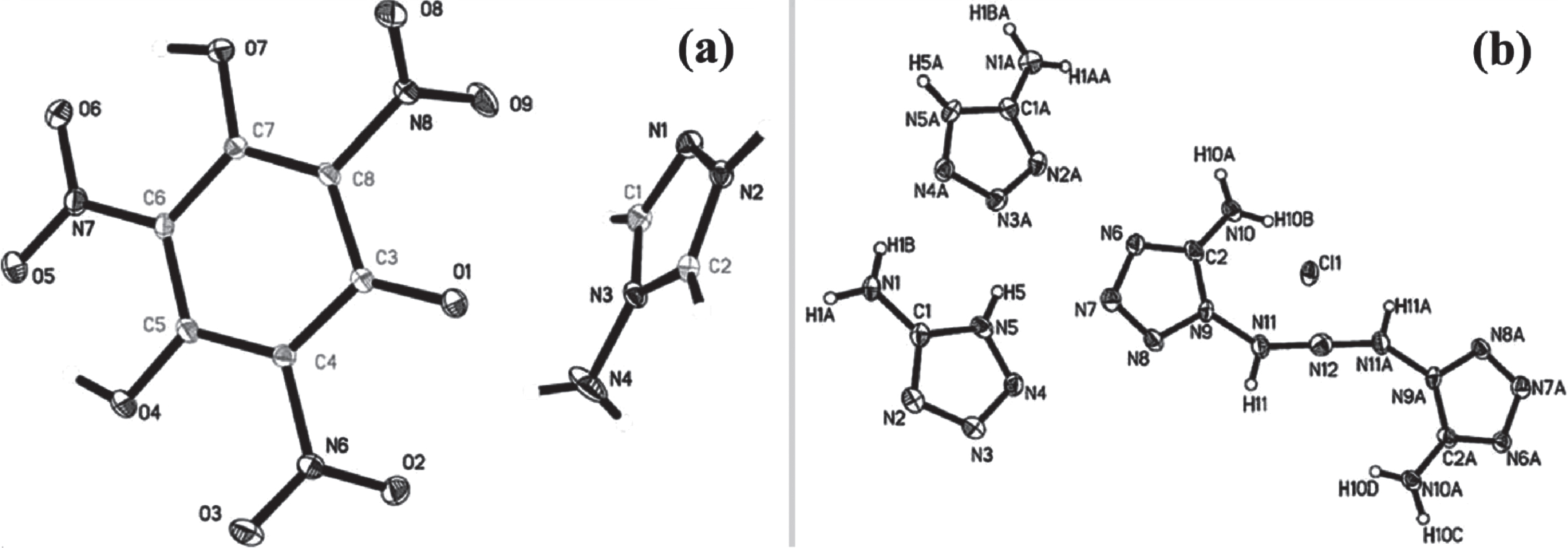
Molecular structure of (ATZ)(TNPG) (a) and Cl•TEBA •2ATA (b).
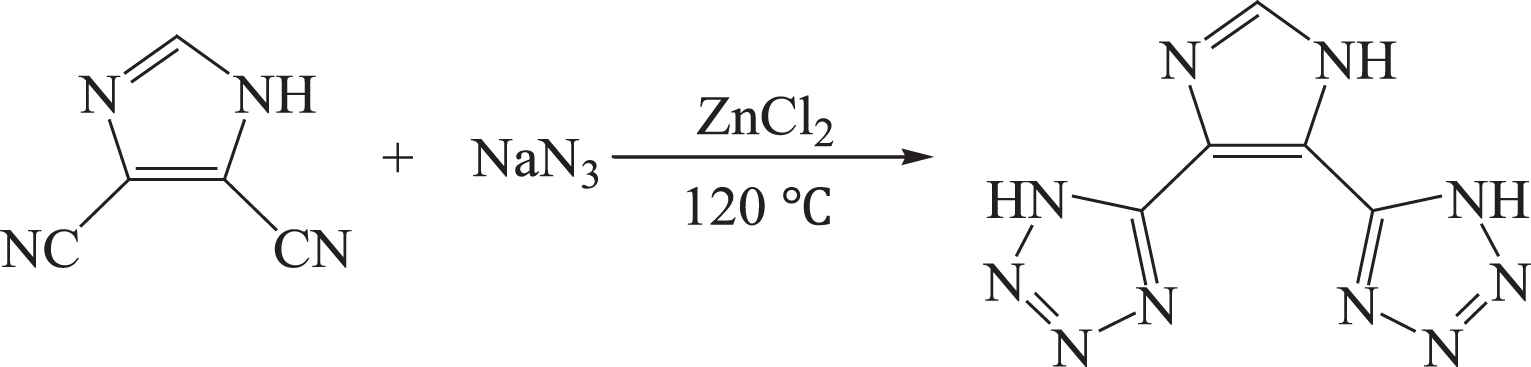
Synthesis of H3BTI.
Nitrogen content, thermal decomposition temperature and reference number of five known high-nitrogen energetic ion salts that have been reported
4,5-Bis(1H-tetrazol-5-yl)-1H-imidazole (H3BTI) has the advantages of high-nitrogen content of 66%, good stability and a relatively high thermal decomposition temperature of 339°C [17, 18]. Because of the different groups attached to the bis-tetrazole ring, it has a different rigid or flexible structure. By density functional theory (DFT) computing method [19], H3BTI can lose H+ and form H2BTI- and HBTI2-, whose chelating bridge-ligands and free rotation can form more diverse coordination modes and topological structures.
Since H3BTI is an acidic ligand, we have selected four basic cations: G+ (Guanidine), EDA2+ (Ethylenediamine), PN2+ (1,2-Propanediamine) and HN+ (Hydroxylamine) to synthesized five energetic ion salts: G2(HBTI) (
General Caution:
Reagents
In addition to the ligand (H3BTI) used, all other reagents and solvents used for the synthesis and analysis were analytical reagent, commercially available and used as received without further purifications.
Methods
IR spectra were recorded with KBr plates using a Bruker Equinox 55 infrared spectrometer (KBr pellets) in the range of 4000∼400 cm–1. Elemental analyses were performed with a Flash EA 1112 full automatic trace element analyzer. DSC measurements were performed with a Pyris-1 differential scanning calorimeter in static air atmosphere. The crystal sample was powdered and heated from 50 to 500°C at 5, 10, 15, 20°C•min –1, respectively.
Synthesis
Crystal structure determination
The X-ray diffraction data was collected with a Rigaku AFC-10/Saturn724 + CCD diffractometer with graphite monochromated Mo-K α radiation (λ= 0.071073 nm) with a multiscan mode. The structure was solved using SHELXS-97 program, refined by full-matrix least-squares methods on F2 with SHELXL-97 program and finally checked with PLATON software. All non-hydrogen atoms were obtained from the difference Fourier map and refined anisotropically. The hydrogen atoms were obtained geometrically and treated by a constrained refinement.
Result and discussion
Crystal structures
The molecular structure of
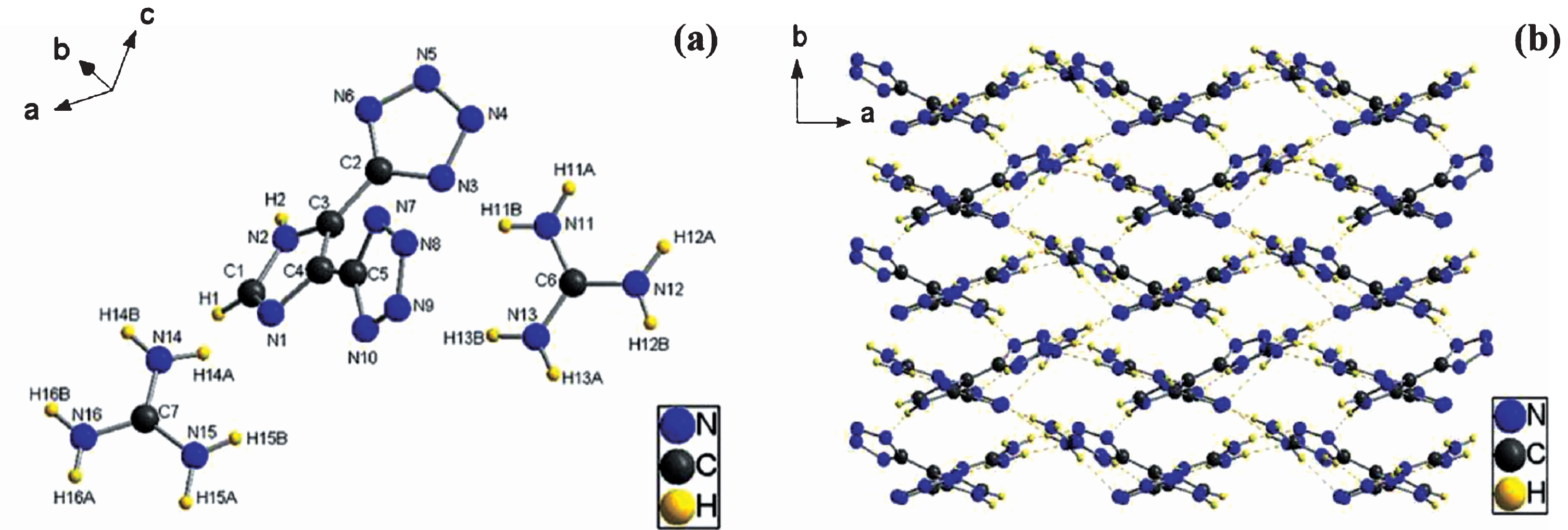
Molecular structure (a) and packing diagram (b) of
The molecular structure of
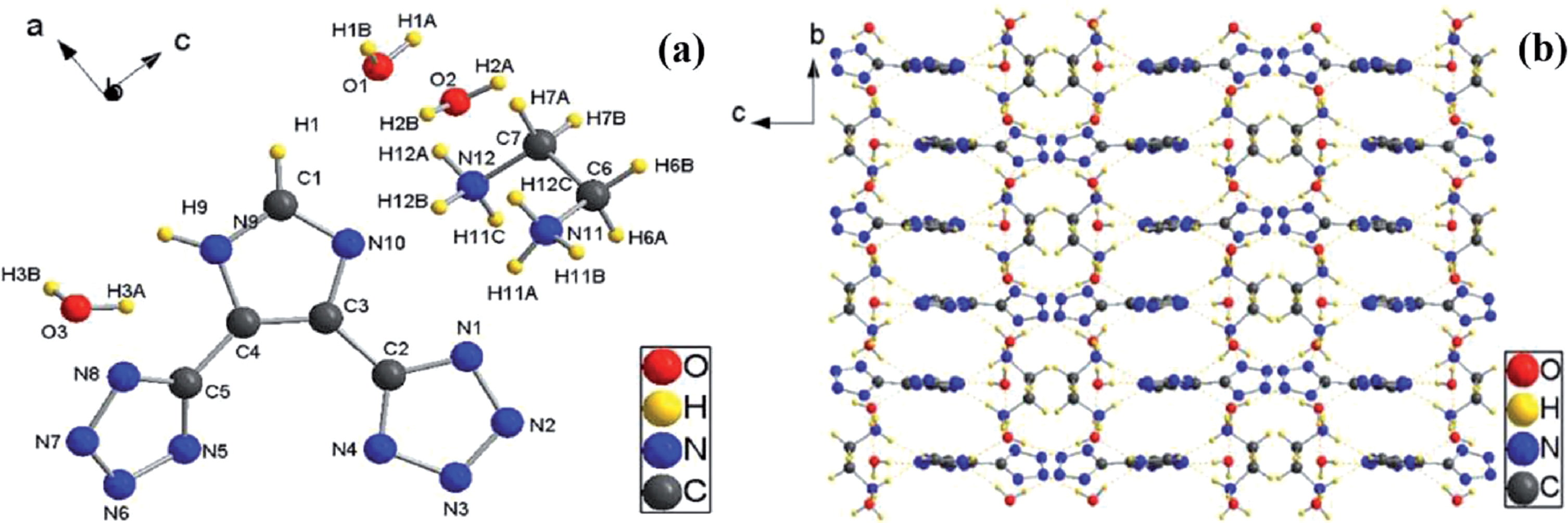
Molecular structure (a) and packing diagram (b) of
The molecular structure of
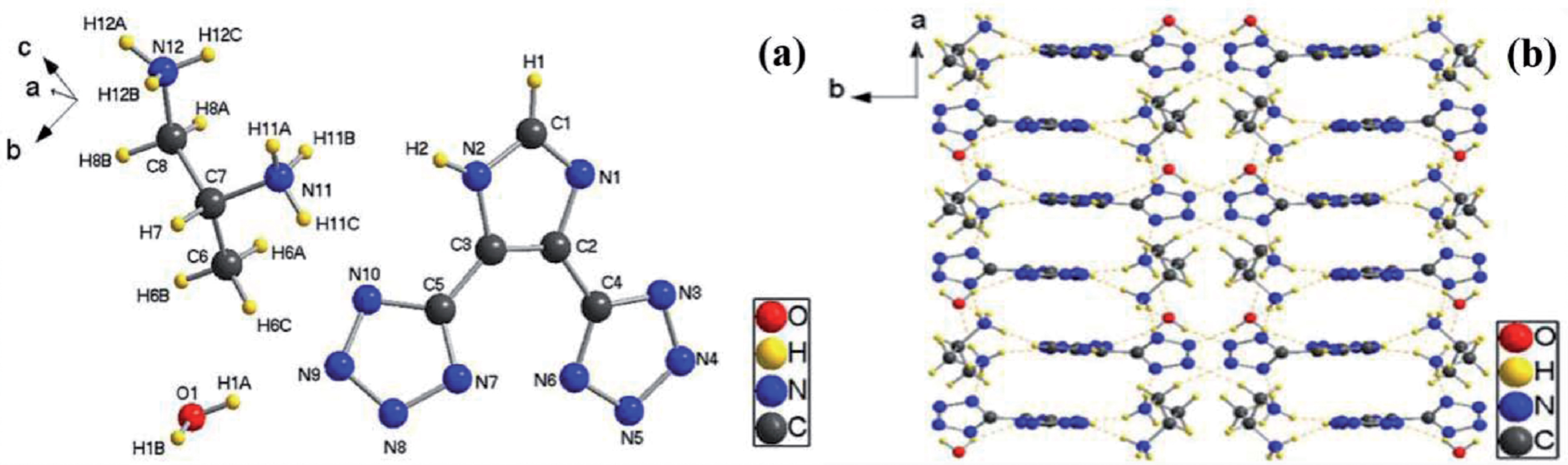
Molecular structure (a) and packing diagram (b) of
The molecular structure of
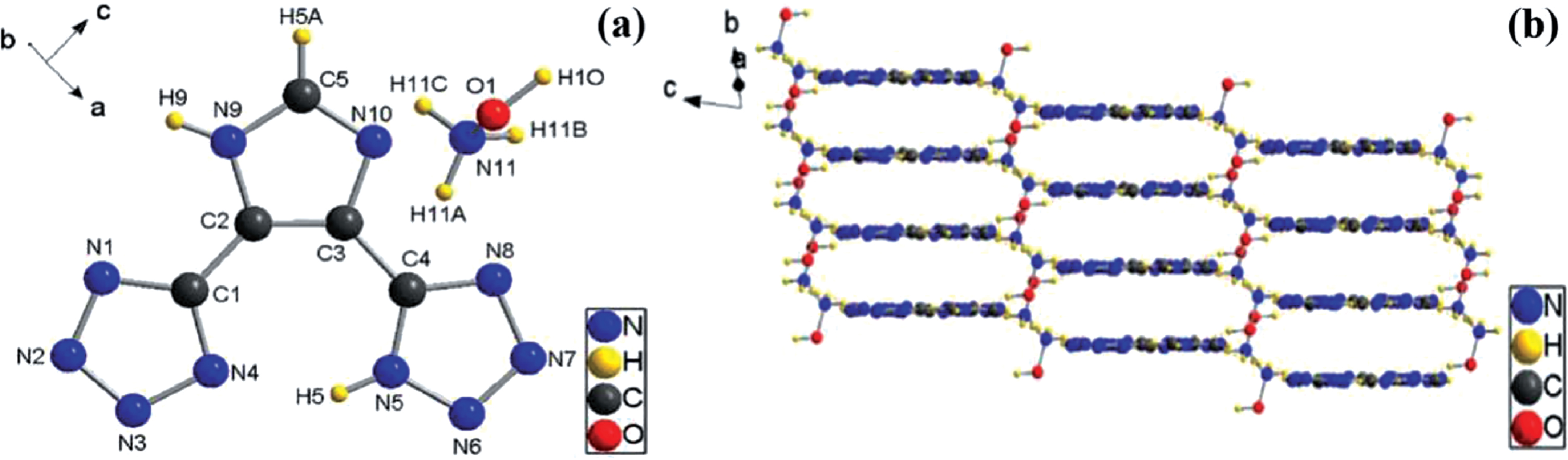
Molecular structure (a) and packing diagram (b) of
The molecular structure of
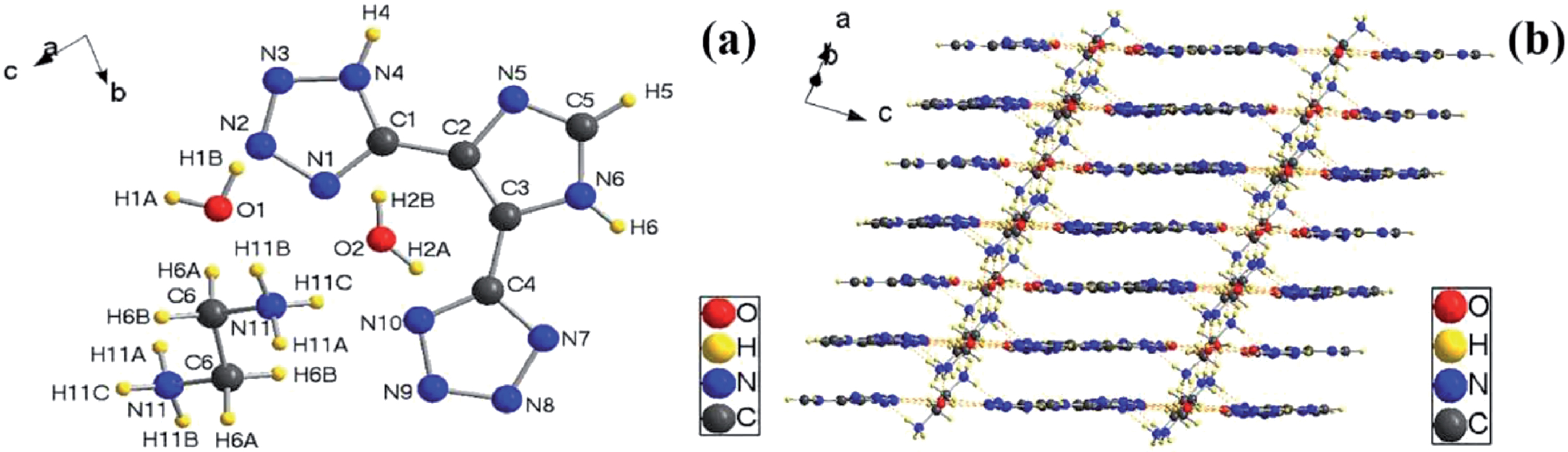
Molecular structure (a) and packing diagram (b) of
In
Likewise, (ATZ)(TNPG) [12] and Cl•TEBA •2ATA [13] are also energetic salts derived from the combination of high-nitrogen ligands and non-metal cations. But parts of their properties can’t match
The thermal stabilities of
As is shown in Fig. 8, the DSC curves of
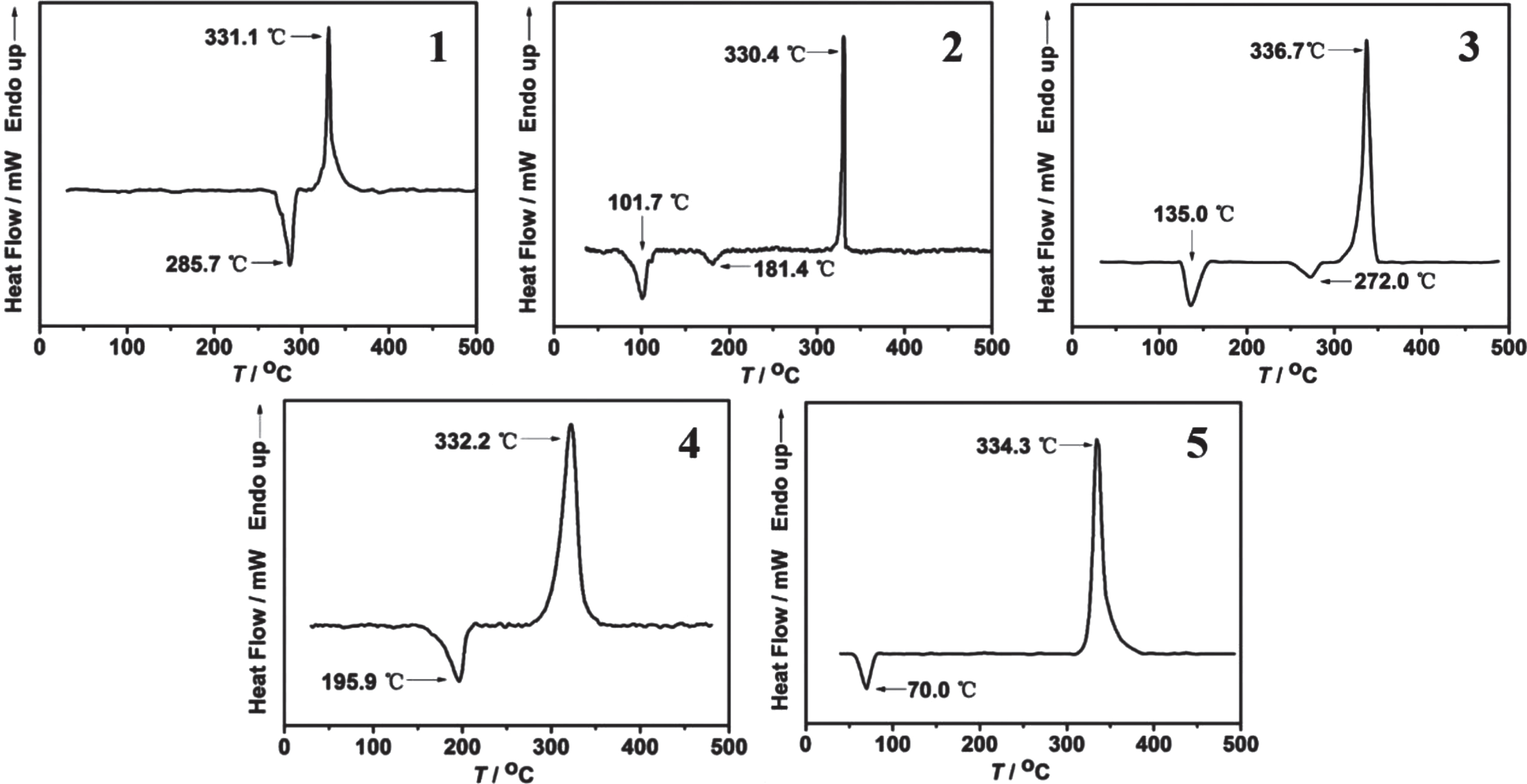
DSC curve of
The thermal decomposition temperature of
Kissinger’s method [20] and Ozawa’s method [21] are widely used to determine the apparent activation energy (E) and the pre-exponential factor (A), which can be applied to estimate the rate constants of the initial thermal decomposition process. The Kissinger and Ozawa–Doyle equations are as follows, respectively:
For the four heating rates of 5, 10, 15 and 20 °C•min -1 tested, the first exothermic peak temperature data of
Peak temperatures of the first main exothermic stage at different heating rates for
Non-isothermal kinetic parameters of
The Arrhenius equation can be expressed by using the calculated E (the average of Ek and Eo) and ln Ak as follows: ln k = 23.44 –292.3×10³/RT (
The values of the peak temperatures that heating rate closed to zero (Tp0), the corresponding critical temperatures of thermal explosion(Tb), entropies of activation (ΔS≠), enthalpies of activation (ΔH≠), and free energies of activation (ΔG≠) were obtained by the equations. (Seeing in the Supporting Information.) The physicochemical properties of
Physicochemical properties of
To estimate the thermal sensitivity of
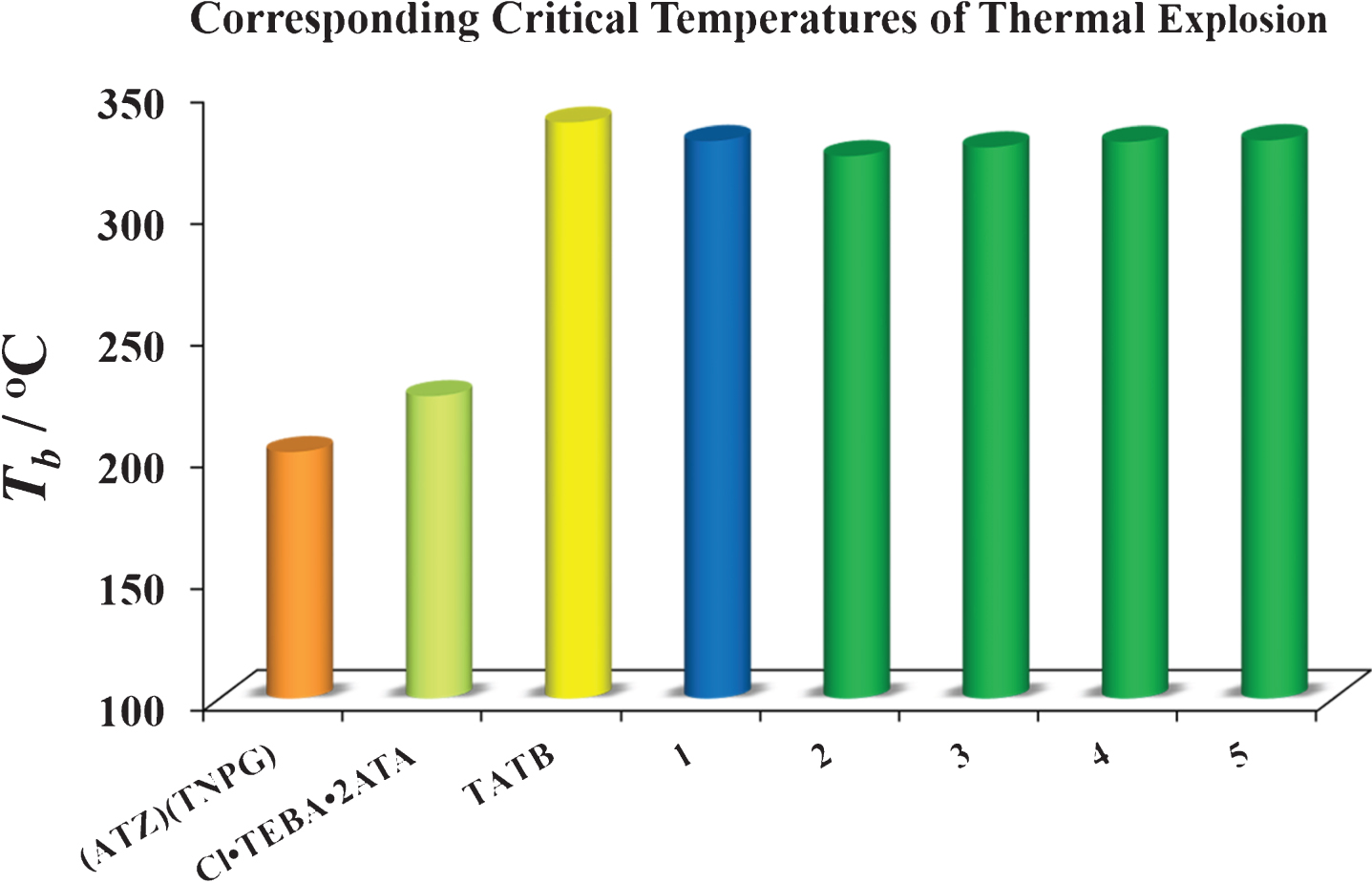
Representation of the literature corresponding critical temperatures of thermal explosion for TATB, (ATZ)(TNPG), Cl•TEBA •2ATA and
Five high-nitrogen ion salts (
Associated Content
Crystal Data, refinement parameters structure data of compound
Footnotes
Acknowledgment
We are grateful to acknowledge financial support from the National Natural Science Foundation of China (No. 11672040), the State Key Laboratory of Explosion Science and Technology (No. YB2016-17) and Beijing Institute of Technology Research Fund Program for Young Scholars. We thank the reviewers for their most valuable comments.