




Abstract
Energetic copper(II) compound was synthesized based on 3,5-dinitrobenzoic acid (HDNBA) and imidazole (IMI), and characterized by elemental analysis and FTIR characterization. Single-crystal X-ray diffraction analysis revealed that [Cu(IMI)2(DNBA)2] (
Introduction
High-energetic metal-organic frameworks (HE-MOFs) with high density, good thermal stability, low sensitivity and better performance are a topic of intense research worldwide, which can be used as high explosive, primary explosive, combustion catalyst of solid rocket propellants, etc [1–6]. Ammonium perchlorate (AP), RDX and HMX are a famous oxidizing agent and importance explosives compositions that widely used in solid rocket propellants, and its thermal decomposition performances directly influence the combustion behavior. As is already known, HE-MOFs were added into energetic material (such as AP) to improve its thermal decomposition behavior based on its energetic and catalytic performances.
Therein, it is particularly important for the choice of metal ions and high-nitrogen energy ligands, which will significantly influence architecture and performance of HE-MOFs. Up to now, Cu(II) ion exhibits good coordination ability to different kinds of ligands, and more importantly, is an environmentally-friendly and good catalytic effect ion compared to heavy metal ions such as lead [2, 8]. In addition, high-nitrogen energy ligands, such as azole derivatives [9–11], azido (or azo-) ligand [12–15] and nitro-compounds [16, 17] and nitramino-compounds [17–19], can pose danger to spot operator and environment during both their synthesis and performance testing. Therefore, we choose two energy ligands for 3,5-dinitrobenzoic acid (HDNBA) and imidazole (IMI), which of advantages are as follows: (1) HDNBA has two nitro-groups with better explosive properties and high oxygen content, a carboxyl-group with high oxygen content and various coordination modes, and a benzene-ring with good thermal stability [7, 20–22]; (2) IMI has two potential coordination nitrogen ions with lower energy than tetrazoles, which is beneficial to reduce system sensitivity and improve thermal stability [13]. Zhi-min Li reported two [Cu(H2O)2(DNBA)2] (
Experimental section
Materials and physical techniques
All the reagents and solvents were of analytical grade and used without further purification as commercially obtained. Elemental analyze was performed on a Flash EA 1112 full-automatic trace element analyzer. The FT-IR spectra was recorded on a PerkinElmer Spectrum 100 infrared spectrometer (KBr pellets) in the range of 4000∼400 cm–1 with a resolution of 4 cm–1. DSC measurement was carried by using DSC-131 differential scanning calorimeter (SETARAM).
Synthesis
Cu(NO3)2· 3H2O (0.60 g, 2.5 mmol) was dissolved in distilled water (10 ml) and charged into a glass reactor with a water bath. It was kept under mechanical stirring and heated to the temperature of 60 °C. A solution of HDNBA (0.84 g, 4 mmol, dissolved in 10 mL ethanol) and imidazole (0.27 g, 4 mmol, dissolved in 10 mL deionized water) were added dropwise to copper solution during 5 min, respectively. The pH value of the mixture was adjusted to 6–7 with 1 M NaOH solution. The reaction at the same temperature for 40 min with stirring resulted in a dark blue precipitate. In the end, the solution was cooled to room temperature naturally. Yield: 78%. Single crystals suitable for X-ray measurement were obtained by evaporation of the mother liquor at room temperature for about one week. Elemental analysis calcd. for CuC20H12N8O12 (
X-ray data collection and structure refinement
The X-ray diffraction data collection was performed with a Bruker Smart-Apex-II diffractometer at 296(2)K. Detailed information concerning crystallographic data collection and structure refinement are summarized in Table 1.
Crystallographic data and structures determination details for 1
Crystallographic data and structures determination details for
[a]w = 1/[σ2(Fo2)+(0.0534P)2 +0.6217P], wR2 =[Σw(Fo2–Fc2)2/ Σw(Fo2)]1/2, P=(Fo2 +2Fc2)/3.
Structure description
The crystal structure of
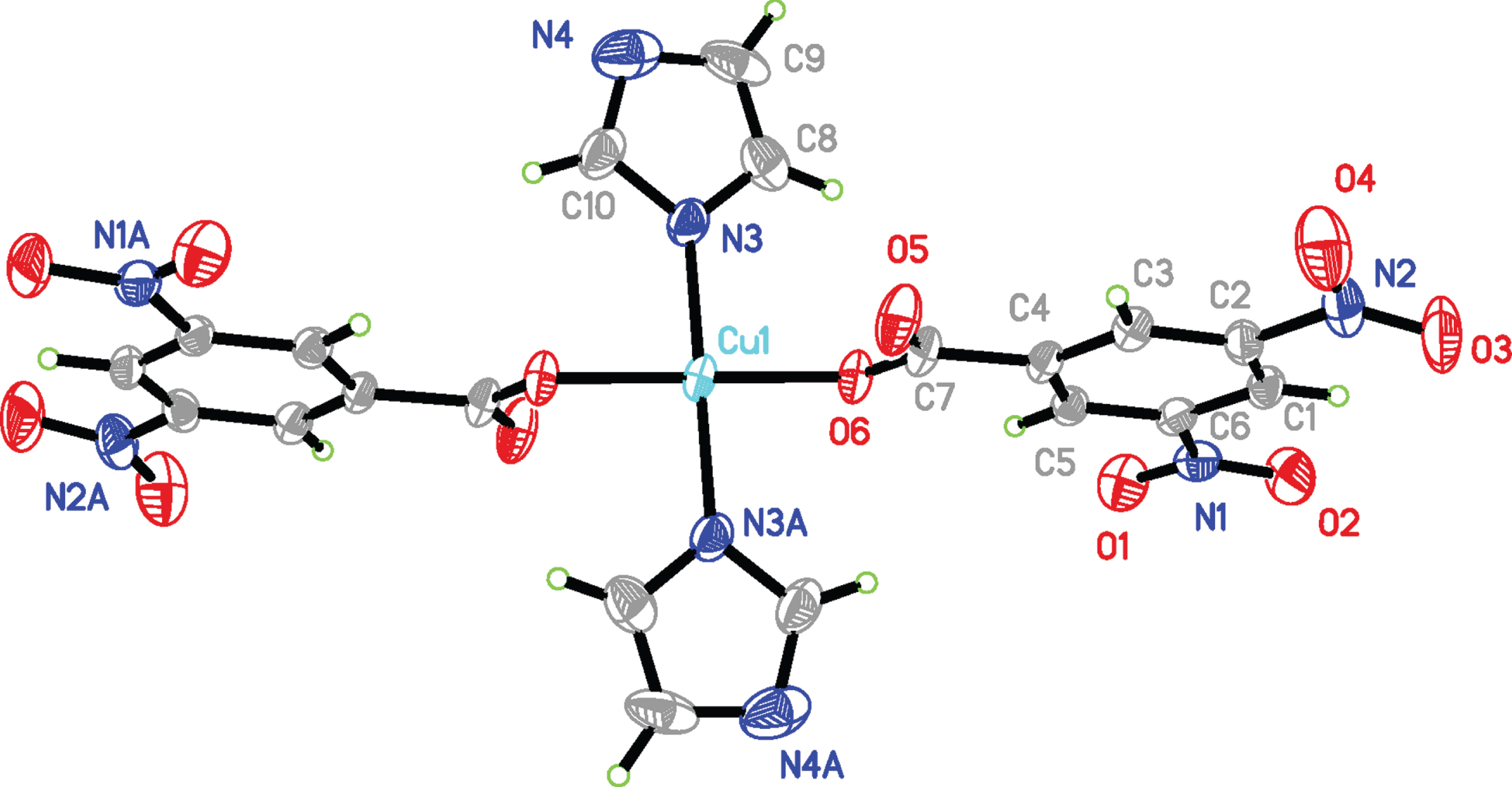
Molecular structure of
Selected bond lengths and angles for
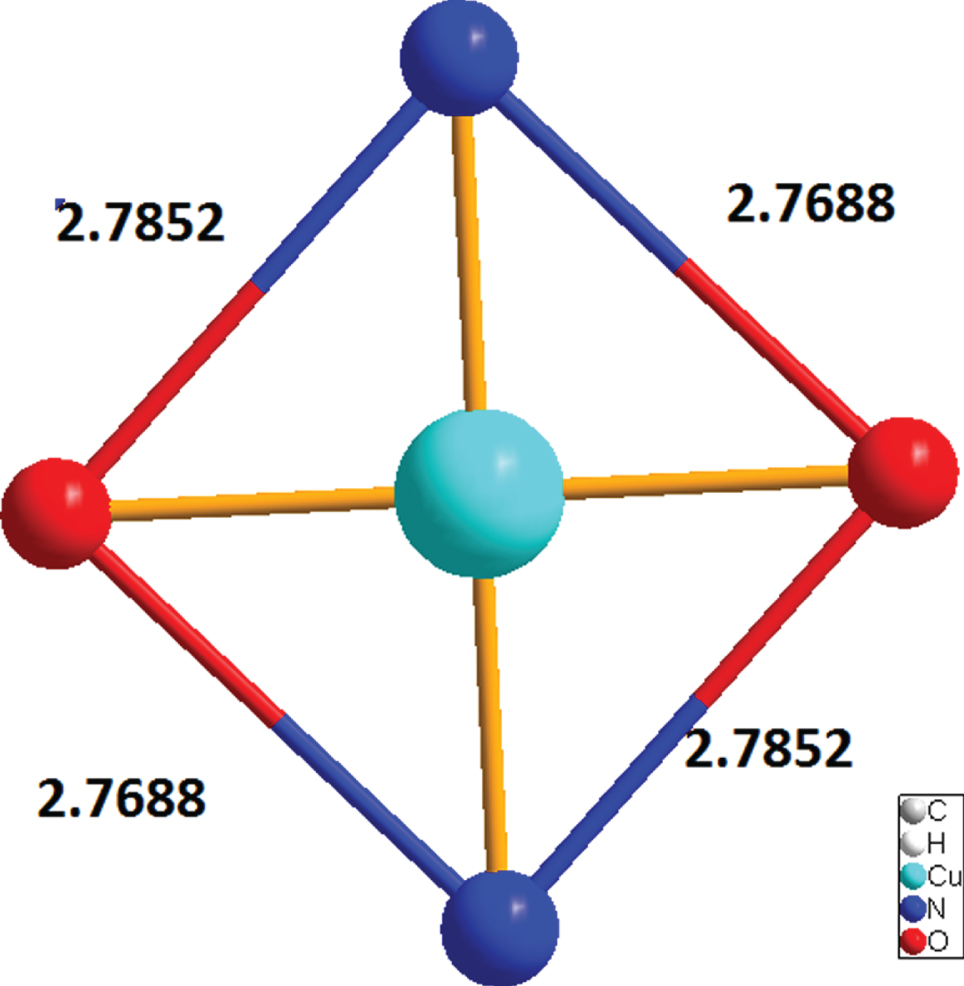
Coordination tetragon for the central Cu(II) atom of
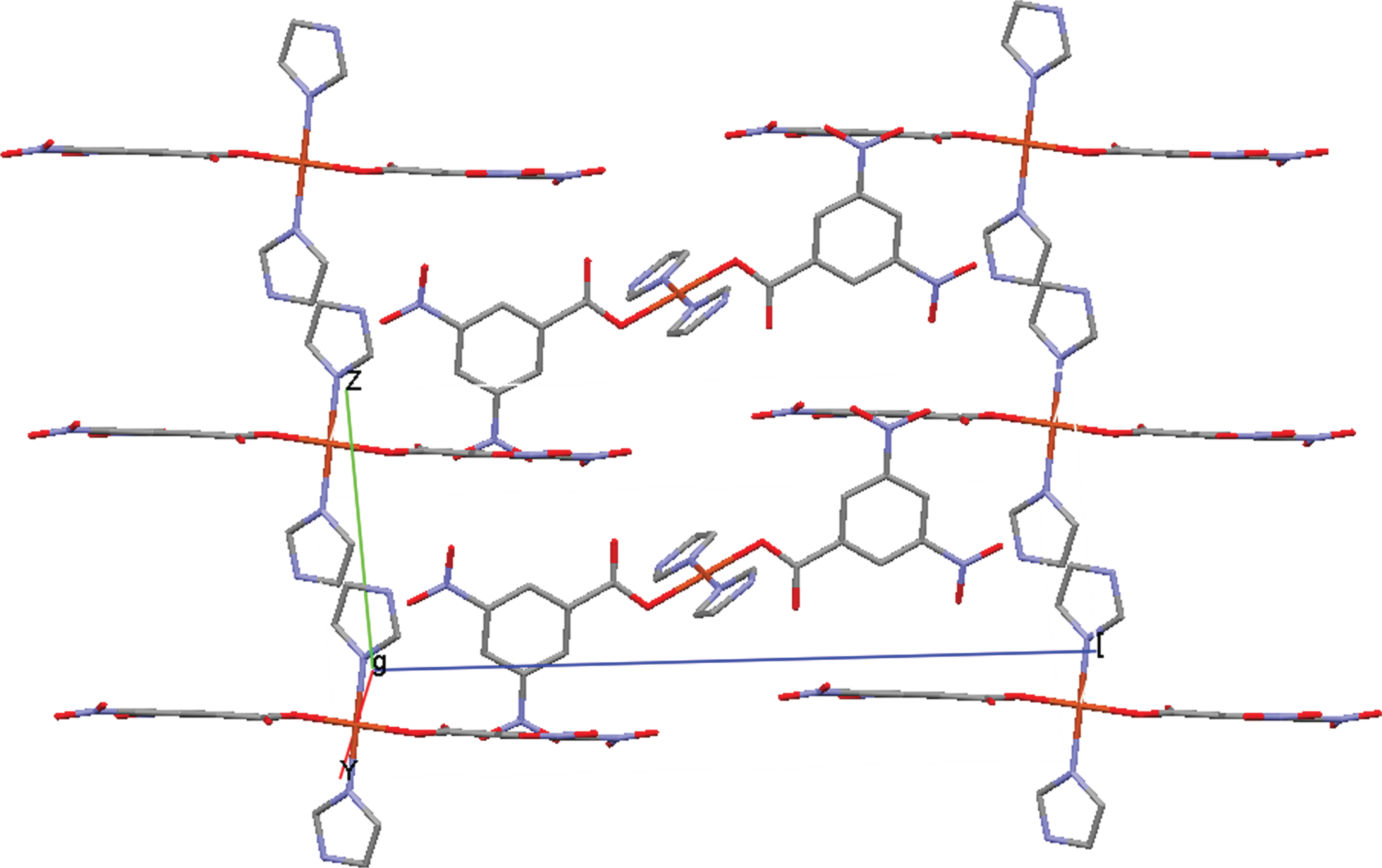
Plane formed by different DNBA ions of
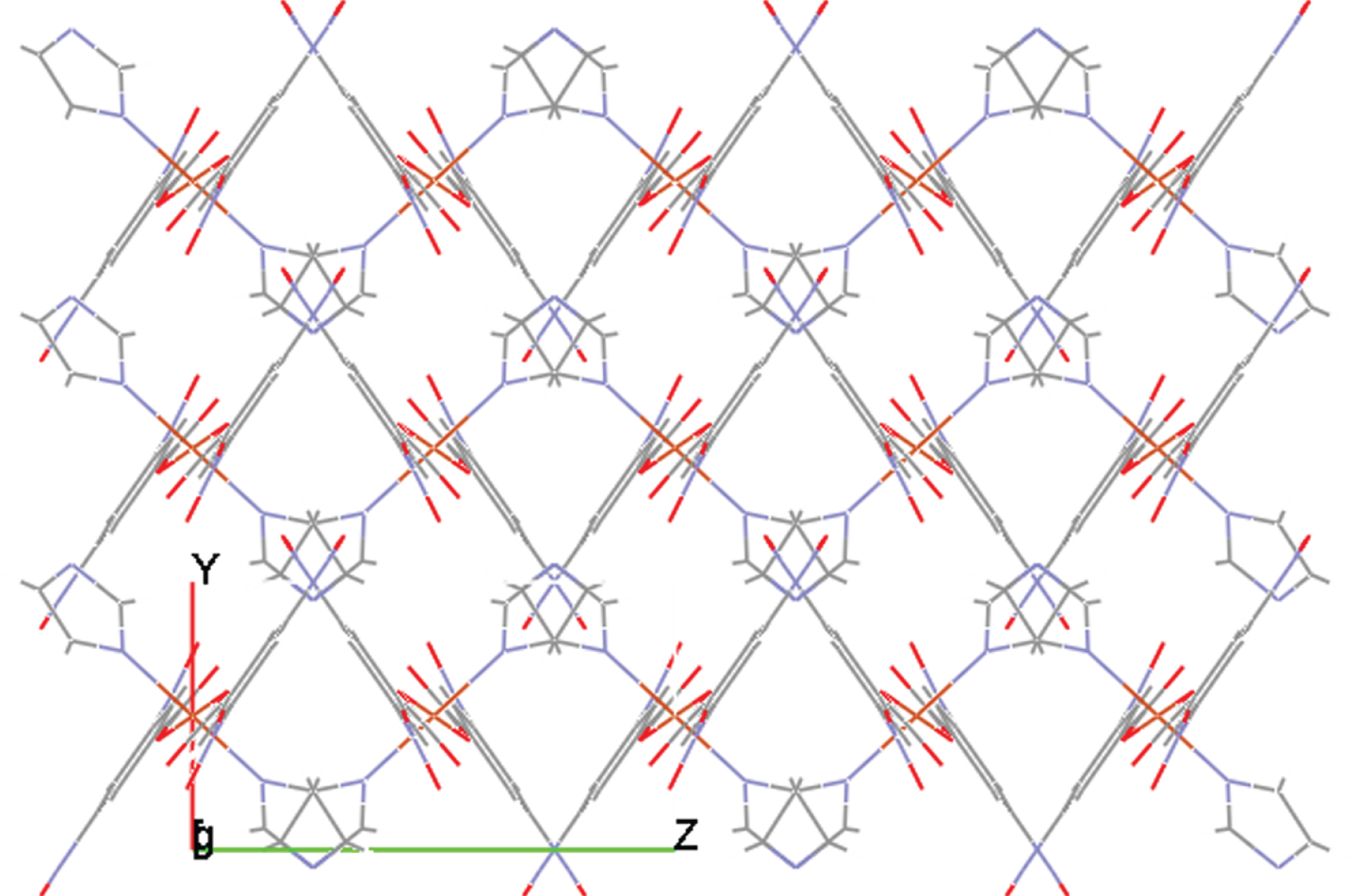
Packing plot of
In order to investigate the thermal behavior, it was analyzed by DSC with four linear heating rates in a N2 atmosphere, and shown in Fig. 5. In
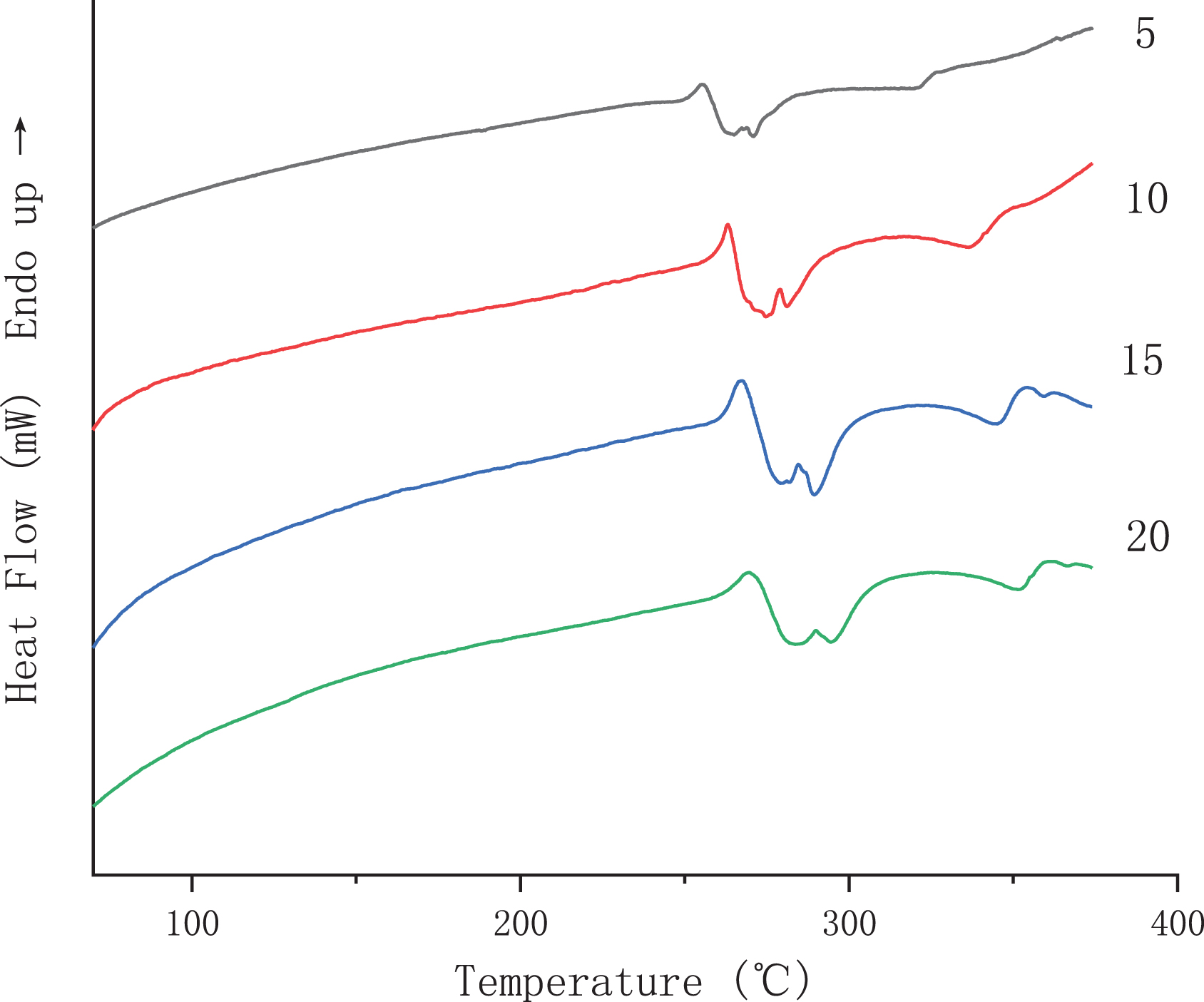
DSC curves for
From the DSC curves, it can be inferred that the first exothermic peak make a dominant effect on the decomposition of
Selected hydrogen bond for 1
Selected hydrogen bond for
Symmetry Codes: #1 -x,-1/2 + y,1/2-z; #2 -x,1-y,1-z; #3 1-x,1-y,1-z.
Impact sensitivity was determined by fall hammer apparatus. Sample (30 mg) was placed between two steel poles and was hit by a 5.0 kg drop hammer at a height of 100 cm. The test results showed that the firing rate was 0%.
Friction sensitivity was determined with a pendular friction sensitivity apparatus by a standard procedure. When
physicochemical properties
The physicochemical properties are tabulated in Table 5. And critical temperature of thermal explosion (Tb), entropy of activation (ΔS≠), enthalpy of activation (ΔH≠), and free energy of activation (ΔG≠) of
Peak temperatures of the main exotherm and the chemical kinetics parameters for 1
Peak temperatures of the main exotherm and the chemical kinetics parameters for
Physicochemical properties of
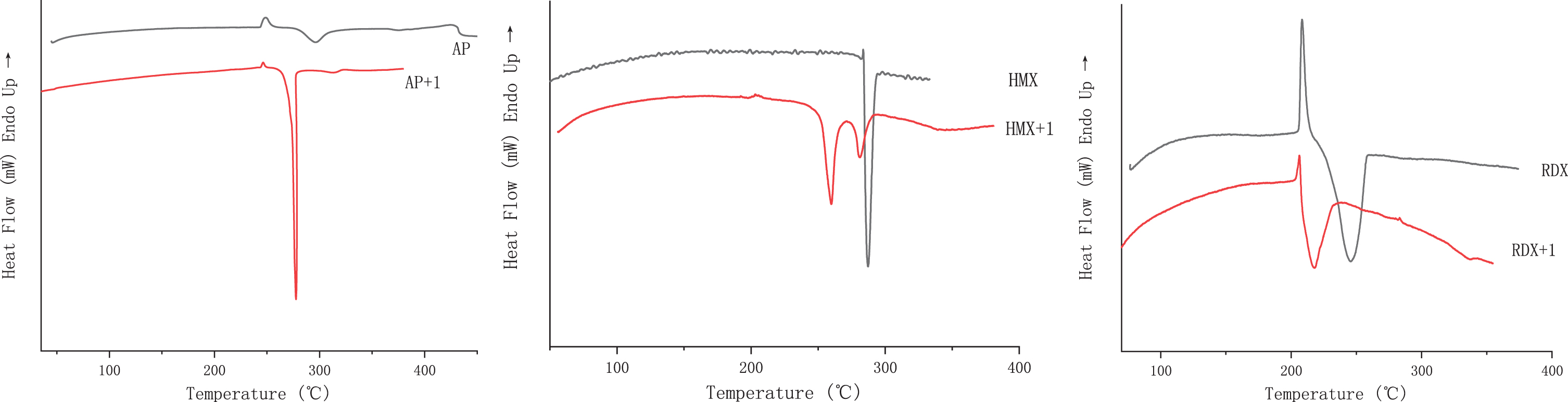
DSC curves of AP and AP+
To investigate the catalytic effects of
As shown in Fig. 6(a), every DSC curve has an endothermic peak with the peak temperature of 247.8 °C for AP and 246.2 °C for AP+
Conclusions
Synthesis and characterization of a coordination compound [Cu(IMI)2(DNBA)2] (
Supporting Information
Non-isothermal kinetics analysis
It is widely used to determine the Arrhenius Equation for a given material by Kissinger’s method, Ozawa’s method and Starink’s method, which equations are as follows:
Where T is the peak temperature in K. E is the apparent activation energy in kJ mol–1. R is the gas constant (8.314 J K–1 mol–1). β is the linear heating rate in K min–1. B and C are constant. When s = 2, B = 1 and C = ln(RA/E), equation (1) is according to Kissinger’s method. When s = 0 and B = 1.0516, equation (1) is according to Ozawa’s method. When s = 1.8 and B = 1.0037, equation (1) is according to Starink’s method. Based on the exothermic peak temperature measured with four different heating rates of 5, 10, 15 and 20 K min–1, three methods were applied to study the kinetics parameters of the title compound. From the original data, the apparent activation energy E, pre–exponential factor A, linear coefficient R and standard deviation S were determined based on the relationship of ln(β/T2), ln(β/T1.8) and lnβ to 1/T, corresponding to Kissinger’s method, Starink’s method, and Ozawa’s method, respectively.
Calculation of critical temperature of thermal explosion, ΔS≠, ΔH≠ and ΔG≠
The value of the peak temperature corresponding to β ⟶0 (T0), the corresponding critical temperature of thermal explosion (Tb), entropy of activation (ΔS≠), enthalpy of activation (ΔH≠), and free energy of activation (ΔG≠) were obtained by the following equations (2), where a, b and c are coefficients, kB is the Boltzmann constant (1.381×10⁻²³ J/K) and h is the Planck constant (6.626×10⁻³⁴ J·s).
Footnotes
Acknowledgments
The project was supported by the National Natural Science Foundation of China (No.22005275), Scientific and Technologial Innovation Programs of Higher Education Institutions in Shanxi (STIP, No.2019L0584), Equipment Pre-research Weapons Industry Joint Fund (No.6141B012896), Equipment Pre-research Key Laboratory Fund (No.6142020305), and the Advantage Disciplines Climbing Plan of Shanxi Province.