




Abstract
Within this work, tazetta, one of the fragrant narcissus species used in the perfume industry, was extracted by steam distillation. The extracts were chemically analyzed by gas chromatography coupled with a mass spectrometer (GC/MS). All substances of perfume, synthetic essence, and essential oil of narcissus flower were prepared and their constituents were identified and compared based on GC/MS results. Their harmful compounds were also identified using MSDS and LD50 methods. According to the obtained information of MSDS and LD50, essential oil of flower, perfume and synthetic essence all contain harmful compounds with many side effects to be considered with extra care for the human health.
Introduction
Narcissus is a genus of predominantly spring perennial plant of Amaryllidaceae (amaryllis) family, in which all or some of the members are so called daffodil, daffadowndilly, narcissus, and jonquil [1–5]. Narcissus consists of conspicuous flowers with a cup- or trumpet-shaped corona surmounted six petal-like tepals [6]. The flowers are generally white, yellow, orange or pink whereas the color of their tepals and corona could be either uniform or contrasting [1, 7]. Narcissus primarily exists in Mediterranean areas with central diversity in the Iberian Peninsula of Spain and Portugal in contrast with the predominantly tropical or subtropical Amaryllidaceae family [1, 9]. Moreover, a few species of narcissus could be found in southern France, Italy, and Balkans areas [7]. The occurrence of narcissus tazetta in western and central Asia, China and Japan has been considered as the introduction to albeit ancient of Eastern cultures [7, 10]. Tazetta, a fragrant narcissus species, has been long used in the perfume related industries [11]. This kind of ornament has been carved in different parts of Iran involving the southern Khorasan and even other northern and southern areas of the country for flower production purposes mainly in autumn and winter times. Despite the lethal potential of narcissus alkaloids, they have been used for centuries as traditional medicines for varieties of diseases such as cancer and Alzheimer [10, 12–16]. Today, several other applications of narcissus related compounds have been introduced potentially useful for biological systems playing antiviral, prophase induction, antibacterial, insecticidal, cytotoxic, antitumor antivirus, antiplatelet, hypotensive, emetic, antifertility, antinociceptive, chronotropic, pheromone, plant growth inhibitor, and allelopathic functions [17]. The narcissus oil could deal with the nervous system to reduce levels of stress, tension, spasm, indigestion, depression, and inflammation with a vital role of pain treatment [10, 18–22]. However, the narcissus oil itself requires careful handling, as its higher doses consumptions could cause headaches and nausea. It is important to mention here that such natural plants have been seen always very much important materials for investigating their various features especially for health issues [23–28].
The word “perfume” has been derived from the Latin term of “perfumare” meaning “to smoke through” [10]. Plants and their volatile compounds have been used as the major sources of fragrances for perfumes and cosmetics productions since ancient times. Perfumes are composed of aromatic chemicals and essential oils, in which they has been usually composed of natural aromatic oils until the 19th century but mostly synthetic today. Hence, analytical control of the fragrances in perfumes or perfumed formulations is necessary to assure the quality and desirable smell of the product [11]. Perfume is a sweet-scented substance for freshening the body or the environment, in which the fragrance may be natural ingredients or the combination of essential oils, stabilizers, solvents, and aromatic compounds. Such aromatic ingredients could be reproduced by extracting plants, animals, or synthetic chemicals [12]. Regarding different types of perfumed products, the compositions have their own legal regulations, safety aspects and analytical methods of fragrance chemicals determinations. To this aim, the known chromatographic techniques have been extensively for such analytical purposes, in which gas chromatography (GC) with the head-space sampling mode and flame ionization or mass spectrometry (MS) detectors has attained considerable popularity. Moreover, electronic noses have also shown prominent roles of perfume analysis [13].
Fragrance ingredients are extensively used in perfumes and other cosmetics to provide a pleasant scent; however, they could arise undesirable side effects [14]. Generally, a perfume is a unique mixture of top, middle and base notes designed to give a particular harmony of scents [15]. Essential oil refers to a concentrated hydrophobic liquid containing plant-based volatile compounds known as volatile oils, ethereal oils, aetherolea, or simply as the oil of extracted plant. Indeed, essential oil is the sense containing the “essence” of plant characteristic fragrance. In contrast to fatty oils, essential oils typically evaporate completely without leaving a stain or residue [16, 17]. Essential oils are hydrophobic and water-insoluble compounds but they are soluble in alcohol, non-polar and semi-polar solvents [18, 19]. The synthetic essential oils, so called fake or artificial perfumes, are made in laboratories that smell like narcissus flower sold at a lower price in the Iranian market. Indeed, such importance is not only for essential oils, but several other investigations indicated advantages of applications of natural products for different purposes in human life system especially related to food and drug developments [29–31]. Moreover, separation methods were also improved for such purposes employing appropriate techniques for each case of problems [32–34]. To this aim, earlier works indicated that the models of natural products or their synthetic relatives could show significant functions for specified targets for various fields of biological related systems [35–37]. To approach such goal, methodologies have been improved for dealing with natural products in addition to simulating such natural conditions for synthetic materials with varieties of features [38–40]. Within this work, substances of perfume, synthetic essence, and essential oil of narcissus flower were prepared and their constituents were identified and compared using GC/MS technique. Additionally, their harmful compounds were also identified using material, safety, data and sheets (MSDS) and median lethal dose (LD50) methods.
Materials and methods
Plant materials
A sample of 50 g of narcissus flower was purchased from Karaj city local market in early winter (December 2017) to prepare the essential oil of narcissus. Such fresh flowers were harvested from Narges kooh locality around Khosef (31.32° N, 4.58° E, 1349 m elevation).
Extraction
The field-collected fresh flowers were dried at room temperature for 3 days. The dried samples should be ground with distilled water to increase their contact area for the extraction purposes a few moments before the onset of the essential oil escapes. 50 gr of the flowers were subjected to steam distillation for 3 h (with 1.5 L water) using a modified Clevenger-type apparatus. The obtained essential oil was isolated and stored in a dark glass after dilution with sodium anhydride [22]. 1μl of the essential oil, already diluted with normal hexane, was introduced to the injector of the GC/MS apparatus to identify the essential oil compounds. Then, a batch of essential oil compounds was identified in terms of the attached temperature planner.
Chemicals
Sodium anhydride and normal hexane were purchased from Merck and directly used as is.
GC/MS analysis of perfume
An MS-equipped (Agilent 5973 network mass selective detector) GC apparatus (Agilent 6890- USA) in the electron impact mode (70 eV) was employed. The ionization method was EI and the ionization source temperature was set at 220 °C. The scanned mass range (m/z) was set from 40 to 500 amu. The applied software was Chemstation. The column was a BPX5 column (30 m×0.25 mm; film thickness: 0.25μm). The oven temperature was programmed as follows: 5 min isotherm at 50 °C followed by a progression at the rate of 3 °C/min up to 240 °C and 15 min final hold at 300 °C. The injector, used in splitless mode, was kept at 250 °C. The carrier gas was Helium (He) with a constant flow rate of 0.5 mL/min. The compounds were identified using the data of a computer library connected to GC/MS. The retention indices of the components were calculated using retention times of n-alkanes, injected after the oil under the same chromatographic conditions, and compared with those of the literature. Whenever possible, the results were confirmed by the injection of pure standard compounds.
LD50
The median lethal dose, abbreviated by LD50, is a measure of the lethal dose of a toxin to indicate toxicity [20]. It is the dose required to kill half of a tested population after a specified period of time. LD50 is usually determined by performing tests on animals such as laboratory mice usually expressed as the mass of substance administered per unit mass of the tested subject, typically as mg of the substance per kg of the subject body mass [21]. Based on the obtained LD50 values, the compounds toxicity state could be classified into following groups:
LD50 < 0.25 mg/kg: infinite toxic; LD50 = 0.25–1 mg/kg: very toxic; LD50 = 1–50 mg/kg: toxic; LD50 = 50–500 mg/kg: moderate toxic; LD50 = 500–5000 mg/kg: low toxic; LD50 = 5000–15000 mg/kg: none-toxic; LD50 ≥15000 mg/kg: safe.
MSDS
MSDS, initials of material, safety, data and sheets words, means material safety data sheet as a technical document providing details and comprehensive information on a controlled product. Indeed, it is related to: health effects of exposure to the product hazard evaluation related to the product’s handling, storage or use measure to protect workers at risk of exposure emergency procedures. Such MSDS may be written, printed or otherwise expressed, and must meet the availability, design and content requirements of WHMIS legislation. The legislation provides for flexibility of design and wording but requires that a minimum number of categories of information be completed and that all hazardous ingredients meeting certain criteria be listed subject to exemptions granted under the Hazardous Materials Information Review Act. Based on the side effects listed for the cases reported in MSDS (Table 1), these effects and risks are summarized and coded.
MSDS information
MSDS information
Chemical composition of narcissus essential oil
Chemical composition of the flower and the identified compounds by GC/MS apparatus were reported in Tables 1 and 2. Total ion chromatogram of extracted narcissus flower by water distillation was shown in Fig. 1. Based on such process, 28 compounds were identified in the flower mainly consisting of heneicosane (42.85%), tricosane (9.04%), and neo-menthol (5.31%). In this work, MSDS information were used to investigate side effects of the compounds in the essential oil of narcissus flower. LD50 values, eye contact, skin contact, and inhalation information of the compounds found in the narcissus flower essential oil were all summarized in Table 1. It is worth to note that the eye contact, skin contact, and inhalation values were determined using the MSDS information, in which the higher values means the greater harmful side effect.
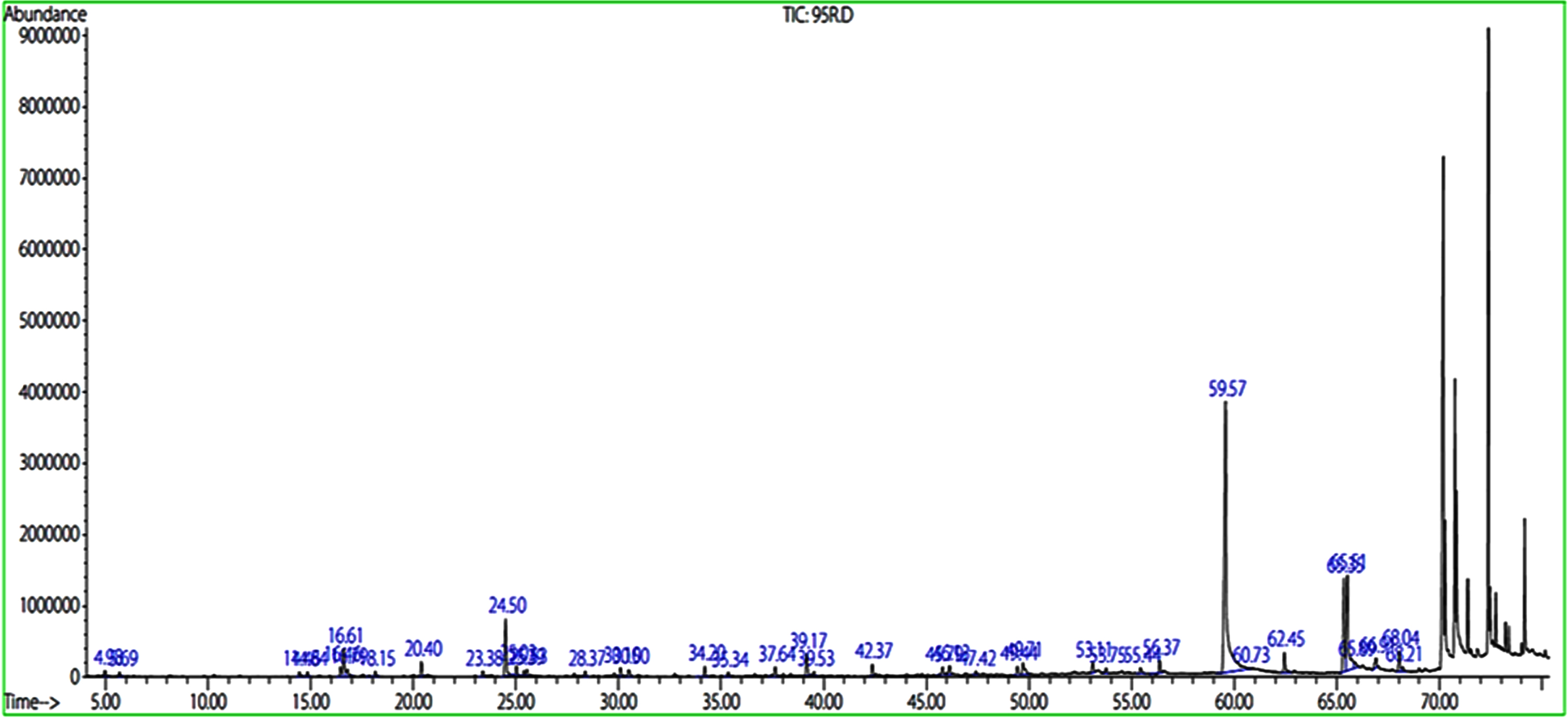
Total ion chromatogram of narcissus flower extracted by water distillation.
The United State made perfume was purchased from the Iranian market including the narcissus fragrance in the middle note with aromatic concentration at the Eau de Perfume level suitable for spring time. 1μL of the perfume was injected into the GC/MS apparatus to determine its constituents, which included 31 identified compounds. The obtained results of molecular formula, percentage, retention time and type of compounds were all listed in Table 3. The main compounds in perfume comprised of epicedrol (19.31%), 7a-isopropenyl-4,5-dimethyloctahydroinden-4-yl-metanol (9.76%), and tonalide (9.53%). The adverse side effects of perfume constituents were determined through LD50 evaluation. As shown in Table 3, LD50, eye contact, skin contact and inhalation information of the identified compounds were coded at an 8-item scale based on their risks and side effects yielding higher code values for greater risk. On the other hand, the smaller amount of LD50 means the greater risk and toxicity. Total ion perfume chromatogram was shown in Fig. 2.
Compound identified in perfume by using GC/MS
Compound identified in perfume by using GC/MS
MH: Monoterpene Hydrocarbons; MO: Oxygenated Monoterpene; SH: Sesquiterpene Hydrocarbons; SO: Oxygenated Sesquiterpene.
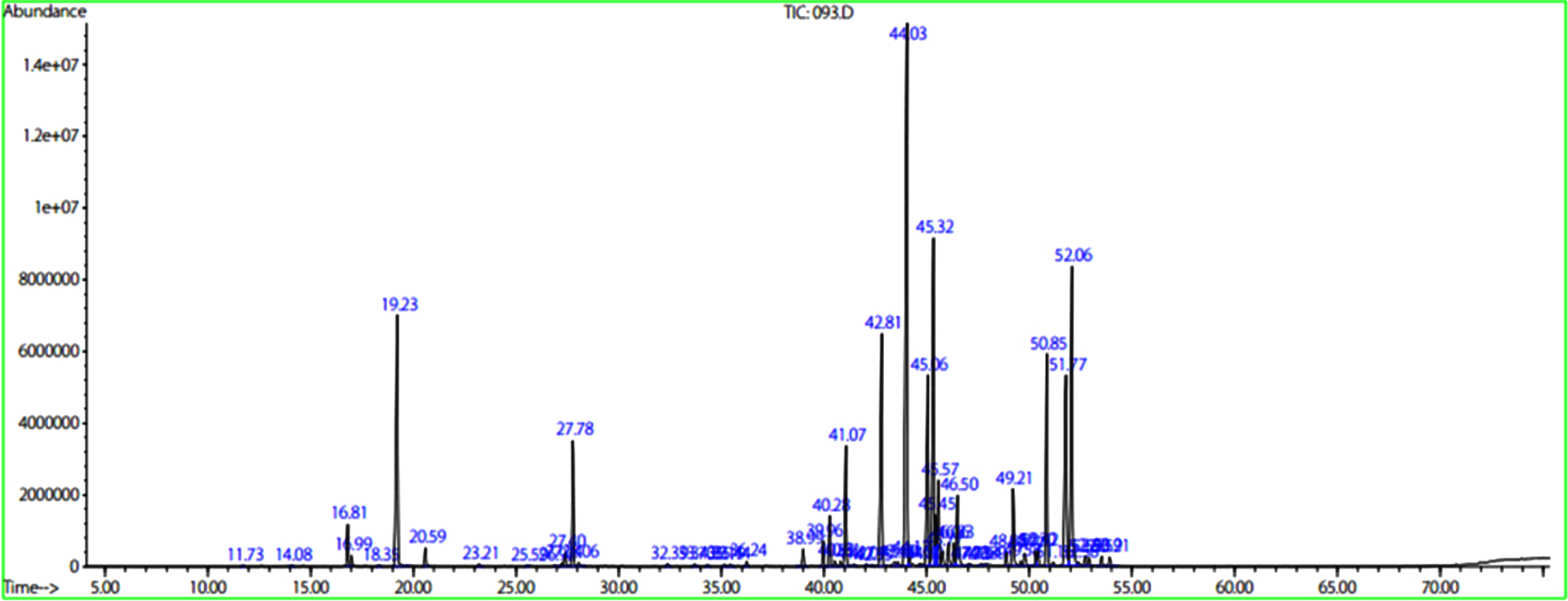
Total ion perfume chromatogram.
It is regular that the fake or artificial perfume with scents similar to narcissus to be made in the laboratories as synthetic essence for selling at lower prices in the Iranian local markets. A sample of unknown-ingredient synthetic essence was purchased from the Iranian local market and 1μL was injected into the GC/MS apparatus. As a result, 27 compounds were identified and their molecular formula, percentage, retention time, and type were determined (Table 4). The main compounds comprised of dihydromyrcenol (13.65%), methyl dihydrojasminate (11.46%), and galoxolide (11.34%). The toxicity and side effects of the synthetic essential oils were evaluated using LD50 and MSDS methods (Table 4). Total ion synthetic essential oil chromatogram was shown in Fig. 3.
Compound identified in synthetic essential oil by using GC/MS
Compound identified in synthetic essential oil by using GC/MS
MH: Monoterpene Hydrocarbons; MO: Oxygenated Monoterpene; SH: Sesquiterpene Hydrocarbons; SO: Oxygenated Sesquiterpene.
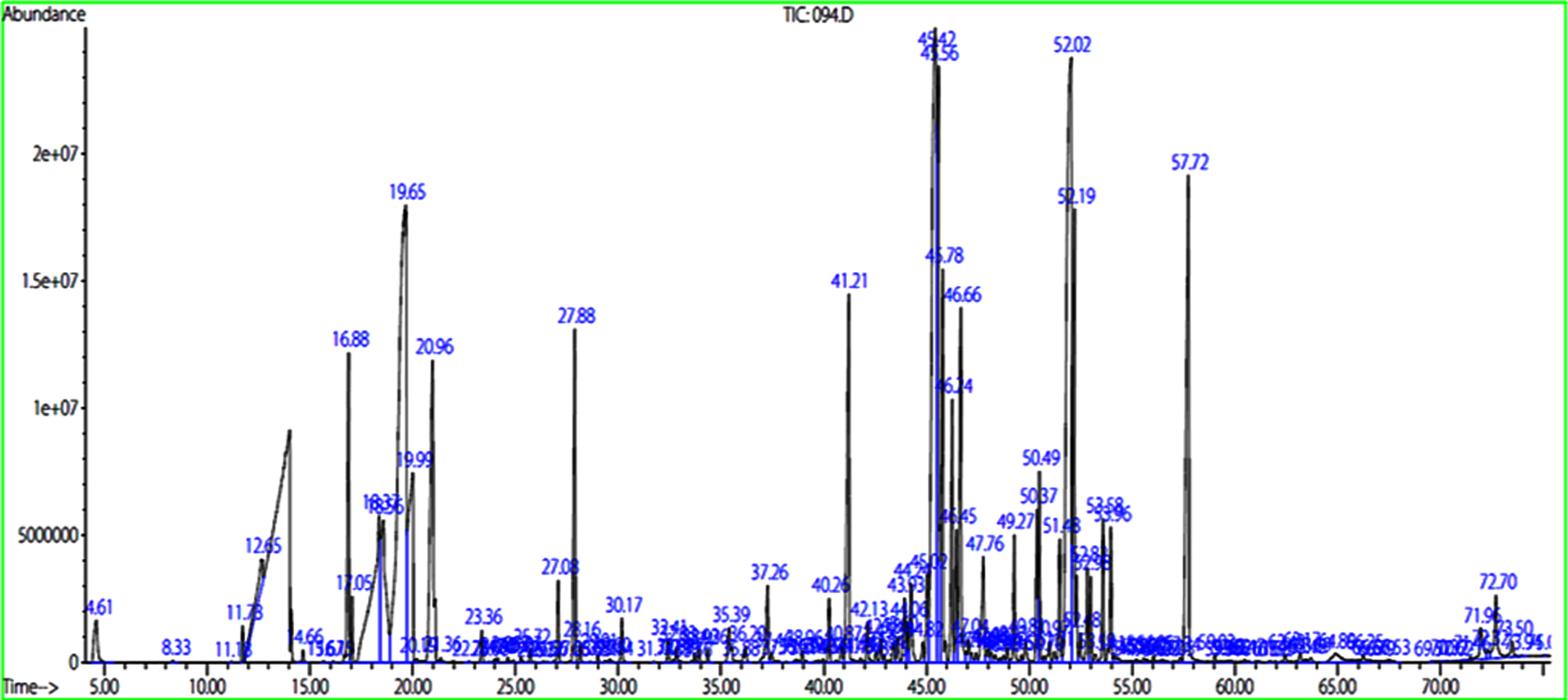
Total ion synthetic essential oil chromatogram.
According to the content of Table 2, 17 of 28 compounds of the flower essential oil showed distinctive value of LD50. Among which, 15 of 17 were low toxic and one was none-toxic. In contrast, menthone (Fig. 4) was the moderate toxic compound may cause skin irritation, redness, eye irritation, chemical conjunctivitis, and corneal damage. The values of LD50 for compounds 10 and 14 were 800 and 980 mg/kg respectively reflecting their low toxicity. The values of LD50 of most of the compounds of flower essential oil were ranged in 500 –5000 mg/kg revealing low toxicity for the soothing ingredients of the flower better not to be inhaled for a long time. Considering the narcissus perfume (Table 3), the values of LD50 for compounds 18 (butylated hydroxytoluene, Fig. 4) and 31 (tonalide, Fig. 4) were 980 and 570 mg/kg respectively indicating again their low toxicity. According to MSDS information, compound 31 caused no serious damage but its inhalation and direct skin contact should be still avoided. Compound 18 may cause redness or eye irritation. The rest of compounds were seen to be safe. Considering the synthetic essential oil (Table 4), 22 of 27 compounds showed distinctive values of LD50, in which 19 of them showed low toxicity and one showed moderate toxicity. Linaly acetate and propylene glycol were non-toxic and safe respectively. The values of LD50 for compounds 17, 21, and 26 were 293, 599, and 570 mg/kg, respectively. Compound 17 (coumarine, Fig. 4) showed moderate toxicity and may be seriously harmful for the consumer health. In contrast, compounds 21 and 26 showed low toxicity. Numerous earlier studies have reported the components of limonene, linalool, diethyl phthalate, galoxolide, tonalide, and butylatedhydroxytoluene to be very much harmful in such perfume related compounds [41–45].
Compound identified in natural essential oil of flowers by using GC/MS methods
Compound identified in natural essential oil of flowers by using GC/MS methods
MH: Monoterpene Hydrocarbons; MO: Oxygenated Monoterpene; SH: Sesquiterpene Hydrocarbons.
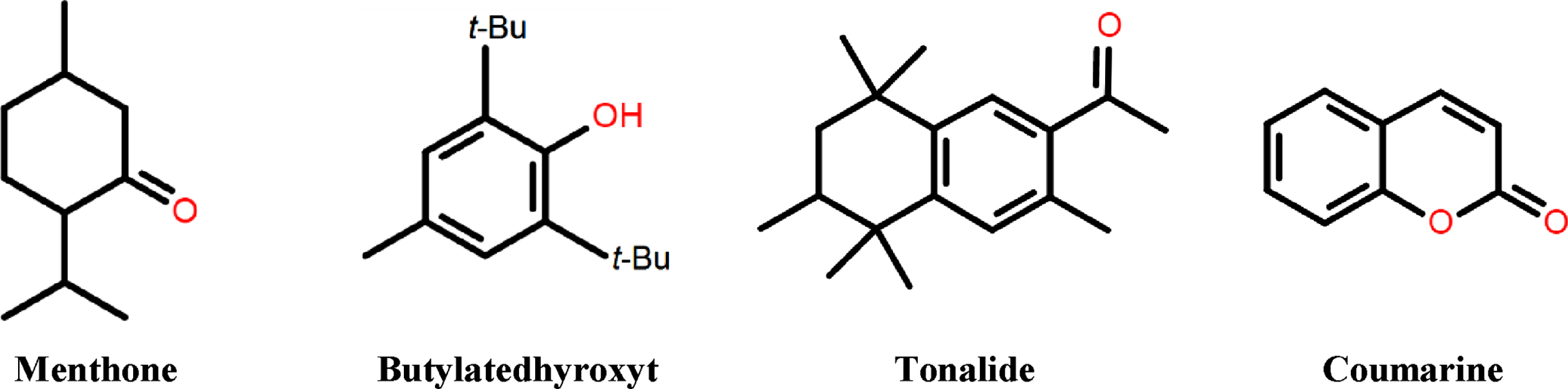
2D structure Menthone, Butylatedhydroxyt, Tonalide and Coumarine.
Based on the reported side effects in MSDS (Table 1), these effects and risks were summarized and coded. Considering eye contact, the eye exposure to the material was coded in the range of 0–6; 0 implied for no impact and 6 implied for serious damage. In case of skin contact, the hazard caused by the skin exposure to the material was coded in the range of 0–7; 0 implied for no impact and 7 implied for serious damage. Inhalation risks refer to the potential hazards to the lung and various respiratory tracts due to inhaling the material. These risks were scaled in an 8-item coding system of 0–7; 0 showed no impact and 7 showed severe poisoning [7]. The larger number in front of each compound, the grater its damage will be. According to the content of Table 2, decane, γ-terpinene, menthone and dodecane were found harmful among constituents of the narcissus flower essential oil and they could cause serious damages to the eyes, skin, and respiratory system. Thymol was very harmful to cause serious damages to the skin and respiratory system. Neo-menthol, estragole, e-caryophyllene, and tricosane could severely damage the cornea and induce allergenic responses. Based on these results, the compounds of flower essential oil were not completely healthy and their prolonged exposure or breathing could lead to several side effects for human health.
Conclusion
Based on examining the constituents of narcissus perfume, it was clear that α-pinene, γ-terpinene, α-terpineol, and citronellol were harmful compounds. α-pinene, α-terpineol, and γ-terpinene could seriously damage skin and respiratory system. Geraniol could also severely damage eyes. Tonalide posed no serious damage, LD50 = 570 mg/kg, but its inhalation and direct skin contact should be still avoided. Some compounds in the synthetic narcissus essential oil including propylene glycol, α-pinene, 3,3‘-oxybis-2butanol, and citronellol could seriously damage skin, eyes and respiratory system. Furthermore, coumarine showed moderate toxicity to be classified as very harmful compound. Comparison of the constituents of the perfume, narcissus essential oils, and synthetic essential oils revealed that their constituents were different. Limonene and eucalyptol existed in all three samples. Limonene, eucalyptol, linalool, α-pinene,geraniol, sandanol, dihydromyrcenol, linalyl acetate, galoxolide, tonalide, diethyl phthalate, α-terpinyl acetate, methyl dihydrojasmonate, citronellol, 7a-isopropenyl-4,5-dimethyloctahydroi nden-4-yl-methanol, and 4-3,3Dimetyl-but-1-ynly-4-hydroxy-2,6,6-trimethylcyclohex-2-enone were found as common compounds in both of perfume and essence. According to the results, contrary to our conjecture, the narcissus flower essential oil contained harmful and dangerous compounds that could be seriously threatening upon eye or skin contact in addition to long-term respiration. According to the values of LD50, menthone of the narcissus flower essential oil showed moderate toxicity whereas the rest of components showed low toxicity. The majority of compounds in perfume and synthetic essential oil showed low toxicity. However, coumarine of synthetic essential oil possessed moderate toxicity. Therefore, it was recommended to avoid direct spraying of the perfumes and synthetic essential oil to the body and better to be used on clothes. As a final remark, it was found that not only synthetic perfumes but also natural ones might show harmful effects to the human health maybe better to be synthesized under controlled procedures.