



Abstract
The presence of arsenic in water is a major problem in communities due to its toxicity and hazard. The aim of this study was to evaluate the removal efficiency of arsenic by CTAB-modified clinoptilolite zeolite from aqueous solution. The effect of contact time, pH, ionic strength, zeolite dose and CTAB concentration on arsenic removal were investigated. Structural analysis of XRD showed that the adsorbent used in this study was composed of clinoptilolite due to three strong peaks in 9.8, 22 and 27 degrees with intervals of 8.9, 3.9 and 3.1. Optimum condition for effective adsorption were obtained at pH = 3, zeolite dose of 5 g L–1, CTAB concentration of 5 mM, ionic strength of 0.1 M sodium chloride and contact time of 10 minutes. This study suggested that, the CTAB modified zeolite can be used as an effective and inexpensive adsorbent to remove arsenic from aqueous solutions, since it is a low-cost, abundant and locally available.
Introduction
In developing and industrialized countries, human activities, such as various industries, can play a role in intensifying water shortages by polluting natural resources. Arsenic contamination in drinking water is now becoming a global epidemic. Arsenic is part of more than 245 minerals including 60%arsenates [AsO4]3–; 20%sulfides [S2–] and sulfur salts; and 20%arsenide [AsO3]3 +, silicates and elemental arsenic [As0]. Arsenic is found in the environment in different oxidation states (–3, 0, +3, +5). The pH, redox potential and microbial activity affects the forms of arsenic. In natural waters, arsenic mostly occurs in inorganic species as oxyanions of trivalent arsenite [As(III)] or pentavalent arsenate [As(V)]. At neutral pH, the major species are H2AsO4– and HAsO42– for arsenate, and H3AsO3 for arsenite [3, 27]. Arsenic is one of World Health Organization’s 10 chemicals of major public health concern, and the critical value of arsenic in drinking water according to the WHO is 10μg L–1. Chronic arsenic poisoning by drinking water could lead to skin cancer, gastrointestinal disorders, diabetes, kidney dysfunction, cardiovascular disease, and internal cancers [20]. Owing to the determined harmful effects of arsenic, its removal has become a very important environmental issue.
There are various processes to remove or reduce water contaminants, such as filtration coagulation, flocculation, precipitation, adsorption, ion exchange [2, 12]. Extensive studies are underway to utilize different types of adsorbents due to their adsorption and ion exchange properties. Advantages such as low-cost, high availability, fast and high adsorption capacity, renewability, and reuse capability have led to adsorbents applications in removing heavy metals. Arsenate anion (H2AsO4–) is adsorbed by positive surface charges of soil colloids as well as the broken edges of a clay minerals network or on the surfaces of iron and aluminum hydroxides. Arsenic adsorption may also occur by ligand exchange. In ligand exchange, arsenic species are exchanged with OH2 or OH– groups on iron hydroxide surfaces [14].
Zeolite as a suitable and cost-effective adsorbent has been considered in many researches in recent years. Zeolite is a part of the crystalline mineral aluminosilicate family and hydrate alkaline and alkaline earth metals with a three-dimensional framework and are divided into two groups: a) natural (e.g., clinoptilolite, analcime, laumontite, phillipsite, mordenite); and b) artificial or synthetic (e.g., W and ZSM). Clinoptilolite ((Na,K,Ca)4Al6Si30O72.24H2O) is the most common natural zeolite, and has a pore and channels structure occupied by water and exchangeable cations, like K+, Na+, Ca2 +, and etc. [21]. These structural make the clinoptilolite particularly suitable for adsorption of heavy metals. The high capacity of clinoptilolite in contaminants adsorption necessitates their application in water and wastewater treatment processes [15].
Modifications of zeolites with metal cations or surfactants and acid/base treatment are commonly employed to improve the adsorption efficiency of raw natural zeolites. In addition, the low price and easy availability, as well as their structure, make zeolites favorable for the removal of arsenic from water [23]. The results of Šiljeg et al. [22] indicated that use of the Serbian zeolite in the Fe–Na-modified form (Fe–Na-SZ) was satisfactory for arsenate removal from water containing up to 30μg L–1. Iron-treated zeolite showed promise as efficient low-cost adsorbent for arsenate and arsenite removal [19]. Baskan and Pala [3] investigated the removal of arsenic from drinking water using modified natural zeolite and demonstrated that at lower initial arsenate concentration, arsenate exhibited greater removal rates and best removed when the clinoptilolite modified by 0.1 M FeCl3 was used for adsorbent. Pantti and Wareham [18] used iron-containing sands in New Zealand to remove 3- and 4-valent arsenic from water. They achieved the highest adsorbent rate of 3-valent arsenic at pH = 7.5 and the highest adsorbent rate of 4-valent arsenic at pH = 3. Gibbons and Gagnon [10] utilized solid wastes of water treatment (containing alum, ferric, and lime (calcium oxide)) to adsorb arsenic from groundwater in the new Spanish region and showed that iron and lime wastes were suitable adsorbents for absorbing arsenic from groundwater. Hao et al. [11] investigated the thermodynamics, kinetics, and mass transfer process of arsenic removal from aqueous solution using iron nanoparticle adsorbents by X-ray photoelectric spectroscopy (XPS) and X-ray adsorbent spectroscopy (XAS) and showed that iron-based adsorbents have significant potential for removing arsenic from water.
In the last decade, arsenic contamination of Takht-e-Soleyman water resources in Takab city has been one of the environmental challenges. In the downstream of this region, there are mines where repeated mineral extractions cause heavy metals contamination such as arsenic into surface waters. Therefore, the removal of arsenic in the downstream area is crucial due to the use of contaminated water in agricultural activities and the entry of arsenic into the food chain and crops. Considering the excessive costs of heavy metals removal and the necessity of using low-cost and available adsorbents; and duo to the high capacity of zeolite in the removal of heavy metals, the present study aimed to use of clinoptilolite modified by Cationic surfactants (CTAB) as an low-cost and accessible adsorbent in the region to remove arsenic from contaminated waters.
Experimental section
The present study was conducted on a laboratory scale. Zeolite was prepared from Afrazand mine located in Semnan city, north of Iran. About 500 g of the zeolite sample was passed through a sieve with 70 meshes (0.2 mm) and washed several times with water to remove mud. The samples were saturated in distilled water for 24 hours and then dried in an oven at 105°C for 24 hours. The Scanning Electron Microscope (SEM) (PHILIPS, XL-30), and the Transmission Electron Microscope (TEM) (PHILIPS, EM, 208) were used to determine the chemical composition and crystalline properties of selected natural zeolites and the X-ray Diffraction (XRD) (Philips Analytical X-Ray PW1800, using Cu-Kα radiation (λ = 0.15418nm) was used to analysis of the produced adsorbent.
Modification of nano zeolite by cationic surfactant was performed based on the findings of a previous study [15]. A CTAB amendment (cationic surfactant) was used to increase and improve the adsorption capacity of zeolite from the German company Merck. The CTAB amendment was selected from several available surface amendments (hot water, Triethanolamine (TEA), CTAB) based on the calculated removal rate in each experiment (Fig. 2, Table 3). 5 g L–1 of zeolite was added in 50 ml of CTAB solutions with specified concentrations (1, 2.5, 5, 10, 20 mM). The samples were shaken at a speed of 300 RPM for 24 hours, and after washing with distilled water, the zeolite sample was dried in a desiccator for 12 hours.
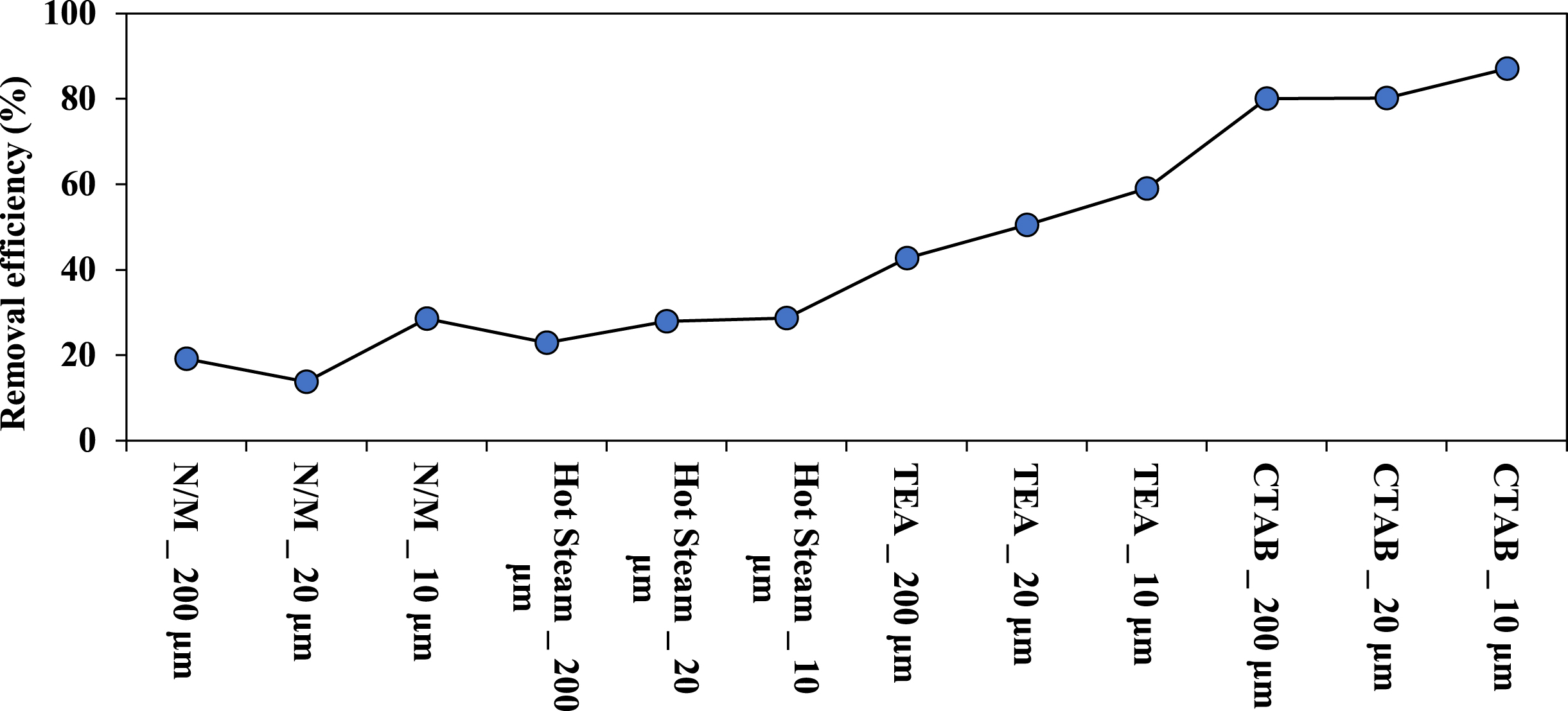
Efficiency of different surfactants in arsenic removal
Comparison of different surfactants efficiency in arsenic removal
The amount of arsenic was measured according to the instructions of the standard method of water and wastewater tests, using a Flame Atomic Absorption (Agilent-AA240, USA) and the calibration curve was drawn at 540 nm [8]. The pH was measured by a portable device (model HACH-HQ40D, Germany). Identification of catalyst functional groups was measured through spectroscopic method (model FTIR2011Bruker Optic GmbH, Japan). The effect of contact time, pH, ionic strength, zeolite dose and CTAB concentration on arsenic removal were investigated. For this purpose, 5 series of tests were performed. In each series, to evaluate the effect of each factor, other factors were kept constant (Table 1). Each experiment was repeated three times. In all experiments, the volume of solutions was 100 ml. The samples were rapidly contacted with the adsorbent under room temperature using a shaker at 3000 rpm (Heidolph MR3001K). After equilibration, the suspensions were centrifuged, filtered, and arsenic removal rate was measured with atomic absorption spectroscopy.
Stages of research implementation and parameters studied in each stage
The control samples were examined with the same conditions. The removal efficiency (RE) and amount of adsorbed As per unit mass of the adsorbent (q
e
) was calculated using the following equation:
C o is the initial concentration (mg L–1) and C e is the remaining concentration after equilibrium attained (mg L–1). V and m are the volume of the solution (mL) and the mass of adsorbent (g), respectively.
Comparison of means was done by Duncan test at probability level of 5%using SPSS (16) and graphs were drawn by Excel 2016 software.
Characterization of zeolite
To produce a cationic charge on zeolite surface and enhance its potential for adsorbing removing anionic contaminants, it is necessary to modify the surface of the zeolite with a cationic agent. Cationic surfactants were established to have a decent affinity for negative charge, which was used to modify the outer surface of the zeolite to enhance the ion exchange capacity. Figure 1 illustrates the X-ray diffraction patterns of the raw zeolite before modification by the cationic surfactant. Based on XRD patterns, the zeolite used in this study was composed of clinoptilolite due to three strong peaks in 9.8, 22 and 27 degrees with intervals of 8.9, 3.9 and 3.1 (Fig. 1). Similar result was recorded by Baskan and Pala [3].

X-ray diffraction pattern of row natural zeolite clinoptilolite.
The characterization results using XRF (Table 2) shows the content of SiO2 and Al2O3 is the main composition of the zeolite. Based on XRF analysis, the zeolite used in the present study is clinoptilolite type due to having Si/Al ratio greater than 6.22. In natural, clinoptilolite zeolites have Si/Al ratio greater than 4 [25]. These results also confirm the results of XRD analysis that the present zeolite is mainly composed of clinoptilolite. The XRF results also demonstrated that the zeolite used in the present study is predominantly composed of various metal oxides that form functional groups on the zeolite surface.
XRF analysis of natural raw zeolite
CEC: cation exchange capacity; Cl: chlorine; LOI: loss on ignition.
The modification of natural zeolites could significantly change the functional groups and increase the adsorption. According to the results, as expected, natural raw zeolite has no tendency to adsorb arsenic (Fig. 2 and Table 3). The zeolite modification with CTAB had higher arsenic removal efficiency than other amendments. This is due to the fact that surfactants can form an extra stable organic coating layer on the outer surface of the zeolite and can increase the anions adsorption (nitrate, phosphate, arsenate, chromate, etc.), non-polar organic solutions, and aromatic hydrocarbons by zeolites [30].
The XRD patterns of zeolite at different pH values are shown Fig. 3. According to Fig. 3, three strong peaks were observed in degrees of 9.8, 22, and 27 with intervals of 8.9, 3.9, and 3.1. The number of refractive peaks and the intensity of the peaks increased with decreased pH value indicate the structural changes of the modified zeolite and enhance the adsorption capacity. In other words, at acidic pH, the negative charge of zeolite surface is low and the tendency of anionic arsenic to approach the adsorbent surface is high, thus the adsorption capacity increased. By increasing pH due to hydroxyl ions in the pure charge medium, the adsorbent surface was strongly negative, and the arsenic adsorption efficiency decreased. On the other hand, as the aqueous solution became more alkaline, the concentration of hydroxyl ions increased, which competes with arsenic ions for adsorption sites, therefore affecting arsenic adsorption and reducing the adsorption efficiency.
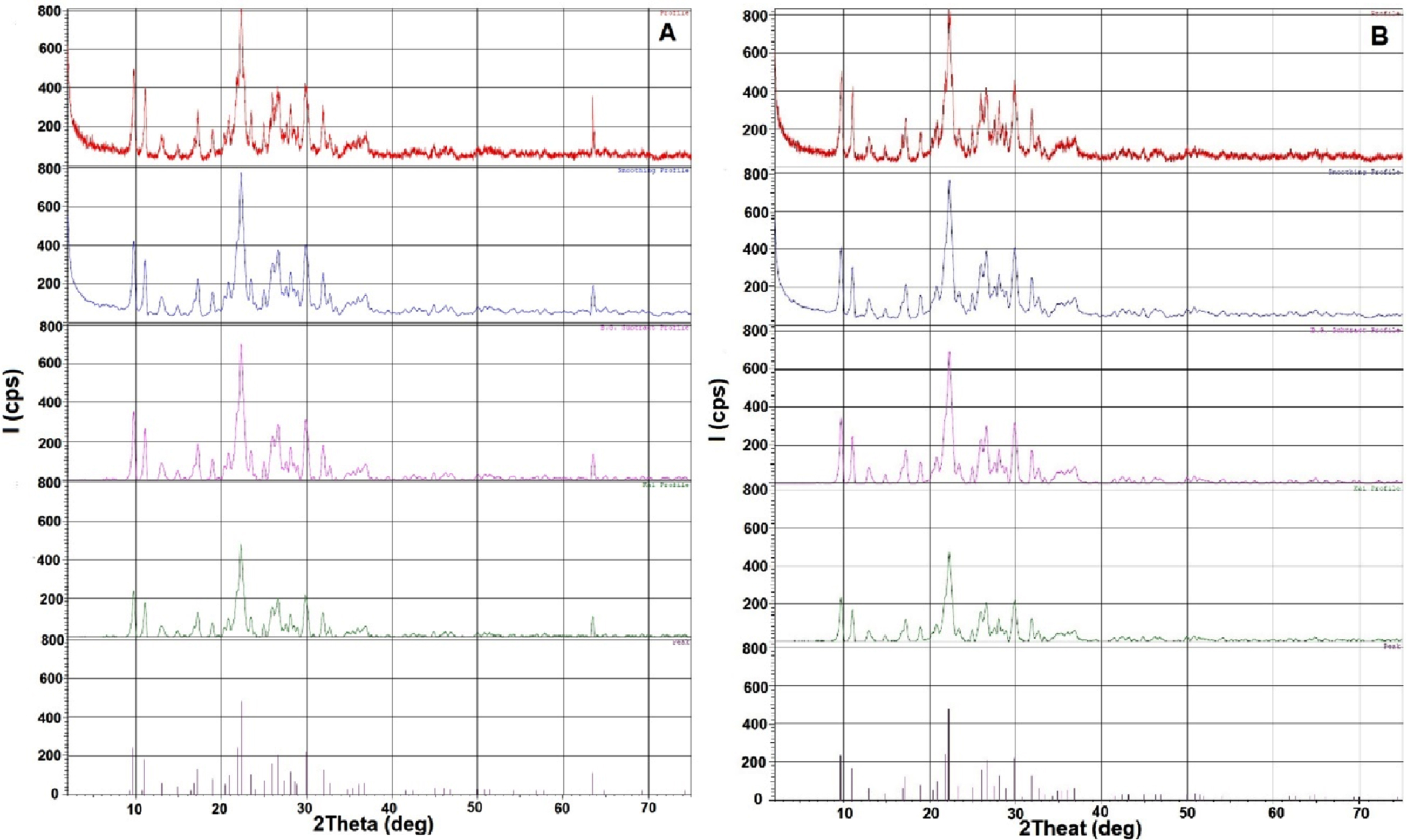
X-ray diffraction pattern of zeolite at pH 4 (A) and pH 7 (B).
The effect of zeolite amount on arsenic removal efficiency and the rate of As adsorption are shown in Fig. 4. The removal efficiency and the adsorption rate of arsenic increased by increasing of adsorbent dose from 1 to 5 g L–1 and then decreased by increasing of adsorbent dose from 5 to 20 g L–1. The increase in adsorption capacity is due to the large number of adsorbent particles, and therefore large surface area and large number of available adsorption sites, whereas the decrease in the rate of adsorption with a higher zeolite dose of 5 g l–1 may be due to the decrease of zeolite surface area related to the aggregation of high adsorbent dose, or the insufficiency of arsenic ions in solution compared to the available binding sites, and interference between high zeolite dose and binding sites [1]. The optimal dose of macro-sized zeolite was obtained 0.5 to 1 g L–1 for arsenic adsorption from water by Chutia et al. [5]. In the study of Mousavi et al. [16] on the removal of humic acid by unmodified natural zeolite, it was reported that by increasing the adsorbent dose from 2 to 10 g L–1, the removal efficiency increased from 30 to 80%. The reason for the increase in removal efficiency is due to increase in the van der Waals and electrostatic adsorption forces between natural zeolite and humic acid molecules [16]. The highest removal efficiency (98%) was observed at a concentration of 5 g L–1, and the amount of 5 g L–1 of zeolite was selected as the optimum adsorbent dose.
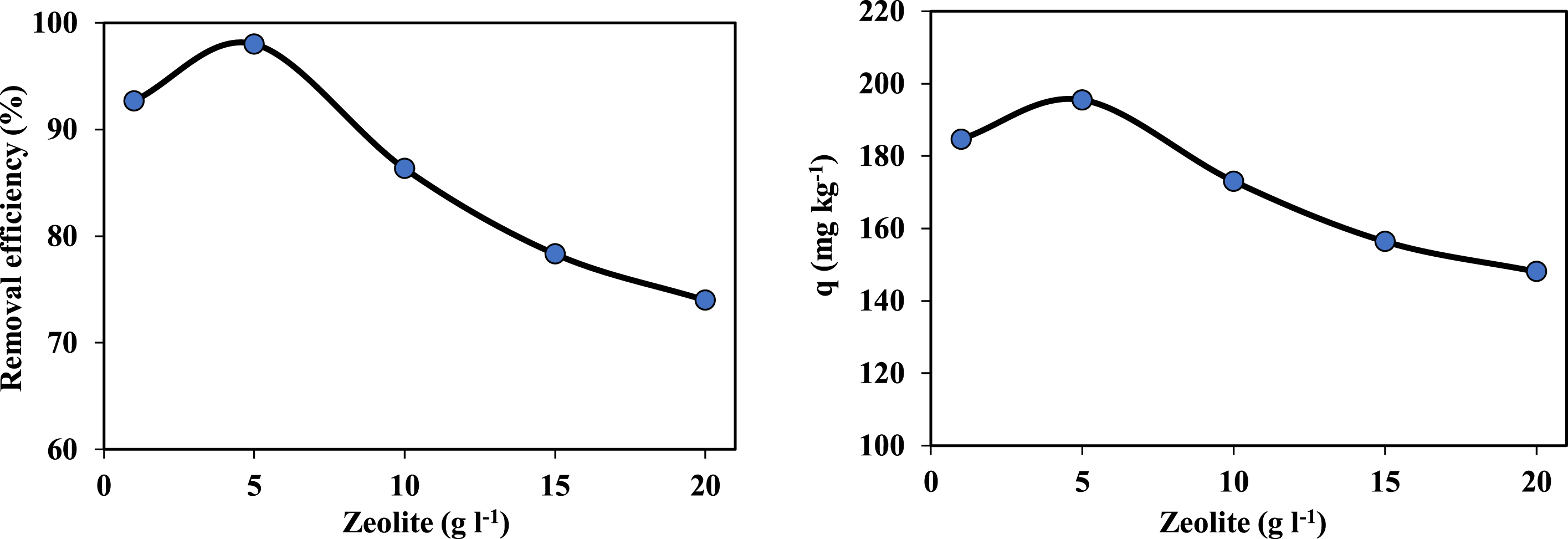
Effect of zeolite amount on arsenic removal and adsorption at pH 5, contact time of 10 minutes, CTAB concentration of 5 mm, with no changes in soluble ionic strength and arsenic initial concentration of 1 mg L–1 at 25°C.
Contact time is one of the effective factors in adsorption process. To determine the optimal time, the adsorption experiments was performed at various times from 1 to 60 minutes. As the contact time increased from 1 minute to 60 minutes, the arsenic removal efficiency using the modified zeolite increased from 78%to 97%(Fig. 5). While the contact time increased by more than 5 minutes, no changes were observed in the arsenic removal process and it reached a constant value. The results showed that the arsenic removal efficiency rapidly increased from 1 to 10 minutes. Therefore, it is suggested that, arsenic adsorption be investigated at the short time in future studies. The highest adsorption rate (193 mg kg–1) was observed at 10 min of contact time (Fig. 5). Therefore, the optimum adsorption time of 10 minutes was used to investigate other parameters. The similar results were obtained by Zhan et al. [29]. In the early stages, adsorption is faster and then it slows down to equilibrium. This is due to the reason that further unoccupied sites are available in the early stages, and over time, the occupation of the remaining sites becomes difficult duo to repulsive force between the dissolving material molecules in solid and soluble phases [6]. The results of a study by Zhan et al. [29] on the humic acid adsorption of modified zeolite with HDTMA surfactant revealed that the humic acid adsorption increased over time and reached equilibrium after 250 min. Higher removal efficiency was achieved at lower equilibrium time in this study.
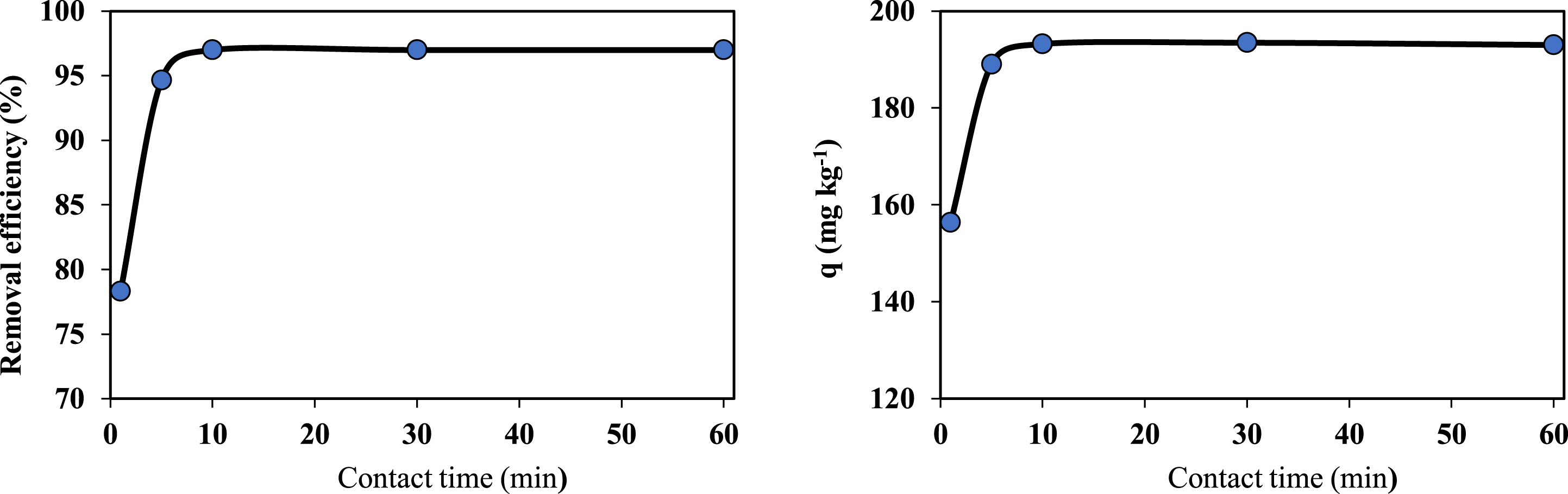
The effect of contact time on arsenic removal and adsorption at pH 5, CTAB concentration of 5, with no changes in soluble ionic strength, zeolite amount of 5 g L–1, and arsenic initial concentration of 1 mg L–1 at 25 °C.
As initial CTAB concentration increased, the removal effeciency decreased. By increasing the CTAB concentration from 1 mM to 5 mM, the removal efficiency of arsenic using modified zeolite increased from 65%to 97%and the adsorption rate of arsenic increased from 130 to 193 mg kg–1 (Fig. 6), which is due to the availability of various adsorption sites for arsenic adsorption at low concentrations, while, at high adsorption concentrations, these sites are saturated. By increasing the concentration of CTAB to more than 5 mM, the removal efficiency and adsorption rate of arsenic decreased. An optimum CTAB concentration of 5 mM was obtained, indicating the rapid adsorption of arsenic by modified zeolite. The present findings are compared with Jimenez-Cedillo et al. [13] study related to asrsenic adsorption by iron modified natural zeolites, where maximum adsorption was reported 8 mg kg–1.
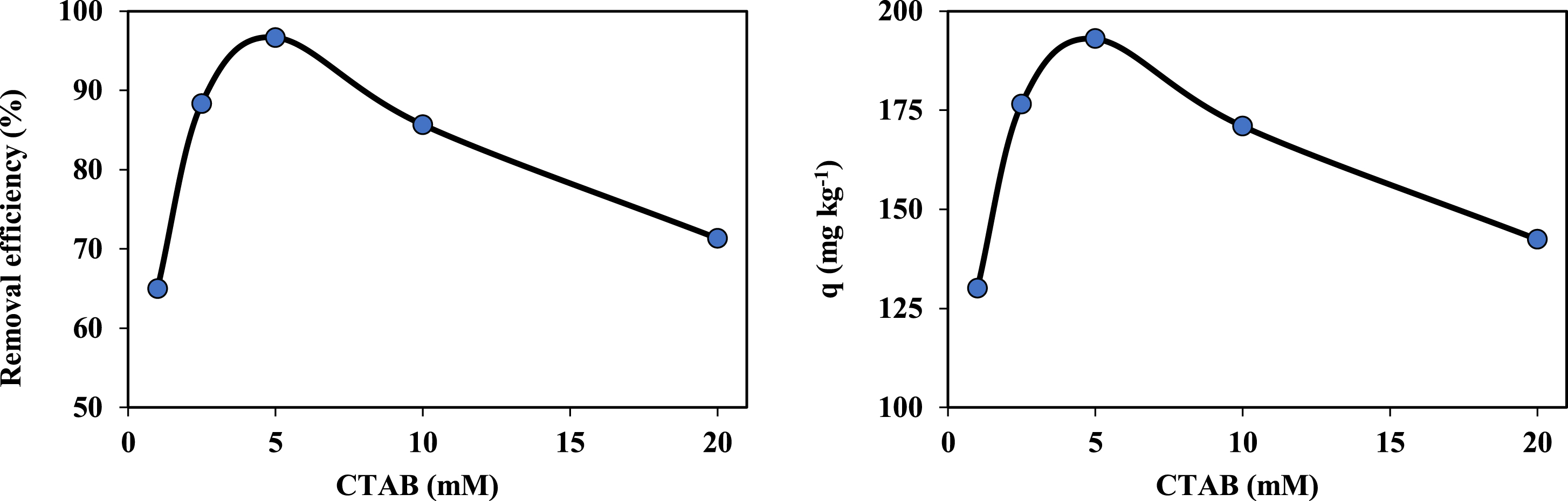
The effect of CTAB concentration on arsenic removal and adsorption at pH 5, contact time of 10 minutes, with no changes in soluble ionic strength, zeolite amount of 5 g L–1, and arsenic initial concentration of 1 mg L–1 at 25 °C.
The pH value determines the predominant species of arsenate in the water and therefore it would be very influential in the arsenic removal process. At pH of 5 to 8, natural water pH, major pentavalent arsenate species are H2AsO4 and HAsO42– and major trivalent arsenate species are H3AsO3 [24]. The adsorption of arsenic species in solution can be attributed to the electrostatic interactions between the zeolite surface and the arsenic solution species, and the selectivity of the zeolite surface to the arsenic species [24]. The pH of arsenic is the major factor that can be effective in the adsorption process by affecting the arsenic structure and the surface charge of zeolite [3].
To investigate the effect of pH, a CTAB concentration of 5 mM, adsorbent dose of 5 g L–1 at pH of 3 to 11 were used. The highest arsenic removal efficiency (98%) and adsorption (197 mg kg–1) was observed at acidic pH (pH = 5), since pHzpc = 4.6 so adsorption will reach its maximum capacity around this value and at the higher pH value, the adsorption rate of As decreased. Similar result reported by Payne and Abdel-Fattah [19] about arsenic adsorption by a common naturally occurring zeolite (chabazite). The arsenic removal efficiency decreased by pH increasing (Fig. 7). The reason for this phenomenon is that at higher pH values, the zeolite surface has a higher negative charge and hydroxyl groups (OH–) cause arsenic anion repulsion at the adsorbent surface. However, at low pH values, increasing the electrostatic attraction between the negative charges of the arsenic anions and the positive charges of the adsorption sites and the strong electrostatic interaction between the arsenic anions and the cationic surfactant leads to an increasing in the adsorption [26]. In the study of Camacho et al. [4] the maximum arsenic adsorption was obtained at the pH range between 4 and 9, and the arsenic adsorption rate by modified clinoptilolite was 6 times higher than raw zeolite. Furthermore, at more alkaline pHs, the removal efficiency sharply declines due to the production of H+ and OH– ions, because at more alkaline pH, the surface of the zeolite is negatively charged and the arsenic oxyanions, which are also negatively charged, are repulsed from the surface of the zeolite and would not be absorbed [7].
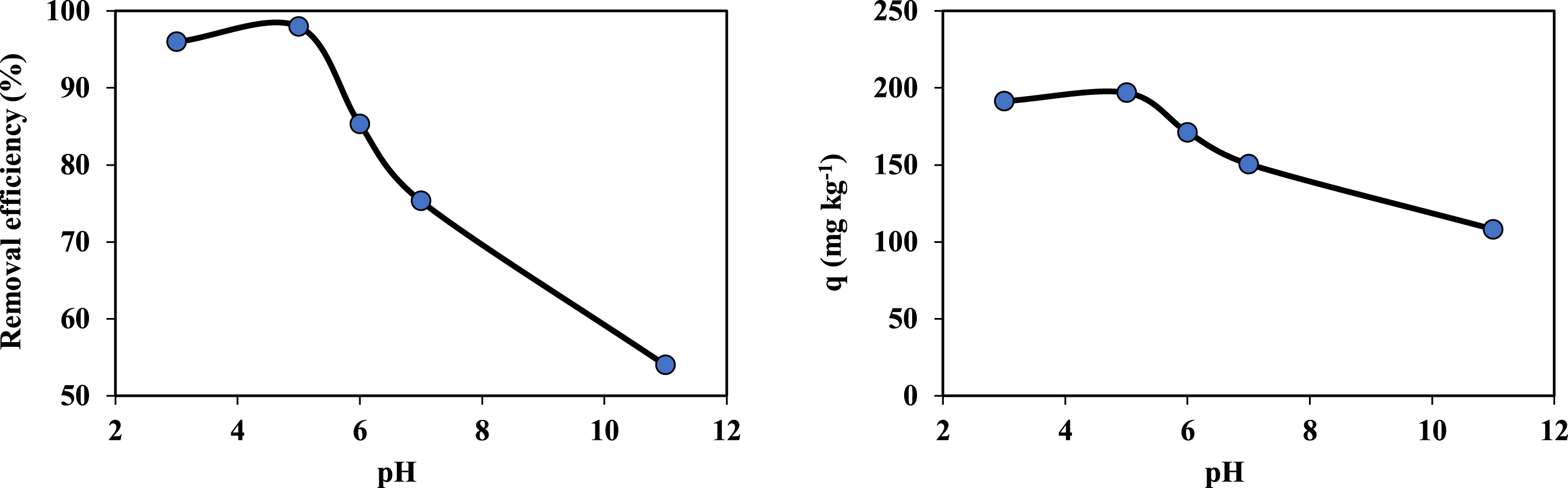
The effect of pH on arsenic removal and adsorption at contact time of 10 minutes, with no changes in the ionic strength of the solution, zeolite amount of 5 g L–1, CTAB concentration of 5 mM, and arsenic initial concentration of 1 mg L–1 at 25°C.
The effect of ionic strength on arsenic removal and adsorption using the modified zeolite are shown in Fig. 8. The results indicated that the highest arsenic removal efficiency (96%) and adsorption rate (191 mg kg–1) were observed at 0.1 M sodium chloride, because the surface cations of zeolite are exchanged with the sodium cation and increase the ion exchange capacity [28]. Dimirkou and Doula [7] indicated that exposure of clinoptilolite to NaCl solution resulted in production of a sodium-rich sample. They also proved that pretreatment of clinoptilolite with salt increases the amount of Na2O and reduce the rate of MgO and CaO, followed by decrease the Si/Al ratio and increase the adsorption capacity of clinoptilolite. The lowest arsenic removal efficiency (75%) and adsorption rate (150 mg kg–1) were obtained at ion strength of 0.1 M ethanol ion strength.
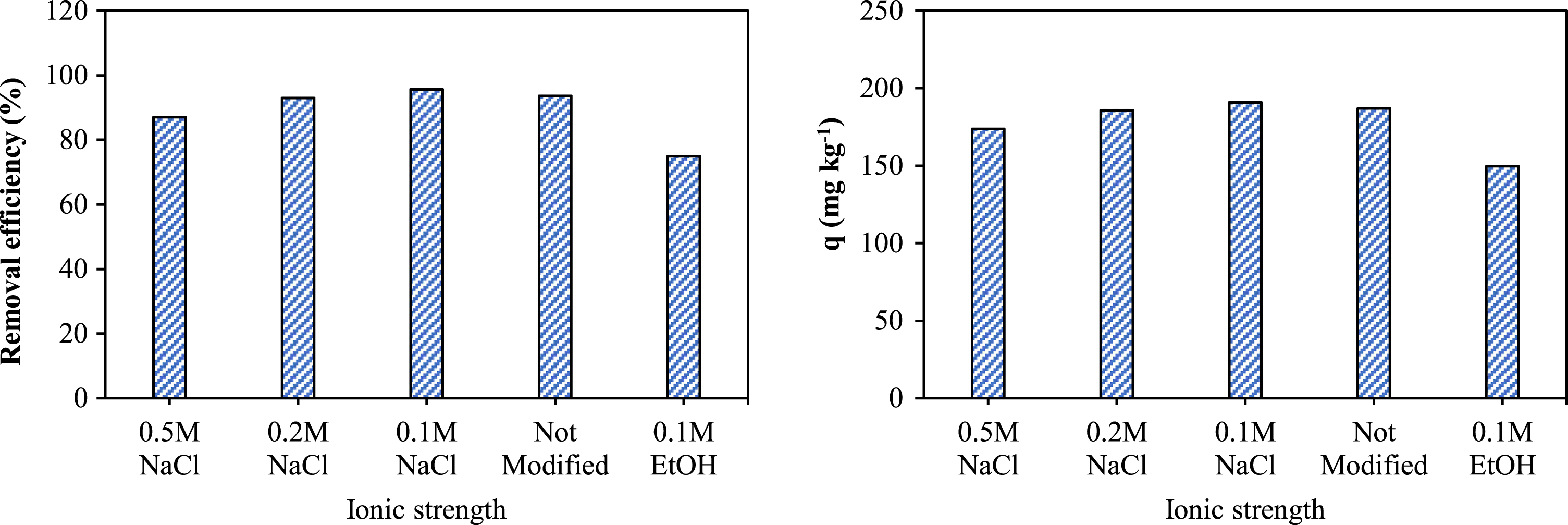
The effect of ionic strength on arsenic removal and adsorption at pH 5, contact time of 10 minutes, zeolite amount of 5 g L–1, CTAB concentration of 5 mM, and arsenic initial concentration of 1 mg L–1 at 25 °C.
The efficiency of regional low-cost natural zeolite in arsenic removal from aqueous solution has been evaluated. The results demonstrated that the removal efficiency of arsenic by modified zeolite with surfactant was directly correlated with contact time and inversely correlated with adsorbent dose and pH. Optimum condition for effective adsorption were obtained at pH = 3, zeolite dose of 5 g L–1, CTAB concentration of 5 mM, ionic strength of 0.1 M sodium chloride, and contact time of 10 minutes. Due to the zeolite Advantages such as low cost adsorbent, readily available (being vast source of zeolite in Iran) and easily modification, it can be used as an elevated-performance adsorbent for the treatment of wastewater. However, the results of this experiment will need to be confirmed in long-term field.
Conflict of interest statement
We wish to confirm that there are no known conflicts of interest associated with this publication and there has been no significant financial support for this work that could have influenced its outcome. We confirm that the manuscript has been read and approved by all named authors and that there are no other persons who satisfied the criteria for authorship but are not listed. We further confirm that the order of authors listed in the manuscript has been approved by all of us. We confirm that we have given due consideration to the protection of intellectual property associated with this work and that there are no impediments to publication, including the timing of publication, with respect to intellectual property. In so doing we confirm that we have followed the regulations of our institutions concerning intellectual property. We understand that the Corresponding Author is the sole contact for the Editorial process (including Editorial Manager and direct communications with the office). He is responsible for communicating with the other authors about progress, submissions of Journal Pre-proof revisions and final approval of proofs. We confirm that we have provided a current, correct email address which is accessible by the Corresponding Author.