



Abstract
Herein, MnFe2O4 binary oxides, including various percentages of Fe3O4 were synthesized using the chemical co-precipitation method. In order to determine the physicochemical properties, Fourier transform infrared spectroscopy (FT-IR), X-ray diffraction (XRD), and energy-dispersive X-ray spectroscopy (SEM-EDX) analyses were used. Adsorbent dosage, pH of the solution, contact time, and adsorbate concentration were optimized during the adsorption process. It was found that the Langmuir isotherm model is the best kinetic model for adsorption. Finally, the mean adsorption energy, reproducibility, and spontaneity of the adsorbent were also estimated, which showed that the physical adsorption mechanism is dominant.
Introduction
Heavy metals are discharged into the environment through various industries such as electroplating, metal surface treatment, mining operations, chemical manufacturing, tanneries, wood processing, batteries, and pesticides, etc [1]. Heavy metals have an atomic weight of between 63.5 u and 200.6 u, and their specific gravity is at least 5.0 g cm–3 [1]. The examples are including arsenic, mercury, aluminum, zinc, chromium, and iron, which are released into the ecosystem by both natural and artificial sources such as mining, industrial evacuation, the exhaust of automobiles [2]. Unlike organic pollutants, toxic heavy metals are non-biodegradable and tend to accumulate in living organisms and cause poisoning and even cancer [1].
Lead (Pb2 +) as heavy metal, is a particularly toxic ingredient in effluent with the potential of causing irreversible health effects [3]. Therefore, the removal of this heavy metal from industrial wastewater is a necessity, especially in developing countries. Various methods have been used to remove heavy metals, which generally include; ion exchange, membrane filtration, coagulation and flocculation, flotation, electrochemical treatment, and adsorption [4]. Among the various methods applied to remove heavy or trace metals, chemical co-precipitation techniques are commonly used for industrial effluent treatment because of their facility and low cost for a high volume of separation [5].
In chemical precipitation, the chemical reactants react with heavy metal ions dissolved in water to form insoluble particles which can be separated from water by filtration [6]. In the ion exchange technique, the heavy metal ion in the wastewater is replaced by a harmless cation in the ion exchanger (e.g. strongly and weakly acidic resins, natural zeolites, etc.) [7]. The membrane filtration methods used to eliminate heavy metals from the wastewater are ultrafiltration, reverse osmosis, nanofiltration, and electrodialysis. In these methods, depending on the type of pollutant, membranes with different characteristics such as different pore sizes, semi-permeability, and electrically charged surfaces are used [8]. Coagulation is a process that causes colloids to accumulate into small aggregates called “flocs” by neutralizing the forces that keep them apart. In the flocculation process, the suspended particles are agglomerated with the help of polymers and are therefore ready to be separated through filtration, straining, or floatation [5]. In the flotation method, the air micro-bubbles bring the suspended particles in the wastewater to the surface, and then the accumulated particles are easily separated [9]. In electrochemical treatment, heavy metal ions are electrodeposited on the surface of the cathode electrode and are recovered as an elemental metal from the surface [10].
Adsorption is a mass transfer method in which pollutants are transferred from the liquid phase to the surface of solid material and physically or chemically bonded to it [9]. The adsorption method has advantages over other methods, which include high efficiency, cost-effectiveness, flexibility in design and operation, producing high quality treated effluents, and adsorbent recovery in some cases [1]. So far, selective adsorption of heavy metals has been done using various materials such as carbon nanotubes, activated carbon, biological materials, polymer resins, and minerals [11]. However, the effectiveness of using nanomaterials with a large active area to adsorb heavy metals, especially lead, has been reported [12, 13]. Lead can cause problems such as damage to the fetal brain, diseases of the kidneys, circulatory system, and nervous system [8].
Chen et al. synthesized new nanomaterials of orthohexagonal iron oxide for efficient removal of lead (II), which were doped with cobalt (Co-Fe2O3) or Nickel (Ni-Fe2O3) ions [12]. They showed that the lead adsorption capacity in the doped state is greater than that in the pristine one (Fe2O3). Zhang et al. demonstrated that monodispersed and spherical Fe3O4@SiO2–NH2 nanomaterials, which are eco-friendliness and recoverable, can be a potential adsorbent for Pb(II) removal [14]. Cao et al. synthesized MgO nanostructures with high surface area and high adsorption capacity for Pb(II), with a maximum capacity of 1980 mg/g [9]. TiO2-Fe2O3 binary oxides containing different percentages of Fe2O3 were synthesized by Abebe et al. and introduced as a good adsorbent for the lead metal [15].
An important class of nanoparticles is magnetic metal ferrite nanoparticles, which are obtained by coupling a metal with a ferrite molecule. Ferrite’s magnetic property makes it easy to recover from the solutions by a magnet. Metal ferrite is denoted as M(FexOy) where M denotes any metal which makes divalent bonds. Tu et al [16]. Proposed ZnFe2O4 nanoparticles were fast and efficient for Mo removal from solutions with an adsorption capacity of 62.5 mg g–1. Tu et al [17] showed that copper ferrite (CuFe2O4), a new type of nanoparticle produced from industrial sludge, is effective for Pb removal from aqueous solutions. Their results specified that about 90% of lead was removed/recovered from aqueous solutions at a pH of 4.5 and 298 K. in another study [18], Mn-Zn ferrite (Mn0.67Zn0.33Fe2O4) was synthesized using the powder of waste dry batteries as starting raw materials and employed for removing As (V), Cd (II), and Pb (II) with high removal efficiencies.
Since reactive nanoparticles have been shown to provide a potentially cheap and effective solution for environmental remediation, ferrite manganese nanoparticles are widely used for metal remediation due to their excellent chemical stability, remarkable inherent biocompatibility, low toxicity, and tunable magnetic properties [19]. Hence, this work reports the usage of manganese ferrite nanoparticles for the removal of Pb heavy metal from water sources. Furthermore, the effects of pH of the solution, adsorbent dosage, contact time, and concentration of adsorbate were optimized for adsorbing lead heavy metal.
Experimental
Synthesis of manganese ferrite and its characterization
Adsorption of Pb2 + from aqueous solution by MnFe2O4 was examined in batch experiments. The MnFe2O4 were synthesized by catalytic chemical vapour deposition process, MnFe2O4 were dispersed in an ultrasonic bath (Bandelin Sonopuls). Functionalization of MnFe2O4 was realized by the wet chemical treatment method. Equilibration of the experiments was done on a rotary shaker. Then, the obtained solution was filtered to separate the residue from the solution, finally, the nano-adsorbent was separated magnetically from solution.
The following chemicals were used for the synthesis of manganese ferrite nanoparticles; Manganese (II) chloride tetrahydrate (MnCl2·4H2O, Merck), Iron (II) chloride tetrahydrate (FeCl2·4H2O, Merck), Iron (III) chloride hexahydrate (FeCl3·6H2O, Merck), and Ammonia solution 25% (NH4OH, Merck). All reagents were used as received without further purification.
In the co-precipitation method, reagents were prepared according to the literatures. This process involves the precipitation of Fe2 + and Fe3 + salt (e.g., chlorides, sulfates, and nitrates) aqueous solutions by addition of a base (e.g., NaOH) [20]. For this purpose, an aqueous solution of precursors (MnCl2, FeCl2, and FeCl3) with a preset stoichiometry was prepared by an overhead stirrer (IKA Nanostar 7.5 digital). The temperature of the solution is then raised to 80°C. While the solution was stirred at 450 rpm, ammonia was gradually added to the solution for 20 minutes to adjust the pH and precipitate the dark brown manganese ferrite particles.
The resulting precipitate was collected by a magnet and washed several times by deionized water to get rid of impurities involved in the reaction before being dried at 60°C for 12 h. The product is then calcinated in an oven to remove water from its surface structure. Subsequently, the material was characterized by X-ray diffraction spectroscopy (XRD), scanning electron microscopy (SEM), and Fourier-transform infrared spectroscopy (FTIR).
Investigation of Pb2 + adsorption by manganese ferrite
The adsorption of Pb2 + by manganese ferrite was investigated by altering some technical parameters such as pH of the solution, adsorbent dosage, contact time, and concentration of adsorbate.(pH range: 3, 4, 5, 6, and 7 contact time range: 30, 60, 90, and 120 adsorbent range: 0.003, 0.005, 0.008, 0.010, 0.012, and 0.015 and adsorbate concentration of range: 10, 25, 50, and 75).
Desorption study
A desorption study was performed using Pb2 + ion-loaded powder obtained using optimized values after the sorption experiment. For this purpose, 0.0001 kg of Pb2 + ion-loaded binary oxide powder was added into six 0.050 L of Erlenmeyer flasks with approximately 0.03 L of distilled water. The pH of the solution was regulated to 2, 4, 6, 8, 10 and 12 by acid and base.
Results and discussion
XRD analysis
Figure 1 shows the XRD diffraction spectra of Fe3O4 and MnFe2O4 species. The sharpness of the peak on Fe3O4 and MnFe2O4 shows that they have crystalline structures. The particle size was determined using Equation 1 (Debye-Scherrer equation):
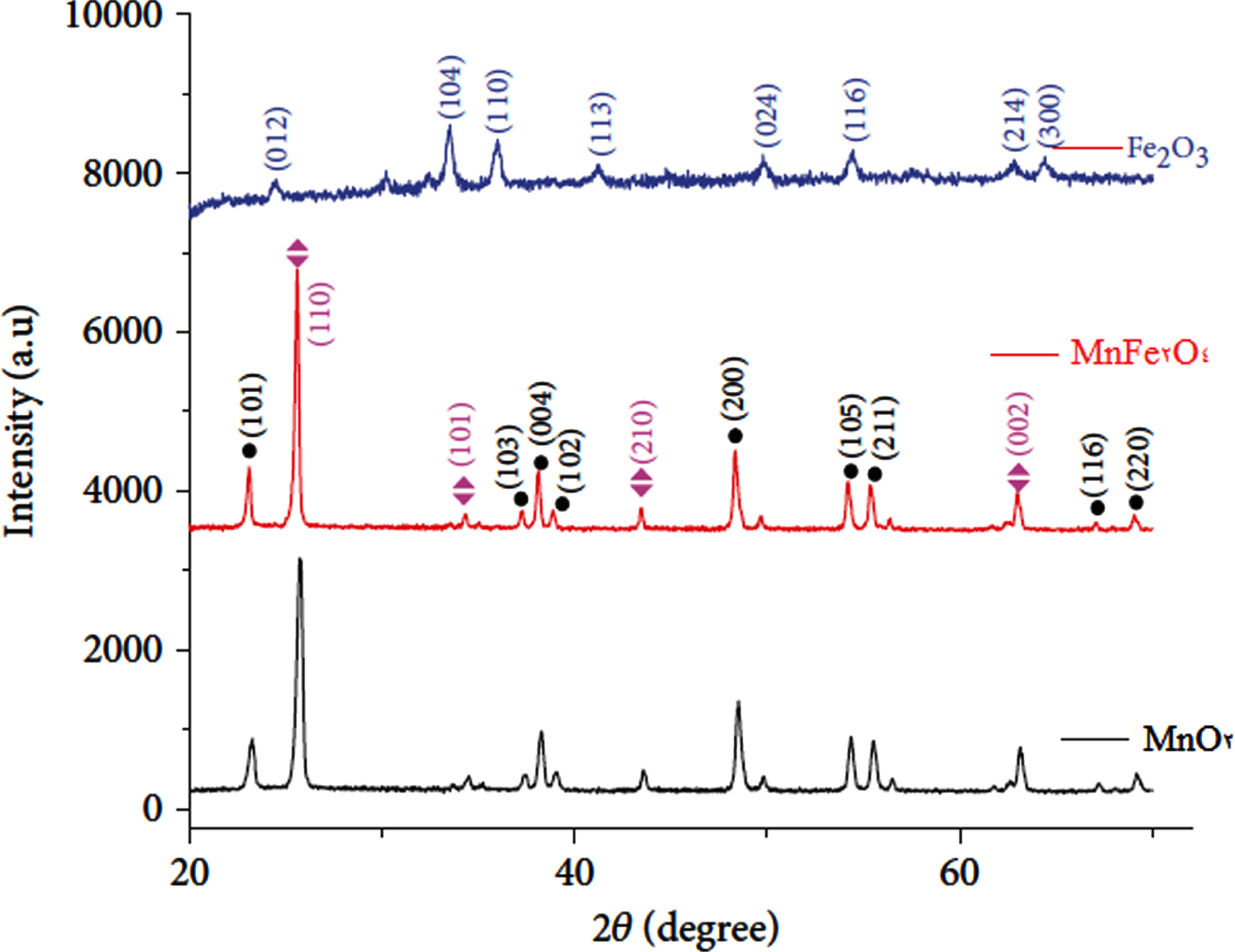
XRD spectra of corresponding metal oxide nanoparticles.

XRD spectra of corresponding metal oxide nanoparticles.
Percentage composition and XRD results of the as-synthesized powders
Figure 3 shows the SEM-EDX images of the synthesized manganese ferrite nanoparticles. The observed nanoparticle size is in the range of 30 to 50 nm. Based on Fig. 3, a spherical shape of approximately equal size is observed. The EDX spectrum reveals the appearance of Fe, Mn, C, and O atoms, such that the carbon atom is from the standard used during analysis. The purity of the powder is confirmed by the presentation of only the three elements without any others. The zero charge (pzc) values of MnFe2O4 nanoparticles prepared at pH 9.0, 9.5, 10.0, and 10.5 were 5.58, 6.13, 6.69, and 5.18, respectively.
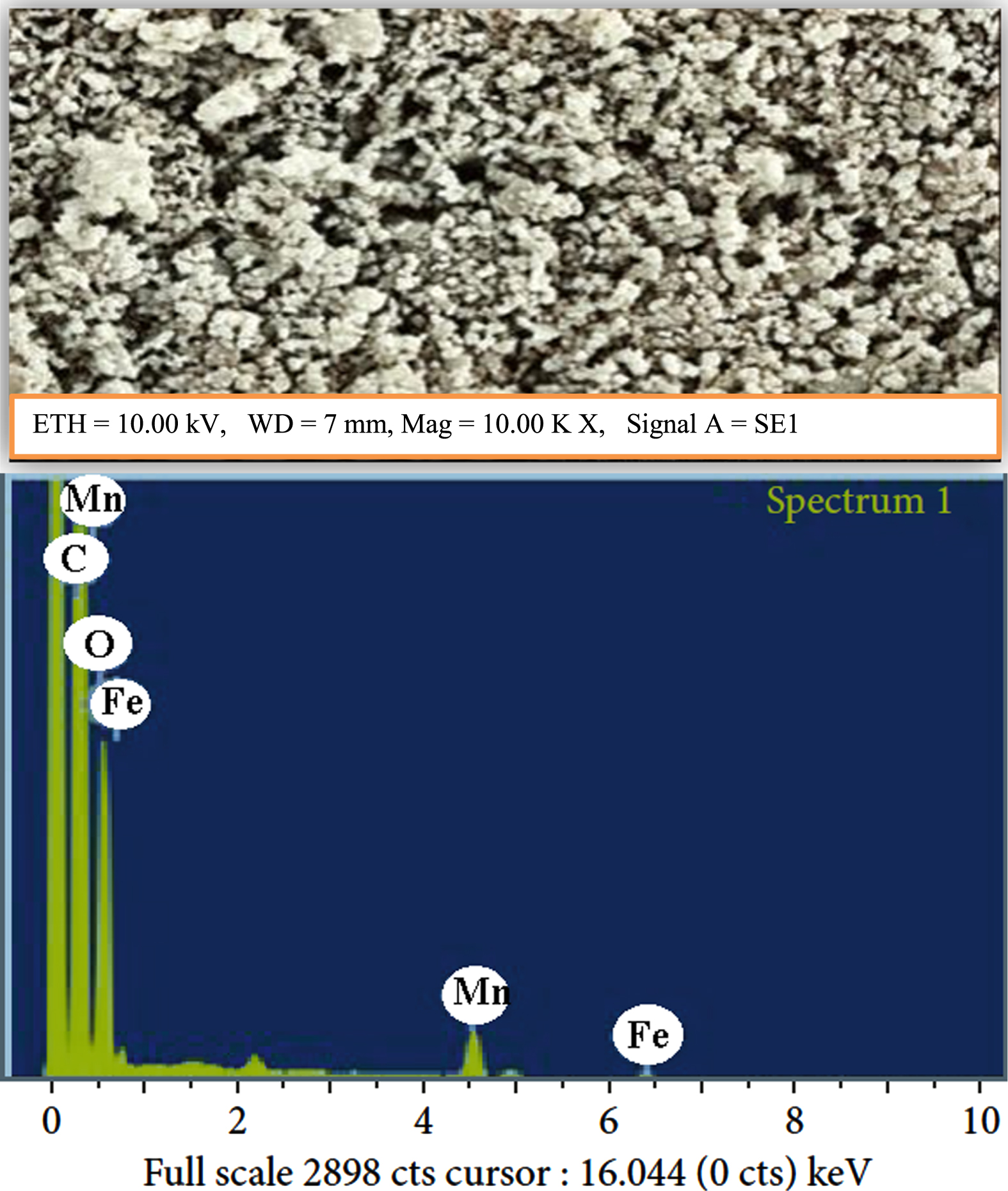
SEM-EDX spectra of corresponding metal oxide nanoparticles.
To better identification of synthetic products and confirmation of the obtained results, FTIR was taken from synthetic samples in the range of 400 to 4000 cm–1. Figure 4 shows the FT-IR spectrum of manganese ferrite nanoparticles. According to Fig. 4, the band that appeared at 690 cm–1 is attributed to the Mn-O bending vibration mode. Generally, the broadband stretched from 560–580 cm–1 is due to Mn-O-Mn and Mn-O bending vibration mode. The two bands that appeared at 542 (α –Fe3O4) and 460 (γ-Fe3O4) are assigned to bending vibrations of the Fe–O bond. The peak at 1455 in the FT-IR spectrum of Fig. 4 shows the presence of water and tensile bonds between water and oxygen. The spectra of both MnO2 and MnO2-Fe3O4 are almost similar, showing the good precipitation of Fe3O4 in the MnO2 lattice. The strong and broad absorption band appeared around 3420 cm–1 and the medium band at 1640 cm–1 are related to the hydroxyl (OH) and water (H2O) stretching vibrations absorbed on the adsorbent surface, respectively, which are very essential for the adsorption process [22].

FT-IR spectrum of corresponding metal oxide nanoparticles.
The effects of various parameters such as pH of the solution, contact time, dose, and agitation speed for sorption of Pb2+ ion are investigated and corresponding results are shown in Fig. 5. During pH optimization, the greatest sorption was observed under the alkaline pH range (Fig. 5a). Due to the presence of H+, the acidic pH causes the more positive the surface of metal oxides, so that repulsive interaction exists between the iron oxides and Pb2+ ion, In alkaline pH value, the presence of OH– causes the surface to be more negatively charged and hence, the interactions become attractive [23]. On dosage optimization (Fig. 5(b)), up to an optimum point (0.2 g), the sorption efficiency was found to be high, which is due to the availabilities of high sorption sites [24]. With further increasing adsorbent dosage, it does not significantly change, because the total number of the adsorbate becomes insignificant. From Fig. 5(c), as the speed of agitation enhances, diffusion of Pb2+ ions towards the adsorbent surface also elevates. After the optima (98 rpm) with further increasing agitation speed, the adsorbate starts to desorb from the surface. The effect of contact time on the uptake capacity of Pb2 + ions by Mn-Fe2O4 nanoparticles can be seen in Fig. 5(d). In the first few minutes, the uptake of Pb2 + ion is fast as initially more sites of adsorbent are available for adsorption of metals. As time passes the maximum number of sites is occupied by the ions and the adsorption process slows down. In the end, the equilibrium time (100 min) of adsorption occurs due to the saturation of the adsorbent.
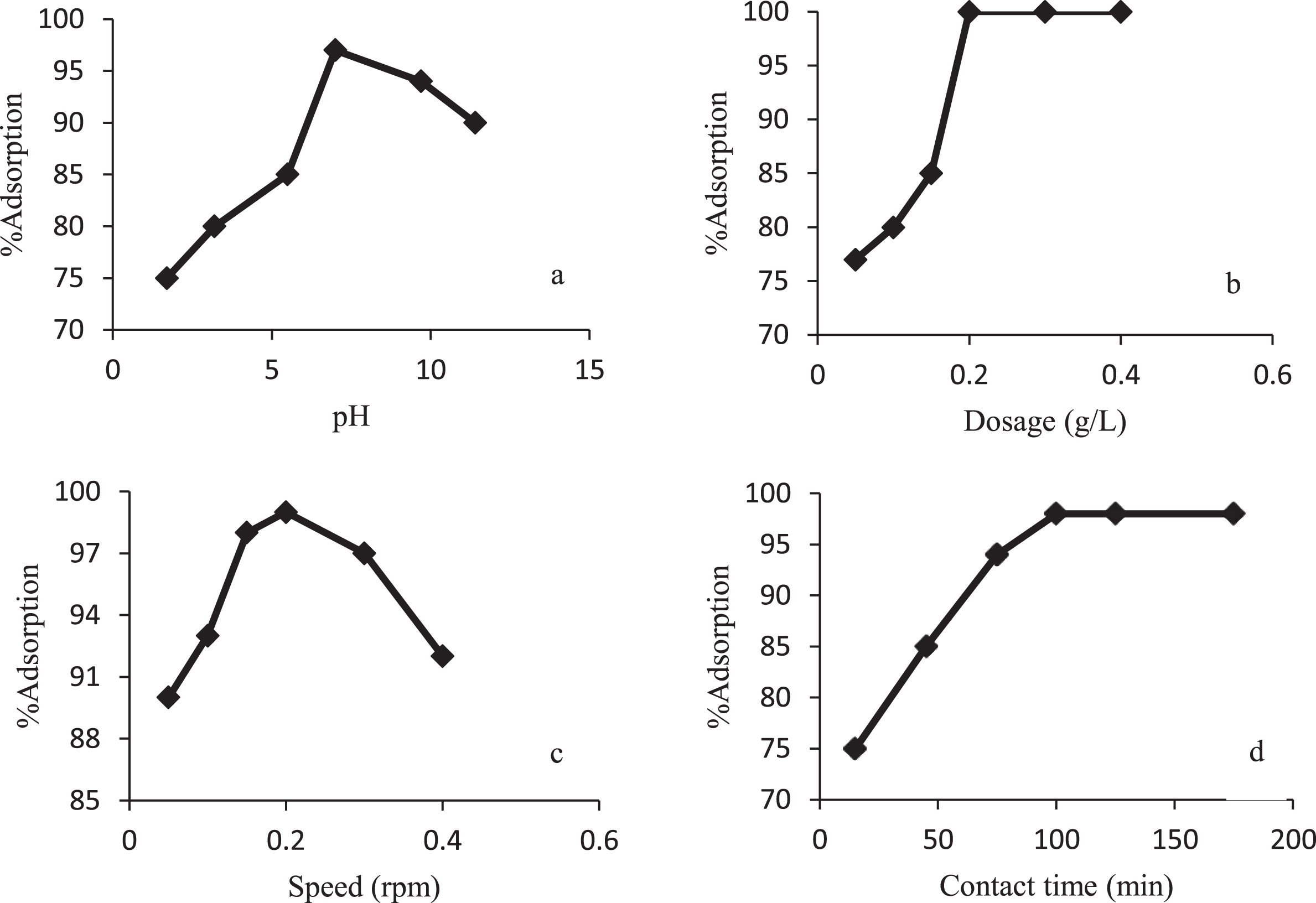
The effect of a) pH, b) adsorbent dose, c) agitation speed and d) contact time for Pb2 + ion adsorption onto Mn-Fe2O4 nanoparticle.
Adsorption isotherm of single metal ions solutions
The adsorption equilibrium isotherm is important for describing how the adsorbate molecules distribute between the liquid and the solid phases when the adsorption process reaches an equilibrium state. The adsorption isotherms of single cation solutions of Pb2 +, Cu2 +, Cd2 + and Ni2 + on the MnFe2O4 are shown in Fig. 6. Equilibrium uptake increased with heavy metal concentrations. This is a result of the increase in the driving force from the concentration gradient. In the same conditions, if the concentrations of heavy metals in solutions are higher, the active sites of the MnFe2O4 are surrounded by many more heavy metal ions and the process of adsorption would be carried out sufficiently. The experimental data for single component solutions containing Pb2 +, Cu2 +, Cd2 + and Ni2 + ions could be approximated by Langmuir and Freundlich isotherm models.
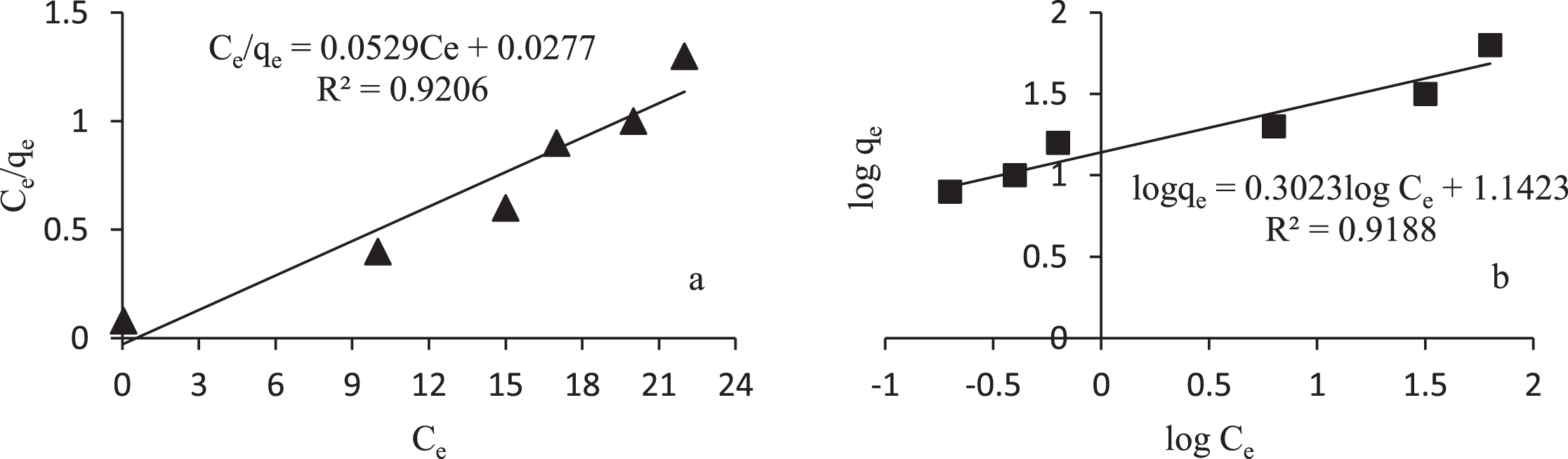
Diagram of Pb2+ ion adsorption by manganese ferrite nanoparticles: a) Langmuir isotherm and b) Freundlich isotherm.
Adsorption isotherms show the correlation between the concentration of adsorbent in the solution and the amount of adsorbed material at a constant temperature. Langmuir isotherm accounts for the surface coverage by balancing the relative rates of adsorption and desorption (dynamic equilibrium), while Freundlich isotherm gives an expression, which describes the surface heterogeneity and the exponential distribution of active sites as well as their energies [25]. The linear equations for Langmuir and Freundlich isotherms can be expressed as Equations 2 and 3, respectively [26, 27]:
Langmuir and Freundlich parameters for lead adsorption on manganese ferrite nanoparticles
To survey time-dependent experimental data, the linear form of the pseudo-first and pseudo-second-order kinetic equations is defined as Equations 4 and 5, respectively.
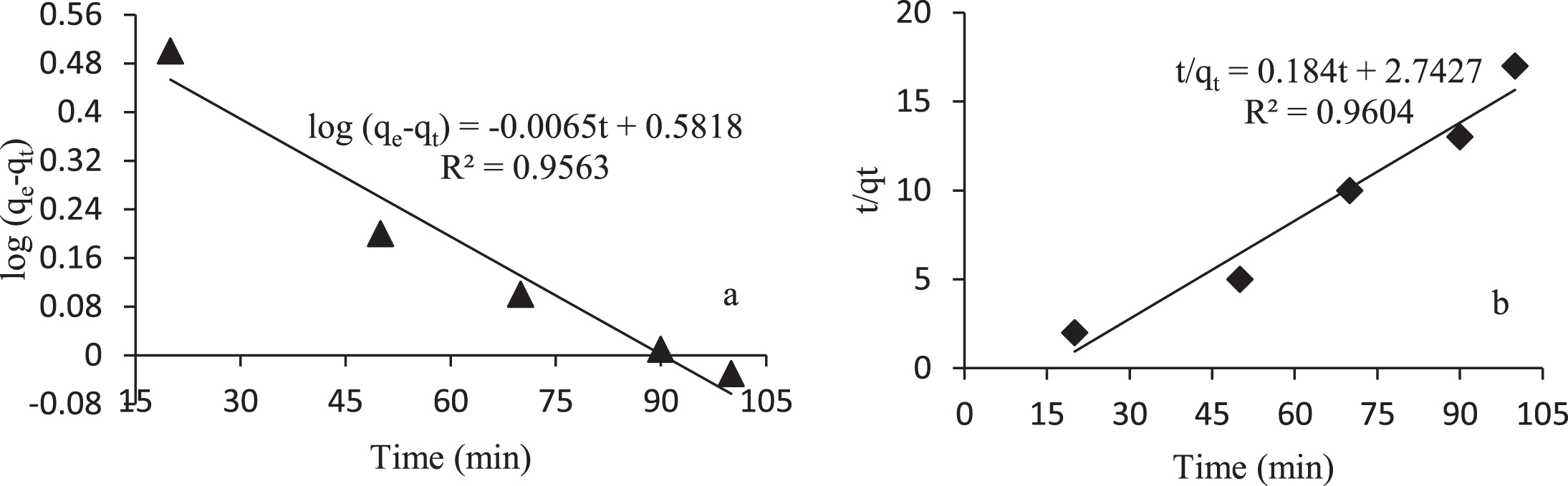
Plot of Pb2+ ion adsorption using manganese ferrite nanoparticles a) pseudo-first-order kinetics and b) pseudo-second-order kinetics.
Desorption efficiency was calculated using the Equations 6:
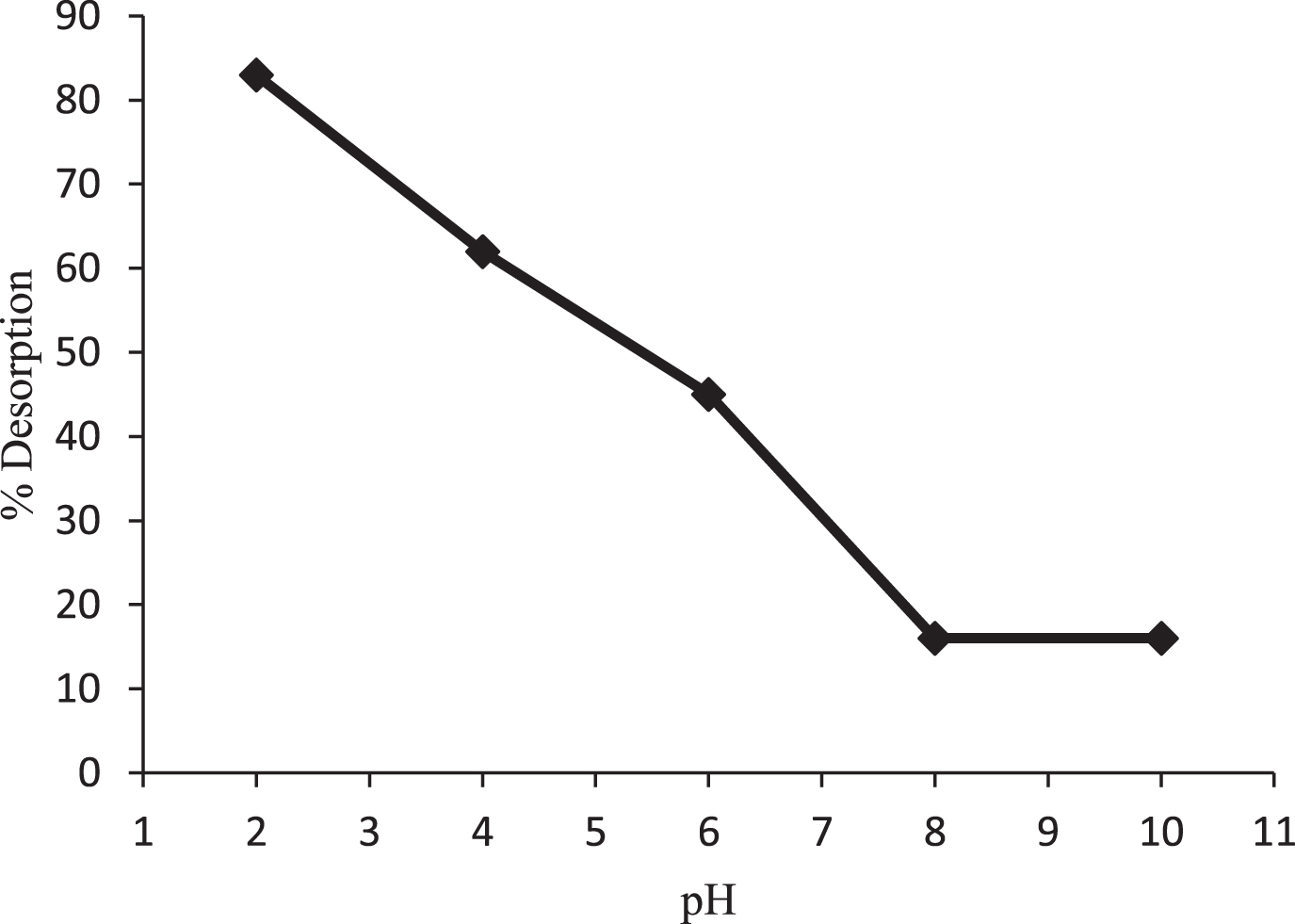
Effect of pH on desorption of Pb2+ ion.
In this work, MnO2-Fe3O4 oxide nanoparticles, including the different percentages of Fe3O4 was synthesized using the co-precipitation method. The precipitation of iron oxides on manganese oxides was confirmed by SEM-EDX, FTIR, XRD, analyses. The obtained approximate particle size for precipitated binary oxide was found to be 0.5394 nm. The effect of various factors such as (pH, adsorbent dose, and contact time) on the adsorption experiment was studied. It is found that Langmuir adsorption isotherm, as well as pseudo-first-order kinetics, fit the adsorption mechanism well. The obtained results showed the removal of heavy metals using manganese ferrite (MnFe2O4) nanoparticles and provide a practical solution for wastewater treatment.