



Abstract
This work aims to prepare and characterize the hydroxyapatite (HAP) nanomaterials from marble wastes (the utilization of the building marble waste for reducing the environmental pollution hazards) and to study its capabilities as antimicrobial and antifungal agents of the prepared nanoparticle. The utilization of the marble waste as a source for calcium chloride and to be reacted with sodium hydrogen phosphate, for synthetization of hydroxyapatite nanoparticles, the prepared material is characterized, tested, and analyzed using X-ray diffraction (XRD), Scan Electron Microscope (SEM) with Energy Dispersive X-Ray analysis (EDAX) techniques. The antimicrobial activity of prepared hydroxyapatite nanomaterial is tested using a well diffusion method with different types of bacteria (Gram-negative): Escherichia. Coli, Salmonella paratyphi, Pseudomonas earuginosa, and Alcaligenes aquatilis and bacteria (Gram- positive): Staphylococcus aureus, and Streptococcacea pneumonia. The antifungal efficacy of HAP nanoparticles is tested for different species of Aspergillus niger, Aspergillus flavus, and Penicillium SP.
The diameter of the inhibitory zone shows the sensitivity of the microorganism to HAP nanoparticles in a greater inhibition against Gram- positive Staphylococcus aureus and Streptococcacea pneumonia, at 100% DMSO concentration. The diameter of the inhibition zone was 03.70 mm, when compared with other types of bacteria.
The diameter of the inhibitory zone showed the sensitivity of the microorganism to HAP nanoparticles in a greater inhibition against Penicillium SP at 100% DMSO concentration, the inhibition zone diameter was 2.20 mm, when compared with other Aspergillus niger and Aspergillus flavus fungal species. Based on obtained results for the HAP nanoparticles prepared from the marble wastes have antibacterial effects on both Gram-negative (E. coli) and Gram-positive (S. aureus) strains.
Introduction
Generally, the impact of the accumulation of wastes results in severe damage to environment around the world many countries adopted particular strategies and policies to manage these wastes. In the Middle East countries not yet maximizing the use of these wastes, a latest survey shows that Saudi Arabia generates more than 15 million tons (15 MT) per year of solid waste (the food waste represented the major ingredients of the wastes in Saudi Arabian municipal solid waste it is around (40–51%), then the amount of the paper (12–28%), followed by cardboard (7%), then the plastics represented (5–17%), then glass (3–5%), the wood as waste in between (2–8%), then textile represented (2–6%) and then metals in different forms represented (2–8%)) per annum with an average of 1.4 kg. as daily rate per person, the report also predicts that the rate will be doubled (30 million tons per year) in the coming 2033 as the current annual population growth rate of 3.4%. Owing to this accumulation of the wastes and consequence hazards, the process of recycling of this waste taken an increasing attention in Saudi Arabia [1–3]. This kind of work concerned with the utilization of marble wastes originates from building materials wastes and marble industries, remnants of different processes of marble and stone factories in form of cutting, sawing, refining and leveling operations resulting into large solid waste of different size of marble and stones, these waste can be reused in building fields (the concrete industry) [1], various construction works and aggregates. In our work we have taken the marble waste as (as a source for calcium chloride) in order to reduce the impact the material on the environment, helping in conservation of the natural resources for future generations and to produce the hydroxyapatite nanoparticles (HAP) from these wastes, different methods were used for its preparation, the importance of this hydroxyapatite that can be used in medical field as biological control for some bacteria [4].
The hydroxyapatite (HAP) Ca10 (PO4)6 (OH)2 mineral is one of the essential biochemical materials and it has wild applications in many fields such as in medical, environmental and industrials. Recently in literature, the prepared hydroxyapatite mineral has received a wide attention from chemists with different methods, physicists, doctors, dentists, and pharmacists, in both sides that it is the research and manufacturing side, especially in the field of biotechnology, this is due to the similarity of its crystal structure with the skeletal tissues, and which qualifies it for use as prosthetic parts of the bones and teeth. In addition, the hydroxyapatite compound can be used in many other vital applications such as supporters in engineering designs of membranes, also in fuel cells and as gas sensors. It can be used as a catalyst and as an ion exchange for many cations in various chemical reactions and in the field of chromatography. In addition to its use as an adsorbent material in the processes of separating proteins and reported that it is main components of pulp, mortar ivory, teeth and vertebrate and many authors reported its role in biomedical, bone treatments, controlled drug release and dental implants, chemical as well as engineering field [4–20]. Many authors have given attention for the possibility of HAP coatings on metal alloy substrates for bone replacement they have reported an enhancement of mechanical properties (a high bond strength and an elastic modulus value close to that of the bone), for the (HAP) doped with metals [20–30]. Yasser et al., shown the possibility of improving the behavior of hydroxyapatite and hydroxyapatite-zirconia nanocomposite as support in α -amylase immobilization process [31]. Pham Thi Nam et al., shown in their results a good resistance to E. coli and S. aureus that antibacterial ratio reached 89 % and 98 % respectively, for their work namely the characterization and antimicrobial activity of copper doped hydroxyapatite (CuHAp) they have synthesized using both methods [32].
The work aims to utilize the marble wastes to prepare hydroxyapatite nanoparticles that can be utilized in different applications among these their capabilities as antimicrobial and antifungal agents.
The importance of this work is to study the antimicrobial activity of hydroxyapatite nanoparticles that prepared from marble wastes and its application in biomedical, industrials and as supporters in the engineering designs of membranes used in different applications.
Experimental
Materials collection
2.1.1 Collection of the marble wastes, crushed, washed, and dried at 120 °C for 24 hrs.
2.1.2 Preparation of hydroxyapatite nanoparticles, Drying the prepared hydroxyapatite at 120 °C for 24 hrs.
2.1.3 Subjecting the nanomaterial for different firing temperature from 300–900°C
2.1.4 Investigation of the nanomaterial prepared using X-ray diffraction, (XRD instrumental D8 ADVANCE, Bruker, Germany; monochromatic beam with Kα1 Cu, Bragg Brentano geometry θ. 2θ and linear detector LYNX EYE 174 channels 2 s/channel, total time = 348 s),
2.1.5 Antibacterial tests for hydroxyapatite were against two groups of bacteria species.
2.1.7 Evaluation of antibacterial activity of the nanomaterial prepared.
2.1.8 Sodium hydrogen phosphate (NaH2PO4, Sigma Aldrich), a dilute ammonia solution (25% NH4OH, BDH,) were used to prepare the nano-hydroxyapatite.
Microorganisms
2.1.9.1. Bacteria pathogenic. Gram-negative Escherichia. coli ATCC25922, Salmonella Typhimurium ATCC14028, Pseudomonas earuginosa ATCC27853 and Alcaligenes aquatilis and gram-positive bacteria Staphylococcus aureus ATCCBAA977 and Streptococcacea. pneumonia ATCC49619, were used as test organisms. All the bacterial strains were cultured on Mueller Hinton (MH) sold and nutrient agar (OxioidCM41) which obtained from the Microbial from the Microbiology Dept., University of Jeddah.
2.1.9.2. Fungi pathogenic. Aspergillus niger, Aspergillus flavus, and Penicillium SP were obtained from the Microbiology Dept., University of Jeddah, they were cultured on Sabouraud dextrose agar media (OxioidCM41).
Methods
Preparation of hydroxyapatite HAP
Hydroxyapatite mineral (HAP) nanoparticles was prepared from marble waste, in this method the marble waste was taken as a source for the calcium chloride and to this sodium hydrogen phosphate is added, then a dilute ammonia solution were added. The below scheme explained the detailed process for preparation of hydroxyapatite mineral (HAP) nanoparticles.
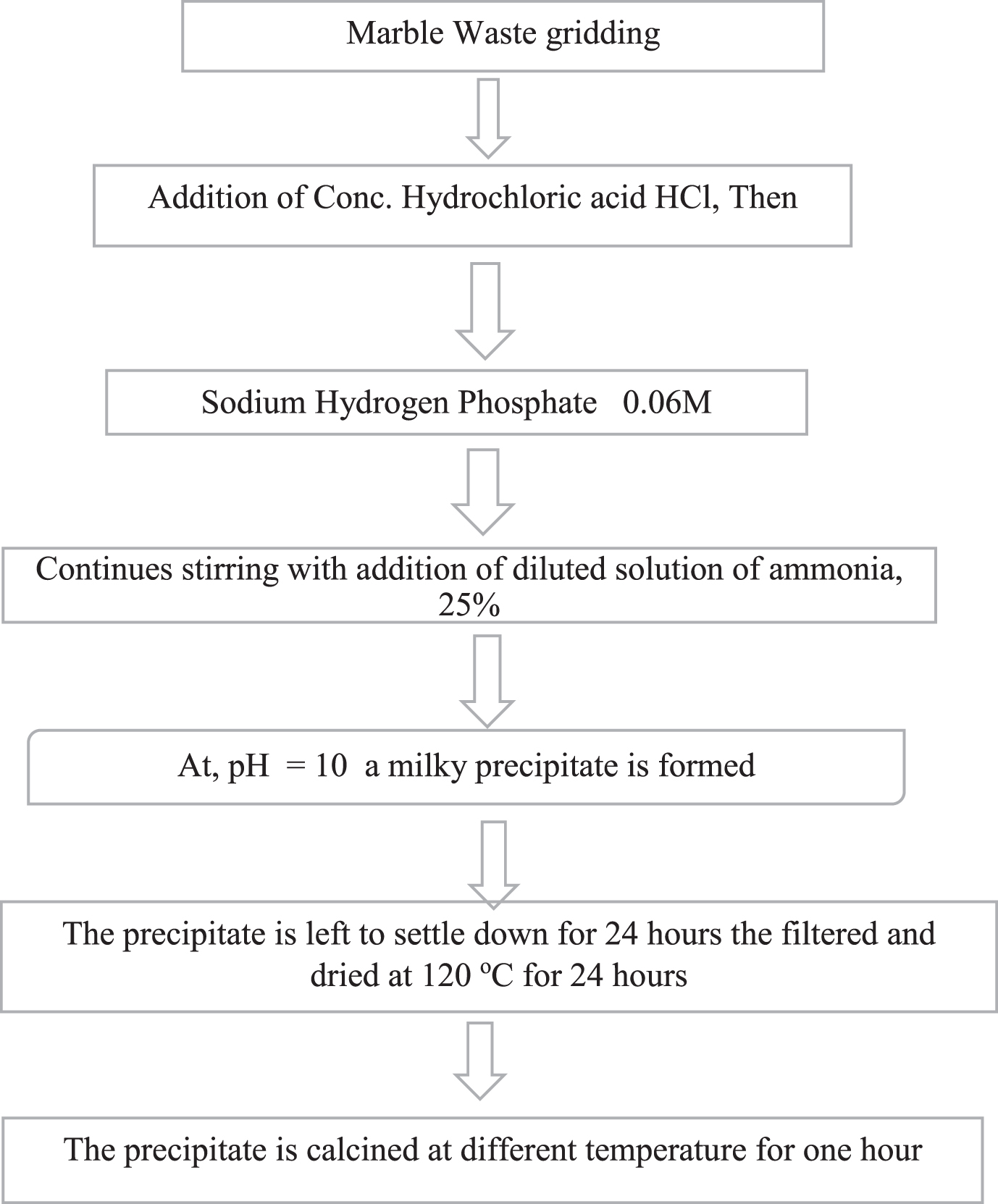
Preparation stages for the Hydroxyapatite mineral.
Dimethyl sulfoxide (DMSO) and water.
Procedure
Variable water volumes and related solvent (DMSO) were mixed in different test tubes (Table 1) with a solvent concentration of 1–100% v/v. [33]. The incubation was at 35°C for 24 –48 hours,
Volume of medium and solvent for each concentration
Volume of medium and solvent for each concentration
Hydroxyapatite (HAP) nanoparticles was tested for in-vitro antimicrobial activity using the agar- well diffusing method (Collins et al., 1989).
Result and Discussions
XRD & SEM for prepared Hydroxyapatite (HAP) nanoparticles
The morphological of the hydroxyapatite (HAP) nanoparticle prepared from the marble waste was investigated using X-ray diffraction technique. The figure below shows that all peaks characterizing (HAP) nanoparticles could be identified according to JCPDS (JCPDS no. 00-001-1008), it showed that the appearance of the entire characteristic curves of the hydroxyapatite (HAP), which confirms that the compound was completely formed at 700 °C. No other peaks were found to characterize any other element or materials that could be observed. This indicates that, the firing temperature (900°C) is sufficient to prepare highly pure hydroxyapatite (HAP) mineral as shown in Fig. 1.

XRD pattern for the prepared particles (HAP) at different firing temperature (300–900°C).
The Scanning Electron Micrographs (SEM) (SEM-JEOL JAX-840A electron micro analyzer (Japan)), micrograph as shown in Fig. 1, illustrates the surface morphology of the obtained hydroxyapatite material at 900°C. In fact, the particles belong to the nanomaterial class of crystal size ranges between 50–100 nm.
The Energy Dispersive X-ray (EDX) (Hitachi S-800 electron microscope with an attached kevex Delta system (accelerating voltage 20 kV, accumulation time 100 s, window width 8μm)). The EDAX spectra of hydroxyapatite presented in Fig. 3 shows only the presence of peaks for calcium, oxygen and phosphorous elements. The elemental compositions and the physical parameters of the constituent (Ca, P & O) elements for hydroxyapatite nanomaterial were obtained and listed in Table 2.
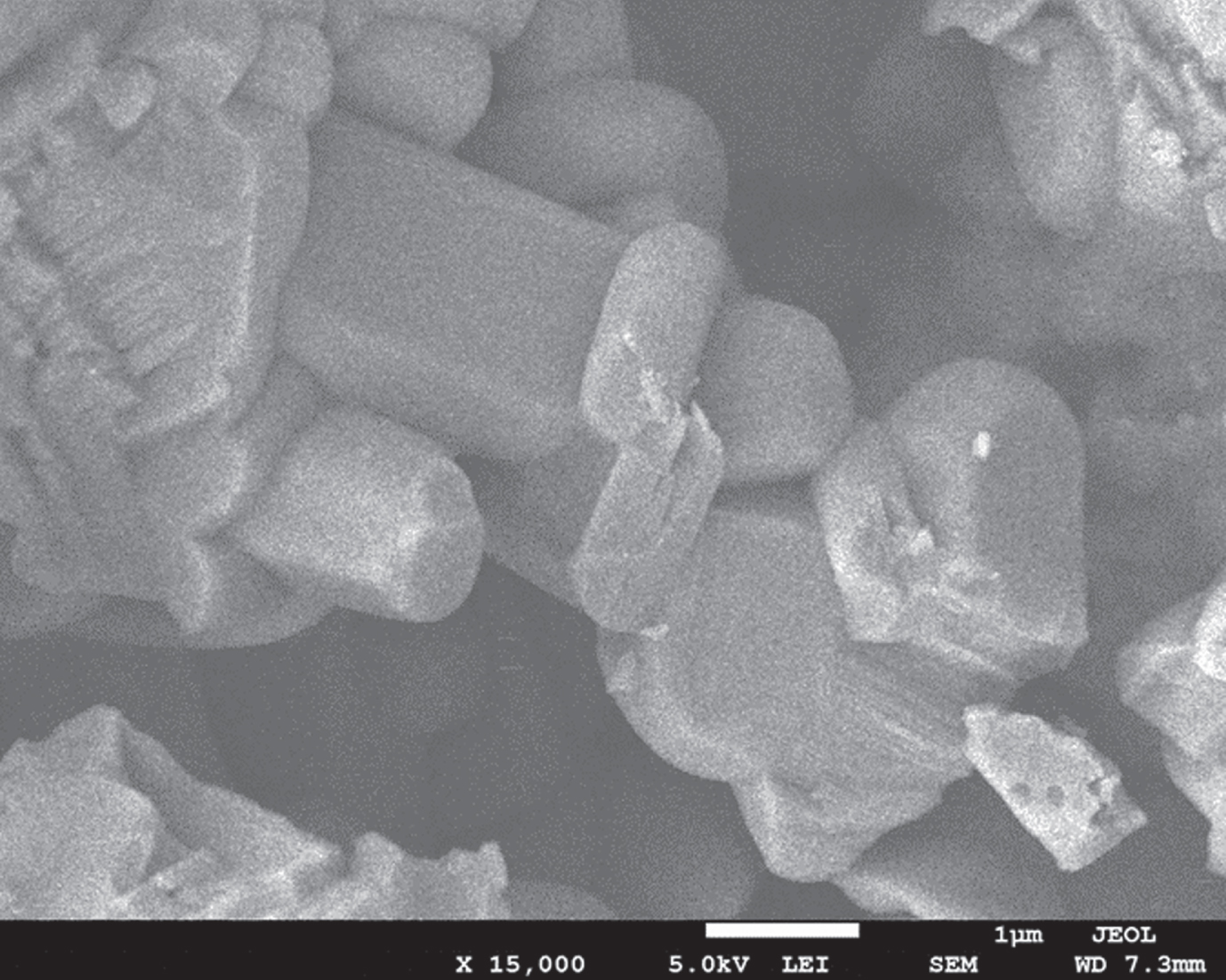
SEM for hydroxyapatite at 900°C.
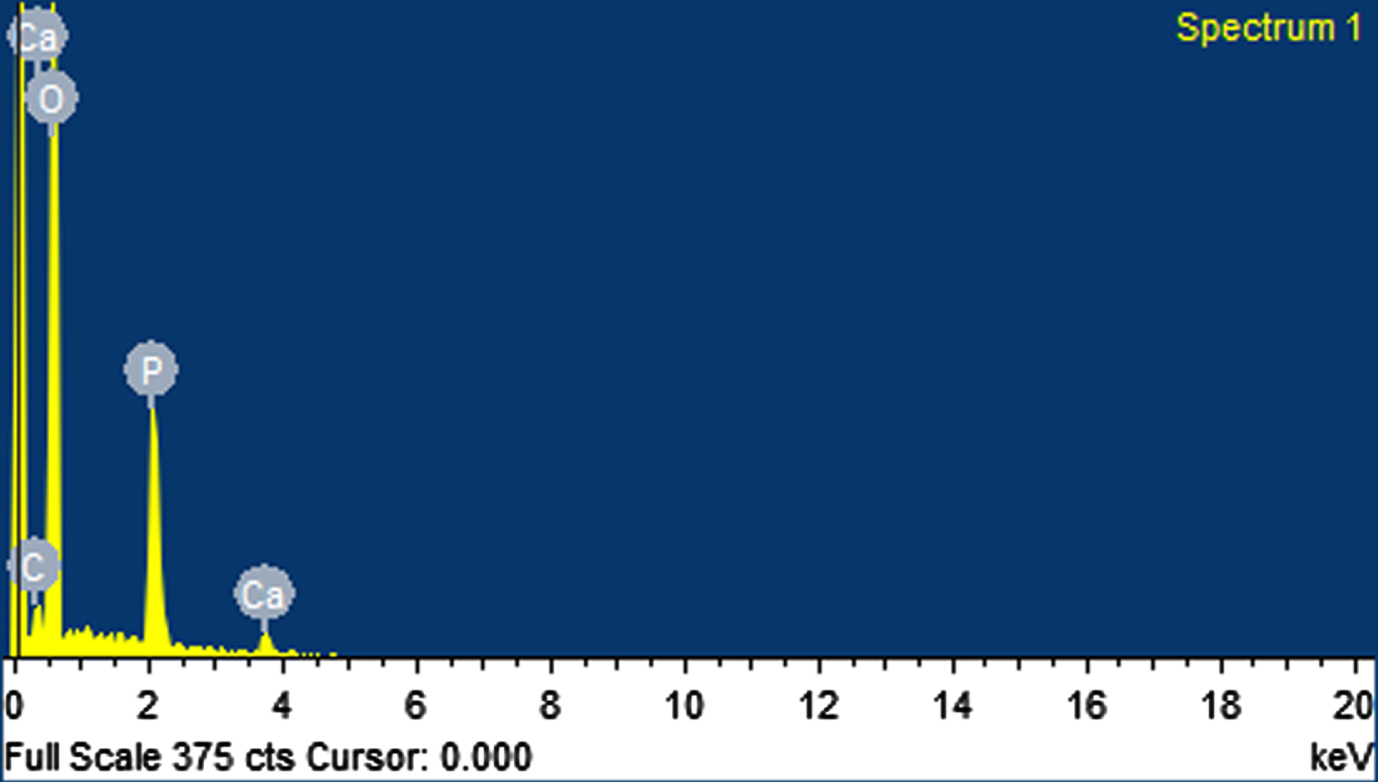
EDAX for hydroxyapatite nanomaterial.
Elemental analysis data of the prepared hydroxyapatite
Antibacterial activity of the Hydroxyapatite HAP nanoparticles
The antibacterial activity of hydroxyapatite nanoparticles was tested for different types of bacteria, Gram-negative: Escherichia coli, Salmonella typhimurium, Pseudomonas earuginosa, and Alcaligenes aquatilis and Gram-positive: Staphylococcus aureus and Streptococcacea pneumonia. The measurement of antimicrobial agent hydroxyapatite nanoparticles by Gram-negative and Gram-positive bacteria are listed in Table 3, & Fig. 4. The results shown that the inhibition effect against both Gram-positive and Gram-negative bacteria increases with an increase of concentration of the inhibitory effect as have reported that the antibacterial properties may be induced by nanomaterial in different mechanisms, such as change of the cell wall, cytoplasm, change of the membrane, or due to inhibition of the respiratory activity [34]. The diameter of the inhibitory zone shows the sensitivity of the microorganism to HAP nanoparticles in a greater inhibition against Gram- positive Staphylococcus aureus and Streptococcacea pneumonia, at 100% DMSO concentration. The diameter of the inhibition zone is 03.70 mm compared with other types of bacteria.
Diameter of inhibition zone of Hydroxyapatite (HAP) nanoparticles against Gram-positive and negative bacteria
Diameter of inhibition zone of Hydroxyapatite (HAP) nanoparticles against Gram-positive and negative bacteria
*Significant results at p > 0.05.
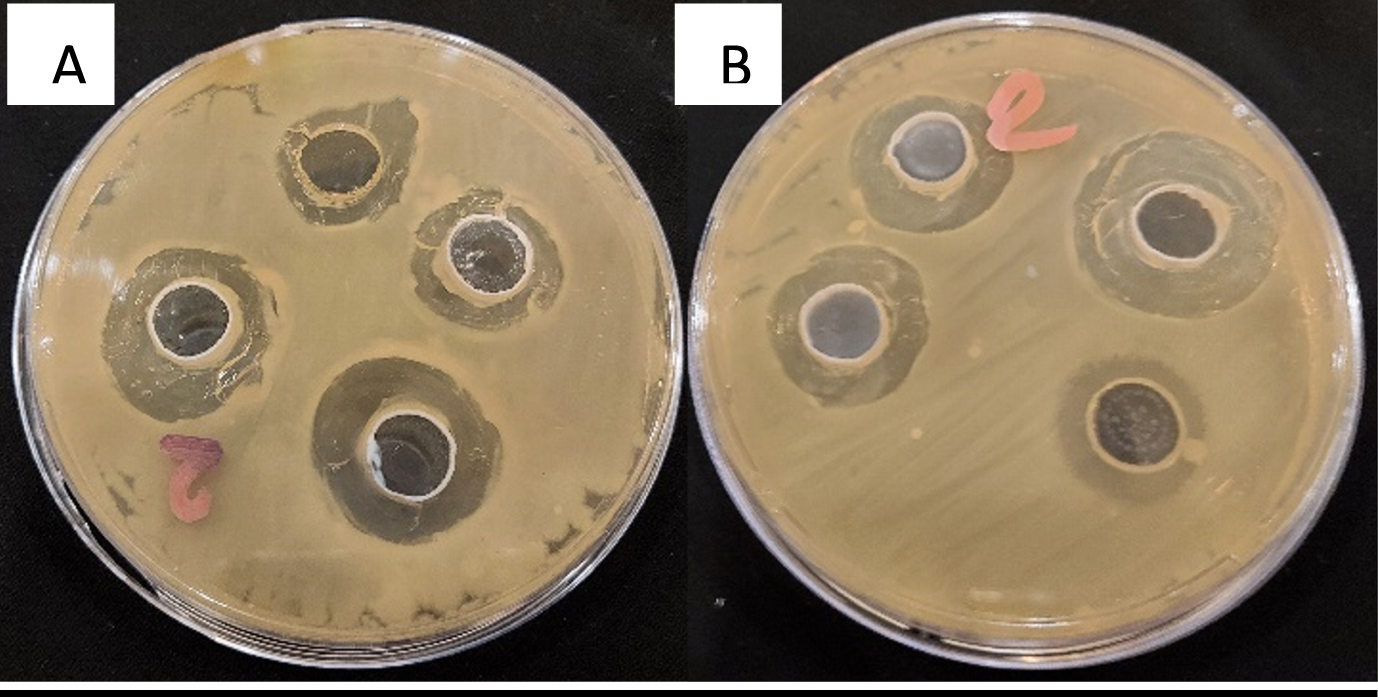
Measure the halo of the antimicrobial agent by bacteria: Gram- positive (A) S. aureus ATCCBAA977 (b) St. pneumonia ATCC49619.
In Table 3, the bacteria antibiosis of HAP nanoparticles shows a rather low against gram- negative bacteria, Salmonella Typhimurium, Pseudomonas earuginosa, Alcaligenes aquatilis and Escherichia Coli, at 100% DMSO replication where the diameter of the inhibition zone was 03.00 mm, 03.00 mm, 03.30 mm, and 03.40 mm, respectively the influence region forms an area less than the area for Gram- positive stain.
The antifungal efficacy of HAP nanoparticles was tested for different species of Aspergillus niger, Aspergillus flavus and Penicillium SP. As shown in Fig. (5), the results showed that the inhibitory effect of HAP nanoparticles increases with increasing concentration. The diameter of the inhibitory zone shows the degree of sensitivity of the tested fungi. The diameter of the inhibitory zone showed the sensitivity of the microorganism to HAP nanoparticles in a greater inhibition against Penicillium SP. at 100% DMSO concentration, the inhibition zone diameter was 2.20 mm compared to other Aspergillus niger and Aspergillus flavus.
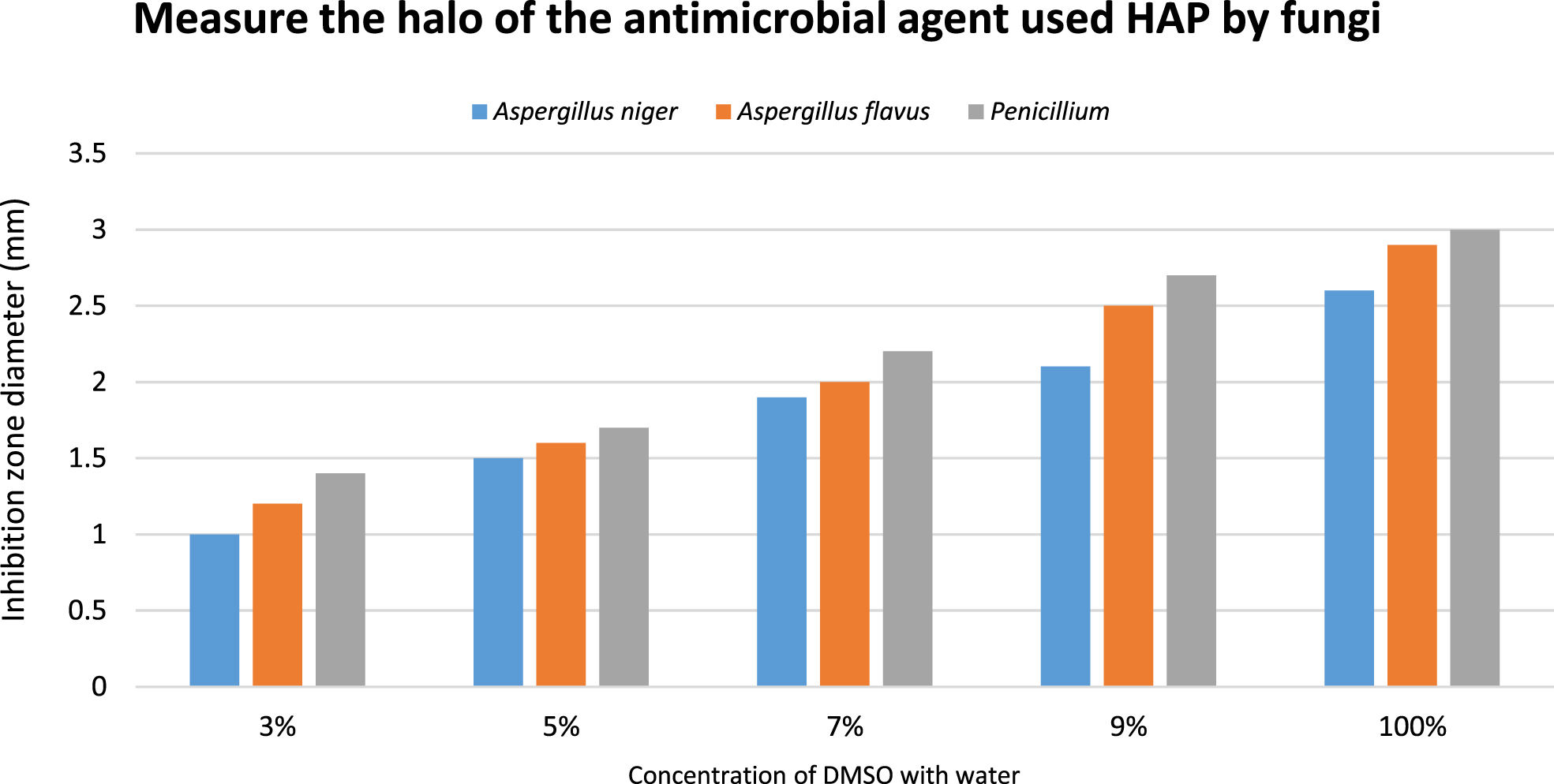
Measure the diameter of the antimicrobial agent used hydroxyapatite HAP by Fungal.
The influence region constitutes a lesser area of the region against HAP nanoparticles in Aspergillus flavus the diameter of the inhibition zone is 2.90 mm at the same concentration followed by Aspergillus niger was the diameter of the inhibition zone was 2.60 mm at the same concentration.
The investigation of this work were carried out to prepare, characterize and evaluate the antibacterial activity of nanostructured hydroxyapatite prepared from marble wastes and subjected for further application as antimicrobial. The antimicrobial activity of prepared hydroxyapatite nanomaterial was tested using a well diffusion method against different types of bacteria (Gram-negative and Gram- positive). The overall results shown very good values indicating that the efficiency of HAP as against different types of Gram-negative and Gram- positive bacteria.
The antifungal efficacy of HAP nanoparticles was tested for different species of Aspergillus niger, Aspergillus flavus, and Penicillium SP. The diameter of the inhibitory zone shows the degree of sensitivity of the microorganism. Based on these results, the hydroxyapatite nanoparticles could be used in medical and industrial fields.
Footnotes
Acknowledgments
This article entitled “Antimicrobial activity of hydroxyapatite nanoparticles prepared from marble wastes” contains the results and findings of a research project that was funded by Deanship of Research & Post-graduate of University of Jeddah Grant No. (UJ-20-073-DR).