



Abstract
The innovation of a highly efficient and inexpensive graphene oxide-based photocatalyst is a challenging task for selective solar chemical regeneration/coenzyme such as nicotinamide adenine dinucleotide (NADH). Herein, we have designed lemon-juice derived highly efficient S-GQD/GO composite as a photocatalyst for regeneration of NADH under solar light. The rational design of a highly efficient photocatalytic system through the orientation of S-GQD on graphene oxide as solar light harvesting photocatalyst is explored for the first time for NADH regeneration. This highly solar light active S-GQD/GO composite photocatalyst upon integration with the NAD+ is used for highly regioselective regeneration of coenzyme (76.36%). The present work provides the benchmark instances of graphene oxide-based material as a photocatalyst for selective regeneration of NADH under solar light and opens a new door for green synthesis.
Introduction
Graphene oxide is the super-star backbone material for various applications due to its low cost and high surface area [1–4]. But limited by their less catalytic and photocatalytic activity usually have a low energy density, which significantly hinders their practical applications. Recently, several research works have been done previously on improving the catalytic and photocatalytic ability of GO primarily through further increasing their light-harvesting ability based on the coupling of highly efficient materials [5–8]. However, the well-developed graphene quantum dots oriented on graphene oxide structure significantly increased the photocatalytic ability of the graphene oxide through π-πstacking networks.
Moreover, the charge transfer and storage are severely restricted in the graphene oxide due to various functional groups [9, 10]. These problems cause not only surface area utilization and photocatalytic inability, but also sluggish rate of charge carrier transfer and poor rate performance [5, 11–14]. To resolve these issues, utmost efforts have been done to composite graphene oxide with other light-harvesting materials such as graphene nanorods, graphene nanoplates, graphene nanotubes, and graphene nanosheets [15, 16]. However, these nanomaterials cannot fully integrate with the light-harvesting materials at a molecular level to form overall photocatalytic networks due to their poor compatibility, thus resulting in partial performance improvement. Disparate graphene oxide and graphene quantum dots (GQDs) belong to zero-dimensional nature. Because of their fine particle sizes and excellent physicochemical properties, they have engrossed considerable attention for preparing highly efficient photocatalytic materials in the current past [17–19]. S-GQDs were achieved to play very important roles in improving photocatalytic ability. Accordingly, different composite materials such as GQD/alloy, GQD/MnO2, site nanotube, GQD/NiCo2O4, and GQD/polypyrrole [20–23] have been prepared for high performance other than photocatalytic applications. These materials performed improved photocatalytic performances benefiting from the highly efficient photocatalytic GQD shells. However, the S-GQDs are largely attached to the surface rather than completely embedded into the active materials to form overall photocatalytic networks, thus the usability of GQDs may not be fully recognized. Aiming at the above-mentioned problems, herein, we designed a novel strategy to build up overall photocatalytic networks oriented on the graphene oxide through embedding highly efficient GQDs [20–28]. The photocatalytic performances of the S-GQD embedded graphene oxide (denoted as S-GQD/GO) extraordinarily increase along with the increasing amount of GQD. Moreover, the significantly improved photocatalytic ability under solar light in an aqueous medium, enlightening the potential for practical applications. In this current research work, S-GQD/GO photocatalyst is for the first time prepared and used for regeneration of coenzyme under solar light (Scheme 1).
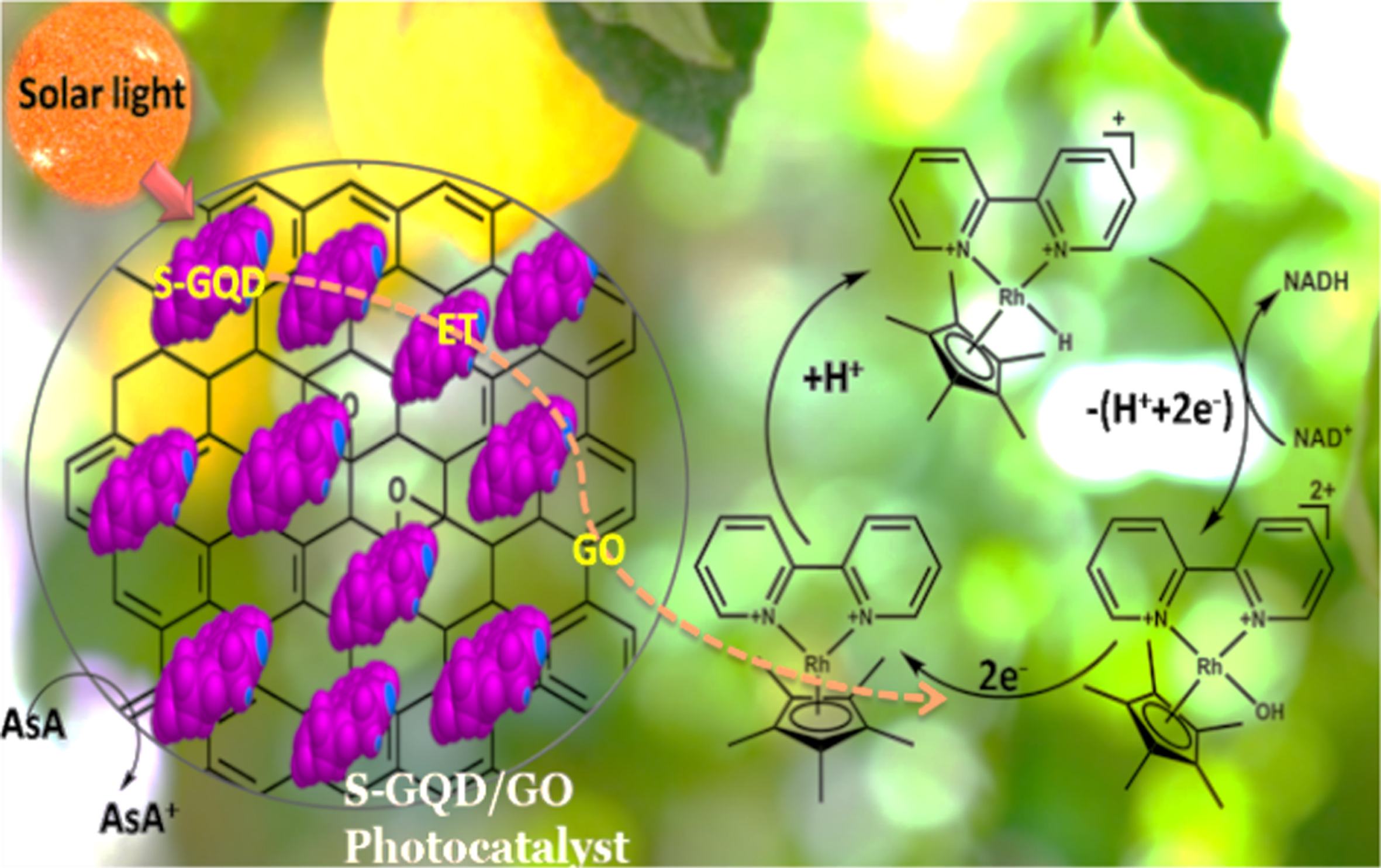
Schematic illustration of artificial photosynthesis S-GQDs/GO-based NADH regeneration from photocatalyst under solar light.
Materials and methods
Lemon juice was purchased from the market. Thiourea and graphene oxide were procured from Sigma-Aldrich.
Instrumentations
UV-visible and Fourier transform infrared (FTIR) spectra were recorded by using the Shimadzu spectrophotometer and ALPHA-T Bruker FT-IR spectrometer, respectively. Particle size and zeta-potential data were recorded by using a nano zeta sizer (NZS90). Field emission scanning electron microscopic (FE-SEM) images of the samples were attained using Bruker multimode. TECNAI G2 F30 microscope (FEI Company) was used for the TEM image which operated at 300 keV.
Synthesis of in-situ sulphur doped graphene quantum dots oriented on graphene oxide (S-GQD/GO)
The different material was used for the synthesis of S-GQD/GO light-harvesting composites. The most appropriate method is shown in scheme 2.

Schematic illustration for the synthesis of in-situ sulphur doped graphene quantum dots oriented on graphene oxide (S-GQD/GO).
The depth preparation steps were involved, firstly, 100 mg graphene oxide and 2 gm thiourea were dissolved in 200 ml lemon juice i.e., citric acid, and stirred to form a clear solution of yellow color. Thereafter, the prepared solution is kept in the condensed tube for refluxing the solution at the temperature of 160°C for about 24 Hrs., thereafter it is converted into a black color solution. Subsequently, the final product was retained in the tube to centrifuged at 12000 rpm for 20 minutes and afterward, keep it for some time to settle down. The particle after that decay the solvent precipitate is reconciled at the bottom of the centrifuge tube. S-GQD/GO light-harvesting composites were washed with a large amount of water and dried in the oven at 100°C at the end.
In the coenzyme regeneration experiment, the reaction was taken place in 3.1 mL sodium phosphate buffer with NAD+ solution (248μL), CpRh (124μL), ascorbic acid (310μL), and S-GQD/GO photocatalyst (31μL). After that, the reaction was carried out in a quartz cuvette as a reactor equipped with a magnetic stir and irradiated with a solar light source with a 420 nm cut-off filter.
Result and discussions
Mechanistic study of Rh-complex (CpRh) for coenzyme regeneration
A possible mechanistic pathway for the regeneration of coenzyme via a reaction mediator Rh-complex (CpRh), is described in Scheme 3. Initially, S-GQD/GO photocatalyst is excited in presence of solar light illumination after that excited electron are transferred to CpRh for the regeneration of the coenzyme. A cationic form of CpRh I is eagerly hydrolyzed in presence of an aqueous buffer solution to produce a J intermediate complex. Afterward, the CpRh J reacts with methanoate ion (HCOO–) which is a hydride source to generate an intermediate K complex after the elimination of the H2O molecule. Subsequently, complex K takes hydride ion to produce the intermediate L complex after the elimination of the CO2 molecule, which is followed by the generation of complex M after the reductive elimination process. At this event, intermediate complex M is coordinated with NAD+ cofactors to afford complex N, which gets converted to the intermediate complex O through the hydride ion transfer. Lastly, O intermediate complex regenerated the coenzyme (NADH) in presence of water [29].
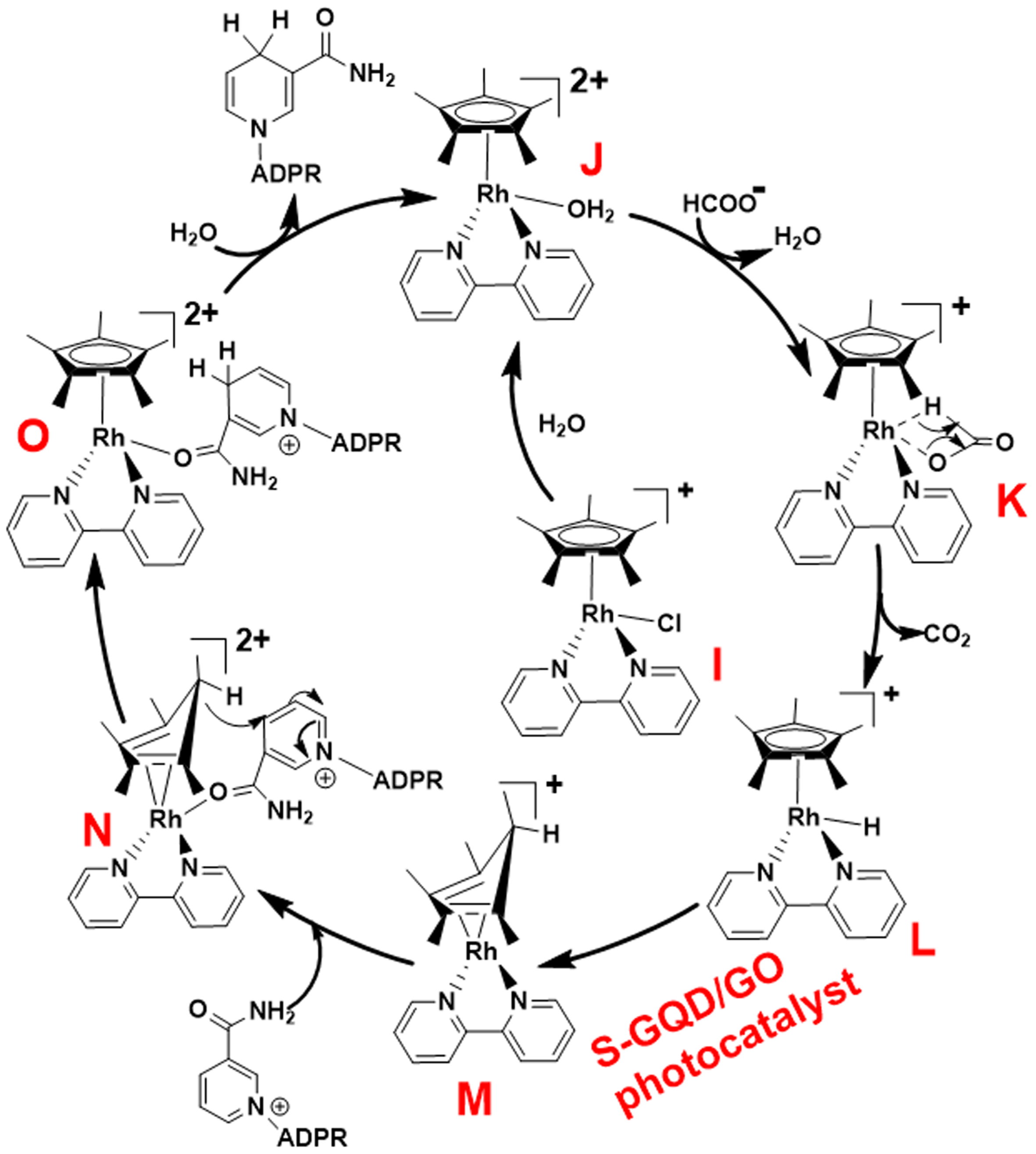
Probable mechanistic pathway of NAD+ reduction through a CpRh.
As revealed in scheme 4. direct electrochemical reduction of NAD+ takings stepwise at high overpotentials causes radical coupling and unselective protonation. As result, it produces various types of NADH isomers, monomers (1,2-, 1,4-, and 1,6-NADH monomers), and, dimers (4,6′ and 4,4′ NAD dimer) throughout the reduction process (Scheme 4).In these generated isomers only 1-4-NADH isomer is only active for photocatalytic enzymatic reactions and other isomers are ‘enzymatically inactive’ [30]. Therefore, only 1-4- NADH is applicable in the artificial photosynthetic process.
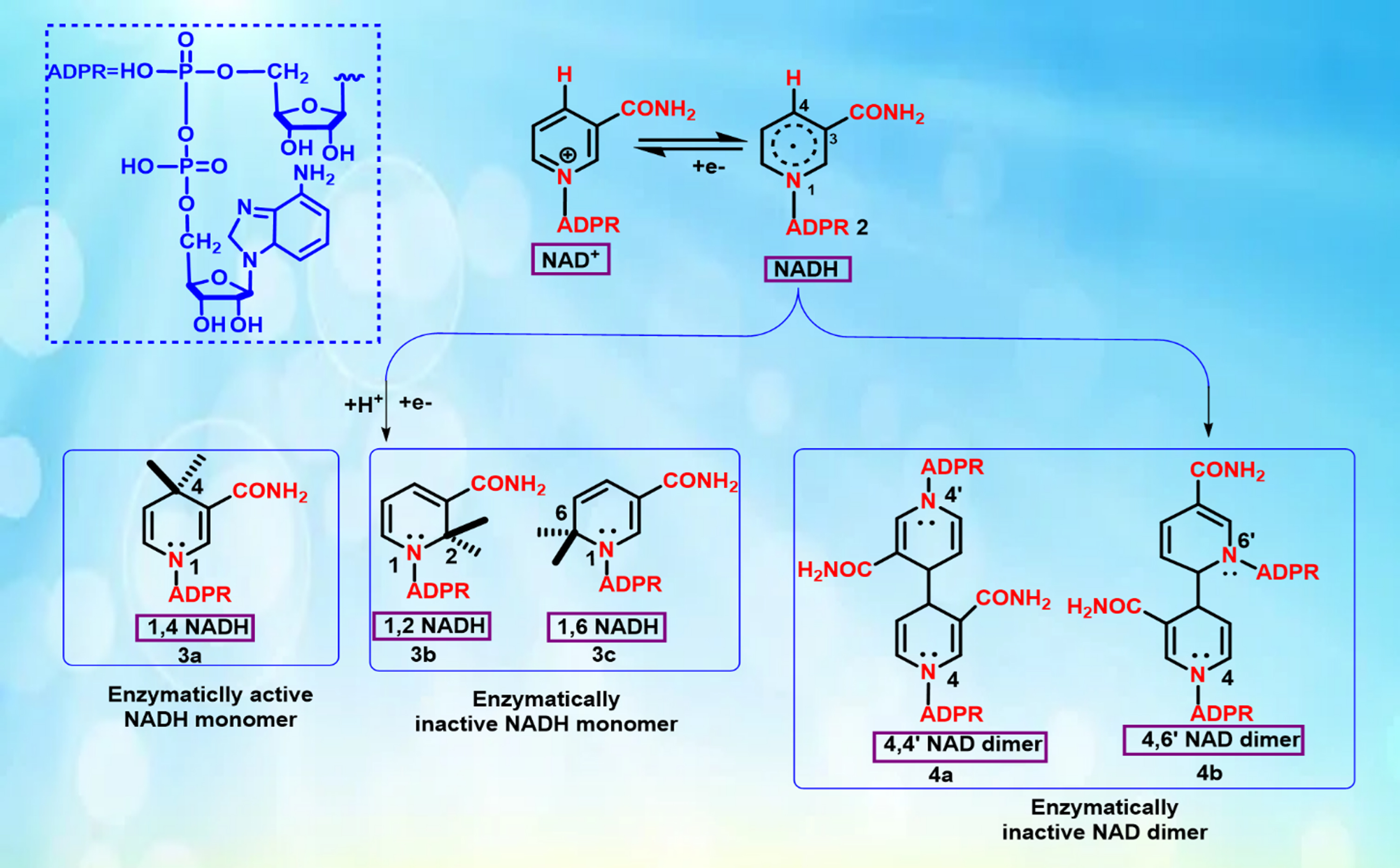
Probable intermediates and NADH isomers are produced throughout the reduction of NAD+. ADPR = adenosine diphosphate ribose.
The graphene quantum dot-based graphene oxide (S-GQD/GO) was used as the photocatalyst for the regeneration of NADH. Figure 1 shows NADH regeneration yield of cloth-like S-GQD/GO photocatalyst (76.36%) and GO (1%) was achieved after 2 hours. As indicated (Fig. 3) in the graph, this was observed using UV-visible spectroscopy and calculated absorbance. A reaction system with a photocatalyst (1 mM) in 0.1 mL of sodium phosphate buffer (100 mM, pH 7.0) under visible light, ascorbic acid as the sacrificial electron donor, and NAD+ were created for this purpose. The photochemical NADH regeneration was carried out at an ambient temperature in an inert atmosphere using visible light irradiation (>420 nm) as the artificial solar light source. Initially, there was no change in the dark, but as the process progresses in the light, it grows progressively over time. The technique also demonstrated that the flower-like S-GQD/GO was a 100-fold more efficient photocatalyst for NADH cofactor regeneration than acid GO dye. Though there was no regeneration of NADH from its oxidized form NAD+ in the absence of visible light (half and hours), NADH production was identified when the apparatus was illuminated (I > 420 nm). Under argon, the reaction was carried out in a quartz reactor with visible-light irradiation. By measuring the absorbance at 340 nm, the quantity of NADH was determined spectrophotometrically.
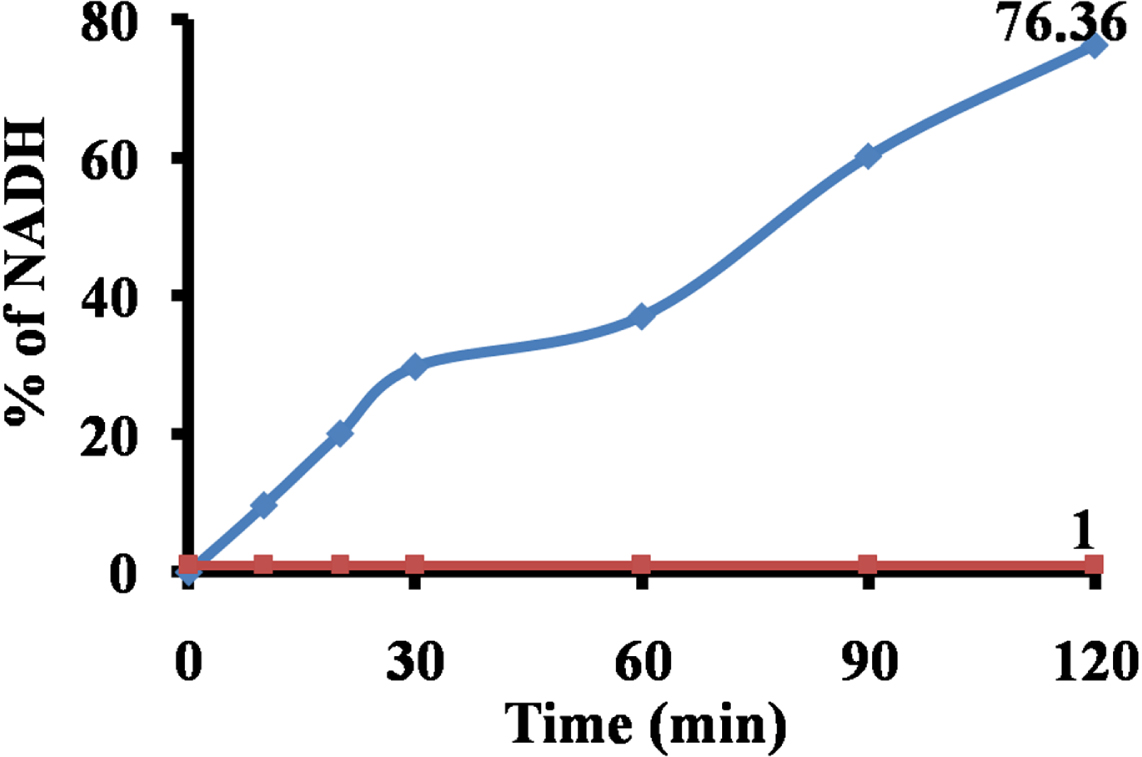
Photocatalytic activities of S-GQD/GO (blue line) and, GO photocatalyst (red line) for regeneration of NADH. NAD+ solution (248μL), CpRh (124μL), ascorbic acid (310μL), and S-GQD/GO photocatalyst (31μL) in phosphate buffer (100 mM, pH 7.0)] under solar light.
Additionally, we have checked the photocatalytic activity of the S-GQD/GO photocatalyst for the coenzyme regeneration (Fig. 2). The reusability and stability of the S-GQD/GO photocatalyst was examined under the same experimental conditions as shown in Fig. 2. As compared to the first cycle wherein the S-GQD/GO photocatalyst carried out 90.12% (100%) of coenzyme regeneration. After the fifth cycle of reusability experiments, coenzyme regeneration 85.04% (94.36%) was observed which clearly display the outstanding photocatalytic stability of S-GQD/GO photocatalyst.
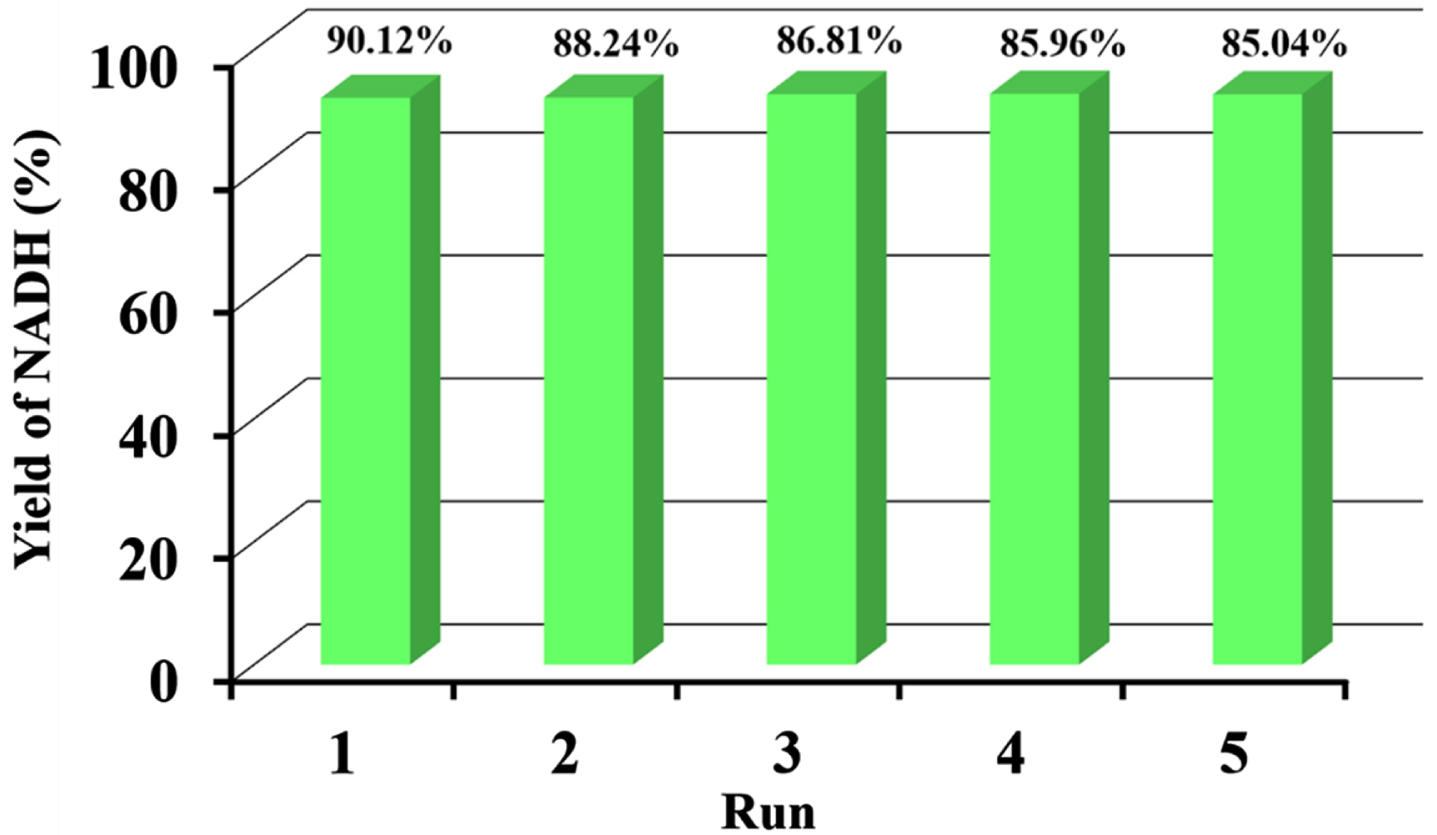
Reusability test of S-GQD/GO photocatalyst for coenzyme regeneration, up to fifth cycles. The photocatalysis was carried out using NAD+ solution (248μL), CpRh (124μL), ascorbic acid (310μL), and S-GQD/GO photocatalyst (31μL) in phosphate buffer (100 mM, pH 7.0)] under solar light irradiation.
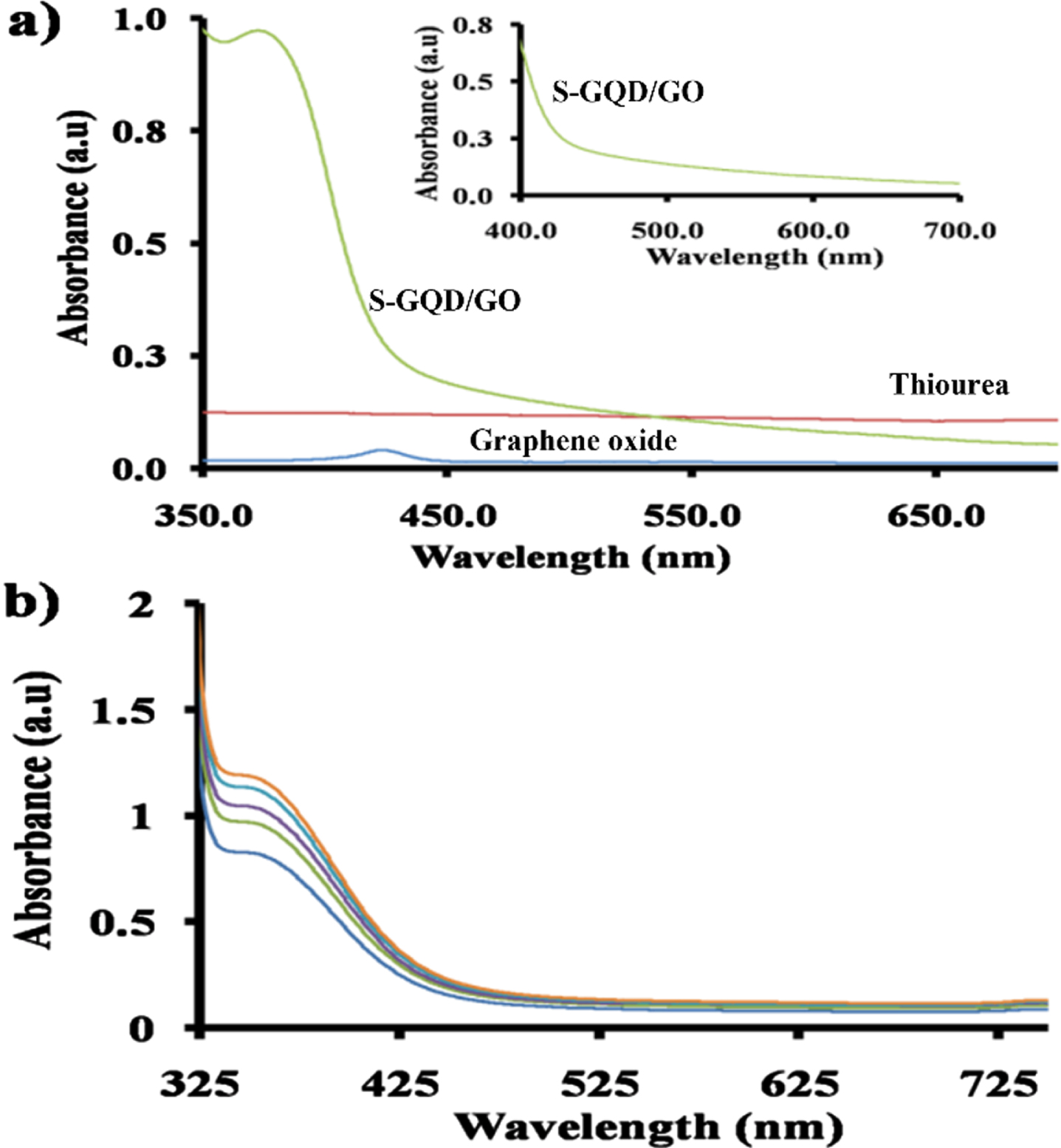
a) UV-Vis spectra, thiourea (red color), graphene oxide (light blue), and S-GQD/GO light-harvesting composite. b) UV-visible spectroscopy studies of and S-GQD/GO light-harvesting composite at different time intervals.
UV-vis spectroscopy studies
To elucidate the optical properties of thiourea, graphene oxide, and S-GQD/GO light-harvesting composites, the UV–visible absorption spectroscopy of the samples was measured. As shown in Fig. 3, S-GQD/GO exhibits high absorption and a high molar extinction coefficient in the visible region. The prominent absorption between 375 and 420 nm can probably be assigned to the π–π* electron transition of the GO photocatalyst [31, 32]. With the incorporation of GQDs in composites, the absorption of S-GQD/GO is prolonged from 400 to 500 nm, demonstrating that the efficiency of visible light utilization is improved.
The strong interfacial interaction between GQDs and GO is primarily responsible for the broadening of S-GQD/effective GO’s absorption in the visible light range, and S-GQD/GO is the sample with the highest absorbance intensity. The estimated bandgap of S-GQD/GO was near about 2.75 eV. However, the obtained bandgap of S-GQD/GO composites was significantly enhanced after decorating GQDs (Fig. 3). These findings showed that GQDs effectively suppressed electron-hole pair recombination and also act as a photosensitizer to extend the lifetime of photogenerated electrons and holes, which is consistent with the methods used in the report [33–38].
FTIR studies
Fourier transform infrared spectroscopy studies GQDs oriented on graphene oxide were investigated. FT-IR spectrum (Fig. 4) explains the existence of additional stretching vibrations of –COO [1398 cm–1 (asym)], –COO [1594 cm–1(sym)], C = O (1640 cm–1), -OH [2336 cm–1], and –CH (2950 cm–1) organic functional groups in GQDs. Furthermore, the wide adsorption band between 3200 and 3300 cm–1 can be assigned to the O–H stretching vibration of hydroxyl groups with intermolecular hydrogen bonds. According to Fig. 4, vibrations of C-S (490 cm–1) and additional absorption of –CH2, and –COOH groups, confirmed the formation of GQDs/GO excellent light-harvesting composites. Characteristic absorption bands of additional GO are contained in these FTIR spectra, signifying that GQDs are oriented on GO via π-π stacking pathways [39].
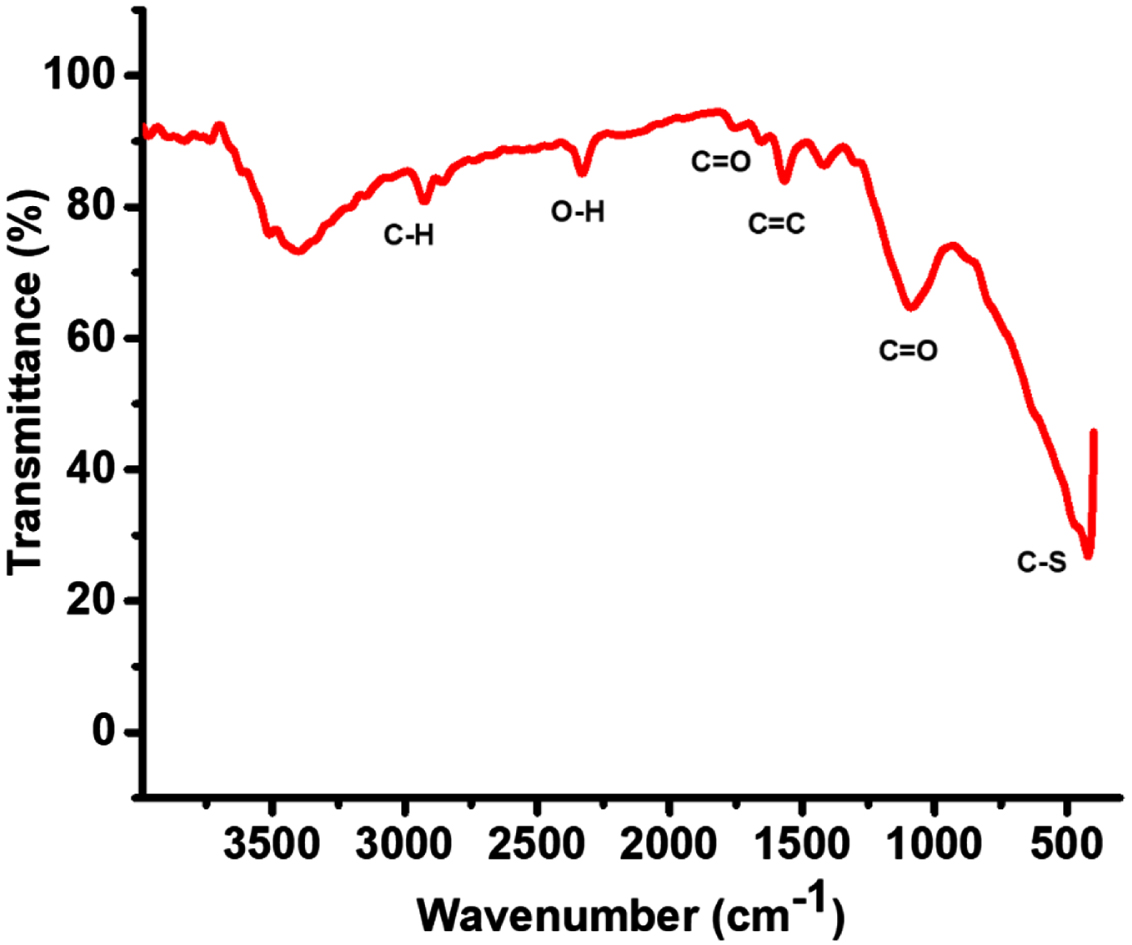
FTIR spectrum of S-GQD/GO light-harvesting photocatalyst.
Furthermore, the GQD surface’s negatively charged character was validated by the measured zeta potential of 24.6 mV. As a result of the presence of multiple carboxyl (O = C–OH) and hydroxyl (–OH) groups, GQDs/GO showed a negative charge in the zeta potential (Fig. 5) measurement as compared to thiourea and GO, as shown by the IR spectra and zeta potential data [40].
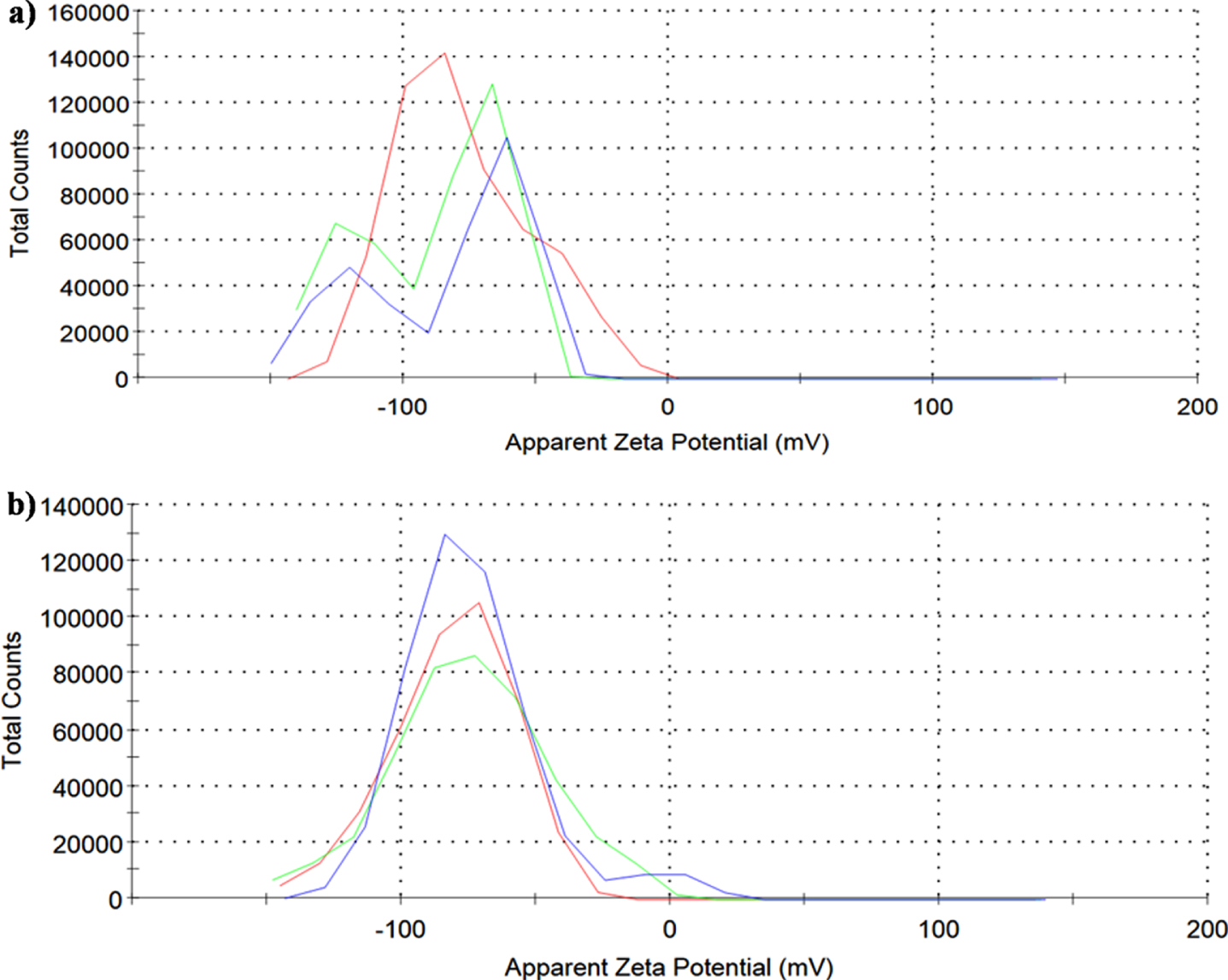
Zeta potential of (a) graphene oxide and (b) S-GQD/GO light-harvesting composite.
Scanning electron microscope (SEM) images (Fig. 6a and 6b) of GO and S-GQD/GO composite photocatalyst completely have entirely different morphology from each other. The rich oxygen-containing functional groups of GQDs on oriented GO supported the development of stable interfacial interactions and π-π stacking. The closed-stacking between GQDs and GO, which is beneficial for the quick transfer of photoinduced charges and collected electrons and holes from GQDs to GO, was shown to be the cause of these findings. Fig. 6a shows the high-resolution transmission electron microscopy (HR-TEM) image of the S-GQDs/GO composites photocatalyst. The resultant S-GQDs/GO composite exhibits a typically different from S-GQDs and GO as per the reported method [41]. It is also fascinating to note that both (S-GQDs and GO) are intercalated to each other, which results in the formation of S-GQDs/GO composites photocatalyst as per the reported article [41, 42]. Furthermore, HR-TEM studies are carried out to further confirm the incorporation of S-GQDs on the GO.
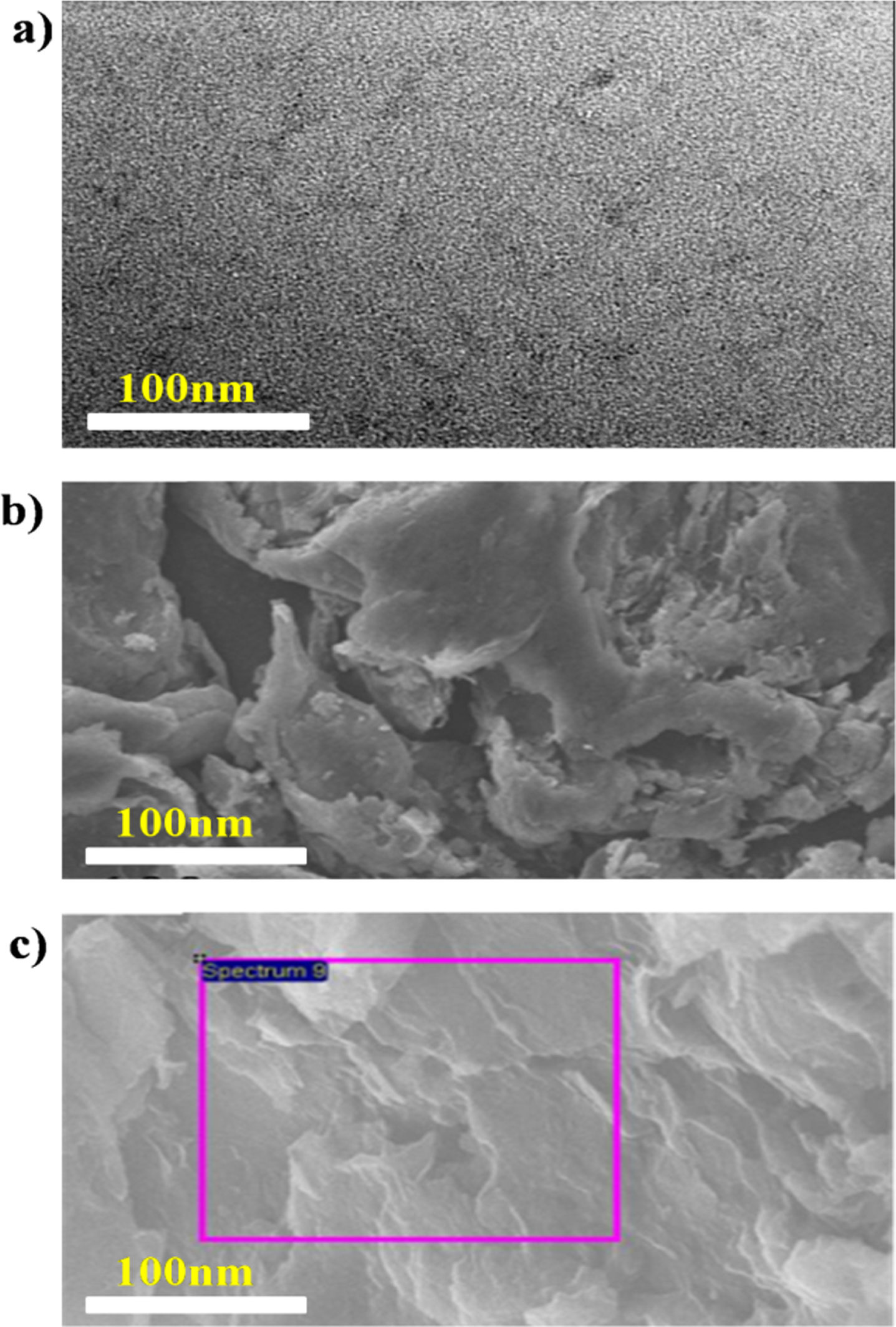
HR-TEM image of a) S-GQD/GO composite photocatalyst, SEM images of b) graphene oxide, and c) S-GQD/GO composite photocatalyst.
Additionally, the SEM image [43, 44] of S-GQD/GO light-harvesting composites (Fig. 6b & 6c) exhibits excellent absorption abilities and enhanced significantly light-harvesting abilities in the range of UV-visible light region due to the presence of orientation of S-GQD on GO.
It is very significant to design and develops highly effective, easy to make, inexpensive, and environmentally friendly synthetic pathways to synthesize S-GQD/GO. In terms of selecting S-GQD, ideal S-GQD should have a small particle size (shown in Fig. 7), high molar extinction coefficient, high fluorescent yield, non-toxicity, high stability, and low cost. The particle size of S-GQD and S-GQD/GO are 22 and 26 nm. Mounting efficient pathways to orient S-GQD on GO-based composites photocatalysts and to improve the recyclability of S-GQD/GO-based composites photocatalysts are also significant. Novel insights are required to create a highly effective GO-based photocatalyst to address energy and environmental issues. First, various morphologies such as carbon nanotubes, multiwall carbon nanotubes, and nanospheres structures of GO must be explored to report the excellent surface areas [45–48]. Moreover, humanizing the photocatalytic performance via hybridization (doping S), or changing the particle size and orienting the amount of S-GQD on GO is to be explored. This research work needs an inclusive and precise understanding of the relationship between the structure and properties of S-GQD/GO-based photocatalyst as well as the pathways of charge carrier transfer as per the reported method [45–49]. Therefore, orient S-GQDs on GO are more active than on GO.
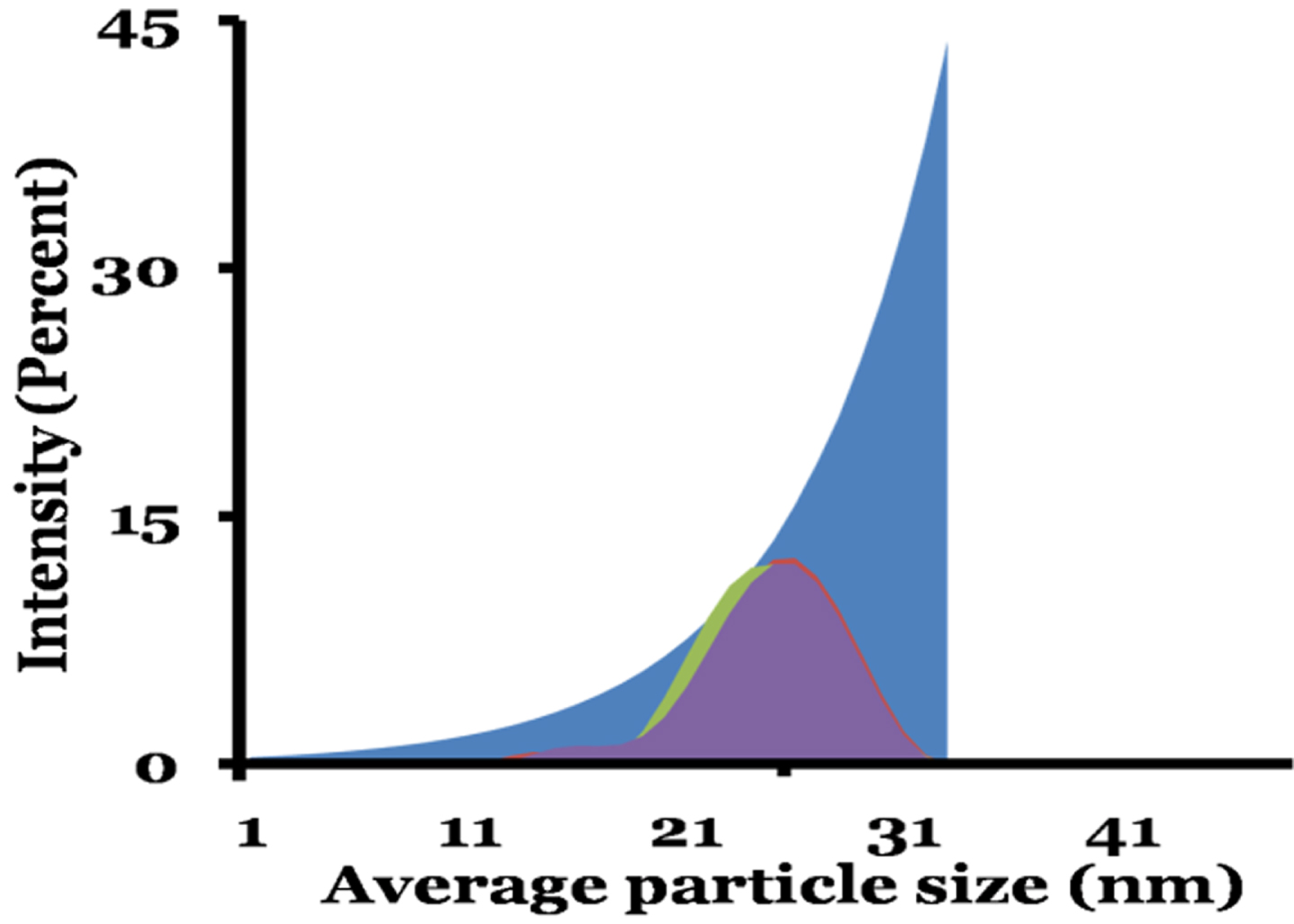
The particle size of S-GQD/GO light-harvesting composite photocatalyst.
In conclusion, we successfully demonstrated easy to make S-GQD/GO as a light-harvesting composite photocatalyst via a simple condensation pathway. SEM, FTIR, UV-visible spectroscopy, Zeta potential, and particle size measurement all show that S-GQDs have a minor effect on the morphology of GO. Due to the compact size and good optoelectronic performance of S-GQD/GO, the produced S-GQD/GO light-harvesting composite photocatalyst has greater photoelectric activity under solar light irradiation than GO. Significantly, the NADH regeneration response of S-GQD/GO is 100 times higher than that of GO. Moreover, the mechanism for the improved photocatalytic activity of S-GQD/GO was proposed. S-GQD/GO could slow the recombination of electron transfer properties and increase the UV-visible light absorption capacity for selective solar chemical transformations. Furthermore, this work may also be extended for sensor, biomedical, optoelectronic, and energy conversion-related devices.
Conflicts of interest
There are no potential conflicts to mention.
Footnotes
Acknowledgments
Madan Mohan Malaviya University of Technology, Gorakhpur-273010, Uttar Pradesh, India, funded this research.