



Abstract
The aim of this study is to examine in detail the effect of experiential learning in analytical chemistry laboratory on preservice teachers’ scientific attitudes and to examine their views on the qualitative analysis in analytical chemistry laboratory. The study group consisted of 27 preservice chemistry teachers. The study was designed by mixed method. The scientific attitude scale and note to self-form were used as data collection tools. From the results, it was observed that the scientific attitudes of preservice chemistry teachers increased significantly. When the scores in the sub-dimensions of the scientific attitude scale are compared, it is noteworthy that there is a significant difference in the third dimension “being a scientist or working in a job.” According to the note to self-form preservice teachers’ notes were categorised as cognitive field note, sensory field note, and psychomotor field note.
Keywords
Introduction
Young people define chemistry as a difficult to understand branch of science that is equally different to have a career in [1]. Chemistry is also occasionally defined as boring and even as challenging. People think of chemistry as such because, for instance, mentally visualising the atomic structure is difficult [2].
In analytical chemistry, it is taught how to obtain the amount of a particular substance in a sample by weighing the precipitated portion or by measuring the volume of solution. Analytical chemistry and qualitative-quantitative analysis applications have an important place in chemistry education. Qualitative analysis determines which chemicals a sample contains, while quantitative analysis deals with how much of these chemicals are numerically [3]. Gravimetric analysis and volumetric analysis are still thought to be the basis. It is thought that gravimetric analysis and volumetric analysis constitute the basis of analytical chemistry. The chemistry course and analytical chemistry curriculum should focus on chemical analysis, separation techniques and instrumental analysis. Within the scope of the curriculum, students should be taught how to obtain data [4].
In analytical chemistry the student must combine theory and experimental work. A lot of theoretical information is given to students in the courses. This theoretical information includes the procedures and reactions to be applied in experiments. In analytical chemistry, students are expected to understand basic principles and concepts, create an awareness of analytical techniques, and develop research and self-learning skills [5]. In the analytical chemistry laboratory course, students perform the applications of theoretical subjects. In qualitative analysis applications, students perform cation-anion analysis on an unknown sample, while in quantitative analysis they determine the amount of these ions. In the analytical chemistry laboratory, students have the opportunity to gain knowledge through practical-experimental applications [6]. Analytical chemistry laboratory experiments include many processes such as sample preparation, reagent standardization, sample analysis, calculation and data analysis [7]. Complex and sequential experimental steps in volumetric analysis, reaction mechanisms, computational procedures to determine the amount of matter, mathematical calculations require problem solving and thinking skills. Chemistry educators draw attention to the concern to be encountered in teaching volumetric analysis, which is one of the analytical chemistry topics [8]. In the experiments, a problem sample is analysed based on visual tests, the tests are repeated several times and the working time is extended. Difficulties arise in this process [9]. By using appropriate methods, these disadvantages can be removed in the learning environment. One of these methods is experiential learning. Learning occurs as a result of experiences and individuals learn in different ways [10]. Individuals learn with different methods, usually these learnings take place after their experiences [11].
Experiential learning
Piaget contends that individuals play an active role in acquiring knowledge. An individual’s immediate environment, experiences, and hereditary factors play an important part in their development [12]. Learning takes place through applying concepts to experiences and through the integration of experience and concepts [13]. Experiential learning actively involves the student in the learning process [14]. Experiential learning enables students to gain conceptual understanding and effective thinking skills, to be in dynamic applications in the learning process and to acquire the habit of questioning [15]. Lewin pointed out the importance of experiences in learning as a process; expressed the behaviours as the whole of the person’s lives [16]. Lewin handled learning in four stages. Concrete experiences, observations, experimentation and adaptation to new situations enable the individual to gain new experiences in connection with each other [17]. In Kolb’s experiential learning theory, learning is described as the process through which knowledge emerges through a series of changes of experiences. Knowledge is obtained as a result of understanding and transforming experience [18]. Kolb’s experiential learning model can be seen in Fig. 1.
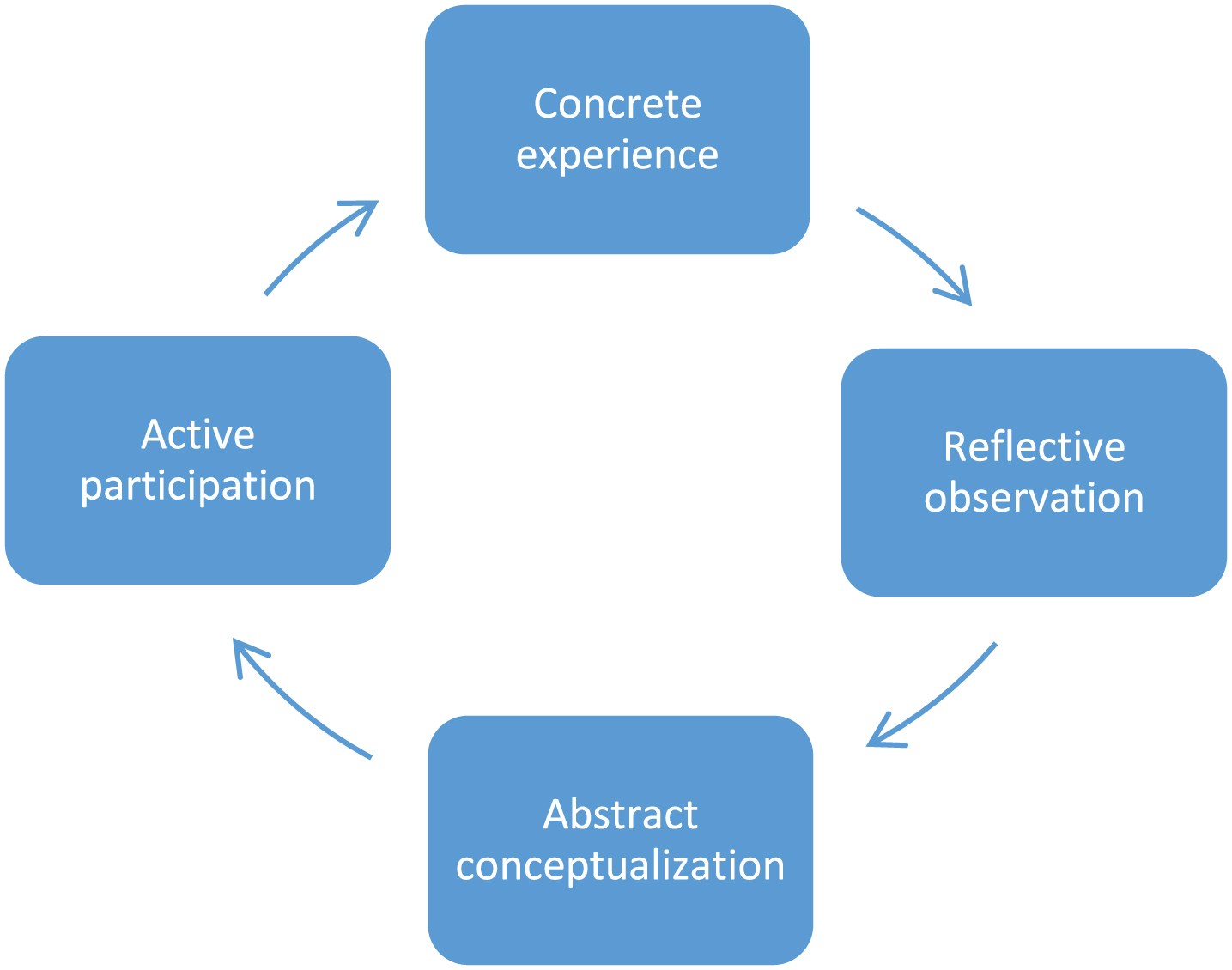
Kolb’s learning process cycle.
In experiential learning emerges as a result of gaining skills and students’ experience of structuring information [19]. Contrary to formal education in which transfer of knowledge is one-way and students are usually passive compared to the teachers, non-formal education has become one that frequently employs experiential learning [20]. Practices where individual experiences come to the forefront, while offering individuals the opportunity to use skills such as organizing their experiences, reflecting, problem solving, and making decisions, are also important in terms of developing skills and implementing newly acquired ideas [21]. Experiential learning can be used to help preservice teachers’ gain professional training so that preservice teachers get the chance to expand their knowledge. Experiential education would be a good starting point for preservice teachers and teachers to embark upon their journey of learning how to teach [22].
Traditional teaching brings out a superficial learning which is characterised by a high level of memorisation. Students remember very little of what they have learned, and they find it difficult to apply this learning into practice [23]. Course contents should be structured in such a way that students can use the knowledge they learned in previous courses to understand other courses and solve problems. With the methods or techniques to be used, students develop meaningful learning and participate in the lesson more motivated [24].
To prevent negative things in life sciences and chemistry such as rote learning, having difficulty with concepts, and anxiety, students should be helped to form experiences. Students may have limited opportunities to experience life sciences. Therefore, some of these students may find it challenging to understand the effects and consequences of the environment, natural resources, eco-systems, and human activities. Applied chemistry laboratory activities are a tool that guides the development of chemistry knowledge and how to teach chemistry for teachers and teacher candidates [25]. Experiential learning applications is one of the most effective methods to prevent this [26]. In experiential learning, students’ learning experiences become more meaningful because they are presented with a series of process or activities such as thinking, observation, and application. Activities related to chemistry will allow students to realise that chemistry is understandable and applicable [1], it will also allow them to understand the relationship between chemistry and daily life [27]. A chemistry teaching carried out by using virtual and actual tools makes it possible for students to understand subjects better [28]. In order to facilitate the transition from one stage to the next in the experiential learning cycle, and to reveal a richer and more effective learning journey, applications should be developed in the cycle steps. For example, instead of working with an existing equipment or simulation at the abstract conception stage, an action plan should be created based on knowledge from a learned theory and considering various possibilities. In the reflective observation phase, students can benefit from virtual platforms where they can examine different aspects of the subject without spending much time. The active experience phase should be structured in such a way that the student is not afraid of practice, and the risks and mental barriers at the time of the experiment should be removed. In concrete experience, the student should be provided with a unique learning experience. Here, an experience environment should be created in which experiences are repeated and meaningful results are produced [29]. Analytical chemistry and qualitative-quantitative analysis practices have an important place in chemistry education. How to obtain the amount of a specific substance in a sample by weighing the precipitated portion or measuring the volume of solution should be taught in analytical chemistry.
Traditional verification laboratory approach is generally used in the experiments conducted within the scope of laboratory courses. In this approach, students follow the experiment sheets given to them. While students do not have any problems in the preparation of the experiment, there are problems in the purpose of the experiment, calculations and conclusion parts. The students do not become aware of these problems during the laboratory lesson and do not attempt to solve them after the lesson. As a result, since the student does not realize what he/she is doing and for what purpose, he/she cannot learn the subject meaningfully and his/her success decreases. It is thought that the experiential learning method will be successful in solving this problem. The research in question was planned according to experiential learning in order to raise the awareness of pre-service teachers in the analytical chemistry laboratory what and for what purpose they would perform in experiments. It is aimed to examine the effect of experiential learning on scientific attitude in analytical chemistry laboratory.
Steps of experiential learning
In his experiential learning model, Kolb focuses on experiential learning process rather than the characteristics of static learning [30]. Experiential learning model envisages individual change and improvement [18]. In the experiential learning model carried out at the analytic chemistry lab, concrete experience, reflective observation, abstract conceptualisation, and active participation steps were followed. Activities were designed in accordance with these steps, and individual experiments were carried out.
During the stage called concrete experience, learners require specific cases and examples, and they need to be immersed in events. In this respect, it is emphasised that subjects should be related to real life in the concrete experience phase; it is also indicated that case study examinations and role-playing activities are appropriate for this learning style [10, 13].
Reflective observation is a learning in which developing different viewpoints by reflecting on the observed and learned things is important. This is about expressing their opinions and views on the subject, inquiring how facts are formed, and arriving at certain decisions [10].
In the abstract conceptualisation stage, contrary to learning by concrete experiences, the focus is on logic, thought, and concepts. This stage requires giving students theoretical information in a certain structure. Summarisations or lecturing done by the teacher are appropriate for this stage.
Having concrete experiences about learning in the first stage of learning cycle, the student gains different viewpoints by having a critical approach to these experiences in the second stage; and in the third stage, he or she comprehends the logical structure of the knowledge they gained through experience. The last stage of the learning cycle is active participation.
In the active participation stage, students should be allowed to learn through applications and to put their learning into practice. Instead of observing or listening, participating in an activity becomes more important in this stage. Students who prefer this type of learning like putting their learning into practice; in other words, they like seeing that their learning amounts to something [10].
Experiential learning is composed of four stages, namely, concrete experience, reflective observation, abstract conceptualisation, and active participation. These stages of experiential learning are highly appropriate to apply in qualitative analysis experiments in analytical chemistry. The aim of this study is to examine the effect of experiential learning based qualitative analysis experiments in analytical chemistry laboratory on preservice teachers’ scientific attitudes and to determine, through a “note to self” form, the points to consider in the lab.
Experimental section
Research design
The study was designed in the mixed method. Qualitative and quantitative research techniques were used together. Mixed method is defined as the combination of qualitative and quantitative research methods, techniques, and approaches [31]. Collecting the qualitative and quantitative data together is highly important for getting more accurate research results and for decreasing margin of error [32]. At the end of a study that was carried out in the mixed method, the researcher reaches quantitative data while at the same time he gets to explain qualitatively why such results are found out [33]. In the quantitative dimension of this study, pre-test-end-test data obtained from scientific attitude scale were analysed, and scientific attitude was investigated. In the qualitative dimension, content analysis of note to self-form was done.
Sampling
The sample group of the research consists of 27 preservice chemistry teachers’ studying in a public university. A purposeful convenience sampling method was used in the study. This sampling method offers researchers opportunities to overcome time-related problems and to be quickly and easily accessible to participants [34]. The research was conducted in the 2018-2019 spring semester. 55.6% of the preservice chemistry teachers’ participating in the study are female (N: 15) and 44.4% are male (N: 12). The research was carried out with 27 preservice chemistry teachers’, 14 preservice chemistry teachers’ in the experimental group and 13 preservice chemistry teachers’ in the control group. As the lessons were carried out with experiential learning approach in the experimental group; however, traditional verification laboratory approach was carried out in the control group.
Data collection tools
Scientific attitude scale
The scientific attitude scale developed by Moore and Foy [35] and it was adapted to Turkish by Demirbaş and Yağbasan [36]. It consisted of 40 statements in a 5-point Likert Type. Scale has six dimensions. These dimensions are the laws and/or theories of science, observation of natural phenomena and experimentation, operating in a scientific manner, science is an idea-generating activity, public understanding of science, being a scientist or working in a job. The Cronbach’s alpha reliability coefficient for the scale is 0.76.
Note to self-form
A Note to Self-Form was prepared to examine in detail preservice teachers’ views on qualitative analysis in analytical chemistry lab (Fig. 2). This form contains the expression: “What is the thing that you should be careful with for the experiment to be carried out next week? Take notes to yourself.” The views of two experts were consulted for the form (one is from the department of chemistry and the other from the department of chemistry education). Preservice teachers were given approximately 20 minutes to fill out the form.
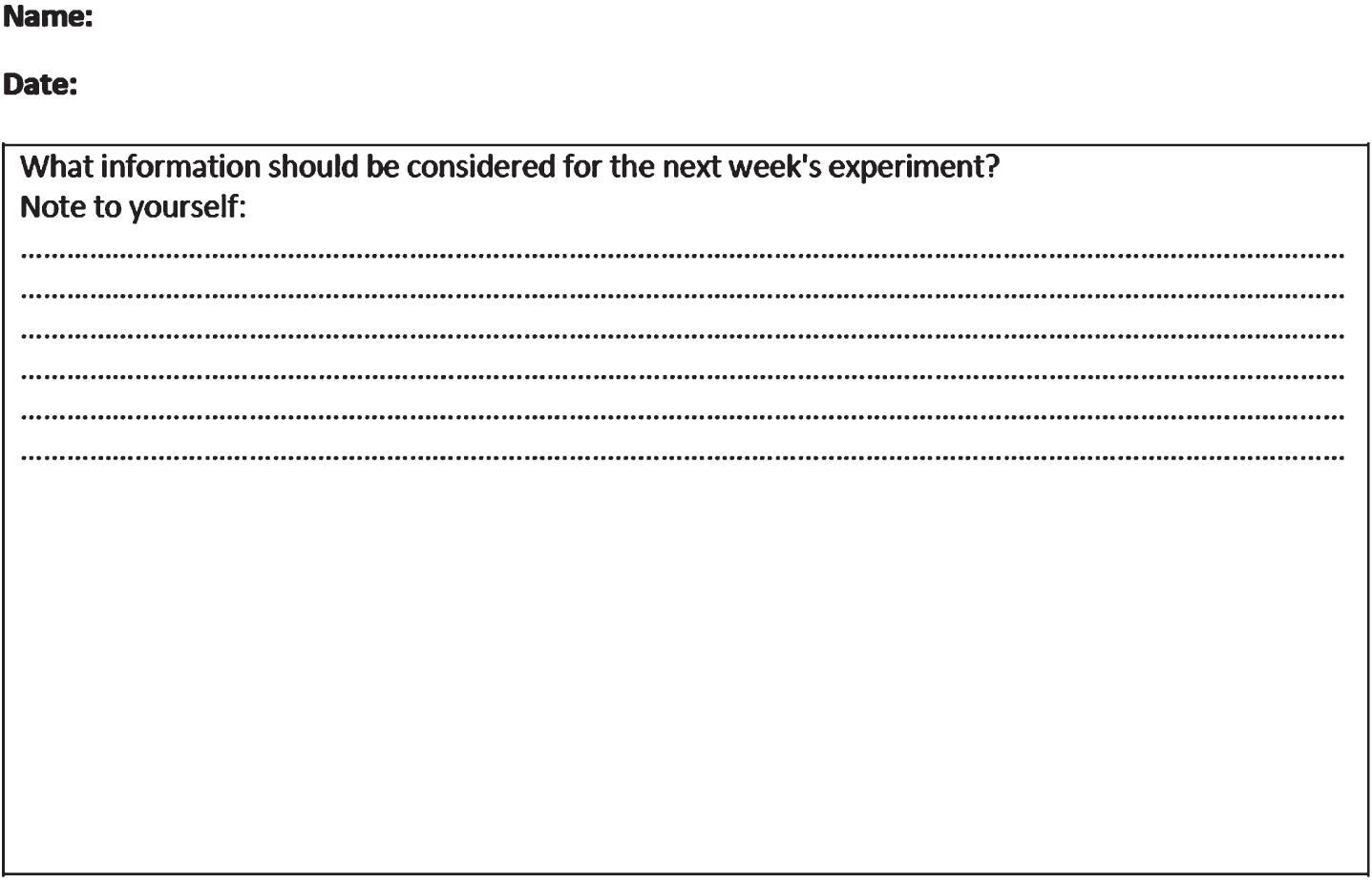
Note to self-form used in the study.
The study was carried out at the analytical chemistry lab throughout the 2018-2018 Spring semester. The 14-week process was presented in Table 1. Analytical chemistry laboratory course lasts 4 hours per week.
Research calendar
Research calendar
This study was planned according to experiential learning to raise awareness for preservice teachers to know what they will do to what end in analytical chemistry lab. It aimed to examine the effect of experiential learning in analytical chemistry lab on scientific attitude (Fig. 3).
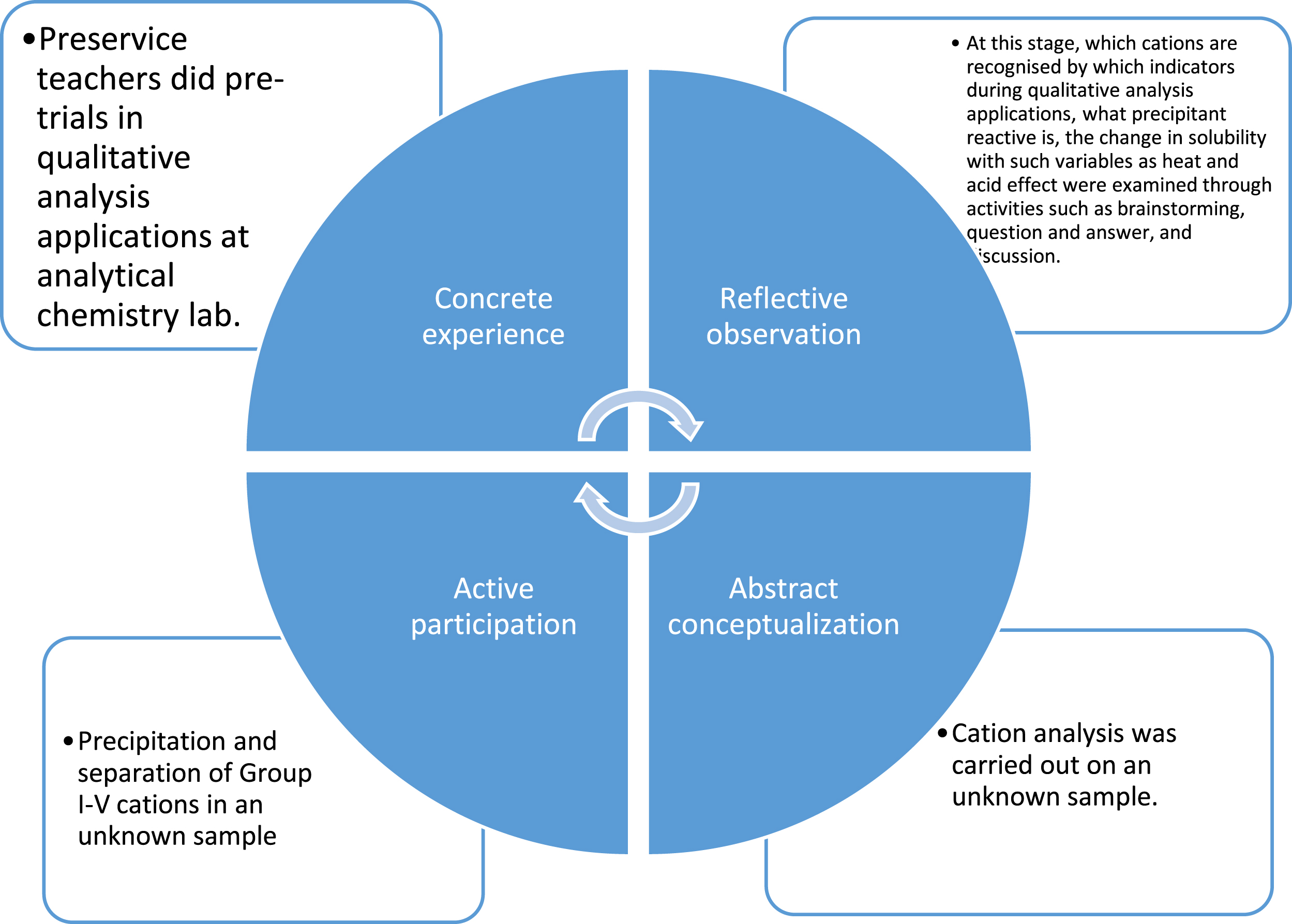
Experiential learning steps.
In the concrete experience stage, students feel the need to be in the situation, feel the experience taking place and examine different examples. At this stage, preservice teachers carried out preliminary test in their qualitative analysis applications at the analytical lab. The aim in these preliminary test is to examine each cation group separately and in detail. Those who do the analysis should take notes that clarify the analysis, which would then make it quite easy during the analysis (Fig. 4).
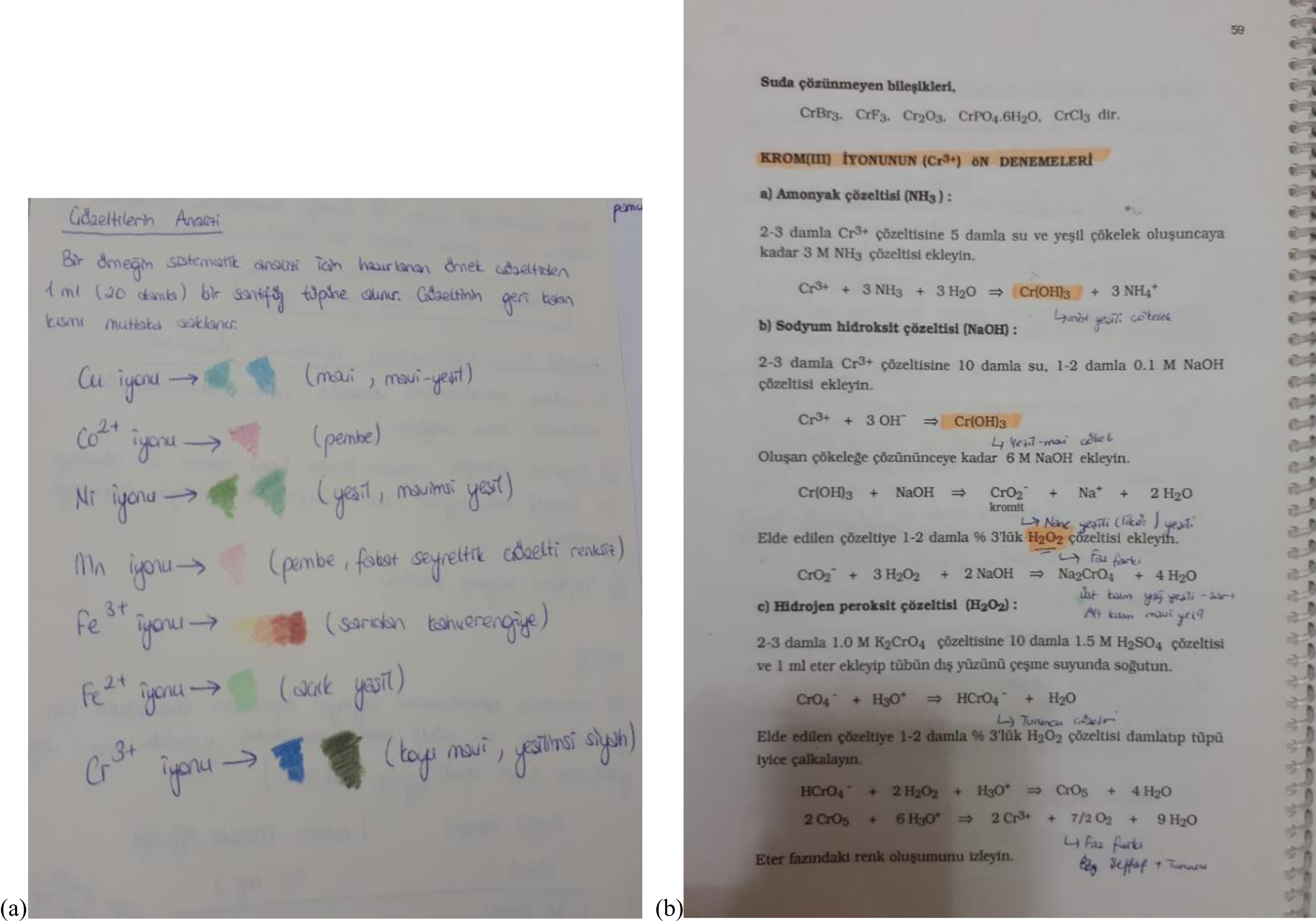
Student’s notes to self during preliminary test (a-b) (concrete experience).
During reflective observation stage, skills of reflection of thoughts and inquisition on a subject are on the fore. Which cations are recognised by which indicators during qualitative analysis applications, what precipitant reactive is, the change in solubility with such variables as heat and acid effect were examined through activities such as brainstorming, question and answer, and discussion (Fig. 5).
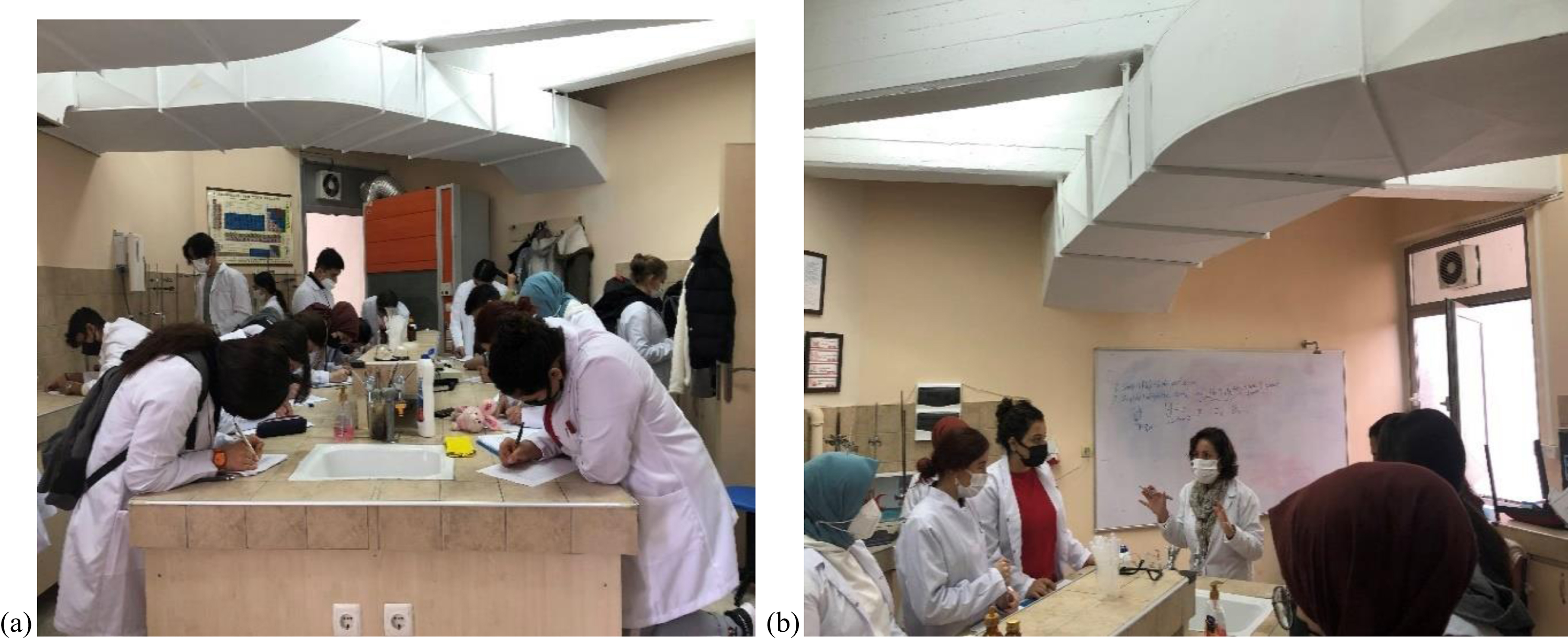
Teacher lecture, students taking notes as a group (a-b) (Reflective observation).
In abstract conceptualisation, students made a cation analysis on an unknown sample. In this stage, preservice teachers prepared explanatory collages for the ions they detected in their cation analysis samples. They supported the existence of ions by pictures and explanations. Moreover, they explained the existence of ions through the physical changes observed in another friend’s sample such as solution and precipitate (Fig. 6).

Student explanation and visual for the presence of Pb2 +, Ag+ and Hg22 + ion (a-b-c) (Abstract conceptualisation).
In the active participation stage, students get the chance to put their theoretical knowledge into practice. In other words, lab environment gives students the chance to practically apply their theoretical knowledge gathered during the abstract conceptualisation stage. In analytical chemistry qualitative analysis applications, 1–5 cation analyses are realised on an unknown sample. Given one or several examples from each group, students experience how they can carry out analyses when all cation groups are presented to them together. They plan the complicated analysis process; they try to get more accurate results by learning from their mistakes (Fig. 7).
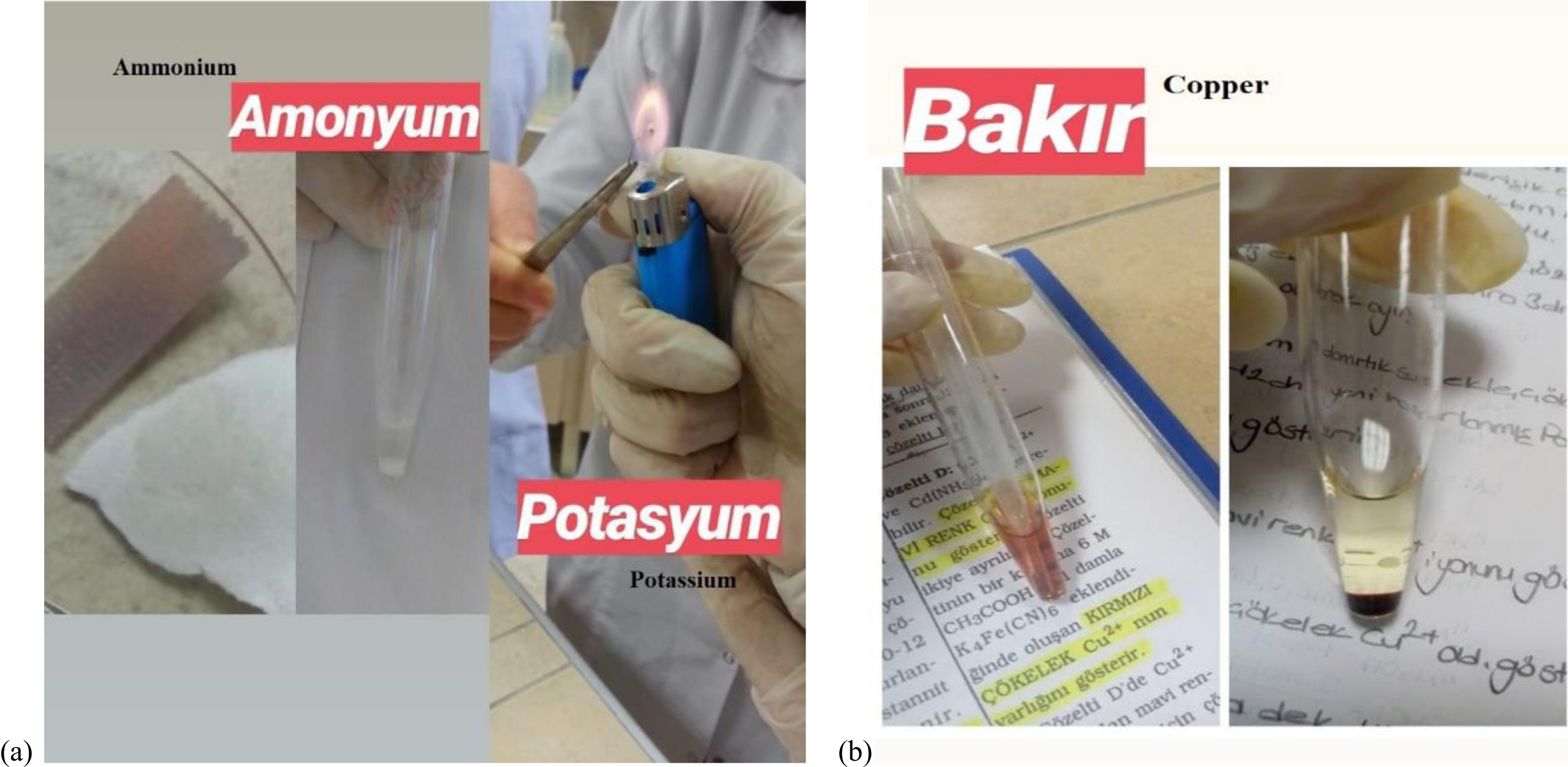
I-V Example to the collages prepared by students in cation analysis (a-b). (Active participation).
In the analysis of data obtained from the study, SPSS23 was used. To determine whether there is a discrepancy between the experiment and control groups prior to the applications, data obtained from scientific attitude scale were examined by Mann-Whitney U-Test. The difference between the pre-test and end-test scores after the experiential and traditional learning applications was examined by Wilcoxon Signed Rank test [37, 38]. First, assumption of normality was examined. Assumption of normality was statistically tested by the significance level of Kolmogorov Smirnov test. According to analysis results, because Kolmogorov Smirnov p < 0.05 normality assumption was not met, non-parametric tests were used [37, 38].
Qualitative data of the study were collected through a Note to Self-Form. Data obtained from the form were analysed by content analysis. Themes based on qualitative data were formed. Themes were presented by sample expressions quoting preservice teachers’ sentences directly (e.g., [S7]). The data obtained from the study were analyzed independently by two researchers and the inter-rater reliability scores were calculated as 0.96. This value indicates high reliability [39].
Results and discussions
Scientific attitude
In terms of the difference between pre-test and post-test scores were analysed the data’s obtained from study groups. In analysing the scientific attitude data, the differences between the experimental and control groups before the application was examined with Mann-Whitney U-test and the difference between pre-test and post-test scores for scientific attitude was examined by Wilcoxon signed rank test. Descriptive statistics related to pre-test post-test scores of scientific attitude was summarized in Table 2.
Descriptive statistics regarding pre-test and post-test scores on scientific attitude
Descriptive statistics regarding pre-test and post-test scores on scientific attitude
When Table 2 is examined, it is seen that the experimental and control group preservice chemistry teachers’ are very close in terms of scientific attitude. The differences between the experimental and control groups scientific attitude before the application was examined with Mann-Whitney U-test. The Mann-Whitney U-test detected no statistically significant difference in pre-test averages on the scientific attitude scale between the two groups (U = 71.500; p > 0.05).
The analysis of scientific attitude scale scores the experimental and control groups using the pre-test and post-test the Wilcoxon signed-rank test. Obtained findings are presented in Table 3.
Wilcoxon signed-rank test results using the scientific attitude scores of the experimental and control groups
*p < 0.05.
According to Table 3, both groups showed an increase in their average scores of scientific attitude, but the increase was statistically significant for the experimental group (Z: –2.042; p < 0.05) and not statistically significant for the control group (Z: –0.534; p > 0.05). According to these test results, it states that the experiential learning approach is more effective than the traditional verification method in improving the scientific attitudes of preservice chemistry teachers’. Then, the scientific attitude post-test scores of the experimental and control groups were analyzed. For this, the post-test scientific attitude scores were analyzed with the Mann-Whitney U-test. According to the analysis results, the difference between scientific attitude scale post-test averages between the experimental and control groups was not statistically significant (U = 77.50; p > 0.05).
The Mann-Whitney U-test and Wilcoxon signed-rank test were also applied to the sub-dimensions of the scientific attitude scale. In each sub-dimension of the scale, the pre-test/post-test scores of the experimental group and the pre-test / post-test scores of the control group were examined using the Wilcoxon signed-rank test. The post-test scores of the experimental and control groups in each sub-dimensions were analyzed using the Mann-Whitney U-test. Results are given in Table 4.
Wilcoxon signed-rank test and Mann Whitney u-test results concerning scientific attitude sub-dimensions
*p < 0.05.
When Table 4 is examined, the following results are noticed. There were increases from the pre-test to the post-test on all sub-dimensions. The laws and/or theories of science, which is the first dimension of the scale, is examined, the pre-test score of the experimental and control groups. According to the Wilcoxon signed-rank test results is not statistically significant (p > 0.05). The post-test scores of the experimental and control groups in first-dimension was analyzed with Mann-Whitney U-test and the results show that there is a statistically significant difference between experimental and control groups (p < 0.05).
In the second dimension of the scale observation of natural phenomena and experimentation, the difference between pre-test/post-test in the experimental group is not statistically significant (p > 0.05). The difference between pre-test/post-test in the control group is not statistically significant (p > 0.05). According to Mann-Whitney U-test results the post-test scores of the experimental and control groups is not significant (p > 0.05).
In the third dimension of the scale, in the operating in a scientific manner, the difference between pre-test/post-test in both experimental group and control group is not statistically significant (p > 0.05). The post-test scores of the experimental and control groups is not significant (p > 0.05).
The fourth dimension of the scale in science is an idea-generating activity analysis, the difference between pre-test/post-test in the experimental group is not statistically significant (p > 0.05). The difference between pre-test / post-test in the control group is not statistically significant (p > 0.05). The difference between the post-test scores of the experimental and control groups is not statistically significant (p > 0.05).
In the fifth dimension of the scale, the difference between pre-test / post-test in experimental group and control group is not statistically significant and the post-test scores of the experimental and control groups is still not statistically significant (p > 0.05).
In the sixth and final dimension of the scale, the examination of being a scientist or working in a job the difference between pre-test/post-test in the experimental group is statistically significant (p < 0.05). The difference between pre-test/post-test in the control group is not statistically significant (p > 0.05). The difference between the post-test scores of the experimental and control groups is not statistically significant (p > 0.05).
Note to self-form was designed to reveal the effectiveness of the process and to determine the positive and negative situations arising in the lab during the application process. Connection between preservice teachers’ answers were made meaningful by using codes. The experiment process was taken into account when forming the codes. Codes determined according to the findings obtained from the form and students who stated their view were presented in Table 5.
Codes related to note to self-form
Codes related to note to self-form
When the data obtained from the note to self-form were examined by content analysis, preservice teachers’ notes were categorised as cognitive field note, sensory field note, and psychomotor field note. Expressions in the cognitive field note are as follows: “We should definitely study this subject carefully. Free time should be put to good use. One should be extra careful” [S1]”, and “I should come to class more informed by studying harder for the calculation parts. Next week I will come to class sure of myself knowing what I am doing by reading class notes [S21].” In the sensory field note, expressions are as follows: “I am highly nervous before doing the experiment. This forces me to be slow and prudent during the experiment. Thus, I waste time and get more nervous because of that. Do the experiments more confidently and less anxiously [S2],” “During the experiment, I am a bit too nervous and anxious. I move slowly for fear of making a mistake and I am never sure of myself. I can do better maybe if I trust myself a little bit. Trust yourself. [S26].” Expressions in the psychomotor field note are as follows: “I drip too much while using the plastic dropper. I am heavy handed. I should be more meticulous when cleaning up after myself [S14],” “I am clumsy during the experiment; I drop things and spill them. But I am sure one day I will manage to overcome this [S22].”
This research aims to determine the effect of experiential learning method on the scientific attitudes of pre-service chemistry teachers in analytical chemistry laboratory and to determine the points that should be considered while doing scientific research through the eyes of a preservice chemistry teachers’. As a result of the research, it was determined that experiential learning was effective in improving the scientific attitudes of preservice chemistry teachers’ in a meaningful way. The effect of experiential learning on scientific attitude is supported by other research results. When the sub-dimensions of the scientific attitude scale were examined in the study, it was found that the difference between the pre-test / post-test scores of the experimental and control groups in all dimensions of my scale was not significant. When the post-test scores of the experimental and control groups in all sub-dimensions of the scale are compared, a significant difference draws attention only in the first sub-dimension of the scale, the laws and / or theories of science.
These findings obtained from research support that experiential learning can improve scientific attitude. The studies that reveal the effectiveness of the experiential learning method in science lessons support the positive results obtained from the experiential learning application in the analytical chemistry laboratory. An experience should be presented in which students will be personally involved, so that students can combine system thinking such as green chemistry, life cycle thinking. This situation can be achieved through experiential learning. With the experiential learning approach, students realize the importance of sustainable practices in current industrial processes [40]. Inquiry questioning and argumentative thinking in laboratory lessons is very important for the formation of meaningful learning. When students experience an unexpected result while doing experiments in the laboratory, it creates a cognitive conflict in their minds. Students begin to review their previous knowledge to explain this unexpected result [41]. The application of experiential learning to life sciences brought about highly effective results. It was determined that experiential learning increases students’ interest in life sciences, and that it has a meaningful effect on academic success and learning science [42, 43].
Regarding the chemistry laboratory course and experiments, the students’ goals are listed as finishing the experiment quickly or quickly, getting good grades. It turns out that while doing the experiments, the students carry out the process without understanding the steps in the experiment [44]. In chemistry, a subject should be learned by dividing it into steps. The first step, the introductory step, should be of an immediately accessible level of difficulty, and each step should become progressively more challenging as they are exposed to new and increasingly complex material. For example, while planning a learning process consisting of three steps, the first step is to gain knowledge, the second step is to design and implement experiments, and the last step is to teach how to use the experiment in more complex situations. Learning by dividing into steps or modules meets the general learning objectives of the students, and the modules also ensure that the students are well engaged in the subject. Learning by dividing into modules and steps enables students to quickly gain competence in a complex subject [45]. Experiential learning method is one of the only methods to create deep understanding and conceptual learning. If one wants to apply experiential learning theory in a class, then first of all they should start the process with experiential learning education activities [46]. In the physics laboratory of high school students, experiential learning practices and the effect of traditional lesson approach on physics success were examined. According to the results of the research, there was no statistically significant difference between the two groups. However, in the group where experiential learning was applied, it was noticed that they achieved in-depth understanding and achieved conceptual learning while solving physics-related problems compared to the control group [47]. In the virtual chemistry laboratory, the effect of the innovation experiential learning model on academic success was examined. As a result of the research, it was determined that experiential learning significantly affects academic achievement and learning motivation. It was determined that the students using the experiential learning model understood chemical concepts better, and moreover, a virtual laboratory increased the motivation of the students about chemistry [48]. Theoretical knowledge in application-oriented fields such as science and chemistry should be supported by laboratory applications. Meanwhile, materials related to the experiments should be preferred. In this way, the student pays more attention and uses cognitive strategies to understand them [49].
When applied in the artificial intelligence steam education, students showed improvement not only in learning but also in understanding concepts thoroughly. Consequently, experiential learning improved students’ self-efficacy and increased their proficiencies in the newly learned subject [50]. It is reported that experiential learning is an effective pedagogical tool to develop science and engineering applications [51]. In addition, it was determined that the problem-based experiential and demonstration method in physics teaching was effective in increasing the success and the development of scientific attitude [52]. In lessons such as analytical chemistry, appropriate methods should be used to remove the complexity of their concepts and create meaningful learning. In this research, analytical chemistry quantitative analysis applications are planned according to the experiential learning steps in order to make the learning of the students comprehensive. As a result, both the preservice chemistry teachers’ scientific attitudes increased significantly, and it was determined that they would not make these mistakes again with the notes they wrote during the experiment.
Conclusions
The research was carried out to examine the effect of experiential learning model on the scientific attitudes of preservice chemistry teachers’ in the analytical chemistry laboratory. Analytical chemistry laboratory is a very complex and difficult to understand course that includes qualitative quantitative analysis processes. In this course, while the students are doing the experiment, they also use the data they have obtained to calculate the results of the experiment. It is not enough to complete the experiment. It is necessary to calculate the result of the experiment correctly. This whole process is closely related to the attitude towards scientific work. Students work like scientists. With methods such as experiential learning, the complexity of this process can be reduced and students’ scientific attitudes can be increased. In future studies, the effectiveness of methods other than experiential learning should be examined. In addition, different from the analytical chemistry laboratory, general chemistry laboratory, physical chemistry laboratory and organic chemistry laboratory experiments should also be examined. Pre-service teachers should be given practical information that they can use in all laboratories and these difficulties should be eliminated according to the results.
Footnotes
Acknowledgment
I would like to thank the teacher candidates who participated in this research.