



Abstract
In our current study, we demonstrate that lanthanum and yttrium ortho ferrites can be synthesized using a combustion process called self-propagating, high-temperature synthesis (SHS) using lanthanum(III) oxide and yttrium(III)oxide, chromium oxide, Iron metal, and potassium perchlorate as raw materials. Synthesized lanthanide and yttrium orthoferrites were characterized by X-ray diffraction, scanning electron microscopy, energy-dispersive X-ray spectroscopy, and thermogravimetric differential scanning calorimetry techniques. The results show that the synthesized orthoferrites are of high quality with particle sizes less than 100 nm and showing less agglomeration. Synthesized lanthanum and yttrium orthoferrites exhibited electrical conductivities around 50 kHz for different temperatures ranging from 35 to 500°C. The rise in conductivity is found to be linear with an increase in temperature. Herein, our work paves way for low-cost, large-scale production of lanthanide orthoferrites without the need for reaction solvents, which greatly opens up the scope for combustion-based synthesis approaches.
Keywords
Introduction
Solid-state chemistry is the study of the synthesis, structure, and physical properties of solid materials. It has a lot of similarities with solid-state physics, mineralogy, crystallography, ceramics, metallurgy, thermodynamics, material science, and electronics since it focuses on the synthesis and characterization of novel materials [1]. Among the various synthetic procedures are concentered, conventional solid-state reaction [2–4], sol-gel [5], combustion reaction [6, 7] and Pechini [8] can be familiar methods that can be cited. By substituting other trivalent cations for La3 +, such as Gd3 +, Sm3 +, or Yb3 +, the antiferromagnetic structure of lanthanum orthoferrite (LaFeO3) can be distorted. These rare-earth elements have a vital role in the total magnetic response of orthoferrite. Because of their ferromagnetic properties, these rare-earth ortho-ferrites could be a good choice for electronic devices [8]. Using non-magnetic Y3 + as a doping agent, on the other hand, makes it easier to evaluate the effect of the A-cation size on the magnetic properties of the compound. The manufacture of novel magnetic oxides has received a lot of attention in recent years, to identify their potential uses in microelectronics and multifunctional devices. In the hunt for a novel class of materials, a solid solution of mixed metal oxides has been discovered to be a feasible material with the advantages of easy alloying due to ionic radius of the same order. Metallic oxides find immense scope in various applications. Traditional chromium substituted lanthanum orthoferrite synthesis involves a two-step procedure: first, heating lanthanum, iron, and chromium(III) oxides in the air for 24 hours at 1000°C; then, sintering the reground samples in an oxygen atmosphere for 24 hours at 1400°C [9]. Recently metal oxides have been the subject of much interest because of their unusual optical, electronic, magnetic, and conductive properties, which differ from the bulk. Synthesis of lanthanum ortho ferrites and yttrium ortho ferrites was carried out. The metal oxides are cheap, non-toxic, and very stable against photo corrosion, by regenerating metallic oxides, they have used an oxygen carrier for a combustion process. Recently chromium concentrated effects on transport and dielectric behavior of lanthanum-gallium ferrites also attracted much attention [10], Perovskites containing transition metals make up the majority of multiferroics compounds. The multiferroic character of the LaFeO3 compound is taken into account. It also has good thermal stability, is non-toxic, and has forbidden band energy [11, 12]. Single-phase multiferroic based doped transition metal orthoferrites and their influence of Zn doping on structural, Optical, and Dielectric properties have also been studied [13]. The LaFeO3 system is discovered to have a perovskite structure with space group orthorhombic symmetry Pbnm [14, 15]. A comparison of structural, vibrational, and magnetic properties of La and Y orthoferrites has also been investigated [16]. Chemical doping and mechanochemical activation have a significant impact on the magnetic behavior of yttrium-lanthanum orthoferrites [17]. The magnetic interactions of these kinds of orthoferrites prepared by co-precipitation methods have also received much attention [18]. Ionic-electronic conduction is observed in the lanthanum orthoferrite system. As a result, it is important for electro ceramic applications [19, 20]. Similar materials are also being investigated as catalysts [21, 22], solid oxide fuel cells [23], chemical sensors [24, 25], nonvolatile magnetic memory devices, and ultrasensitive magnetic read-heads in contemporary hard disc drivers. [26–28]. Many approaches, such as thermal and solid-state reactions, can be employed to make the lanthanum orthoferrite LaFeO3 compound. [29–31]. This present work aims to synthesize lanthanide ortho ferrites, and mixed metallic oxides and to investigate the electrical response, dielectric and magnetic behavior of yttrium-lanthanide ortho ferrites.
Experimental details
Materials & methods
La2O3, CrO3, Y2O3, Iron metal, and Potassium Perchlorate (commercial reagents, 99.9%) were used as such without any purification. XRD was recorded using a PW 1830 / 40 diffractometer with CuK α radiation, 2 θ in the range of 10 –70 deg. and scan step = 0.02 degree/s. HIOKI LCR HITESTER 3532 was used to evaluate the variations in their dielectric behavior. The studies used a two-terminal sample holder wherein, the samples were held between the electrodes in a copper sample holder, and good contact was maintained at all reaction temperatures under a well-insulated ambience. The temperature was monitored using a thermocouple that was mounted near the lower electrode. used to compute the dielectric loss and constant of the synthesized sample, lanthanide ortho ferrites, in the frequency range of 50 Hz to 5 MHz. Pellets of uniform size were put between the two copper electrodes to construct a parallel plate capacitor. To guarantee proper electrical contact, silver paint was coated on the sample’s surface. The capacitance and loss were tested at five different temperatures: 35°C, 150°C, 250°C, 350°C, and 450°C, with applied frequencies ranging from 50 Hz to 5 Hz. Scanning electron microscopy (SEM) and energy dispersive analysis of X-ray (EDAX) investigations were carried out using a Hitachi S4000. Stanton Redcroft STA –780 simultaneous thermal analyzers were used to record TG / DTA in a nitrogen atmosphere. The tests were performed on platinum crucibles with a sample size of 5 to 15 mg and a reference of high purity alumina. The heating rate was set to 30°C per minute.
Sample collection and preparation
The reactants lanthanum(III) oxide, chromium oxide, Fe metal, and potassium perchlorate were used to create lanthanum ortho ferrites using self-propagating high-temperature synthesis (SHS). The reactions can be represented as
La2O3 + 2(1-x)Fe + xCrO3 + 0.75(1-x)KClO4 ⟶ 2LaFe1-xCrxO3 + 0.75(1-x)KCl
Y2O3 + 2(1-x)Fe + xCrO3 + 0.75(1-x)KClO4 ⟶ 2YFe1-xCrxO3 + 0.75(1-x)KCl
For this reaction x = 0.4, Fe is used a fuel source and CrO3 as a source of Chromium, KClO4 as an internal oxidizing agent. Chromium substituted Lanthanum ortho ferrites prepared by mixing lanthanum(III) oxide, chromium oxide, and Fe metal and potassium perchlorate. The sample was ground well. After grinding the sample was heated at 700°C for 2 hours in the furnace. Then the sample was cooled at room temperature. The potassium chloride was removed from the sample by washing it with water. Again the sample was ground and heated at 700°C for 2 hours in the furnace. Then it is allowed to cool to room temperature.
Results and discussion
XRD studies
Figures 1 2 show the XRD profiles of the synthesized lanthanum(LaFe1-xCrxO3) and yttrium orthoferrites (YFe1-xCrxO3). The XRD pattern of the YFe1-xCrxO3 oxide composite exhibits strong hexagonal system peaks at 33.49, 39.88, 43.29, 47.85, and 53.97 deg. The particle size of yttrium ferrite is 24.5 nm. In Fig. 2, the XRD pattern of LaFe1-xCrxO3 shows peaks around 28.71, 32.27, 42.71, and 41.06, 49.79 deg. due to the presence of chromium and lanthanum oxides. The 2 θ value for both the lanthanum and yttrium orthoferrites is compared with the JCPDS No. –340 529 to confirm the presence of iron in the above ferrites. Additionally, the 2 θ values of both chromium and lanthanum also agree with No.090332 and 401279 respectively. The particle size of lanthanum ferrite is 72.5 nm. With regard to average crystalline size calculation, we made use of the Debye-Scherrer equation (D = 0.89 λ / βCos θ), where λ is the wavelength of the x-ray source used in XRD, θ is the angle of maximum diffraction curve intensity and β is the full width in radians at half-maximum intensity (FWHM) [8, 38]. The corresponding XRD data of LaFe1-xCrxO3 and YFe1-xCrxO3 are presented in Tables 1 2.

X-ray diffraction pattern for YFe1-xCrxO3.
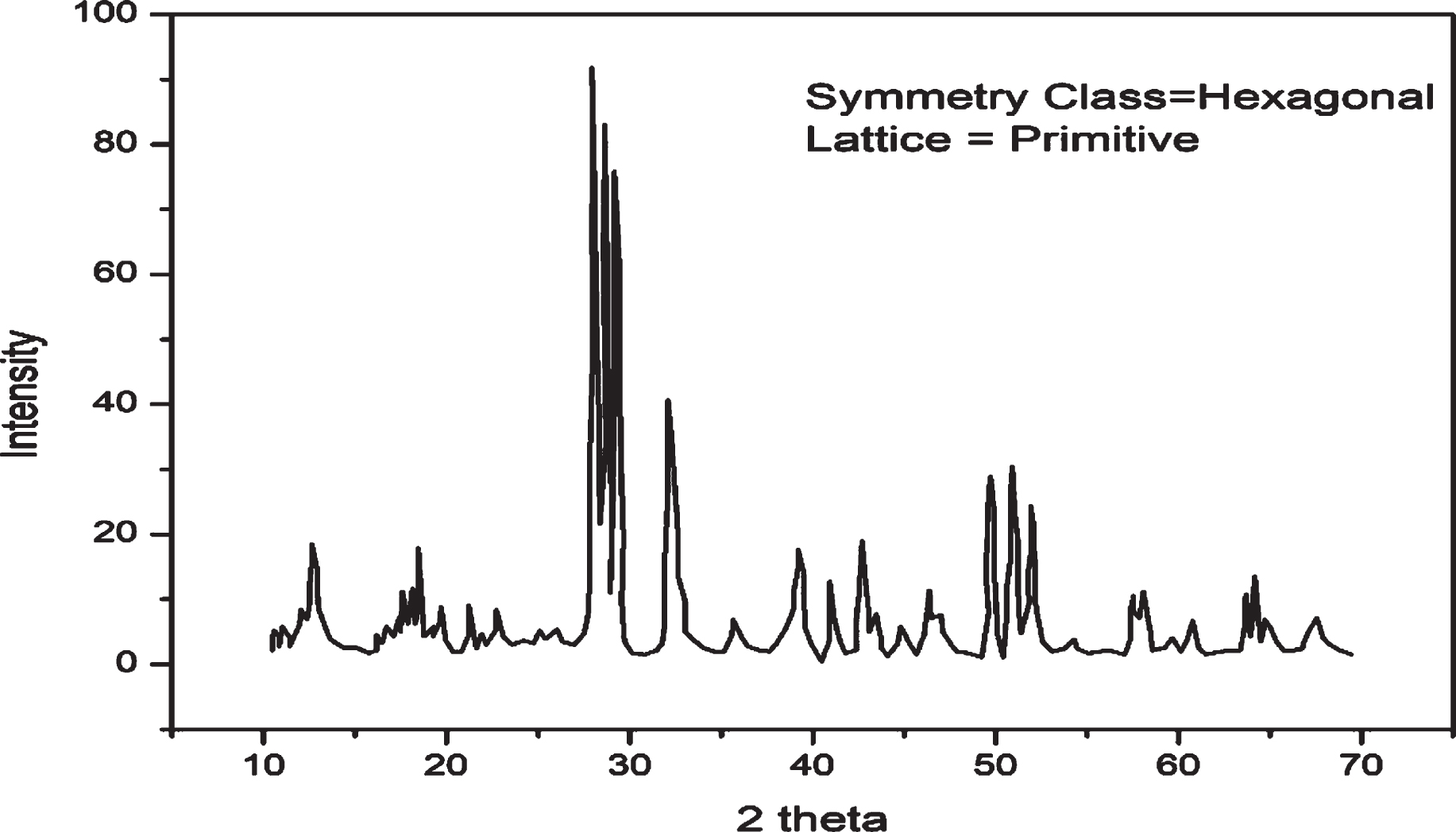
X-ray diffraction pattern for LaFe1-xCrxO3.
XRD data of LaFe1-xCrxO3
XRD data of YFe1-xCrxO3
The samples were maintained at various temperatures starting from room temperature and the dielectric parameters were observed for varying frequencies ranging from 50 Hz to 5 Hz. Figure 3 depicts the frequency dependence of the dielectric constant with respect to variations in reaction temperature. As indicated, the dielectric constant decreases relatively with increasing frequency and achieved saturation at higher frequencies. The dielectric constant of a material is determined by its electronic, ionic, dipolar, and space charge polarization. The increased value of the dielectric constant at low frequencies is subjected to the lower electrostatic binding strength caused by space charge polarization near the grain boundary contact. Figure 4 shows the temperature relationship of the dielectric constant for various frequencies. At different temperatures, the electrostatic loss showed a comparable fluctuation in frequency. The dielectric loss fluctuates with frequency in the temperature range of 35° C to 500° C, as seen in Figs. 5, 7. The dielectric loss decreased with increasing frequency (Figs. 6, 8) and followed the same pattern for ferroelectric materials. Such fluctuation in dielectric loss is primarily due to thermal activation process which can be explained using Maxwell-Wagner approach [8].

The dielectric constant variation of LaFe1-xCrxO3 as a function of frequencies and temperatures.

The dielectric constant variation of YFe1-xCrxO3 as a function of frequencies and temperatures.

The dielectric loss variation as a function of frequencies with temperatures for LaFe1-xCrxO3.

The dielectric loss variation as a function of frequencies with temperatures for YFe1-xCrxO3.
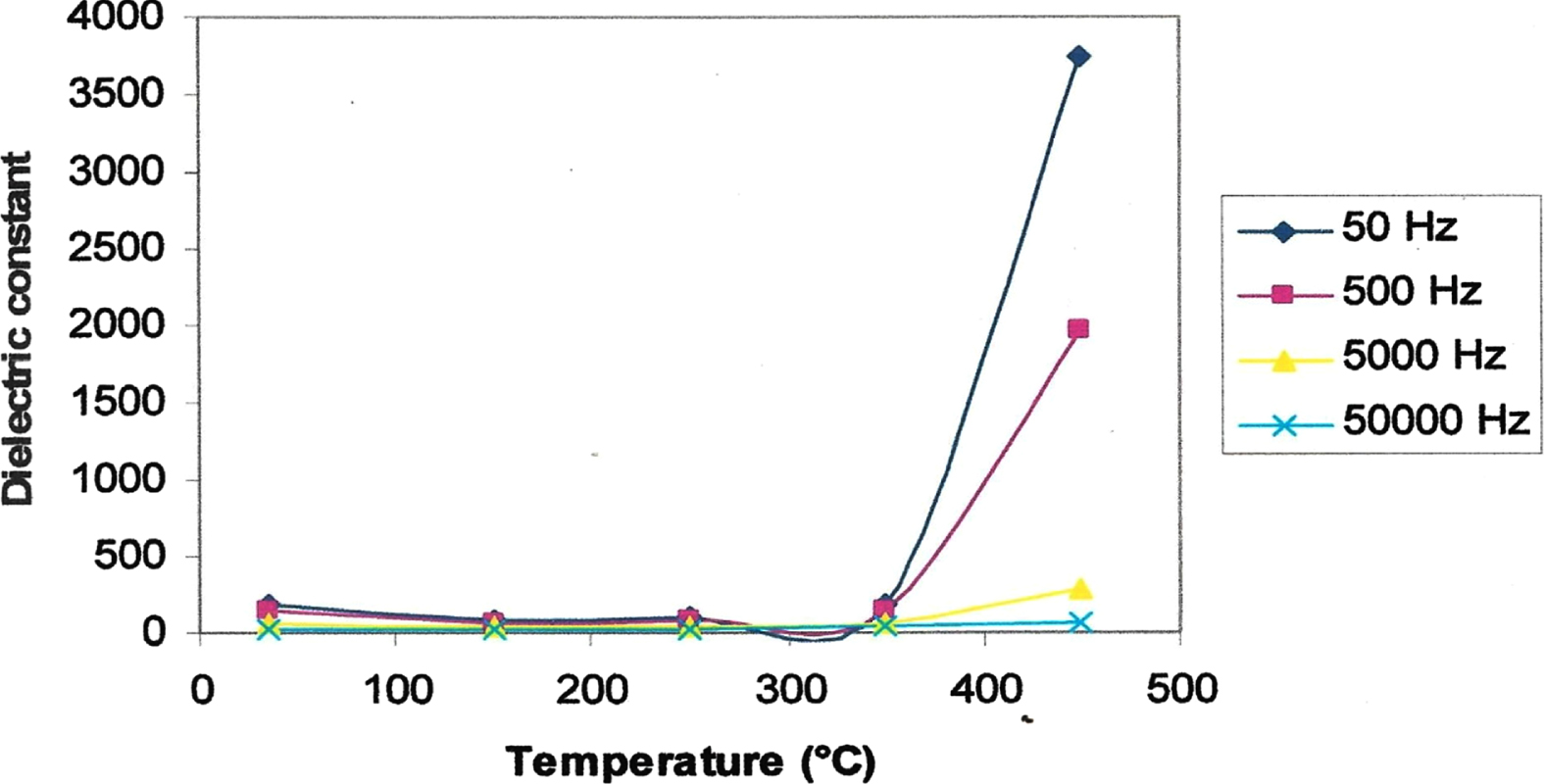
The dielectric constant variation of YFe1-xCrxO3 as a function of temperature for different frequencies.
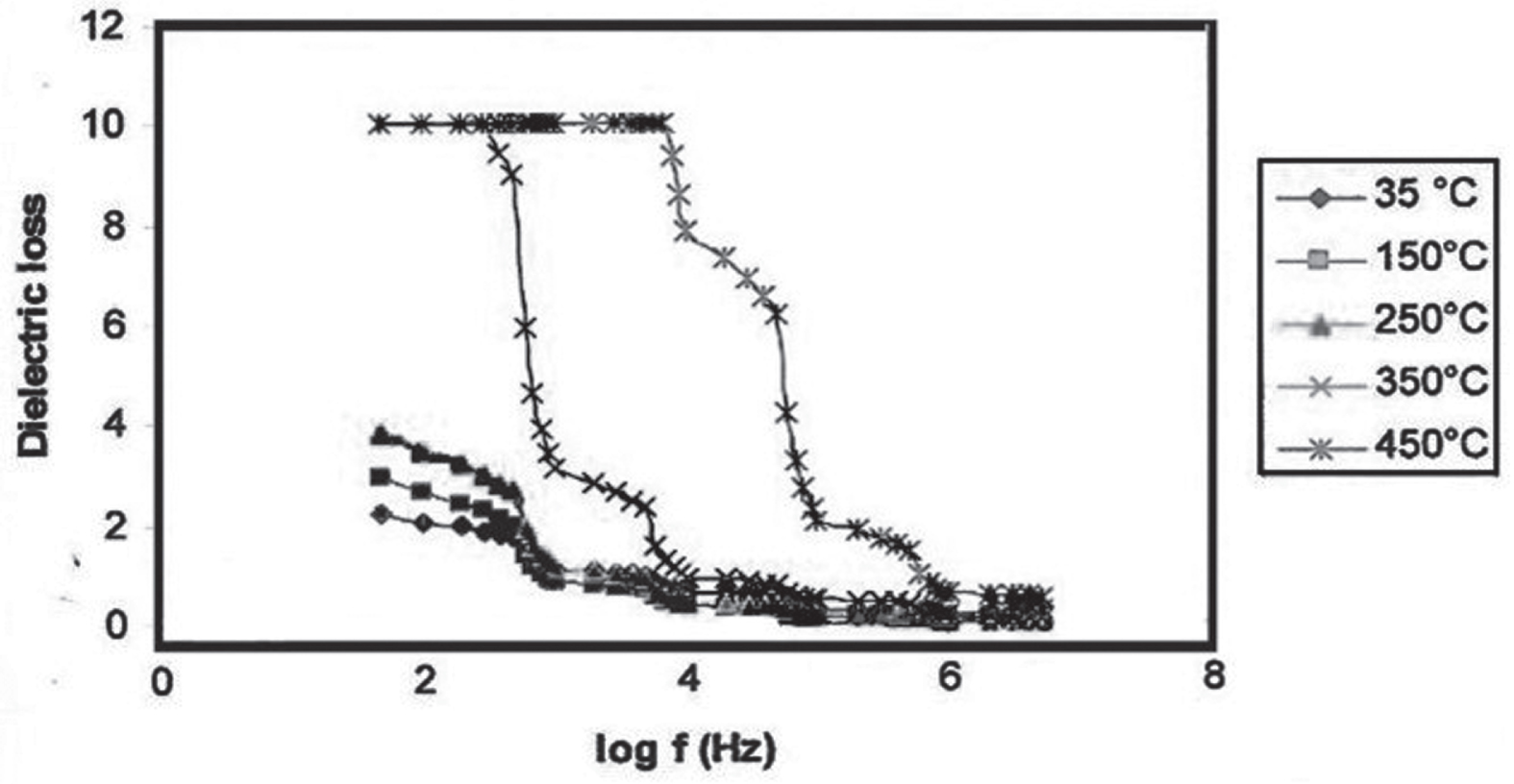
The plot of the variation of dielectric loss as a function of frequencies with temperatures for LaFe1-xCrxO3.
The electrical conductivity in LaFe1-xCrxO3 and YFe1-xCrxO3 samples were measured at 50 kHz for different temperatures from 308 K to 723 K. The variations of the conductivity versus temperature are shown in Figs. 9, 11. From the graph, conductivity is found to be linearly increase with increasing temperature, indicating the successful transition of samples from insulating to semiconducting nature [32, 33]. When it comes to the temperature dependence of electrical conductivity, the Arrhenius law is usually applied. From the below expression, the activation energy is calculated using

The plot of the variation of conductivity with different temperatures for LaFe1-xCrxO3.
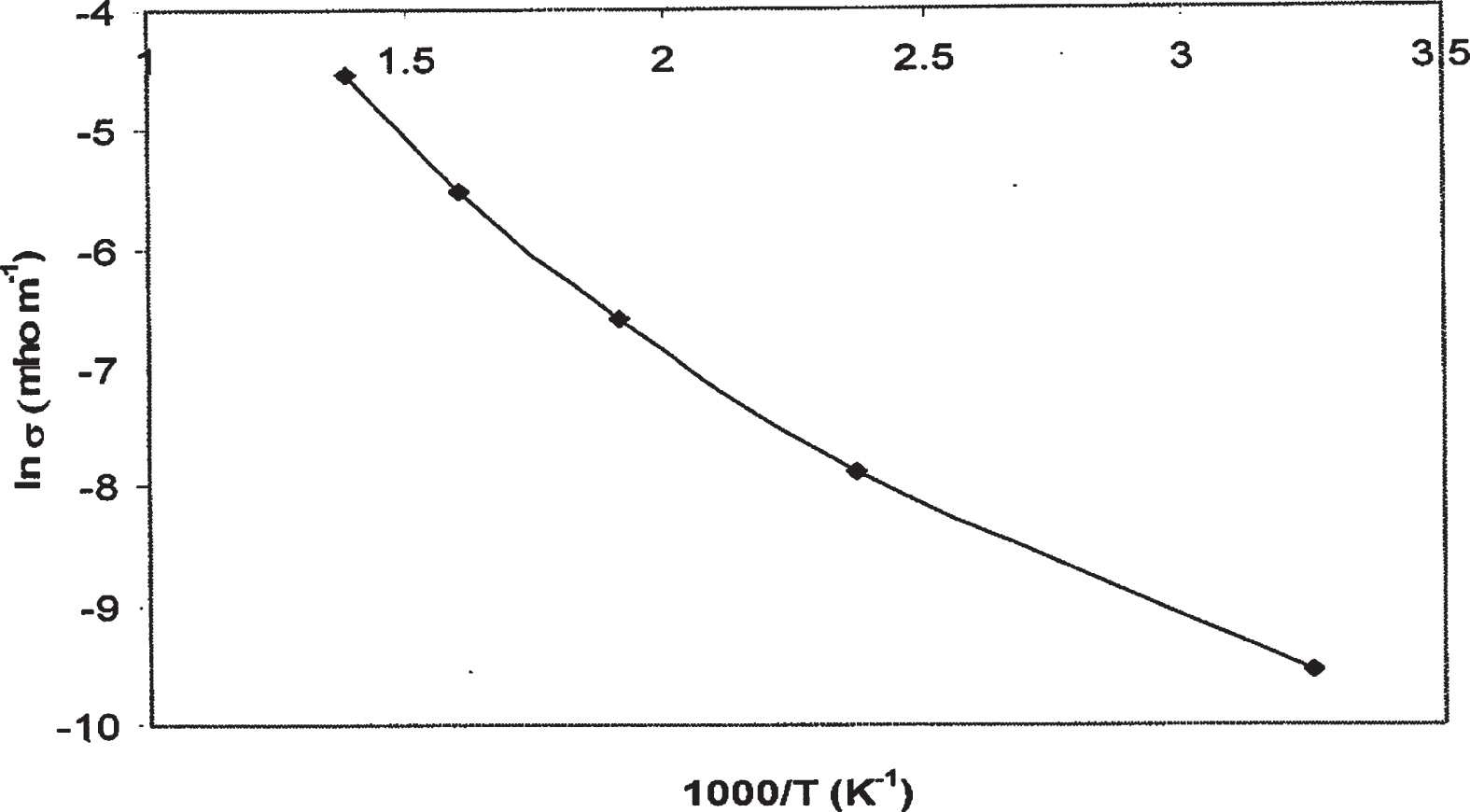
The Arrhenius plot of ln σ vs 1000 / T LaFe1-xCrxO3.

Variation of conductivity with different temperature for YFe1-xCrxO3.
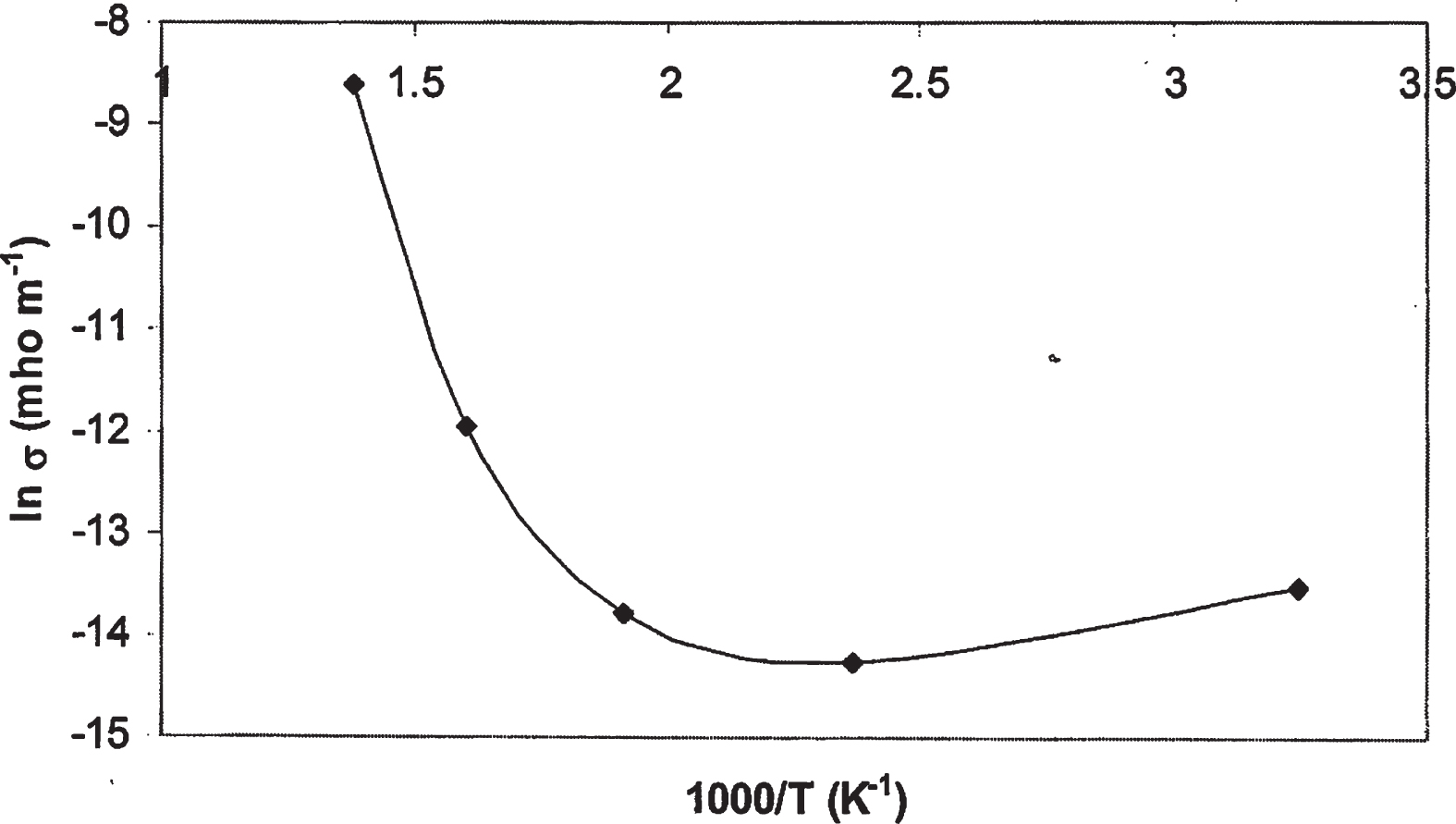
The Arrhenius plot of ln σ vs 1000 / T YFe1-xCrxO3.
TG analysis of Yttrium ferrite shows several weight loss steps commencing from 50°C to 850°C. Nearly, 2% weight loss is observed TG curve and under elevated temperature conditions, the metal oxides exhibit a stable TG curve (Figs. 13, 14). The presence of multiple endothermic and exothermic peaks is attributed to a shift in the nature of La2O3 . Such peaks are attributed to the loss of oxygen molecules within the lattice La2O3 [34, 35].
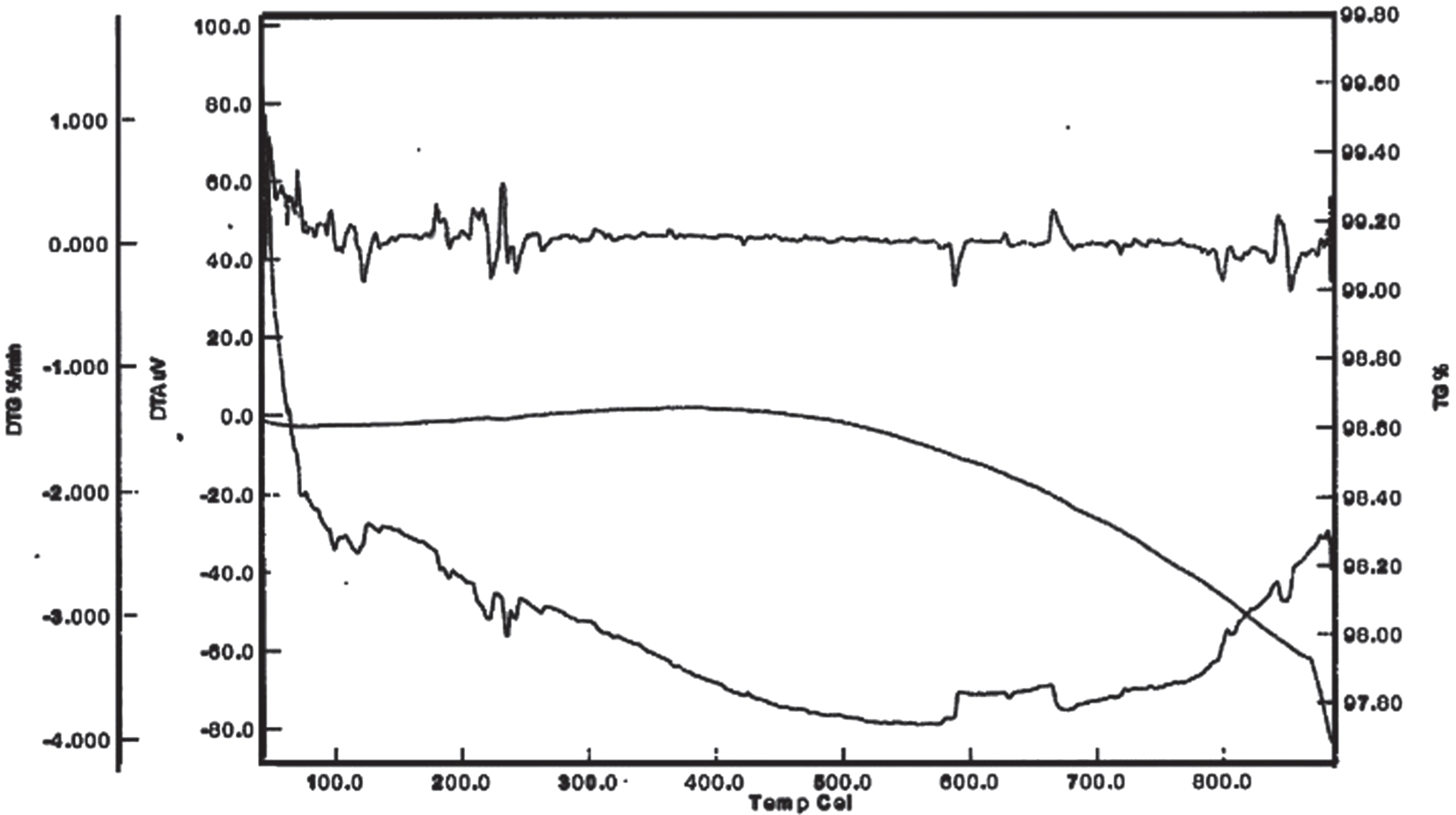
TG and DTA curves of YFe1-xCrxO3.

TG and DTA curves of LaFe1-xCrxO3.
The SEM study of the produced yttrium ortho ferrites powder exhibited multiple grains of sizes smaller than 100 nm Fig. 15 [36]. The presence of minor agglomeration of nano-sized particles is most likely due to the composition synthesis under high-temperature reaction conditions. However, the materials were found to be homogenous, with predicted Y:Fe:Cr elemental ratios, as observed in EDAX analysis (Fig. 16).
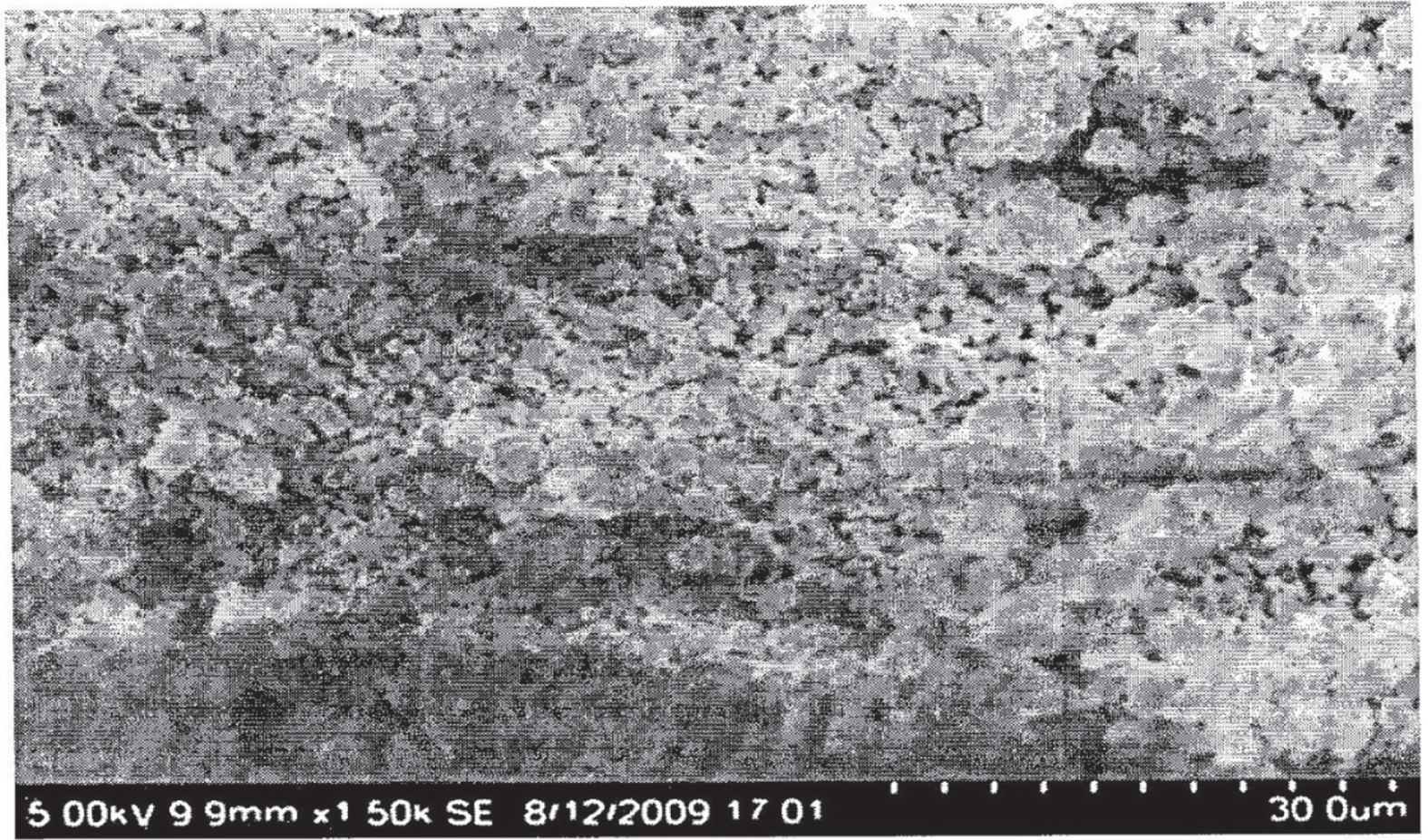
Scanning Electron Microscope image of YFe1-xCrxO3 at a magnification of 1500.
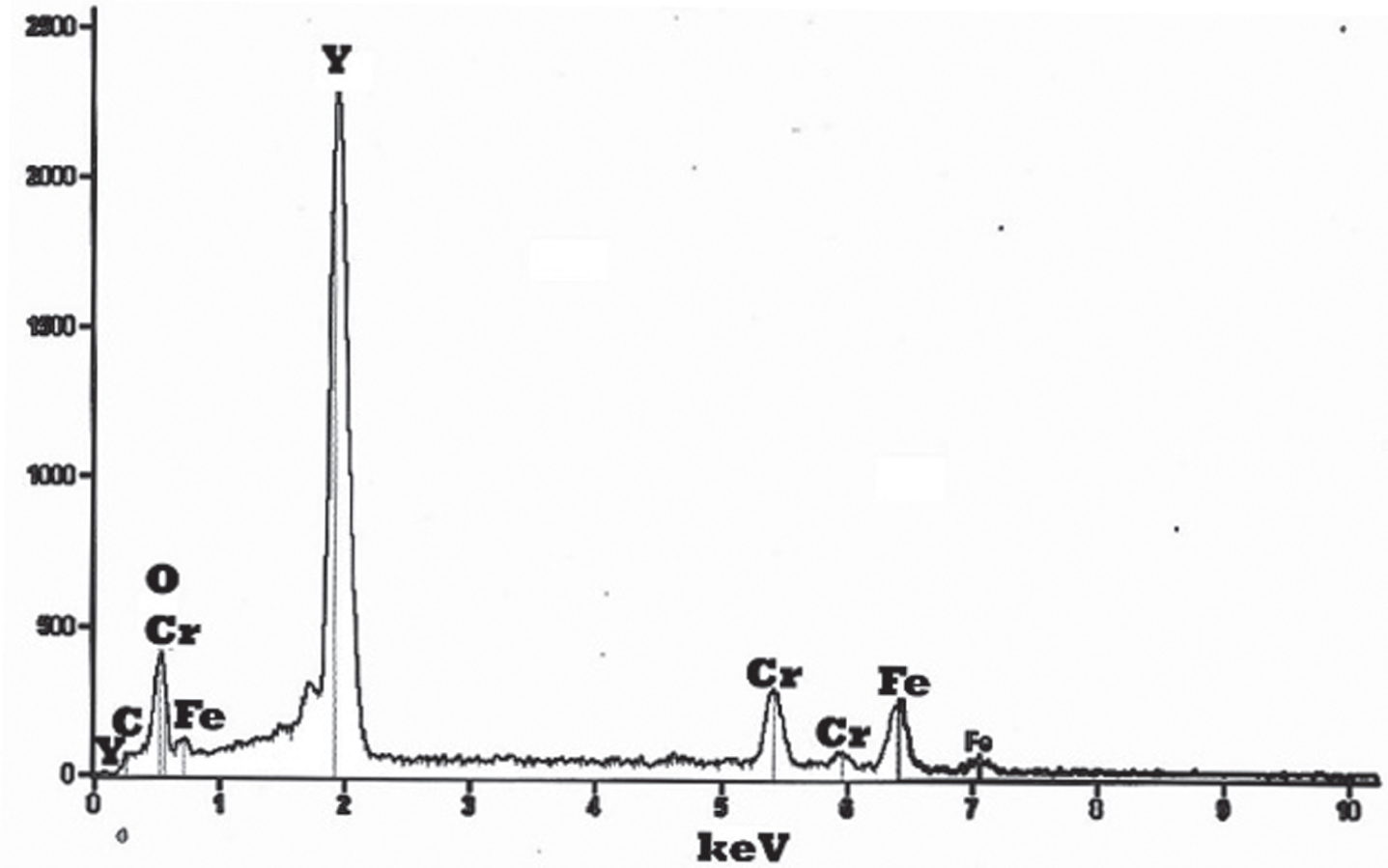
EDAX Spectrum of YFe1-xCrxO3.
Our current research study aims at a novel route of synthesis of metallic oxides such as lanthanum ortho ferrite and yttrium ortho ferrite via a self-propagating high-temperature synthesis mode. The prepared samples were strategically analyzed for crystal nature which exhibit closed relation to the standard data of FeCrO3 obtained from (JCPDS – Joint Committee Powder Diffraction Standard Data). By comparing the data of lanthanum ortho ferrites and yttrium ortho ferrite, symmetry class and lattice phase were found. Upon calculating the particle sizes using the Debye-Sherrer equation, YFe1-xCrxO3 and LaFe1-xCrxO3 lies at 24.5 nm and 72.5 nm. Studies on the dielectric constants demonstrated that bigger values are found at lower frequencies and drop with an increase in frequency. Samples with low dielectric constant under high frequency indicate the presence of superior optical quality which is critical for non-linear optical materials-based applications. TGA/DTA analysis also confirmed the purity of the samples wherein, the synthesized ferrites are said to be pure and stable up to 600°C, with no decomposition occurring in the temperature range of 0°C to 600°C. The oxygen loss in the La2O3 lattice is caused by the phase transition within the sample and holds the same for the majority of endothermic peaks in the DTA curve. Phase compositions, surface, and cross-section microstructures were determined by scanning electron microscopy. The SEM images showed homogeneous nano-sized agglomerates of crystallites with EDAX analysis revealing that the materials were homogenous, with predicted Y:Fe:Cr elemental ratios. It is evident from our work that the self-propagating high-temperature synthesis route provides an alternative way for the synthesis of mixed metallic oxides with pronounced dielectric values and lays a solid foundation for future studies.
Declaration of competing interest
The authors declare that they have no known competing financial interests or personal relationships that could have appeared to influence the work reported in this paper.
This research did not receive any specific grant from funding agencies in the public, commercial, or not-for-profit sectors.
Footnotes
Acknowledgments
The authors would like to express their gratitude to the Management of Loyola College (Autonomous), Chennai, Tamil Nadu, India, for carrying out this research work. The author L. Sakaya Sheela extends her sincere thanks to Dr. A. Jaya Rejendran, Associate Professor, Department of Chemistry, Loyola College, Chennai, Tamil Nadu, India, for her exceptional supervision, tremendous care, and continual support.