



Abstract
Using Cu(NO3)2·3H2O as active material and citric acid (CA) as complexing agent, heterogeneous catalyst nano-CuOx was prepared by sol-gel method. The catalytic wet peroxide oxidation (CWPO) reaction system was established accordingly. The system was used to treat ciprofloxacin (CIP) in simulated wastewater and real wastewater. The effects of the molar ratio of metal salt to CA, calcination temperature, H2O2 dosage, reaction temperature, and catalyst dosage on the physicochemical structure and the properties of CWPO were investigated. The results showed that when the molar ratio of CA to metal salt (Cu(NO3)2·3H2O) was 1.8, the calcination temperature was 500 °C, the concentration of H2O2 was 10 mmol · L–1, the reaction temperature was 95 °C, and the dosage of catalyst was 1 g · L–1, CWPO system has the best degradation effect on CIP. At thses optical conditions, the removal rate reached 86.8%, chemical oxygen demand (COD) removal rate reached 54.9%, and the recycling rate of the catalyst was very good. The refractory organics in actual pharmaceutical wastewater could be oxidized by this system as well, and the COD removal rate reaches 47%. The degradation mechanism of CIP showed that the main functions of the CWPO system were ·O2– and ·OH radicals. The possible degradation pathways were determined by ion chromatography to be intermediate products generated from piperazine ring cleavage, defluorination, decarboxylation, and quinoline hydroxylation of CIP. The catalyzing mechanism was investigated in detail; some useful information was obtained in this work.
Keywords
Introduction
As a kind of antibiotics, fluoroquinolones (FQs) often caused common harmful environmental pollutants. Moreover, the removal effect of the sewage treatment plant is not notable [1]. Among them, ciprofloxacin (CIP) as the second generation of fluoroquinolones drug, is frequently used in human life and animal husbandry due to its excellent bactericidal effect for promoting growth and treating diseases [2]. In CIP’s structure, it has fluoroquinolone and piperazine ring. The quinolone ring has two strong electron absorbing groups, i.e. fluorine and -COOH, which can adsorb with piperazine ring. CIP is a kind of pollutant which is difficult to be degraded [3]. It is a class of antibiotics, it also possesses stable properties and strong toxicity. When discharged into water, it could lead to the increase of drug-fast bacteria without being restricted by normal bacteria [4]. It poses a grievous risk to the ecological system and human health. Furthermore, large amounts of CIP have been confirmed to be still released into the environment. In particular, high concentrations of CIP have been detected in wastewater from pharmaceutical enterprises [5]. Therefore, how to economically and efficiently remove the residual antibiotics in water is a very important issue.
Numerous processing techniques have been reported to remove drug-like compounds, including biological, physical, chemical, and membrane treatments [6–11]. These include commonly used techniques such as photocatalysis, adsorption, and piezoelectric catalysis [12–14]. However, the residual antibiotics have a strong antibacterial effect on microorganisms, which makes the wastewater treatment process complicated and the effect unstable, thus limiting the use of biological methods. Physical methods only could transfer contaminants from one environment to another, but couldn’t completely remove the contaminants. It is generally difficult to completely degrade organic substances into CO2, H2O or other inorganic substances by conventional oxidation methods. The merits of membrane treatment processes are often limited by membrane fouling. Advanced oxidation processes (AOPs) can effectively remove the toxic, harmful and refractory organic pollutants from industrial wastewater [15]. The technology generates strong oxidative reactive species, such as hydroxyl radicals (·OH), to degrade organic pollutants through different modes of operation [16]. Among them, catalytic wet peroxide oxidation (CWPO) is a promising process, because it can degrade pollutants into CO2, N2 and inorganic ions by adding a catalyst, H2O2 as an oxidant under mild temperature and pressure operating conditions [17]. According to the status of catalyst in CWPO reaction, it can be divided into two categories, i.e. homogeneous CWPO and heterogeneous CWPO. In homogeneous CWPO process, catalyst dissolves in wastewater, resulting in loss of active components and secondary pollution, which requires follow-up treatment and increases the complexity of the process. Therefore, using insoluble solid catalyst instead of soluble metal salt catalyst under homogeneous CWPO condition to treat organic wastewater by heterogeneous CWPO method has become a research hotspot.
Nanomaterials refer to ultrafine materials whose crystal particles have at least one dimension in the three-dimensional spatial scale and are in the nanoscale [18]. When the particles are prepared in the nanometer scale, the original properties of the bulk material will be changed, and it has the characteristics of surface effect and small size effect [19]. Its characteristics make it extremely important in the field of wastewater treatment, and more extensive research on heterogeneous catalyst formation has been launched. Specific nanomaterials are synthesized by transition metal ions (Cu, Mn, Fe, Co, Ni, etc.) and oxidants are activated with different efficiency, thus producing different active species to degrade the pollutants [20]. For example, Saputra et al, have synthesized three kinds of MnO2 nanoparticles with different morphologies, and the catalytic degradation efficiency of phenol was different, indicating that different morphologies and different specific surface areas have different effects on the catalytic reaction [21]. Among various transition metal elements, copper is abundant and inexpensive. Importantly, Cu is of a 3d electron configuration, and of different oxidation states (Cu(II), Cu(I), and Cu(0)) with different valences usually have different catalytic performances in removing pollutants. The Cu (II) /Cu (I) redox cycle is thermodynamically favored [22]. CuOx nanoparticles are highly specific and can form supports with better dispersed surface area and narrower pore size distribution [23–25]. For example, Yu et al, have prepared three-dimensional candy-like nano-CuO, and the nano-CuO showed a high adsorption rate for arsenic (As) removal from water [26]. Therefore, copper-based materials as catalysts for CWPO systems have good degradation efficiency for high concentrations of refractory organic pollutants.
In this research, CIP was chosen as an imitated wastewater, and nano-CuOx was synthesized by a simple sol-gel method. The preparation conditions and stability of the materials prepared under different calcination temperatures were studied. The effects of H2O2 dosage, temperature, catalyst dosage and other reaction conditions on the degradation of ciprofloxacin simulated wastewater by the CWPO system were investigated. The reaction mechanism was analyzed by free radical trapping experiments. In addition, the treatment of actual pharmaceutical wastewater provides a technical reference for the practical application of the CWPO system.
Materials and methods
Synthesis of nano-CuOx
Firstly, an appropriate amount of copper nitrate (Cu(NO3)2·3H2O) and citric acid (CA) were weighed and dissolved in deionized water. Secondly, stirred the mixture in a water bath, raised the temperature to 80°C until the water evaporated completely to form a blue gel. The evaporated blue gel was dried in an oven at 120 °C drying for 12 hours. The dried loose and porous samples were ground and calcined in a muffle furnace at a programmed temperature of 5°C·min–1. Constant temperature calcination for 3.0 h at the set temperature, C400, C500, C600 catalysts were prepared by changing the calcination temperature, and M(CA): M(Cu) were synthesized by changing the molar ratio of CA to Cu(NO3)2·3H2O=1.5, 1.8, 2.1 catalysts.
Catalyst characterization
The phase composition and crystal structure of the prepared samples were determined by XRD (D8 Advance, Germany). Field emission scanning electron microscope (FESEM, GeminiSEM 300) was used to observe the micromorphology of the samples. XPS analysis was determined on a British X-ray photoelectron spectrometer (XSAM800).
Experimental methods
First, added 200 mL of CIP simulated wastewater with a concentration of 200 mg/L to the three-necked flask. The condensing device was turned on at the same time, and then heated in a constant temperature in oil bath at a certain temperature. When the solution temperature raises to a given temperature, added a certain amount of catalyst and a certain concentration of 30%H2O2 into the flask through the sampling port, closed the stopper, and then opened the stirrer. This was the time to start the reaction. During the period, an appropriate amount of water was taken from the sampling port according to the needs of the experiment. The absorbance was measured after being filtered through a 0.22μm filter. The reactor diagram was shown in Fig. 1.
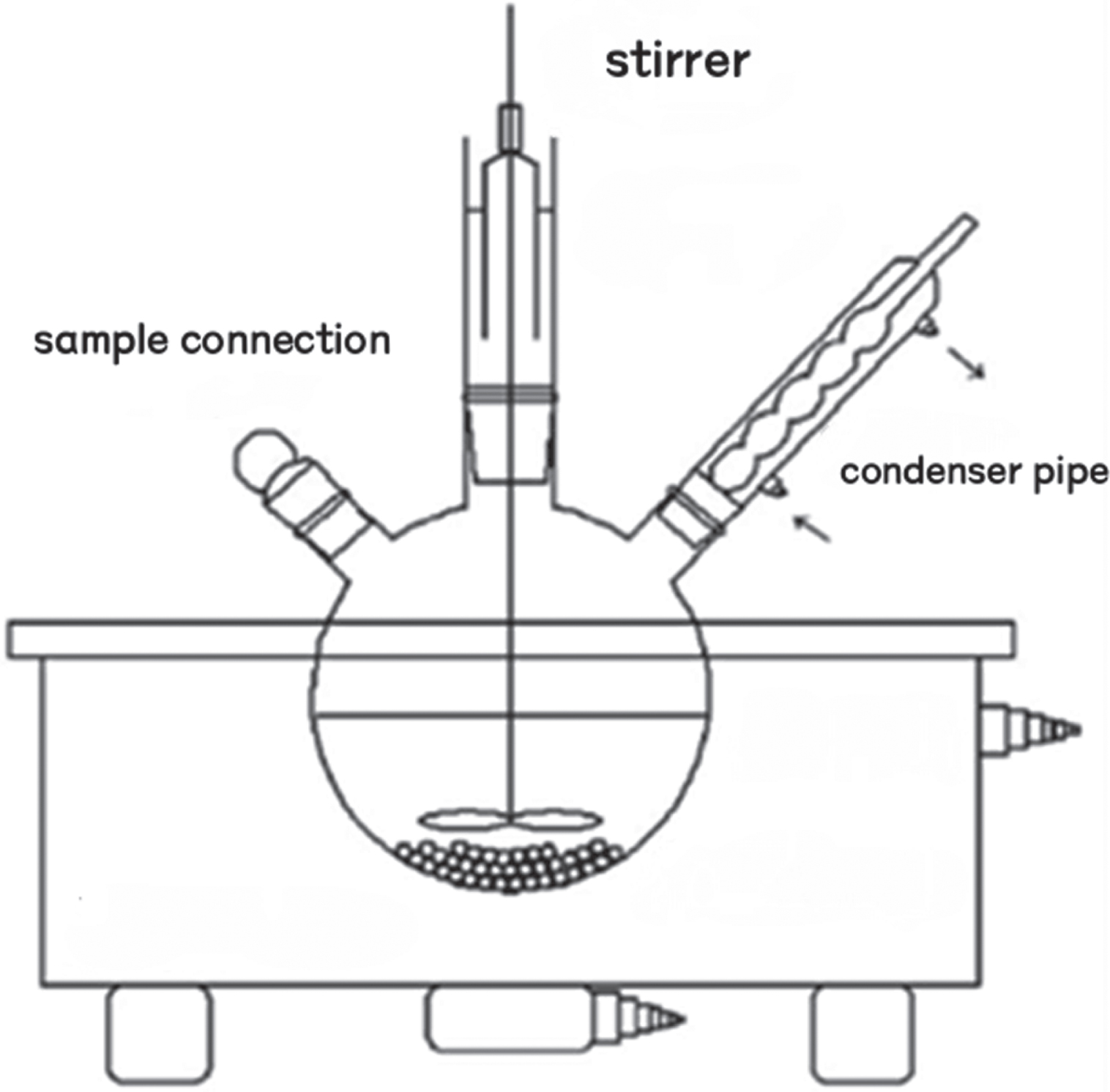
Reactor diagram of CWPO device.
Characterization of nano-CuOx
The XRD patterns of nano-CuOx at different calcination temperatures are shown in Fig. 2. The position of each diffraction peak in the spectrum was consistent with the standard spectrum (No. 72-0629) in the JCPDS database. At 2θ=32.5, 35.5, 38.7, 46.2, 48.8, 53.4, 58.2, 61.5, 65.8, 66.3, 68.0, 72.4, 74.9 and 75.2°, observed the characteristics of diffraction peak. They correspond to (110), (–111), (111), (311), (–112), (–202), (020), (202), (–113), (022) (311), (220), (311), (004) and (–222) crystal planes, respectively. CuOx had a monoclinic structure, and the peak intensity increase with the increase of calcination temperature. It indicated that as the calcination temperature increases, the grain crystallinity of nano-CuOx also increases. The crystal parameters of the material can be calculated according to the XRD pattern. The Scherrer formula was used to calculate the average crystallite size D of the crystals. The crystallite sizes of the catalysts at 400, 500 and 600°C were 27.6, 32.5 and 39.7 nm, respectively. Thus, the as-prepared catalyst material was a nanomaterial.
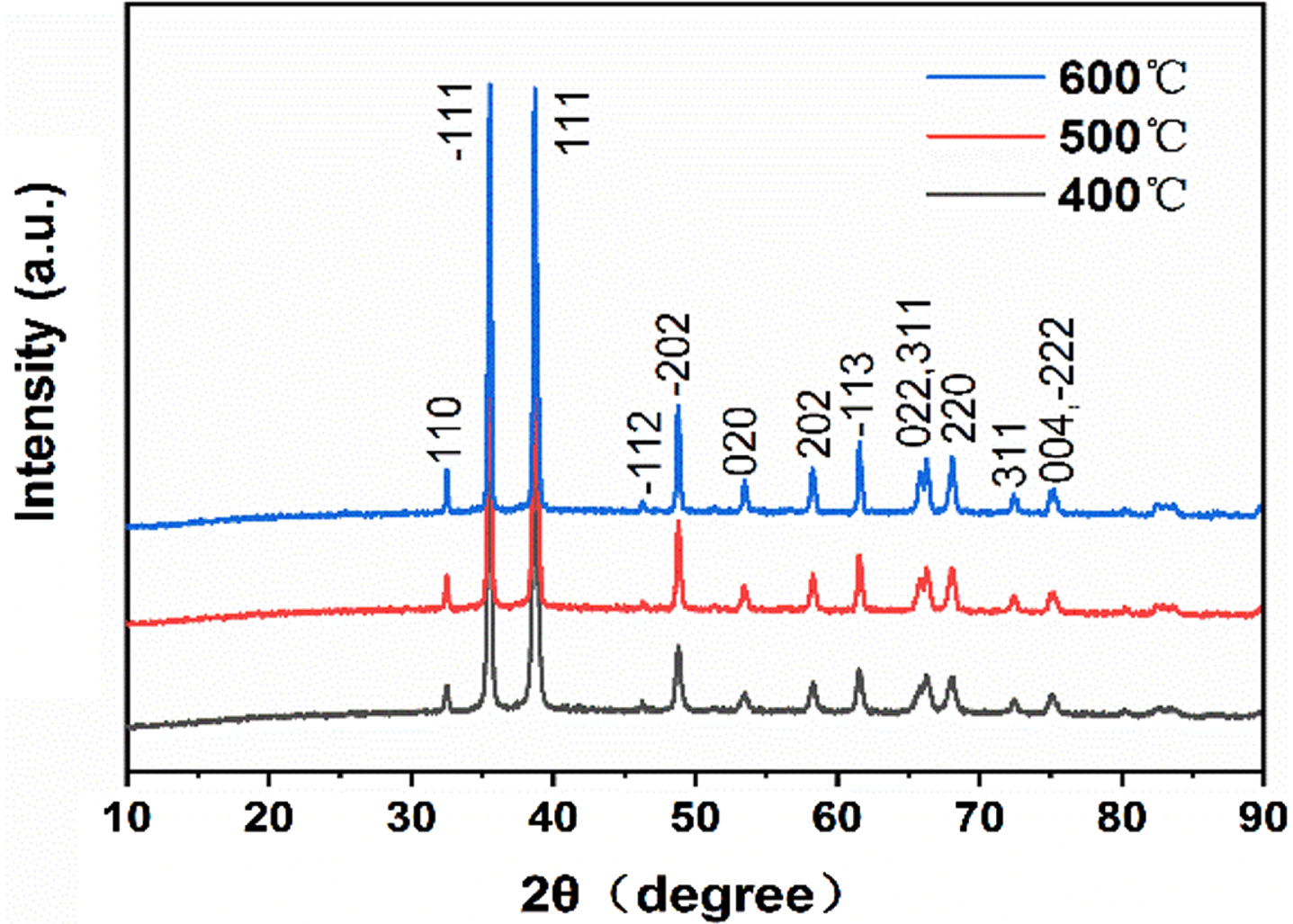
XRD patterns of copper oxide catalysts prepared at different calcination temperatures.
The results of the surface micro-morphology characterization of C500 catalyst using FESEM are shown in Fig. 3. In the 1μm spectrum (Fig. 3 (a)), the surface of the CuOx material was ravines-like and had some uneven holes, and there was agglomeration. This may be due to the fact that citric acid in the material precursor was oxidized to CO2 at high temperature during calcination during the preparation process, resulting in uneven surface of the calcined material and some pores. It has been reported that each catalyst particle may also contain a small amount of crystal, so the particle size shown by FESEM was larger than the crystal size calculated in Fig. 2 [27]. After the agglomerates were partially enlarged, it can be observed that there were pores on the surface of the material, which were block particles with different particle sizes and uniformity (Fig. 3 (b) and (c)).
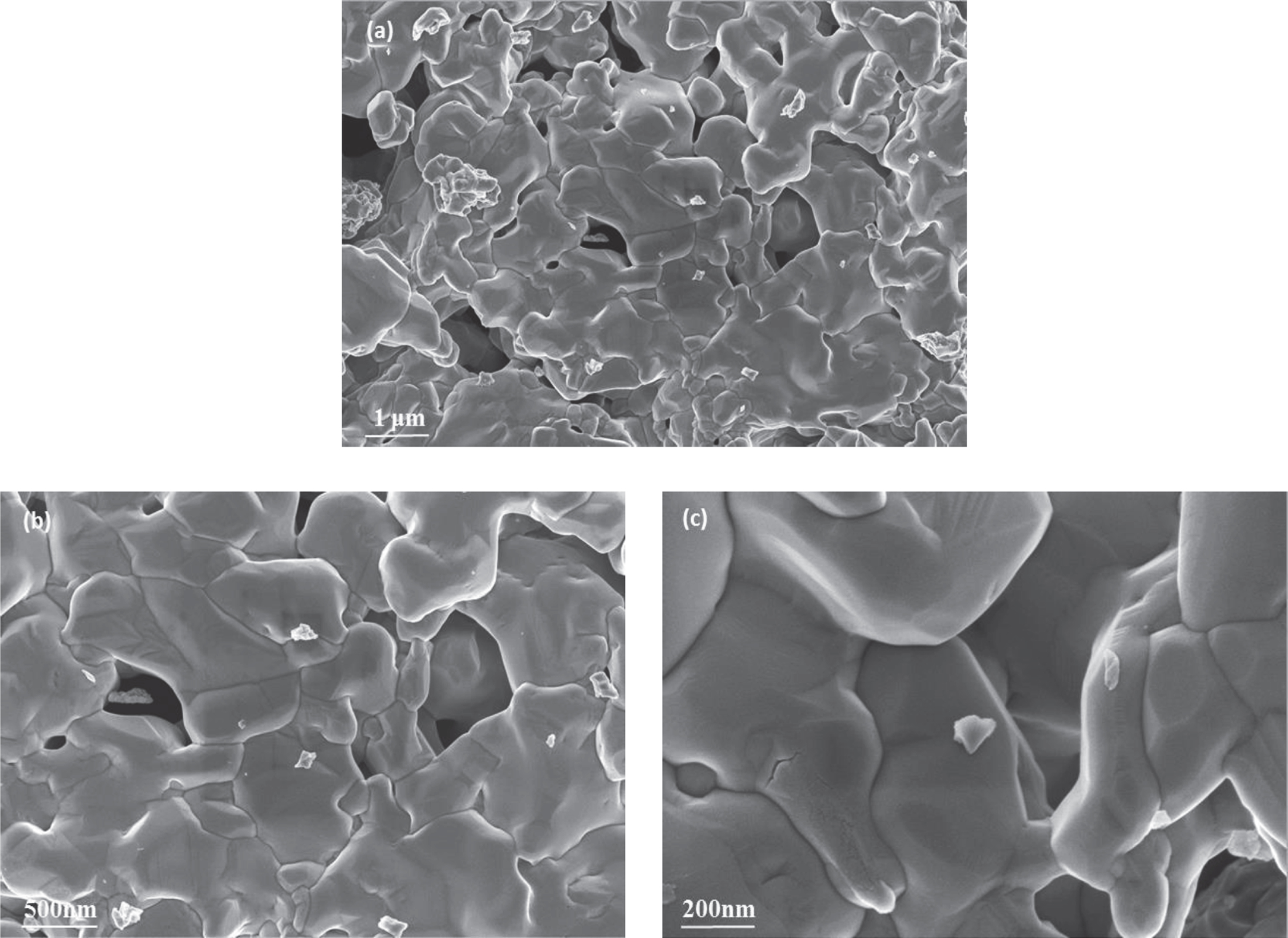
FESEM characterization of CuOx (a) 1μm, (b) 500 nm and (c) 200 nm patterns.
In order to eliminate the bias caused by the charging effect, all data need to be corrected with the binding energy of C 1 s as 284.8 eV. The characterization results of XPS were shown in Fig. 4. It can be seen from the Cu 2p spectrum of XPS (Fig. 4(a)). When the binding energies were 932.2, 934.0, 940.8, 943.2, 952.3, 954.38, and 961.9 eV, seven distinct XPS peaks can be seen, the peaks at 932.2, 952.3 and 954.38 eV belong to the main peaks of Cu 2p3/2 and Cu 2p1/2, respectively; The peaks at 961.9, 940.8, and 943.2 eV belong to the satellite peaks of Cu 2p3/2 and Cu 2p1/2, respectively. The peak with binding energy of 934.0 belongs to the characteristic peak of Cu+ [28]. It indicated that there may be a trace amount of Cu2O species, which can be related to the formation of reducing gases such as CO under citric acid or thermal decomposition during the preparation process of the catalyst, and these reducing gases are formed by the reduction of CuOx species under high temperature calcination. It is calculated that the proportion of Cu+ on the surface of CuOx was about 23.6%, indicated that there were certain oxygen vacancies on the surface. Figure 4(b) was the XPS O 1 s spectrum of CuOx, the peak around 529.3 eV was attributed to the lattice oxygen O2– on the catalyst surface. The peak of electron binding energy around 531.0 eV was related to the adsorption of oxygen O22– or O–[29]. Among them, the lattice oxygen content accounts for 70.33%, and the surface adsorption oxygen accounts for 29.67%.
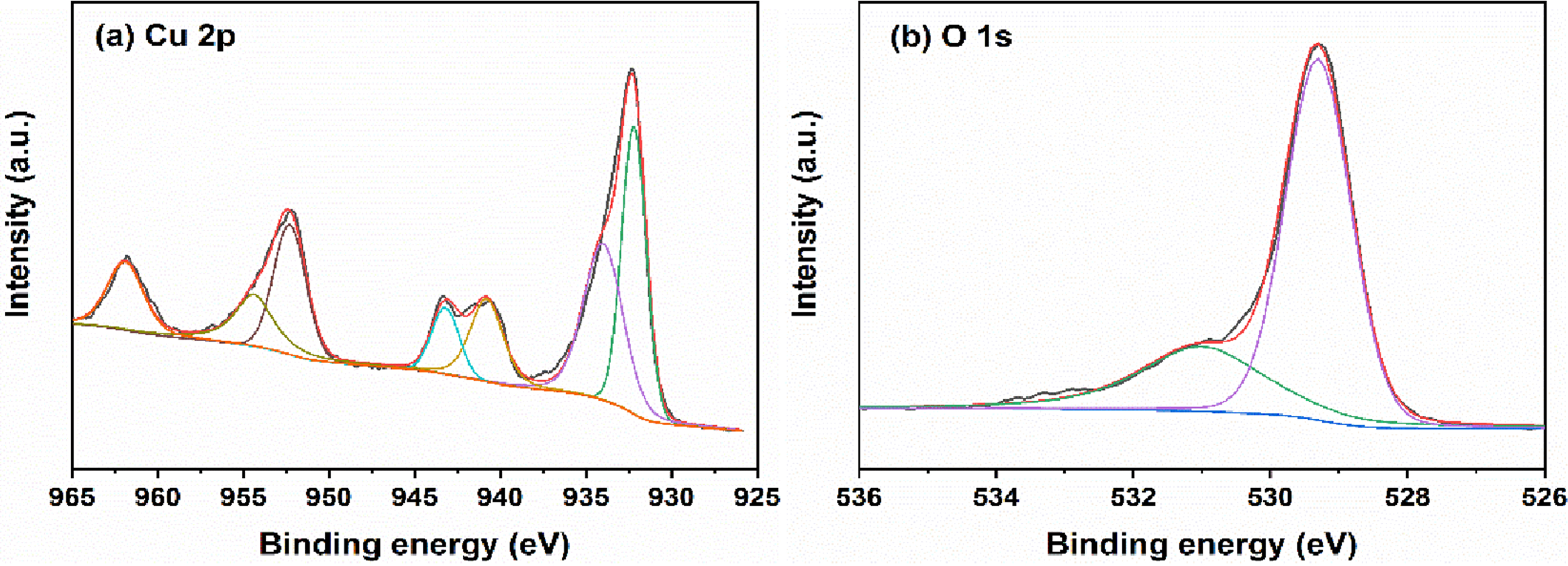
XPS characterization of CuOx (a) Cu 2p, (b) O 1 s spectra.
Before the test, the contributions of CIP solution volatilization, H2O2 oxidation alone, and adsorption of catalyst alone to the degradation of CIP were investigated (Fig. 5(a)). The corresponding removal rates after 50 min of reaction were 3.5%, 7.8%and 4.3%, which were far lower than the 86.8%removal rate of the synergistic effect of catalyst and H2O2 under the same conditions, which was basically negligible. Figure 5(b) shows that when nano-CuOx and H2O2 act synergistically, the degradation effect was significantly improved after 10 min. When the molar ratio of citric acid and metal was 1.5, 1.8 and 2.1, respectively, the CIP removal efficiency was 87.1%, 87.4%, 86.3%at 50 min, the CIP removal rates with molar ratios of 1.8 and 2.1 were fast and almost the same ones, and the effect of molar ratio of 1.8 was better. Because under the condition of high temperature calcination, citric acid and nitrate in the xerogel precursor were thermally decomposed or gasified to generate huge volumes of CO2, CO gases. The pore structure can provide a contact surface for the reaction to promote the reaction. However, an excessively high complexing ratio, that was, an excess of citric acid, may make the citric acid not completely thermally decomposed and gasified during the roasting process, and the residual organic matter may cover the active center of the catalyst, thereby affecting the activation of the active center to H2O2 to generate free radical species; Insufficient citric acid reduces the amount of gas generated by thermal decomposition or gasification of citric acid and nitrate, which can reduce the activity of the catalyst, because of reducing the quantity of pore structures and specific surface area. Therefore, the molar ratio of citric acid to metal was kept at 1.8 for subsequent experiments.
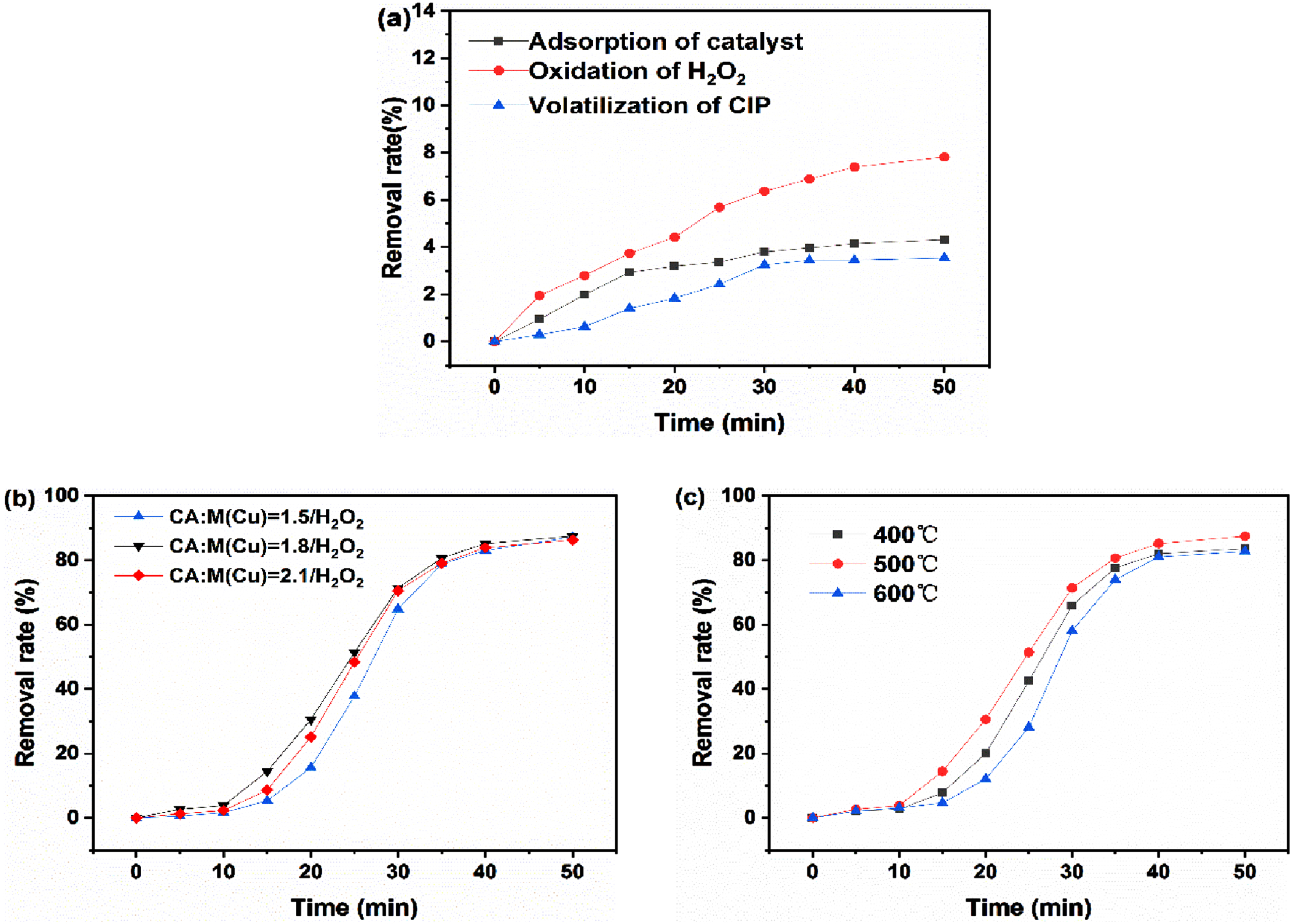
(a) Degradation effect of CIP under different reaction systems; (b) Effect of molar ratio of CA to metal salt; (c) Effect of calcination temperature.
Figure 5(c) shows that the calcination temperature posed an important influence on the effect of nano-CuOx on the oxidative degradation of CIP by H2O2. When the calcination temperature is 400°C, the degradation efficiency of the reaction system to CIP was low, which was 83.0%. This may be due to the low calcination temperature, resulted in incomplete decomposition of the catalyst precursor, resulted in poor catalytic hydrogen peroxide activity of the C400 catalyst. The C500 catalyst was prepared under 500°C had the best catalytic activity in wet hydrogen peroxide oxidation, and the removal rate of CIP reached 87.4%. This is because at this high temperature, the precursor can be completely converted into the target catalyst, the degree of crystallization was relatively complete. When the calcination temperature was 600°C, the degradation efficiency of the reaction system to CIP did not improve any more, but decreased to 82.0%. This may be due to the excessive growth of catalyst grains due to the increased of temperature, so that the structure of the surface crystals changes, there were inactive particles on the surface, which was not conducive to the improvement of the catalytic hydrogen peroxide activity of the catalyst.
The effect of H2O2 dosage
Figure 6(a) shows the degradation efficiency of CIP with different added amounts of H2O2. When the dosage of H2O2 increased from 6 mmol·L–1 to 10mmol·L–1, the degradation rate of CIP increased from 78.0%to 87.0%. However, the degradation effect of CIP was not obvious when the amount of H2O2 was more than 10 mmol·L–1. This may be due to the fact that the consumption of the active radical (HO·) is a competition between H2O2 and the substrate when the concentration of H2O2 is too high [30]. And too much H2O2 will cause H2O2 to decompose ineffectively, and then the active free radicals generated during the reaction will quench each other, which was not conducive to CIP degradation, and will increase the economic cost. Therefore, the optical dosage of H2O2 was chosen to be 10 mmol·L–1 for subsequent experiments.

Effects of different factors on CIP removal efficiency (a) H2O2 dosage; (b) Reaction temperature; (c) Linear regression Arrhenius diagram; (d) Catalyst dosage.
The reaction temperature had a significant effect on CIP degradation. When the temperature increased from 80°C to 95°C, the reaction rate was significantly accelerated, and the degradation efficiency increased from 44%to 86.8%(Fig. 6(b)). According to the Arrhenius equation ln k = ln A-Ea /RT (where k is the rate constant, R is the universal gas constant (8.314 J mol–1 K–1) and A is the pre-exponential factor). The slope of the linear fitting equation, namely the activation energy of degradation (Ea), was obtained by plotting ln k1 and 1/T, and its value was 78.8 kJ mol–1K–1 (ln k1 = 13.625 –5.723×10³/T, R2 = 0.9261) (Fig. 6(c)). The activation energy of nano-CuOx (78.81 kJ /mol) was obviously smaller than that of H2O2 oxidation (321.23 kJ /mol) [31]. This also indicates that higher reaction temperature can improve the catalytic performance, thereby promoting the formation of reactant molecules. Increasing the reaction temperature of the system can also improve the probability of effective collisions between reactant molecules, thereby significantly increasing the reaction rate of CWPO [32]. High temperature also increases the contact of CIP with H2O2, which accelerates the degradation process of CIP [33]. When the temperature exceeded 95 °C, the reaction rate was slightly accelerated, but the degradation rate of CIP did not increase accordingly. It may be that high temperature will reduce the solubility of H2O2 in solution, thus accelerating the disintegration of H2O2, leading to the reduction of free radicals produced by H2O2 in CIP solution, thus affecting the yield of ·OH. Therefore, considering the actual cost, the reaction temperature was chosen as 95°C in the subsequent experiments.
The effect of catalyst dosage
The optimal dosage of catalyst nano-CuOx to the CWPO system was explored below, and was shown in Fig. 6(d). With the increase of the amount of catalyst nano-CuOx, the degradation effect of the system on CIP was gradually enhanced. When the amount of nano-CuOx, increased from 0.4 g·L–1 to 1.0 g·L–1, the degradation rate of CIP by CWPO system increased from 70.0%to 86.8%. This is mainly because the increase in the amount of nano-CuOx increases the effective contact area between nano-CuOx and H2O2, thereby generating more active free radicals and improving the degradation effect of CIP. However, when the amount of nano-CuOx increased from 1.0 g·L–1 to 1.2 g·L–1, the degradation rate of CIP no longer increased. Moreover, the excessive amount of catalyst will increase the cost and limit the practical application. Therefore, considering the economy and high efficiency, the optimum catalyst dosage is 1.0g·L–1.
Catalyst stability
Put the used nano-CuOx catalyst into a constant temperature drying oven to dry overnight and reused for the CWPO study of the CIP solution; the results were shown in Fig. 7. The degradation efficiencies of CIP in the five cycle experiments were 86.8%, 84.4%, 82.8%, 81.9%and 79.7%. As the surface active species of nano-CuOx were lost during the reaction process, the removal effect of CIP gradually decreased slightly with the increase of repeated use times. Continuous reaction reduces the surface active sites of the catalyst, and the ability of the catalyst to activate H2O2 molecules was weakened, thereby the formation of reactive free radicals was weakened, which in turn reduces the degradation ability of CWPO system to CIP. In addition, there will be a loss in the process of catalyst recovery [34]. The results showed that when the catalyst was recycled, although the degradation efficiency of the catalyst to CIP decreases slightly, the degradation efficiency remains above 79%. It can be seen that the recycled nano-CuOx still maintains good stability for the CWPO degradation of CIP. This characteristic is of great significance to the practical application of the catalyst.
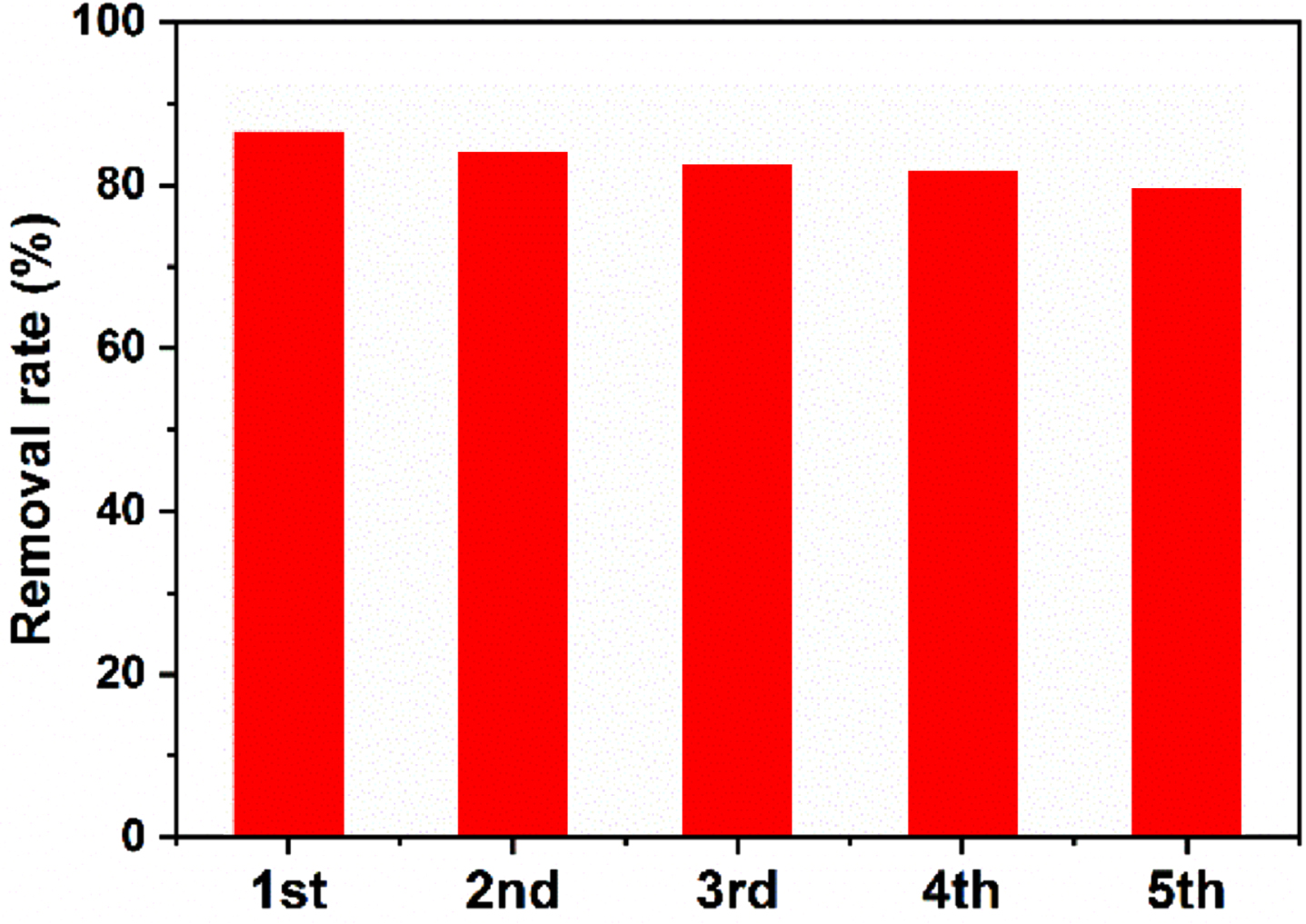
Stability of nano-CuO x for CIP degradation in CWPO system.
Variation of COD and removal rate with time
The change of Chemical Oxygen Demand (COD) with time under the optimal reaction conditions was shown in Fig. 8(a), which illustrates the degree of mineralization of the refractory organic matter in the CIP simulated wastewater during the degradation process. The removal rates of COD and CIP increased significantly with the prolongation of the reaction time, especially after 20 minutes of reaction, and the degradation trend showed a certain relationship. When the reaction reached 50 min, the removal rate of CIP was 86.8%, and the removal rate of COD was 54.9%. However, at the same time, the removal rate of COD was significantly lower than that of CIP, which indirectly indicated that CIP produced some intermediate products during the reaction, which were not completely mineralized [35].
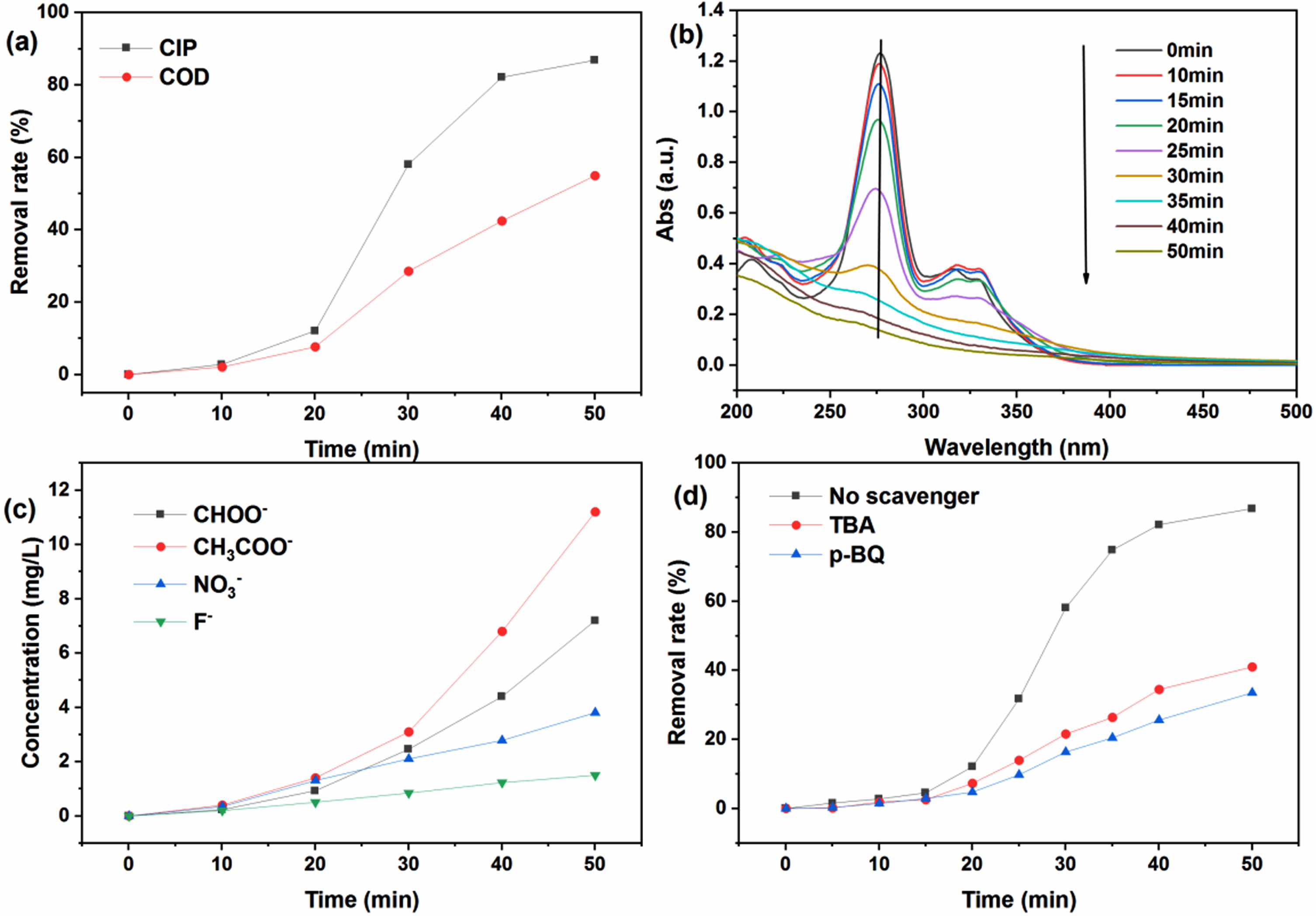
Mechanism of CIP degradation by nano-CuOx /H2O2 (a) Variation of COD and removal rate with time during CIP degradation; (b) UV-Vis Spectral Scanning of CIP;(c) Anion Changes During Degradation; (d) Effects of free radical scavengers on CIP removal.
Some studies [36, 37] show that, in the process of catalytic oxidation, CIP may undergo piperazine ring cleavage and cyclopropyl ring shedding to generate dialdehyde derivatives. The products after ring opening, such as formic acid, oxalic acid, acetic acid and other carboxylic acid, are finally oxidized into CO2 and H2O; It is also possible that some of the intermediates are directly oxidized to CO2 and H2O. To study the degradation process of CIP treated by CWPO system, UV spectra scanning analysis was carried out, and the intermediate products in the reaction process were preliminarily analyzed qualitatively (Fig. 8(b)). The pure solution of quinoline with water before treatment has a characteristic absorption peak at λmax=325 nm, because the CIP benzene ring conjugated system produces electronic transition effect, and the absorption peak band has a red shift phenomenon. During the catalytic degradation of CIP by heterogeneous wet hydrogen peroxide catalytic oxidation, the characteristic structure of CIP was broken, and the absorption peak intensity of the solution at 325 nm gradually weakened, especially at 30 min, the absorbance value changed significantly; After 50 min of treatment, there was basically no absorption peak at this place, which indicates that the benzene ring on CIP has been completely cleaved, and its degraded intermediate or final product has no absorption at 325 nm. At the same time, it was also confirmed that the CWPO system has a good degradation effect on CIP. It can be seen that CIP changed from colorless to light yellow after 15 minutes of reaction, and the brownish yellow color continued to deepen within 15–30 minutes, and then the color gradually faded by studying the color change of the solution during the reaction. This may be due to the presence of a large polycentric molecular orbital (PCMO) or special chromogenic groups such as diketones [38]. Moreover, the generation and transformation of intermediate products, and the length of time that the intermediate products stayed is related to the reaction temperature.
IC analysis
The anions generated during the degradation of CIP were tracked and detected by ion chromatography (IC). As shown in Fig. 8(c), the concentrations of HCOO– and CH3COO– in the system gradually accumulated with the degradation time, indicating that small molecular compounds were generated during the degradation of CIP. The mineralization of CIP during degradation was often accompanied by the conversion of its heteroatoms to inorganic ions accumulated in solution [39]. NO3– also appeared in the degraded solution, which may be caused by the oxidation of the N atom after the cleavage of the CIP piperazine ring [40]. A small amount of F– appeared indicating that defluorination may also occur during the degradation process [38]. This is consistent with the results of UV-Vis absorption spectroscopy.
Free radical trapping experiment
In order to explore the active species contribution mechanism of CIP degradation in CWPO system, radical trapping experiments were carried out. It is generally believed that the reactive oxygen species generated by catalytic oxidation of H2O2 to degrade organic matter are mainly superoxide (·O2–) and hydroxyl (·OH) radicals [41]. In this experiment, TBA and p-BQ [42] were used as scavengers to scavenge ·OH and ·O2– radicals, respectively (Fig. 8(d)). In the presence of 6 mmol·L–1 TBA and p-BQ, the catalytic activity of nano-CuOx on the CWPO degradation system of CIP was significantly inhibited. Under the influence of TBA, the degradation rate of CIP in the reaction system was 41.0%, and under the influence of p-BQ, the degradation efficiency of CIP in the reaction system was only 33.0%. Compared with the presence of TBA, the inhibitory effect of p-BQ was more obvious. Therefore, ·O2– and ·OH radicals exist in this system, and both make important contributions to the degradation of CIP in the CWPO system.
According to the above analysis, the reaction mechanism in CWPO reaction may be as follows: CIP first diffuses and adsorbs on the nano-CuOx catalyst surface, and then further enters the active site inside the catalyst to initiate the activity for free radical reaction, its active species can be generated by the reaction of H2O2 and Cu2 + in the CWPO reaction system, as shown in formulas (1)∼(4).
The actual wastewater in the test came from the second-phase wastewater of a wastewater treatment plant in a pharmaceutical factory. The wastewater consists of pharmaceutical wastewater and workshop cleaning wastewater, and contains characteristic pollutants such as methanol, ethanol, ethyl acetate, dichloromethane, tetrahydrofuran, and antibiotics. The comprehensive influent CODcr≤6000 mg/L, NH3-N≤50 mg/L, TP≤20 mg/L, pH 6 9. After the wastewater was treated by physicochemical+biochemical treatment, the COD of the effluent from the secondary sedimentation tank was about 630 mg/L, and the remaining organic matter in the wastewater was the organic matter that was difficult to biodegrade. The CWPO system was used to treat the effluent sample of the secondary sedimentation tank, taking 200 mL, the pH was 9, 200 mL was taken to start the reaction, the concentration of H2O2 was 20 mmol/L, and the amount of nano-CuOx catalyst was 2 g/L. The treatment effect was shown in Fig. 9 and the COD removal rate was 33.0%within 30 minutes of the reaction. The longer the reaction time, the higher the COD removal effect. The COD removal rate reached 47.0%when the reaction was 90 min. If the amount of catalyst and H2O2 is appropriately increased, and the reaction time is prolonged, a higher COD removal effect may be obtained. Therefore, the CWPO system is suitable for the refractory organic matter in the actual pharmaceutical wastewater and tail water, and has a certain treatment effect. Moreover, its process equipment is simple, the operating conditions are mild, the energy consumption is low, and it is easy to realize engineering application.
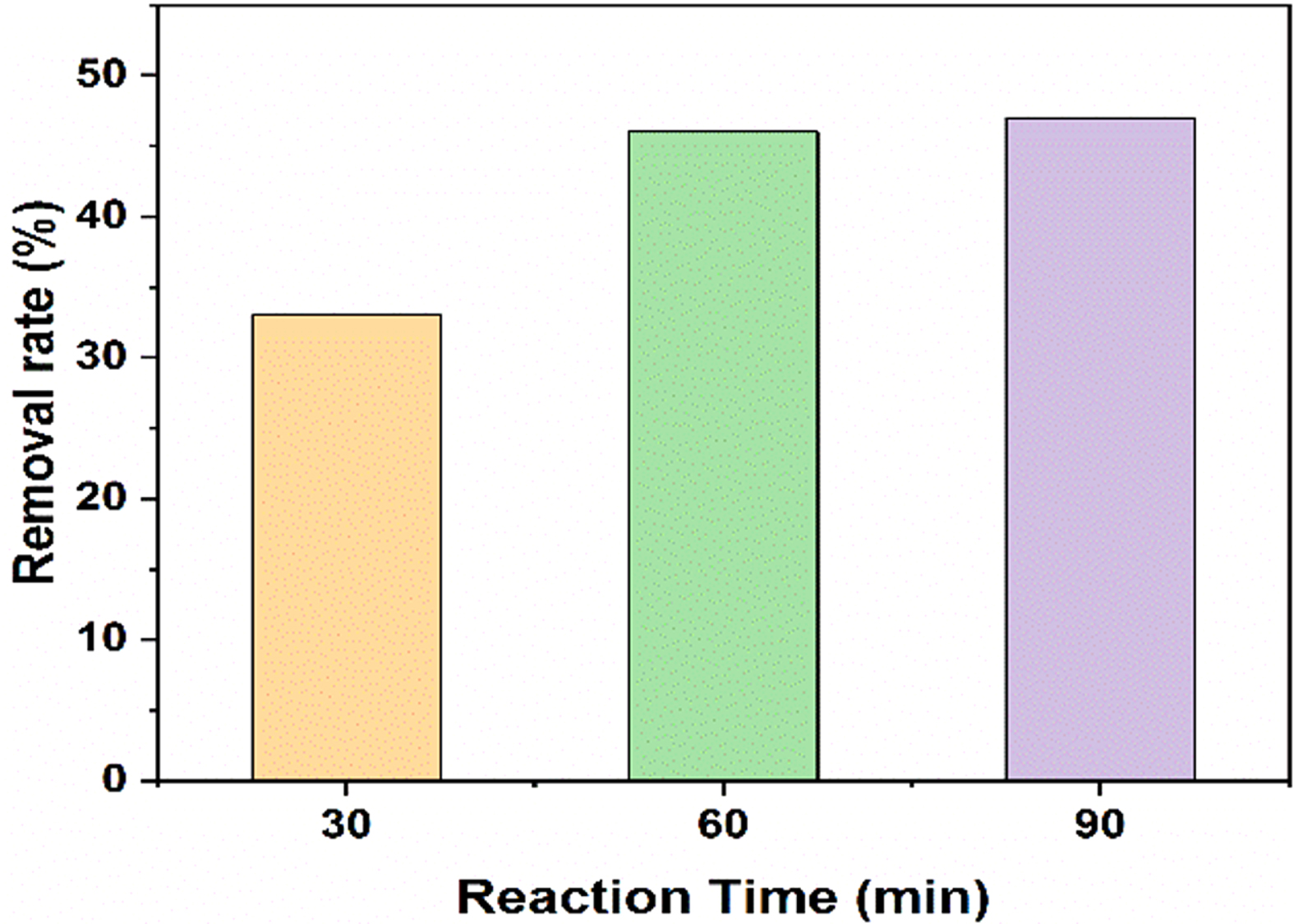
Treatment effect of actual wastewater.
In this study, citric acid was used as a complexing reagent to prepare copper oxide-containing catalyst nano-CuOx by a sol-gel method. The characterizations of XRD, XPS and FESEM showed that nano-CuOx material was successfully prepared, which can promote H2O2 to generate free radicals and degrade CIP in simulated wastewater. When CIP concentration was 200 mg/L, the optimum conditions for CIP degradation by CWPO system were as follows: 30%H2O2 concentration was 10 mmol·L- 1, reaction temperature was 95°C, catalyst dosage was 1.0 g·L- 1, degradation time was 50 min. The efficiency reached more than 86.8%, COD removal rate reached 54.9%. And the catalyst can be recycled more than 5 times. It has shown that the system can treat high concentration refractory organics in a short time and with less H2O2 consumption. Under suitable temperature conditions, the synergistic effect of nano-CuOx nanoparticles and H2O2 makes the CWPO system have a good catalytic degradation effect. The possible degradation pathways determined by IC detection were put forward as follow. The piperazine ring cleavage, defluorination, decarboxylation and quinoline hydroxylation of CIP to generate intermediate products, which were finally mineralized to CO2 and H2O. The catalyst can catalyze the oxidative degradation of refractory organic compounds in the tail water of pharmaceutical wastewater, and the COD removal rate was 47.0%in 90 minutes. In the actual application process, the CWPO system has simple process equipment, mild operating conditions, low energy consumption, and easy engineering implementation. better application prospects.
Footnotes
Acknowledgments
The author appreciates the financial support of the project (TCYHB202012-EO1) of Wuhan Taichangyuan Environmental Protection Technology Co., LTD.