



Abstract
A porous, low-cost, organic, amorphous and carbon-nitride functionalized polymer was synthesized using melamine and 5-bromo-2-thiophenecarboxaldehyde. One-pot polycondensation method was opted, to yield hyper-crosslinked polyaminal network which was used for the detection of NaOCl and Hg2+. Reaction proceeds in single step without addition of any catalyst and gives promising yield. The authenticity of the synthesized polymer
Introduction
Nowadays, the presence of heavy metal ions and reactive oxygen species in various water bodies is responsible for causing water pollution and major health issues in humans [1]. Out of all known heavy metal ions, mercury is of main concern which is highly toxic and responsible for originating environmental disturbances by contaminating water [2–4] as it enters in the biological world by means of food chain [5, 6]. Heavy metal ions if present beyond permissible limits in the body may cause various health issues such as kidney damage, lung diseases, nerve failure and so on [7–9]. Along with this, abnormally high intracellular concentration ROS also lead to wide range of harmful diseases in living beings [10] such as cellular dysfunction, and finally progression into disease states such as neurodegenerative diseases including Parkinson’s disease (PD) and Alzheimer’s disease (AD), cancer, diabetes, inflammation, arthritis, and so on [11, 12]. Additionally, the exposure of sodium hypochlorite to human eye can cause immediate effects such as edema and pain in eyes [13]. These days, the aerosols which are commercially available possess higher contents of NaOCl that may cause irritation in lungs in humans [14]. Keeping in mind these issues, melamine-based polymers could be used which have capability to detect such heavy metal ions and reactive oxygen species (ROS) as well as show significant changes with acids [15–17].
Melamine is a non-edible [18], non-hygroscopic [19], white crystalline and a weak base compound [20]. This compound bears a very low solubility in water [21] and sublimes at a low temperature [22]. The presence of three amino groups on melamine core provides an excellent platform to interact with other functionalities [23]. The literature survey on melamine reveals that various melamine-based resins can be developed with better durability, i.e., long lasting thermosetting polymers [24]. The versatile applications of these polymers have been reported by various researchers, especially in the field of high-pressure lamination used for decoration purposes, insulation related work as well as in dry erase boards [25]. Further these polymer’s utility has been investigated for polymeric cleaning products, sound proofing, in adhesives, paints, permanent-press fabrics, paper coatings, giving finishing to textiles and so on [26, 27]. As the anthropogenic activities have resulted in an inundation of hazardous industrial and domestic waste water which is released into the environment without appropriate treatment [28]. The waste water comprises of non-biodegradable heavy metal cations, acids or reactive oxygen species (ROS) which accumulates in the biosphere and causes serious health issues. In general, some of the known physicochemical methods like sedimentation, flocculation and photocatalysis could be employed in treating polluted water. However, they show less effectiveness in removing micropollutants from water resources such as household and toxic industrial waste water. Besides using these traditional methods, new absorption or adsorption methods by using melamine-based polymers could be employed for the uptake of these micropollutants (heavy metal ions or ROS species) [29]. In these regards, polymeric materials show promising alternative materials for environmental refinement. The melamine based polymeric entities are known for their vast chemistry that allows them to form a unique combination of favourable properties for water treatment which cannot be easily achievable on using conventional water treatment materials and methods [30–32].
As per literature survey, many researchers have reported absorption-based sensors for removal of different heavy metal ions (Hg2+) [33], acids and ROS species (sodium hypochlorite) which follow the process of absorption by porous melamine-based polymers [34]. In such covalent organic framework, Sulphur-mediated groups are generally present [35]. Because of the affinity of sulfur for mercury ions, triazine based compounds are modified with sulfur-based substituents in order to develop detection and removal properties [36]. In our course of work, we have developed a derivatized thiophene and melamine-based polymeric system that is used to detect NaOCl and Hg2+ at varied concentrations in water.
Melamine undergoes extensive cross-linking on reacting with aldehydes, ketones or acids which results in the formation of many widely used porous organic polymers [37, 38]. Such polymers usually possess lighter elements like carbon, hydrogen, oxygen or nitrogen which are involved in strong covalent bond formation [39]. It results in generation of high stability (chemical and thermal) [40], high specific surface area and low density [41]. Numbers of synthetic protocols have been listed in literature on design and development of melamine-based polymers by using various aldehydes such as terephthalaldehyde [42, 43], isophthalaldehyde [44], dialdehyde [45], formaldehyde [46], benzaldehyde [47], 5-bromo-2-thiophenecarboxaldehyde etc. Liu et al has used dicyandiamide and 5-bromo-2-thiophenecarboxaldehyde in a one-pot reaction which passed through various stages, grinding and moderate to high temperature heating for the in-situ generation of melamine-linked polymeric assembly [48]. In another synthetic protocol, a Schiff-base type of reaction has been proposed which involves melamine and targeted aldehydes. It can be seen in the work done by Hou et al and Amirilargani et al who used terephthalaldehyde and isophthalaldehyde as a base unit to react with melamine. The basic difference between both synthetic protocol is a very important crucial factor for generating specific property in proposed polymeric assemblies. In the former reaction, there is generation of imine bond(C = N) while in the latter case C-N takes place [49, 50]. In the present work, we have followed second synthetic protocol. Besides aldehydes, melamine also reacts with acids such as trimesic acids [51], poly- (glutamic acid) [52], formic acid, glyoxylic acid etc. Shao et al used trimesic acid and melamine as monomers in their synthesis under high temperature conditions for 72 hours in DMSO [51]. In another work, cleaner leather production was done by Pradeep et al by utilizing both formic acid and glyoxylic acid along with melamine as starting materials [53].
Firstly, the reaction of melamine and 5-bromo-2-thiophenecarboxaldehyde was carried out for the formation of highly stable polymeric product which has the least solubility in all solvents at room temperature. This compound shows a very high thermal and mechanical properties due to extensive crosslinking. The present approach ensures good yield of 79.5% with least wastage of chemicals. The characterization and analysis of
Experimental section
Materials and instrumentation
Melamine and 5-bromo-2-thiophenecarboxaldehyde were purchased from Loba chemicals and used for the synthesis purpose without any further purification. The solvents used in the synthesis were analytically pure, no further purification/drying was performed. FT-IR analysis was done using a device named Perkin Elmer spectrum IR version 10.6.1 from 400–4000 cm–1. The texture of
Synthesis and characterization
The synthesis of
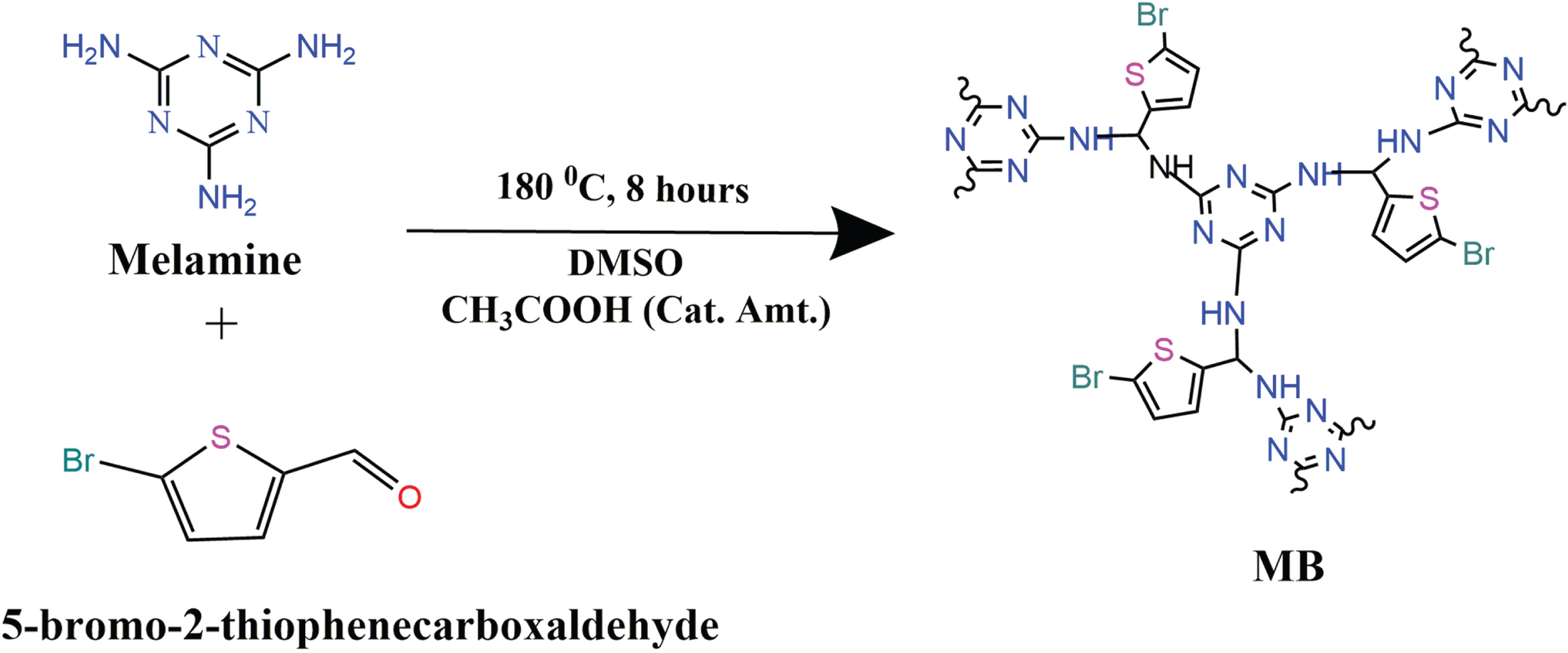
Synthesis of melamine-based polymer
The synthesized polymer
Absorption studies
The stock solution of 50 mg of
Results and discussion
The melamine-based polymer
X-Ray photoelectron spectroscopy
The confirmation of presence of thiophene group (as electron donor) and cyano groups (as electron acceptor) was done by X-Ray photoelectron spectroscopy (XPS) (Fig. 1). In our work, for
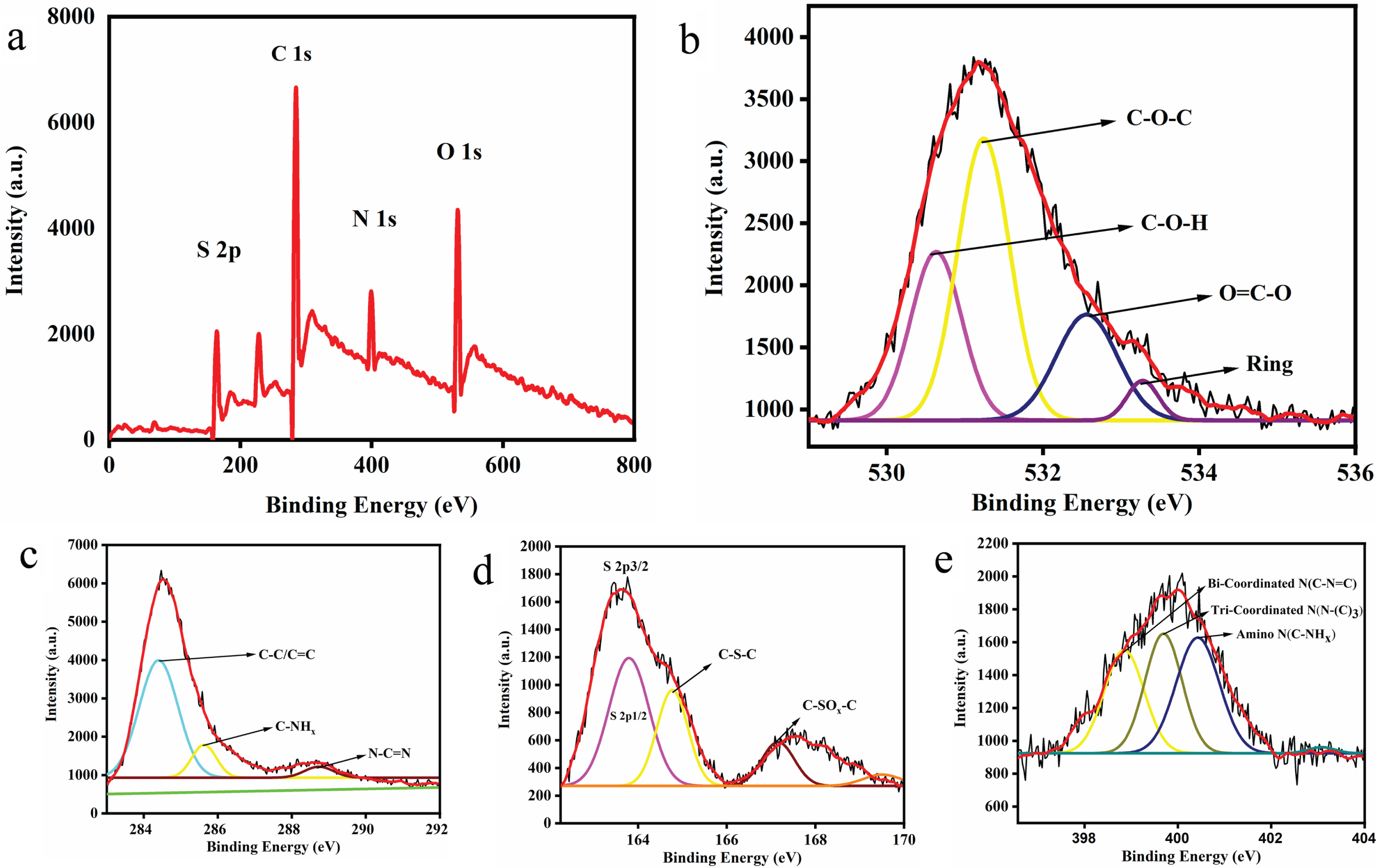
(a) XPS spectrum of MB. (b-e) High resolution XPS spectra of (b) O 1 s (c) C 1 s (d) S 2p (e) N 1 s.
FT-IR analysis was carried out to verify the completion of reaction. FT-IR spectra of melamine, 5-Bromo-2-thiophenecarboxaldehyde, and

(a) FT-IR spectra of Melamine (b) FT-IR spectra of 5-bromo-2-thiophenecarboxaldehyde (c) FT-IR spectra of MB.
The thermogravimetric analyser (TGA) and differential thermal analysis (DTA) (Fig. 3) were used to check the thermal stability of synthesized polymeric sample. The
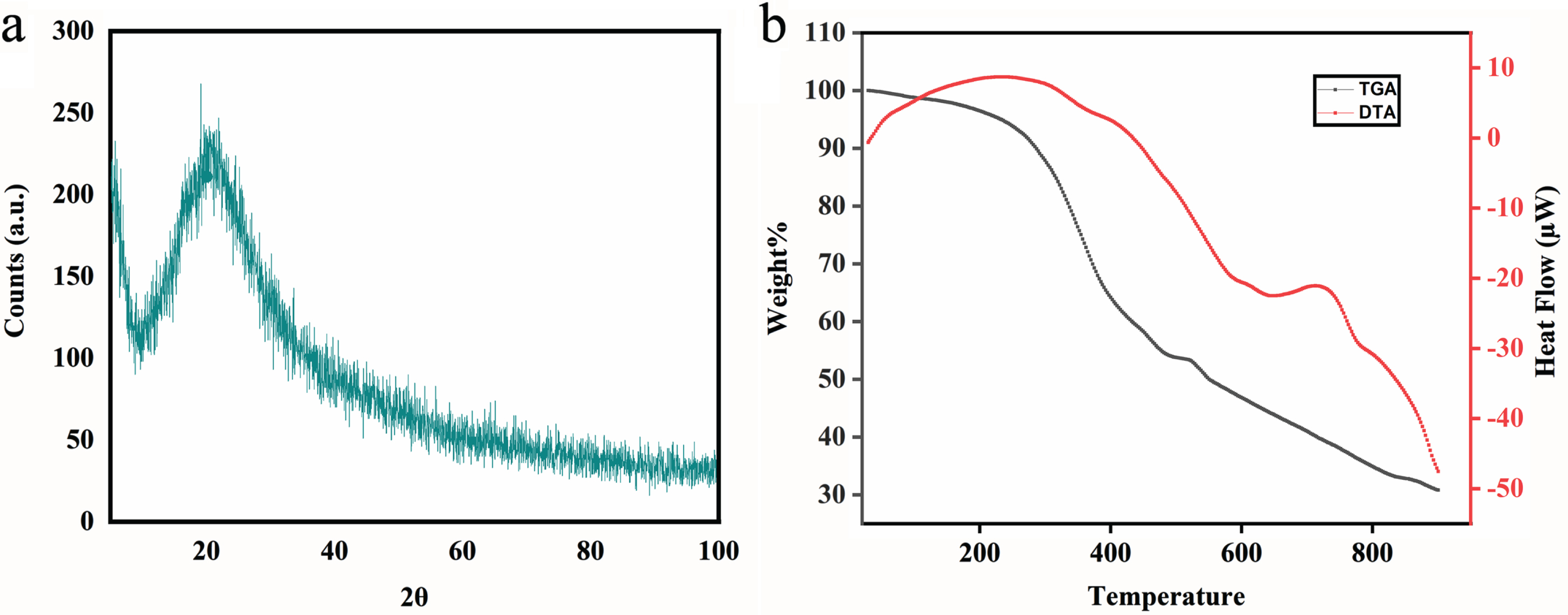
(a) XRD curve of MB (b) TGA and DTA curves of MB.
X-Ray diffraction (XRD) pattern of
Scanning electron microscopy and energy-dispersive spectroscopy
With the help of SEM images (Fig. 4), the morphology of

SEM images of MB.
Also, EDS results confirms the presence of carbon, nitrogen, sulphur and bromine in the structure of
Elemental analysis results of MB
The curve for N2 adsorption-desorption isotherm at temperature 77.35 K is presented in Fig. 5. The obtained isotherm belongs to type IV as average pore diameter value falls in between 2 nm-30 nm which is 6.2851 nm indicating the presence of mesopores in MB. Moreover, the BET surface area and pore volume of

N2 adsorption-desorption isotherm curves.
Absorption spectra of
Besides this, the absorption change was also studied with acids i.e. hydrochloric acid, nitric acid and sulphuric acid but no change or insignificant change was observed with all the three acids. The study of ROS (t-BuOOH, KO2 and NaOCl) detection by
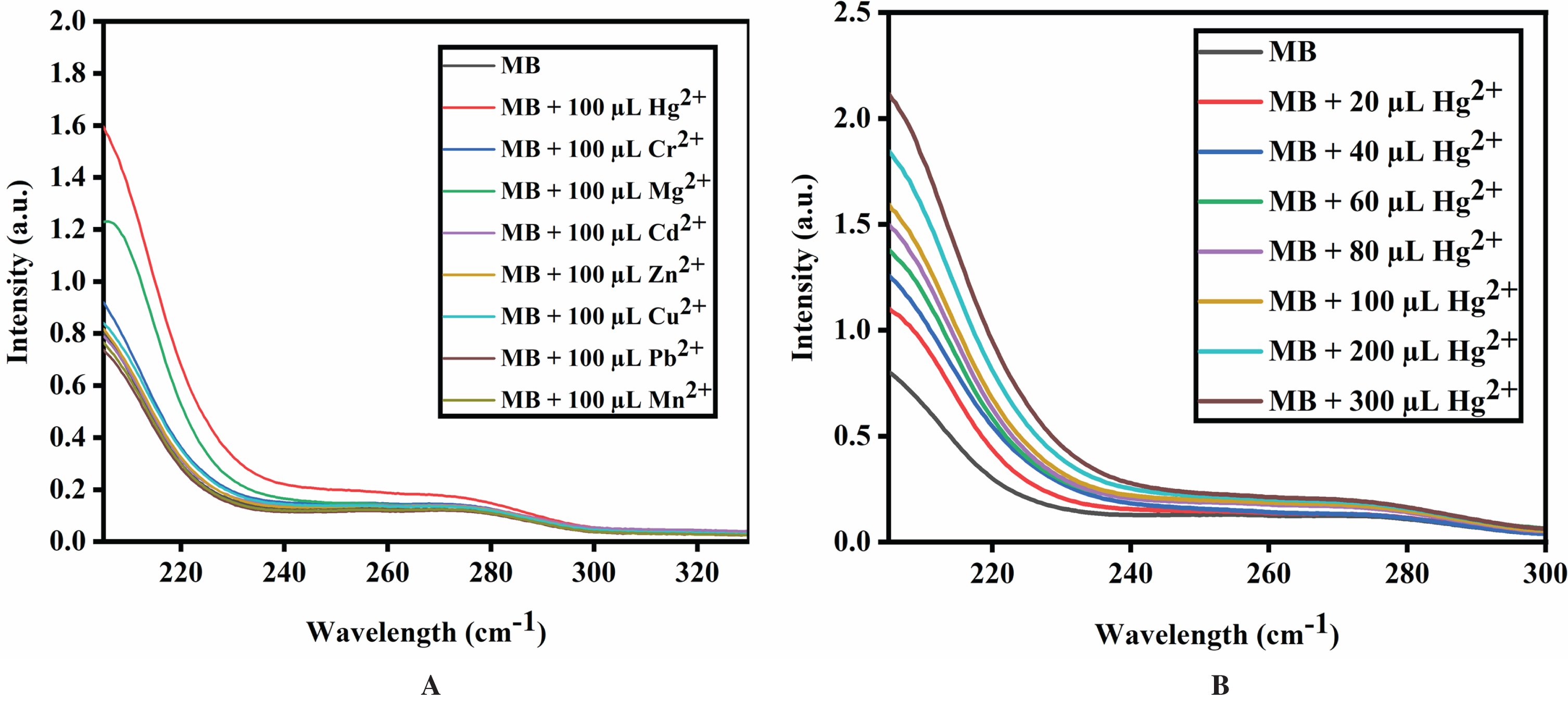
(A) UV-vis spectra of MB solution (100 mg/L) with 100μL of different metal ions (Mn2+, Cr2+, Mg2+, Cd2+, Zn2+, Cu2+, Pb2+ and Hg2+) (1×10⁻³ M) and (B) Titration curve of Hg2+ solution (1×10⁻³ M) of different concentration (20μL, 40μL, 60μL, 80μL, 100μL, 200μL and 300μL) against MB solution (100 mg/L).
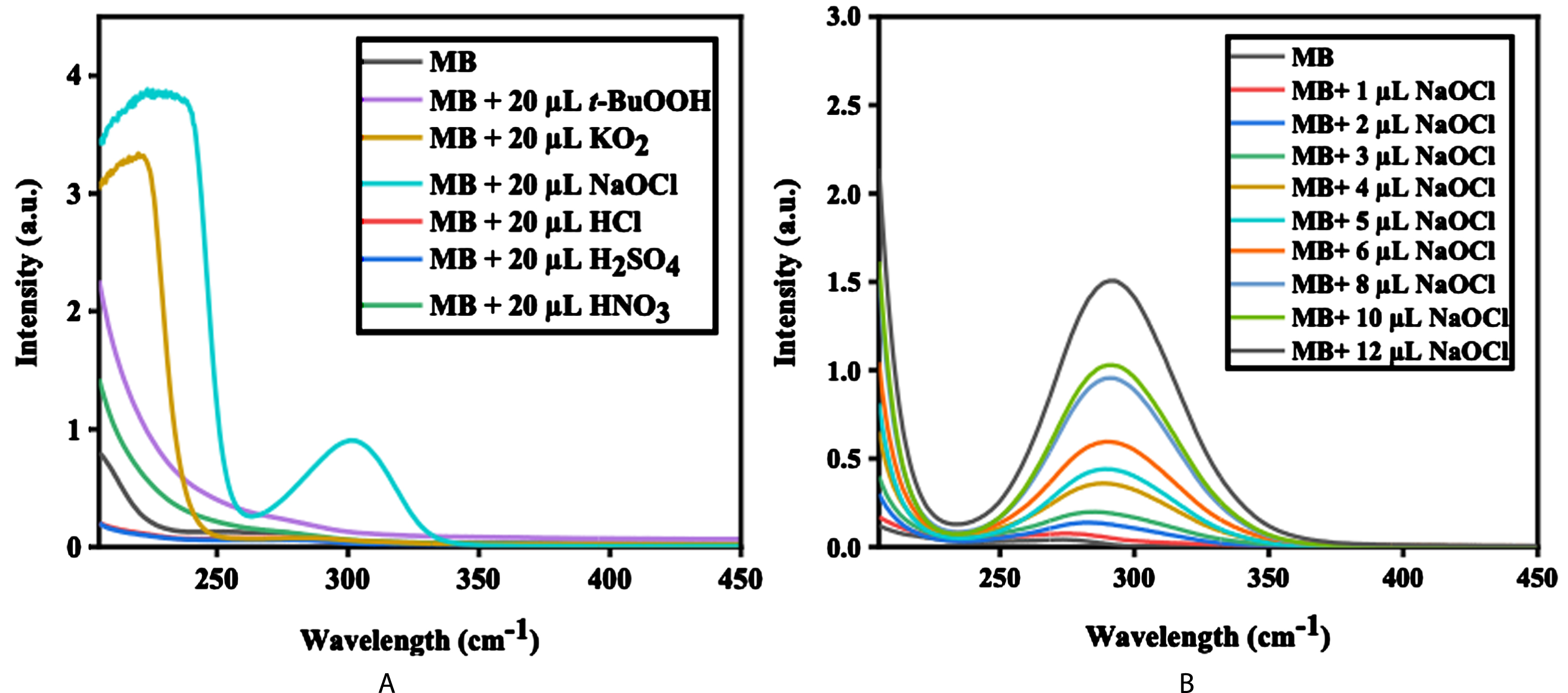
(A) Absorption spectra of acids and 20μL of both ROS species (t-BuOOH, KO2 and NaOCl) (1×10⁻³ M) and acids (HCl, H2SO4 and HNO3) (1×10⁻² M) against
To summarise, in our work we introduced a facile and single step method to synthesize hierarchical donor-acceptor type process. In this nitrogen-rich and porous structured melamine combines with 5-bromo-2-thiophenecarboxaldehyde, where thiophene group of latter donates electrons to the cyano group of former. The synthesized