



Abstract
Numerous technological developments leading to more flexible devices and affordable manufacturing have been made possible by organic electronics. A subgroup of organic electronics known as organic light emitting diodes (OLEDs) have shown exponential growth in a variety of applications. The performance of these devices is decided by considering the activity of various parameters such as current efficiency, luminescence, power efficiency and external quantum efficiency (EQE). The applications of OLEDs are frequently seen in fields like biological sensors, displays, healthcare, and other critical sectors. This article provides a thorough summary of the developments made in the last decade in OLED real-time applications. The performance of AMOLED, TEOLED, and QD-OLED displays—three types of OLED-based displays—has been meticulously recorded in discussions on their progress. Over the past few years, there has been a significant increase in the use of OLEDs in the biomedical field. Additionally, the performance of a number of devices seen in many biomedical domains—such as wearable sensors and optogenetics—has been highlighted in this article. The purpose of this paper is to educate the next generation of researchers about the versatility and potential applications of OLED devices in the years to come.
Introduction
Organic light-emitting diodes (OLEDs) [1] are a part of the broader field of organic electronics. The organic electronics field is a fast-growing area that involves the use of organic semiconductors (OSCs) [2]. This field is particularly crucial when it comes to producing cheap, broad-area, and flexible devices. Many applications such as displays, sensors, healthcare, and visual light communication (VLCs) [3] use a wide range of organic materials. Organic electronics have gained significant interest in the past 20 years, with commercial equipment using organic materials now available in stores. Improvements in the electrical efficiency and reliability of organic semiconductors (OSCs) have led to the emergence of affordable and large-area electronic applications. Initially recognized as insulators, the invention of conducting organic materials in 1976 fused the fields of chemistry and condensed matter physics, creating a new area of study [4].
Organic semiconductors are made up of molecules that are held together by low Van der Waals forces. This characteristic makes it possible to create thin films by vaporizing semiconductors at very low temperatures. Polymers can also be classified as organic semiconductors, as their films can be created using simple spin-coating techniques and they are soluble in common solvents like xylene or chloroform. Organic semiconductors can be produced at extremely low temperatures and are non-crystalline in nature. Due to their inherent flexibility, organic devices such as OLEDs, transistors, solar cells, etc., can be manufactured not only on inexpensive glass but also on paper, plastic, and fabric [5]. OLED technology was discovered in the early 1960 s [6–8] through the fluorescence emission of eosin. The enormous prospective of OLEDs was not realized until high working voltages and low efficiency were addressed, despite the fact that several organic compounds with visible-region fluorescence were established. A timeline outlining the academic and industrial development of OLED technology [9] is shown in Fig. 1.

History of OLEDs.
Pioneer was the first company to manufacture a commercial OLED device, which was a passive matrix-driven display screen used in automobile music systems. This was over ten years after Eastman Kodak’s groundbreaking work. Polymer-based OLEDs were first commercialized in 2002 by Philips, following Burrough et al.’s groundbreaking 1990 research [10]. The invention of AMOLED [11–15] was a significant advancement in display technology, enabling the production of excellent quality, low-power application screens that were quickly used in smartphones such as the Samsung I7710 and Nokia N85. Sony unveiled the world’s first commercially available OLED TV, the XEL1, in 2007, with an 11-inch panel that was only 3 mm small. Lumiotec created the initial OLED panels [16] for lighting applications, known as HANGER and VANITY, in 2011. Two years later, Samsung’s Galaxy Round and LG’s G-Flex were the first devices to commercially use flexible OLED technology, with curved 5.7-inch Full HD super flexible AMOLED and curved 6-inch HD polymer-based OLED screens, respectively. The first bendable TV screen was produced in 2015, and LG announced in 2020 that a rollable TV is now available. Currently, there is a lot of attention being paid to innovative foldable device concepts, such as Royale’s FlexPai, Samsung’s Galaxy Fold, Huawei’s Mate X, and Lenovo and Intel’s ThinkPad X1Fold [10].
The OLED has various applications in a variety fields of which displays are most commercialized in the current era. As discussed above, AMOLEDs can be one of them. Besides these, TEOLEDs and QD-OLEDs [17] are implemented in real-time. TEOLEDs or Top-emitting OLED mostly emerged to overcome the limitations of BEOLED [18] or Bottom-emitting OLEDs. This is due to the use of an opaque substrate that onto which the TFTs are placed that does not affect the device and gives a larger aperture ratio of the device which results in low operating voltage, a longer life span and very little driving current [19]. Another OLED display that has shown a promising performance and application is the Quantum-dot OLED or QD-OLED. This device has an extra layer of solution-processed colloidal quantum dots that are known for their extreme purity of color, good photoluminescence and effective stability. These OLEDs has possible use in wide areas that include new energy, information displays and biomedicine [20]. Improvements in parameters such as efficiency, brightness and stability, OLEDs are considered for their compact size in biomedical field that led to experiments where implantation in animals and wearable devices for humans have been developed. This is possible due to the implementation of wide range of substrates, such as glass, plastic, fibers etc., which exhibits high mechanical flexibility. Several areas in the biomedicine field for example, health monitoring, wearable fabrics for healing [21], optogenetics [22] etc. have shown dramatic improvements and real time use of the devices in practical applications [23].
In this review, we will explore the various applications of OLED technology that have become widespread in different areas. The main focus will be on displays, including AMOLED [12], TEOLED [24], and QD-OLEDs [25], and their respective performance and structures. Additionally, we will categorize other applications such as biosensors based on their specific utilization for example wearable and optogenetics. We purposefully limit our attention to only OLED-containing devices and give these devices OLED features top priority and followed by a discussion on miscellaneous applications that include military, visual light communication (VLCs) and aerospace.
By optimizing the parameters of OLED devices, it is possible to achieve large-area fabrication, high efficiency, and considerable flexibility. In this section, such kind of parameters are discussed. These parameters generally include Luminescence, External Quantum efficiency (EQE), Current efficiency, Luminous efficiency, and Power efficiency [26]. Numerous factors, including the mobility of electrons and holes, the type of emission material (phosphorescence or fluorescence), the device’s construction, the electrodes, the numerous underlying stages, etc., have an impact on these features [27]. These attributes often need to attain merely high values for an OLED. It is feasible to accomplish large-area fabrication, great efficiency, and significant flexibility by fine-tuning the parameters of OLED devices [28].
Luminescence
Luminescence is the broad term for a substance’s ability to emit light without producing any kind of heat. Moreover, luminescence is the definition of the intensity of light emitted per unit area [29]. The color of light released, the kind of material utilized (phosphorescent or fluorescent), the creation of excitons, the applied voltage, etc., all have a significant impact on luminescence. Considering an OLED’s ability to produce strong luminosity is a fundamental need, during the past 20 years, the scientific community has spent a great deal of time researching ways to enhance it.
Table 1 showcases the Luminescence performance of OLEDs from the last decade. From the table, the best performance of Luminescence is recorded at 49,993 cd/m [31]. In 2014, Long Chen et al. proposed a unique approach to achieving good carrier transportation for high-performing OLED fabrication. In this work, they have chosen TPE derivatives namely TPE-NB and TPE-PNPB which are thermally stable. Luminescence in the case of the TPE-PNPB emitter was recorded higher when compared with the TPE-NB emitter. In the case of TPE-NB the luminescence was 42,924 cd/m whereas in the case of TPE-PNPB, the recorded luminescence is 49,993 cd/m [39]. It is observed that, in the last decade, a dramatic variation has occurred when it comes to the luminescence performance. While the luminescence values of various colours of light vary, there is a general tendency towards increased luminosity for all colours. OLED growth employed a number of novel techniques to improve the luminescence capabilities. Using double hole-blocking layers (HBLs) in the construction was one of these.
Luminescence performance (2013–2023).

Luminescence performance (2013–2023).
The ratio of the number of photons released by the OLED to the total amount of electrons traveling through the device is known as the external quantum efficiency. It can be written as the ratio of photons released to electrons supplied through the OLED [4].

From Equation 1, the probability of electron-hole recombination is represented by ηr to generate excitons and the fluorescent quantum efficiency which is also considered as the fraction of excitons with radiative decay. χ is the radiative decay probability and ηin is the device’s internal quantum efficiency. ηout describes the fraction of photons that will leave the device.
Table 2 showcases the improvement in the performance of external quantum efficiency which can contribute to the fact that several satisfying organic materials were introduced over the period and a good advancement in the fabrication techniques have been seen. For example, in 2015, X. Zhan et al. [41] have shown an EQE of 3.98% which have been considered as the best EL performance in blue emission. Again in 2021, R. Braveenth et al. [47] used two TADF (thermally activated delayed fluorescence) materials which are DBA-BFICs and DBA-BTICz. The main purpose of using these emitters was to obtain efficient deep blue emission in the OLEDs and they extracted a satisfactory result for EQE at 38.8%. Figure 3 is the graph that displays the performance of External quantum efficiency during the last ten years of period. Even with the identical device architecture, choosing the kind of material has a significant impact on the EQE performance. Over the past ten years, numerous studies have focused on using various materials, particularly to achieve high performance from the device.
External Quantum efficiency performance (2013–2023).

Typically, the charge transmitted in a system is used to characterize the current efficiency. Ultimately, this is determined by the luminosity (L) to current density (J) ratio for an OLED. This makes it an additional crucial variable to consider while assessing OLED functionality. This parameter depends on the light color where it is high for green light when seen before blue and red light [50].
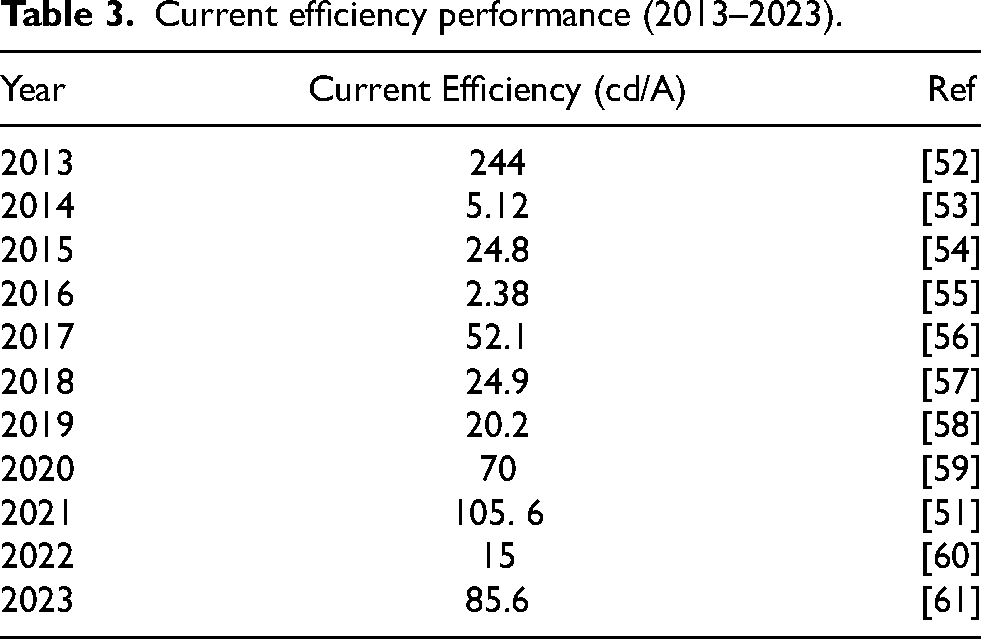
Table 3 showcases the performance of current efficiency over the last decade. In 2021, Guangzhao Lu et al. [51] worked on semitransparent circularly polarized OLEDs.
Current efficiency performance (2013–2023).
Current efficiency performance (2013–2023).
In 2023, C.Y Wong et al. [38] have made an approach towards realizing a long operational lifetime. Here, the OLEDs were vacuum-deposited. A brightness level of 1000 cd/m2 was recorded with a higher external quantum efficiency 19.5%. A novel range of strong C∧C∧N carbazolyl gold (III) complexes has been created and produced where longer half lifetime has been shown. Figure 2 is the graph that displays the performance of Luminescence during the last ten years of period.

Performance of Luminescence in the past decade.

Performance of EQE in the past decade.
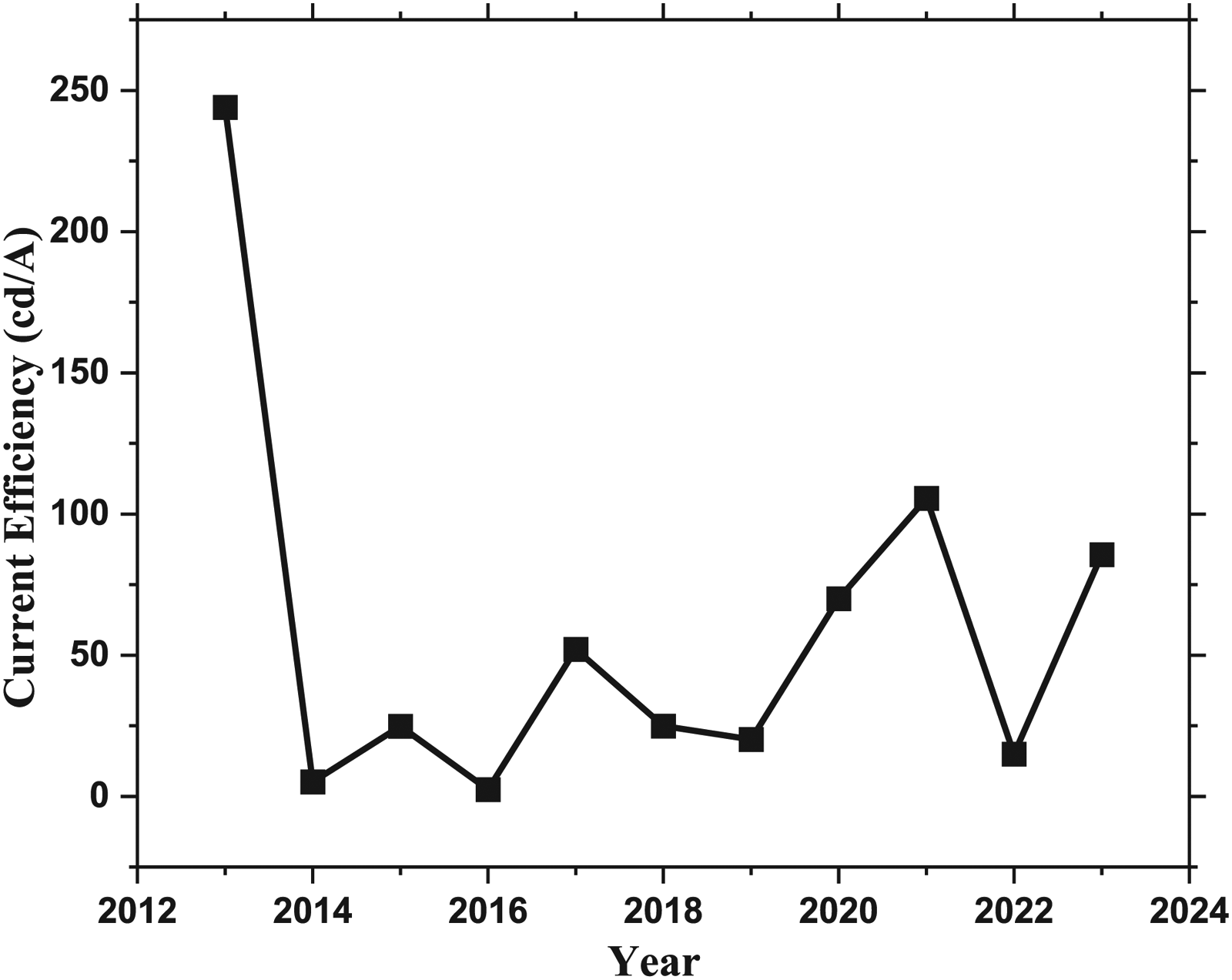
They proposed that the production of efficient CP-OLEDs with simultaneous high efficiency is clarified by the integration of unique chiral Ir (III) compounds with semitransparent systems. The overall current efficiency recorded in this case is 105.6 cd/A. In 2023, Zhaoran Hao et al. [61] proposed an efficient OLED that involved the use of Chiral sulfoximine based TADF (thermally activated delayed fluorescent) emitter (CP-TADF) and they concluded that the incorporation of heteroatom-based core chirality would significantly extend the architectural area for efficient CP-TADF emitters. Figure 4 is the graph that displays the performance of Current efficiency during the last ten years of period. Here, the device’s performance is continuously improving, primarily due to the green light it emits, which has a significant influence on the device’s enhanced performance.
Performance of current efficiency in the past decade.
Luminous efficiency, sometimes known as power efficiency, is characterized as the proportion of luminous flux to a device’s power consumption.
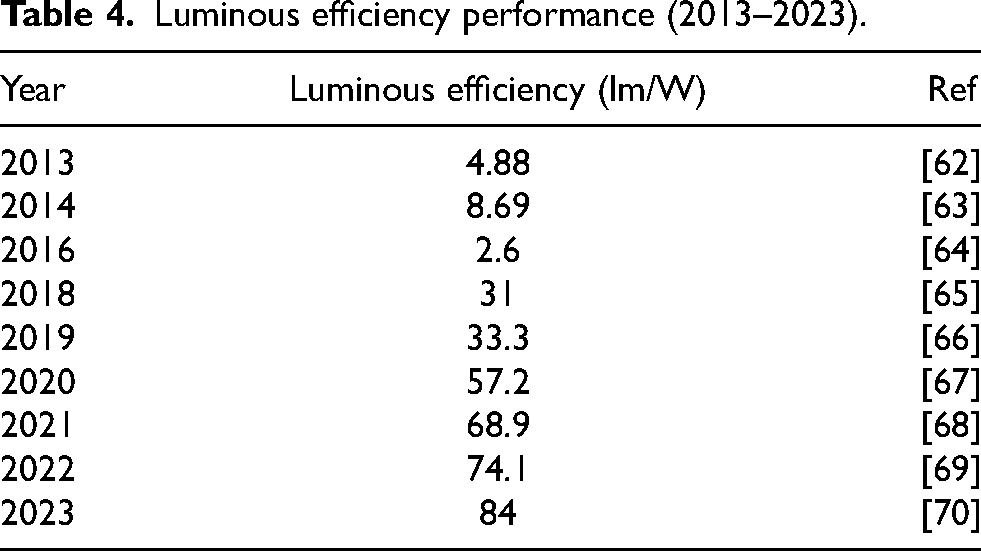
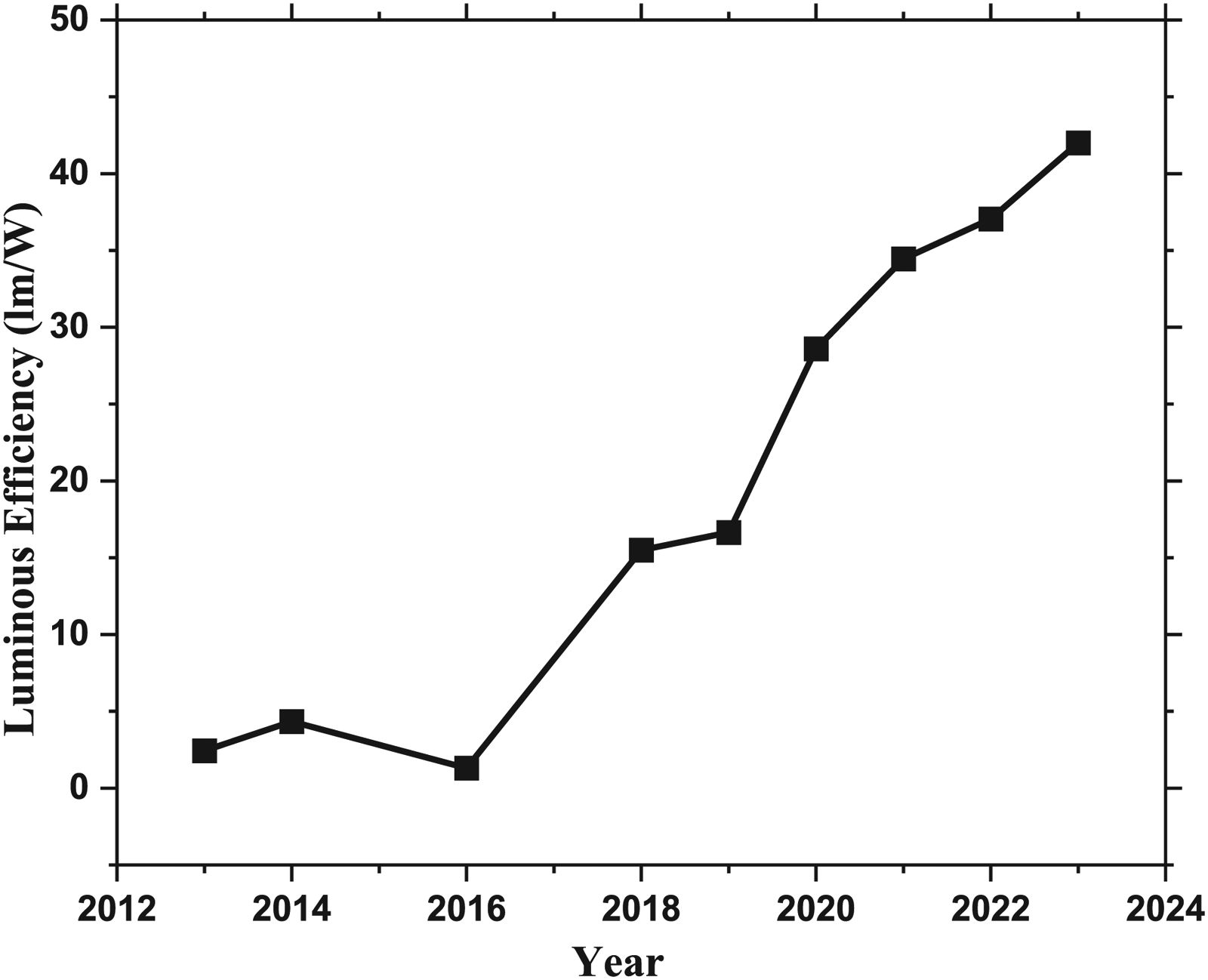
As indicated in Table 4, many researchers have been investigating the display field to increase the system’s luminous efficiency. For example, in 2019, S. H. Han et al. [66] proposed an OLED where the emitting layer was composed of TADF for demonstrating a pure blue color [70]. The luminous efficiency in this case is observed as 33.3 lm/W Additionally in 2021, D. Cui et al. [68] have proposed that by implementing the transition dipole moment (TDM) which is horizontally oriented in this case, in the EMLs (emission layers), can contribute in a superior performance of OLEDs. As aforementioned, the recorded luminous efficiency in this case is quite high, notable 68.9 lm/W [68]. Most superior performance in this review for luminous efficiency is recorded at 84 lm/W in 2023, by Zhaoran Hao et al. [70] Fig. 5 is the graph that displays the exponential increase in the performance of Luminous efficiency during the last decade. This survey indicates that there has been a significant improvement in luminous efficiency performance. This demonstrates that OLED performance has significantly increased over the past ten years, and it is to be commended for the advancements and cutting-edge research that have occurred and will occur.
Luminous efficiency performance (2013–2023).
Luminous efficiency performance (2013–2023).
Performance of Luminous efficiency in the past decade.
One of the main OLED-based applications, displays have advanced significantly in the last ten years. Giants in the technology industry like Apple, LG and Samsung are putting OLED-based screens in their products. The excellent color and contrast that OLED-based displays provide are the primary drivers of the move away from inorganic LEDs and towards OLED displays. OLED screens are superior as well since they don’t need illumination, which improves contrast [71]. They can also produce a vast range of colors, which elevates the overall quality of the images produced. The current focus of research is on improving their efficiency because, of all the components in a device, the OLED uses the highest amount of power. This section reviews three kinds of OLED based displays namely AMOLED (Active-matrix organic light emitting diode), TEOLED (Top emitting organic light emitting diode) and QD-OLED (Quantum dot organic light emitting diode) and the enhancement in the performance of these displays [72].
AMOLED
Important active electronic layers are produced in the exciting field of active-matrix organic light-emitting diode (AMOLED) displays using organic materials [73]. In active-matrix displays, pixel driving circuits linked to each pixel element formed in the display region of a flat-panel display substrate perform their function. A driving circuit and a local memory element—typically a capacitor—make up each pixel-driving circuit [74]. The panel design should accommodate a wide range of substrate materials; it should also be environmentally safe, able to be adjusted from small to large sizes, and have enough resolution [75]. In the past few years, the focus of active-matrix organic light-emitting diode (AMOLED) displays [76–78] has shifted towards greater resolution, a thinner frame, and more adaptability. Figure 6 shows basic structure of an AMOLED.

Structure of AMOLED.
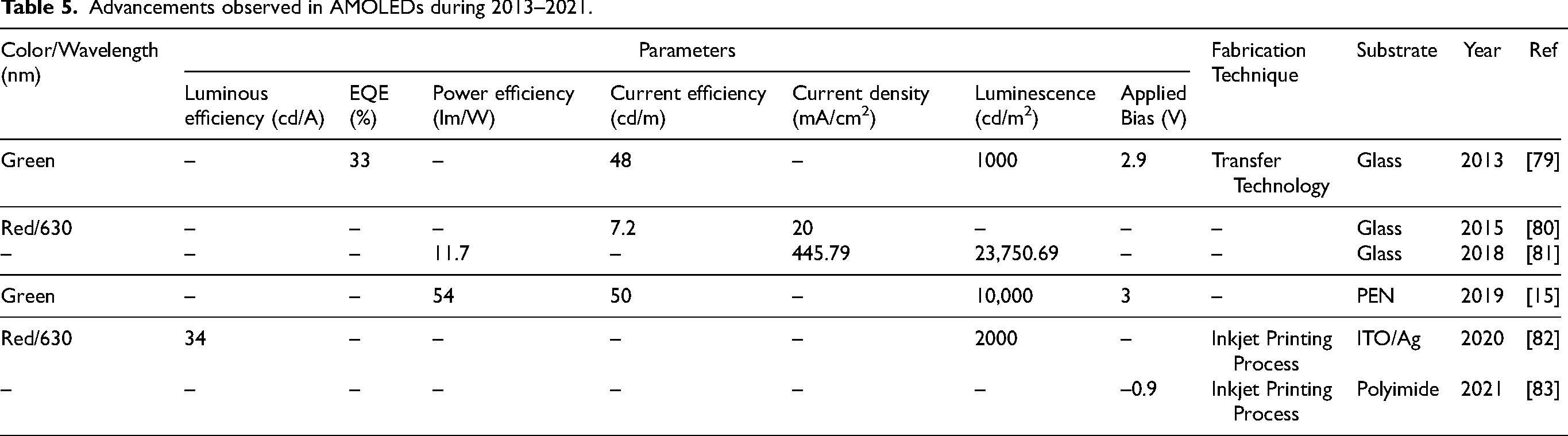
The AMOLEDs prominently gained significant attention in the early 2000s when the technology started to advance in the improvement of quality of image. The effectiveness of the AMOLED is determined by a few factors, which were covered in the preceding section. Several fabrication techniques have also been implemented in order to make the production easier in terms of process as well as cost. For example, in 2013, A. Chida et al. [79] have fabricated an AMOLED device on a backplane at 3.4 inches that was capable of showcasing a high resolution of the final image. This technology used for fabricating the device enables to create newer and complex designs with the availability of advanced materials. At an applied bias of 2.9 V, the recorded value of luminescence is 1000 cd/m2, current efficiency is 48 cd/m and external quantum efficiency is 33%. These results overall are considered satisfactory where the resolution of image is seen at 326 ppi (pixel per inch).
Again in 2020, a 17.3-inch AMOLED was fabricated by P. Y. Chen et al. [82] on a glass substrate. The main goal of this work was to produce an AMOLED device with high resolution, exceptional efficiency and long-life span. The fabrication process used in this case is the Inkjet printing process. This is a popular technique used in the digital printing which prints images by spraying ink drops on the substrate. This way, a high-quality image can be produced and this can be used on wide variety of substrates such as plastic, glass, paper etc. The reported pixel density is 255 ppi. In this work, an image with a resolution of 3840 x RGB x 2160 was planned for this display. The recorded parameters show satisfactory performance with luminescence 2000 cd/m2 and luminous efficiency cd/A. Additionally in 2021, Y. Xue et al. [83] has proposed a 4K AMOLED device which is flexible. It is a 31-inch device that is integrated with gate driver on the array (GOA) technology. This device is fabricated on a polyimide substrate. The reported pixel density is 144 ppi at an applied voltage as low as –0.9 V. This experiment has received satisfactory transfer characteristics when exposed to mechanical and electrical stress. This fabricated display has passed the reliability test and can be operated for 500 h. Significant work has been observed in fabricating the AMOLEDs over the last decade. Some of the devices have been carefully tabulated along with the performance parameters that show significant development over this period in Table 5. This table makes it clear that as time went on, fabrication methods also evolved, which substantially aided in developments, particularly in the field of OLED displays, where production and implementation in real-time applications have grown simpler.
Advancements observed in AMOLEDs during 2013–2021.
One kind of OLED display technology that uses organic chemicals to generate light is called Top-emitting OLEDs, or TEOLEDs [84]. This particular variety is different in that light from the organic layers enters the top substrate instead of the bottom, producing the side that faces the viewer [85]. This design offers more flexibility in choosing the substrate components and may be helpful in some circumstances. Top-emitting OLEDs are widely used in display technological advances, including several types of OLED TVs and flexible OLED displays [15, 86–88]. Their benefits include improved light extraction efficiency and simpler integration into many different factors. The choice between using top- or bottom-emitting OLEDs depends on the specific requirements of the display application. Figure 7 shows the basic structure of a TEOLED.
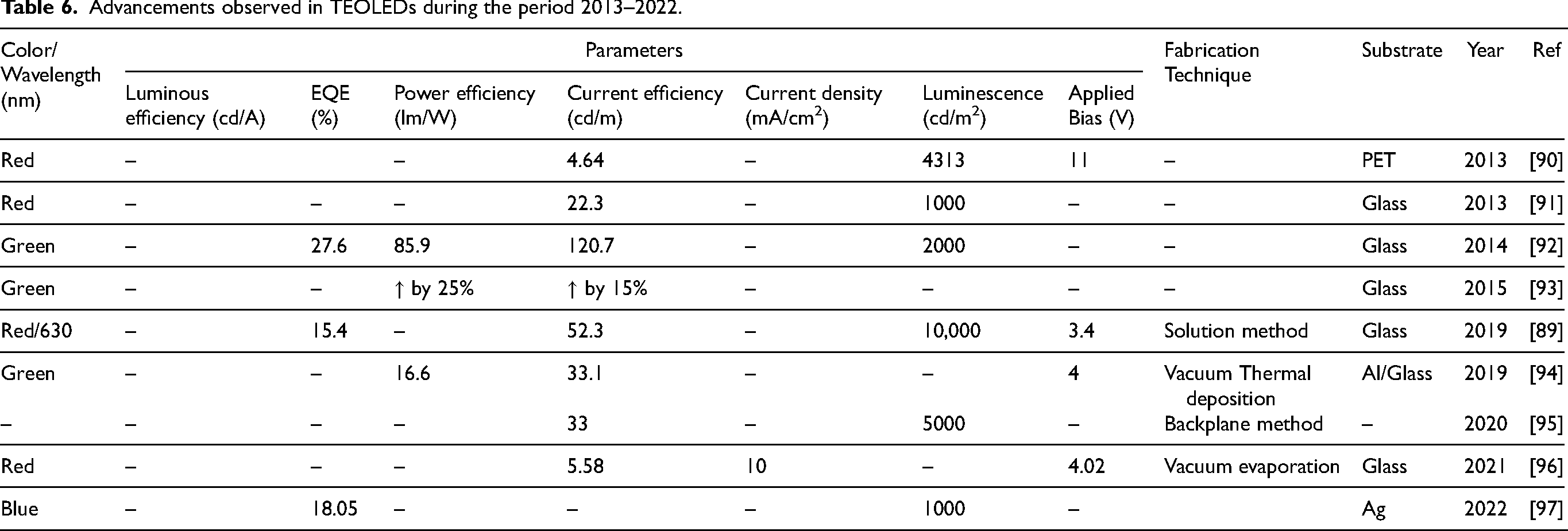
Advancements have been made in fabricating the TEOLED device by using various fabrication techniques to improve the performance. For example, in 2019, S. Jung et al. [89] proposed a TEOLED device which studied the spontaneous formation of organic wrinkle structure. This work has shown a high luminescence performance which is recorded at 10,000 cd/m2 with an 8% increase in the EQE value (15.4%). The reported current efficiency value is 52.3 cd/A. This work involved in a solution process for fabrication of device with glass considered as substrate at an applied bias of 3.4 V.

Structure of TEOLED.
Again in 2020, Q. Xue et al. [98] reported a TEOLED device with a low applied voltage at 4 V and produced acceptable performance where they used backplane process to fabricate the device. This technique is considered crucial in the OLED technology. The circuitry required to regulate each pixel is provided by the backplane, which acts as the display’s structural support. An overall good performance was recorded with a luminescence of 5000 cd/m2 and a current efficiency of 33 cd/A. Several other fabrication techniques have been used to produce the TEOLED device over a period of time, one such process include the Vacuum evaporation process. J. Liu et al. [94] fabricated a TEOLED device using this technique on a glass substrate. This method is used to apply different material thin films in a vacuum environment to a substrate. The experiment took place with an applied bias of 4 V and achieved a current efficiency of 33.1 cd/A in green phosphorescent TEOLEDs. Table 6 provides an insightful overview of TEOLED performance developments over the past ten years. It is evident that TEOLEDs can be created employing a variety of manufacturing procedures, contingent upon the specific needs of the application. Techniques like vacuum thermal deposition, backplane methods, and solution method, for instance, have been used, and the parameters extracted using these techniques have performed satisfactorily.
Advancements observed in TEOLEDs during the period 2013–2022.
The fusion of OLED and quantum dot technologies is known as quantum dot OLED technology [99, 100, 101]. When activated by light or electricity, tiny semiconductor particles known as quantum dots can release certain colors. They are frequently used to improve color accuracy and brightness in LCD screens. Figure 8 depicts the basic structure of a QD-OLED.
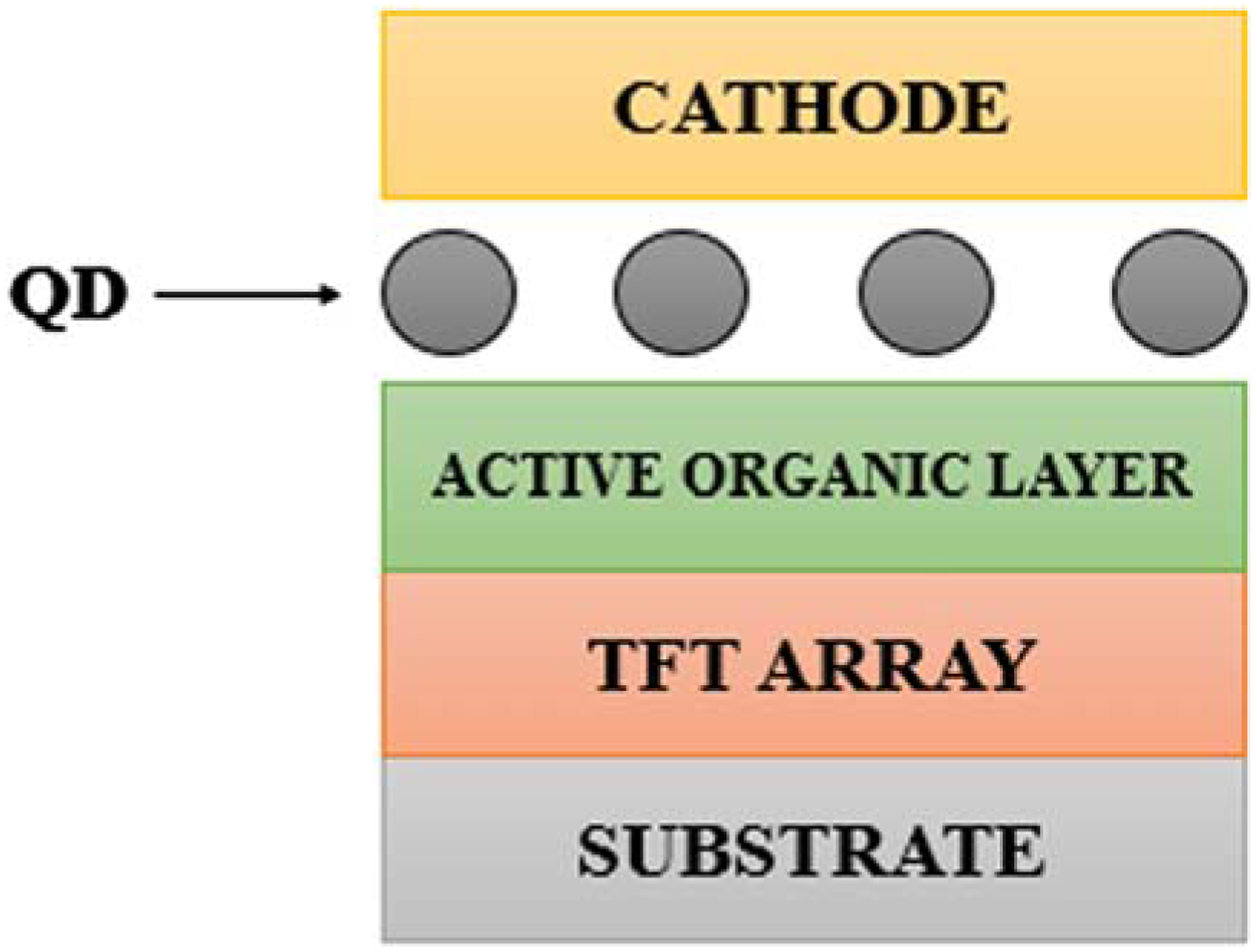
Structure of QD-OLED.
The main benefits of placing the quantum dots as a layer boosts the color quality and increases the efficiency of the system along with longer life and less power consumption. But still, this technology faces some dire circumstances when it comes to manufacturing because the methods are quite complex and all techniques does not go well with this technology. Also, the production cost is quite higher when compared to other technologies. During the last decade, a lot of development has been observed in advancing the QD-OLED technology.
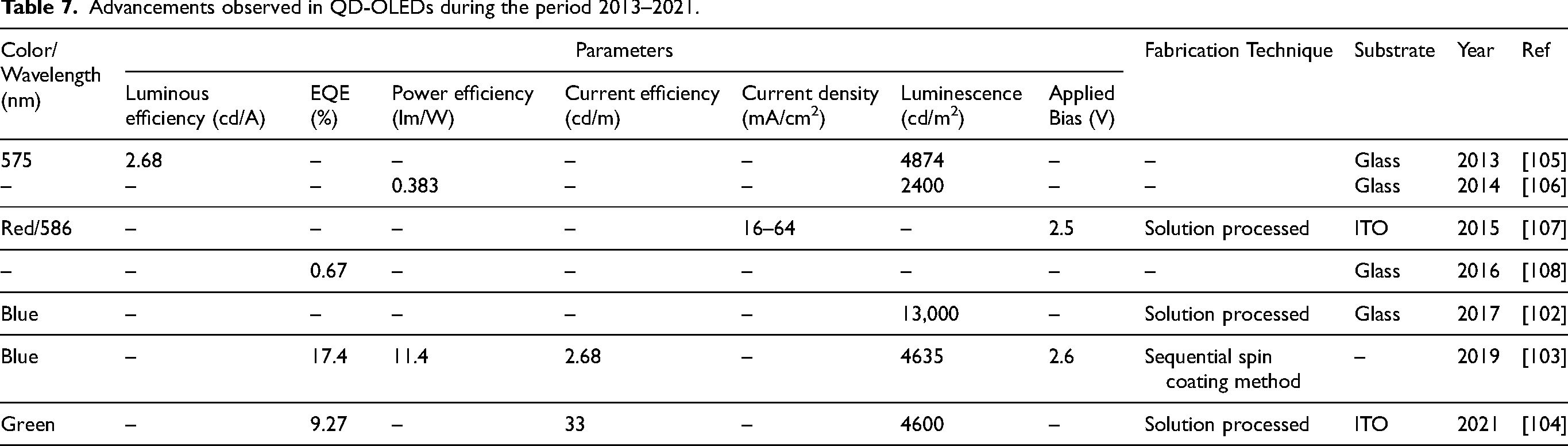
Table 6 chose selective researches done over this period and the improvement in the performances is tabulated. In 2017, Tai Cheng et al. [102] have proposed an efficient QD-OLED that involves solution processing technique for fabrication. This work reports 13,000 cd/m2 of luminance with blue emission. The reduction of the energy barrier between the QDs and the cathode leads to a significant improvement in electron injection and exciton concentration. Additionally in 2019, Dongyu Li et al. [103] fabricated a QD-OLED device that emitted blue light. Here, the EBL (electron blocking layer) is considered to be TBS-PBO which goals at boasting the transfer balance of the device. It is known that the TBS-PBO layer is capable of showcasing good conductivity which leads to a better current density. In this work the Luminescence is recorded at 4635 cd/m2 and the external quantum efficiency is recorded maximum at 17.4%. The current efficiency and power efficiency are respectively reported as 2.68 cd/A and 11.4 lm/W. Furthermore in 2021, Fan Cao et al. [104] fabricated a QD-OLED using the solution processed method for production. This case produced luminescence at 4600 cd/m2 which is given as the initial value. Current efficiency is recorded at 33 cd/A with an external quantum efficiency of 9.27%. This device emits green colored light. The enhanced performance was caused by the application of Chlorine-passivated TPA HTL, which effectively reduced the hole concentration mediated the Cl passivation repercussions for TPA’s oxygen vacant spaces and inhibited the exciton calming at the HTL/QDs interface.
Figures 9 and 10 showcases the collective survey of advancements in the performance of luminescence and current efficiency of AMOLED, TEOLED and QD-OLEDs throughout the last ten years of period (2013–2023). Based on the findings presented in this article, it is evident that AMOLEDs are already much sought after for displays and are useful for high-resolution devices. Due to the utilisation of quantum dots and their special qualities, research on QD-OLEDs has been in high demand. By incorporating these in OLED applications, manufacturing costs may be reduced in the next 10 years, and AMOLED devices may eventually be replaced. Current research indicates that developments are ongoing, and it is certain that more effective gadgets are making their way and will eventually be seen in more real-time applications.
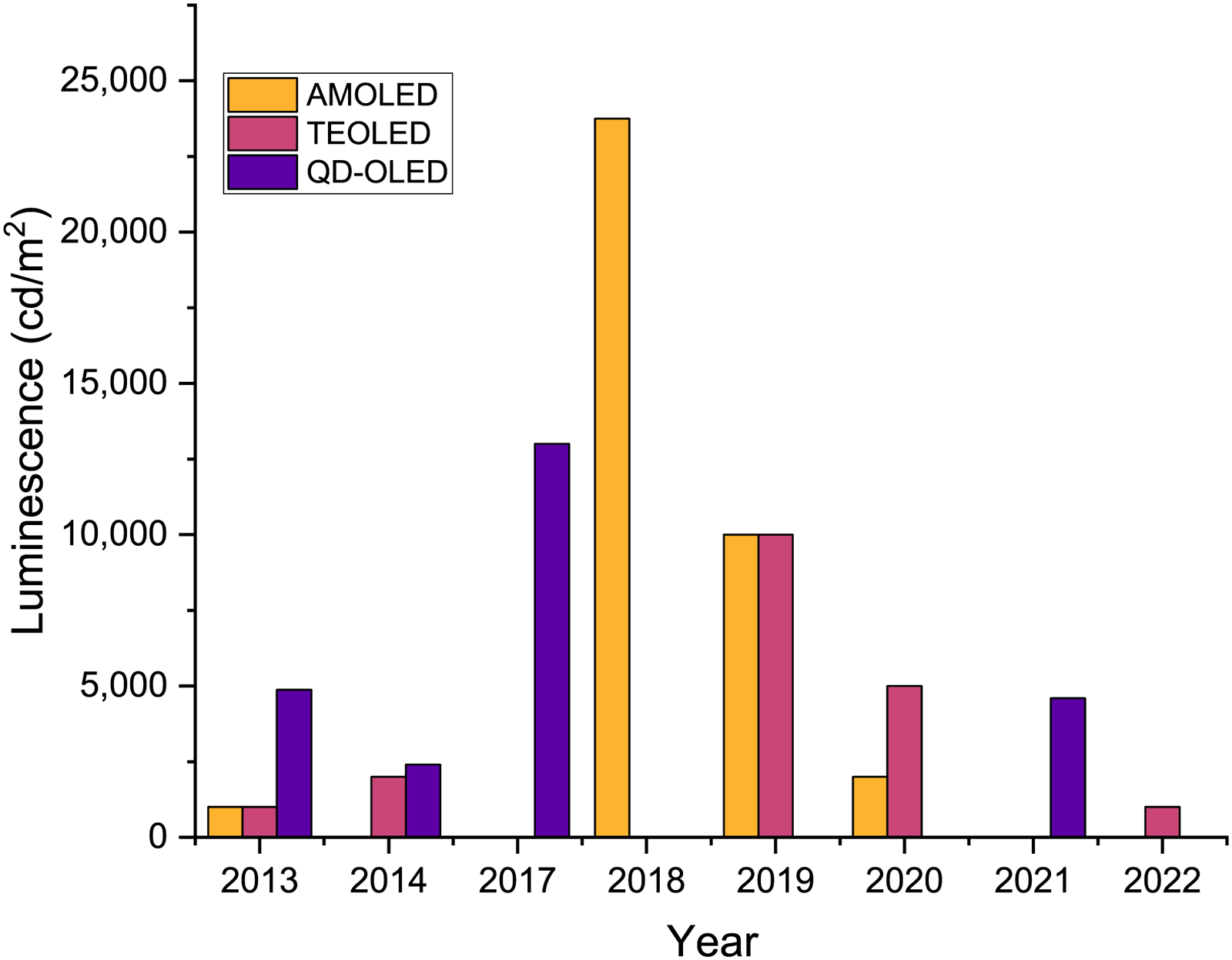
Luminescence performance observed in AMOLED, TEOLED and QD-OLED in the past decade.
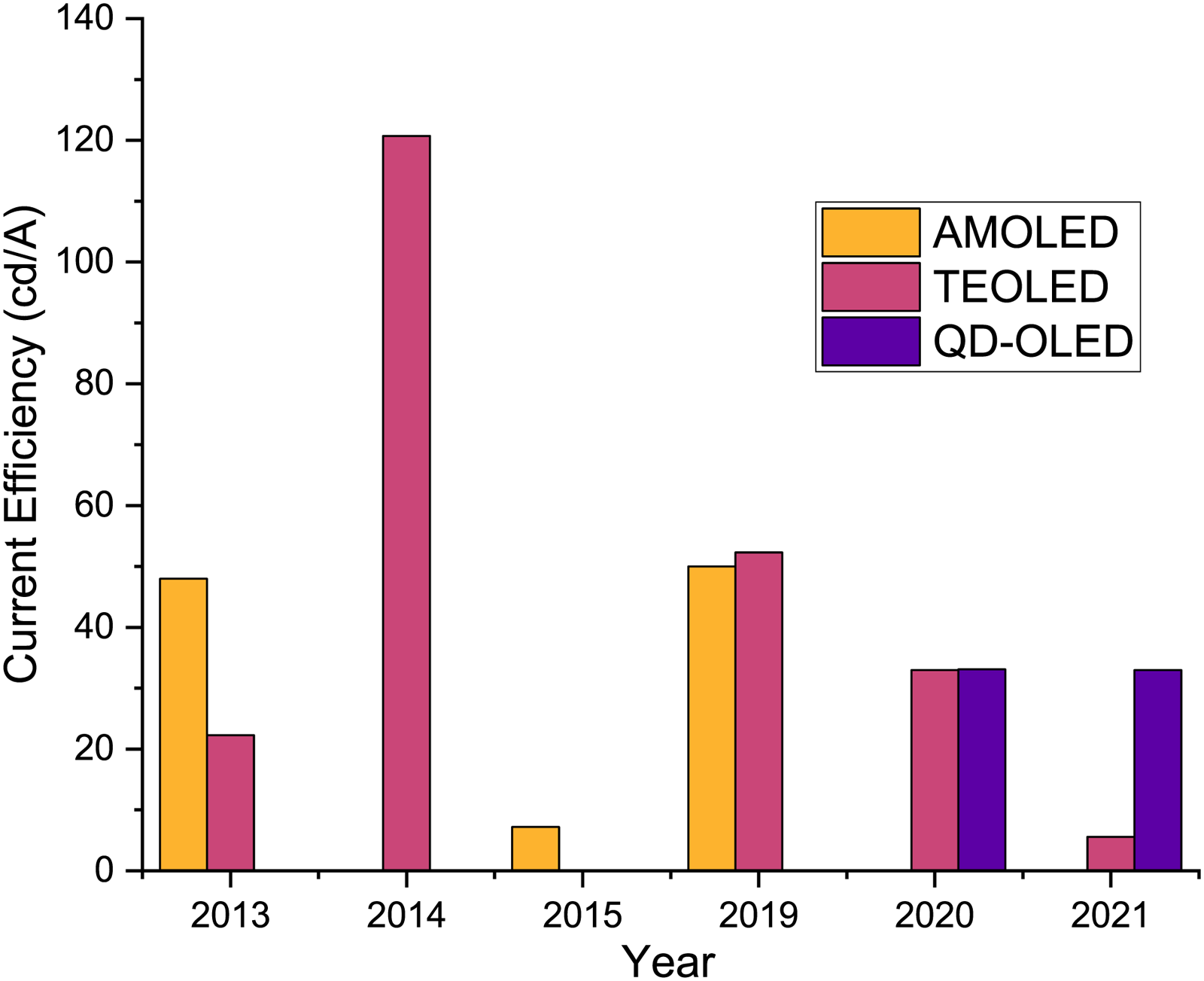
Current efficiency performance observed in AMOLED, TEOLED, and QD-OLED in the past decade.
Different fields of biomedicine that use OLED technology.
Progress in OLED-based biomedicine
As previously reported, OLED technology has become increasingly popular in consumer electronics since the early 2000s, particularly in displays related to TVs and smartphones [109]. The biomedical area has greatly benefited from the widespread adoption of OLED technology because of its unique qualities, including flexibility and biocompatibility. Its primary usage at first was in biosensing, such as oxygen sensing [110]. Subsequently, these programmes were developed further to identify different biomolecules, including glucose and cholesterol [111]. When OLED-based pulse oximeters were created in 2017, additional advancements in OLED technology were noted [112]. In 2019, a novel technology known as photo biomodulation treatment was unveiled, which has the potential to treat and reduce inflammation [113].
Subsequently, IoT systems and AI algorithms for the biomedical industry have also made use of OLED technology [114]. Many studies have recently been made available to the general public for purchase, and the development of these tools is still being tracked today. Without a doubt, this technology will continue to advance industry-healthcare cooperation like drug delivery systems.
OLEDs have improved significantly in the last three generations in terms of dependability, efficiency, and brightness, which makes them appealing as light sources for tiny biomedical devices that use light to analyze, modify, or treat biological substances. In this case, the intrinsic mechanical resilience of OLEDs, also and their flexibility across a broad spectrum of substrates and morphologies are quite helpful. [115]. This section examines current advancements in the biomedical sciences domain regarding the production and application of OLEDs [116]. This meets some needs that are identified and compared to the state of the art at the moment, specifically in terms of OLED luminosity and layout [117]. In contrast to traditional display uses, the implementation of OLEDs in medical fields necessitates particular device characteristics, which pose additional difficulties. Without a significant degree of mechanical flexibility, OLEDs cannot be used in wearable or even implanted products. To shield the sensors from endogenous degradation, strong encapsulation is required. Although lower operating voltages [118] are also required to achieve low power consumption and make integration with standard driver electronics possible, decreased signal-to-noise at higher light intensities is often beneficial for sensing applications as well [119]. Narrower emission spectra are prerequisites for several applications, particularly in the field of photonic sensing, and standard OLED emitter materials cannot provide them [120].
Various studies on OLEDs in the field of Biomedical applications
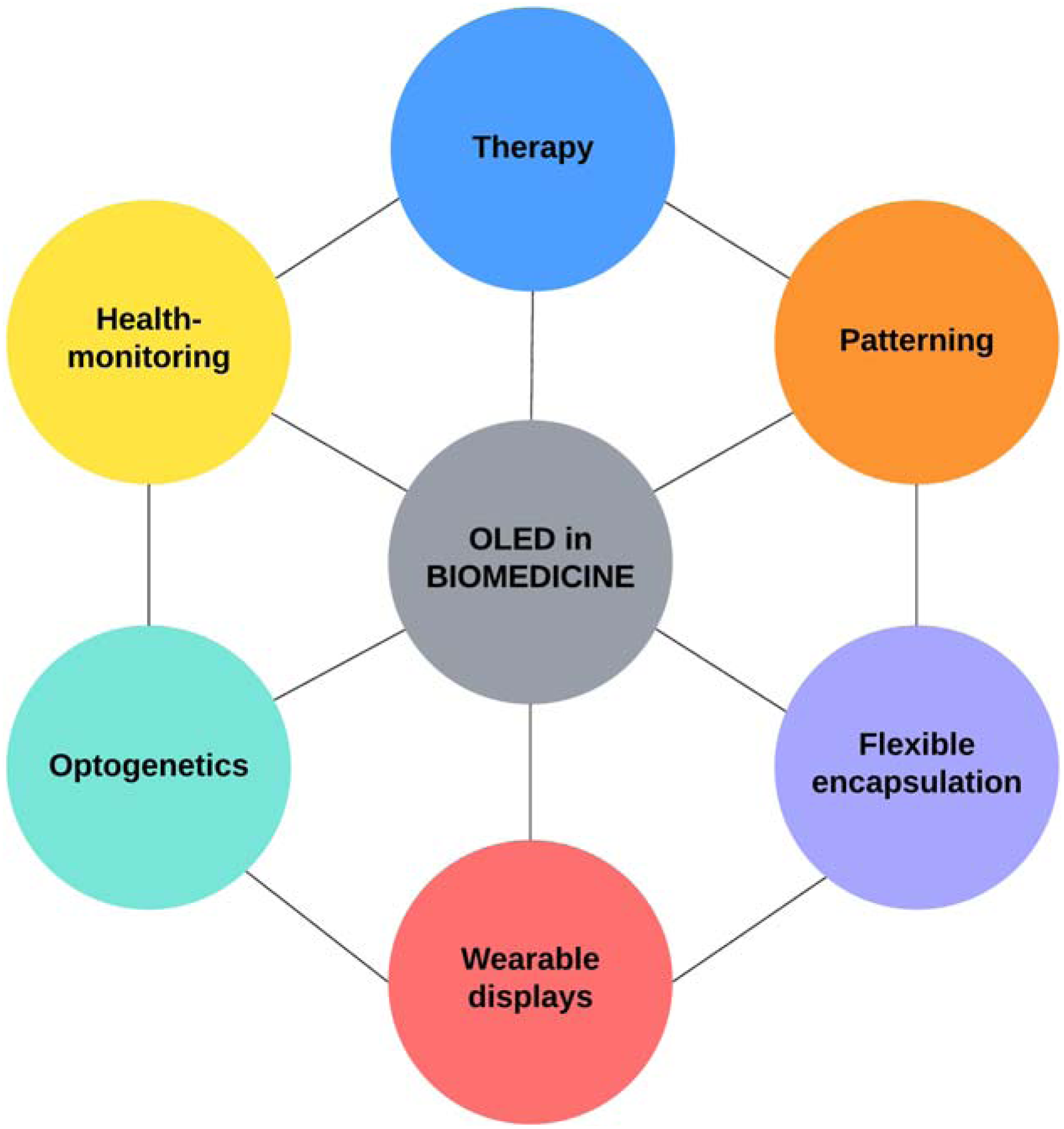
In this section, a comprehensive review of various biomedical fields where the usage of OLED devices is observed is showcased. Some of these fields are wearable sensors for health monitoring, therapy, and optogenetics.
In 2018, Yongmin Jeon et al. [121] fabricated an OLED device solely for the treatment of vitro wounds and for its healing. In this, they have used a method called Photobiomodulation (PBM). This method is popular for contributing to several clinical effects. They have developed this OLED device in a way that can be attached to the body of a human. This device is light-weighted i.e., around 0.82g and 676μm thin. The overall lifetime of this device is good and it can be operated for more than 300 h. This work has given proof of OLED devices contributing to various therapeutic usages at low cost and easy to handle. The structure of the proposed OLED device is given in Fig. 12.

Suggested structure of OLED device for the treatment of vitro wound.
In continuation to therapeutic applications, in 2022, S. Choi et al. [122] fabricated an OLED device that is textile-based. This research aims to provide phototherapy for the treatment of Neonatal Jaundice. Neonatal Jaundice is seen in infants which causes complications such as brain damage or even death in worst cases. Therefore, this research provided a therapy integrated with OLED technology for a rapid and easy cure for this disease. This research took place at a very low voltage that is as low as 4V. The lifetime of this fabricated device is reportedly 100 hours. The treatment can be conducted in a very low-temperature environment (<35°C).
The visual activation of cells via a method known as optogenetics is another newly emerging biomedical application for OLEDs which was first depicted by Boyden et al. in 2005 [123]. Through genetic programming, optogenetics [124–127] enables cells to synthesize light-sensitive proteins, such as light-gated ion pumps or channels frequently seen in nature. This can therefore give the genetically altered cells themselves light sensitivity. Optogenetics is especially intriguing for finely timed regulation of neuronal activity with exceptionally high geographical precision, as it allows for both activation and suppression of cellular activity [127–130]. It is now a well-established method in neuroscience that has made possible several groundbreaking discoveries in behavioral biology, provided crucial information about neurological conditions like Parkinson’s and Alzheimer’s, and sparked the development of numerous other technologies, including optical heart rate monitors and devices for controlling the bladder. It might soon be used in clinics to help people with visual and hearing impairments regain or improve their eyesight and hearing.
Dongmin Kim et al. [134] presented a highly adaptable optogenetic stimulator in 2020. The device uses an OLED to excite neurons in transgenic animals that express rhodopsin 2. In this case, the researchers have effectively shown how to stimulate the peripheral nerves and the brains of rats optically, and they have used functional magnetic resonance imaging (fMRI) to see the evoked neuronal processes brought on by optical stimulations. Table 8 provides a concise overview of the biomedical applications, including wearable displays and phototherapy, that have been implemented in the recent past. It also provides a detailed description of each research study, allowing readers to quickly grasp the progress that has been made in this specific sector over the years. OLEDs have proven advantageous for biological applications, as researchers have shown in several proof-of-concept and feasibility studies. There are currently just a few instances where OLEDs are being utilised outside of the laboratories of specialists in organic electronics, such as in studies on the neurological system. To establish OLEDs for potential uses in human health, a logical intermediate step would be to conduct basic biological and medical research. Having lower hazards and regulatory obstacles, it offers a great testing ground for the technology because it involves many of the difficulties that would arise in medical settings. To sum up, OLEDs are very useful for biomedical applications because of their many distinctive features. Although it is still difficult to create flexible OLEDs that are strong and lasting, this possibility makes OLEDs perfect for applications where the device must be integrated with another complexly shaped device or interface closely with skin or tissue.
Advancements observed in QD-OLEDs during the period 2013–2021.
Various Applications observed in the Biomedicine field.

This segment of the essay delves into an extensive array of OLED device applications that were not addressed in previous sections. There is no question that the OLED application has become important in a variety of fields, such as VLCs, military applications, and even sensors such as light, touch, and other types of sensors, as well as cancer detection. The curved or rolling illumination sources that flexible substrate-based OLEDs offer are an appealing characteristic for usage in screens and devices with sensors. It is possible to use this kind of technology for visible light communications (VLC). In 2020, Z. N. Chaleshtori et al. [135] have proposed an OLED-based VLC that investigated the characteristics whether they are suitable for use in corridor, office and half-open habitat which are mainly indoor environments. Significant research has been conducted on the production of organic LEDs, which has resulted in a wide range of sensor applications that are already covered in section 2 of this article. However, OLED technology [136–138]. An organic LED was employed as the light source in a chemical imaging sensor developed by Miyamoto et al. [139]. Because intricate details and procedures were left out, the created device has a comparatively small size. In order to diagnose ovarian cancer in 2019, Negi et al. [140] identification is achieved by using one multi-layered OLED and one triple hole block layer, respectively. Moreover, an organic TFT with two gates serves as the driving transistor for the triple hole block layer. The dual gate OTFT beats the single gate OTFT by 18% in terms of performance. At incidence wavelengths of 440 and 420 nm, the cathode current in a multi-layered OLED is found to be 13 and 29 mA. The organic LED is appropriate for several military applications in addition to Displays, sensing, medical, and OTFT applications. Applications for military use, including night vision goggles, vision improvement systems, assistant gunner displays, and more, were discussed by Barre et al. OLED was used by researchers Trakalo and Lorimer, and it has been used in three different military display techniques. The gadgets in question are polymer-OLED AGD, OLED [141].
Even though OLED technology has advanced significantly, achieving extended longevity, superior effectiveness, and excellent visual quality still presents significant problems. Sunlight-style [142] and candlelight-style OLEDs [143] have drawn attention in recent years due to their appealing properties, which include affordability, energy efficiency, sustainable development, roll-to-roll manufacturing, and blue risk-free emitting. EQE is an additional parameter that is crucial in enhancing the efficiency of OLEDs [144]. The combined value of extraction efficiency along with internal quantum efficiency determines EQE. Quasi-efficiency can also be increased if the photons generated in the active region are able to leave the epitaxial layer, essentially increasing extraction efficiency. But compared to red or green, blue wavelengths are less visible to the human eye. In certain situations, this leads to lower efficiency and a greater barrier, making it more difficult to increase quantum efficiency [145].
Conclusion
This article reviewed the advancements that took place in the field of Organic light emitting diodes in the past decade. The importance of organic electronics has seen an exponential growth ever since they were discovered. This was because of the usage of organic semiconductor materials in the devices which are responsible for the flexibility and also easy manufacturing. These devices are used in screens, biological sensors, and other applications such as military and in Visual light communication (VLCs). AMOLED, TEOLED and QD-OLED are some of the types of displays which have been briefly analyzed according to their performance recorded in the recent past. The performance of the device is generally decided on the basis of the characteristic parameters namely Luminescence, EQE, current efficiency, Luminous efficiency etc. The field of biomedicine have seen the use of OLED devices on a large scale when it comes to wearable sensors and in optogenetics. The advancements are carefully tabulated in respective sections providing a brief on the developments and different applications of OLED devices to the future generation.