



Abstract
In the early phase of Requirements Engineering (RE), Goal-Oriented Requirements Engineering (GORE) has been found to be a valuable tool. GORE plays a vital role in requirements analysis such as alternative selection decision-making process. This is carried out to determine the practicability and effectiveness of alternative approaches to arriving at quality goals. Most GORE models handle alternative selection based on an extremely coarse-grained qualitative approach, making it impossible to distinguish two alternatives. Many proposals are based on quantitative alternative choices, yet they do not offer a clear decision-making judgement. We propose a fuzzy-based quantitative approach to perform goal analysis using inter-actor dependencies in the
Keywords

Introduction
Goal-Oriented Requirements Engineering (GORE) designs software system requirements by applying goals as the starting point. This method involves the requirements specifications being developed, elaborated, organised, defined, evaluated, negotiated, recorded and updated [68]. Goals play a critical part in GORE. Goals help in understanding the domain and determine stakeholders interests [62]. Goals are drawn up at various layers of abstraction, based on the actors’ strategic concerns related to the system being built. It is therefore a well-considered significant artefact during the initial stages of Requirements Engineering (RE) [25]. A goal model or a multi-view model of goals forms the basis of goal elaboration. The model demonstrates how, in the specified system, goals, actors, states, objects, tasks and domain characteristics are interconnected [48].
In GORE, techniques such as the
The optimised quantification approach for pairwise comparison, normalisation and validation of relative priorities of softgoals towards the main goal. This approach increases the consistency of quantification results compared to the existing approaches. A guide for alternative selection for interdependent actors having opposing non-functional requirements.
The background and related works of GORE-based quantitative and qualitative goal models are explained in the following section. In Section 4, the proposed method of reasoning opposing goals based on inter-actor dependency is explained. A case study of a telemedicine system for the proposed method is demonstrated in Section 5. Conclusions and future works are drawn at the end of the paper.
The most important activity during a software engineering process is to obtain the precise requirements. Recent surveys done on requirements have proven that requirements engineering is a primary area of study in software engineering research and practice [51]. Nowadays, we use the term “goals” in requirements engineering technology. A goal is defined as an objective which needs to be achieved by the software system that is being developed [48]. These goals are obtained from stakeholders and disclosed in the requirements documents along with analysis of similar or existing systems, an explanation of other goal models, etc. We can specify goals at various levels of abstraction from high-level strategic concerns to low-level technical concerns. Behavioural goals or functional requirements determine the services that need to be provided by the system. The softgoals or non-functional requirements are concerned with the quality of service provided, such as accuracy, performance, security, etc. In software engineering, goals have been used to model early requirements and the non-functional requirements [28].
During the early phase of the software development life cycle, requirements engineering is used to elicit goals that need to be achieved by the system being developed. These goals need to operate as per the service and constraint specifications. The tasks have to be allocated to agents like humans, devices and software to fulfil the requirements. This system is also used for the evolution of these requirements over a span of time. The process of requirements engineering may differ depending on the application domain, the people involved and the organisation which is identifying the requirements. It is however noteworthy, that requirements engineering follows a systematic methodology to identify a complete and congruous set of requirements, so that the goals can be reached satisfactorily.
Among the various methods proposed in the requirements engineering literature for modelling requirements, GORE was found to be the most suitable approach compared to other traditional approaches, namely conceptual entity-relationship modelling, structured modelling and object-oriented modelling [62]. All these approaches were found to be more appropriate during the later stages of requirement analysis in the software cycle, when they are used to target the traceability between requirements and implementation. Hence, GORE was found to be the most suitable alternative for requirements analysis, especially for identifying the non-functional requirements (NFRs) during the initial phase of the software development cycle.
GORE uses goals for eliciting, elaborating, structuring, specifying, analysing, negotiating, documenting and modifying requirements [48]. The objectives of the stakeholders or the requirements to be accomplished by the system under consideration are referred to as “goals”. We refer to “system” as the software-to-be, together with its environment [51]. We represent goals using AND/OR structures, which show how the goals are refined or abstracted. These goals specify the functional or non-functional requirements and are further categorised as high-level to low-level goals. The system goals specify the application’s specific safety, its fault tolerance and the properties of its survivability. These system goals are meant to develop the software system with high assurance quality, for which goal modelling and reasoning are particularly significant.
During the requirements engineering process, goal models are formulated to help in the qualitative or formal reasoning of goals. An AND/OR graph represents a goal model and depicts how higher-level goals are satisfied by the lower-level goals and vice versa [49]. Besides modelling, analysts also use goal models to find the levels of satisfaction of goals achieved, to evaluate alternative design options, to choose the system design, to analyse risk and to ascertain the prioritisation of requirements. During the evaluation of alternative designs, analysts use several evaluation criteria to choose the best design. They use softgoals in goal models as evaluation criteria in existing quantitative and qualitative approaches [61]. To support goal analysis, several quantitative and qualitative methodologies have been proposed in the requirements engineering literature [28, 55, 5, 24, 38, 59, 75, 7, 9, 10].
Requirements analysis is structured and carried out in most of the current GORE frameworks based on the qualitative goal models [80, 16, 29]. During the process of evaluation, the quantitative or qualitative values are propagated using bottom softgoals to the top softgoals in the goal model. Qualitative requirements analysis utilises qualitative measures like ‘satisfied’, ‘weakly satisfied’, ‘undetermined’, ‘conflicting’, ‘weakly denied’ or ‘denied’ to mark the fulfilment level of the quality goals. While it offers a quick approach to evaluate goals in the early stages of requirements engineering, the labels for representing contributions are optimistic and too coarsely-grained to be able to distinguish between alternatives during propagation [40]. This is based on the premise that a qualitative propagation approach frequently results in unspecified, inconsistent or conflicting goal satisfaction status. Different alternatives usually leads to same results for softgoals (for example, both weakly denied or strongly satisfied). Qualitative satisfaction status is coarse-grained and therefore hard to disclose at what degree the goals are denied or achieved. Such problems with the qualitative propagation approach created the need to address this issue with quantitative goal models.
While Letier et al. [51] performed a dedicated alternative selection based on objective criteria, they required specific details such as the distribution functions of quality variables. Such extra information, however, is hard to get at the early phase of requirements engineering in many cases. A few proposals [5, 52] provide quantitative analytical techniques by using numbers to denote the strength of associations, but they do not include directed strategies to obtain such numbers for strength values. Subramanian et al. [14] utilise quantitative fuzzy numbers for decision-making during the requirements engineering process. Through fuzzy logic, [15], the linguistic representation of the requirements of the stakeholders are effectively interpreted by Chou et al.
While using the quantitative method, quantitative estimations are used to represent the contribution of goals to softgoals. The quantitative labels are hence generated using link paths to find the satisfaction levels of the goals achieved. Ever since the goal model was conceptualised, a significant amount of research has been put forth on the logic used to achieve goals using quantitative and qualitative labels [28, 55, 5, 24, 38, 30, 2, 3]. In the paragraphs that follow, we have given a brief description of the several research proposals along with their shortcomings so that we can get a better understanding of the reasons which led to the development of this state of the art framework.
A qualitative formalisation and label propagation algorithm was used by [28] to present a formal reasoning of goals in the goal models. The aim of this work was to model a framework for goals to implement qualitative goal relationships and to include contradictory situations. Goal relationship labels (
Horkoff and Yu [38] proposed a qualitative analysis of goal and agent-oriented models models, which aimed to understand the problem domain during the early phase of requirements engineering. They introduced an interactive evaluation procedure and also provided alternative evaluation techniques. These alternative evaluation techniques were helpful when the intervention of customers was required to ascertain goals. The alternatives could be a system alternative, a process design alternative or an alternative in terms of course of actions, capabilities and commitments. To make it easier to comprehend and to enable manual analysis, an informal method has been presented using the
As per the proposal of Letier and Van Lamsweerde [51], a heavyweight yet more accurate approach was presented. This approach was based on probability, which requires a good knowledge and support of mathematics. A method was presented for determining the partial degrees of goal satisfaction. This method quantifies the impact of system alternatives on high-level goals which are satisfied partially. To evaluate an alternative design, the appropriate objective functions and quality variables are specified accurately. At the optimal formal layer, probabilistic extension of temporal logic is used to specify objective functions more accurately. An ad hoc use of mathematical software is required to do the calculation of objective functions, which may become difficult when the equations needing refinement are complex in nature. Additional tools dedicated to performing such complex computations need to be provided as well. The author also mentions that this framework should be extended to manage the uncertainties on parameter estimations by using confidence intervals. In the case of a complex system, the application of this approach was very difficult.
A proposal presented by Amyot et al. [5] developed a hybrid approach which combined both the qualitative and quantitative approaches to perform an analysis of the GRL model. This approach evaluates the level of satisfaction of the actors and the intentional elements. The example of a telecommunications system is used to illustrate the algorithms. This approach evaluates satisfaction values by attaching them to a subgroup of intentional elements. Using a propagation algorithm, these values are then propagated through decomposition, contribution and dependency links to other intentional elements. Three evaluation algorithms, namely qualitative evaluation, quantitative evaluation and hybrid evaluation, were implemented using the jUCMNav tool, which is an Eclipse-based editor for User Requirements Notation (URN) models. The shortcoming with this work was that it did not address the generation of a goal model, which is usually linked with eliciting requirements and an analysis process. Moreover, it was not possible to assign exact numeric values to requirements using quantitative analysis when the stakeholders’ requirements were ambiguous.
The framework proposed by Liaskos et al. [54, 55, 52] indicated preference requirements and their prioritisation. It aimed to examine the similarity between goal hierarchies and criteria hierarchies. They are used to ascertain the specifications that achieve mandatory requirements and simultaneously satisfy preference requirements and priorities in the best possible manner. An experimental study has also been conducted to show the feasibility of the approach. The limitation of this approach is that it requires certain structural features to be satisfied by the model for goal analysis.
Franch [24] presented a proposal which emphasised the quantitative aspect using an analysis of agent-oriented models. He used the
Mairiza et al. [58] presented an approach which used Multi Criteria Decision Analysis (MCDA) to settle the conflicts that arise during NFR decision analysis. The evaluation and analysis of alternative design solutions are performed using MCDA. This approach also finds the best design solution to satisfy the conflicting NFRs by using MCDA in the best possible manner. TOPSIS (Technique for Order of Preference by Similarity to Ideal Solution) is a goal-based technique in MCDA, which is used to find an alternative closest to the most suitable solution. However, this approach does not provide any tools to evaluate the approach.
Sadiq and Jain [67] presented a technique which prioritises requirements. Prioritisation of requirements, using a fuzzy-based approach in Goal-Oriented Requirements Elicitation, used the concepts of a fuzzy-based AHP for group decision-making. It also used a binary sort tree method to derive the prioritised requirements. The AHP pairwise comparison is used to assign weights to goals/softgoals and hence locate the list of prioritised requirements using the binary sort tree method. The fuzzy preference relation is used to combine the expert preferences with the group preferences. This approach has been illustrated with a small number of requirements and criteria. However, this approach requires a sound knowledge of mathematics during the decision-making process.
Goncalves and Krishna [30] proposed a quantitative approach for operationalisation in the Extended Non-Functional Requirements (ENFR) framework. The preferences of operationalisation and the progressive value of its children within the ENFR model are used to ascertain the most appropriate operationalisation. By incorporating change management in the agents, the authors expanded their work [47, 31]. Whenever any changes occur in an agent (e.g. change in softgoals or change in contribution values), the decision path is used to find the agents affected by these changes. An evaluation of the proposed optimisation model was carried out. This evaluation was based on probability, which indicated that the approach cannot be directly applied to the ENFR. Hence, this process needs changes to be made to the original model so that the proposed concepts can be incorporated.
Heaven and Letier [35] proposed to extend their previous work by applying multi-objective optimisation to the KAOS goal model, so that the alternative design options could be explored. In their previous work, a formal semantics and a set of heuristics for the goal models were proposed. However, the model analysis could not be automated and was not applicable to a model which contained a large number of design alternatives. In the later research, these limitations were addressed by providing and automated technique for the goal model, even when a large number of design alternatives were present. The extended research also enabled the identification of the most optimal design alternative, even in the presence of a large number of design alternatives. A stochastic simulation model is generated to simulate the complete set of alternative designs in the given goal model. A MATLAB simulation-based illustration was presented using the London Ambulance Service goal model. The main drawback of this approach is that there is no systematic method which can specify the objective functions.
Affleck et al. [2, 4] proposed a linear programming optimisation model for the NFR framework, which aimed to minimise operationalisation. The optimisation model is an extended version of their original work [1]. Their earlier work presented a quantitative extension of the NFR framework which supported the decision-making process. In the quantitative NFR framework, weights are assigned to the leaf softgoals in the softgoal graph. Weights are also assigned to the links between leaf softgoals and operationalisation. In the extended version, a linear programming method is used to express an objective function mathematically, in terms of decision variables. The simulation showed that the process was effective in graphs which had a large number of relationships between softgoals and operationalisation. Additionally, sensitivity analysis is used to help the developers find the quantitative input values. The limitation of this approach is that the values assigned to the leaf softgoals are quite subjective, which made it very difficult to assign accurate values to the leaf softgoals.
In this paper, we explain how the AHP method is implemented in the
Proposed method of reasoning opposing non-functional requirements
The requirements analysts’ decision-making process if complex, and they sometimes find it challenging to arrive at the best decision. With the aim of helping decision-makers cope with complex decision-making, a productive tool known as AHP was introduced. This tool effectively helps the decision-makers to prioritise decisions thus enabling an excellent decision forward. AHP converts complex decisions into a series of pairwise comparisons, and the outcome is synthesised to arrive at both subjective and objective decisions. It compares softgoals’ values and alternative options’ values to arrive at the decision. One must consider that some of the top softgoals are contrasting and that the best option may not be the one that optimises each top softgoal. Instead, the best option could be the one that achieves the most suitable trade-off among the different top softgoals. AHP also helps to control bias in the decision-making process by monitoring the consistency of the decision-makers’ evaluations. AHP prioritises each evaluation top softgoal based on the decision-makers’ pairwise comparisons, while the importance of the corresponding top softgoal depends on how high its priority is. If the priority for the evaluation top softgoal is high, more important is the corresponding softgoal. Secondly, AHP allocates a score to each alternative of a fixed top softgoal. The performance of the alternative is based on the score. The higher the score, better the performance of the alternatiave. Lastly, the scores of the top softgoals and their alternative options are combined, arriving at an overall score for each alternative and a resultant ranking. The weighted sum of the scores of a particular alternative, obtained with respect to all the top softgoals, is the global score for the given alternative.
The score values and the final rating are extracted based on the pairwise assessment of both top softgoals and alternative choices, thus making AHP a very versatile yet powerful tool. The evaluations made by AHP are based on the decision-makers’ experience. This enables the qualitative and quantitative evaluations performed by the decision-maker to be transferred into a multi-objective ranking. AHP is a simple process, as there is no requirement to build a complex system. Nevertheless, due to the number of evaluations generated by the user, particularly for problems involving comparison of many softgoals and alternative options, the load of evaluations may become irrational as the number of pair comparisons increases quadratically.
The proposed work introduces a decision-making approach based on multi-objective optimisation in GORE by modifying AHP. Unlike conventional decision-making processes, TL Saaty developed AHP based on pairwise comparisons, which lead to clear decisions that enhance decision-making consistency and facilitate accurate priority calculations. AHP provides an objective approach to the evaluation process. AHP methodology includes a tool for testing evaluation accuracy (consistency). Reasoning of opposing non-functional requirements using AHP mainly involves three phases.
First Phase: The first phase identifies the elements of the system and classifies them into a hierarchical structure. Similarly to a goal tree, the elements at a higher hierarchical level work effectively on the elements at a lower level.
Second Phase: The second phase involves the evaluation of each element and its consistency. The process of evaluation involves the comparison of all pairs of elements from a certain level with each element from a level higher in the hierarchical structure that was previously constructed. These comparisons bring about a set of matrices that, after normalisation, is examined for consistency. This consistent set of matrices is used for the final evaluation of the system. There are four steps involved in the successful implementation of the second phase of AHP.
The first step involves computing the priorities of each softgoal.
The second step involves computing the local priorities of each alternative.
The third step involves computing the overall priorities, and the fourth and final step involves ranking the alternatives.
These steps are elaborated in the following sections. Assumptions are made that
Third Phase: The third phase of AHP involves conducting sensitivity analysis. The following sections will explain each step in more detail. A useful method will also be added to test the reliability of the tests.
In the next subsection, we explain the AHP-based methodology of reasoning opposing goals based on inter-actor dependency.
Methodology
In the subsection below, the suggested approach is provided in different steps for achieving an optimal strategy for interdependent actors with opposing goals. The steps of the proposed methodology are:
Step 1: Develop a hierarchical framework for the decision-making process. Step 1.1: Analyse the decision into a hierarchical structure of goals, softgoals and alternatives. Step 2: Determination of priorities for each top softgoal. Step 2.1: Construction of pairwise comparison matrix (PCM) : Application of GORE methodology to assess the scores (satisfaction values) of top softgoals for each alternative’s contribution to achieve the goal. This step is critical in evaluating the alternative designs. The importance of softgoals is compared pairwise with regard to the main goal to determine their relative importance. Step 2.2: Normalisation of PCM Step 2.3: Validation of PCM : Check the consistency of pairwise comparison decisions based on the transitivity and reciprocity rules for each softgoal towards the main goal. Step 3: Determination of local priorities of each alternative towards each softgoal Step 3.1: Construction of PCM Step 3.2: Normalisation of PCM Step 3.3: Validation of PCM Step 4: Determination of the overall priorities or model synthesis Step 4.1: Integration of alternative priority values with relative priority values of the softgoals. The alternative priority values obtained are integrated as a weighted sum by matrix multiplying the relative priorities of each alternative strategy with the priority value. Step 4.2: Rank the alternatives based on their overall priority values obtained from Step 4.1. The alternative option with the highest overall priority value provides the best decision. Step 5: Perform sensitivity analysis on the obtained overall priorities.
Framework for the analytic hierarchy process analysis
The initial phase of the approach being proposed is called decision modelling. This stage includes the creation of a hierarchical model for rationalising the question of decision-making. In a complex decision-making process involving multiple competing goals, it is required initially to break down the primary objectives into their constituent sub-objectives, shifting from a general goal to a specific goal. This hierarchical decomposition, in its simplest form, includes a level of top goals, a level of softgoals and an alternative level. Depending on the question of decision-making, each softgoal can be further decomposed. This is a decisive step in the analytic hierarchy process. In the event of complex decision-making challenges, it is necessary to ask stakeholders to ensure that all softgoals and possible alternatives have been considered. It might also be important to progressively incorporate additional levels into the hierarchy. The characteristic element of the decision-making problem, such as the softgoals, lies between the goal and alternatives. To achieve the main goal, each softgoal has a local and global priority.
Deriving priorities for the top softgoals
Not all of the softgoals will have the same impact towards the main goal. The second step is therefore to assess the relative priorities for the softgoals. To derive the relative priorities of each top softgoal, a generalised complete structure of an
Generalised complete structure of an 
In the proposed strategy, we assess each alternative option’s contribution towards the high-level goals. Given a goal model with alternative design options, the association between these alternatives and the softgoals is attributed to fuzzy values. The levels of goal satisfaction or the relative expectations of the softgoals to the main goal are determined by the backward propagation of these values to the goals (which are higher in hierarchy).
The aim is to find the top softgoals’ priority. This is deciphered from the kind of impact each alternative has on the top softgoals. If the impacts of alternatives on the softgoals are analysed in terms of values, it may lead to imprecision, as the values can differ depending on the analyst and can lead to a subjective outcome. This is why fuzzy numbers are used in the proposed approach, instead of a numerical value. Thus, the impact of each alternative on the top softgoals is demonstrated as triangular fuzzy numbers such as make, help, break, some
The top softgoals are evaluated by a simplified calculation. This involves fuzzy numbers that represent the impacts of each alternative on the top softgoals. These numbers are then defuzzified into quantifiable values. Scores of top softgoals are evaluated by propagating the impacts towards them. A weight
The SR
If there are
Thus, the score of a level
Then, as shown in the Eq. (3.1.2), the objective functions of the top softgoal under each actor alternative are created from the scores. If there is an inter-actor dependency relationship, then consideration should be given to both strategic dependency and strategic rationale diagrams of the
where
Likewise, objective functions that have to be minimised are formalised for each actor in the
In the next step, using the IBM CPLEX optimiser [56], these multi-objective functions of opposing goals (maximum and minimum) are utilised to their fullest potential. The optimiser IBM CPLEX is used to solve multi-objective functions for all actors in the goal model. The solved optimal values obtained refer to the score (importance) of each top softgoal under each alternative to meet stakeholders’ goals.
Let the optimal values of the objective functions in Eq. (3.1.2) be expressed as:
Furthermore, for all actors in the goal model, multi-objective function values are generated on similar lines.
Optimal values of objective functions
The scores of the top softgoals are thus determined using the GORE approach, which is based on each alternative’s contribution to achieve the goal for comparison between softgoals. Therefore, it is important to generate the PCM that varies the importance of each softgoal against the main goal. This is achieved through deriving, by pairwise comparison, the relative importance of each softgoal as opposed to others, and towards the main goal. The objective values for the elements in the PCM obtained using GORE are shown in Table 1. It helps to illustrate the relative importance of each of the softgoal pairs compared. Through the PCM, it contrasts the value of a softgoal to itself. The input value relates to the equally important metric towards the main goal. This proves that the ratio of a given softgoal’s importance regarding the importance to itself will always be equal. The PCM shows the relative pairwise preferences between all softgoals engaged in the decision-making process.
As a solution to decrease the decision-makers’ workload, AHP can be completely or partially automated. This can be achieved by identifying suitable thresholds so that some pairwise comparisons are decided automatically.
The pairwise comparison judgements about the importance of each softgoal towards main goal and the importance of each alternative towards each softgoal should be consistent. The matrix for a pairwise comparison is said to be consistent if all its elements follow the Saaty rules of transitivity and reciprocity [65].
Let us assume
Normalisation of pairwise comparison matrix:
The AHP measures the overall relative importance of each softgoal after constructing the PCM. The overall measurement of relative importance involves averaging over normalised columns in order to estimate the PCM’s eigenvalues (divide each element by summing all the elements in each column in total). As a result of the normalisation process, matrix A is transformed into matrix
Then, the pairwise relative priority (eigenvector) of top softgoals,
Random-like matrix values of different sizes
Validation of pairwise comparison matrix:
Once the overall relative significance of the top softgoal is established, its consistency will be tested. The consistency ratio (CR) is measured. This is performed by contrasting the consistency index (CI) of a random-like matrix (RI) with the CI of the obtained PCM. Saaty [66] has predefined the RI values for matrices of different sizes as shown in Table 2. According to Saaty [66], a
where
When
The next step is to measure each alternative’s local priorities with respect to each softgoal. It differentiates the local priorities from the overall priorities. The local priorities are only valid for each softgoal. This enables them to be differentiated from the overall priorities, which have to be determined later. In order to determine the priorities of the alternatives with respect to each of the top softgoals, a pairwise comparison of all the alternatives is performed. In a model consisting of two alternatives, only one comparison needs to be made for each top softgoal: comparison of alternative 1 with alternative 2. Three comparisons are required for a model with three alternatives (alternative 1 and alternative 2, alternative 1 and alternative 3, and alternative 2 and alternative 3).
Determination of overall priorities
The local priorities help identify the preferred alternative to each top softgoal. For each alternative, the overall priority has to be determined. Such preferences take into account not only our preference for alternatives for each softgoal, but also the varying weight of each softgoal. This step is known as model synthesis, since all the values given in the model are used. Next, the overall priority is determined using the local priority as the starting point for each alternative. Then, the weights of each top softgoal is taken into account.
Sensitivity analysis
The weights given to the respective softgoals change the overall priorities. A “what-if-analysis” process known as sensitivity analysis would be beneficial to check how the final outcomes vary as the softgoals’ weights change. This study gives an understanding of which alternatives brought about the original results. Sensitivity analysis is a crucial process and all final decisions are dependent upon the impact of this analysis.
When changes are made to the weights of top softgoals, then changes take place in the overall priorities of the alternatives. This analysis is the sensitivity analysis. To properly demonstrate this notion, the following scenarios can be analysed:
What is the result of having the same weight for all top softgoals? What weight is needed to create a tie in the overall priorities of the alternatives?
In order to measure the break-even point, different weights may be used for the top softgoals. When the top softgoal weight is about 0.5 of the total 10, the alternatives have the same value for practical purposes; i.e., all alternatives are preferred equally. After the above processes are finished, a decision can be made. This represents the final stage in our analysis of the AHP method. For this purpose, the overall priorities obtained must be compared and tested as to whether the variations are sufficiently large to make a clear choice.
In the next section, we illustrate the AHP-based methodology of reasoning opposing goals based on inter-actor dependency using a telemedicine system case study.
To illustrate the above proposed approach, this paper considers a simple
This telemedicine system’s decision-making process is to choose an alternative option that increases the Viable Healthcare Service of the Health Care Provider and Happiness of the Patient, while also decreasing the Maintenance Cost of the Health Care Provider and the Expense of the Patient. Figure 3 illustrates the typical hierarchical structure of the telemedicine system, where the top softgoals are set at the top level while the alternatives are at the bottom.
The first level in the hierarchy represents the system goals to model (Keep Well and Treated (Sickness) in our example). The top softgoals constitute the hierarchy’s second level. Four top softgoals are listed in our example: Expense, Happiness, Viable Healthcare Service and Cost of Maintenance. In the third level of the hierarchy, intermediate softgoals are listed. The fourth level reflects the alternative means available for achieving the main goal. In the telemedicine model example, the alternatives are Patient Centered Care and Provider Centered Care.
Abbreviation of terms in the telemedicine system
Abbreviation of terms in the telemedicine system
Defuzzified impact values in the telemedicine system
Simplified 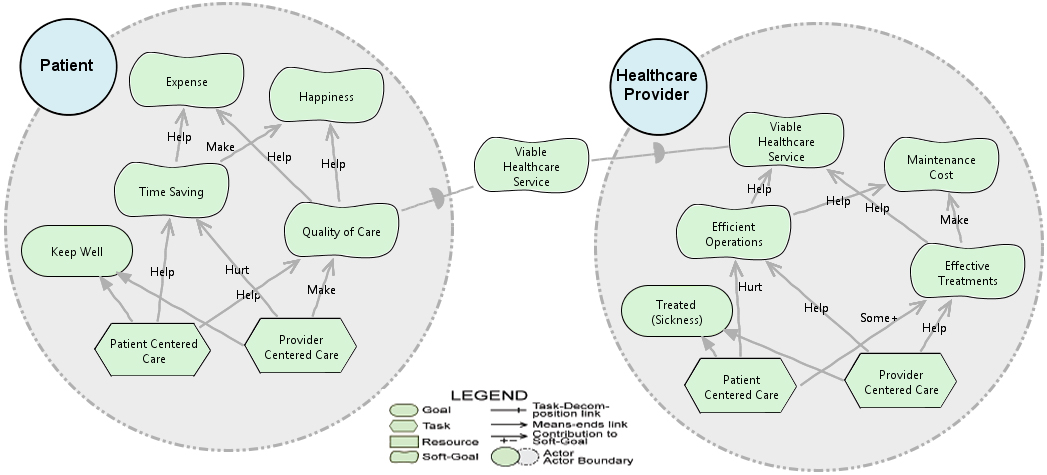
Objective function values of each top softgoals in the telemedicine system with respect to each alternative
Hierarchical model of the telemedicine system.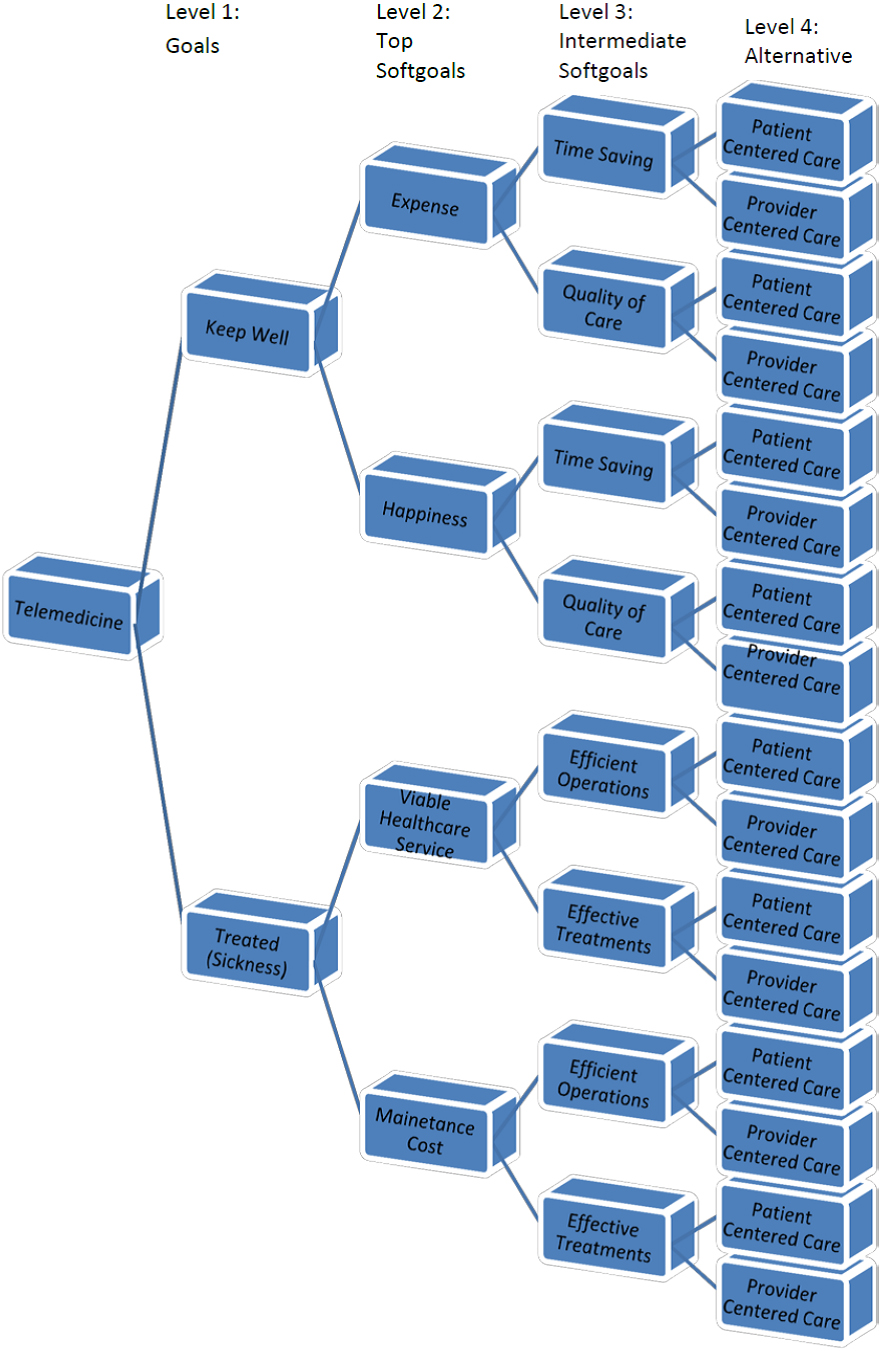
In the case study on telemedicine, some terms are abbreviated as shown in Table 3. Fuzzy numbers are de-fuzzified into quantifiable values as demonstrated in Table 4. In order to improve the readability of the text, Table 5 shows the objective function values for the telemedicine system. Therefore, the GORE method helps to evaluate the scores (satisfactory values) of the top softgoals based on the contribution of each alternative towards the goal. Each softgoal’s importance to the main goal is different. It is therefore necessary to generate the PCM by deriving the relative priority of each softgoal, with regard to each other and towards the main goal, through pair-by-pair comparisons. Elements in the PCM have a value derived from the objective functions, as shown in Table 5, to display the relative importance in each pair of softgoals compared. In the PCM, the importance of a softgoal is relative to itself, e.g. Expense versus Expense. The input value is one that corresponds with the metric of equivalent significance towards the main goal. This means that the ratio of a given softgoal’s significance regarding the importance of itself will always be equal. The PCM displays the relative priorities of all softgoals involved in the decision-making process in pairs. AHP measures the overall relative importances of each softgoal after deriving the PCM. The overall calculation of relative importance involves averaging over normalised columns in order to estimate the PCM’s eigenvalues (divide each element by summing all the elements in each column in total). Based on the normalised matrix, the overall relative importance of each softgoal can be achieved by simply averaging each row, and it is an approximation of the matrix’s eigenvalues. The PCM representation of each top softgoal in the telemedicine case study with respect to the alternative PaCC is represented as:
The PCM sum representation with respect to PaCC is given as below:
The PCM priority representation with respect to PaCC is given as below:
Pairwise relative priority of top softgoals with respect to Patient Centered Care.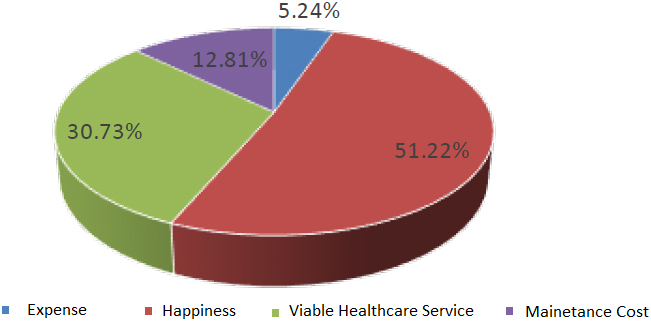
The PCM representation of each top softgoal of the telemedicine case study with respect to PrCC is given as below:
The PCM sum representation with respect to PrCC is given as below:
The PCM priority representation with respect to PrCC is given as below:
Pairwise relative priority of top softgoals with respect to Provider Centered Care.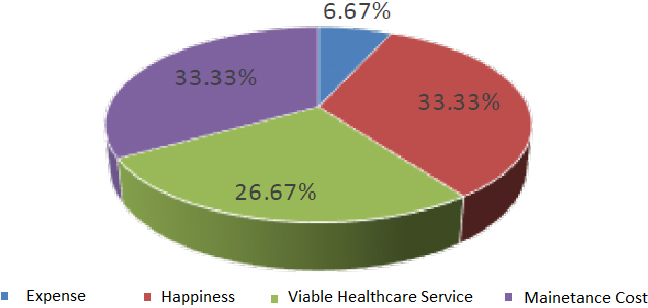
Once the overall relative importance of softgoals has been obtained, it is necessary to check whether or not they are consistent. For this reason, a consistency ratio (CR) is determined by comparing the consistency index (CI) of a random matrix (RI) of the obtained PCM versus the CI. Saaty [66] has given the RI value obtained for matrices of different sizes. Saaty [66] has shown that a
For example, the
As a general rule, a
Similarly, the
This CR value is also considered as acceptable. So the result obtained for PrCC is ideal too. The suggested approach for determining the relative importance of each top softgoal towards the main goal is considered to be consistent, so that the decision-making process using AHP is transferred to the next stage.
In this phase, the relative priorities of each alternative are determined for each top softgoal shown in the decision-making model. For this purpose, the PCM is built (using the propagated (summation) impact score) for each alternative with respect to each particular top softgoal (Table 6). Two alternatives, PaCC and PrCC, are mentioned in the telemedicine example, and four top softgoals. This leads to four matrices for pairwise comparison.
The PCM of PaCC and PrCC with respect to Expense is represented as:
The PCM of PaCC and PrCC with respect to Happiness is represented as:
The PCM of PaCC and PrCC with respect to Viable Healthcare Service is represented as:
The PCM of PaCC and PrCC with respect to Maintenance Cost is represented as:
Local priority of alternatives towards top softgoals.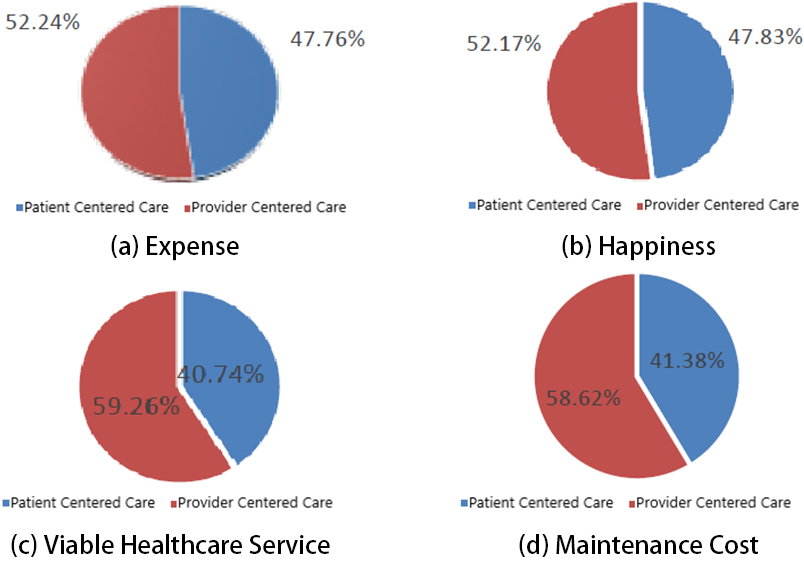
The local priorities of alternatives are determined, as shown in Table 3, by averaging over normalised columns to calculate the eigenvalues of the obtained PCMs of each alternative with respect to all top softgoals. The consistency will only be tested if there are three or more elements that are to be compared pairwise [66]. In the given case study, only two alternatives are compared (pairwise). Therefore there is no need for consistency calculations. This implies that the local priorities being measured are consistent. The pseudo code for the approach proposed is shown in Algorithm 6 for ready reference.
Pseudo code for prioritising alternative tasks relative to the opposing non-functional requirements in the
Propagated values of alternatives towards the top softgoal
In this step, the overall priority for each alternative is calculated. This means that priorities consider not only our preference of alternative options for each softgoal, but also the fact that each softgoal has a different weight to achieve the goal. For example, the Expense top softgoal has a priority of 0.0524 with respect to the Patient Centered Care alternative, and the Patient Centered Care has a local priority of 0.48 relative to Expense. Therefore, the weighted priority of the Patient Centered Care, with respect to Expense is 0.024. Similarly, it is necessary to obtain the Patient Centered Care weighted priorities with respect to Happiness, Viable Healthcare Service and Maintenance Cost. Now the alternative options can be ordered based on their overall priority as shown in Table 7. In other words, given the importance of each top softgoal (Expense, Happiness, Viable Healthcare Service and Maintenance Cost), the Provider Centred Care is preferable (overall priority
Priorities of alternatives towards main goal
Priorities of alternatives towards main goal
Scenario 1
Overall priority of alternatives towards main goals.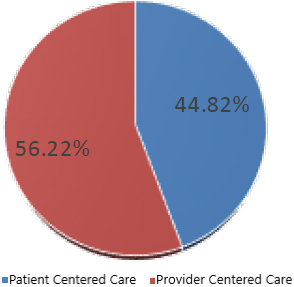
Scenario 2
Scenario 3
The weights given to the respective softgoals will heavily influence the overall priorities. Therefore, a “what-if” study is useful to see how the final results could have to be adjusted if the weights of the requirements were different. This procedure is called sensitivity analysis, which is the next step in the technique of AHP. Analysis of sensitivity helps us to understand how reliable our original decision is, and what the drivers are (i.e. which requirements influenced the original results). This is an important part of the decision-making process and, generally speaking, no final decision should be made without performing sensitivity analysis. Remember that the PrCC in our example, Table 7, is of great importance (priority 0.5587). Since the PrCC has a high local priority for this particular criterion, this inevitably affects the final result favourably for the PrCC. The queries we should ask ourselves at this point are:
If we modify the importance of the criteria, what will be the best alternative option? What happens when all of the criteria are offered equal importance? What about when we offer Happiness more importance or assume it as important as Viable Healthcare Service?
In order to perform sensitivity analysis, it is important to make adjustments to criterion weights to see how they affect the alternatives’ overall priorities. To illustrate this, we should examine the following hypothetical situations:
What happens if all the criteria have the same weight? How much weight must be assigned to the top softgoals to result in a tie in the alternatives’ overall priorities?
The original model synthesis is shown in Table 8, in which the most preferred alternative option is listed as PrCC. The case where all three criteria weigh the same value (0.333) is illustrated in Table 9. The most preferred alternative choice in this second situation is PrCC too. From the observations, we noticed that on all considered criteria, PrCC wins. We should experiment with different weights for the different top softgoals to determine the break-even point. Both alternatives are equally preferred by decreasing the weight of Happiness (from 0.3333 in the original scenario to 0.26 in the third scenario). This is reflected in Table 10.
Different scenarios based on the pairwise relative priority of top softgoals.
After the above processes are finished, a decision can be made. This represents the final stage in our analysis of the AHP method. For this purpose, the overall priorities obtained must be compared and tested as to whether the variations are sufficiently large to make a clear choice. The findings of the sensitivity analysis should also be analysed (Tables 8–10). From the above study, we are able to say that the final recommendation is as follows: if more than 50% of the overall importance of the criteria is in the decision of the softgoal Happiness, the best alternative is PrCC (Table 8). But when cost is substantially less than 50%, the better decision is PaCC (from Tables 9 and 10).
Critical discussion with related work
Ever since the concept of goal modelling was conceived and developed, a lot of research work has been done on the logic and rationale used in achieving goals by assigning qualitative and quantitative values. However, among all the work done previously, very limited research work was based on optimisation of goal models. The steps proposed in our approach have been validated with a telemedicine case study. The following observations have been made about the results obtained. The success of this approach depends on the following features:
Appropriate stakeholders’ needs to be identified in prioritising softgoals. Optimal selection of alternatives for actors having opposing non-functional requirements. Subjective quantification approach using AHP helps the consistency of the goal analysis.
In the existing GORE literature, there exists methods which make use of formal techniques in choosing the best alternative. They make use of temporal logic and label propagation algorithms. Our approach differs in adopting a quantitative way of evaluating the alternatives using AHP.
In this section, we present a brief discussion of the proposed method with all relevant earlier research proposals which used a similar qualitative and quantitative approach for goal analysis and optimisation of the
Lamsweerde et al. [49] proposed an alternative lightweight quantitative analysis of goals in the KAOS framework to overcome the problems related to qualitative analysis. They used parameters such as ‘gauge variables’, ‘idea target value’ and ‘maximum acceptable value’ for each softgoal. Using this approach, they obtained these values from the specification of the system. When using this method, the specification of the system has to be clearly understood before designing a goal model. We also noticed that it might be difficult to apply this approach where the systems are large and complex.
Mylopolous et al. [28] presented a proposal with formal reasoning of goals in the goal models. This was achieved by presenting a qualitative formalisation and value propagation algorithm. Quantitative semantics for new relationships were also given, based on the probabilistic model. However, this required a strong knowledge of mathematics since it uses first-order logic, as compared to our approach, which is based on fuzzy logic/reasoning.
Horkoff and Yu [38] proposed a qualitative analysis of goal models to understand the problem domain during the early phase of requirements engineering. Additionally, this model is used to perform elicitation, which needs customers’ interventions. However, the main problem with this approach is the ambiguity in decision-making when one or more goals receive the same labels. We have successfully resolved this problem of ambiguity in our approach by adopting a quantitative analysis method.
Affleck et al. [1] proposed a linear programming optimisation model to the NFR framework, which aimed to minimise operationalisation. It uses a single objective optimisation to select a minimum number of operations which would maximise the overall satisfaction of the NFRs. However, this approach fails to provide a set of alternative design options which trade different objectives with each other. Our approach addresses this by using multi-objective options. In our approach, the interaction between different objectives gives rise to a set of optimal solutions known as Pareto-optimal solutions. Also, in the design and planning stages, we have given due consideration to many objectives. These significantly improve our procedure and hence directly support the decision-making process in the following ways:
When we use a multi-objective methodology, a wider range of alternatives is usually identified. When we consider multiple objectives, it promotes more appropriate roles for participants in the planning and decision-making process. The role of the “analyst” or “modeller” here is to generate alternative design options, while the “decision-maker” uses these design options to make better informed decisions. We can make quite a realistic model of a problem when we consider multi-objectives.
William et al. [35] developed a multi-objective optimisation model based on the KAOS goal model for exploring alternative design options. This approach uses probability distribution to simulate the vector values for each leaf quality variable. However, it does not consider non-functional requirements when evaluating design options.
Subramanian et al. [69] conducted the first research work on reasoning non-functional requirements based on goal models using multi-objective optimisation. However, we observed that this approach could not address the actors’ interdependency relationships. These relationships need to be addressed because they are crucial for decision-making in today’s competitive real-time and real-world environment. In Subramanian et al.’s [69] proposal, we identified the inability to address economic effectiveness and dependency relationships among actors as the major drawbacks.
Although Sumesh et al. [70] introduced an economic evaluation-based approach for selecting an optimal strategy in the
In [53], an alternative selection process is proposed using the AHP method. Due to the subjective allocation of the relative priorities for each softgoal by the stakeholders in [53], it may not result in accurate goal formulations. Assigning specific values to stakeholders’ requirements is crucial, as requirement elicitation can involve different stakeholders. They have different preferences for the same demands. The reasoning behind this is that different stakeholders [74] have varying levels of knowledge, training and skills [74].
Chitra et al. [12] developed a technique of fuzzy-based quantitative goal analysis between actors to evaluate alternative design options. Later, to improve their approach, a multi-objective evaluation method was introduced in the goal analysis process [11] for alternative selection. Nevertheless, the literature demonstrates the process of qualitative and quantitative goal analysis for
In contrast to the above-mentioned goal models, we used AHP, fuzzy mathematical application and optimisation tools. These tools were useful in analysing quantitative goals to find an optimal strategy satisfying opposing objective functions. Hence, this proposal investigated how requirements-based engineering design can provide an effective as well as optimal design outcome. Sensitivity analysis was also an important part of this proposal, as it was used to see how the system behaves as the input data vary. This technique provides a great advantage in allowing estimates of input variables to be thoroughly examined before the final decision is made. Other important aids in this technique include identifying errors in the model, and comprehensively understanding the effects of input parameters. Our work is among the first attempts at applying AHP sensitivity analysis to a quantitative multi-objective optimisation model that addresses actors’ interdependency relationships in the
In the proposed approach, the AHP method is incorporated with the quantitative reasoning of the
Footnotes
Author’s Bios
invited technical program committee member of many conferences and workshop in the areas related to his research.