



Abstract
The energy sector is experiencing a revolution that is fuelled by a multitude of factors. Among them are the aging grid system, the need for cleaner energy and the increasing demands on energy sector. The demand-response program is an advanced feature in smart grid that strives to match suppliers to their demands using price-based and incentive programs. The objective of the work is to analyse the performance of the load shedding technique using dynamic pricing algorithm. The system was designed using multi-agent system (MAS) for a DC microgrid capable of real-time monitoring and controlling of power using price-based demand-response program. As a proof of concept, the system was implemented using intelligent physical agents, Java Agent Development Framework (JADE), and agent simulation platform (REPAST) with two residential houses (non-critical loads) and one hospital (critical load). The architecture has been implemented using embedded devices, relays, and sensors to control the operations of load shedding and energy trading in residential areas that have no access to electricity. The measured results show that the system can shed the load with the latency of less than 600 ms, and energy cost saving with an individual houses by 80% of the total cost with 2USD per day. The outcome of the studies demonstrates the effectiveness of the proposed multi-agent approach for real-time operation of a microgrid and the implementation of demand-response program.
Introduction
The energy industry is experiencing a paradigm shift to cope with the increasing challenges associated with the generation, transmission, and electricity distribution. Smart-grid is the next generation of the grid that adopts two-way communications between the utility company and the consumer. The introduction of the smart grid has come up to address the challenges associated with the utility grid’s ageing. Using ICT technologies, embedded systems, and advanced algorithms are among the smart-grid features discussed in [1]. The NIST (National Institute of Standards and Technology) has established domains for the smart-grid, which are: bulk generation, transmission, distribution, market, operation, service provider, and customer. All fields communicate with each other using a secure communication protocol.
A microgrid is a technology that has been developed to allow the integration of renewable energy. According to the U.S. Department of Energy Microgrid Exchange Group [2], a microgrid is a group of interconnected loads and Distributed Energy Resources (DER) within clearly defined electrical boundaries of single controllable entity for the grid. It is composed of innovative features such as autonomy, stability, compatibility, flexibility, scalability, efficiency, and economy. An example of a microgrid system with various renewable resources, i.e. wind turbines and solar panels has been described in [2] showing control and monitoring of devices. In this paper, the term microgrid is defined as a group of loads (critical and non-critical) with energy storage devices (batteries) and charger controllers operated in an islanded mode using solar power as a renewable source of energy. Each load has its power source as well. The controlling and monitoring aspects are done using a multi-agent system with microcontroller devices. Additionally, the work focuses on the implementation of the load shedding technique with dynamic pricing. There are two approaches for performing load-shedding. The first one relies on a communication system for monitoring and control such as SCADA system [3]. The second approach is connectionless in which the power imbalance is determined by examining the bus voltage in the autonomous DC-microgrid [4].
This paper proposes an islanded DC microgrid architecture using multi-agent systems. Explicitly, the contributions of the paper are:
Propose a flexible DC-microgrid architecture with distributed photovoltaic energy sources and energy storage systems. Demonstrate the use of a load-shedding algorithm based on dynamic pricing using multi-agent systems for energy management. Prototype a testbed to examine the real time behavior of the proposed DC microgrid architecture.
The organization of this paper is as follows: Section 2 describes the related works which include also situational analysis on this work. Section 3 discusses MAS architecture of the DC microgrid in the designing. Section 4 describes the implementation process of the system. Section 5 discusses the results, and discussion of this paper. Section 6 concludes the work and provides directions for future work.
The future of smart energy is moving toward distributed generation for local businesses and customers, whereby the control and management of energy are done in an autonomous means. Upon generation and building of more industries, infrastructures, the power factor becomes crucial, and hence, the need for more generation and automation processes arises. Agent-based system is one of the recent technology for demonstrating the autonomous behaviors that many researchers have used for different purposes such as power control, energy management, demand side management, airport control and hospital control and monitoring.
Situational analysis and motivation
To alleviate poverty and render humankind’s life prosperous, the UN has established 17 sustainable development goals (SDGs). These SDGs’ achievements, particularly goals 7 and 11 necessitate access to clean and affordable energy [5]. In Tanzania, for instance, solar power has substantially increased, and the community is more engaged in deploying the technology [6]. According to statistics from the Ministry of Energy and Mineral Resources in Tanzania mainland, 7127 villages were electrified by May 2019. By the near future, more than 10,278 villages will have electricity in the Tanzania mainland [7]. However, the focus in not only in Tanzania but also in Africa at large as the demand and challenges are less the same.
Several electrical challenges do exist, which are classified as natural challenges and technical challenges in Tanzania. The natural challenges include insufficient production of power, and technical challenges are manual operations of the system’s activities such as checking the status and health of the batteries, disconnecting and connecting loads, solar panel status and production, fault detection, and automatic billing system. For example, in the Kisiju village project (as seen in Fig. 1), with a solar electrification system, the target output was meant for 70 village household consumers, village commercial center, provisions for 20 streetlights, and a mosque with a nominal DC voltage of 48 V. However, upon completion, only 35 users received electric service with fewer home appliances usage, i.e. only 2 bulbs each of 23 W, a TV, and a radio [8].
Therefore, in most cases, the most users depend on one source of power supply, which means that there was still a demand for electricity due to the low power production from the solar system. The community needs to have a sustainable solution that provides reliable and adequate power. This will consequently result to better analysis of the consumption and production of energy and resources in the microgrid.
Kisiju village project. (A) Solar panels, (B) Distribution boards, (C) Battery banks, (D) A public place (Mosque).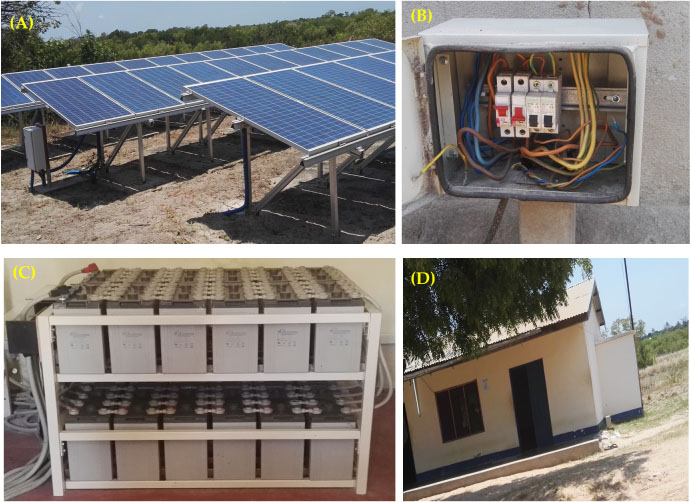
The majority of research in microgrids opt to use a multi-agent system (MAS) with the reinforcement learning method, and the combination is termed as Multi-Agent Reinforcement Learning (MARL). The research done by [9] demonstrates the smart decision-making for energy management using reinforcement learning with MAS, whereby agents are used for communication among each component in the grid. Likewise, [10] proposes smart energy management and scheduling using IoT devices on the user level control using MAS. This is due to its autonomous adaptability behaviour in the system.
Dynamic pricing is an effective technique to reduce the peaks as compared to TOU. This is because it opts to balance the supply and demands [11]. Recent works on dynamic pricing focused on a decentralized model using multi-agent technology. In [12], the author discussed an auction system coupled with load-shedding using the MAS, while in [13], a coalition-centred technique for energy trading using MAS is proposed. The system works as follows: if the energy demands at the prosumer side are greater than the energy generated, a local coordination agent negotiates through the social coordination agent the purchase of additional power from neighbouring prosumers who have surplus energy.
Microgrid controlling and monitoring provide effective operations and autonomous actions. Typically, the control focuses on voltage/frequency regulation, active and reactive power control, load shedding, and forecasting procedures [14, 15, 16]. The agent-based system has gained much attention to the public due to its autonomous actions with fast performance. Agent-based systems are characterized by intelligence, scalability, modularity, and social attributes, which has led to their wide adaptations [17]. Table 1 presents state of art between this work and other works in microgrid control and monitoring. Compared with the previous methods for controlling of the DC microgrid, this method uses multi-agent systems for load-shedding and power trading process for real time implementation of the DC microgrid. The technique has been validated using an actual prototype.
Existing DC microgrid design
Existing DC microgrid design
A system architecture refers to functional and non-functional design. In this work, the main concepts of controlling and monitoring with load shedding techniques are reflected in a real-world environment for the Kisiju microgrid site located in the Pwani region in Tanzania whose challenges are also addressed [22]. Currently, many remote areas have no access to the national electric grid. Microgrid with distributed renewable energy remains the most obvious solution for those communities. MAS is the technology that best suits our implementation whereby each agent will act autonomously depending on the environment.
Load shedding technique using multi-agent system
Let
Using MAS that is distributed, provide the intelligent to the system so that, at any time t, the user can make decisions based on the environment and conditions set without waiting for the central point decisions. Repast is used to set parameters for simulating the results in a step by step simulation, which brings us to the advantage of using it. Therefore, the data are received from the database and is simulated using Repast platform. The Jade platform in the Raspberry pi is used for providing intelligence and logic in the system. The system’s features and their functions are defined and summarized in Table 2. Figure 2 illustrates the process and interactions upon performing load shedding and dynamic pricing. Figure 3 shows the DC microgrid’s physical architecture with solar panels, batteries, charger controllers, critical loads, and non-critical loads.
Functional requirements in the DC microgrid
Functional requirements in the DC microgrid
Flowchart for load shedding and dynamic pricing.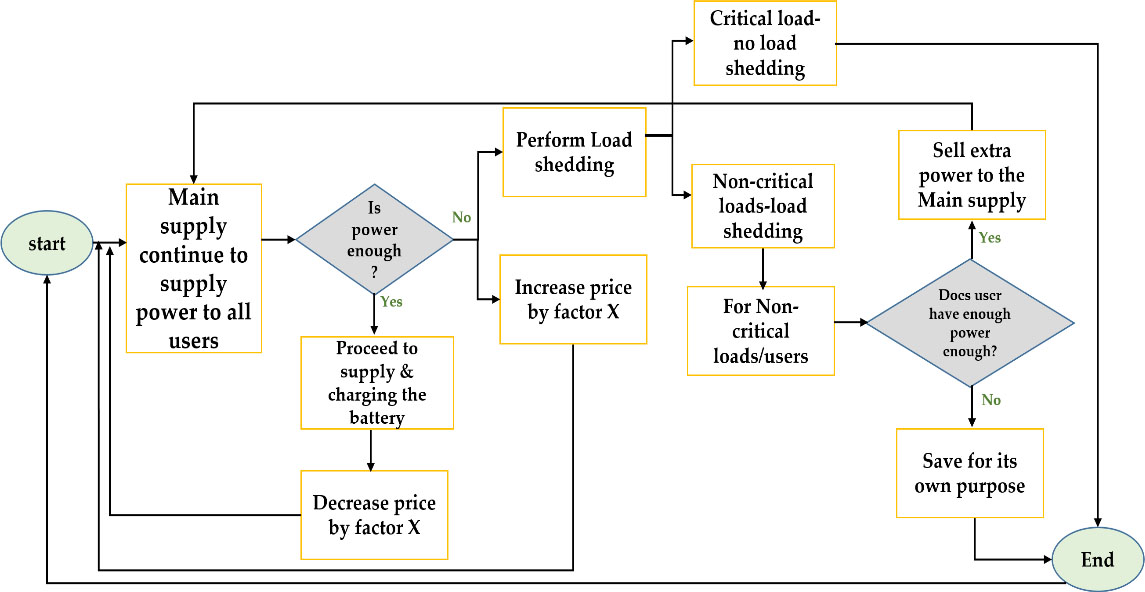
Physical connection of the DC microgrid.
All sensors are connected to the Arduino Uno device to send data to the Raspberry pi through serial communication. The data include the voltage (V), current (A), temperature (T), and humidity (H). Figure 4 shows the four agents in the system. The first and second agents represent the non-critical loads 1 and 2 for House-1 and House-2, respectively while the third agent represents the critical load 3 for House-3. The fourth agent represents the solar power source, which is the main supply in the DC microgrid. This agent 4 focuses on handling the system’s misbehaving, stability, and reliability. Moreover, agent 4 controls the Status of Charge (SoC) of the power source battery. The operating voltage of the storage is 40% to 80%. The main storage capacity (the battery from the power source) is broadcasted to all agents. When the charging capacity is below 40%, the microgrid automatically disconnects non-critical loads. Data is logged in the database and then processed by the Repast simulations. All Raspberry pis are installed with JADE software and manage the attributes of each agent. When agent 4 sends a command to disconnect house 1, 2 or both, the control signal is received by the Arduino then proceeds by issuing a signal to the actuator to disconnect the load.
Multi-agent architecture of the DC microgrid.
While the most published works focused on using only Arduino, this work’s main motivation is to use the hardware-in-loop technology [23], which enables to run the algorithm on Raspberry Pi and then simulate in the Repast. The critical load for this case represents the hospital, which requires power all the time. The agent needs to ensure the critical house has enough power for itself, and the main source does not perform load shedding for the critical load.
In this work, the DC microgrid’s dynamic pricing function is generated using the algorithm used in [23], which controls the energy trading based on the available energy in the microgrid. The algorithm works as follows: At the
KwInRequiredKwCalCalculateKwOutEnsureKwFunFunctionKwRetReturn
[t!] Pricing control with demand scheme
Prototype of DC microgrid. (A) The DC solar microgrid with three consumers and the main source of power, (B) solar panel of the critical load with 12 V DC, (C) Charger controller of non-critical loads reading the total value from the solar panel 13.7 V (D) The main source of power with 24 V DC with the cable for output power.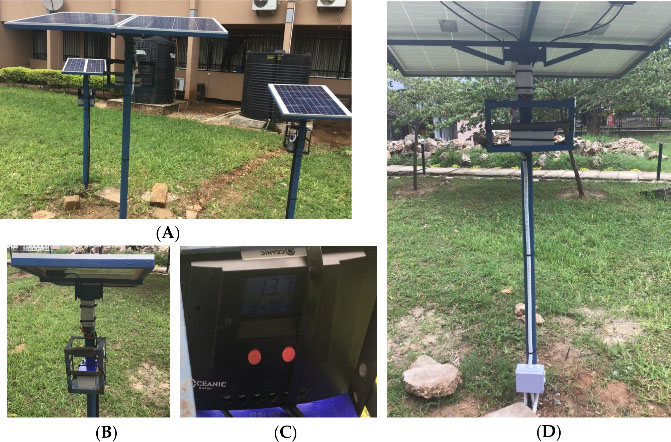
The design of the DC microgrid used solar panels as the source of power. The main solar panel has a capacity of 250 W, and the end-user solar panels have 20 W and 50 W capacities for non-critical loads (houses) and critical loads (hospitals), respectively. The batteries used are Valve Regulated Lead Acid with 65 AH for the main supply and 4.5–12 AH ranges for both critical and non-critical loads. The charger controllers are 30 A MPPT for the main supply, 10 A for non-critical loads and 16 A for the critical load. The DC breakers are of the same capacity as that of charge controllers. The output voltage for the main supply is 24 V and for the loads is 12 V DC. Raspberry pi3
The proposed prototype has three parts. The first part is the power generation, which consists of solar panels, charge controllers and batteries. This is implemented for every consumer and main supply, as shown in Fig. 5 with two non-critical houses and one critical house. Batteries for the main supply are connected in parallel so that, the voltage can be maintained at 12 V similar to other the individual solar panels. The prototype is at the College of Information and Communication Technologies (CoICT) in Dar es salaam, Tanzania. The second part is the power management in the microgrid and the dynamic trading process which is detailed in Fig. 6. It is composed of three intelligent switches, namely S1, S2, and S3 managed by multi-agent system (Jade). Each house (load) has three switches on its board. When an individual house (non-critical load) disconnects from the main source, switch S2 will be on, and other switches will be off. Upon using the power from the main source, switch S1 will be on. When the consumer wants to sell surplus energy to the microgrid, both switches S2 and S3 will be on and switch S1 will switch off automatically. The main source has only one switch (S1) for supplying the power to all users. The third part is the embedded systems (microcontrollers, sensors and actuators) as explained in Fig. 7 which are used to implement energy management system.
Control and monitoring circuit for system.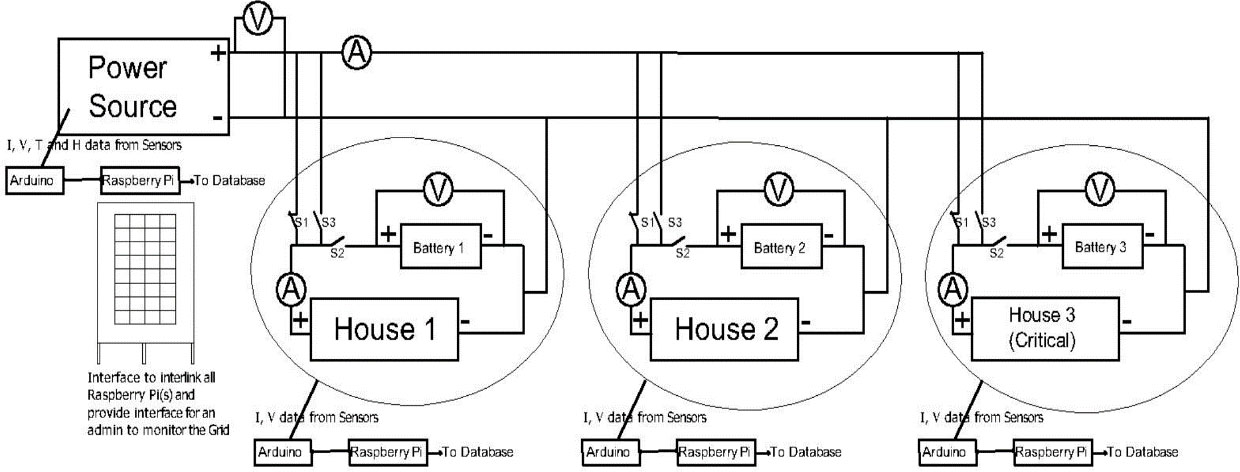
The implementation design of the solar DC microgrid in the control part.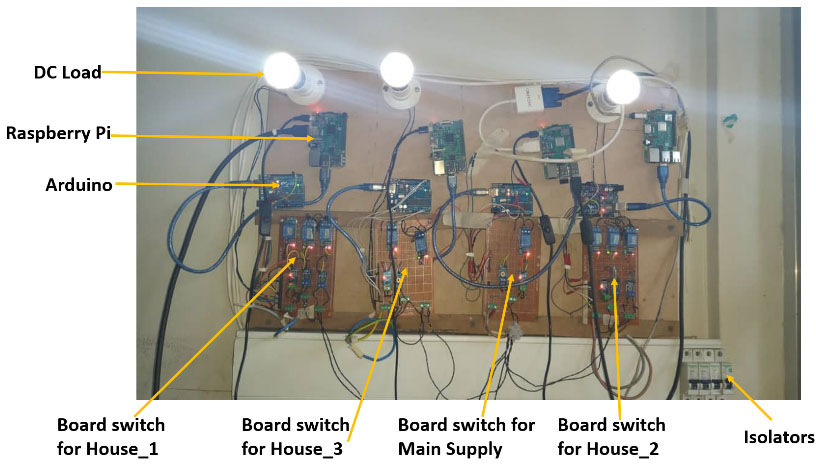
The research results focus on the outcomes of the prototype implemented and site-mounted at the CoICT campus with load shedding technique, dynamic pricing, and energy saving cost.
Load shedding without dynamic pricing
When load shedding occurs, the main source of power continues to supply to the critical load while disconnecting the non-critical loads. Figure 8 shows the available power patterns against time for the main source during the load shedding process, and Fig. 9 shows the power consumption for the consumers. This is the power usage for each load, and once the grid has less power, it maintains only the non-critical load.
Main power source consumption without dynamic pricing.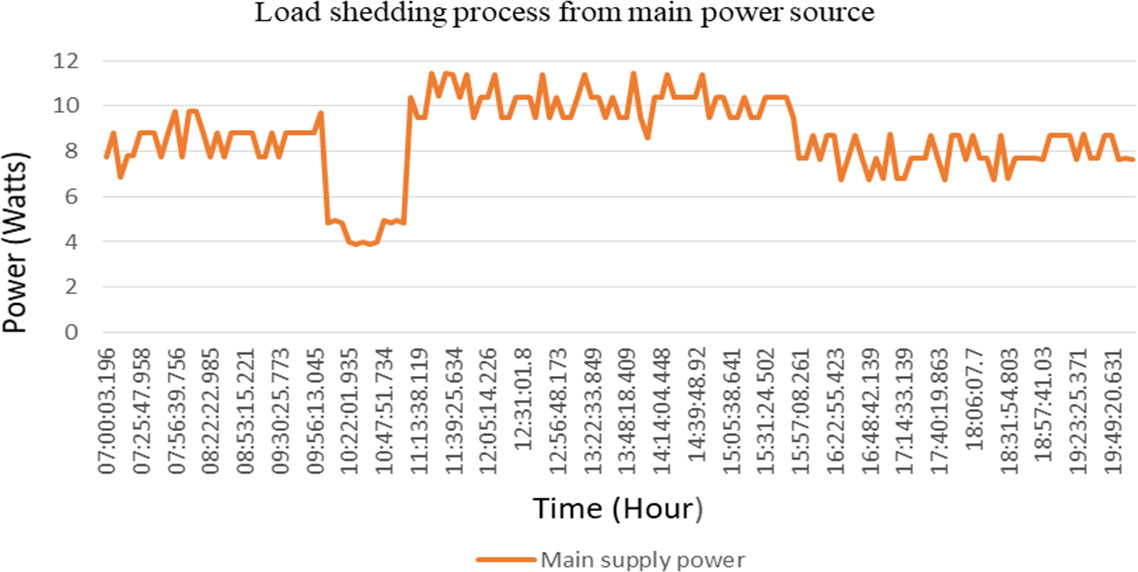
Figure 10 shows the results of the dynamic pricing algorithm from 07:00 to 20:00. Due to the lack of solar irradiation and to match suppliers with demands, the price went high at 17:14. The load shedding algorithm has then been activated at 17:14 with a latency less than 600 ms as seen in Fig. 11.
The illustration of the capability of Jade to run in the Raspberry Pi is shown in Fig. 12a with all agents in one platform while Fig. 12b shows how the pricing algorithm is done and managed the non-critical load to disconnect itself upon the increase of the price on the platform. It also shows the current values (voltages and currents) from the solar system. During the start of the execution, the ports will be opened, and the “success” message will be seen on the screen once the connections are okay. For example, if the microgrid system/dashboard announces the price, which is higher than the price an individual load can afford, it will terminate and use its own power source. However, when the price decreases, the user can connect itself to the main supply.
Main power source consumption without dynamic pricing.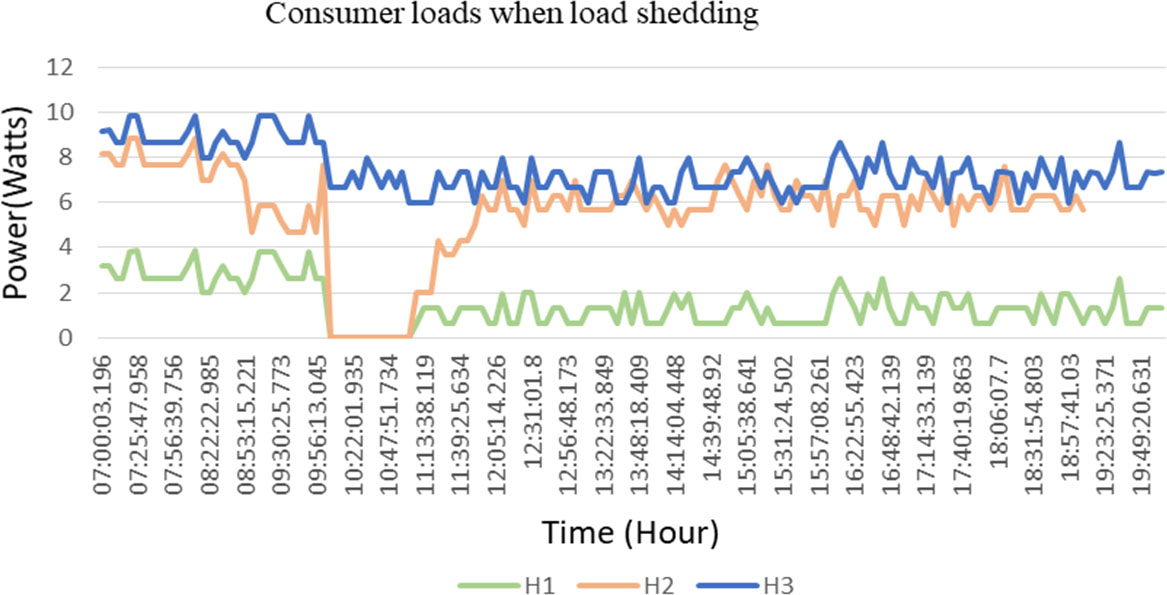
The pricing curve during the day.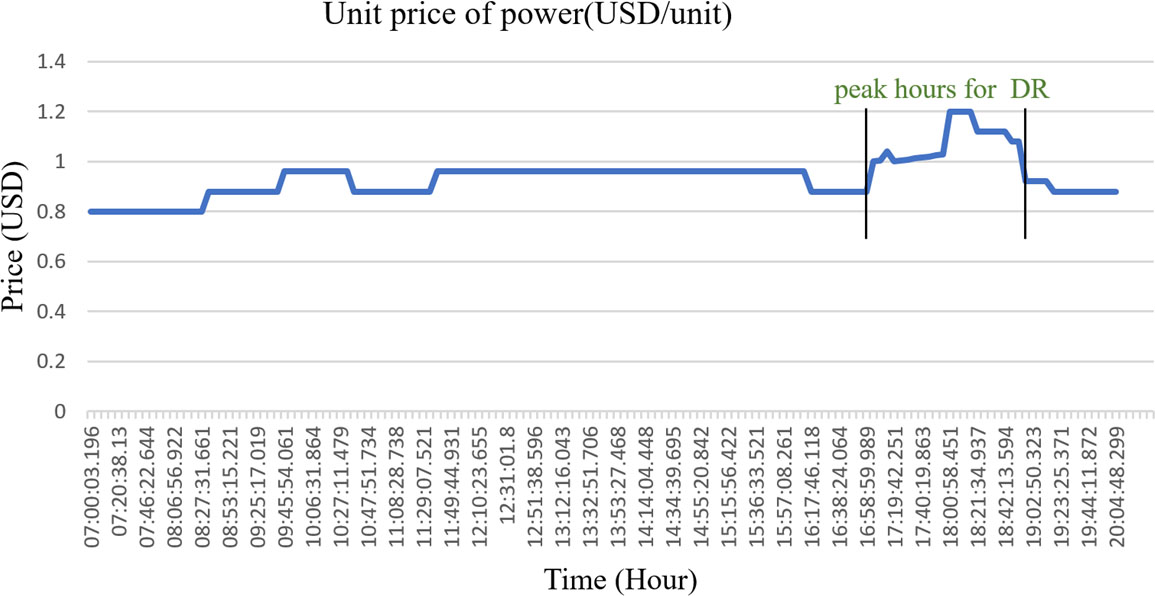
Data for cost energy saving used
Cost saving energy in the DC microgrid
Main power source consumption with dynamic pricing.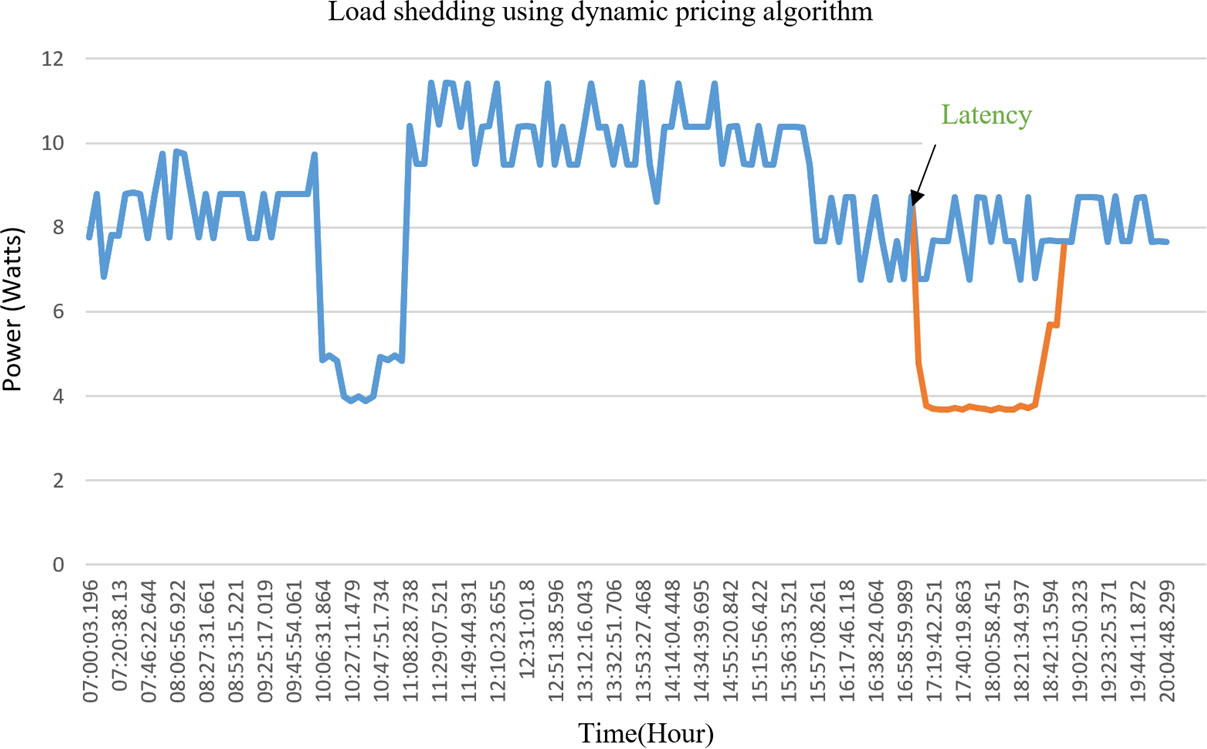
The unique features of the proposed system
(a) The Jade initialization on Raspberry pi. (b) Snapshot of the dynamic pricing algorithm running on Jade agent.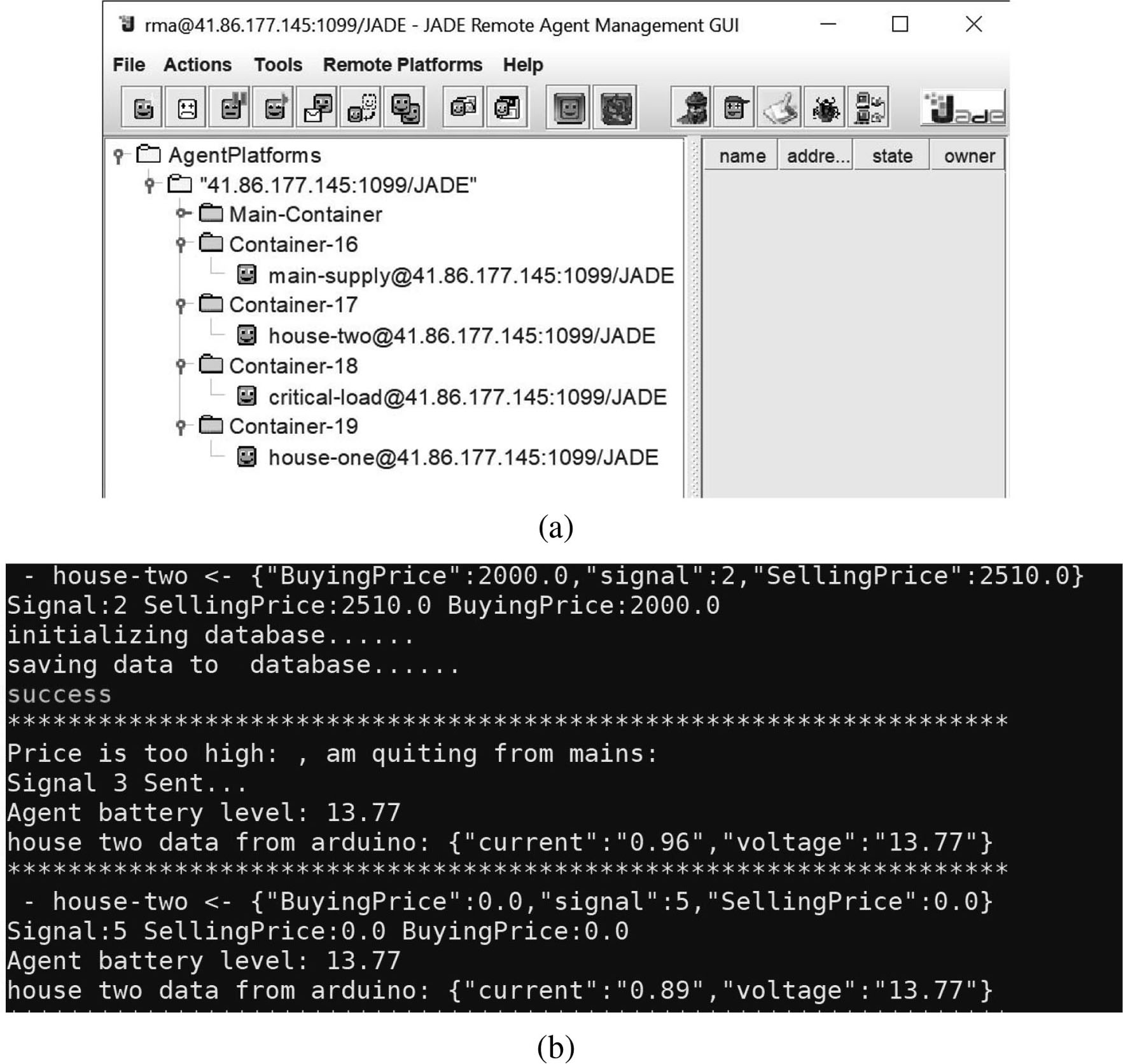
The total cost of energy-saving upon using individual power and using the main supply is calculated by using the formula [24]. Table 3 contains descriptions of parameters and values to be used for the calculations.
where
Neglecting the maintenance cost,
The summary of the cost of energy saving for the individual houses, i.e. House_1 and House_2 are detailed in Table 4 with the 80% of monetary saving when using its own local power for every two hours per day.
DC-microgrid is a technology for powering off-grid communities, which is critically important in rural areas. The control and management of the DC-microgrid focus on this work, where multi-agent architecture is proposed for load-shedding and power trading. The feasibility of the system is evaluated using a flexible testbed. Both the physical part and virtual agents are implemented. Table 5 describes the unique features of the system with various attributes on it.
To cope with the increasing power demands and address the shortcomings of the ageing grid, smart-grid has been proposed. Distributed energy resources and distributed algorithms for control and monitoring, are some of the distinct features brought about to the grid. In off-grid communities, a solar DC-microgrid offers excellent potential for powering residential houses. The control and management of the DC-microgrid focus on this work, where multi-agent systems have been proposed for load-shedding and power trading. The feasibility of the system is evaluated using a flexible testbed. Both physical and virtual agents are implemented on the platform. The architecture enables the real-time control and monitoring of the DC microgrid. These attributes are suitable, especially in places where there are critical loads and sensitive data. The design is also scalable and maintainable because of the use of decentralized MAS. Future work will focus on integrating of the requirement and integration into the main grid and adding other renewable energies.
Footnotes
Acknowledgments
This work is the part of the iGrid project funded by Sida (Swedish International Development Agency. Special thanks goes to Dr. Mussa Kissaka (The principal of CoICT) for providing the workspace for this work. Appreciation also goes to the Tera Technologies team for the equipment supply and MdBaSo team for the technical support.
Author’s Bios
lightning protection, rural access, power quality aspects, remote monitoring and control of energy and smart grid. He is a Consulting Engineer in Tanzania, member IET(TZ), AMSTS, Member ICAE. He received the 2010 IBM Faculty Award, TCRA 2013 Award, EARLI award 2017–2020, 2015–2020 Sida Award, PI for Overall Research Winner of the 2016 and second winner of the 2018 UDSM Research Week. He is currently PI of the iGRID: Smart Grid Capacity Development and Enhancement in Tanzania subprogramme. Has been part of a number of international research projects.
EU programs on VLSI/ system-on-a-chip. He was the education director of the European Institute of Innovation and Technology EIT Digital. He has made over 900 publications worldwide and over 175 national publications/presentations since 1983. He has 9 patents granted worldwide.