



Abstract
Nowadays cloud computing has given a new paradigm of computing. Despite several benefits of cloud computing there is still a big challenge of ensuring confidentiality and integrity for sensitive information on the cloud. Therefore to address these challenges without loss of any sensitive information and privacy, we present a novel and robust model called ‘Enhanced Cloud Security using Hyper Elliptic Curve and Biometric’ (ECSHB). The model ECSHB ensures the preservation of data security, privacy, and authentication of data in a cloud environment. The proposed approach combines biometric and hyperelliptic curve cryptography (HECC) techniques to elevate the security of data accessing and resource preservations in the cloud. ECSHB provides a high level of security using less processing power, which will automatically reduce the overall cost. The efficacy of the ECSHB has been evaluated in the form of recognition rate, biometric similarity score, False Matching Ratio (FMR), and False NonMatching Ratio (FNMR). ECSHB has been validated using security threat model analysis in terms of confidentiality. The measure of collision attack, replay attack and non-repudiation is also considered in this work. The evidence of results is compared with some existing work, and the results obtained exhibit better performance in terms of data security and privacy in the cloud environment.
Introduction
Cloud computing getting to be the foremost important technology nowadays due to its several advantages such as scalability, a huge pool of resources, access anywhere any time, etc. [1]. The cloud technology efficiently provides privacy and protection for sensitive information and data stored in the cloud server. Despite all the advantages, security and access control are still a prime concern on the cloud due to the availability of data on the non-trusted network. Therefore, the current research trends show more attention towards the user’s privacy, integrity, and confidentiality of data to a cloud server. If the information is very sensitive, then one more factor is required i.e. authentication, to make sure that the person is the authorized person or not [2, 3]. For that, there is a need for a security system that can provide, confidentiality and authentication both for accessing and storing data on the cloud [4]. The recognition system based on biometric technology also plays an important role in the management of user authentication and data security in the cloud while retrieving and storing [3].
To achieve all the mentioned challenges a hybrid model is proposed in this paper to achieve security and access control in a cloud environment for accessing sensitive data. The proposed model uses biometrics and HECC to provide better user privacy, data confidentiality, and authentication. Nowadays one of the foremost well-known methods used for recognizing the genuineness of a person is Biometrics identification. Nowadays in various devices such as mobile phones, laptops, etc., the most preferred authentication method is biometric. Sometimes it is used with the combination of password authentication to achieve more security [41, 42]. Every biometric identification method has its unique features, whether it is face recognition, iris data set, fingerprint, palm print, etc. The main reason for using biometric is that generally, no two persons can have the same biometrics, especially in the case of fingerprint [5, 6, 7]. The main advantage of using the biometric system for identification is the features of biometric do not change with age and time. Therefore, it is receiving focus day by day in research as well as in practical implications in industries for the identification of an individual. Biometric systems perform the authentication by approving and confirming the individual’s characteristics so that whenever any user accesses the data or resource, his biometric features can be verified. As a result, it makes the security system more powerful. Further, we can achieve guaranteed preservation of privacy if we apply encryption techniques to biometric data [42, 43, 44, 45]. Cryptography can also play a significant role in the combination of biometric [8]. Popular cryptography techniques are symmetric and asymmetric key encryption [9]. In 1976 Diffie Hellman has proposed an Asymmetric key cryptography technique [10]. Asymmetric cryptography algorithms generally use mathematically hard problems which are based on integer factorization problems and discrete logarithm problems (DLP). If we see the key size in bits, then we will find the smallest key size is used for Elliptic Curve Cryptography (ECC) and Hyper Elliptic Curve Cryptography (HECC), with the same level of security [11, 12]. However, cloud technology efficiently preserves the data privacy and protection for sensitive data or information stored in the cloud server [46, 47, 48].
The optimized task allocation in a cloud environment based on ‘Big-Bang Big-Crunch’ is a new way of conceptually task allocation [49]. The job allocation in the private Cloud is enhanced by distributed processing [50]. Video traffic analytics for large-scale surveillance is an emerging area incorporated with cloud technology for storage enhancement [53].
In this paper, a novel cross-breed security framework for cloud security and access control has been proposed for providing improved security, authentication, and privacy preservation in cloud systems. The proposed model uses the fingerprint as biometric and HECC for signcryption so that confidentiality and authentication can be achieved. The biometric fingerprints of an individual are used as a main key feature while accessing the resources from the cloud. Apart from this, the signcryption technique combines signature and HECC encryption in one logical step. Therefore, the overall cost, including computational and communication overhead can be reduced.
The contribution of this research work is exhibited below. In this work, we considered biometric identification through fingerprint recognition and Principal Component Analysis (PCA). Hyperelliptic curve cryptography (HECC) with signcryption has been considered for the encryption purpose that introduces solid user authentication methods in the cloud environment. It resolves the issues that can occur due to conventional cryptography schemes used for user authentication. In the testing phase, the similarity score concept to the query image is applied to know whether it is matched or not, normed distance calculation concepts are used in the Lebesgue Space (LP). The proposed scheme uses HECC which will result in less computational cost and memory requirement. The proposed scheme is secured because it can resist various attacks. Finally, the proposed model is simulated using Amazon Web Services (AWS) and Matlab.
The rest of the paper is organized as follows. Section 2 talks about the existing work done and gaps found in the different researchers. Section 3 illustrates the methodology. Section 4 portrays the performance analysis and comparison. Section 5 discusses the security analysis, and finally Section 6 presents the conclusion of the work.
Literature review
To make secure cloud systems different type of research has been done in the past. In most of the work the techniques of conventional cryptography have been utilized for achieving information privacy and security in the cloud environment. But, the problem with these conventional cryptography techniques was in the handling of keys (i.e. how to keep them secret from hackers) generated for security and information. For example, in the event where the passwords are utilized for verification of users then a user can have an issue in recollecting all the passwords. Particularly if a user has a few sorts of accounts at that point setting numerous passwords and memorizing those passwords could be a cumbersome task. A few other scenarios may emerge as most of the users solve this problem by putting the same password for all the accounts, at that point, it can be hacked easily. Or if a user saves all the passwords in a computer or mobile in the form of a file, at that point all of his accounts will be slashed if the file information is hacked. One solution to all these issues can be addressed by smart cards. However, the smart card has got to be carried all the time. Misplaced or stolen smart cards may thrust users into few unfavorable circumstances that will become a major downside of utilizing them. The same discussed issues may be resolved to large extent using biometric verification because of its unique properties.
Bhattasali et al. [13] overviewed different biometric schemes in their work. They discussed the challenges of remote access of data using biometric-based cloud systems, whether it can be a simple system or a biometric-based system. They have also done the comparison with accessing data from a nearby local place. But in the scheme, for the most part, it is not possible to anticipate unauthorized access. The authentication frameworks which uses biometric are more proficient in comparison to an authentication framework based on conventional techniques. Some features are needed in the planning and designing of the security framework to achieve better security and privacy.
Naveed et al. studied the authentication methods using biometrics in cloud computing and exhibited how these methods seem to offer assistance in reducing security dangers [14]. Further, there are two sorts of systems proposed by the researchers in a different kind of literature [15, 16, 17, 18, 19]. The first set of frameworks proposed by researchers named Barni et al., Blanton et al., Osadchy et al. [15, 16, 17], achieved full privacy when the query is executed by providing confidentiality at both server-side and client-side. The frameworks proposed by different researchers are presented in the literature [15, 16, 17]. The biometric information stored on the server is not encrypted, but they have been used for the trusted server. This means these frameworks are unsuitable for untrusted servers in the cloud because this explores the biometric database, which makes it vulnerable. In the second set of studies such as bringer et al., the framework proposed, biometric data was encrypted while storing on the servers [18, 19]. Nevertheless, they have not been used on a trusted server. However, implementation of this kind of framework on the cloud does not guarantee zero leakage of data, due to dependence on untrusted and third-party control networks. As an improvement of Sadeghi et al., proposed a model using the crossover approach by utilizing garbled circuits and homomorphic encryption technique to discover the value of least distance [15, 20].
Haghighat et al., has proposed a privacy-saving cloud computing framework with biometric authentication [21]. Authors created encrypted queries by utilizing the (k-d) tree approach. The model uses face images as biometrics and the main problem with the model is to adjust the increased data set size. To improvise space requirements for the model, Hahn et al., have presented a compelling privacy-preserving finger ‘print recognition scheme’ for the cloud computing frameworks [22]. That scheme was tested on the Amazon EC2 cloud. The homomorphic encryption scheme is used to provide the client privacy in the model. To enhance the security of the model instead of using a conventional cryptographic scheme, Bala et al., proposed a homomorphic encryption algorithm with a biometric identification concept for the transmission of information in cloud frameworks [23, 52]. Authors claimed that the scheme could save from phishing attacks and shoulder surfing attacks or social engineering attacks in cloud systems. On the same guideline and objectives the Pan et al., observed that biometric verification provided more comfort to users working on cloud computing frameworks [24].
Different researchers have discussed various types of attacks possible in a cloud environment. Kumar et al., have used face recognition as an identification method in their proposed method [25]. Kanrar et al., have used the Gaussian mixture model to secure E-health care system over the cloud [51]. Nevertheless, the scheme suffers from replay attacks and collision attacks. Apart from this due to the use of face images, the size of memory is also an issue. Lee et al. examined the comparison of fingerprint recognition biometric with other biometric methods [26]. The authors have taken various scenarios of UK company data to validate the proposed work and demonstrated that the identification framework. Which is using fingerprints as biometric, is much better in comparison to other biometric methods.
Zhang et al. [27] presented an innovative scheme for privacy-preserving in the cloud environment. The scheme guarantees lightweight database computations based on biometric identifi cation. They have outlined encryption algorithms for biometric information and presents indifferent terms in biometric information. In cloud frameworks, the greatest challenge is to provide an effective and well-proof system for data security that allows access to assets and information, which are out-sourced to the cloud. To provide solutions for this challenge, Kumari et al., provide a multi-cloud server using a biometric authentication formulated framework [28]. Authors have utilized the bio hashing method for finding the better accuracy of matched patterns. Al et al., targeted the security issues that occur in mobile cloud computing [29]. The authors presented a viable model using fingerprints to give a solution to the problem of user identification in the mobile cloud framework. Authors have combined the traditional technique password with fingerprints to make a system considerably robust and solid.
Shakil et al. [30] presented a user authentication system based on biometric for healthcare databases on the cloud. The presented system was based on the signature-based framework and back-propagation network. Motivated by the above-discussed methods, a hybrid security scheme has been proposed. The scheme uses biometric authentication and encryption technique for preserving better security and providing privacy in a cloud system.
The general problems with all the above-discussed frameworks are most of the time these are calculating any kind of distance to match the query which can lead to a breach of confidentiality. Apart from this, the computational speeds of the models and memory requirements for the models are comparatively high. To address all these problems, a hybrid cloud security framework is proposed in this paper which will be able to reduce cost and fasten the computational speed.
System model
The proposed hybrid security system is based on biometric and Hyper Elliptic Curve (HEC) with signcryption technique, which ensures proper authentication and data security. Figure 1, shows the system architecture of the model. To identify an individual user, the fingerprint is considered a good biometric. In comparison to the other biometrics, the fingerprint biometric identification approach offers various advantages concerning cost reduction such as less memory being required to store. It in comparison to other biometrics information, devices used to capture fingerprints are quite low in cost, simple to utilize, and maintenance cost is comparatively despicable, etc. [26, 27, 28, 29, 30]. Our proposed framework comprises 2 phases- the first is an enrollment phase and the other is a verification phase.
System architecture.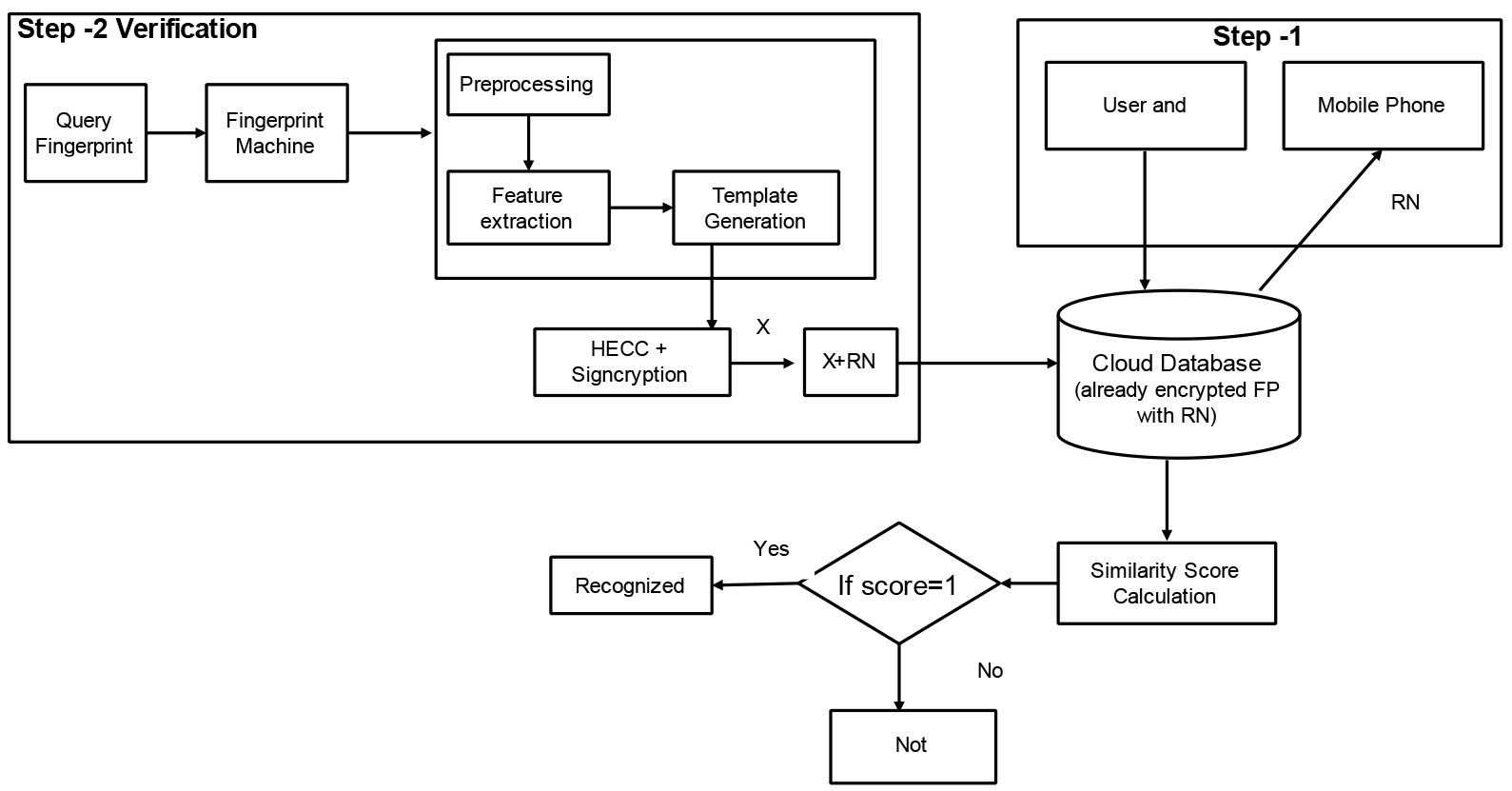
The steps of the enrollment phase are shown in Fig. 2. This phase includes the image storage in the cloud database after encryption. After scanning a user’s fingerprint image. Its quality is checked as per the mentioned noise level threshold level and statistical method. However, the quality is fitting at that point based on the extraction of features.
Enrollment phase flowchart.
The proposed framework uses the concept of minutiae points and a matching algorithm [3, 31, 32] for the extraction of features. Minutiae points are an exceptionally significant feature extraction process for the fingerprint detection method. Minutiae points are utilized for matching of query fingerprint of a user with stored fingerprint templates in the cloud database. These minutiae points are different for two users hence, used to differentiate one fingerprint image from others. Generally, there are 25 to 85 minutiae points exist in a good-quality fingerprint image [33]. Minutiae points of the fingerprint reflect uniqueness in the ridge design of a fingerprint for an individual. In the proposed framework, two features of fingerprint have been utilized – ridge ending and ridge bifurcation. The ridge ending refers to the point where a rapid conclusion happens, whereas the point in the fingerprint from where branches (two or more) are generated from a single ridge is called ridge bifurcation, as shown in Fig. 3. Each image is first converted into a binary image then used for the extraction of minutiae points. Each greyscale pixel is converted into two values 0 or 1. In Eq. (1), ‘t’ is a (
Image of ridge ending point and ridge bifurcation point in a fingerprint.
When an image is transformed into a binary image, for minutiae extraction the morphological thinning process is done on the image. The morphological thinning is used to diminish the ridge to the thickness of one pixel. In a thinned image, pixel (p) is analyzed to generate the approximate location of minutiae points. This is called as Rutovitz crossing number shown in Eq. (2)
In the above equation value of val can be either 0 or 1. Ridge ending and bifurcation are now distinguished as
where
The minutiae points are the best acknowledged feature used in fingerprint detection [33, 34, 35]. But generally after pre-processing of images it is not able to remove all the deficiencies from the original greyscale image. To minimize the number of generated false minutiae points due to the low quality of the image some other methods are required to apply.
In our work, the Principal Component Analysis (PCA) procedure is used to improvising the image quality and rate of detection of the fingerprints. PCA is the factual approach, which is utilized to translate an (M
Resized square images (N The average of training set Vector Generate the covariance matrix Generate the eigenvectors and eigenvalues of the corresponding covariance matrix
These extracted features are encrypted by using HECC signcryption and then it is further encrypted with Random Nonce (RN) and stored in the cloud after matching of (RN) with cloud RN.
The target space can generate with the D basis vector i.e., D
For this purpose, a one-dimensional input space kernel function is considered as
The function
After scanning the fingerprint of the user, the fingerprint images need to be encrypted before saving them in the cloud database. The process of encryption followed two steps. In the first step the fingerprint image is encrypted by Hyper Elliptic Curve (HEC) with the signcryption process. In the second step the encrypted image is further encrypted to enhance the data security with Random Nonce (RN) by using Data Encryption Standard (DES) algorithm.
Hyper elliptic curves (HEC)
HEC was proposed by Koblitz in 1989 [35]. It is an enhanced version of the elliptic curve. The concept of the discrete logarithmic problems is used for providing security using HEC. It is a Jacobian curve over the finite field. Let
where
Jacobian is a set of numbers
where
In the proposed system, the digital signature is added with HEC to enable the non-repudiation feature. Which gives a guarantee that someone cannot deny after sent a message once it has been signed with his digital signature. Before the process of encryption, ‘message digests’ is generated using the Secure Hash Function (SHA-2) called
S is a random 256 bit string Pass S through SHA-2 to generate field element Compute the elliptic curve E Repeat the process until the group order reaches
HECC for Genus 3 over Prime Field F(p)
After the generation of the C curve, the divisor is generated
Verification of processes at different stages during data accessing.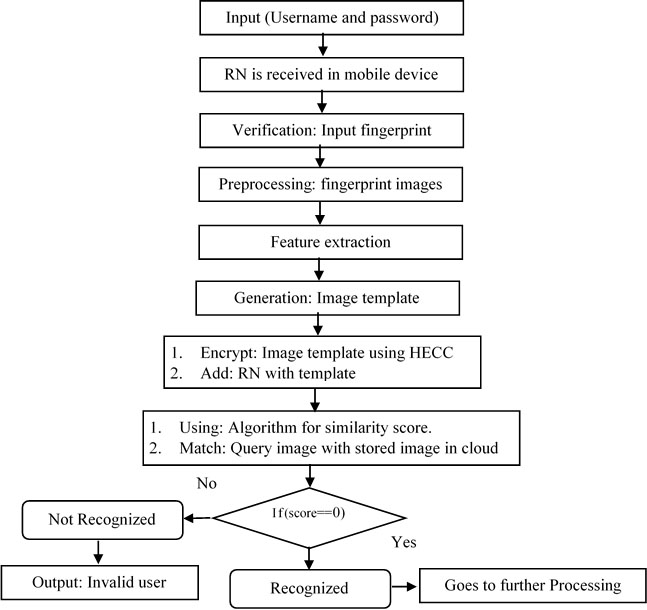
Input images with their masked, thinned, and minutiae point images.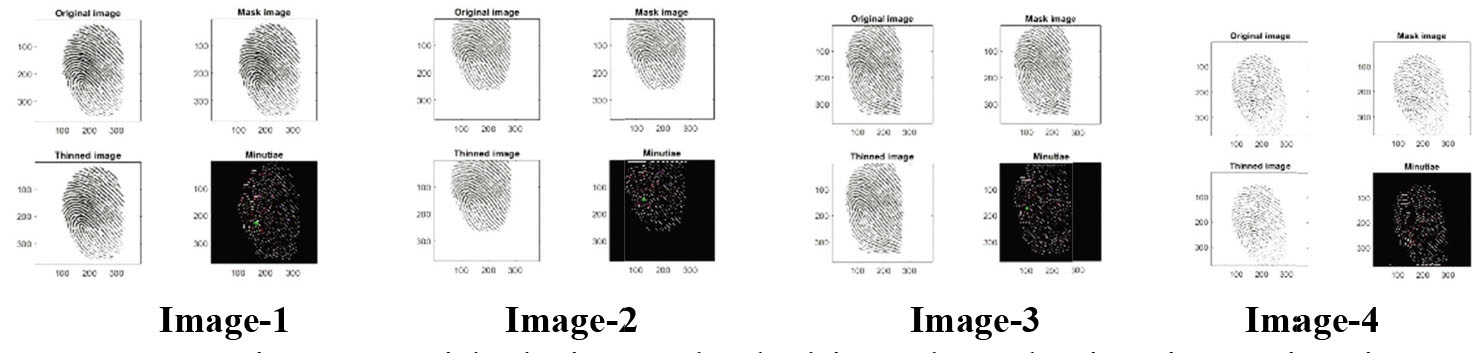
(a) A plot of similarity score for matched query image. (b) A plot of similarity score for unmatched query image.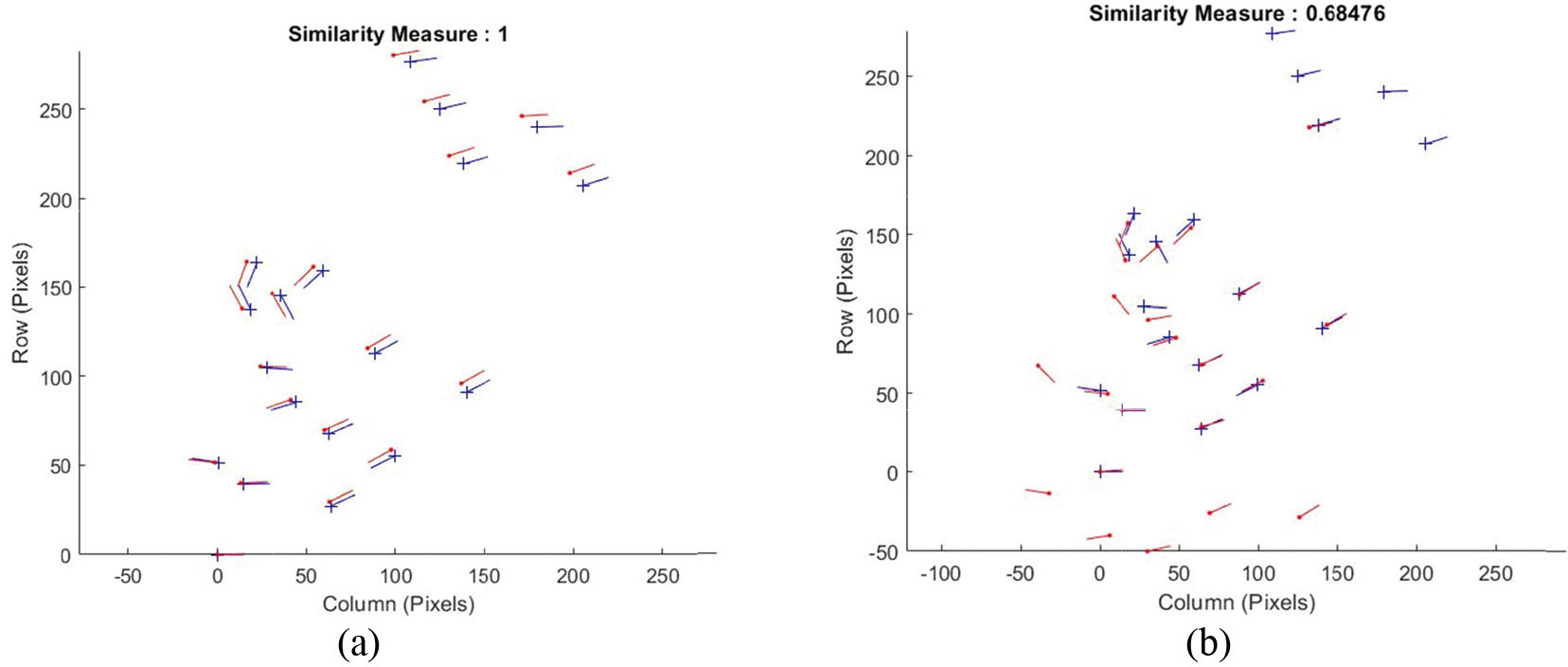
Figure 5 exhibits the related different processes with the help of a flow chart and it is also indicated how to authenticate the users. The verification process consists of two stages. One of the stages is the generation of a random nonce, and the second stage follows the verification of fingerprint based on a similarity score.
To find the image of minutiae points from the original image three steps are followed – image converted in masked images, thinned images, and then minutiae point images respectively. The minutiae point image is used to calculate the similarity score to authenticate a user. Figure 6 exhibits the masked image, thinned image, and minutiae point image of the four sample images from the dataset. Those are randomly chosen from the stored image database. The similarity score is shown in Fig. 5 which is generated using Algorithm 4. This algorithm is comparing the minutiae point sets of the input images and stored templates. The input image is represented by
where
where
To access any information or data from the cloud, the user requires a registered username and password. If the password is correctly authenticated and verified by the cloud server, then the server generates random nonce (RN) and reverts to the user mobile. The RN is generated one time for a session only. After receiving the RN, an encrypted query fingerprint is added with RN. The main purpose of adding the RN is to avoid replay attacks.
Experimental results and discussions
Simulation of this work is conducted on AWS and MATLAB platform in a processor Intel core
Performance evaluation
The performance evaluation of the proposed model starts from the authentication process using a biometric system. Earlier for enrolling the fingerprint templates in the cloud database we have used the PCA algorithm to improvise the image quality so that rate of image identification can be maximized. We have calculated the FMR and FNMR ratios to check the accuracy of the biometric authentication added in the system, shown in Eqs (11) and (12). Figure 7 represents the rate of FMR and FNMR. The value of FMR and FNMR indicates that the scores are updated for better accuracy, and it is required at least 100 repetitions. This work shows that Equal Error Rate (EER) during the testing is roughly 0.38. Here, EER represents a point where the rate of FMR and FNMR is approaching towards an optimum equal point, which is represented in Eq. (13).
The plots of false matching ratio and false non matching ratio for the test query image.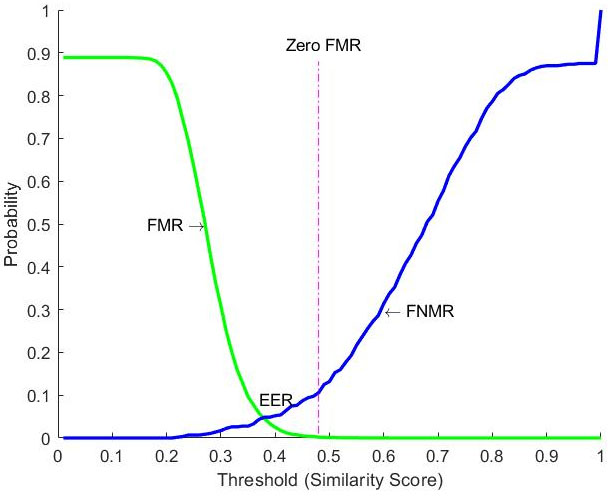
After the calculation of ratio, we calculated the time for image detection and verification. We found that the model (ECSHB) exhibits approximately the performance rate is 97.67% after applying PCA algorithm, which appeared in Table 1. Table 2 shows the time taken by (HEC
Image detection time and performance testing rate for randomly selected four sample images from the stored database
Computation time for the verification of randomly selected four sample images from the stored database
The proposed model performance is compared with some existing state of art techniques given by different researchers – Haghighat et al. [21], Kumar et al. [25], and Shakil et al. [30]. Haghighat et al. proposed a cloud framework, based on biometric identification for the authentication of an individual user. Haghighat’s framework includes the subtle elements of users to their biometric features and then the framework is applying encryption. Authors have taken face images as biometric information in the framework. To classify the extracted features, Generalized Local Discriminant Analysis (GLDA) has been used is used by Haghighat. His framework claimed the detection accuracy as 95% approximately [21]. Kumar et al., proposed a model based on facial images as biometric. The model is denoted as biometric face recognition (BFR) framework which uses face detection method for user authentication. Authors have utilized the Eigenface detection method with the elliptic curve and homomorphic encryption. Their approach showed 96.89% accuracy of recognition of images [25]. Shakil et al., presented the cloud-based framework for the health care systems. Shakil et al., has claimed the framework was designed to guarantee the privacy and security of subtle medical data. Their framework utilized signature for biometric authentication. For the training of signatures, the data frame has used Back Propagation Neural Network (BPN) [30]. They showed a framework sensitivity of 0.98 and specificity of 0.95. Figures 8 and 9 shows the performance comparison plot of the proposed work with [25] and Table 3 shows the outline comparative analysis with the existing biometric systems on the model (ECSHB).
Comparative analysis
Comparative analysis
Comparison plot of detection time.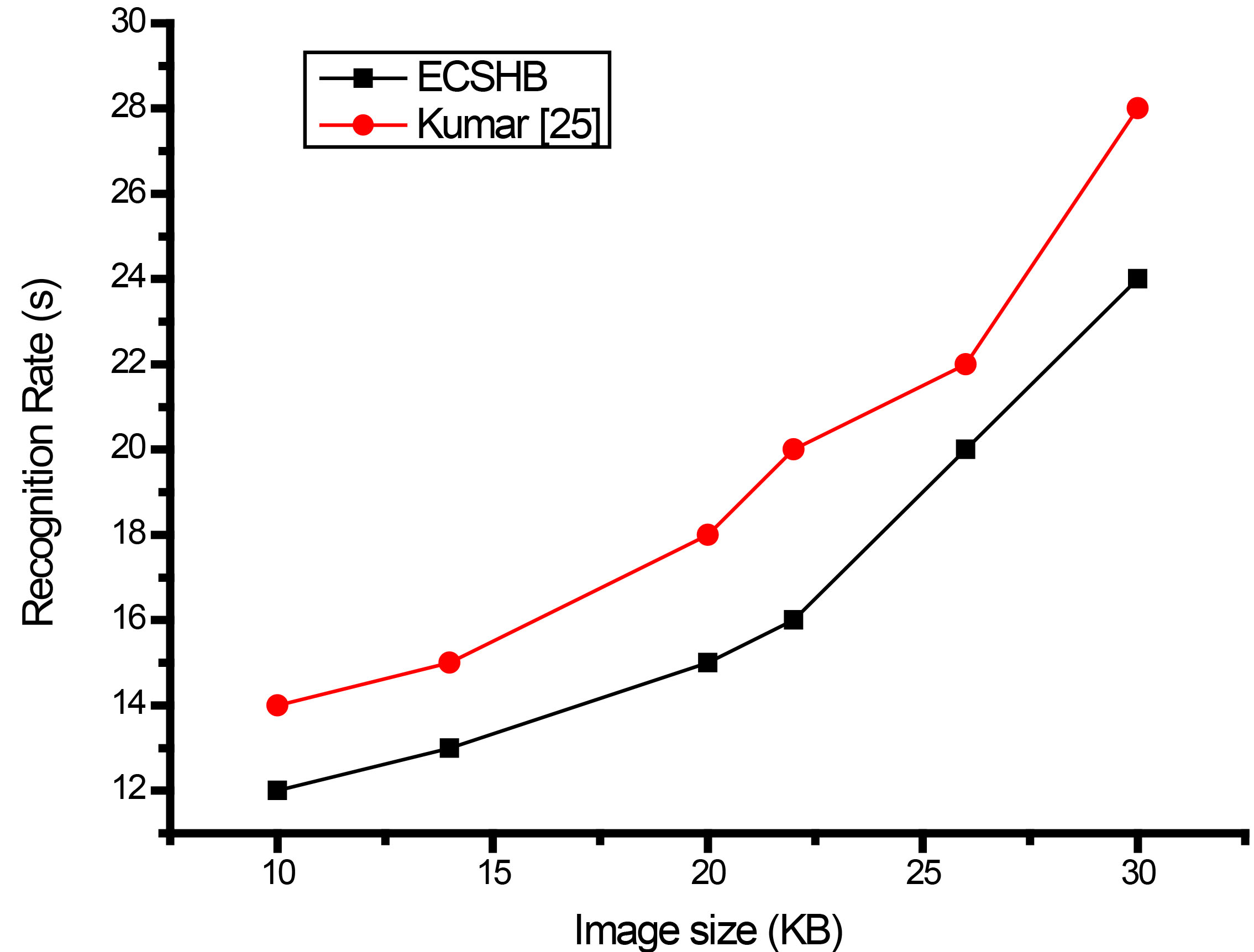
Comparison plot of verification time.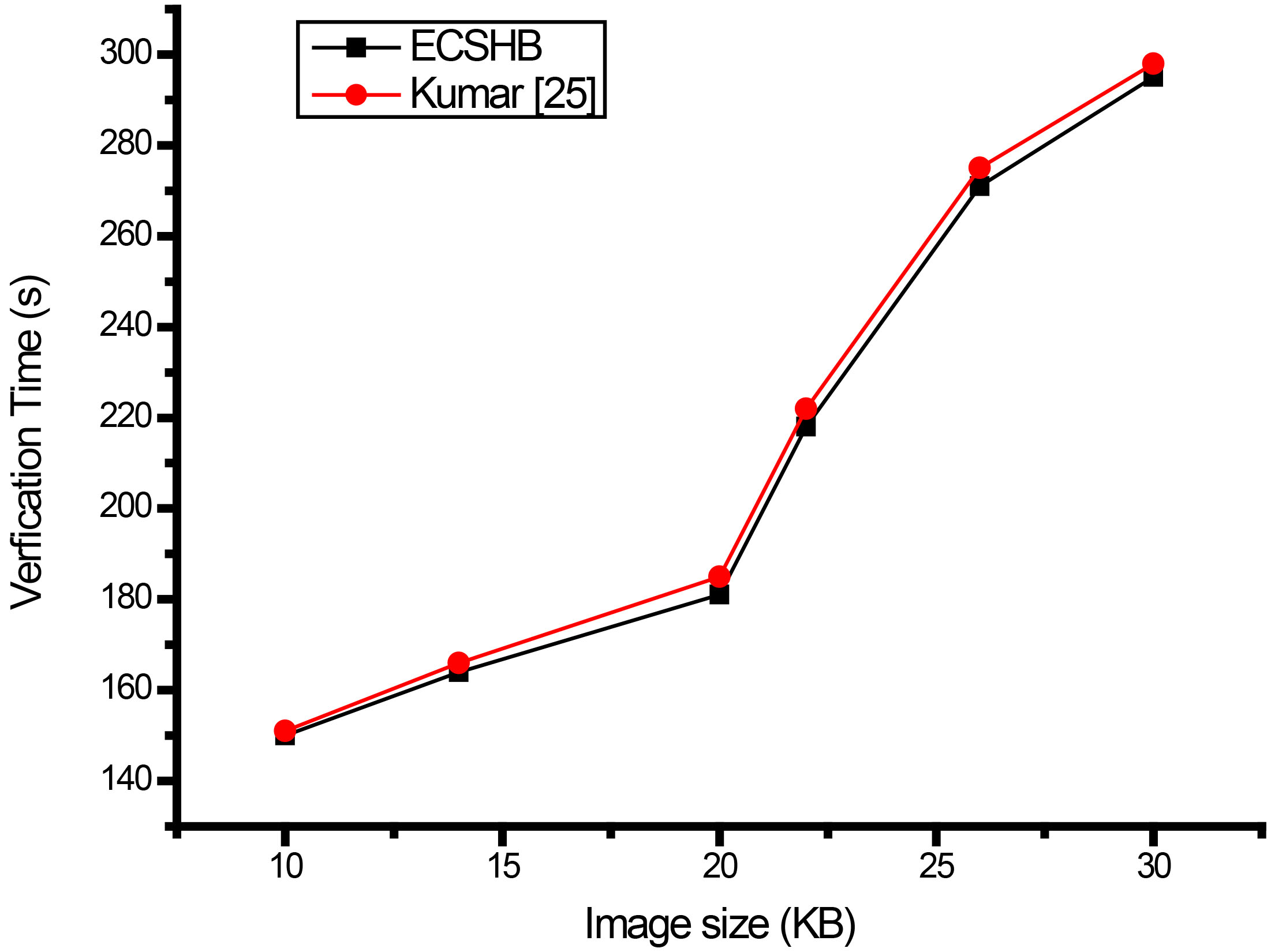
Table 3 presents the comparative analysis for the existing systems based on biometric identification with a proposed model.
The security analysis of our exhibited model (ECSHB) is shown in Fig. 10. The security of the channels is enhanced by RSA and (Secure Socket Shell) SSH, in the cloud environment.
Security threat model.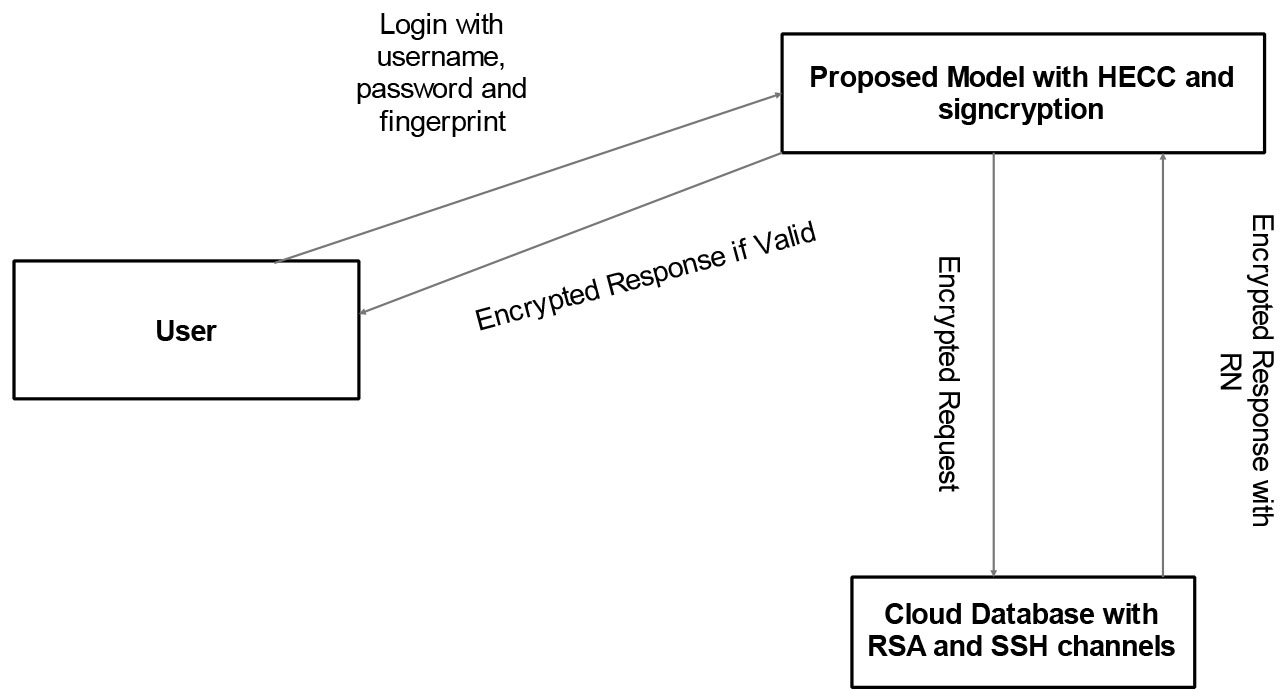
In this work, we have presented ECSHB: Enhanced Cloud Security using Hyper Elliptic Curve and Biometrics. The framework of the model is validated in the cloud environment using encrypted fingerprint templates for authentication and HEC with signcryption algorithms. Further, in the validation phase the template is encrypted with RN using DES. The model ECSHB uses PCA to reduce the noise level by selecting the essential features based on dimension reduction to improvise the detection accuracy. The detection accuracy of the model ECSHB is achieved as 97.67%. The achieved accuracy is slightly better than available models which improvise the speed of data accessing from the cloud. The model ECSHB is incorporated confidentiality, non-repudiation, and handling of replay attacks for better and robust security. We have achieved these results based on a population size of 300 fingerprints. The deployment of the model ECSHB, requires more testing with large population size. Further, we will test this model under the DDoS attack and in a wireless environment with Service Set Identifier (SSID).
Footnotes
Author’s Bios