



Abstract
BACKGROUND:
Neonatal sepsis is a major cause of morbidity and mortality among neonates. Nod-like receptor family pyrin domain-containing 3 (NLRP3) inflammasome is a core element for innate immune protection. The study aims to estimate the expression of NLRP3 inflammasome in full term newborn infants who suffer from late onset sepsis, in order to assess its diagnostic value.
METHOD:
This case-control study was conducted in NICU. 40 newborns with late onset sepsis, and 40 control neonates were included. The analysis of NLRP3 inflammasome was done by ELISA.
RESULTS:
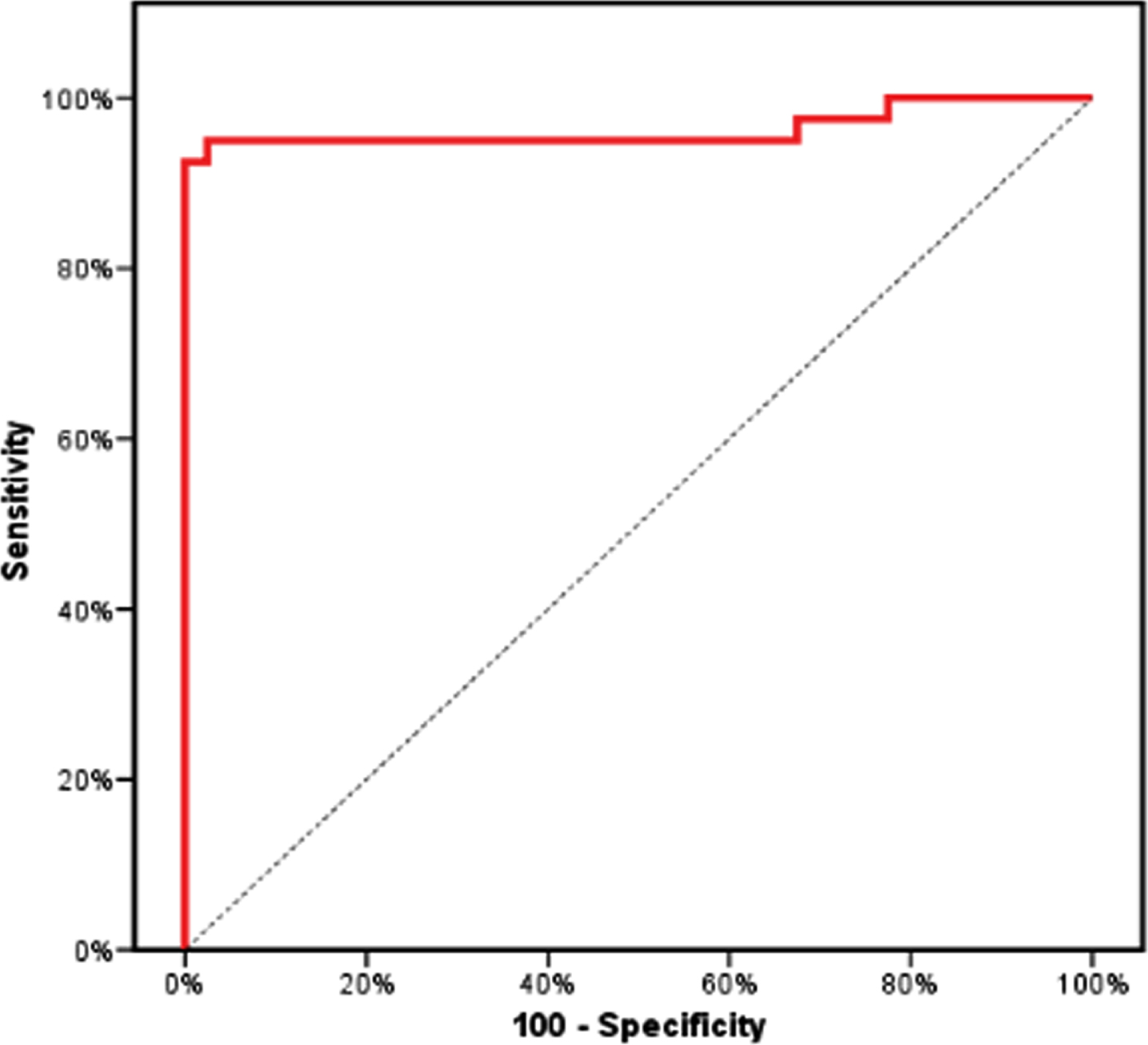
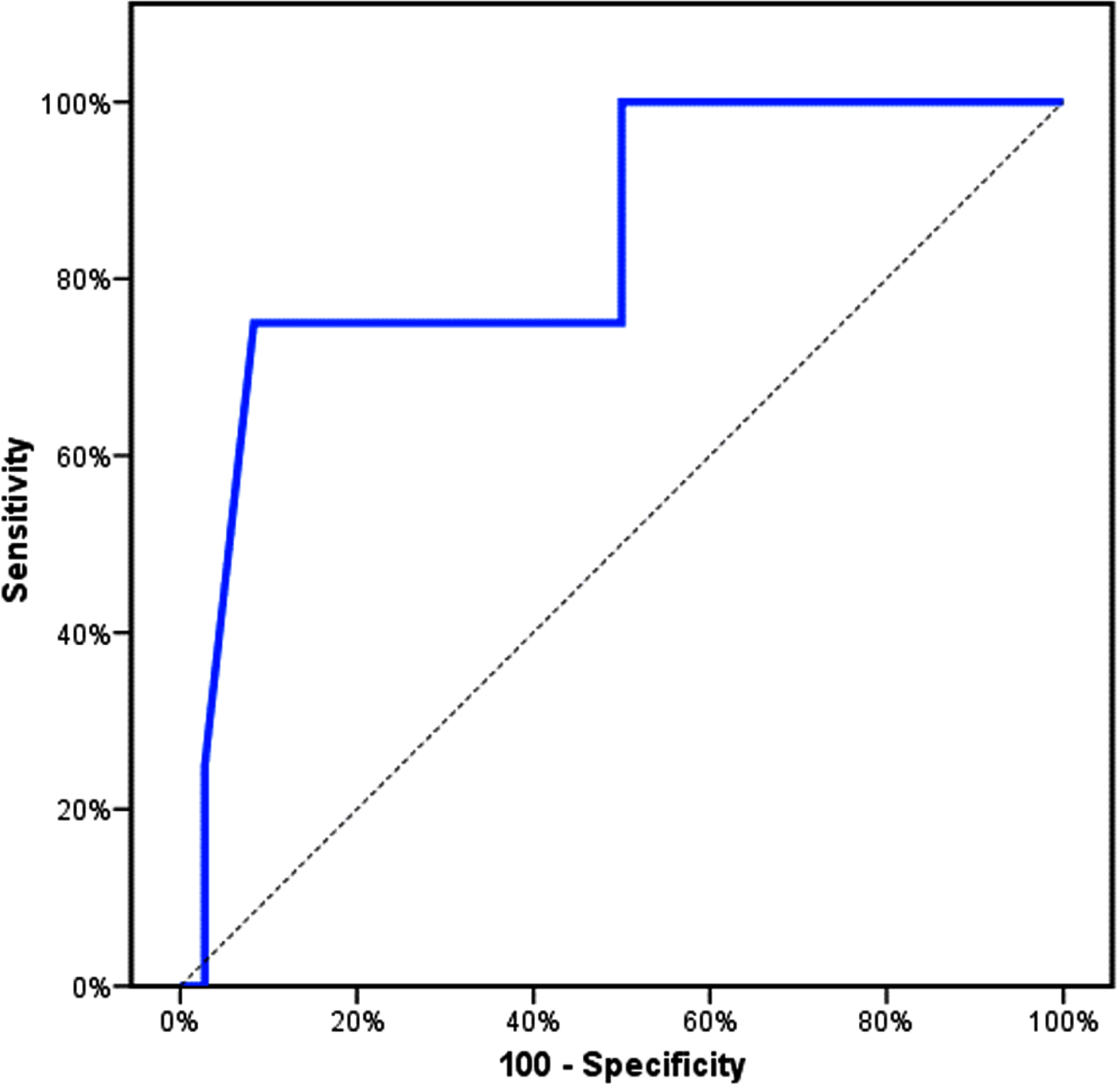
There was a significant elevation of NLRP3 inflammasome in the serum of neonates with late onset sepsis group than the control group, P values were < 0.001, and the best cut off value of NLRP3 to detect late onset septic was > 3 ng/ml with sensitivity of 92.5% and specificity of 97.5%. Receiver operating characteristic curve showed that the best cut off point of NLRP3 to predict mortality in cases group was > 7.29 with sensitivity of 75.0%, specificity of 91.67%, PPV of 50.0%, NPV of 97.1% and total accuracy of 0.84%. n-SOFA scoring system increased significantly among LOS group and there was positive correlation with NLRP 3 inflammasome, P < 0.012.
CONCLUSION:
NLRP3 inflammasome can be used for the diagnosis of late onset neonatal sepsis. The increase of its values was not affected by gender, birth weight, gestational age and postnatal age. It was the novel sepsis markers that were not fully studied in neonatal population. The prognostic values may need further studies.
Keywords
Introduction
Neonatal sepsis is a major cause of morbidity and mortality among neonates world-wide [1]. Neonatal sepsis is broadly categorized into two groups: early onset sepsis (EOS) and late-onset sepsis (LOS) according to the postnatal day of presentation [2]. Late onset sepsis occurring after 72 hours of life up to 28 days [3].
The nod-like receptor family-mediated host responses are considered an alarm system against infection [4]. It is an intracellular feeler that identifies a broad scale of infectious motifs, endogenous hazard signs and biological nuisances, causing the stimulation of the role of the Nod-like Receptor family pyrin domain-containing 3 (NLRP3) inflammasome.
The NLRP3 is a cluster of high-molecular–weight cytosolic protein complex, developed to arbitrate host immune reactions to numerous damaged cell associated molecular patterns (DAMPs) and pathogen associated molecular patterns (PAMPs). The activation of the NLRP3 inflammasome is an essential step for innate immune protection, as it serves an important role in adaptive immune reactions, and performs as a pattern recognition receptor that distinguishes PAMPs. The compilation of the NLRP3 inflammasome leads to caspase 1-dependent production of the pro-inflammatory cytokines IL-1β, IL-18 and gasdermin D-mediated pyroptotic cell death [5].The studies conducted on adult patients have shown that the NLRP3 inflammasome is involved in the occurrence and evolution of sepsis and other immune inflammatory diseases [6, 7].
The NLRP3 inflammasome has been widely investigated in adults and pre-clinical models. So far, there are no studies that can identify its role in early detection of neonatal sepsis. Meanwhile, sepsis in neonates varies considerably from that in pediatrics and adults, hence it is worth having independent diagnostics criteria. The neonatal symptoms of sepsis are multiple, and they mimic other disorders that originate major diagnostic complexities. Delayed diagnosis may increase mortality.
Our research question was as following: Can NLRP3 inflammasome help the early diagnosis of late onset sepsis in newborn infants?
This study aims to estimate the expression of NLRP3 inflammasome in full term newborn infants suffer from late onset sepsis, in order to assess its diagnostic value, in addition to elucidating its prognostic help in predicating non-survival cases.
Methods
Hospital setting
El-Menshawy general hospital is a general hospital in Tanta, Capital of the Gharbia governorate. It is a tertiary referral center for neighboring health care centers and home deliveries from the surrounding villages. There are 15 incubators, 7 ventilators and 3 CPAP. The NICU serves approximately 15 case /day.
This study was a case-control study. It was conducted in the NICU from April 2020 to March 2021. Ethical approval was obtained from the ethical committee of Faculty of Medicine for Girls, AL-Azhar University. Moreover, the informed consent was obtained from the parents of the patient.The study included 80 newborn infants, who were allocated into 2 groups. Group 1 included 40 neonates with late onset sepsis that was confirmed by positive blood culture, and group 2 comprised 40 apparently normal newborn infants (control group).
Inclusion criteria for LOS group: The study included full term newborn infants (gestation age≥_37 weeks). They meet the criteria of late onset sepsis, symptoms and signs of infection started after 72 hours of birth. They also had positive blood culture [8].
The exclusion criteria included preterm infants, early onset sepsis cases and neonates with inborn errors of metabolism.
The inclusion criteria for the control group involved apparently healthy full term infants with no risk factors or clinical manifestations of sepsis and no laboratory evidence of sepsis.
All neonates were subject to full history taking, through clinical examination, laboratory investigations including: complete blood count (CBC), blood culture, C-reactive protein (CRP), liver and kidney function tests and serum NLRP3 inflammasome. NLRP3 inflammasome was measured before starting antibiotics by using enzyme-linked immunosorbent assay (ELISA) OKEH03368. The kit was purchased from Aviva systems biology Corp, USA.
Samples were collected at the time of the diagnosis of sepsis. The study was approved by the ethical committee of Faculty of Medicine for girls, AL-Azhar University. An informed consent was obtained from the parents or caregivers of each neonate before their enrollment in the study.
Statistical analysis
All data were collected, coded, revised and entered to the statistical package for social science (IBM SPSS, Chicago) version 20. Discrete variables were expressed as counts and percentages. Continuous variables stated as medians and interquartile ranges or means and standard deviation. Differences in categorical variables were calculated using Chi-square test or Fisher exact test, and two sample t test or Mann Whitney test were used for continuous variables. Spearman’s rank coefficient test was used for the correlation between NLRP3 inflammasome, along with other tests that studied variables. ANCOVA test was used to study the effect of gestational age, birth weight, gender and postnatal age on the NLRP3 inflammasome values. Receiving operating curve (ROC) was used to detect the cut off value, sensitivity and specificity. The statistical significance was defined as P < 0.05.
Results
The results are shown in Tables 1 to 5 and Supplements 1–3.
Comparison of demographic data between late onset septic and control newborn infant groups
Comparison of demographic data between late onset septic and control newborn infant groups
Late onset sepsis = LOS). SD = Standard deviation, P value = Probability value, t = Student t-test, c2 = Chi square test.
Comparison between late onset septic newborn group and control group according to laboratory investigations
FE=Fisher Exact. HSS = Hematological sepsis score. LOS = Late onset sepsis. SD = Standard deviation. n-(SOFA)=neonatal sequential organ failure assessment. P value = Probability value. t = Student t-test. U=Mann Whitney test. c2 = Chi square test.
NLRP3 inflammasome values in neonates of LOS group and control group
P value = Probability value. t = student t-test.
Receiver operating characteristic curve between the studied groups for NLRP3 inflammasome to discriminate LOS neonates from control and survival from non-survival neonates
AUC=Area Under a Curve. CI = Confidence Intervals. NPV = Negative predictive value. P value = Probability value. PPV = Positive predictive value.
Correlation between NLRP3 and studied variables in late onset septic group
n-SOFA=Neonatal Sequential Organ Failure Assessment. R = Spearman coefficient.
80 neonates were involved in this study; 40 cases suffered from late onset sepsis and 40 controls. There was no statistically significant difference between newborn infants in the late onset septic group and control group regarding gender, gestational age, birth weight, length, head circumference and abdomen circumference. A higher postnatal age was detected in late onset sepsis group (Table 1).
Laboratory investigations
There was a significant increase in the number of cases with leukocytosis and neutrophilia (90%) as well as the mean values±SD of WBC among the LOS group [31.69±11.47 (103/μL)] than the control group [16.15±2.70(103/μL)], and the P values were < 0.001.The total number of immature neutrophil and immature/total ratio was significantly increased in LOS group.
There was a significant decrease in the mean values of platelets in the LOS group than the control groups, and the P values were < 0.001. It is noteworthy that all cases showed thrombocytopenia. Higher values of CRP among LOS group were detected. Haematological sepsis score mean±SD was 4.23±0.48 among the LOS group, and n-SOFA score was 5.85±2.63. (Table 2).
All the study cases had positive blood culture; Klebsiella was the most revealed bacterial organism (57.5 %), followed by Coagulase negative staphylococcus (27.5%) then E Coli (15%). Supplement (1).
NLRP3 inflammasome means the values increased significantly in the neonates with late onset septic group (5.78±1.57 ng/ml) than the control group (2.07±0.58. ng/ml), and the P value were < 0.001.There was no significant difference in the mean values of NLRP3 inflammasome between male and female newborn infants, while non-significant elevation was found among non-survival cases. (Table 3).
Receiver operating characteristic curve (ROC) shows that the best cut off value for NLRP3 to detect late onset septic was > 3 with sensitivity of 92.5%, specificity of 97.5%, PPV of 97.4%, NPV of 92.9% and total accuracy of 0.96%.
Our study revealed that; receiver operating characteristic curve (ROC) shows that the best cut off point of NLRP3 inflammasome to predict mortality in cases group was > 7.29 with sensitivity of 75.0%, specificity of 91.67%, PPV of 50.0%, NPV of 97.1% and total accuracy of 0.84%. (Table 4).
There was non-significant correlation between NLRP3 inflammasome and WBC (r=-0.265, P = 0.099), I/T ratio (r = 0.156, P = 0.335), platelets (r=-0.103, P = 0.525), CRP (r = 0.163, P = 0.315), GA (r = 0.148, P = 0.362) and birth weight (r=-0.032, P = 0.844). A significant positive correlation with Neonatal Sequential Organ Failure Assessment score n-(SOFA) was detected, P = 0.012. (Table 5).
To confirm the non-effect of GA, BW, postnatal age and gender on NLRP3 inflammasome, ANCOVA test was conducted. (Supplement 2).
At confidence interval 95%, the odds ratio was 9.959 for the NLRP3 inflammasome and 1.234 for the WBC. (Supplement 3).
Discussion
Inflammasome is considered a common recognition pathway of innate immune system for pathogen- and tissue-driven inflammatory responses. The NLRP3 inflammasome is activated by LPS or other TLR agonists [9, 10]. NLRP3 inflammasome is a new marker which plays an important role in inflammation and innate immunity, it is contributed to several diseases as autoimmune, cardiovascular, neurodegenerative and metabolic diseases [11].
Nevertheless, some studies have examined the role of inflammasomes in seriously ill septic adult patients and some experimental researchers studied its relation to neonatal brain injury, bronchopulmonary dysplasia and retinopathy of prematurity [12, 13].
However, there are several queries regarding its value in diagnosis of neonatal sepsis. To the best of our knowledge, this is the first human study that has assessed serum levels of NLRP3-inflammasome among newborn infants with LOS, and evaluated its association with the prognosis in predicting non-survival cases. We also investigated whether the activation of the NLRP3 inflammasome is influenced by gestational age, gender, birth weight and postnatal age in the control and septic group.
ROC curve to discriminate NLRP3 patient from control.
ROC curve for NLRP3 to discriminate survival from non-survival.
This study included 40 neonates who were diagnosed as late onset sepsis confirmed by positive blood culture. There were no significant differences between the newborn infants in the control and LOS groups regarding the gestational age, birth weight and gender. These findings were similar to other findings [14, 15].
This study showed that there was a significant elevation in the expression of NLRP3 inflammasome in the serum of neonates with the late onset sepsis group than the control group, and the P values were < 0.001. The activation of the NLRP3 inflammasome is necessary for innate immune defense as it serves an important role in adaptive immune responses. It functions by cleaving pro-caspase-1 to become active caspase-1, resulting in the maturation and release of IL-1β and IL-18 [16].
In the study of neonatal malnutrition animal model, the deregulation in the expression of NLRP3 receptors possibly cause widespread tissue damage and favor the spread of bacteria, particularly methicillin resistant. The researchers concluded that inflammasome play a significant role in neonatal responses to inflammation and infection. The alterations in the inflammasome pathway are associated with worse prognosis to infection, especially in neonates under 29 gestational weeks [17].
A significant increase in the NLRP3 expression has been documented in adult sepsis by others [6, 18–20]. Garnacho-Montero et al. showed that NLRP3 is activated more in sepsis cases than other critically ill patients. They considered NLRP3 as protective agent during the first week of sepsis [6].
An additional finding of the current study is the estimation of the cut off value, sensitivity, specificity, predictive values for NLRP3 inflammasome to diagnose late onset sepsis. We found that at level > 3 ng/ml, NLRP3 had a sensitivity of 92.50 % and specificity of 97.5% to diagnose late onset neonatal sepsis with positive predictive value of 97.4% and negative predictive value of 92.2%. These data reveal the ability of the NLRP3 inflammasome to diagnose cases with sepsis and to exclude cases with no sepsis with high sensitivity and specificity. Moreover, there was a nine-fold increase in odds ratio of NLRP3 inflammasome to diagnosis late onset sepsis. The NLRP3 inflammasome value was not affected by the gestational age, birth weight, postnatal age and gender whether in the control or in the late onset sepsis group. The clinical implications of these results could advocate for the utilization of NLRP3-inflammasome as a novel marker of sepsis in newborn infants with infection in general and late onset sepsis specifically.
Furthermore, our study showed a non-significant increase in the mean values of NLRP3 inflammasome in the non-survival newborn infants. The NLRP3 inflammasome cut off value > 7.29 ng/ml had 75 % sensitivity in predicting mortality among LOS cases and 91.67% specificity to rule out non-survival cases. Bacterial recognition by the inflammasome is fundamental for the restriction of bacterial growth and host survival [18, 19].
The non-significant elevation among the dead cases could be due to enlarged inflammatory response and trigger apoptosis of immune cells to exacerbate sepsis progression by NLRP3 inflammasomes [20].
In general, similar data from adult studies were reported. Esquerdo et al. found that NLRP3 gene expression was up-regulated in septic patients, with higher expression in non-surviving patients than in survivors compared with healthy volunteers [7]. Fahy et al. reported that only NALP1 is significantly different between hospital survivors and non-survivors patients with septic shock and no other inflammasome was increased [21]. In a study conducted by Garnacho-Montero et al. NLRP3, inflammasome expression was similarly increased in survivors and non-survivors till the day seven, then there was a significant increase in survived cases than in deceased patients [6]. The activation of inflammasome may have a protective role among patients who fight the invading microorganisms.
The variation of prognostic values for MLRP3 between different studies may be due to variation in age group and timing of sampling. Furthermore, the fact that gene expression and interactions whether activation or inhibition is affected by multiple cellular functions and reactive oxygen species production, nitric oxide synthesis which are mediators for NLRP3 inflammasome [7, 18]. Newborns have reduced antioxidant defense processes [22].
NLRP3 inflammasome values were positively correlated with n-SOFA scoring system among neonates with LOS group, but the n-SOFA score assesses the severity of the illness and may not help in preventing the grave outcome.
This study suggests that NLRP3 inflammasome can be used for the diagnosis of late onset neonatal sepsis. The increase of its values in late onset full term infants was not affected by gender, birth weight, gestational age and postnatal age. It is novel sepsis markers that was not fully studied in the neonatal population. The prognostic values may need further studies.
Footnotes
Acknowledgment
The authors would like to thank all their colleagues in the NICU, AL-Azhar University and El-Menshawy general hospital, as well as the parents for their precious support.
Declaration of interest
The authors have no conflict of interest.
Source of fund
There is no source of fund.
