



Abstract
The paper aims to benchmark the performances of dual-frequency inlays, operating in the UHF and HF bands, when deployed in the apparel logistics and end user retail processes. The developed testing protocol makes it possible to evaluate the performances of RFID devices in simulated supply chain and end user-oriented processes. It has been designed considering the need for identification of the supply chain and the end users, who can take advantage of the adoption of NFC technology. We applied the testing procedure to RFID inlays equipped with an innovative integrated circuit (IC) and two antennas, capable of managing both EPC communication in the UHF band and NFC communication in the HF band with smart devices. The performances of the inlays were compared to those of standard tags commonly used in the EPC and NFC fields. We measured and compared the read rate, accuracy and read time when testing EPC capabilities and the read/write throughput, time and distance when measuring NFC functionalities. By simulating a real-world environment, the test results provide a direct insight into the performances that can be expected from different dual-frequency RFID inlays. This information is useful for IT and logistics managers, who can better understand how these innovative tags perform and which would be the best choice for new RFID applications.
Introduction
The use of radio frequency identification (RFID) in the apparel industry has increased steadily over the past several years, and this trend is projected to continue for the foreseeable future. As suggested by several studies, fashion and apparel retail is a leading sector for RFID technology. This is because RFID implementation can be applied to a wide diversity of use cases, and it has the potential to solve unique problems (Bottani et al., 2016; Rizzi et al., 2016).
In the literature, a large number of reports can be found forecasting the broad adoption of RFID and recognising its potential benefits, even though firms do not unanimously adopt the technology in practice (Zhang et al., 2018). Harrop and Das (2013) forecast the annual demand for RFID tags from the apparel industry to reach 20 billion within the next decade; this is due to the fact that about 100 apparel and related firms are currently at the RFID tag trial and rollout stage, and that the combined annual demand from just two of these firms is about 500 million tags.
Moreover, during the next decade, it is expected that the systems and tag business in the apparel industry will grow at a rate double that of the overall RFID market. Given these premises, the apparel industry appears to be a significant player in RFID adoption and use scenarios. Thus, there is a need to better understand the performances that can be expected from different dual-frequency (DF) RFID inlays.
The benefits of item-level RFID tags in the apparel industry are varied and depend on the application context. Rinaldi and Bandinelli (2015) proposed a model for evaluating the economic effectiveness of logistics RFID-based investments in the apparel field. Busato et al. (2013) evaluated RFID opportunities in several sectors. There are several benefits of item-level RFID tags in a retail store setting, including improved inventory accuracy, fewer inventory check personnel, less out-of-stock situations, just-in-time inventory replenishments, improved stock flow between the stockroom and sales floor, reduced inventory carrying costs, improved customer service, faster checkout, improved information, rich customer shopping experience, efficient return management and enhanced loss prevention. As noted by Bottani et al. (2010), there are also several benefits of item-level RFID in distribution and logistics, such as better inventory visibility, lean inventory management, electronic proof of delivery, shorter invoice and payment cycle times and improved shipment accuracy.
However, while most of the literature confirms the potential benefits, the auto identification needs at different points in the apparel retail supply chain (e.g., warehouse, during transit, supplier, retailer, end user) are not necessarily the same. In fact, these needs may differ between two retail settings. For example, a retailer of relatively inexpensive fast-moving consumer goods, whose requirements are mainly related to stock management (Bertolini et al., 2013), may require simple passive RFID tags with minimal memory and processing power. Meanwhile, an exclusive high-end retailer may require more complex, active tags for counterfeit and theft prevention.
Bertolini et al. (2012a) consider the supply and demand side of RFID systems. Specifically, they evaluate the performance of available RFID solutions in the fashion industry and attempt to match them with end users of such technology. The performances of RFID and production systems can be monitored by means of the business intelligence modules described by Bertolini et al. (2009).
Bertolini et al. (2012b) quantified the business benefits of RFID in apparel and fashion supply chains related to logistics and store processes at both the operational and strategic levels. With results obtained from approximately 20,000 tags on garments tracked from a distribution centre to a retail store of a major Italian fashion brand, they observed that sales and customer satisfaction increase with the use of data generated through RFID tags.
NFC Forum (2008) pointed out the value and potential of near field communication (NFC) technologies, analysing the different use cases that could be impacted by its adoption. Many benefits can be achieved in the transit/transportation, airlines, retail, public sector, healthcare/social, medical/pharmaceutical, automotive, consumer electronics and travel/entertainment businesses. With regard to retail, which leads the way in the RFID market, the most important processes that could benefit from NFC implementation are payment (pay with NFC phones at contactless POS, add and use a prepaid gift card in an NFC phone), loyalty/couponing (add or redeem points with NFC POS and NFC phone, download coupons from smart poster to NFC phone, transfer coupon to friend, recommend products, redeem/send coupons between NFC phone and POS), information gathering (read product history/warnings from tag to NFC phone, touch tags to collect shopping list, touch a tag and opt-in to get SMS store or mall offers), asset management (use NFC phones to read smart tags per product) and certain other processes (collect deposits from bottle recycling machines, activate electronic devices after purchase).
The wide variety of specifications for each RFID system component (e.g., tags, readers) necessitates a careful analysis of the application needs and assembly to ensure the most appropriate RFID system. Given this, the natural next step is to develop guidelines for the RFID adoption process. The commonly adopted UHF RFID technologies are based on UHF Electronic Product Code (EPC) standards for logistics and supply chain processes and on NFC standards for use cases involving item identification by an end user. A pair of tags, one for each standard, is required to merge the benefits of the two technologies, but a synchronisation issue arises between the memories of the two ICs. Innovative chips available on the market can implement EPC UHF and NFC HF standards, sharing the same data stored on the tag. Logistics, supply chain, anti-counterfeit and after-sales processes can profitably rely on the same data stored in the tag’s memory and accessible via both interfaces, as confirmed by the manufacturer of the tested dual-frequency IC (EM Microelectronic, 2018).
Literature review
The widespread adoption of RFID applications in recent years has captured the interest of researchers and providers to develop technical solutions to overcome technological issues. Consequently, RFID tags, readers and architectures have been evolving to offer more flexible solutions an improve reliability.
In this section, the main evidence gathered from the literature regarding the developments, discussions and deployments of RFID DF operation are reported.
From a general point of view, Wiechert et al. (2007) presented an overview of both RFID standards, HF and UHF, discussing their potential benefits, elaborating on the potential of their common use and identifying the steps necessary to make the integration of EPC and NFC a reality. Bendavid et al. (2010) highlighted the developments within the field of NFC, the convergence of NFC devices and far field RFID devices, the development of RFID middleware and application platform and the emergence of e-commerce platforms based on ‘cloud computing’ models as building blocks contributing to the operationalisation of these concepts. Park (2011) explained UHF/HF RFID technology and analysed threats related to mobile RFID service. The author proposed a privacy protection service framework based on a user privacy policy, providing a means for securing the stability of mobile RFID services using personal privacy policy-based access control for personalised tags.
In terms of DF technology, most studies have focused on the design of a DF antenna for RFID tags; related studies have considered the design of the antennas for DF readers and some DF applications. Leong et al. (2006) reviewed the single mode operation of both standards (HF and UHF) and study the feasibility of designing a DF antenna for RFID tags. They found that enabling a joint antenna, chip and reader protocol that operates in both frequencies would encourage wider deployment of RFID technology along the supply chains due to the applicability to liquid products. The result of this work was a single feed DF tag with an UHF RFID chip.
Mayer and Scholtz (2008) reported on an antenna operating in the HF and UHF bands based on one of the first DF chips developed by Infineon Technologies Austria AG. This work explained technical issues of the antenna design and matching it with the chip and presented the performances of the final prototype. Their results demonstrate that a DF antenna degrades the performance of the UHF frequency while the HF is preserved. Furthermore, an interesting aspect of this paper was the selection of a thin and flexible lamination to facilitate the integration into product packaging.
A deeper study of the design of a DF tag antenna was conducted by Leong (2008), who improved the positioning of the antennas (HF and UHF) to obtain better performance and reduce the size of the first version of the tag to allow RFID operation even in hostile environments. Additionally, the author presented a model and simulation code to facilitate reader antenna positioning analysis, taking environmental factors into consideration. Illiev et al. (2009) proposed a dual-band HF and UHF RFID antenna tag with separated chips for each operation mode. Another DF tag design was proposed by Deleruyelle et al. (2010), using a single chip to feed both antennas. This work attempted to combine both operation modes without compromising the UHF performance. The authors concluded that reducing the tag dimensions would affect the global UHF performance due to the proximity of the antennas. Alibakhshikenari et al. (2016) proposed another compact DF tag design and underlined that its quasi-omnidirectional radiation characteristics in both orthogonal XY- and YZ-planes would make it functional for various applications in HF and UHF bands.
Other authors have concentrated their efforts on the design and performance measurement of prototypes. A single card with standard dual HF/UHF operation was designed by Toccafondi et al. (2009), who installed an HF commercial tag in a UHF passive card in two separate sections. The final prototype was evaluated, and the experimental results showed good overall performance. The authors suggested that their result would be of considerable interest in multiservice applications, which require a high level of interoperability between different systems. In the previously cited works, Illiev et al. (2009) also presented tuning techniques of the design parameters and performance measurements of the prototypes. The authors demonstrated that combining both RFID standards on the same tag would increase its capabilities and could lead to new applications, although using two chips would increase the tag’s cost considerably.
Bilgic and Yeğin (2016) introduced a dual-mode RFID transponder that incorporated a range extension for HF operation. They argued for the need for a dual-band RFID tag to prevent RFID systems from being affected by the environment, especially metallic objects, thereby obtaining the benefits of each mode and eliminating the disadvantages of single-mode operation.
Compact dimensions and couplings between HF and UHF structures were also key challenges faced by Ma et al. (2012) when developing a compact credit card DF RFID antenna. The singular positioning of the UHF inside the HF coil, necessary to obtain a small design, resulted in a high degree of coupling between the antennas. This issue was solved through practical manufacture and measurement, and the final prototype showed good performance.
Hwang and Kang (2013) presented a DF card structured in three separated layers: one with both antennas (HF and UHF), the second with a board containing the chip and memory in the middle and the third one with a controller and components on the top of the card. In this work, the IC chip’s memory capacity was increased to resolve security-related problems when RFID tags are used in financial transactions.
In the context of a cloud-based RFID traceability architecture and service, El Madhoun and Guenane (2014) proposed the construction of a multi-frequency HF/UHF reader able to interact with both standards. Son et al. (2011) presented a DF antenna for handheld RFID readers to embrace the benefits of operating in both bands. Feig Electronic has offered a mobile HF/UHF reader since 2008 — although the value of the integration of the technologies is more on the tag side than on the reader side. In fact, it is common for supply and distribution chains to be composed of different echelons having different RFID equipment (fixed logistics reader or mobile phones) that need to read the same tagged items.
Concerning RFID DF applications, Chavira et al. (2007) presented a work that combined RFID and NFC covering three key elements: localisation (wide and pinpoint), identification and ubiquitous services to the user. The authors intended to compare the features of both standards while analysing the way in which they complement each other.
Michahelles et al. (2007) discussed the pervasiveness of UHF RFID in industrial environments and some applications while stressing that new applications and new forms of interaction with mobile phones could result in new roles for mobile phones; consequently, users no longer communicate only with people but are also empowered to interact with objects through the Internet of Things (IoT).
This is just a sampling of tangentially related literature that considers the design and applications of DF inlays. In terms of the use of RFID in the apparel industry, the benefits achievable through this technology are unquestionable. Indeed, there are example implementations that provide some ideas of the challenges, achieved benefits and ROI. Clearly, the availability of such information benefits new adopters of RFID technology. We argue that it is even better to develop structured frameworks and protocols that have the potential to help guide a prospective adopter in the choice of specific devices and technologies.
One such testing initiative is the Arkansas Radio Compliance (ARC) programme at the University of Auburn (2014). The purpose of the programme is to ensure that retail suppliers are able to deliver RFID-tagged product to retailers that meet or exceed the levels of performance necessary to provide benefits to both the retailer and the retail supplier in a consistent and cost-effective manner. They use their benchmark test setup, an anechoic chamber, to generate the characteristics of RFID tags that are voluntarily supplied by their manufacturers. They then store results from these tests in a database. With input on the environment and expected performance from a retailer, ARC pattern-matches tag characteristics stored in their database to suggest the tags that they deem to be best fits to satisfy the retailer’s needs. Meanwhile, based on the requests from retailers, the suppliers have an opportunity to learn the types of tags requested by suppliers. ARC plays an important role in bringing together suppliers and retailers by matching retailer needs with supplier offers. In addition to eliminating the need to test several components (i.e. tags, readers, etc.) for every retailer application, ARC’s service reduces the relevant set to a manageable number (specifications). Based on detailed ARC-provided reports, this set of components can then be considered in greater detail and narrowed down to make adoption decisions. ARC has also been testing the performance of RFID hardware and providing results to end users as well as hardware manufacturers (Swedberg, 2011). However, these tests are limited to UHF RFID inlays that operate at 915 MHz, which is the UHF RF spectrum sanctioned for use within the United States. The frequencies used in similar applications elsewhere in the world are not necessarily the same. For example, the UHF RFID spectrum in Europe is specified at 865 MHz, which is used at the University of Parma’s RFID Lab. Furthermore, the University of Parma’s testing differs from that undertaken at the University of Arkansas in that the University of Parma’s tests are performed in a simulated real-world environment. Unlike the tests conducted inside an anechoic chamber at the University of Arkansas’ ARC, item-level tags on boxed apparel items are read as the items pass through a portal or when they are in a case.
Given the numerous differences between the two, in order to obtain exhaustive results for the performances of DF inlays in the UHF band, both testing initiatives have been carried out. Tags have been evaluated by both ARC at the University of Auburn and the RFID Lab at the University of Parma. Moreover, there is a need to develop testing protocols to assess device performance and to benchmark these devices to enable ease of evaluation – both individually as well as part of an ensemble of devices in a realistic setting.
GS1 has recently defined the Tagged Item Performance Protocol (TIPP) guidelines (2015), aimed to provide standard procedures for expressing the performance requirements of UHF tags in retail settings, and a standard test protocol for verifying the performance of a tagged item. A GS1 workgroup defined performance levels for tagged items (rather than tags, inlays or labels), which can be verified independently by retailers, suppliers or any third party by means of a standardised test procedure. TIPP introduces the concept of a grade for UHF tags, defined as a group of performance specifications for a tagged item; it is easily measurable for tags in an anechoic chamber using dedicated hardware and software. A tag matches a specific grade if it satisfies all the performance requirements of the grade; different tags with the same performances (sensitivity and backscattered power) have the same grade. It is more difficult to establish the required grade for the processes of RFID end users since in-field tests are needed because it is not possible to get this information from a laboratory test. In this paper, the GS1 TIPP is not applied for two reasons: (1) the fashion companies interested in the DF tags needed results in a short time, which did not allow us to equip the lab with an anechoic chamber; (2) they were interested in measuring the performance of the tags in their logistics processes, for which a GS1 grade is still undetermined. The ARC testing procedure was executed instead.
Dahl et al. (2015) pointed out that there is not sufficient published data about the performance and energy efficiency of NFC as experienced by NFC applications, and there are no proper tools available to NFC application developers to efficiently benchmark and test tags. Thus, the authors developed an open source Android-based toolset for NFC tag testing and performance evaluation. Moreover, as a confirmation that the application fulfils its purpose, extensive testing has been performed to compare five tags based on the NFC standard.
All four tested DF tags utilise the EM4423 IC, also known as em|echo (echo.emmicroelectronic.com), corresponding to the latest generation of EM Microelectronic contactless devices, which bring innovative features to the NFC and EPC worlds. EM Microelectronic is a semiconductor manufacturer specialised in the design and production of ultra-low power, low voltage integrated circuits for battery-operated and field-powered applications in consumer, automotive and industrial areas. Their product portfolio encompasses IC and solutions for applications such as access control, radio frequency identification, mobile phones, mass-market consumer appliances, alarm and security systems, utility and heating meters, sensor signal processing, controlling, car immobilisation and electronic automotive subsystems.
The EM4423 chip combines two functionalities on a single die: the EPC technology, which is used for long-range applications, and NFC, which is used to exchange data in a proximity range. Both protocols may share a common unique ID. Targeted applications and market segments include retail, product authentication and smart NFC posters. A tag based on the em|echo chip offers multiple benefits and uses through the EPC communication interface, such as stock inventory, product returns and data privacy. The same tag or label also enables new marketing services, for example, product information or loyalty programmes using an NFC enabled smartphone. The em|echo chip is a dual-frequency device supporting ISO/IEC 14443 Type A, NFC Forum Type 2 specifications (see Tables 4 and 6), ISO/IEC 18000-63 and EPC Gen2 V2 (Table 1). For the NFC interface, the smart counter increments its value each time the NFC message has been read by the end user. Each chip is manufactured with a 96-bit unalterable unique identifier (UID) to ensure full traceability. The same UID number is used in both RF protocols. The em|echo offers two non-volatile memories, which are accessible by both RF air interfaces, and which are segmented to implement multiple applications (EM Microelectronic, 2018).
Tags tested in RAIN RFID scenario
Tags tested in RAIN RFID scenario
(*) according to Smartrac common tag nomenclature.
In the remaining part of the present work, a test methodology is presented to assess and compare the performances of tags operating according to EPC, NFC or both standards. EPC standards (including both HF and UHF bands, but generally referring to UHF tags and frequencies as in this paper) are important, as they are one of the pillars of the RAIN RFID Alliance, focusing on the link between UHF RFID and the cloud, where RFID-based data can be stored, managed and shared via the Internet. A RAIN RFID solution uses a reader to read and write a tagged item, manage the data and take action (rainrfid.org).
The presented testing procedure is aimed at assessing the performance of innovative RFID DF inlays, operating according to RAIN RFID and NFC standards.
Consequently, standard and specific testing procedures have been designed and applied to compare the performances of the inlays with standard, commonly used RFID tags operating in the first or second scenarios. The DF inlays are composed of a chip capable of connecting and managing two antennas, one dipole antenna operating in the UHF band according to RAIN RFID standards and a loop antenna tuned in the HF band according to NFC standards. The chip shares the same memory blocks across the two standards, and thus the information contained in the IC’s memory can be read or written by means of UHF readers (commonly adopted in logistics processes) or HF readers (typically smartphones). These functionalities are very important in the fashion retail sector, where the tag can be profitably adopted in both logistics/supply chain processes and in customer-oriented processes.
RAIN RFID tests
Seven families of different tags have been tested, as shown in Table 1. Tags 1, 2 and 3 are three tags commonly used in retail, thanks to their good performance and suitable form-factor, while Tags 4, 5, 6 and 7 are equipped with the innovative DF IC.
Procedure #1: Simulation of typical retail logistics processes
A logistic process involving reads of multiple tags has been replicated to test the performances of the inlays. A handheld RFID reader (manual test) and a fixed RFID reader (automated test) have been used to perform the bulk inventory operations of tags in a shipping/receiving test. The setup of the materials is shown in Fig. 1 (a) and (b).
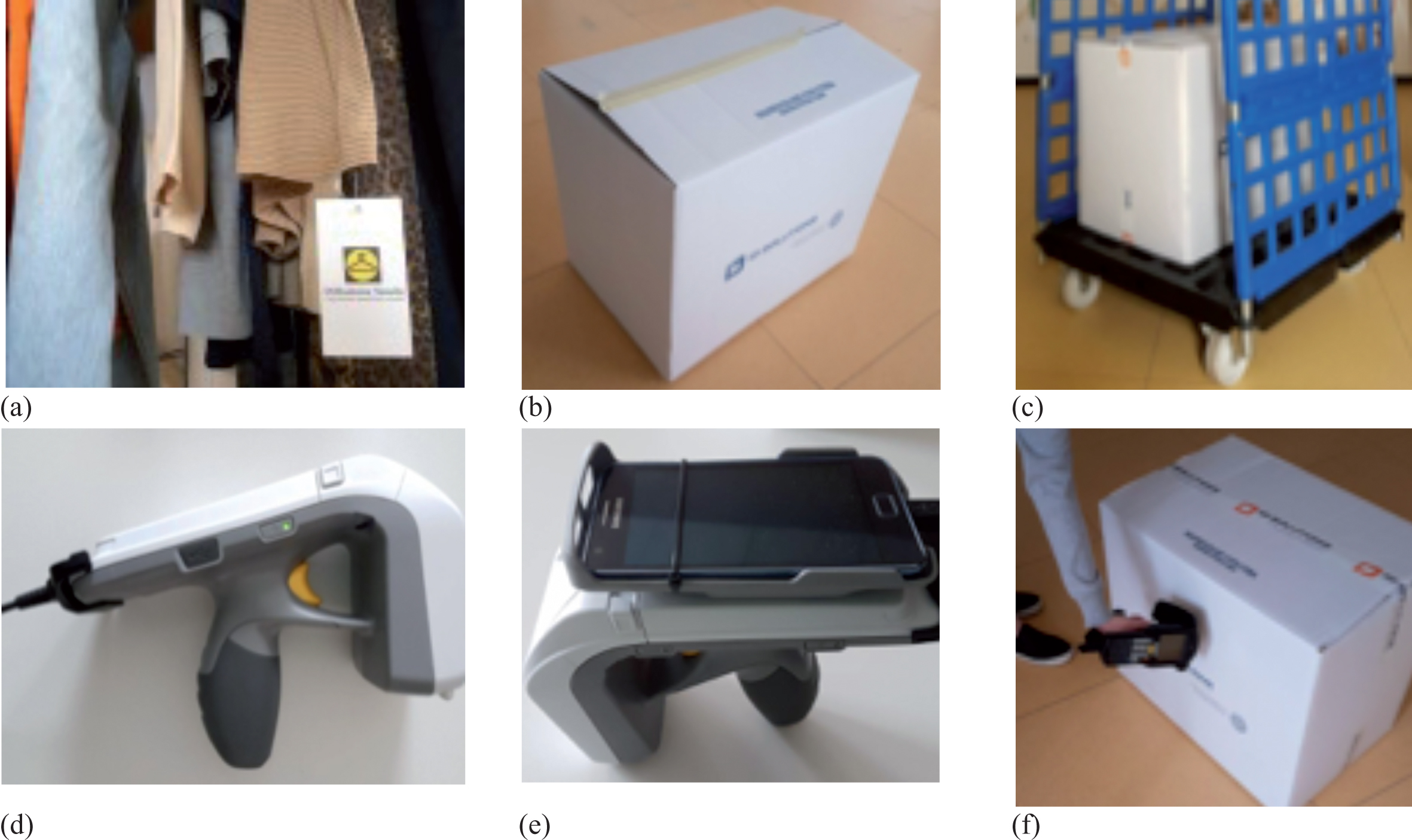
Creation of a cardboard box containing 105 tagged items (a, b); box loaded on a roll and ready for automated shipping/receiving test (c); mobile device (d, e) used for manual test execution (f).
The manual shipping/receiving test is aimed at reading the maximum number of tagged garments placed inside a cardboard box. A Zebra RFD8500 handheld device at maximum power (32 dBm ERP) is used for this purpose. The device, shown in Fig. 1 (d) and (e), is waved for 30 s around the box containing 105 tagged garments, 15 for each kind of tag, as reported in Fig. 1 (f). The number of tagged garments contained in the box has been chosen to be representative of the real logistics processes taking place in retail. The reading time is set to 30 s for two reasons: it is compatible with the operation considered (manual shipping or receiving process), and, according to the experimental results, the highest accuracy for each test run is achieved within the first 10 s, while only sporadic reads occur during the remaining time. The test procedure is repeated 10 times.
Measured KPIs include accuracy, which is the percentage of tags correctly read out of the overall number of tested tags (105), and read rate, which is the number of times a tag has been read in 30 s. The average accuracy is 100% for all considered tags. Figure 2 shows the achieved read rate. The better the performance, the higher the achieved read rate; closer values of the minimum, maximum and average read rates mean higher control of the tag production process (and thus constant tag performances) and/or favourable orientation of the tag towards the reader’s transmitting antenna.
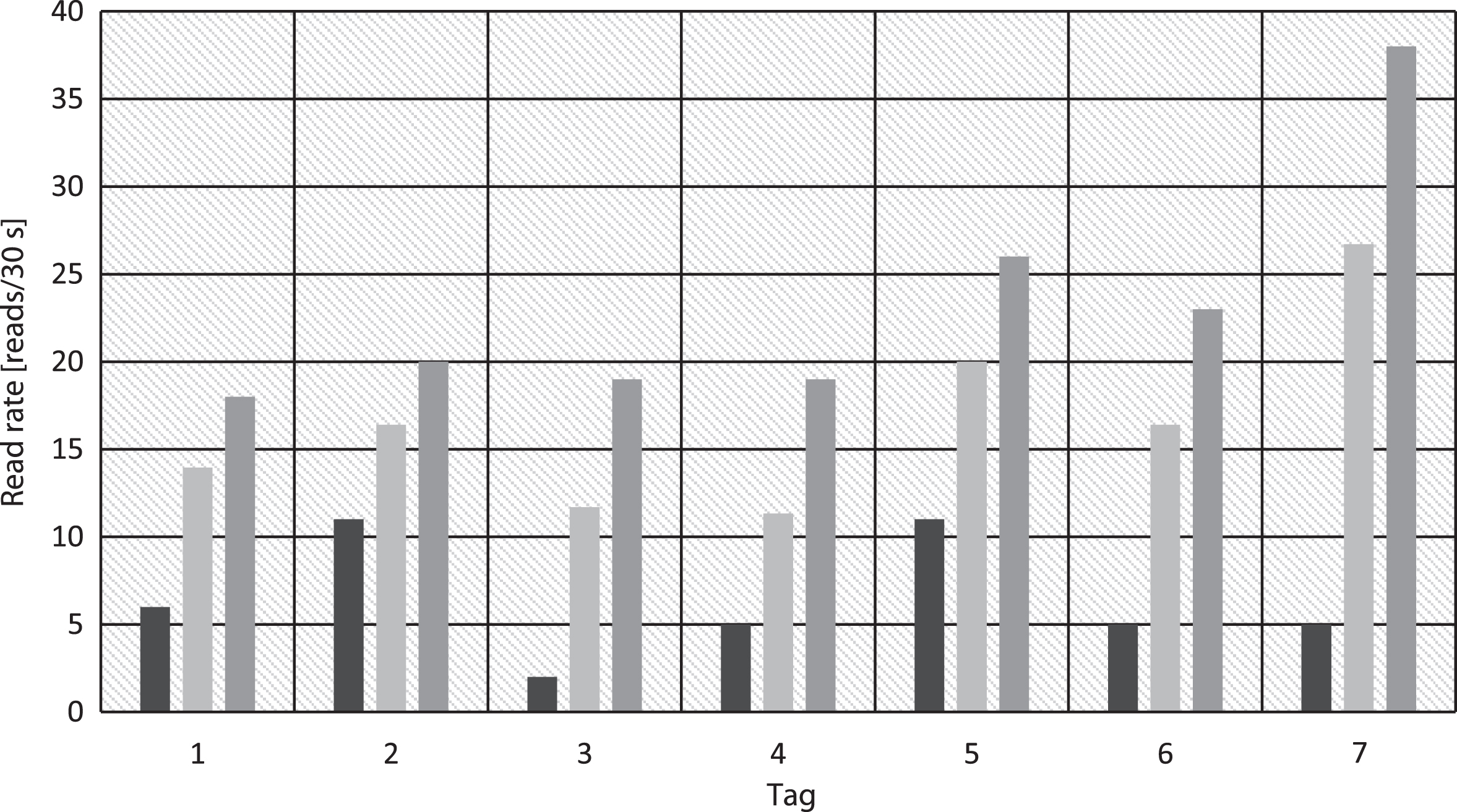
Minimum (black), average (light grey) and maximum (grey) read rate (reads/30 s) using a mobile reader; test size is 10 runs.
During the execution of the automated shipping/receiving test, the cardboard box is moved and rotated within the interrogating field in an RFID dock door. The reading gate is composed of an Impinj Threshold antenna connected to an Impinj Speedway R420 reader, without any added shielding structure. During each test run, the reader is activated using the software provided by the manufacturer (Multireader), and the power is swept from 18.5 to 31.5 dBm. For each power level, a 15 s read is performed. The reading time is set to 15 s for two reasons: first, this is compatible with the operation considered (automated shipping or receiving process), and second, according to the experimental results, the highest accuracy for each run is achieved in the first 4–5 seconds, and no significant reads occur during the remaining time. The test is repeated 10 times.
Measured KPIs are: Accuracy, which is the percentage of tags correctly read out of the overall number of tags tested (105); Read rate, which is the number of times a tag has been read in 15 s timeout; TTFR (time to first read), which is the time required to read all the readable tags belonging to the same family.
Concerning accuracy, whose chart is shown in Fig. 3, Tag 2 (a standard UHF inlay) shows top performances (100% accuracy) under any transmitting power. High performances are also achieved by Tag 5, Tag 6 (both DF) and Tag 3 (UHF). As a matter of facts, transmitting power of approximately 27 dBm is very common for fixed RFID readers deployed in logistics process, thus inventory accuracy of 100% may easily be achieved with above-mentioned tags.
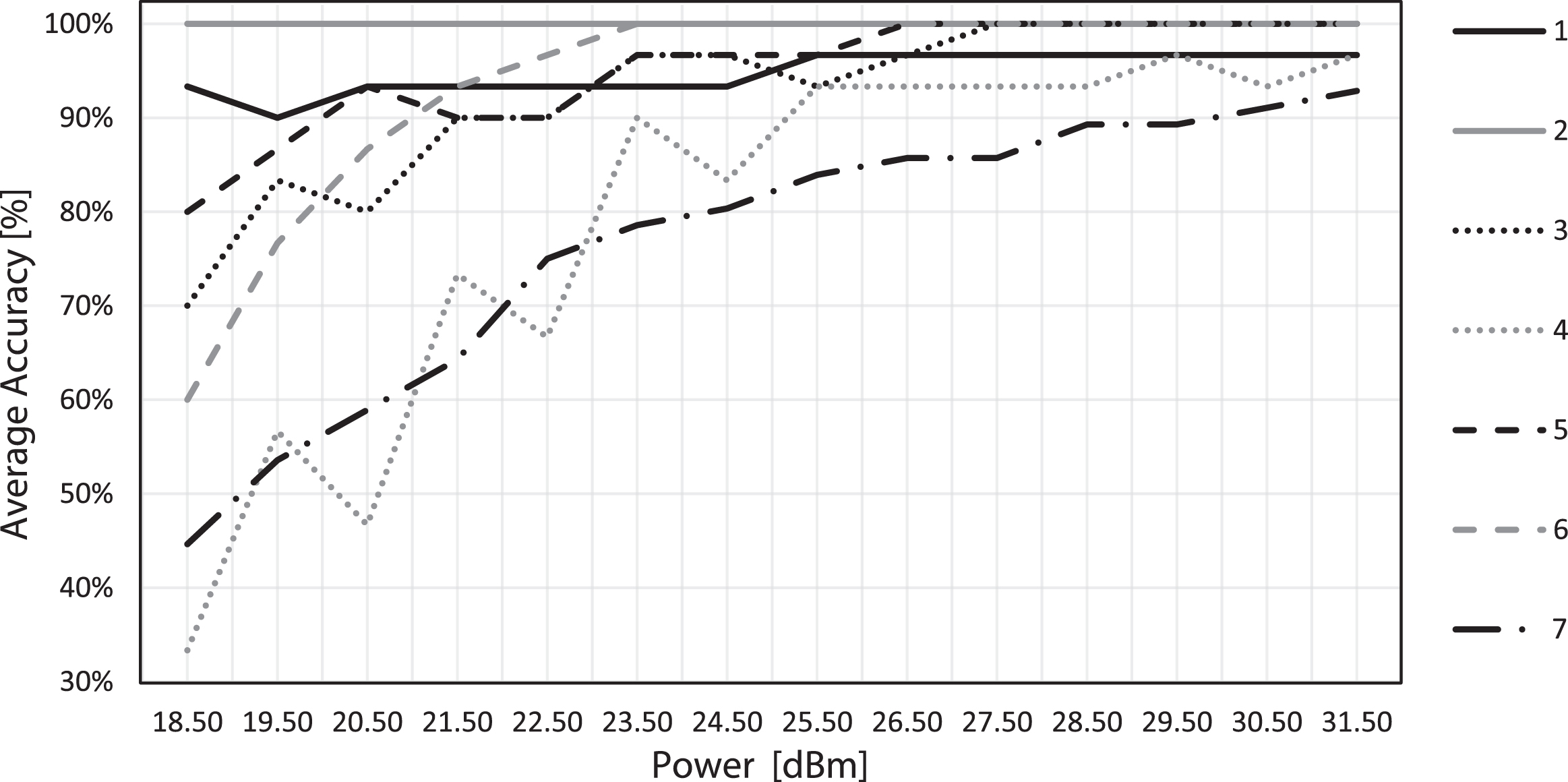
Average accuracy (%) using a fixed reader.
According to Fig. 4, plotting read rate, it must be noticed that DF tags (Tag 5, 6, and 7) show top performance when inventoried by a fixed reader transmitting at 27 dBm or more; for lower power levels their performances are comparable to those achieved by standard UHF inlays (especially Tag 1 and 2).
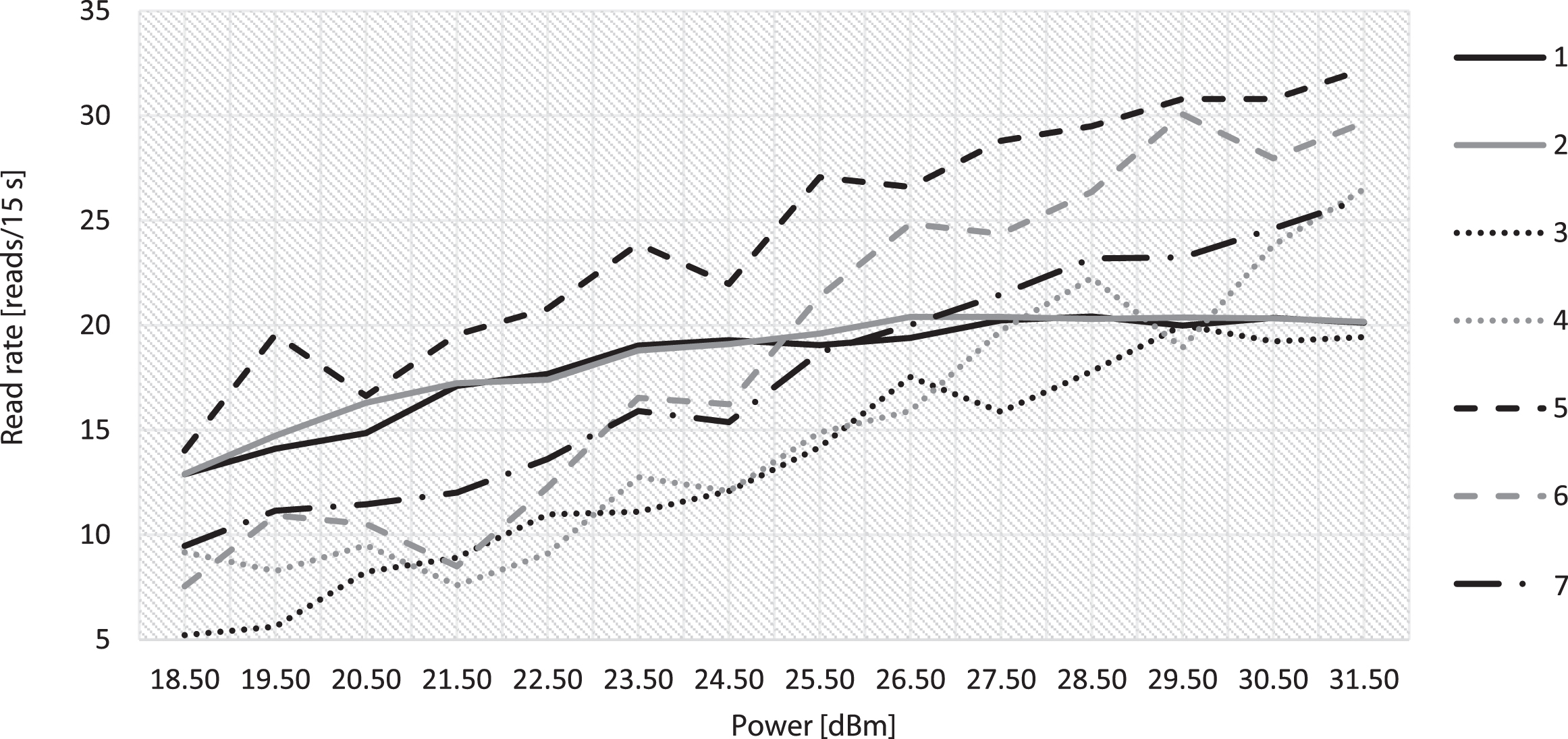
Average read rate (reads/15 s) using a fixed reader.
Regarding time to first read (TTFR, shown in Fig. 5), only Tag 1 and 2 (UHF) show a clean correlation between TTFR and power; as expected the TTFR decreases while transmitting power increases. Also, the trend of the plots for all other tags confirms this statement, although singular values have a wide dispersion.
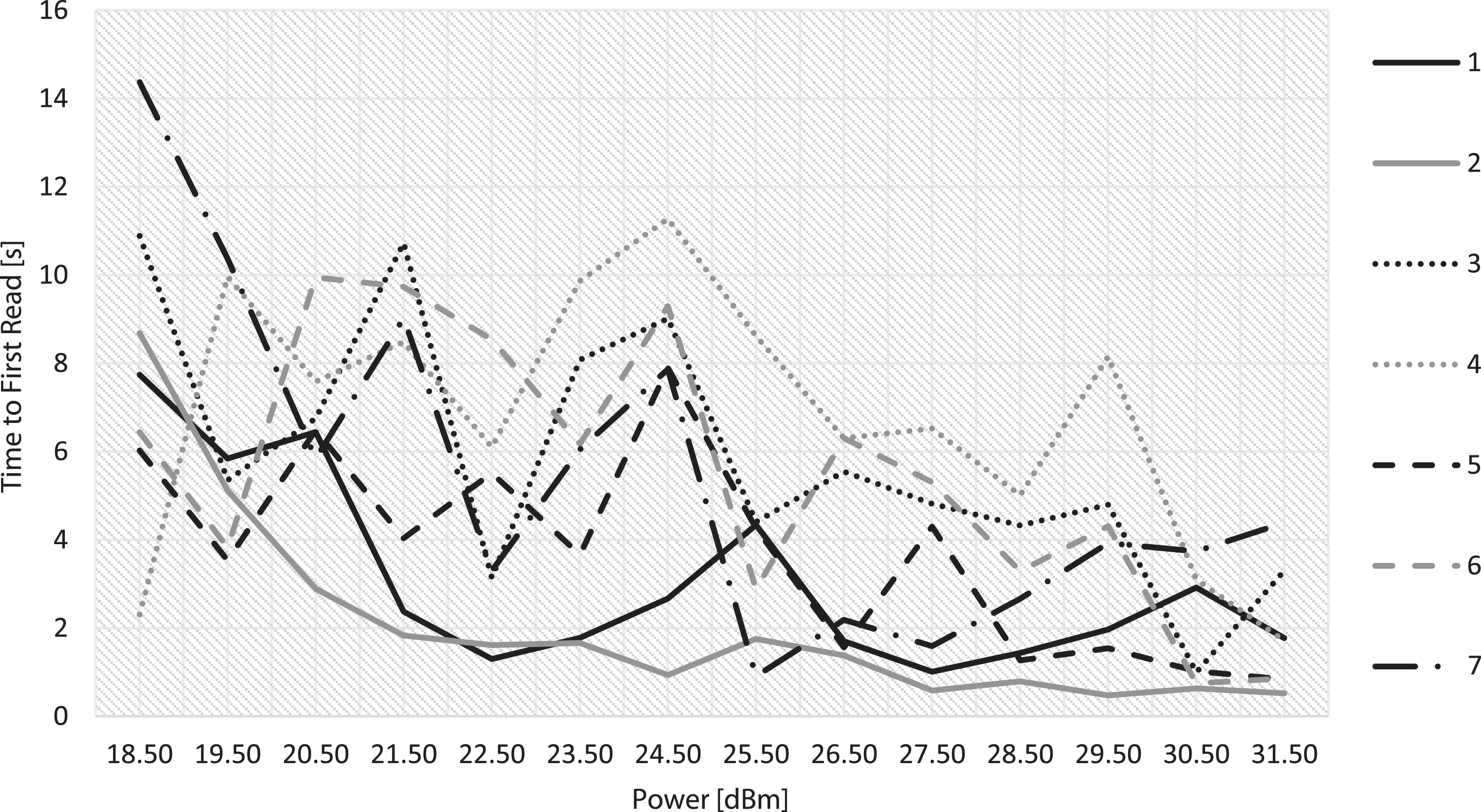
Average TTFR (s), fixed reader.
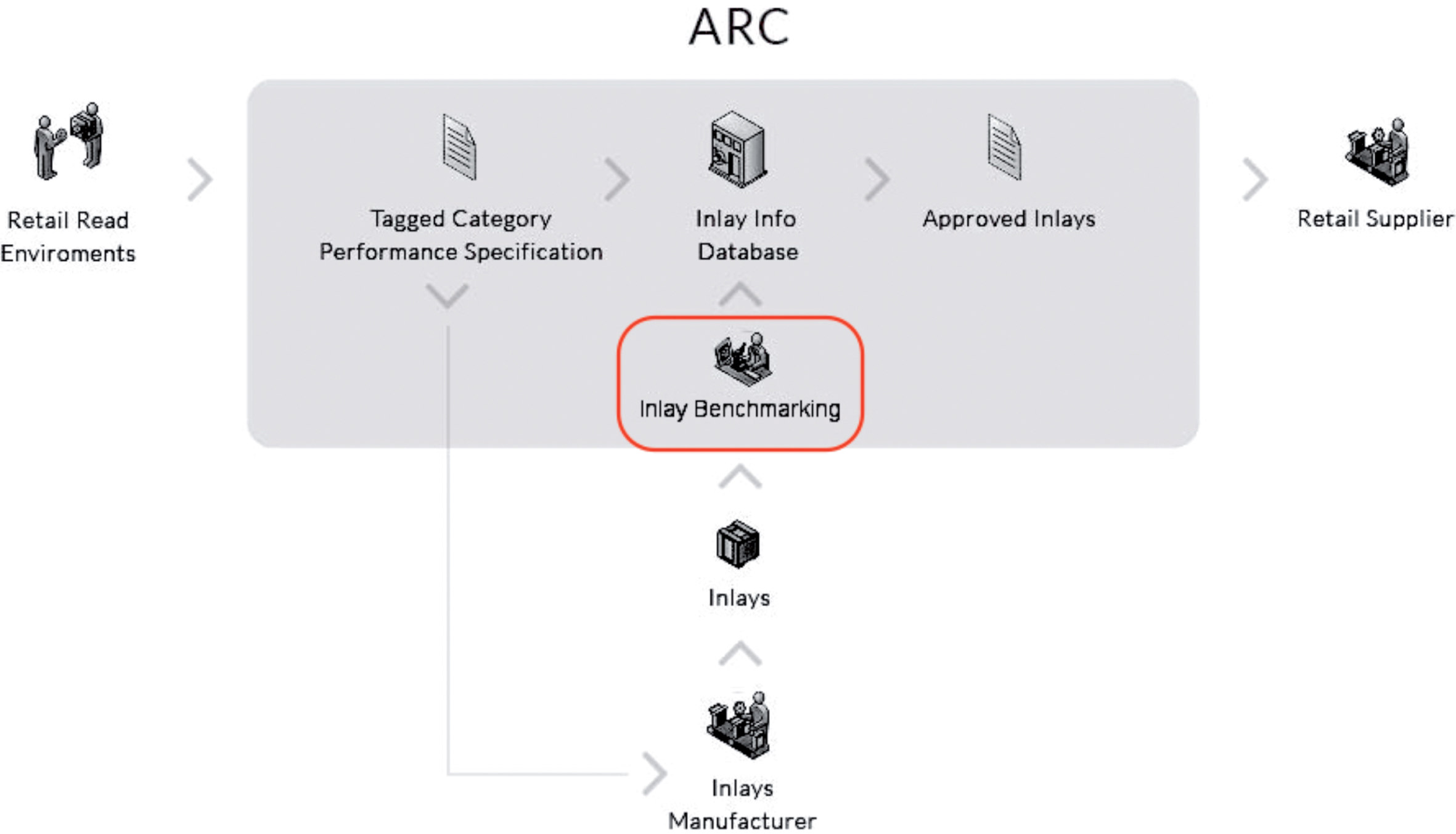
DF inlays are quite new and innovative; thus, in order to gather absolute performance measurements, they have been tested according to a standard benchmark: the ARC programme of the University of Auburn. The purpose of the ARC programme is to ensure that retail suppliers are able to deliver RFID-tagged products to retailers that meet or exceed the levels of performance necessary to provide benefits to both in a consistent and cost-effective manner. Essentially, RFID tags are tested on the ARC benchmark testing setup, and data on RFID tag performance are stored. Retailers use ARC benchmark data to create lists of approved tags for their RFID use cases. These approved tag lists are made available to the retail suppliers. Figure 6 summarises the whole process.
ARC certification programme – process diagram.
The inlay benchmarking process shown in Fig. 6 is the core process that defines the level of performance achieved by a retail item tagged with a specific inlay.
Pieces of garments are tagged with inlays being tested and placed in an anechoic chamber equipped with measurement devices. Then, the backscatter power and sensitivity of the inlay are measured under different test conditions (test specifications A, B, etc.) according to the specific category performance specification (Table 2).
Tagged category performance specifications according to University of Auburn ARC program
DF tags have been tested, and the results are presented in Table 3.
Tags 1, 2 and 3 are standard UHF tags commonly adopted in logistics processes; thus, according to the scope and procedures of the ARC programme, the manufacturer already submitted one of them (Tag 2) for specification requirements assessment.
Tags 4, 5, and 6 are produced by an Italian manufacturer. All of them have been tested in the ARC lab, with the achieved performances summarised in Table 3. Tag 4 fails to meet any of the specification requirements, while Tag 5 meets the performance requirements for specifications A, B, C, D, G, M and Q; this covers a majority of the requirements for apparel/fashion RFID deployment. The absolute and average performance of Tag 6 is undetermined since the tested inlay samples showed huge performance variations.
Specification requirements achieved by tags under test
Tag 8 was not tested, as the manufacturer refused to allow any official test on its early released product.
Seven different families of tags have been tested, as reported in Table 4. Tags 1, 2, 3, 9, 10 and 11 are commonly used tags in NFC applications due to their performances and form-factor; Tag 7 is a common general purpose ISO15693 tag; Tags 4, 5, 6 and 8 are equipped with the innovative DF IC. The tags have been tested according to a typical use case of an NFC tag: short range read using a mobile phone, following two different test procedures.
Tags tested in NFC scenario
Tags tested in NFC scenario
(*) according to Smartrac common tag nomenclature.
The tag under test is placed on a wooden table, and then a stack of eight cardboard spacers, each 6 mm in thickness, is placed over the tag, as shown in Fig. 7.
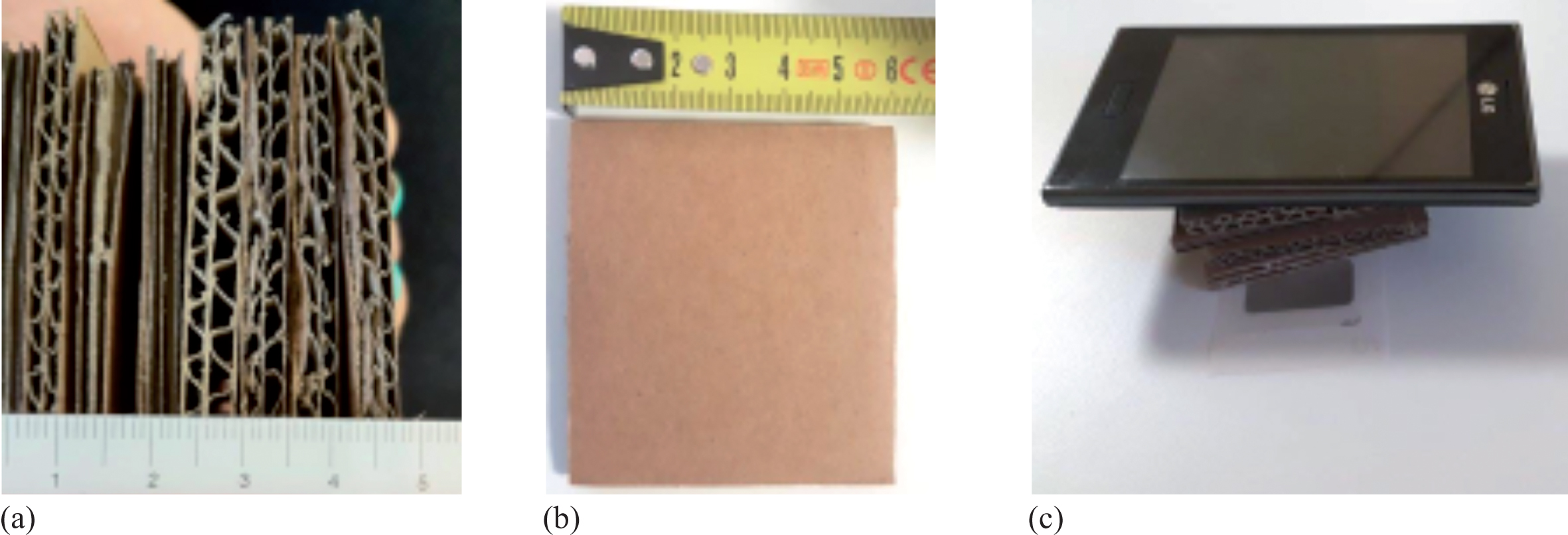
Cardboard spacer preparation (a, b); test execution (c) using spacers between tags and smartphone.
A mobile phone equipped with an NFC reader is set in continuous reading mode and placed over the stack, aligning the transmitting antenna of the phone with the tag, and kept in this position for 10 s or until the complete read of the tag’s memory is over. If no read is possible, after 10 s the phone is removed anyway. The Tag Info application, developed by NXP, is used on the mobile phone to activate and control the NFC reader. The whole tag memory (UID and user memory) is scanned and read, measuring the required time. One cardboard spacer is removed from the stack, and the test is repeated as described above. The whole test procedure is repeated 10 times. Three different mobile phones (equipped with three different NFC controllers) have been used, which are listed in Table 5.
Phones tested in NFC scenario
Measured KPIs include: Average read time required to read the tags of the specific family using three different mobile phones; Maximum distance required to obtain 90% accuracy. Figure 8 shows the achieved performances.
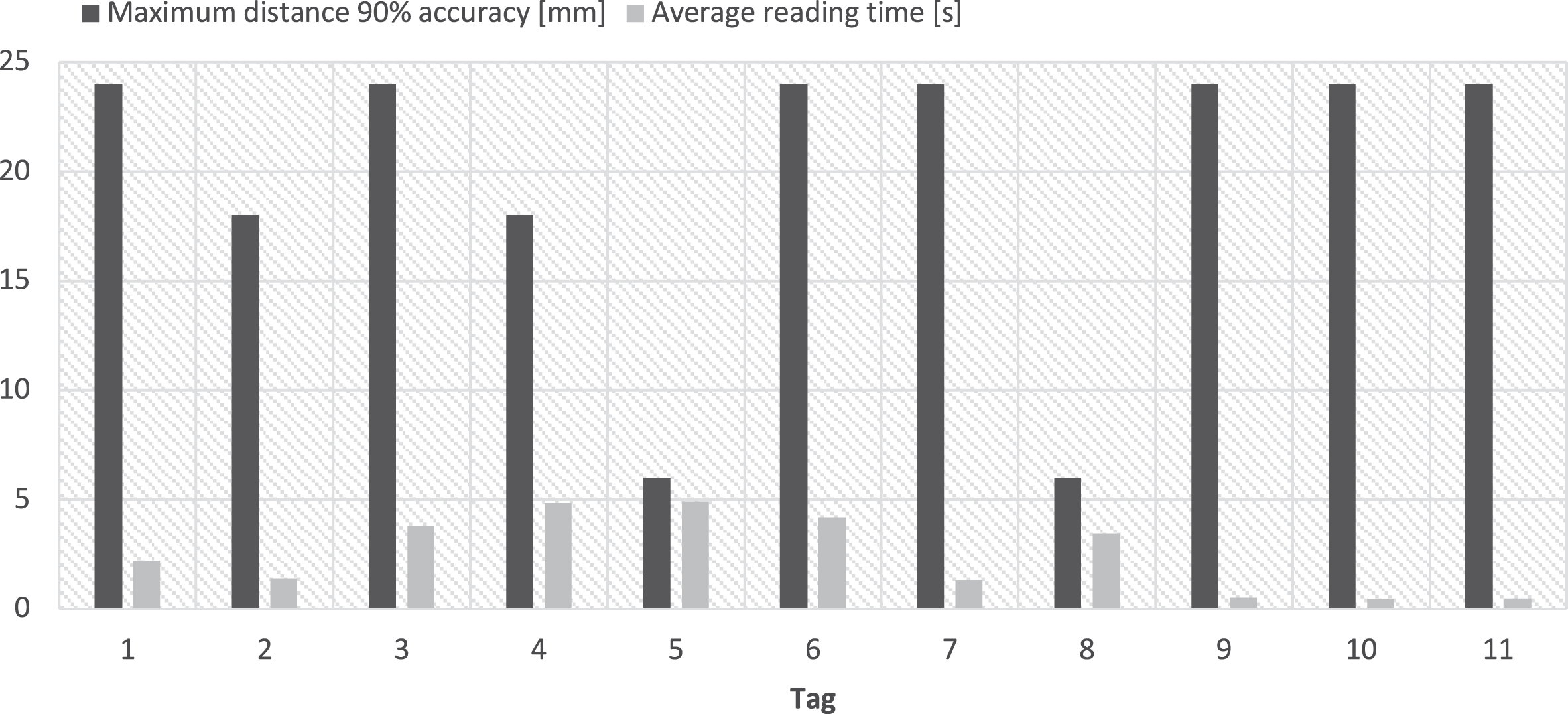
Maximum distance (mm) and Average reading time (s).
Regarding the mobile phones under test, measured KPIs include: Accuracy, which is defined as the number of successful tag reads out of the overall number of read attempts for each family; Average read time required to read the tags of all the families. To be more precise, Accuracy represents the number of times the tag has been read out of the overall read attempts, which is 10 because the experiment has been repeated 10 times; the higher the distance, the higher the probability there will be a communication error preventing a complete read of the tag’s memory, thus reducing the accuracy.
Figures 9 and 10 chart the achieved performances.
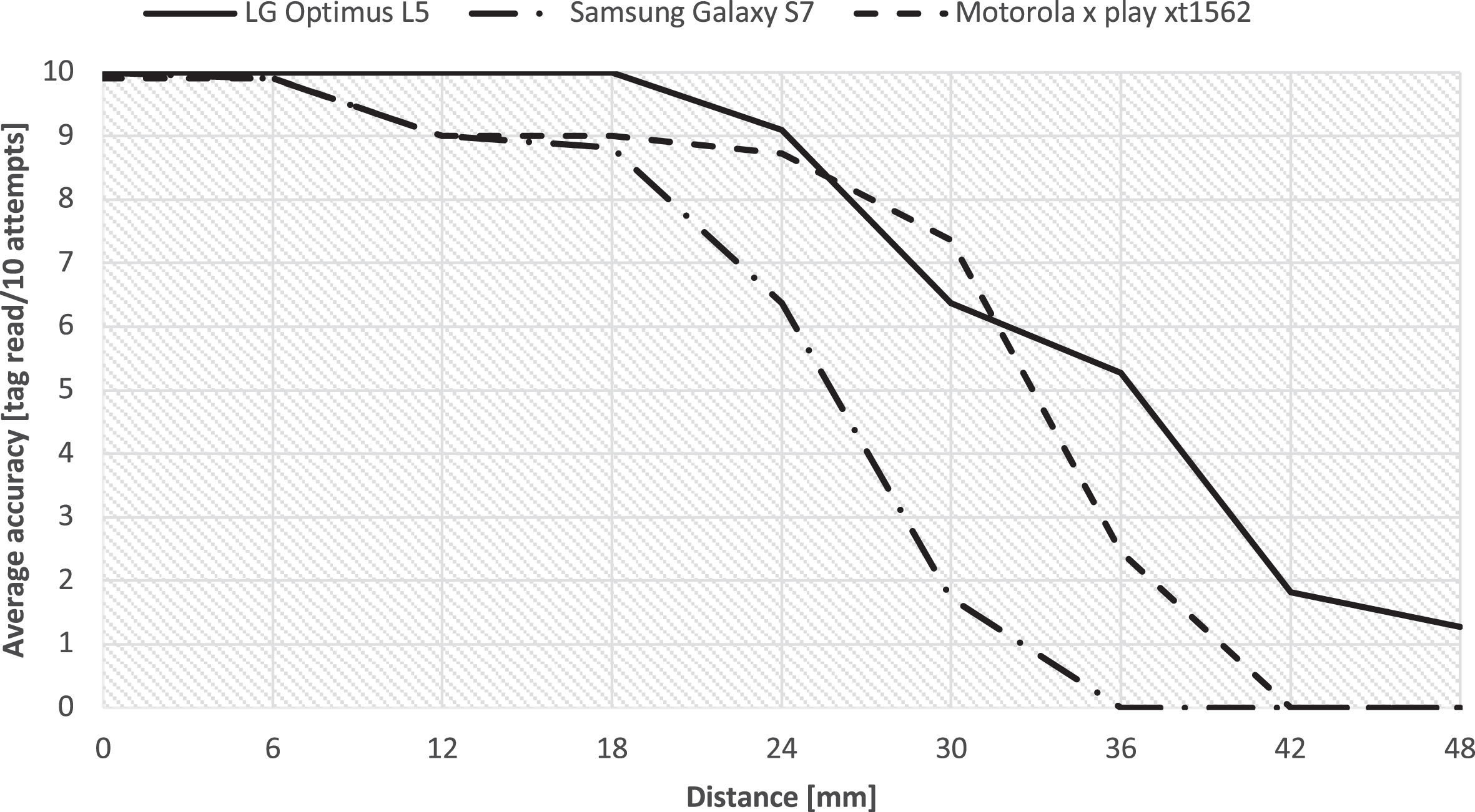
Average accuracy (read tags/10 reading attempts).
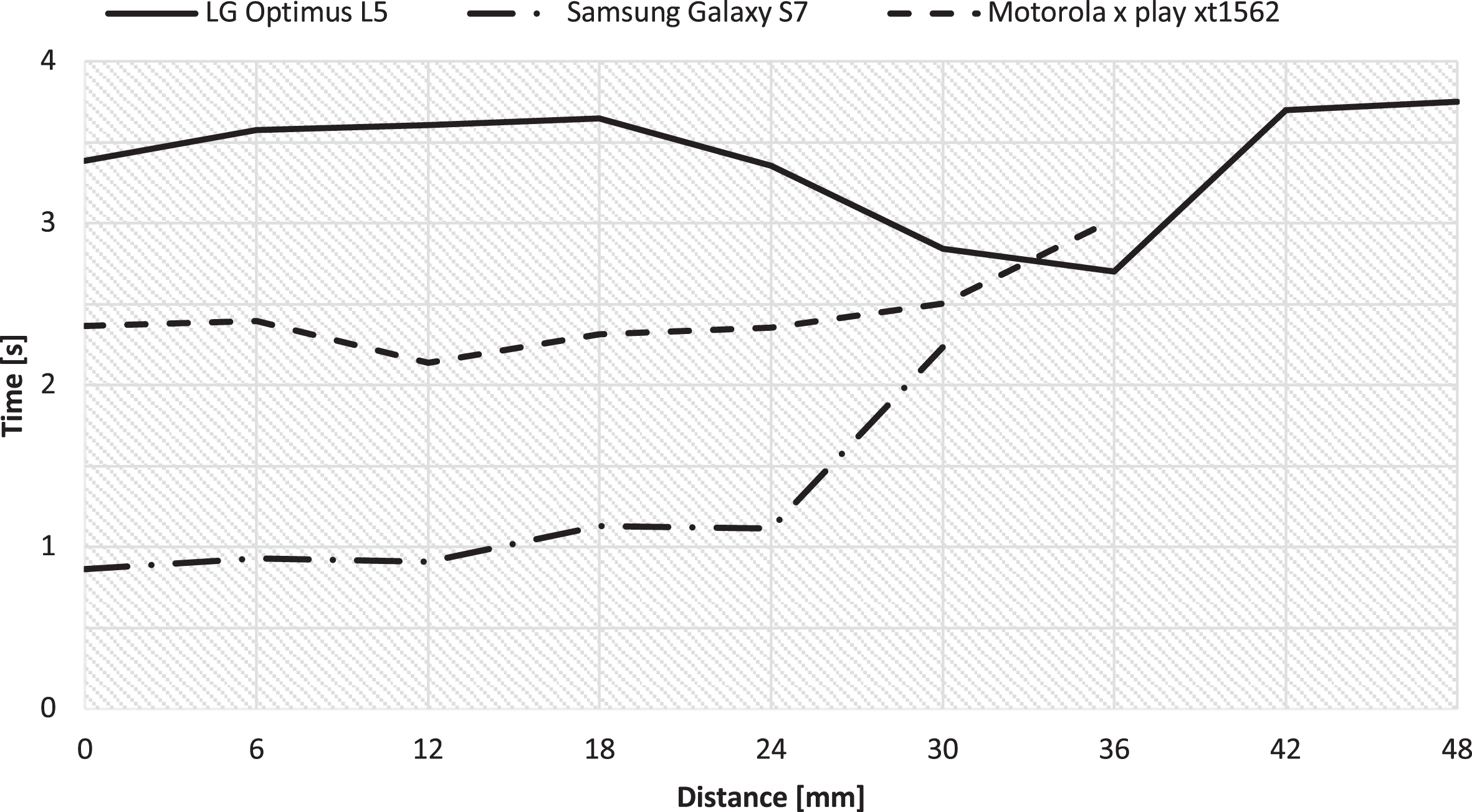
Average read time(s).
The authors simulated typical use cases involving a single tag read by the end user. Specifically, the tag under test is placed on a plastic card connected to a sliding rail, which is used to control and set the tag/reader distance, as shown in Fig. 11.
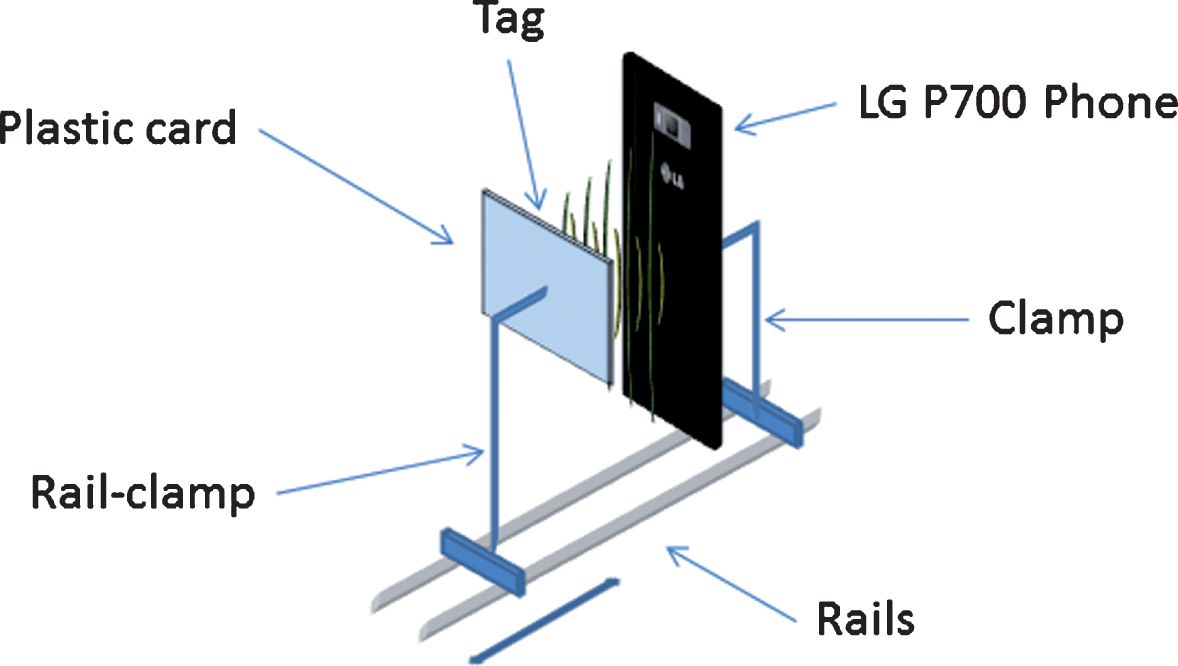
Experimental setup used by Dahl et al.
A mobile phone, equipped with an NFC reader and running an ad-hoc developed application, is fixed to the rail with a clamp and kept in this position until the complete read of the tag’s memory is completed by the software. The phone and tag antennas are aligned. If no read is possible, after 10 s the read is stopped anyway. The NFC Benchmarker application, developed by the authors of the paper and running on an LG Optimus L7 phone (Table 7), is used on the mobile phone to activate and control the NFC reader. The tag memory (UID and user memory) is read and scanned, and the required time is measured for different sizes of memory blocks. After the test is completed, the clamp with the tag is placed closer to the phone, and the test is repeated as described above. Five different tags have been tested (Table 6).
Tags tested in NFC scenario by Dahl et al.
Phones tested in NFC scenario
It must be noticed that Tag 2 in Table 6 has the same IC of Tag 2 tested in the present work (NFC type 2, NTAG 203), as stated in Table 4. Thus, it can be taken as a benchmark for performance comparison. Due to some technical issues during the execution of the test, some restrictions had to be applied:
A compatibility issue between the app and the mobile phone (a Samsung Galaxy S II equipped with the same NXP PN544 NFC controller as the LG Optimus L7) and/or its Android release made the exact replication of all the tests described by Dahl et al. impossible. More precisely, only the Read/write throughput test could be performed; all other tests caused continuous crashes of the app.
It was not possible to test every tag listed in Table 4. In fact, Tags 3 and 7 were not compatible with the app and/or NFC stack.
Measured KPIs include: Average speed and standard deviation for reading/writing the tag’s memory, with packet sizes ranging from one byte up to maximum memory size (Figs. 12 and 13). Tables 8 and 9 show the achieved performances with 64-byte packets. These data are useful for comparing the test results with those of Dahl et al., who used the same packet size.
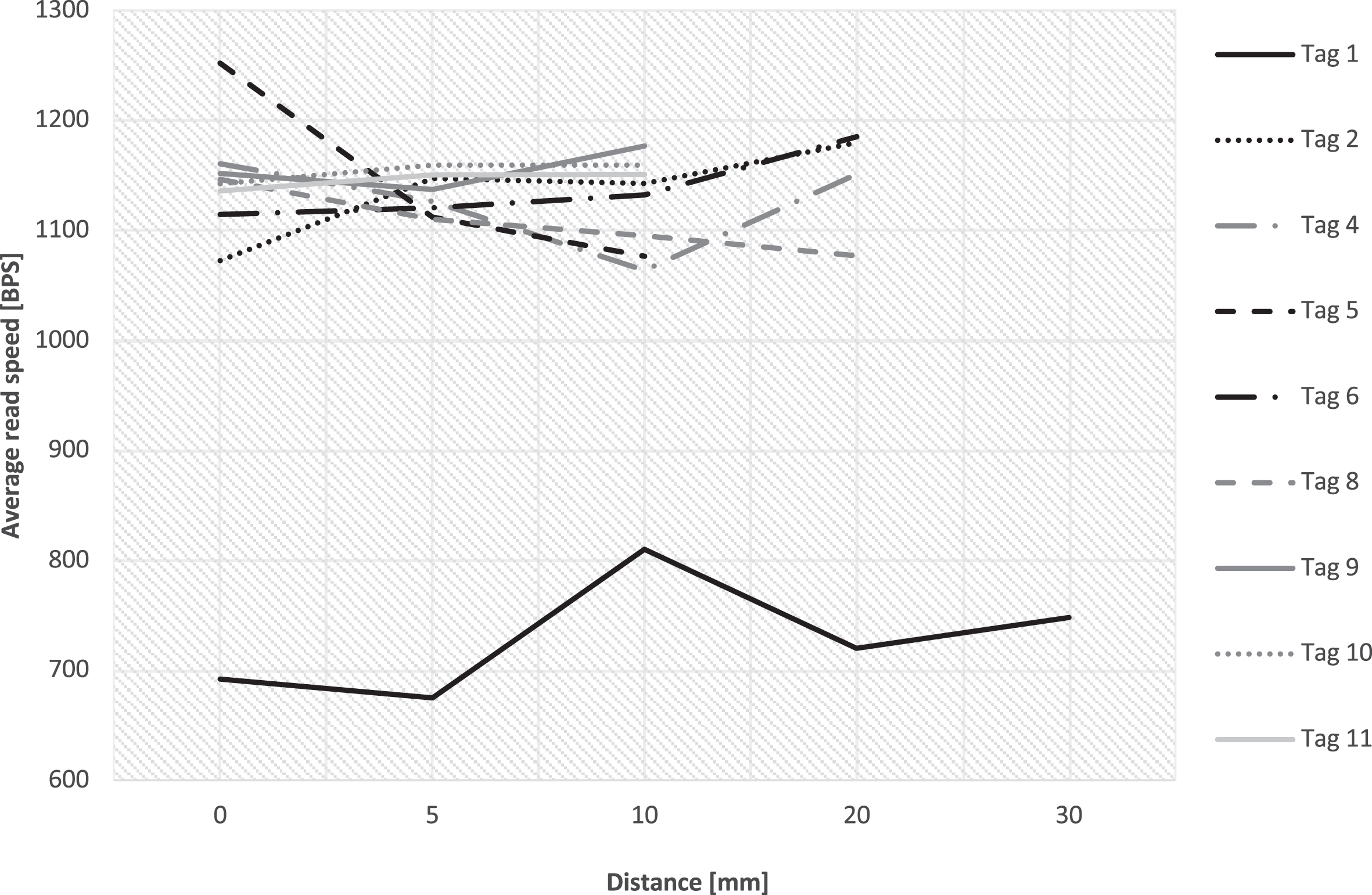
Average read speed (bits per second) with packet sizes ranging from one byte up to the maximum memory size.
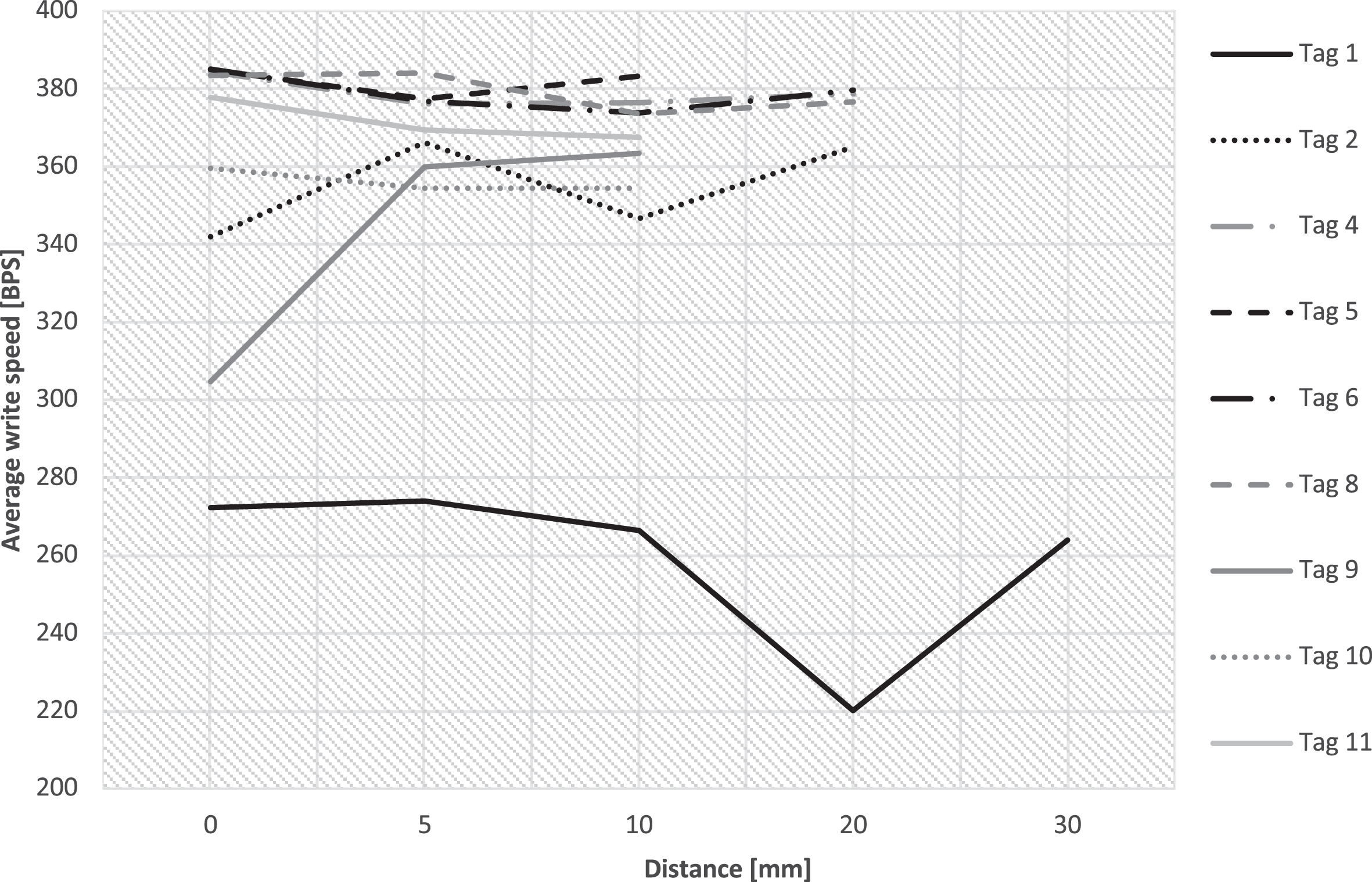
Average write speed (bits per second) with packet sizes ranging from one byte up to the maximum memory size.
Average speed and standard deviation (bits per second) for tag memory reading operations and comparison with Tag 2 tested by Dahl et al. (namely 2*) with 64-byte packets
Average speed and standard deviation (bits per second) for tag memory writing operations and comparison with Tag 2 tested by Dahl et al. (namely 2*) with 64-byte packets
The tests show that the performances of the DF inlays are appropriate for the considered processes and comparable to the performances of specific tags designed and optimised for only one standard.
In the RAIN RFID scenario, the accuracy of all the tested tags is 100% when read by a mobile reader, which guarantees a good capability of detection for almost all families. The average read rate is always higher than 10 reads in 15 s; Tags 5 and 8 (both DF) are the best-performing tags under this test, showing a read rate greater than or equal to 20. All tested tags can be used for shipping/receiving processes, and the item identification appears reliable.
When a fixed reader is used and transmitting power is set higher than 27.5 dBm, 100% accuracy and a good read rate are obtained for all the tags except for Tags 1, 4 and 8. Under the same conditions, the read rate is greater than 15 reads in 15 s for all tags under test. TTFR shows high oscillations, remaining briefer than 15 s even in the worst conditions. This result appears to be compatible with the manual logistic process considered, which takes usually longer to perform.
In the ARC lab tests of DF inlays, only Tag 5 shows good performance in the retail sector. Tag 4 does not satisfy any specification requirements, while Tag 6 has some production issues that result in a wide variance in performance among samples of the same tag.
In the NFC scenario, the reading distance achieving more than 90% accuracy for Tags 4, 5 and 8 is lower than that of other specific NFC tags; regarding DF inlays, Tag 6 has a better reading distance and faster reading time, although dedicated NFC tags have better overall performance (high distance and low reading time).
The NFC reading device performances show that older phones have better accuracy compared to new models, but they are slower in reading a tag’s memory. The longer reading time can be explained by the fact that old phones have low-performing CPUs (affecting the time to scan and process data) but probably better radio interfaces and/or antenna design (affecting reading distance). In particular, the NXP PN544 NFC controller in the LG Optimus L5/L7 and Samsung Galaxy S II phones, released in three versions (C1, C2, C3) according to the security capabilities for payments, is one of the best performing chipsets despite its age. This is probably due to the design of the chipset itself (favouring RF transmitting power and reading distance over power consumption) and/or the design, size and placement of the communication antenna in the mobile phone.
The use of specific benchmark software enables the precise assessment of reading and writing speed at different phone/tag distances for most of the tags under test. Further, the obtained results are comparable with the results reported by other authors. Slight deviations can be explained by the differences in test conditions (the smartphone model and the design of the tag and phone antennas).
Conclusions
In sum, the tested DF tags based on the EM4423 chip, which is innovative and barely available for mass production, have good performances comparable to standard RFID tags operating only in a specific band (HF or UHF). It appears that logistics processes are more critical in terms of performance requirements than NFC reads. In fact, a missed tag read in a receiving process may lead to inventory inaccuracy, whereas a missed NFC read can be quickly fixed by repeating the manual read attempt executed by the end user. Consequently, Tags 5 (EM4423 chip equipped with a Dogbone-like antenna) and Tag 6 (EM4423 chip equipped with a Web-like antenna) are the most suitable for companies operating in fashion and retail. Tag 6 performs best in both RAIN RFID and NFC scenarios (but some production issues affect their stability), while Tag 5 works well in logistics and performs acceptably in NFC applications.